
LED Headlight Bulbs for BMW X3 F25
Affiliate disclosure. BimmerTalk is a proud partner of the Amazon Associates Program and Turner Motorsport. We may earn a small commission on qualifying purchases through our links, at no extra cost to you. Read the full disclosure.


Termitor H7 LED Bulbs 6500K 50000LM — Pack of 2
Termitor
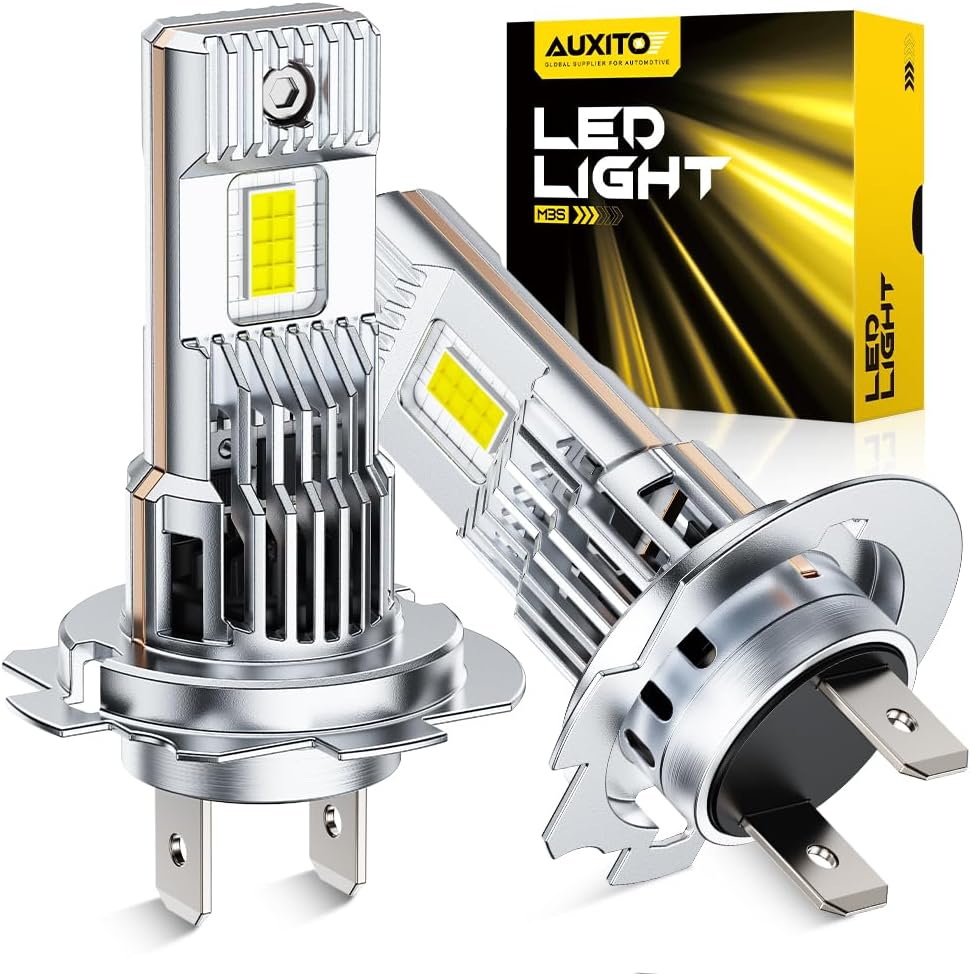
AUXITO H7 LED Bulb Upgrade — 6500K Cool White (Pair)
AUXITO

OXILAM H7 LED Bulbs — 40000LM 6500K Cool White, Plug and Play (Pair)
OXILAM

AUTOONE H7 LED Bulb Upgrade — Plug and Play, Pack of 2
AUTOONE
LED Headlight Bulbs for BMW - What Actually Works and What to Skip
Swapping your BMW's halogen headlight bulbs for LEDs is one of the most worthwhile upgrades you can make - better visibility, cleaner color temperature, and a look that doesn't scream "stock 2009 3 Series." But BMW's optical systems are finicky, and the wrong bulb will give you glare complaints, error codes, or a hotspot-filled beam pattern that's genuinely dangerous. Here's what you need to know before you buy.
First, know your chassis. The E90/E91/E92/E93 (2006–2013 3 Series) with factory halogens is one of the most popular platforms for this upgrade and typically uses H7 low beams. The F30/F31/F34 (2012–2019 3 Series) halogen variants also run H7. Move over to the E60/E61 5 Series and you're looking at H7 as well. The E46 uses H7 low and H1 high beams. Older E39 owners need H7 lows. Meanwhile, the F10/F11 5 Series halogen trims stick with H7. Always cross-reference your specific build - factory xenon or AFS (Adaptive Headlight System) cars require a completely different approach and are not candidates for simple bulb swaps.
For plug-and-play LED replacements, Morimoto 2Stroke 2.0 bulbs are widely regarded as the benchmark for projector-friendly performance - they're built with a 360° LED array that mimics the filament position of a halogen, which matters enormously in BMW's ellipsoidal projectors. Hikari Ultra and Diode Dynamics SL1 are also solid options used by the enthusiast community for years. Avoid the cheap no-name Amazon kits with oversized heat fins or side-emitting chips - they scatter light everywhere and will fail inspection in most states.
One critical issue on most E-chassis and F-chassis BMWs: your DME or BCM monitors bulb resistance. Swap in an LED without addressing this and you'll get a bulb fault warning on the dash within seconds of startup. The fix is simple - add a load resistor or a CANbus decoder inline with each bulb. Brands like VLEDS and Diode Dynamics sell error-canceller harnesses purpose-built for BMW applications. Some premium LED kits include these in the box; verify before you buy.
Installation Difficulty and What to Watch For
On the E46 and E39, headlight access is tight but straightforward - budget 30–45 minutes per side. The E90 is notorious for cramped engine bays; on the driver's side especially, you may find it easier to remove the headlight unit entirely rather than fighting access from behind. The F30 and F10 are friendlier, with tool-free access covers on most builds. No special tools required beyond a trim removal kit and basic sockets.
Heat management matters more in a sealed BMW housing than in an open reflector. Make sure whatever LED you choose has an external driver or a low-profile heatsink that clears the dust cap - many budget bulbs run too hot and warp the housing seal over time, inviting moisture. Check fitment forums on BimmerPost for your specific chassis before committing to a brand.
Also worth noting: if your BMW has halogen projectors, retrofit performance is generally excellent. Reflector housings are less predictable - output can be bright but unfocused. In those cases, pairing your LED upgrade with a projector retrofit headlight assembly is the better long-term play. And while you're improving your lighting, don't overlook your fog light bulbs - a matching color temperature keeps the front end cohesive and improves overall low-visibility performance.
Bottom line: spend $60–$120 on a quality LED kit with proper CANbus cancellation, match it to your chassis and housing type, and you'll get a genuine upgrade over factory halogens. Go cheap and you'll spend twice dealing with flicker, codes, and a beam pattern that belongs on a flashlight.