Which Coolant Does Your BMW Take
Affiliate disclosure. BimmerTalk is a proud partner of the Amazon Associates Program and Turner Motorsport. We may earn a small commission on qualifying purchases through our links, at no extra cost to you. Read the full disclosure.

Had a guy roll into the shop a while back with a G20 330i, coolant light flashing on the iDrive, and a jug of green stuff sitting on his passenger seat like he was about to save the day. He'd topped up with whatever was on the shelf at the local parts store because "coolant is coolant, right?" Wrong. Dead wrong, actually, and I had to drain half his system before he did any real damage to a plastic-impellor water pump that BMW already made fragile enough on its own.
I've been wrenching on these things for fifteen years, spent a year on the other side of the counter at a BMW/MINI dealer, and my daily is a 2022 G20 330i with a B58 under the hood. If there's one question that comes up more than almost anything else in the BimmerTalk inbox, it's some version of "what coolant does my BMW take" - and the honest answer is that BMW has quietly run two completely different coolant families over the last decade or so, and using the wrong one isn't just a technicality, it can actually hurt your cooling system.
So let's sort out blue from purple, E-chassis from G-chassis, and get you buying the right jug the first time.
2 (blue G48 / purple G40)
Coolant families in use
50/50 with distilled water
Standard dilution
E90 to early G20/G30
Blue era chassis
roughly 2023+ G-chassis and all BMW EVs
Purple switch point
BMW Coolant Type By Chassis, The Quick Answer
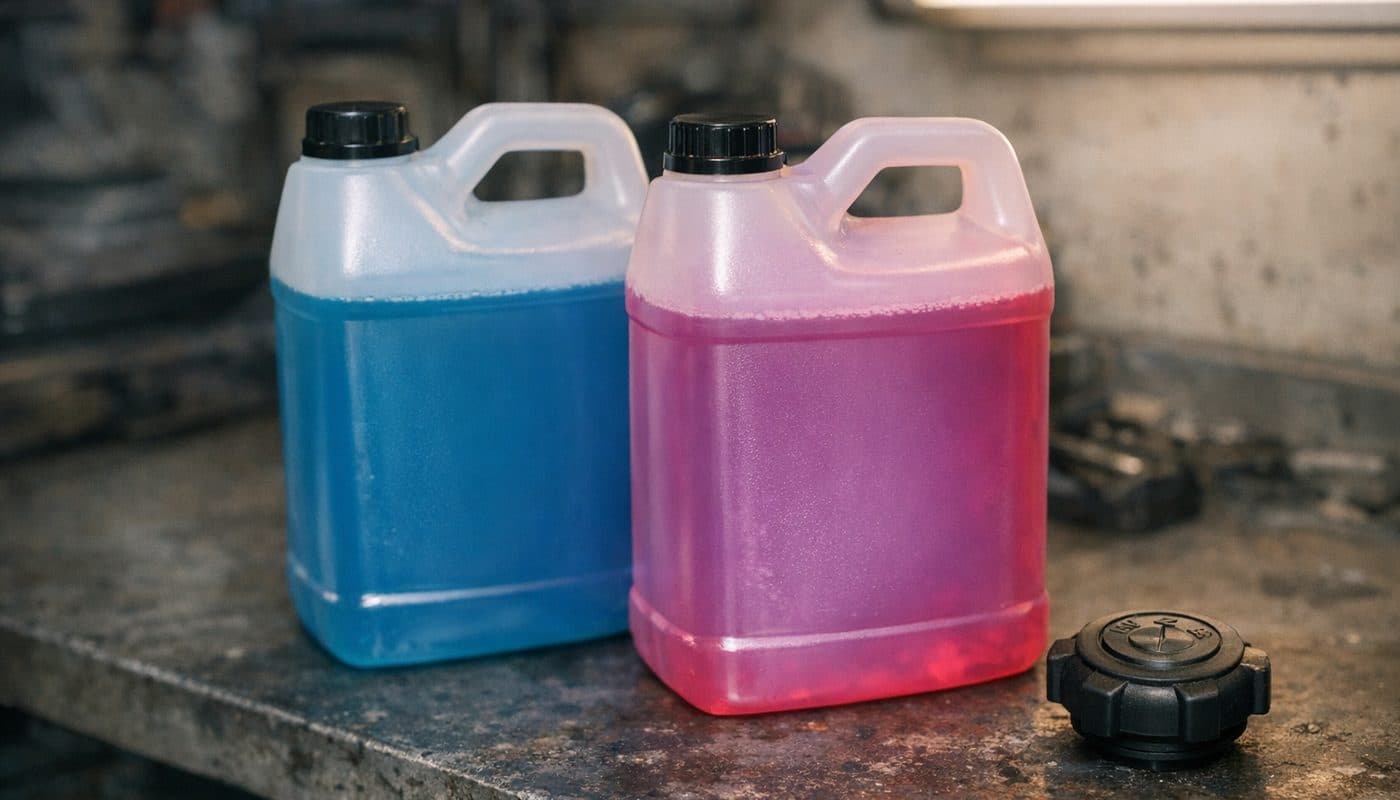
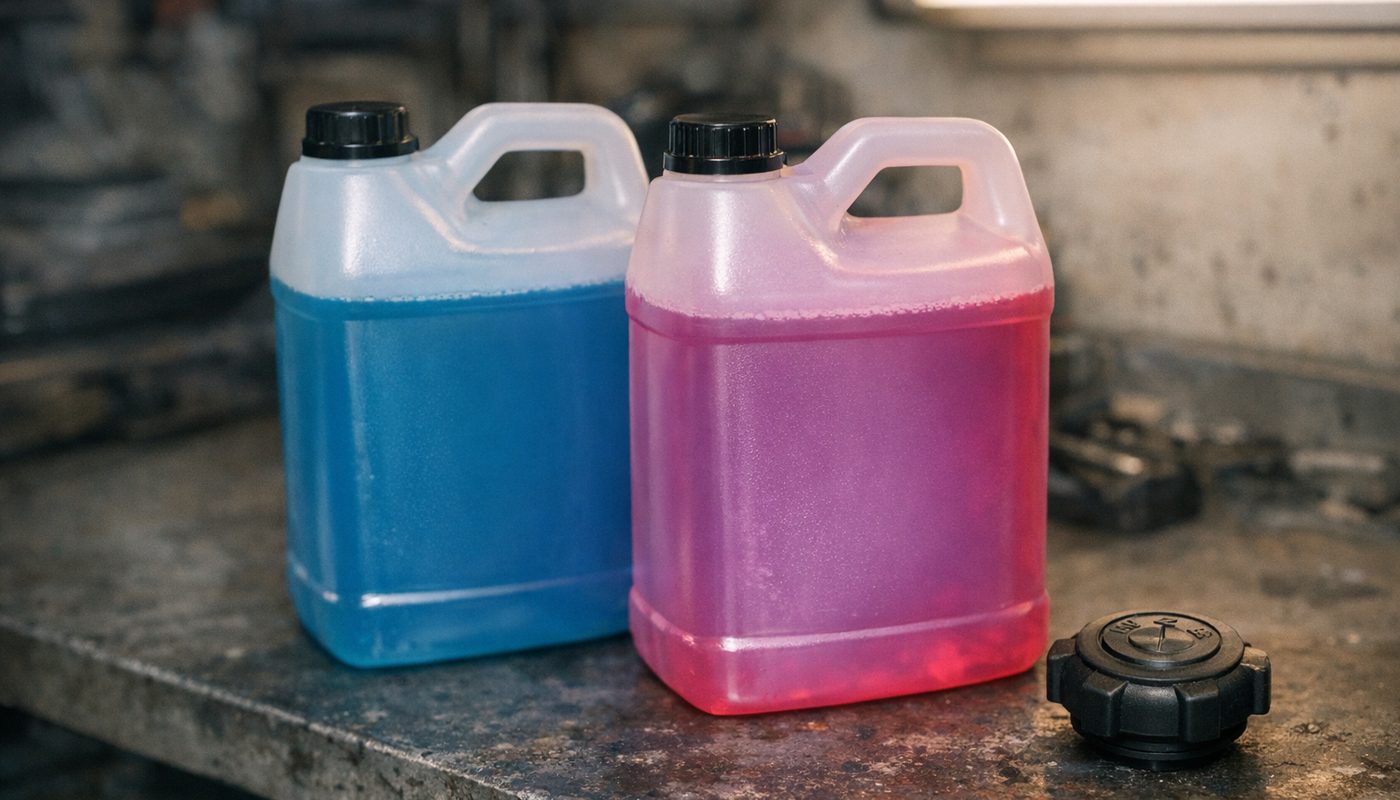
If you just want the short version before I get into the why, here it is. BMW has run essentially two coolant chemistries since the mid-2000s. The old school stuff is blue, phosphate-free, and often referred to by its spec name G48 or HT-12-compatible. The newer stuff, which started showing up in later G-chassis cars and every BMW EV, is a purple or pink G40-type fluid. They are not interchangeable, and I'll explain exactly why further down.
| Chassis / Era | Coolant Family | Typical Colour |
|---|---|---|
| E90, E60, E70 and other E-chassis | G48 blue | Blue |
| F30, F10, F80 and other F-chassis | G48 blue | Blue |
| Early G20/G30/G05, roughly 2019-2022 | G48 blue (verify on cap) | Blue |
| Late G-chassis, roughly 2023+ | G40 purple/pink | Purple/Pink |
| i4, iX, i5 and other BMW EVs | G40 purple/pink | Purple/Pink |
E90, E60, E70 and other E-chassis
- Coolant Family
- G48 blue
- Typical Colour
- Blue
F30, F10, F80 and other F-chassis
- Coolant Family
- G48 blue
- Typical Colour
- Blue
Early G20/G30/G05, roughly 2019-2022
- Coolant Family
- G48 blue (verify on cap)
- Typical Colour
- Blue
Late G-chassis, roughly 2023+
- Coolant Family
- G40 purple/pink
- Typical Colour
- Purple/Pink
i4, iX, i5 and other BMW EVs
- Coolant Family
- G40 purple/pink
- Typical Colour
- Purple/Pink
Notice I said "roughly" on those later G-chassis dates. BMW isn't consistent about broadcasting exactly when a production changeover happens mid-cycle, so the only bulletproof way to know for certain is to check the actual coolant colour in your expansion tank or the fill label under the bonnet, which I'll walk you through in a minute. If you want the deeper dive on capacities, bleed procedures and brand-specific comparisons, I've already covered a lot of that ground in our full BMW coolant guide, so think of this article as the "which colour, which chassis" companion piece to that one.
Why BMW Is So Fussy About Coolant Colour
It's not paint, it's chemistry
The colour dye itself does nothing for your engine. What matters is the corrosion inhibitor package mixed into the base ethylene glycol, and that's where BMW's two families genuinely differ. The blue G48 fluid is a phosphate-free formula built around organic acid technology inhibitors, tuned to play nicely with the aluminium heads, alloy blocks, and the mix of rubber and plastic hoses BMW has used for the last twenty-odd years. It's specifically formulated to avoid silicate drop-out, which used to be a real problem with older green coolants clogging up thin passages in aluminium heads.
Why the newer cars needed a different formula
The purple G40 stuff came along because BMW's newer thermal management systems, especially in the electrified and hybrid platforms, needed a coolant that could handle a wider service interval and cope with the extra electrical components in the loop, things like battery cooling circuits and power electronics that a traditional engine coolant loop never had to deal with. The additive package is different enough that BMW gave it a new spec and a new colour on purpose, so nobody at a quick lube shop accidentally tops off an EV's battery cooling loop with the wrong chemistry.
This is also exactly why you cannot use "any green coolant from the auto parts store" like a lot of generic advice online suggests. Universal or "all makes" coolants are usually a compromise blend that technically won't destroy your engine overnight, but they don't match either of BMW's specific inhibitor packages, and long term that means more scale, more risk of localised corrosion around aluminium components, and a genuine chance of shortening the life of parts that are already a known weak point, like the plastic-bodied water pump on the N20 and N55 engines.
Blue G48 Coolant, The E and F Chassis Standard
Which cars actually take it
If you're driving an E90, E60, E70, E92, or basically anything from the E-chassis generation, you're on blue G48-family coolant. Same story for the entire F-chassis run, F30, F10, F80, F15, all of it. This covers the N54, N55, N20, N26, and early B-series turbo engines. It's also what most early G20, G30, and G05 models shipped with from around 2019 through roughly 2022, though as I said, always verify on your own car rather than assuming by production year alone.
OEM and approved equivalents
The genuine BMW part number to ask for is 82141467704, sold as a concentrate that you dilute yourself. If you'd rather buy an equivalent off the shelf rather than paying dealer parts counter prices, Pentosin Pentofrost NF and Zerex G48 are both widely accepted as matching BMW's spec, and I've used both without issue across dozens of E and F-chassis cars in the shop. Just make sure whatever bottle you grab explicitly states it meets BMW GS 94000 or the G48 spec, not just "compatible with European vehicles," which is marketing speak that means almost nothing.
Purple G40 Coolant, The New G Chassis and EV Standard
Where the switch actually happened
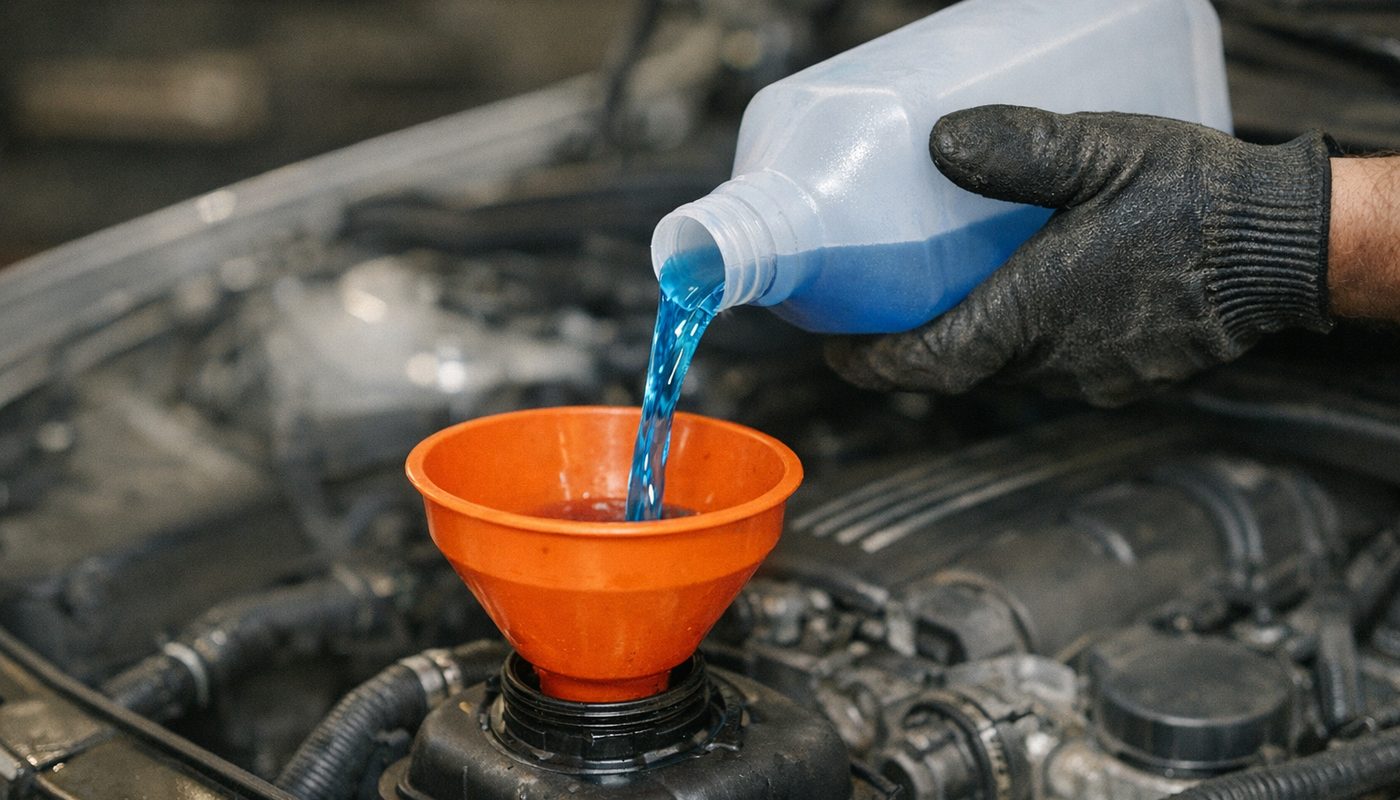
Starting somewhere around 2023 on later G-chassis production, and across the board on BMW's electric lineup, the fluid changed to a purple/pink G40-type coolant, branded by BMW as GLYSANTIN G40. If you own an i4, an iX, or any of the newer EVs, you're on this fluid, no exceptions, because the battery cooling loop chemistry needs it.
OEM part and approved equivalents
The genuine BMW reference here is part number 83512355290. Aftermarket equivalents are thinner on the ground than they are for the older blue fluid simply because G40 is newer, so my honest advice is to stick with genuine GLYSANTIN G40 or a coolant explicitly labelled as meeting that spec rather than gambling on a "universal purple" bottle that happened to be the right colour on the shelf. Colour-matching a coolant is not the same as chemistry-matching it, and I've seen plenty of purple-tinted fluids that had zero relation to BMW's actual spec.
How To Check What's Already In Your Car
Look at the expansion tank first
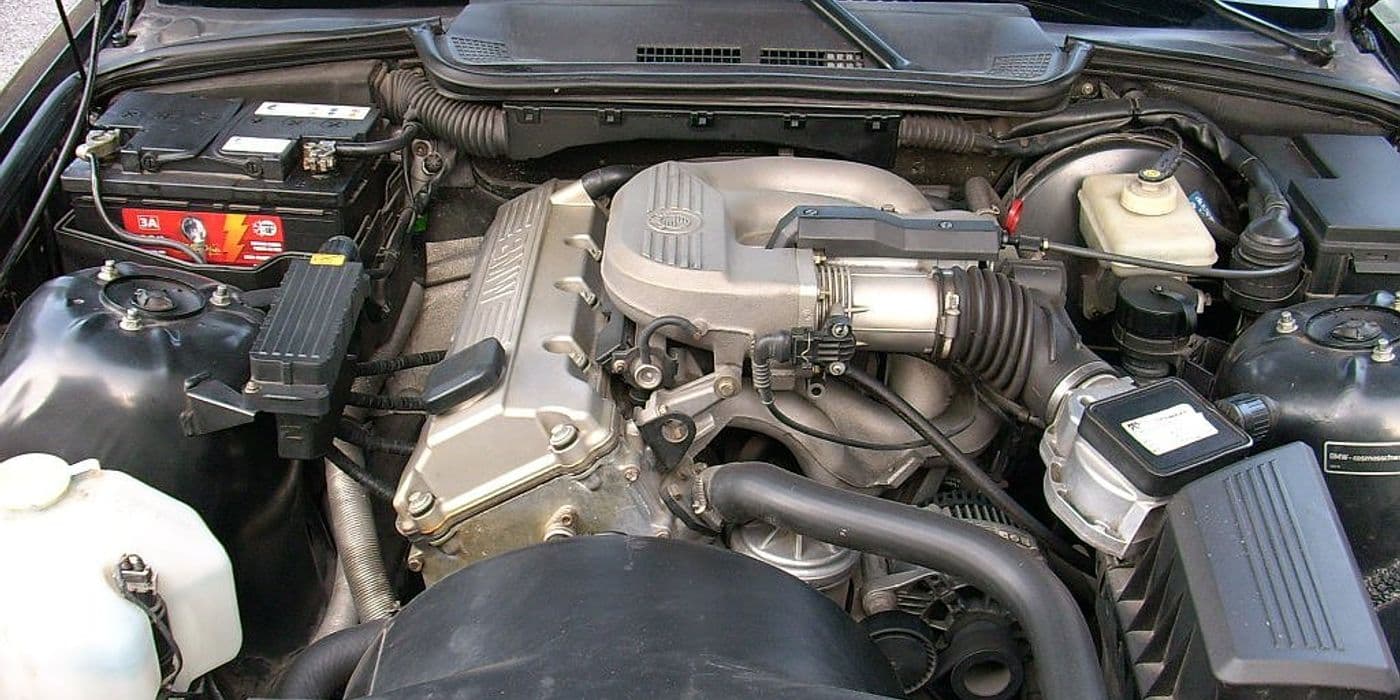
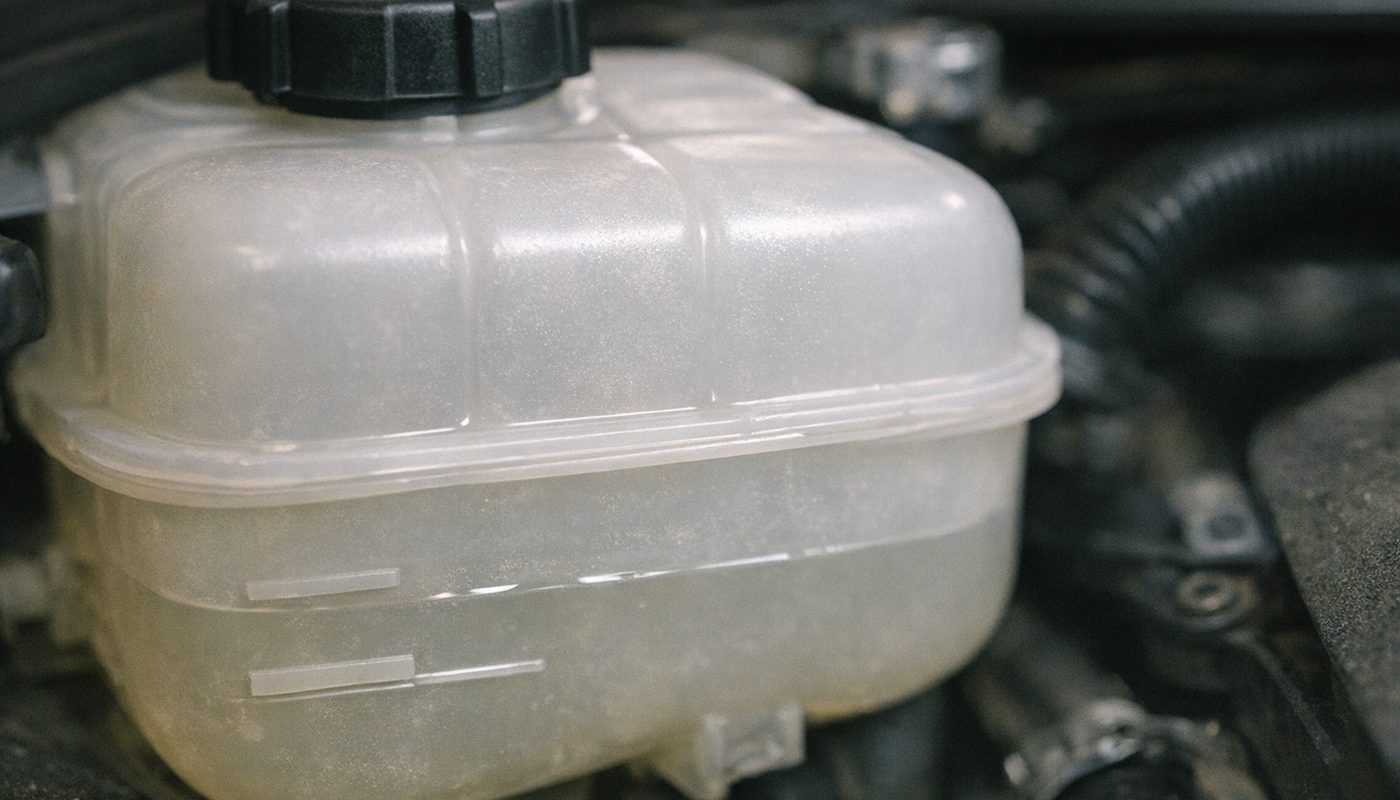
Pop the bonnet, find the expansion tank (it's the semi-transparent plastic reservoir, usually up near the front of the engine bay with a black cap that has a warning triangle moulded into it), and look at the fluid colour through the plastic. Blue is blue, purple is purple, there's not much ambiguity once you've seen both side by side. If the fluid looks brownish, rusty, or has visible sediment floating in it regardless of what colour it started as, that's your sign a flush is overdue, not a top up.
Check the underhood fill label
Most BMWs from the last decade have a small sticker near the coolant tank or on the radiator support that states the correct spec and sometimes the part number directly. It's easy to miss because it blends in with all the other emissions and tyre pressure stickers, but it's worth the thirty seconds to find, because it removes all guesswork.
Pull codes if the warning light already came on
If you're already seeing a low coolant warning on the dash, don't just top up and move on, figure out why the level dropped in the first place. A cheap OBD2 scanner will pull any stored coolant temperature or level sensor faults and can help you figure out whether you're dealing with a slow leak versus a sensor gone flaky. I run an OBDLink MX+ in my own 330i for exactly this kind of thing, cheap insurance against guessing.

If your warning light is on right now, it's worth reading through our low coolant warning diagnostic page before you do anything else, since a repeat drop in level almost always means there's a leak somewhere rather than the system just "using a bit" of coolant, which isn't really a thing on a sealed cooling system in good health.
The 50/50 Mix, Why Distilled Water Actually Matters
Concentrate versus premix
Both BMW's blue and purple concentrates need to be diluted 50/50 with distilled water before they go anywhere near your cooling system. Some parts stores sell a premix version that's already cut to the correct ratio, which is genuinely fine to use straight from the bottle if you'd rather not measure anything yourself. Just read the label carefully, because concentrate and premix bottles often look nearly identical on the shelf and only differ by a small line of text.
Why tap water is a bad idea
Tap water carries dissolved minerals that will happily precipitate out inside your cooling system over time, building up scale in narrow passages exactly like limescale builds up in a kettle. In a BMW's aluminium head and the tight passages of a modern heater core, that scale buildup reduces heat transfer efficiency and can eventually contribute to localised hot spots. Distilled water costs about the same as a bottle of soda at any supermarket, there's genuinely no excuse to cut this corner.
What Actually Happens If You Mix Blue and Purple
The additive clash
This is the bit that gets debated endlessly in owner forums, usually by someone insisting they've mixed coolants for years with no problem. Maybe they have, maybe they got lucky, but the risk is real and it's chemical, not superstition. Blue G48 and purple G40 use different corrosion inhibitor chemistries, and when you blend incompatible inhibitor packages you can get them reacting with each other rather than doing their actual job, sometimes forming a gel-like precipitate that circulates through the system.
Where that damage actually shows up
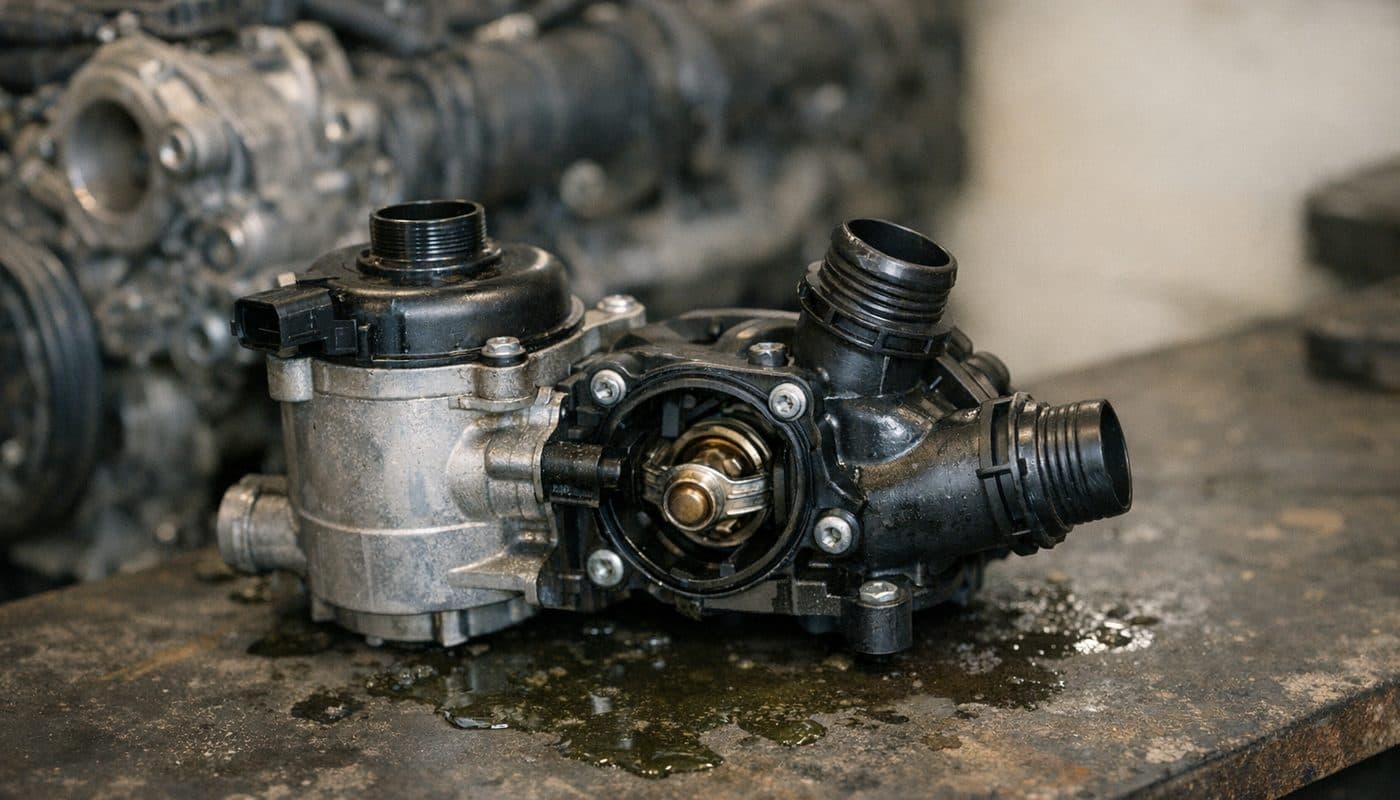
That gunk doesn't sit harmlessly at the bottom of the radiator, it travels, and it loves to settle in the narrowest passages in the system, your heater core and the tight galleries around the water pump impellor. BMW's water pumps, especially the plastic-impellor units fitted to a lot of N-series and early B-series engines, are already a known wear item even with clean, correct coolant in them. I've written a whole piece on why these things fail even when maintained properly in our water pump failure guide, and adding a coolant chemistry clash into that mix is just asking to accelerate a failure that was already somewhat inevitable.
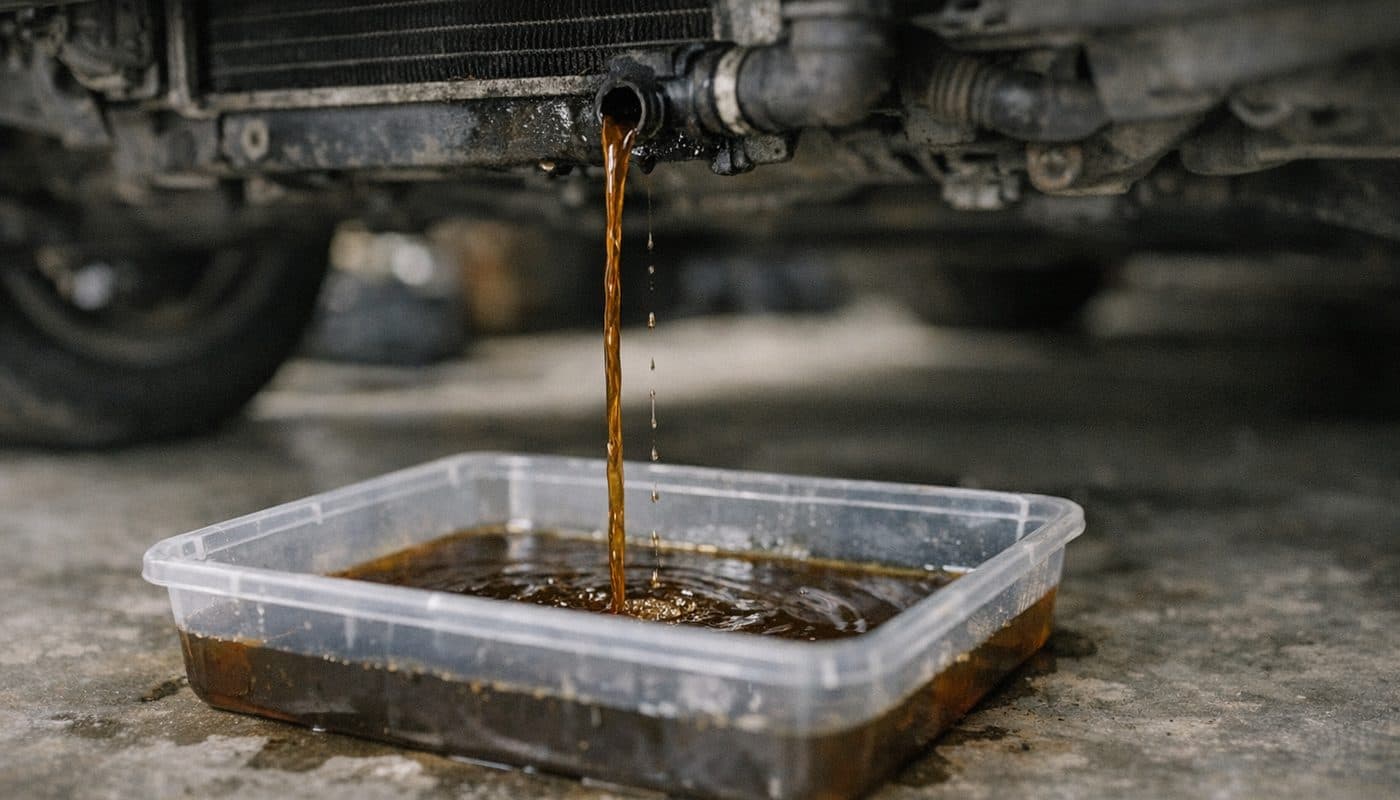
If you've inherited a car with an unknown coolant history, or you bought it used and genuinely have no idea what's in there, the safest move is a full flush rather than a top up, and starting fresh with the correct spec fluid for your chassis.
Topping Up Versus A Full Flush, What You Actually Need
When a top up is genuinely fine
If your level has dropped slightly, the fluid colour matches what should be in there, and there's no obvious contamination or discolouration, topping up with the correct 50/50 pre-mixed fluid is perfectly reasonable. Keep it between the min and max marks on the tank, don't overfill, and you're done.
When you need the full job
If the coolant looks rusty, has any oil sheen on top, smells sweet and burnt rather than the usual glycol smell, or you've genuinely got no history on the car, that's a full drain and refill situation, not a top up. While you're in there with the system drained anyway, it's a smart time to check your thermostat's condition too, since a sticking thermostat is a common reason coolant temps behave oddly even with fresh fluid in the system, and our thermostat replacement guide walks through what to look for.
What you'll actually need for the job
A few gallons of the correct concentrate for your chassis (blue or purple, check first), distilled water, a funnel that actually fits your expansion tank neck without spilling everywhere, and ideally a way to properly bleed air out of the system afterward, since BMWs are notorious for trapping air pockets in the cooling system that show up as a temp gauge that won't settle. If your car's already throwing a leak somewhere and you're not sure where, our coolant leak diagnostic page is a good place to start narrowing it down before you even open a new bottle of coolant.
OBDLink MX+ OBD2 Bluetooth Scanner
$139.95
My Own Routine On The 330i
My G20 currently runs blue G48, which I confirmed by checking the tank rather than assuming based on the build date, since my car sits right around that early-G-chassis window where BMW hadn't switched over yet. Every oil change I glance at the level and the colour, and I've got a full flush scheduled around the manufacturer interval rather than waiting for a warning light to tell me something's wrong. It's not exciting maintenance, nobody posts dyno graphs of their coolant flush, but it's one of the cheapest ways to keep a B58 running at the temperatures it was actually designed for.
FAQ
What type of coolant is best for a BMW?
The best coolant for your BMW is whichever one BMW actually specified for your chassis, either blue G48-family coolant for E and F-chassis and most early G-chassis cars, or purple G40-type coolant for later G-chassis models and BMW EVs. There isn't a universal "best" brand across the board, the correct spec matters far more than the brand name on the bottle.
What colour is BMW coolant?
It depends on the era of your car. Older and most current BMWs run a blue, phosphate-free coolant known by the G48 spec name. Newer G-chassis cars from roughly 2023 onward and all BMW EVs run a purple or pink G40-type coolant. Never assume colour from memory alone, always check your own car's tank.
Can I use any engine coolant for BMW?
Technically your engine won't seize the moment a generic coolant touches it, but no, you shouldn't use just any coolant long term. Universal or all-makes coolants use a compromise additive package that doesn't match BMW's specific corrosion inhibitors, and over years of use that increases the risk of scale buildup and localised corrosion around aluminium components and the water pump.
Is BMW coolant special?
In terms of base chemistry it's built on the same ethylene glycol foundation as most coolants, but the additive package is genuinely tuned specifically for BMW's aluminium engines, plastic and rubber hose materials, and in newer cars, the electrical components in EV thermal loops. So yes, it's special enough that swapping in something else isn't a like-for-like substitution.
How do I know if my BMW takes blue or purple coolant?
Check the expansion tank visually for the current fluid colour, and check the fill label under the bonnet if there is one. Chassis code and production year are a good starting guess, E and F-chassis and most early G-chassis are blue, later G-chassis from around 2023 and EVs are purple, but always verify visually since BMW's exact changeover dates weren't publicly broadcast.
What happens if I mix blue and purple BMW coolant?
You risk the two additive packages reacting with each other rather than doing their job, sometimes forming gel-like deposits that clog narrow passages like the heater core or water pump galleries. It's not an instant failure, but it accelerates wear and reduces cooling efficiency over time, so it's best avoided entirely.
Can I just use distilled water with no coolant at all?
No, and please don't. Coolant does more than prevent freezing, it raises the boiling point of the fluid and carries the corrosion inhibitors your aluminium engine actually needs. Straight water alone will boil far sooner under load and offers zero corrosion protection.
Does topping up coolant reset the low coolant warning?
Usually yes, once the sensor detects the level is back above the minimum threshold, the warning clears on its own or after a drive cycle. But a warning that keeps coming back after topping up means you've got a leak somewhere, not a sensor glitch, and it's worth diagnosing properly rather than just topping off repeatedly.
Bottom Line
Coolant colour confusion has been going around BMW forums for years, but the actual rule is pretty simple once you know it. E and F-chassis, and most early G-chassis, run blue G48-family coolant. Later G-chassis from around 2023 on and every BMW EV run purple G40-type coolant. Check your own car's tank before you buy anything, never mix the two families, always dilute concentrate 50/50 with distilled water, and if you're not certain what's already in there, flush it and start clean rather than gambling. Do that and your cooling system, water pump included, will owe you nothing for a long time. Drive safe, and go check that tank colour today, it takes thirty seconds.