BMW Coolant Flush - Cost, Interval, and How to Do It
Affiliate disclosure. BimmerTalk is a proud partner of the Amazon Associates Program and Turner Motorsport. We may earn a small commission on qualifying purchases through our links, at no extra cost to you. Read the full disclosure.

Every single time I do a coolant service on a customer's E90 or my own G20, I get the same question - "isn't BMW coolant lifetime? why are we touching this?" And every single time I give the same answer - marketing lifetime and mechanical lifetime are not the same thing. BMW says lifetime because they don't want a scheduled coolant flush showing up on the maintenance schedule you agreed to at delivery. That doesn't mean the orange stuff in your expansion tank is happy sitting there for 15 years.
I've pulled the plug on radiators with coolant so acidic it ate through an aluminum drain bolt, and I've seen N63 and N55 blocks with corrosion pitting around the water pump housing that started as "just a little discoloration in the tank." Coolant additive packages break down. The corrosion inhibitors get consumed. Once that happens you're not running coolant anymore, you're running water with some ethylene glycol in it, slowly attacking every aluminum surface it touches.
So here's the real deal on BMW coolant flush cost, the actual interval I use in my own shop notes, and the drain-and-bleed procedure that trips up more DIYers than any other job on the car - because getting the air out of a BMW cooling system is genuinely harder than getting the old coolant out.
4-5 yrs / 60k mi
Real interval
$250-$350
Dealer cost
$100-$250
Independent cost
$40-$100
DIY parts cost
Quick reference before we get into the weeds. This is what I tell people on the phone in about thirty seconds.
| Service Route | Typical Cost | What You Actually Get |
|---|---|---|
| Dealer | $250-$350 | Genuine coolant, ISTA-guided bleed cycle, paperwork |
| Independent BMW shop | $100-$250 | Correct coolant, experienced bleed by hand or scan tool |
| DIY | $40-$100 in fluid | Same result if you follow the bleed procedure exactly |
Dealer
- Typical Cost
- $250-$350
- What You Actually Get
- Genuine coolant, ISTA-guided bleed cycle, paperwork
Independent BMW shop
- Typical Cost
- $100-$250
- What You Actually Get
- Correct coolant, experienced bleed by hand or scan tool
DIY
- Typical Cost
- $40-$100 in fluid
- What You Actually Get
- Same result if you follow the bleed procedure exactly
Does BMW actually recommend a coolant flush
Officially, no. BMW's Condition Based Service system won't nag you about coolant the way it nags about oil or brake pads. On paper, most N20, N52, N55, and B58 engines are filled with "BMW Lifetime Coolant" and there's no mileage or year interval printed in the Owner's Manual. That's technically true and practically useless as a maintenance strategy.
What lifetime coolant really means
Lifetime, in BMW's language, means lifetime of the original fill under normal conditions, assuming nobody ever opens the system, tops it off with the wrong stuff, or drives the car for 200,000 miles. It's a legal and marketing term, not an engineering guarantee. I've broken this down in more detail in the full coolant guide if you want the chemistry side of why the additive package ages even when the fluid still looks orange or blue and pours out looking fine.
Why I still flush at 4-5 years or 60k
This is the number I actually use, and it lines up with what most good independent BMW shops run privately even though it's not printed anywhere official. Corrosion inhibitors get consumed fighting off oxidation at operating temperature. By year five, even coolant that still looks green or pink under a flashlight has usually lost a meaningful chunk of its protective capacity. On an aluminum block with a plastic-and-aluminum radiator and an electric water pump housing that's basically a corrosion time bomb if the additive package fails, that's not a risk I take with my own 330i, and it's not one I'd suggest you take either.
BMW coolant flush cost by route
Cost is where most of the search traffic lands, so let's be straight about numbers instead of vague ranges pulled from a random pricing widget.
Dealer pricing
Expect somewhere around $250 to $350 at a BMW dealer for a standard coolant service on a 3-Series, 4-Series, or X3-sized car. That price buys you genuine BMW coolant, a technician running the ISTA-guided bleed cycle which is honestly the cleanest way to bleed a modern electric-water-pump system, and a stamp in the digital service history. It's not a bad deal if your time is worth more than the labor markup, it's just not the cheapest way to get it done.
Independent shop pricing
A good BMW-focused independent will usually land you somewhere between $100 and $250 depending on the model and whether the job needs a lower hose drop or block drain for a fuller exchange. This is where I'd point most owners - you get the experience of someone who's done this job a hundred times, without dealer overhead. The trick is finding a shop that actually bleeds the system properly instead of just topping off the tank and hoping the electric pump sorts it out on its own.
DIY parts cost
If you're doing it yourself, plan on roughly $40 to $100 just in coolant, more if you're also replacing the plastic drain plugs (they're one-time-use on some models and love to snap), a new radiator cap or expansion tank cap, and maybe a lower radiator hose clamp if yours looks tired. BMW-approved coolant concentrate gets mixed 50/50 with distilled water unless you buy pre-mixed. Never use tap water, the minerals in it will undo everything you just paid for.
What an X5 or larger platform costs
Bigger engine bay, bigger cooling system, more coolant volume, and on some X5 platforms (F15/G05) a bit more disassembly to get at the radiator drain and lower hose. Realistically add $50 to $100 to every number above compared to a 3-Series. Dealer work on an X5 can push toward $300-$400, independent shops often land $150-$275, and DIY parts cost climbs mainly because you're buying more coolant concentrate to fill a larger system.
What you need before you start a DIY flush
Beyond coolant, a catch pan, and gloves (this stuff is nasty on skin and worse if a pet gets into a puddle of it), the one tool that actually matters here is a way to watch live coolant temperature and, on newer cars, trigger or monitor the bleed cycle. I don't do a coolant job anymore without a scan tool plugged in.
An OBDLink MX is what I keep in my own toolbox for exactly this - live data on coolant temp while you're bleeding, and it'll flag anything weird in the DME before you button the car back up.

If your car has an electric water pump and you want to run BimmerCode alongside it to check coding on things like the electric water pump PWM signal or auxiliary fan behavior during the bleed, the OBDLink CX is the Bluetooth 5.1 version built specifically to play nice with BimmerCode on F and G chassis cars.

OBDLink CX Bluetooth 5.1 OBD2 Adapter for BimmerCode
$79.95
Drain points by engine
This is where the forums get it wrong constantly, usually because someone with an N54 posts a procedure and someone with a B58 tries to follow it to the letter. The basic principle holds across the range, but the exact drain point access changes.
N20
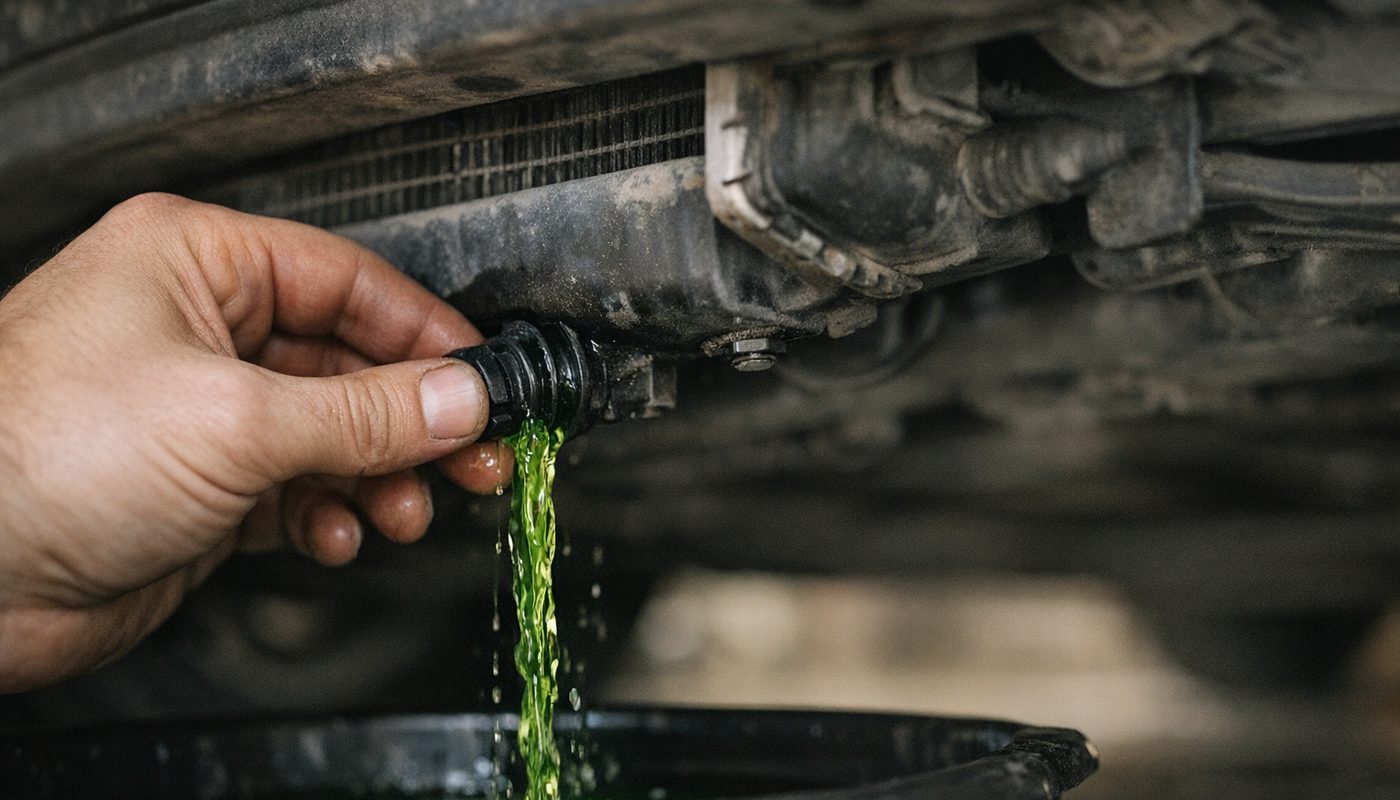
Radiator drain valve at the bottom corner of the radiator does most of the work. Cracking the lower radiator hose clamp and letting it drop gets you a fuller drain if you want to chase every last drop of old fluid out. The engine block itself isn't typically used as a service drain point on this platform, it's more trouble than it's worth for the extra coolant you'd recover.
N52
Same radiator drain plus lower hose combo. Some N52 cooling system service procedures include a block drain plug, and if it's accessible on your particular chassis it's worth using for a more complete exchange, but for a routine 60k service the radiator and hose combo gets you 90%+ of the old fluid out.
N55
Identical approach to the N52 in practice - radiator drain plus lower hose. Block drain access varies by chassis (E9x versus F-series packaging is different), use it only if it's easy to reach.
B58
Generally just the radiator drain plus lower hose. I rarely bother with a block drain on B58 cars in routine service, the access just isn't worth the extra 20 minutes for the marginal gain in old coolant removed.
Which drain point should you actually use
For routine DIY maintenance my honest recommendation is radiator drain plus lower hose every time. It's the best balance of thoroughness and time spent under the car. Save the block drain for situations where you suspect contamination, sludge, or you're doing a head gasket or water pump job anyway and the block is already exposed - check the water pump failure guide if you're in that boat since the two jobs often happen together.
Do not rely on a simple top-off if you've opened any part of the system. Old coolant hides in the heater core and lower parts of the block, and a top-off just dilutes it rather than removing it. If you crack a hose or open a drain, commit to the full drain-and-refill, don't half-do it.
How to flush BMW coolant step by step
Drain the old coolant
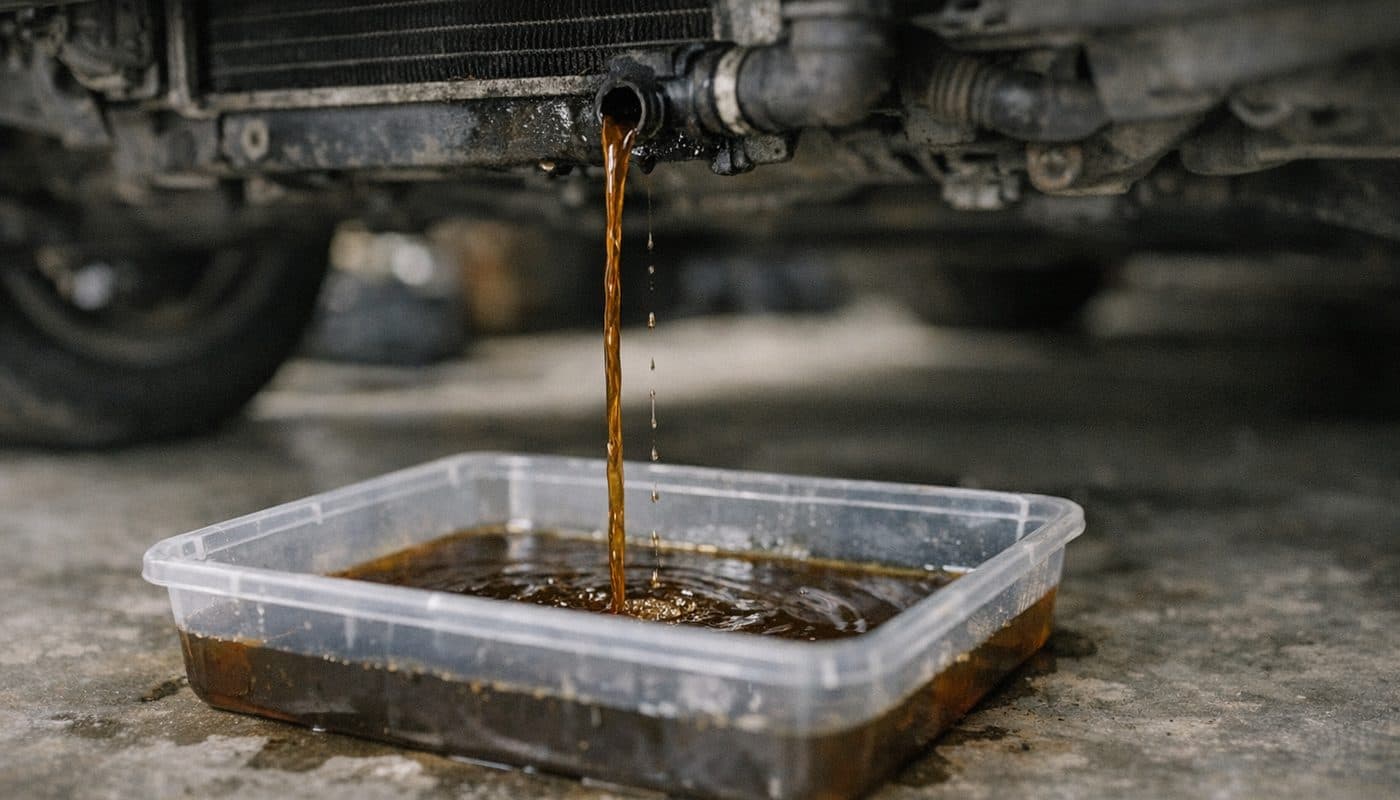
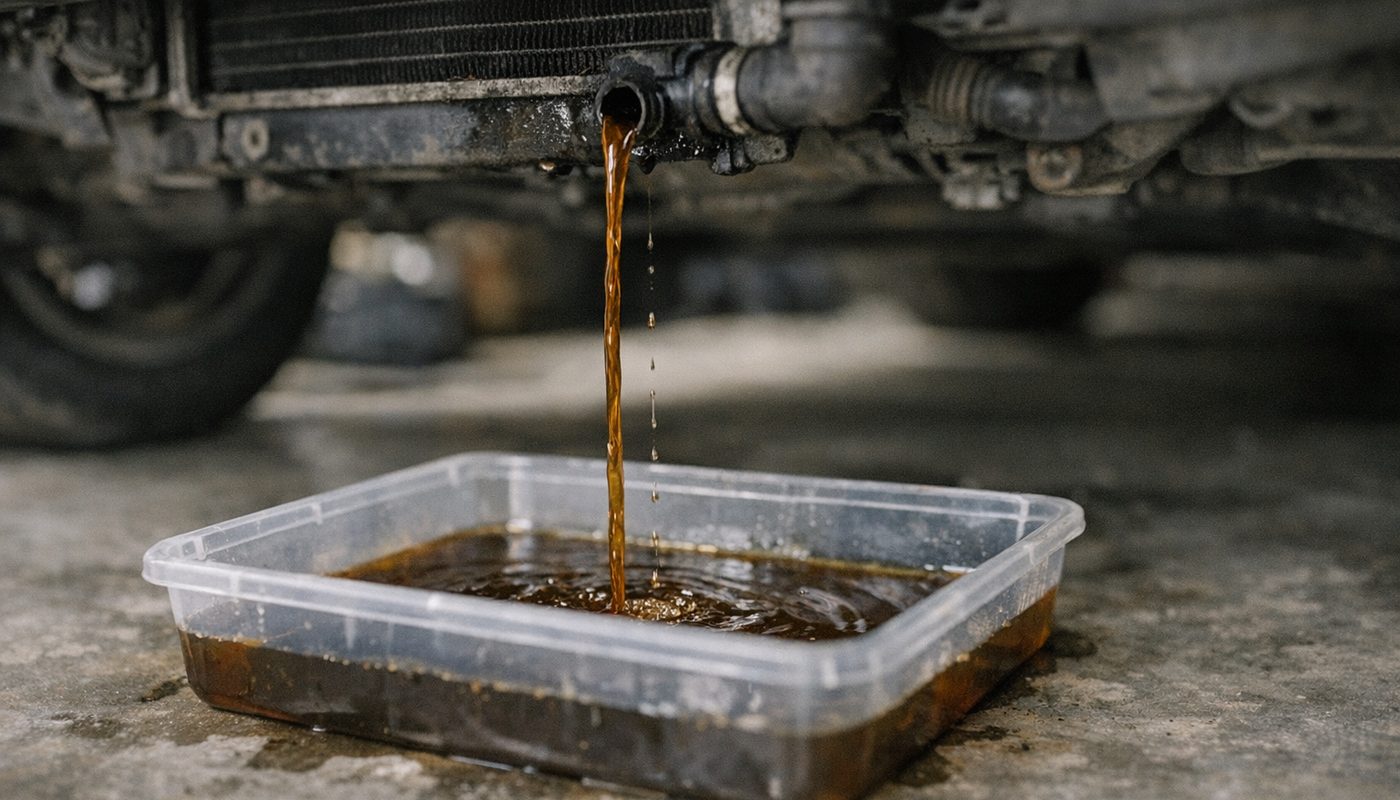
Cold engine, front of the car on ramps or jack stands for gravity assist, expansion tank cap off first to break the vacuum seal (this alone speeds up the drain dramatically). Open the radiator drain valve into your catch pan, then crack the lower radiator hose clamp once flow slows to get the last of it moving. Let it run until it's basically clear coolant with no more color coming through.
Refill with the correct mix
Close everything back up, reconnect the lower hose if you dropped it, and refill slowly through the expansion tank with your 50/50 pre-mixed BMW-approved coolant. Go slow here - pour too fast and you trap air pockets that make the bleed procedure below twice as painful. If you're not sure which coolant type your chassis actually wants, the coolant type by model guide breaks it down because BMW has used more than one formulation over the years and mixing them is a bad idea.
The bleed procedure - the part everyone gets wrong
Here's the section that actually matters more than the drain. Getting old coolant out is easy. Getting all the air back out of a BMW cooling system is the part that separates a clean job from a comeback with a "check coolant level" warning three days later.
Electric water pump self-bleed on F and G cars
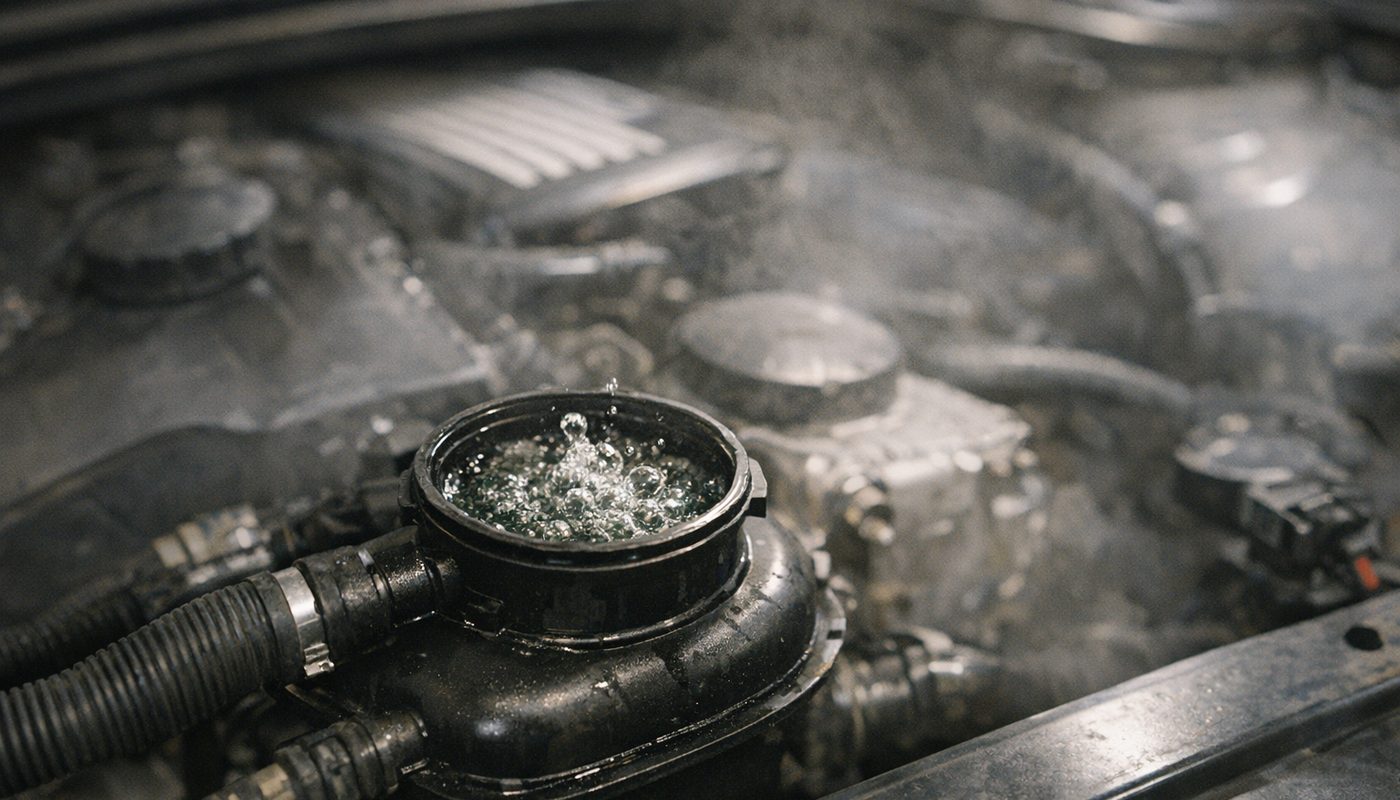
Most modern BMWs - N20, N55, B58-era cars with an electric water pump - are designed to self-bleed. With the expansion tank cap off and coolant topped up to the correct mark, you start the engine and let it idle with the heater set to max heat and the fan on low. The electric water pump runs its own cycle and pushes trapped air up through the expansion tank over several minutes. On some G-chassis cars you can trigger or monitor this through the service menu in iDrive, and I like having the OBDLink MX connected during this stage just to watch coolant temp climb steadily instead of spiking and dropping, which would tell you air is still trapped somewhere.
Manual bleed on older mechanical pump cars
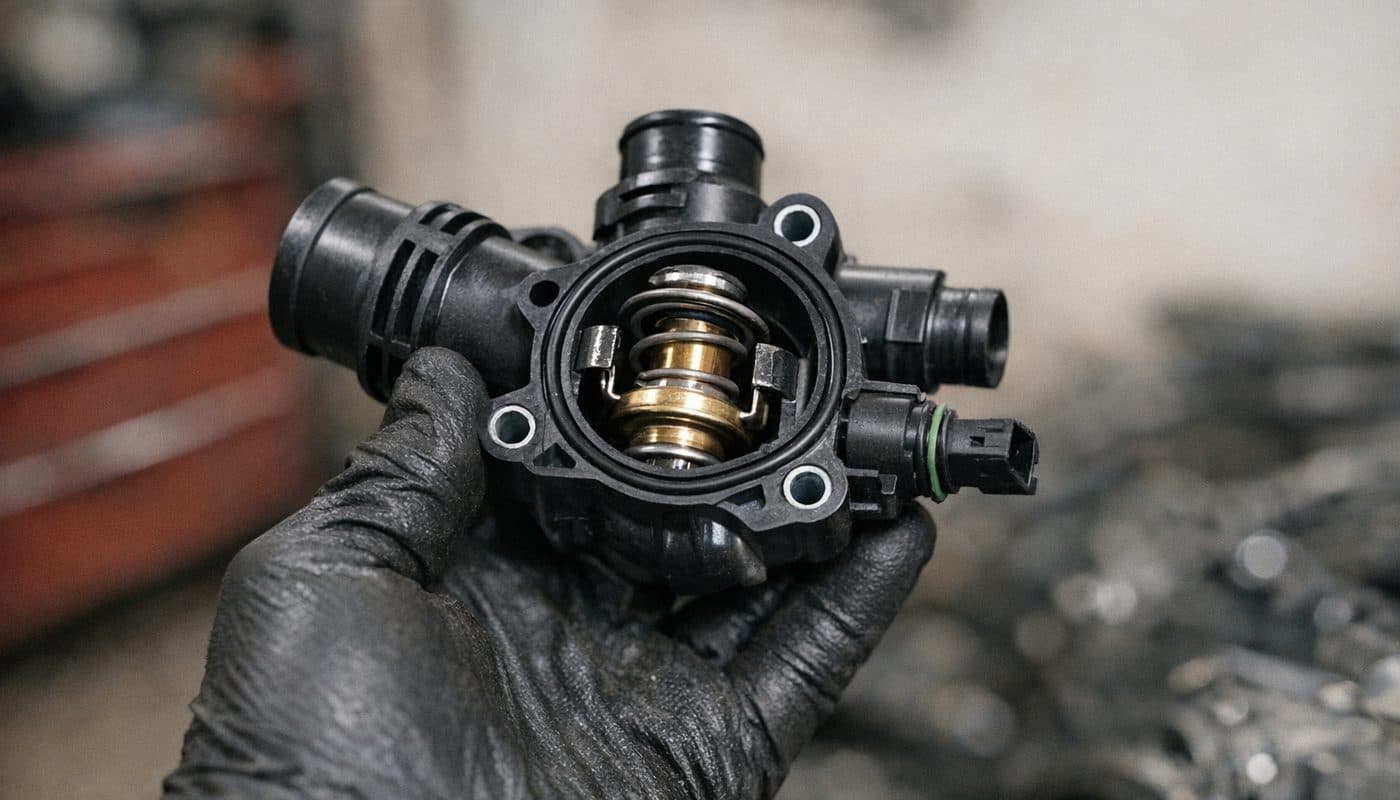
Older BMWs with a mechanical water pump - most E9x cars, earlier N52 applications - use the classic method. Front of the car raised, heater on max heat, fan on low, engine running, and you crack the bleed screw (usually on the thermostat housing or upper radiator hose area depending on chassis) until air-free coolant flows out with no bubbles, then close it. Top the expansion tank back up and repeat once the engine's had a chance to cycle through a full heat cycle and cool back down, since air likes to hide and reappear after the first real heat cycle.
The practical rule
If your car has an electric water pump, trust the self-bleed cycle and be patient, it genuinely does most of the work for you. If it's got the older mechanical pump setup, you need to manually crack that bleed screw and stay with the car through at least one full heat cycle. Mixing up which method your chassis needs is the single biggest reason DIY coolant jobs go sideways.
Airlock symptoms - how to know you didn't finish the job
An airlock doesn't always show up immediately, which is exactly why it catches people out days after they thought the job was done.
What to watch for in the first week
Intermittent or no cabin heat is the classic sign - air pockets sitting in the heater core block coolant flow through it. Watch the temp gauge too, swings or a climb toward overheating at idle point to air trapped near the thermostat housing preventing proper circulation. If your coolant level looks like it's dropped after the very first proper heat cycle, that's air working its way out and needing a top-off, not necessarily a leak.
Sounds and hose temperature checks
Gurgling or sloshing behind the dash or from the expansion tank is air moving around where it shouldn't be. Feel the upper and lower radiator hoses by hand once warm - if the upper is hot and the lower stays cold, coolant isn't circulating properly and there's likely still an air pocket blocking flow. Heater blowing hot air then suddenly going cold on you mid-drive is one of the most reliable airlock symptoms I've diagnosed over the years, and it usually means a second bleed session is needed. If any of this shows up alongside a warning light, run a scan before you assume the worst - our fault code lookup tool is a fast first step, and if the symptoms escalate toward actual overheating, the overheating diagnostics page walks through the wider list of causes beyond just trapped air.
Honest mistakes I see constantly
Using the wrong coolant color or type
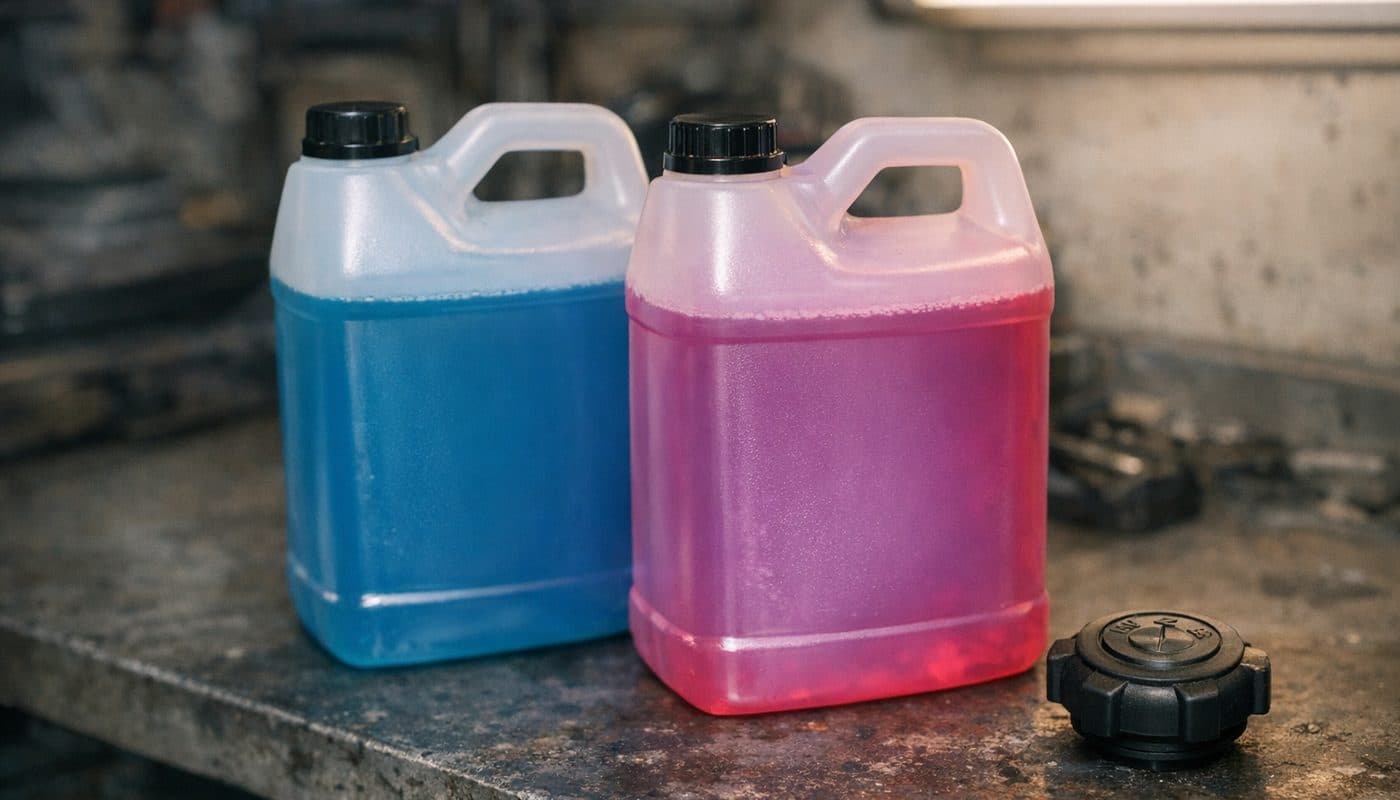
BMW has run different coolant formulations across model years and even within the same chassis generation depending on production date. Mixing blue and the newer BMW-specific formulations, or grabbing a generic green coolant off a parts store shelf because it was cheaper, is asking for gel formation and clogged passages down the line. Always match what the system originally used.
Skipping the second bleed after a heat cycle
This is the corner-cutting move that gets people. You bleed it once, it seems fine, you close everything up and go about your day. Then the car sits overnight, the metal contracts, trapped air redistributes, and now you've got a soft heater the next cold morning. A proper job includes checking coolant level and doing a quick re-bleed after the very first full heat and cool cycle.
Assuming a flush machine at a quick-lube is the same as a proper BMW service
Those pressure-flush machines some chain shops use are built for generic cars with simple gravity-bled systems. They don't understand the electric water pump self-bleed logic or the specific air trap points in a BMW heater core and rear heat exchanger. I've seen more airlock comebacks from machine-flushed BMWs than from careful hand-bled ones.
FAQ
Does BMW recommend a coolant flush
Not on a printed interval, no. BMW labels most modern coolant as lifetime fill and won't prompt you through Condition Based Service. In practice, most experienced BMW techs and independents treat it as a 4 to 5 year or roughly 60,000 mile service regardless of what the sticker says, because the corrosion inhibitors age out well before the fluid looks visibly bad.
How much does it cost to flush the coolant in a BMW
Roughly $250 to $350 at a dealer, $100 to $250 at a good independent BMW shop, and about $40 to $100 in parts if you do it yourself. The spread mostly comes down to labor rates and whether the job needs a lower hose drop or block drain for a more thorough exchange.
How much does it cost to flush the coolant in a BMW X5
Add roughly $50 to $100 on top of the 3-Series numbers above across all three routes, since the X5's larger cooling system holds more coolant and sometimes needs a bit more disassembly to reach the drain points. Dealer work often lands $300 to $400, independent shops $150 to $275, and DIY parts cost rises mainly from the extra coolant concentrate needed.
How long should coolant last in a BMW
Even with BMW's lifetime labeling, I use 4 to 5 years or about 60,000 miles as the real-world number. Corrosion inhibitors break down under repeated heat cycling long before the coolant itself looks obviously dirty, and by the time you can see acidification or discoloration with the naked eye, some corrosion has likely already started around aluminum surfaces like the water pump housing.
Can I just top off my BMW coolant instead of flushing it
Only if the system was never opened and the level dropped from normal evaporation or a tiny known seep you're monitoring. If any hose, drain, or the radiator itself was opened, a top-off just dilutes old fluid with new rather than removing what's degraded, and you still need a proper bleed to clear whatever air got introduced.
What happens if I don't flush BMW coolant on schedule
Corrosion inhibitors deplete, the coolant becomes mildly acidic, and aluminum components - radiator end tanks, water pump housing, block passages - start corroding from the inside where you can't see it. This is a genuine contributing factor in premature electric water pump failure on N20 and N55 engines, which is why I treat the flush interval as preventive maintenance rather than optional pampering.
Do I need a scan tool to bleed a BMW cooling system
Not strictly required on every chassis, but it makes the job far less guesswork, especially on F and G cars with the electric water pump self-bleed logic. Watching live coolant temperature data while the bleed cycle runs tells you immediately whether circulation is normal or whether there's still a trapped pocket, rather than hoping the dash gauge tells the full story.
Bottom line
BMW's lifetime coolant claim is technically defensible and practically a bit of a dodge. Treat it as a 4 to 5 year or 60,000 mile job, pick your route based on your own time versus money calculation - dealer for convenience, independent for the best value, DIY if you've got a Saturday and don't mind being patient with the bleed - and whatever you do, don't skip or rush the bleed procedure. That's the step that actually determines whether this was a clean service or a comeback with a soft heater and a worried look at the temp gauge. Get the air out properly and this is one of the cheapest bits of insurance you can buy for a BMW cooling system.