BMW Electric Water Pump Failure - Symptoms and Cost
Affiliate disclosure. BimmerTalk is a proud partner of the Amazon Associates Program and Turner Motorsport. We may earn a small commission on qualifying purchases through our links, at no extra cost to you. Read the full disclosure.

I've had this exact conversation more times than I can count. Customer pulls in, says the heater's been "weird" for a week, blowing lukewarm at idle then fine on the highway. Nine times out of ten I already know what's coming before I even hook up a scanner, because I've seen this movie on E90 328s, F30 328i/335i cars, F10 535i, and now plenty of G05 X5s too.
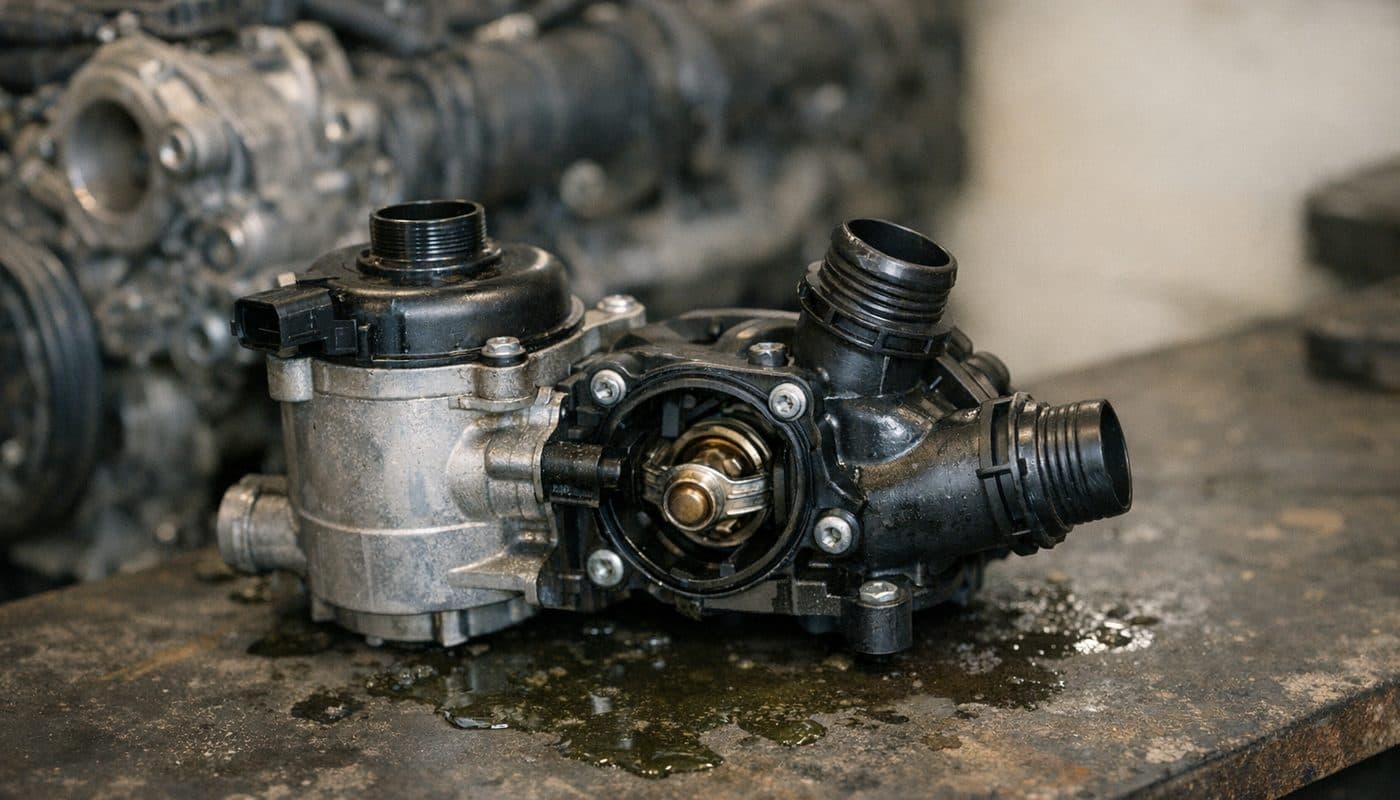
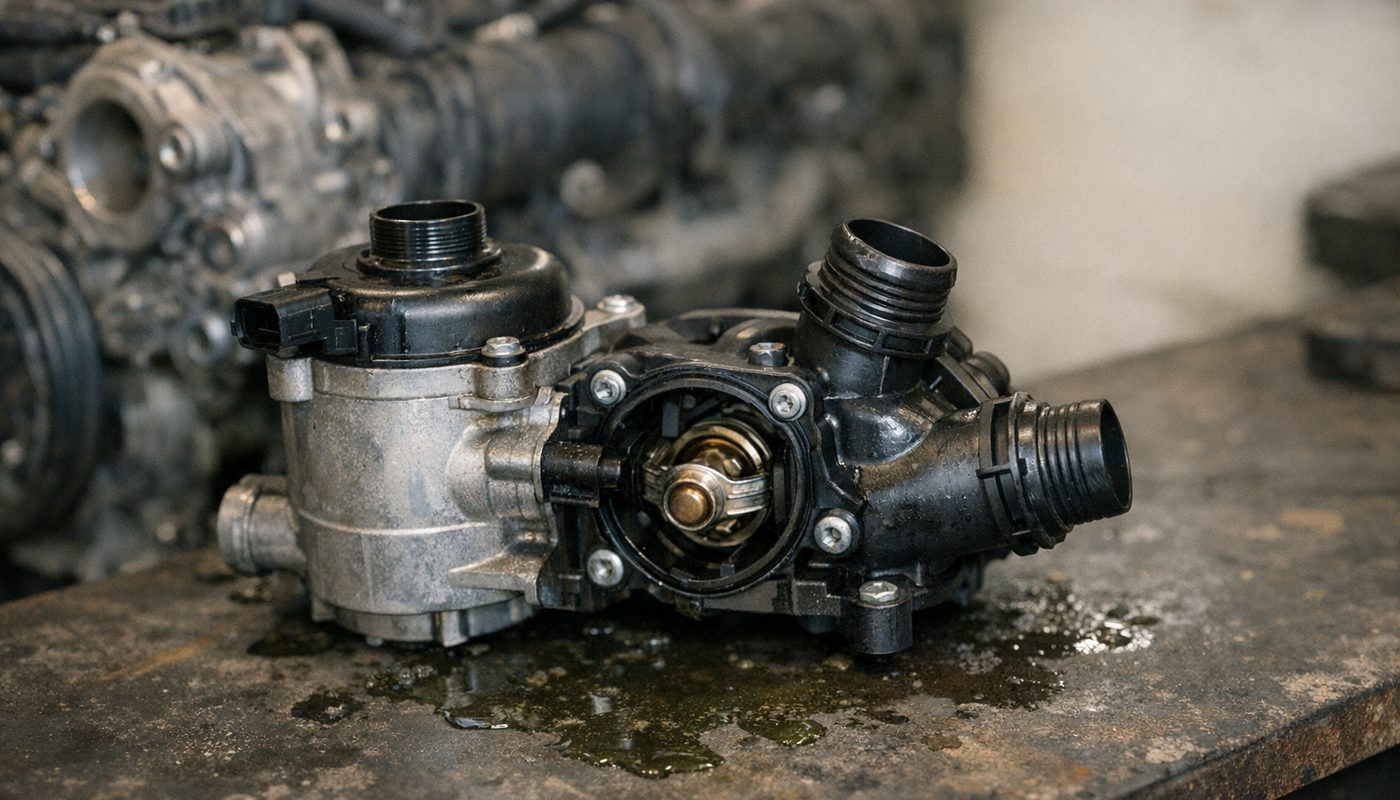
The electric water pump on BMW's turbo engines is one of those parts that gives you just enough warning to save yourself a tow bill, if you know what to look for. Most owners don't, because BMW doesn't exactly send you a birthday card at 70,000 miles telling you the pump's on borrowed time.
I've replaced enough of these - in my own driveway, at the dealer, and now writing about them for a living - that I can walk you through the whole thing honestly. What actually fails, what it costs depending on where you take it, and the fault codes your scanner will show weeks before the car strands you on the shoulder.
60k-100k miles
Typical failure window
$900-1300
Dealer replacement cost
$600-900
Indy shop cost
$250-400
DIY parts cost
Which BMW engines actually get hit by this
This isn't every BMW ever built. The electric water pump story really starts with the N54 (the early 335i twin-turbo) and carries through the N55, N20, N63, and S63. Those are the ones I get calls about constantly. The B58 in my own G20 330i uses a similar electrically-driven pump architecture, and while it's proven a bit more durable so far, I'm not naive enough to think it's immune, it's just newer and hasn't racked up the mileage yet on the used market.
N54 and N55 (E90, E92, F30, F10, F22)
These are the poster children. BMW ditched the old belt-driven mechanical pump for an electronically controlled unit that lets the DME vary flow based on load and temperature, which is great for efficiency and emissions, less great for long-term reliability. Pierburg supplies most of these, and they're a wear item, not a lifetime part.
N20 four-cylinder turbo
The N20 in the F30 328i and X1/X3 tends to show pump issues on the earlier side of the range, sometimes as early as 60,000 miles. If you're shopping a used N20 car, budget for this the way you'd budget for a timing chain guide inspection.
N63 and S63 V8s (F10 550i, F13 M6, X5/X6 50i)
Same electric pump concept, bigger consequences if it lets go because these engines run hotter and the access is worse. Labor climbs fast on these because half the front end sometimes has to come apart.
| Engine | Common Failure Mileage | Notes |
|---|---|---|
| N54 | 60k-90k | Early adopter of electric pump, Pierburg OE |
| N55 | 70k-100k | Slightly improved but same failure pattern |
| N20 | 55k-85k | Tends toward earlier failure than N55 |
| N63/S63 | 65k-95k | Higher labor cost due to access |
N54
- Common Failure Mileage
- 60k-90k
- Notes
- Early adopter of electric pump, Pierburg OE
N55
- Common Failure Mileage
- 70k-100k
- Notes
- Slightly improved but same failure pattern
N20
- Common Failure Mileage
- 55k-85k
- Notes
- Tends toward earlier failure than N55
N63/S63
- Common Failure Mileage
- 65k-95k
- Notes
- Higher labor cost due to access
The symptoms, in the order they actually show up
Nobody's pump just dies cold with zero warning, at least not usually. It's a gradual thing that likes to hide in the "eh, probably nothing" category until it isn't. I always tell people to run any of these past a fault code scan rather than shrugging them off.
Weak or cold heater first
This is the sneaky one. Coolant flow through the heater core drops before you ever see a warning light, so you get a heater that's warm on the highway but tepid at idle or in stop-and-go traffic. If your heat has gotten worse over the last month or two and nobody's touched the thermostat, that's pump wear, not just "old car being old."
Overheating warning on the cluster
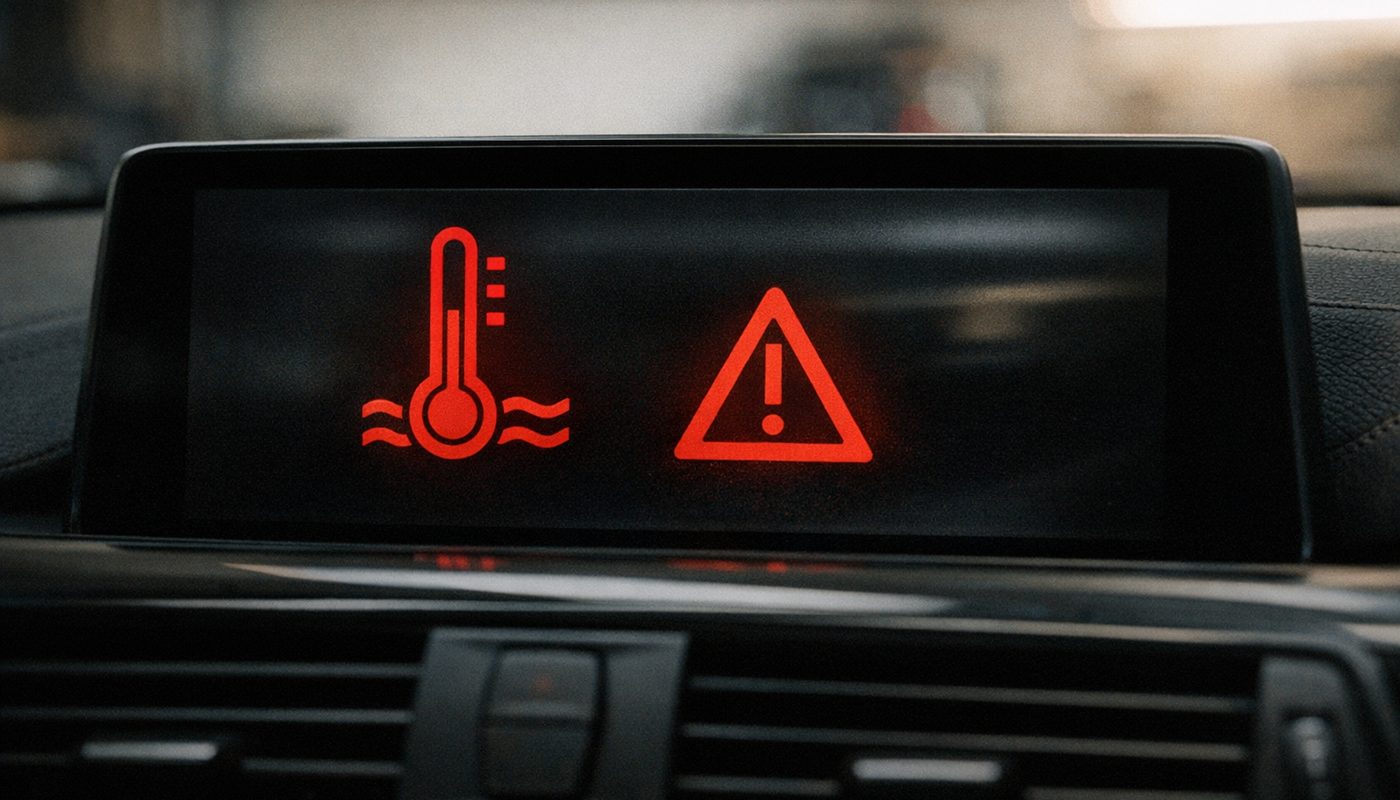
Eventually you'll get the dreaded message, something like "engine overheating, drive moderately" with a red temp symbol lighting up the iDrive screen. This is the DME telling you flow has dropped enough that it's worried about detonation and head gasket damage. Don't keep driving on this one hoping it clears itself.
Limp mode and reduced power
Once the DME sees a real overheat risk, it'll pull timing and cap RPM to protect the engine. If your 335i or 328i suddenly feels like it's got a wet blanket over the turbo and the power delivery is flat, don't assume it's a boost leak, check for a cooling fault first. I've got a full breakdown of overheating causes and what else can trigger this exact symptom over on the overheating diagnostic page if you want to rule other stuff out.
A fault code sitting there before any of the above
This is the part nobody talks about enough. In a huge number of cases, the DME logs a pump-related fault days or weeks before you ever feel anything from the driver's seat. If you've got a code reader in the glovebox and you're the type who checks it every oil change, you can catch this thing at the "annoying repair bill" stage instead of the "tow truck" stage.
The early warning fault codes your scanner will show
This is honestly the most useful part of this whole article, because it's the difference between planning a repair on your schedule versus getting towed on someone else's. Grab a decent Bluetooth OBD2 adapter and an app that reads BMW-specific codes, not just generic OBD2, because a lot of this stuff won't show on a basic code reader.
| Code | What it means | Urgency |
|---|---|---|
| 2E81 | Coolant pump speed deviation | Get it looked at within days |
| 2E82 | Coolant pump cutoff/shutdown | High, pump is actively failing |
| 2E83 | Pump performance/plausibility fault | Moderate, early warning |
| 2E85 | Pump control/electrical fault | High |
| 2E8B | Pump communication fault | Moderate |
| P0128 | Coolant below thermostat regulating temp | Often points to thermostat too |
| P0597/P0598/P0599 | Thermostat heater circuit fault | Do the thermostat while you're in there |
2E81
- What it means
- Coolant pump speed deviation
- Urgency
- Get it looked at within days
2E82
- What it means
- Coolant pump cutoff/shutdown
- Urgency
- High, pump is actively failing
2E83
- What it means
- Pump performance/plausibility fault
- Urgency
- Moderate, early warning
2E85
- What it means
- Pump control/electrical fault
- Urgency
- High
2E8B
- What it means
- Pump communication fault
- Urgency
- Moderate
P0128
- What it means
- Coolant below thermostat regulating temp
- Urgency
- Often points to thermostat too
P0597/P0598/P0599
- What it means
- Thermostat heater circuit fault
- Urgency
- Do the thermostat while you're in there
If any of these pop up, don't just clear them and move on. I know it's tempting, the car drives fine right now, but codes like 2E82 mean the pump is already cutting out intermittently. Clearing it without addressing it just resets the clock until it happens again, usually at a worse moment. For a broader rundown on how to read and act on any BMW fault code, my check engine light guide covers the process end to end, and the fault code lookup tool is handy for decoding whatever your scanner spits out on the spot.

OBDLink MX+ OBD2 Bluetooth Scanner
$139.95
How long does a BMW water pump actually last
Straight answer, most of these electric pumps are good for somewhere between 60,000 and 100,000 miles, with N20s sometimes going earlier and well-maintained N55s occasionally stretching past that. I've seen a few oddballs die at 45,000 miles and a few stubborn survivors still going at 120,000, but if you're planning around an average, treat it as a wear item due sometime in that 60-100k window, same mental bucket as a water pump on any car with a timing belt, except BMW's version is electronic and a bit more expensive to replace.
It rarely dies in one clean instant either. It's usually intermittent at first, works fine most of the time, then hiccups under load or when hot, then eventually the hiccups become the new normal before it quits for good. That gradual pattern is actually good news for you, it means there's a window to catch it.
What it costs to actually fix
This is where I see the widest range of quotes, and a lot of it comes down to whether you're at a dealer, an independent shop, or doing it yourself in the garage.
Dealer pricing
Expect somewhere around $900 to $1,300 at a BMW dealer for pump and thermostat together, sometimes higher on V8 platforms where access is worse. You're paying for genuine parts, factory labor times, and the fact that dealer techs bill at a higher hourly rate. It's not a ripoff, it's just dealer economics.
Independent shop pricing
A solid independent BMW specialist will usually land somewhere between $600 and $900 for the same job, using either genuine Pierburg parts or a quality aftermarket equivalent. This is where I send most people who don't want to DIY but also don't need the dealer waiting room and shuttle service.
DIY parts cost
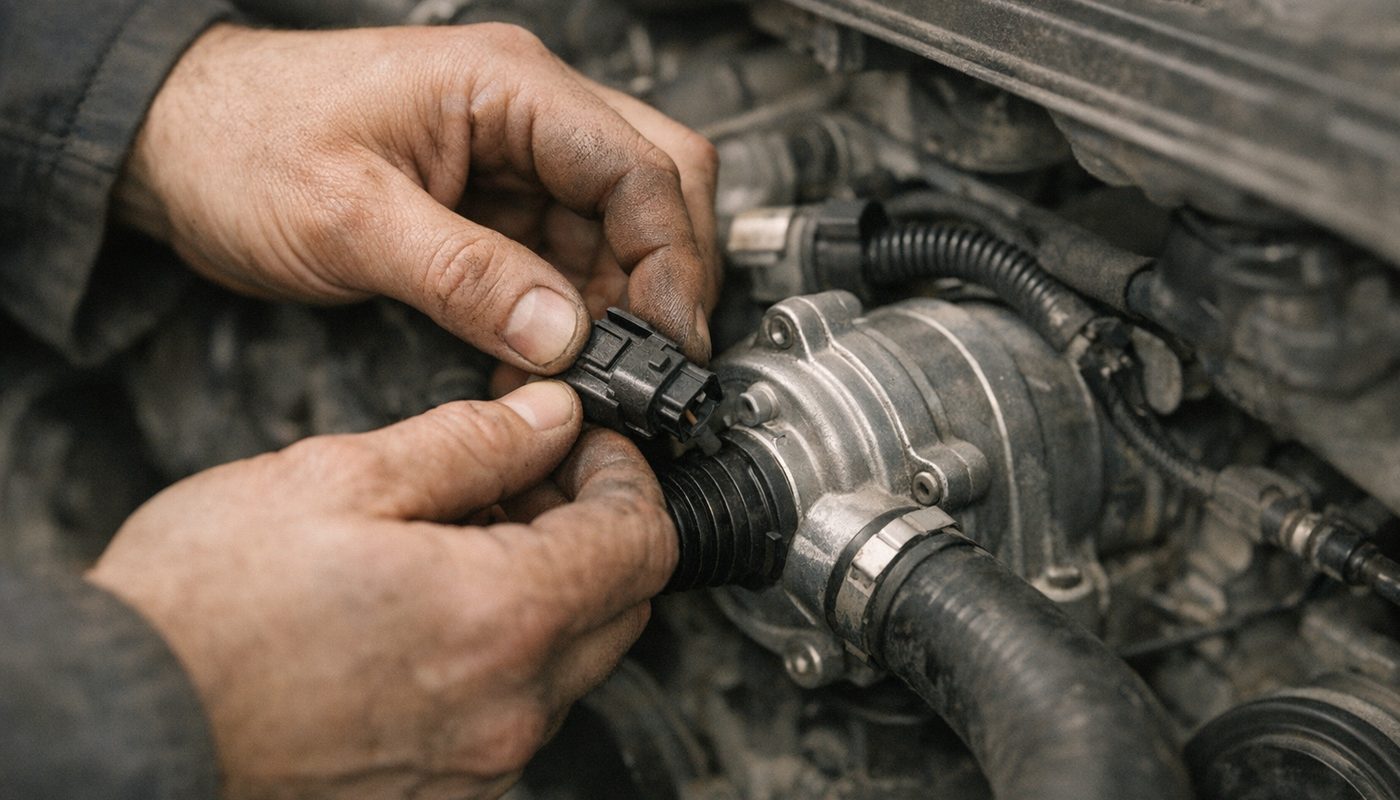
If you're comfortable with a socket set and don't mind a little coolant on your hands, the pump itself runs roughly $250 to $400 depending on brand, plus coolant, and maybe a new thermostat while you're in there. I'll be honest, this is a moderate difficulty job on most of these engines, not a beginner one, mainly because of clearing coolant lines and getting the bleeding procedure right so you don't trap air pockets that cause phantom overheating complaints afterward.
| Option | Typical Cost | Best for |
|---|---|---|
| Dealer | $900-1300 | Warranty peace of mind, genuine parts |
| Independent shop | $600-900 | Best value with quality parts |
| DIY | $250-400 (parts only) | Confident home mechanics |
Dealer
- Typical Cost
- $900-1300
- Best for
- Warranty peace of mind, genuine parts
Independent shop
- Typical Cost
- $600-900
- Best for
- Best value with quality parts
DIY
- Typical Cost
- $250-400 (parts only)
- Best for
- Confident home mechanics
Whatever route you pick, avoid the cheap Chinese knockoff pumps floating around online marketplaces. I've pulled a few of these off cars that failed again within a year, and the labor to redo it eats any savings you thought you got.
Why you always do the thermostat at the same time
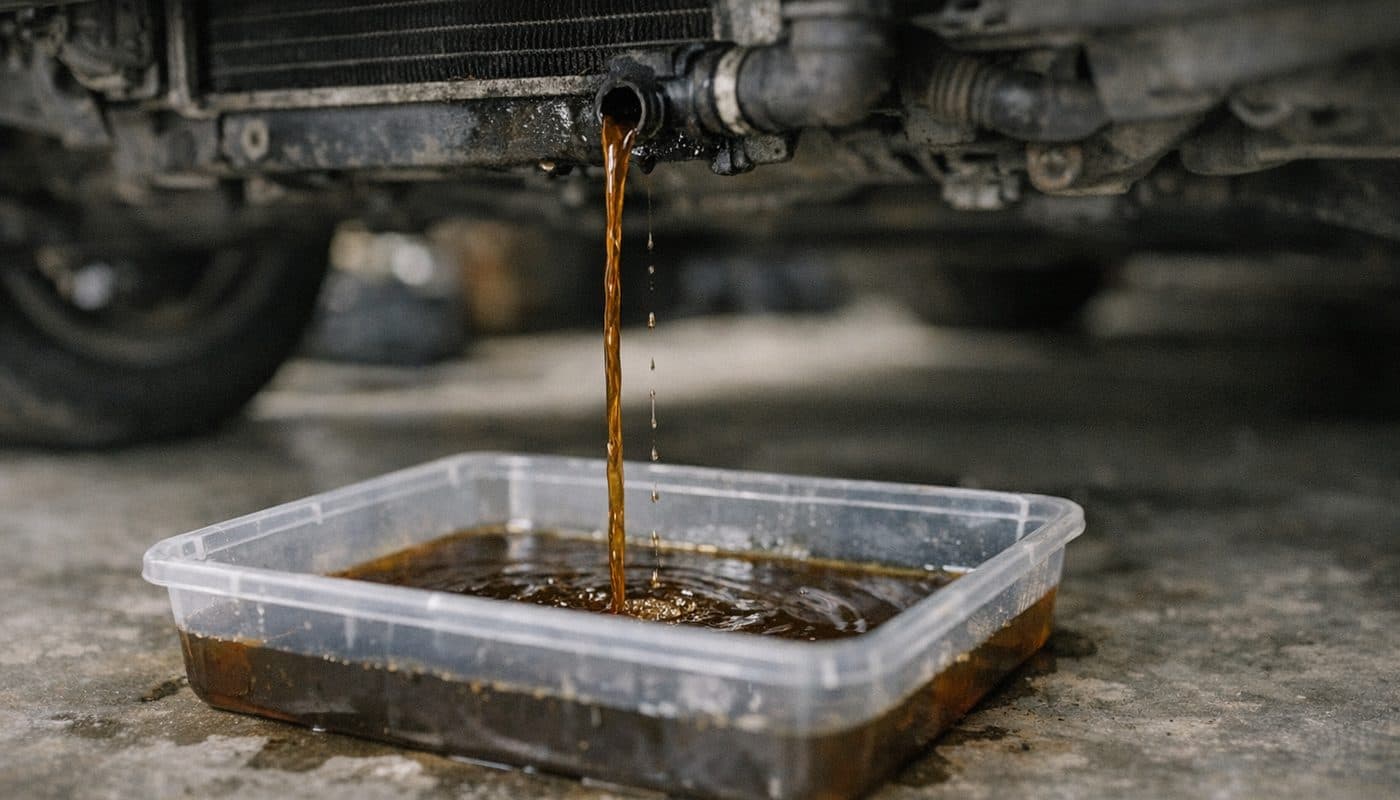
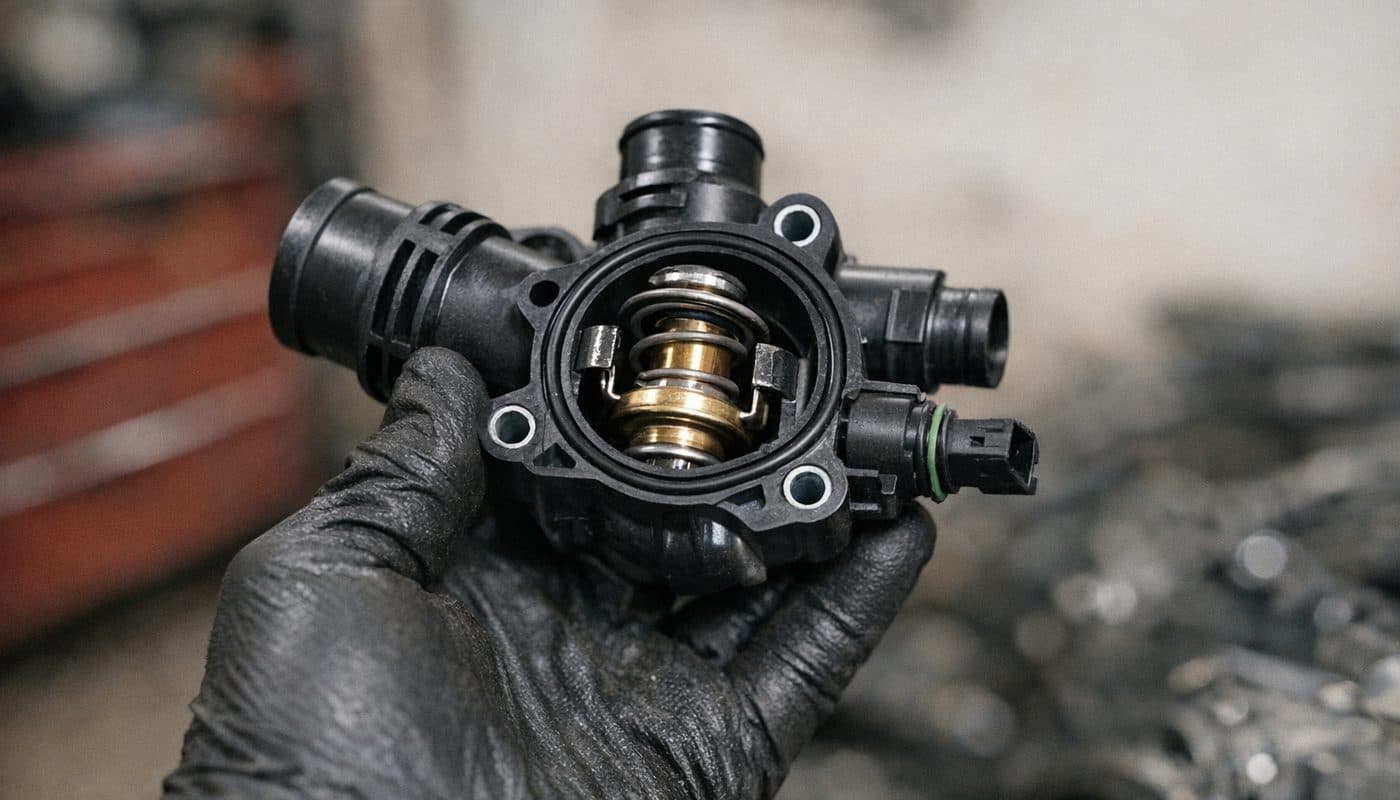
I mentioned this earlier and I want to actually explain the "why" because it's not just an upsell shops tack on. The thermostat on these cars lives right in the same corner of the cooling system, sees the same heat cycles, and ages at roughly the same rate as the pump. When a shop has already got the front of the engine opened up, cooling system drained, and everything accessible, doing the thermostat at the same time adds maybe an hour of labor instead of paying for that access twice down the road.
The map-controlled thermostat angle
A lot of these engines use an electronically controlled thermostat rather than a simple wax pellet unit, and its heater circuit can throw its own codes, things like P0597, P0598, or P0599, plus P0128 for coolant not reaching regulating temperature fast enough. If you're pulling codes and see both a pump code and a thermostat-related code together, that's actually a pretty normal combination, not a coincidence.
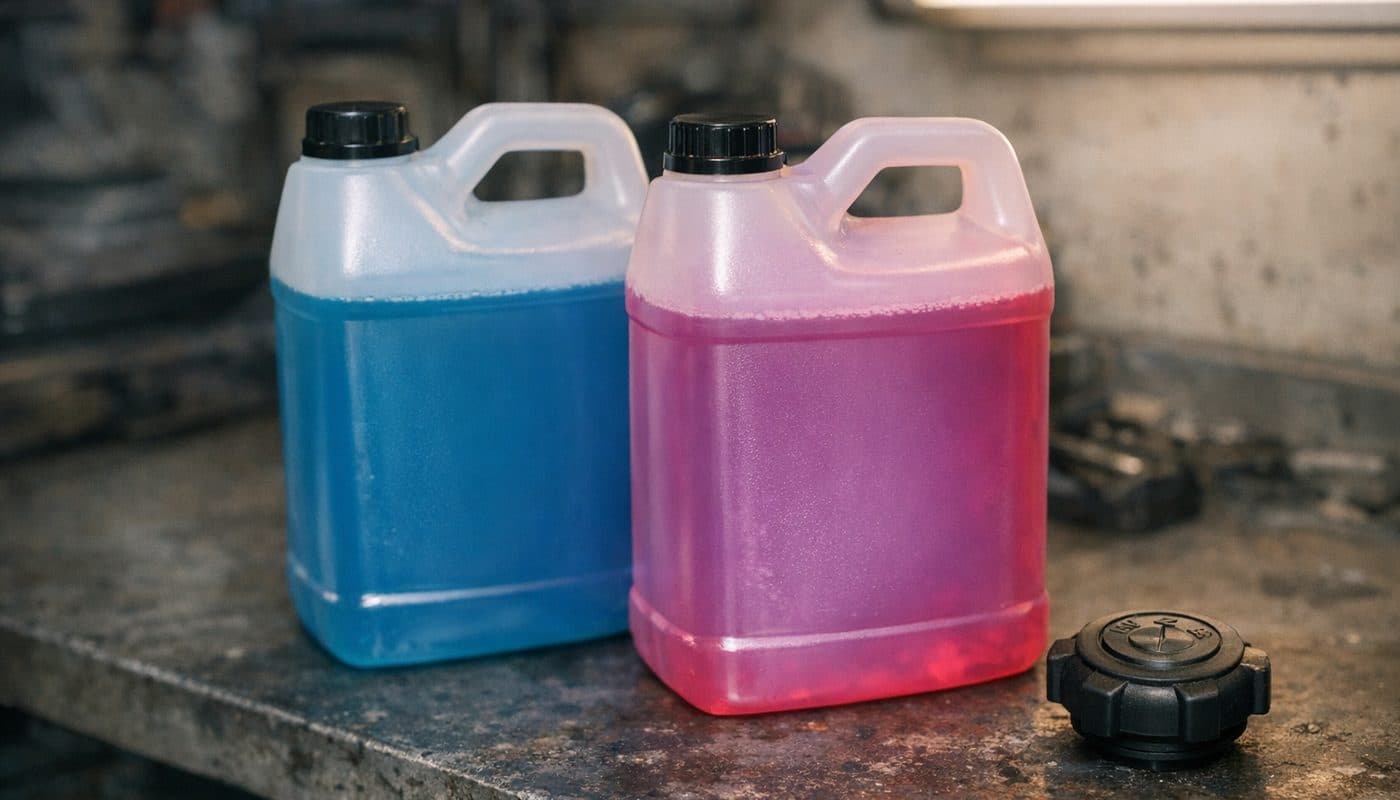
I've got a dedicated writeup on thermostat replacement that goes deeper into the parts and labor specifics if you want the full picture on that half of the job. And whatever you refill with, make sure it's the right spec, BMW is picky about coolant chemistry and mixing types can cause its own set of headaches, which is exactly why I wrote the coolant type by model guide and the broader coolant guide.
Is there a recall on the BMW water pump
Short answer, no blanket recall exists for the electric water pump across N54/N55/N20/N63 platforms. There have been some limited service bulletins and occasional goodwill extensions on specific model years, and I've seen a handful of cases where BMW covered part of the cost outside of warranty as a customer relations gesture, especially on lower-mileage cars still within a reasonable window past the powertrain warranty. But don't count on it. If your car's out of warranty, budget for the repair like any other wear item, and treat any dealer goodwill as a pleasant surprise rather than an expectation.
DIY versus paying someone, and what you actually need
If you're the type who already owns a floor jack and isn't scared of a coolant system bleed procedure, this is a very doable weekend job on most of these engines. If you'd rather not, I get it, coolant systems that trap air pockets can cause a comeback overheating complaint that's more annoying to chase than the original repair.
What you need before you start
Beyond the pump and thermostat themselves, you want fresh BMW-spec coolant (not the green stuff from the parts store shelf), new O-rings and gaskets rather than reusing old ones, and a way to properly bleed the system, some of these have a bleed screw, others want you to run the engine with the cap off in a specific sequence. Before you even pull anything apart though, get a real diagnosis. A generic code reader from the auto parts store often won't show you the manufacturer-specific pump codes like 2E81 or 2E82, so you're flying blind.

OBDLink CX Bluetooth 5.1 OBD2 Adapter for BimmerCode
$79.95
When to just pay a shop
If your car's a V8 platform where the pump sits buried behind the intake manifold, or if you don't have a lift and the thought of working under a car on jack stands for three hours makes you nervous, pay the independent shop rate. It's genuinely good value at $600-900 and you're not risking an air-locked cooling system that overheats your engine two weeks after a DIY job because of a bleed procedure mistake.
What happens if you ignore the warning signs
I've seen this go badly enough times that I'm going to be blunt about it. Continuing to drive on an active overheating warning, even "just to get home," risks warping a cylinder head or blowing a head gasket. That turns a $600-900 repair into something in the $3,000+ range, sometimes more if it's an N63 or S63 with more complex heads. The pump itself is cheap in the grand scheme of BMW repairs. What it protects is not.
If the warning comes on, pull over, shut the car off, let it cool, and get it to a shop rather than nursing it home across town. It's genuinely not worth the gamble.
FAQ
How much does it cost to fix a water pump in a BMW
Figure roughly $900 to $1,300 at a dealer, $600 to $900 at a good independent shop, and around $250 to $400 in parts alone if you're doing it yourself. Most of that variation comes down to labor rate and whether the thermostat gets done at the same time, which it should.
How serious is a water pump failure
It's serious enough to act on quickly but it's not usually catastrophic if you catch it early. The real danger is ignoring the warning signs and continuing to drive on an active overheat, which can lead to head gasket or cylinder head damage that costs many times more than the pump itself.
How long should a BMW water pump last
Most fail somewhere between 60,000 and 100,000 miles, with N20 engines sometimes on the earlier end and N55s occasionally stretching a bit further. Treat it as a scheduled wear item rather than something that should last the life of the car.
Is there a recall on the BMW water pump
No broad recall exists across the N54/N55/N20/N63 lineup. There have been isolated service bulletins and occasional goodwill coverage on specific cases, but you shouldn't plan your budget around getting one.
What are the earliest signs before it fully fails
Weak heat at idle that's fine on the highway, and a stored fault code like 2E81 or 2E83 that hasn't triggered a dash warning yet. Catching either of these early is how you avoid getting stranded.
Can I just clear the fault code and keep driving
You can, but I wouldn't recommend it. Clearing a pump-related code without fixing the underlying issue just resets the countdown, and it usually comes back at a less convenient moment, sometimes with more damage attached.
Does the N54 have the same pump issue as the N55
Yes, arguably it was the platform that started this whole story since it was one of BMW's first electric pump applications on a mass-produced turbo engine. Same general failure window, same symptoms.
Should I replace the pump preventively before it fails
If you're already past 80,000-90,000 miles on an N54, N55, or N20 and the pump has never been touched, I'd lean toward doing it proactively during a coolant service rather than waiting for a stranded-on-the-shoulder moment, especially if you're planning to keep the car long term.
Bottom line
The electric water pump is one of those parts BMW got right on paper, better efficiency, smarter cooling, but wrong on longevity. If you own an N54, N55, N20, N63, or S63, it's not a matter of if, it's when, and the good news is your car will almost always tell you before it happens if you're paying attention to the heater and running a scan every so often. Catch the early codes, do the thermostat while you're in there, and you'll spend a few hundred bucks instead of a few thousand. I've been burned enough times by people ignoring the warning signs that I'd rather you hear it from me first. Drive safe out there.