MICHELIN BMW Parts
Browse 18 MICHELIN products for BMW. Filter by category or model to find exactly what fits your Bimmer.
Affiliate disclosure. BimmerTalk is a proud partner of the Amazon Associates Program and Turner Motorsport. We may earn a small commission on qualifying purchases through our links, at no extra cost to you. Read the full disclosure.


MICHELIN Pilot Sport 4 ZP - Summer Tire for BMW M
MICHELIN
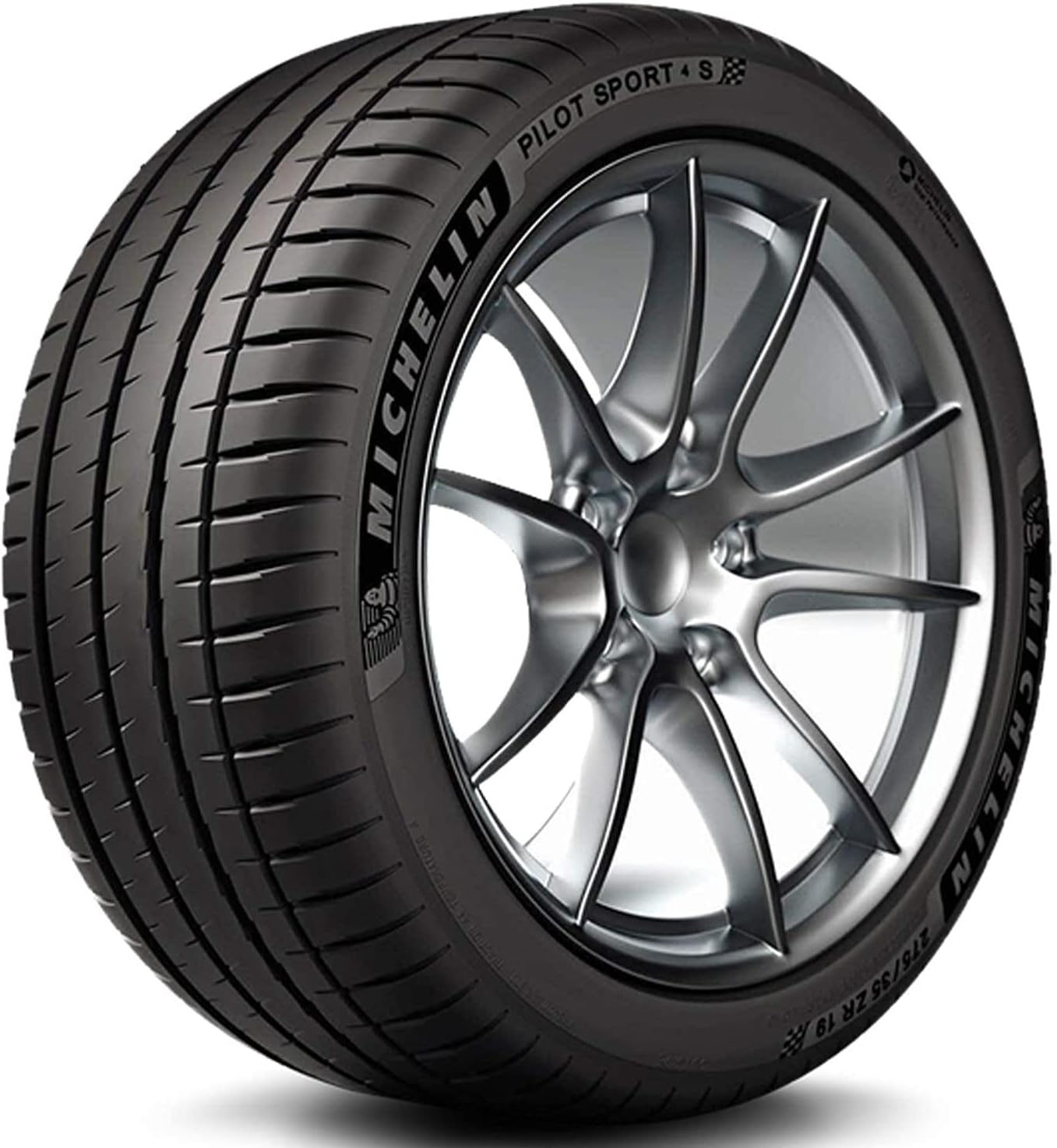
Michelin Pilot Sport 4S 235/35ZR20 92Y XL Ultra High Performance Tire
MICHELIN
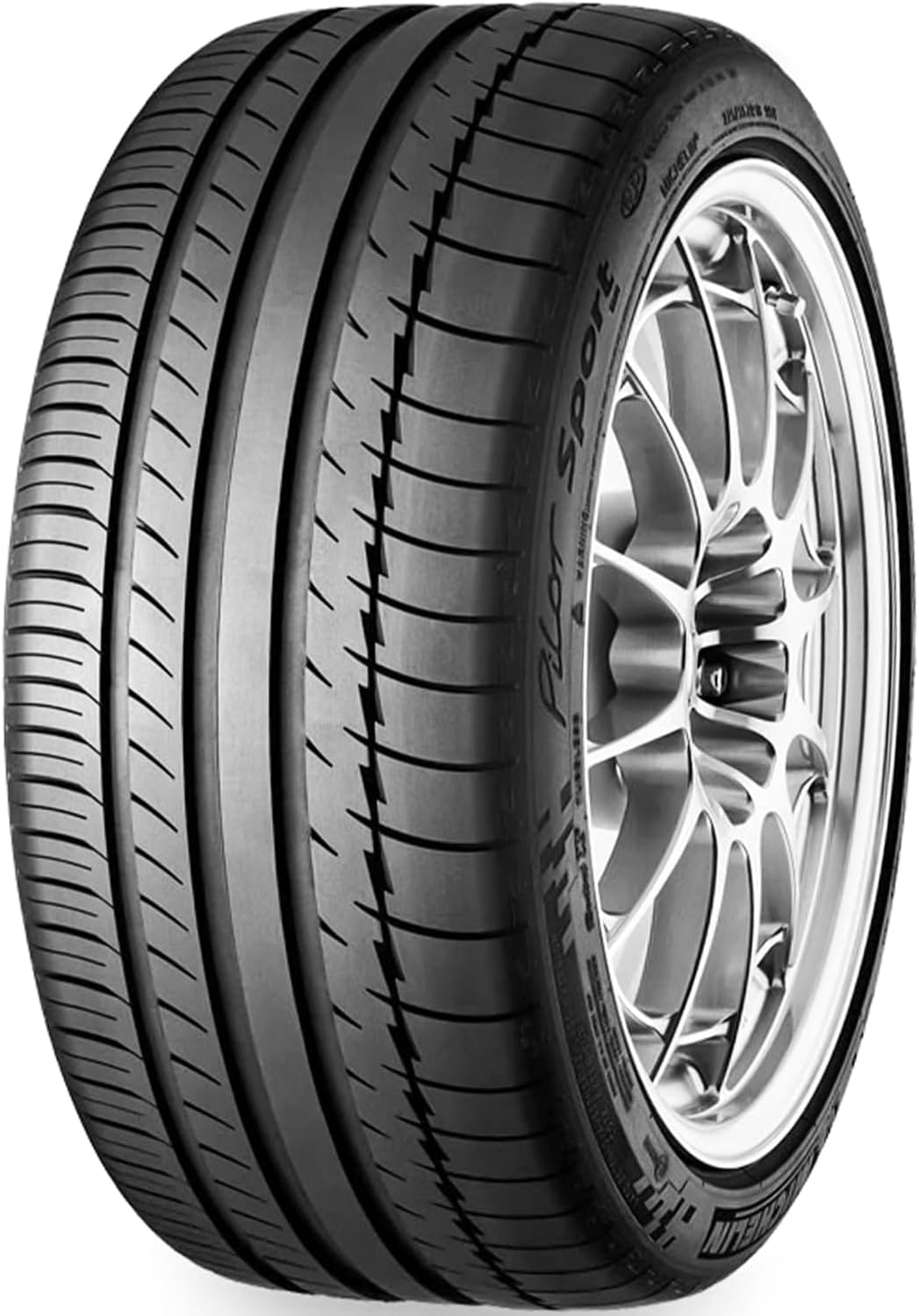
Michelin Pilot Sport PS2 Performance Tire 235/35ZR19 XL (91Y) for BMW
MICHELIN

Michelin Pilot Super Sport 275/35ZR19 XL 100Y Performance Tire
MICHELIN

Michelin Pilot Super Sport Performance Tire 245/35R19 93Y for BMW M2/M4
MICHELIN

Michelin Latitude Tour HP All-Season Radial Tire 255/50R19 107H
MICHELIN

Michelin Pilot Sport 3 Ultra-High Performance Radial Tire 255/35R19 96Z XL
MICHELIN
Michelin Pilot Super Sport 245/40ZR18 97Y Performance Tire for BMW
MICHELIN

Michelin CrossClimate2 All-Season Tire 225/50R18 95H for BMW
MICHELIN
Michelin Pilot Sport 4S Performance Tire
MICHELIN
Michelin Pilot Sport 4S — Ultra-High Performance Summer Tire
MICHELIN
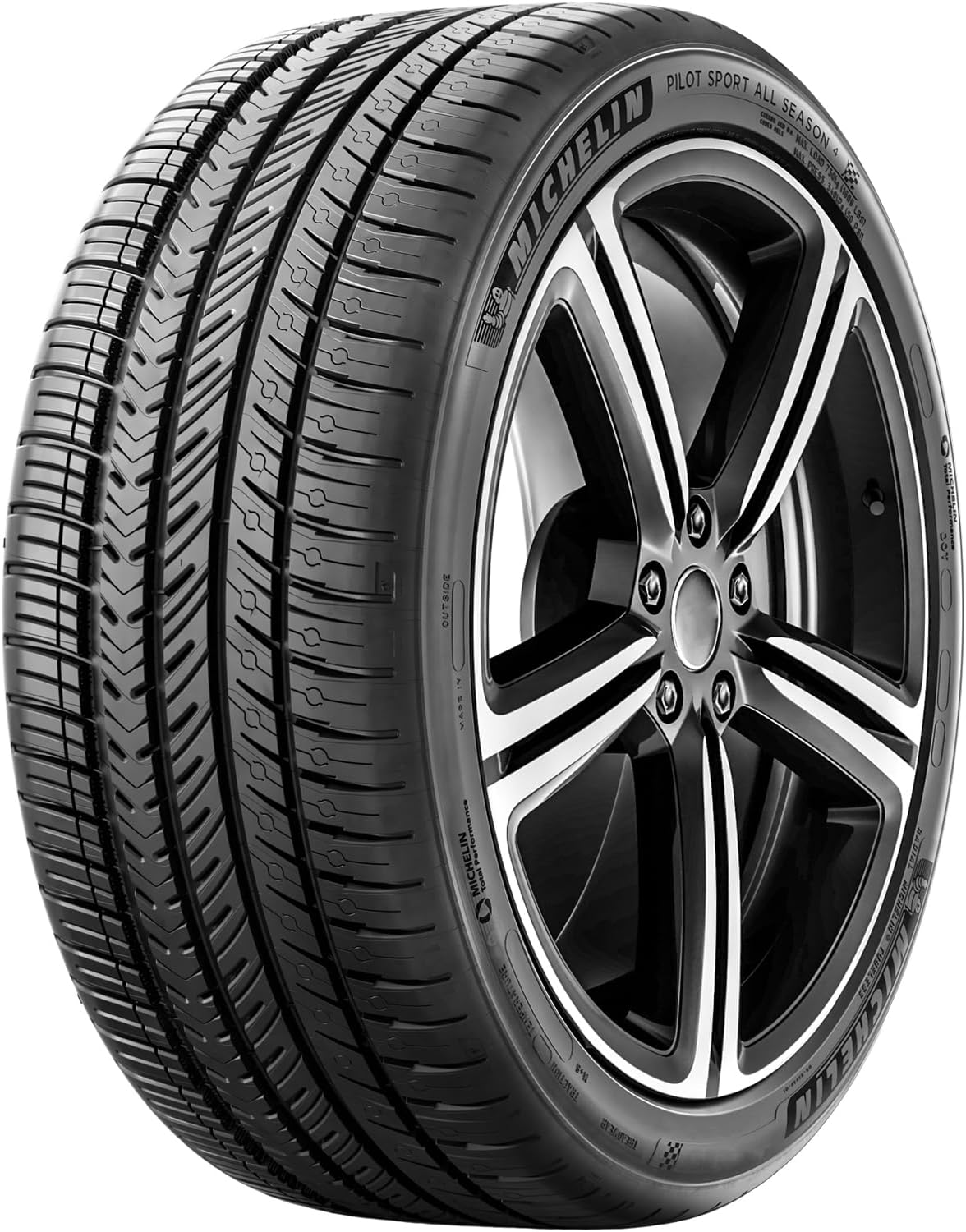
Michelin Pilot Sport All Season 4 — 245/40ZR17 XL 95Y
MICHELIN
Michelin Pilot Sport All Season 4 — 245/40ZR18 97Y XL
MICHELIN
Michelin Pilot Super Sport 225/40ZR18 XL 92Y Performance Tire
MICHELIN
Michelin CrossClimate2 All-Season Tire 225/50R17 XL 98V for BMW
MICHELIN

Michelin Pilot Sport Cup 2 Connect 255/35ZR19 (96Y) XL Summer Tire
MICHELIN
Michelin Pilot Sport All Season 4 All-Season Tire 225/40ZR18 92Y
MICHELIN
MICHELIN Pilot Super Sport - Summer Tire 225-40R18
MICHELIN
Michelin - A Legacy Built on the Road and the Track
If you've spent any meaningful time in the BMW community, you already know that tires are never just tires. They're the single point of contact between your machine and the road, the difference between a chassis that communicates and one that just feels numb. And when BMW enthusiasts start talking about what goes on the corners of their cars, one name comes up more consistently than almost any other — Michelin. There's a reason for that, and it goes a lot deeper than marketing.
Michelin's story starts in Clermont-Ferrand, France, on May 28, 1889, when brothers Édouard and André Michelin took over a struggling rubber manufacturing operation originally founded in 1832 as Barbier-Daubrée. The company had been making agricultural rubber products — valves, brake pads, the kind of unglamorous industrial goods that keep farms running. But Édouard and André saw something bigger. What they built instead became one of the most consequential companies in automotive history.
The real inflection point came in 1891, when Michelin patented the first detachable pneumatic tire. Before this, fixing a bicycle tire was a multi-hour ordeal. Michelin's design brought that down to minutes. They proved the concept publicly in races like the Paris-Brest-Paris, and the cycling world took notice immediately. Automobiles followed. By 1895, Michelin rubber was rolling on cars, and the company never looked back. The 1946 introduction of the radial tire was arguably the most important tire engineering development of the twentieth century — a construction method that delivered better fuel efficiency, longer tread life, and superior handling characteristics in one architecture. Every performance tire you've ever driven on owes something to that 1946 patent.
Fast forward to today, and Michelin holds roughly 14 percent of the global tire market, has accumulated decades of motorsport victories including Formula 1 success, and sits firmly at the top of the premium tier in virtually every independent benchmark. For BMW drivers specifically, that heritage translates directly into real-world benefits — tires engineered with the kind of obsessive precision that matches what BMW puts into the chassis underneath you.
The Product Lines That BMW Owners Actually Buy and Why
Michelin's catalog is wide, but there are a handful of specific lines that have become practically synonymous with BMW aftermarket upgrades. Understanding which one belongs on your car depends on how you use it, and getting that decision right makes a genuine difference in how the car behaves.
The Pilot Sport 4S is the crown jewel for most street-driven performance BMWs. If you're running an E46 M3, an E90 or E92 M3, or a F30-generation 3 Series with any performance intent, the PS4S is almost certainly the tire you want. BMW forums have been remarkably consistent on this point for years — dry grip is exceptional, wet traction is confidence-inspiring rather than just adequate, and the tire communicates through the steering in a way that suits BMW's chassis tuning philosophy. The compound manages to stay usable across a wide temperature range, which matters enormously if your car sees both cold morning commutes and spirited weekend canyon runs. You're looking at $250 to $400 per tire in common BMW fitments like 255/40R18, which puts it firmly in premium territory, but the longevity — regularly exceeding 50,000 miles in street use — means the cost per mile is more reasonable than the sticker price suggests.
The Pilot Sport Cup 2 is a different conversation entirely. This is a semi-slick tire, and calling it a street tire is being generous — it's a track tire that tolerates streets. For track-focused E46 M3 owners and E90 or E92 M3 drivers who spend real seat time at circuits, the Cup 2 delivers lap times that no street tire can touch. The dry grip is in another category altogether. The trade-offs are real, though — road noise is considerably higher than the PS4S, wet performance drops off meaningfully, and wear accelerates dramatically under track heat cycles. If your BMW lives on a trailer most of the weekend, the Cup 2 makes a compelling case. If it's also your Tuesday commute car, think carefully.
The Pilot Super Sport slots between these two in terms of character and sits well on G20 3 Series and F80 M3 applications where the driver wants a performance-forward tire without committing fully to the Cup 2's compromise. It's a mature, well-sorted product that has accumulated an enormous amount of positive feedback across BMW ownership groups over the years.
For the daily-driven E36 owner, the E90 commuter, or anyone running a non-M variant of the F30 in all-season conditions, the Primacy Tour A/S represents Michelin's case for what a touring tire can be. The grip levels are obviously lower than the Pilot Sport family, but the wet traction, ride quality, and year-round usability are genuinely impressive. Michelin doesn't phone in their non-performance lines, and the Primacy shows that.
Engineering - What Actually Separates Michelin from the Pack
It's easy to throw around words like "premium" and "performance," but the BMW community is full of technically sophisticated people who want to understand the why behind the price tag. So let's talk about what Michelin is actually doing differently.
The tread compound chemistry in the Pilot Sport 4S uses what Michelin calls a dual-compound construction — a different rubber formulation on the inside shoulder versus the outside. The outside shoulder, which handles the heaviest cornering loads on turn-in and mid-corner, uses a stiffer, grippier compound optimized for lateral force. The inside shoulder uses a compound tuned for straight-line braking and acceleration traction. BMW's staggered wheel setups make compound selection even more critical, and Michelin engineers specifically for the distinct loading characteristics of front and rear positions in staggered fitments. This isn't marketing language — it's reflected in independent braking and lateral grip measurements where the PS4S consistently outperforms or matches tires that cost comparable money.
The radial construction that Michelin pioneered in 1946 remains central to their engineering approach, and their understanding of how carcass flex interacts with tread movement under load is genuinely deeper than most competitors can claim — they've been refining this understanding for nearly eighty years. The sidewall stiffness tuning on Pilot Sport tires is calibrated to work with the kind of suspension geometry that BMW uses across the E46 through G20 generations, with enough rigidity to provide precise turn-in response without transmitting every pebble directly into the steering column.
Noise suppression is another area where Michelin invests real engineering effort. The Pilot Sport 4S uses variable pitch tread blocks — a pattern design strategy that disrupts harmonic resonance frequencies to prevent the tread from building up a consistent tone as it rotates. The result is a tire that stays remarkably quiet for its performance class, something BMW owners who've stepped from Bridgestone Potenza territory will notice immediately.
Run-flat technology is also part of Michelin's DNA — they developed the first run-flat tire concept back in 1934, and their current ZP (Zero Pressure) construction is among the most refined in the segment. For BMW drivers whose cars came equipped with run-flats from the factory and who want to stay with that configuration, Michelin's run-flat variants across the Pilot Sport family maintain a strong performance profile without the excessive ride harshness that plagues some competitors' run-flat offerings.
How Michelin Stacks Up Against the Competition BMW Owners Actually Consider
Context matters when you're spending four figures on a set of tires, so here's an honest look at how Michelin sits relative to the alternatives that come up most frequently in BMW forums.
Continental's ExtremeContact Sport is the most common alternative conversation for E46 and E90 owners, and it's a legitimate tire — cheaper by $50 to $100 per corner and genuinely capable in wet conditions, where some drivers actually prefer it over the PS4S. The realistic trade-off is tread life, which typically runs about 40,000 miles versus Michelin's 50,000-plus, and a modest dry grip deficit that shows up in back-to-back comparisons on the same car.
Bridgestone's Potenza RE-71RS is the choice for E36 track builders who are optimizing purely for lap time on a budget. It will outperform the PS4S on a dry circuit on a given day. It will also wear out in 20,000 miles or less, struggle in the rain, and leave you wondering whether the lap time advantage was worth the difference in running costs over a season. For a dedicated track car, it's defensible. For a street-driven M car that sees occasional track days, it's a compromise in the wrong direction.
Pirelli P Zero comes up frequently because BMW uses it as OEM equipment on F30 and G20 M performance models. It's a sharp-steering tire with strong initial feel, particularly well-matched to BMW's electric power steering calibration. Wear rates in daily use are higher than the Michelin equivalent, and drivers who push their M cars regularly tend to find themselves replacing Pirellis more often than they'd like. If you bought an M340i and it came with P Zeros, the PS4S is a very natural replacement conversation when that first set wears out.
Goodyear's Eagle F1 Supercar line offers a more budget-friendly entry into performance tire territory, but it doesn't match Michelin's longevity or wet weather confidence, and it's genuinely rare to see it recommended in BMW ownership communities when the conversation gets serious.
Why BimmerTalk Recommends Michelin and Who Should Be Looking at Them
Here at BimmerTalk, we spend a lot of time thinking about which products actually deserve space in a BMW enthusiast's garage, and Michelin earns its position through a consistent combination of factors that matter specifically to this community.
First, the match between Michelin's engineering philosophy and BMW's chassis design is genuinely strong. BMW builds cars around the idea that the driver should feel connected to the road — that steering weight, cornering feedback, and limit behavior should communicate clearly rather than be filtered away for comfort. Michelin's Pilot Sport lineup is built around the same principle. Put a set of PS4S tires on an E46 330i or an E90 335i and you'll feel what we mean immediately — the car responds to inputs with a precision that cheaper tires genuinely can't replicate, not because of mysticism, but because the contact patch is deforming and recovering the way it needs to in order to translate chassis geometry into steering feel.
Second, the value proposition over a full ownership cycle is better than the sticker price makes it look. BMW ownership is already expensive, and we understand the temptation to save money on tires. But a set of PS4S tires lasting 50,000 miles on a daily-driven F30 costs meaningfully less per mile than replacing a cheaper tire every 35,000 miles — before you account for the alignment checks and mounting costs that come with every new set.
Third, Michelin's fitment coverage for BMW applications is comprehensive. From classic E36 dimensions through modern G20 staggered setups, the right Michelin tire exists for your application. The run-flat variants cover factory-spec configurations. The Cup 2 covers track builds. The Primacy covers high-mileage commuters. There's no scenario where a BMW owner is forced to settle for a Michelin tire that wasn't designed with their use case in mind.
Who is Michelin specifically right for? If you own a performance-oriented BMW — any M car, any M Sport trim, any car you'd describe as your driving car rather than just transportation — and you want a tire that keeps up with the chassis rather than holding it back, the Pilot Sport 4S should be your default answer. If you're a serious track participant with a dedicated car, look hard at the Cup 2. If you have a high-mileage daily driver and you want reliability and all-season confidence without completely abandoning performance, the Primacy Tour A/S will serve you well. And if you're in any of those categories and the Continental or Pirelli alternatives are tempting you purely on price, run the math on the full ownership period first — you may find the premium takes care of itself.
Michelin has been getting the fundamentals right since before most of our grandparents were born. That kind of track record doesn't happen by accident, and it's exactly why the BMW community keeps coming back to them year after year.