
Coilovers for BMW 3 E90
Affiliate disclosure. BimmerTalk is a proud partner of the Amazon Associates Program and Turner Motorsport. We may earn a small commission on qualifying purchases through our links, at no extra cost to you. Read the full disclosure.

KW Variant 3 Coilovers for BMW 3 Series and 1 Series RWD
KW

ST Suspensions XA Coilover Kit for BMW E90 E92 xDrive AWD
ST Suspensions
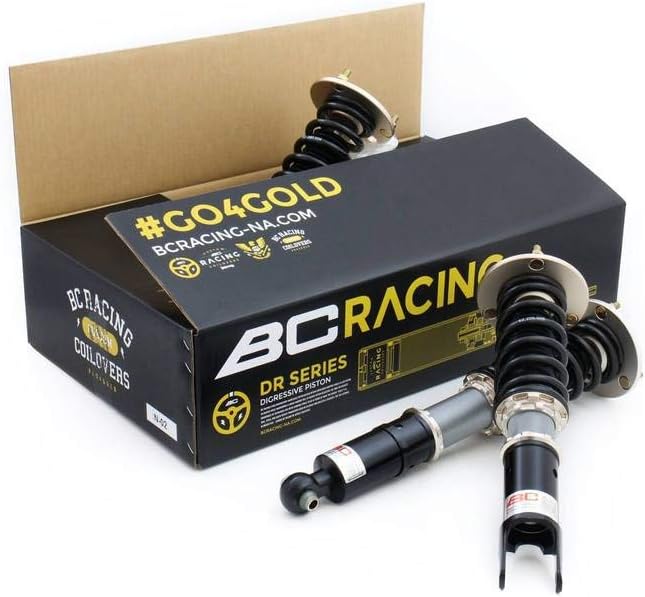
BC Racing DS Series Coilovers for 2007-2013 BMW E90/E92 M3 (w/o EDC)
BC Racing

BC Racing BR Series Coilover Kit — E90/E92 3 Series AWD
BC Racing

KW Variant 3 Coilovers for BMW E90 E92 E93 M3
KW

Godspeed MAXX Coilovers Lowering Kit for BMW M3 E90/E92/E93 2007-2013
Godspeed
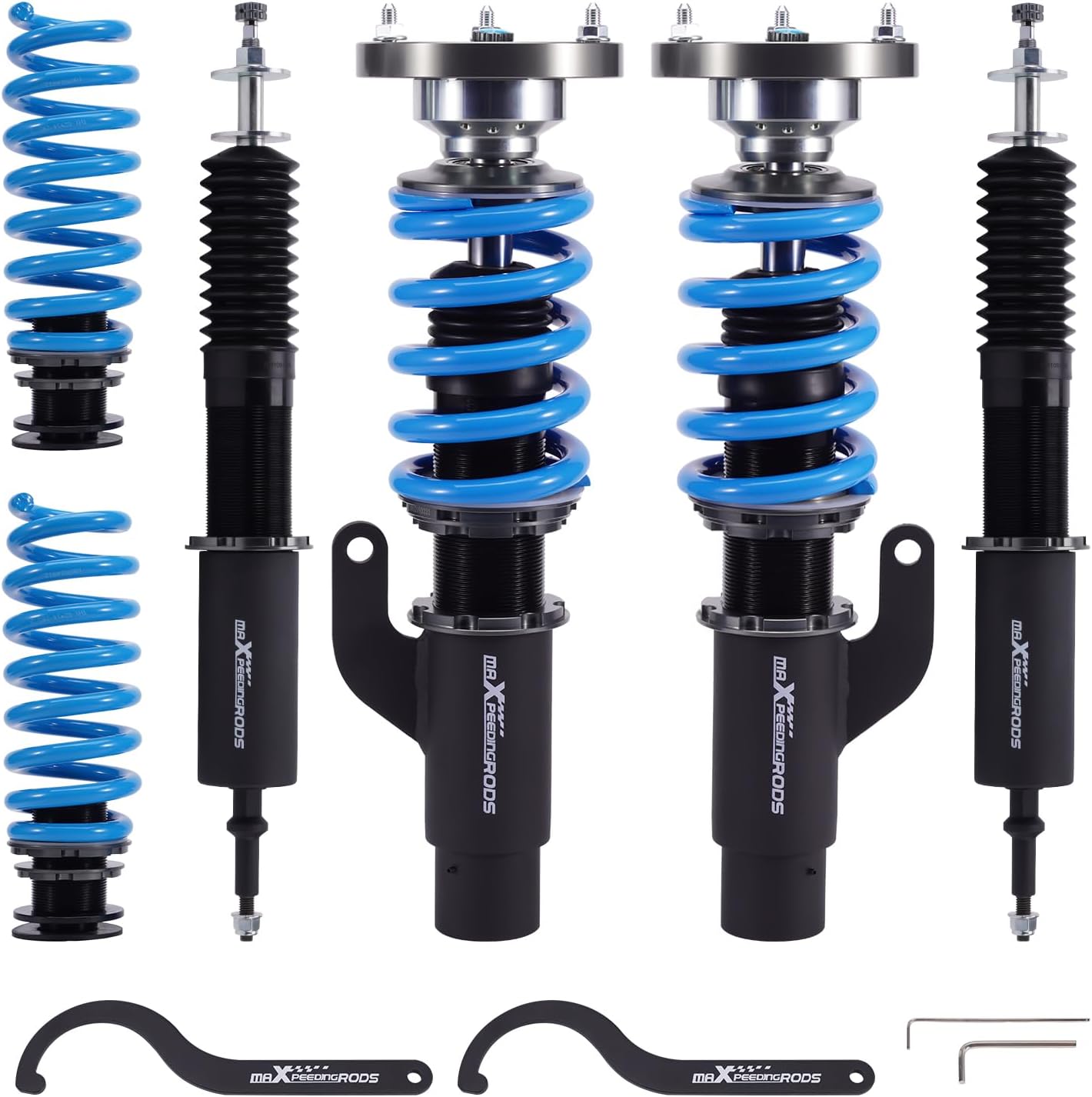
maXpeedingrods T6 Coilover Kit BMW 3 Series E90 E92 xDrive 2006-2011
maXpeedingrods

Bilstein B4 Front Struts and Rear Shocks Kit for BMW E90 E92
Bilstein

Bilstein B4 Front Strut and Rear Shock Kit for BMW E90 E92 3 Series
Bilstein

maXpeedingrods Coilover Kit — E90/E91/E92/E93 3 Series (RWD)
maXpeedingrods

Bilstein OE Replacement Front Strut Pair for BMW E90 E91
Bilstein

Bilstein B4 Coilovers - Front Replacement for BMW E90 E91
Bilstein

Bilstein OE Replacement Front Struts and Rear Shocks for BMW E90 328i xDrive
Bilstein

Bilstein B6 Rear Shock Absorbers for BMW E90 Standard Suspension
Bilstein

TRIBLE SIX BMW 3 Series E90 E92 E93 RWD Adjustable Coilover Kit
TRIBLE SIX
More suspension parts for the BMW E90
If you own an E90 and you're reading a page about BMW E90 coilovers, you already know the stock suspension is a compromise. BMW tuned the E90 platform to work across a massive range of trims - from a base 320i on steel wheels to a full M3 with a 4.0-liter V8 - and the result is a setup that does nothing particularly badly but nothing particularly well either. The spring rates are soft enough to handle rough European roads, the dampers are calibrated for comfort first, and the ride height is tall enough that most E90s look like they're wearing platform shoes. A coilover kit is the single most transformative handling upgrade you can put on an E90, bar none. I've seen cars go from vague and wallowy to genuinely sharp with nothing more than a good set of coilovers and a proper alignment. This guide covers everything you need to know before you buy - brands, fitment quirks specific to the E90 chassis, real pricing, common mistakes, and my honest picks for different use cases.
The E90 Chassis - What You're Actually Working With
Before you spend money, understand the platform. The E90 designation technically covers the sedan body only, but in common use "E9x" refers to the whole family: E90 sedan, E91 touring/wagon, E92 coupe, and E93 convertible. Coilover fitment is NOT interchangeable across all of these, so chassis code matters before you click "add to cart."
The E90 ran from 2006 through 2013 for the sedan (longer in some markets), and it sits on a front strut, rear multilink suspension architecture. The front uses a MacPherson-style strut with a separate spring perch - a setup that's relatively straightforward to coilover. The rear is where things get interesting. The E90's rear subframe mounts five links per side and the geometry changes quite a bit depending on trim level. The standard sedan and the M3 (which uses the same basic E90 body but with wider arches and different subframe reinforcement) have different rear shock mounting positions and different upper mount styles. This distinction matters when you're shopping.
Drivetrains also split the fitment pool. RWD (standard E90) and xDrive (E90xi) have completely different front suspension geometry because the xDrive cars run front driveshafts. Many coilover kits that claim "E90" compatibility are RWD-only. The xDrive variants need specific front strut housings that accommodate the CV joint - always confirm before ordering.
Engine variants in the E90 range from the straight-six N52 in the 325i and 328i, to the twin-turbocharged N54 in the 335i, to the naturally aspirated S65 V8 in the M3. The front-to-rear weight distribution is similar across most variants but the M3 is noticeably heavier up front due to the V8, which affects spring rate selection. I'll note where this matters in the brand rundown.
Stock spring rates on the E90 are roughly 120-140 lb/in front and 100-120 lb/in rear depending on trim and market. The M Sport package uses slightly stiffer springs and different damper valving, but it's still a relatively soft setup by any sporting standard. A good performance coilover kit typically runs 200-300 lb/in front and 150-250 lb/in rear for a street-focused application - stiffer, but not brutally so on well-maintained roads.
Why E90 Owners Upgrade the Suspension
There are three main reasons I see E90 owners come to this page, and they're worth separating because they point toward different products.
Reason 1: Handling improvement. The stock E90 understeers noticeably at the limit, the body rolls through fast corners, and the front end washes out on track before the rear steps out. This is by design - BMW tuned the car to be safe and predictable for the average driver. If you want the car to actually rotate and communicate through the steering wheel the way the marketing promised, stiffer springs with proper damping control will get you there faster than almost any other single mod.
Reason 2: Lowering for looks and aerodynamics. The stock E90 sits too high. Even the M Sport variant has enough gap in the wheelwells to fit a fist. Most owners are looking for a 20-30mm drop on a street car and up to 50-60mm for a more aggressive stance. Coilovers give you the ability to dial this in precisely rather than committing to a fixed drop like lowering springs do. If you're on the fence between coilovers and springs, I wrote a full breakdown at our E90 lowering springs guide that covers when springs make more sense than coilovers.
Reason 3: Track use. The E9x M3 is one of the most popular track day cars in the US, and even the 328i and 335i see regular track use. The stock dampers are not built for repeated high-load cycles at speed - they'll overheat and fade. If you're running track days even twice a year, you need coilovers with proper damping capacity. This is the use case where the price jump to premium brands like KW, Öhlins, and MCS actually makes sense financially because you'll destroy cheaper units in a season.
E90 Coilover Fitment - The Details That Actually Matter
I'm going to front-load the fitment section because this is where people waste money. The E90 has more fitment variants than almost any other BMW chassis, and the coilover market has not always kept up cleanly.
Sedan vs Coupe vs Convertible
The E90 sedan and E92 coupe share front suspension geometry but have different rear subframe configurations. The E92's rear is slightly different in its shock mount position and spring seating. If a kit is listed for "E90/92," confirm the manufacturer has actually validated both, not just assumed compatibility. The E93 convertible has a reinforced structure because of the open top, and the rear subframe is different again - separate fitment entirely.
M3 vs Standard E90
The E90 M3 and E92 M3 use different front strut top mounts compared to the standard cars. The M3 also has wider front and rear tracks, which affects wheel fitment when you lower the car. Many coilover manufacturers make separate M3-specific kits. Do not assume a "fits E90" kit will drop onto an M3 without checking - some will, many won't, and a few will physically fit but give you incorrect geometry.
xDrive
As mentioned, the E90xi with xDrive all-wheel drive has a unique front strut design to accommodate front driveshafts. Kits for standard RWD E90s will not work. If you have an xi, double-check that the manufacturer lists it explicitly. This isn't a small detail - the entire front strut housing is different.
Electronic Suspension Options
Some E90 variants came with EDC (Electronic Damping Control), BMW's electronically adjustable damper system. If your car has EDC, you have three choices when converting to coilovers: buy coilovers with an EDC delete module, code out the EDC warning in software, or buy coilovers designed to retain EDC (rare and expensive). Most owners running aftermarket coilovers simply delete the EDC. You can handle this via coding - our BMW coding and diagnostic tools guide covers the software side of this if you want to do it yourself.
Brake Clearance
The E90 M3 with the big front brakes (the stock M3 runs a 4-piston caliper on a 360mm rotor) requires extra clearance attention when lowering. If you're running upgraded calipers from the M3 on a non-M E90 (a popular upgrade), confirm your coilover's front strut housing won't interfere. This is more of a wheel and spacer issue than a coilover issue, but it comes up during the same install. Check our E90 brake pad guide for brake system context if you're doing both upgrades at once.
Rear Subframe Reinforcement
This is an E90-specific issue that doesn't get enough attention. The E90's rear subframe mounts to the body via rubber bushings, and on older, higher-mileage cars those bushings can be cracked or collapsed. When you install stiffer coilovers, the increased load on those mounts becomes more apparent. Before installing coilovers on any E90 with over 80,000 miles, I'd inspect the rear subframe mounting points. Cracked subframe mounts will give you clunks and handling vagueness that you'll incorrectly blame on the coilovers. This is also the right time to check for rear trailing arm bushings and control arm bushings - worn rubber underneath will undermine any performance coilover's capabilities.
The Top BMW E90 Coilover Brands - Full Rundown
Here's where I get into the actual products. I'm going through these in what I consider roughly descending order of all-around recommendation for a typical street-plus-occasional-track E90 owner, with specific notes on who each brand is for.
KW Variant 3 - Best All-Around Street and Track Option
KW makes three main coilover lines - the V1 (fixed damping), V2 (rebound adjustment), and V3 (independent compression and rebound adjustment). For an E90, the KW Variant 3 is the one I'd point most owners toward. The V3's dual-adjustable valving lets you run a relatively comfortable rebound for daily driving while keeping enough compression stiffness to control body roll - something the single-adjustment competitors can't really replicate. The spring rates on the KW V3 for the E90 are well-chosen from the factory: stiff enough to improve handling meaningfully but not so aggressive that a daily driver becomes miserable on real roads.
The build quality is German, and that's not marketing language - KW machines their own housings and has been doing coilover work on BMWs specifically long enough that their E90 kits have had all the early fitment bugs worked out. The aluminum upper mounts (included with the V3) are a step up over the rubber-insulated mounts that come with cheaper kits, and they've proven durable in real-world use.
Drop range on the E90 V3 is typically 20-55mm front and 10-45mm rear, which covers most use cases from mild M Sport look to aggressive street stance. Current pricing sits in the mid-$2,000 range from most major retailers, though pricing fluctuates and you should verify current pricing before ordering.
Fitment note: KW makes separate kits for the standard E90, the M3, and the xDrive variants. Make sure you're in the right kit. The M3 kit uses different spring rates to account for the heavier S65 engine.
Common forum complaint: The V3 can feel harsh at very low ride heights (below 40mm drop) because you're compressing the usable stroke. Keep it in the 20-35mm range for daily use and you'll be happy. Also, some owners report a rattle from the rear spring perches after aggressive installation - this is usually a torque issue, not a defect.
Bilstein B14 and B16 - OE-Quality Control, Less Adjustment
Bilstein is a name every BMW owner should know - they've been an OE supplier to BMW for decades and their monotube damper technology is proven. The B14 is a fixed-damping coilover (you set ride height via the spring perch but can't adjust the damping), and the B16 adds rebound adjustment. Neither offers independent compression adjustment, which puts them below the KW V3 in terms of fine-tuning capability but also below it in price and complexity.
For an owner who wants a meaningful upgrade over stock without needing to spend time dialing in adjustment settings, the Bilstein B14 or B16 is a strong choice. The valving from the factory on the B16 is well-matched to the E90's geometry, and the ride quality on normal roads is arguably more refined than the KW V3 at aggressive settings because Bilstein leans toward a slightly softer initial stroke.
Typical pricing runs roughly $1,300-$2,200 depending on the specific kit and whether you're looking at B14 or B16. The B16 commands a premium and is worth it if you track the car at all - the rebound adjustment helps manage the transition from smooth track to rough highway driving.
What Bilstein won't give you: The B14 especially is limited in track use. Without compression damping control, the car will develop understeer on track as the front tends to dive more than you'd want under braking. For pure street use the B14 is excellent value, but track-day regulars should look at the B16 at minimum or step up to KW V3.
Öhlins Road and Track - Premium Street and Spirited Driving
Öhlins is Swedish, motorsport-originated, and expensive. The Road and Track line for the E90 is the product that forum discussions on BimmerPost consistently mention alongside Nitron as a top-tier choice for owners who want serious performance without going full race setup. The Öhlins DFV (Dual Flow Valve) technology provides better handling at both low and high suspension velocities compared to conventional monotube designs, which translates to a coilover that feels composed over rough pavement AND sharp through fast corners - two things that are usually in tension with each other.
The Road and Track kit comes with both compression and rebound adjustment and Öhlins' own upper mounts, which are well-engineered and tend to be quieter than many third-party aluminum mounts under normal street conditions. Setup sensitivity is real - you'll get more out of the Öhlins if you spend time with the adjustment and do a proper corner balance, but it'll still outperform cheaper coilovers even when set to factory positions.
Price is on the high side and not something I can quote precisely from verified sources - treat any number you see as a starting point and confirm with current retailer pricing. They're clearly positioned above the KW V3 in price. If the price gives you pause, it should be considered relative to longevity: Öhlins dampers can be rebuilt, which extends their useful life significantly compared to budget coilovers that get trashed and replaced.
Fitment is available for standard E90 and many M3 applications, but as always verify the exact part number for your chassis, drivetrain, and suspension trim.
ST Suspensions X and XA - The KW-Derived Budget Option
ST Suspensions is part of the KW group, which means the engineering DNA is legitimate. The ST X is a fixed-damping coilover and the ST XA adds rebound adjustment. These are made to similar quality standards as KW's own products at a lower price point, primarily by using simpler damper internals and less premium upper mounts.
For E90 owners who want a proper coilover upgrade without reaching the KW V3 price, the ST XA is a solid middle ground. Real-world pricing is typically in the $1,000-$1,700 range, which makes it accessible for owners who are either on a budget or who want to confirm they actually like coilovers before investing in premium German units.
Honest limitations: The rear shock durability on ST units gets criticized more than the KW equivalents in owner forums. I've seen reports of rear dampers losing their tune after hard use - not failing catastrophically, just not feeling as controlled as when new. For pure street use this is rarely a problem; for regular track days it's a concern. The ride refinement is also a step down from KW V3 at equivalent settings. You're getting 80% of the KW experience at 60-70% of the price, which is a real value proposition, just not a free lunch.
BC Racing BR and DS Series - Popular, Adjustable, Affordable
BC Racing has built a large following in the BMW aftermarket on the strength of two things: broad fitment coverage and low prices. The BR Series is their entry-level fully adjustable coilover (spring perch height adjustment plus rebound damping adjustment at the top hat), and the DS Series uses a digressive shock valving that BC Racing claims gives better street ride quality.
Pricing is typically in the $1,200-$1,800 range for E90 applications, and you can often find them discounted. They're made in Taiwan and the build quality is functional rather than exceptional - the anodized aluminum components look good, the fitment on E90s is generally accurate (BC has enough sales volume to have most fitment kinks worked out), but the internal damper valving is less consistent than KW or Öhlins.
The real problem with BC Racing on an E90: The spring rates in the standard BR Series tend to be aggressive - stiff enough that running the car low (which most BC Racing buyers want to do) makes the ride noticeably harsh on anything other than smooth pavement. I've bolted BC Racing onto E92s and seen this firsthand - great looking car at 35mm drop, but you feel every expansion joint in the freeway. The DS Series addresses this somewhat with the digressive valving but doesn't fully solve it.
If you're building a show car that sees occasional street use or want an aggressive setup for canyon roads where you'll accept some harshness, BC Racing is fine. For a genuine daily driver that also handles well, I'd push the budget toward ST XA or KW V3 before recommending BC.
TEIN Flex Z and Street Advance - Entry-Level Budget Option
TEIN is a Japanese manufacturer with a broad coilover lineup. The Flex Z and Street Advance are their budget and mid-tier offerings respectively. TEIN's own website confirms their coilover range, though specific E90 application details should be verified through their fitment guide before ordering.
TEIN's reputation in the BMW community is lower than in the Honda/Toyota world where they have decades of track record. The Flex Z in particular is known for a softer damper tune that prioritizes ride comfort over handling performance - which sounds appealing but in practice means the car still body rolls through corners, which defeats the purpose of the upgrade for most E90 owners. The Street Advance is stiffer and more appropriate for performance use, but by the time you're looking at the Street Advance pricing, the ST XA and BC Racing DS start looking more competitive.
Clunk reports from TEIN coilovers come up in owner forums more frequently than from KW or Bilstein, and these tend to be traced to the top mounts rather than the dampers themselves. Not a dealbreaker, but worth noting.
Who TEIN makes sense for: An E90 owner who wants a modest drop (15-25mm) for looks and a slight handling improvement, is not tracking the car, and wants to spend the least possible on the upgrade. For that use case, TEIN is serviceable and better than lowering springs because the height is adjustable. For anyone with real performance intent, I'd allocate more budget.
MCS 2-Way and 3-Way - Track-First, Overkill for the Street
MCS (Motion Control Suspension) is an American manufacturer building premium dampers primarily for motorsport applications. In the E9x M3 community specifically, MCS has become a well-regarded choice, and discussions in the M3Post forum show active conversations about MCS 3-way setups for E9x M3 track builds. The MCS 2-way provides independent compression and rebound adjustment; the 3-way separates low-speed and high-speed compression control for even more precise tuning.
Pricing for MCS is typically $5,000 and up depending on configuration. That's not a typo. These are serious race-derived components priced accordingly.
For a daily driver or occasional track day car, MCS is overkill and the money is better spent elsewhere. For an E9x M3 that regularly sees track days, runs HPDE events, or is being built for time attack or club racing, MCS at the right price makes complete sense - you get proper racing damper control, rebuilds are straightforward, and the setup latitude allows you to optimize specifically for whatever track you're running most.
If you go the MCS route, budget for a professional corner balance and alignment immediately after installation. You will not extract the benefit of a 3-way adjustable setup without proper corner weighting - the adjustment range is wide enough that a bad initial setup is actively counterproductive. This isn't unique to MCS, but at this price point it's not optional.
Nitron R1 and R3 - High-End Alternative Worth Knowing
Nitron is a British manufacturer that appears alongside Öhlins in premium BMW suspension discussions as an excellent option for street and spirited driving. The R1 is twin-tube and the R3 is their fully adjustable racing unit. UK-made, well-regarded for build quality and damper refinement.
Nitron's US market presence is smaller than Öhlins or KW, which means support and availability of rebuild services might require more planning. For enthusiasts who've done their homework and specifically want Nitron for their E90, the product is genuinely excellent. For most E90 owners who aren't deep in the premium suspension rabbit hole, Öhlins is the more practical recommendation because the support network and aftermarket knowledge base is larger in the US.
E90 Coilover Comparison - Quick Reference Table
| Brand / Line | Adjustment Type | Typical US Price | Best For | Main Limitation |
|---|---|---|---|---|
| KW Variant 3 | Independent compression + rebound | ~$2,000-$2,400 | Street and track daily driver | Expensive; harsh if set too low |
| Bilstein B16 | Rebound only | ~$1,500-$2,200 | Street-focused with occasional track | Limited compression control |
| Bilstein B14 | Fixed | ~$1,300-$1,600 | Street only, set and forget | No damping adjustment |
| Öhlins Road and Track | Independent compression + rebound | Premium tier (verify current pricing) | Street and spirited driving with refinement | Cost, setup sensitivity |
| ST Suspensions XA | Rebound only | ~$1,000-$1,700 | Budget KW alternative | Rear durability on track |
| BC Racing BR | Rebound only | ~$1,200-$1,800 | Stance and weekend driving | Valving inconsistency; harsh when low |
| TEIN Flex Z / Street Advance | Rebound (Street Advance) | Budget tier | Mild drop, pure street | Softer tune, occasional clunk |
| MCS 2-Way / 3-Way | Multi-way (2 or 3) | $5,000+ | Dedicated track car / E9x M3 | Overkill for street; requires setup |
| Nitron R1 / R3 | Single to multi-way | Premium tier | Street / track with premium feel | US support network smaller |
Supporting Modifications - What to Do at the Same Time
Installing coilovers on an E90 is the right time to address several other components that wear out and that are a pain to access separately. I'd strongly recommend doing these at the same time or immediately after.
Alignment - Non-Negotiable
You need a 4-wheel alignment every single time you change ride height. This is not optional and it's not a suggestion. The E90's rear multilink geometry changes camber and toe as you lower the car, and running on incorrect alignment settings will wear your tires, make the car handle worse than stock, and potentially make it unsafe at speed. Budget $150-$250 for a proper alignment from a shop with a Hunter or equivalent rack. If you're tracking the car, a proper corner balance adds another step and additional cost but is worth every dollar.
Control Arm Bushings
The E90's front control arm bushings are wear items, typically degraded by 80,000-100,000 miles. With new coilovers compressing and loading those bushings at higher spring rates, degraded rubber will give you clunks and vague steering. If the car has mileage, replace the front lower control arms (the whole arm with bushings is often cheaper than bushings alone) at the same time. Aftermarket polyurethane bushings are an option if you want sharper response and are okay with slightly more NVH.
Rear Subframe Bushings
As I mentioned in the fitment section, inspect and replace these if they're cracked or collapsed. On a high-mileage E90, this is almost always the right call when you're upgrading suspension.
Sway Bar Upgrades
Coilovers reduce body roll through spring rate, but a stiffer sway bar helps balance the front-to-rear roll stiffness distribution. Many E90 owners find that the stock rear sway bar, combined with stiffer coil springs, results in mild understeer that an adjustable rear sway bar can correct by increasing rear roll stiffness. Check our E90 suspension overview for sway bar options that pair well with coilovers.
Wheel and Tire Upgrades
The stock E90 wheels on lower trim cars are typically 17-inch units. When you lower the car and improve the suspension, the limiting factor often becomes the tires rather than the suspension itself. A wider, stickier tire on a properly sized aftermarket wheel completes the handling upgrade in a way that coilovers alone can't. For track use specifically, a dedicated track tire on a second set of wheels is the biggest handling performance improvement you can make after the coilovers themselves.
ECU Tuning and EDC Delete
If your E90 has EDC, you'll either need to code it out or use a delete module. Either way, this is also a good time to look at what else can be addressed in the software. For the 335i with the N54, an ECU tune is the other single biggest performance upgrade you can make - and if you're already doing suspension, the combination is transformative. See our E90 ECU tuning guide for the details.
BMW E90 Coilover Installation Overview
I'm not going to write a step-by-step install manual here - that's a separate guide. But I'll give you a realistic picture of what the job involves so you can decide whether it's DIY territory or shop territory.
Difficulty Level
An E90 coilover install is a medium-difficulty DIY job for someone with a full tool set, jack stands, and a basic understanding of suspension systems. It's not a beginner project, but it's also not particularly exotic. The front strut removal and replacement is straightforward; the rear is more involved because you're working around the multilink geometry and need to properly sequence the torque steps.
Tools You'll Actually Need
- Floor jack and quality jack stands (this is not a ramps job)
- Torque wrench (critical - suspension fasteners have specific torque specs)
- Spring compressor (for the fronts if you're reusing any OE top hat hardware)
- Impact wrench or breaker bar (the front strut top nut is an effort without an impact)
- BMW-specific hex sockets (several E90 suspension fasteners use internal hex)
- Rubber mallet and penetrating oil for stuck hardware on older cars
Front Strut Removal
The front process is: remove wheel, disconnect brake line bracket and ABS sensor wire from strut, detach the sway bar end link, remove the two pinch bolts at the steering knuckle, pop the strut out of the knuckle, then remove the three top mount nuts from inside the engine bay. The top mount nuts are accessible on most E90s without removing major engine components, though the N54 335i can be tight on the driver's side. With the strut out, swap the top mount if your coilover kit includes new ones (most good kits do), compress the spring, install the new coilover, reassemble in reverse order.
Rear Installation
The rear is more involved. The shock and spring are separated on the E90 rear (unlike the front strut), so you're replacing both components individually. The rear shock mounts to a bracket near the top of the wheel well and the bottom connects to the trailing arm. The spring sits in a separate perch below the shock. Coilover systems combine these into one unit, which simplifies the final configuration but requires more disassembly to install initially. Rear control arm and subframe clearance means you need the suspension loaded (car weight on the wheels) when you torque the lower shock mounting bolt - a common mistake is torquing with the suspension droop, which pre-loads the bushings in the wrong position and causes premature wear.
Setting Ride Height
Most coilover kits tell you to set an initial height at a reference point from the factory, then adjust after the car is on the ground. Thread the spring perch up or down in small increments, lower the car, measure, adjust. Plan on doing this multiple times to get the four corners level and at your target height. Measure from the center of the wheel to the fender lip - this is the industry-standard reference point. Front and rear measurements will differ because the car has different fender geometry at each end. Write down your measurements and adjust symmetrically between left and right before worrying about front-to-rear balance. Front-to-rear height relationship affects handling significantly, so dial that in before finalizing.
Torque Specs
Do not guess on torque values. The E90's suspension fasteners have specific requirements - too loose and things move; too tight and you risk cracking aluminum components. Use the factory specs or the coilover manufacturer's specs, whichever is more conservative. For reference, the front strut top nut on most E90 applications is around 60-70 Nm and the rear shock lower mount is typically 80-100 Nm, but verify against your specific kit's documentation before wrench-torquing.
Common Owner Mistakes With E90 Coilovers
I see these mistakes repeatedly and they're all avoidable.
Going Too Low Too Fast
Setting the car at maximum drop on the first install is the most common error. You lose suspension travel, the car catches on speed bumps and steep driveway entrances, and the aggressive spring rates at minimum height make the ride genuinely unpleasant. Start at a moderate drop - 20-25mm - drive it for a few weeks, then decide if you want to go lower. Most people find the moderate drop hits the sweet spot of looks and function. The ones who go all the way down usually come back up after the first time they high-center the oil pan on a parking garage exit ramp.
Skipping the Alignment
I already said this but I'll say it again because people still skip it. Your rear toe is wrong after lowering. Wrong rear toe means the car wants to dart or push depending on which direction it's off, and you'll blame the coilovers when the actual problem is a $180 alignment job you didn't do. Don't skip the alignment.
Not Torquing to Spec with Suspension Loaded
As mentioned in the install section - torque the lower mounting bolts with the car's weight on the wheels, not with the suspension dangling. This is true for the rear especially. The rubber bushings in the E90's rear suspension need to be at rest position (loaded by the car's weight) when fasteners are tightened, otherwise the rubber is pre-twisted and it wears in a fraction of the normal service life.
Buying for Compatibility with the Wrong Car
Ordering a kit for "BMW E90" without specifying sedan vs. coupe, RWD vs. xDrive, M3 vs. standard, and with or without EDC. I've watched people do this and then discover the kit doesn't physically fit. Most retailers will let you return an uninstalled coilover but you're paying shipping both ways and losing time. Five minutes of double-checking saves a month of headaches.
Installing Without Addressing Worn Components
Putting premium coilovers on an E90 with worn control arm bushings, collapsed subframe mounts, or bad sway bar end links is like putting new tires on a car with a bent rim. You will not get the performance the coilovers are capable of, and you'll hear clunks and vagueness that you'll incorrectly blame on the new parts. Inspect the suspension comprehensively before installing.
Not Accounting for Tire Scrub
Lowering the car changes the wheel well geometry. On some E90 setups, particularly with M Sport wheels (which are often wider than base trim wheels), a significant drop can cause the inner tire to contact the fender liner or shock tower on full lock. Check clearance with the car at ride height, wheels turned lock to lock, before finalizing your height adjustment. This is especially relevant on xDrive cars and M3s with wider track.
Track Use Specifics - E9x M3 and 335i Notes
Track use changes the calculation significantly, and since the E9x M3 in particular is such a common track platform, it deserves its own section.
E9x M3 on Track
The M3 with the S65 V8 is a naturally aspirated high-revving engine paired with one of the best-sorted chassis BMW has ever built. The stock suspension is actually quite good by production car standards - the M3 came with stiffer springs and better dampers from the factory than a standard 328i. This means the upgrade gap between stock and aftermarket is smaller on an M3 than on a standard E90, and your money needs to go toward quality to see a meaningful improvement.
The M3Post community's track build discussions consistently point toward KW V3, Öhlins Road and Track, and MCS as the appropriate choices for the E9x M3. The BC Racing and TEIN budget tier gets criticized in this community not because the products are fake, but because the M3's stock setup is good enough that a budget coilover represents a lateral move more than an upgrade - you're trading one compromise for another.
For track day use on an E9x M3, I'd say KW V3 is the minimum appropriate product. Öhlins if you want refinement and setup range. MCS if you're running more than 6-8 track days per year and want full control over the damping curve.
335i on Track
The 335i with the N54 is a fundamentally different track proposition than the M3. The twin-turbocharged straight-six makes big power numbers with relatively modest engine modifications, and the car carries more weight up front than the M3 (turbos, intercooler, etc.). For track use, the 335i benefits from a spring rate setup that's slightly front-biased to manage the understeer tendency of the heavier nose. The KW V3's independent adjustment helps here - you can run more front compression damping to control nose dive under braking without making the rear too stiff and inducing oversteer. If you're tuning your 335i, check our N54 intercooler guide for the complementary engine-side upgrades that pair well with suspension work on track.
Brake Fade and Coilover Interaction
One underappreciated track dynamic: better coilovers improve braking performance because the car stays more level under hard braking, keeping all four tires better loaded. This is particularly noticeable going from stock dampers to something like the KW V3 - the car feels more planted under trail braking, which lets you carry more speed into corners. The coilover doesn't change the brakes, but it makes the brakes more effective by controlling weight transfer. This is also why you should upgrade brake pads at the same time as coilovers if you're going to track the car - stock pads will fade before quality coilovers do.
My Opinionated Picks for E90 Owners
Here's where I give you my actual recommendation based on different owner profiles. These aren't hedged suggestions - they're what I'd buy in each scenario.
Editor's Pick - KW Variant 3
If I had an E90 and could only give one recommendation, it's the KW Variant 3. It threads the needle between ride quality and performance better than anything else at its price point, the E90 fitment has been dialed in over years of production, and the independent adjustment means it's actually useful across different use cases. Running 25mm drop for daily driving? Works great. Want to stiffen it up for a track day? Adjust the compression and go. The KW V3 is the honest answer for the largest number of E90 owners, which is why it leads the list.
Best Value Pick - ST Suspensions XA
For owners who want a real performance coilover upgrade without the KW V3 price tag, the ST Suspensions XA gives you the KW engineering heritage at a lower price. Yes, the rear dampers aren't quite as durable for heavy track use, and the ride quality is a small step down from the V3, but for a street car that sees the occasional spirited drive or HPDE event, the ST XA is excellent value. The savings versus a KW V3 can go toward tires or a proper alignment and corner balance.
Best Track Pick - Öhlins Road and Track (Street/Track Balance) or MCS (Dedicated Track)
For an E90 that regularly sees track days and needs to be driven to and from the track: Öhlins Road and Track. It gives you the performance range for track use while remaining genuinely pleasant on the street. The DFV technology handles the speed range from parking lot to racetrack better than conventional monotube setups.
For a dedicated track build - car that gets trailered to events or driven very lightly on the street: MCS. Full stop. If you're serious about lap times and have the budget, the MCS 3-way gives you adjustment latitude that the Öhlins doesn't, and in the E9x M3 community it's the established choice for serious track work. Budget the corner balance appointment, plan to spend time dialing in the settings, and enjoy a suspension that you can actually optimize per track rather than compromising between them.
Best Daily Driver Pick - Bilstein B16
If you're buying coilovers primarily for the E90's looks and a mild handling improvement, with no plans to track the car ever, the Bilstein B16 is the honest answer. Bilstein's OE-level quality and the B16's refined valving give you a car that rides better than many OEM setups, with a meaningful improvement in body control and a decent drop range. The rebound adjustment lets you soften the ride for winter or stiffen it for a weekend canyon drive. It won't excite you like the KW V3 on a track, but it will never annoy you the way an aggressive setup does on a daily commute.
Before You Buy - Verifying Your Exact E90 Fitment
I want to make this as practical as possible because fitment mistakes are expensive and frustrating. Before clicking "buy" on any E90 coilover kit, confirm all of the following:
- Exact body style: E90 sedan, E91 touring, E92 coupe, or E93 convertible. These are not interchangeable for rear fitment.
- Drivetrain: RWD standard or xDrive (xi). The front strut housing is fundamentally different.
- Variant: Standard non-M, M Sport trim (which has different front strut top mount in some markets), or actual M3. The M3 uses different front top mounts and different spring specifications.
- EDC or non-EDC: Does your car have Electronic Damping Control? Check the RPO sticker in the trunk or look up your VIN decoder. EDC cars need either a delete module or coding work.
- Build year: There were minor suspension revisions during the E90's production run. Most coilover manufacturers account for this in their fitment guide, but early (pre-LCI, 2006-2008) and late (LCI, 2009-2013) cars occasionally differ.
- Brake package: If you're running the M3's front brake package on a non-M car (a common upgrade), confirm the strut housing won't conflict with the larger caliper.
If you're unsure about any of this, the BimmerTalk chassis lookup tool can help you decode your E90's exact configuration, or post in any of the major BMW forums with your VIN and ask before you buy.
Pricing Reality Check and Where to Buy
The E90 coilover market has gotten more expensive over the past few years as supply chains for German-made components have tightened. The prices I've referenced in this guide are based on current US market positioning and should be treated as orientation points - verify current pricing with retailers before making a purchase decision. Big online BMW aftermarket retailers typically have competitive pricing on KW and Bilstein; smaller specialty shops sometimes have better pricing on Öhlins and MCS because they're authorized dealers.
A note on discounts: KW and Öhlins in particular have MAP (Minimum Advertised Price) policies that limit how much authorized dealers can discount publicly. If you see a KW V3 listed significantly below the mid-$2,000 range, make sure you're buying from an authorized dealer with a proper warranty rather than a gray market import. The warranty on a coilover kit matters - KW's US warranty covers manufacturing defects and they're good about honoring it, but only on product purchased through authorized channels.
Used coilovers are worth considering but with caution. A set of KW V3s with 30,000 street miles in good condition can be a real value. Inspect for corrosion on the perch threads, check for leaking seals on the damper bodies, and confirm the seller knows the exact E90 application they were installed on. Used track coilovers from a dedicated race car are different from used street coilovers - track-used dampers have significantly more stress cycles and may need a rebuild.
Frequently Asked Questions About BMW E90 Coilovers
Will BMW E90 coilovers fit my E92 coupe?
Possibly, but not automatically. Front fitment often crosses over between E90 and E92, but rear fitment can differ due to different subframe configurations. Always confirm with the specific manufacturer whether a kit is validated for both body styles or is E90-sedan-specific. Never assume "E9x" means all variants are covered equally.
Do I need to do a full alignment after installing coilovers?
Yes, always. Not optional. Changing ride height changes every alignment parameter - camber, toe, caster. Running on incorrect alignment after installing coilovers will wear tires fast and make the car handle worse than stock. Budget a 4-wheel alignment as part of your coilover install cost.
How much should I lower my E90?
For a street daily driver: 20-30mm is the sweet spot. Looks meaningfully lower than stock, doesn't compromise suspension travel, and keeps you off the ground on real-world roads. For an aggressive street/occasional track setup: 30-40mm. Below 40mm on a daily driver you're accepting compromises with ride quality and ground clearance that most owners decide aren't worth it after a few weeks. For a dedicated track car that's not a daily, ride height should be set based on your specific setup, corner balance results, and track surface.
What's the difference between KW V1, V2, and V3 for the E90?
The V1 has fixed factory damping - you can only adjust height. The V2 adds rebound adjustment. The V3 adds independent compression AND rebound adjustment. For an E90, the V3 is the one worth the money because the independent adjustment lets you balance ride quality against body control in ways the V1 and V2 can't. The V3 also uses higher-spec internals and typically includes better upper mounts. If budget is tight, the V2 is a decent middle ground; the V1 is more of an entry point to the KW lineup than a performance-focused choice.
Can I use coilovers on an E90 xi with xDrive?
Yes, but you need xDrive-specific coilovers that accommodate the front driveshaft. Standard RWD-spec coilovers will not fit the xDrive front strut. Most major brands have xDrive-specific E90xi kits; confirm the part number explicitly before ordering.
My E90 has EDC. What do I do?
You have three options: 1) Buy coilovers with a compatible EDC emulator/delete module (some manufacturers include these or sell them as an add-on). 2) Code out the EDC warning light via BMW coding software so the car doesn't throw a fault. 3) Buy coilovers that retain EDC function (very limited options, high cost). Most owners go with option 2 - it's clean and inexpensive. See our BMW coding tools guide for the software and hardware you need to handle this yourself.
Are coilovers worth it over lowering springs for the E90?
If you only want a static drop and never plan to adjust, lowering springs are cheaper and simpler. If you want adjustability - either to fine-tune ride height or to tune the handling - coilovers are worth the price premium. For anyone planning to track the car even occasionally, coilovers are the correct answer because springs alone with stock dampers will overheat and fade. Read our full E90 lowering springs comparison if you're still deciding. Honestly, for most E90 owners who are actually into their cars, coilovers are the better long-term investment.
What spring rates should I look for in an E90 coilover?
For a street-focused daily driver on the standard E90 (non-M3), something in the range of 200-250 lb/in front and 160-200 lb/in rear is appropriate for a performance street setup. This is stiffer than stock but not so aggressive that bad roads become a problem. The M3 typically benefits from higher front spring rates given the heavier V8. For track use, rates go higher and the specific numbers depend on the track surface and your setup goals - this is where you need proper corner balance work rather than guessing from a spec sheet. Most quality coilover manufacturers size their spring rates appropriately for each application, which is one reason to trust KW or Öhlins's factory springs over cheap alternatives with unknown rates.
How long do coilovers last on an E90?
For a street-driven car: a quality set of KW or Bilstein coilovers should last 60,000-80,000+ miles before the dampers noticeably lose their tune. Budget units from BC Racing or TEIN might start feeling loose in half that mileage, particularly under harder driving. For track cars, damper life depends heavily on how many track days per year and how aggressively the car is driven. Premium units from Öhlins and MCS are rebuildable, which is a real advantage for track cars - you can service the dampers and restore performance without buying new units. Budget coilovers are not typically rebuildable and get replaced.
Do I need to do anything special for the E90 M3?
Yes, several things. First, use M3-specific coilover kits rather than assuming standard E90 kits cross over. Second, the M3's front and rear track is wider, so wheel fitment at lower ride heights needs to be confirmed more carefully for tire rub. Third, the M3's rear subframe is worth inspecting carefully before installing coilovers - cracked rear subframe mounting points are a known issue on high-mileage M3s and should be addressed before stiffening the suspension. The E9x M3 community on M3Post has extensive threads on proper track setup that are worth reading before you buy. Fourth, the M3 came with DCT or manual - the DCT car is slightly heavier, which can affect spring rate preference at the margins.
Can I install E90 coilovers myself or do I need a shop?
A mechanically experienced DIYer with the right tools can do this job. You need a proper spring compressor (do not skip this - a spring under compression has enough energy to seriously injure you), quality jack stands, a torque wrench, and patience. The rear multilink on the E90 can be fiddly if you've never worked on it before. The front is straightforward. First-timers should expect the job to take a full day; experienced wrenchers can do it in 3-4 hours. If you're not confident with suspension work, spending the money to have a shop install them is worthwhile - a bad install creates expensive and potentially dangerous problems. Either way, the alignment goes to a shop afterward.
What's the best coilover for an E90 335i that I track occasionally?
For a 335i that sees street duty most of the time with 4-6 track days per year, the KW Variant 3 is my specific recommendation. The independent damping adjustment is your friend here - you'll want to run a stiffer compression setting on track to manage the 335i's tendency to understeer under the turbocharged power delivery, and you'll want to dial back to a more comfortable setting for the highway drive home. The V3 gives you that range in a single kit. The Bilstein B16 is the runner-up if budget is a constraint and you're honest with yourself that the track days are mostly HPDEs rather than competitive lapping events.
Final Thoughts on Choosing E90 Coilovers
The BMW E90 coilover market is well-developed and genuinely competitive. You have options from serious budget to serious race car across a price range that starts around $1,000 and goes north of $5,000, and the quality difference between tiers is real but not linear - you can get excellent results for a street car at the mid-range with KW or Bilstein without needing to reach for Öhlins or MCS pricing.
The framework I'd use is simple: decide what percentage of your miles are on track versus street, how important ride quality is on those street miles, and whether you need the ability to fine-tune damping or are happy setting and forgetting. If the answer is mostly street, occasional track, want adjustability, and you're buying once and keeping it for 60,000+ miles: buy the KW Variant 3 and don't look back. If budget matters and you're mostly doing street driving: Bilstein B16. If you're a serious track user with an E9x M3 and corner balance appointments are already in your calendar: Öhlins Road and Track minimum, MCS if you're really committed to the program.
Don't over-complicate it. The best coilover for your E90 is the one that fits your actual use case, has been properly installed with a fresh alignment, and has good supporting suspension components around it. A KW V3 on worn control arm bushings will feel worse than a Bilstein B14 on fresh bushings. Get the fundamentals right first, buy the best coilover you can afford within your actual use case, and spend the remaining budget on a good tire setup. That combination will transform your E90 more than any single component decision.
If you're still figuring out your full suspension build, start with our comprehensive BMW coilover buyer's guide that covers the whole model range, or check the broader BMW coilover overview for cross-chassis comparison. And when you're ready to dial in the rest of the car after the suspension is sorted, the BimmerTalk articles section has in-depth build guides for the E90 platform including engine, brakes, and electronics upgrades that complement good suspension work.

Kamil Siegień
Founder of BimmerTalk. Five years wrenching on BMWs, currently dailying a G20 330i with the B48 turbo four. Spent a year doing marketing for BMW and MINI before going independent. I write everything on this site myself.
More about the site
BMW Coilovers - Lower, Stiffen, and Dial In Your Chassis
A quality coilover kit is the single most impactful suspension upgrade you can make to your BMW. Done right, you get adjustable ride height, tunable damping, and handling that stock suspension engineers were never allowed to deliver - whether you're building a track-day E46 M3, lowering a daily-driven F30 328i, or turning your G80 M3 into a canyon carver. Done wrong, you get a harsh, trampy ride and worn tires. Here's what you actually need to know before buying.
Choosing the Right Coilovers for Your Chassis
Not all coilovers are built equal, and fitment is everything with BMWs. The E9X 3 Series (E90, E91, E92, E93), E46, F3X generation (F30, F32, F80), and G-series platforms all have distinct strut diameters, subframe geometry, and electronic damper considerations. If your car has EDC (Electronic Damping Control) - common on F10 M5s, F8X M3/M4s, and most post-2012 G-chassis vehicles - you'll need coilovers specifically designed for EDC compatibility or be prepared to code out the warning light and disable the factory system entirely.
For the E46 330i or M3, KW Suspension V3 coilovers remain the gold standard - independently adjustable rebound and compression damping, stainless steel construction, and a lifetime warranty. Bilstein PSS10 and PSS9 kits suit drivers who want a sport-biased but still street-friendly setup on E9X and F3X platforms. BC Racing BR Series coilovers offer strong value for E36, E46, and E90 owners who want 30-way damping adjustability without spending KW money. For serious track builds on F80/F82 M3 and M4 chassis, Öhlins Road & Track or TTX kits are the benchmark - fully adjustable, rebuildable, and trusted by professional teams.
Avoid budget coilovers from unknown brands marketed only by spring rate numbers. Cheap digressive valving causes handling that feels stiff over bumps but vague mid-corner - the worst of both worlds. On a BMW with a near-50/50 weight distribution, bad damping tuning is immediately felt and erodes the driving experience these cars are built around.
Look for these specifics when comparing kits: independently adjustable compression and rebound (not just a single knob), pillow ball upper mounts for improved camber and reduced NVH compromise, ride height adjustment that works through the lower mount rather than preloading the spring, and a brand with documented rebuild or revalving service. If you're running a staggered wheel setup on an E92 M3 or F82 M4, confirm the rear ride height range clears your arch with the offset and tire width you're running - most quality brands publish this data.
Install difficulty sits at an intermediate level for most BMW coilover jobs. E46 and E90 front struts are straightforward with a spring compressor and a 22mm strut nut socket. Rear trailing arm and subframe work on E-chassis cars requires proper torquing at ride height to avoid binding bushings. F-chassis and G-chassis jobs are more involved - especially anything with xDrive or active rear steering - and benefit from a two-post lift and alignment immediately after. Budget for a four-wheel alignment every time, no exceptions. Pair your new coilovers with adjustable control arms and alignment kits to actually hit your camber and toe targets, particularly if you're running more than 1 inch of drop.
If you're running a stiffer spring rate, revisit your sway bar setup as well - a common mistake is pairing aggressive coilovers with stock sway bars, leaving the car's roll stiffness distribution unbalanced front-to-rear. The stock front sway bars on most 3 and 4 Series BMWs are undersized for performance use and limit what your coilovers can actually do.
Browse our full selection of fitment-verified coilover kits for E30 through current G-chassis BMWs below. Every kit is listed with chassis compatibility, spring rate, damping adjustability, and EDC fitment notes so you buy once and get it right.