
Lowering Springs for BMW 3 E90
Affiliate disclosure. BimmerTalk is a proud partner of the Amazon Associates Program and Turner Motorsport. We may earn a small commission on qualifying purchases through our links, at no extra cost to you. Read the full disclosure.

Bilstein B6 Performance Plus Suspension Kit for BMW E90 E91 E92 E93
Bilstein

Eibach Pro-Kit Lowering Springs for BMW 3 Series E90 E91
Eibach

H&R Lowering Springs for BMW M3 Coupe E92 & Sedan E90 2007+
H&R
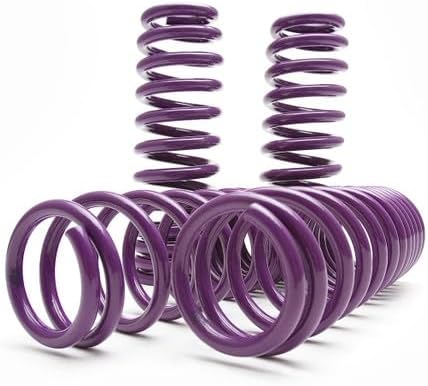
D2 PRO Lowering Springs - BMW E90 E92
D2 Racing Sports
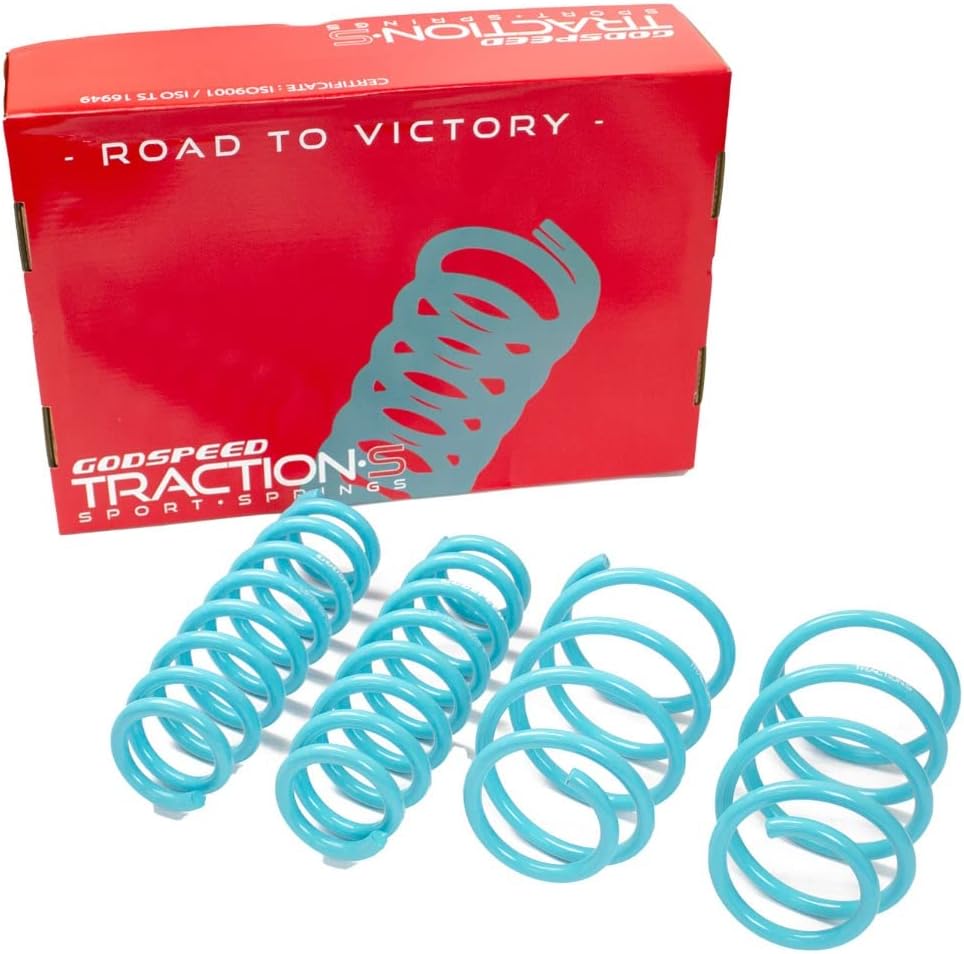
Godspeed Traction-S Lowering Springs BMW 3-Series xDrive E90 E91 E92 E93
Godspeed

Godspeed Traction-S Lowering Springs BMW 3 Series E90 328i 335i 2006-2011
Godspeed

Godspeed Traction-S Lowering Springs BMW 3-Series E90 E92 E93 2006-2012
Godspeed

DAZZLAIT Lowering Sport Springs for BMW 3-Series E90 E91 E92 E93 2007-2013
DAZZLAIT

Dinan D100-0925 Performance Spring Set for BMW 328i/335i (2007-2013)
Visit the Dinan

Bilstein B3 Rear Lowering Springs for BMW E90 3 Series Sedan
Bilstein
More suspension parts for the BMW E90
The BMW E90 responds exceptionally well to suspension upgrades, and knowing where to invest your money makes all the difference. For street-driven cars, a quality coilover kit from Bilstein, KW Suspensions, or Öhlins gives you adjustable ride height and damping without sacrificing daily drivability. The KW Variant 3 remains a favorite among E90 enthusiasts for its independent compression and rebound adjustment. If you prefer a budget-conscious approach, swapping the OEM struts for Bilstein B8 monotubes paired with H&R or Eibach sport springs delivers a noticeable improvement in handling and a mild drop in ride height. Don't overlook the supporting components - worn OEM rubber control arm bushings, front strut mounts, and rear subframe bushings are notorious weak points on high-mileage E90s. Upgrading to Meyle HD or reinforced polyurethane bushings from SuperPro dramatically tightens up steering response and reduces unwanted flex. Before spending money on coilovers, always inspect and replace worn end links, ball joints, and thrust arm bushings first, as no coilover kit will perform correctly on a chassis with sloppy worn-out geometry.
BMW Lowering Springs - What They Actually Do and Why Most BMW Owners Get It Wrong
BMW lowering springs are one of the most popular suspension upgrades in the BMW aftermarket, and honestly, they deserve that reputation - when you pick the right set for your chassis. A quality set of lowering springs drops your ride height, tightens up body roll, sharpens turn-in, and closes that embarrassing fender gap that makes a stock BMW look like it's riding on stilts. Done right, you get a car that handles noticeably better, looks significantly meaner, and still functions as a daily driver without beating you up on every pothole. Done wrong - wrong brand, wrong drop, wrong pairing with worn dampers - and you've spent $300 to make your car worse. I've seen both outcomes on cars in my shop and in my driveway. This guide is about making sure you end up in the first category.
I'm currently dailying a G20 330i with the B48 turbo four, and I've had my hands inside the suspension corners of everything from E36s to F80 M3s over the last five years. I'm going to walk you through exactly what lowering springs do, which brands are worth your money in 2026, how to pick the right drop for your specific chassis code, and what supporting work you need to do to make the upgrade actually work. No hype. No filler. Just the real breakdown.
What Lowering Springs Actually Do to Your BMW
A stock BMW leaves the factory with springs tuned for a compromise between ride comfort, load capacity, and ride height. That means the springs are softer than they need to be for performance driving, and the car sits higher than it needs to for handling. There's also a lot of suspension travel baked in to absorb bumps with comfort across a wide range of road surfaces and passenger/cargo loads. The result is a car that rolls in corners, pitches under braking, and has enough fender gap to fit another tire in there.
Aftermarket lowering springs address this by doing two things at once. First, they're shorter than the OEM springs, which physically drops the ride height. Second, they're stiffer - higher spring rate - which reduces suspension travel and limits body roll. The combination means the chassis sits closer to the road, the center of gravity drops (even modestly), and the suspension resists compression more aggressively under cornering loads. Turn-in gets sharper because the body doesn't have to roll over before the tires start generating lateral grip. Braking pitch decreases for the same reason.
What lowering springs do not do is change your damping. The dampers - struts and shocks - control how quickly the suspension compresses and rebounds. When you put stiffer, shorter springs on your original dampers, you're asking those dampers to work with a different motion profile than they were designed for. This is important, and I'll come back to it. For now, the key point is that springs and dampers are a system. Upgrading one without considering the other limits the result and can cause problems.
The other thing lowering springs do - and a lot of buyers underestimate this - is change your alignment geometry. Lowering your BMW changes the camber, toe, and caster angles because the suspension arms are now operating at a different angle relative to the chassis. Most BMW suspensions gain a small amount of negative camber when lowered, which is actually a handling benefit up to a point. But it also means your tires will wear unevenly if you don't get a proper four-wheel alignment immediately after the install. That alignment appointment isn't optional.
When to Actually Upgrade - and When to Skip It
Lowering springs make sense for a specific type of BMW owner. Before you add them to your cart, ask yourself honestly which of these describes you.
Good candidates for lowering springs: You daily drive your BMW and want better handling and a cleaner stance without spending coilover money. Your stock suspension feels vague and floaty compared to what the chassis is capable of. You have a relatively newer car with low-mileage, healthy dampers that aren't going to fight the new spring rates. You want a modest drop in the 0.8-to-1.5-inch range and aren't looking for show-car stance. You're on a budget and a full coilover setup is out of reach right now.
Situations where springs alone may not be the right call: Your dampers already have more than 60,000-70,000 miles on them. Worn struts will not control a stiffer spring properly, and the result is a bouncy, unsettled ride that handles worse than stock. In that case, you're better off pairing springs with replacement dampers - either OEM replacement units or performance aftermarket dampers. If you have adaptive dampers (standard on G20, G30, and many F30 variants with the adaptive M suspension option), the situation is more complex, which I'll cover in the adaptive damper section below. And if you already know you're going to track the car, skip springs entirely and go straight to a proper coilover kit. Springs are a street upgrade. For track use, check out our guide on the best BMW coilovers instead.
Also worth saying directly - if you're chasing a really aggressive drop, like more than two inches, lowering springs are the wrong tool. That kind of drop requires coilovers. Trying to achieve it with springs alone will put your dampers at or beyond their travel limits, cause premature wear, and likely result in coilover bind or spring perch contact. The geometry doesn't work at that drop level on a fixed-length strut. Stay in the 0.8-to-1.5-inch range and you're golden. Push past 1.5 inches with springs and you're gambling.
The BMW Suspension Landscape from E36 to G20 - Why Chassis Code Matters
One of the biggest mistakes I see on the forums is someone ordering springs based on "fits BMW 3 Series" without nailing down the chassis code, engine code, and suspension variant. BMW builds multiple distinct suspension configurations within the same model year and body style. The E46 330i with M Sport suspension uses different spring rates and perch dimensions than the base E46 325i. The F30 328i with sport suspension sits differently than the comfort suspension variant. The G20 330i with M Sport package uses stiffer OEM springs than the standard G20, meaning the relative drop from a given aftermarket spring set will be different.
Here's a practical breakdown of how the BMW chassis generations stack up from a spring upgrade perspective:
E36 (1992-1999) - Deep Aftermarket, Easy Work
The E36 is one of the most thoroughly documented BMW platforms in the aftermarket. Springs are cheap, widely available, and well-tested across decades of ownership. This is the chassis where you can find springs from every tier - budget Vogtland sets all the way up to race-spec units. Dampers on high-mileage E36s are almost universally due for replacement at this point, so budget for new shocks/struts when you order springs. The upside is that because these cars are cheap and the aftermarket is deep, you can do a full spring-and-damper refresh for reasonable money. H&R and Eibach both have well-established fitment history on the E36 and are safe picks. Typical drop runs 1.0-1.4 inches with either brand's sport line.
E46 (1999-2005) - The Platform With the Most Options
The E46 is probably the most-modded BMW platform on the planet, and the spring options reflect that. You'll find more forum data, more brand options, and more specific community opinion on E46 spring setups than almost any other chassis. The important fitment note here is the M Sport vs. standard suspension split. If you're running M Sport, your OEM springs are already stiffer and lower - so the drop from a given aftermarket spring will be less than it would be on a standard setup. H&R Sport springs on an M Sport E46 330i will net you roughly 0.8-1.0 inches of drop. On a standard E46 325i without sport suspension, the same springs drop closer to 1.3-1.4 inches.
E9x (2006-2013) - The E90, E92, E93 Sweet Spot
The E90/E92/E93 chassis is where the current used market volume is, and the spring fitment market matches. This is the generation where Eibach Pro-Kit becomes especially popular because the E9x platform responds well to the progressive rate tune Eibach uses. The E90 335i with its N54 or N55 engine is particularly well-served by the whole ecosystem of lowering spring options. The F10 M5 and E6x platforms also have good coverage if you're running a 5 Series in this generation. One thing to watch on E9x cars with the sport suspension package - confirm whether you have EDC (Electronic Damper Control) because that changes your options significantly.
F30/F32/F82 (2012-2020) - The Adaptive Damper Complication
The F30 generation introduced standard adaptive dampers on many trim levels in the US market, especially anything spec'd with the M Sport package or Dynamic Handling Package. When an F30 335i or F30 328i has the adaptive damper system, you cannot simply bolt on any lowering spring and call it done. The adaptive dampers need to remain functional, and the spring rate change interacts with the electronically-controlled damping in ways that can produce a harsh or poorly-matched ride. The general guidance on the forums is to stick with springs that are specifically validated for use with adaptive dampers on these chassis, and H&R and Eibach both call out EDC compatibility in their product listings where applicable. If your F30 doesn't have adaptive dampers - the base comfort suspension - you have more flexibility.
The F82/F83 M4 and F80 M3 are in a different category. These cars come with very capable factory suspension and the drop from most spring sets is modest by design. Most owners in the F8x community who are going lower are doing coilovers rather than springs, but there's still a market for springs on the F8x for owners who want a mild drop and cleaner look without changing the fundamental ride character.
G20/G30/G80 (2019-present) - The Modern Platform Calculus
On the current generation - my chassis, the G20, along with the G30 5 Series and the G80 M3 and G82 M4 - the conversation has shifted. These cars have sophisticated suspension geometry, adaptive dampers are even more common, and the price of doing it right is higher. But the market has caught up, and quality options exist. The G80 M3 in particular has strong product availability from premium brands, and IND Distribution's G80/G82 suspension catalog shows exactly how the market has organized around a tiered ladder - from fixed lowering springs up through height-adjustable spring kits to full coilovers. On the G platform, many informed owners are choosing that HAS (Height-Adjustable Springs) middle ground rather than fixed springs, because it preserves more flexibility. I'll cover that in its own section.
The Brand Landscape - Where Each Name Fits in 2026
The BMW lowering spring market in 2026 is dominated by a handful of European brands, each of which occupies a fairly well-defined position in terms of price, drop profile, and ride character. Here's my honest assessment of each.
H&R Sport Springs - The Default Recommendation for a Reason
H&R is the name that comes up most consistently when someone asks for a spring recommendation on any BMW forum, and it's earned that position. H&R springs have a reputation for precise fitment, consistent drop heights (they publish specific measured drops by chassis rather than vague "1-2 inch" ranges), and a firm progressive rate that improves handling without making daily driving miserable. For the E46 through F30 range, H&R Sport springs are a genuinely excellent choice for most street-driven BMWs. They tend to sit on the firmer side of the street spring spectrum, which I personally prefer - I'd rather have a car that handles well and rides a little firm than one that feels floaty but sits low.
The main knock on H&R is price - they're not the cheapest option, typically running $250-$350 for a full set on older chassis. On newer platforms like the G20 and G80, pricing climbs. But you get what you pay for with springs, and H&R has decades of BMW-specific engineering behind their products. Their racing division develops springs across the full BMW lineup, which filters into their street product validation.
Eibach Pro-Kit - Best for Comfort-Biased Daily Drivers
Eibach is the other dominant name in BMW springs, and it's positioned slightly differently than H&R. Eibach's Pro-Kit line - their most popular street product - uses a progressive spring rate that starts softer and stiffens as compression increases. The result is a spring that absorbs small road imperfections reasonably well at the soft end of travel but stiffens up properly when you push the car hard. Drop rates with the Pro-Kit are typically a little more conservative than H&R's equivalent - often in the 0.8-to-1.2-inch range rather than the 1.0-to-1.5-inch range you get with H&R Sport. If you're prioritizing ride quality alongside the handling improvement, Eibach Pro-Kit is my first recommendation. If you want the firmer feel and the extra bit of drop, H&R Sport is the call.
Eibach also makes a Sport-Line product with a more aggressive drop profile for owners who want the extra stance without going to coilovers. The Sport-Line is worth looking at if the Pro-Kit drop feels too conservative for your taste, though be aware that the firmer rate requires healthier dampers to work well.
AST Suspension - Premium Engineering, Real Price
AST Suspension is a Dutch brand that has built a strong reputation in the performance suspension world, and they've made significant inroads in the BMW market particularly on current-generation and M chassis cars. AST makes both fixed lowering springs and adjustable lowering springs, and the price gap between those two products tells you something about where AST is positioned - this is a premium brand for owners who are serious about their suspension setup.
On the G80 M3 specifically, SVBimmer's listing for AST G80 M3 lowering springs shows these as an actively stocked product, which matters because G80 M3 parts availability from some brands still has gaps as the car is relatively new to the serious aftermarket. The fixed AST springs come in at around $432, and the AST adjustable lowering springs step up to around $1,111.50 - a significant jump that reflects the engineering complexity of adjustable spring technology rather than simple brand premium markup.
AST's engineering heritage is motorsport-focused, and it shows in how their products interact with performance dampers. If you're running a high-spec suspension setup on a G80 or G82, AST springs are worth the premium because they're designed to work optimally with quality performance dampers rather than just slapping a spring on a stock strut and calling it done. You can find AST suspension products at Midwest Bimmer Supply's AST collection alongside their other suspension products.
Dinan - OEM+ Philosophy, Premium Price
Dinan is BMW's longest-standing North American performance partner, and their suspension work reflects their philosophy - measured, BMW-appropriate performance improvement rather than maximum aggression. Dinan springs are engineered specifically to work within BMW's suspension geometry tolerances and are validated for use with BMW's adaptive damper systems on modern chassis. If you have a warranty to protect or you just want the confidence that comes with BMW-adjacent engineering validation, Dinan is a legitimate option. They are not cheap, and the drop heights are conservative. That's intentional. Dinan's customer is the BMW owner who wants a better-handling car that still behaves like a BMW, not someone chasing maximum stance.
Vogtland - Value Tier Done Reasonably Well
Vogtland is a German spring manufacturer that doesn't get as much forum coverage as H&R or Eibach, but they're not a no-name brand either. For budget-conscious buyers on older chassis like the E36, E46, or E9x, Vogtland is worth considering if the price gap over H&R/Eibach matters to your build budget. They tend to be slightly more aggressive on drop height than Eibach Pro-Kit for a given chassis. The trade-off is that there's less documented BMW owner experience with Vogtland than with H&R or Eibach, so you're relying more on their published specs and less on years of forum data about real-world ride quality on specific chassis. Not a bad spring, just one that requires more trust in the manufacturer's own data.
KW Suspension Lowering Springs - Worth It If You're Already in the KW Ecosystem
KW Suspension is better known for their coilover kits, but they make a dedicated lowering spring line separate from their coilover products. The main reason to consider KW springs specifically is if you're already running KW dampers or planning to upgrade to them - KW tunes their springs to work optimally with their own damper valving. The spring rates are matched to KW's damper characteristics in a way that makes the combined system better than mixing brands arbitrarily. Outside of that pairing logic, KW springs don't have a compelling advantage over H&R or Eibach for most applications.
Height-Adjustable Springs vs Fixed Lowering Springs - The G-Platform Decision
On the G20, G30, G80, and G82 platforms, a question comes up that wasn't as relevant on older BMW generations - should you choose fixed lowering springs or height-adjustable springs (HAS)? This is worth a dedicated section because it's a real decision point that affects both your outcome and your spending.
Fixed lowering springs are what most people picture when they think about this upgrade. You get a spring that's a specific height and rate, you install it, and you get whatever drop that spring produces on your specific chassis. Simple. Predictable. Less expensive.
Height-adjustable springs add a threaded collar to the spring assembly that allows you to dial in your ride height within a range - typically 10-30mm of adjustment depending on the product. This is meaningfully different from coilovers, which adjust both spring preload and damper body length. HAS systems adjust spring seating position on a fixed-length strut. The result is more flexibility than fixed springs without the cost and complexity of full coilovers. For G20 and G80 owners who want to fine-tune their stance, run a slightly lower setting in summer and raise it for winter, or just dial in symmetrical ride height side-to-side (which matters more than people realize - BMWs sometimes have slight variance in OEM spring height between left and right), HAS makes real sense.
The price premium is real though. Looking at the AST product range on the G80 M3, the jump from $432 for fixed springs to $1,111.50 for adjustable springs is substantial. That's roughly $680 more for the adjustability. Whether that's worth it depends on how particular you are about dialing in height, whether your car will see track days where you want to be able to adjust, and whether you're planning to run wider or more aggressive wheels that require precise clearance management. For a pure street daily driver who just wants to lower the car by an inch and be done with it, fixed springs make sense. For a G80 M3 owner who is running track events, experimenting with different wheel setups, or who just wants the flexibility, HAS is worth considering seriously before defaulting to the cheaper option.
Fitment Notes That Most Guides Skip - M Sport vs Base Suspension
I touched on this earlier, but it deserves its own section because I've watched people make this mistake repeatedly. BMW sells the same chassis code with multiple suspension variants, and they use different OEM spring rates and spring perch heights depending on which package is installed. The most important split across most BMW generations is M Sport suspension vs standard/base suspension.
On an E46, M Sport (Sport Package) cars got stiffer OEM springs and slightly lower ride height from the factory. On an F30, the M Sport package included stiffer springs and different strut tuning than the base suspension. On the G20, the M Sport package includes different spring rates and a 10mm lower ride height than the standard setup.
Why does this matter for lowering springs? Because when you install aftermarket springs, the drop you experience is relative to your starting point. If your OEM springs are already stiffer and lower (M Sport), the same aftermarket spring will drop you less than it would on a base-suspension car, because the preload and spring rate relationship is different. A spring set rated for "M Sport E46" might drop a base suspension car 1.5 inches but only 1.0 inch on an M Sport car. Always confirm whether your BMW has the sport suspension variant and make sure the spring you're ordering is specifically listed for that variant. H&R and Eibach both call this out in their fitment tables. If the listing only says "fits E46 3 Series" without specifying sport vs base, dig deeper before ordering.
There's also the sport seat/VIN-specific issue on very new cars. On G20 and G30 variants particularly, BMW uses VIN-based spring coding in some markets. This isn't usually an issue for aftermarket springs since you're replacing the spring entirely, but it matters if you're replacing a spring under warranty or trying to get BMW to help you diagnose a ride height issue after an aftermarket spring install.
Damper Compatibility - The Part Nobody Wants to Talk About Spending Money On
Every honest lowering spring guide has to say this clearly - springs and dampers are a matched system, and upgrading one while ignoring the other gives you a suboptimal result at best and a poorly handling car at worst.
Here's the mechanical reality. OEM BMW dampers are valved to control OEM spring rates. When you install stiffer aftermarket springs, the dampers are now working with a faster, higher-force input than they were designed for. At low mileage, healthy OEM dampers can handle a modest spring rate increase reasonably well - the overlap between OEM damper capability and moderate aftermarket spring rates is enough that the result is still better than stock. This is why running lowering springs on a 30,000-mile car usually works fine. The dampers are still fresh, and the rate change isn't dramatic enough to overwhelm them.
At higher mileage - I'd use 60,000-70,000 miles as a rough threshold, though BMW struts vary in longevity - OEM dampers have lost a meaningful portion of their damping capability. The oil inside degrades, the piston moves more freely, and the car loses that crisp control of body motion. At this point, even OEM springs will produce a soft, floaty feel. Add stiffer lowering springs to worn dampers and you get a car that bounces over bumps, has unpredictable rebound behavior in corners, and generally handles worse than stock because the stiffer spring is releasing energy faster than the worn damper can absorb it. I've ridden in this exact setup on a friend's E90 335i - he put Eibach Sport-Line springs on worn original struts at 80,000 miles. The car was genuinely unpleasant to drive and the handling was worse than my stock G20.
The takeaway - if your dampers are getting up there in mileage, budget for replacement at the same time as the springs. OEM replacement struts and shocks for most BMW generations are reasonably priced at the dealer or through OEM-equivalent suppliers. For E46 and E9x cars, you can often source OEM Bilstein-made replacement units that are what BMW uses from the factory. Replacing these alongside new lowering springs gives you a properly matched system that will actually work the way you want.
For adaptive damper systems on F30, G20, and G80 chassis - the bar to clear is higher. On cars with electronic damper control (EDC), the dampers aren't just passive spring-rate-matched hardware. They're actively varying their damping rate based on inputs from sensors across the car. Installing springs that are significantly stiffer than OEM can cause the EDC system to continuously try to compensate, sometimes resulting in a mode-mismatch where Comfort mode is harder than Comfort should be and Sport mode is harsher than intended. The validated approach here is to either use spring products specifically tested with adaptive dampers (Dinan and H&R both document this compatibility on applicable fitments) or upgrade to a full coilover setup with its own integrated damper that replaces the electronic units entirely. See our full breakdown at the coilover section for more on that path.
How Much Drop Is Actually Right for a Daily Driver
The "correct" drop for a street-driven BMW is a more nuanced question than most product listings suggest. It depends on your wheel/tire setup, your local road quality, your clearance needs, and honestly, your personal preference for ride quality vs stance.
The range I'd call the street sweet spot is 0.8 to 1.4 inches of drop. Here's what that range produces in practice on most BMW chassis.
0.8-1.0 inch drop - This is the OEM+ zone. The car sits noticeably lower than stock, the fender gap closes meaningfully, and handling improves without significantly impacting ride quality. Most Eibach Pro-Kit setups land in this zone on M Sport equipped cars. If you're daily driving on moderately rough roads and prioritize ride quality, this is where you want to be. You'll have adequate clearance with most wheel setups including fitments slightly wider than stock.
1.0-1.4 inch drop - This is the sweet spot for most performance-oriented daily drivers. The car looks properly low without being slammed. Handling improvement is meaningful - body roll is noticeably reduced, turn-in is quicker, and the car feels more planted. H&R Sport springs on most E46, E9x, and F30 applications land in this range. Ride quality gets firmer but stays livable on standard road surfaces. You'll feel bumps and expansion joints more than stock, but nothing harsh enough to make daily driving unpleasant. If you're running wider wheels or stickier tires, confirm clearance carefully in this range.
1.4-1.8 inch drop - This is the aggressive street zone and where the trade-offs start getting real. Stance is very clean. Handling benefit is maximized for a spring setup. But ride quality is noticeably compromised - you'll feel road imperfections much more aggressively, and driveways and parking garage ramps become genuine obstacles. This level of drop requires fresh, quality dampers. OEM dampers at any significant mileage will not control this spring rate well. On cars with wide aftermarket wheels or aggressive offsets, you need to carefully check clearance throughout the full steering lock and compression range before committing.
Beyond 1.8 inches - Get coilovers. Seriously. Fixed-length struts with lowering springs at this drop level are fighting the geometry of the suspension, and you'll have problems with bump steer, coilover bind, and rapid wear that make the setup not worth it.
The Install Process - What You Actually Need and How Long It Takes
Installing lowering springs is a moderate DIY job. It's not beginner territory, but any BMW owner who's done basic maintenance work and has a proper tool set can handle it. The job requires supporting the car safely, removing the wheels, disassembling the strut/spring assembly, swapping the springs, reassembling, and then getting an alignment. Here's the realistic breakdown.
Tools You Actually Need
- Floor jack and jack stands - A good floor jack rated for the weight of your BMW. Never work under a car on a floor jack alone.
- Spring compressor - This is the piece of equipment most DIYers either skip or cheap out on, and both are bad decisions. A spring compressor allows you to safely compress the spring to remove spring tension before you crack open the strut assembly. Without one, the spring can release violently when you disassemble the top mount. Rent a quality unit from an auto parts store rather than buying a cheap import - a spring compressor failure under load can be seriously dangerous. I cannot stress this enough.
- Torque wrench - Suspension fasteners need to be torqued to spec. Guessing is not acceptable.
- Impact wrench or breaker bar - Strut top nuts are torqued from the factory and will resist a standard ratchet.
- BMW-specific sockets and wrenches - Primarily E-Torx (E10, E12) for strut top fasteners on many BMW generations.
- Penetrating oil - Suspension hardware on any BMW with a few years of winter road exposure is going to be corroded. Plan ahead.
The Process, Simplified
Support the car safely on jack stands under the sub-frame points or factory jack points (not under suspension arms - you want the suspension to hang freely when you're working). Remove the wheels. On the front, you'll disconnect the strut assembly from the knuckle and carefully compress the spring to safely disassemble the strut top mount and remove the old spring. Seat your new lowering spring correctly on the perch - getting the spring end orientation right is important and varies by application. Reassemble in reverse, torque everything to spec, reinstall the wheels. The rear is typically simpler, depending on whether your BMW has a multi-link rear or the older trailing arm setup. E30 and E36 rears are much more straightforward than the multi-link rear on E46 through G20 platforms.
Time estimate - for a competent home mechanic doing this the first time with proper tools, budget 4-6 hours for the full install including both axles. If you've done it before on the same platform, 3-4 hours is realistic. Don't rush the spring compression steps.
The Alignment - Non-Negotiable
Get a four-wheel alignment immediately after the install. Do not drive the car for thousands of miles first "to let things settle." The car will wear tires unevenly from the first mile if the alignment is out of spec, which it will be after changing ride height. A quality four-wheel alignment at a shop that has BMW experience should run $80-130 depending on your area. Call ahead and confirm the shop can align to BMW specifications - some generic alignment shops use generic specs rather than BMW's tighter tolerances, especially for camber and toe. A BMW dealer or independent BMW specialist is worth the slight price premium for an alignment if your local generic shop doesn't know what they're doing with a Bimmer.
If you're going through our full suspension section and doing multiple upgrades at once - springs, sway bars, end links - do the alignment after all the suspension work is done, not between each step.
Common Mistakes and How to Avoid Them
After five years of wrenching and watching others wrench on BMWs, here's the list of mistakes I see over and over with lowering spring installs.
Not checking adaptive damper compatibility. Ordering a set of springs for your F30 without confirming whether it has EDC is the most common expensive mistake in this category. Check your build sticker in the trunk, your options list in your car's specifications, or the VIN decoder on BMW's site. If you have EDC and you install springs not validated for EDC use, you may end up with a ride that's worse than stock and a system that throws fault codes.
Wrong spring specification for suspension variant. Already covered this, but it's worth listing again because the forums are full of people who ordered "E46 lowering springs" and ended up with incorrect drop heights because they didn't specify M Sport vs base.
Reusing worn OEM bump stops. When you disassemble the strut, the OEM rubber bump stop is sitting on the strut shaft. With a lower ride height, the suspension operates at a different point in its travel range, and the bump stop position and length need to match the new setup. Many quality spring sets include a note about trimming or replacing bump stops. Follow that guidance. Running mismatched bump stops with lowering springs can cause a hard, clunking feeling at the bottom of suspension travel when you hit bumps.
Under-torquing the strut top mount. The strut top mount nut is safety-critical. Torque it to spec with a torque wrench. This is not a place to guess by feel.
Skipping the alignment. Already said this but saying it again. Every time. No exceptions.
Buying cheap unknown-brand springs. On any modern BMW with sophisticated suspension geometry, spring rate consistency and spring free height accuracy matter. A spring that's manufactured to loose tolerances will produce inconsistent drop heights corner-to-corner and can cause a car to sit crooked. Stick with established brands that publish actual spring rates and free height specifications.
Installing on the wrong offset wheels without checking clearance. If you're running wheels with more negative offset than stock - pushed out toward the fender - the lower ride height combined with the wheel position can produce tire-to-fender contact under full compression or full steering lock. Test the clearance with the car on the ground and with the wheels turned to full lock before going for a drive.
What to Pair With Lowering Springs for Best Results
Lowering springs work best as part of a coherent suspension upgrade rather than as an isolated bolt-on. Here's what I'd prioritize alongside springs depending on your chassis and goals.
Sway Bars and End Links
Stiffer sway bars are a natural companion to lowering springs. Springs reduce body roll through spring rate stiffness; sway bars reduce body roll by transferring cornering load between the two wheels on an axle. They address body roll through different mechanisms and work additively. A front sway bar upgrade on an E46 or E90 alongside lowering springs produces significantly less body roll than either alone. Check out the options in our sway bars and end links section. End link upgrades are often a necessary companion to sway bar changes because OEM end links are designed for OEM sway bar rates and the geometry changes with lowering.
Alignment Kit
On some BMW generations, the OEM suspension has limited alignment adjustment capability. The E46 in particular has a well-documented camber adjustment range that can run out of spec after lowering. Aftermarket camber plates or eccentric bolts (depending on the chassis) can restore proper alignment geometry. If you're running more than 1.2 inches of drop on an older chassis, worth researching whether your car's OEM alignment hardware can get the front camber into spec, or whether you need an adjustment kit.
Quality Wheels and Tires
Lowering a BMW on OEM wheels with OEM tires is a valid setup, but the stance and handling improvement both show better on a wheel that fills the arch properly. The lower ride height changes how the wheel-to-fender relationship looks and a properly sized aftermarket wheel on a slightly lowered car looks significantly better than the stock setup. If wheels are on your list, coordinate the lowering and wheel decisions together so you can confirm clearance with both changes in mind. Our aftermarket wheels section has fitment guides sorted by chassis.
Brake Upgrades
Lowering springs by themselves don't do anything to your braking. But if you're upgrading handling, better brakes are a logical next step - especially if you ever see track days. There's a reason most track day coaches recommend brakes before handling mods. Check our brake pad section for performance street and track-day options by chassis.
My Picks By Use Case
Here's where I'll be direct about what I would actually buy for specific scenarios. These are my opinions based on real-world use - not affiliate-driven rankings.
Best Street Daily Driver Spring - Most BMW Generations
Eibach Pro-Kit is my first recommendation for most people reading this. It fits the widest range of BMW chassis, has documented compatibility with adaptive dampers on most applicable fitments, produces a conservative-to-moderate drop that doesn't compromise daily drivability, and the progressive rate works well with OEM and mildly aged dampers. If you're driving an E9x 335i, an F30 328i, a G20 330i, or any variant in between on the street every day and want a handling improvement with reasonable comfort, Eibach Pro-Kit is where I'd start.
Best Performance Street Spring - Firmer, Lower, More Aggressive
H&R Sport Springs are my pick here. If you want the firmer feel, the extra bit of drop, and the more committed handling character, H&R delivers it. I've driven cars on H&R Sport springs across multiple generations and the handling improvement is clearly noticeable compared to Eibach Pro-Kit on the same chassis. The trade-off is a firmer daily ride. If you're in the M Sport trim camp and you want to maximize what the chassis can do without going to coilovers, H&R Sport is the call.
Best Premium Option for G80/G82 - Current Generation M Cars
AST Suspension lowering springs at $432 for the fixed option, or the AST adjustable lowering springs at $1,111.50 if you want height adjustability. For a G80 M3 owner who has already spent north of $90,000 on the car, the AST premium over an Eibach set is justified by the engineering quality and the motorsport-derived calibration. These cars are capable enough that the quality of the spring setup actually makes a measurable difference in how the car responds. I wouldn't put a budget spring on a G80 M3 any more than I'd put cheap tires on one.
Best Budget Option - Older Chassis, Tighter Budget
Vogtland or used/clearance stock of known-brand springs for E36 and E46 cars where you're working with a limited build budget. On a chassis this old where the entire suspension refresh might be a project, spending $150 on Vogtland springs and putting the savings toward fresh OEM-spec replacement dampers is a smarter allocation than spending $300 on H&R springs and running them on worn struts.
When to Skip Springs Entirely and Just Buy Coilovers
If your dampers are worn and due for replacement regardless, the math often works in favor of buying an entry-level coilover kit rather than springs plus new OEM dampers. An E46 with tired struts where you'd be spending $200-250 on OEM replacement dampers plus $250-300 on springs is now $450-550 into the suspension for a fixed drop and non-adjustable height. A decent coilover kit for the same chassis can often be found in the $700-900 range and gives you full height adjustability plus better damper quality than OEM replacement units. Run the numbers on your specific chassis before assuming springs are cheaper. Sometimes they are, sometimes they're not. We have a full comparison guide in the articles section.
Price Tier Reference - What to Expect to Spend
Here's an honest breakdown of what you'll spend on spring sets across the typical BMW generation range in 2026 US pricing.
| Chassis / Generation | Budget Tier | Mid Tier (Eibach/H&R) | Premium Tier (AST/Dinan) |
| E36 (1992-1999) | $100-150 | $200-280 | $300-400 |
| E46 (1999-2005) | $120-170 | $230-310 | $320-450 |
| E9x (2006-2013) | $150-200 | $260-340 | $380-500 |
| F30/F32/F8x (2012-2020) | $180-240 | $290-380 | $420-650 |
| G20/G30 (2019-present) | $200-280 | $320-420 | $432-1,111.50 (AST) |
| G80 M3 / G82 M4 (2021-present) | Not recommended | $340-450 | $432-1,111.50 (AST) |
Don't forget to add $80-130 for the post-install alignment to your total budget. And if dampers need replacement, add that cost separately. The spring price is rarely the only cost of doing this properly.
Brand Comparison Summary Table
| Brand | Best For | Typical Drop Range | Ride Character | Price Position | Forum Trust Level |
| H&R Sport | Performance-biased street daily | 1.0-1.5 inches | Firm, controlled | Mid-high | Very high - decades of BMW data |
| Eibach Pro-Kit | Comfort-biased street daily | 0.8-1.2 inches | Progressive, softer entry | Mid | Very high - E9x/F3x community favorite |
| Eibach Sport-Line | More aggressive street stance | 1.2-1.6 inches | Firm to stiff | Mid | High |
| AST Fixed | G80/G82/G20 premium builds | Chassis specific | Performance biased | High - ~$432 | Growing fast on G-platform forums |
| AST Adjustable | G-platform owners wanting HAS flexibility | Adjustable range | Performance biased | Premium - ~$1,111.50 | Strong in M car community |
| Dinan | Warranty-conscious, OEM+ feel | 0.7-1.0 inches | Smooth, OEM adjacent | High | High among dealer-adjacent crowd |
| Vogtland | Budget builds on E36/E46 | 1.0-1.5 inches | Moderate | Budget-mid | Moderate - less documented BMW history |
| KW Lowering Springs | KW damper pairings | Chassis specific | Performance oriented | Mid-high | Strong within KW ecosystem |
Wheel and Tire Fitment Considerations When Lowering
Lowering your BMW changes more than just the ride height number. It changes how your wheels and tires interact with the fenders, suspension components, and wheel arches across the full range of suspension travel. If you're running stock wheels and tires, you usually have enough clearance margin that modest drops aren't a concern. But a lot of BMW owners are running aftermarket wheels when they do a spring upgrade, and that's where it gets complicated.
The key measurements to understand are wheel width, offset, and tire sidewall height. A wider wheel at a lower offset moves the tire outward toward the fender. When you lower the car, the suspension's static position changes and the arc of travel through compression changes. The combination of lower offset, wider wheel, and lowered ride height can put the tire in contact with the inner fender or splash guard under full suspension compression - which happens on big bumps and over dips at speed.
The way to check this before it's a problem is to physically test it after the install. With the car on the ground, push down hard on each corner to simulate suspension compression and watch for contact. Turn the wheels to full lock and check again. Do this with someone watching from outside the car. If you see contact, you either need a different wheel offset, a narrower tire, a different drop height, or some combination. Don't just assume it's fine.
On the G20 330i specifically - my car - I've found that the M Sport fitment (18x8.0 ET30) with a 225/45 tire has very comfortable clearance with a 1.0-inch drop. Going wider or lower simultaneously would require more careful planning. The chassis tools section has wheel fitment guides sorted by generation that can help you map out compatible setups before you spend money.
Lowering Springs and Alignment - Going Deeper
I've already said the alignment is non-negotiable, but let me go deeper on what you're actually asking an alignment tech to correct when you lower a BMW, because understanding this helps you know whether a cheap alignment job is adequate or whether you need a specialist.
When you lower the ride height, the suspension arms - particularly the front lower control arms and the rear trailing or multi-link arms - change their angular relationship to the chassis and ground plane. On most BMW front suspensions, lowering produces additional negative camber (top of the tire tilted inward). Some of this is desirable for performance driving - negative camber increases the tire's contact patch area during cornering. Too much negative camber on a street car wears the inside of the tire aggressively, so there's a target range.
BMW's published front camber specification is typically -0.5 to -1.0 degrees at OEM ride height. After a 1.0-inch drop, many BMW platforms end up at -1.5 to -2.0 degrees of camber before correction. Whether you can correct this back to spec depends on whether your car has OEM camber adjustment (limited on most BMW strut-front setups) or whether you need aftermarket camber plates or eccentric bolts. On E46 and older cars, eccentric lower control arm bolts are a common add-on for this reason. On G20 and F30 cars with their multi-link front setups, there's more inherent adjustment capability.
Toe is the other alignment angle that changes significantly with lowering, and toe errors cause tire wear much faster than camber errors. This is the primary reason to rush the alignment appointment - even a day of highway driving with toe significantly out of spec will scrub measurable rubber off your tires. Get the car to the alignment rack within the first 50 miles of the install at most.
The BMW chassis tool can help you identify what OEM alignment specs apply to your specific chassis code and suspension variant.
Frequently Asked Questions
Will lowering springs void my BMW warranty?
In the US, the Magnuson-Moss Warranty Act generally prevents a manufacturer from voiding your entire warranty simply because you installed an aftermarket part. However, if a warranty claim involves a component that is directly related to the suspension modification - say a strut that fails, or a wheel bearing issue potentially caused by changed geometry - the dealer can argue that the modification contributed to the failure. The practical reality is that if you're still under factory warranty, Dinan-validated springs are the safest choice because Dinan has a formal BMW relationship and their products are designed not to create warranty arguments. Outside of warranty, install whatever fits your goals. If you're coding or tuning the car as well, check out the coding tools section for help reading and clearing fault codes that might come up after suspension changes on adaptive damper cars.
How much does it cost to have a shop install lowering springs?
Labor costs vary significantly by region and shop type. At an independent BMW specialist in most US markets, expect to pay 2-3 hours of labor for a full spring swap - that's roughly $200-$360 in most markets at typical independent shop rates. Dealer labor rates are higher. Chassis specialty shops that do a lot of suspension work can sometimes do it faster and therefore cheaper. Shop around and confirm the shop will perform the job with proper spring compression tools - not all shops that do spring swaps have adequate equipment.
Can I install lowering springs myself if I've never done it before?
Yes, but take it seriously. The job is within reach of a capable home mechanic who is willing to learn, has proper tools, and doesn't rush. The single greatest risk is working with compressed springs - a spring compressor failure during disassembly or reassembly can cause serious injury. Rent a quality spring compressor from a reputable tool rental supplier. Watch chassis-specific how-to videos for your exact platform before starting. Don't hurry the spring compression steps. If you're unsure at any point, stop and get professional help. I'd rather see you pay a shop to do it than rush a step that matters.
Do lowering springs work with stock wheels and tires?
Yes, stock wheels and tires are generally the safest fitment combination for lowering springs because BMW engineers the clearances conservatively for OEM wheel specs. For most street spring drops in the 0.8-1.4-inch range, OEM wheels will have adequate clearance. The fender-to-tire gap will close noticeably but rubbing is not typically an issue at moderate drop heights with OEM fitments.
What happens if I run lowering springs with worn shocks?
The car will handle worse than stock. Worn dampers can't control the energy a stiffer spring puts into them, especially at the rebound phase - when the spring is extending back to ride height after a bump. The result is a car that bounces, feels unsettled over road imperfections, and doesn't inspire confidence in corners. It's not just a comfort issue - it's a handling and safety issue. Replace worn dampers before or at the same time as new springs.
How long do lowering springs last?
Quality springs from established brands like H&R, Eibach, and AST are designed to last the life of the vehicle under normal use. Springs don't wear out in the sense that dampers do - they don't have fluid to degrade or seals to fail. What can happen is fatigue from repeatedly hitting very hard impacts, which is why springs on track cars sometimes need monitoring. For street-driven BMWs, a quality spring set installed correctly should last 100,000+ miles without any performance degradation. What will eventually need attention is the associated hardware - bump stops, rubber mounts, and upper strut mounts - not the springs themselves.
Can I run lowering springs on a BMW with adaptive dampers (EDC)?
Yes, but you need to choose springs that are validated for EDC compatibility. H&R and Eibach both specifically flag adaptive damper compatibility in their product listings where it applies. Do not assume any lowering spring works with EDC - confirm it in the product spec sheet before ordering. Springs that significantly change the spring rate beyond the damper's operating range can cause the EDC system to hunt for the right setting continuously, resulting in a ride worse than stock and potentially throwing fault codes. For more advanced setups on EDC cars, full coilover replacement of the strut units entirely is a cleaner approach.
Will lowering springs affect my BMW's ground clearance enough to be a problem?
At 0.8-1.2 inches of drop, ground clearance reduction is noticeable but generally manageable for daily use. Steep parking garage entry ramps, aggressive driveway aprons, and low speedbumps become obstacles you'll need to approach at an angle or slowly. At 1.4+ inches of drop, ground clearance becomes a genuine daily consideration. I approach some parking structures in my area with lowered cars the same way I'd approach them in a sports car - slowly and at an angle on the entry ramps. It's a real trade-off. Know your local infrastructure before committing to an aggressive drop height.
What's the difference between a single-rate and progressive-rate lowering spring?
A single-rate spring has a constant spring rate throughout its compression travel - it resists compression with the same force per inch of travel from start to end. A progressive-rate spring gets stiffer as it compresses - it starts softer and progressively hardens toward the bound stop. Most street lowering springs from Eibach and H&R use progressive rates. The advantage for daily driving is a spring that rides more gently over small bumps (soft initial rate) but stiffens appropriately when the car is pushed hard in corners (high compression rate). Single-rate springs are more common in pure motorsport applications where predictable linear behavior is prioritized over ride comfort optimization.
Is there a best season to install lowering springs?
If you live somewhere with real winters and use salt on the roads, I'd install springs either in spring/summer or when you're doing a seasonal tire swap to winter wheels. Running lowering springs through winter on salted roads with stock winter tires on slightly different wheel fitment can create clearance surprises that wouldn't exist with your summer setup. Also, if you're in a rust-prone region and your BMW has any age on it, plan for extra time to deal with corroded fasteners. Penetrating oil applied the day before the job helps significantly.
Should I upgrade springs or coilovers first?
For most daily drivers, springs first makes sense if your dampers are still in good condition - it's a lower-cost entry into meaningful handling improvement. But if your dampers are due for replacement regardless, the math sometimes works out in favor of an entry-level coilover kit. And if you know you want full height adjustability and eventual track use, skip springs entirely and go straight to coilovers. There's no universal right answer - it depends on your car's current state, your budget, and your goals. The coilover buyers guide can help you map out the full coilover landscape if you're weighing both options.
Do I need to upgrade my sway bars when I install lowering springs?
You don't need to, but it's a logical pairing. Stiffer springs reduce body roll by increasing spring rate resistance to compression. Stiffer sway bars reduce body roll by transferring cornering load laterally. They work through different mechanisms and complement each other well. If you're doing a full handling refresh - springs, alignment, maybe end links - adding a front sway bar upgrade is worth doing at the same time since you're already in the suspension. If budget is a constraint, springs first and sway bars later is a perfectly sensible sequence.
Final Word - Getting This Right the First Time
BMW lowering springs are a genuinely worthwhile upgrade when chosen correctly for your specific chassis, installed properly, and paired with dampers that are up to the task. The trap is treating this like a commodity purchase where any spring of any brand for any vaguely similar BMW is the same product. It isn't. The fitment specificity matters - chassis code, suspension variant, drivetrain variant, mileage on your dampers, and what you're asking the car to do all affect which spring set is the right call.
My personal approach - on my own G20 330i with the B48, I'm prioritizing a modest OEM+ drop that keeps the adaptive dampers happy and the daily drive comfortable while closing the fender gap and sharpening the turn-in. Eibach Pro-Kit territory. On a friend's E92 M3 he tracks occasionally, H&R Race springs are the more appropriate choice. Those are different cars, different purposes, different right answers.
Take the time to confirm your exact fitment. Budget for the alignment appointment. Be honest about your damper condition. Choose a brand with documented history on your specific platform. Do the install properly and safely. If all of that is in place, you're going to have a BMW that's noticeably better to drive and significantly better to look at - and that combination is why lowering springs have been one of the most popular BMW upgrades for twenty-five years running.
Browse the full range of spring options in our catalog above, filtered by chassis code. If you're still deciding between springs and a full coilover setup, the coilovers section has detailed options sorted by BMW platform. And if this is part of a larger build, the models section lets you browse all available upgrades for your specific BMW from a single starting point.

Kamil Siegień
Founder of BimmerTalk. Five years wrenching on BMWs, currently dailying a G20 330i with the B48 turbo four. Spent a year doing marketing for BMW and MINI before going independent. I write everything on this site myself.
More about the site