
Boost Controllers for BMW 3 G20
Affiliate disclosure. BimmerTalk is a proud partner of the Amazon Associates Program and Turner Motorsport. We may earn a small commission on qualifying purchases through our links, at no extra cost to you. Read the full disclosure.

More turbo parts for the BMW G20
When it comes to turbo upgrades on the BMW G20, you're working with either the B48 four-cylinder or the B58 inline-six, and both respond exceptionally well to forced induction modifications. The B58 in particular is widely regarded as one of the strongest stock turbocharged platforms BMW has ever produced, making it a favourite for enthusiasts. For the B58, the Vargas Turbo Technologies VTT GC-10X or GC-16X hybrid turbos are consistently popular choices, offering significant power gains while retaining reasonable drivability. BM3 and MHD remain the dominant tuning software solutions for flashing the DME, and pairing either with a high-flow catless downpipe from Vrsf or Wagner Tuition unlocks serious potential. The B48 benefits similarly from a hybrid turbo swap, with options from Vargas and Pure Turbos gaining traction in the community. Intercooler upgrades from Mishimoto or Airtec are essential alongside any turbo work to keep intake temps under control.
Before committing to a turbo upgrade, ensure your fuelling system is sorted first - upgraded port injection injectors, a quality ethanol flex-fuel kit if you're running E30 or higher, and a methanol injection setup from AEM or Aquamist will protect your investment and give the tune far more headroom to work with safely.
Boost Controllers for BMW Turbocharged Engines
If you're running a turbocharged BMW and leaving boost management to the factory actuator, you're almost certainly leaving power on the table. Stock boost targets are conservative - designed for 87 octane in a Florida summer with 150,000 miles on the clock. A quality boost controller lets you push beyond those limits safely, whether you're on a lightly tuned N54 or building serious power on an S58. Understanding which setup is right for your chassis matters more than most people realize before they start shopping.
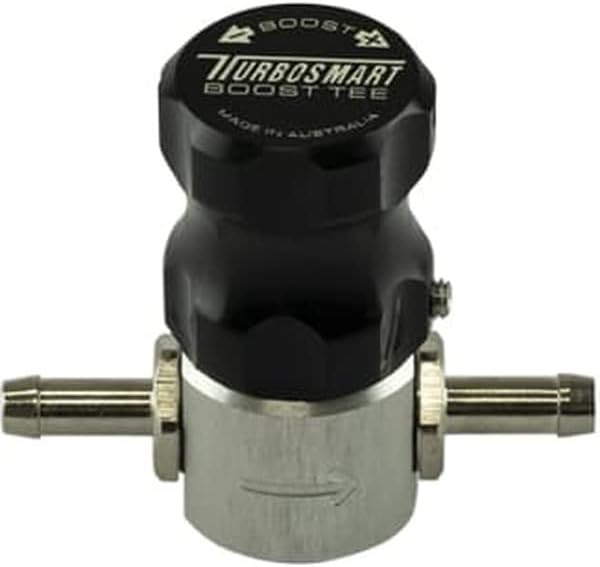
Manual boost controllers (MBCs) like those from Turbosmart or Forge Motorsport are the entry point - simple ball-and-spring valves that bleed off wastegate signal to raise boost. They're cheap, reliable, and get the job done on modest builds. But they're analog. Set it and forget it. If you want flexibility across RPM ranges, altitude compensation, or multiple boost maps, you need an electronic boost controller (EBC).
Electronic boost controllers from brands like Turbosmart e-Boost Street, Greddy Profec, and AEM give you real-time control, peak hold readouts, and programmable maps. On the E90/E92 335i and 135i running the twin-turbo N54, an EBC pairs exceptionally well with a JB4 piggyback tune - you're managing boost through two systems simultaneously, so coordination matters. The N54's factory wastegate actuators are known to drift, and an external EBC can compensate where the stock system gets lazy.
For the F-chassis crowd - F30 335i, F32 435i, F22 235i - the single-turbo N55 responds well to boost control but is more sensitive to overboosting without proper fueling support. Don't chase 25+ psi on an N55 without addressing the HPFP and injectors first. The B58 in the G20 340i and F87 M2 Competition is a stronger foundation but still benefits from a tuned EBC once you're beyond Stage 1 territory.
On pure M builds - S55-powered F80 M3 and F82 M4, or the S58 in the G80/G82 - boost control is typically handled through a full standalone or the OEM ECU via flash tune. External EBCs are less common here and generally unnecessary unless you're running external wastegates on a full turbo kit. Stick with ECU-level boost control on these platforms.
What to Look For - and What to Avoid
Boost solenoid quality is everything. Cheap units from unknown brands can stick, fail mid-pull, or respond inconsistently across temperature ranges. That's not a tuning annoyance - it's an engine risk. Stick with Turbosmart, Forge, or Greddy for standalone EBCs. If you're integrating boost control into a larger tune, MHD or BM3 on the N54/N55/B58 handles boost targets natively, and adding a hardware EBC on top creates redundancy that can confuse diagnostics.
Install difficulty is generally low to moderate. MBCs are a 30-minute job - find the boost line to the wastegate actuator, tee in the controller, mount it cleanly, tune with a boost gauge or data logger. EBCs add wiring to a switched 12V source and a tach signal, which takes longer but is still DIY-friendly for anyone comfortable with basic electrical work. On the N54, routing matters - keep vacuum lines away from the charge pipe heat soak zone near the turbos.
Pair your boost controller work with proper data logging. The BimmerLink app and an OBD2 adapter will show you boost actual vs. target, knock events, and HPFP pressure - essential reads when pushing beyond stock limits. If you're tuning boost, you should also be monitoring your intercooler setup, since charge temps directly affect how much boost your tune can safely request. And if you're running an older E-chassis build with worn vacuum lines, check your turbo inlet pipes before chasing boost targets - air leaks downstream will make any boost controller look like it's misbehaving.
Bottom line: match the controller to your build level, buy from a reputable brand, and log your data. Boost is free horsepower - but only if you're managing it with the right hardware.