
Turbo Inlet Pipes for BMW 3 G21
Affiliate disclosure. BimmerTalk is a proud partner of the Amazon Associates Program and Turner Motorsport. We may earn a small commission on qualifying purchases through our links, at no extra cost to you. Read the full disclosure.

More turbo parts for the BMW G21
Upgrade Your BMW's Turbo Inlet Pipe for Real Airflow Gains
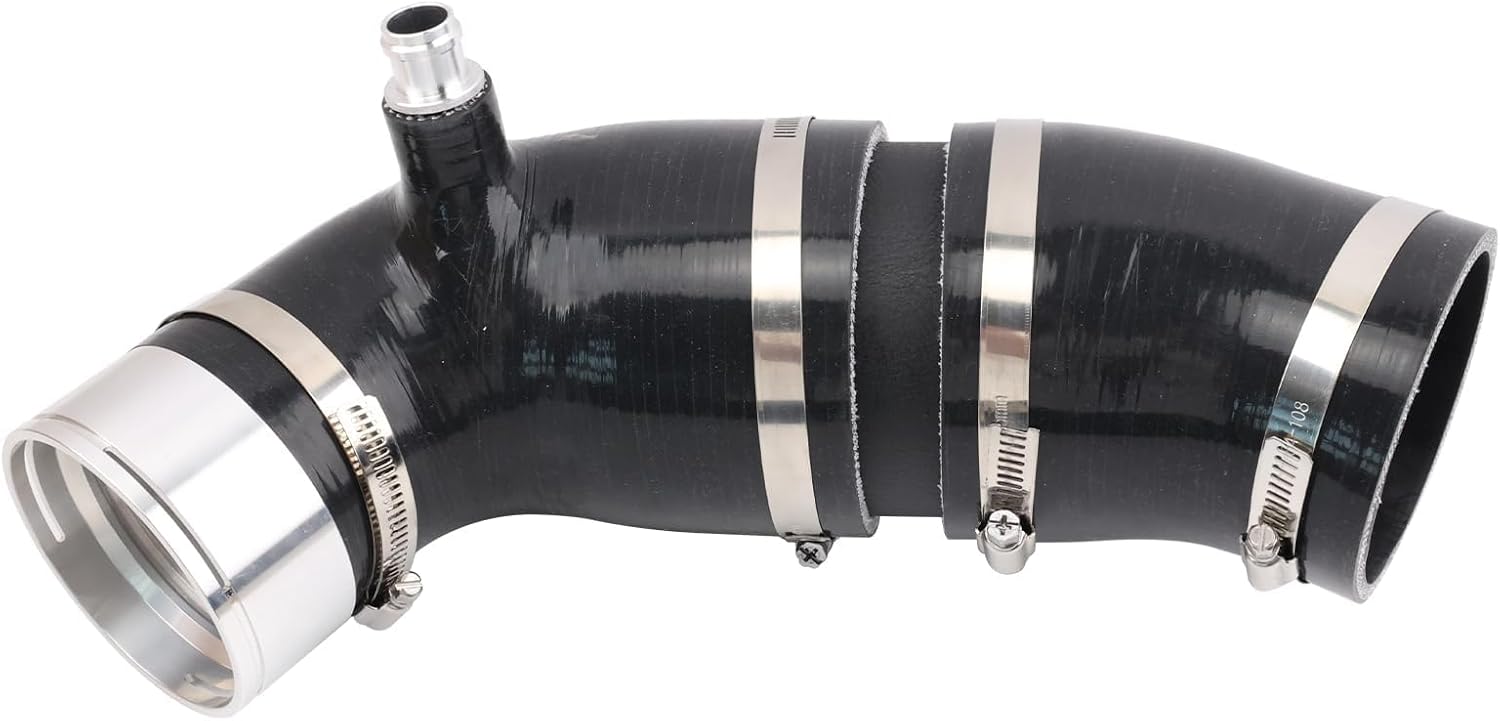
The factory turbo inlet pipe on most turbocharged BMWs is a compromised piece of engineering - thin walls, restrictive bends, and soft silicone couplers that collapse under boost. Replacing it is one of the highest-value modifications you can make on any forced-induction BMW, delivering measurable improvements in throttle response, spool time, and sustained power under hard driving. Unlike a tune or intercooler, a quality inlet pipe is a straight bolt-on with no recalibration required.
The most popular fitments we see are the N54 and N55 engines found in the E82 135i, E90/E92/E93 335i, and F30 335i. The stock inlet pipe on these platforms is notorious for its accordion-style flex sections that restrict airflow and eventually crack. On the B58-powered F30/F31/F80 340i, G20 340i, and F87 M2 Competition, the factory inlet is a rigid plastic unit that holds up better but still leaves airflow on the table. Owners of the S55-equipped F80 M3 and F82 M4 have the most to gain - the twin-scroll turbo setup responds aggressively to improved inlet flow, especially when combined with an upgraded charge pipe.
What to Look For - and What to Skip
Material matters more than most people realize. Aluminum inlet pipes (typically 6061-T6) are the gold standard - rigid, heat-resistant, and dimensionally stable under pressure. Brands like Mishimoto, Burger Motorsports (BMS), and Evolution Racewerks all produce well-regarded aluminum inlets for the N54, N55, and B58 platforms. For the S55, Dinan and Active Autowerke offer engineered solutions that have been validated on track. If you're shopping on a budget, there are acceptable silicone-reinforced units available, but make sure the inner diameter is not smaller than the factory spec - some cheap imports actually reduce flow.
Watch out for inlet pipes with thin silicone couplers and low-grade clamps - this is exactly the failure point you're trying to eliminate from the factory setup. Look for stainless T-bolt clamps or at minimum heavy-duty worm-gear clamps rated for boost pressure. Verify the MAF sensor bung location matches your chassis; the N54 and N55 have different MAF positions, and a mismatched pipe can throw codes immediately.
Installation is straightforward on most platforms - expect 30 to 60 minutes with basic hand tools. The N55 in the E-chassis requires removing the airbox and possibly one or two coolant hose brackets to get clearance. The B58 in the G-chassis is tighter and can run 60 to 90 minutes if you haven't worked in that engine bay before. No lift required. If you're already pulling the inlet pipe, it's the perfect time to inspect your charge pipes and couplers - they share the same service window and are a common weak point on high-mileage turbocharged BMWs.
One practical note: if your car is tuned or running a bigger FMIC, don't overlook the inlet pipe as a bottleneck. Power mods work as a system, and a collapsing or undersized inlet pipe will quietly rob you of the gains you paid for elsewhere. Many N54 and N55 owners running JB4 or MHD tunes report noticeably sharper boost response after upgrading the inlet - it's not just a feel-good mod.
If you're also evaluating full turbo upgrades or downpipes for your build, browse our complete Turbo category to see how an inlet pipe fits into your overall power package. For a street car, an inlet pipe plus a tune is one of the most cost-effective combinations available on the platform.