
BMW M3 G80 Engine Performance Parts
Affiliate disclosure. BimmerTalk is a proud partner of the Amazon Associates Program and Turner Motorsport. We may earn a small commission on qualifying purchases through our links, at no extra cost to you. Read the full disclosure.
Cold Air Intakes
1111 parts for BMW G80
BrowseIntercoolers
11 part for BMW G80
BrowseBlow-Off & Diverter Valves
22 parts for BMW G80
BrowseSpark Plugs & Ignition
11 part for BMW G80
BrowsePopular G80 engine
Hand-picked engine parts that fit the BMW G80 - mid-tier price band, mixed across subcategories.


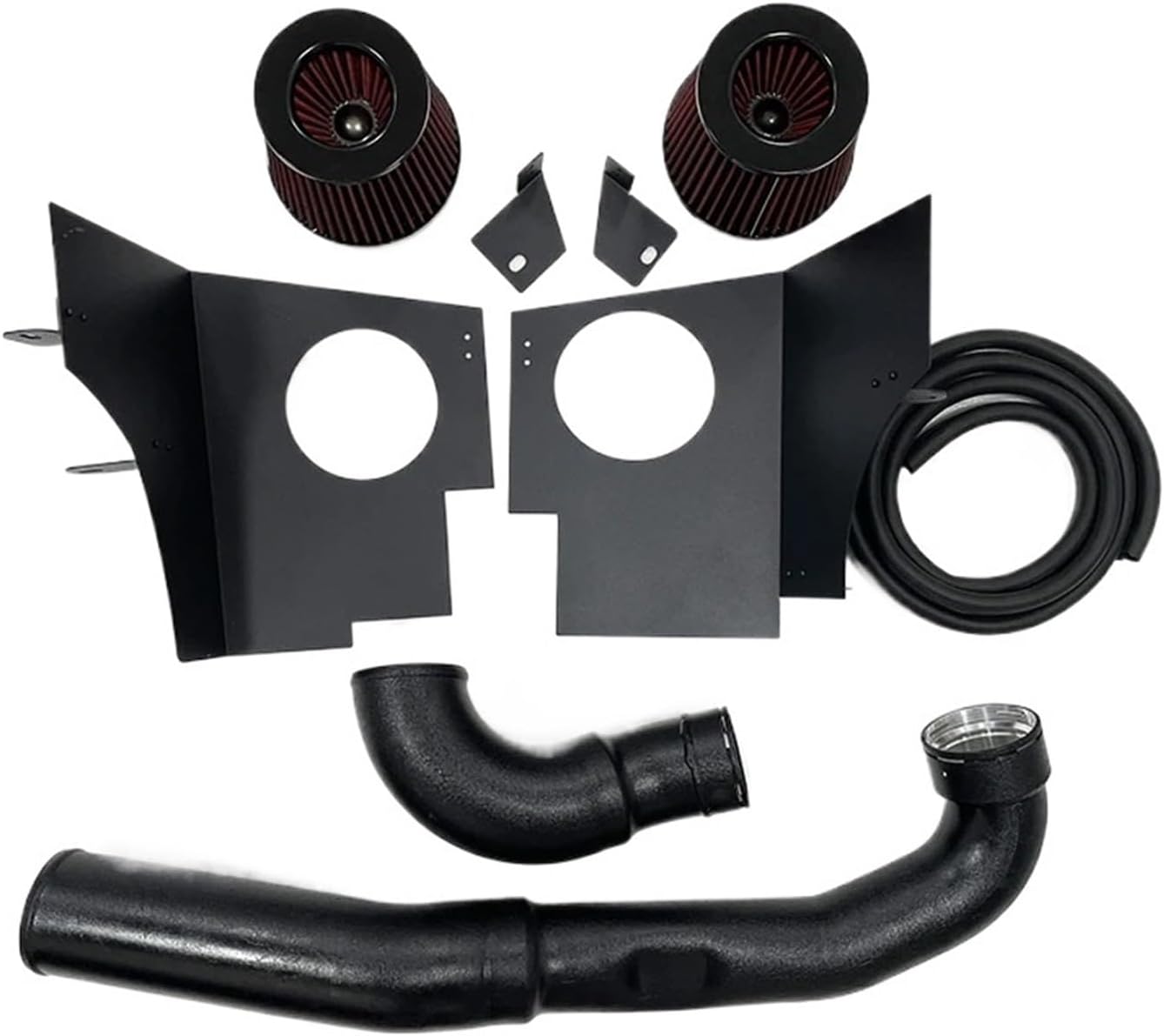


The BMW G80 engine - specifically the S58B30 inline-six - is one of the best turbocharged performance engines BMW has ever put in a production car. I say that with full awareness of what that claim means coming from someone who has spent five years with BMWs and a year working inside BMW's own marketing operation. The S58 is not hype. It is a legitimate platform that rewards methodical, well-researched modification, and the G80 M3 community has spent the last four-plus years stress-testing every bolt-on, tune, and internal upgrade you can throw at it. What follows is what I actually know, what the forums have confirmed, and what I would genuinely do with my own money on this chassis.
If you are here looking for a quick list of parts to slap on your G80 M3 and call it done, you will find that list. But you will also find the context behind why those parts are on the list, what they actually do at the engine level, what the S58 responds to best, and where enthusiasts consistently waste money chasing numbers that do not translate to a better car on the street or the track. I have tried to write the page I wish existed when I was first researching this platform seriously.
Why the S58 Engine in the G80 M3 Is Such a Good Starting Point
Before we get into modifications, it is worth spending real time on what BMW built here, because the S58 architecture directly determines which upgrades make sense and in what order.
The S58B30T0 is a 3.0-liter twin-turbocharged inline-six with a closed-deck block - a meaningful departure from the open-deck architecture of earlier M engines and a critical structural choice that gives the S58 exceptional rigidity under high cylinder pressure. Closed-deck construction means the cylinder liners are fully supported around their circumference rather than just at the top and bottom. When you are running elevated boost pressures on a modified tune, that structural support matters enormously for long-term reliability.
BMW rates the standard G80 M3 at 473 horsepower and 406 lb-ft of torque, while the Competition variant comes in at 503 horsepower and 479 lb-ft of torque. The Competition's additional output comes primarily from revised ECU calibration, adjusted wastegate control, and a slightly different exhaust routing - which is itself a preview of how much the software layer matters on this engine. BMW left significant performance on the table at the factory level for exactly the reasons you would expect: emissions compliance, warranty liability, and the need to maintain a clear performance tier separation between the standard M3, the Competition, and future CS and CSL variants.
The S58 also features a sophisticated fuel system architecture that combines direct injection with port injection - what BMW calls Valvetronic with High Precision Injection. This dual-injection setup is a genuine engineering advantage for modified applications because it reduces carbon buildup risk compared to pure direct-injection engines and provides tuners with more precise fuel delivery control across different RPM and load ranges. On my G20 330i with the B48, I only have direct injection to work with, and the carbon buildup situation is something I manage actively. The S58's port injection fallback is a legitimate long-term reliability advantage that does not always get enough credit in modification discussions.
The twin-scroll twin-turbos on the S58 are compact units positioned in the valley of the engine, fed by individual exhaust runners for each cylinder. This packaging is efficient for spool response but does create some restriction on the hot side that aftermarket downpipes specifically address. Knowing that architecture tells you immediately why a downpipe swap has a meaningful effect on this engine - you are releasing real restriction at the turbine outlet, not just swapping pipe diameter for the sake of it.
Stock S58 internals - forged connecting rods, forged crankshaft, and a relatively conservative 9.3:1 compression ratio - mean that the engine can handle significant power increases before you need to think seriously about internal upgrades. Most of the G80 community runs at stage 2 power levels (roughly 600-650 wheel horsepower on pump gas with supporting mods) on stock internals without long-term reliability concerns, provided fueling and cooling systems are properly addressed. That is a remarkable safety margin and it is one of the reasons the S58 has developed such a strong reputation among enthusiasts who want real-world usability alongside high power output.
OEM Baseline - What the Factory ECU Is Actually Doing
Understanding the factory calibration on the S58 is not an academic exercise. It directly explains why tuning produces such dramatic results and why some bolt-ons feel disappointing without software support.
BMW's factory ECU calibration is deliberately conservative in several specific ways. Boost targets are pulled back from what the turbos are physically capable of producing. Ignition timing is retarded relative to what the engine can support on premium pump fuel. The fuel trims run slightly rich in certain load ranges as a buffer against the worst-case fuel quality that might be encountered in global markets. Intake cam advance is held back at certain RPM points. And the rev limiter in the standard M3 is set lower than the engine mechanically requires.
Each of these compromises is individually small. Collectively, they represent a significant gap between what the factory ECU delivers and what the engine actually wants to do under properly optimized calibration. A good tune addresses all of these simultaneously, which is why the power gains from tuning alone - without any supporting hardware changes - are far larger than what you see from any single bolt-on modification.
The factory ECU also has a knock detection and response strategy that is appropriately conservative for a global-market car. When the knock sensors detect detonation events - whether real or false positives - the ECU pulls timing aggressively and may reduce boost. On a modified tune with a well-executed calibration, that knock response strategy is refined but not eliminated. Responsible tuners keep knock protection active; they just optimize the threshold parameters to reduce unnecessary intervention on quality fuel.
One more factory behavior worth understanding is the torque management system BMW uses to protect the drivetrain. The S58 has a significant amount of software-imposed torque limiting in the lower gears, particularly in first and second, to reduce stress on the transmission and driveshafts. A proper tune adjusts these limits appropriately, which is part of why a tuned G80 M3 can feel dramatically different in the lower gears even at moderate throttle openings - you are not just gaining peak power, you are gaining access to torque that was already there but being actively suppressed by the factory ECU.
The Priority Stack - What Order to Modify the G80 M3 Engine
This is where most modification guides get vague or politically correct to avoid offending any of their sponsors. I am going to be direct about the priority order because the G80 community has run enough cars through enough dynos to have genuine data on this.
The modification priority for the G80 M3 engine, from highest return on investment to lowest, runs roughly like this: ECU tune first, intake second, downpipes and exhaust third, charge pipe and intercooler fourth, fueling support fifth, and only after all of that should you seriously consider turbo upgrades if you need more than the S58 can produce on its stock turbos.
I have seen this sequencing discussed extensively on the G80 Bimmerpost forum, and the consensus is remarkably consistent across different build threads and different tuners. The enthusiasts who deviate from this order - who, for example, add a turbo upgrade before establishing a solid tune - almost universally report frustration with reliability, inconsistent results, or money spent on hardware that is underperforming because the calibration is not optimized for it.
The logic behind tune-first is simple. Every piece of hardware you add to this engine is, in the end, trying to move air and fuel more efficiently through the combustion cycle. The ECU calibration is what dictates how the engine actually uses the air and fuel that hardware delivers. A better intake moving more air through a factory ECU calibration that was not designed to use that air efficiently will produce modest, inconsistent gains. The same intake on a properly calibrated ECU will produce its full potential. Hardware and software have a multiplicative relationship on the S58, not an additive one.
If you are the kind of person who can only do one modification to your G80 M3 and you want to know what gives you the best return - UroTuning's G80 M3 guide confirms what Bimmerpost threads consistently say - it is the ECU tune, full stop. Not because other upgrades are worthless, but because the tune is what closes the gap between what BMW built and what BMW could have offered if they were not constrained by the considerations I described above.
ECU Tuning for the BMW G80 M3 - The First and Most Important Upgrade
Let me be specific about what a good ECU tune actually does on the S58, because "tune the car" is advice that gets thrown around without much supporting detail.
A proper stage 1 tune on a stock S58 - meaning no supporting hardware changes beyond pump gas, possibly an intake - typically targets improvements in multiple calibration tables simultaneously. Boost pressure targets are raised, often by several PSI across the RPM range, bringing actual turbo output closer to the hardware's capability. Ignition timing is advanced to find the edge of the engine's detonation threshold on the fuel grade being used. Cam phasing is optimized for improved cylinder filling. Throttle maps are revised to remove the intentional hesitation BMW programs into the factory response curve. Torque limiters in the lower gears are raised to allow the engine's actual output to reach the wheels.
The result on a standard G80 M3 Competition (503 hp / 479 lb-ft stock) is typically gains in the range of 40-70 horsepower and 50-80 lb-ft of torque at the wheel from tune alone on a quality stage 1 calibration. On the non-Competition G80 M3 (473 hp / 406 lb-ft stock), the gains can be even larger because the factory calibration starts from a more conservative baseline. These are not small numbers for a pure software change.
CarBahn, which operates under the design direction of Steve Dinan, is one of the tuners I follow closely for the G80 platform. CarBahn's approach is calibrated toward what they describe as OEM-plus drivability - extracting performance from the S58 without compromising the smoothness, refinement, and street manners that make the G80 M3 such a usable car. Their G80 performance catalog reflects that philosophy, and it is a valid approach for anyone who wants their M3 to remain a genuine daily driver rather than a track-focused machine that requires constant attention. Dinan's history with BMW tuning is long and his conservative reputation is well-earned - when he says a calibration is safe for long-term street use, that is based on actual durability data, not marketing assumptions.
For enthusiasts who want more control over their own calibration and the ability to adjust parameters on the fly, Bootmod3 and MHD Flasher are the two dominant OBD-based tuning platforms for the S58. Both are well-supported, have active development communities, and allow users to switch between maps for different fuel grades - useful if you are running E30 or E40 blends and want to switch back to pump gas for a road trip. The distinction between the two platforms is mainly in the user interface and the specific tune files available from the calibrators who support each platform. Both are legitimate options.
I want to address a question that comes up regularly in build threads: do you need to remove the DME for an S58 tune? For most OBD-based tunes on current hardware, no. The tune is flashed via the OBD2 port using the respective platform's hardware. This makes the process reversible, updatable, and compatible with future software changes - which matters if you care about being able to flash back to stock for a dealer visit. This accessibility is one of the reasons the tune-first approach is so easy to recommend: it does not require disassembly, is completely reversible, and can be done in your driveway.
For those exploring the ECU tuning options available on BimmerTalk, the G80 section specifically covers the stage progression and what supporting mods each stage requires - worth reading before you commit to a calibration tier.
Intake Upgrades for the S58 - Sound, Flow, and Realistic Expectations
Intake upgrades are the most popular first modification for a lot of G80 owners because they are visual, they produce immediate sensory feedback in the form of induction sound, and they are relatively simple to install. All of those things are genuinely true. Where the discussion gets complicated is around quantifying the actual power contribution, which the G80 community has become pretty honest about over time.
The factory S58 intake is not particularly restrictive in absolute terms. BMW's engineers, despite the conservative approach to calibration, did not leave obvious low-hanging fruit in the intake path. What the OEM system does give up relative to quality aftermarket alternatives is some acoustic isolation - BMW intentionally dampens induction noise in the cabin - and some flow efficiency at higher boost levels and RPM ranges where the factory filter and airbox geometry becomes a marginal restriction.
The practical result is that intake upgrades on the S58 produce measurable but modest dyno gains when used alone on a stock tune - often in the range of 5-15 horsepower at the wheel depending on the specific product and testing conditions. That number increases meaningfully when paired with a tune that is calibrated to use the improved airflow, which brings us back to the tune-first logic again.
The Eventuri carbon intake system is the most consistently recommended premium option for the G80 M3, and it earns that reputation for specific reasons. Baan Velgen's G80 M3 performance parts section specifically highlights the Eventuri carbon intake for its combination of improved airflow, sharper throttle response, and aggressive induction sound - alongside OEM-level fitment quality that tells you the engineers spent real time on this product rather than just cutting carbon fiber to rough approximations of the factory piece.
What makes Eventuri products worth the premium over cheaper alternatives is the carbon fiber airbox design that provides genuine heat isolation. Intake air temperature is a critical variable for the S58 - hot intake air reduces charge density and forces the ECU to pull timing for knock protection, directly limiting power output. Eventuri's sealed carbon airbox addresses this by creating a genuine thermal barrier between the filter and the engine bay heat sources. This is not a minor detail. On a car that has been sitting in summer traffic, the difference in intake air temperature between an open pod filter and a properly sealed carbon airbox can be 20-40 degrees Fahrenheit, and that translates directly into consistent versus degrading power output on a hot day.
The induction sound improvement is real and significant. The stock G80 M3 is intentionally quiet in the cabin, which some owners love and others find unsatisfying for a car with this kind of performance potential. The Eventuri system opens up a direct connection between the intake tract and the cabin acoustic environment, and the result is a turbocharged inline-six induction note that is genuinely involving - a combination of turbo spool, rush of air under boost, and the characteristic S58 howl that the factory calibration partially masks.
If the Eventuri is outside your budget, Armaspeed produces a carbon intake for the G80 platform that gets solid reviews in the enthusiast community for a lower price point. It is not as refined in construction detail as the Eventuri, but it does the thermal isolation job adequately and produces meaningful induction noise improvements. For a build prioritizing budget for the tune over individual component upgrades, Armaspeed is a reasonable choice.
For reference on how intakes compare across intake systems and platform specific considerations, the BimmerTalk cold air intake section has more detailed flow and temperature testing discussion that applies broadly to turbocharged BMW platforms.
Charge Pipes and Intercoolers - The Thermal Management Foundation
This section gets less attention in enthusiast media than intakes or downpipes, but it is arguably more important for the long-term reliability and consistency of a modified S58. I will explain why.
The factory charge pipes on the S58 - the pipes that carry compressed air from the turbocharger outlets to the intercooler and from the intercooler to the throttle body - are made from a combination of plastic and rubber with metal connectors at the joints. At stock boost levels, these pipes are adequate. When you raise boost pressure through tuning or hardware upgrades, these pipes become a weak point in two specific ways.
First, the increased internal pressure can cause factory charge pipe joints to expand and occasionally blow off or develop boost leaks. A boost leak on a turbocharged engine is not a catastrophic failure, but it is the definition of an inconsistent and frustrating tuning experience - your tune produces different results at different times because actual boost delivery to the intake manifold is varying. Second, the plastic construction of the factory charge pipes transmits more heat from the surrounding engine bay environment than a metal replacement would. Charge air temperature management is critical on the S58 for the same reasons I described with the intake: hot air reduces performance and can trigger timing pull.
Burger Motorsports (BMS) makes what is generally considered the best value charge pipe kit for the S58 G80 platform. Their billet aluminum charge pipes are a direct replacement for the factory plastic pieces, they seal properly at elevated boost, and they reduce charge air heat pickup compared to the factory plastic. Installation is straightforward and within the capability of any home mechanic comfortable with basic engine bay work - you are removing clamps, disconnecting sensors, and swapping pipes.
The intercooler situation on the G80 is more nuanced. The factory front-mount intercooler on the S58 is actually a reasonably capable unit by stock-power standards. BMW did not build the G80 M3 with a severely undersized intercooler the way some manufacturers do with their factory performance cars. Where the stock intercooler shows its limits is in sustained high-power operation - repeated hard acceleration runs, track driving, or aggressive street driving in hot weather. In these scenarios, the intercooler core soaks heat from the compressed charge air faster than the airflow through the front of the car can dissipate it, and charge air temperatures begin rising over the course of a driving session.
For street use at stage 1 or even stage 2 power levels, the factory intercooler is generally adequate if the charge pipes have been upgraded and the tune is not pushing aggressive boost targets in hot ambient conditions. For track use or builds targeting higher power levels, an upgraded front-mount intercooler from Active Autowerke, Mishimoto, or Wagner Tuning is a worthwhile investment. Larger core volume and improved fin design allow these units to absorb and dissipate more heat before charge air temperatures climb to the point of affecting performance. The BimmerTalk intercooler section covers the core sizing and efficiency tradeoffs in more detail than I will here.
One thing I want to flag specifically for G80 owners running their car on track: heat soak is cumulative. A single hard lap might not show much degradation in power output, but the third lap of a track session on a summer day, with the factory intercooler at saturation, can produce meaningfully different power delivery than the first lap. If you care about lap time consistency, an upgraded intercooler is not optional.
Downpipes and Exhaust - Real Gains With Real Tradeoffs
The downpipes on the S58 are a well-understood restriction point, and the reason is straightforward from an engineering standpoint. The factory downpipes include large catalytic converters positioned close to the turbine outlets in order to light off quickly for emissions compliance. These close-coupled cats, while effective at meeting global emissions standards, create backpressure in the exhaust stream that limits how efficiently the turbines can expel exhaust gas. Because turbocharger spool rate is partly determined by exhaust gas velocity through the turbine, anything that restricts flow on the hot side has a direct effect on boost build rate and peak turbo output.
Aftermarket downpipes for the G80 M3 come in two main variants: catless and high-flow catalytic. Catless downpipes remove the catalytic converters entirely, providing maximum flow and the largest performance gains, but are explicitly not street legal in emissions-controlled environments and will trigger check engine lights without additional ECU work. High-flow catted downpipes replace the factory cats with larger-diameter versions using 200-cell or 300-cell metallic substrate catalysts that are significantly less restrictive than OEM while retaining some emissions function and being less likely to trigger emissions failures in mild testing environments.
For a street-driven G80 M3 that occasionally sees track days, high-flow catted downpipes are my recommendation. The performance delta between catless and high-flow catted downpipes is real but not enormous on a street-use build - typically in the range of 10-20 horsepower at the wheel in favor of catless, which is a measurable difference but not one that justifies the emissions and legal complications for most owners. High-flow catted pipes from quality manufacturers like Active Autowerke or Akrapovic flow well enough to support stage 2 power levels comfortably.
On the exhaust note question - downpipes make a meaningful difference to how the G80 M3 sounds, particularly on the overrun and during boost transitions. The factory S58 exhaust has a distinctive note that is satisfying in stock form, but downpipes open up a coarser, more mechanical character that a lot of enthusiasts find much more engaging. Pair downpipes with a cat-back exhaust from Akrapovic, Active Autowerke, or Eisenmann, and the S58 develops a soundtrack that is genuinely distinctive and appropriate for the platform.
One practical installation note for G80 owners: the twin-turbo layout with the turbos in the valley of the engine means the downpipes are not easily accessed from the top of the engine bay. Downpipe installation on the G80 M3 requires either a lift or solid jackstands and working from underneath. It is manageable for an experienced home mechanic, but if you are new to BMW exhaust work, this is a job that benefits from professional installation. Stud extraction is occasionally an issue on high-mileage examples.
Fueling Upgrades - Where Many Builds Go Wrong
I want to spend real time on fueling because this is the modification category where I see the most expensive mistakes being made on G80 platforms. The S58's fuel system architecture is capable at stock power levels, but it has specific limitations that become relevant once you start pushing into higher tune stages or experimenting with ethanol content.
The S58 uses a high-pressure direct injection pump (HPFP) that is mechanically driven off the camshaft, and a low-pressure fuel pump (LPFP) in the fuel tank that feeds the HPFP. At stock power levels and on pump gasoline, this system delivers fuel without issue. The problem arises in two scenarios: when you raise power significantly through tuning (which increases fuel demand at a given RPM and load), and when you add ethanol content to the fuel (which requires larger fuel volumes because ethanol has lower energy density per gallon than gasoline).
The LPFP is the first limit that typically becomes apparent. Under sustained high-load driving at elevated boost levels, the factory LPFP struggles to keep up with the fuel demand, leading to fuel pressure drop at the HPFP inlet, which then shows up as lean conditions and timing pull. A lean condition on a high-boost turbocharged engine is a failure mode with real consequences - lean mixtures under boost raise combustion temperatures significantly and can cause detonation events that damage pistons or rings.
Fuel-It! is the established brand for S58 LPFP upgrades, and their Stage 2 or Stage 3 kits are the most commonly referenced solution in the G80 community. The kits replace the factory low-pressure pump with a unit that can deliver significantly higher fuel volume, eliminating the supply-side restriction before it becomes a problem. Installation requires dropping the fuel tank or accessing the pump through the trunk floor depending on the specific kit - not a simple job, but not beyond a competent home mechanic either.
On the HPFP side, upgrades are available but typically only necessary for builds pushing into the truly high-power territory - think beyond 650 wheel horsepower on E85 or heavy ethanol blends. For most enthusiast builds targeting 550-650 wheel horsepower on E30-E40 blends with pump gas base, a stage LPFP upgrade plus a properly calibrated tune that accounts for the additional fuel demand is sufficient.
Port injection is another tool available on the S58 platform that deserves mention here. Firms like PSI (Port Injection Specialists) offer supplemental port injection kits for the G80 that add dedicated injectors to each intake port, allowing the fuel system to deliver larger quantities of fuel without exceeding the HPFP's flow limits on the direct injection side. This architecture is particularly useful for ethanol builds because ethanol's cooling effect via port injection also reduces intake charge temperatures - a double benefit on a turbocharged engine. For builds targeting serious power numbers on high-ethanol content, supplemental port injection is a legitimate solution, though it adds cost and complexity.
The fundamental rule I would emphasize here is this: before you raise boost, verify your fuel system can support it. Do not assume that because the tune says it is calibrated for E40, your fuel system is physically capable of delivering E40 fuel volumes under sustained load. Confirm with your tuner that the fuel system specification matches the tune's demand, and err on the side of over-preparing the fueling rather than cutting corners.
Turbo Upgrades for the G80 M3 - What Pure Turbos Actually Delivers
By the time you are considering a turbo upgrade on your G80 M3, you should already have a solid ECU calibration, proper charge pipe and intercooler setup, downpipes, and a fuel system that has been confirmed capable of supporting higher demands. If you do not have that foundation, a turbo upgrade is not going to produce good results - you will be throwing hardware at a problem that needs a systematic approach.
With that context established, Pure Turbos is the undisputed leader in S58 hybrid turbo upgrades. Their development work on the S58 platform specifically is extensive, and their hybrid turbo products for the G80 are a genuine engineering achievement rather than just a rehoused off-the-shelf unit. The Pure Turbos approach involves replacing the compressor wheels and sometimes the turbine wheels with larger, more efficient aerodynamic profiles while retaining the factory turbocharger housing, which preserves the factory fitment and location in the engine bay.
The Pure800 upgrade for the G80 M3 is the most commonly chosen hybrid option in the enthusiast community. On pump E10 or E15 gasoline with supporting mods and a quality stage 3 tune, the Pure800 can support power outputs in the range of 650-720 wheel horsepower. On E50 or higher ethanol blends with full supporting hardware (upgraded LPFP, charge pipes, intercooler, downpipes), the same turbo can push beyond 700 wheel horsepower reliably on a well-developed calibration. These are serious numbers that exceed almost any street use case.
The Pure900 steps up to a larger compressor and turbine profile that can support even higher power ceilings, but comes with a meaningful tradeoff in spool response. The larger aerodynamic components take more exhaust energy to spin up, which means boost arrives later in the RPM range. On a street car where you are regularly operating at partial throttle and below the peak boost RPM, this characteristic is noticeable in daily driving in a way that the Pure800 is not. The Pure900 makes most sense for dedicated track builds or builds that spend most of their time at high engine loads.
One important consideration with any turbo upgrade: the ECU tune becomes even more critical. A stock or stage 1 tune cannot properly use the additional airflow capacity of a hybrid turbo and may not protect the engine appropriately under the different boost pressure and spool characteristics. A turbo upgrade on the G80 essentially requires a full stage 3 calibration from a tuner who has specific experience with the upgrade you have chosen. Do not flash a stage 1 map onto a Pure800-equipped car and expect it to work correctly.
I would also note that turbo upgrades raise the stakes on every supporting system. The intercooler that was adequate for a stock-turbo stage 2 build is now working harder. The LPFP that was fine on E30 may be marginal on E50. The charge pipes that sealed adequately at stage 2 boost levels are now under higher sustained pressure. A turbo upgrade is a commitment to revisiting the entire supporting hardware stack, not just a single bolt-on swap.
Common Mistakes I See on G80 M3 Engine Builds
Five years of working on BMWs and following the G80 community means I have watched a lot of people make expensive mistakes that were entirely preventable. Here are the most common ones.
Mistake one - chasing intake upgrades before the tune. I have touched on this multiple times but I will say it plainly once more: buying a premium intake before getting the car tuned is putting the cart before the horse. The intake on an untuned car will give you induction noise and possibly 5-10 horsepower. The same intake on a properly tuned car will give you induction noise plus the full benefit of the improved airflow that the tune is calibrated to use. Tune first, then intake.
Mistake two - buying a cheap tune from an unknown calibrator. The ECU tune is literally the single most important modification you will make to this engine. Spending money on quality hardware and then buying the cheapest available tune file is backwards. A poorly calibrated tune on an S58 can result in detonation events, fuel system overload, transmission damage from improper torque limits, and catastrophic engine failure in worst-case scenarios. The S58 is worth the investment in a reputable calibration from a tuner with documented G80 experience. CarBahn, Bootmod3 with a reputable calibrator, or MHD with similar vetting are the starting points. This is not the place to save money.
Mistake three - ignoring fueling before raising boost. As I discussed in the fueling section, the LPFP is a real limit that creates real risk when exceeded. I have seen build threads where owners spent significant money on turbo hardware and then experienced lean conditions and detonation because the fuel system was not upgraded to match. An LPFP upgrade from Fuel-It! is not expensive relative to the hardware it is supporting. Do not skip it.
Mistake four - running cheap catless downpipes for daily driving. I understand the appeal - catless downpipes flow better and are less expensive than quality high-flow catted units. But catless pipes on a daily-driven car in an area with emissions testing are a constant management problem. Check engine lights, failed inspections, and the periodic need to flash the tune in and out to clear codes before an inspection are all genuine inconveniences. If you are building a track car, catless is fine. If you are dailying your G80 M3 with occasional track days, invest in quality high-flow catted downpipes and save yourself the headaches.
Mistake five - buying track-spec hardware for a street car. I see this regularly with intercooler and cooling upgrades specifically. A giant bar-and-plate intercooler that takes an extended drive to warm up properly is not an ideal choice for a car that gets driven to work in winter and then taken to the track on summer weekends. Race-oriented hardware has characteristics that make it excellent in its intended environment and occasionally irritating or counterproductive in daily use. Be honest with yourself about how the car will actually be used and spec accordingly.
Mistake six - neglecting maintenance before modifying. This sounds obvious but the G80 M3 community sees it regularly. Fresh spark plugs, fresh engine oil (and the right spec oil - BMW LL-04 or better for the S58), clean air filter, and confirmed health of the engine before laying down performance modifications is not optional. A modified engine amplifies any existing issues. Spark plugs that are slightly worn at stock power levels will misfire under the higher cylinder pressures of a modified tune. A small oil consumption issue at stock power becomes more significant at higher output. Get your baseline maintenance right before you tune.
Budget Tiers for G80 M3 Engine Modifications
I want to give real structure to what different budget levels actually buy you on the S58, because "get the tune first" is more useful when you understand where the tune sits in the broader modification investment picture.
Entry Level - Tune and Intake ($1,500-$3,500 total)
At this budget level, you are doing the most impactful modification (the tune) and potentially adding an intake for the induction sound and modest flow improvement. A quality stage 1 tune from a reputable calibrator on Bootmod3 or MHD will typically fall in the range of $600-$900 for the flash hardware and tune file, though CarBahn's proprietary tuning approach has different pricing structures that are worth checking directly on their G80 parts and tuning page.
An Eventuri carbon intake for the S58 runs at a premium price point that reflects the quality of the construction. For intake work, also budget for upgraded charge pipes from Burger Motorsports, as those should be done alongside any tune to ensure boost integrity. At this tier, you are looking at a car that makes noticeably more power than stock, pulls harder through the rev range, and sounds significantly better without any changes to reliability or daily driveability.
For the diagnostic and coding tools side of this, budget for a quality OBD interface as well - you will want to be able to monitor engine data logs after tuning to confirm the calibration is behaving correctly.
Mid Level - Stage 2 Build with Downpipes ($4,000-$8,000 total)
This tier adds downpipes to the stage 1 foundation, moves to a stage 2 tune calibration that takes advantage of the reduced exhaust restriction, and ideally adds a proper LPFP upgrade from Fuel-It! to support the increased fuel demand. Depending on how aggressively the stage 2 tune pushes boost, an upgraded intercooler may also be appropriate at this tier.
A stage 2 G80 M3 with quality catted downpipes, proper charge pipes, upgraded LPFP, and a stage 2 tune is making somewhere in the range of 570-620 wheel horsepower depending on fuel grade and specific calibration. This is a car that will pull with modified supercars on the street, run strong at the track, and still drive to work every day without drama. For the majority of G80 M3 owners, this is the right end point for the engine build - more power than this requires increasingly serious commitment to supporting hardware and brings diminishing returns for street use.
Full Build - Stage 3 with Hybrid Turbos ($10,000-$20,000+ total)
At this tier you are committed. Pure Turbos PURE800 or equivalent, full supporting hardware including upgraded LPFP, supplemental port injection if targeting very high power levels, upgraded intercooler, quality catless or high-flow downpipes, and a properly developed stage 3 tune specific to your hardware combination. Budget should also include potential drivetrain attention - at Pure800 power levels on the DCT-equipped Competition, the transmission calibration becomes important, and the driveshafts should be inspected for wear.
A well-built stage 3 G80 M3 on E50 can make 700-750 wheel horsepower on stock internals. The S58's closed-deck block and forged rotating assembly mean these power levels are genuinely sustainable with proper maintenance and quality calibration. You are, at this point, building a car that requires serious attention to tire selection, brake upgrades, and suspension tuning to actually use what the engine is producing. Check the brake pad section and coilover guide if you are going this route - a 700 horsepower G80 M3 on stock suspension and stock brakes is not the fun experience the horsepower number suggests.
My Picks for Different Use Cases
I want to give specific recommendations rather than just describing the landscape. These are the choices I would make with my own money for three distinct use cases.
Daily Driver Build - Maximum Reliability With Real Gains
If I were building a G80 M3 that I wanted to drive every day for 50,000+ miles and never worry about, I would do this in exactly this order.
First, a stage 1 tune from CarBahn or a reputable Bootmod3 calibrator with documented G80 experience. I would insist on data logs from the first few hundred miles and have my tuner review them for any anomalies before considering anything else. Second, Burger Motorsports charge pipe kit - inexpensive, easy to install, and eliminates a known reliability concern before it becomes a problem. Third, Eventuri carbon intake for the sound improvement and thermal management benefit. That is it for the first year of ownership. Drive the car, log the data, learn how the tune behaves across different weather conditions and fuel grades.
After a year of confident, reliable operation, I would add a Fuel-It! Stage 2 or Stage 3 LPFP upgrade and step up to a more aggressive stage 1+ or stage 2 calibration. For high-flow catted downpipes, I would take my time finding quality catted units from Active Autowerke rather than rushing to catless for the small performance advantage. The result is a car I can take to the dealer for unrelated service without hiding modifications, that passes emissions when required, and that is making real power reliably for years of daily use.
For reference on what other modifications complement a daily driver build on the G80 platform, the BimmerTalk coilover buyer's guide covers the suspension side of building a daily/performance dual-purpose car.
Track Weekend Build - Consistency and Durability Under Sustained Load
For a car that is going to see regular track time, the thermal management and fuel system priorities shift significantly compared to a street build. Here the intercooler becomes more important earlier in the build sequence, and fueling support is even more critical because sustained high-load track driving is the most demanding scenario for the S58's fuel delivery system.
My track-focused G80 build starts with the same tune-first foundation, but moves immediately to an upgraded intercooler - Wagner Tuning or a comparable unit with a large bar-and-plate core that can absorb heat across multiple hard laps. Charge pipes and LPFP upgrade come alongside the intercooler. High-flow catted downpipes rather than catless, because even at the track I prefer to maintain legal compliance unless operating on a closed course where emissions regulations explicitly do not apply.
For a track build, I would also pay serious attention to the oil cooling system. The G80 M3 has a factory oil cooler, but sustained track driving in warm weather can push oil temperatures into ranges where viscosity degradation becomes a concern. Monitor oil temperatures via the OBD port on early track days to understand where your baseline sits before committing to an oil cooler upgrade.
On wheels and tires for a track-oriented build, see the aftermarket wheels section for fitment-specific guidance on the G80 chassis.
Maximum Power Build - For People Who Have Already Read Everything Above
I will keep this section brief because by the time you are genuinely building a 700+ whp G80 M3, you know more about your specific build than any generic guide can tell you. The framework is Pure Turbos PURE800 or PURE900 depending on your power target and acceptable spool compromise, full supporting hardware as discussed, supplemental port injection for E50+ builds, a stage 3 calibration from a tuner with specific Pure Turbos S58 experience, and an honest assessment of what the rest of the car needs to support that power output.
One thing I would add for maximum power builds specifically: find a tuner who does custom dyno pulls on your specific car rather than loading a pre-made map file. The variables that affect ideal calibration on a high-power S58 - your specific turbo serial numbers, your actual fuel system flow rates, your local altitude and typical ambient temperatures, the specific version of your DME hardware - make a custom tune on your actual car worth the additional cost over a generic stage 3 map file. A properly developed custom tune will produce more power, better drivability, and better protection than even the best pre-made map file.
The Supporting Mods You Should Not Ignore
There are several modification categories that directly affect how well engine upgrades work on the G80 M3 that do not fit neatly into the "engine upgrade" category but deserve mention here.
Spark plugs are the first. The factory BMW spark plugs in the S58 are adequate for stock power levels but are not spec'd for the increased cylinder pressures and higher temperatures of a modified tune. Most G80 tuners specifically recommend stepping down one heat range on spark plugs when running a performance calibration - this means running a colder plug that dissipates heat from the electrode faster, reducing the risk of pre-ignition from a hot plug tip under boost. NGK or Denso in the appropriate heat range for your specific tune tier are the standard recommendations. Budget for fresh plugs before your tune and again every 20,000-30,000 miles on a modified S58.
Engine oil selection becomes more critical on a modified S58. The S58 specification calls for BMW LL-04 approved synthetic oil, and on a modified engine I would not deviate from this specification toward cheaper or less well-specified alternatives. I run Motul 8100 X-clean gen2 in my own B48 and recommend similar fully synthetic European-spec oils for the S58. Change intervals on a modified S58 should be more frequent than BMW's flexible service system suggests - on a modified daily driver, I would target 5,000-7,500 mile change intervals rather than the 10,000-15,000 mile intervals BMW's OBC recommends. The incremental cost of more frequent oil changes is trivial against the cost of engine damage from degraded oil on a high-performance build.
Transmission fluid is another often-overlooked fluid service that affects how well engine upgrades work in practice. The DCT in the G80 M3 Competition transfers power under the higher torque loads of a modified engine, and factory transmission fluid is not always spec'd for sustained high-torque operation. Quality Pentosin or Castrol BOT 328 DCT fluid is not expensive, the service is straightforward, and fresh transmission fluid makes a measurable difference in DCT shift quality and temperature management under aggressive driving.
For the full picture on keeping the rest of the G80 performing at the level its engine mods deserve, the BimmerTalk suspension section and model-specific guides cover the chassis-level modifications that complement a well-built S58.
Brand Landscape Overview for G80 M3 Engine Upgrades in 2026
The aftermarket support for the G80 M3 has matured substantially since the car's introduction, and it is worth knowing which brands have specifically invested in this platform versus which ones are offering generic BMW products that happen to fit.
CarBahn (formerly Dinan) - The most recognizable name in BMW performance tuning, now operating under Steve Dinan's design direction. Their G80-specific catalog covers tuning and performance hardware with a focus on drivability and OEM-quality refinement. If you want a conservative, well-engineered approach to S58 performance and you are not chasing maximum power numbers, CarBahn is a legitimate first stop.
Eventuri - UK-based intake and airflow specialist with strong S58 development. Their carbon intake system for the G80 M3 is the benchmark product in the intake category for this platform, as recognized by Baan Velgen's G80 M3 parts selection. Premium price but genuine quality.
Pure Turbos - The dominant name in S58 turbo upgrades. Their hybrid turbo kits are the most extensively tested and most widely deployed in the G80 community, with substantial dyno data supporting their power claims. Not cheap, and they require proper supporting hardware and a competent stage 3 tune, but they produce real results.
Fuel-It! - Specialized fuel system upgrade manufacturer with specific S58 LPFP upgrade kits. Their reputation in the community is strong, and their products are consistently recommended by S58 tuners as the appropriate fuel system upgrade for modified builds.
Active Autowerke - Broad BMW performance parts manufacturer with solid G80 offerings in downpipes, exhaust, and intercoolers. Good quality at a generally reasonable price point, and their customer support and installation documentation for BMW-specific applications is good.
Burger Motorsports (BMS) - Known for charge pipe kits, JB4 piggyback systems, and supporting hardware for BMW turbocharged engines. Their charge pipe kit for the S58 is a standard recommendation in the community for anyone tuning this platform.
BAVMODS is another retailer with a dedicated G80 M3 parts section that covers the range of engine and supporting upgrades. They operate as an OEM+ parts source and are worth checking for pricing on specific components.
UroTuning has a well-organized G80 M3 modifications guide that provides a useful reference for the modification stack and sequential approach, with honest acknowledgment that tuning delivers the best per-dollar return on this platform.
Frequently Asked Questions About the G80 M3 Engine and Modifications
Is the S58 in the G80 M3 reliable for daily driving when modified?
Yes, with appropriate modifications done in the right order and with quality components. The S58's closed-deck block, forged rotating assembly, and dual injection system make it genuinely durable at elevated power levels when fuel system, cooling, and calibration are properly addressed. The G80 community has enough cars with 50,000-80,000 modified miles to say with confidence that this engine can handle a well-executed stage 1 or stage 2 build for the life of the car. The failures that do occur in the community are almost always traceable to a specific preventable error: lean fueling, detonation from poor calibration, or neglected maintenance.
How much horsepower can the S58 make on stock internals?
The consensus from the G80 community and tuners with documented dyno data is that stock S58 internals can support power levels into the 700-750 wheel horsepower range on well-supported builds with quality calibration. Beyond that range, the risk-reward calculation for internal components - rods, pistons, headgasket - begins to shift. For street builds, there is essentially no reason to push beyond what stock internals can support, because the power levels available before that limit are far beyond what any street tire can effectively use.
Will modifying my G80 M3 void the warranty?
In the United States, the Magnuson-Moss Warranty Act provides some protection against blanket warranty denial for modified vehicles - BMW cannot void your entire warranty simply because you added an aftermarket part unless they can demonstrate that the part caused the specific failure you are claiming warranty coverage for. However, ECU tuning is a more complex area because BMW can detect tune modifications through their diagnostic systems and may deny warranty claims on powertrain components if a non-OEM calibration is detected. If warranty coverage is important to you, understand the implications before tuning. If you are post-warranty, this consideration is largely moot.
What is the difference between the standard G80 M3 and the Competition for modification purposes?
The standard G80 M3 and the Competition share the same S58 engine hardware but come with different factory calibrations. The Competition's higher stock output (503 hp versus 473 hp) comes from a more aggressive factory tune and some exhaust differences. For modification purposes, both platforms respond similarly to aftermarket calibrations, though the starting point difference means the standard M3 may show slightly larger absolute gains from a stage 1 tune because the factory calibration has more conservatism to overcome. The Competition's advantage is a better starting drivetrain in the form of the M xDrive all-wheel drive option on the Competition xDrive variant, which is relevant if you are building a car for high-power street use where traction is a concern. The standard M3 is rear-wheel drive only.
Do I need a tune to run an aftermarket intake?
You do not need a tune for the engine to run with an aftermarket intake installed. The factory MAF sensor and ECU will compensate for the different airflow characteristics up to a point. However, without a tune calibrated for the intake, you are not extracting the full performance benefit from the intake upgrade, and depending on the specific intake and how different its flow characteristics are from the OEM unit, you may see some inconsistency in fuel trims. Run the tune alongside the intake rather than before it if you are doing both anyway - it is simply a more sensible sequence.
What is the best tune for a G80 M3 that I will also track?
For a dual-use street and track build, I lean toward a tuner with specific experience in high-load sustained operation on the S58 rather than just impressive peak dyno numbers. CarBahn's calibrations are developed with drivability and sustained use in mind, which aligns well with track use where the engine spends more time at high load than in typical street driving. If you are using Bootmod3 or MHD, look for calibrators who specifically advertise track-tested maps for the S58 and who provide data logs from actual track sessions rather than just chassis dyno pulls. Peak dyno numbers in a controlled 30-second pull and real-world track performance are different things.
Is the DCT or manual transmission better for a modified G80 M3?
This question is slightly off-topic from pure engine modifications, but it is relevant because the transmission choice affects how engine upgrades manifest in the driving experience. The DCT available in the Competition is better suited to high-power builds in terms of torque handling and the consistency of power delivery to the wheels. Manual transmission G80 M3s are rare in the US market and the driving experience is genuinely special, but the manual has lower torque limits before drivetrain stress becomes a concern at very high power levels. For builds staying at or below stage 2 power levels, the manual is a completely valid and rewarding choice. For stage 3 builds pushing 650+ wheel horsepower, the DCT is the more practical platform.
How often should I change spark plugs on a tuned S58?
On a modified S58 running a performance tune, I recommend inspecting spark plugs every 15,000-20,000 miles and replacing as needed based on electrode wear rather than waiting for a defined interval. On an aggressive stage 2 or stage 3 tune, some owners find they need to replace plugs every 15,000 miles due to the higher cylinder temperatures and pressures accelerating electrode wear. Use the colder heat range recommended by your tuner, and check the gap on new plugs before installation - brand new plugs often need gapping adjustment out of the box.
Can I add ethanol content to my G80 M3 without other modifications?
Adding a small percentage of ethanol - E10 is already standard in most US pump gas, and some owners run occasional E15 - does not require modifications. However, adding meaningful ethanol content as a performance enhancement (E30, E40, E50 blends) requires both an ECU calibration specifically designed for that fuel blend and a confirmed fuel system capability to deliver the larger fuel volumes ethanol demands. Running E30 or higher without an appropriate tune is not something I recommend, and running it without confirming LPFP capacity is genuinely risky. When done correctly with a properly developed ethanol tune and supporting fuel system, ethanol blending is one of the best bang-for-buck power adders on the S58 because ethanol's high octane equivalent and charge cooling effect allow more ignition timing and boost pressure - but it must be done correctly.
Final Thoughts on Building the G80 M3 Engine the Right Way
The BMW G80 engine - the S58 - is one of those rare platforms where the aftermarket has genuinely caught up to the hardware's potential in a way that is accessible, well-documented, and community-tested to a degree that removes most of the uncertainty from making modification decisions. You do not have to be a pioneer figuring out what works on a new platform. The G80 community has run enough cars through enough dyno sessions and enough track days to give you a clear map of what works, what order it should be done in, and what the realistic power and reliability expectations are at each stage.
The consistent message from that community is simple and worth repeating one final time: tune first. Everything else supports and amplifies the tune. The intake makes more difference on a tuned car. The downpipes make more difference on a tuned car. The intercooler produces more consistent results on a tuned car. The fueling upgrade protects the engine under the demands that a good tune creates. Build in sequence, confirm the calibration is working correctly at each stage before adding complexity, and maintain the engine with the same attention to detail that you bring to the modification process.
If you are browsing the BimmerTalk models section and looking at the broader modification ecosystem for the G80 platform, the engine is where the foundation gets built. But a 600 wheel horsepower G80 M3 on worn-out suspension and brake pads that are not appropriate for the power level is not a better car than stock - it is a dangerous one. Use the chassis tool and oil capacity reference for specification lookups as you build, and approach the whole car as a system rather than treating the engine as an isolated project. The S58 deserves a car around it that can use what it produces.
The G80 M3 with a well-executed engine build is a genuinely remarkable thing - a car that daily drives with BMW refinement and reliability, takes you to the track with enough power to embarrass purpose-built performance machinery, and sounds like exactly what it is: a twin-turbocharged inline-six that was built to perform and has been properly allowed to do it. That is worth doing correctly.

Kamil Siegień
Founder of BimmerTalk. Five years wrenching on BMWs, currently dailying a G20 330i with the B48 turbo four. Spent a year doing marketing for BMW and MINI before going independent. I write everything on this site myself.
More about the site
BMW Engine Upgrades - Where Real Performance Starts
If you've spent any time on BMW forums, you already know the engine bay is where most builds either come together or fall apart. Whether you're running a tuned N54 in your E90 335i, pushing the limits of a B58 in a G20 M340i, or extracting every last horsepower from an S55 in your F80 M3, the parts you choose under the hood have a direct impact on everything downstream - how the car pulls at 4,000 RPM, how it holds up on a track day, and whether your tune actually runs clean without knocking. This category covers the full picture, from the air entering your intake to the mounts keeping your engine planted.
Let's talk about the N54 for a second, because it's still one of the most modded BMW engines out there and a good reference point. Stock, it's already a solid twin-turbo inline-six, but the factory charge pipes are notorious for blowing off under boost. Upgraded charge pipes from brands like Burger Motorsports or TurboXS are legitimately one of the first things you should do before turning up boost - not after. Same goes for the blow-off and diverter valve situation. The stock diverter valves on N54-powered cars (E90, E92, 135i) are a known weak point. An aftermarket atmospheric or recirculating BOV isn't just about sound; it's about keeping your compressor surge in check when you lift off the throttle under boost.
Cold air intakes are another area where people go wrong. Not because intakes are bad - they genuinely help on turbocharged BMWs by giving the turbo a less restrictive path to pull from - but because a cheap open-element intake with no heat shielding on an F30 328i is going to soak up engine bay temps and actually hurt power in real-world driving. Look for intakes that include a proper heat shield or use a true cold air routing that pulls from outside the engine bay. Wagner Tuning, Eventuri, and aFe make solid options that are actually tested on dyno, not just designed to look good with the hood open.
The Parts That Don't Get Enough Credit
Everyone talks about intakes and exhausts. Fewer people talk about oil catch cans, and that's a mistake - especially if you own anything with a B46, B48, or B58 engine. BMW's direct injection setup means the intake valves don't get fuel washing over them like in older port-injected motors. Over time, carbon buildup on the intake valves becomes a real issue, and a quality catch can (Mishimoto and Baffled make good options for G-chassis cars) significantly reduces the oil vapors getting recirculated through the intake. It's a cheap, practical mod that pays off in longevity, not just power numbers.
Spark plugs and ignition are another area that's easy to overlook on a modified car. If you're running a stage 2 tune on a B58, you're asking more from those plugs than BMW ever intended. Going one step colder on heat range and shortening your service interval to around 20,000-25,000 miles instead of BMW's absurdly optimistic OEM recommendation is just smart ownership. NGK and Denso make the go-to options here, and the install on most inline-six BMWs is about as straightforward as engine work gets.
Engine mounts also deserve a mention. Worn rubber mounts on an E46 M3 or a tuned E92 M3 with an S65 translate directly into vague throttle response and sloppy power delivery. Solid or poly-filled mounts from Turner Motorsport or Powerflex change the character of the car noticeably. Fair warning though - if you daily drive in the city, fully solid mounts will transmit a lot more vibration into the cabin. Most people are better served with a poly option that stiffens things up without making the car feel like a go-kart on cobblestones.
One thing worth mentioning: engine work doesn't happen in isolation. If you're adding a cold air intake, upgrading your intercooler, and swapping injectors on a tuned setup, you need to be talking to your tune at the same time. Hardware changes on a modified car without corresponding ECU and software adjustments is how you end up with a car that runs worse than stock. Don't skip that step.
Building Smart, Not Just Fast
The best BMW engine builds are methodical. Start with the fundamentals - catch can, spark plugs, charge pipes on boosted cars - before chasing big power numbers. If you're putting down 450whp on a built B58, you also need to think about whether your braking system is keeping up, and whether your suspension and wheel and tire setup can actually put that power to the ground without things getting sketchy. Power is only useful if the rest of the car is ready for it.
Everything in this category has been selected with real-world BMW ownership in mind - fitment by chassis code, parts that are actually proven on these platforms, and options across different budget ranges. Whether you're building a reliable daily with a little more pull or going all-in on a dedicated track car, you'll find what you need here.