
Sway Bars for BMW M3 G80
Affiliate disclosure. BimmerTalk is a proud partner of the Amazon Associates Program and Turner Motorsport. We may earn a small commission on qualifying purchases through our links, at no extra cost to you. Read the full disclosure.


H&R Front Anti-Roll Bar 32mm for BMW M2 G87 M3 G80 M4 G82
H&R

Whiteline BBF36X Sway Bar Set for BMW M3 G80
Whiteline

Whiteline BSR51XZ Rear Sway Bar Kit for BMW M3 G80
Whiteline
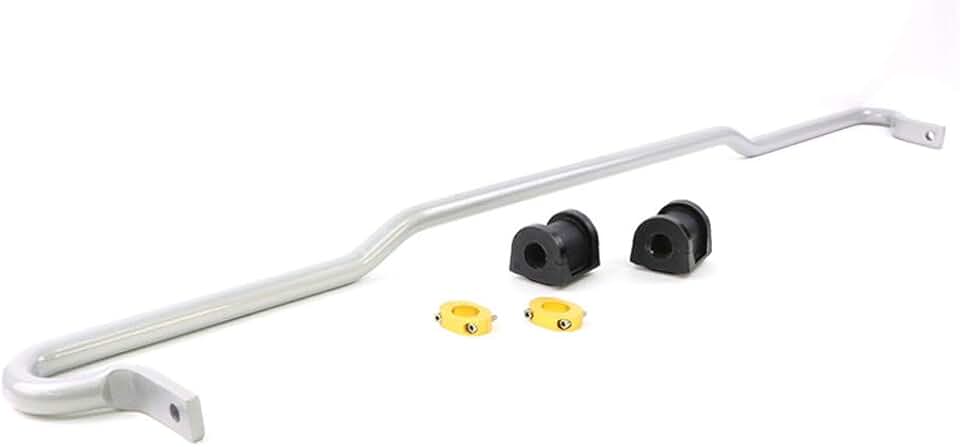
Whiteline BSR49 Sway Bar Set for BMW M3 G80
Whiteline

Whiteline KLC140-255 Heavy Duty Sway Bar Link Assembly
Whiteline

Whiteline KLC30 Sway Bar Bushing Kit for BMW G80 M3
Whiteline

A-Premium Front Sway Bar Links for BMW G80 M3
A-Premium
More suspension parts for the BMW G80
The BMW G80 M3 responds exceptionally well to suspension upgrades, though the factory setup is already highly capable. For track-focused builds, coilovers from KW Suspensions, specifically their Variant 3 or Competition kit, are a top choice, offering precise damper adjustment that works harmoniously with the G80's electronically controlled suspension architecture. Öhlins Road & Track coilovers are equally popular for drivers who want that balance between daily comfort and circuit performance. On the bushing side, swapping out the factory rubber control arm bushings for solid or polyurethane units from Turner Motorsport or Powerflex dramatically reduces compliance-related handling vagueness, particularly under hard cornering. Rear subframe reinforcement inserts, available from BimmerWorld, address the G80's known tendency toward subframe flex under aggressive use. Adjustable front and rear sway bars from ST Suspensions help dial in understeer and oversteer balance to suit your driving style.
Before committing to any suspension modification on the G80, always get a professional four-wheel alignment using BMW's factory specifications as a baseline, then adjust from there. Skipping alignment after installation is one of the most costly mistakes you can make, causing premature tire wear and unpredictable handling behavior.
BMW Sway Bars - Reduce Body Roll and Sharpen Handling
The factory sway bars on most BMWs are a compromise - engineered to balance ride comfort for a broad range of drivers rather than maximize cornering performance. If you're pushing your E46, F30, E9X M3, or G80 M3 through corners and feeling that telltale lean, an upgraded sway bar (also called an anti-roll bar) is one of the highest-value suspension mods you can make. More effective than springs alone for reducing body roll, and far cheaper than coilovers, a sway bar upgrade transforms how your BMW rotates and stays flat through corners.
What to Look For - and What to Avoid
Sway bars are sold in solid or hollow construction. Solid bars are heavier but extremely durable and typically less expensive - brands like Hotchkis and Eibach offer solid front and rear bar kits for popular chassis including the E46 3 Series (ZA3/ZC3), E90/E92/E93 335i, and F80/F82 M3/M4. Hollow bars shed unsprung weight without sacrificing stiffness - Dinan and Turner Motorsport both offer hollow bar options specifically tuned for BMW platforms, and are particularly popular on the E46 M3, E60 M5, and F-chassis cars where unsprung mass matters more at track speeds.
When shopping, pay attention to bar diameter. A 2–4mm increase over stock makes a noticeable difference - going too aggressive on the rear (e.g., jumping from a 14mm stock rear to a 22mm+ bar on an E46 without a proportional front upgrade) can introduce oversteer that's difficult to manage on the street. Always upgrade front and rear together, or at minimum understand the handling balance shift you're creating. Most reputable kits are sold as matched sets for this reason.
Bushing material matters too. OEM rubber bushings compress and delay bar response. Polyurethane bushings - included with most aftermarket kits from Supra, Eibach, and Hotchkis - provide sharper, more immediate roll resistance. Expect slightly more NVH (noise, vibration, harshness) on rough roads, which is an acceptable tradeoff for most enthusiasts. If you're building a dedicated track car, consider pillowball end links to eliminate slop entirely.
Avoid cheap no-name bars with vague fitment specs. On BMW chassis, sway bar end link geometry is precise - incorrect drop length or thread pitch leads to preload issues that cause clunking, binding, or accelerated bushing wear. Stick to brands with BMW-specific engineering and clear chassis fitment charts. For reference: the E46 uses a 22mm front / 14mm rear from factory; the F30 328i runs 21mm front / 16mm rear; the E9X M3 ships with 26mm front / 19mm rear - already more aggressive, so upgrades on that platform need to be well-considered.
Install difficulty: Front sway bar replacement on most BMW E and F chassis is a 2–3 hour job for a competent DIYer with basic hand tools and a lift or jack stands. Rear bars can be more involved on multi-link setups like the E60 or G-chassis - budget 3–4 hours and expect to deal with subframe bolts that may require penetrating oil on older cars. Always torque end links and bushing brackets to spec; over-tightening poly bushings will accelerate wear.
Sway bars pair best with matching chassis upgrades. If you're already running sport springs or coilovers, an anti-roll bar upgrade is the logical next step. You'll also want to revisit your alignment after installation - updated handling balance affects how your car tracks, and a fresh alignment ensures you're getting the most from the new geometry. Check out our coilovers and control arms and bushings sections to build a complete handling package around your new bars.
Whether you're autocrossing an E46 330i, tracking an F82 M4, or just want a G20 330i that doesn't lean through on-ramps, an upgraded sway bar is a direct, measurable improvement with a strong dollar-to-lap-time ratio.