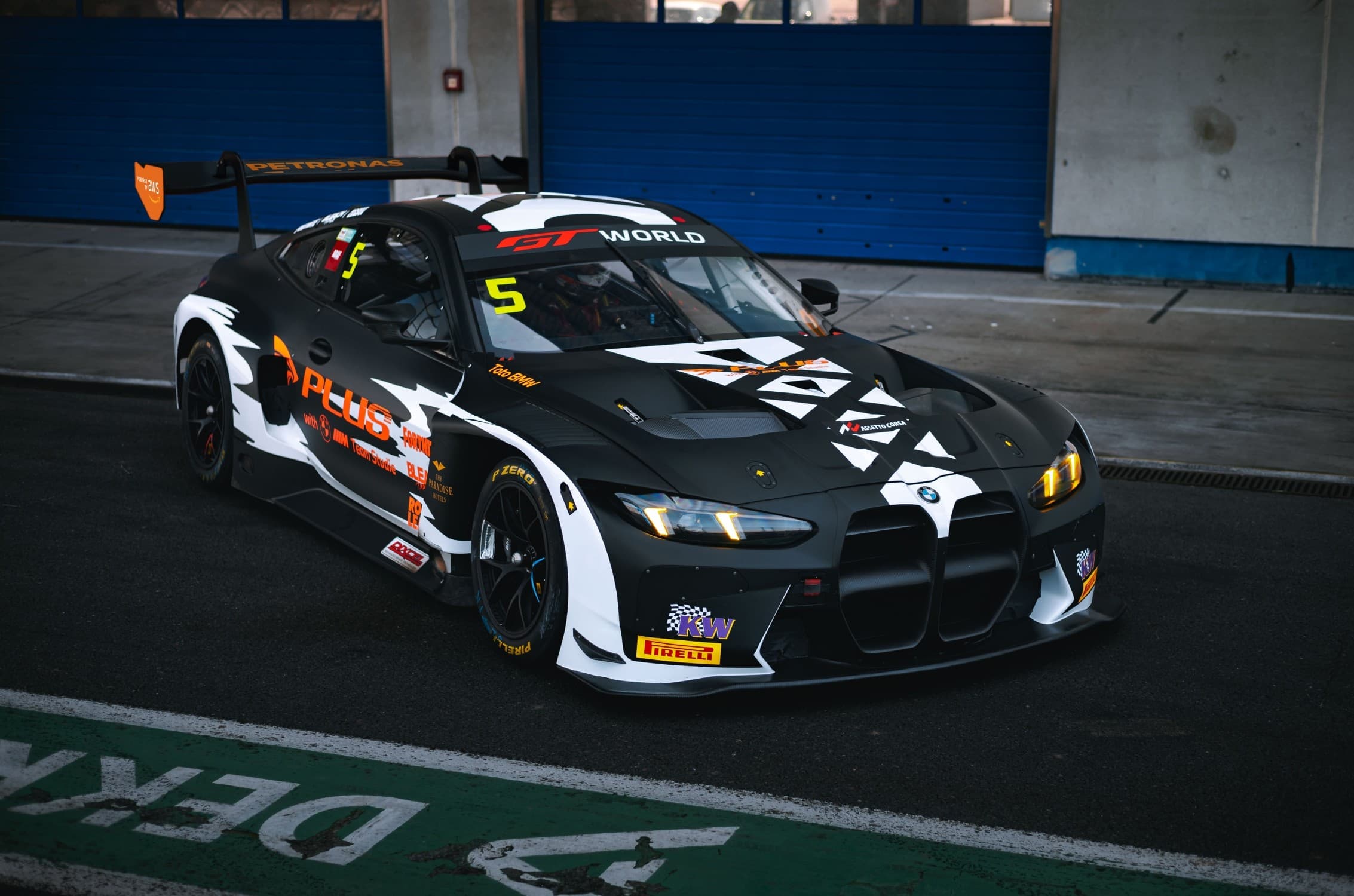
BMW M4 Parts
Affiliate disclosure. BimmerTalk is a proud partner of the Amazon Associates Program and Turner Motorsport. We may earn a small commission on qualifying purchases through our links, at no extra cost to you. Read the full disclosure.
Choose your generation to find compatible parts.


The BMW M4 - What It Is and Why It Still Matters
The BMW M4 is the car I keep coming back to when someone asks me what I'd buy if I had a real budget and one car to do everything. Not because it's perfect - it isn't - but because no other BMW in the current lineup sits at the intersection of genuine track capability, real-world usability, and a modding ecosystem deep enough to keep you busy for years. Since splitting off from the M3 coupe lineage with the F82 chassis in 2015, the M4 has become one of the most talked-about, most modified, and most written-about cars in the enthusiast community. Two generations in, the platform has matured into something that rewards serious attention whether you want a weekend canyon carver, a track day weapon, or just a driver's car that makes the daily commute feel like it means something. This guide covers everything - both generations, every major trim, real market prices, common problems, and the upgrade paths that actually work.
A Quick History - How the M4 Name Got Here
Before the M4 existed as its own nameplate, there was just the M3. BMW used the M3 badge for both the sedan and the coupe through multiple generations - the E30, E36, E46, E90/E92/E93 all wore it. The E46 M3 CSL coupe, the E92 M3 coupe with its V8, the E36 M3 - all of those were technically M3s regardless of body style. That changed in 2014 when BMW announced it was splitting the family. Starting with the F-chassis generation, the sedan would stay M3, and the coupe would become the M4. The convertible and Gran Coupe would also slot under the M4 umbrella.
On paper that sounds like a marketing shuffle, but the engineering underneath made it a meaningful distinction. The F82 M4 coupe was built on a different structure than the F80 M3 sedan - it's lighter by roughly 40 kilograms, uses more carbon fiber reinforced plastic in the roof and strut braces, and was intended from the beginning to be the sharper, more track-focused sibling. The convertible F83 added weight back with the folding hardtop but kept the same drivetrain. The split made sense then and it still makes sense now looking at how differently the M3 and M4 communities have evolved - M3 guys often lean toward the practical daily driver end, while M4 owners tend to run more aggressive builds and more track days.
What most people forget is that before the F82, BMW's high-performance coupe line included some genuinely legendary hardware. The E82 1M Coupe from 2011 used the N54 engine and is now one of the most collectible modern BMWs. The E92 M3 with its S65 V8 is still considered one of the best-sounding BMW M cars ever made. The M4 inherited that coupe heritage and had enormous shoes to fill, especially when the S55 twin-turbo replaced the naturally aspirated S65. The transition wasn't universally celebrated at the time - plenty of people complained about losing the V8 and the mechanical purity. Seven years of F82 builds and a decade of hindsight later, the S55 won most of those people over.
The F82 and F83 Generation - 2015 Through 2020
The F82 M4 coupe and F83 M4 convertible ran from the 2015 model year through 2020, and this is still the generation you'll find dominating forum build threads, track day paddocks, and Instagram accounts in equal measure. The chassis, the engine, and the overall character of this car hit a particular sweet spot that the enthusiast community responded to immediately and hasn't stopped talking about since.
The S55 Engine - Power Numbers and What They Mean
The heart of every F82 and F83 is the S55 3.0-liter twin-turbocharged inline-six. In standard trim it makes 425 horsepower and 406 lb-ft of torque. The Competition Package bumped that to 450 horsepower with revised software and suspension tuning. Two special variants pushed it further - the CS at 454 horsepower and the extremely rare GTS at 493 horsepower, which also added water injection to the intake charge. Those GTS numbers represent the factory ceiling for the S55 before you touch the ECU.
The S55 is a purpose-built M engine. It shares a basic architecture with the N55 that powers my G20 330i's B48 predecessor in concept, but internally almost nothing carries over. The S55 uses a closed-deck block design, a pair of twin-scroll turbochargers fed by individual exhaust manifolds, and a dry-sump lubrication system. That dry sump matters - it means the engine maintains consistent oil pressure under sustained high-g cornering loads that would starve a wet-sump engine. This is not a sport package motor with some software tuning on top. It was engineered for sustained track use from the ground up.
The transmission choices on the F82 were a six-speed manual or a seven-speed dual-clutch automatic (DCT). The DCT - BMW's M-DCT unit - is genuinely quick and works well on track. The manual is... fine. Honest opinion: the F82 manual has a vague, rubbery shift feel that the aftermarket has spent years trying to improve. It's not bad, just not the crisp tool you might expect from a car at this level. A lot of F82 owners who wanted the rowing-my-own-gears experience ended up installing short shifter kits and aftermarket bushings to sharpen it up. The DCT remains the more popular choice for track-focused builds because the shift speed simply isn't beatable by a human foot on a clutch pedal when you're at the limit.
F82 Trim Levels and What's Worth Hunting For Used
The F82 lineup wasn't complicated but the trims matter when you're buying used. The base M4 is perfectly capable and starts the conversation. The Competition Package adds 25 horsepower, revised adaptive suspension, and some visual tweaks - it's the one I'd recommend as the minimum if you're buying used because the suspension tuning alone is worth the price premium you'll pay over a base car. The CS was a limited run that sat between the Competition and the GTS - it used the GTS's lightweight components and carbon ceramic brake option but kept a more street-usable setup. The GTS is in a different category entirely, with 493 horsepower, water injection, massive aero, and a price tag when new that topped six figures. If you find a GTS for sale, expect to pay a serious premium and expect it to stay that way - these cars appreciate. CarMax currently lists 2015-2020 M4s in a range from $33,998 to $69,998, with GTS and CS cars commanding the high end and base 2015 cars sitting closer to the bottom of that range.
F82 Common Problems - What Ownership Actually Looks Like
I'm not going to sugarcoat this because people buying used M cars deserve straight answers. The F82 community has documented several recurring issues that any prospective buyer needs to understand before handing over money.
The biggest one is crank hub wear. The S55's crankshaft hub - the interface between the crank and the timing chain sprocket - can fret and wear under high-power loads. On a stock or lightly modified car driven reasonably, this may never be an issue. On a tuned car with significantly more torque being applied to that hub at repeated high-rpm pulls, it becomes a real risk. The failure mode is catastrophic - if the hub slips, timing goes out, and you're looking at engine damage that starts at several thousand dollars and can total the car depending on severity. The community's response has been to treat crank hub reinforcement as a preventive measure rather than a repair. Several companies make reinforced hub kits that lock the sprocket to the crank more securely. If I were buying a tuned F82, I would absolutely confirm the crank hub status before signing anything. On a stock unmolested example with normal mileage and no power modifications, I'd be less immediately concerned but I'd still budget for it.
Rod bearing wear is a second concern, though the S55's situation here is less acute than the N54/N55 bearing reputation that preceded it. The S55 uses main and rod bearings that can wear under sustained high-rpm or high-load driving, particularly if oil change intervals have been stretched. The fix is straightforward - pull the pan, inspect the bearings, replace as needed with upgraded OEM or aftermarket bearing sets. On a car with documented maintenance history and reasonable mileage, this is a watch-and-inspect item rather than an immediate panic. On a car with unknown history or obvious hard use, put bearing inspection on the pre-purchase checklist.
Charge pipe failures are common on modified cars. The stock charge pipes - the pressurized silicone and plastic sections of the intercooler piping circuit - are sized for stock boost levels. Once you tune the car and raise boost, the stock pipes become a weak point and will eventually blow off under pressure. This is a well-known failure mode and the fix is cheap relative to the problem - upgraded aluminum or reinforced silicone charge pipes from several vendors cost $150-$400 depending on the kit. Any tuned F82 should already have this sorted. If you buy a tuned example that still has stock charge pipes, that's your first parts order.
Carbon buildup on the intake valves is a direct injection problem that the S55 shares with every GDI engine in BMW's lineup. Because fuel is injected directly into the cylinder rather than through the intake ports, the intake valves don't get the fuel wash that port injection provided. Oil vapor from the PCV system builds up on the valve stems and backs of the valves over time, eventually restricting airflow and hurting power and efficiency. Walnut blasting - using a walnut media blaster to physically clean the intake valves - is the standard solution. Expect to do this around 50,000-60,000 miles and every 40,000-50,000 miles after. It costs $300-$500 at most independent shops and is something you can learn to do yourself with the right equipment.
Cooling system stress on hard-driven examples is real. The M4's cooling system was designed with track use in mind but sustained aggressive use in warm climates or without proper coolant maintenance will accelerate wear on hoses, the expansion tank, and the electric water pump. The expansion tank cracking is a known failure that BMW has addressed on some cars but remains something to inspect on any high-mileage example. Budget $200-$600 for a full cooling system refresh on a high-mileage car.
The G82 and G83 Generation - 2021 to Present
BMW launched the current-generation G82 M4 coupe and G83 M4 convertible for the 2021 model year on the G-series CLAR platform, the same architecture underpinning the G20 3 Series that I drive every day. The G82 is a fundamentally different car from the F82 in almost every meaningful way - heavier, more powerful, more technology-dense, and significantly more expensive. It also has better electronics, a superior engine, and a controversy about its front end styling that I will address once and then move past.
The S58 Engine - A Step Forward in Every Measurable Way
The S58 3.0-liter twin-turbocharged inline-six is one of the best engines BMW has built in the modern era. I'll stand on that. It shares the basic architecture of the B58 - the engine in the Z4, the Supra, and numerous current 3 and 5 Series models - but it's been comprehensively reworked for M Division use. The block uses a fully closed-deck design, which is stiffer and stronger than the semi-open deck found in most performance variants. The crankshaft is stronger, the connecting rods are heavier, and the cylinder head feeds a pair of large mono-scroll turbochargers rather than twin-scroll units. The result is an engine with more displacement-specific output, better thermal management, and a significantly higher ceiling for both power and reliability than the S55 it replaced.
Factory output starts at 473 horsepower and 406 lb-ft in the base M4. The Competition raises that to 503 horsepower. The 2024 facelift - which BMW applied to the G82 lineup as a mid-cycle update - bumped the Competition to 523 horsepower. And the M4 CS, which arrived for the 2024 model year, makes 542 horsepower from the S58 in its highest state of factory tune. CarGurus UK's model overview confirms these production years and power figures across the G82 range. That's a wide spread of factory output from a single engine family, and it tells you something about how much headroom BMW built into this block from the beginning.
Early tuning results on the S58 have been excellent. The engine responds to ECU tuning with relatively mild supporting modifications, and power targets that required significant hardware on the S55 are reachable on the S58 with less friction. The closed-deck block, stronger rotating assembly, and larger turbochargers mean the S58 can sustain higher boost levels without the same component stress that made certain F82 mods feel risky. The community is still developing best practices for the S58, but the early consensus is that it's a more capable foundation than the S55 for high-power builds.
G82 Transmissions and Drivetrain Options
Here is where the G82 generation made a decision that generated significant forum discussion: the base G82 M4 came with a six-speed manual as the only transmission option when it launched in 2021. No automatic on the base car initially. BMW's reasoning was that the manual was a statement - the base car was for people who actually wanted to drive, and the automatic was reserved for the Competition trims that also added more power and, eventually, all-wheel drive.
The Competition uses an eight-speed automatic - BMW's ZF-sourced 8HP unit that appears throughout the M lineup and is excellent. Fast, smooth, and fully configurable in terms of shift behavior. The Competition xDrive adds BMW's M xDrive all-wheel drive system to the same eight-speed automatic platform. xDrive on the G82 isn't a traction-first system - it has a full rear-wheel drive mode and a 4WD Sport mode that biases heavily rearward. In practice the Competition xDrive is genuinely quick in a straight line in a way that shames most sports cars, and in the wet it's significantly more usable than a rear-drive only M car. The tradeoff is weight, cost, and a more complex drivetrain that adds another system to maintain and potentially fail.
The base manual car is the one that enthusiasts with strong opinions gravitate toward. Edmunds confirms the 2026 M4 lineup continues with base, Competition, and Competition xDrive trims, and notes the base car remains the only one with the manual gearbox. If you want three pedals on a current-production M4, the base car is your only option and you're giving up 30-50 horsepower depending on the model year to get it. That's a real tradeoff. Most driving purists I know consider it worth it.
G82 Common Ownership Concerns
The G82 doesn't have the same list of well-documented structural weak points that the F82 accumulated over time - it's newer, it was engineered with knowledge of the S55's issues, and the S58's stronger construction addressed several of the F82's failure modes directly. But that doesn't mean ownership is worry-free.
The biggest ongoing conversation in G82 ownership circles is heat management under sustained load. The S58 makes more power through two large turbos that generate substantial heat, and the G82's thermal management systems - heat exchanger for the charge air, oil cooler, water-to-air intercooler circuit - work hard on a track day. The stock system is adequate for street driving and moderate track use. Hard track days in warm weather will push you toward upgraded heat exchanger and intercooler solutions. This is less a reliability concern and more a performance floor issue - you won't break the engine on a hot day, but you will see power tapering from thermal protection software if the charge air temperature climbs high enough.
Tire costs on Competition and Competition xDrive cars are real. The G82 Competition rolls on wide, sticky rubber that wears quickly under the 503+ horsepower being put to the road. Budget accordingly. The base manual car on narrower tires is a more financially sustainable proposition for owners who drive hard.
Software complexity is worth mentioning. The G82 has significantly more electronic systems than the F82 - more driver assistance technology, more modes, more things that can be configured, and more things that can develop quirks. Early G82 owners reported some software-related niggles with the adaptive dampers and the M xDrive calibration. Most of these have been addressed through updates, but it's a different ownership experience than the more mechanically straightforward F82.
Parts and service costs are meaningfully higher on the G82 than the F82. If you're comparing used market prices and thinking the G82's higher entry cost is the main financial difference, factor in that brake pads, rotors, tires, and most service items cost more on the newer car. CarMax currently lists 2021+ M4s from $64,998 to $87,998, meaning you're starting from a price point that's roughly double the cheapest used F82 examples.
Generation Comparison - F82 vs G82, the Real Answer
People ask me constantly which generation they should buy, and the honest answer is: it depends on what you're actually trying to do.
If budget is real and you want the most satisfying driver's car for the money, the F82 wins. You can buy a clean Competition example with good history for $40,000-$55,000, spend $3,000-$5,000 on a tune and supporting mods, and have a genuinely serious car. The S55 is proven, the parts supply is mature, and the community knowledge base for building and maintaining these cars is enormous. The hydraulic steering rack that F82 got is - and I will not walk this back - better than the electric rack on the G82 for pure feel feedback. Not by a small margin. By a real margin that you notice on a winding road.
If you want the most capable car with the highest ceiling and you're not working to a tight budget, the G82 wins. The S58 is stronger, the power output is higher at every level, the xDrive option makes it usable in conditions that would send an F82 into a ditch, and the facelift cars with 523 horsepower represent genuinely serious performance for a car with license plates. The G82 CS at 542 horsepower is close to hypercar territory on a back road. The G82 will also hold its value better over the next five years as it's the current platform.
The one case where I'd say neither generation is obviously right is if you specifically want a convertible and you're buying used. The F83 and G83 both add significant weight versus the coupe - somewhere in the neighborhood of 200-300 kg with the folding hardtop mechanism. Convertibles are the less popular buy among serious driving enthusiasts for a reason. They're fine cars but they're not the configuration I'd recommend if track days or aggressive driving is the goal.
Market Values and What to Pay in 2025 and 2026
The used market for M4s has settled into a more rational place than it was in 2021 and 2022, when chip shortages and pandemic-era demand pushed used prices to absurd levels. According to CarMax's current research data, the range breaks down roughly as follows:
| Generation / Trim | Approximate Used Range (2025) | Notes |
|---|---|---|
| F82/F83 base and Competition (2015-2020) | $33,998 - $55,000 | Wide spread based on mileage and mods |
| F82 CS (2018-2019) | $60,000 - $80,000+ | Limited production, collector interest growing |
| F82 GTS (2016) | $100,000+ | 700 units worldwide, serious appreciation |
| G82/G83 base and Competition (2021-2023) | $64,998 - $79,000 | Early examples now depreciating at normal rate |
| G82 Competition xDrive (2021-present) | $75,000 - $87,998 | High demand, slower depreciation |
| G82 M4 CS (2024-present) | Near or above MSRP on used market | Limited supply, strong demand |
The sweet spot for value right now is a clean 2018-2019 F82 Competition with documented maintenance, under 50,000 miles, and either factory stock or with a responsible tune and known supporting modifications. That window - roughly $45,000-$55,000 - buys you a car with the best of the F82 generation (Competition suspension, 450 hp) at a price where you can still invest in meaningful upgrades without writing the kind of checks that a G82 demands.
On the new car side, Edmunds shows the 2026 M4 as current production with the post-facelift power levels and no major changes expected from the updated lineup that launched in 2024. If you're buying new, the base manual at its current price point is the honest driver's choice; the Competition xDrive is the choice if you want the fastest car at every condition and price isn't the primary concern.
Years to Buy and Years to Be Careful With
Not every model year in the M4's production run is equal, and being honest about that saves people money.
F82 Generation - Best and Worst Years
The 2015 model year is the one I'd approach with the most caution in the F82 lineup. First-year production of any new platform tends to accumulate more warranty claims and software issues than later examples, and the 2015 M4 was no exception - early cars had DCT software tuning that wasn't as refined as later revisions, and some cooling and fuel system issues that BMW addressed in subsequent model years. These aren't deal-breakers on a clean 2015 but they warrant extra inspection and a lower purchase price to account for risk.
The 2018 and 2019 model years are where I'd spend money in the F82 lineup. By 2018, BMW had addressed most of the early teething issues through production changes and software updates. These cars have had time to depreciate meaningfully while still being young enough that major wear items haven't caught up with them. The 2018 Competition in particular represents the mature F82 formula - it was the product of three years of continuous refinement.
The 2020 final year of F82 production is interesting. These cars have slightly more depreciation cushion still to work through since they're the youngest of the generation, but they're also the least likely to have accumulated deferred maintenance issues. If you find a low-mileage 2020 Competition with clean history, it's a strong candidate.
G82 Generation - What to Know by Year
The 2021 launch year G82 has a few early-production quirks that later examples don't - some adaptive suspension software calibration issues and xDrive behavior that improved with updates. Not a reason to avoid them at the right price, but know what you're buying.
The 2022 and 2023 cars represent the settled mid-cycle G82 before the facelift. These are good cars that have had production refinements applied and now represent slightly depreciated value versus the post-facelift cars.
The 2024 and later cars are where things get more interesting. The mid-cycle facelift brought the power bump to 523 horsepower, revised front fascia styling, and updated software. If you're in the G82 market and the facelift cars are within reach financially, they represent a meaningful performance step over the pre-facelift examples. The M4 CS also arrived as a 2024 model at 542 horsepower with weight reduction and aero work - it's the driver's car of the current generation and is priced accordingly.
The M4 Variants - Every Version Explained
The M4 family has spawned more variant names than most people keep track of, so here's the full breakdown across both generations.
F82/F83 Variants
M4 base: 425 hp, manual or DCT, rear-wheel drive. The car that started the M4 nameplate. Still capable, slightly soft suspension versus Competition.
M4 Competition Package: 450 hp, revised adaptive suspension, available as both manual and DCT. This is the one to buy if you're choosing within the standard F82 production run. The suspension tuning difference is significant enough to justify the price premium on the used market.
M4 GTS: 493 hp, water injection, massive aero, full carbon front splitter and rear wing, carbon ceramic brakes standard, 700 units produced worldwide. The GTS is a legitimate collector car now. It was also genuinely polarizing when it launched because the aero was functional rather than elegant - it looks like it was designed in a wind tunnel rather than a design studio, which is more or less what happened. I respect that.
M4 CS: 454 hp, lightweight components from the GTS, carbon exterior elements, Michelin Pilot Sport Cup 2 tires standard, optional carbon ceramic brakes. The CS hits a better street/track balance than the GTS - just as focused but without the full GT car aero that makes highway driving noisy. Limited production like the GTS and tracking upward in collector value.
M4 Edition Heritage and DTM Champion Edition: Limited special editions with cosmetic and trim differentiation. Not mechanically different but relevant if you're chasing specific colors or interior combinations on the used market.
G82/G83 Variants
M4 base: 473 hp pre-facelift / same baseline post-facelift, six-speed manual only, rear-wheel drive. The driver's choice. Lighter than Competition trims, simpler drivetrain, and the only way to get three pedals on a current M4.
M4 Competition: 503 hp pre-facelift / 523 hp post-facelift, eight-speed automatic, rear-wheel drive. The performance sweet spot for most buyers. More power, better ZF gearbox, no all-wheel drive weight penalty.
M4 Competition xDrive: Same power as Competition, eight-speed automatic, M xDrive all-wheel drive. The fastest G82 off the line and in the wet. Heavier and more expensive than the rear-drive Competition but genuinely capable in a wider range of conditions. The xDrive system can be pushed fully into rear-wheel drive mode, which matters for people who want to keep the driver experience pure.
M4 CS: 542 hp, rear-wheel drive, manual available (one of the few high-power M cars to offer manual in this output range), extensive use of carbon fiber throughout, Michelin Cup 2 R tires. The CS is the closest thing to an M4 GTS replacement in the current lineup. It's significantly more focused than the Competition and the price reflects that - these are not cheap used cars and they're not meant to be.
M4 Gran Coupe (G26 M4): The four-door coupe variant that fits between the M3 and M4 coupe. Competition xDrive only, which means all-wheel drive and the eight-speed auto. Practically speaking it's closer to the M3 in daily usability while keeping the M4 badge. Not covered deeply in this guide since it's a different buying decision.
The Upgrade Path - What to Do and In What Order
This is the section most people reading a guide like this actually came for, so I'll be direct about priorities. Both generations have well-established upgrade paths, and the order matters because some mods are prerequisites for others and some create problems if you skip steps.
F82 S55 Upgrade Path
Step one before you tune anything: crank hub assessment. If the car has been modified or you're planning to modify it, get the crank hub status sorted first. Several vendors offer hub locking kits. Do not skip this step and then add power - that's exactly the scenario where hub failure happens. This is the F82's version of paying your insurance premium before you drive fast.
Stage 1 ECU tune is the single highest-value modification you can make to an F82. On a stock car with no hardware changes, a quality tune from a reputable tuner like Bootmod3, Evolve, or MHD will typically move the car from 425-450 hp at the crank to somewhere in the 470-510 wheel horsepower range on a dyno, depending on the tune, the fuel quality, and how well the specific engine responds. The tune costs $400-$800 for the software and tune files. The jump in real-world performance is immediate and substantial. Nothing else you can do for that money comes close. BMW ECU tuning remains the foundation of every serious build on this platform.
Charge pipe upgrade: Do this at the same time as the tune, not after. The stock charge pipes will blow off under tuned boost levels and leave you stranded on the side of the road with a loud pop and no power. Upgraded aluminum or reinforced silicone charge pipes from vendors like Turner Motorsport or Burger Motorsports run $200-$400 and are a direct replacement. Non-optional on a tuned car.
Downpipes: A downpipe swap on the S55 is one of the bigger exhaust flow improvements available. The factory downpipes are catalyzed and restrictive. High-flow catalytic downpipes maintain emissions compliance while significantly reducing restriction; catless downpipes provide maximum flow but are not street legal in most jurisdictions and create check engine lights without the right coding. Expect $600-$1,200 for a quality downpipe set from vendors like Active Autowerke or Akrapovic. Combined with a tune that accounts for the new exhaust configuration, the improvement is meaningful both in power and in sound character.
Intercooler upgrade: The S55 uses a water-to-air intercooler mounted in the intake manifold. It works well on the street but under sustained hard driving - especially on track - the heat soak builds up and you'll see power taper as the charge air temperature rises. An aftermarket intercooler with better thermal mass (bigger core, more efficient heat exchanger routing) costs $400-$800 and keeps charge temps under control during extended hard use. Upgraded intercoolers are practically a must-have on track-focused F82 builds.
Intake upgrade: An cold air intake on the S55 is less transformative than the tune or downpipes but contributes to the overall breathing package. It also changes the sound character - the S55 with an open intake and downpipes makes an induction sound under boost that is genuinely addictive. Expect $300-$600 for a quality intake system.
Suspension: The F82 Competition's adaptive suspension is good from the factory. If you're running track days seriously, the next step is a proper coilover setup that gives you real adjustment - ride height, spring rate, damper compression and rebound. Quality coilovers for the F82 from vendors like KW, Bilstein, or Ohlins run $1,500-$3,500 depending on the specific kit. The base F82's non-adaptive suspension benefits from a coilover upgrade more immediately than the Competition car. Lowering springs are a less expensive entry point if you want a modest drop and improved stance without the full coilover commitment.
Brakes: The stock brakes on the F82 Competition are adequate for street driving and light track use. Once you start doing real track days, the stock rotors and pads will fade under repeated hard stops. High-performance brake pads are the cheapest and most immediate improvement - switching from OEM compound to a track-appropriate pad like Pagid RS or Hawk DTC-60 for front pads transforms the feel at the limit. Budget $150-$400 for a pad upgrade. Full rotor and pad upgrades, or a big brake kit if you want to go further, run $800-$3,000 depending on how serious you get.
Wheels and tires: Running the right rubber matters more than most hardware modifications. The F82 Competition came on excellent Michelin Pilot Sport 4S or similar sticky summer tires depending on the market. Upgrading to a dedicated track tire or a stickier summer tire like Michelin Cup 2 will make the car feel transformed on a circuit. A good set of aftermarket wheels - lighter than the OEM forged units - reduces unsprung and rotating mass, which helps acceleration, braking, and steering feel simultaneously. Expect $1,500-$4,000 for a quality wheel set in appropriate sizing.
G82 S58 Upgrade Path
The G82's upgrade path follows a similar logic but the S58's stronger foundation changes some of the priorities.
ECU tune first. Same rule as the F82. The S58 responds exceptionally well to a quality tune, and the gap between stock and tuned is arguably even more dramatic because the engine has more factory headroom to work with. Tuned Competition cars regularly show 570-620 wheel horsepower on a dyno with bolt-on support mods and a quality map. The closed-deck S58 handles the increased cylinder pressure from higher boost much more comfortably than the S55 did. MHD and Bootmod3 both support the S58 platform. ECU tuning software options for the G82 are well-developed and the community tune map libraries are substantial.
Heat exchanger and intercooler upgrades come second on any G82 that will see track time. The S58 heat exchanger - which cools the charge air before it enters the engine - is the thermal management bottleneck on the current platform. Upgraded heat exchanger cores from vendors like Burger Motorsports or Wagner Tuning cost $400-$900 and make a meaningful difference in maintaining consistent power through extended hard driving. On a street-only car this is less urgent, but if track days are on the agenda, sort the heat management before you wonder why power is dropping in hot sessions.
Downpipes on the G82 follow the same logic as the F82 - reducing exhaust restriction improves power and sound, and the tune should be updated to account for the new exhaust configuration. Quality downpipes for the S58 run $700-$1,400.
Exhaust - the G82's factory exhaust is actually quite good in Sport and M Mode settings. The flap-controlled system provides genuine exhaust note when you want it without being antisocial on a cold start in a neighborhood. That said, an aftermarket cat-back or axle-back exhaust from vendors like Akrapovic, Remus, or Eisenmann gives the S58 a more consistent, mechanical character without the flap-dependent behavior. Budget $1,200-$3,500 for a quality exhaust system on the G82.
Brake upgrades on the G82 Competition are worth considering at a higher priority than on the F82 Competition, simply because the G82 makes more power and the standard brakes work harder. Dedicated track pads and fluid upgrades should go in before your first track day. Carbon ceramic brake packages from the factory (CCFB) are available on CS and as an option on Competition cars - if the car you're buying already has CCBs, that's a significant value add that changes the brake upgrade calculus entirely.
Suspension on the G82 is a good stock setup that takes well to coilover conversion for track use. The base manual car's suspension can benefit from spring and damper work earlier than the Competition's adaptive setup, which has enough adjustment range to be genuinely useful on track in its factory form. Coilovers for the G82 are becoming more widely available as the platform matures, with KW and Bilstein offering well-developed kits.
Shifter feel on the base manual G82 is a priority for owners who chose the three-pedal car. The stock shifter is better than the F82's but still benefits from aftermarket short throw kits and upgraded shifter bushings. Several vendors offer kits in the $150-$400 range that tighten up the throw and reduce the vagueness between gates.
The Styling Controversy and What It Actually Means for Buyers
I'm going to say what most guides dance around. The G82's front end - specifically the large, vertically-oriented kidney grille design that BMW applied across the G-generation M cars - divided the community sharply when it launched. Strongly enough that BMW actually did market research specifically about the grille reaction, which I spent enough time in BMW marketing to find professionally amusing. People complained loudly. Some people still complain. The G82 M4 won multiple performance car awards in its launch year and sold at or above MSRP for two years straight, so the market ultimately answered the question about whether the styling damaged demand.
The practical implication for buyers: aftermarket front fascia options and grille replacements for the G82 are a real market. If the stock front end bothers you, you can address it. The 2024 facelift didn't dramatically change the face of the car - it was primarily a power and software update. If you buy a pre-facelift car with the styling you dislike, you're not getting a redesigned front end from a factory update, but the aftermarket has you covered.
For me personally - I don't love the G82 front end, but I don't hate it either. In person it reads differently than in photographs. The overall proportion of the G82 is actually quite good, and the rear of the car is excellent. The controversy was bigger than the problem.
Buying Used - What to Inspect and What to Walk Away From
Buying a used M4 is different from buying a regular used BMW, and it's different in ways that matter financially. These cars get driven hard. Some of them get driven very hard. The M4 buyer pool has a meaningful representation of people who bought them for track use, canyon runs, and aggressive street driving, and not all of those people maintained their cars carefully. Here is what I actually check and what I tell friends to check when they're shopping.
Maintenance history is non-negotiable. BMW M cars with documented oil changes at appropriate intervals and known valve train work are worth meaningfully more than cars with unknown histories. On the F82 specifically, I want to see oil change intervals no longer than 7,500 miles with quality oil (BMW LL-01 or better), evidence of coolant maintenance, and ideally records showing whether the car has been tuned. An M4 with a clean CarFax but zero service records is a flag - either the maintenance happened at independent shops that didn't report, or it didn't happen consistently. Chase the records.
If it's tuned, understand what's been done. A tuned F82 is not automatically a bad buy - plenty of responsibly modified cars have been well-sorted by knowledgeable owners. But I want to know specifically: what tune, what supporting mods, has the crank hub been addressed, has the car been on a dyno, does it have a logging history showing healthy combustion data. A car that's been casually tuned without supporting modifications concerns me more than one that's been built out thoughtfully by an engaged owner.
Listen to the engine cold and hot. Start the car cold and let it idle while you walk around it. The S55 should settle into a smooth idle with no ticking, clattering, or any noise that makes you pause. A rattle at startup that goes away immediately can be normal VANOS-related behavior; a rattle that persists after warmup is a problem. Drive the car until it's fully at operating temperature and then push it in a safe location - you want to hear the engine under load at full operating temperature. Heat soak issues on the F82 often only show up when the car is genuinely warm and working hard.
Check for oil leaks carefully. The S55 has valve cover gaskets, oil filter housing gaskets, and rear main seal that can weep on higher-mileage cars. These aren't catastrophic failures but they're repair items that cost money. Get underneath the car if you can or put it on a lift - a fresh dealer detail can hide a lot from a visual inspection at eye level.
Inspect the tires and brake wear. The condition of a car's consumables tells you a lot about how it was driven. Unevenly worn tires suggest alignment issues or aggressive cornering without tire rotation. Brake rotors that are deeply grooved or have significant heat cracking suggest hard use. Neither of these is automatically a dealbreaker but both factor into how much you should be willing to pay and what your immediate service budget should be.
Look up the VIN for track day history if you can. Some track day organizations maintain databases. It's not always accessible but it's worth trying, especially if the car has suspiciously low-priced asking price for its mileage and specification.
For the G82, many of the same principles apply but the short ownership history means most examples were either well-maintained by original owners or were early victims of deferred maintenance under the initial luxury car psychology. The things I'd specifically check on a G82: xDrive system behavior (any shudder or clunking in low-speed corners on the xDrive cars), adaptive damper response across modes (you should feel meaningful difference between Comfort and Sport), and software version (later firmware addresses some early G82 quirks).
Our chassis code lookup tool can help you confirm exactly what generation and body style you're looking at from the VIN, and the oil capacity guide has the correct spec for both S55 and S58 fill volumes, which is worth confirming matches what the car's service records show.
Living With an M4 as a Daily Driver
People ask whether the M4 is genuinely liveable as a daily. The honest answer is yes, with some caveats that scale with how aggressive the specific car's setup is.
A stock or mildly modified F82 Competition on its original adaptive suspension in Comfort mode is genuinely comfortable for a performance car. The highway is fine, the ride is controlled, and the interior is a nice place to be for long drives. The DCT's automatic mode is smooth enough in traffic to not be exhausting. I know people who daily their F82 year-round in mild climates and have done so for years. The running costs are the main financial reality - tires, brakes, and service items are expensive, and the V-power fuel requirement is constant. Budget $3,000-$5,000 per year in maintenance and consumables on a driven F82 and you're being realistic.
A heavily modified F82 on aggressive coilovers with track alignment and Michelin Cup 2s is a different story. Cup 2s below 45°F become handling liabilities, the ride quality on a stiff coilover setup on urban streets is legitimately punishing, and the noise level with an open intake and catless downpipes gets old in traffic. These are choices that make complete sense for a weekend car or track car, and they're a daily driver compromise that some enthusiasts genuinely enjoy.
The G82 in stock form on its adaptive suspension is actually more comfortable than the F82 as a daily - the CLAR platform's dynamics isolation is better than the F-chassis, the cabin is quieter, and the technology (Apple CarPlay, more driver assist options) is more current. The competition with xDrive is genuinely useful in winter if you're not fitting proper winter tires. The main daily driver complaint about the G82 is fuel economy - it's not good. Expect real-world averages in the low-to-mid teens in mixed driving and anywhere from 8-12 mpg if you're driving it the way it wants to be driven.
The M4 Community and Why It Matters for Owners
Something I noticed when I was doing marketing work for BMW was how differently the M community operates compared to the general BMW ownership base. M car owners - and M4 owners specifically - tend to be deeply invested in their cars in a way that doesn't always apply to someone who bought a 430i for the badge. They track their cars, they research modifications, they participate in forums, and they share information about what works and what doesn't in a way that actively improves the experience for everyone in the community.
This matters practically. When BMW acknowledged crank hub concerns on the S55, the information spread through the M4 community faster and more accurately than BMW's own communication channels. When early S58 tuning results showed impressive power potential, the dyno sheets and logs were publicly shared before most reviewers had even driven the car. The enthusiast community produces independent M4 testing and review content that often goes deeper technically than mainstream automotive press.
What this means for you as a buyer or owner: you are not alone with these cars. Whatever problem you have, someone in the community has encountered it, documented it, and likely found a solution. The major M4 forums on Bimmerpost and several dedicated Facebook groups are genuinely useful resources staffed by people who actually know these cars technically. Use them.
Which M4 Would I Actually Buy Right Now
I get asked this directly often enough that I should just answer it directly here.
If I'm spending my own money today with a real budget constraint, I'm buying a 2018 or 2019 F82 Competition with the DCT, documented service history, original competition suspension, and I'm budgeting about $10,000 over the purchase price for immediate and near-term maintenance plus a quality tune and charge pipe upgrade. That car, bought right in the $45,000-$52,000 range, is an exceptionally satisfying driver that I can build over time without feeling like I'm constantly chasing reliability issues or writing repair checks that dwarf the modification budget.
If money is genuinely not a serious concern - and I mean if I can spend $80,000-$90,000 on a used performance car without stress - I'm buying a 2024 G82 Competition or M4 CS with the post-facelift 523-542 horsepower output. The S58 at that state of tune with the improved software and the current build quality represents BMW at its current M Division peak. I'd sort the heat exchanger immediately, add a quality tune, and drive the wheels off it.
The base manual in either generation for a third scenario: if I specifically want the connected, mechanical feel of a proper sports car with three pedals and I'm not primarily focused on building power - buy the G82 base manual. It's the only current-production M4 that gives you that experience, and the 473 horsepower it makes in stock form is more than enough to have serious, sustained fun on any road you choose.
Frequently Asked Questions About the BMW M4
What is the difference between the M4 and M4 Competition
On the F82, the Competition Package added 25 horsepower (450 vs 425), revised the adaptive suspension calibration for firmer, more precise behavior, and added a few visual and equipment tweaks. On the G82, the Competition is a separate trim level that adds 30 horsepower (503 vs 473 pre-facelift), replaces the six-speed manual with an eight-speed automatic, and is available with xDrive. The Competition also gets an uprated exhaust system and front splitter on most markets. The base car's manual transmission is the unique selling point that neither Competition variant offers.
Is the S55 or S58 more reliable long-term
Based on available data and community reports, the S58's closed-deck block, stronger rotating assembly, and improved engineering address the S55's known weak points. The S55 can absolutely be reliable - there are well-maintained, high-mileage F82s with zero major engine events. But the S55 requires more proactive maintenance attention (crank hub, rod bearings) and is less forgiving of deferred maintenance at high mileage. The S58 appears to be a more robust engine for high-output use, though it's newer and hasn't accumulated the same long-term mileage data that the S55 community has generated over a decade.
Can you daily drive a BMW M4
Yes. A stock or mildly modified M4 on its standard suspension and street tires is a legitimate daily driver. The ride quality in Comfort mode is controlled without being punishing, the interior is genuinely nice, and the automatic transmission options on Competition trims are smooth in traffic. The main compromises are fuel cost (premium fuel required, mid-teens mpg in mixed driving), tire wear (wide sticky rubber doesn't last as long as economy car tires), and maintenance cost (M parts and service are not cheap). A heavily modified M4 with track suspension and Cup tires is a different calculus.
What are the most important modifications for the F82 M4
In order of priority and value: 1) crank hub reinforcement before adding power, 2) ECU tune, 3) upgraded charge pipes (at the same time as the tune), 4) intercooler upgrade if doing track days, 5) downpipes with matching tune revision. After those, suspension work and brakes depending on how you use the car. The tune and charge pipe combination gives you the highest performance-per-dollar return of anything in the aftermarket ecosystem for these cars.
Is the M4 xDrive worth it over rear-wheel drive
Depends entirely on your use case. If you live somewhere with genuine winter weather and you want to use the car year-round (even with proper winter tires), xDrive is a meaningful usability upgrade. If you live in a dry climate and primarily drive in the dry and on track, the extra weight and mechanical complexity of xDrive costs you more than it gives you. On a circuit, the Competition RWD is generally preferred by driving enthusiasts over the xDrive car because it's lighter and the dynamics are more predictable at the limit. In a straight line in the dry, xDrive is faster off the line. On a back road in the dry, rear drive is more engaging.
Which year M4 should I avoid
I'd be cautious about 2015 F82 cars with unknown history - first model year teething issues and the highest probability of deferred maintenance given their age. I'd also be careful about any heavily modified F82 without documentation of crank hub work and supporting modifications. On the G82 side, very early 2021 production cars had some software and system calibration issues that later examples had resolved, but the risk is lower than it was on the first-year F82.
How much does it cost to maintain a BMW M4 annually
Realistically, budget $2,500-$4,500 per year for routine maintenance on a driven F82 (oil and filter changes at 5,000-7,500 mile intervals, brake fluid flush annually if tracking, tire replacement every 15,000-25,000 miles depending on compound, coolant and other fluid maintenance). The G82 runs slightly higher given newer part prices. If you're tracking the car, add $1,000-$2,000 per track season for brake pads and potential tire wear. Major services (spark plugs, valve train, VANOS inspection) on both platforms run $600-$1,500 at quality independent shops.
What do aftermarket wheels weigh versus OEM on the M4
The F82 Competition came on 20-inch OEM forged wheels that weigh approximately 22-25 pounds per wheel depending on the specific variant. Quality aftermarket forged wheels in the same size from vendors like BBS, Vossen, or HRE typically weigh 18-22 pounds per wheel - saving 2-4 pounds per corner. On a car with four corners, that's 8-16 pounds of unsprung weight reduction, which improves acceleration, braking, and steering response in ways that are genuinely measurable. Aftermarket wheels in the $1,500-$4,000 range for a full set represent one of the better performance-per-dollar investments on the M4 once the powertrain is sorted.
Does the M4 hold its value
Better than most performance cars, but not as well as some people hope when they're buying at peak prices. The F82 Competition has depreciated into a rational used market range that reflects its age and common availability. Special variants (GTS, CS) have held and in some cases appreciated. The G82, having launched during a period of inflated used car prices, is now normalizing. Long-term, M cars historically hold better than equivalent German sport cars because the ownership community is engaged, the brand reputation is strong, and there's a continuous stream of new enthusiasts entering the market looking for their first M car. A well-maintained, unmodified or responsibly-modified example will always find a buyer.
You can browse our full model breakdown and find parts specific to your chassis by visiting the BimmerTalk models page, or head directly to our articles section for in-depth guides on specific modifications and maintenance procedures for both the F82 and G82 platforms. If you're working on your car and need to know your suspension geometry before ordering springs or coilovers, the BMW coilovers buyer guide covers what fits and what works on both generations.

Kamil Siegień
Founder of BimmerTalk. Five years wrenching on BMWs, currently dailying a G20 330i with the B48 turbo four. Spent a year doing marketing for BMW and MINI before going independent. I write everything on this site myself.
More about the site