
Coding & Diagnostic Tools for BMW X5 F15
Affiliate disclosure. BimmerTalk is a proud partner of the Amazon Associates Program and Turner Motorsport. We may earn a small commission on qualifying purchases through our links, at no extra cost to you. Read the full disclosure.
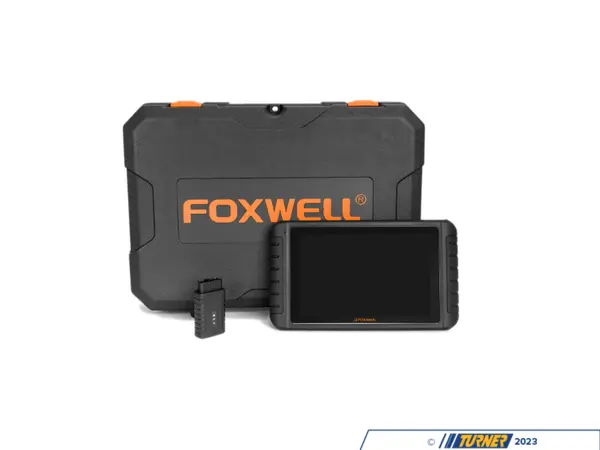
Schwaben i80II - Diagnostic Tablet for BMW OBD2 and 20-Pin
schwaben
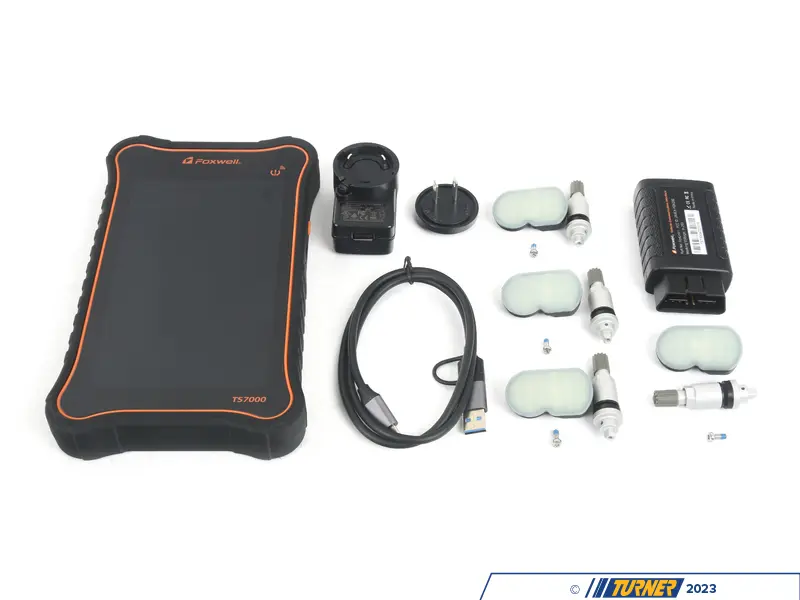
Schwaben TS7000 - Diagnostic and TPMS Tablet for BMW
schwaben
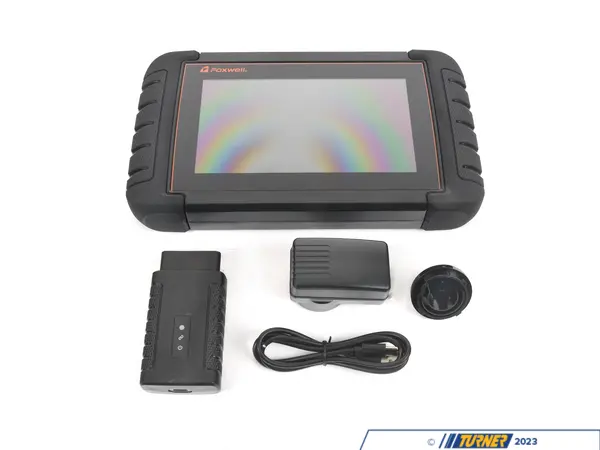
schwaben i70BT - Diagnostic Tablet for BMW OBD Scanning
schwaben
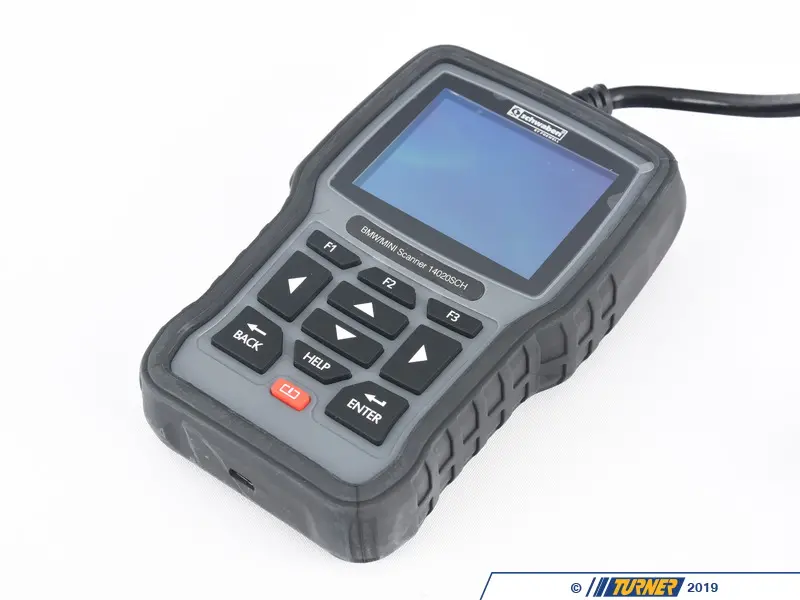
schwaben Elite - Diagnostic Tool for BMW DIY Service
schwaben

TAIZEISHAIGE ICOM Next - Diagnostic Interface for BMW Coding
TAIZEISHAIGE

Autel MK808S - Diagnostic Scan Tool for BMW DIY Repair
Visit the Autel Store

iCarsoft BMM V4.0 - Diagnostic Scanner for BMW Service
Visit the iCarsoft Store

Foxwell NT510 Pro Full-System Diagnostic Scanner & Battery Tester — BMW/Mini/RR
FOXWELL

Launch Creader Elite BMW OBD2 Bi-Directional Diagnostic Scan Tool
LAUNCH

Foxwell NT530 - BMW Diagnostic Scanner and Service Tool
Generic

Foxwell NT510 Elite Full System Diagnostic Scan Tool — BMW/Mini
FOXWELL

OBDLink MX+ OBD2 Bluetooth Scanner
OBDLink

ANCEL BM700 Pro Full System Diagnostic Scanner — BMW/Mini/RR
ANCEL
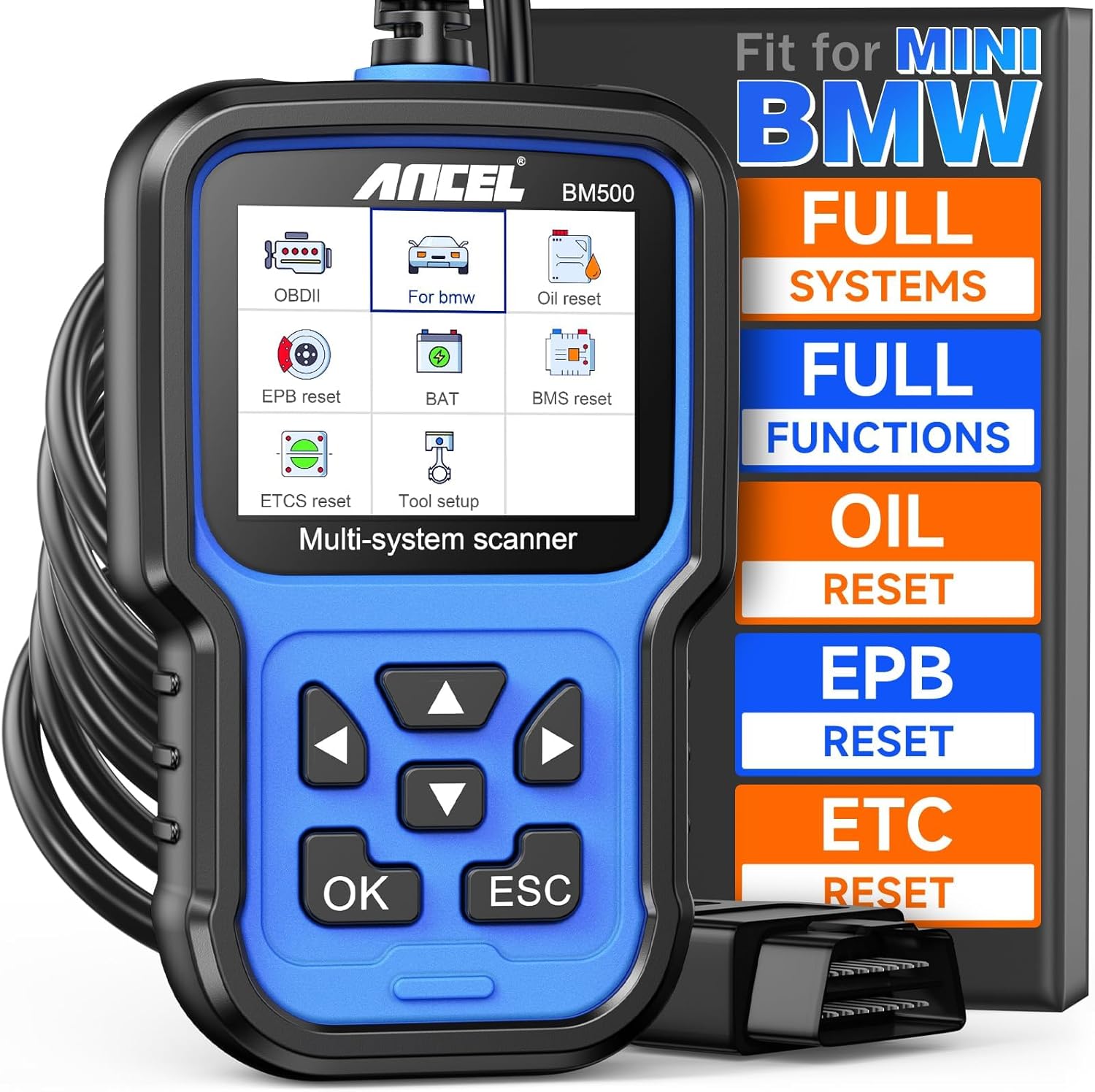
ANCEL BM500 OBD2 Full-System Diagnostic Scanner — BMW & MINI
ANCEL

OBDLink CX Bluetooth 5.1 OBD2 Adapter for BimmerCode
OBDLink

ANCEL BD300 Bluetooth OBD2 Scanner & Diagnostic Tool — BMW/MINI
ANCEL

PARANNIC ENET WiFi OBD2 Adapter — BMW F/G/I-Series
PARANNIC

Vgate vLinker BM+ Bluetooth OBD2 Scanner — BMW & Mini
Vgate

Vgate vLinker BM+ OBD2 Bluetooth Scanner — BMW/Mini BimmerCode
Vgate
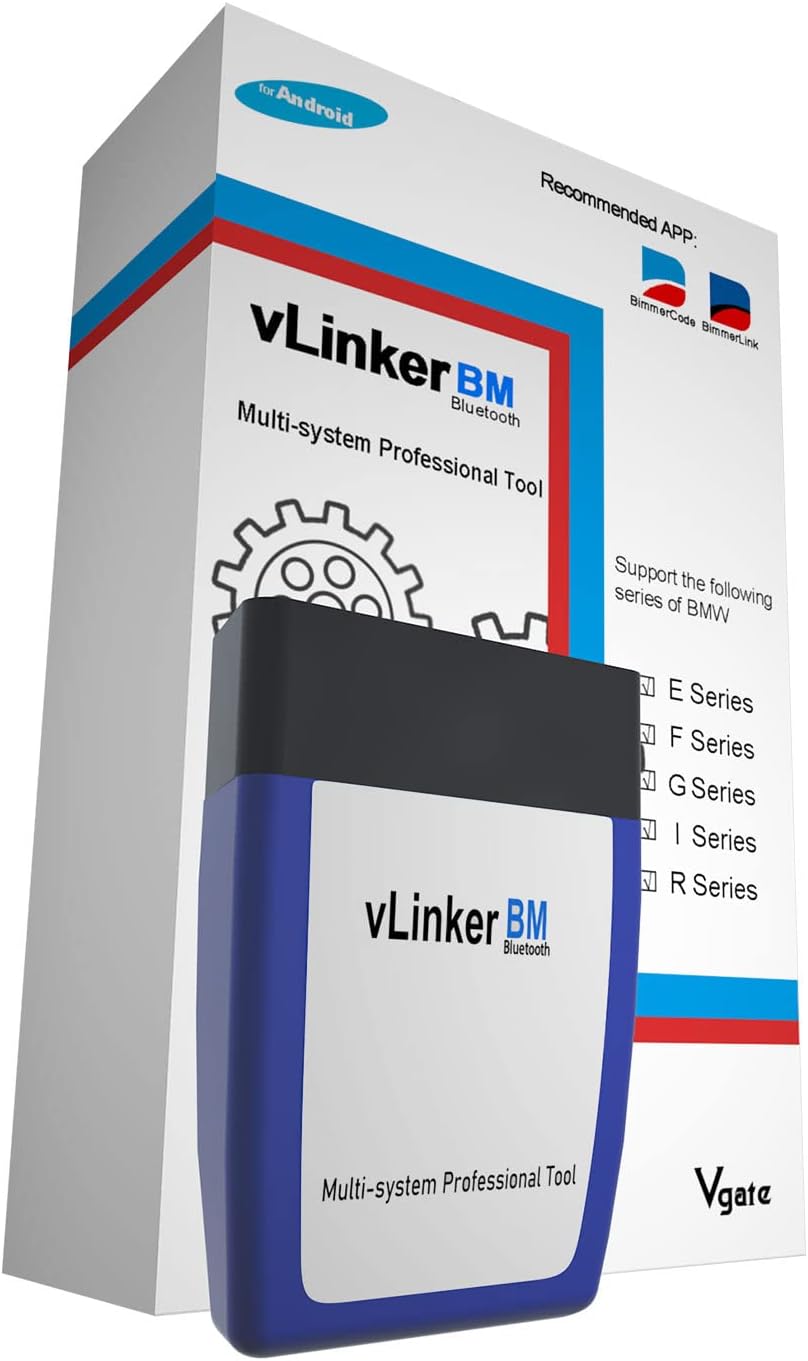
Vgate vLinker BM Bluetooth OBD2 Scanner — BMW/Mini (E/F/G/I/R Series)
Vgate

Veepeak OBDCheck BLE+ Bluetooth OBD2 Scanner — iOS & Android
Veepeak

Carly Universal Adapter - OBD Scanner for BMW Coding
Carly

iCarsoft i910 II - OBD2 Scanner for BMW and MINI
Visit the iCarsoft Store
More tuning and coding gear for the BMW F15
If you own a BMW F15 X5 and you've started poking around the idea of coding, diagnostics, or ECU software, you've picked the right rabbit hole to fall into. The F15 X5 (built from 2014 through 2018) sits on a platform that responds extraordinarily well to software work - better, honestly, than most people expect from a family SUV. Whether you're running the N55 straight-six in the xDrive35i, the N20 four-cylinder in the entry-level trim, the S63 twin-turbo V8 in the X5 M (F85), or the N57 diesel in markets that got it, every single one of those engines has meaningful headroom in the factory software. BMW left power and features on the table for product differentiation reasons, and with the right tools, you can get some of that back. This page covers BMW F15 chips software coding diagnostic tools - what they are, which ones actually work on your chassis, what they cost, and which ones I'd actually spend my own money on.
I want to be upfront about something before we get into it. The F15 uses BMW's ENET (Ethernet) communication protocol for many of its control units alongside the older OBD-II CAN bus architecture. That dual-protocol reality is the single most important thing to understand when shopping for tools, because a cheap generic OBD-II scanner that works fine on your neighbor's Honda will read basic fault codes on the F15 but won't get you anywhere near the proprietary BMW modules that actually matter - things like the DME (engine control unit), EGS (transmission), KOMBI (instrument cluster), FRM (footwell module), and the many ENET-only modules that simply won't talk to standard protocols. This is the reason BMW-specific tooling exists and why it's worth paying for.
Why F15 Owners Reach For Coding and Diagnostic Tools
The F15 generation landed during an interesting moment in BMW's software strategy. It's new enough to have a genuinely modern architecture - full ENET capability, BMW ConnectedDrive integration, a reasonably sophisticated iDrive system - but old enough that the software was written before BMW started aggressively locking things down with crypto-based protections the way they did on later platforms like the G05 X5. That means the F15 is one of the last generations where enthusiast-level coding tools can reach almost everything in the car without needing dealer-grade hardware.
There are a few main reasons F15 owners come to me asking about this stuff. First is fault code diagnosis. BMW's engine management on the N55 and N20 is verbose - it throws codes for things that are minor calibration issues as often as real failures, and knowing how to read, interpret, and clear those codes yourself saves you from paying dealer diagnostic fees every time a yellow check engine light comes on. Second is feature coding. BMW builds its cars on shared software platforms and uses coding to enable or disable features depending on the market, trim level, and options package. There are features sitting dormant in your F15 right now - things like video-in-motion, folding mirror memory, aggressive sport display settings, auto-lock behavior, and dozens of others - that can be activated without any hardware changes. Third, and most interesting to the performance crowd, is ECU tuning and flash software. The N55 in particular responds well to third-party maps, with well-documented gains in the range of 50-80 horsepower and 80-100 lb-ft of torque on a stock hardware platform with a quality tune.
There's also a purely practical angle: if you're buying a used F15, the ability to pull a full vehicle scan and look at fault code history across every module - not just the powertrain - is genuinely valuable. It'll show you things a pre-purchase inspection might miss, like an airbag module with stored crash data or a transmission that's been throwing shift quality codes.
Understanding the F15 Communication Architecture
Before we talk tools, spend two minutes understanding what you're actually connecting to. The F15 X5 has two primary diagnostic interfaces at the OBD-II port under the dash on the driver's side.
The K-CAN and PT-CAN buses handle body electronics and powertrain communication respectively - this is the traditional CAN architecture that's been on BMWs since around the E60 generation. Most BMW-specific scan tools can read these buses. The ENET bus (100BASE-T1 Ethernet) is where newer modules communicate - the head unit, the instrument cluster, advanced driver assistance modules, and others. To talk to those modules you need either a dedicated ENET cable connected to your laptop, or a scan tool that includes ENET capability in its hardware.
The OBD-II port on the F15 has pins dedicated to both - specifically, pins 1 and 9 carry the ENET connection. A standard OBD-II cable doesn't wire those pins to anything useful. This is why the ENET-to-RJ45 cable that tools like ISTA and NCS Expert use is a separate item from a typical scan cable, and why it matters which tool you buy.
For ECU flashing specifically, the F15's DME (typically a Bosch MEVD17.2 on the N55, Bosch MED17.2 on the N20) requires either OBD-based flash protocols or bench flash depending on what the tuning company uses. Most reputable flash tune providers for the F15 use OBD-based methods, which keeps things manageable without opening the DME.
The Full Tool Landscape - Five Categories You Need to Know
I find it useful to think about F15 software tools in five distinct categories, because the right answer depends heavily on what you're actually trying to do.
Category 1 - Basic OBD-II Scanners
These are the $30-$150 Bluetooth or wired dongles that pair with a phone or tablet app. Tools like the Veepeak OBDCheck BLE, Bluedriver, and the various generic ELM327 clones fall here. On the F15, they'll read and clear basic powertrain and emissions fault codes - things stored in the main OBD-II accessible DTCs. For quick "why is my check engine light on" diagnostics on the N55 or N20, they're functional.
The limit is real and hard: they won't access proprietary BMW subsystems, won't read codes from body modules or advanced driver assistance systems, won't let you code anything, and won't do anything with ENET modules. For a basic fault code check on the engine, fine. For anything else on an F15, you need to go further.
Category 2 - BMW-Specific Handheld Scanners
This is the middle tier - purpose-built scan tools that understand BMW's proprietary protocols. The Foxwell NT510 Elite (around $70-$90 for the BMW-specific version) and the Autel MaxiCOM MK808BT (around $350-$450) are the most commonly recommended options in this category on F15-specific threads. These tools give you full system scans across all BMW modules, live data, bi-directional tests, and service reset functions. They're what I'd recommend to someone who wants a standalone handheld tool and doesn't want to deal with a laptop setup.
Category 3 - ENET-Based PC Software
This is where serious BMW work happens. ISTA (Integrated Service Technical Application), BMW's official diagnostic software (now called ISTA/D and ISTA/P, evolving into a unified ISTA application), runs on a Windows laptop connected to the car via an ENET cable and an interface adapter. Combined with E-SYS (the coding tool) and NCS Expert, this is effectively the full dealer toolkit running on your own hardware. The software itself is available through various enthusiast channels - I won't get into specifics there - but the hardware interface is what you pay for. A quality ENET interface adapter runs $20-$50 from reputable vendors. This setup gives you access to everything BMW's own technicians see.
Category 4 - Enthusiast Coding Apps
Apps like BimmerCode (iOS and Android, $29.99 one-time purchase with a compatible OBD adapter, or $79.99 bundled with their recommended adapter) and BimmerLink (live data companion, $9.99) have become the go-to for F15 owners who want to do feature coding without learning ISTA. BimmerCode presents coding options in plain language rather than hex values, which dramatically lowers the barrier to entry. I've used it on my G20 and recommended it to multiple F15 owners - it's genuinely good for what it does, though it covers a subset of what full ISTA coding can reach.
Category 5 - ECU Flash Tuning
This is specifically about reprogramming the DME with modified maps to change boost, fueling, ignition timing, and other engine parameters. The major players for F15 ECU tuning in the US market are JB4 (Burger Motorsports), MHD Flasher, BM3 (Bootmod3), and tune files from companies like Active Autowerke, ECS Tuning partner maps, and Turner Motorsport. Each of these approaches the problem differently and has different tradeoffs, which I'll cover in detail below.
Product Picks - Diagnostic and Coding Tools for the F15
1. BimmerCode with OBDLink MX+ Adapter
BimmerCode is the tool I point most F15 owners toward first when they ask about coding. The app itself is $29.99 on iOS or Android. For the F15, you need an adapter that supports ENET-over-OBD, and the OBDLink MX+ (around $129.99) is the adapter BimmerCode explicitly recommends and tests against. BimmerCode sells a bundle of both for approximately $159.99.
What you can actually do on the F15 with this combination is substantial. The list includes enabling video-in-motion for the iDrive system, enabling folding mirror memory position (if your mirrors are power-folding equipped), adjusting DRL behavior, enabling or disabling the seatbelt chime, changing the behavior of the Auto Start-Stop system (though a full coding disable is better than just setting a default), enabling sport displays in the instrument cluster showing things like turbo boost pressure, adjusting the sensitivity of the lane departure warning, activating hidden menu options in iDrive, and a solid 40-50 other vehicle-specific options depending on which F15 build you have.
The interface is genuinely approachable. You pick your car, connect the adapter, select a module (like FEM - Front Electronic Module, or KOMBI - instrument cluster), and BimmerCode shows you options in plain English with toggle switches. It automatically backs up your current coding before making changes. I've seen a handful of F15 owners on BimmerFest forums report minor issues after coding the FEM on early 2014 builds - nothing catastrophic, but worth making sure your adapter is fully charged and your car's battery voltage is above 12.4V before coding. Don't code with the engine off if you can avoid it.
The one honest limitation: BimmerCode doesn't give you access to DME or transmission coding in the way full ISTA does. You're working with a curated list of options rather than the raw hex coding data. For 90% of what F15 owners want to do, that's completely fine. For advanced ECU coding or if you want to get into module-level data, you'll need the ISTA route.
2. Foxwell NT510 Elite (BMW Edition)
For a standalone handheld scanner that doesn't require a laptop, the Foxwell NT510 Elite in the BMW-specific version is consistently the best value I've found. Current pricing runs $70-$90 depending on where you buy it - the BMW-specific software license is included in that price. The hardware itself works across multiple makes, so if you also need to scan a non-BMW in your household, you can buy additional make-specific licenses later.
On the F15, the NT510 gives you full-system scanning (not just OBD-II powertrain - actual BMW proprietary module access), live data streams you can monitor in real time, service reset functions for oil service, brake service, battery registration, and inspection resets, and basic bi-directional tests. The screen is small but functional, and the update process via Foxwell's PC software is reasonably painless.
What it doesn't do well: coding. The NT510's coding capability is very limited compared to BimmerCode or ISTA. It's fundamentally a scan and diagnose tool, not a coding tool. If you want both in one package, step up to the Autel category. But if you mainly want to be your own diagnostic shop for the F15 - read codes, monitor data, do resets - the NT510 is genuinely excellent value and I've recommended it repeatedly.
One F15-specific note: battery registration. When you replace the battery on the F15 (which uses an AGM battery - Group 94R or 49 depending on trim - typically an 80Ah or 90Ah unit), BMW requires you to register the new battery with the BMS (Battery Management System). Failure to do this means the charging system doesn't know the battery is new and may undercharge or overcharge it, shortening its life. The NT510 handles this function correctly on the F15, which alone is worth the price of the tool if you DIY your own battery replacement.
3. Autel MaxiCOM MK808BT Pro
If you want a single tool that does professional-grade diagnostics plus meaningful coding capability in a handheld form factor, the Autel MaxiCOM MK808BT Pro (current pricing approximately $350-$400) is the next step up. The screen is proper tablet-sized (7 inches), the interface is far more polished than the Foxwell, and the BMW coverage on F-series cars is comprehensive.
On the F15 specifically, the MK808BT Pro handles full-system fault code scanning, full live data, active tests (commanding individual actuators to verify function), advanced service functions including all the BMW-specific ones like transmission adaptation reset and steering angle sensor calibration, and a useful coding module that goes further than basic tools. It won't replace full ISTA/E-SYS for advanced coding work, but for BMW dealers' recommended service coding procedures it does the job.
The price jump from the Foxwell is real, and it's worth asking yourself whether you actually need the extra capability or whether you're buying it because it looks impressive. For someone who DIYs most of their own service on the F15 and wants one tool to do everything short of ECU flashing, the MK808BT Pro is the right call. For someone who just wants to read codes and clear them, it's overkill.
4. ISTA-D / ISTA-P with ENET Cable Setup
This is the professional-tier option and the setup I'd choose if I were going deep on a single F15. ISTA (BMW's dealer diagnostic software) running on a Windows laptop, connected via an ENET-to-OBD cable (the genuine BMW version is the ESYS ENET cable, available from various sources for $20-$40) gives you the full factory diagnostic experience. Combined with E-SYS for coding, you can do literally everything BMW's own technicians do, plus enthusiast-specific coding that dealers won't touch.
The setup process is involved. You need a Windows 10 or 11 laptop with at least 8GB RAM (16GB recommended - ISTA is a heavy application), you need to install ISTA through a process that involves several interdependent software components, and you need to configure your network settings to enable the ENET communication. It's not plug-and-play. But there are detailed guides on BimmerPost and the F30Post community (which covers F-series cars broadly) that walk through the setup step by step, and once it's working, it's rock solid.
E-SYS is the coding companion that runs alongside ISTA. With E-SYS and the free E-SYS Launcher Pro (a community-built GUI that makes E-SYS much more usable), you can read and write coding data directly to any module in the car in raw PSdZData format. This is the most powerful coding method available for the F15 - more powerful than BimmerCode, more flexible, and capable of things BimmerCode can't touch. The learning curve is steeper, but the capability ceiling is essentially unlimited within what the car's software supports.
Total cost to get into this setup: the ENET cable ($25-$40), whatever a suitable Windows laptop costs (many people use a dedicated cheap laptop - a used ThinkPad from eBay for $100-$150 works fine), and the software (which I'll leave you to research independently). It's genuinely the best value in BMW diagnostics per dollar once you account for everything it can do.
5. BimmerLink
BimmerLink (iOS and Android, $9.99) is the live data companion app from the same developers who make BimmerCode, and it pairs with the same OBDLink MX+ adapter. It's not a coding tool - it's purely a live data monitor and fault code reader. But it's the best phone-based option for monitoring engine data on the F15 in real time.
On the N55, BimmerLink can display boost pressure, intake air temperature, fuel trim data, individual cylinder misfire counts, DME temperature, oil temperature and pressure, and a long list of other parameters that are genuinely useful for diagnosing running issues or monitoring engine health. The ability to log data while driving and review it afterward is something I use regularly - if someone tells me their N55 feels flat above 4000 RPM, I'll have them log a pull with BimmerLink and look at the boost pressure trace. Nine times out of ten that tells you what's going on.
At $9.99, this is the easiest yes on this whole page. If you have an F15 and an OBDLink MX+, install BimmerLink. There's no good reason not to.
6. JB4 Piggyback Tune (Burger Motorsports)
Now we're into ECU performance territory. The JB4 from Burger Motorsports is a piggyback tune module that intercepts sensor signals between the engine sensors and the DME, allowing it to command higher boost and adjust fueling without actually writing anything to the ECU itself. For the F15 xDrive35i (N55), the JB4 is priced at approximately $459 from Burger Motorsports directly. For the N20-equipped entry-level F15, it's available at a similar price point.
The JB4 is popular for good reasons. It doesn't require sending your ECU anywhere or flashing anything to the car's DME - it installs entirely in the engine bay as a standalone module. If you need to remove it for a dealer visit, you unplug it and there's no trace in the ECU. The base "Map 1" setting (the most aggressive street-friendly map) on the N55 typically produces gains in the range of 40-60 horsepower and 70-90 lb-ft of torque according to Burger Motorsports' own dyno data, with further gains available on Map 2 with an ethanol blend. The JB4 community on BimmerPost's N55 forum is massive and active, which means real-world data and troubleshooting help are readily available.
The honest limitation of the JB4 approach is that it's a piggyback, not a true flash. It manipulates sensor inputs rather than rewriting the ECU's actual maps. This means it has limits in terms of how cleanly it can control all aspects of engine behavior - most experienced tuners will tell you a quality flash tune is more precise and offers better overall calibration quality. The JB4 also requires a Bluetooth adapter for monitoring and map switching (included in some bundles, approximately $50 as a standalone add-on). But for owners who want real performance gains with maximum reversibility and don't want to commit to a flash, the JB4 is a legitimate choice that I'd recommend without hesitation.
7. MHD Flasher (N55 and N20)
MHD Flasher is an OBD-based ECU flash platform available as a smartphone app (iOS and Android). For the F15 N55, the MHD N55 app costs approximately $200-$250 for the Stage 1 flash license, with Stage 2 (supporting downpipe or intake upgrades) available as an upgrade. The app writes a modified tune directly to the DME via the OBD-II port - no cables beyond the standard OBD-II connection required, and the flash process takes approximately 15-20 minutes.
MHD is my personal preference for N55 and N20 flash tuning on a stock or lightly modified car. The Stage 1 N55 map (on a completely stock car, 93 octane) typically shows dyno results in the range of 370-390 wheel horsepower and 420-450 wheel lb-ft on the stock F15 xDrive35i, compared to around 295-310 whp in stock form - representing gains of roughly 70-85 horsepower at the wheels. Those numbers are consistent with what I've seen reported on forums and are in line with the platform's known headroom.
MHD's interface is genuinely good for a DIY flash tool. The app walks you through the process clearly, performs pre-flash checks, and the stock file backup before flashing is automatic. The ability to return to stock in the same amount of time you used to flash forward is important - if warranty work comes up or you're selling the car, you're covered.
Where MHD has an edge over the JB4 is precision. A proper ECU flash rewrites boost targets, fueling maps, ignition timing, and knock sensitivity all in a coordinated way. The result is a car that feels more cohesive - no sudden transitions, no areas where the piggyback's manipulation is visible as a hesitation or inconsistency. For owners who are committed to keeping their tune, MHD is the better long-term choice. For more on what a flash tune involves, check out the ECU tuning overview on this site.
8. Bootmod3 (BM3)
Bootmod3 (BM3) from ProTuning Freaks is the other major OBD flash platform competing with MHD for F15 N55 owners. Pricing is similar - approximately $250-$300 for the base platform license for the N55. BM3 is generally regarded in the BMW community as offering slightly more advanced data logging and live monitoring features compared to MHD, and the BM3 platform is the preferred choice for owners who go on to seek custom tunes from a professional tuner (many custom map providers use BM3 as their delivery platform).
The performance gains from BM3's base N55 map are essentially identical to MHD's - the platform headroom is the platform headroom, and both products are well-optimized. The decision between MHD and BM3 usually comes down to which community you're more connected to and whether you plan to pursue a custom tune. If you're going custom, check which platform your preferred tuner supports before you buy a license - some tuners strongly prefer one over the other.
On the F85 X5 M (S63 engine), BM3 has better coverage historically than MHD, so if you're running an F85 rather than an F15, BM3 is the more obvious choice. The S63 gains from a Stage 1 flash are in the range of 50-70 horsepower at the crank according to various forum-reported results, which is meaningful on top of the stock 567 horsepower rating.
Fitment Notes Specific to the F15 Platform
Not all F15 builds are the same, and this matters more than people realize when shopping for diagnostic and coding tools.
The F15 production run covers model years 2014-2018. The 2014-2015 models (E84 build dates through approximately late 2014) used an earlier iDrive generation (NBT - Next Big Thing head unit) while 2016-2018 models received the updated NBT Evo head unit with improved navigation and display. BimmerCode and E-SYS recognize this distinction automatically and show you different coding options accordingly. If you're on an early 2014 build and someone's guide is telling you to code a feature that you can't find in BimmerCode, it may simply not apply to your head unit generation.
The F15 xDrive35i (N55B30 engine, single twin-scroll turbo) has the most developed aftermarket support of any F15 variant. ECU flash options from MHD, BM3, and JB4 are all widely available. The F15 sDrive35i (rear-wheel drive, same N55 engine) has identical ECU flash support - same DME, same tunes apply.
The F15 xDrive50i (N63 twin-turbo V8, 445 horsepower stock) has more limited aftermarket flash support compared to the N55 - the N63's ECU is more complex and there are fewer quality off-the-shelf options. JB4 makes an N63-specific unit (approximately $479) that's the most accessible performance option for that engine. MHD does not currently support the N63 in the same way it supports the N55. This is worth knowing before you buy an F15 xDrive50i specifically for tuning potential.
The F85 X5 M (S63B44T0, the high-output version of the S63, stock rating 567 horsepower and 553 lb-ft) is a different beast entirely. JB4 for the S63, BM3 for the S63, and custom tuning from specialists like ESS Tuning and Active Autowerke are the relevant options. Diagnostic tool support (ISTA, BimmerCode, scan tools) works identically regardless of which F15/F85 variant you have - the ECU architecture is the same.
For diesel F15 owners (the N57 was available in European markets and some grey-market imports in North America), MHD does have N57 support and diesel-specific flash tunes are available through European tuning companies like DTE Systems and RaceChip. Be aware that diesel ECU work interacts with emissions hardware (DPF, EGR) in ways that require more careful planning than gasoline tuning.
One universal F15 fitment note: all of the OBD-based tools discussed here use the same 16-pin OBD-II port location, which on the F15 is under the driver's side dash, roughly at the left knee. It's not obstructed on any F15 variant.
Supporting Mods That Get the Most Out of Software Work
Software alone does a lot on the F15 N55, but several physical modifications make a meaningful difference to how much the tune can safely deliver.
The downpipe is the single most impactful hardware upgrade for N55 tuning. The factory downpipe is heavily catalyzed and restrictive, and upgrading to a high-flow or catless downpipe dramatically reduces backpressure on the turbo. A quality catted downpipe from brands like Akrapovic, AWE, or BM3/Active Autowerke opens up Stage 2 tune territory. Most N55 Stage 2 tunes require a downpipe upgrade as a prerequisite. Downpipe prices range from approximately $400-$1,200 depending on material and catalyst options. Paired with a Stage 2 flash, the combination typically produces 420-460 wheel horsepower on a stock-turboed N55 on 93 octane.
The charge pipe and boost pipe upgrades address a genuine weak point in the stock N55 hardware - the factory plastic charge pipe between the turbo and intercooler is known to crack under higher boost pressure, particularly on tuned cars in cold weather. This is a failure mode I've seen mentioned repeatedly in N55 forum threads. Aftermarket aluminum charge pipes from Eventuri, TRM, or Active Autowerke run approximately $150-$300 and should be on every tuned N55's list.
A performance intercooler matters especially for the F15 X5 because the car is heavier than comparable F30/F80 M3 platforms and the turbo works harder. The stock intercooler on the N55 is adequate at stock power levels but runs out of efficiency at higher power. Brands like Mishimoto and Wagner Tuning make F15-specific intercoolers. This pairs naturally with the charge pipe upgrade and with ECU tuning for maximum benefit. You can find more detail in our intercooler guide.
An air intake upgrade is lower priority than the intercooler and downpipe, but still produces measureable intake temperature reductions that protect the tune under sustained load. For intake options on the F15, the cold air intakes section covers the major options. For the N55, this is a supporting mod rather than a primary one.
Installation Overview - What the Process Actually Looks Like
BimmerCode Coding - What to Expect
The BimmerCode process is legitimately approachable for someone who's comfortable with a smartphone and can plug an OBD adapter in without assistance. Download the app, pair it to the adapter via Bluetooth (the OBDLink MX+ pairing takes about 30 seconds), sit in the car with the ignition on (not engine running - just key to position 2 or equivalent with push-button start), connect to vehicle in the app, browse to the module you want to code, make your change, apply it. The whole process for a single feature change takes 3-5 minutes.
Important rules: make sure your 12V battery is in good shape before coding. Voltage dropping during a coding write is the main cause of module corruption issues - something I've seen enough times to be emphatic about it. Have the car on a battery tender or start the engine and let it idle for 10 minutes before coding if you're at all uncertain about battery state. Don't code and drive simultaneously.
MHD / BM3 Flash - What to Expect
The ECU flash process requires more care than coding but isn't technically complex. Download the app, purchase your license, plug into the OBD port, connect, read your current DME file (this is your backup - save it somewhere permanent), select your desired map, initiate the flash. The actual flash write process takes 15-20 minutes. During this time, the car must not be disturbed - no opening doors, no starting the engine, no loss of OBD connection. Have a fully charged battery or connect a battery charger for the flash process.
After the flash completes, the car needs a short relearn period - DME adaptation values should be reset (both apps do this automatically or prompt you to do it), and for the first few drives the transmission and engine will be completing their adaptive learning cycle with the new maps. The car may feel slightly inconsistent for the first 50-100 miles. This is normal.
ISTA Setup - What to Expect
Setting up ISTA is an afternoon project the first time. The installation involves multiple components including the ISTA application itself, a BMW database, and the Rheingold framework. You'll configure a network adapter on your Windows laptop to communicate via the ENET cable. Once it's set up, connecting to the F15 involves plugging in the ENET cable, starting ISTA, and running a vehicle identification - the software reads the chassis VIN and configures itself for your specific build automatically. For detailed ISTA setup guidance, the guides on BimmerPost are the best free resource available.
Common Mistakes F15 Owners Make With Coding and Tuning
I've seen enough forum threads and talked to enough F15 owners to have a solid list of mistakes that come up repeatedly. Avoiding these will save you money, frustration, and potentially a dealer visit.
Coding with a weak battery. This is the most common cause of module coding corruption. The F15's electronics are voltage-sensitive during write operations. A battery that reads 12.1V after sitting overnight is not good enough. Code with the engine running or on a quality battery tender/charger. I can't stress this enough.
Using a generic ELM327 clone for coding. Cheap ELM327 adapters from Amazon (the $10-$15 variety) have inconsistent timing characteristics that can cause communication errors mid-coding. BimmerCode explicitly lists adapters it supports and has tested. The OBDLink MX+ is the supported standard. Don't cut corners here.
Flashing the ECU without backing up the stock file. Both MHD and BM3 do this automatically before flashing, but manually saving a copy of your stock file elsewhere is extra insurance. If anything goes wrong and you need to restore, you want that file somewhere safe.
Running a Stage 2 tune without Stage 2 hardware. Attempting to run a downpipe tune without having the downpipe installed doesn't produce more power - it throws CELs and potentially causes overboosting that can damage the turbo or engine. Tune and hardware stages need to match.
Forgetting to register a replacement battery with the BMS. New battery in, old battery out, no registration. Your charging system is now sending incorrect charge voltage for a battery it thinks is the old aged unit. Over time this degrades your new battery. BMS registration takes 5 minutes with the NT510 or ISTA. Do it every time.
Coding features that conflict with installed options. If your F15 doesn't have parking sensors, enabling parking sensor coding won't magically add sensors - it'll just create module communication errors. BimmerCode generally guards against this with fitment checks, but with E-SYS you have enough rope to hang yourself with. Understand what hardware your specific build has before coding options that depend on it.
Not clearing fault codes before evaluating a tune. Pre-existing fault codes in the DME affect tune behavior and can create false positives that make a good tune look bad. Pull a full system scan, address any existing issues, and start with a clean bill of health before flashing.
Editor's Picks - My Opinionated Recommendations
Best Overall Entry Into the F15 Software World
If you only do one thing: BimmerCode with OBDLink MX+. The $159.99 bundle price gets you an app that will keep delivering value for years - every time BMW hides a feature in firmware that you'd have paid for at the options desk, BimmerCode probably lets you turn it on. The interface is polished, the backup system is solid, and the F15 coverage is comprehensive. This is my first recommendation to every F15 owner, period. If you've been driving your X5 for two years without coding the Auto Start-Stop default off, your sport displays, your folding mirror memory, and your DRL behavior, you're leaving real usability improvements on the table.
Best Value for Diagnosis
Foxwell NT510 Elite at $70-$90. Nothing else in this price range gives you full BMW system access in a standalone handheld package. The battery registration capability alone pays for itself on the first battery change. For the F15 owner who wants to be genuinely self-sufficient for routine maintenance and fault diagnosis, this tool is the answer.
Best Performance Upgrade
MHD Flasher Stage 1 for the N55 at approximately $225. The gains are real and well-documented - roughly 70-80 horsepower and 90-100 lb-ft at the wheels on a stock car with 93 octane. The app is good, the return-to-stock process is simple, and the N55 MHD community is massive enough that any question you have has been answered somewhere. This is the best dollars-per-horsepower move available for the F15 xDrive35i. Pair it with aluminum charge pipes and you've addressed the most likely failure mode from boosting harder. For reference, this is the same basic recommendation I'd make for someone on a stock G20 330i with the B48 - the OBD flash approach on modern BMW turbocharged engines is simply one of the cleanest performance modifications available right now.
Best for Track Use
Bootmod3 (BM3) with custom tune. If you're taking the F15 to track days, the better data logging capabilities of BM3 and the ability to work with a custom tuner to dial in your specific setup (after mods) is worth the slight price premium. A custom tune from a reputable shop accounts for your specific hardware combination, your fuel quality, your altitude, and your typical ambient temperature range in a way that off-the-shelf maps can't. BM3 is the platform most custom tuners in the US are working with for N55 cars. Budget approximately $300 for the platform license plus $300-$600 for a quality remote custom tune.
Best Professional-Grade Setup
ISTA with ENET cable plus E-SYS. For the owner who wants maximum depth - the ability to do everything BMW's dealers can do plus advanced enthusiast coding - this is the setup. The hardware cost is genuinely low (approximately $25-$175 depending on whether you use an existing laptop). The time investment to set it up is real, but once it's working, there's nothing you can't diagnose or code on the F15.
Brand Comparison Table
| Tool / Platform | Price (Approx.) | Type | F15 N55 Support | F15 N63 Support | F85 S63 Support | Coding | ECU Flash | Best For |
| BimmerCode + OBDLink MX+ | $159.99 bundle | App + adapter | Full | Full | Full | Yes - extensive | No | Feature coding, first tool for any F15 owner |
| BimmerLink | $9.99 | App | Full | Full | Full | No | No | Live data monitoring, fault codes |
| Foxwell NT510 Elite | $70-$90 | Handheld scanner | Full | Full | Full | Limited | No | Standalone diagnosis, battery registration, service resets |
| Autel MK808BT Pro | $350-$400 | Handheld scanner | Full | Full | Full | Yes - good | No | Professional diagnosis + moderate coding, all-in-one |
| ISTA + ENET Cable + E-SYS | $25-$175 (hardware) | PC software suite | Full | Full | Full | Yes - maximum | Limited (not ECU) | Dealer-level diagnosis, maximum coding depth |
| JB4 (Burger Motorsports) | $459-$479 | Piggyback module | Full | Full | Full (S63) | No | Piggyback only | Reversible performance gains, no DME flash |
| MHD Flasher | $200-$250 | OBD flash app | Full | No | No | No | Yes - DME flash | N55/N20 ECU flash, best community + data logging |
| Bootmod3 (BM3) | $250-$300 | OBD flash app | Full | No | Full (S63) | No | Yes - DME flash | N55 flash or S63 flash, custom tune ready, track use |
Coding Features Worth Enabling on the F15 - A Practical List
This section is aimed at people who've got BimmerCode or E-SYS set up and want to know what's actually worth doing on the F15 specifically. I'm not going to list every possible coding option - there are entire threads dedicated to that on BimmerFest and BimmerPost. Instead, here are the ones that make a genuine difference to daily driving an F15.
Auto Start-Stop default off. The factory behavior on the F15 is for Auto Start-Stop to re-enable itself every time you start the car. Coding it to default off means it stays off. This is the single most quality-of-life coding change you can make to a modern BMW, in my opinion. The micro-interruptions in engine operation are hard on the starter motor over time and deeply annoying in traffic. Off by default. Done.
Video in motion. The iDrive navigation and video input restrictions while the car is moving can be removed through coding. This is useful for passengers watching media, though obviously not recommended for the driver. Legal in most US states to have video-capable screens accessible to passengers.
Boost gauge in iDrive sport displays. The F15's digital instrument cluster and iDrive system have sport display pages that can show real-time engine data. Enabling the turbo boost pressure gauge on the sport display gives you a real-time turbo performance indicator - useful for diagnosing flat spots and monitoring tune behavior. This requires enabling the relevant KOMBI coding option.
Folding mirror memory. On F15s equipped with power-folding mirrors, coding can associate the mirror fold/unfold state with the locking and unlocking cycle, so mirrors fold automatically when you lock and unfold when you unlock. Small thing, but genuinely nice.
Dynamic stability control (DSC) behavior adjustments. The F15 has multiple DSC/DTC states. Certain coding options adjust the threshold at which DSC intervenes, which is relevant for performance driving and winter driving scenarios with appropriate tires. This is a more advanced coding area - research thoroughly before changing stability system behavior.
Front Park Distance Control visual display. On some F15 builds, the PDC graphic display in iDrive can be made visible more easily or triggered at lower speeds through coding. Useful for parking in tight spaces.
Ambient lighting intensity. The F15 has interior ambient lighting that can have its color and intensity options expanded through coding, depending on build options installed.
For a full list of F15-specific coding options with module locations and PSdZData values, the BimmerPost F15 sub-forum has compiled threads covering virtually every known option. I recommend reading at least one full thread on any coding change before making it, especially for modules outside the entertainment system - body modules, lighting modules, and safety-adjacent modules deserve careful research.
Reading Fault Codes - The Modules That Matter Most on the F15
When you run a full system scan on the F15 with ISTA or the Autel MK808, you'll see a long list of modules come back. Understanding which fault codes to prioritize is something most guides skip. Here's my practical take on the F15 module hierarchy for fault diagnosis.
DME (Digital Motor Electronics / engine ECU) - First priority always. Any fault here affects performance, emissions, or engine longevity. Common F15 N55 DME faults include boost-related codes (often turbo or charge pipe issues), VANOS-related codes (oil quality and service interval related), and high-pressure fuel pump codes that on the N55 are often a sign the HPFP is approaching end of life.
EGS (Electronic Gearbox System / transmission) - Second priority. The 8-speed ZF 8HP gearbox in the F15 is robust but does develop shift quality codes over time, especially if transmission fluid hasn't been serviced. ZF recommends fluid changes in performance use, and coding can help with adaptation resets after a fluid service.
ABS / DSC module - Any faults here affect your safety systems. Wheel speed sensor faults are the most common culprit on F15s with higher mileage.
Airbag / SRS module - Critical for pre-purchase inspection. A fault stored here, especially a crash-related data code, is a serious flag. ISTA will show you whether any crash event data is stored.
FRM (Footwell Module) - The FRM controls exterior lighting, turn signals, and other electrical functions. It's a module that can develop faults from water ingress (the F15's footwell can get wet from sunroof drain blockage) or from failed coding attempts with poor battery voltage. FRM issues are disproportionately common on F-series cars as a platform.
FEM (Front Electronic Module) - On later F15 builds (2016+), the FEM replaced some FRM functions. Similar sensitivity to coding and battery voltage.
For a first scan on a used F15 purchase, I'd focus on those six modules before looking at anything else. Clear any codes that come up, drive it for two weeks, scan again. Codes that come back consistently are real issues. Codes that don't return are often historical artifacts from previous owners or maintenance events.
Frequently Asked Questions About F15 Chips Software Coding Diagnostic Tools
Will coding void my BMW warranty?
In the US, the Magnuson-Moss Warranty Act technically limits manufacturers from voiding your entire warranty just because you've modified the car - they have to demonstrate the modification caused the specific failure you're claiming. That said, for coding-related issues (especially if you coded something that affects a module and that module subsequently fails), dealers can and do use modified coding as grounds to deny warranty coverage on that specific item. ECU flashing is a more direct warranty concern - most dealers check for evidence of a flash tune when warranty claims are submitted on engine or drivetrain components. If your F15 is still under warranty and you flash the ECU, understand that you're assuming some risk on powertrain warranty claims. BimmerCode coding of non-engine features (entertainment system, lighting, comfort features) is lower risk in this regard.
Can I code the F15 with a free app instead of paying for BimmerCode?
Technically yes - E-SYS is free once you have the ENET cable setup, and NCS Expert is free. But there's a reason people pay for BimmerCode. The free tools require you to work in raw hex coding data, understand PSdZData, and manually manage backups. BimmerCode does all of that for you and presents options in plain English. For someone who doesn't want to spend several hours learning BMW's coding framework, the $29.99 price of BimmerCode is genuinely worth it. If you want to learn the full system, E-SYS is fantastic and the community documentation is solid.
What's the difference between a Stage 1 and Stage 2 tune for the F15 N55?
Stage 1 means a tune optimized for a fully stock car with no hardware modifications. It increases boost pressure, optimizes fueling and ignition maps, and produces gains on the stock hardware. Stage 2 means a tune optimized for a car with a performance downpipe (and usually upgraded charge pipes and sometimes an intercooler). Because the downpipe removes the restriction in the exhaust that was limiting the Stage 1 tune's ability to push more exhaust flow through the turbo, a Stage 2 map can run more boost and produce meaningfully more power. Running a Stage 2 map on a car with a stock downpipe won't produce more power and can cause boost control issues - hardware and software stages need to match.
Does the JB4 show up on dealer diagnostic scans?
The JB4 module itself (the physical hardware installed in the engine bay) won't show up in any diagnostic scan because it's not connected to any data network - it intercepts sensor signals purely at the wiring level. However, the modified boost and fueling behavior it commands can result in non-standard adaptation values in the DME that a thorough technician might notice. Burger Motorsports recommends switching to Map 0 (stock mode) before any dealer visit, which restores stock sensor signal behavior. With the JB4 on Map 0 and DME adaptations cleared, there's generally no software trace of the tune.
My check engine light came on after I coded something in BimmerCode. What now?
First, use BimmerCode or BimmerLink to read the specific fault code. If it's a module communication fault or a coding-related error (these typically show as "invalid coding" or "SG-coding-error" type DTCs), restore the module to its stock coding using BimmerCode's backup function and the code should clear after a drive cycle. If you can't restore from backup, the nuclear option is using ISTA to perform a "vehicle order" restore, which resets modules to their factory-programmed state. A genuine warning before coding anything: have a full backup saved somewhere before you start, every single time.
How much horsepower does the F15 xDrive35i gain from a Stage 1 tune?
Real-world dyno results consistently show gains in the range of 60-85 wheel horsepower from Stage 1 N55 flash tunes (MHD or BM3) on 93 octane, starting from a stock figure around 295-310 whp (stock crank rating is 306 horsepower on the N55, and the F15 AWD drivetrain absorbs roughly 12-15%). The N55 is particularly responsive to boost increases because BMW detuned it aggressively from the factory - the turbo hardware has significantly more capacity than the stock tune exploits. Stage 2 with a downpipe adds another 30-50 whp on top of that.
Can I do the MHD flash myself or do I need a tuner?
You can absolutely do the Stage 1 or Stage 2 off-the-shelf maps from MHD yourself. The app is designed for DIY installation and the process is clearly documented. You need the app, a stable internet connection for license activation, and 20-30 minutes with the car stationary. A custom tune from a professional tuner is different - that requires dyno time or a back-and-forth remote tune process, and it's not necessary for most street-driven cars running stock or mild hardware. Off-the-shelf Stage 1 on a stock N55 is safe, well-validated, and doesn't require professional involvement.
Do I need to do anything special to the ZF 8HP transmission after an ECU tune?
The ZF 8HP in the F15 is one of the great transmissions of the modern era and it generally adapts to new engine output without requiring TCU flashing. However, a transmission adaptation reset after an ECU flash is a good practice - it clears the old learned shift adaptation values and lets the TCU learn from scratch with the new engine behavior. Both MHD and BM3 include guidance on this, and any BMW-capable scan tool (including the Foxwell NT510) can perform a transmission adaptation reset. Some owners also flash the TCU separately for sharper shift programming, but this is optional rather than required. The stock ZF programming is quite good and the transmission doesn't become a bottleneck for most street applications even at Stage 2 N55 power levels.
What's the best scan tool for a pre-purchase inspection on a used F15?
For a pre-purchase inspection, I'd want either ISTA on a laptop (maximum depth) or the Autel MK808BT Pro (more practical for a parking lot situation). The critical thing is getting a full system scan - all modules, not just powertrain. You want to see airbag module status, crash data storage, mileage discrepancy checks, and whether there are stored faults in the DME history that suggest recurring issues. The NT510 can do this too at lower cost, but the Autel's larger screen and faster interface makes a 20-module full scan more manageable. If you're buying a high-value F85 X5 M or xDrive50i, the ISTA route is worth the setup time.
Can BimmerCode work on the F85 X5 M?
Yes, BimmerCode supports the F85 X5 M with the same OBDLink MX+ adapter. The available coding options differ from the standard F15 because the F85 has different module configurations - it has M-specific instrument cluster options, different DSC configurations, and M-specific dynamic settings. The coding categories are well-documented in the BimmerCode app for the F85 specifically, and the F85 community on forums has documented which codings are valuable. Feature coding applies to the F85 just as it does to the F15.
Is there any risk of permanently damaging my F15 through coding or flashing?
Genuine risk is low if you use quality tools, maintain stable battery voltage during any write operation, and use well-documented procedures. The scenarios where real damage has occurred involve cheap ELM327 adapters causing incomplete writes (leaving a module in an inconsistent state), flashing with low voltage causing the write process to abort halfway through, or on the ECU flash side, attempting to modify DME hardware outside of OBD flash procedures (which is not what any of the tools discussed here do). I've never personally seen a car damaged by BimmerCode or MHD when used correctly. The most common bad outcome is a stored fault code that clears on its own or with a simple restore - annoying but not damaging. ECU flashing on a car with pre-existing engine issues (worn turbo, high-pressure fuel pump on its way out, tired spark plugs) carries more real risk because the tune pushes hardware that's already working harder than it should be. Address mechanical issues before tuning.
Should I get a JB4 or flash tune for the F15 xDrive35i?
If you're going to keep the car long-term, want maximum power quality and consistency, and don't have warranty concerns, a flash tune (MHD or BM3) is the better answer. The calibration quality is higher and the car feels more coherent. If you're not ready to commit fully - still under powertrain warranty, might sell soon, or just want to try tuning without fully committing - the JB4 gives you real gains with full reversibility. Both are legitimate options and the F15 community has thousands of happy owners of each. My personal lean is toward the flash tune for any car I plan to own long-term.
Where to Go From Here
The F15 X5 is one of the better platforms to own if you're interested in software work. The combination of broad coding possibilities, a very active enthusiast community, well-developed flash tune options for the N55, and a mature toolset means there's very little guesswork - the information exists, the products exist, and the results are documented. You're not pioneering anything here, which in my experience is the best position to be in when spending money on aftermarket parts.
My recommended starting sequence for an F15 owner getting into this for the first time: start with BimmerCode and the OBDLink MX+ - code the features you want, understand how the system works, see what your car can do at the software level before spending money on hardware. Add BimmerLink while you're at it. If you want diagnostic depth, add the Foxwell NT510 for standalone scanning. Then, when you're ready to address performance, decide between JB4 and flash based on your specific situation. Add supporting hardware as appropriate - charge pipes before the tune, downpipe if you want Stage 2.
For context on how software upgrades fit into the broader modification picture for the F15, it's worth reading through our ECU tuning overview and looking at what other F-series owners have done across the models section. Software is often the first modification and sometimes the most impactful one, but it works best as part of a coherent build plan rather than in isolation.
The F15 is a heavy car by BMW's own standards - the xDrive35i comes in at around 4,800 pounds - and that mass context is worth keeping in mind. The power gains from tuning are real and noticeable on the road, but the F15 X5's tuning story is partly about making a capable luxury SUV into something genuinely quick, not about building a sports car. Manage expectations, understand the platform's strengths (impressive real-world torque delivery, excellent long-distance capability, meaningful power headroom in the N55), and the software side of owning an F15 is one of the more rewarding aspects of the car.
If you're already familiar with how software work plays out on other BMW platforms - say, you've done ECU work on an F30 335i or a F82 M4 - the F15 is familiar territory. Same tools, same fundamental approach, slightly different module layout and ENET topology. The BMW platform commonality is one of the things that makes being a BMW enthusiast rewarding: the knowledge transfers. Browse the articles section for broader BMW diagnostic and tuning context, and check the chassis tool to cross-reference fitment if you're looking at parts that span F-series generations.

Kamil Siegień
Founder of BimmerTalk. Five years wrenching on BMWs, currently dailying a G20 330i with the B48 turbo four. Spent a year doing marketing for BMW and MINI before going independent. I write everything on this site myself.
More about the site
BMW Coding and Diagnostic Tools - What They Are and Why Every BMW Owner Needs One
If you own a BMW and you're still paying the dealer $150 to read a check engine light, stop. Right now. The world of chips-software coding-diagnostic-tools for BMW has matured to the point where a motivated owner can do in their driveway what used to require a factory ISID station and a trained technician. I run a G20 330i with the B48 turbo four as my daily, I've spent five years wrenching on BMWs ranging from crusty E36 coupes to a friend's G82 M4, and before BimmerTalk I spent a year inside BMW's marketing operation. I know what the dealer charges, I know what the independent shops use, and I know what you can realistically do yourself. This guide covers all of it - from the cheapest Bluetooth OBD dongle that actually works to the professional Autel tablets that rival what you'd find bolted to a wall at your local BMW Service Center.
The short version is this: the market in 2026 is split into three clear tiers, the gap between a generic scanner and a BMW-specific tool is enormous, and the right choice depends almost entirely on whether you want diagnostics, coding, programming, or all three. Let me walk you through every layer.
Why a Generic OBD2 Scanner Is Not Enough for a BMW
Every car sold in the US since 1996 has an OBD2 port, and every BMW from the E36 onward has one too. That port is standardized. The basic protocol - reading and clearing powertrain fault codes - is the same across brands. So in theory, the $25 Bluetooth dongle you ordered off Amazon should work fine on your F30 328i. And it will, sort of. It will pull codes from the engine and transmission. That's it. That's approximately 10 percent of what you actually need on a modern BMW.
Here's what a generic reader misses. It will not talk to your DSC module, which is where your wheel speed sensor faults, stability control errors, and brake pressure sensor codes live. It will not talk to the airbag module (SRS), which means if you have a deployed pretensioner or a seat sensor fault you'll never know until the car fails inspection or, worse, the bag deploys incorrectly. It will not talk to the transfer case on xDrive models, the DISA or VANOS controllers on older N-series engines, the EPS (electric power steering) module, the FEM/BDC body domain controller on F and G series cars, or any of the camera and ADAS modules on anything newer than about 2015.
On something like an E60 530i with the N52 engine, I've seen cars with eight active faults spread across DSC, airbag, and instrument cluster modules, and the owner had no idea because his generic scanner said "no codes." On my own G20, a full module scan via ISTA turns up faults in modules I didn't even know existed - the power distribution box has its own diagnostic memory, the antenna amplifier logs errors, the KOMBI can store calibration faults. None of that shows up on a Bluetooth dongle running a generic app.
The bottom line is that BMW's architecture is deeply proprietary. The chassis codes change - E36, E46, E90, F30, G20 - but the underlying complexity keeps increasing with each generation. A proper BMW coding and diagnostic tool speaks the same language as that complexity. A generic scanner does not.
The Three Tiers of BMW Diagnostic and Coding Tools in 2026
Before I go into specific products, let me lay out the landscape. Every tool in this space falls into one of three categories, and they don't overlap as much as marketing copy would have you believe.
Tier One - Dealer-Level BMW Software and Hardware
BMW ISTA+ (Integrated Service Technical Application, sometimes called ISTA-D or ISTA-P depending on what you're doing) is what BMW dealers actually use. The diagnostic side reads every module on every BMW from approximately the E46 onward. The programming side - ISTA-P - handles software updates, module flashing, and retrofit programming. This is the real deal. It's what a master technician uses when they're coding a new DME or programming a replacement instrument cluster.
To run ISTA at home, you need a laptop capable of running a Windows VM or a dedicated Windows machine, the ISTA software itself (obtainable from various enthusiast sources - I won't pretend it comes shrink-wrapped in a box), and either an ENET cable (for F and G series cars, typically $20-$80 for a known-good cable) or an ICOM hardware interface for older E-series cars and more serious programming work. ICOM-style hardware clones run from about $150-$500 depending on quality; genuine BMW ICOM hardware is thousands of dollars and practically unavailable to private buyers. The cable-and-software setup can be had for as little as $20-$200 all-in if you're comfortable sourcing software and configuring the environment yourself.
The payoff is enormous. ISTA generates guided test plans, identifies coding errors by module, shows expected versus actual values, and guides you through repairs with factory-level detail. For retrofit work - adding a factory rear camera to an F10 that didn't come with one, or coding a new DCT module after a rebuild - there's nothing in the aftermarket that touches ISTA. It's also the tool most trusted indie BMW shops run, specifically because it's what the factory uses.
The tradeoff is that it's genuinely difficult to set up if you're not comfortable with Windows environments, ISTA-specific INI configurations, and BMW's module structure. It's not a tablet you pull out of a box and plug in. Expect a weekend of research before you successfully run your first test plan, especially on G-series cars where the software architecture is updated frequently.
Tier Two - Professional Multi-Brand Scan Tablets
This is the meat of the market for independent shops and serious enthusiast owners. Brands like Autel, Launch, and to a lesser extent Foxwell make standalone scan tablets that handle BMW diagnostics and coding without requiring a laptop, a VM, or any software configuration. You buy the tablet, register it, update it, and plug it into the OBDII port. These tools run their own BMW-specific software stacks and cover most functions you'd ever need for real-world service work.
The range within this tier is wide. At the entry end, the Foxwell NT510 or NT530 gives you BMW-specific module scanning, service resets (oil, brake fluid, steering angle, battery registration), and basic actuation tests for roughly $150-$300. At the high end, the Autel MaxiSys Elite II Pro and MK908 Pro II give you bidirectional control, ECU coding, guided diagnostics, and programming capability on nearly every BMW from the E36 forward - with pricing in the $1,000-$2,000 range. The flagship Autel tablets with full J2534 programming pass-through capability push into $2,500-$4,000+ territory.
According to professional BMW scan tool retailers, the Autel lineup in particular is consistently positioned as the strongest aftermarket choice for combined BMW diagnostics, coding, and service functions - specifically the MP808, MK908 Pro II, and Elite II Pro families, which support ECU coding, bidirectional control, and retrofit-adjacent features across BMW's chassis range.
Tier Three - Consumer Coding Apps
BimmerCode and BimmerLink are the names that come up constantly on forums when someone wants to code their F30 without going full ISTA or spending $1,000 on a tablet. These are phone apps (iOS and Android) that pair with a compatible OBD adapter - typically an OBD Link MX+ or a dedicated BimmerCode adapter - and give you access to module-level coding parameters through a clean, organized interface. The adapter plus app license typically runs $50-$300 total depending on which adapter and which features you buy.
BimmerCode is genuinely good at what it does. On my G20 330i I used it to enable video-in-motion for the passenger screen, adjust cornering light behavior, change the startup sequence on the instrument cluster, and register the battery after I swapped to an AGM unit. None of those took more than ten minutes. But BimmerCode has real limits. It won't do guided diagnostics with test plans. It won't program a new module after replacement. It won't do ADAS calibrations. It's a coding and live-data tool, not a diagnostic platform, and it's best understood that way.
When You Actually Need Each Tool Type - Matching the Tool to the Job
One of the most common mistakes I see on forums is someone buying a BimmerCode setup and then being frustrated that it can't help them diagnose a random misfire on their E90 335i N54. Or someone dropping $2,000 on an Autel Elite II Pro because they just wanted to enable folding mirrors on their F32. The tool has to match the job. Here's my real-world breakdown.
Just Reading and Clearing Fault Codes
If all you want is to kill that CEL before your inspection and know what you're dealing with, a Foxwell NT510 or NT530 is honestly all you need for most situations. It reads all modules, not just powertrain, it clears codes, and it does the most common service functions like oil reset and battery registration. On older E-series cars (E46, E39, E36), a K+DCAN cable running INPA on a laptop is still the gold standard for raw data access. INPA is ugly by modern standards, but the data it returns is accurate and complete, and BMW technicians have been using it since the 1990s for good reason. The cable itself costs almost nothing.
Coding Hidden Features and Personalization
For F and G series cars - basically anything from the F10 5 Series (2010) through current production including G20, G30, G42, G80, G82 - BimmerCode is the easiest and most user-friendly path. It covers a legitimately impressive list of coding options organized by module, it has a good safety record because it only writes to defined parameters, and the app is updated regularly to add support for new chassis codes. For E-series cars, NCS Expert is the traditional tool for coding but it has a significantly steeper learning curve - you need to understand FA/VO profiles, coding data structure, and how to write back without corrupting a module. It's doable, but plan on reading two or three forum guides before touching anything.
Service Functions - Oil Reset, Battery Registration, Steering Angle Calibration
Battery registration is the one that catches people. On any BMW with an IBS (intelligent battery sensor) - basically anything E90 onward - if you swap the battery without registering it in the car's system, the charging algorithm will treat it like the old battery and you'll undercharge a fresh AGM unit, potentially killing it in a year. A cheap generic scanner will not do this. You need either a BMW-specific tool or a proper scan tablet. The Foxwell NT510/530 handles battery registration, oil service reset, brake fluid reset, and steering angle reset for a relatively modest price. So does BimmerCode. So does any Autel tablet. This is a solved problem as long as you have the right tool.
Bidirectional Control and Actuator Testing
This is where the Autel tablets earn their money. Bidirectional control means the scanner can send commands to the car - activate the fuel pump, cycle the ABS modulator, command an injector to cut out, operate a window motor. This is how you do real diagnostic work, not just fault-code reading. If you're trying to figure out whether an ABS pump is mechanically dead or just has a wiring fault, you need to command it to activate and measure what happens. Generic tools can't do this. BimmerCode can't do this. You need a capable tablet like the Autel MP808 (roughly $600-$900) or the MK908 Pro II ($1,000-$2,000) for this kind of work.
Module Programming After Replacement
This is the hardest job in the space. If you replace a DME, a CAS/FEM, a transfer case module, or any safety-system component, it typically needs to be programmed to match the VIN and properly initialized. For most modern G-series cars, this honestly requires either ISTA-P or a top-tier Autel/Launch tablet with J2534 pass-through. There are cases where BimmerCode or a mid-tier scanner can handle simpler module initializations, but for anything touching anti-theft or safety systems, I'd go with ISTA or an authorized shop. Getting this wrong is expensive. A bricked DME on an N54-powered E92 335i is a genuinely painful repair bill.
BMW ISTA - The Factory Standard Explained for Enthusiasts
I want to spend real time on ISTA because it's the most powerful tool available and the most misunderstood one. Most forum discussions treat it like a sacred secret, but it's genuinely accessible if you approach it methodically.
ISTA (Integrated Service Technical Application) is BMW AG's own dealer diagnostic and programming software. The diagnostic module (formerly called ISTA-D) handles fault reading, guided test plans, module identification, and live data across every BMW and Mini manufactured since approximately 2000. The programming module (formerly called ISTA-P) handles software updates, module programming, coding, and retrofit initialization. In 2026 these are typically distributed as a unified ISTA+ package, though different operations within it require different interface hardware.
For F and G series cars, the standard connection is an ENET cable - a modified Ethernet cable with a proprietary BMW connector on one end. These run roughly $20-$80 from reputable vendors. The cable connects your laptop's Ethernet port (or a USB-to-Ethernet adapter) directly to the car's ENET port in the diagnostic socket. Data transfer is fast and stable, which matters a lot when you're doing module flashes that can take 15-30 minutes.
For E-series cars (roughly E36 through E90/E60/E82), you typically need an ICOM interface - a hardware module that sits between your laptop and the car. Genuine BMW ICOMs are expensive and rare outside dealer networks. Quality clone ICOMs run from about $150-$500 and vary significantly in reliability. The cheaper ones are fine for diagnostics but I would not use them for module programming - the risk of a failed flash from a bad connection is real. If you're going to program modules with ISTA on an E-series car, spend the money on a quality ICOM equivalent or accept that you're taking on risk.
Setting up ISTA requires a Windows environment - either a dedicated Windows laptop or a VM running on Mac or Linux. The software itself is large (20-40 GB depending on version and vehicle data packages) and configuration involves specific INI settings and database paths. This is not a two-minute setup. But once it's running, it's remarkably capable. ISTA's guided test plans walk you through diagnostic procedures step by step, including wiring diagrams, component locations, and expected measurement values. For something like diagnosing an intermittent VANOS fault on an E90 N54 or tracking down a chassis flex noise on an F10, the test plans alone are worth the setup effort.
Autel MaxiSys Line - The Best All-Around Aftermarket Choice for BMW
If you want one tool that covers BMW diagnostics and coding without the complexity of setting up ISTA, Autel's MaxiSys family is what most independent shops and advanced enthusiasts end up with. I've used the MP808 and the Elite II Pro, and I can give you a direct comparison.
Autel MP808 - Entry to Mid Professional
The Autel MP808 is a 7-inch Android-based tablet that handles full-system diagnostics, service reset functions, oil resets, EPB service, battery registration, and basic bidirectional control. For BMW specifically, it reads all modules, clears codes, and handles most common service items. In the current US market it runs roughly $600-$900 depending on the package and promotions. That's not cheap, but it's a legitimate professional tool that will work on every BMW from roughly the E46 forward and also on every other car in your driveway - it's genuinely multi-brand.
What the MP808 lacks compared to the higher-end Autel tablets is depth of ECU coding and the most advanced programming functions. It will do many coding operations on BMW F and G series cars, but for complex retrofit coding or VIN-binding a new module, you want to step up. It's a strong buy if you're primarily focused on diagnostics and service resets and occasional coding.
Autel MK908 Pro II and Elite II Pro - The Professional Tier
The MK908 Pro II and Elite II Pro are where Autel's BMW capability really opens up. These are larger-format tablets (10-inch screens) running more capable BMW-specific software stacks with deeper ECU coding, guided retrofit procedures, and bidirectional control across a much wider range of actuators and systems. Retailers specifically list ECU coding, bidirectional scanning, and programming-oriented functions as key features of these units. Price range for this tier is roughly $1,000-$2,000 depending on model and subscription status.
For a busy independent BMW shop doing coding work - retrofitting cameras, coding SMG-to-DCT conversions, initializing replacement modules - the Elite II Pro is a genuinely practical tool. It's not as deep as ISTA for the most complex programming jobs, but it's faster, more user-friendly, and doesn't require a laptop. For the advanced enthusiast who owns multiple BMWs and wants one professional-grade tool without the ISTA setup headache, this is what I'd recommend.
According to current professional scan tool retailer listings, the Autel MaxiSys Elite II Pro and MK908 Pro II are consistently positioned as the top aftermarket options for combined BMW diagnostics, ECU coding, and bidirectional functions across BMW's platform range.
Autel MaxiFlash Ultra and MaxiSys Ultra - Flagship Programming
The top of Autel's current lineup, these flagship tablets with J2534 pass-through capability push into the $2,500-$4,000+ range. The J2534 functionality is significant - it means the tool can run BMW's own OEM programming software protocols, not just Autel's interpretation of them. For shops doing module programming, ADAS calibration, and software updates on late-model G20, G30, G80 platforms, this is the level where you stop compromising. For most private owners, it's overkill.
Launch X-431 - The Main Competitor to Autel for BMW Work
Launch has been in the BMW scan tool market as long as Autel, and the X-431 series is the other name that consistently comes up in professional forums. Launch's main advantage is breadth of vehicle coverage - if you're a shop working on BMWs, Mercedes, Volkswagen Group cars, and American domestic vehicles all in the same week, Launch sometimes has a coverage edge on specific marques. For BMW-only work, most forum consensus puts Autel slightly ahead on BMW-specific depth and software quality, but the gap has narrowed significantly and either brand is a legitimate choice at similar price points.
The Launch X-431 PAD VII and X-431 Pro3 are the models most commonly compared directly to the Autel Elite II Pro. Like Autel, these tablets cover full-system diagnostics, ECU coding, service functions, and bidirectional control. Launch also offers a J2534 pass-through module as an add-on for programming. If you've had good experience with Launch on other makes or your shop already runs their software ecosystem, staying with Launch makes sense. If you're buying your first professional scan tool and BMW is the primary focus, I'd lean Autel, but it's genuinely close.
Foxwell NT510 and NT530 - The Budget BMW-Specific Scanner That Actually Works
I want to spend time on the Foxwell because it's consistently underestimated. The NT510 and NT530 are dedicated, chassis-specific BMW scanners - not multi-brand tablets, just purpose-built for BMW (and a few other makes as separate purchases). They read all modules, do service resets, handle battery registration, and perform some actuation tests. They're not glamorous. The interface is dated. But they work reliably and they run $150-$300 depending on where you buy.
For an owner who wants a proper BMW tool without spending $600+ and doesn't need ECU coding capability, the Foxwell NT530 is legitimately one of my top recommendations. I've used one on a buddy's E92 335i to pull a DSC module fault that a $50 Amazon scanner missed entirely, register a new AGM battery after a replacement, and reset the service indicator. It did all of that cleanly. It's not the right tool if you want to code features or do serious programming, but as a pure diagnostic and service reset device it punches above its price point.
BimmerCode and BimmerLink - The Consumer Coding App Reality Check
BimmerCode is probably the most talked-about BMW coding tool among non-professional enthusiasts, and the hype is mostly deserved - with some important caveats.
BimmerCode is a smartphone app (iOS and Android) that pairs with a compatible OBD adapter to let you modify coding parameters in your BMW's various modules. It covers F and G series BMWs most comprehensively, with growing E-series coverage. The interface organizes coding options by module and presents them in plain language - "enable passenger seat memory on F30" or "change daytime running light intensity on G20" rather than raw hex values. That makes it genuinely accessible to owners who are not professional technicians.
The adapter matters a lot. BimmerCode works best with their own branded adapter or the OBD Link MX+. Do not use random cheap Bluetooth adapters - particularly the ELM327 clones flooding Amazon. They drop connections, cause incomplete writes, and on rare but documented occasions have left modules in an inconsistent state that required a factory reset to clear. The OBD Link MX+ runs about $90-$120 and is worth every dollar as a reliable foundation. Total setup cost - adapter plus BimmerCode app license - lands in the $130-$200 range typically.
On my G20 330i, things I've done with BimmerCode include enabling video-in-motion (long story, it's useful for a co-pilot navigating), adjusting auto-lock behavior when pulling out of Park, changing the door-open chime, enabling US-spec folding mirrors, and registering a new AGM battery. Every one of those took under ten minutes. BimmerCode is genuinely good for these kinds of personalization and convenience operations.
BimmerLink is the companion app focused on live data monitoring. It reads all available PIDs from your BMW's modules and displays them in customizable dashboards on your phone. For tracking things like coolant temperature, boost pressure, VANOS timing angles, fuel trims, and oil temperature on a track day, BimmerLink is a genuinely useful tool - much better than most dedicated OBDII data apps because it speaks BMW's proprietary data protocols rather than just standard OBDII PIDs. I'd actually recommend BimmerLink even to people who use a tablet scanner for diagnostics, because the smartphone-based live data display is more convenient during a drive than a separate tablet mounted on the dash.
What BimmerCode cannot do is equally important to understand. It will not generate guided fault diagnostics. It will not do bidirectional actuator control. It will not program a replacement module or perform deep retrofit coding for things like adding a system the car wasn't originally equipped with. For ECU tuning or performance flashing, BimmerCode is entirely the wrong category of tool - you want MHD Flasher or a similar map-writing platform for that work.
INPA and NCS Expert - The Old School E-Series Standard
If you're working on E46, E39, E90, E60, E82, or E85 BMWs, you will eventually encounter INPA and NCS Expert in forum discussions. These are old BMW factory software tools that have been in enthusiast circulation for years, and they remain relevant specifically for E-series cars where newer consumer apps have shallower coverage.
INPA (Integrated Diagnostic Interface for BMW) is a raw diagnostic interface that reads live data and fault codes directly from BMW's module bus. It's ugly - DOS-era aesthetics - and it requires a Windows laptop with a K+DCAN cable (roughly $10-$40 for a known-good one). But the data it returns is genuine factory data, the coverage of E-series modules is deep, and BMW technicians used it for years as a primary diagnostic tool. For an E46 330i owner trying to read VANOS or DME data in real time, INPA through a K+DCAN cable is hard to beat for the money.
NCS Expert is the E-series coding tool. It works through the same K+DCAN cable as INPA and gives access to the coding strings stored in each module. The interface requires you to understand BMW's FA (vehicle order) and VO (vehicle code) structure - basically the factory build configuration - because changes you make are written against that structure. Get it wrong and you can accidentally disable options or confuse modules. The learning curve is real. But for enabling features on an E90 330i or E60 525i that BimmerCode doesn't cover, NCS Expert is the tool you'll end up using. Spend time on forums like Bimmerpost reading the NCS Expert guides before you touch anything.
MHD Flasher and Performance Tuning Apps - Where Coding Meets Power
I want to briefly address the overlap between diagnostic/coding tools and performance tuning software because they're different categories that people sometimes conflate. ECU tuning and flashing for power - the kind done through MHD Flasher on N54, N55, S55, B58, B48 engines - is a separate discipline from diagnostics and general coding. MHD is a dedicated performance flash tool, not a diagnostic scanner. It writes new fuel, boost, and ignition maps to the DME. It requires understanding your hardware - turbo, intercooler, fuel injectors, intake - and your target goals before you start writing maps.
That said, if you're tuning for performance and you're not running a proper diagnostic and data-logging setup alongside it, you're flying blind. The combination I run on my G20 330i B48 is MHD for the tune, BimmerLink for live data monitoring, and ISTA on a laptop for full-system fault checks before and after any map change. That layered approach catches problems early - if a new map is inducing misfires or showing unexpected fuel trim corrections, BimmerLink's live data tells me before I've done any damage. The tools complement each other.
For owners doing performance work on N54-powered E90/E92 cars, the same logic applies. Use a proper scan tool to confirm there are no pre-existing faults before flashing, and use data-logging to monitor the car after. A few hours of diagnostic work can save you from a very expensive engine repair caused by a tune that was fighting an unknown sensor fault.
Chassis Coverage - What Works on Which BMW Generation
Tool compatibility by chassis is one of the most common questions I get, so let me give you a direct breakdown by generation rather than making you hunt through spec sheets.
E-Series BMWs - E36 Through E90/E60/E82
The E36 (1992-1999) is the oldest chassis where OBDII diagnostics become practical - specifically E36 models from 1996 onward have the US OBDII port. Pre-1996 E36 cars use a different diagnostic protocol (OBD1-era, round 20-pin connector) and need proprietary cables. For 1996+ E36, a K+DCAN cable and INPA covers your bases.
The E46 (1999-2006), E39 (1997-2003), E60/E61 (2004-2010), E82/E88 (2007-2013), and E90/E91/E92/E93 (2006-2013) are all well-served by K+DCAN plus INPA/NCS Expert for the hands-on DIY approach, or by a capable Autel/Launch tablet for a more turnkey solution. BimmerCode covers some E-series chassis but less comprehensively than F and G series. The Foxwell NT530 handles service functions well across all these platforms.
F-Series BMWs - F10 Through F87
The F-series generation (roughly 2010-2020 depending on model) is where BimmerCode hits its stride. Full coverage, deep coding parameter access, reliable operation. ISTA on an ENET cable is also excellent here and is required for any programming work. Autel and Launch tablets cover F-series comprehensively. This is the best-served generation in terms of tool options - you have genuine flexibility in what you choose.
Notable F-series chassis covered: F10/F11 5 Series, F30/F31/F34 3 Series, F32/F33/F36 4 Series, F20/F21 1 Series, F80 M3, F82/F83 M4, F87 M2, F15 X5, F16 X6, F25 X3, F26 X4. All well-supported across tools.
G-Series BMWs - G20 Through G82
Current production. G20 3 Series, G30 5 Series, G42 2 Series Coupe, G80 M3, G82 M4, G05 X5, G06 X6, G07 X7, and the rest of the current lineup. ISTA is required to stay current on these - BMW pushes software updates frequently on G-series cars and the module complexity is higher than anything before it. BimmerCode coverage on G-series is solid and growing with each update. Autel and Launch tablets cover G-series well on diagnostics and service functions; programming and deep retrofit work still often requires ISTA for reliability.
One G-series-specific note: the BDC (Body Domain Controller) and ZGW (Central Gateway Module) on G-series cars add a layer of access complexity compared to F-series. Some coding operations that were straightforward on an F30 require additional steps on a G20 because of gateway security protocols. BimmerCode handles this transparently if you use a compatible adapter, but it's another reason to avoid cheap generic adapters on current-generation cars.
What to Avoid - Real Risks With Budget and Clone Tools
This section matters more than most guides make clear. There are genuine failure modes here that cost real money to fix.
Cloned ENET cables with poor build quality are the biggest risk for F and G series owners doing ISTA work or BimmerCode sessions. A cable that drops connection mid-write can leave a module in an incomplete state - partially flashed, partially coded. Recovering from this sometimes requires dealer-level intervention. I've seen this happen. It's not common but it's not theoretical either. Spend $40-$80 on a cable from a known vendor rather than $8 on a marketplace special.
ELM327 clone adapters are everywhere and they're a problem. The original ELM327 chip from Elm Electronics is a legitimate product. The clones - and there are thousands of them - use fake chips that incompletely implement the protocol. They work for basic powertrain codes. They fail in unpredictable ways when asked to do BMW proprietary protocol operations like coding. For BimmerCode specifically, the supported adapter list exists for a reason. Use a supported adapter.
Performing any write operation with a low battery is a genuine brick risk. Module programming and coding operations require stable power throughout - typically 12.5V minimum, and you want to be at 12.8V or above for anything that takes more than a few minutes. If you're coding or flashing and your battery drops during the write cycle, you can corrupt a module. Always use a battery maintainer during any write-level operation. This applies to ISTA flashing, BimmerCode sessions, MHD tunes, Autel coding - every platform without exception.
Performing coding operations without researching the specific parameter first is how people accidentally disable safety features or create new faults. BimmerCode does a good job of warning about dangerous parameters, but NCS Expert on E-series cars gives you no such protection. Know what you're changing before you change it.
Cheap clone ICOM interfaces for E-series ISTA work are risky for module programming specifically. They're typically fine for diagnostics - reading fault codes, running test plans, reading live data. But for ISTA-P programming sessions on an E-series car, a flaky clone ICOM connection during a DME flash is a genuine problem. If you're going to do serious programming work, use a quality ICOM equivalent, not the $30 option.
My Picks by Use Case - Concrete Recommendations
I know you came here for actual recommendations, so let me give them to you straight without hedging everything to death.
Daily Driver BMW Owner Who Just Wants to Read Codes and Reset Services
Buy a Foxwell NT530 for around $150-$200. It reads all modules, resets service indicators, does battery registration, and covers every BMW from E46 onward. It won't do coding or advanced diagnostics but it will handle everything a normal owner needs for routine maintenance and fault checking. This is the "if you only do ONE thing" buy for the majority of BMW owners.
F or G Series Owner Who Wants Coding and Convenience Features
Get the BimmerCode app plus an OBD Link MX+ adapter. Total cost roughly $130-$200. Enables the features most people want - cornering lights, mirror behavior, auto-lock/unlock, display settings, battery registration. Add BimmerLink if you want live data monitoring. This setup lives on your phone, you use it maybe twice a year for coding changes and occasionally for a quick fault check.
E-Series Owner Doing Serious DIY Work
Build an INPA/NCS Expert setup on a Windows laptop. Get a quality K+DCAN cable for $20-$40. This covers diagnostics, coding, and most service functions on any E-series BMW. Supplement with a Foxwell NT530 for service reset functions that INPA doesn't handle cleanly. Total cost under $300 for a genuinely capable E-series toolkit.
Advanced DIY Enthusiast with Multiple BMWs
Build an ISTA setup on a dedicated Windows laptop plus ENET cable ($50-$150 total for cable and setup) for F and G series cars, plus a K+DCAN cable for any E-series cars you own. Supplement with BimmerCode on your phone for quick coding operations. This covers you for diagnostics, coding, and programming at the deepest level available outside a dealer. If you're doing retrofit work, ISTA is non-negotiable.
Independent Shop or Serious Professional
The Autel MaxiSys Elite II Pro at roughly $1,000-$2,000 is the professional choice for combined BMW diagnostics, coding, and service functions without the ISTA setup overhead. Add an ISTA setup for the cases where you need factory-depth programming. The combination of an Autel Elite II Pro for day-to-day work and ISTA for deep programming covers essentially everything you'd encounter in a BMW-focused independent shop.
Track Day Enthusiast Who Wants Data
BimmerLink on your phone with the OBD Link MX+ adapter gives you live module data you can log during a session. Pair with a proper BimmerCode setup for pre-track coding (corner exit behavior, stability control settings, display configuration) and a full-system ISTA scan before any serious track event to confirm no hidden faults. This approach costs under $250 total and gives you more useful data than most dedicated OBD data loggers at higher prices.
Fitment Notes and BMW-Specific Quirks by Platform
A few chassis-specific things worth knowing before you buy tools.
E46 (1999-2006): The E46 has an OBDII port but some operations - specifically DME flashing and certain coding functions - require the older 20-pin adapter if you're working with ISTA-P. For diagnostics and basic coding, the K+DCAN cable works fine. The E46 also has a reputation for DSC module faults that most generic tools miss entirely - another reason the right tool matters on this chassis.
E90/E92 with N54 (2007-2013): The twin-turbo N54 engine generates a high volume of fault codes in normal operation. High-pressure fuel pump adaptation codes, injector deviation codes, and charged air system codes are common and often don't indicate real problems. You need a tool that can read the actual fault descriptions and freeze frame data, not just codes - a generic reader showing "P0171" on an N54 tells you almost nothing useful without the additional module data that a BMW-specific tool provides. This is also the engine most commonly tuned with MHD, which makes having a proper scan tool alongside the tune essential.
F10/F30 with N20 (2012-2016): The N20 four-cylinder is notorious for timing chain issues that can show up as vague misfires and cam position sensor codes before catastrophic failure. A proper BMW tool that reads VANOS adaptation values and cam timing data is genuinely valuable here - it's one of the cases where the depth of a real BMW-specific scan tool versus a generic reader can literally prevent an engine failure.
G20/G30 with B48/B58 (2019+): Current generation cars with the B48 and B58 engines have very active DME fault logging - the system is self-monitoring at a granular level and generates fault entries for minor adaptations and transient events that often clear themselves. Reading current versus stored versus pending faults accurately requires a tool that speaks BMW's proprietary extended fault protocols. BimmerCode/BimmerLink handles this correctly with a supported adapter. Generic scanners return incomplete data or miss faults entirely on G-series architecture.
Supporting Equipment - What You Need Alongside the Tool
The tool itself is only part of the setup. A few supporting items make a real difference.
Battery maintainer: Already mentioned this in the risk section, but it deserves its own paragraph. For any write operation - coding, programming, flashing - a battery maintainer like the CTEK MXS 5.0 or an equivalent held at 13.0-14.4V during the operation eliminates the battery-drop risk. This is not optional. It's a $50-$100 investment that protects the work you're doing with a potentially expensive tool.
Quality laptop for ISTA/INPA work: You don't need a fast machine, but you need a reliable one. ISTA is not particularly CPU-hungry once running, but it needs stable USB/Ethernet connections and should not be running on a marginal battery. A dedicated, AC-powered Windows laptop for diagnostic work is the right setup. I use an old ThinkPad I picked up for $100 - it's dedicated to ISTA and nothing else.
Good quality OBDII extension cable: The OBDII port in most BMWs is in an awkward position under the dash. A 6-inch extension cable lets you position the adapter better and reduces stress on the port when you have a heavy tablet cable plugged in. Cheap fix, worth having.
USB-to-Ethernet adapter for modern laptops: Most modern thin laptops don't have Ethernet ports. For ENET cable connections to F and G series cars, you need Ethernet. A quality USB-to-Ethernet adapter (not the cheapest one on Amazon - get one with a known-good chipset like Realtek or AX88772) is about $15-$30 and necessary for the setup.
Brand Comparison Table - Quick Reference
| Tool / Platform | Best BMW Chassis | Diagnostics | Coding | Programming | Bidirectional | Approx. 2026 US Price |
|---|---|---|---|---|---|---|
| BMW ISTA+ / ENET cable | E46-G series (F/G best) | Excellent | Excellent | Excellent | Good | $20-$200 (cable + software) |
| ICOM + ISTA-P | E and F series | Excellent | Excellent | Best available | Good | $150-$500 (clone ICOM) |
| Autel MP808 | E46 through G series | Very Good | Good | Limited | Good | $600-$900 |
| Autel MK908 Pro II | E46 through G series | Excellent | Very Good | Good | Excellent | $1,000-$2,000 |
| Autel Elite II Pro | E46 through G series | Excellent | Excellent | Very Good | Excellent | $1,000-$2,000 |
| Autel MaxiFlash Ultra | Full range, J2534 | Excellent | Excellent | Excellent | Excellent | $2,500-$4,000+ |
| Launch X-431 Pro3 / PAD VII | E46 through G series | Excellent | Very Good | Good | Excellent | $800-$2,000 |
| Foxwell NT530 | E46 through G series | Good | Limited | None | Basic | $150-$300 |
| BimmerCode + OBD Link MX+ | F series, G series, some E | Basic | Excellent | None | None | $130-$200 |
| INPA + K+DCAN cable | E36 through E93 | Very Good | Limited | None | Good | $20-$50 |
| NCS Expert + K+DCAN | E36 through E93 | None | Excellent | Limited | None | $20-$50 (same cable as INPA) |
Common DIY Mistakes and How to Avoid Them
Five years of watching people brick modules, corrupt coding data, and misdiagnose faults because they used the wrong tool or the right tool incorrectly. Here are the patterns that repeat.
Using a generic scanner and declaring "no faults found": This is genuinely dangerous on a used BMW purchase or pre-track inspection. "No faults" from a generic tool means no powertrain faults. It says nothing about 15 other modules. Do a proper full-scan before trusting a clean bill of health.
Coding before reading current values: Before you change any coding parameter, screenshot or record the current value. If something goes wrong or you don't like the result, you need to know what you're reverting to. BimmerCode handles this reasonably well by showing current values. In NCS Expert and ISTA, this discipline is on you.
Not fully reading the procedure before starting a flash or programming session: ISTA test plans and module programming procedures sometimes require specific preconditions - engine at a certain temperature, specific modules in a specific state, doors closed, parking brake set. Ignoring these requirements mid-procedure is how you get into trouble. Read the full procedure before you start, not during.
Confusing "code" and "program" as the same operation: Coding writes parameters to an existing, functional module. Programming replaces the module's firmware. These are different operations with different risk profiles and different tool requirements. Many enthusiasts use the terms interchangeably, which creates confusion. Know which operation you're actually performing.
Doing any write operation in a place with unstable WiFi or mobile data: If your Autel tablet or BimmerCode app loses its network connection mid-operation because you're in a weak signal area, some operations will fail mid-write. This is less common on tools that download everything before starting, but it happens. Either complete your setup on a reliable connection first or work offline once the data is loaded.
Not accounting for regional coding differences: A BMW sold in the US has different baseline coding than the same car sold in Europe or Japan. When you look up a coding guide online, confirm it was written for the same regional spec as your car. Applying a Euro-spec coding change to a US-spec car can enable features that aren't equipped (like fog lights for a car that has the wiring but not the lights), which at best does nothing and at worst sets fault codes in modules that now expect hardware that isn't there.
When to Skip DIY and Use a Professional
I'm a firm believer in DIY for the right jobs. I'm also honest about the jobs where paying a pro is the right call.
VIN-binding a replacement DME or CAS on anti-theft-critical systems: If you're replacing the main DME (Digital Motor Electronics) or CAS (Car Access System) module on any BMW, the new unit needs to be properly married to the car's VIN, key data, and other modules. Getting this wrong can leave you with a car that won't start, or worse, a car that appears to start but has subtle engine management issues. This requires ISTA at minimum and ideally a dealer or specialist with genuine BMW ISTA-P access. The cost of getting it wrong - a second set of modules plus labor to fix it - far exceeds the cost of having a specialist do it correctly once.
ADAS calibration after a windshield replacement or front-end collision: The forward camera and radar systems on G-series cars require calibration within tight tolerances after any displacement. This requires specific calibration targets, a level surface, and proper ISTA calibration procedures. DIY attempts without the right equipment produce unreliable ADAS systems. Not worth it.
Coding work on an unfamiliar car you just bought: Before you start changing coding parameters on a used BMW, do a full system scan first and understand the car's current state. A used F30 might have previous owner coding that's already been modified, previous fault codes that were cleared without being fixed, or module software versions that are several updates behind. Coding on top of an unknown baseline is a recipe for chasing problems you created yourself.
Frequently Asked Questions About BMW Coding and Diagnostic Tools
Can I use BimmerCode on my E46 or E90?
BimmerCode has limited but growing E-series support. The E46 has very limited coverage - most owners still use NCS Expert for coding on this chassis. The E90/E92 has better BimmerCode support, particularly for the later build dates. Check BimmerCode's official compatibility list before buying, because coverage varies by specific model year and module within the same chassis generation. For E-series cars generally, the NCS Expert + K+DCAN combination remains the more reliable choice for comprehensive coding.
Do I need a special cable for ISTA on my G20?
Yes - you need an ENET cable for F and G series ISTA connections. The ENET cable has an RJ45 Ethernet connector on the laptop end and a proprietary BMW connector on the car end. You'll also need either a built-in Ethernet port on your laptop or a USB-to-Ethernet adapter. The cable itself is inexpensive ($20-$80) but buy from a reputable vendor - cheap ENET cables with poor-quality connectors are a real source of connection problems.
What's the difference between ISTA-D and ISTA-P?
Historically, ISTA-D was the diagnostic module (reads faults, runs test plans, live data) and ISTA-P was the programming module (module flashing, software updates, coding). In the current ISTA+ package, these functions are integrated into a single application. Both are still referred to by their old names in forum discussions, so it's useful to know the distinction. Diagnostics are lower risk. Programming operations are higher risk and have hardware requirements (like battery voltage and connection quality) that diagnostics don't.
Can BimmerCode void my warranty?
Technically, any modification to factory software can potentially affect warranty coverage on systems that are directly impacted. In practice, BimmerCode's coding changes are parameter-level modifications to BMW's own software framework, not firmware replacements. BMW cannot legally void an entire warranty due to a coding change under Magnuson-Moss in the US - they would need to demonstrate that the specific coding change caused the specific failure. For active warranty vehicles I'd be selective about what you code, but enabling cosmetic features like mirror behavior or ambient lighting settings is very low risk from a warranty perspective.
Is it safe to code my BMW myself, or is it better to go to a shop?
For the kinds of coding most enthusiasts want to do - enabling hidden features, adjusting convenience settings, registering a battery - it's completely safe if you use a quality tool, a supported adapter, and stable power. The risk comes from using unreliable hardware, working with low voltage, or modifying parameters you don't understand. Do your research, use supported tools, and don't change anything you haven't specifically read about for your exact chassis. If you're uncertain about a parameter, leave it alone.
How often do I need to update my scan tool software?
For Autel and Launch tablets, annual software subscription renewals are typical - usually $150-$300/year depending on the tool. Without updates, the tool continues to work for vehicles it already knew about but won't have coverage for new models or updated BMW software versions. For someone who owns a specific BMW that's a few years old, running outdated tool software is less critical. For a shop working on current-year BMWs, staying current is essential. ISTA updates can be applied manually and enthusiast communities maintain fairly current versions. BimmerCode offers per-vehicle purchase or a subscription model and pushes app updates through the App Store/Play Store.
Can I do a battery registration with BimmerCode instead of buying a Foxwell or Autel?
Yes - BimmerCode supports battery registration on compatible F and G series cars. If you already have BimmerCode for coding purposes, you don't need a separate tool just for battery registration on modern BMWs. For E-series cars where BimmerCode coverage is limited, you'd want either a Foxwell NT530 or the K+DCAN/INPA setup to handle battery registration properly.
Does ISTA work on Apple Silicon Macs?
Not natively - ISTA is a Windows application and requires a Windows environment. On Apple Silicon Macs, you can run ISTA through virtualization software like Parallels or VMware Fusion (running Windows 11 ARM), but ISTA compatibility with ARM-based Windows VMs varies by version and is not guaranteed. The most reliable ISTA setup remains a dedicated x86 Windows laptop. If you're on a Mac and want ISTA, a used Windows laptop running Windows 10 dedicated to this purpose is genuinely the cleanest solution.
What's the best way to scan a BMW before buying it used?
Bring a Foxwell NT530 or borrow/rent access to a capable scan tablet. Do a complete all-module fault scan before you hand over any money. You're specifically looking for: airbag module faults (which can indicate a previous collision and airbag deployment that wasn't disclosed), DSC module faults (indicates potential ABS or stability system issues), transmission faults (especially important on xDrive models where transfer case codes may indicate wear), and fault counts in any module that seem high relative to the car's mileage. A clean pre-purchase scan doesn't guarantee the car is perfect, but a scan full of faults in multiple modules is a concrete reason to negotiate hard or walk away. I'd check out the BimmerTalk articles section for detailed pre-purchase inspection guides by chassis.
Can I use the same Autel tablet for coding and diagnostics, or do I need separate tools?
A capable Autel tablet like the Elite II Pro handles both diagnostics and ECU coding in a single device. You don't need separate tools. The distinction is that higher-end tablets do both better - more bidirectional diagnostic control AND deeper coding capability. The lower-end Autel tablets lean more heavily toward diagnostics and lighter toward coding. Know your primary use case and buy to that need, with coding depth as the tiebreaker if you're between two models.
What's the right tool for a G80 M3 or G82 M4 owner?
The G80 M3 and G82 M4 are complex platforms with S58 engines, xDrive on most variants, sophisticated active suspension systems, and dense module architecture. For ownership-level diagnostics and coding, BimmerCode with a supported adapter handles the personalization side. For full-system fault analysis and anything approaching the car's performance systems, you want ISTA or an Autel Elite II Pro at minimum. Before any track day on a G80/G82, I'd do a full ISTA scan specifically because these cars have self-diagnostic systems that log calibration faults and adaptation resets that are easy to miss without a proper scan. If you're also exploring ECU tuning options for the S58, a proper diagnostic baseline is even more important before you start making map changes.
Is ISTA free, and where do I get it?
ISTA is BMW's proprietary software and is not officially distributed outside the dealer network. It's widely available in BMW enthusiast communities through forum resources, and the ENET hardware is readily available from aftermarket vendors. I'm not going to link you to specific download sources because that's outside the scope of this guide, but searching "ISTA download BMW forum" will get you to the right places quickly. The software itself is free in the sense that there's no licensing fee in the aftermarket ecosystem; what you're paying for is the cable hardware and the time investment to set it up properly.
Where These Tools Fit in a Complete BMW DIY Setup
I want to close the content section with a realistic picture of how diagnostic and coding tools fit into the broader DIY toolkit for a BMW owner who's serious about their car.
The tools in this category are the foundation layer of serious BMW ownership. They tell you what's actually happening inside the car. Every other modification - ECU tunes, suspension upgrades, brake improvements, intake and cooling work - is better executed and safer when you have proper diagnostic capability running alongside it. When I put a tune on my G20 B48, I scan for faults before and after. When a friend bolted upgraded brakes onto his F80 M3, we checked brake system adaptation values with a proper scan tool before his first track session. When my buddy rebuilt the suspension on an E92 335i, we ran ISTA steering angle calibration and checked all corner modules before putting it back on the road.
The tools in this category also pay for themselves quickly. One dealer visit for a fault scan and reset that takes ten minutes costs $100-$200 at most dealers. An oil service reset that takes five minutes is often $50-$100. Battery registration is $80-$150. Buy a Foxwell NT530 for $200 and you've recouped the cost in two visits. Buy a BimmerCode setup for $160 and you've saved money the first time you register a battery yourself.
For the models in our catalog, I've tried to stock tools that have genuine value at each price point - not every product in this space is worth buying, and the gap between a real BMW-specific tool and a generic scanner is too large to paper over with marketing language. If you're not sure where to start, the chassis compatibility tool can help you narrow down which products work on your specific car, and the articles section has detailed guides for specific use cases including pre-purchase inspections, track prep, and common fault code explanations by chassis. For comparison shopping across similar categories, the models page organizes products by BMW generation if you want to browse everything that's confirmed compatible with your specific chassis code.
Own your data. Know your car. The right tool makes that possible.
Kamil Siegień
Founder of BimmerTalk. Five years wrenching on BMWs, currently dailying a G20 330i with the B48 turbo four. Spent a year doing marketing for BMW and MINI before going independent. I write everything on this site myself.
More about the site