
Spark Plugs & Ignition for BMW X5 F15
Affiliate disclosure. BimmerTalk is a proud partner of the Amazon Associates Program and Turner Motorsport. We may earn a small commission on qualifying purchases through our links, at no extra cost to you. Read the full disclosure.

Eldor Ignition Coils & Bosch Spark Plugs Tune-Up Kit — BMW N55
LAIPZ
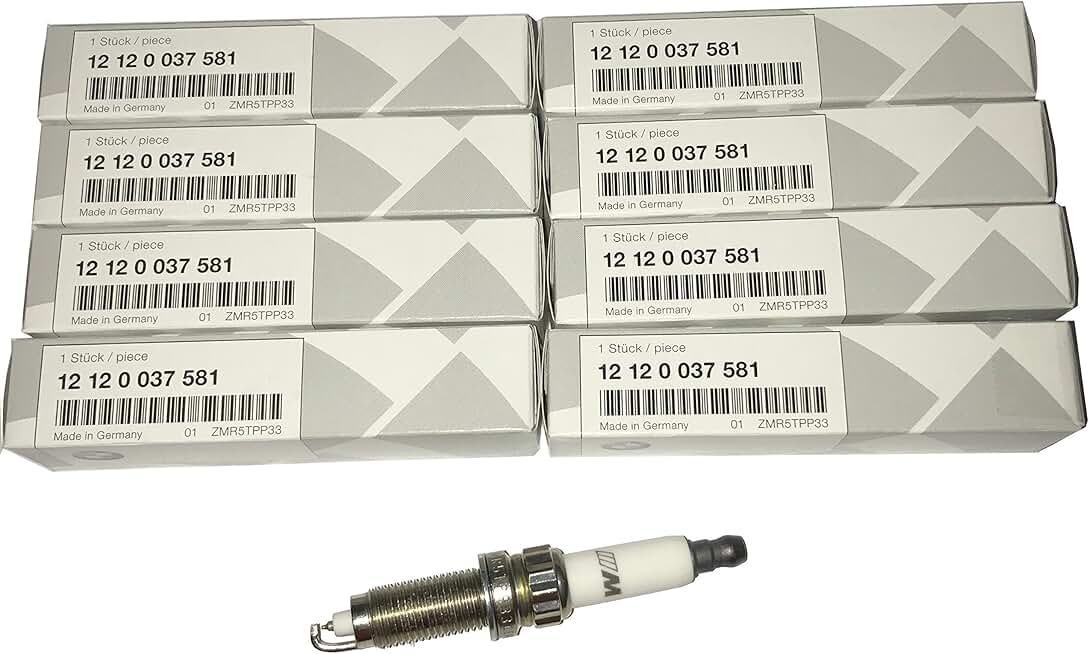
Genuine BMW High Power Spark Plug Set 8pcs for X5 X6 E70 E71 F15 F16
Genuine BMW

Mishimoto Ignition Coil Set — BMW M54/N52/N54/N55/S54 2002+
Mishimoto
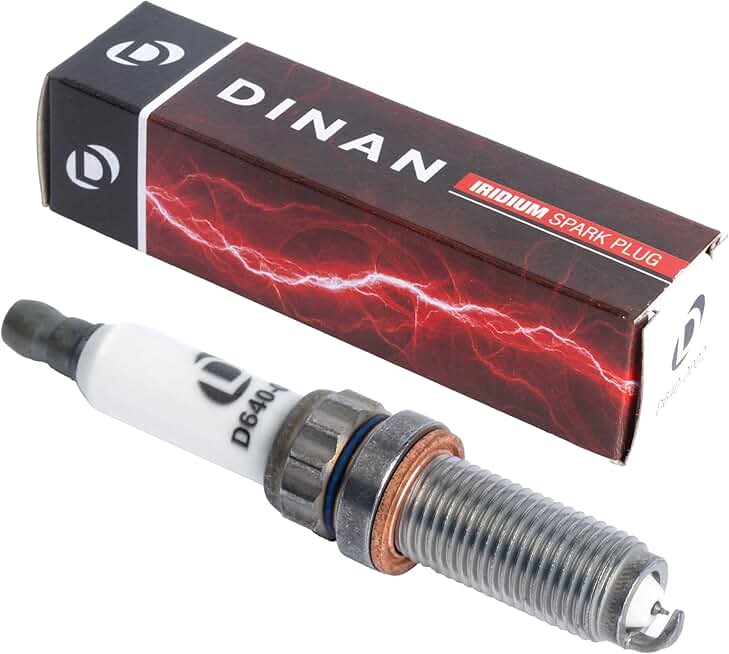
Dinan D640-0002 Iridium Spark Plug for BMW F15 X5
Dinan

NGK Iridium IX Spark Plugs LFR6AIX-11 — 6 Pack
NGK
More engine parts for the BMW F15
The BMW F15 engine lineup is one of the most interesting sets of powerplants BMW stuffed into a mid-size SUV during the 2010s. You get everything from a turbocharged inline-four diesel in European markets to the thundering S63 twin-turbo V8 in the X5 M, with a whole range of sixes and eights in between. If you own an F15 and you're trying to figure out what's actually worth doing to the engine - not just what sounds exciting in a forum thread at midnight - this is the page I wish had existed when I started researching this chassis. I'm going to cover every major engine variant, what each one does stock, where the weak points are, and exactly which upgrades are worth your money in the order you should actually buy them.
I daily a G20 330i with the B48, so I know the turbo four world pretty well from personal experience. But I've also spent enough time under F15s - and talking to people who've built them seriously - to give you a straight account of what this chassis responds to and what's just burning cash. The F15 ran from 2014 to 2018, and the aftermarket for it is still very much alive. BAVMODS is still actively listing dedicated F15 upgrade parts in 2026, which tells you the demand hasn't dried up. Let's get into it.
What the F15 X5 Engine Family Actually Looks Like
Before we talk upgrades, you need to know what you're working with. The F15 generation of the X5 spanned roughly five major engine configurations in the US market, and they are not all equal candidates for modification. Here's the honest breakdown.
xDrive35i - the N55 Inline Six
This is the volume seller. The N55B30 is a single-turbo 3.0-liter inline six that BMW rated at 300 horsepower and 300 lb-ft of torque in the F15. If you've spent any time on BMW forums you already know the N55 has a cult following, and for good reason. It's tunable, the single-scroll turbo responds well to exhaust and software changes, and the platform has enough aftermarket support that you could build a genuinely fast SUV out of one without doing anything exotic. The xDrive35i with the N55 is the sweet spot of the F15 lineup for modification work - the parts exist, the tuning maps are mature, and the results are predictable.
Stock, the N55 in the F15 is slightly detuned versus where the engine actually lives. BMW left meaningful room on the table, and the first 80 to 100 horsepower of gains are achievable without touching anything structural. The limiting factors as power climbs are the factory charge pipe (plastic, and it cracks under boost pressure), the stock intercooler (which heat soaks badly on sustained runs), and fueling above certain power thresholds. I'll walk through all of those in order.
xDrive50i - the N63 Twin-Turbo V8
The N63B44 is a 4.4-liter twin-turbo V8 making 445 horsepower and 480 lb-ft from the factory. It sounds incredible. It also has a reputation for running hot, burning oil, and giving owners expensive headaches if it isn't maintained perfectly. BMW issued multiple technical service bulletins and a customer care package for N63 engines across various models because the valley-mounted turbos create thermal management issues that show up as oil consumption and seal degradation over time.
If you own a well-maintained xDrive50i with documented oil consumption history that's normal, it's a tunable platform - but I'd strongly recommend addressing any N63 reliability concerns before adding power. Throwing tune at a motor that's already using a quart every 2,000 miles is not a great plan. That said, a healthy N63 with good maintenance history responds very well to flash tuning and exhaust work, and the gains are substantial.
xDrive35d - the M57 Diesel Six
In US markets the xDrive35d used the M57D30TU2, BMW's 3.0-liter diesel inline six. This engine makes a stock 265 horsepower and 425 lb-ft of torque, and the torque number is what matters. Diesel tuning is a different world from gasoline tuning, and I'm going to be honest with you: it's a smaller community, the tuning solutions are less mature in the US than in Europe, and the emissions complexity around diesel vehicles in 2026 makes any power modifications a conversation you need to have carefully. I'll address the diesel specifically in its own section, but most of this guide is going to focus on the gasoline engines because that's where the aftermarket is deepest.
X5 M - the S63 Twin-Turbo V8
The F85 X5 M used the S63B44T2, the high-output version of the N63 family that BMW's M division built for the M5 and M6 as well. Stock output is 567 horsepower and 553 lb-ft of torque. This engine is genuinely remarkable and the F85 X5 M is a seriously fast vehicle from the factory. The modification story on the S63 is real but expensive - you're already starting from a high baseline, so meaningful gains require meaningful money. If you have an F85, there are things worth doing, but the cost-per-horsepower equation is very different from the N55.
Why the BMW F15 Engine Responds So Well to Modification
BMW turbocharged engines from this era share a common trait that makes them great modification targets: they are software-limited well below their mechanical limits. The reason is simple. BMW builds one engine family and uses software calibration to differentiate trim levels and markets. The N55 that makes 300 horsepower in the xDrive35i is mechanically very similar to the version making 335 horsepower in the M235i of the same era. BMW uses the same block, the same turbocharger, the same basic architecture, and dials the output back with boost pressure targets and ignition timing in the ECU map.
When an aftermarket tuner writes a new ECU map, they're telling the engine to run closer to what the hardware can actually support. The result is real, repeatable horsepower that shows up on a dyno, not just a number on paper. This is fundamentally different from the old naturally-aspirated world where getting more power meant physically changing the engine's displacement or compression ratio. On the N55 in your F15, the first 60 to 80 horsepower of gains are mostly a software story - and software is the cheapest horsepower you can buy.
The caveat is that as you push power higher, supporting modifications become load-bearing. The stock intake charge pipe was designed for stock boost pressure. The stock intercooler was sized for stock heat load. The factory downpipe has a catalytic converter that creates backpressure the OEM tune was calibrated around. When you change the software and ask for more boost, those components start becoming the ceiling. Understanding the order of operations here is what separates a well-built F15 from one that pops a charge pipe on the highway and covers the engine bay in oil mist.
The OEM Baseline - Where Stock Actually Sits and What BMW Left Unsaid
Let me put some real numbers on the table because the stock power figures are almost certainly lower than what a well-prepped stock F15 actually makes at the wheels. BMW's horsepower ratings are SAE net crankshaft figures. By the time power travels through the automatic transmission (the ZF 8HP in most F15 variants - a genuinely excellent gearbox) and into the xDrive all-wheel-drive system, you're losing some percentage to drivetrain friction. Typical wheel dyno figures on a stock N55-powered F15 in good shape tend to land around 240 to 255 whp, which implies a fairly normal drivetrain loss for this type of vehicle.
The good news is the ZF 8HP is a robust transmission. It handles power well, it shifts fast, and it's been used in a wide range of BMW applications at stock and modified power levels. You're not looking at a transmission as an immediate weak point on a moderate-build F15. People run 450 whp through ZF 8HP units in other BMW applications with appropriate tuning of the transmission itself.
The other thing BMW didn't advertise is that the N55 in particular runs a fairly conservative ignition advance map in stock form to accommodate a wide range of fuel quality globally. When you're running 93 octane in the US and you have a tune optimized for that fuel, the timing advance picks up meaningfully, and that's a real contribution to the power gains you see on a dyno. This isn't magic. It's the tuner giving the engine what it was always capable of running on the fuel you're already buying.
The Right Order of Engine Upgrades on the F15
I want to spend real time on this because the order matters more than the individual parts. I've seen F15 owners bolt on a downpipe and a big intercooler before they've tuned the car, and the result is actually slower than stock in some cases because the engine management is now confused by airflow it wasn't calibrated for. Here's the sequence I'd follow, and I'll expand on each step in detail below.
- Step 1 - Tune the ECU first or plan the tune as the anchor of everything else. Every other hardware modification is either a prerequisite for tuning or a supporting mod that lets tuning work better. The tune is the center of gravity.
- Step 2 - Replace the charge pipe before or at the same time as tuning. The OEM plastic charge pipe is a failure waiting to happen at elevated boost. This is a cheap insurance purchase that costs you nothing in performance and saves you from an embarrassing breakdown.
- Step 3 - Add a quality intake for supporting airflow and, honestly, sound. On the N55 in particular, an intake gives modest real gains but it's meaningful as a support mod and the sound improvement is real.
- Step 4 - Downpipe, if you're going for serious power or if the exhaust note matters to you. The downpipe opens up the turbo and lets the software make more from the same boost. It also makes the exhaust sound significantly better on the N55. The tradeoffs are emissions-related, and I'll be direct about them.
- Step 5 - Intercooler or charge cooling upgrade, once you're pushing meaningful boost. If you're staying at Stage 1 tune levels, the stock intercooler is adequate. Once you start pulling harder at high power levels or in hot climates, thermal management becomes a real ceiling.
That sequence works for the N55 xDrive35i, which is what most F15 modification guides focus on. I'll address the N63 and S63 variations as we go.
ECU Tuning - the Highest Return Upgrade on Any F15 Engine
If you only do one thing to your F15, tune it. I mean this without any qualification. The gains-per-dollar math on a good ECU tune on the N55 or N63 is simply better than any other single modification you can make to the engine. We're talking about moving from ~250 whp to somewhere in the 310 to 340 whp range on a stock-hardware N55 with a quality Stage 1 flash tune, and that's before you change anything physical on the car. On the N63, the numbers shift but the principle is the same.
You can check out the ECU tuning section at BimmerTalk for a fuller breakdown of how flash tuning works technically, but here's what you need to know specifically for the F15 context.
Flash Tuning - bootmod3
bootmod3 runs about $595 to $699 for the license depending on when you buy and what platform-specific map options you select. It's an OBD-port flash solution, meaning you connect a device to your OBDII port and load the tune directly to the ECU without removing any hardware from the car. The BMW community's reception on bootmod3 is strong - forum users consistently praise the power-per-dollar ratio and the flexibility of the map options. You can run different maps for different fuel grades, and the platform has been refined over years of use on N55 and N63 applications.
The honest note about bootmod3 is that it is more sensitive to supporting modifications than a piggyback tune. If you're running bootmod3 and you have a boost leak somewhere in the intake tract, you'll feel it more than you would with a conservative stock tune. That's not a knock against bootmod3 - it's just the reality of a more aggressive calibration. Make sure your boost pipes are in good condition before flashing.
Flash Tuning - MHD
MHD comes in at roughly $249 to $599 depending on the license and platform bundle you need. It's the value leader in the BMW flash tuning space and its reputation on forums is genuinely excellent, especially for turbo inline-six applications. On the N55, MHD offers a very strong map at a lower price point than bootmod3, and the usability of the app interface is something a lot of owners specifically mention as a positive. If you're budget-conscious and you want a flash tune that delivers real results, MHD is what I'd look at first on the N55 F15. The forum community around MHD for BMW applications is large enough that support and troubleshooting information is easy to find, which matters a lot when you're doing this yourself.
Piggyback Tuning - Dinantronics Sport
Dinan's Dinantronics Sport runs about $399 to $499 from major BMW retailers. It's a piggyback device, meaning it intercepts and modifies signals between sensors and the ECU rather than reflashing the ECU itself. The BMW forum community generally considers it the safest, most conservative tuning option - it's marketed as warranty-friendly, it doesn't technically alter the factory software, and Dinan has a long history with BMW that gives it credibility at dealerships. The tradeoff is that forum users consistently describe it as less aggressive than a flash tune, with smaller peak gains.
I'd recommend the Dinantronics Sport specifically if your F15 is still under some form of extended warranty coverage you care about protecting, or if you're genuinely not comfortable with the idea of reflashing the ECU. For everyone else who wants maximum gains and is past the warranty window, the flash tune options give you more for your money. The Dinantronics is not a bad product - it's just a different philosophy. Dinan has been doing this for decades and the quality is real.
One thing worth knowing: on the F15 specifically, BMW enthusiast forum discussion around tuning consistently returns to the theme that map quality and tuning calibration are a bigger part of the modification experience than any single hardware part. That reflects the reality of these cars - they are software-defined performance vehicles to a degree that wasn't true of older naturally-aspirated BMWs.
Charge Pipe Replacement - the Cheap Insurance You Cannot Skip
The factory charge pipe on the N55-powered F15 is plastic, and it will fail. This is not a maybe, it's a when. At stock boost pressure it holds up fine for years. The moment you add any kind of tune that raises boost - and even some conservative tunes do push boost a bit - the thermal cycling and pressure spikes start working on the OEM plastic. The failure mode is usually a crack or a complete pipe separation, which dumps all your boost pressure into the engine bay and leaves you with a car that limps home or calls for a flatbed.
Replacing it before it fails costs you $250 to $350 for a VRSF unit or $220 to $330 for an FTP Motorsport unit. Both are aluminum replacements that eliminate the failure point entirely. Forum reception on both brands is very strong - VRSF in particular gets described as a "must-do" on tuned N55 BMWs. I'd agree with that assessment. The VRSF charge pipe is one of the highest-value modifications you can make on the F15 N55 because it protects the reliability of every other modification you make. An FTP unit is equally well regarded and in some builds people prefer the fitment of one over the other - it's worth checking current forum threads for F15-specific fitment feedback since minor revisions happen over time.
Install on the N55 charge pipe is accessible. You're removing the engine cover, getting the airbox out of the way, and unclipping the OEM pipe. Someone with basic mechanical confidence and a decent socket set can do this in an afternoon. If you're already planning to tune the car, buy the charge pipe at the same time and install them together - you're doing the same area of the engine anyway.
Intake Upgrades - Honest About What They Do and Don't Do
Let me be straight with you: an intake alone on the N55 F15 is not going to move the needle meaningfully on peak horsepower. This is one of the most commonly misunderstood modifications in the BMW community. The factory airbox on the N55 flows enough air to support significantly more power than stock. Dyno tests of intake-only N55 installations consistently show gains in the range of 5 to 15 horsepower at the wheels depending on the dyno, the conditions, and the specific intake. That's real but it's not transformative.
What a quality intake does do is two things worth having. First, it removes a small restriction from the intake tract that becomes more meaningful as you add boost with a tune. In a Stage 2 or Stage 3 build with elevated boost and an open exhaust, the intake is contributing more because the overall system is working harder. Second, it changes the sound. On a turbocharged BMW, a quality intake lets you hear the turbo spool and the induction noise much more clearly. If that matters to you - and for a lot of us it does - it's a legitimate reason to do it.
aFe Magnum FORCE
The aFe Magnum FORCE system for the F15 runs about $350 to $450. aFe is a well-established brand in the performance intake space and their BMW-specific fitments are generally good. Forum reception is positive but measured - enthusiasts consistently call it a solid supporting mod rather than a standalone power maker, which is exactly accurate. If you're building a tuned F15, the aFe intake is a reasonable choice in the "supporting mods" category. The filter quality is good and the cold air routing on their BMW kits is generally well-executed.
MST Performance
The MST intake comes in at about $300 to $420 and gets consistently positive forum reviews for fitment and sound. MST has become a popular choice specifically because they price competitively while delivering quality that BMW enthusiasts find acceptable. The reception on forums matches aFe - good for sound, good as a support mod, not a standalone horsepower solution. For the F15 specifically, MST fitment feedback is something to check in current threads because the F15 has a few different engine bay configurations and the intake routing can vary.
For more context on how intakes work generally on turbo BMW applications, the cold air intakes guide at BimmerTalk gets into filter types and housing design in more detail than I'll cover here.
Downpipe Upgrades - Power and the Tradeoffs You Need to Know
The downpipe is the section of exhaust that connects directly to the turbocharger outlet. On the N55 F15, it's a significant restriction in stock form because it contains a catalytic converter that creates backpressure the factory tune is calibrated around. Replacing it with an aftermarket unit - either catted (a high-flow cat) or catless (no cat at all) - opens up the turbo's ability to spool and reduces backpressure that limits peak power.
The gains from a downpipe on a tuned N55 are real and forum-documented. You're typically looking at an additional 15 to 30 horsepower at the wheels on top of a Stage 1 tune when you add a downpipe and retune to Stage 2. The power curve also improves - you get power earlier in the rev range because the turbo spools faster without the restriction. On a vehicle as heavy as the F15 X5, that torque availability lower in the rev range is something you feel clearly in normal driving, not just wide-open throttle runs.
VRSF offers both catted and catless downpipe options for the N55 F15 in the range of $350 to $700 depending on which configuration you choose. Forum reception on VRSF downpipes is strong. The brand is well-regarded in the N55 community specifically for quality and fitment, and the price point is better than European alternatives for most US buyers.
Now the honest part about downpipes: a catless downpipe on a public road vehicle is technically not legal for street use in the US. It will trigger a check engine light because the post-cat oxygen sensor will detect that the catalytic converter isn't there. You can delete the code with coding tools - and there's a good overview of what's possible on the coding and diagnostic tools page at BimmerTalk - but you're running a vehicle that won't pass emissions in states with testing requirements. A high-flow catted downpipe is the compromise: it removes most of the restriction while keeping a catalyst that the oxygen sensor is happy enough with. Gains are slightly less than catless but meaningful and the emissions situation is much more manageable.
If you're in California or another state with strict emissions enforcement, this is a real consideration and not one I'd brush past. Know your local situation before you pull the trigger on a catless unit.
Intercooler and Charge Cooling - When You Actually Need It
The factory intercooler on the N55 F15 is adequate for stock power levels and for mild Stage 1 tunes in moderate temperatures. Where it fails is heat soak on repeated high-power runs or sustained elevated power in hot weather. When charge air temperature rises, the ECU pulls timing and reduces boost to protect the engine, which means you're making less power than the tune calls for. You'll feel this on a second or third hard pull where the car feels noticeably slower than the first run.
If you're building a street car that occasionally sees some spirited driving, you can probably live with the stock intercooler at Stage 1 tune levels. If you're in a hot climate, if you drive aggressively regularly, or if you're running Stage 2 power or above, a proper intercooler upgrade is the right call. You can find a more technical breakdown of intercooler selection on the intercoolers guide at BimmerTalk.
Wagner Tuning is the name that comes up most consistently when F15 owners start discussing intercooler upgrades, with prices typically in the range of $700 to $1,200. The forum reception for Wagner is very good, specifically around repeat-pull consistency and performance in hot climates. These are the two metrics that actually matter for intercooler quality - not just peak power on a cool day, but maintained power across multiple pulls and in real-world temperatures. Wagner's core quality and their BMW-specific fitments have earned a strong reputation in the community.
The install on an F15 intercooler is more involved than a charge pipe or an intake. You're working in the front of the engine bay and depending on the specific configuration of your intercooler system, you may be dealing with charge pipes and connections that require some patience. Factor that into your planning - this is probably a day job in the driveway or a job for a shop if you're not fully comfortable with engine bay work.
N63 Specific Considerations for the xDrive50i
I want to give the N63 owners their own section because the modification approach is different enough from the N55 that you shouldn't apply N55 advice directly to your car.
The N63B44 in the xDrive50i is a twin-turbo V8 that makes 445 horsepower stock. It sounds like something out of a motorsport program and the performance is genuinely impressive. The modification ceiling is also genuinely high - tuned N63 builds can reach very significant power levels with the right combination of software and supporting hardware. But the N63's specific reliability concerns have to be addressed honestly before you start adding power.
The N63's turbos are mounted in the valley of the V8, which means they run very hot and thermal management is critical. BMW's customer care package for N63-equipped vehicles in the US covered oil consumption issues and related failures across multiple models. If you're buying a used F15 xDrive50i, the oil consumption history of that specific engine is something you need to document before you tune it. An N63 that's burning significant oil under stock conditions is telling you something about ring and seal health that you don't want to ignore when you're about to raise boost pressure.
A healthy N63 with good maintenance history responds well to the same basic tuning hierarchy as the N55: flash tune first, supporting mods as the build progresses. The power gains from tuning on the N63 are proportionally significant given the higher stock baseline. Charge pipe and intercooler support are relevant on the N63 as well, and the heat management consideration is if anything more important than on the N55 given the turbo placement.
Emissions complexity on the N63 in the F15 is also higher than on the N55, partly because the twin-scroll turbo system and the valley-mounted exhaust routing make aftermarket downpipe work more involved and more expensive. You're looking at a higher parts cost and a more complex install compared to the relatively straightforward N55 downpipe situation.
Diesel F15 - the xDrive35d and M57
The xDrive35d with the M57D30TU2 diesel is genuinely underrated in the US market. The diesel torque delivery - 425 lb-ft from the factory - makes it an effortless highway machine and a very strong tow vehicle. In European markets where diesel tuning has a decades-long history, the M57 is a very well-understood tuning platform with significant power potential.
In the US, the situation is more complicated. Diesel emissions compliance has become a genuinely significant legal issue following the attention around diesel manipulation scandals in the industry broadly. Any emissions-related modification to a diesel vehicle in the US carries real legal risk in a way that gasoline modifications often don't. I'm not going to tell you what to do with your car, but I'll tell you that the diesel tuning community in the US is smaller, the legal environment is more complex, and you need to research the current regulatory situation in your specific state carefully before doing anything that touches diesel emissions systems.
What I will say is that the M57, as a mechanical platform, responds to tuning in the same fundamental way as BMW's gasoline engines - the factory calibration is conservative and there is power available through software. If you're in a jurisdiction and situation where diesel tuning is straightforward, the gains are real and can be significant given the torque-focused nature of diesel power delivery. But this is one area where I'd tell you to do your own current-situation research rather than taking my word for it.
F85 X5 M - the S63 and What's Worth Doing
The F85 X5 M is a different animal. The S63B44T2 makes 567 horsepower and 553 lb-ft of torque from the factory. BMW's M division built this engine with significantly more headroom than the production N63, and the hardware is correspondingly more robust. The high-pressure fuel system, the forged internals, the larger turbochargers - the S63 was designed to be pushed harder than the standard N63.
The modification hierarchy on the S63 F85 is the same as the other engines in principle - software first, supporting hardware to enable further development - but the economics are different. You're starting from a very high stock baseline, so the percentage gain from a Stage 1 tune feels proportionally smaller than on an N55 even though the absolute horsepower numbers are large. A Stage 1 tune on the S63 is moving you from 567 hp to somewhere in the 620 to 650 hp range depending on the tune and the dyno. That's real, but the car was already doing 567 hp.
Where the S63 F85 build gets interesting is in Stage 2 and beyond, where the supporting modifications unlock the turbocharger's actual ceiling and you start seeing genuinely large numbers. Purpose-built S63 builds in other platforms (M5, M6) have demonstrated that the architecture can support 750 to 800+ horsepower with the right combination of fueling, cooling, and software. In an F85 X5 M, getting there requires significant investment and some transmission work to ensure the ZF 8HP lives at those power levels.
For the daily driver F85 owner who wants a bit more without a full build, a flash tune and charge pipe replacement is where I'd start. The charge pipe concern applies to the S63 as well as the N55 - the factory pipes are not designed for elevated boost indefinitely. A good flash tune from a reputable provider who has calibrated specifically for the S63 platform will give you real gains and improved throttle response, and the factory-level reliability picture doesn't change dramatically at Stage 1 on a well-maintained engine.
Common Mistakes on F15 Engine Builds
I see the same mistakes come up repeatedly when people start modifying their F15 engines, and I'd rather save you the expensive lesson.
Tuning without addressing the charge pipe first
I've covered this but it bears repeating. Flashing the ECU to run higher boost pressure through a factory plastic charge pipe is asking for a failure. The pipe will crack eventually - probably on the highway, probably at the worst possible moment. The charge pipe costs $250 to $350. A charge pipe failure that drops your boost pressure means you're either limping home or getting towed. Do the charge pipe first.
Buying a downpipe before having a tune ready
A downpipe on an untuned car doesn't do what most people expect. The factory ECU is calibrated for the backpressure characteristics of the OEM exhaust. When you remove the restriction without updating the software, you can actually get inconsistent performance because the ECU's fueling and boost targets are built around a different system. You want a tune and a downpipe installed together, or the tune installed with the intent of doing the downpipe shortly after. The shop or tuner you're working with should be calibrating the map with your hardware configuration in mind.
Skipping the intercooler on hot-climate or track builds
If you live in Texas and you're running a Stage 2 tune, you need to take the intercooler seriously. Heat soak on the F15 at elevated power levels is real, and the symptom - the car pulling timing and making less power on the second and third run - is frustrating when you've spent money on a tune. The intercooler upgrade is one of those modifications that doesn't show up dramatically on a single-run dyno sheet in cool weather but makes a massive real-world difference in how consistent your car feels when you're driving it hard in summer.
Ignoring oil condition and consumption on the N63
The N63 runs hot. It consumes oil in a way the N55 doesn't. If you own an xDrive50i, check your oil level regularly - more regularly than the service interval suggests - and track whether consumption is changing. Adding power to an N63 that's developing seal or ring issues will accelerate the deterioration. A compression test and leakdown test on a used N63 F15 before you start spending money on upgrades is time very well spent.
Cheap map files from unknown sources
This one genuinely worries me. There's a market in the BMW world for very cheap tune files from providers without established reputations or documented calibration work. On a naturally-aspirated engine with limited tuning headroom this might produce minimal harm. On a turbocharged engine where the tune is controlling boost pressure, ignition timing, and fueling, a bad map can destroy a motor. Stick with the established names. MHD, bootmod3, and Dinan have track records in this community. The price difference between a reputable tune and a cheap file is not worth the risk on a motor that costs several thousand dollars to rebuild.
Budget Tiers - What You Can Do at $500, $1,500, and $3,000-plus
$500 budget
At this level on an N55 F15, your best use of $500 is a flash tune. MHD at the lower end of its pricing gives you the highest impact modification you can make to the engine, and you'll have a little left for the charge pipe depending on exactly what the current prices are. If I had to pick one thing at $500 total, the tune wins over everything else. The horsepower-per-dollar return is unmatched.
If your car is already tuned and you have $500 to spend on hardware, the charge pipe plus an intake is achievable at that budget level and makes sense as a package. You're protecting the boost system and improving the supporting airflow at the same time.
$1,500 budget
This is where a complete Stage 1 to Stage 2 build starts to become possible on the N55 F15. Flash tune plus charge pipe plus intake gets you a complete Stage 1 package with room left to start thinking about a downpipe. Alternatively, a flash tune plus charge pipe plus catted downpipe is a very strong Stage 2 package that will put your F15 in a significantly different performance bracket than stock. The catted VRSF downpipe and a bootmod3 or MHD license puts you in the right ballpark at this budget level.
On an N63 F15, $1,500 is enough for a tune and charge pipe work, which is the right starting point given the N63's complexity.
$3,000-plus budget
At $3,000 or above you're building a serious F15. On the N55, this budget can cover a flash tune, charge pipe, intake, catted or catless downpipe, and a quality intercooler from Wagner Tuning. That combination represents a fully developed Stage 2 build with proper thermal management, and the result on the dyno is a car making somewhere in the range of 380 to 420 whp depending on the specific configuration, tune quality, and hardware choices. That is genuinely fast in a vehicle the size of the F15 X5.
On the S63 F85, $3,000 gets you into a Stage 1 tune with supporting mods. The hardware costs are higher on the V8, and the S63-specific parts command a premium over N55 equivalents.
Daily Driver vs Track vs Long-Distance Builds - My Actual Picks by Use Case
The daily driver F15 - my picks
For someone who drives their F15 every day and wants noticeably better performance without creating reliability headaches, I'd build it like this. Start with a flash tune via MHD on the N55, for the best value. Add a VRSF or FTP charge pipe at the same time as protection. If you want better sound and you're planning to tune beyond Stage 1, add an MST or aFe intake as the next step. That package at Stage 1 tune levels gives you a car that feels substantially more alive than stock, pulls harder in every gear, and is not meaningfully less reliable than a stock F15 as long as the basic maintenance is current.
For the daily driver I'd stay with a catted downpipe option rather than catless, or skip the downpipe entirely at Stage 1 and enjoy the tune gains without the emissions conversation. The Dinantronics Sport is the pick if you have remaining warranty coverage you're protecting - the conservatism is appropriate in that context.
The weekend and road trip build
For an F15 that sees enthusiastic driving on weekends and does occasional long highway runs, the full Stage 2 package makes sense. Flash tune plus charge pipe plus intake plus catted downpipe is the core. Add the Wagner Tuning intercooler for consistent performance across repeated pulls and in summer temperatures. This is a capable, reliable build that transforms the driving character of the F15 without requiring specialized maintenance or creating constant reliability concerns.
On this kind of build I'd also spend some time on the brake pad options page at BimmerTalk because an F15 that's making 380 whp deserves better brake pads than the stock economy pads that tend to fade under sustained use. The F15 is a heavy vehicle and making it faster without addressing the braking system is a decision you'll reconsider the first time the car doesn't stop as confidently as you expected.
The maximum build
If you're building the fastest F15 possible, the picture changes significantly. You're looking at a Stage 3 or Port Injection build on the N55, potentially upgraded injectors, possibly a hybrid turbocharger, and all the supporting hardware. This territory is beyond the scope of a general guide and requires working with a tuner who has specific N55 F15 experience and can calibrate for your exact hardware. The gains are real - people have built 500+ whp N55 BMWs in other chassis - but the complexity, cost, and maintenance requirements scale up accordingly.
For the X5 M F85 owner going for maximum power, the S63 build requires working with a specialist. The parts are more expensive, the calibration is more complex, and the results at the top end are dramatic. An F85 X5 M at 700+ horsepower is something genuinely remarkable, but it's a project that requires a shop with S63-specific experience and a parts budget well north of $10,000.
Installing F15 Engine Upgrades - What You Need to Know Before You Start
The F15 X5 is a large vehicle with a reasonably accessible engine bay compared to some of BMW's more cramped configurations. The N55 in particular is a pleasant engine to work around once you pull the engine cover. The charge pipe and intake work is accessible to someone with solid DIY mechanical experience. The downpipe is more involved - you're under the car, dealing with heat-seized exhaust hardware, and working with flange connections that may need persuasion after years of heat cycling.
A few practical notes for F15 engine work. First, the engine cover on the N55 F15 uses a combination of clip connections and a single fastener that's easy to miss if you haven't read through an install guide first. Don't force it. Second, the vacuum and boost hose connections in this engine bay age and can become brittle, especially on higher-mileage examples. If you're going into this area anyway, it's worth a quick inspection of the small hoses in the intake system. Third, the F15 sits high on its air suspension or springs, which actually makes undercar work easier than on a low-slung coupe - you can get under the vehicle with basic ramps in most cases.
For the flash tune, the install process is entirely software-based and requires no physical engine work at all. You connect a cable or device to the OBDII port (under the dash, driver's side), follow the instructions from MHD, bootmod3, or whichever platform you're using, and the tune is loaded remotely. Read the platform's instructions completely before you start and make sure your battery is in good condition - a tune interrupted by a low-voltage event is not a pleasant situation.
If you're doing a combination of modifications and you're not fully confident in your mechanical skills, finding a shop that works specifically on BMWs is worth the labor cost for the more complex parts of the install. A BMW specialist who has done charge pipes and downpipes on N55 platforms before will do the job faster and with less risk of stripped exhaust hardware than a general shop encountering the N55 for the first time. You can use the chassis and parts lookup tools at BimmerTalk's chassis tools section to verify compatibility before ordering anything.
Frequently Asked Questions About F15 Engine Upgrades
How much horsepower can you get out of the N55 F15?
At Stage 1 tune only (no hardware changes), you're typically looking at gains of 60 to 90 whp over stock, putting a well-tuned N55 F15 in the range of 310 to 340 whp. Add a catted downpipe and intake for Stage 2 and you're looking at 360 to 400 whp depending on the specific tune and hardware. Beyond that, Stage 3 builds with upgraded fueling can push further, but you're into increasingly complex territory. A street Stage 2 build is the sweet spot for most F15 owners in terms of daily usability versus performance gain.
Will tuning void my warranty?
Technically, a flash tune changes the ECU calibration and BMW can detect it during a dealer service visit. Under Magnuson-Moss Warranty Act rules in the US, a dealer has to prove that the modification caused the specific failure being claimed before they can deny coverage - they can't blanket deny everything because you have a tune. In practice, engine-related warranty claims on a tuned vehicle are often contested by dealers. If your warranty coverage is a priority, the Dinantronics Sport piggyback is the conservative choice because it doesn't modify the factory ECU software directly. You can also reflash back to stock before dealer visits on most flash tune platforms, though that's not a guaranteed protection.
Is the N55 or N63 more tunable?
The N55 is the more predictable and less expensive tuning platform. It has more aftermarket support, more documented builds, and a better reputation for long-term reliability at modified power levels. The N63 has higher peak potential given its larger displacement and twin-turbo setup, but the N63's thermal management challenges and oil consumption tendencies make it a more demanding platform to build on. If you're choosing between an xDrive35i and an xDrive50i specifically for modification potential, the N55 xDrive35i is the more accessible choice. If you already have an N63 and it's healthy, absolutely tune it - just manage the thermal side carefully.
Can I tune the F15 myself or do I need a shop?
The flash tune process itself - loading the software - is something most people can do themselves. Both MHD and bootmod3 are designed for end users, the interfaces are reasonably clear, and there's substantial documentation and forum support available. Where a shop adds value is in the hardware installation, in the map selection if you're doing something non-standard, and in dyno tuning if you're building beyond Stage 2. For Stage 1 and Stage 2 builds using established maps, self-tuning via MHD or bootmod3 is genuinely viable for a mechanically literate owner.
What's the best first mod for an F15 on a tight budget?
The tune. Not the intake, not the wheels, not an exhaust tip. The MHD flash tune at the lower end of its pricing is the single highest-impact modification you can make to the N55 F15 and the cost-per-horsepower math is better than anything else in the BMW aftermarket. After the tune is in and you've driven the car for a few weeks to get a feel for the new calibration, then start thinking about what hardware to add. Everything else supports the tune. The tune is the foundation.
Does the F15 need cooling upgrades before tuning?
At Stage 1 power levels on the N55 in typical driving conditions, the stock cooling system is adequate. You don't need to do a cooling upgrade before a Stage 1 tune. The caveat is hot climates and aggressive driving - if you're in a place where ambient temperatures are regularly above 90 degrees Fahrenheit and you drive hard, the intercooler upgrade moves up the priority list sooner. For a temperate climate daily driver at Stage 1, the stock cooling holds up fine. Upgrade the charge cooling system when you step up to Stage 2 or when you notice the car pulling timing and losing power on repeat runs.
Are there any F15-specific fitment issues with aftermarket parts?
A few things to watch. First, confirm your exact engine code when ordering because the F15 X5 was sold with different engine variants across different years and markets, and what fits an N55 won't fit an N63. Second, the F15's suspension height (especially on cars with the optional air suspension) can affect undercar clearance for downpipe and exhaust work - check forum-specific fitment threads for your exact configuration. Third, some charge pipe kits have minor fitment variations between F15 model years, so checking the vendor's fitment guide for your specific year is worth the two minutes. The oil capacity and specs lookup tools at BimmerTalk can help you confirm basic specs for your specific F15 variant while you're doing your research.
What's the transmission situation on modified F15 builds?
The ZF 8HP automatic in the F15 is a robust unit that handles moderate power increases well in stock form. At Stage 1 and Stage 2 power levels on the N55, most owners don't need to do anything to the transmission. As builds progress toward 400+ whp and beyond, transmission tuning becomes relevant - adjusting shift pressure and torque converter lockup behavior to handle the increased load. This is typically handled through software (xHP Flashtool is a common name in the BMW automatic transmission tuning community) rather than hardware replacement at moderate power levels. Extreme builds above 500 whp start to require harder parts.
Should I do coilovers or springs along with the engine work?
Engine modifications and suspension modifications are separate projects and don't need to happen in the same sequence. That said, a faster F15 is a better car if the chassis keeps up with the power. The coilovers guide at BimmerTalk and the lowering springs guide both cover the F15 X5 in context of the broader BMW suspension world. If you're building the car seriously, suspension is the next chapter after you've sorted the powertrain. A lower, stiffer F15 with a tuned N55 is a genuinely rewarding vehicle to drive.
My Honest Final Take on F15 Engine Modifications
The F15 X5 is a great modification target if you approach it with the right hierarchy. The N55-powered xDrive35i is the most accessible and well-documented platform in the lineup - the parts are mature, the tuning maps are proven, and the gains at Stage 1 and Stage 2 are predictable and substantial. The N63 xDrive50i is a higher-potential but more demanding platform that rewards careful maintenance and a thoughtful build sequence. The diesel is a niche situation with a more complex regulatory environment in the US. The S63 F85 is an expensive beast that's already fast and benefits from upgrades but at a different cost-per-gain ratio than the N55.
If I were building an F15 today, I'd start with a MHD flash tune and a VRSF charge pipe as a combined Stage 1 package, drive it for a few months to appreciate what the tune does to the character of the car, then decide whether the Stage 2 path (downpipe plus retune) fits my driving style and situation. That's not a hedge - it's genuinely the order that makes sense because the tune is so transformative by itself that adding hardware before you understand how the car behaves tuned can lead to over-spending on modifications that aren't the bottleneck yet.
The aftermarket is still firmly behind the F15 chassis. BAVMODS is actively selling F15-specific upgrade parts, forum threads on F15 builds are active, and the established brands in BMW tuning - VRSF, FTP, aFe, Wagner, MHD, bootmod3, Dinan - all have F15-specific options in their catalogs. This is a platform with real aftermarket depth, not a chassis you're improvising around with parts that sort-of fit.
The F15 X5 was never meant to be just a luxury grocery-getter, even if most of them ended up living that life. The engineering is there. The engines are there. The aftermarket is there. Build it properly and it's a genuinely impressive vehicle. If you want to explore the broader modifications landscape beyond the engine, the full BMW models section at BimmerTalk covers the F15 in context of the full X5 generation history, and the articles section has buyer's guides and technical deep dives across the BMW platform.

Kamil Siegień
Founder of BimmerTalk. Five years wrenching on BMWs, currently dailying a G20 330i with the B48 turbo four. Spent a year doing marketing for BMW and MINI before going independent. I write everything on this site myself.
More about the site
BMW Spark Plugs and Ignition - Why This Job Matters More Than You Think
Engine spark plugs and ignition components are the kind of maintenance item that slides off most people's radar until something goes wrong. Your BMW runs fine, then one morning you get a P0301 misfire code, a rough idle that wasn't there last week, or a hesitation when you step on the throttle on the highway ramp. Suddenly you're googling coil packs at 11 PM wondering if you can still make it to work tomorrow. I've been there. The ignition system on BMW engines - whether you're talking about the naturally aspirated M54 in your E46, the twin-turbo N54 in an E90 335i, or the B48 four-cylinder in a G20 330i like mine - is genuinely one of the highest-leverage maintenance points on the whole car. Get it right and the engine pulls cleanly, idles smooth, and rewards you with the throttle response you paid for. Get it wrong, and you're burning rich, fouling plugs, stressing catalysts, and potentially doing real combustion damage on forced-induction engines where heat management is already a tight game.
This page covers everything: what the ignition system actually does and why BMW is particular about it, how to pick the right spark plugs and coils for your specific engine, what brands are worth buying, what to avoid, real installation notes by engine family, common DIY mistakes, and my actual picks by use case. I'm going to go through this by engine generation because the right answer for an M52 is not the right answer for an S58, and I'm tired of seeing generic advice that treats all BMW engines the same.
How the BMW Ignition System Works - the Short Version You Actually Need
Every BMW made in the last thirty-plus years uses a coil-on-plug ignition system. There's no distributor, no plug wires in the traditional sense. Each cylinder has its own ignition coil mounted directly on top of the spark plug, usually with a rubber boot connecting them. The DME (BMW's engine management computer) fires each coil independently in sequence. This setup gives the DME precise control over ignition timing on a per-cylinder basis, which matters enormously for modern engines that are running feedback from knock sensors, cam position sensors, and oxygen sensors all at once.
The spark plug's job is simple in concept: provide a controlled gap across which the coil's high-voltage discharge can arc, igniting the air-fuel mixture. But the details matter a lot. Heat range determines how hot the plug's tip runs during operation - too cold and carbon fouls the electrode, too hot and you risk pre-ignition. Electrode material affects how long the plug holds its gap before wearing out and how cleanly it fires. Copper electrodes are cheap and conduct heat well but wear fast. Platinum and iridium electrodes are much harder and hold gap longer. On modern BMW engines with precise air-fuel targets and tight tolerances, electrode wear translates directly into misfires and combustion inefficiency, so paying for the better electrode material is not optional.
The ignition coil's job is to step up the 12V battery voltage to somewhere between 20,000 and 45,000 volts, depending on the engine, to fire the plug. Coil quality determines how reliably that discharge happens, especially under load, at high RPM, and when the coil is hot. BMW engines run their coils hard. On forced-induction engines especially, coil primary voltages, dwell times, and thermal cycling are aggressive. A coil that works fine in a low-stress application will fail prematurely in an N54 running 18 psi.
Service Intervals by Engine - What BMW Says vs What Reality Looks Like
BMW's official service intervals for spark plugs vary by engine. Most naturally aspirated engines specify 60,000 miles for iridium plugs. Turbocharged engines are often quoted at 45,000 to 60,000 miles in stock form. In my experience, and in the experience of most BMW owners who actually track their cars or run tunes, those numbers are optimistic.
Here's what I actually follow and recommend:
- M52, M54, M56 (E36, E46, E39, Z3, Z4 2.5/3.0) - 60k miles on iridium plugs is reasonable if the engine is healthy. On high-mileage examples burning any oil, drop it to 40k. Replace coils as a set if any one fails past 80k miles.
- N52, N53 (E90/E92/E93 328i, E60 528i, E89 Z4 sDrive28i) - 60k miles stock. The N52 is a relatively mild engine in terms of ignition stress. N53 direct-injection owners need to watch for carbon buildup affecting combustion, which accelerates plug fouling.
- N54 (E90/E92/E93 335i, E60/F10 535i, E89 Z4 35i, F12 640i) - I would not go past 30,000 miles on plugs in stock form. With a tune, 20k miles or less. These engines are hard on plugs. The gap opens up faster than BMW's literature admits, and a worn plug on a twin-turbo engine running 10+ psi makes the coils work harder, which accelerates coil failure. It's a cascade.
- N55 (F30 335i, F10 535i, F06/F12/F13 640i, F15/F16 X5/X6 35i) - Same logic as the N54. 30k miles stock, 20k or less with a tune.
- B46, B48 (G20 330i, G30 530i, G01/G02 X3/X4, F44, F40) - BMW specifies 60k miles, and the B48 is a cleaner, more refined engine than the N-series turbos. I'm at 45k miles on my G20 and the plugs still look good, but I'm planning to change them at 50k to be safe. No tune on my car - if you're running an MHD stage 1 or equivalent, I'd drop to 30k.
- S55 (F80 M3, F82/F83 M4, F87 M2 Competition) - 20k miles on track cars, 30k on street-only examples. These engines are built tight and the combustion events are aggressive. Pull a plug annually if you track the car and read it - plug condition is one of your best windows into combustion health.
- S58 (G80 M3, G82/G83 M4, G87 M2) - Same interval guidance as S55. OEM-spec plugs only. This engine does not forgive ignition shortcuts.
- S62, S54 (E39 M5 with S62 V8, E46 M3 with S54 inline-six) - 30k miles on both. These are high-revving naturally aspirated engines with tight combustion chambers. The S54 runs over 8,000 RPM in stock form - plug condition matters at that end of the rev range.
Naturally Aspirated Engines - M52, M54, M56 - the Straightforward Case
The M52 and M54 family - the straight-six that powered E36, E46, E39, Z3, and early Z4 - is probably the easiest starting point. These are simple, well-understood engines. The ignition system is reliable by BMW standards, with six coil-on-plug units sitting in a straight row on top of the valve cover. Access is excellent. If you've never done a BMW ignition service before, an E46 330i with the M54 is the car to start on.
For spark plugs, NGK BKR6EIX iridium plugs are a proven choice that BMW owners have been running on M52 and M54 engines for years. The OEM-spec Bosch plugs also work fine - BMW used Bosch as a supplier on many of these applications and the quality is solid. What I'd avoid is running copper plugs in these engines as a long-term solution. Yes, copper plugs work, but you'll be back in there in 20k miles. Buy the iridium plugs once and do it right.
The plug gap on M52 and M54 engines is typically 0.028 to 0.031 inches (0.7 to 0.8mm). Check your specific engine's spec - don't assume. Never regap iridium or platinum plugs. The electrode is laser-welded and thin. Bending it to adjust gap damages the electrode tip. If the plug you bought doesn't come pre-gapped for your application, you need a different plug, not your feeler gauge.
For ignition coils on M52 and M54, Bremi and Beru are the two aftermarket brands I trust. Beru actually manufactured coils for BMW as an OEM supplier on various applications - they know these engines. Genuine BMW coils are also an option if you're not budget-constrained. What I'd skip entirely is the generic six-coil sets you find on Amazon for $45 total. I've seen those fail within 15k miles on engines that should run coils 80k-plus with no drama. You'll spend more money and time doing the job twice.
One thing to know about the M54 specifically: if you're pulling coils on a higher-mileage engine, inspect the COP (coil-on-plug) boots carefully. These rubber boots sit between the coil body and the plug well. They crack and deteriorate over time, especially on cars that've seen hard use or sat in heat. A cracked boot creates a path to ground for the coil's discharge, and you'll get an intermittent misfire that seems like a bad coil but is actually just a $4 boot. Replace the boots any time you pull the coils past 80k miles.
N52 and N53 Ignition Service - a Different Animal Than the M54
The N52 (E90 328i, E60 528i, Z4 sDrive30i) and N53 (328i/335i/530i in certain markets) represent BMW's transition toward variable valve timing on both camshafts (Valvetronic on the N52) and, in the N53's case, stratified direct injection. These engines are more complex and the ignition system needs to work in tighter coordination with the rest of the engine management.
For the N52, plug service is straightforward - the cylinder head is still accessible without major disassembly. The N52 uses a six-cylinder layout like the M54, coil-on-plug setup, same basic access. NGK iridium plugs are again the go-to. BMW OEM part numbers for the N52 plugs are commonly sourced from NGK as a supplier, so you're often buying the same plug with different labeling at a premium. Pull the BMW OEM part number for your specific N52 displacement and year, cross-reference to NGK's catalog, and save yourself some money.
The N53 is trickier. It's a direct-injection engine with lean-burn stratified combustion modes, which means it's very sensitive to plug condition. The stratified combustion modes place the fuel charge close to the spark plug tip - if the plug isn't firing cleanly at the right voltage, you get misfires in conditions you wouldn't expect them. N53 owners in the UK and European markets (the N53 was primarily a Euro market engine) have reported more plug-related issues than N52 owners. I'd shorten the interval to 40k miles on the N53 and stay OEM-spec on plug type and gap.
The N54 - Where Ignition Gets Serious
If you own an E90/E92/E93 335i, E60 535i, E89 Z4 35i, F10 535i, or F12/F13 640i with the N54 twin-turbo inline-six, you already know this engine has a complicated relationship with its ignition system. The N54 is an incredible engine - makes big power, responds well to tuning, has a strong community around it - but it is notorious for eating coils and fouling plugs, especially when pushed.
The most important spec to know for the N54 is plug gap: 0.028 inches (0.7mm). BMW's service documentation specifies this, and it's tighter than what you'd run on a naturally aspirated engine. The reason is combustion pressure. Under boost, the breakdown voltage required to fire a spark across the gap increases. If your gap is too wide - say, 0.035 inches because you grabbed the wrong plugs or the electrode has worn - the coil has to work harder to fire that spark. On the N54, coils are already running hard. A worn plug gap is one of the main causes of coil failures on this engine, and coil failures cascade: one bad coil lets a cylinder misfire, unburned fuel dumps into the exhaust, the catalyst takes heat damage, and the DME may log multiple fault codes.
The correct plug for the N54 is NGK ILZKBR8B8G (part number 97506). This is a laser-iridium plug pre-gapped at 0.028 inches. It's what BMW specifies and what the N54 community has settled on as the definitive choice. There is really no debate here. You can buy them for around $15 to $18 per plug depending on where you source them - call it $90 to $110 for a full set of six. Do not try to save $30 by buying a different plug or a Chinese iridium plug of unknown spec. The N54 will find the problem and show you in misfire codes.
For coils on the N54, I've had good results with genuine BMW coils and Bremi coils. Delphi coils have also been used by N54 owners with decent results. What has failed on multiple cars I've seen: the very cheap coil sets that flood the market with no brand marking or names you've never heard of. The N54 runs roughly 22 psi of boost in stock form on some variants, the combustion temperatures are high, and cheap coil internals fail under those conditions. Budget $25 to $40 per coil for a quality unit. Six coils means $150 to $240 for the set, which I know sounds like a lot, but you're going to do this job once instead of twice.
If you're running a JB4, MHD stage 2, or any map that increases boost, drop your plug change interval to 20,000 miles or less. Some tuned N54 owners running E30 or higher ethanol blends are pulling plugs at 10k miles. That sounds extreme until you see what a fouled plug looks like on a tuned N54 - black, carbon-coated electrode that's been struggling to fire clean for the last 5,000 miles. The plugs are cheap compared to the cost of replacing a coil you burned up because the plug was making it work too hard.
N55 Ignition Service - Simpler But Same Principles
The N55 single-turbo inline-six (F30 335i, F10 535i, F15 X5 35i, F06 640i and more) replaced the N54 and simplified the twin-turbo architecture to a single twin-scroll unit. It's a cleaner engine in some ways, more refined, and the ignition demands are slightly less aggressive than the N54 because it runs a bit less cylinder pressure in stock form. But the same principles apply.
Plug spec for the N55 is the same NGK iridium plug - NGK ILZKBR8B8G - at the same 0.028-inch gap. Interval recommendation is the same: 30k miles stock, 20k with a tune. The N55 coils are different from the N54 units physically, but the quality guidance is the same: buy Bremi, BMW OEM, or Bosch, skip the no-name sets.
One thing the N55 has that the N54 doesn't is Valvetronic (variable valve lift). This doesn't directly affect plug or coil selection, but it does mean the engine management is doing more complex things with air delivery, and clean, consistent ignition matters for the closed-loop feedback to work properly. A marginal plug that causes intermittent misfires will confuse the DME more on an N55 with Valvetronic than on a simpler engine. Stay on top of the interval.
B46 and B48 - the Modern Turbo Four in F and G Chassis
My daily is a G20 330i with the B48 turbocharged four-cylinder, so I have direct experience here. The B48 is a genuinely good engine - torquey, smooth for a four-cylinder, very responsive to mild tunes - and it's actually less demanding on the ignition system than the N54 or N55 in stock form. BMW's stated interval is 60k miles for the iridium plugs, and unlike with the N-series, I actually believe that number is achievable on an untuned car.
The B48 uses four coils and four plugs, obviously. Access is decent but not quite as open as the M54 - there's more going on in the engine bay, and depending on chassis (G20 vs F30 vs G01 X3), some plastic trim comes off first. But it's still a job you can do in under an hour with basic tools.
Plug specs for the B48: BMW uses NGK iridium plugs as OE supplier on many B48 applications, and you can cross-reference the BMW OEM part number to find the NGK equivalent and save money. The plug gap is typically 0.028 inches - same as the turbo sixes. Heat range is engine-specific; pull your exact part number from the BMW parts catalog or a reputable fitment guide before ordering.
If you're running an MHD stage 1 or similar map on the B48, I'd move to a 30k-mile interval. Stage 2 or higher, 20k miles. The B48 responds very well to tuning - MHD stage 1 on pump gas typically adds meaningful torque and sharpens throttle response - but boost is up and combustion temps rise with it.
For coils on the B48, BMW uses updated coil designs compared to the N-series, and coil failure is much less common on stock B46/B48 engines than it was on the N54. I wouldn't preemptively replace coils on a B48 under 80k miles unless you have a fault code pointing at a specific cylinder. If one fails, replace it with an OEM BMW or Bremi unit.
S55, S58, S54, S62 - Performance Engine Ignition Specifics
High-performance BMW engines deserve specific attention because the stakes are higher. These are expensive engines to repair, they run at the edge of their design envelope, and cutting corners on ignition components is a false economy.
S54 in the E46 M3
The S54 is a naturally aspirated 3.2-liter inline-six that revs to over 8,000 RPM. It's a masterpiece of N/A engine design and one of my favorite BMW engines ever made. Plug and coil access is more involved than the M54 because the intake manifold and various other components crowd the area, but it's still a DIY job with patience and the right tools.
Use OEM-spec NGK iridium plugs for the S54. Check the BMW parts catalog for the specific part number - the S54 has different requirements from the M54 despite being related architecturally. The S54 is sensitive to plug condition at high RPM; a marginal plug that seems to fire fine at idle may misfire at 7,500 RPM under load. Change plugs every 30k miles and inspect them annually if the car sees any track time.
The COP boots on the S54 are known to deteriorate. This is one of the most common misfire sources on high-mileage E46 M3s that isn't actually a coil or plug problem. Before you buy a set of coils, inspect the boots. They're cheap to replace and can save you a misdiagnosis.
S62 in the E39 M5
The S62 is a 4.9-liter V8 with individual throttle bodies, VANOS on both banks, and eight separate coil-on-plug units. This engine is special, and ignition service takes more time because you have eight cylinders and the V8 packaging means access on the rear bank is tighter. Budget a full afternoon for a first-timer doing plugs and coils on the S62.
NGK iridium plugs, OEM-spec, every 30k miles. Coils: genuine BMW or Bremi. On a V8 with individual throttle bodies, a single-cylinder misfire is very obvious and affects throttle response noticeably - the engine is too pure for the DME to mask it. Keep this ignition system in top shape.
S55 in F80 M3, F82 M4, F87 M2 Competition
The S55 twin-turbo 3.0 inline-six makes up to 444 hp in Competition spec from the factory, with turbo boost levels that push combustion pressures hard. Ignition is critical. Use OEM BMW NGK plugs at the specified gap, change every 20 to 30k miles depending on track use, and inspect annually. The S55 can handle a lot of power with tuning - stage 2 builds in the 500-plus whp range are common - and those applications need plugs on aggressive intervals.
COP boots on the S55 are again worth inspecting. BMW used similar boot designs across the turbocharged inline-six family, and they don't last forever under heat cycling.
S58 in G80 M3, G82 M4, G87 M2
The S58 is BMW's current performance standard - 503 hp in Competition xDrive form, even more in the CSL. This engine uses the latest generation coil and plug designs. BMW's OEM spec is the only recommendation here; aftermarket parts availability is still catching up to this engine. Change plugs every 20 to 30k miles, inspect on every track day if possible, and do not experiment with non-OEM coils on an engine this expensive to repair.
Spark Plug Brands - My Actual Ranking for BMW Applications
There are a lot of plug brands on the market. Here's where I stand on each one for BMW engines specifically:
NGK - the Default Answer
NGK is my first choice for BMW spark plugs across the board. BMW uses NGK as an OEM supplier on many engines, the part numbers are well-documented, the quality control is consistent, and the heat range selection is correct for BMW applications. The Laser Iridium and Laser Platinum lines are both excellent. For most BMW applications, I buy NGK and move on.
The specific plugs matter within the NGK lineup. The Laser Iridium series (ILZKBR8B8G for N54/N55, for example) is what I buy for turbocharged BMW engines. For naturally aspirated engines like the M54, the BKR series iridium plugs are proven and widely used in the BMW community. NGK also makes a Ruthenium HX series that has gotten positive attention in BMW forums - the ruthenium electrode material claims better cold-start performance and longer life - but I haven't run them personally long enough to give a strong opinion. Some owners are very enthusiastic about them. The price is in a similar range to iridium.
Bosch - solid for OE replacements
Bosch was an OEM supplier for many BMW applications and makes quality plugs. Their platinum and iridium lines are reliable. For M52 and M54 engines, Bosch is a perfectly good choice and is often what was in the car from the factory. For turbocharged engines, I prefer NGK specifically because the OEM fitment data is cleaner in the NGK catalog for these applications, but Bosch plugs at the correct spec will work fine.
What I'd avoid is Bosch copper plugs as a long-term solution on any BMW engine. They work, but you're back in there too soon. Buy the iridium or platinum plugs and do the job once.
Denso - also good, less convenient to source
Denso makes excellent iridium plugs. They're the OE supplier for many Toyota and Lexus applications and the quality is top-tier. The issue for BMW owners is fitment data - it takes more digging to confirm you have the exact right Denso plug for a specific BMW application than it does with NGK, where BMW applications are a core part of their catalog. If you know your Denso part number is correct, the plug quality is not a concern. But I default to NGK for BMW applications because the fitment confidence is higher.
Champion - skip it
I mentioned this in the original page content and I stand by it: Champion plugs are not a brand I'd run in a BMW engine. The heat range tolerances and electrode metallurgy are not optimized for these applications. Champion has a strong reputation in other segments - small engines, American V8s - but for a German turbocharged inline-six or a high-revving M engine, stick to NGK, Bosch, or Denso.
Generic and white-box plugs - hard no
You'll find four-packs of "iridium" spark plugs for $12 total on Amazon with names like Autolite or off-brand iridium claims. The electrode dimensions, heat range accuracy, gap tolerance, and electrode material quality cannot be verified. On a $50,000 car with a $3,000 engine to replace, this is not the place to gamble on unknown quality.
Ignition Coil Brands - What I Actually Trust
Coils are where the market gets particularly flooded with garbage, and the BMW community has accumulated years of data on what fails. Here's the current state:
Genuine BMW - most expensive, most confidence
Genuine BMW coils are manufactured by their OEM suppliers (Bosch, Bremi, and others depending on application) and packaged with a BMW part number. You're paying a premium for the packaging and the supply chain guarantee. For M engines and newer G-chassis cars, I lean toward genuine BMW coils because the alternative aftermarket supply is thinner. For older N-series and M-series engines where Bremi units are well-established, the OEM parts from BMW are good but not always necessary.
Bremi - my everyday recommendation
Bremi is a German manufacturer that supplies OEM ignition components to BMW (and other European manufacturers) and sells branded units in the aftermarket. The quality is real - these are not generic Chinese coils with a German name on the box. For N54, N55, M54, N52 applications, Bremi coils are what I tell friends to buy. They're priced meaningfully below genuine BMW parts but above the cheap sets, usually in the $25 to $40 per coil range depending on engine.
Beru - also OE-quality
Beru (now part of BorgWarner) is another genuine OEM supplier to BMW and other European automakers. Beru ignition coils and components are found in BMW dealer parts under various part numbers and sold in the aftermarket. Same quality tier as Bremi. If your parts supplier stocks Beru, it's a safe buy.
Bosch - reliable when spec is confirmed
Bosch makes coils for many BMW applications and the quality is solid. The challenge is confirming you have the exact right Bosch coil for your specific BMW application - Bosch catalogs can be broad and the wrong coil physically fits but has different electrical characteristics. Cross-reference carefully.
Cheap sets under $60 for the whole engine - avoid
I've seen six-coil sets advertised for N54 and N55 engines at under $60 total - sometimes under $45. These units fail. The internal winding quality, insulation, and thermal design are not up to what these BMW engines demand. I know $200-plus for a proper coil set feels steep, but a single coil replacement at an independent shop, not counting diagnosis time, will run you $80 to $120 for parts alone. Buy the right coils once.
Brand Comparison Table - Spark Plugs and Coils for Common BMW Engines
| Engine | Chassis | Recommended Plug | Plug Price (each) | Recommended Coil Brand | Coil Price (each) | Interval (stock) |
|---|---|---|---|---|---|---|
| M54 3.0 | E46 330i, E39 530i | NGK BKR6EIX Iridium | ~$8-10 | Bremi / Beru | ~$25-35 | 60k mi |
| M52TU 2.8 | E36 328i, E39 528i | NGK Iridium (OEM spec) | ~$8-10 | Bremi / Beru | ~$25-35 | 60k mi |
| N52 3.0 | E90 328i, E60 528i | NGK Iridium (cross-ref OEM PN) | ~$10-14 | Bremi / BMW OEM | ~$30-40 | 60k mi |
| N54 3.0tt | E90 335i, E60 535i | NGK ILZKBR8B8G (#97506) | ~$15-18 | Bremi / BMW OEM | ~$30-40 | 30k mi |
| N55 3.0t | F30 335i, F10 535i | NGK ILZKBR8B8G (#97506) | ~$15-18 | Bremi / BMW OEM | ~$30-40 | 30k mi |
| B48 2.0t | G20 330i, G30 530i | NGK Iridium (cross-ref OEM PN) | ~$14-18 | BMW OEM / Bremi | ~$35-50 | 60k mi |
| S54 3.2 | E46 M3 | NGK Iridium OEM spec | ~$12-16 | BMW OEM / Bremi | ~$35-50 | 30k mi |
| S55 3.0tt | F80 M3, F82 M4 | BMW OEM NGK spec | ~$15-20 | BMW OEM | ~$40-60 | 20-30k mi |
| S58 3.0tt | G80 M3, G82 M4, G87 M2 | BMW OEM only | ~$18-22 | BMW OEM | ~$50-70 | 20-30k mi |
| S62 4.9 V8 | E39 M5 | NGK Iridium OEM spec | ~$12-16 | BMW OEM / Bremi | ~$35-50 | 30k mi |
Prices are approximate US retail as of mid-2025. Coil prices per unit, plug prices per unit. Full set cost multiplies by cylinder count. Always verify fitment by BMW part number before ordering.
Installation Overview - What the Job Actually Involves
I'm not going to write a full step-by-step procedure here - that belongs in a dedicated article - but I want to give you enough of an overview that you know what you're walking into before you commit to doing this yourself.
Tools you need for most BMW ignition services
- Spark plug socket - typically 5/8" or 16mm depending on engine, with a rubber insert that holds the plug during removal and installation. Do not skip the rubber insert - dropping a plug into a cylinder well is a miserable situation.
- Torque wrench - essential. Over-torquing plugs in aluminum heads strips threads and creates a repair bill that dwarfs what you saved doing the job yourself. Under-torquing leaves plugs loose, which can blow them out under compression.
- Extension bars and swivel joint - for reaching awkward plug locations, particularly on V8 engines and some six-cylinder applications with crowded engine bays.
- Coil puller tool - not strictly required, but the right tool for pulling coils straight off the plug without twisting the boot and tearing it. A $10 coil puller saves COP boots and saves you from pulling coils out at awkward angles with your bare hands.
- Dielectric grease - apply to the inside of the new COP boot before installation. This helps seat the boot on the plug and makes future removal easier without tearing.
- Compressed air or vacuum - before removing plugs, blow out the plug wells. Debris falling into the cylinder when the plug comes out causes problems. Don't skip this step.
Torque specs by engine family
- M52, M54, M56 - approximately 18-20 Nm (13-15 lb-ft)
- N52, N54, N55 - approximately 20-25 Nm (15-18 lb-ft) depending on variant
- B46, B48 - approximately 20-25 Nm
- S54, S55, S58 - confirm in BMW's official spec for your specific engine; performance engines sometimes have tighter specifications
These are ballpark numbers. Pull the actual spec for your engine from a BMW workshop manual or a reputable source before you torque. I'm not putting a specific number here that someone will apply to the wrong engine.
The anti-seize debate
This comes up constantly and the answer is: no anti-seize on iridium or platinum plugs in BMW aluminum heads. The torque specifications for these applications assume dry threads. Adding anti-seize changes the friction coefficient and means you'll effectively over-torque the plug at the specified torque value, which can stretch the threads or crack the ceramic insulator. If you're using older-style plugs in a cast-iron head, anti-seize is a different conversation - but that's not the BMW situation you're dealing with here.
Difficulty by chassis
- E46 M54, E39 M54 - easy. Excellent access, beginner-friendly. Budget 45-60 minutes for plugs and coils together.
- E90/E92 N54/N55, F30 N55 - moderate. Top-mounted coil-on-plug access is good, but the engine bay is tighter in the F30. Budget 60-90 minutes.
- G20 B48 - moderate. Some trim removal, tighter engine bay packaging than the F30. Budget 60-90 minutes.
- E46 M3 S54 - moderate to difficult. More components to remove for full access. Budget 2-3 hours as a first-timer.
- E39 M5 S62 V8 - difficult. Eight cylinders, rear bank access is tight, V8 packaging. Budget a full afternoon.
- F80 M3 S55, G80 M3 S58 - moderate to difficult. Access is manageable but the engine bay is dense and getting things wrong on a $75k car is expensive. Take your time.
Common DIY Mistakes - and How to Avoid Them
I've made some of these. Friends have made others. Here's the list of what goes wrong during DIY ignition service on BMW engines:
Not cleaning the plug wells before removal
Debris in the plug wells falls into the cylinder when you pull the plug. On an engine with direct injection (N53, B46, B48), there's additional carbon that accumulates around the plug area. Blow out the wells before the plug comes out. A quick shot of compressed air takes 30 seconds and prevents a problem that requires pulling the head to fix.
Cross-threading the plug on installation
Thread the plug in by hand first - never start it with the socket and ratchet. If it doesn't turn by hand smoothly for the first several threads, stop and find out why. Cross-threading a spark plug in an aluminum head is one of the more expensive mistakes you can make doing your own ignition service. You can feel the difference between smooth threading and cross-threading. If it feels wrong, it is wrong.
Over-torquing
Use a torque wrench. Not your gut feeling, not "snug plus a quarter turn," a calibrated torque wrench. Over-torquing strips aluminum threads and cracks the plug's ceramic insulator. Under-torquing lets the plug work loose under combustion pressure. This is not the step to shortcut.
Not replacing COP boots
The rubber boot between the coil and the plug well is a wear item. On older cars, particularly anything past 80k miles or 10-plus years old, the boots are often cracked, hardened, or deteriorated. A bad boot causes exactly the same symptom as a bad coil - single-cylinder misfire - and it's the first thing to check before buying new coils. Boots cost a few dollars each and should be replaced during any coil service.
Buying the wrong plug
BMW makes many different engines. Different displacements of the same engine family can have different plug specs. The M54 2.5 and M54 3.0 may use different plug part numbers. Verify your plug against your specific engine code (check the label on the valve cover or use your VIN in a parts catalog) before you order. Don't guess based on chassis code alone.
Ignoring the rest of the ignition circuit
If you're chasing a persistent misfire and new plugs and coils don't fix it, the problem might not be the plug or coil. Crank position sensor, camshaft position sensor, or DME faults can all cause symptoms that look like ignition issues. If you're replacing parts without fault code diagnosis first, you're guessing. Pull the codes before you spend money. For DME-related diagnostics, our coding and diagnostic tools category has the ISTA, INPA, and OBD-II adapter options that will give you the real picture.
Reading a Spark Plug - What the Electrode Tells You
One of the most useful skills you can develop working on BMW engines is reading a pulled spark plug. The condition of the electrode and insulator tip tells you a lot about what's happening inside that cylinder.
- Light gray or tan insulator, minimal electrode wear - healthy combustion, correct heat range, correct air-fuel ratio. This is what you want to see.
- Black, sooty insulator - rich mixture or oil fouling. On a direct-injection engine, some carbon is normal; on a port-injection engine, this points to running rich. Check fuel trim data.
- White or light gray insulator with very clean electrode - lean mixture or incorrect (too hot) heat range. Lean combustion is dangerous on turbocharged engines - if you're seeing this, address the fuel delivery before you damage the engine.
- Oily, wet plug - oil is getting into the combustion chamber. Could be valve stem seals, piston rings, or on the N54, the turbos themselves if seal wear is advanced. This needs investigation beyond plug replacement.
- Erosion on the ground electrode - normal wear over time. When the gap has opened up significantly from electrode erosion, it's time for new plugs regardless of mileage.
- Melted or eroded center electrode tip - detonation damage. This means pre-ignition or knock happened in that cylinder. Find the root cause before installing new plugs, or you'll destroy the new ones too.
Tuned BMW Ignition Considerations - What Changes When You Add Power
If you're running a tune on any BMW, the ignition system maintenance game changes significantly. Higher boost levels, different ignition timing maps, and ethanol fuel blends all affect how hard the system works and how quickly components wear.
On the N54 with MHD stage 2 or JB4, boost is up, cylinder pressures are higher, and the DME is asking the coils to deliver more consistent, higher-energy sparks. The NGK ILZKBR8B8G plug at 0.028-inch gap remains the right choice - tighter gaps are easier for the coil to fire under higher cylinder pressure. If anything, some heavily tuned N54 builds actually close the gap slightly to 0.024 inches to reduce misfires under peak boost, but this is build-specific and should be guided by what your specific tune and supporting mods require.
On ethanol blends (E30, E50, E85), plugs wear faster because of the increased fuel volume and cooler combustion. Some E85 N54 builds pull plugs as often as every 10k miles. That's not a theoretical concern - if you're running E85 on a tuned N54, treat plugs as a consumable and check them regularly. The upside is that ethanol's cooling effect reduces detonation risk if everything else is in order, but you have to stay ahead of the plug wear.
For B48 owners running MHD stage 1 - the most common entry-level tune on the G20 330i - I've been conservative and plan to change my plugs at 50k miles despite BMW's 60k spec. Stage 1 is relatively mild, but it does raise boost and I'd rather stay ahead of the wear curve. If you're on MHD stage 2 or a custom map, 30k miles is the number to target.
If you're doing any ECU tuning work and want to understand what's happening with your DME's ignition timing tables, our ECU tuning section covers the tools and maps relevant to BMW tuning in detail.
When Misfires Aren't Plugs or Coils
Misfire codes are the number one reason people come to this category, but it's worth being clear: a P030X misfire code does not automatically mean bad plugs or coils. The code means one cylinder is not contributing normally to power production. That can happen because of:
- Bad spark plug or coil (most common)
- Bad COP boot (very common on older cars, frequently missed)
- Fuel injector fault - low flow or stuck injector
- Compression loss - worn rings, valve issue
- Intake leak causing lean conditions on one cylinder
- Crank or cam position sensor fault causing timing errors
- DME fault
The fastest way to isolate plug or coil issues is the swap test: move the suspect coil to a different cylinder and see if the misfire follows it. If it does, the coil is bad. If it doesn't, the problem stays in the original cylinder and you're looking at something else. This costs you nothing and takes five minutes.
If you're getting misfires alongside other codes - MAF sensor faults, boost pressure deviations, cam timing errors - address those first. A vacuum leak causing lean conditions will misfire on multiple cylinders and no amount of plug changes will fix it. For sensors and other engine management components that commonly play into misfire diagnosis, our intake and airflow section covers MAF sensors and related components.
My Picks by Use Case
People always want a direct answer, so here it is. These are my actual picks for specific situations. I'm not covering every BMW ever made - I'm hitting the most common scenarios I see in the community.
Daily driver, E46 330i (M54) - budget-conscious service
Six NGK BKR6EIX iridium plugs at around $8-10 each, six Bremi coils at $25-35 each. Total outlay roughly $200 to $260 for plugs and coils, plus your time. Do them together if coils are past 80k miles. This job transforms an E46 that's been sputtering along on tired ignition components. I've done this on a buddy's E46 and the improvement in throttle response and idle quality was immediately noticeable.
Daily driver, G20 330i (B48) - just the plugs
Four NGK iridium plugs (confirm part number via BMW parts catalog for your production date) at $14-18 each. Total: $56 to $72. Unless you have a coil fault code, don't preemptively replace B48 coils on a car under 80k miles - they're more reliable than the N-series units. This is exactly what I'm planning for my G20 at the 50k mark.
Tuned N54 335i - plug-only annual service
Six NGK ILZKBR8B8G (#97506) plugs at $15-18 each. Total: $90 to $108. Replace every 20k miles with a tune. Buy a ten-pack and keep four in the garage if you want to stay ahead. Coils: Bremi or BMW OEM, replace individually as they fail or preemptively at 60k miles as a set if budget allows. Cheap insurance on an engine this tuning-friendly.
Track E46 M3 (S54) - premium everything
BMW OEM NGK plugs every 20-25k miles, inspect annually. BMW OEM coils or Bremi. Inspect COP boots every plug change. This is a significant engine - do not compromise on ignition components. Budget $150 to $200 for a full six-plug set at OEM pricing and pull them annually to read them if the car sees track sessions.
High-mileage E39 M5 (S62) - full refresh
Eight NGK iridium plugs OEM spec, eight BMW OEM or Bremi coils. This is the biggest job on this list and the most expensive - budget $300 to $450 for parts depending on coil source. Do it once, do it right, and drive with confidence. An M5 with fresh ignition all around pulls hard and cleanly in a way that makes the job feel worth every dollar.
Price Tiers - What You're Actually Paying and What You Get
Let me break this down clearly so you know what each tier gets you:
Budget tier - plugs only, economy coils if needed
- Spark plugs: $5-8 per plug (copper or basic platinum - not recommended for most applications but works in a pinch)
- Coils: $8-12 per coil (generic brands, unknown quality - significant failure risk on turbocharged engines)
- Who it's for: Beater cars you're flipping, very temporary repairs, low-stress N/A engines where quality tolerance is higher. Not my recommendation for anyone who cares about the car long-term.
Mid-tier - correct spec, quality brands
- Spark plugs: $8-18 per plug (NGK iridium, Bosch iridium - correct application spec)
- Coils: $25-40 per coil (Bremi, Beru, Bosch)
- Who it's for: Everyone. This is the right tier for street-driven BMW maintenance, from E46 to G20 to tuned N54s. You're getting OEM-equivalent quality at reasonable prices.
Premium tier - genuine BMW parts or dealer supply
- Spark plugs: $15-25 per plug (BMW OEM, often NGK under the part number)
- Coils: $40-70 per coil (genuine BMW or dealer-supplied branded units)
- Who it's for: M engines, track cars, G80/G82 S58 applications where the aftermarket alternative supply is limited, or anyone who simply wants the exact OEM specification and is willing to pay for it. Valid choice, not mandatory for most applications.
Counterfeit Risk - This Is Real and Affects BMW Parts
I want to spend a moment on counterfeits because it's a legitimate problem in the BMW parts market. Ignition coils especially are frequently counterfeited - you'll see listings claiming "BMW OEM" coils that are actually repackaged Chinese units in boxes designed to look like genuine BMW parts. On Amazon and even on some third-party marketplace sellers, this is a real risk.
How to protect yourself:
- Buy from a known BMW parts supplier, not a random Amazon third-party seller with no feedback history
- If buying branded Bremi or Beru, buy from an established automotive parts retailer where you can verify the supply chain
- Be skeptical of prices significantly below the normal market range for BMW OEM parts - genuine BMW coils don't sell for $12 each
- For genuine BMW OEM parts, the BMW dealer is the safest source. You'll pay more, but you know what you're getting.
The N54 specifically has a big counterfeit coil problem because of the huge demand from the tuning community. If you're buying N54 coils from a marketplace seller, extra due diligence is warranted.
Pairing Ignition Service With Other Maintenance
If you're already doing an ignition service, you're in the engine bay with tools out. Make the most of the session. Here's what I'd consider adding to the same visit depending on your car's mileage:
- Valve cover gasket - on M54, N52, and N54 engines, oil leaks from the valve cover are common. If there's any oil in the plug wells, the valve cover gasket is leaking and needs to be done. You'll have the coils out anyway.
- Air filter - easy to check while you're in there. A dirty air filter affects combustion quality and makes ignition components work harder.
- Intake boot inspection - on N54 and N55, the rubber boot between the airbox and turbo inlet is a common failure point. Cracks cause boost leaks and lean conditions that stress the ignition system. Check it visually while the engine bay is open.
- PCV system inspection - the positive crankcase ventilation system on BMW engines (particularly the M54 and N52) uses a plastic valve and diaphragm that ages and cracks. A failed PCV valve causes vacuum leaks, rough idle, and oil mist in the intake, which fouls plugs. It's often done alongside plug service for good reason.
For engine maintenance items beyond ignition, our engine category covers filters, fluids, and the supporting maintenance items you'd pair with a service like this. And if you're using this service as a jumping-off point to understand your car's overall maintenance state, our oil capacity and service tools section has the reference data you need by chassis and engine code.
Ignition System Upgrades - What's Actually Worth It vs Marketing Noise
There's a modest aftermarket for ignition "upgrades" - higher-output coils, performance plug wires (not applicable to coil-on-plug setups, but you'll still see people sell them), and specialty electrode designs. Let me be direct about what's real and what's not for BMW applications.
High-output aftermarket coils - sometimes useful, often not
Companies sell coils rated for higher output voltage than OEM units, marketed as "performance" or "high-energy" coils. For a completely stock naturally aspirated BMW running stock ignition timing and stock fuel, there is no measurable benefit to a higher-output coil. The OEM coil is already firing the plug cleanly and completely - more voltage doesn't improve combustion that's already happening correctly.
Where higher-output coils have a legitimate application is on highly modified forced-induction engines running extreme cylinder pressures, or on builds with very large gap plugs for some reason. For street and mild-track builds, stick with OEM-quality coils at the correct spec.
Copper plugs for "better conductivity" - no
You'll sometimes read that copper plugs fire more completely than iridium and are better for performance. The theory is that copper conducts heat better and provides lower electrical resistance. In practice, the electrode wear rate on copper is so much faster than iridium that any theoretical firing advantage is gone well before the service interval is up. On modern BMW engines with tight air-fuel ratio targets, a worn-gap copper plug at 20k miles is worse than a properly gapped iridium plug at the same mileage. Run iridium.
Plug gap changes for tuning - specific to your build
Some tuners recommend specific gap settings for tuned applications. This is legitimate advice when it comes from someone who knows your specific tune, fuel setup, and boost target. Generic gap recommendations from forums without knowing your full build are less reliable. The baseline spec (0.028 inches for most turbocharged BMW applications) is a safe starting point, and deviation from it should be guided by your actual tune results.
FAQ - BMW Spark Plugs and Ignition
How do I know if my BMW has a coil or a plug problem?
The swap test is your friend. If you have a single-cylinder misfire (P0301 through P0306 depending on cylinder), pull the coil from that cylinder and swap it with the coil from a healthy cylinder. Clear the codes and drive. If the misfire moves to the new cylinder (where you put the suspect coil), the coil is bad. If the misfire stays in the original cylinder, the coil is fine and you're looking at a plug problem, an injector problem, or a compression issue. This test takes five minutes and saves you from guessing.
Can I just replace one coil or do I have to do them all?
You can replace just the failed coil and the car will run fine. But on high-mileage cars (80k-plus) that have never had coils replaced, if one has failed the others are often close behind. Labor is the biggest cost factor, and doing them all at once saves you from doing the job again in three months when the next coil goes. On a lower-mileage car where coils have failed early and unexpectedly, replacing just the failed unit is reasonable.
Do I need to gap new BMW spark plugs before installing them?
No, and for iridium and platinum plugs, you should not attempt to regap them. These plugs come pre-gapped from the factory for the application. The electrode material is thin and laser-welded - bending it to change gap damages the electrode and defeats the purpose of the high-quality material. If the plug you bought isn't at the right gap for your application, you need a different plug part number, not a regap. Always verify the part number before ordering.
What's the plug gap for the N54?
0.028 inches (0.7mm). This is tighter than N/A engines because of the higher cylinder pressure from forced induction. The NGK ILZKBR8B8G (part number 97506) comes pre-gapped at this spec. Running a wider gap on the N54 increases the voltage required to fire the plug, which stresses the coil and can cause misfires under boost.
Why does my BMW misfire only under load or at high RPM?
This is classic worn plug or marginal coil behavior. At low load and RPM, the breakdown voltage required to fire the plug is lower, and a worn plug or weak coil can still manage it. Under load, cylinder pressure rises, which increases the breakdown voltage needed, and the marginal component can no longer fire cleanly. If your misfire only shows up under load, start with plug replacement and go from there.
Can I use anti-seize on BMW spark plugs?
For iridium and platinum plugs in modern BMW aluminum heads - no. BMW's torque specifications assume dry threads. Adding anti-seize changes the friction coefficient and means you'll effectively over-torque the plug, risking thread damage or cracked insulators. Some older BMW engines with copper plugs in specific head materials are a different discussion, but for any modern BMW with iridium plugs, skip the anti-seize.
What's the difference between Bremi and Beru coils?
Both are German manufacturers with genuine OEM supplier relationships with BMW. Beru is now part of BorgWarner. Both produce quality ignition components at the OEM level. If your supplier stocks one and not the other, buy whichever is available from a known Bremi or Beru distributor. There's no meaningful performance or quality difference for normal BMW applications.
How long does a BMW plug and coil job take?
For an M54 or N52 inline-six with good access - 45 to 60 minutes for an experienced DIYer. Add 30 minutes if you're doing it for the first time on a given engine family. For an N54 or N55 with a slightly tighter engine bay, call it 60 to 90 minutes. The E39 M5 S62 V8 with eight cylinders and V8 packaging is a 2 to 4 hour job depending on experience. The G20 B48 four-cylinder is among the faster jobs - 45 to 60 minutes with trim removal factored in.
My BMW has 120k miles and I don't know when plugs were last changed. What should I do?
Change them now. On a car with unknown service history, assume plugs are at or past service life. This is especially true for turbocharged engines where plug wear has real consequences for coil longevity and combustion quality. While you're in there, inspect the coils and COP boots. On a 120k-mile car with no coil service history, changing all coils at the same time is money well spent.
Do I need a tune-specific plug for a JB4 or MHD map?
Not usually, as long as you're using the OEM-spec plug at the correct gap. The stock NGK iridium plug for N54 and N55 applications handles most street tunes without needing to change plug type. What changes with a tune is the maintenance interval - you're replacing plugs more often, not using a different plug. Some aggressive builds running very high boost or E85 may benefit from a colder heat range plug, but this is a conversation to have with your specific tuner, not a general recommendation.
Will fresh plugs and coils help my fuel economy?
Yes, modestly. A worn ignition system with misfires or incomplete combustion wastes fuel - the unburned mixture that doesn't ignite cleanly still gets pushed into the exhaust. Fresh plugs and coils restore clean, complete combustion. On a car that's been running on tired ignition for a while, you might see 1-2 mpg improvement after a full ignition service. It's not the reason to do the job, but it's a real benefit.
Should I buy the BMW OEM coils from the dealer or are aftermarket Bremi coils fine?
For most applications, Bremi coils purchased from a reputable automotive parts supplier are fine and will save you meaningful money versus dealer OEM pricing. The Bremi units are manufactured to OEM spec and, in many cases, are the same product that goes into the vehicle from the factory in different packaging. The exception I'd make is for very new engines (S58, late B48 variants) where aftermarket availability is still developing - for those, genuine BMW from the dealer gives you higher confidence in spec accuracy. For well-established applications like N54, N55, M54, and N52, Bremi is a legitimate choice.
Wrapping It Up - The One Thing That Matters Most
If you take nothing else from this page, take this: buy the right plug for your exact engine, at the correct gap, from a brand with a real OEM supply chain relationship, and change it before it becomes a problem. The ignition system is not where you save money on your BMW. The parts are not that expensive relative to the rest of the car's maintenance costs, and the consequences of getting it wrong - misfires, coil failures, catalytic converter damage, combustion knock on turbocharged engines - cost far more than the premium plugs and coils you were trying to avoid paying for.
Every BMW I've worked on that was running poorly on a diagnostic lift had either a clear misfire code pointing directly at ignition, or an ignition system so far past service life that it was creating subtle problems that manifested in other ways. Fresh plugs and coils are not glamorous, but they are foundational. Get this right and everything else the engine does - throttle response, fuel economy, idle quality, response to tuning - works the way it should.
If you're dealing with misfire codes and want to dig deeper into the diagnosis side before buying parts, check our diagnostic tools section for the adapters and software that give you real BMW fault code access, not just generic OBD-II data. And if your G20, F30, or similar modern chassis is due for its first ignition service and you want to connect it to a broader maintenance pass, the technical articles section has engine-specific service guides that walk through timing those jobs together efficiently.
Kamil Siegień
Founder of BimmerTalk. Five years wrenching on BMWs, currently dailying a G20 330i with the B48 turbo four. Spent a year doing marketing for BMW and MINI before going independent. I write everything on this site myself.
More about the site