
Steering Wheels for BMW X5 F15
Affiliate disclosure. BimmerTalk is a proud partner of the Amazon Associates Program and Turner Motorsport. We may earn a small commission on qualifying purchases through our links, at no extra cost to you. Read the full disclosure.
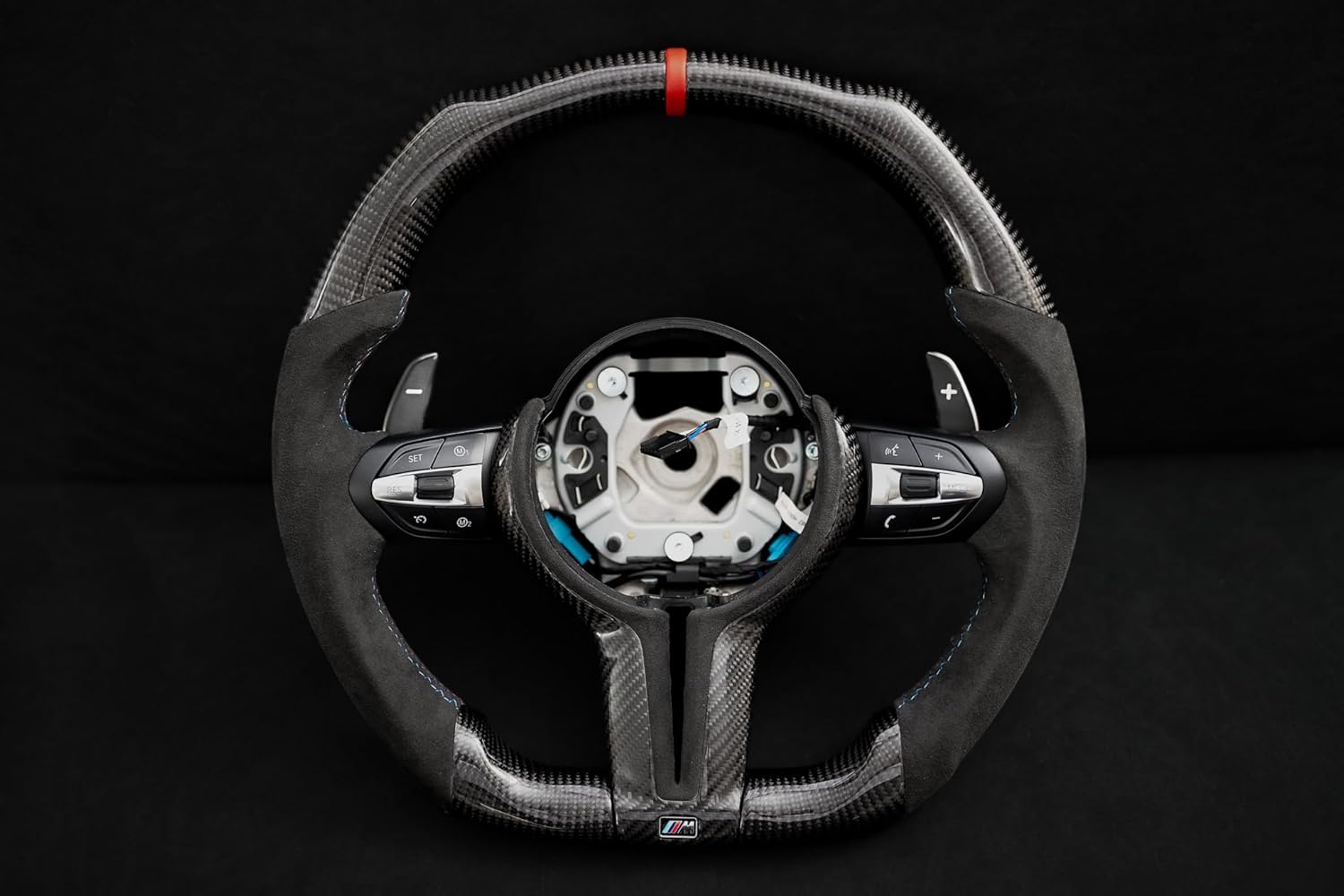
JTES iCBL Flat Bottom Alcantara & Carbon Fiber Steering Wheel — F Chassis
JTES
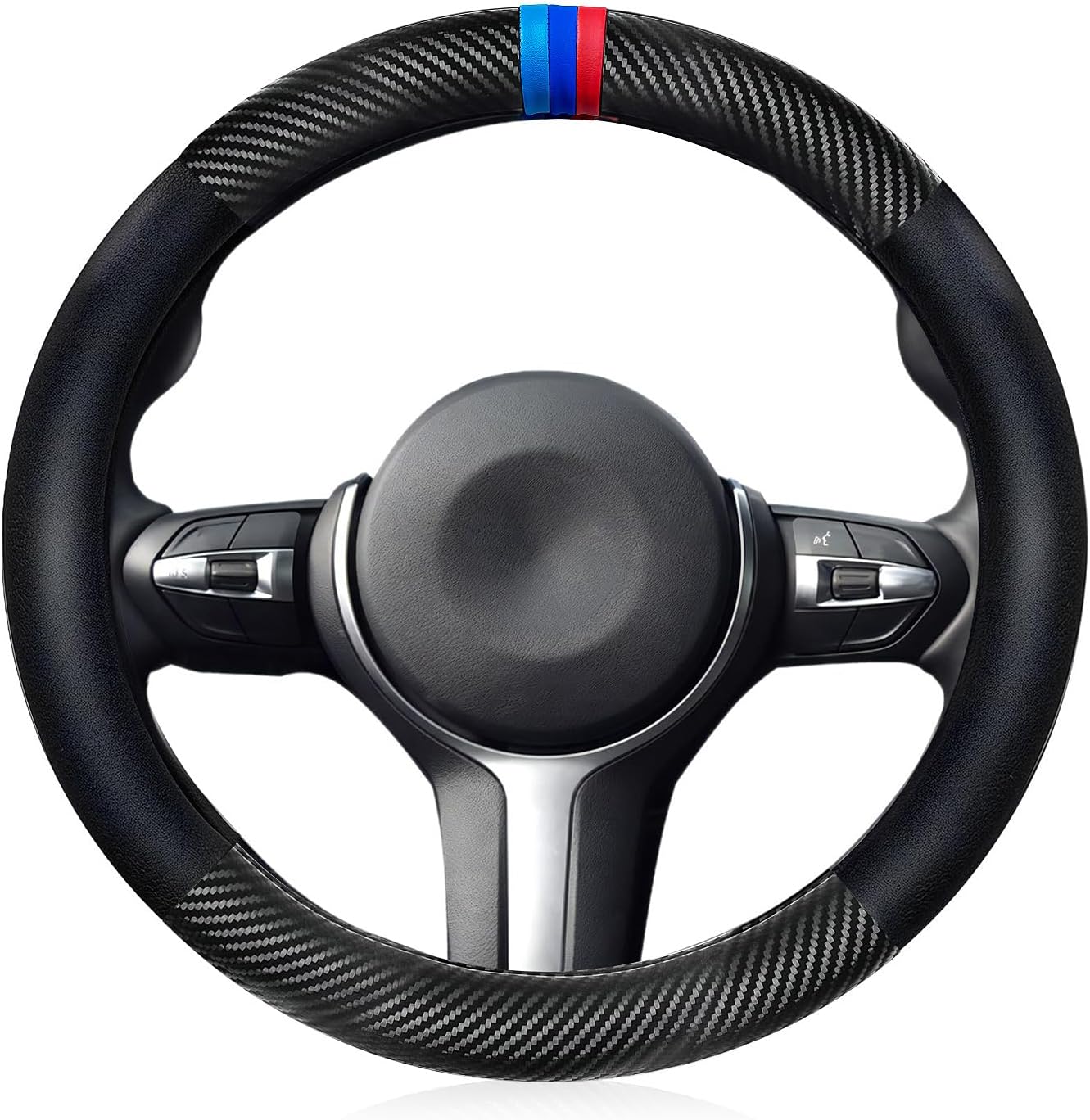
YUYOOO Carbon Fiber Pattern Leather Steering Wheel Cover — BMW X & M
YUYOOO

Alcantara Steering Wheel with Carbon Fiber Trim — F10/F30/F80/F82/F87
ZGHQHCDRH

Nappa Leather & Carbon Fiber Steering Wheel Cover — BMW
Generic
More interior parts for the BMW F15
BMW Steering Wheels - What You Actually Need to Know Before You Buy
The steering wheel is the single most-touched surface in your car. You're on it every time the engine is running, and on a BMW - a car that's supposedly built around the driver - it deserves serious attention. If you've been daily driving a G20 330i like I have, or wrenching on E46s, E90s, and F80s over the last five years, you already know that BMW's factory wheel options range from genuinely good to "why did they even bother." The good news is that BMW steering wheels have one of the deepest and most active aftermarket support chains of any European brand. The bad news is that the market is also flooded with garbage, and the fitment rules are strict enough that buying wrong costs you real money. This guide covers everything - chassis-by-chassis fitment, brands worth your money, brands to avoid, install procedure, airbag considerations, and my actual picks by use case.
Why Upgrade - The Real Reasons Beyond "It Looks Cool"
I want to be straight with you here because half the content you find on this topic treats a steering wheel swap like it's purely cosmetic. It isn't. There are legitimate functional reasons to swap a steering wheel, and there are also situations where the stock unit is honestly fine and you should spend your money elsewhere. Let's separate them.
Grip and feedback. BMW's OEM leather has gotten softer and puffier over the generations. The G20 M Sport wheel feels well-padded but disconnected compared to an Alcantara-wrapped M Performance item or a proper motorsport-spec wheel. If you're running the car at a track day, thin-rim Alcantara wheels communicate chassis behavior through your hands in a way that thick leather simply doesn't. This is real, measurable, and immediately felt the first lap.
Diameter reduction. Dropping from a stock 375mm or 380mm wheel to 350mm or 330mm changes steering response. You're not changing the actual steering ratio - the rack geometry doesn't move - but you're shortening the lever arm. The car responds to smaller inputs faster. On a lighter, momentum-driven car like an E46 M3 on track, this is a legitimate handling modification. On a daily driver with electric power steering and lane-keep assist, it mostly just makes the car feel twitchier and less relaxing. Know what you're building.
Worn or cracked OEM leather. Every high-mileage E90 and E92 I've touched has a steering wheel with peeling leather at the 9 and 3 positions. BMW's factory leather, especially on non-M models from the mid-2000s to early 2010s, ages badly. Re-wrapping is an option but rarely comes out factory-clean unless you're paying a very skilled upholstery shop. A quality aftermarket replacement at the same diameter gives you a fresh start.
Ergonomics and flat-bottom designs. This one gets more relevant as you get into lower cars. The F82 M4 and F87 M2 have a low seat position, and the stock round wheel is borderline awkward when you're getting in and out. A flat-bottom design removes material from the bottom arc and genuinely makes daily ingress and egress more comfortable. BMW's own M Performance and AC Schnitzer wheels use flat-bottom profiles for exactly this reason.
When NOT to upgrade. If you're on a G-series car (G20, G22, G80, G82) and you drive it on the street with ADAS features you actually use, be very careful. The stock wheel contains the controls for adaptive cruise, lane keep, audio, phone, and in many configurations the touch-sensitive buttons for iDrive. Going full aftermarket means losing all of that. I'll get into G-series specific options in detail below, but the short version is: on a G-series daily, an OEM-upgrade path is almost always smarter than a true aftermarket swap.
The Airbag Question - Read This Before You Touch Anything
Every steering wheel swap on a modern BMW involves an airbag decision. I'm not going to bury this in a safety disclaimer - I'm going to explain exactly how it works so you can make an informed call.
On any BMW with a driver's airbag in the wheel (roughly E46 and newer, and some late E36 builds), removing the factory wheel means removing the airbag module. The SRS (Supplemental Restraint System) monitors airbag circuit continuity. Disconnect the airbag and your dash will display an SRS fault light permanently unless you address it. There are two common approaches.
Resistor kit / airbag emulator. This is a small resistor circuit that plugs into the airbag connector and mimics the resistance the ECU expects. The dash reads a "present and functional" signal, the SRS light stays off, and the system thinks everything is normal. It costs $15-40 from various suppliers. This is the standard approach for track cars and dedicated builds. Be clear-eyed about what it means though - you have no driver airbag. In a real collision, the SRS system will attempt to deploy a bag that isn't there. This is fine for a dedicated track car that never sees the road. For a street driver with passengers and real-world risk, that's a tradeoff you need to own consciously.
Clockspring / slip-ring retention. Some aftermarket hubs and dedicated OEM+ wheels retain the original clockspring (the coiled ribbon cable inside the column that maintains electrical continuity while the wheel turns). This is how BMW's own M Performance wheels work, and how AC Schnitzer's bolt-on upgrades work. The airbag stays functional because the connection to the module is maintained through the original clockspring. Horn circuits and some steering controls can also be retained through this approach. This is the right call for any street build where you want to retain safety systems.
Quick-release hubs. For track cars, quick-release hubs are popular because they let you remove the wheel between sessions for security or to suit different drivers. Products from NRG Innovations and Works Bell include both the hub adapter and a quick-release mechanism. These are purely motorsport items - they have no airbag retention capability and are not remotely street-legal in most jurisdictions. They're excellent for their intended purpose.
One more thing - on E9x and later cars, some configurations require ISTA coding after wheel changes to clear fault codes and confirm the new steering wheel's presence. Older cars with simpler electronics may clear faults with just the resistor and a reset. If you're not sure, budget for a session with a shop that has proper BMW coding and diagnostic tools.
Hub Adapters - Getting the Foundation Right
You cannot bolt an aftermarket steering wheel directly to a BMW's steering column. BMW uses a proprietary multi-spline hub pattern that is specific to each chassis generation. A hub adapter (sometimes called a boss kit) bridges between the BMW column and whatever bolt pattern your aftermarket wheel uses - almost always a universal 6-bolt or 3-bolt pattern.
Hub adapters are not interchangeable between chassis families. This is the most common and most expensive mistake beginners make. Here's the breakdown by chassis group:
- E30 - uses its own specific adapter, usually labeled BMW E30 boss kit. Deep dish profiles are particularly popular here because the E30's seating position benefits from pulling the wheel closer toward the driver without adjusting column height.
- E36 - separate hub from E30. Some vendors bundle E36/E46 together but verify before buying - they are not always compatible.
- E46 - very well-supported, most major hub brands (NRG, Works Bell, Momo, Sparco's own hubs) make an E46-specific boss kit. One of the most popular platforms for this swap.
- E9x (E90, E91, E92, E93) - requires its own hub. Airbag connector and horn wiring differ from E46. If your car has a multi-function steering wheel (MFL), you will lose those controls with most hub setups unless you use a specifically wired adapter that retains some signals.
- E8x (E82, E87, E88) - shares the same general family as E9x but confirm the specific hub part number, especially for E82 M builds vs. standard hatches.
- F-series (F30, F32, F80, F82, F87) - significantly more complex. These cars have full lane-keep, adaptive cruise, and integrated control inputs in the wheel. Most true aftermarket hubs for F-series result in a stripped-down experience. See the F-series section below.
- G-series (G20, G22, G80, G82) - I would strongly advise against a full hub-and-aftermarket-wheel swap on these unless it's a dedicated track car. The level of integration is too high. See the G-series section below.
NRG Innovations and Works Bell are my top recommendations for hub adapters. NRG has the broadest chassis coverage and their fitment QA is consistently accurate. Works Bell is a Japanese brand with a reputation for precision machining - their hubs are slightly more expensive but the tolerances are tighter. For most builds I'd trust either one. Generic eBay boss kits are a risk I wouldn't take - I've seen them with play in the spline fit that translates to a loose, clunking wheel, which is both annoying and potentially dangerous.
Steering Wheel Sizes - Picking the Right Diameter and Dish
Sizing is where a lot of enthusiasts overthink it. Here's how I actually think about it.
Diameter. The stock wheel on most BMWs runs between 370mm and 385mm. Going to 350mm is the most popular aftermarket choice and feels immediately sportier without being uncomfortably small. Going to 330mm is a dedicated track or motorsport choice - it's genuinely fast to input, but on the street it can feel twitchy, especially on electric-assisted racks that already offer light effort. I wouldn't go below 330mm for any street-driven car. For full track builds, 320mm is used, particularly in rally and hillclimb applications.
Dish depth. Dish refers to how far the wheel rim sits from the hub mounting face. A deep-dish wheel pulls the rim closer to the driver without adjusting the column. This was essential in older BMWs like the E30 and E36 which had more upright seating positions and longer column throws. For most E46 and newer platforms, a shallow or zero-dish (flat) setup is fine because column adjustment covers the range. If you're running a racing seat with a low recline angle, you may want more dish to keep the wheel reachable. It's worth sitting in the car with a tape measure before ordering if you're unsure.
Flat-bottom vs. round. Flat-bottom wheels remove the lower arc of the rim. The practical benefits are easier entry and exit in low-slung cars, better visibility of the instrument cluster (important in cars where the cluster peaks over the wheel), and a motorsport aesthetic that BMW themselves have leaned into with M Performance and M Sport options. The downside is that when your hands rotate past the flat section during a full lock maneuver, the grip and feel changes. Some drivers hate it. On the street I find it genuinely useful. On track it's largely irrelevant because you rarely use full lock.
Rim thickness. This is less discussed but matters a lot for feel. A thinner rim (60-65mm diameter) transmits more feedback and requires a firmer grip - better for track. A thicker rim (70-75mm) is more comfortable over long distances. Stock BMW rims are on the thicker side. Most Alcantara motorsport wheels from Sparco or OMP trend thinner. If you have large hands, verify the section thickness before buying - some motorsport wheels feel like holding a broomstick.
Materials - Alcantara vs Leather vs Suede vs Carbon
The rim covering choice affects feel, durability, and maintenance more than most people expect. Here's my honest ranking by use case.
Alcantara. This is the top choice for performance and track use. Alcantara is a synthetic microfiber that mimics suede but is engineered for consistency. Dry grip is exceptional - better than leather in almost every measurable way when your hands are clean and dry. The tactile feedback is higher because the material doesn't "slip" between your palm and the rim the way smooth leather can. BMW uses genuine Alcantara in M Performance and M Division components for exactly this reason. The downside is that it soaks up oils from your hands over time and needs regular cleaning. A light brush with a dry stiff-bristle brush every few weeks keeps it fresh. Wet weather driving or sweaty palms degrade grip quickly compared to leather.
Perforated leather. The closest to OEM in feel but with better breathability. Most premium aftermarket wheels at the $200-600 range use genuine leather with perforations at the 9 and 3 grip zones. Durable, easy to clean, looks good for years if you're not destroying it with harsh cleaners. My recommendation for anyone who wants a daily-drivable upgrade that doesn't require special maintenance.
Smooth leather. Fine for light use but gets slippery with heat. I've driven with Momo smooth-leather wheels on long track sessions and found myself gripping harder just to maintain feel. Good for show cars and light street use. Not my choice for anything performance-oriented.
Suede / synthetic suede. Brands like Sparco and OMP offer suede-covered wheels that are a middle ground between Alcantara and leather. Generally slightly softer and less precisely gripped than genuine Alcantara, but cheaper and more widely available. Perfectly good for street performance use.
Carbon fiber spoke or horn trim. The center section of the wheel - the spokes and horn pad - is frequently offered in carbon fiber, satin silver, or body-color finishes. Carbon fiber spokes are light but the weight difference in a steering wheel is so small it's irrelevant for handling. This is purely aesthetic. That said, matching carbon spokes to a carbon interior trim package on an F82 M4 or F87 M2 looks genuinely sharp. Just don't confuse carbon spoke accents with structural carbon - the actual structural spokes are metal in every production aftermarket wheel I'm aware of.
Avoid cheap PU leather. I've said it before and I'll keep saying it - polyurethane "leather" wraps crack and peel within a season of real use. It looks especially bad in BMW interiors at night under the ambient lighting these cars tend to run. You see the flaking immediately at the 9 and 3 positions. Not worth it at any price.
Chassis-Specific Fitment Guide - E-Series
Let's go generation by generation with the specific fitment notes that actually matter.
E30 and E36
These are the classic deep-dish platforms. The E30 (1982-1994) has an upright driving position relative to the windshield and benefits enormously from a correct deep-dish wheel that puts the rim in a natural position. A 350mm diameter with 70-80mm of dish is the sweet spot most E30 builders land on. Horn buttons and turn-signal canceling are simple on these cars - no airbag complications on pre-airbag builds, though late E30 and early E36 US-market cars did get airbags.
For the E36 (1992-1999), the same general logic applies for earlier builds, but watch the airbag years carefully. US E36 M3s got airbags and OBD2 in 1996. If you're building an E36 track car from a 1994 or earlier shell, airbag deletion is straightforward. On later cars, the resistor kit and proper hub apply.
Popular wheel choices for both platforms include the Momo Prototipo (a classic 3-spoke design at around 350mm that looks period-correct in any E30 or E36 build) and the Nardi Deep Corn. Both have the authentic Italian motorsport aesthetic that suits these generations well. Sparco makes good alternatives at a lower price point.
E46 (1999-2005)
The E46 is probably the most popular platform for this swap. It's old enough that airbag deletion is a common and accepted modification for track builds, but the hub ecosystem is mature and well-supported. The E46 M3 community specifically has been doing steering wheel swaps for 20 years, and the collective knowledge is deep.
Stock E46 wheels run around 380mm. Dropping to 350mm is immediately noticeable and generally positive. The E46's hydraulic steering has excellent road feel, and a thinner-rim Alcantara wheel amplifies that feel rather than muffling it. If you're building a dedicated track E46, a 330mm Sparco R383 or similar motorsport wheel is a common choice.
Hub fitment is clean with NRG or Works Bell E46 boss kits. Allow time for proper airbag emulator installation and test the horn and MFL buttons - on MFL-equipped E46s, most true aftermarket hubs sacrifice the cruise control and audio stalk functions.
E9x - E90, E91, E92, E93 (2006-2013)
The E9x generation is where complexity starts to increase. If you're building an E92 M3 track car, the full hub swap with airbag deletion and resistor kit is still reasonable and popular. The S65 V8's analog steering response pairs well with a lightweight, small-diameter Alcantara wheel.
For street-used E9x cars, the MFL button loss becomes more significant because many E90/E92 owners use the steering wheel audio controls, cruise, and volume daily. Some specialized hubs retain partial MFL functionality, but these are harder to source and require correct wiring.
The E9x also introduced SRS complexity that requires careful handling - battery disconnect and the standard 10-15 minute capacitor discharge before touching anything airbag-related. I always recommend waiting the full 15 minutes. I've seen people wait five and have a good day, but that's luck, not good practice.
E8x - E82, E87, E88 (2007-2013)
The E82 135i and E87 hatch have the same general platform logic as E9x but in a lighter, more focused package. Hub adapter verification is critical here - don't assume E9x and E8x hubs are identical, even though the cars share a lot of architecture. The N54 and N55-powered E82 135i has a dedicated following for track use, and steering wheel swaps are a natural part of those builds.
Chassis-Specific Fitment Guide - F-Series
The F-series generation (roughly 2012-2022 depending on model) is where the aftermarket gets genuinely complicated. These cars integrate more driver inputs into the steering wheel than any previous BMW generation, and the electrical architecture is more sensitive to non-OEM components.
F30 / F32 / F36 - Standard Models
On a standard F30 330i or F32 430i, the wheel contains controls for audio, phone, adaptive cruise, and driver assistance. Going full aftermarket means losing most or all of these. For a street car you use daily, this is a meaningful quality-of-life hit.
The better path for F30 and F32 owners who want an improved wheel without function loss is an OEM upgrade swap. BMW built several steering wheels that fit F-series chassis natively:
- F80 M3 / F82 M4 steering wheel retrofitted to F30/F32 - This is one of the most popular and well-documented forum swaps. The M3/M4 wheel has a flat bottom, proper M stitching, thicker Alcantara-and-leather combination, and feels significantly more premium than the base F30 wheel. Fitment in standard F30/F32 requires a BMW LCI steering wheel swap procedure with appropriate coding. This is legitimately the best bang-for-buck F-series wheel upgrade - you get the premium feel without losing any electrical function.
- BMW M Performance Steering Wheel - These are genuine BMW parts with Alcantara trim, flat-bottom design, and M coloring. They retain all OEM electrical function because they use the OEM clockspring and connector architecture. Pricey from BMW directly but worth the premium if you want a no-compromise daily.
- AC Schnitzer steering wheels - AC Schnitzer produces OEM-style replacement wheels for F-series cars with their own aesthetic touches - carbon fiber accents, Alcantara coverage, and typically a more aggressive flat-bottom profile. These retain airbag and steering function. I'd rate them as a genuinely good option for F-series owners who want something more than stock without the complications of a full swap.
F80 M3 / F82 M4 / F87 M2
The M-division F-series cars get a better stock wheel than the standard models, but there's still a meaningful gap between the base M3 wheel and the M Performance item. The F82 M4 and F87 M2 both have the low-slung seating issue I mentioned earlier, and a flat-bottom wheel is a quality-of-life improvement that's hard to argue with once you've tried it.
For these cars, I'd prioritize either the BMW M Performance Steering Wheel (genuine BMW part, no fitment compromises, available with various trim options) or an AC Schnitzer wheel. If you're building a dedicated F80/F82 track car where ADAS controls don't matter, a proper NRG or Works Bell hub with a quality motorsport wheel is a legitimate choice - just go in with eyes open about what you're losing.
Chassis-Specific Fitment Guide - G-Series
I daily a G20 330i right now, so I have direct opinions here rather than just technical notes.
The G-series steering wheel is more integrated into the car's systems than any previous BMW generation. On my G20, the wheel contains steering-wheel controls for:
- Adaptive cruise control and active driving assistant
- Lane keeping assist and lane change warning
- Audio and phone
- BMW Display Key and iDrive integration (in some configurations)
- Touch-sensitive buttons that replace physical clicks on some trims
Removing this wheel and replacing it with an aftermarket unit means losing all of that. For a G20 daily driver, that's a significant functionality reduction. This is not the E46 era where you lose the cruise control stalk and shrug. You're losing a meaningful chunk of the car's designed interface.
What I actually recommend for G-series owners who want a better wheel:
BMW M Performance Steering Wheel M3/M4 retrofit to G20/G28/G22. BMW makes M Performance wheels that are plug-and-play on G-series chassis. They retain all electrical function, use genuine Alcantara trim, and have the flat-bottom M aesthetic. Pricing runs $400-900 depending on trim level. For my money this is the right answer for any G-series street car.
G80 M3 / G82 M4 wheel retrofit. Similar to the F30/F32 owners doing M3 wheel swaps, G20/G22 owners are increasingly retrofitting G80 M3 wheels. The G80 wheel is flat-bottom, heated on most specs, Alcantara-trimmed, and includes M-colored stitching. It fits G-series chassis with appropriate coding via a BMW-compatible coding tool. This is my personal choice if I were to upgrade my G20 wheel today - it's the best wheel BMW makes for this platform and it's genuinely OEM quality.
For G80 M3 and G82 M4 owners who want to go further, the situation is the same as F80/F82 but even more complex electronically. A dedicated track-car full swap is possible, but on a street G80, I'd stay OEM-upgrade. The G80's stock M wheel is already very good - I'd only replace it with BMW's own heated Alcantara M Performance item or a custom re-wrap by a quality shop.
Top Brands - An Honest Ranking
The aftermarket BMW steering wheel space has a few well-established names at the top and a long tail of generic products that aren't worth discussing. Here's how I actually rank them based on real experience.
Premium Tier
BMW M Performance. I'll start with OEM because for F-series and G-series cars, the M Performance wheels are genuinely the right answer for most owners. They're engineered specifically for these chassis, they retain every safety and control system, and the build quality is excellent. The Alcantara versions with M stitching are legitimately good-looking wheels. Expensive at $400-1100 depending on model, but zero fitment risk.
AC Schnitzer. One of the oldest and most respected BMW tuning houses in the industry. Their steering wheels use OEM-grade materials, retain airbag and control function on most F and G-series applications, and have a clean, understated aesthetic that works well with BMW's interior design language. Not flashy, just well-made. I'd recommend them without hesitation for any F or G-series street car build.
Works Bell. Japanese brand, exceptional precision. Their hub adapters and steering wheels are consistently well-machined. Popular in the Japanese-market BMW community and increasingly in the US. If you want a motorsport-spec wheel and hub combination with reliable fitment, Works Bell is my first recommendation. Pricing reflects the quality - expect to pay more than NRG but the tolerance and finish justify it.
Mid-Tier - Excellent Value
Sparco. The Italian motorsport brand has been making steering wheels for road and track use for decades. Their 350mm Alcantara and suede options at the $150-350 price range are genuinely good products. The Sparco R383 and Sparco L999 series are popular in the E46 and E9x communities for good reason - consistent quality, good feel, and enough model variety to match different builds. Sparco hubs are available for most BMW chassis but verify compatibility before ordering.
Momo. Another Italian classic. Momo's Prototipo design is an icon and looks period-correct in E30 and E36 builds. Their modern Alcantara options are solid. Build quality is slightly below Sparco at the equivalent price point in my opinion, but the brand carries serious credibility and their fitment documentation is reliable.
OMP. OMP sits in the same tier as Sparco and Momo with comparable quality at similar pricing. Their suede offerings are slightly softer than Sparco's Alcantara but comfortable for street use. Good hub adapter selection for BMW chassis.
NRG Innovations. NRG is a US-based brand that has built strong coverage across a huge number of chassis. Their hub adapter catalog is probably the most comprehensive available, and their quick-release systems are popular for track builds. The wheels themselves are fine - not as premium as Sparco or Momo but reliable and well-priced in the $80-200 range. I've used NRG hubs on several builds and have never had a fitment issue when I've verified the correct part number.
bavmods. Worth a specific callout here - bavmods sells an LED Display Performance Steering Wheel with full installation and wiring guidance. This is targeted at the modern performance-retrofit segment - it's not an OEM replacement but rather a dedicated performance item with an integrated LED display for shift lights or performance data. This is a genuinely interesting product for track builds where you want instrumentation at your hands without looking down. The LED display wheel segment is niche but growing, and bavmods appears to be one of the more serious players in it for BMW applications.
Budget Tier - Proceed With Caution
There's a large volume of generic BMW steering wheel products on marketplace platforms that range from passable to outright dangerous. Here's how to approach them honestly.
The generic marketplace products from Asian manufacturers fall into two categories. Some are OEM-spec replacement wheels that are genuinely functional - they match the correct mounting pattern, have acceptable material quality, and install cleanly. These can be found for $80-200 and for a daily driver E9x or standard F30 where you're doing an OEM-style replacement rather than a performance swap, some of these are fine.
The other category is the aesthetics-first, fitment-second products. These are wheels that look impressive in photos - carbon fiber trim, red stitching, suede center section - but have inconsistent spline fitment, poor hub adapter compatibility, and questionable material quality. I've seen these on G-series BMW steering wheel listings on social commerce platforms that look sharp but come with zero fitment documentation for specific chassis codes.
My rule for budget wheels: if the product listing doesn't specify compatible chassis codes with part numbers, don't buy it for a functional swap. For a show car or display piece, fine. For anything that actually steers a real car, pay for the fitment certainty.
Installation Procedure - Step by Step
I've done this enough times that I can walk you through a standard swap reliably. The procedure below covers the general case for E-series cars (E46, E9x, E8x). F-series and G-series OEM+ swaps follow similar mechanical steps but require coding afterward.
Tools you need:
- T30 Torx bit and driver or ratchet
- 16mm socket or appropriate size for your steering wheel nut (varies by chassis - confirm before starting)
- Steering wheel puller (some BMWs require this, though many come off by hand once the nut is removed)
- Small flathead screwdriver for airbag connector release
- Electrical tape or heat shrink tubing
- Basic resistor kit if deleting airbag (or your clockspring retention adapter)
- Scan tool if you need to clear SRS codes post-installation
Step 1 - Battery disconnect. Disconnect the negative battery terminal. Wait a minimum of 15 minutes. The airbag system has capacitors that retain enough charge to fire a bag well after the battery is disconnected. Do not rush this step. Ever. I've heard stories of airbags deploying during wheel swaps on cars that weren't given enough discharge time. Don't be that person.
Step 2 - Airbag removal. On most E-series BMWs, the airbag is secured to the rear of the wheel with two or three Torx bolts accessible from behind the wheel spokes. T30 is standard on most. Remove the bolts, gently lift the airbag module, and disconnect the yellow airbag connector using a small flathead to release the lock tab. Set the airbag face-up on a flat surface away from your work area.
Step 3 - Steering wheel nut. Center the wheel (straight ahead) before removal. Use a marker to note the current position of the splines relative to the column shaft - this helps with reinstall alignment if you need it. Remove the center nut. On most E-series this is a single large nut. Keep this nut - you may need it to torque the hub adapter.
Step 4 - Remove the OEM wheel. Pull firmly and evenly toward you. Most BMWs require some force - a steering wheel puller is recommended to avoid yanking unevenly and damaging the column. Watch the wiring - the horn ring and MFL wiring are typically routed through the center and have a few inches of slack. Don't rip the column wiring by pulling the wheel faster than the connectors allow.
Step 5 - Install hub adapter. Align the hub adapter to the column spline, confirm proper seating, and torque to spec (most hubs specify 35-50 Nm for the center nut - check your specific hub's documentation). If your hub uses a locating pin, make sure it seats in the correct position to maintain proper steering wheel center alignment.
Step 6 - Airbag emulator or clockspring retention. If deleting airbag, connect your resistor kit to the airbag harness connector. If retaining through a clockspring, route the connector through to the new wheel's horn ring and verify the connection. Secure wiring with electrical tape to prevent chafing against moving components.
Step 7 - Mount the new wheel. Align the wheel to your desired straight-ahead position, seat it on the hub, and torque the wheel's center bolt or nut per specification. This varies by hub and wheel combination - typically 30-45 Nm.
Step 8 - Horn and controls test. Before reconnecting the battery, visually confirm all connections are secure. Reconnect the battery and test horn function before driving. If an SRS light is present, use your scan tool to clear the code after confirming the emulator or retention setup is correctly installed.
F-series and G-series additional step - Coding. On F and G-series OEM+ swaps (M3 wheel into F30, G80 wheel into G20, etc.), you'll need to code the new wheel's presence in the FEM (Front Electronics Module) to enable heated steering wheel function if applicable, confirm the new wheel ID, and clear any related faults. This is straightforward with a BimmerCode or ISTA-capable coding tool but not something you can skip.
Overall difficulty: For a standard E-series swap with hub and emulator, I'd rate this a 3 out of 10 for someone with basic mechanical skills. Budget 1-2 hours including setup and cleanup. For an F or G-series OEM+ swap with coding, bump it to 4 out of 10 and budget 2-3 hours including the coding session.
Common Mistakes and How to Avoid Them
In five years of doing these swaps on my own cars and helping friends with theirs, these are the mistakes I see most consistently.
Wrong hub adapter for the chassis. Already covered, but worth repeating - verify by chassis code, not by model name alone. An "E9x hub" can mean E90, E92, or E93, and some vendors lump E87 in as well. Get the specific vehicle production date if you're near a model changeover and confirm with the vendor.
Not waiting long enough after battery disconnect. 15 minutes minimum. Set a timer. Walk away.
Not centering the wheel before removal. If you pull the wheel with the column not centered and then remount with the splines in the wrong position, your steering center is off. The wheel will be rotated a few degrees from straight-ahead when the wheels are pointing forward. You can remount to correct it, but it wastes time. Mark the original position clearly before removal.
Buying a wheel that's too small for the car's dynamics. A 320mm wheel on a daily street car with EPS steering is going to feel nervous and tiring over long drives. Match the diameter to the actual use case.
Assuming any aftermarket wheel fits with any hub. The hub adapter bolt pattern must match the wheel's hub bolt pattern. Most aftermarket wheels use a 6-bolt or 3-bolt pattern, but the PCD (bolt circle diameter) varies. Confirm the hub and wheel use the same bolt pattern before ordering.
Skipping coding on F/G-series swaps. Installing an M Performance or M3-spec wheel on an F30 or G20 without coding will often result in a persistent warning light or non-functional heating if the car had it before. The coding step is not optional on these platforms.
Using the wrong torque spec. Overtorquing the center nut can deform the hub adapter. Under-torquing leaves the wheel with movement on the spline. Use a proper torque wrench and follow the hub manufacturer's specification.
Supporting Mods That Pair Naturally
A steering wheel swap rarely happens in isolation on a car that's being built seriously. Here are the upgrades that make the most sense alongside it.
Coilovers or suspension upgrades. Better steering feedback at your hands only matters if the chassis is communicating information up through the steering column. A properly set up suspension is the foundation. If you're at the stage of caring deeply about steering wheel feel, you should probably look at coilovers or at minimum quality lowering springs to sharpen the overall handling package.
Brake upgrades. Track days and performance driving put the braking system under real stress. If you're building a track car and fitting a motorsport steering wheel, performance brake pads are a necessary companion mod. Good brakes and a good steering wheel transform track day experience in a way that either one alone doesn't.
Shift knob. The steering wheel and shift knob are the two most tactile interfaces in the car. Upgrading one and not the other creates a mismatch in material quality and feel. Browse our shift knobs to match the interior aesthetic.
Coding tools. If you're on an F or G-series and doing any OEM+ swap, invest in a coding tool before you start. It pays for itself on the first job and opens up dozens of other customization options. An ECU tuning and coding setup is worth having in your toolkit for any modern BMW work.
Aftermarket wheels and tires. Steering feel is also a function of tire sidewall stiffness and wheel weight. If you're running stock rubber, some of the steering feedback benefit from a performance steering wheel upgrade is limited by the tires' communication characteristics. A proper set of aftermarket wheels with the right tire combination makes the whole steering package more cohesive.
My Picks by Use Case
Here's where I actually land on specific recommendations. I'll keep it honest and practical.
If you only do ONE interior upgrade, do this - F30/F32 owners: Retrofit the F80 M3 steering wheel into your F30 or F32. It's OEM quality, retains all function, looks and feels dramatically better than the base wheel, and can be found used from M3/M4 donor cars at reasonable prices. This is the highest-impact, lowest-risk interior upgrade on the F-series platform.
Daily street driver, E46 or E9x: Sparco or Momo 350mm Alcantara/leather hybrid with an NRG or Works Bell hub and a proper resistor kit. Budget approximately $250-400 for the wheel, $70-120 for the hub, and $25-40 for the emulator kit. Total outlay around $350-560 for a genuinely transformed steering feel. I'd pick the Sparco L999 specifically - good diameter, good rim thickness, nice Alcantara finish, and available in flat-bottom which suits post-2005 BMWs well.
Track build, E46 M3 or E9x M3: Works Bell hub with a dedicated motorsport wheel from Sparco or OMP in 330mm. Alcantara cover, thin rim section, appropriate dish for your seating position. This combination gives you the most honest chassis feedback and the least distraction during a session. Budget $300-600 all in depending on wheel choice.
Track build, F80 M3 or F82 M4: NRG or Works Bell hub with airbag deletion, 330-350mm motorsport wheel in Alcantara. If you're running this at track days regularly and the ADAS controls aren't relevant, the Sparco or OMP options work well. If you want the LED data display option for shift points, the bavmods LED Performance Steering Wheel is worth a look - putting shift lights in the wheel itself is genuinely useful on track and eliminates the need for a separate shift light display.
G20 / G22 daily driver: BMW M Performance Steering Wheel in Alcantara or G80 M3 wheel retrofit with coding. Full stop. Don't compromise the ADAS integration on a street car for the sake of an aftermarket wheel. The OEM+ path is the right answer here.
E30 period build or resto-mod: Momo Prototipo 350mm with appropriate deep-dish specification and period-correct hub. Looks right, feels right, respects the car's character. This is one case where I'd specifically choose aesthetics-first because the Prototipo genuinely suits the E30's interior design in a way that modern motorsport wheels don't.
Show car or display build: AC Schnitzer carbon-trimmed wheel if you're staying OEM-function and want the premium visual. For pure show, the carbon accented options look genuinely impressive against BMW's Merino leather interiors or carbon fiber trim packages. Just don't sacrifice function for this on a car you actually drive.
Price Tiers and What to Expect
Let me give you an honest breakdown of the price landscape so you know what you're getting at each level.
| Price Range | What You Get | Best For |
|---|---|---|
| Under $100 | Generic marketplace wheels, unverified fitment, inconsistent material quality. Hub adapter often sold separately or low-quality bundled item. | Show cars, display pieces, or if you've verified fitment personally on your specific chassis and understand the risk |
| $100 - $250 | Entry NRG wheel packages, OMP base range, Sparco lower line. Acceptable quality for street E-series builds. Most hub adapters fall in this range separately. | Budget street builds, E30/E36 track builds where cost matters more than premium materials |
| $250 - $500 | Sparco mid-range Alcantara, Momo Alcantara options, Works Bell hub kits, NRG complete packages. Solid quality, documented fitment, real Alcantara or leather. | E46, E9x, E8x street and track builds. The sweet spot for most builds. |
| $500 - $1000 | BMW M Performance OEM wheels, AC Schnitzer, bavmods LED performance wheel, premium Works Bell builds. OEM-grade or better, full function retention on F/G-series. | F-series and G-series street cars, serious E9x performance builds, anyone who won't compromise on material quality |
| Over $1000 | Custom orders, full OEM G80 M3 heated Alcantara wheel plus coding labor, BMW Individual wrapped options, race-spec builds with LED display and custom stitching. | G80/G82 owners who want the absolute best, custom builds, cars where interior quality is a priority matching the exterior work |
Note on used market: OEM BMW M Performance wheels and M3/M4 factory wheels show up regularly on Bimmerpost's classifieds and eBay from donor cars. You can often find a used F80 M3 wheel in good condition for $150-250 shipped, which makes the F30 retrofit even more compelling. Condition varies - inspect photos carefully for wear at the 9 and 3 positions and any cracking on the leather sections.
Brand Comparison Table
| Brand | Best Platform | Price Range | Airbag Retention | OEM Fit | My Rating |
|---|---|---|---|---|---|
| BMW M Performance | F-series, G-series | $400 - $1100 | Full retention | Perfect | 9/10 |
| AC Schnitzer | F-series, G-series | $500 - $900 | Full retention | Excellent | 9/10 |
| Works Bell | E-series, F-series (track) | $200 - $500 | Hub only (no retention) | Excellent (hub) | 9/10 |
| Sparco | E-series, F-series (track) | $150 - $350 | No retention | Good (verify hub) | 8/10 |
| Momo | E30, E36, E46 | $150 - $350 | No retention | Good (verify hub) | 8/10 |
| OMP | E-series | $130 - $300 | No retention | Good (verify hub) | 7/10 |
| NRG Innovations | All chassis (hub specialty) | $80 - $250 | No retention | Good (hub coverage) | 7/10 |
| bavmods | F-series, G-series (track/performance) | $400 - $800 est. | Application-specific | Good | 8/10 |
| Generic marketplace | E-series (with verification) | $50 - $200 | No retention | Variable - verify | 4/10 |
Frequently Asked Questions
Will any aftermarket BMW steering wheel work on my specific chassis?
No. You need three things that are all chassis-specific: the hub adapter, the wheel's bolt pattern to match the hub, and - on F and G-series cars - compatibility with the car's electrical architecture. Start with your chassis code (E46, E90, F30, G20, etc.) and work backward to a confirmed hub adapter. Then choose a wheel with the matching bolt pattern. Don't buy in the other direction or you'll end up with parts that don't work together.
Do I lose my airbag when I install an aftermarket steering wheel?
On most full aftermarket swaps, yes. The airbag module lives in the OEM wheel and removing the wheel removes the bag. You can install a resistor emulator to keep the SRS light off. For F and G-series OEM+ swaps (M Performance wheel, M3 retrofit, AC Schnitzer), airbag retention is possible through the original clockspring. Be honest with yourself about whether you're building a track car or a street car and make the appropriate choice.
What BMW steering wheel does a G20 330i take?
The G20 uses a G-series specific wheel that integrates with the car's ADAS and iDrive controls. The native upgrades are BMW M Performance wheels (direct fit, plug and play with coding for heated function), or a G80 M3 steering wheel retrofit that requires coding via BimmerCode or ISTA. I would not recommend a full aftermarket hub swap on a G20 street car - too many control functions are lost.
What size steering wheel is best for a BMW track car?
For most track-dedicated E46, E9x, and F-series BMWs, 330mm to 350mm is the right range. 330mm is faster and gives more feedback. 350mm is more forgiving and easier to use in situations requiring full lock. I'd default to 350mm for a car that sees both street and track use, and 330mm for a dedicated track or race build. Going below 320mm is really for race cars with very specific ergonomic setups.
How hard is a BMW steering wheel swap?
For E-series cars, it's a 3 out of 10. Budget an hour, have a decent socket set, and wait the full 15 minutes after battery disconnect. For F-series and G-series OEM+ swaps with coding, it's a 4 out of 10 - add another hour for the coding session and make sure you have a compatible tool. The airbag step requires care but it's not technically difficult, just requires proper procedure.
Will I lose BMW's steering controls (cruise, audio) with an aftermarket wheel?
On most full hub swaps, yes. Multi-function steering wheel (MFL) controls for audio, cruise, and phone are typically lost with aftermarket hubs. Some specialized wiring adapters for E9x and F-series can retain partial MFL function, but these are complex to source and install. For street cars where these functions matter, the OEM+ upgrade path (M Performance wheel or OEM retrofit) is the smarter approach.
Is an Alcantara steering wheel worth it over leather?
For any performance driving or track use, yes - genuinely worth it. Alcantara dry grip is significantly better than leather. For a pure daily driver in normal street use, it depends on how much you value feel and whether you're willing to maintain it. Alcantara requires occasional brushing and is less forgiving of hand oils over time. If you're not willing to maintain it, quality perforated leather lasts longer and stays cleaner.
Can I install an F80 M3 steering wheel in my F30 330i?
Yes, and this is one of the best swaps you can do on an F30. The F80 M3 wheel fits F-series chassis with appropriate coding. You retain airbag function, all MFL controls, and get a genuinely premium wheel with flat-bottom design and M Alcantara trim. Requires a coding tool to complete. Used F80 wheels can be found for $150-300 in good condition, making this one of the best-value interior upgrades on the platform.
What's the difference between a hub adapter and a quick-release hub?
A hub adapter (boss kit) is a fixed adapter that replaces the OEM wheel's mounting interface and gives you the standard bolt pattern to mount an aftermarket wheel. A quick-release hub adds a mechanism that lets you disconnect the steering wheel from the hub with a quarter-turn or button press. Quick-release hubs are popular for track cars for security and to accommodate multiple drivers. They are not street-legal and have no airbag retention capability. Use a standard boss kit for street builds and a quick-release only on dedicated track cars.
What coding is needed for steering wheel swaps on G-series BMWs?
For OEM+ swaps on G20, G22, G80, G82 - specifically when adding a heated steering wheel that the car wasn't originally coded for, or swapping an M3/M4 wheel into a non-M chassis - you need to code the new wheel's presence in the FEM module. This enables heated function, confirms the new wheel ID, and clears related adaptation values. BimmerCode handles most of this for standard swaps. For more complex adaptations, ISTA is the appropriate tool. A shop with ISTA access can do this in under 30 minutes as a standalone job.
Are aftermarket BMW steering wheels safe on the road?
With proper installation - correct hub adapter, appropriate torque specs, and either an airbag emulator or full airbag retention setup - yes. The structural safety of the steering connection is not compromised by an aftermarket wheel if installed correctly. The safety tradeoff is the airbag deletion, which you should evaluate honestly for your use case. A track-only car with no airbag is fine. A daily driver without an airbag is a different risk calculation that you need to make for yourself.
How do I know if my BMW has an MFL (multi-function) steering wheel?
If your steering wheel has buttons on the spokes for audio, phone, or cruise control, you have MFL. In practical terms, most E90, E92, E82 and all F-series and G-series BMWs came with MFL as standard or common equipment. Non-M E46 models from base trim levels may not have it. Check your options list in the glovebox or on a VIN decoder service - the MFL option is coded in the car's build data.
When to Skip the Steering Wheel Upgrade
I want to end the content sections with an honest counterpoint because not every car needs this modification.
If you're driving a G20 M340i or G80 M3 daily on the street and you're happy with the stock wheel's feel and controls, the upgrade path is narrow and the risk of losing functions you use daily is real. The G80 M3's factory heated Alcantara wheel is genuinely good. Spending $600+ to get something marginally better at the cost of system integration headaches is a bad trade.
If your E46 or E90 has a steering wheel in good condition and you're not tracking the car, the money might be better spent on suspension, quality coilovers, or other upgrades that change the driving experience more fundamentally. A steering wheel swap on a car with stock suspension and worn bushings is rearranging deck furniture.
If you're unsure which chassis your BMW belongs to, our BMW chassis lookup tool will get you to the right code quickly before you start researching specific fitments.
And if you're comparing multiple upgrade paths for your specific build, the BimmerTalk articles section has in-depth guides on prioritizing modifications by chassis and use case - worth reading before committing budget to any single upgrade.
When the upgrade does make sense though - and for most of you reading this, it does - it's one of the most immediately felt interior improvements you can make. Every single drive, every corner, every moment your hands are on the wheel. Get the fitment right, choose quality materials, and it will transform the way the car feels from the inside out.

Kamil Siegień
Founder of BimmerTalk. Five years wrenching on BMWs, currently dailying a G20 330i with the B48 turbo four. Spent a year doing marketing for BMW and MINI before going independent. I write everything on this site myself.
More about the site