
Coilovers for BMW X7 G07
Affiliate disclosure. BimmerTalk is a proud partner of the Amazon Associates Program and Turner Motorsport. We may earn a small commission on qualifying purchases through our links, at no extra cost to you. Read the full disclosure.


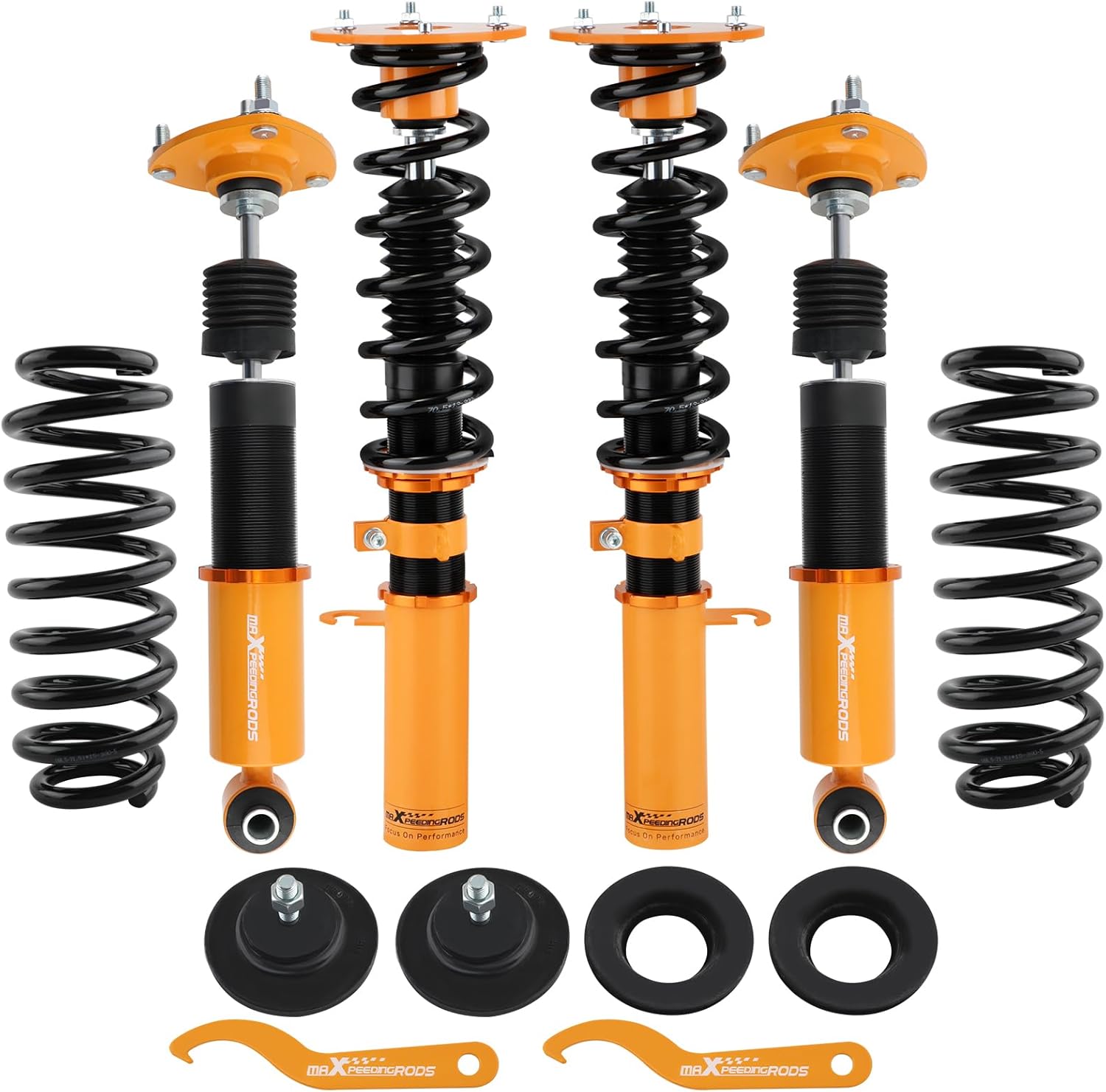
BMW Coilovers - Lower, Stiffen, and Dial In Your Chassis
A quality coilover kit is the single most impactful suspension upgrade you can make to your BMW. Done right, you get adjustable ride height, tunable damping, and handling that stock suspension engineers were never allowed to deliver - whether you're building a track-day E46 M3, lowering a daily-driven F30 328i, or turning your G80 M3 into a canyon carver. Done wrong, you get a harsh, trampy ride and worn tires. Here's what you actually need to know before buying.
Choosing the Right Coilovers for Your Chassis
Not all coilovers are built equal, and fitment is everything with BMWs. The E9X 3 Series (E90, E91, E92, E93), E46, F3X generation (F30, F32, F80), and G-series platforms all have distinct strut diameters, subframe geometry, and electronic damper considerations. If your car has EDC (Electronic Damping Control) - common on F10 M5s, F8X M3/M4s, and most post-2012 G-chassis vehicles - you'll need coilovers specifically designed for EDC compatibility or be prepared to code out the warning light and disable the factory system entirely.
For the E46 330i or M3, KW Suspension V3 coilovers remain the gold standard - independently adjustable rebound and compression damping, stainless steel construction, and a lifetime warranty. Bilstein PSS10 and PSS9 kits suit drivers who want a sport-biased but still street-friendly setup on E9X and F3X platforms. BC Racing BR Series coilovers offer strong value for E36, E46, and E90 owners who want 30-way damping adjustability without spending KW money. For serious track builds on F80/F82 M3 and M4 chassis, Öhlins Road & Track or TTX kits are the benchmark - fully adjustable, rebuildable, and trusted by professional teams.
Avoid budget coilovers from unknown brands marketed only by spring rate numbers. Cheap digressive valving causes handling that feels stiff over bumps but vague mid-corner - the worst of both worlds. On a BMW with a near-50/50 weight distribution, bad damping tuning is immediately felt and erodes the driving experience these cars are built around.
Look for these specifics when comparing kits: independently adjustable compression and rebound (not just a single knob), pillow ball upper mounts for improved camber and reduced NVH compromise, ride height adjustment that works through the lower mount rather than preloading the spring, and a brand with documented rebuild or revalving service. If you're running a staggered wheel setup on an E92 M3 or F82 M4, confirm the rear ride height range clears your arch with the offset and tire width you're running - most quality brands publish this data.
Install difficulty sits at an intermediate level for most BMW coilover jobs. E46 and E90 front struts are straightforward with a spring compressor and a 22mm strut nut socket. Rear trailing arm and subframe work on E-chassis cars requires proper torquing at ride height to avoid binding bushings. F-chassis and G-chassis jobs are more involved - especially anything with xDrive or active rear steering - and benefit from a two-post lift and alignment immediately after. Budget for a four-wheel alignment every time, no exceptions. Pair your new coilovers with adjustable control arms and alignment kits to actually hit your camber and toe targets, particularly if you're running more than 1 inch of drop.
If you're running a stiffer spring rate, revisit your sway bar setup as well - a common mistake is pairing aggressive coilovers with stock sway bars, leaving the car's roll stiffness distribution unbalanced front-to-rear. The stock front sway bars on most 3 and 4 Series BMWs are undersized for performance use and limit what your coilovers can actually do.
Browse our full selection of fitment-verified coilover kits for E30 through current G-chassis BMWs below. Every kit is listed with chassis compatibility, spring rate, damping adjustability, and EDC fitment notes so you buy once and get it right.