Affiliate disclosure. BimmerTalk is a proud partner of the Amazon Associates Program and Turner Motorsport. We may earn a small commission on qualifying purchases through our links, at no extra cost to you. Read the full disclosure.

Every few months someone messages me after a dealer visit or a quick lube place top-up asking if the oil that just went into their BMW is actually correct, because the receipt just says "5W-30 synthetic" and nothing else. That question used to annoy me until I realized how badly this whole topic gets muddled online, with half the internet telling you viscosity is everything and the other half telling you to just buy whatever's cheapest at the parts store because "it's synthetic, it'll be fine."
It won't always be fine. I've pulled valve covers on N54s with sludge that started life as a bottle labeled "meets BMW specifications" and I've also seen 200,000 mile B58s running clean as a whistle on oil that actually carries a real BMW Longlife approval number. The difference isn't the brand on the front of the bottle, it's a few characters printed in tiny type on the back that most people never read.
Fifteen years of wrenching on these things, a stint working inside BMW and MINI, and a daily G20 330i sitting in my garage right now have taught me that the "what oil does my BMW take" question has a real, specific answer for your exact engine, and getting it wrong isn't dramatic on day one, it's dramatic on day 80,000.
5W-30 / 5W-40 / 0W-40
LL-01 Common Viscosities
5W-30 / 0W-30
LL-04 Common Viscosities
0W-20
LL-17 FE+ Viscosity
10,000-15,000 miles
Typical BMW Oil Change Interval
BMW oil type quick reference by engine family
Before we get into the why, here's the cheat sheet I actually use in my own garage. This isn't exhaustive down to every single production month, so if you want the number that matches your exact VIN, check your owner's manual or the cap on your engine, but for 90 percent of readers this table lands you in the right spec.
| Engine family | BMW Longlife spec | Typical viscosity |
|---|---|---|
| N52 / N54 / N55 (E90, E60, F10, F30 pre-facelift) | LL-01 | 5W-30 or 5W-40 |
| N47 / N57 diesel with DPF (E90d, F10d, F30d) | LL-04 | 5W-30 or 0W-30 |
| B38 / B48 / B58 early production (F30, F20, early G20) | LL-01 or LL-04 depending on market | 5W-30 |
| B48 / B58 later production (G20, G05, G01 facelift onward) | LL-17 FE+ | 0W-20 |
| S55 (F80 M3, F82 M4) | LL-01 | 0W-40 |
| S58 (G80 M3, G82 M4) | LL-01, check exact TDS | 0W-40 |
| Older M-cars with S54, S62, S65 | LL-01, high-viscosity variant | 10W-60 |
N52 / N54 / N55 (E90, E60, F10, F30 pre-facelift)
- BMW Longlife spec
- LL-01
- Typical viscosity
- 5W-30 or 5W-40
N47 / N57 diesel with DPF (E90d, F10d, F30d)
- BMW Longlife spec
- LL-04
- Typical viscosity
- 5W-30 or 0W-30
B38 / B48 / B58 early production (F30, F20, early G20)
- BMW Longlife spec
- LL-01 or LL-04 depending on market
- Typical viscosity
- 5W-30
B48 / B58 later production (G20, G05, G01 facelift onward)
- BMW Longlife spec
- LL-17 FE+
- Typical viscosity
- 0W-20
S55 (F80 M3, F82 M4)
- BMW Longlife spec
- LL-01
- Typical viscosity
- 0W-40
S58 (G80 M3, G82 M4)
- BMW Longlife spec
- LL-01, check exact TDS
- Typical viscosity
- 0W-40
Older M-cars with S54, S62, S65
- BMW Longlife spec
- LL-01, high-viscosity variant
- Typical viscosity
- 10W-60
If your engine isn't on that list, the safest move is pulling up your oil capacity and spec lookup tool and confirming both the capacity and the approval number for your exact chassis and production date, because BMW has changed specs mid-generation more than once without much fanfare.
Why the approval number matters more than the viscosity
Approved versus meets versus recommended
This is the single biggest source of confusion I see, and it's worth slowing down on. There are three different claims oil companies print on bottles, and they are not the same thing legally or chemically.
"BMW approved" means the specific formulation, that exact SKU with that exact batch chemistry, went through BMW's approval process and BMW issued an actual approval number for it. You'll see something like BMW Longlife-01 followed by an approval code, and that code is traceable. "Meets BMW LL-01" is a manufacturer's own claim that their oil is chemically similar enough to pass the same specs, but nobody at BMW signed off on it. "Recommended for BMW" is the weakest claim of all, it usually just means the retailer or blender thinks it's a reasonable fit.
None of this makes the "meets" oil garbage automatically, plenty of it is genuinely good oil. But if you're chasing a warranty claim or you've got an engine with a known sensitivity, like a diesel with a DPF or a newer B58 running tight friction tolerances, "approved" is the only claim I'd stake a repair bill on.
What the letters and numbers actually mean
Longlife-01, or LL-01, is BMW's oldest and broadest passenger car spec, built around the idea of extended oil change intervals for gasoline engines and diesels without a diesel particulate filter. Longlife-04, LL-04, exists specifically because DPF-equipped diesels and some newer petrol engines need lower ash content so the filter doesn't clog prematurely. Then you've got the fuel-economy family, LL-12 FE and the newer LL-17 FE+, which trade some film thickness for lower internal friction and better fuel economy on newer, tighter-tolerance engines, mostly the B-series.
The FE+ specs are the ones that trip people up the most because they use noticeably thinner oil, and thinner feels wrong to anyone who cut their teeth on E30s and E36s running 20W-50 in summer. It's not wrong, it's just a different design philosophy built around modern bearing clearances and cold-start behavior.
LL-01 the old-school workhorse spec
Which engines actually call for it
LL-01 covers the bulk of BMW's naturally aspirated and early turbo petrol engines without a particulate filter, plus older diesels that predate DPF requirements. Think N52 straight-sixes, N54 and N55 turbo sixes, most of the early N20 four-cylinders, and basically anything from the E90, E60, and early F-series era that isn't a diesel with a filter. My own 330i's predecessor, the older N55-powered F30, ran LL-01 spec oil its entire life without drama.
Viscosity choices inside LL-01
Within LL-01 you'll commonly see 5W-30, 5W-40, and occasionally 0W-40 depending on climate and engine variant. Performance and higher-output versions of these engines, and some markets with hotter climates, lean toward the 40-weight for a bit more film strength under sustained high load. If you track your N54 or run it hard regularly, a 5W-40 or 0W-40 LL-01 approved oil is a reasonable step up from the baseline 5W-30, but I wouldn't chase viscosity changes on a mild daily driver just because a forum thread told you to.
LL-04 the diesel and low-SAPS spec
Why DPF engines need something different
Sulfated ash, phosphorus, and sulfur, collectively called SAPS, are additive components that boost detergency and wear protection but also build up as ash inside a diesel particulate filter. Too much ash loading means more frequent regenerations, faster filter clogging, and eventually an expensive DPF replacement that has nothing to do with the engine itself and everything to do with someone putting the wrong oil in it for 60,000 miles.
LL-04 is BMW's low-SAPS answer, formulated to protect the engine internals while keeping ash contribution low enough that the DPF has a fighting chance at a normal service life. This applies to N47 and N57 diesels with a filter, and it's also used in a number of newer petrol engines in markets where fuel sulfur content allows it.
Common LL-04 viscosities
5W-30 is the most common LL-04 viscosity you'll encounter, with 0W-30 showing up on some of the newer fuel-economy-focused diesel applications. If you own a diesel and you're not sure which one your car takes, this is exactly the situation where guessing costs real money down the road, and it's worth double-checking against your oil change interval guide since diesel intervals and specs are often tied together on these cars.
LL-12 FE and LL-17 FE+ the thin oil era
Which engines run the fuel-economy specs
This is where a lot of newer BMW owners get genuinely surprised. If you've got a B38, B48, or B58 in a late-model G20, G05, F40, or similar chassis, there's a real chance your engine calls for LL-17 FE+ in 0W-20, not the 5W-30 that older forum wisdom keeps recommending. LL-12 FE, the earlier fuel-economy spec, tends to show up more on the diesel side with 0W-30, while LL-17 FE+ is the newer petrol-focused spec built around 0W-20.
My own 330i, depending on exact production date, sits right in this window, and I've had more than one customer at the shop insist their B58 "obviously" takes 5W-30 because that's what their last BMW took, only for the door jamb sticker and owner's manual to say otherwise.
0W-20 versus 5W-30 versus 0W-40, does it actually matter
Yes, and this is the part people struggle to accept coming from older cars. BMW's later B-series engines are engineered around specific bearing clearances, oil pump flow rates, and cold-start behavior that assume the thinner oil's flow characteristics. Running a thicker 5W-30 in an engine designed around 0W-20 LL-17 FE+ won't cause instant failure, but it can affect cold-start lubrication timing and doesn't match the friction targets BMW engineered the timing chain and variable valve components around. This isn't a "thicker is always safer" situation like it might have been on an old M20 or M50.
Brands that actually hold real BMW approval
Castrol Edge Professional
Castrol's Edge Professional line, developed in partnership with BMW's own engineering group in some formulations, carries genuine approvals across LL-01, LL-04, and the newer FE variants depending on the specific product. This is one of the more common factory-fill and dealer-service oils you'll find, and it's a safe default if the exact SKU on the shelf lists your spec.
Shell and Pennzoil
Shell Helix Ultra and its Pennzoil-branded sibling in North America both carry BMW approvals on specific formulations, again tied to LL-01 and LL-04 primarily. These have been factory-fill oils on various BMW production lines over the years, so the pedigree is solid, but as always, match the bottle to your spec rather than assuming the whole product line is universally approved.
Liqui Moly and TWS or Total
Liqui Moly's Special Tec range includes some SKUs with genuine BMW approval, and TotalEnergies has TWS and Quartz-branded products in the same boat. The catch with both of these brands is that approval is very product-specific rather than brand-wide, so a Special Tec bottle that "meets" LL-04 isn't automatically the same as one that's formally approved for it. Read the back label every single time, don't assume last year's bottle from the same shelf is identical.

OBDLink MX+ OBD2 Bluetooth Scanner
$139.95
How to actually read the back label without getting fooled
What to look for
Flip the bottle around and look for the words "BMW Longlife" followed directly by a number, ideally with an approval code string near it, not just a viscosity grade and a vague "suitable for European vehicles" line. Marketing copy on the front of the bottle is basically worthless for this purpose, it's all designed to catch your eye, not inform your engine choice.
The trap of generic "European car" oils
A lot of shelf oil is labeled broadly for "European vehicles" or "VW, Audi, BMW, Mercedes" all on one bottle, which sounds convenient but often means it's chasing the lowest common denominator across several manufacturers' specs rather than nailing any single one precisely. Some of these are fine, genuinely, but I'd rather see a specific BMW Longlife number printed clearly than a catch-all claim covering four brands at once.
Approved oil versus generic oil that carries the same viscosity
Why viscosity alone isn't the whole story
I get this question constantly at the shop counter, someone holding two bottles of 5W-30 asking why one costs twice as much as the other. Viscosity only describes how the oil flows at different temperatures, it says nothing about the additive package, the detergency level, the shear stability under load, or the ash content. Two oils can share an identical viscosity number and behave completely differently inside your engine over 10,000 miles.
Where corners get cut on cheap oil
Budget oils that hit a viscosity target without chasing a full approval often skimp on the additive package that controls deposit formation and shear stability at high mileage. That's the sludge I mentioned pulling out of valve covers earlier, usually from engines that ran cheap, non-approved oil for years on extended intervals designed around genuinely robust formulations. The oil itself isn't illegal to sell, it's just not engineered to the same bar, and BMW's extended service intervals assume you're using oil that actually meets that bar.
| Brand and product line | Approvals typically held | Notes |
|---|---|---|
| Castrol Edge Professional A5/B5 | LL-01, LL-04, some FE variants | Common factory-fill and dealer service oil |
| Shell Helix Ultra / Pennzoil Ultra Platinum | LL-01, LL-04 | Widely used across BMW production lines |
| Liqui Moly Special Tec | LL-01, LL-04 depending on SKU | Approval is product-specific, check each bottle |
| TotalEnergies TWS / Quartz | LL-01, LL-04 depending on SKU | Also product-specific, don't assume brand-wide |
Castrol Edge Professional A5/B5
- Approvals typically held
- LL-01, LL-04, some FE variants
- Notes
- Common factory-fill and dealer service oil
Shell Helix Ultra / Pennzoil Ultra Platinum
- Approvals typically held
- LL-01, LL-04
- Notes
- Widely used across BMW production lines
Liqui Moly Special Tec
- Approvals typically held
- LL-01, LL-04 depending on SKU
- Notes
- Approval is product-specific, check each bottle
TotalEnergies TWS / Quartz
- Approvals typically held
- LL-01, LL-04 depending on SKU
- Notes
- Also product-specific, don't assume brand-wide
Topping up between changes without ruining your spec
Sticking to the same approval
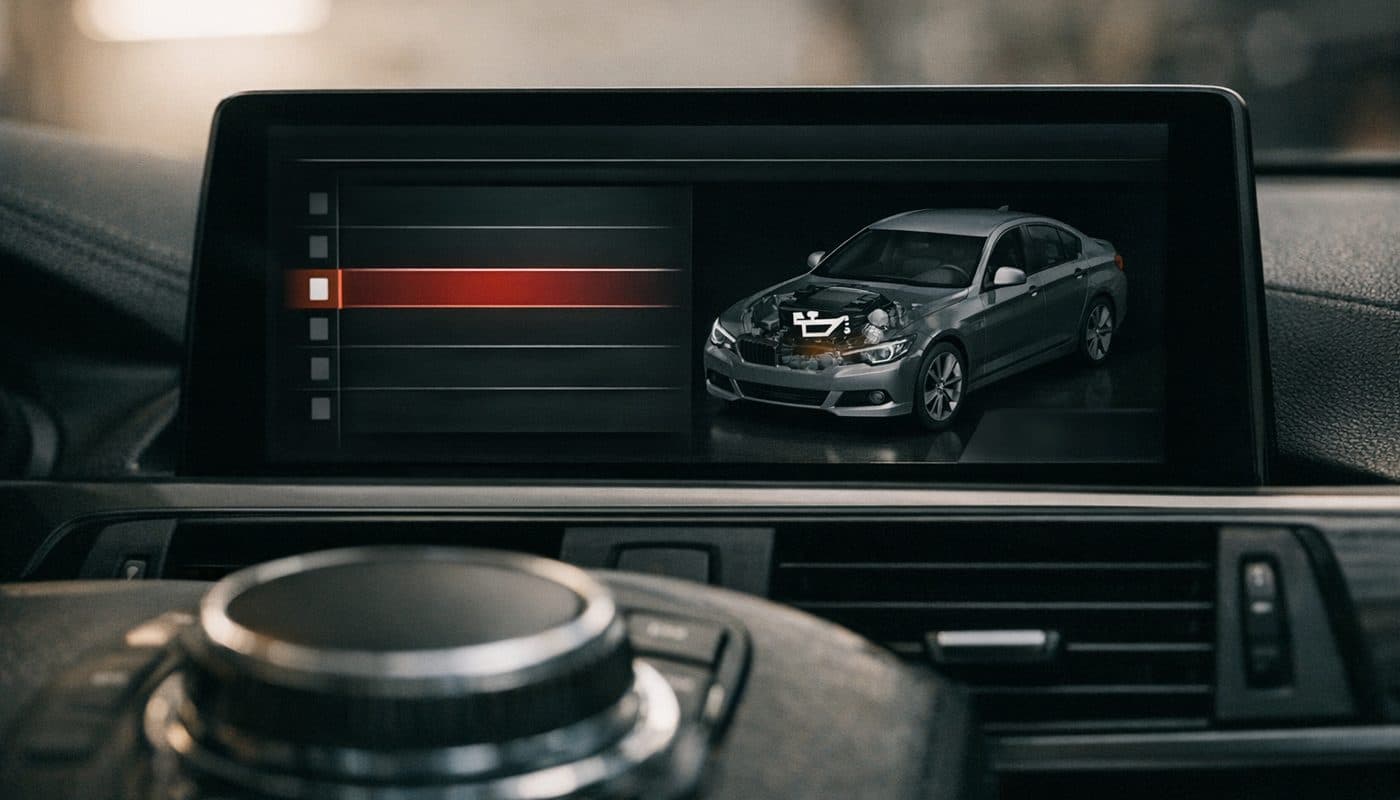
If your DME's oil level warning pops up between services, and it will on most turbo BMW engines to some degree, top up with oil carrying the same BMW Longlife approval your engine is already running, not just a similar viscosity from whatever's on the shelf at the gas station. Mixing an LL-01 5W-30 with an LL-17 FE+ 0W-20 top-up isn't going to melt your engine on the spot, but it dilutes the specific chemistry BMW engineered for your car, and it's a completely avoidable mistake if you keep a spare quart of the correct oil in the trunk.
Watching consumption on turbo engines
N54s and early N20s in particular are known for a bit of oil consumption between changes, so keep an eye on the level rather than waiting for a warning light. If you're chasing down consumption or planning your own oil change and want to confirm exact fill quantities for your specific engine, the oil capacity lookup saves you from guessing and overfilling, which brings its own problems with foaming and pressure.
DIY versus dealer, and what it costs either way
Doing it yourself
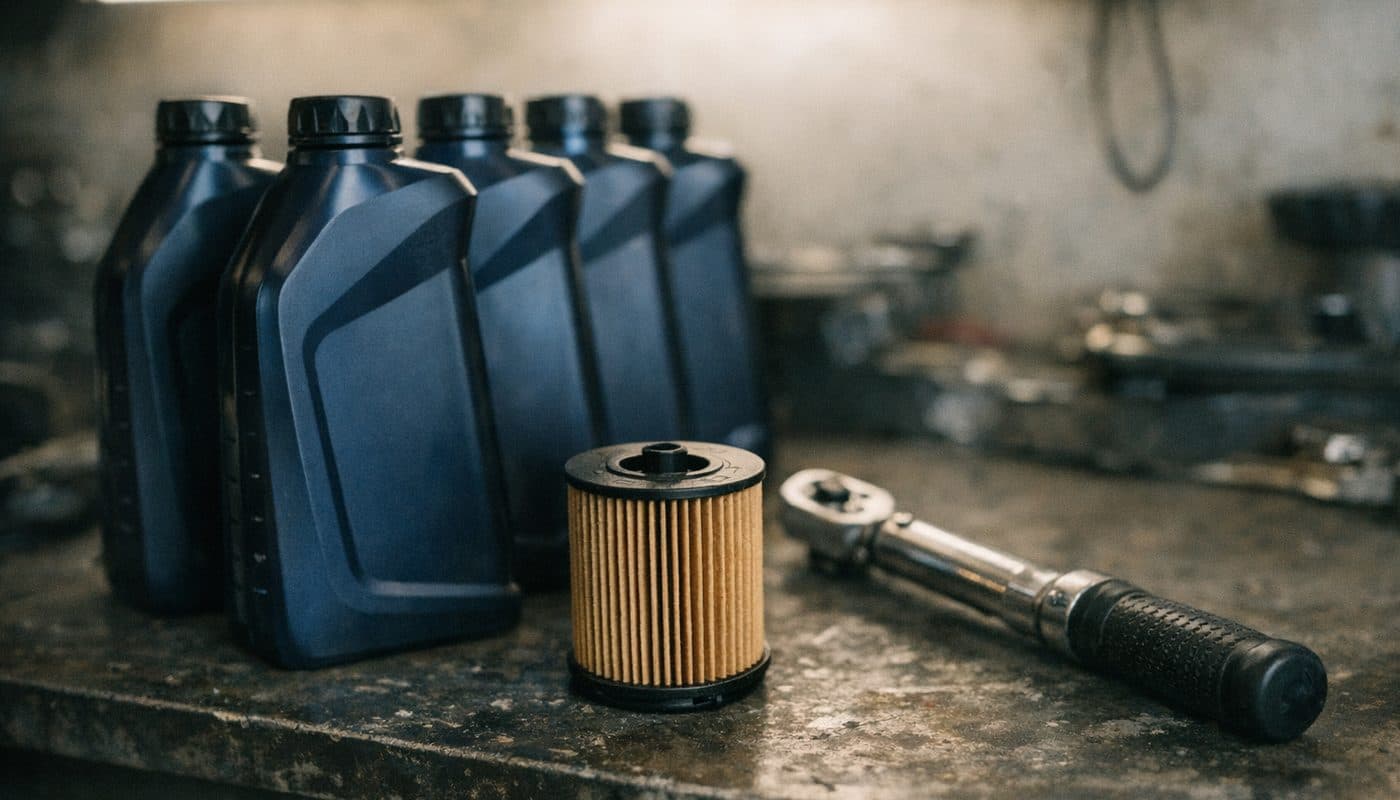
An oil change on most BMW four and six-cylinder engines is a genuinely approachable DIY job if you've got ramps, a torque wrench, and the correct filter housing tool, and it's a good opportunity to inspect the oil filter housing gasket while you're in there since those are a known slow-leak point on N52, N54, and N55 engines, covered in detail in my oil filter housing gasket guide. Buying the correct approved oil in bulk and doing it yourself typically runs cheaper than a shop visit once you've got the tools, though the first-time tool investment eats into that savings.
What a shop or dealer visit runs
Dealer oil changes on BMWs tend to run higher than independent shops purely because of labor rate and OEM parts markup, and I break down realistic ranges for both routes in my oil change cost guide if you want actual numbers rather than a vague "it depends." The short version is that using the correct approved oil doesn't have to mean paying dealer prices, independent European specialists stock the same approved oils at better labor rates in most markets.
OBDLink MX+ OBD2 Bluetooth Scanner
$139.95
FAQ
Can you put any 5W-30 oil in a BMW?
No, not safely as a blanket rule. Plenty of 5W-30 oils on the shelf don't carry any BMW Longlife approval at all, and even among approved 5W-30 oils, LL-01 and LL-04 versions have different additive packages built for different jobs, petrol versus DPF diesel. Match the approval number to your engine, not just the viscosity printed on the front of the bottle.
What is the best oil to put in a BMW?
The best oil for your BMW is whichever specific product carries the correct BMW Longlife approval for your exact engine and production date, whether that's LL-01, LL-04, LL-12 FE, or LL-17 FE+. There isn't a single universal "best" bottle across the whole BMW lineup because the approvals themselves are engine-specific, so the honest answer starts with checking your owner's manual or oil cap, not with a brand name.
Which brand engine oil is best for BMW?
Castrol Edge Professional, Shell Helix Ultra or Pennzoil Ultra Platinum, certain Liqui Moly Special Tec formulations, and TotalEnergies TWS or Quartz products all carry genuine BMW approvals depending on the specific SKU. None of these brands are universally approved across their entire lineup though, so it comes down to picking the exact product with the right Longlife number rather than trusting the brand name alone.
Is 5W-30 or 5W-40 better for BMW?
Neither is universally better, it depends on the engine and how it's used. Many LL-01 applications accept both, with 5W-40 sometimes preferred for engines under sustained high load, hot climates, or track use where a bit more film strength at temperature helps, while 5W-30 is the more common default for everyday driving. Check your specific engine's approved viscosity range before choosing between them rather than picking based on old habits from a different car.
Do I need different oil for a diesel BMW with a DPF?
Yes. Diesels with a particulate filter need a low-SAPS oil, typically LL-04, to avoid accelerating ash buildup inside the filter. Using a high-SAPS LL-01 oil in a DPF diesel won't cause immediate damage, but it works against the filter's designed service life over tens of thousands of miles.
Why does my B58 call for 0W-20 when my old six-cylinder took 5W-40?
Because BMW's newer B-series engines were engineered around tighter bearing clearances and lower internal friction targets as part of the LL-17 FE+ fuel-economy spec, and the thinner oil is a deliberate part of that design, not a cost-cutting shortcut. It's a genuinely different engineering philosophy from the older N-series engines, not a downgrade.
Is it okay to use an oil that "meets" BMW LL-04 instead of one that's approved?
It's usually functionally close, but it's not the same guarantee. "Meets" is the manufacturer's own claim of similarity, while "approved" means BMW actually tested and signed off on that specific formulation. If you're chasing warranty coverage or you just want the documented match, stick with formally approved oil.
How often should I actually change my BMW's oil?
BMW's extended service intervals assume you're running approved oil and driving under relatively normal conditions, but real-world intervals vary a lot by engine, driving style, and whether you're doing mostly short trips or highway miles. I cover realistic interval recommendations by engine family in my oil change interval guide rather than just quoting the blanket dashboard number.
Bottom line
Chasing the right BMW oil type isn't complicated once you stop thinking in terms of viscosity alone and start thinking in terms of the Longlife approval number, because that number is the actual spec BMW engineered your engine around, whether that's the old-school LL-01, the low-SAPS LL-04 for your DPF diesel, or the newer thin-film LL-12 FE and LL-17 FE+ for your B-series four or six-cylinder. Buy from a brand that holds genuine approval on that specific SKU, check the back label every time instead of trusting the front, and keep the same spec on hand for top-ups between services. Do that and you'll never have to wonder what's sitting in your sump. I'm Kamil, this is BimmerTalk, now go check your oil cap.