How to Reset the BMW Tyre Pressure Light
Affiliate disclosure. BimmerTalk is a proud partner of the Amazon Associates Program and Turner Motorsport. We may earn a small commission on qualifying purchases through our links, at no extra cost to you. Read the full disclosure.

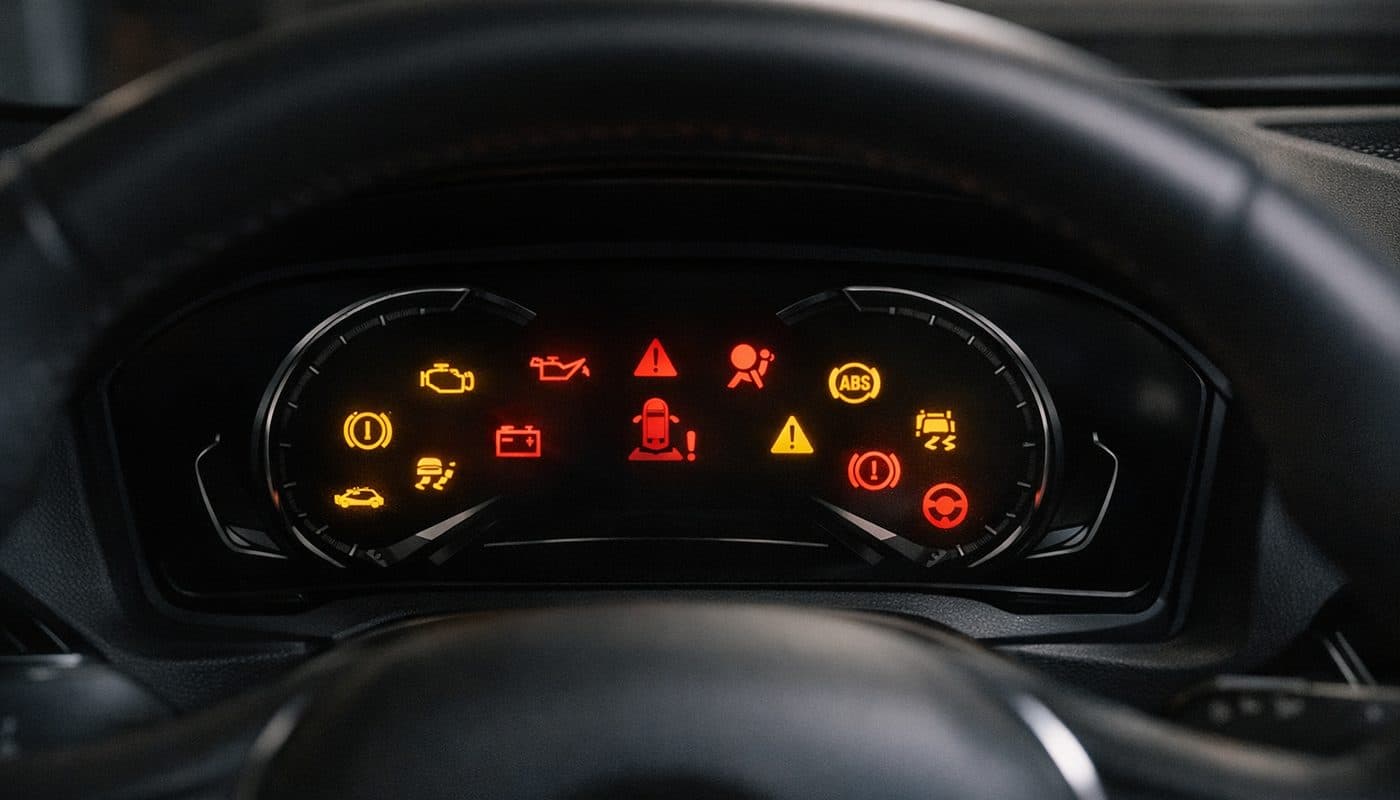
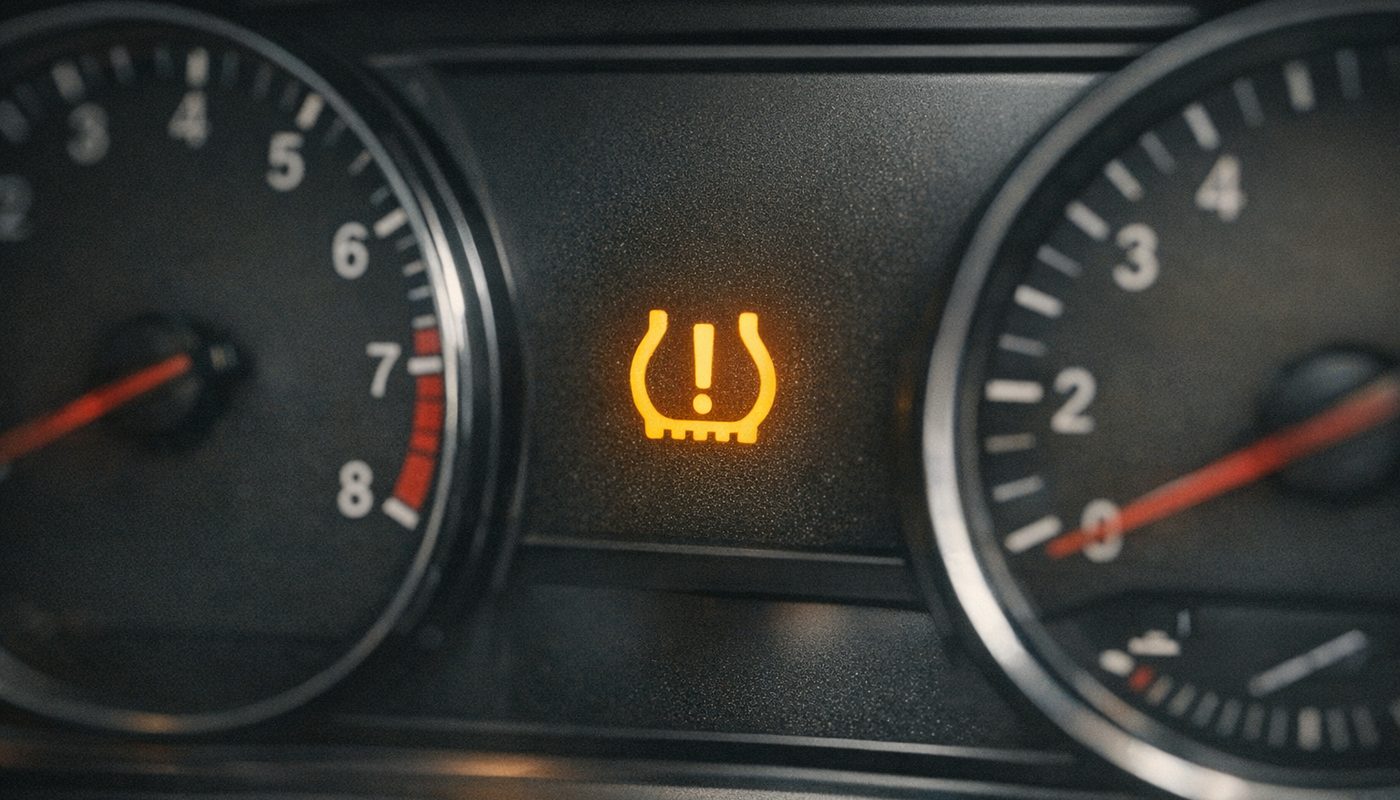
Every time that little tyre-pressure symbol lights up amber on my G20's cluster, I get a text from at least one reader asking "why won't this thing turn off, I already put air in it." Fair question, because BMW does not make this obvious. There's no giant red RESET button, and depending on what iDrive generation you've got, the menu path is buried somewhere different every single time BMW redesigns the software.
I've owned or wrenched on everything from E90s with the old dedicated reset button under the dash to a 330i with iDrive 8.5 that wants you to dig through three sub-menus just to tell it "yes, I know the tyres are fine now." I've also had the fun experience of a dead RDC sensor battery on a customer's F30 that looked exactly like a slow leak until I actually scanned it. So let's sort out what's actually happening on your dash, how to clear it properly for your specific system, and when that light means "reset the monitor" versus when it means "pull over, you've got a real problem."
Quick heads up before we start, this isn't the same button-mash procedure for every BMW. There are two completely different pressure monitoring systems BMW has used depending on year and market, and mixing them up is exactly why so many owners end up stuck at a reset that won't stick.
~7 years
RDC sensor lifespan
1-3 minutes
Typical reset time
RPA (indirect) & RDC (direct)
Systems in use
Every 2-3 weeks
Cold tyre check interval
Right, let's get into the actual mechanics of this, starting with the two systems BMW has fitted over the years, because everything else in this guide hinges on knowing which one your car has.
RPA vs RDC what's actually lighting up your dash
BMW has run two genuinely different tyre monitoring systems, and they behave nothing alike when it comes to resetting.
RPA the indirect system
RPA stands for reifendruckanzeige, roughly "tyre pressure display," but the important bit is that it's an indirect system. There are no pressure sensors in the wheels at all. Instead it watches wheel speed data coming off the DSC module and compares rolling circumference between all four corners. A tyre that's losing pressure spins very slightly faster than the others because its rolling radius shrinks, and the DSC picks up on that difference. Clever, cheap, and it's why older 3 Series and 1 Series models never needed you to buy replacement sensors.
The catch with RPA is that it needs a manual reset after every single top-up. It has no idea what the "correct" pressure actually is, it's just comparing relative speeds, so every time you add air you have to tell the car "this is now the new baseline." Skip that step and the light either stays on or comes back within a few miles once the system re-checks itself against the old baseline.
RDC the direct system
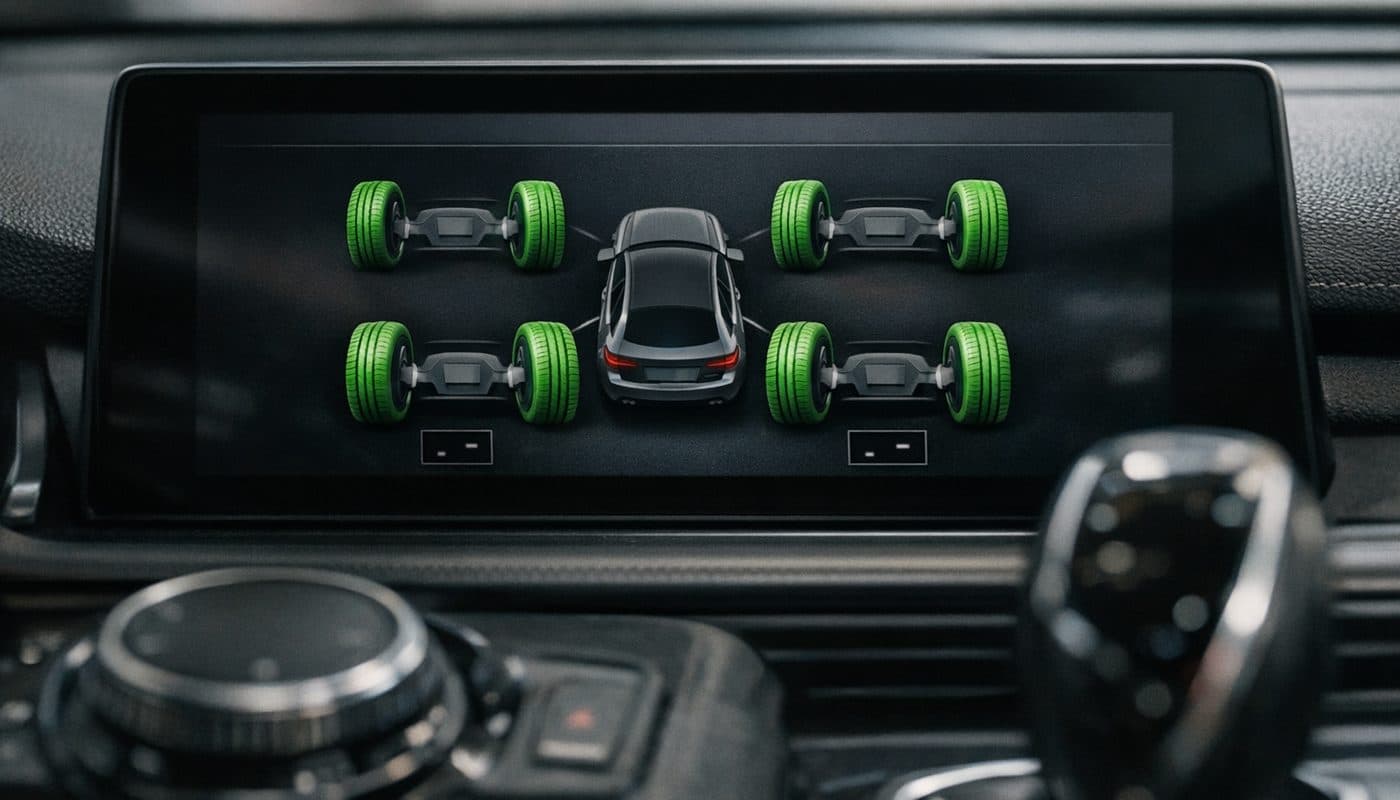
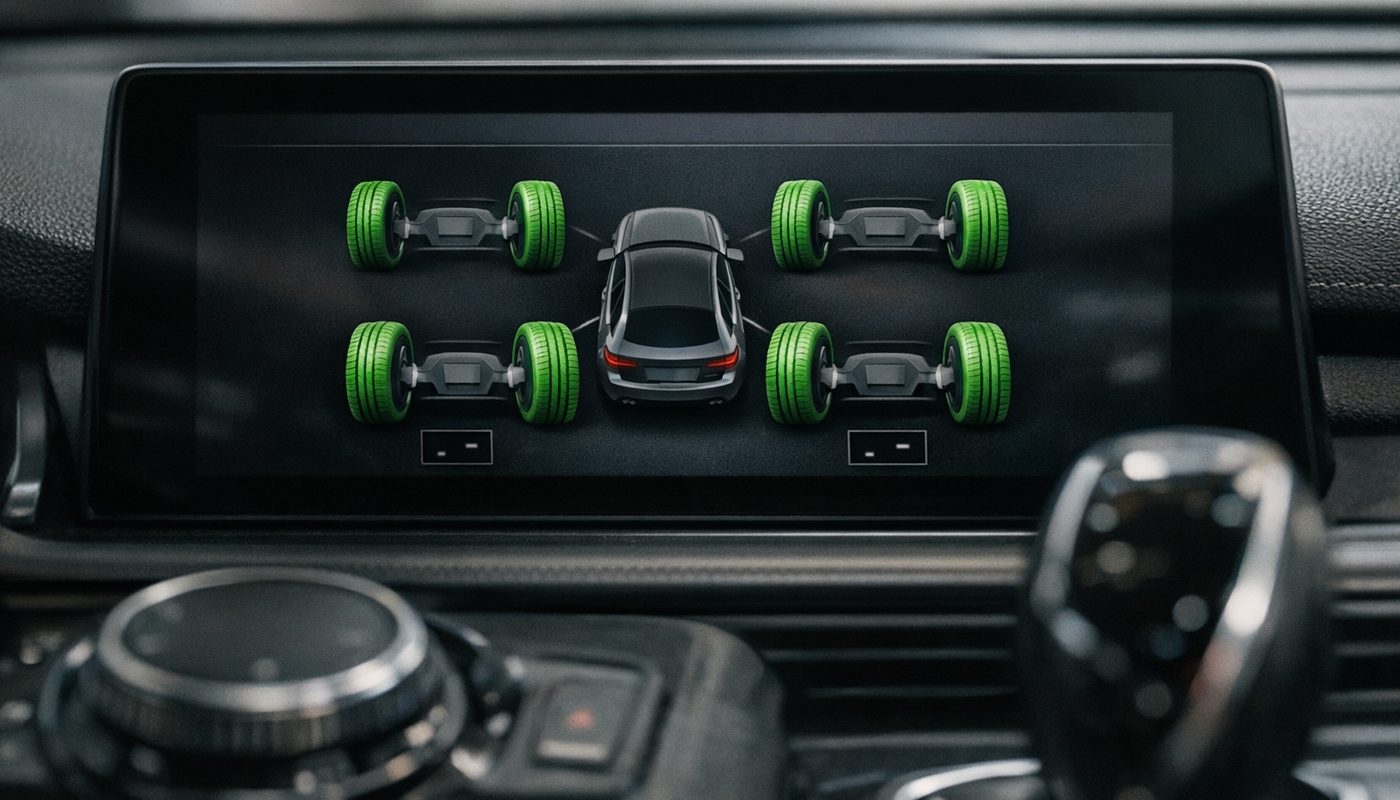
RDC, direct tyre monitoring, is what most G-series and later F-series cars run. There's an actual sensor inside each wheel, usually bolted to the valve stem, that measures real pressure and temperature and transmits it wirelessly to the RDC module. This is why on a G05 or G20 you can actually pull up a screen showing 32 psi front left, 31 psi front right, and so on, rather than a vague "something's off" warning.
RDC is more accurate and it'll tell you exactly which corner has the problem, but it comes with a real downside, those sensors have a battery inside them that isn't replaceable. More on that later because it's the single biggest reason this light won't stay off no matter how many times you reset it.
The reset walkthrough by iDrive generation
Here's the actual step by step for each system BMW has shipped. Find your iDrive gen below rather than following a generic YouTube video shot on a different car, because the wording genuinely changes.
CIC cars roughly 2008 to 2013
On CIC-equipped cars, most of the time you'll find the reset under iDrive Settings, sometimes labelled Vehicle info, then Tyre Pressure Monitor, then a straightforward Reset option. Select it, confirm, done. Some earlier examples skip the touchscreen entirely and use a dedicated physical reset button, often near the glovebox or under the steering column, that you hold down for about four seconds until the dash chimes.
NBT cars roughly 2013 to 2016
NBT follows a similar pattern but the menu usually lives under Vehicle status rather than Settings. Go Vehicle status, Tyre Pressure Monitor, Reset. A handful of NBT-era models still retain the physical button as well, so if you can't find it on screen, check the glovebox area or the lower dash trim near the steering column.
NBT Evo ID5 and ID6 cars
This is where BMW starts calling it "Perform reset" instead of just "Reset," which trips people up because they go looking for a button labelled exactly "Reset" and never find it. Path is Vehicle status, Tyre Pressure Monitor labelled RDC on these, then Perform reset.
iDrive 7 cars roughly 2018 onward
Same idea, Vehicle status, Tire Pressure Monitor, Perform reset. The car needs to be in a drive-ready state (ignition on, engine doesn't need to be running on most) but stationary. If you try this rolling into a petrol station car park it simply won't let you select it.
iDrive 8 and 8.5 my own G20 and most current G-chassis cars
This is the deepest one and honestly a bit annoying. You go Apps, then Vehicle, then Vehicle status, then Tire Pressure Monitor, then Perform reset. I've had passengers watch me do this and ask why BMW needs four menus for something this simple. No good answer for that one, it's just how the current software's laid out.
Before you even touch the reset menu
The single biggest mistake I see is people resetting the monitor before actually fixing the pressure problem. The reset doesn't add air to your tyres, it just tells the module "these are now the correct baseline values," so if you reset while a tyre's still low you've just taught the car that low pressure is normal.
Check with an actual gauge, not the fuel pump air machine
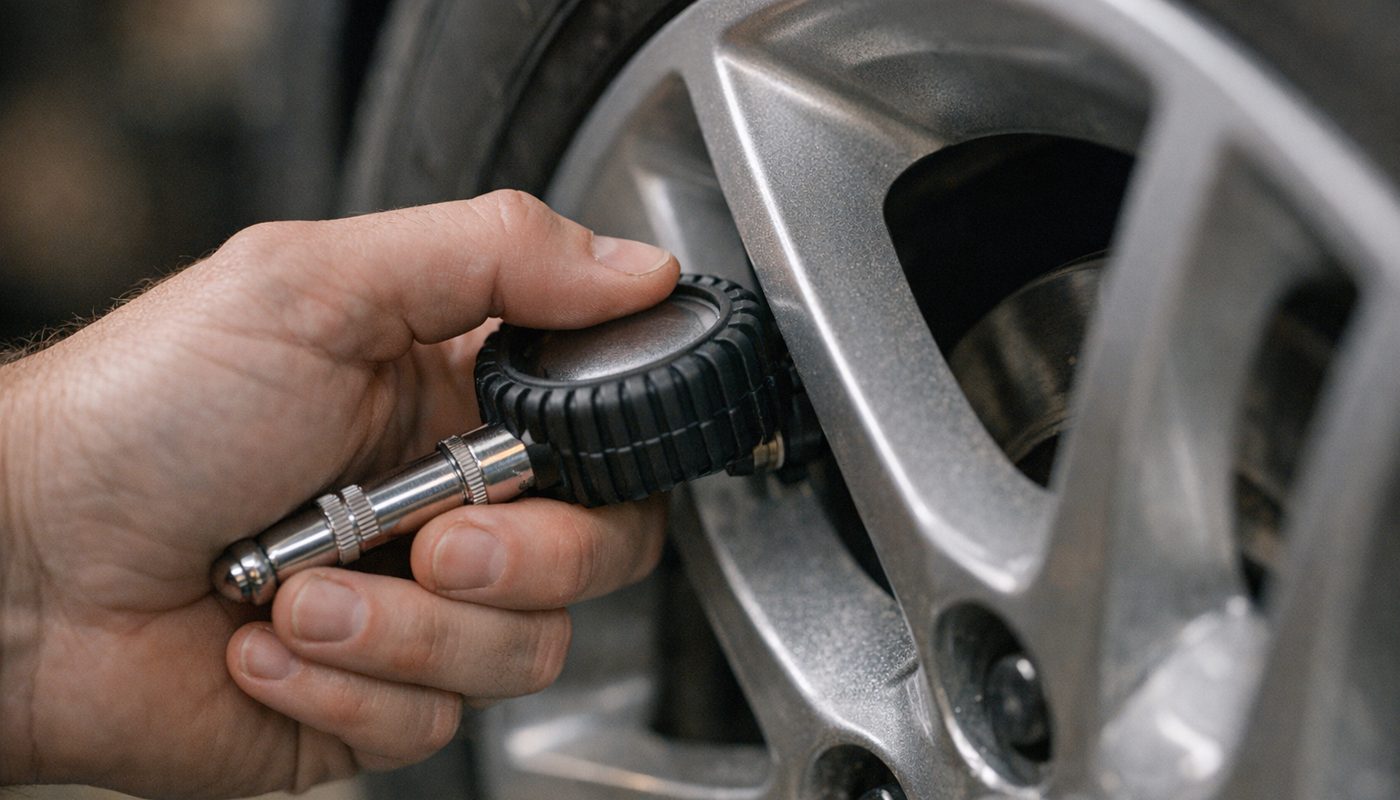
Those coin-operated air machines at petrol stations are notoriously inaccurate, sometimes out by 3-4 psi in either direction. I keep a decent digital gauge in the glovebox of every car I own and check pressures cold, meaning before you've driven more than a mile or two, ideally first thing in the morning. Driving heats the tyre and air expands, so a reading taken after twenty minutes on the motorway will read artificially high even on a genuinely underinflated tyre.
Match the door sticker not the tyre sidewall
The number moulded into the sidewall is the tyre's maximum rated pressure, not what BMW wants you running. Your actual target figures are on the sticker inside the driver's door jamb, and they're often split between a normal load figure and a higher figure for full load or higher speed touring. Get this wrong and you'll be chasing a light that keeps coming back because you've set the baseline to the wrong number in the first place.
Why the light keeps coming back after a reset
This is the bit nobody explains properly, and it's basically the entire reason this article exists. A reset that won't stick is almost never a software glitch, it's the car correctly telling you something's still wrong.
Temperature swings
Tyre pressure drops roughly 1 psi for every 10 degrees Fahrenheit the ambient temperature falls. Park the car on a mild evening at 60 psi door spec and wake up to a properly cold morning and you can easily be 3-4 psi down across all four corners without a single leak anywhere. This is by far the most common reason the light comes on in autumn and stays stubborn through winter, and it's not a fault, it's physics.
A genuine slow leak
If one specific corner keeps flagging low no matter how many times you top it up and reset, you've likely got a slow leak, could be a nail you haven't spotted, a corroded wheel bead seat (common on curbed alloys, which ties into why wheel spacer and fitment choices matter more than people think for seal integrity), or a failing valve stem seal. Soap and water on the tyre and around the valve will usually show you a stream of tiny bubbles within a minute or two.
A dead RDC sensor battery around the 7 year mark
Here's the one that catches people out because it looks identical to a slow leak from the driver's seat. RDC sensors are sealed units with a non-replaceable internal battery, and in practice that battery tends to give up somewhere around the 7 year mark, sometimes earlier if the car's covered big mileage. When the battery dies the sensor stops transmitting entirely, so you'll often see a permanently missing or flatline reading for that one corner rather than a slowly dropping number. No amount of adding air or resetting fixes a dead sensor, it needs replacing, and that's a job for a shop with the right scan tool since the new sensor has to be coded to the car.
If you want to check this yourself before booking it in, our fault code lookup tool is worth a look, and honestly having your own reader pays for itself the first time you avoid a diagnostic fee just to find out which sensor's dead. I run an OBDLink on my own car for exactly this kind of thing.

OBDLink MX+ OBD2 Bluetooth Scanner
$139.95
Amber versus red what BMW is actually telling you
This distinction matters more than most owners realise, and it's covered in more depth in our dashboard warning lights guide if you want the full breakdown of every symbol BMW uses.
Amber tyre symbol
Amber generally means a pressure warning or a system status warning, one or more tyres reading low, or the monitor simply needing a reset after inflation or tyre work. It's a "deal with this soon" light, not an emergency. Drive normally, get it sorted at your next stop.
Red tyre symbol
Red is a different animal entirely. That usually indicates severe and sudden pressure loss, the kind of situation where a tyre's genuinely failing or has lost a big chunk of air very quickly. If you see red rather than amber, don't treat it like a reset job.
When the reset option is greyed out or missing entirely
The car needs to be drive-ready but stationary
On every iDrive generation from NBT onward, the Perform reset option simply won't be selectable if the car's moving or hasn't fully entered its drive-ready state. Ignition on, foot on the brake if it's start-stop, car stationary, that's the state you need.
The system hasn't accepted the new pressures yet
Sometimes you'll top up the tyres, hit reset immediately, and the option's greyed out because the RDC module hasn't finished re-reading the new pressures from the sensors, which can take a couple of minutes of driving at low speed first. Give it a short drive around the block, then try again.
Older cars without the on-screen menu at all
A few CIC and even some late-E90 era cars never got a proper on-screen reset menu, they rely purely on the physical button. If you've been hunting through iDrive for ten minutes and finding nothing, stop looking at the screen and check the trim near the glovebox or steering column instead.
What you actually need to sort this properly
Honestly for most of this you need nothing more than a decent gauge and a cold morning, but if you want to actually see live pressure readings per corner, check for a genuine RDC fault versus a plain low-pressure warning, or code a replacement sensor down the line, a proper OBD2 reader earns its keep fast. I've used both the OBDLink CX and the OBDLink MX on various BMWs and they're the two I actually trust with this kind of live sensor data rather than the sub-20 quid generic dongles that half the time can't even see the RDC module.

OBDLink CX Bluetooth 5.1 OBD2 Adapter for BimmerCode
$79.95
OBDLink MX+ OBD2 Bluetooth Scanner
$139.95
FAQ
Why is my BMW tire pressure reset stuck at 49 percent
That percentage counter you sometimes see is the RDC module gradually re-validating pressure readings from all four sensors before it'll let the reset fully complete, it's not a progress bar for the reset itself. If it hangs at a fixed number for more than a short drive, it usually means one sensor isn't reporting properly, either low battery or a genuine fault, and the module can't finish confirming all four corners.
Why is my BMW low tire pressure light on but tires are fine
Two likely causes. Either it's a temperature swing dropping pressure just enough to trip the threshold without anything actually being wrong, or the monitor simply hasn't been reset since the last time pressures were adjusted, so it's still comparing against an old baseline. Check actual cold pressures with a gauge first before assuming the sensor's lying to you.
How to get rid of the TPMS light on a BMW
Set all four tyres to the door-jamb pressures cold, then run the Perform reset (or Reset, on older cars) from the correct iDrive menu for your generation as covered above, or press and hold the physical button if your car has one. If it comes straight back within a few miles, that's your sign it's a genuine leak or a dying sensor rather than a stale baseline.
How long does a BMW tire pressure reset take
The reset itself is instant, a couple of seconds after you confirm it. What takes longer is the RDC module fully re-validating all four sensors afterward, which typically needs a short drive of five to ten minutes for the readings to settle and the light to actually go out.
Does BMW use one system across all models
No, and that's the whole reason resets confuse people online. Older and some entry-level cars use RPA, the indirect system reading wheel speed off the DSC. Most current G-series cars use RDC with actual sensors in each wheel. Same badge, genuinely different systems, different behaviour.
Can I reset it myself or does it need a dealer
You can absolutely do the reset yourself through iDrive, no tools required beyond correctly inflated tyres. Replacing a dead RDC sensor and coding it to the car is the part that usually needs a scan tool with the right coding function, which is where something like an OBDLink setup or a shop visit comes in.
Why does the light come back every winter
Cold air is denser, so pressure drops as temperature falls, roughly 1 psi per 10 degrees Fahrenheit. This is completely normal and not a fault, it just means you should be checking and topping up pressures more often through the colder months rather than resetting and hoping it stays gone.
Bottom line
Ninety percent of the time this light is exactly what it looks like, either you need to add air and reset the baseline, or the temperature's dropped and physics has done its thing. The other ten percent is where people waste money, chasing a "reset that won't hold" when actually a wheel's got a slow leak or an RDC sensor's simply run out of battery after seven-odd years of faithful service. Get the actual pressures right first, know whether you're running RPA or RDC, follow the menu path for your specific iDrive generation, and you'll have this sorted in under two minutes most of the time. If it keeps coming back after all that, don't keep resetting it into oblivion, get it scanned properly and find out which corner's actually lying to you. Drive safe, check your tyres cold, and I'll see you in the next one. Kamil.