Every BMW Dashboard Warning Light Explained
Affiliate disclosure. BimmerTalk is a proud partner of the Amazon Associates Program and Turner Motorsport. We may earn a small commission on qualifying purchases through our links, at no extra cost to you. Read the full disclosure.

Every BMW owner has had that moment. You're pulling out of the driveway, coffee in the cupholder, and the cluster lights up like a Christmas tree for half a second during the bulb check. Nine times out of ten everything goes dark again and you drive off without a second thought. It's that tenth time, when one symbol stays lit, that people start texting me photos at 7am asking "is this bad?"
I've been wrenching on these things for 15 years, spent a year on the other side of the counter at a BMW and MINI dealer, and I still daily an F30... sorry, a G20 330i with a B58 under the hood. I've seen the whole spectrum, from a coolant light that meant "pull over now or meet your head gasket" to a tyre pressure warning that meant "it's November in Michigan, chill out." The trick is knowing which is which before you're standing on the shoulder of the interstate.
This is the reference I wish existed when I bought my first E90. Every major BMW warning light, grouped by colour because that's genuinely how BMW designed the system, what it actually means, whether you can keep driving, what usually causes it, and whether a fifty dollar OBD2 reader will even see the fault or if you need something with real BMW module access.
3 (red, amber, blue/green)
Colour codes
13 major warnings
Lights covered
2 (oil pressure, coolant temp)
Stop-now lights
Roughly 60% of them
Needs BMW scanner
How BMW's warning light colour system actually works
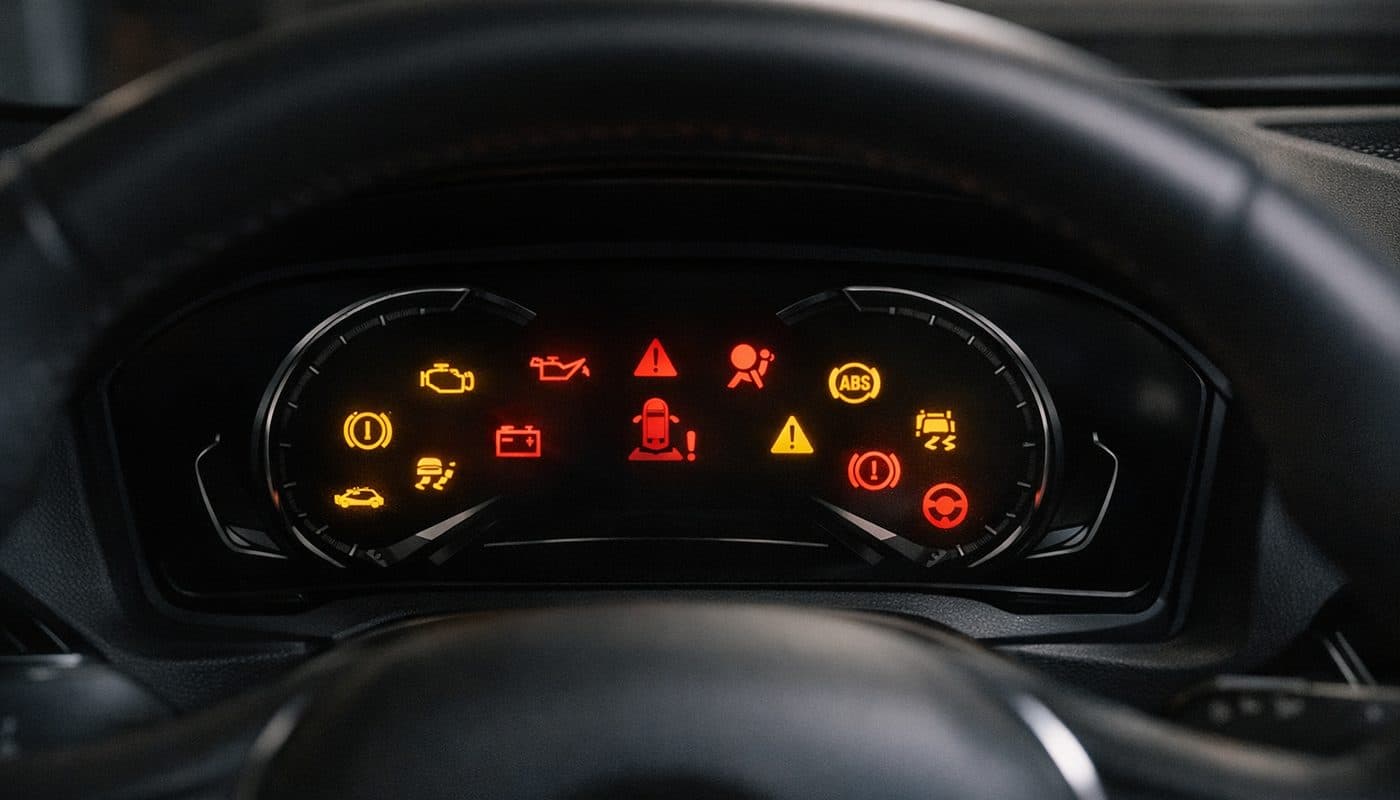
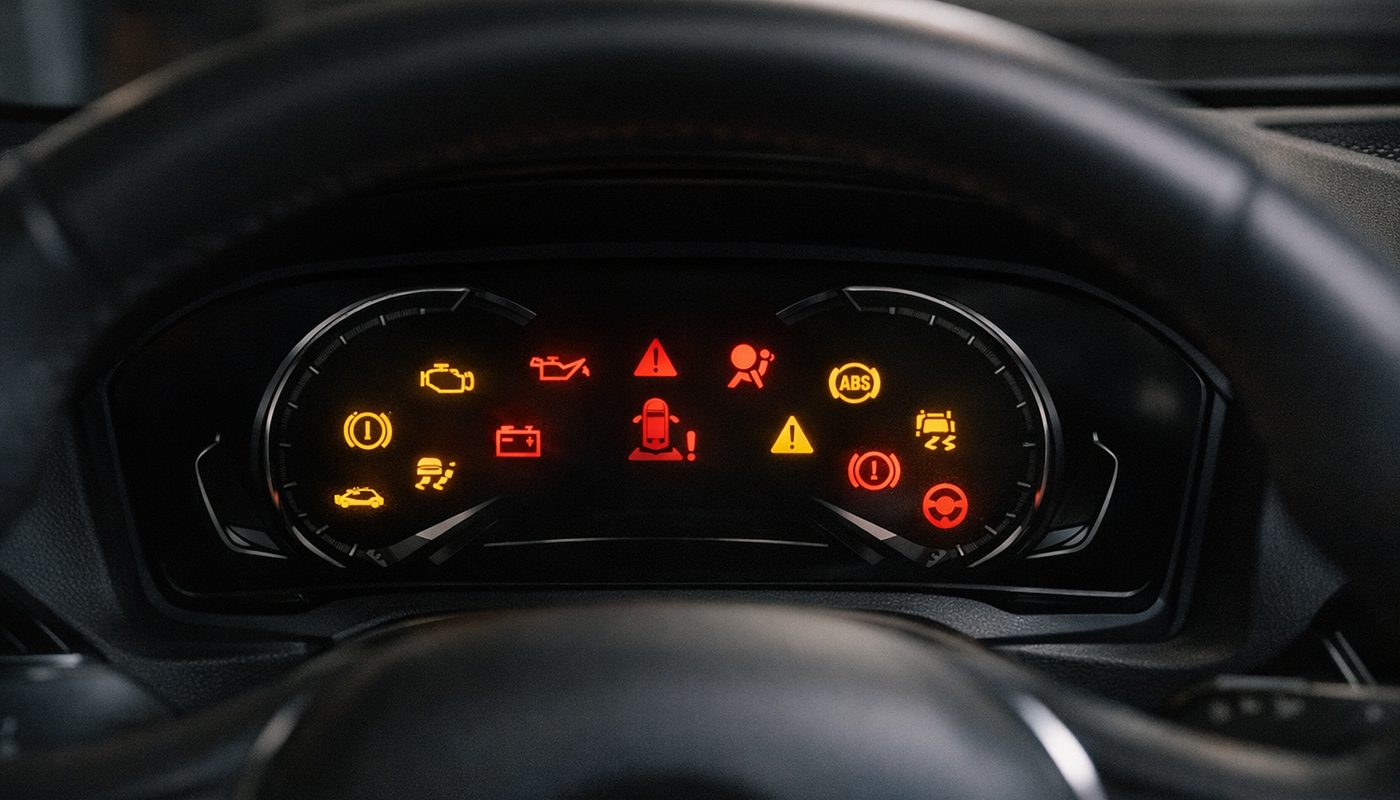
BMW didn't reinvent the wheel here, they just applied it more consistently than most brands. Every symbol on an E90, F30, G20 or G05 cluster falls into one of three buckets, and the colour tells you the urgency before you even know what the icon means.
Red lights, stop safely and shut it off
Red on a BMW cluster is not a suggestion. It means something is happening right now that can turn into a five figure repair bill or a genuinely dangerous situation if you keep driving. Oil pressure and coolant temperature are the two big ones here, and both of them mean pull over, find a safe spot, and kill the engine. Not "get to the next exit," not "drive the last two miles home." Now.
Amber and yellow lights, drive with caution and sort it soon
This is where 80 percent of the warning lights on a BMW live, and it's also where most of the panic texts come from. Check engine, drivetrain malfunction, DSC, ABS, brake pad wear, tyre pressure, EPS steering in its milder form, all of these are amber. They mean the car has detected a fault, it's often protecting itself by limiting something (power, traction assist, steering boost), but it's usually not going to strand you in the next five minutes. Usually. Get it scanned soon, don't ignore it for three months.
Blue and green lights, purely informational
High beams, turn signals, cruise control active, that sort of thing. These aren't warnings at all, they're status indicators, and I'm not going to waste your time on them here. This guide is about the lights that make your stomach drop a little.
| Warning light | Colour and severity | Safe to keep driving |
|---|---|---|
| Check engine (MIL) | Amber, moderate | Usually yes for a short trip if it runs normally |
| Drivetrain malfunction | Amber to red, limp mode common | Sometimes, gently, avoid hard acceleration |
| Reduced power / half engine | Amber, torque reduction | Only to reach a shop, drive gently |
| DSC / DTC | Amber, stability control off | Yes in dry conditions, handling is reduced |
| ABS | Amber, anti-lock disabled | Yes, but braking in an emergency is reduced |
| Brake pad wear | Amber, service reminder | Yes, but replace soon |
| Tyre pressure (RDC) | Amber, TPMS warning | Yes, check pressures immediately |
| Airbag / SRS | Red or amber depending | Only to get it fixed, restraints may be disabled |
| EPS steering | Amber or red | Only to a safe spot, don't drive far |
| Battery / charging | Amber or red | Not for long, car can stall once battery drains |
| Coolant temperature | Red, critical | No, stop as soon as it's safe |
| Oil pressure | Red, critical | No, shut the engine off immediately |
| Transmission fault | Amber or red | Sometimes short distance only, otherwise stop |
| xDrive / AWD | Amber | Usually yes, traction assistance reduced |
Check engine (MIL)
- Colour and severity
- Amber, moderate
- Safe to keep driving
- Usually yes for a short trip if it runs normally
Drivetrain malfunction
- Colour and severity
- Amber to red, limp mode common
- Safe to keep driving
- Sometimes, gently, avoid hard acceleration
Reduced power / half engine
- Colour and severity
- Amber, torque reduction
- Safe to keep driving
- Only to reach a shop, drive gently
DSC / DTC
- Colour and severity
- Amber, stability control off
- Safe to keep driving
- Yes in dry conditions, handling is reduced
ABS
- Colour and severity
- Amber, anti-lock disabled
- Safe to keep driving
- Yes, but braking in an emergency is reduced
Brake pad wear
- Colour and severity
- Amber, service reminder
- Safe to keep driving
- Yes, but replace soon
Tyre pressure (RDC)
- Colour and severity
- Amber, TPMS warning
- Safe to keep driving
- Yes, check pressures immediately
Airbag / SRS
- Colour and severity
- Red or amber depending
- Safe to keep driving
- Only to get it fixed, restraints may be disabled
EPS steering
- Colour and severity
- Amber or red
- Safe to keep driving
- Only to a safe spot, don't drive far
Battery / charging
- Colour and severity
- Amber or red
- Safe to keep driving
- Not for long, car can stall once battery drains
Coolant temperature
- Colour and severity
- Red, critical
- Safe to keep driving
- No, stop as soon as it's safe
Oil pressure
- Colour and severity
- Red, critical
- Safe to keep driving
- No, shut the engine off immediately
Transmission fault
- Colour and severity
- Amber or red
- Safe to keep driving
- Sometimes short distance only, otherwise stop
xDrive / AWD
- Colour and severity
- Amber
- Safe to keep driving
- Usually yes, traction assistance reduced
Check engine light and the drivetrain warnings that actually mean something
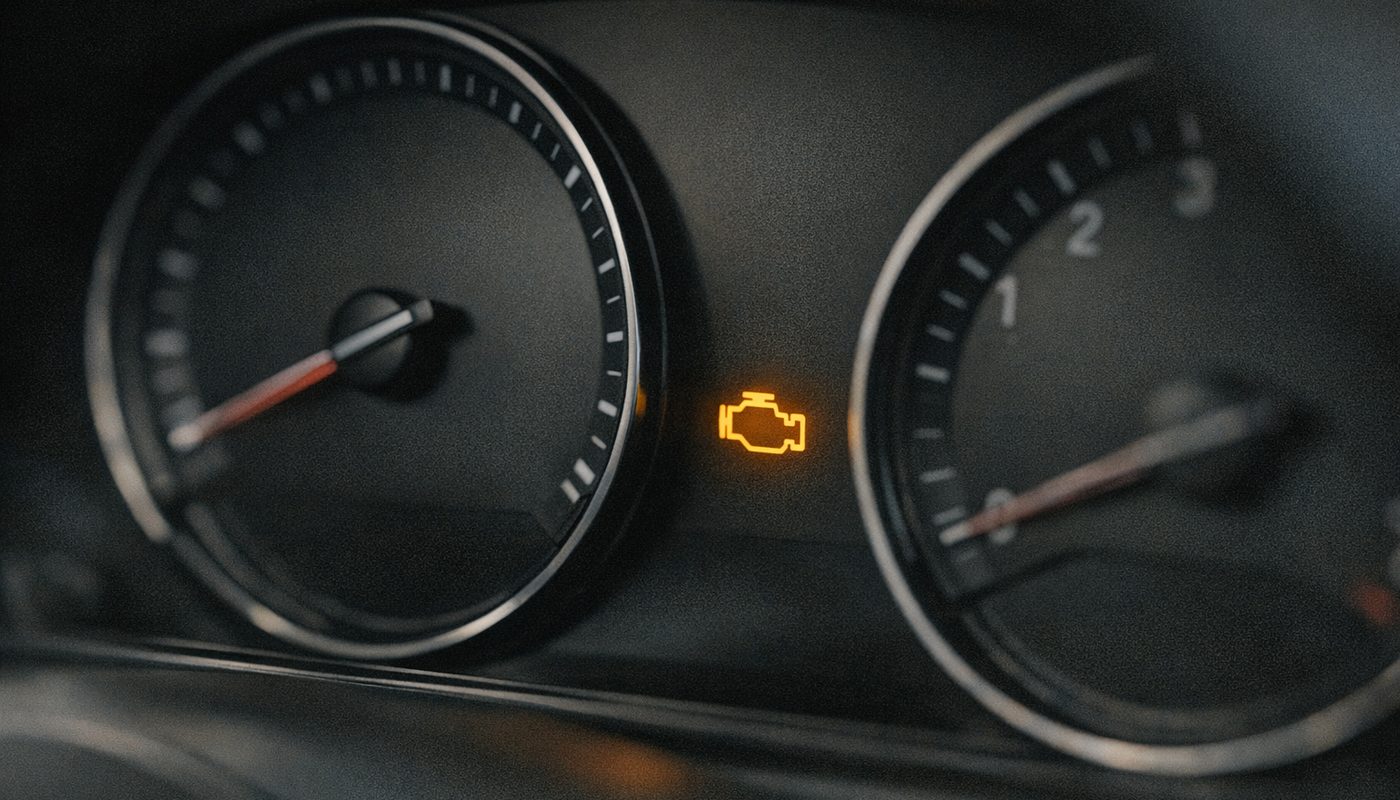
The check engine light, BMW's MIL
This is the one everyone knows and almost everyone over-reacts to, or under-reacts to, there's rarely a middle ground. On a modern DME (that's BMW-speak for the engine control unit), an amber check engine light usually means a misfire, an oxygen sensor drifting out of range, an EVAP leak somewhere in the fuel tank venting system, or catalytic converter efficiency dropping below threshold. None of those are emergencies. Your N55 or B58 isn't going to grenade itself because of a lazy secondary O2 sensor.
The good news is this is the one light on the whole list that a cheap generic OBD2 scanner will read reliably, because check engine codes are standardized emissions codes across every manufacturer. I go deeper into the specific patterns and codes in this check engine light breakdown, and if you want to understand how BMW's fault code numbering actually works once you've pulled a code, this fault codes guide will save you a lot of Googling random five-digit numbers.
Drivetrain malfunction, the message everyone panics about
"Drivetrain Malfunction, Drive Moderately" is one of the most generic, least helpful messages BMW ever put on a screen, and it's also one of the most common reasons people land on my site at 11pm. It can mean a misfire, a fuel pressure fault, boost pressure deviation on a turbo model, a bad sensor, or even a transmission torque limit kicking in. The message itself tells you almost nothing, it's just BMW's way of saying "several systems agreed something's off, so I'm derating power to protect things."
I wrote a whole piece on this exact warning because it comes up so often, check it out here if this is what sent you looking for answers today. Short version, it usually drives fine at reduced power, get it scanned before you do anything aggressive with the throttle.
Reduced power, aka the half-engine icon
Same family as drivetrain malfunction, different icon, same root causes. You'll feel it as sluggish acceleration and the DME capping RPM or torque output. It's the car protecting itself, not necessarily the car dying. Baby it to a shop, don't try to prove a point to the guy in the next lane.
DSC, DTC and ABS, when the chassis electronics wave a flag
DSC and DTC lights
Dynamic Stability Control is BMW's traction and stability nanny, and when that amber light comes on with the little skidding car icon, it usually means DSC has either partially or fully deactivated itself. Common culprits are a wheel-speed sensor going flaky, the steering angle sensor needing recalibration after an alignment, a yaw sensor fault, or the DSC pump/module itself acting up. It's genuinely safe to drive in the dry, you've just lost your electronic safety net, so treat wet roads and quick lane changes with more respect than usual.
DSC faults are one of the areas where I see people waste money throwing parts at the problem instead of reading the actual code first. I put together a full DSC service guide that covers the usual sensor failures by chassis code, worth a read before you order anything.
ABS light
Similar story, different system. ABS disabled means your anti-lock braking is out of the picture, your regular brakes still work fine, but in a genuine panic stop you could lock a wheel where the car would normally have prevented it. Wheel-speed sensors are the number one cause by a wide margin, especially on E90s and F30s where the sensor rings can corrode. Low battery voltage can also trigger it temporarily, which is why sometimes it clears itself after a good drive.
Brake pad wear and tyre pressure, the low-drama warnings
Brake pad wear light
This one's honest, boring, and cheap to sort. BMW runs a wear sensor in the pad material itself on most models, and when it wears down to the wire it grounds out and triggers the light. No scan tool needed most of the time, the car tells you directly through the cluster or the Condition Based Service menu. Get pads and probably rotors ordered, it's not an emergency but don't let it ride for months either or you'll be replacing rotors you didn't need to.
Tyre pressure, the RDC or RPA light
Every BMW since the mid 2000s has some form of tyre pressure monitoring, either direct sensors (RDC) or the indirect system that watches wheel speed differences. Ninety percent of the time this light means exactly what it says, a tyre lost pressure from temperature drop or a slow leak. Check all four immediately. The other 10 percent is a dying RDC sensor battery (they don't last forever) or the system needing a relearn after a wheel swap, which is common if you run separate winter wheels.
Airbag and steering warnings, the ones I take seriously
Airbag / SRS light
This is one of the few amber-or-red lights where I genuinely tell people to stop worrying about the drive and start worrying about the fix. A lit SRS light usually means the airbags, seatbelt pretensioners, or both have been disabled by the module, which means in a crash you might not get the protection you're paying for. Common causes are a seat occupancy sensor going bad (very common on E90s), a belt buckle switch, or corroded wiring under the seat rails from spilled drinks over the years. It's rarely a crash sensor itself. Drive it if you have to get somewhere, but get it looked at properly, and don't put it off for a year like a lot of people do because "the car still runs fine."
EPS, electric power steering
Depending on severity this shows amber (reduced assist) or red (assist basically gone). Low battery voltage is a surprisingly common trigger, so is a failing torque sensor in the steering column or a fault in the EPS motor itself. If the steering suddenly feels heavy, don't muscle through traffic for twenty minutes assuming it'll sort itself out, get to a safe spot and reassess. A full loss of assist at low speed is annoying but manageable, at higher speed it's genuinely a different animal.
Battery, coolant and oil pressure, the electrical and mechanical essentials
Battery and charging light
Red battery symbol usually means the charging system has stopped working entirely, which on a modern BMW with its intelligent battery sensor (IBS) and smart alternator setup can happen faster than people expect. These cars don't just trickle charge constantly like older stuff, the DME actively manages charging load, so when it fails the battery can drain in under an hour of driving with lights and climate control running. If you see this, don't plan on driving across town, get somewhere safe and check the belt and alternator connections before the car actually dies on you mid-drive.
Coolant temperature light
Red, and one of only two lights on this whole list where I say stop the car immediately, no exceptions. Low coolant, a failed thermostat, a dead water pump, a stuck cooling fan, or a leak somewhere in the plastic end tank radiator that all these cars seem to develop eventually. Keep driving on this and you're looking at a warped head or a blown head gasket, and on an N55 or B58 that's not a cheap mistake to make because you wanted to get home first.
Oil pressure light
The other stop-now light, and honestly the more serious of the two. Low oil level, a failed oil pump, a blocked pickup screen, or a bad pressure switch, any of these can mean your bearings are running dry right now. Shut the engine off as soon as it's safe, don't baby it, don't try to nurse it the last mile. I've seen a guy destroy a otherwise healthy M54 because he figured the light was "probably just a sensor" and drove another 15 minutes. It wasn't just a sensor.
Transmission and xDrive warnings
Transmission fault
Whether it shows amber or red depends on how severe the fault is. Mechatronic unit issues, valve body problems, low fluid pressure, solenoid faults, or the transmission simply overheating under hard driving can all trigger this. If the car still shifts normally and moves fine, a short careful drive to a shop is usually okay. If it's hunting for gears, slipping, or refusing to engage properly, stop and get it flatbedded, transmission damage compounds fast once it starts.
xDrive and AWD system warning
Common on the F-series and G-series AWD cars, this usually points to a transfer case actuator fault, wheel-speed sensor mismatch feeding bad data to the AWD controller, or a general electrical gremlin. Normal dry-road driving is usually fine, you've just lost some of the traction redistribution that makes xDrive feel so seamless. In snow or on ice, treat the car like it's rear-wheel drive again until it's fixed, because functionally, that's what you've got.
What you actually need to diagnose these lights properly
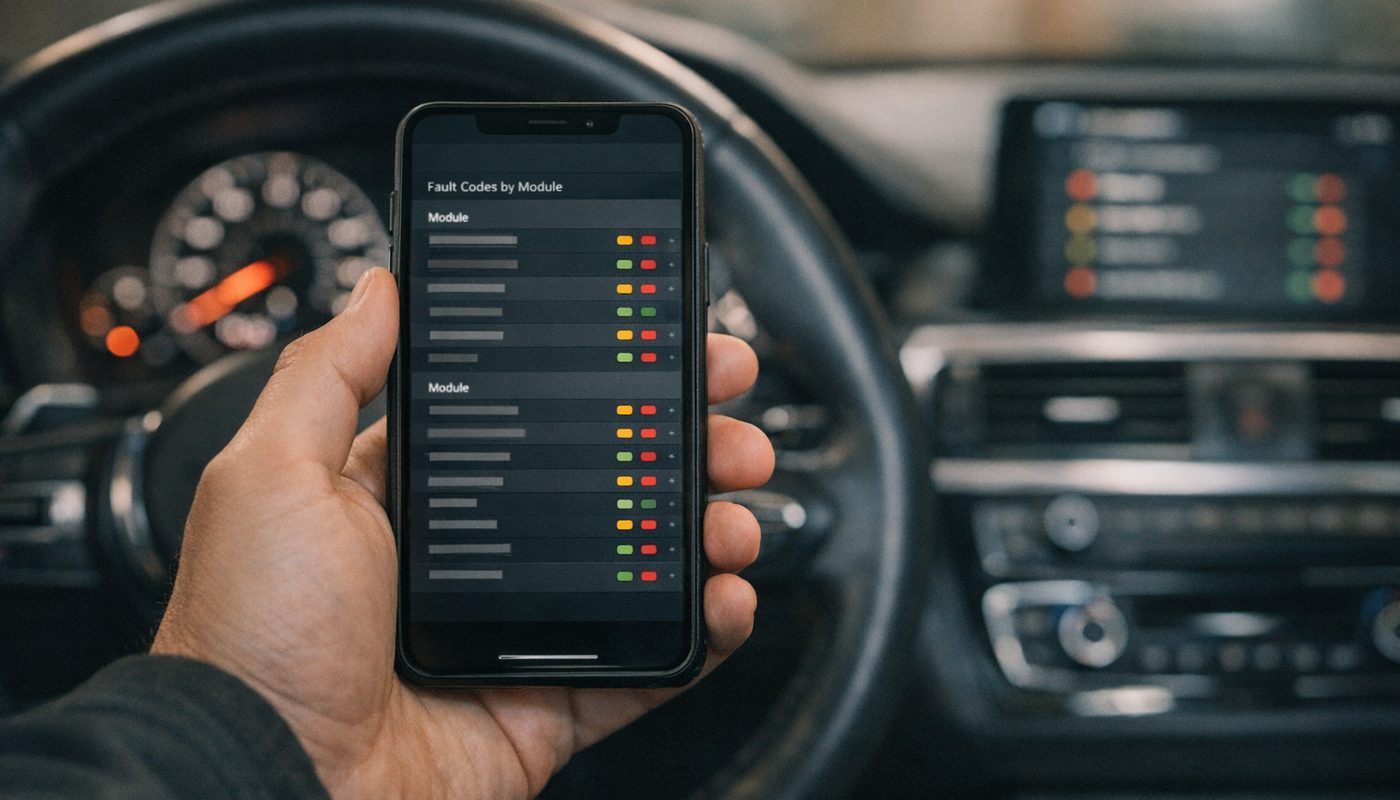
Here's the honest bit that dealerships and generic "warning light guide" articles never tell you. A basic fifteen dollar Amazon code reader will happily read your check engine light because that's a standardized emissions code. It will almost certainly not read your DSC fault, your airbag code, your EPS steering fault, or your transmission-specific code, because those live in BMW-specific modules that generic OBD2 protocol doesn't fully access.
This is where a proper BMW-capable Bluetooth adapter earns its keep. I run through the differences in detail in my full scanner comparison, but the short version for this article is simple, you want something that talks to more than just the engine module.
For deep, module-level BMW diagnosis
If you actually want to see DSC, airbag, EPS and transmission fault codes, not just engine codes, you need a proper BMW-focused adapter paired with an app like BimmerCode or a full diagnostic suite. This is the tier I recommend to anyone who's serious about maintaining their own car long term.

OBDLink CX Bluetooth 5.1 OBD2 Adapter for BimmerCode
$79.95
For solid, reliable everyday use
If you mostly just want to clear a check engine light, monitor live data, and occasionally poke at other modules without spending a fortune, this is the one I still keep in my own glovebox.

For a budget-friendly starting point
Not everyone needs the full toolkit right away. If you just want to stop guessing at what a light means and start reading actual codes, this is a genuinely usable entry point without breaking the bank.

Veepeak OBDCheck BLE+ Bluetooth OBD2 Scanner - iOS & Android
$41.99
| Scanner tier | What it reads | Best for |
|---|---|---|
| Basic generic reader | Engine/emissions codes only | Clearing check engine light, nothing else |
| Mid-range Bluetooth adapter | Engine plus most chassis modules | DSC, ABS, general diagnosis |
| Full BMW-focused adapter | All modules including SRS, EPS, transmission | Serious DIY owners and long-term maintenance |
Basic generic reader
- What it reads
- Engine/emissions codes only
- Best for
- Clearing check engine light, nothing else
Mid-range Bluetooth adapter
- What it reads
- Engine plus most chassis modules
- Best for
- DSC, ABS, general diagnosis
Full BMW-focused adapter
- What it reads
- All modules including SRS, EPS, transmission
- Best for
- Serious DIY owners and long-term maintenance
Whatever you buy, pair it with a proper lookup once you've got the code in hand, because a five digit BMW fault code on its own is meaningless without context. My fault code lookup tool exists exactly for this, punch in what your scanner spits out and get a plain-English explanation instead of guessing.
FAQ
What are the BMW warning lights
They're the icons and messages that appear in the instrument cluster to flag a fault somewhere in the car, and BMW groups them by severity using colour. Red means stop, amber means drive with caution and get it checked, blue and green are just status indicators with no real urgency at all.
What are the most common dashboard warning lights
In my experience the top three by far are check engine, tyre pressure (RDC), and brake pad wear, simply because they're triggered by normal wear and tear rather than a genuine failure. DSC and drivetrain malfunction come up a lot too, especially on cars past 80,000 miles with aging sensors.
What do orange warning lights mean on a BMW dashboard
Orange, which most people call amber or yellow, means the car has detected a fault that needs attention soon but generally isn't an immediate danger. You can usually keep driving carefully, but you shouldn't ignore it for weeks. Think check engine, DSC, ABS, tyre pressure, brake wear, most of the common lights fall into this category.
What do the different warning lights mean on a BMW 1 Series dashboard
The 1 Series, whether it's the E87, E82 or F20/F21, uses the exact same colour and icon logic as every other BMW from that era. There's no separate warning system just for that model, so everything covered in this guide, check engine, DSC, ABS, airbag, coolant, oil pressure, applies directly.
Is it safe to drive with a check engine light on
Usually yes for a short distance if the car is running smoothly with no rough idle or obvious power loss, but get it scanned within a few days. A flashing check engine light, as opposed to solid, is different and means an active misfire that's dumping unburnt fuel into the catalytic converter, that one you should stop for sooner rather than later.
Why does my BMW show drivetrain malfunction and reduced power at the same time
These two often appear together because they're both symptoms of the same protective response from the DME or transmission control module. Something upstream, a sensor, a fuel or boost issue, a misfire, has triggered the car to limit torque output, and the reduced power icon is just the visual side effect of that limit being applied.
Do I need a BMW specific scanner or will a cheap one work
For check engine and general engine codes, a cheap generic OBD2 reader is genuinely fine. For anything in the DSC, ABS, airbag, EPS, or transmission systems, you need a scanner with proper BMW module access, a generic fifteen dollar reader simply won't see those codes at all, it'll just tell you "no codes found" while the light stays on.
Bottom line
Colour first, icon second, that's the whole system in a nutshell. Red means stop the car, amber means get it sorted soon but you're not stranded, and everything else is just the car talking to you, not screaming at you. Most of these lights have boring, cheap causes, a worn sensor, low tyre pressure, pads at the end of their life, but the two or three that actually matter (oil pressure and coolant temperature especially) deserve real respect every single time. Get yourself a decent scanner, actually read what the code says instead of guessing off a forum thread, and you'll save yourself both money and a very awkward phone call to a tow truck. Drive safe out there, and if that check engine light's been on for three weeks because "it still runs fine," you know what to do.