BMW Wheel Spacers, Size Guide and Best Picks
Affiliate disclosure. BimmerTalk is a proud partner of the Amazon Associates Program and Turner Motorsport. We may earn a small commission on qualifying purchases through our links, at no extra cost to you. Read the full disclosure.

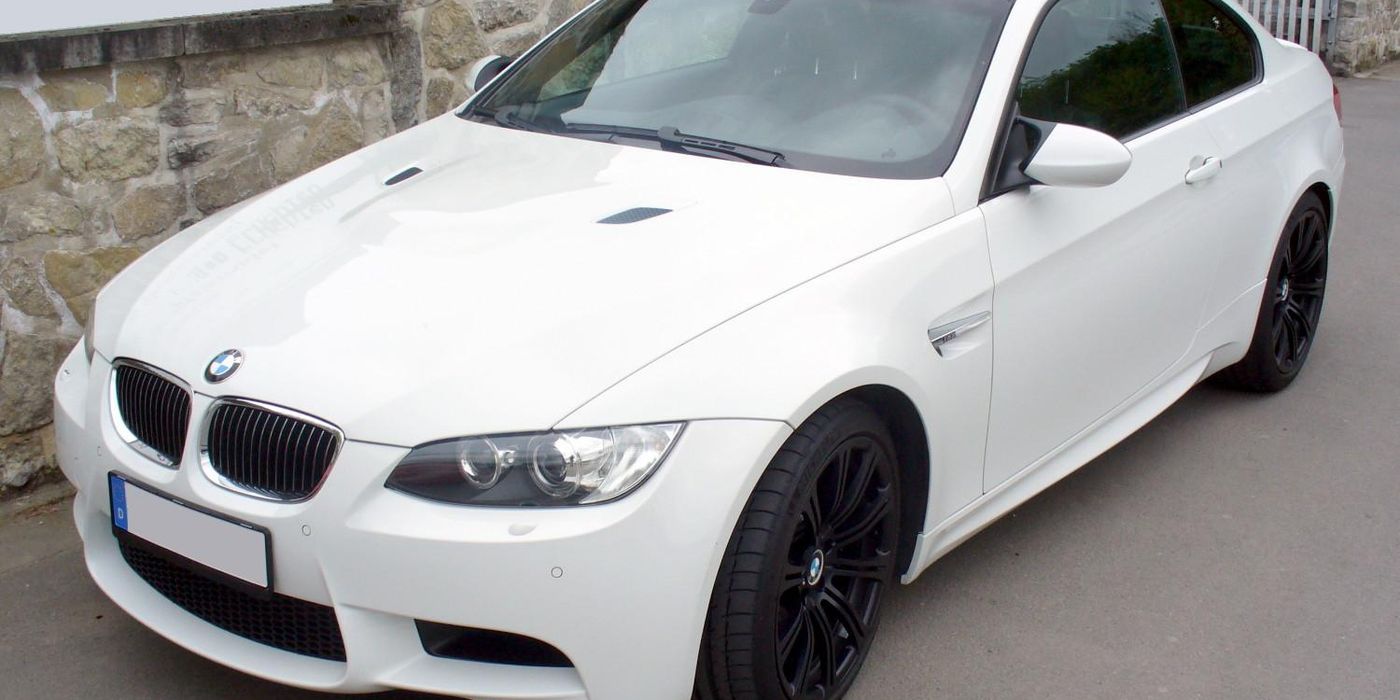
A guy rolls into my shop last spring with a 2014 E92 335i, fresh coilovers, a set of 19x9.5 wheels he swears are the cleanest thing he has ever owned. Problem is, the steering wheel wobbles between 48 and 55 mph like a washing machine with a brick in it. He has already paid two shops to rebalance the wheels. Twice. He is about to blame his control arms. I ask him one question before I even put it on the lift - "did you clean the hub face before you bolted those spacers on?" He looks at me like I just asked him what color oxygen tastes like.
I pulled the wheels. The hubs had a visible rust ring, maybe half a millimeter of scale, just enough to stop a 12mm spacer from sitting flat. Wire brush, brake cleaner, re-install with proper hubcentric Turner spacers and fresh extended bolts. Vibration gone, forever. Total cost of the actual fix - around forty dollars in parts, ten minutes of labor per corner. He had been chasing a phantom for three months.
I have been wrenching on BMWs for five years now, most of that time spent in a BMW specialist shop before I went freelance with my G20 330i as the daily. Wheel spacers are probably the single most frequently botched modification I see come through the door. Not because they are hard - they are genuinely one of the easier bolt-ons - but because the internet is flooded with contradictory advice, cheap kits with fake specs, and forum threads where three different guys with three different cars argue about which "correct size" their E46 needs. This guide is the one I wish had existed when I was starting out. Every chassis from E36 to G87, every hub bore, every thread pitch, the brands that will not leave you stranded, and the 11-step process that will keep your wheels on the car where they belong.
E36 to G87
Chassis Covered
66.5 / 72.56 / 74.1 mm
Hub Bores Cataloged
120-140 Nm
Torque Range
50-100 Miles
Re-Torque Window
| Chassis | Years | Hub Bore | Bolt Pattern | Thread | Front Flush | Rear Flush |
|---|---|---|---|---|---|---|
| E46 | 1998-2006 | 72.56 | 5x120 | M12x1.5 | 12-15mm | 12-15mm |
| E90/E92 | 2005-2013 | 72.56 | 5x120 | M12x1.5 | 12-15mm | 15mm |
| F30 | 2011-2019 | 72.56 | 5x120 | M14x1.25 | 10-15mm | 15-20mm |
| G20 | 2019+ | 66.5 | 5x112 | M14x1.25 | 10-15mm | 15-18mm |
| F80 M3 | 2014-2018 | 72.56 | 5x120 | M14x1.25 | 5-7mm | 12-15mm |
| G80 M3 | 2021+ | 66.5 | 5x112 | M14x1.25 | 10-12mm | 15-18mm |
| G05 X5 | 2019+ | 66.5 | 5x112 | M14x1.25 | 10-15mm | 10-15mm |
E46
- Years
- 1998-2006
- Hub Bore
- 72.56
- Bolt Pattern
- 5x120
- Thread
- M12x1.5
- Front Flush
- 12-15mm
- Rear Flush
- 12-15mm
E90/E92
- Years
- 2005-2013
- Hub Bore
- 72.56
- Bolt Pattern
- 5x120
- Thread
- M12x1.5
- Front Flush
- 12-15mm
- Rear Flush
- 15mm
F30
- Years
- 2011-2019
- Hub Bore
- 72.56
- Bolt Pattern
- 5x120
- Thread
- M14x1.25
- Front Flush
- 10-15mm
- Rear Flush
- 15-20mm
G20
- Years
- 2019+
- Hub Bore
- 66.5
- Bolt Pattern
- 5x112
- Thread
- M14x1.25
- Front Flush
- 10-15mm
- Rear Flush
- 15-18mm
F80 M3
- Years
- 2014-2018
- Hub Bore
- 72.56
- Bolt Pattern
- 5x120
- Thread
- M14x1.25
- Front Flush
- 5-7mm
- Rear Flush
- 12-15mm
G80 M3
- Years
- 2021+
- Hub Bore
- 66.5
- Bolt Pattern
- 5x112
- Thread
- M14x1.25
- Front Flush
- 10-12mm
- Rear Flush
- 15-18mm
G05 X5
- Years
- 2019+
- Hub Bore
- 66.5
- Bolt Pattern
- 5x112
- Thread
- M14x1.25
- Front Flush
- 10-15mm
- Rear Flush
- 10-15mm
What Wheel Spacers Actually Do - And What They Do Not
Let me kill the first myth right up front. Wheel spacers do not make your car faster. They do not free up horsepower. They do not even meaningfully improve handling in a way a dyno or a stopwatch will pick up. What they do is push your wheel outboard from the hub by a measured amount so the tire and wheel sit closer to, or flush with, your fender lip. That is a cosmetic and clearance mod first, a very mild geometry mod second, and a horsepower mod exactly never.
The real reasons I install spacers on customer cars come down to three scenarios. First, closing a visible gap between tire and fender on stock or lowered suspension, which is the aesthetic case most owners chase. Second, creating clearance for aftermarket brake kits or wider wheel barrels that would otherwise rub the strut or caliper. Third, very slight track-width gains for autocross or track cars, usually 10-15mm per side on the rear to nudge a chassis toward more mechanical grip at the driven axle. None of these is worth a wheel falling off, which is why the rest of this guide is mostly about doing it right.
The Forum Vibration Epidemic
Go read any BMW forum thread titled "vibration after spacers" and the pattern is identical. Owner installs spacers, drives the car, feels a shake between roughly 45 and 65 mph that was not there before, goes back to the shop, gets the wheels rebalanced twice, symptom persists. The cause is almost never the tires. The cause is one of three things - the hub was not cleaned before install, the spacer is not actually hubcentric for your car, or the spacer is too thin to clear the factory hub protrusion and is sitting on the hub instead of on the face. I have seen all three in the same customer car on the same day.
Hubcentric vs Lug-Centric - Why BMW Spacers Must Be Hubcentric
BMW designs its wheels to locate on the hub, not on the bolts. The wheel has a precise center bore - 72.56mm, 74.1mm, or 66.5mm depending on your chassis - that slides over a matching lip on the hub. That lip carries the vehicle weight and keeps the wheel perfectly centered on the axle. The five bolts then clamp the wheel against the hub face. The bolts are clamping fasteners, not shear-loaded fasteners. This distinction matters because a spacer sits between the wheel and the hub and has to replicate that hub-to-wheel centering interface, or the wheel will never center itself properly.
A hubcentric spacer has a precisely machined inner bore that mates to the hub and a precisely machined outer bore that mates to the wheel. Both dimensions have to match your specific car's hub size. Slide the spacer on, it sits on the hub with just a hint of rotational resistance. Slide the wheel on, the wheel's own center bore locates on the spacer's outer face. Everything is concentric, everything carries load in compression, and the bolts do only the job they were designed for.
A lug-centric spacer, by contrast, has an oversized center bore and relies on the bolts to pull the wheel toward its true center when you torque down. This is how many bargain-bin eBay kits are built. On a BMW it is a recipe for exactly the vibration my customer was chasing for three months. The wheel will end up somewhere between 0.3 and 0.6mm off-axis, which produces a first-order imbalance equivalent to 20-40 grams of tire weight that no amount of rebalancing can ever fix. Over time, the bolts carry shear load they were not engineered for, and on enough heat cycles they fatigue. The worst-case failure I have read about, from a non-BMW forum but physics-identical, involved all five studs shearing at 40 mph. The wheel left the car.
The Hub Protrusion Trap
Here is the trap nobody tells you about. A factory BMW hub protrudes anywhere from about 9.5 to 10.5mm from the hub face on most E and F chassis cars. Install a 10mm flat spacer on one of these cars and the spacer does not sit on the hub face - it sits on top of the hub protrusion. The spacer wobbles, the wheel wobbles, the bolts work at crooked angles. Every time a BMW shop tells you "minimum spacer thickness is 12mm" on an F-chassis car, this is why. Anything thinner than the hub protrusion either needs to be skipped entirely or needs to be an integrated hub extender design where the spacer replaces the hub lip rather than stacking onto it.
Turner Motorsport, IND, BimmerWorld, and Macht Schnell all make integrated hub extender spacers specifically in 5mm and 7.5mm thicknesses for this reason. The spacer itself has a short protruding lip on its outer face that acts as the new hubcentric register for your wheel. This is the only way to safely run very thin spacers on a BMW.
BMW Bolt Patterns - Know If You Have 5x120 or 5x112
There are really only two bolt patterns you need to know about on modern BMWs. The first is 5x120, which means five bolts arranged on a 120mm pitch circle. Every E-chassis BMW and every F-chassis BMW uses 5x120. That covers E36, E39, E46, E60, E82, E90, E92, E93, F10, F20, F22, F30, F32, F80, F82, F87, basically anything from 1992 up through the end of the F-platform build in 2019-2020 depending on model.
The second is 5x112, which BMW adopted on its new generation of platforms starting with the F39 X1 in 2018 and rolling through every G-chassis car since. G20, G21, G22, G26, G30, G05, G01, G80, G82, G87 - all 5x112. This pattern is shared with modern Mercedes, Audi, and Volkswagen, which is why you will see more wheel crossover between the brands now than ever before. It is also why your old E92 spacers will absolutely not fit your new G20. Confirm the pattern before ordering, because they look similar enough at a glance that people do genuinely mess this up.
Hub Bore Sizes by Chassis - 72.56mm, 74.1mm, and 66.5mm
Three hub bore sizes cover almost every BMW on the road. 72.56mm is the legacy standard on E36 non-M, E46, E60, E82, E90, E92, F22, F30, F32 - pretty much the entire 3, 4, 5, and 1 Series lineage up through the F-chassis era. 74.1mm is the oddball - E39 5 Series and F15 X5 use this, as do the notched hubs on the F80 M3 and F82 M4. 66.5mm is the modern G-chassis standard, adopted at the same time as the 5x112 bolt pattern switch.
If you are running a wheel with a larger center bore than your hub, you need a hubcentric ring to make up the difference. Most aftermarket wheels for BMW come with either 72.56mm or 74.1mm bores. An E39 with 74.1mm wheels actually has it easy. An F80 M3 owner buying aftermarket 72.56mm wheels needs a hubcentric ring on the hub to step up the wheel mounting surface to 74.1mm. And a G20 owner buying a wheel made for 5x120 72.56mm cars needs either a 72.56 wheel with a 66.5mm ring, or simpler, a wheel built specifically for 5x112 G-chassis applications.

Aluminum Hub Centric Rings 72.6mm to 74.1mm — BMW (Set of 4)
$36.72
The E39 Exception
This one catches people out. The E39 5 Series uses a 74.1mm hub bore while almost every aftermarket BMW 5x120 spacer is cut for 72.56mm. Install a standard spacer on an E39 without a conversion ring and the spacer will wobble on the hub, which is basically the definition of non-hubcentric. Either buy E39-specific spacers, or buy 74.1-to-72.56 conversion rings, or source a set where the manufacturer offers the 74.1mm variant directly.

The Complete BMW Wheel Spacer Size Matrix
I built this matrix from a combination of factory documentation, forum verification across thousands of owner-reported installs, and my own shop experience. Stock suspension limit means what you can safely run with no fender rolling and no rubbing. Coilover limit means what you can run on a moderately dropped car with properly rolled fenders. The aggressive poke column is the point where you will definitely be rolling fenders, probably tucking, and giving up some daily usability for the stance look.
| Chassis | Bolt Pattern | Hub Bore | Stock Front | Stock Rear | Coilover Front | Coilover Rear |
|---|---|---|---|---|---|---|
| E36 | 5x120 | 72.56 | 10-12mm | 15-20mm | 20-25mm | 25-30mm |
| E39 | 5x120 | 74.1 | 10mm | 15-20mm | 20-25mm | 25-30mm |
| E46 non-M | 5x120 | 72.56 | 10-12mm | 12-15mm | 15-20mm | 20-25mm |
| E46 M3 | 5x120 | 72.56 | 5-10mm | 10-15mm | 12-15mm | 15-22mm |
| E60 | 5x120 | 72.56 | 10mm | 12-15mm | 15-20mm | 20-25mm |
| E82 | 5x120 | 72.56 | 10-12mm | 12-15mm | 15-20mm | 20-25mm |
| E90/E91 | 5x120 | 72.56 | 10-12mm | 12-15mm | 18-22mm | 20-25mm |
| E92/E93 | 5x120 | 72.56 | 10-12mm | 12-15mm | 15-20mm | 18-22mm |
| F10 | 5x120 | 72.56 | 10-12mm | 15mm | 15-20mm | 20-25mm |
| F22 | 5x120 | 72.56 | 10-12mm | 12-15mm | 15-18mm | 18-22mm |
| F30/F31 | 5x120 | 72.56 | 10-12mm | 12-15mm | 15-18mm | 18-22mm |
| F80 M3 | 5x120 | 74.1 | 5-10mm | 7.5-12mm | 10-12mm | 15-18mm |
| F82 M4 | 5x120 | 74.1 | 5-10mm | 7.5-12mm | 10-12mm | 15-18mm |
| F87 M2 | 5x120 | 72.56 | 10-12mm | 12-15mm | 12-15mm | 15-20mm |
| G20 | 5x112 | 66.5 | 10-12mm | 15mm | 12-15mm | 15-20mm |
| G22 | 5x112 | 66.5 | 10-12mm | 15mm | 12-15mm | 15-20mm |
| G30 | 5x112 | 66.5 | 10-12mm | 12-15mm | 15-18mm | 18-22mm |
| G80 M3 | 5x112 | 66.5 | 12-15mm | 15-18mm | 15-18mm | 18-22mm |
| G82 M4 | 5x112 | 66.5 | 12-15mm | 15-18mm | 15-18mm | 18-22mm |
| G87 M2 | 5x112 | 66.5 | 12-15mm | 15-18mm | 12-15mm | 15-20mm |
| X3 G01 | 5x112 | 66.5 | 12-15mm | 18-25mm | 20-25mm | 25-30mm |
| X5 G05 | 5x112 | 66.5 | 12-15mm | 18-20mm | 18-22mm | 22-30mm |
E36
- Bolt Pattern
- 5x120
- Hub Bore
- 72.56
- Stock Front
- 10-12mm
- Stock Rear
- 15-20mm
- Coilover Front
- 20-25mm
- Coilover Rear
- 25-30mm
E39
- Bolt Pattern
- 5x120
- Hub Bore
- 74.1
- Stock Front
- 10mm
- Stock Rear
- 15-20mm
- Coilover Front
- 20-25mm
- Coilover Rear
- 25-30mm
E46 non-M
- Bolt Pattern
- 5x120
- Hub Bore
- 72.56
- Stock Front
- 10-12mm
- Stock Rear
- 12-15mm
- Coilover Front
- 15-20mm
- Coilover Rear
- 20-25mm
E46 M3
- Bolt Pattern
- 5x120
- Hub Bore
- 72.56
- Stock Front
- 5-10mm
- Stock Rear
- 10-15mm
- Coilover Front
- 12-15mm
- Coilover Rear
- 15-22mm
E60
- Bolt Pattern
- 5x120
- Hub Bore
- 72.56
- Stock Front
- 10mm
- Stock Rear
- 12-15mm
- Coilover Front
- 15-20mm
- Coilover Rear
- 20-25mm
E82
- Bolt Pattern
- 5x120
- Hub Bore
- 72.56
- Stock Front
- 10-12mm
- Stock Rear
- 12-15mm
- Coilover Front
- 15-20mm
- Coilover Rear
- 20-25mm
E90/E91
- Bolt Pattern
- 5x120
- Hub Bore
- 72.56
- Stock Front
- 10-12mm
- Stock Rear
- 12-15mm
- Coilover Front
- 18-22mm
- Coilover Rear
- 20-25mm
E92/E93
- Bolt Pattern
- 5x120
- Hub Bore
- 72.56
- Stock Front
- 10-12mm
- Stock Rear
- 12-15mm
- Coilover Front
- 15-20mm
- Coilover Rear
- 18-22mm
F10
- Bolt Pattern
- 5x120
- Hub Bore
- 72.56
- Stock Front
- 10-12mm
- Stock Rear
- 15mm
- Coilover Front
- 15-20mm
- Coilover Rear
- 20-25mm
F22
- Bolt Pattern
- 5x120
- Hub Bore
- 72.56
- Stock Front
- 10-12mm
- Stock Rear
- 12-15mm
- Coilover Front
- 15-18mm
- Coilover Rear
- 18-22mm
F30/F31
- Bolt Pattern
- 5x120
- Hub Bore
- 72.56
- Stock Front
- 10-12mm
- Stock Rear
- 12-15mm
- Coilover Front
- 15-18mm
- Coilover Rear
- 18-22mm
F80 M3
- Bolt Pattern
- 5x120
- Hub Bore
- 74.1
- Stock Front
- 5-10mm
- Stock Rear
- 7.5-12mm
- Coilover Front
- 10-12mm
- Coilover Rear
- 15-18mm
F82 M4
- Bolt Pattern
- 5x120
- Hub Bore
- 74.1
- Stock Front
- 5-10mm
- Stock Rear
- 7.5-12mm
- Coilover Front
- 10-12mm
- Coilover Rear
- 15-18mm
F87 M2
- Bolt Pattern
- 5x120
- Hub Bore
- 72.56
- Stock Front
- 10-12mm
- Stock Rear
- 12-15mm
- Coilover Front
- 12-15mm
- Coilover Rear
- 15-20mm
G20
- Bolt Pattern
- 5x112
- Hub Bore
- 66.5
- Stock Front
- 10-12mm
- Stock Rear
- 15mm
- Coilover Front
- 12-15mm
- Coilover Rear
- 15-20mm
G22
- Bolt Pattern
- 5x112
- Hub Bore
- 66.5
- Stock Front
- 10-12mm
- Stock Rear
- 15mm
- Coilover Front
- 12-15mm
- Coilover Rear
- 15-20mm
G30
- Bolt Pattern
- 5x112
- Hub Bore
- 66.5
- Stock Front
- 10-12mm
- Stock Rear
- 12-15mm
- Coilover Front
- 15-18mm
- Coilover Rear
- 18-22mm
G80 M3
- Bolt Pattern
- 5x112
- Hub Bore
- 66.5
- Stock Front
- 12-15mm
- Stock Rear
- 15-18mm
- Coilover Front
- 15-18mm
- Coilover Rear
- 18-22mm
G82 M4
- Bolt Pattern
- 5x112
- Hub Bore
- 66.5
- Stock Front
- 12-15mm
- Stock Rear
- 15-18mm
- Coilover Front
- 15-18mm
- Coilover Rear
- 18-22mm
G87 M2
- Bolt Pattern
- 5x112
- Hub Bore
- 66.5
- Stock Front
- 12-15mm
- Stock Rear
- 15-18mm
- Coilover Front
- 12-15mm
- Coilover Rear
- 15-20mm
X3 G01
- Bolt Pattern
- 5x112
- Hub Bore
- 66.5
- Stock Front
- 12-15mm
- Stock Rear
- 18-25mm
- Coilover Front
- 20-25mm
- Coilover Rear
- 25-30mm
X5 G05
- Bolt Pattern
- 5x112
- Hub Bore
- 66.5
- Stock Front
- 12-15mm
- Stock Rear
- 18-20mm
- Coilover Front
- 18-22mm
- Coilover Rear
- 22-30mm
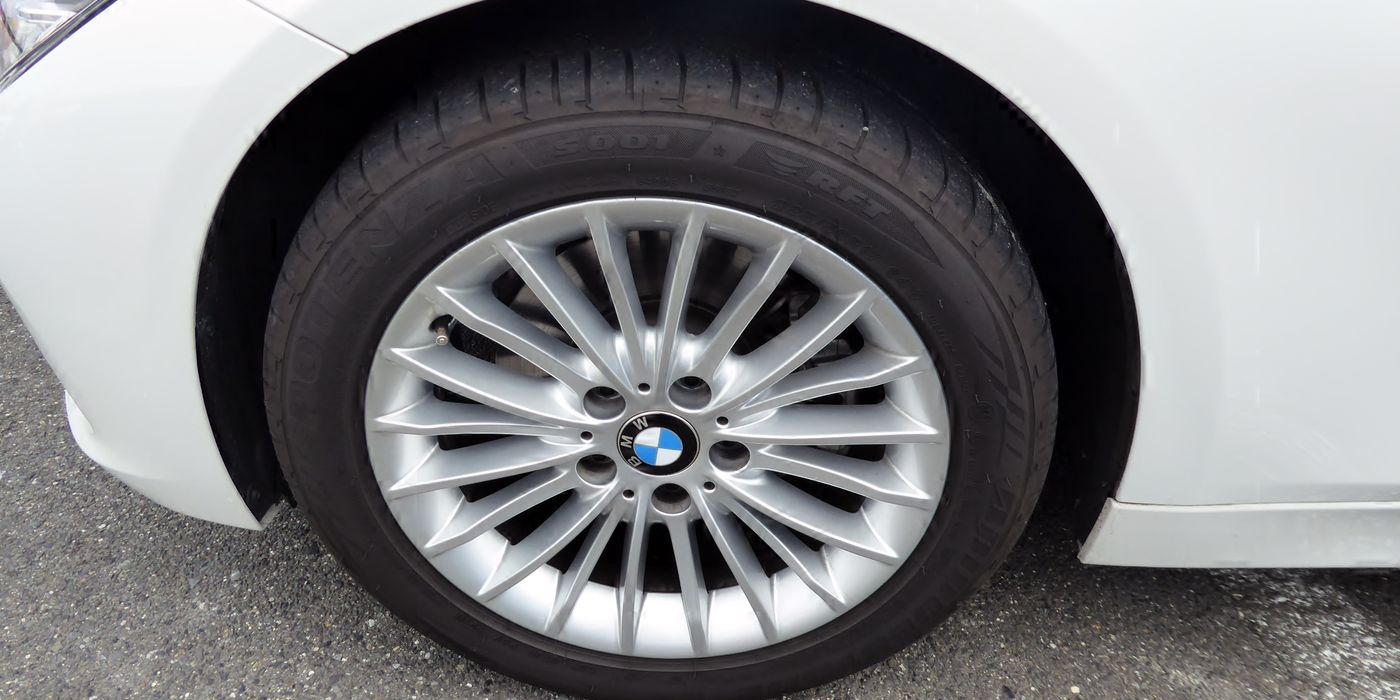
F30 Rear Minimum - The 12mm Rule
F30 owners hit this one constantly. The factory rear hub on an F30 is taller than the front hub by about 2mm. A 10mm spacer that works perfectly fine at the front will not seat flat on the rear hub - it sits on top of the hub protrusion and vibrates. Unless you are using an integrated hub extender design, 12mm is the practical minimum for F30 rear fitment. Same logic applies to F32, F34, and F80 rear setups. If you are planning staggered spacers on an F-chassis car, always start with the rear axle measurement first and scale the front up or down from there.
G20 Hub Size Reality Check
My own G20 330i runs 15mm rear and 12mm front spacers, which sets the wheel flush with the fender on factory ride height and a mild coilover setting. The G20 uses 66.5mm hubcentric and 5x112 bolt pattern with M14x1.25 thread. Older spacers from a buddy's F30 parts pile will not work, full stop. Confirm 5x112 on any G-chassis order or you will be returning the parts.

KSP 15mm Hubcentric Wheel Spacers 5x112 — G-Chassis BMW (2019+)
$45.99
F8x M3 and M4 - The Notched Hub Problem
The F80 M3 and F82 M4 use a distinctive notched hub that standard 74.1mm hub extender spacers do not fit. Only a handful of manufacturers cut the notch clearance properly - Turner Motorsport, IND Distribution, Macht Schnell, and a few others. Run a flat non-notched spacer on an F8x and you get bolt stress, eventual fatigue, and the kind of failure mode that makes you rebuild a fender. F8x owners running 5mm or 7.5mm front spacers for caliper clearance need the integrated hub extender version specifically. This is probably the single most commonly mis-spec'd application I see.
Thread Pitch - M12x1.5 vs M14x1.25
BMW used M12x1.5 thread pitch on basically every E-chassis car from the E30 onward through the E90/E92/E93 generation. That is the long-running BMW standard and most of the parts bin reflects it. Starting with the F10 5 Series in 2010 and rolling through every F-chassis and G-chassis car since, BMW switched to M14x1.25. The change happened incrementally. F22 and F30 are M14, F87 M2 is M14, F80 M3 and F82 M4 are M14. Anything post-2010 on the F-generation or later is M14x1.25.
Why this matters - extended bolts for M12 do not fit M14, and vice versa. If you are buying a spacer kit advertised as "fits E and F chassis," read the fine print because the bolt specs will differ. Many kits come without bolts and expect you to source them separately. Measuring the OEM bolt before you order avoids the kind of mistake where you have spacers mounted and extended bolts that thread in one full turn before stripping.
Extended Bolt Length Formula
This is the math that keeps wheels on cars. Extended bolt length equals OEM bolt length plus spacer thickness. Your F30 has a factory 28mm M14 bolt. You install a 15mm spacer. You need a 43mm extended bolt, or the next commonly available up size which is usually 45mm. Your E46 has a 27mm factory M12 bolt. You run a 12mm spacer. You need a 39mm or 40mm extended bolt. The formula is that dumb and that simple.
What you cannot do is run the stock bolt with a spacer. The stock bolt, threaded into the hub, will have the spacer thickness of engagement stolen from it. On a 15mm spacer with a stock 28mm bolt you have 13mm of thread engagement left - below the 12mm absolute minimum for M14 and dangerously close to the strip-out point under heat cycling and torque. A week of commuting later and you find the car shaking because three bolts have backed out and one has snapped.
Thread Engagement Minimums
Rule of thumb - thread engagement length should be equal to or greater than the fastener diameter. For M12x1.5 that means at least 12mm of thread engaged, or practically 10mm if you are being slightly conservative on an older hub. For M14x1.25 that means at least 14mm, or practically 12mm minimum. Below those numbers the bolt is carrying clamp load on very few thread turns and the stress per turn goes up exponentially. Above them, you have margin for thermal cycling, re-torque, and fastener wear. Always measure, never estimate.
Bolts vs Studs - When to Convert
I have been on both sides of this debate. For most street-driven BMWs, extended bolts are fine, cheap, and preserve the factory look. For anything that sees track duty, has wheels swapped regularly, or runs spacers over 20mm, I strongly prefer stud conversion. The reasons break down cleanly.
Studs are faster to work with. Drop the wheel onto five protruding studs, spin the lug nuts by hand, torque in sequence. You never have to support the wheel with one hand while thread-starting a bolt with the other. At a track day where you are swapping wheels between sessions, studs save real time. They also produce more consistent clamp load - the bolt carries friction torque against the hub threads on every install, studs only see clamp-up tension on the nut, so torque wrench readings translate more directly to actual wheel-to-hub pressure.
Studs do have drawbacks. There is a weight penalty on the order of grams per corner, which is negligible in practice. Some BMW purists do not like the aesthetic. More importantly, studs need proper shoulder design to avoid stress risers that fail in fatigue. Cheap $40 Amazon stud kits are exactly where I have seen the worst failures. ARP, Apex, Turner Motorsport, and BimmerWorld are the brands I trust. If a stud kit costs less than $70 for twenty studs, there is a reason.

StanceMagic 14x1.5 Wheel Stud Conversion Kit — 45mm, Set of 20
$52.49

StanceMagic M12x1.5 Extended Wheel Stud Conversion Kit — BMW (Pack of 20)
$47.39
Measuring Fender Gap Before You Order
Stop guessing at spacer sizes based on Instagram pictures of other people's cars. Get a ruler, get under your car, and measure. Here is the method that actually works for matching a spacer to your car.
Park the car on level ground at normal ride height. Pick the corner with the largest visible gap between tire and fender lip - usually the rear on a stock suspension car, sometimes the front. Hold a straightedge vertically against the fender lip and measure horizontally from the outer tire sidewall to the straightedge. That is your raw gap. Subtract 3-5mm for tire bulge under load and suspension travel at full bump. The remaining number is your maximum safe spacer thickness. If the math comes out to 18mm, order 15mm. Never order exactly to the limit because your suspension will compress and the tire will move in the wheel well.
Repeat on the opposite side because most BMWs have 1-2mm of fender asymmetry from the factory. Pick the smaller number if you want identical spacers left and right, or run different thicknesses per corner if you care about matched gaps more than matched part numbers.
H&R TRAK+ Series Explained - DR vs DRA vs DRS vs DRM
H&R is the most common premium spacer brand you will encounter in BMW circles, and they confuse everybody by running four different series with different mounting styles. Here is how they actually differ.
The DR series is the classic slip-on spacer. It sits between your hub and your wheel, and you use longer wheel bolts to reach through it. The thickness range is 3mm to 23mm per side. This is what most BMW owners end up buying. TUV-approved for most applications in Germany, forged aluminum, lifetime warranty.
The DRA series is a bolt-on spacer. Instead of your wheel bolts passing through the spacer into the hub, DRA bolts to the hub first, then your wheel bolts to the spacer. The DRA has its own set of studs or a bolt pattern machined into its outer face. DRA is used when the total thickness is greater than about 23mm per side and running an ever-longer wheel bolt would compromise thread engagement or bolt strength. DRA sizes go from 20mm to 45mm.
The DRS series uses studs rather than bolts. You remove your factory wheel bolts, thread in H&R studs that come with the kit, and mount the wheel with lug nuts. 5-20mm range. This is for owners who want the stud-conversion benefit without buying a separate stud kit.
The DRM series is for cars that already have studs. It uses your existing studs with included nuts and goes from 16mm to 65mm. Most BMW DRM applications require you to do a stud conversion first. This is more common on tuner cars and dedicated track builds than on stock-spec BMWs.
For 90 percent of street-driven BMWs, DR is the right answer. DRA if you need more than 23mm and still want to bolt to the hub. DRS or a separate stud kit plus DRM if you are building a track car.
Brand Tier Comparison for 2026
I have installed spacers from every tier below and I have pulled failed spacers from every tier below too. Here is how the market actually stacks up in my experience.
| Tier | Brands | Price 15mm Pair | Best For |
|---|---|---|---|
| Premium | H&R TRAK+ / Eibach Pro-Spacer / Macht Schnell | $130-260 | TUV markets / track use / lifetime warranty |
| Mid-Premium | Turner Motorsport / BimmerWorld / Apex | $130-220 | F8x notched hubs / integrated hub extenders |
| Mid-Tier | ECS Tuning / BMS (Burger) / 42 Draft | $70-140 | Street use / good value / known tolerances |
| Budget Acceptable | KSP / Dynofit / Bonoss | $45-110 | Street only / budget build / inspect before use |
| Avoid | No-name eBay / Under $30 pair | N/A | Never |
Premium
- Brands
- H&R TRAK+ / Eibach Pro-Spacer / Macht Schnell
- Price 15mm Pair
- $130-260
- Best For
- TUV markets / track use / lifetime warranty
Mid-Premium
- Brands
- Turner Motorsport / BimmerWorld / Apex
- Price 15mm Pair
- $130-220
- Best For
- F8x notched hubs / integrated hub extenders
Mid-Tier
- Brands
- ECS Tuning / BMS (Burger) / 42 Draft
- Price 15mm Pair
- $70-140
- Best For
- Street use / good value / known tolerances
Budget Acceptable
- Brands
- KSP / Dynofit / Bonoss
- Price 15mm Pair
- $45-110
- Best For
- Street only / budget build / inspect before use
Avoid
- Brands
- No-name eBay / Under $30 pair
- Price 15mm Pair
- N/A
- Best For
- Never
Premium - H&R, Eibach, Macht Schnell
H&R TRAK+ is the gold standard. Forged aluminum, TUV approved for almost every BMW application, lifetime warranty, manufactured in Germany. If you are running in a TUV market you need H&R or Eibach paperwork to pass Hauptuntersuchung anyway, so the premium pricing effectively becomes the price of legal compliance. Eibach Pro-Spacer plays in the same league with System 2 kits that include extended bolts in the box - slight convenience advantage there.
Macht Schnell Competition is the track spec option. Used by actual pro race teams in Pirelli World Challenge and IMSA Continental Tire series. Premium pricing, premium tolerances, made in the USA. If you are doing serious track weekends, this is where I point people.
Mid-Premium - Turner, BimmerWorld, Apex
Turner Motorsport's integrated hub extender 5mm and 7.5mm spacers for F8x M3/M4 are unique in the market. If you own an F80 or F82 and you want a thin front spacer to clear the Brembo front calipers with an aftermarket wheel, Turner is basically the only legitimate option. They also make solid 12mm and 15mm standard spacers for everything else. BimmerWorld is heavily represented in club racing - their 5x112 options for G-chassis are good and they cater to staggered track setups. Apex makes spacers specifically sized to match their own wheel offsets, which is useful if you are buying Apex wheels.

Turner Motorsport 12MM Wheel Spacers with Extended Lugs BMW 3 5 6 Series E46 E90 E92 E63 E64
$45.00
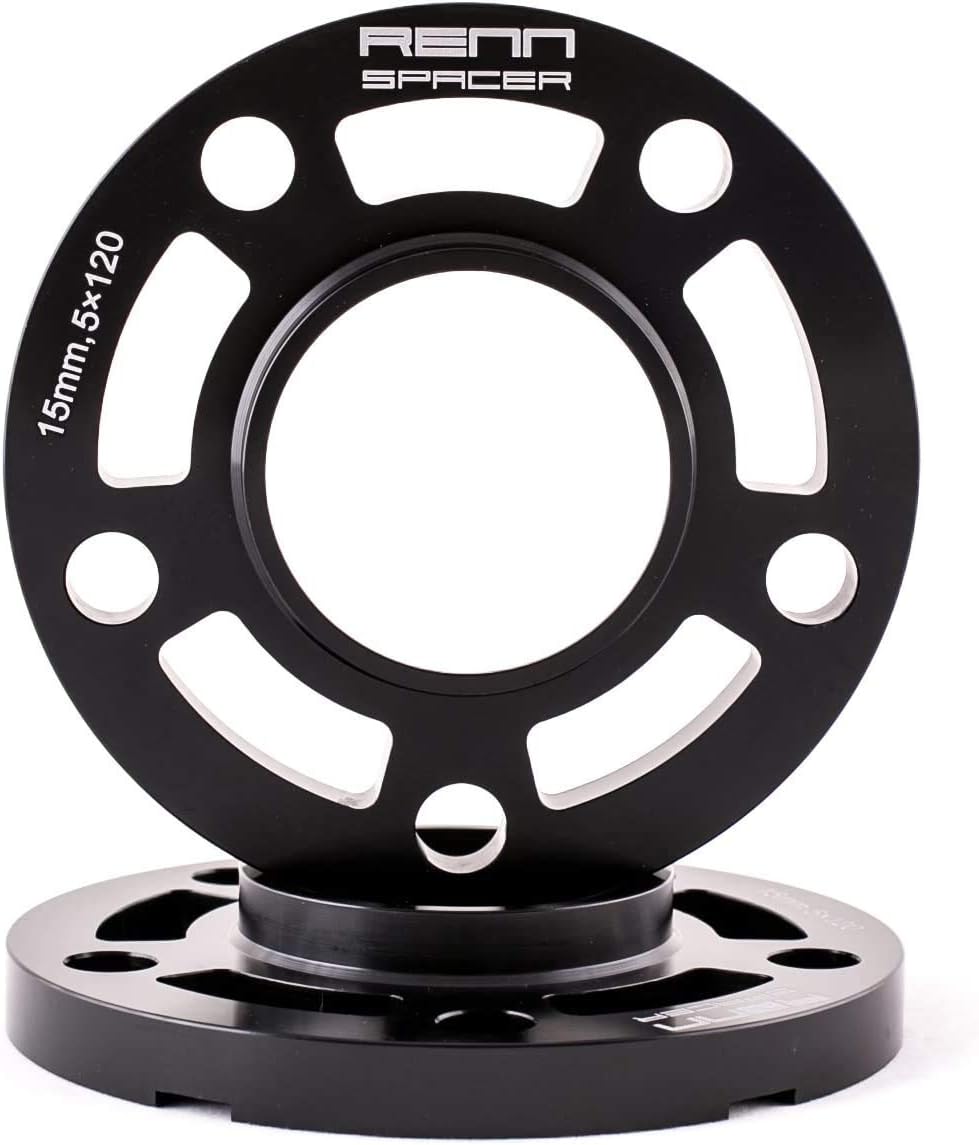
Turner Motorsport 15MM Wheel Spacers for BMW F10 F22 F30 F32 F80 F82
$50.00
Turner Motorsport 12.5MM Wheel Spacers with Bolts for BMW E36 E46 E90 M3
$59.00
Mid-Tier - ECS, BMS, 42 Draft
ECS Tuning's house-brand spacers use 6061-T6 aluminum and ISO 898 class 10.9 hardware, which is solid stuff for the price. BMS (Burger Motorsports) is popular on F-chassis BMWs, kit includes extended bolts, and the tolerances hold up. 42 Draft Designs does hubcentric 5x120 only in 72.56mm and 74.1mm variants, made in the USA, favored by E-chassis owners. Any of these three will serve a daily-driven BMW fine.
Budget Acceptable - KSP, Dynofit, Bonoss
The Amazon tier. KSP Performance is what I run on my own G20 and I have no complaints after 18 months. Forged 6061-T6, laser-engraved part numbers, decent hubcentric tolerance. Bonoss is forged 7075-T6 with reasonable runout, slightly more money than KSP. Dynofit is acceptable for street use on older E-chassis cars where tolerance requirements are looser. All three are fine for daily driving. None of them would go on my track car.

BONOSS Forged 6061-T6 Hubcentric Wheel Spacers 15mm — 5x112 BMW
$124.99
BONOSS Forged Aluminum 6061T6 Hubcentric Wheel Spacer 2pcs 5x120 CB72.5 Wheel Spacers for BMW F87 F80 F30 F32 F10 F82 F1
$121.99
Avoid - No-Name eBay and Cheap Amazon
If a pair of BMW spacers costs less than $30, something is wrong. Reports of cast rather than machined spacers, out-of-tolerance bores, bolts that strip on first install. The failure rate on these is high enough that I refuse to install them on customer cars. If I am doing the job I am buying the parts. Nobody should die because their spacer cost $22 instead of $65.
Torque Specs and the Critical Re-Torque Protocol
Wheel bolt torque on BMWs follows a pretty clean pattern. E-chassis cars with M12x1.5 bolts get 120 Nm, or 88 ft-lb, plus or minus 10 Nm. F-chassis and G-chassis cars with M14x1.25 bolts get 140 Nm, or 103 ft-lb. The E53 X5 is an odd one with M14x1.5 thread but still 140 Nm. I use a calibrated click torque wrench and verify with a digital electronic wrench on anything that sees track duty.
| Chassis Family | Thread | Torque (Nm) | Torque (ft-lb) |
|---|---|---|---|
| E-Chassis pre-2009 | M12x1.5 | 120 | 88 |
| F-Chassis 2010-2019 | M14x1.25 | 140 | 103 |
| G-Chassis 2019+ | M14x1.25 | 140 | 103 |
| E53 X5 | M14x1.5 | 140 | 103 |
| Various (spacer with OEM bolt error state) | M12 or M14 | Do not use | Replace with extended bolts |
E-Chassis pre-2009
- Thread
- M12x1.5
- Torque (Nm)
- 120
- Torque (ft-lb)
- 88
F-Chassis 2010-2019
- Thread
- M14x1.25
- Torque (Nm)
- 140
- Torque (ft-lb)
- 103
G-Chassis 2019+
- Thread
- M14x1.25
- Torque (Nm)
- 140
- Torque (ft-lb)
- 103
E53 X5
- Thread
- M14x1.5
- Torque (Nm)
- 140
- Torque (ft-lb)
- 103
Various (spacer with OEM bolt error state)
- Thread
- M12 or M14
- Torque (Nm)
- Do not use
- Torque (ft-lb)
- Replace with extended bolts
The single most overlooked step in a spacer install is the re-torque at 50-100 miles. During the first few heat cycles, fastener settling happens - the bolt slightly compresses the joint, the wheel seats more firmly on the spacer, and the initial clamp load can drop 5 to 15 percent. Re-torque in the same star pattern you used on install. Each bolt should require only the smallest movement, a few degrees at most. If you find a bolt turning more than a quarter turn, stop and inspect the joint for a seating problem.
At track events, the protocol gets tighter. Re-torque every session for the first day. On well-prepped cars with proven spacer setups and stud conversions, session-to-session re-torques become a 30-second paddock habit. You will develop a feel for what a correctly torqued wheel settles at on re-check, and anything outside that window gets pulled and inspected.
Installation - The 11 Step Procedure
This is the exact process I follow in the shop. Every step matters. Skipping the hub clean is where most failed installs start.
Step 1 - Park on level ground and lift properly. One corner at a time, jack up from the factory jack point, support the car on a quality jack stand. Never install spacers with the car only on a jack. This is non-negotiable safety.
Step 2 - Remove wheel and inspect the hub face. Rotate the hub slowly by hand, look for rust, look for scale, look for corrosion around the bolt holes. Any visible texture on the hub mating surface is a problem. A wire brush on a drill makes short work of surface rust. Aim for a uniform clean metal surface.
Step 3 - Clean spacer mating surfaces. Both sides of the spacer get wiped down with brake cleaner and a shop towel. The hub side, the wheel side, the inner bore, the outer bore. Any contamination creates uneven clamp pressure across the joint.
Step 4 - Verify hubcentric fit. Slide the spacer onto the cleaned hub by hand. It should drop on with a small rotational resistance and seat flush against the hub face with no wobble. If it wobbles or if you can rotate it with no resistance, the inner bore is too large for your hub - stop and return the product.
Step 5 - Align any notched spacers. F8x M3/M4 spacers with integrated hub extenders have a notch that must align with the hub notch. Align before you torque anything.
Step 6 - Fit the wheel. Lift the wheel onto the spacer. Confirm the wheel's center bore engages the spacer's outer register, either by feel or by rotating the wheel half a turn and letting it settle.
Step 7 - Start all extended bolts by hand. Thread each bolt in by hand at least four full turns before touching an impact or ratchet. This is your cross-thread insurance. If any bolt binds, back it out and restart - forcing a cross-threaded bolt destroys the hub thread.
Step 8 - Torque in star pattern. Three-stage torque. First pass to 60 Nm in star sequence, second pass to 100 Nm, third pass to final spec (120 Nm M12 or 140 Nm M14). Click torque wrench or electronic, calibrated within the last 24 months. Cheap harbor-freight wrenches go out of calibration fast.
Step 9 - Lower the car and drive slowly. Put the car back on the ground, roll forward and reverse about 10 feet. This lets the wheel fully seat on the spacer and the spacer on the hub under vehicle weight.
Step 10 - Re-torque at 50-100 miles. Back to the star pattern, same final torque spec. Each bolt should require almost no movement. This catches fastener settling before it becomes looseness.
Step 11 - Re-inspect at 500 miles. By now the joint is fully bedded. Zero additional rotation on any bolt is what you want to see. Any bolt that still moves means something is wrong with the joint and needs investigation.
Troubleshooting - The Four Problems You Will Actually See
Vibration Between 45 and 65 mph
Same story as my opening customer. Three probable causes in order of likelihood. First, the hub was not properly cleaned - rust or scale under the spacer prevents flat seating, the wheel ends up 0.3-0.6mm off-axis, and you get a first-order imbalance that feels exactly like bad wheel balance. Fix is to pull the wheel, wire brush the hub, re-install with proper bolt sequence and re-torque. Second, the spacer is non-hubcentric or lug-centric - the wheel never truly centers on the hub. Fix is to return the spacer and buy a hubcentric replacement. Third, uneven torque - one or two bolts higher than others pull the wheel off-center. Fix is to loosen all five bolts and redo the three-pass star-pattern torque from scratch.
Brake Caliper Contact on F8x M3/M4
The F8x Brembo front calipers have tight clearance to the stock wheel inner barrel. Fitting aftermarket wheels with less inner clearance than OEM produces an audible high-pitched scrape at low speed, most noticeable on turn-in or in parking-lot maneuvers. Fix is a 5mm or 7.5mm integrated hub extender front spacer. This is one of the rare cases where a spacer fixes a rubbing problem rather than creating one.
TPMS Reset After Swapping Wheels
This is a red herring. Spacers do not interfere with TPMS sensors directly. But if you are running winter wheels without sensors and summer wheels with sensors, iDrive throws a reset prompt whenever you swap. Forums blame the spacers. The spacers have nothing to do with it. Reset TPMS via Vehicle Status menu after the wheel swap, drive 10 minutes above 25 mph, pressures re-register.
Fender Rub at Full Bump
Check clearance with the car on drive-on ramps, suspension loaded, wheels turned lock to lock. Any contact between tire and inner fender, even light, becomes a ripped sidewall over a big pothole. Fender rolling is practically mandatory for any spacer over about 15mm on stock height F-chassis cars, and for most setups on coilover-dropped cars. Budget $150-300 at a shop to roll fenders properly with a heat gun and rolling tool. DIY rolling without heat cracks paint and sometimes creases the outer fender - I have repainted enough of those to know the pros earn their money.
Legal Status - TUV, MOT, DOT, and Insurance
Germany and TUV Markets
Wheel spacers in Germany must be individually TUV-certified for your specific car and spacer combination. H&R and Eibach are the two brands that reliably come with TUV paperwork for BMW applications - either a Teilegutachten or an ABE that you keep in the glovebox and show at annual Hauptuntersuchung inspection. Without the paperwork the car will fail. Germany also restricts the combination of lowered suspension with aggressive spacers above certain thresholds, and cars caught with illegal stance setups can be seized pending correction. TUV penalties range from mandatory remediation to impoundment.
United Kingdom MOT
UK MOT is less strict than TUV. Spacers are legal as long as the wheels do not protrude beyond the fender line and the install is mechanically sound. MOT testers check for secure mounting and excessive protrusion. TUV-approved H&R and Eibach spacers pass MOT reliably because they carry documentation of proper engineering.
United States DOT
No federal DOT rule against wheel spacers. A small number of states inspect wheel protrusion as part of annual inspection, most do not. The practical concern in the US is not DOT, it is insurance. An aftermarket spacer-related accident must be disclosed to your insurer, and some policies specifically exclude aftermarket suspension modifications. Read your policy.
Insurance Disclosure Everywhere
Always disclose wheel spacers to your insurance carrier. In a liability investigation after an accident, undisclosed modifications can void coverage - and defending that claim costs more than any spacer ever saved you. This applies in every jurisdiction.
Best Picks By Chassis
E46 and E46 M3
The E46 is the sweet spot for hubcentric 5x120 72.56mm fitment - massive aftermarket support, tons of spacer options. My recommendation is Turner Motorsport 12mm for daily-driven E46 non-M, and the 12.5mm Turner set specifically engineered for E36, E46, and E90 M3 hub geometry. For the M3 variant, staggered 10mm front and 15mm rear is the classic flush setup.
Turner Motorsport 12.5MM Wheel Spacers with Bolts for BMW E36 E46 E90 M3
$59.00

E90 and E92
E90/E92 owners have it easy. 5x120, 72.56mm hub, M12x1.5 bolts. 12mm front and 15mm rear is the standard flush setup on stock suspension. On coilovers drop to 10mm front and 12mm rear. Turner's E-chassis kits come with extended bolts included.
Turner Motorsport 12MM Wheel Spacers with Extended Lugs BMW 3 5 6 Series E46 E90 E92 E63 E64
$45.00

ECCPP 20mm Hub-Centric Wheel Spacers 5x120 — E46/E9x/E6x (4-Pack)
$59.23
F30 and F32
Remember the 12mm rear minimum rule. F30 owners running anything less on the rear will fight vibration. 10mm front and 15mm rear is my default recommendation on stock suspension. On coilovers go 15mm all around. The Turner 12.5mm F10/F22/F30/F32 set is my go-to kit.
Turner Motorsport 12.5MM Wheel Spacers with Bolts for BMW F10 F22 F30 F32
$89.00
Turner Motorsport 15MM Wheel Spacers for BMW F10 F22 F30 F32 F80 F82
$50.00
F80 M3 and F82 M4
The notched hub matters. Do not buy flat 5mm or 7.5mm spacers for these cars. Turner Motorsport's integrated hub extender 5mm and 7.5mm parts are the correct spec. On the rear, 12-15mm is typical for flush on 20-inch summer wheels. Anything more aggressive needs fender rolling and often tire sizing changes. These are the cars where cheap spacers will absolutely hurt you - buy the right parts for the notched hub.
G20 and G22
5x112 and 66.5mm hub bore. My own G20 runs 15mm rear KSP and 12mm front KSP with OEM 18-inch M Sport wheels. Flush with fender, no rubbing, no vibration after 18 months. For premium TUV-market owners, H&R 12-15mm TRAK+ is the answer. For the budget build, KSP or Bonoss 5x112 is fine for daily driving.
KSP 15mm Hubcentric Wheel Spacers 5x112 — G-Chassis BMW (2019+)
$45.99
BONOSS Forged 6061-T6 Hubcentric Wheel Spacers 15mm — 5x112 BMW
$124.99
G80 M3 and G82 M4
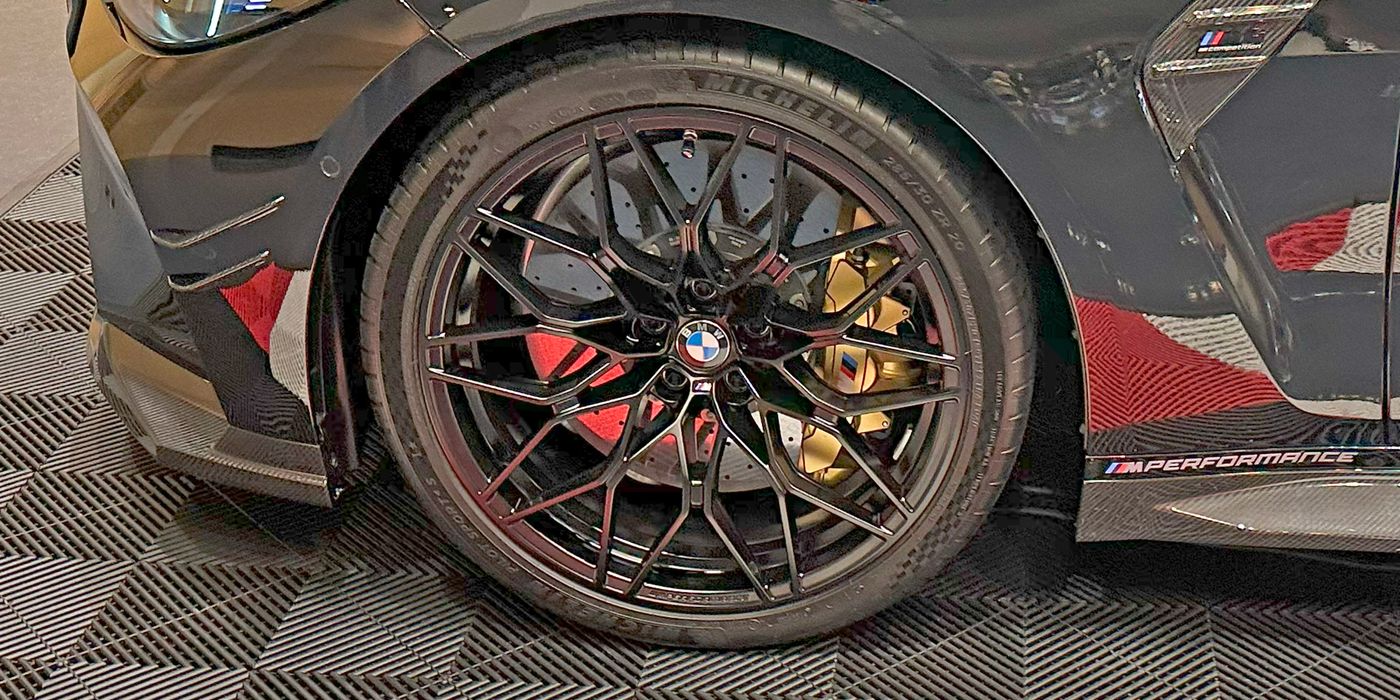
The new M cars have tighter factory fitment than F8x thanks to wider wheels and revised offsets. 12mm front and 15-18mm rear is the flush setup on 20-inch stock wheels, 15mm/18mm on 19s. TUV-market owners should absolutely run H&R TRAK+ for the documentation alone.
G05 X5 and G01 X3
SUVs get their own math. The G05 X5 comfortably takes 15mm all around on stock air suspension for a fender-filling look. G01 X3 can stretch to 20mm rear without rubbing on stock tire sizes. 5x112, M14x1.25, 66.5mm hub - same spec as the G20 sedan family.
FAQ - The Questions Everybody Asks
Do wheel spacers damage BMW wheel bearings?
Properly sized hubcentric spacers in the ranges I recommended do not measurably accelerate wheel bearing wear. The bearing is designed for loads far exceeding the small offset change a 15mm spacer introduces. Aggressive setups over 25mm per side, combined with wide tires and curb strikes, can eventually reduce bearing life by maybe 10-20 percent over 100,000 miles. For daily-driven cars with reasonable spacer sizes, this is a non-issue. Forum panic on this topic is mostly overblown.
What size wheel spacers should I get for my BMW?
Start with the chassis matrix above. Measure your fender gap on level ground, subtract 3-5mm for suspension travel, and pick the closest available spacer size under that maximum. My default on stock-suspension BMWs is 10-12mm front and 15mm rear, tweaked from there based on wheel offset and tire width.
Are BMW wheel spacers safe?
Hubcentric spacers from a reputable brand, properly installed with correct-length extended bolts and re-torqued at 50-100 miles, are as safe as any factory wheel installation. Lug-centric cheap spacers from no-name eBay sellers with OEM-length bolts are actively dangerous. The safety is in the parts choice and the install process, not in the concept.
Do wheel spacers cause vibration?
Properly installed hubcentric spacers do not. Every "spacers cause vibration" forum thread, when investigated, traces to either a dirty hub, a non-hubcentric spacer, incorrect thread engagement, or uneven torque. Fix the root cause, the vibration goes away.
Hubcentric vs lug-centric - what is the difference?
Hubcentric spacers have a precisely machined inner bore that mates to your hub lip and carries wheel load concentrically. Lug-centric spacers rely on the wheel bolts to center the wheel, which is mechanically wrong on BMWs and causes off-axis mounting. Always buy hubcentric for BMW applications.
Can I use stock wheel bolts with spacers?
No. Stock bolts plus a spacer means you have lost spacer-thickness worth of thread engagement. Below minimum engagement, the bolt can strip the hub thread, back out under heat cycling, or shear under load. Always use extended bolts sized for your spacer thickness.
How do I know if my BMW is 5x120 or 5x112?
Any BMW from E36 through the F-chassis end of production is 5x120. Any G-chassis BMW from roughly 2018 onward (F39 X1 was first) is 5x112. When in doubt, measure center-to-center between two adjacent bolt holes - 5x120 gives roughly 70.5mm, 5x112 gives roughly 65.8mm.
Do wheel spacers affect ride quality?
Very slightly. A wider track adds a tiny amount of roll stability and marginally more rotational mass at the outer suspension corner. Most daily drivers cannot feel the difference. Track drivers with precise tools can measure a 1-2 percent change in turn-in response with 15mm spacers on the rear. Ride quality itself is essentially unchanged.
What is the torque spec for BMW wheel bolts with spacers?
Same as without spacers. 120 Nm for E-chassis M12x1.5 bolts, 140 Nm for F-chassis and G-chassis M14x1.25 bolts. Do not over-torque thinking the spacer adds stress - it does not. Use a calibrated torque wrench.
Are wheel spacers legal in Germany?
Only with TUV certification for your specific car and spacer size. H&R TRAK+ and Eibach Pro-Spacer come with paperwork. Non-certified spacers fail Hauptuntersuchung inspection.
Do wheel spacers void the BMW warranty?
BMW warranty covers factory parts and workmanship. Spacers themselves are not covered because they are not factory parts. Claims related to wheel bearings, hubs, or suspension components can be denied if the dealer attributes the failure to spacers. In practice most dealers do not fight over 10-15mm hubcentric spacers from known brands, but aggressive 25mm-plus setups can trigger claim denials.
How often should I re-torque wheel spacers?
Initial install, then at 50-100 miles, then at 500 miles for verification, then at every wheel-off service (tires, brakes, rotations). Track drivers re-torque after every session for the first day and once per weekend after that.
What is the best brand of wheel spacers for BMW?
H&R TRAK+ if money is not the constraint and you want lifetime warranty with TUV paperwork. Turner Motorsport for F8x M3/M4 integrated hub extender applications and general BMW fitment. ECS Tuning or BMS for mid-tier value on street cars. KSP or Bonoss for budget builds where you are willing to inspect tolerances before install.
Do I need fender rolling with wheel spacers?
Anything up to about 12mm per side on stock suspension, usually not. 15-20mm on stock suspension, possibly at full bump. On coilover-dropped cars, almost always yes. Professional rolling runs $150-300 and preserves paint if done with heat gun and proper rolling tool.
Can wheel spacers cause a wheel to fall off?
Yes, if installed wrong. Lug-centric spacer, stock-length bolts with insufficient thread engagement, unmatched hub bores - all of these have caused wheel departures on internet forums. Installed correctly with hubcentric spacers, proper extended bolts, and correct torque, the risk is essentially zero. The risk is in the install, not in the part concept.
Final Verdict and Decision Tree
If you own a BMW and you want it to sit with that filled-arch OEM-plus look, wheel spacers are the most effective 200-dollar modification you can make. The car looks completely different, the handling stays fundamentally unchanged, and if you buy the right parts and follow the install steps, it just works for years. That is the optimistic case. The pessimistic case, which I see come through my shop more often than I wish, is someone who bought cheap spacers, reused stock bolts, skipped the hub clean, skipped the re-torque, and now has a car that shakes, scrapes, or worse.
My decision tree is short. If you are in a TUV market, buy H&R TRAK+ or Eibach Pro-Spacer for the paperwork, no exceptions. If you own an F80 M3, F82 M4, or F87 M2 and need front thin spacers for caliper clearance, buy Turner Motorsport integrated hub extender parts, no exceptions. If you are doing track days or frequent wheel swaps, convert to studs with ARP or Apex kits. For every other daily-driven street BMW, Turner mid-tier or the good budget tier (KSP, Bonoss, BMS) will serve you well at 10-15mm front and 12-15mm rear.
Whatever you buy, clean the hub first, use extended bolts sized to the formula, torque in three passes in the star pattern to correct spec, and re-torque at 50-100 miles. Those five steps prevent more than 90 percent of all spacer-related problems. The other 10 percent are the people who buy $22 spacers from an eBay seller with no return address and wonder why the wheel walked off at freeway speed.
Want to round out the setup? Pair your spacers with good suspension - my lowering springs guide covers what actually works per chassis, and the BMW sway bars guide is the other half of the flush-plus-handling package. For wheel selection itself, start with best BMW wheels OEM and aftermarket, or the chassis-specific guides like 335i wheels, 340i wheels, M3 wheels, or M4 wheels. And if you are still picking out your tire size, tires for 335i and tires for 340i will match your new flush wheels with rubber that actually fits the widened stance. For mod-heavy builds, F30 mods, E46 mods, and the 335i bolt-on guide show where spacers fit in the bigger picture. Spacers are the cheapest visual mod on a BMW by a mile. Just do them right.