BMW xDrive vs sDrive - What's the Difference
Affiliate disclosure. BimmerTalk is a proud partner of the Amazon Associates Program and Turner Motorsport. We may earn a small commission on qualifying purchases through our links, at no extra cost to you. Read the full disclosure.

I get asked this at least once a week, usually by someone standing in a BMW showroom staring at a build sheet with sDrive30i and xDrive30i sitting next to each other and a few grand between them. My answer is always the same starting point: xDrive is not magic, it's a clutch pack and some clever software, and whether it's worth the money depends entirely on where you live and what tyres you're willing to buy.
I've owned rear-drive BMWs my whole adult life, wrenched on plenty of xDrive cars in the shop, and spent a year on the other side of the counter at a BMW dealer listening to sales guys oversell all-wheel drive to people who drive to Target twice a week in a climate that sees snow maybe two days a year. My current car is a 330i, sDrive, because I live somewhere mild and I like knowing exactly what the rear wheels are doing at all times. That bias is going to show up here, but I'll give you the straight technical story too.
Let's get into what xDrive actually is, what it costs you day to day, what breaks on high-mile cars, and when it's genuinely the right call versus when it's just an option box that adds weight and complexity for no real benefit.
1-2 mpg
Typical MPG penalty
~90 kg (200 lb)
Added curb weight
Up to 100% rear, 50% front on slip
Normal torque split
Roughly $2,000-3,000
Extra purchase cost
sDrive vs xDrive, the quick answer
If you want the short version before the deep dive: sDrive means the engine only drives one axle, rear on almost every BMW except the small FAAR-based front-drive cars where sDrive means front-wheel drive. xDrive means BMW has added a transfer case with an electronically controlled clutch pack that can send torque to the front axle on demand, but the car still drives like a rear-drive BMW the vast majority of the time. Here's the breakdown I give people in the showroom.
| Factor | sDrive | xDrive |
|---|---|---|
| Drive layout | RWD (FWD on FAAR small cars) | AWD, rear-biased by default |
| Fuel economy | Baseline | About 1-2 mpg worse |
| Curb weight | Lightest | Roughly 90 kg / 200 lb heavier |
| Purchase price | Baseline | Typically $2,000-3,000 more |
| Best for | Dry/mild climates, driving purists | Snowbelt, steep driveways, towing |
| Main failure point | Diff bushings, driveshaft | Transfer case actuator, PTU wear |
Drive layout
- sDrive
- RWD (FWD on FAAR small cars)
- xDrive
- AWD, rear-biased by default
Fuel economy
- sDrive
- Baseline
- xDrive
- About 1-2 mpg worse
Curb weight
- sDrive
- Lightest
- xDrive
- Roughly 90 kg / 200 lb heavier
Purchase price
- sDrive
- Baseline
- xDrive
- Typically $2,000-3,000 more
Best for
- sDrive
- Dry/mild climates, driving purists
- xDrive
- Snowbelt, steep driveways, towing
Main failure point
- sDrive
- Diff bushings, driveshaft
- xDrive
- Transfer case actuator, PTU wear
That table covers the headline stuff, but the interesting part - and where most dealer brochures and forum threads gloss over reality - is how the system actually behaves and what tends to go wrong with age. I've written a full technical breakdown of the hardware itself over on bmw xdrive explained if you want the deep engineering dive, but let's cover the parts that matter for a buying decision.
How xDrive actually works
The transfer case clutch pack
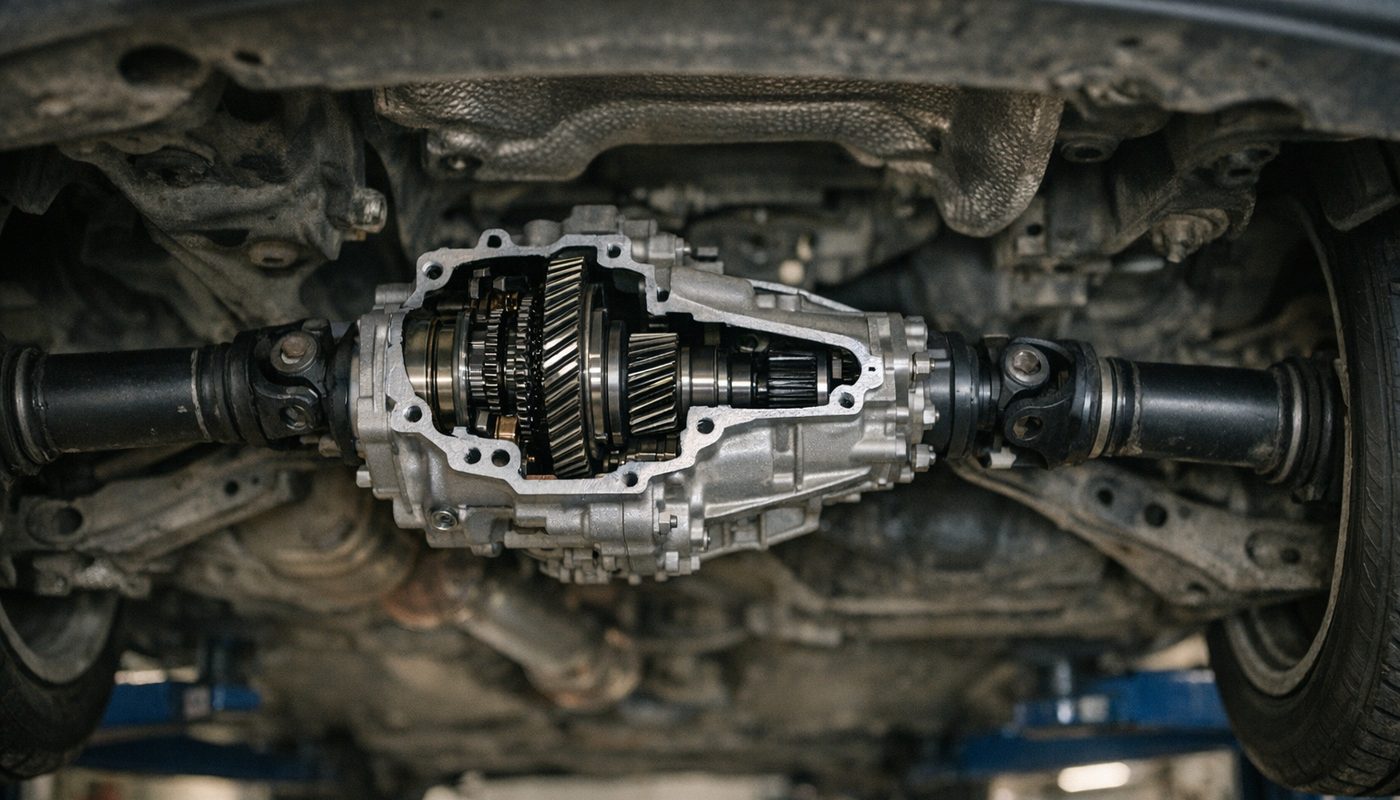
xDrive isn't a mechanical center differential like an old-school Quattro or a Subaru symmetrical AWD setup. It's a transfer case bolted behind the transmission with a wet multi-plate clutch pack inside it, controlled by the DSC module and its own control unit. Under normal driving, that clutch is barely engaged, sometimes fully open, which means torque goes almost entirely to the rear axle. The car is designed to feel like a rear-drive BMW because, most of the time, it basically is one.
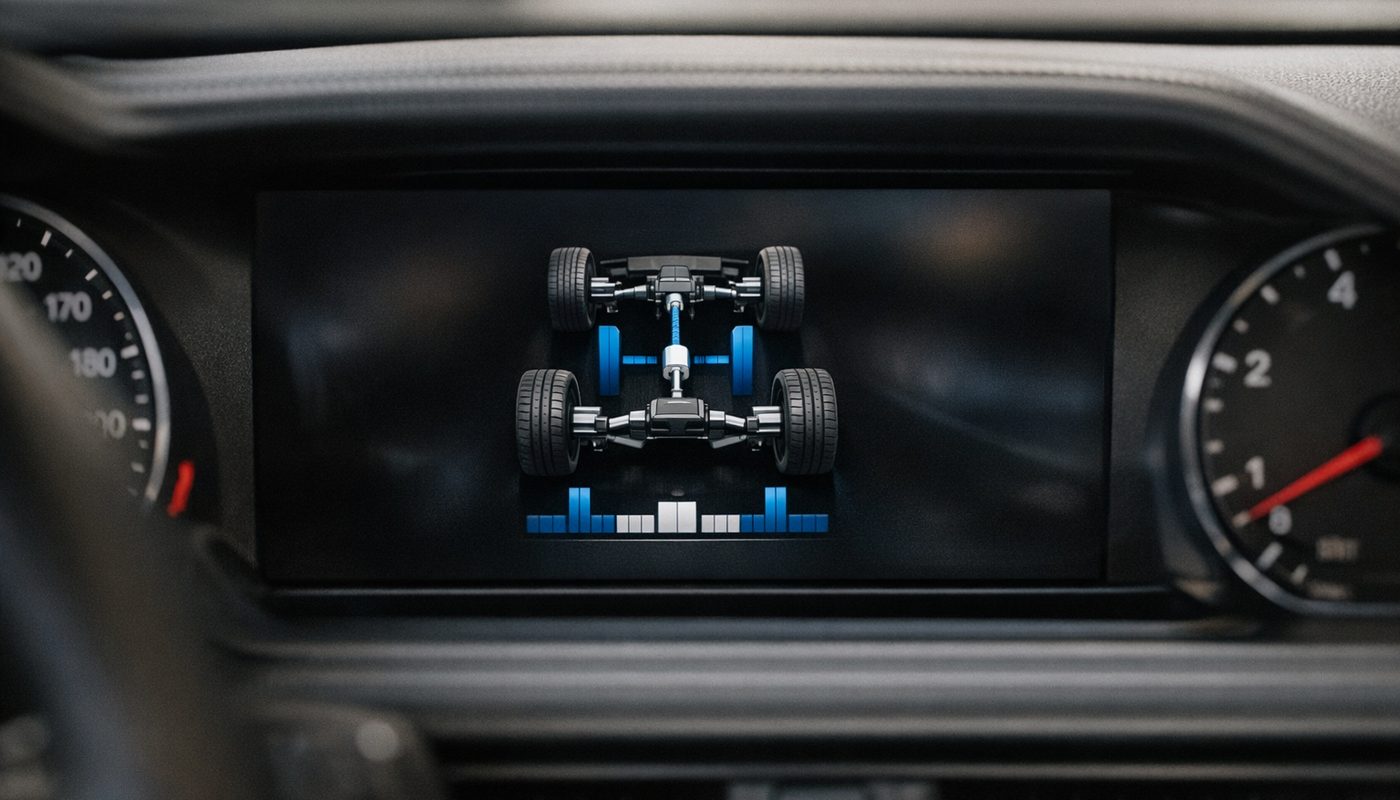
When the system detects or predicts wheel slip, using wheel speed sensors, steering angle, throttle position, and yaw data, the DSC module commands the clutch pack to clamp down in milliseconds, shifting torque forward. In a full slip event the split can theoretically move to a 50/50 front-rear distribution, though in the vast majority of real-world driving you're looking at something closer to a 60-100% rear bias with brief forward shifts under acceleration or slip.
FAAR cars flip the default
Here's where people get confused. On longitudinal-engine BMWs, the 3 Series, 5 Series, X3, X5, and so on, sDrive means rear-wheel drive and xDrive adds front-axle capability on top of that rear-biased architecture. On the transverse FAAR platform cars, the 1 Series hatch (Euro market), 2 Series Active Tourer, and X1, the base layout is actually front-wheel drive, and xDrive on those cars adds a rear axle via a power transfer unit off the front differential. It's a completely different mechanical layout even though BMW markets it under the same xDrive name, and it's part of why some enthusiasts get prickly about calling an X1 a "real" BMW.
The cost of xDrive - weight and fuel economy
Fuel economy penalty
The fuel economy hit isn't dramatic, but it's real and it's consistent. Across most model lines you're looking at roughly 1-2 mpg worse on the combined cycle compared to the equivalent sDrive car, sometimes a bit more on the highway where the extra driveline drag and rotating mass matter most. On a car you're keeping for 100,000+ miles that adds up in fuel cost, but it's not the kind of number that should make or break the decision on its own.
The weight you're carrying around
The bigger practical cost, to me, is weight. xDrive adds roughly 90 kg (about 200 lbs) to a car depending on model, from the transfer case, front differential, front driveshafts, and additional cooling. That's weight sitting up front on longitudinal cars, which is exactly the wrong place for a chassis that BMW spent decades tuning around a 50/50 or near-neutral weight distribution. You feel it in steering response and in how eagerly the nose wants to change direction. It's not a huge difference, and most daily drivers will never notice it back to back, but if you care about steering feel the way I do in a 330i, it's there.
What breaks - transfer case actuators and PTU failures
Transfer case actuator symptoms
This is the part of the xDrive conversation dealers don't love talking about. The most common xDrive-related failure I see on higher-mileage cars is the transfer case actuator, sometimes called the servo motor, which is the electric motor that physically moves the clutch pack engagement. When it starts to fail you'll typically see a driveline shudder or clunk on tight, low-speed turns (classic symptom, especially in parking lots), a AWD or drivetrain warning light, or in worse cases the system defaulting to a fixed torque split that doesn't adjust properly. I've covered the warning-light side of this in detail in my drivetrain malfunction writeup if you're chasing a specific fault right now.
PTU and front diff wear on FAAR cars
On the transverse platform cars - X1, 2 Series Active Tourer, and the Euro 1 Series hatch - the equivalent weak point is the power transfer unit and front differential assembly, since that's where the AWD hardware is packaged differently from the longitudinal cars. Symptoms are similar: clunking on tight turns, whining under load, or fluid seepage from the PTU housing on cars that never got a fluid change. None of this is catastrophic if caught early, but transfer case and PTU work isn't cheap labor, and it's exactly the kind of failure that a pre-purchase inspection with a proper scan tool will catch before you buy the car, not after.
If you're buying used and want to actually see live torque split data and transfer case status rather than just watching a warning light, a decent OBD2 scanner pays for itself in the first pre-purchase check. I run the

Snow tyres vs xDrive - the reality check
Why tyres matter more than driven wheels
This is the single most misunderstood part of the xDrive conversation, and it's the thing I try hardest to correct in person. xDrive helps you get moving and helps put power down when grip is limited, but it does absolutely nothing for braking distance or cornering grip in the cold or on ice, because that's 100% a function of tyre compound and tread design, not which wheels are driven. A summer or all-season tyre on an xDrive car in snow is still a summer or all-season tyre. It'll go, but it won't stop or turn any better than the same tyre on an sDrive car.
The best setup for real winter
The strongest combination for genuine winter driving is xDrive plus dedicated winter tyres, no argument there. But sDrive plus proper winter tyres is genuinely adequate for the vast majority of moderate snow climates, and in my experience it often outperforms an xDrive car running all-seasons or summers year-round, because that driver never bothered to swap tyres and is relying on the AWD badge to do work it physically can't do. If you live somewhere with real, sustained winter and you're not going to run winter tyres, xDrive is the better call. If you're diligent about tyre swaps twice a year, sDrive with winter rubber is honestly enough for most people.
sDrive vs xDrive by BMW model
1 Series, 2 Series, and X1 - the FAAR small cars
On these smaller platforms the sDrive/xDrive gap in driving character is smaller than on the bigger cars, because the base layout is front-drive to begin with. If you're deciding between an X1 sDrive and X1 xDrive specifically, I'd lean xDrive if you're anywhere that sees regular snow or steep unplowed driveways, since the front-drive base layout doesn't have the natural rear-drive playfulness that would make you regret adding AWD hardware. In dry, mild climates the sDrive X1 is lighter, a bit cheaper to run, and honestly indistinguishable from xDrive in daily use.
3 Series, 4 Series, and 5 Series
This is where the character difference is most obvious. A 330i or 530i in sDrive form is the purer driver's car, lighter nose, sharper turn-in, and the classic rear-drive BMW balance the brand built its reputation on. xDrive versions of these cars are excellent all-weather tools and still plenty fun, but you're trading a bit of that steering purity for traction security. If you're in the snowbelt or drive long highway commutes in genuinely bad weather, the xDrive 3 Series or 5 Series is the sensible pick. If you're chasing the classic BMW feel and live somewhere dry, sDrive every time.
X3, X5, X7, and the big SUVs
Most X3, X5, and X7 trims in the US market actually come standard with xDrive, and BMW only offers sDrive on a handful of lower trims in specific markets, so for a lot of buyers this decision is already made for you. If you do have the choice, I'd say the taller, heavier SUV body benefits more from xDrive's traction margin than the sedans do, since the extra weight and higher center of gravity change the risk profile in slippery conditions. I go through the full lineup, including which powertrains and options are worth paying for, in my X1 vs X3 vs X5 vs X7 comparison if you're still narrowing down which SUV size makes sense before you even get to drivetrain choice.
Is xDrive worth it - my honest take
Here's where I stop hedging. If you live somewhere with real winters, steep driveways, or you regularly drive in conditions where traction is genuinely marginal, xDrive is worth the extra money and the small mpg hit. The peace of mind and the reduced chance of a stuck or sliding car in bad weather is worth more than the fuel savings or the slightly sharper steering feel you're giving up. My brother-in-law's xDrive 330i has hauled him up an unplowed hill in a Midwest winter more times than I can count, and he'd never go back.
If you live somewhere mild, mostly dry, or you're a driver who genuinely cares about steering feel and weight balance, sDrive is the better car, full stop. It's lighter, slightly more efficient, has one less system that can eventually need transfer case work, and honestly it's the version of the car BMW's engineers designed the chassis around in the first place. I've owned rear-drive BMWs through plenty of wet and occasionally snowy days and never once wished for AWD, because good tyres and a bit of throttle discipline cover 95% of what most drivers actually need.
What you need to keep an xDrive system healthy
If you do go the xDrive route, or you're buying a used one, there are a few things worth doing that most owners skip. Transfer case fluid isn't lifetime fluid in the real world, even if BMW's official service schedule doesn't always call it out clearly, and a fluid change every 60,000-100,000 km is cheap insurance against premature clutch pack wear. Beyond that, having a way to actually read the transfer case control unit and DSC data rather than just waiting for a warning light is the single best diagnostic habit you can build.
I keep the
Which BMW X5 to stay away from
Since this comes up constantly alongside the xDrive question, I'll answer it directly. The early F15 X5 (2014-2018), particularly with the N63 twin-turbo V8, has a well-documented history of oil consumption issues, timing chain guide wear, and expensive electrical gremlins, and I'd steer clear of those unless you've got a strong service history and a real diagnostic check done first. The E70 X5 (2007-2013) with the early N63 has similar V8 concerns, plus more general age-related electrical issues by now. If you're set on an X5, later F15 facelifts and the G05 (2019+) with the B58 six-cylinder are a noticeably safer bet, and the xDrive system itself isn't really the issue on any generation, it's the engine choice that determines most of the reliability risk. If you want the wider context on how BMW stacks up against its usual rival on long-term reliability, I go through it properly in Audi vs BMW reliability.
FAQ
Is it worth getting xDrive on a BMW
It's worth it if you live somewhere with real winters, steep or unplowed driveways, or you tow regularly, since the extra traction margin genuinely reduces risk in those conditions. If you're in a mild or dry climate and mostly care about steering feel and running costs, sDrive is the better value and the more rewarding car to drive day to day.
What are the disadvantages of xDrive
You're looking at roughly 1-2 mpg worse fuel economy, about 90 kg of extra weight sitting mostly over the front axle, a higher purchase price typically in the $2,000-3,000 range, and one more complex system (the transfer case and its actuator) that can eventually need repair. It also slightly dulls steering feel and turn-in sharpness compared to the equivalent sDrive car.
Which is better, BMW X1 sDrive or xDrive
For dry or mild climates, the sDrive X1 is lighter, a bit more efficient, and perfectly capable, since the FAAR platform's front-drive base layout means you're not giving up much rear-drive character either way. For snowbelt buyers or anyone with a steep driveway, the xDrive X1 is the safer daily driver and I'd recommend it without much hesitation.
Which BMW X5 should you stay away from
Early F15 and E70 X5s with the twin-turbo N63 V8 carry the highest risk, mainly oil consumption and timing chain guide wear rather than anything specific to xDrive. Later F15 facelifts and the G05 generation with the B58 six-cylinder are a considerably safer buy if reliability is your priority.
Does xDrive actually improve fuel economy anywhere
No, xDrive consistently costs you a small amount of fuel economy versus the equivalent sDrive model, typically 1-2 mpg, due to added drivetrain friction and weight. There's no scenario where the AWD version is more efficient than the rear-drive version of the same car.
What does BMW sDrive actually mean
On most BMWs, sDrive simply means rear-wheel drive, the engine sends power only to the rear axle with no transfer case or front driveshafts involved. On the smaller FAAR-platform cars like the X1 and 2 Series Active Tourer, sDrive means front-wheel drive instead, since those cars are built on a transverse-engine architecture.
Can you turn xDrive into pure rear-wheel drive on demand
On most regular xDrive models, no, the system is always active and managed by the DSC module, though in normal dry driving it already sends the vast majority of torque to the rear axle anyway. Some newer M xDrive performance models do offer a genuine 2WD mode when DSC is fully switched off, but that's a specific M-car feature, not something available across the standard xDrive lineup.
Is the xDrive transfer case expensive to fix
A transfer case actuator replacement is a moderate repair, generally a few hundred to around a thousand dollars in parts and labor depending on the model, while a full transfer case replacement runs considerably higher. Catching actuator wear early through diagnostics rather than waiting for a full failure keeps the repair bill on the lower end of that range.
Bottom line
xDrive isn't a gimmick, and it isn't a must-have either, it's a genuinely well-engineered system that solves a real problem for people who actually have that problem. If your winters are serious or your driveway is a sheet of ice four months a year, pay the extra money and don't look back. If you're chasing the classic BMW driving feel in a climate that rarely punishes rear-wheel drive, save the cash, buy good tyres, and enjoy the lighter, sharper car. I'll keep driving my sDrive 330i until someone gives me a real reason not to, and so far, nobody has.