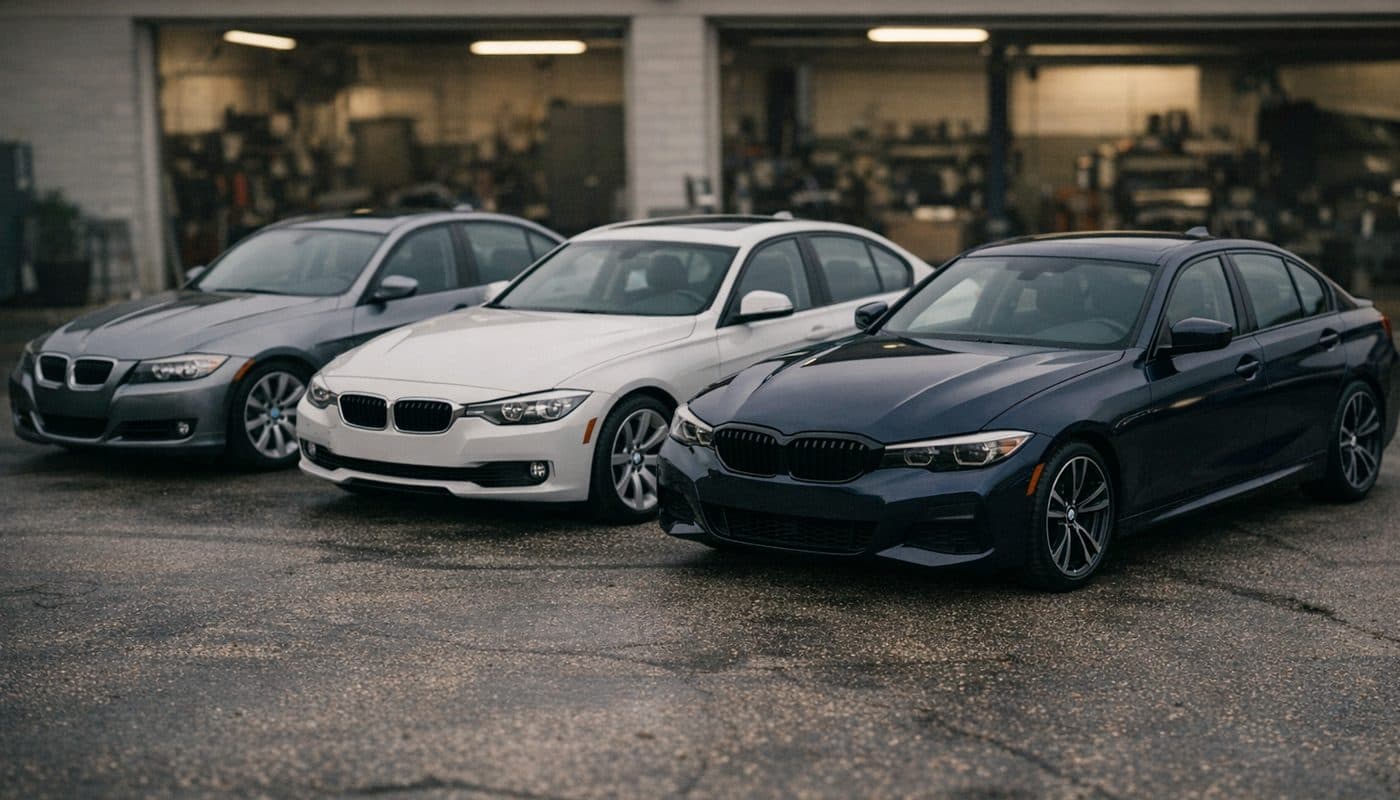
Audi vs BMW Reliability, The Honest Comparison
Affiliate disclosure. BimmerTalk is a proud partner of the Amazon Associates Program and Turner Motorsport. We may earn a small commission on qualifying purchases through our links, at no extra cost to you. Read the full disclosure.

I'm going to start this with a confession, because if you cross-shopped BMW and Audi and ended up here, you deserve honesty instead of another badge-loyal hit piece. My daily is a G20 330i. I've spent 5 years wrenching, wrenching first on E46s and E90s, then on F30s, and I still drive into the shop every morning happy. I am, by any reasonable definition, a BMW guy. So when I tell you that Audi wins on interior quality, that an A5 Sportback keeps more of its money at five years than a 5 Series, and that a Q5 is genuinely $5,400 cheaper to own over a decade than an X3, I am not saying it because I want to sound balanced. I am saying it because the numbers say so and I refuse to lie to you.
But this site is called BimmerTalk for a reason, and the numbers also cut the other way. The 2025 JD Power Vehicle Dependability Study put BMW at 189 problems per 100 vehicles and Audi at 273. That is an 84 PP100 gap, the biggest inside the German luxury three. The 2026 update put Audi at 244 PP100 and ranked the brand 24th of 32, sitting with Volkswagen, Volvo, Land Rover, and Jeep in the bottom five. BMW's X4 won its segment. Consumer Reports ranked BMW second overall in its 2026 Brand Report Card, top European brand, while Audi landed 13th. If you weight reliability data the way an actual used-car buyer should, BMW is winning in 2026, and it's not close.
So this article is my attempt to give you the one thing most BMW-vs-Audi posts refuse to give you - a real answer. Not "they're both great, test drive both." A framework. When Audi wins, I'll tell you. When BMW wins, I'll tell you. When one engine is genuinely better than the other and the comparison is basically over before it starts (B58 vs EA839, you'll see), I'll tell you that too. Pour a coffee. This is the long one.
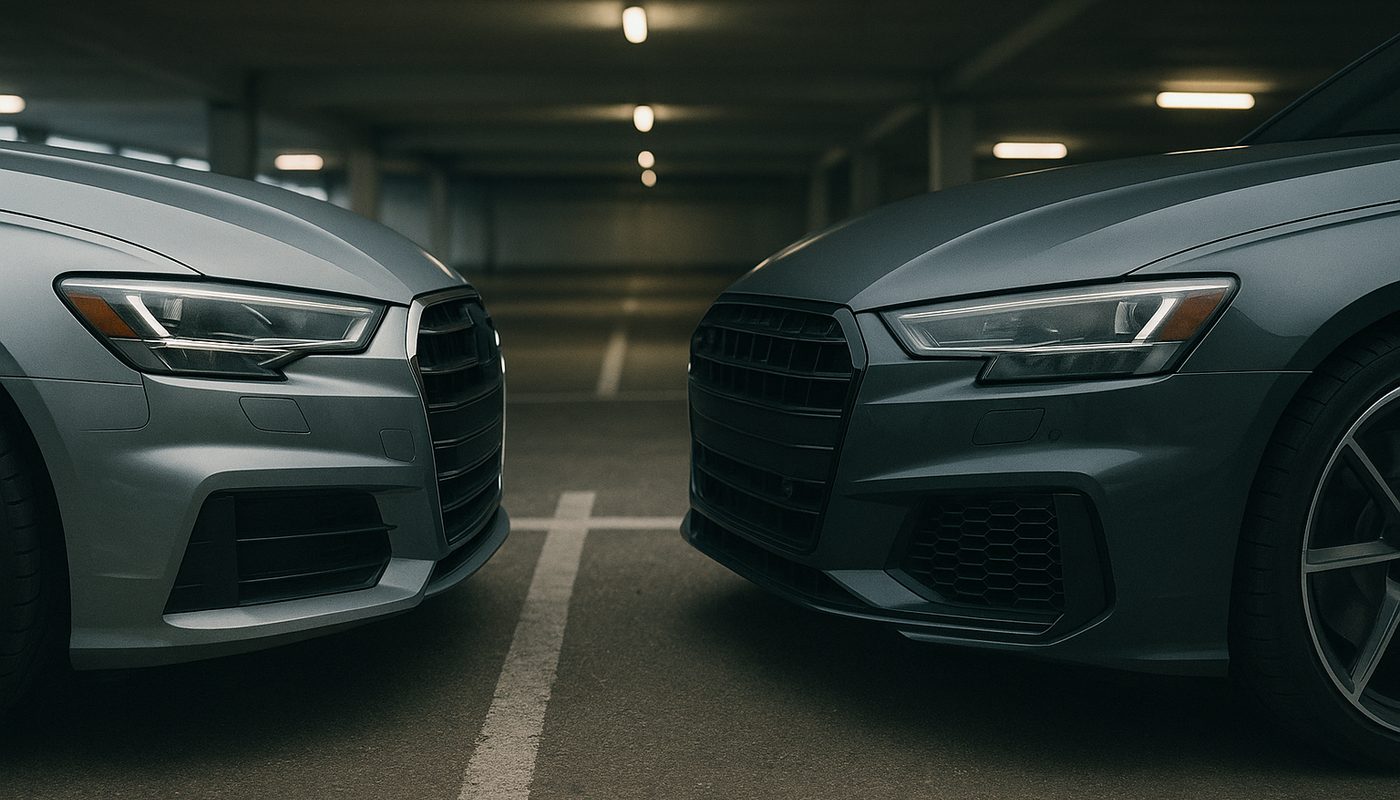
BMW 189 vs Audi 273
JD Power 2025 PP100
BMW #2 vs Audi #13
CR 2026 Brand Rank
BMW $968 vs Audi $987
RepairPal Annual Cost
BMW ~$17,800 vs Audi ~$12,400
10-Year Total Cost
| BMW | Audi Rival | Reliability Winner | Drive Winner | Value Winner |
|---|---|---|---|---|
| G20 3 Series | B9 A4 | BMW (189 vs 273 PP100) | BMW | Audi (interior+resale) |
| G01 X3 | B9 Q5 | BMW (drivetrain) | Close | Audi ($5400 less 10yr) |
| G05 X5 | 4M Q7 | BMW (B58 vs EA839 flaw) | BMW | Tie |
| G80 M3 | B9 RS5 | BMW (S58 proven) | BMW | BMW |
| F90 M5 | C8 RS6 | BMW (6+ years data) | Tie | BMW (track legacy) |
| G29 Z4 | Mk3 TT | BMW (ZF 8HP) | BMW | Audi (design) |
G20 3 Series
- Audi Rival
- B9 A4
- Reliability Winner
- BMW (189 vs 273 PP100)
- Drive Winner
- BMW
- Value Winner
- Audi (interior+resale)
G01 X3
- Audi Rival
- B9 Q5
- Reliability Winner
- BMW (drivetrain)
- Drive Winner
- Close
- Value Winner
- Audi ($5400 less 10yr)
G05 X5
- Audi Rival
- 4M Q7
- Reliability Winner
- BMW (B58 vs EA839 flaw)
- Drive Winner
- BMW
- Value Winner
- Tie
G80 M3
- Audi Rival
- B9 RS5
- Reliability Winner
- BMW (S58 proven)
- Drive Winner
- BMW
- Value Winner
- BMW
F90 M5
- Audi Rival
- C8 RS6
- Reliability Winner
- BMW (6+ years data)
- Drive Winner
- Tie
- Value Winner
- BMW (track legacy)
G29 Z4
- Audi Rival
- Mk3 TT
- Reliability Winner
- BMW (ZF 8HP)
- Drive Winner
- BMW
- Value Winner
- Audi (design)
The Short Answer Before the Deep Dive
If you want the whole verdict in 60 words, here it is. BMW has better short-term reliability data in 2026 (JD Power, Consumer Reports, iSeeCars all point the same way). Audi has better 10-year maintenance economics and a nicer interior. The B58 is the single biggest engine-reliability win on either side. The ZF 8HP is the best automatic on the market. If you're leasing, Audi. If you're buying and keeping, BMW. If you want to make a mistake, buy a high-mileage N63 V8 or a DQ200 dry-clutch DSG Audi without walking into it eyes open.
Now let me show you the work.
The Real 2026 Reliability Numbers
Every reliability argument online gets corrupted because people cherry-pick one data source. The Audi fans quote RepairPal because the annual dollar figures are nearly identical. The BMW fans quote JD Power because the PP100 gap is huge. The truth is both studies are valid, they measure different things, and you have to read both to get the picture.
JD Power 2025 and 2026 Vehicle Dependability
JD Power's Vehicle Dependability Study tracks problems reported by the original owner on a three-year-old car. It's a real-world data set, survey-based, and it punishes fiddly cars hard because a bluetooth glitch counts the same as a blown turbo from the consumer's perspective. The 2025 study was the killer number - BMW landed at 189 PP100, Mercedes at 243, Audi at 273. That is 84 PP100 between BMW and Audi on identical-vintage cars.
The 2026 update is new as of this writing. Industry average climbed to 204 PP100 (up 2). Premium segment average hit 217 PP100, which is the worst premium score since the PP100 methodology got redesigned in 2022. Inside that context, Audi came in at 244 PP100 and ranked 24 of 32 brands, sitting in the bottom five with Volkswagen (301), Volvo (296), Land Rover (274), and Jeep (267). BMW is not in the bottom five. BMW's X4 won its segment (compact premium SUV). Lexus won overall for the fourth consecutive year.
The trend matters more than the single number. Audi's JD Power position has been deteriorating since 2022. BMW's has stabilized around the premium average or slightly better. If you projected the line forward one more year, Audi would be the worst-ranked German luxury brand on the JD Power board. That is not where you want your lease-return to come from.
Consumer Reports 2026 Brand Report Card
Consumer Reports publishes the Brand Report Card every November/December based on member-reported reliability across a three-year window plus road test scores. This is the big one for predicted-reliability shoppers because CR publishes per-model predictions too. BMW landed second overall, behind Subaru, top European brand, fifth overall in reliability. Every current BMW model has predicted-average-or-above reliability by CR methodology. The 2026 X5 is above average, the 2026 2 Series is above average, the 2026 3 Series is average.
Audi finished 13th overall. Middling. The brand is being dragged down by its electrified models - the Q4 e-tron is predicted below average, the A6 is average. If you strip out the hybrids, Audi looks better, but you can't unstrip them - they are part of the brand's offering and they are part of how a cross-shopper experiences the dealer and the fleet.
RepairPal Annual Cost
Here's where Audi defenders have their one good data point. RepairPal pulls from independent shop repair data - actual invoices from their network. On their numbers, Audi costs $987 a year to maintain and BMW costs $968. Nineteen bucks a year. That's a wash. Unscheduled shop visits land at Audi 0.8 per year versus BMW 0.9. Severe repair share is BMW 15%, Audi 13%. On RepairPal's 5-point reliability scale, Audi scores 3.0 (rank 28 of 32) and BMW 2.5 (rank 30 of 32). Neither looks great next to Toyota.
The reason RepairPal and JD Power diverge is that they measure different things. JD Power captures all owner-reported problems, including the fiddly stuff and the software gremlins that drive you crazy at year three but that you never actually take to a shop. RepairPal only counts what made it onto an invoice. If a BMW owner types dismissal into an iDrive 8 reboot three times a week, JD Power sees it and RepairPal doesn't.
The 10-Year Picture Is Different
This is the cost comparison that Audi fans lead with, and they're not wrong. Taking RepairPal-style shop data, accounting for service intervals, and extrapolating over ten years of ownership, typical BMW total maintenance cost runs around $17,800. Typical Audi runs around $12,400. Audi is roughly 36% cheaper over a decade. The BMW cost disadvantage does not kick in during the first three years (which is when JD Power and CR are measuring). It kicks in at year 6 to 10, when the expensive stuff starts - water pumps, valve cover gaskets, oil filter housing gaskets, transfer cases, turbos on the V8 cars.
Read that again, because it's the most important nuance in the article. BMW wins the dependability studies because the studies are short-window. Audi wins the ownership-cost studies because those are long-window. Both are true. Which one matters to you depends on how long you keep cars.
iSeeCars Longevity
iSeeCars publishes the "how likely is this car to reach 250,000 miles" study. Industry average is 4.8%. Toyota leads at 17.8%. BMW, Audi, and Mercedes are all below 1%. Neither German brand was built to casually hit 250k. If you want a quarter-million-mile car without heavy investment, you're shopping at a Toyota dealer. If you want a German car to reach 250k, you will write a bigger maintenance check than the average Highlander owner ever does.
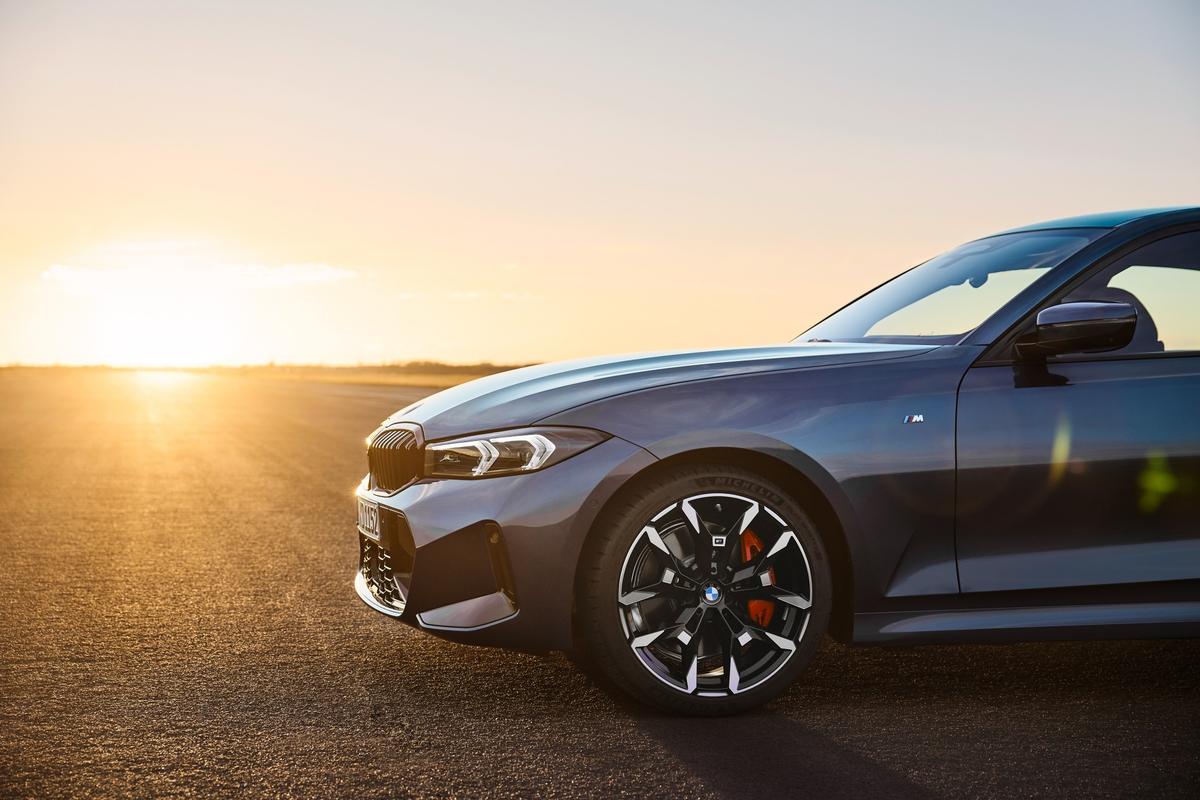
Engine Head-to-Head, the Most Important Section
You can stop reading right after this section if you only want engines. This is the single place where BMW's advantage in 2026 is real, wide, and indisputable. The B58 is dominant. The S58 has better data than the RS5's 2.9 TFSI. The B48 out-reliables the EA888 Gen 3 by a comfortable margin. The only Audi engine that fights back in a clean head-to-head is the wet-clutch DSG-equipped lineups with the newest TFSI revisions, and that's as much about the transmission as the engine.
BMW B58 vs Audi EA839 3.0 TFSI
This one matters because it's the match-up between the two best mid-range German sixes. B58 lives in the M340i, 440i, X3 M40i, X5 40i, Z4 M40i, 540i, 740i. EA839 lives in the S4, S5, SQ5, and current Q5 variants. On paper they're similar - single-turbo six, direct injection, around 360-400 hp depending on tune. In the shop, they are not.
The B58 has forged internals, a closed-deck block, and a reputation online as "the new 2JZ." I'm not going to use that phrase because it's worn out, but it tells you the truth - this engine handles 600+ hp on stock block with supporting mods, and BMW has been quiet on the warranty claim side because there's not much to claim. Known issues on B58 are exactly what you'd expect on any modern BMW inline-six: valve cover gasket leaks around 80k (~$200-400 DIY, $400-600 indie), oil filter housing gasket around the same window ($400-800 indie), water pump and thermostat bundle somewhere between 80k and 120k ($1,000-1,500 at an indie shop). That is it. No class action. No NHTSA-recalled timing system. No piston ring recall. No head gasket pattern.
EA839 has a documented piston design issue. 034Motorsport, one of the most respected Audi tuning shops in the US, published a technical review of it. The summary is ugly - piston rocking, skirt wear, cyclic fatigue. One Audi dealer reported 14 stock-configuration piston failures in six weeks. The overall rate is probably under 5%, but when it hits, it is catastrophic - you are replacing the short block. There are also documented timing chain tensioner rattles and oil consumption issues on the engine family.
The 034Motorsport position on the engine, paraphrased from their public engineering review, is that the piston geometry wasn't tuned for the load envelope Audi put on it, and that even bone-stock cars driven conservatively have shown the failure mode. That is the opposite of what you want to hear about a $70,000 car's powertrain. The EA839 is also unlocked at the ECU, which is why Audizine is full of tunes on it. The B58 is locked down, which is why you mostly see MHDT and BM3 on them.
Verdict. B58 wins this head-to-head decisively. It's the biggest BMW-vs-Audi engine gap in the modern era. If you're choosing between an M340i and an S4, and you plan to keep the car past warranty, the decision is already made on engines alone.
BMW S58 vs Audi 2.9 TFSI
This is the G80 M3, G82 M4, G87 M2 Competition, and X3M/X4M versus the B9 RS5 and RS4 Avant. Both are twin-turbo 3.0 sixes with around 500 hp. The S58 fixed the S55's two biggest sins - single-piece crank hub from factory, revised rod bearings. Forged crank, closed deck, combined direct plus port injection. Three-plus years on the road now, no widespread failure patterns. It's service-sensitive (needs proper oil, needs cooldown breaks after hard runs), but data-wise it's the cleanest current M engine in BMW's lineup.
The 2.9 TFSI in the RS5 has early-year wastegate software issues - TSB 2052094/3 from September 2019 covered it. Post-2019 RS5s with the updated software show few documented problems. The engine family does get carbon buildup like every FSI/TFSI (walnut blast every 40-60k), and shares the timing chain tensioner concerns with the rest of the EA family.
Verdict. S58 takes it in 2026 because it has three years of clean field data. The RS5 with the wastegate TSB applied is fine. But "fine" loses to "proven."
BMW B48 vs Audi EA888 Gen 3 and Gen 3b
This is the four-cylinder match-up. 330i and X3 30i versus A4 45 TFSI and Q5 45. Both are 2.0T. B48 has no widespread failures in production. As it ages it gets the same oil filter housing and valve cover gasket leaks the inline-six does, which is expected BMW behavior. Some tuning concerns on stratification-charge variants but nothing production-grade.
EA888 Gen 3 had a water pump failure pattern at 60-100k, a turbo actuator issue, the famous piston-ring oil consumption from the 2012-2017 class action, and timing chain tensioner failures on early Gen 3 that were revised in Gen 3b. Direct injection carbon buildup like everything in this engine family. On transverse applications, some configurations get the dry-clutch DQ200 DSG which has its own shuddering issues.
Verdict. B48 wins. EA888 Gen 3 is arguably the most problematic mainstream engine from either brand in the last decade, and the settlement documents to prove it exist on the federal court record.
S55 vs 2.9 TFSI in the Outgoing F80 M3 and RS5
Historical context because plenty of you are shopping used. The S55 (F80 M3, F82 M4, F87 M2 Competition) has three known items - crank hub failure at roughly 2-3% of cars, charge cooler plastic that can let coolant into the intake and bend a rod, and valve cover gasket leaks. Budget $3,000-6,000 for preventive work (hub upgrade, charge cooler, VCG, oil cooler lines) and you get to 150k miles safely. The outgoing RS5 B9 needs the wastegate TSB and regular walnut blast. Both are "project ownership" engines, and the S55 gets the edge because the preventive playbook is now completely documented.
N54 HPFP vs EA888 Gen 1 - the Historical Baseline
Worth naming, because these two engines are why the "BMW unreliable vs Audi unreliable" memes even exist. The N54 (2007-2010 335i, 135i, 535i, Z4 35i) had a high-pressure fuel pump failure rate so high that BMW extended the emissions warranty to 10 years or 120,000 miles. That warranty is expired now. A fresh HPFP is $1,000-2,000. The N54 vs N55 vs B58 article covers the evolution path, and the 335i common problems breakdown has the full known-issue spreadsheet.
The EA888 Gen 1 (2008-2011) had piston ring oil consumption so bad it became the backbone of the Audi 2.0T class action settlement that still pays out claim dollars today. If you're used-shopping an older A4 or Q5, know which engine code is under the hood (CAEB for the Gen 1 concerned engine) and ask for the piston replacement documentation.
Transmissions, the Quiet Deciding Factor
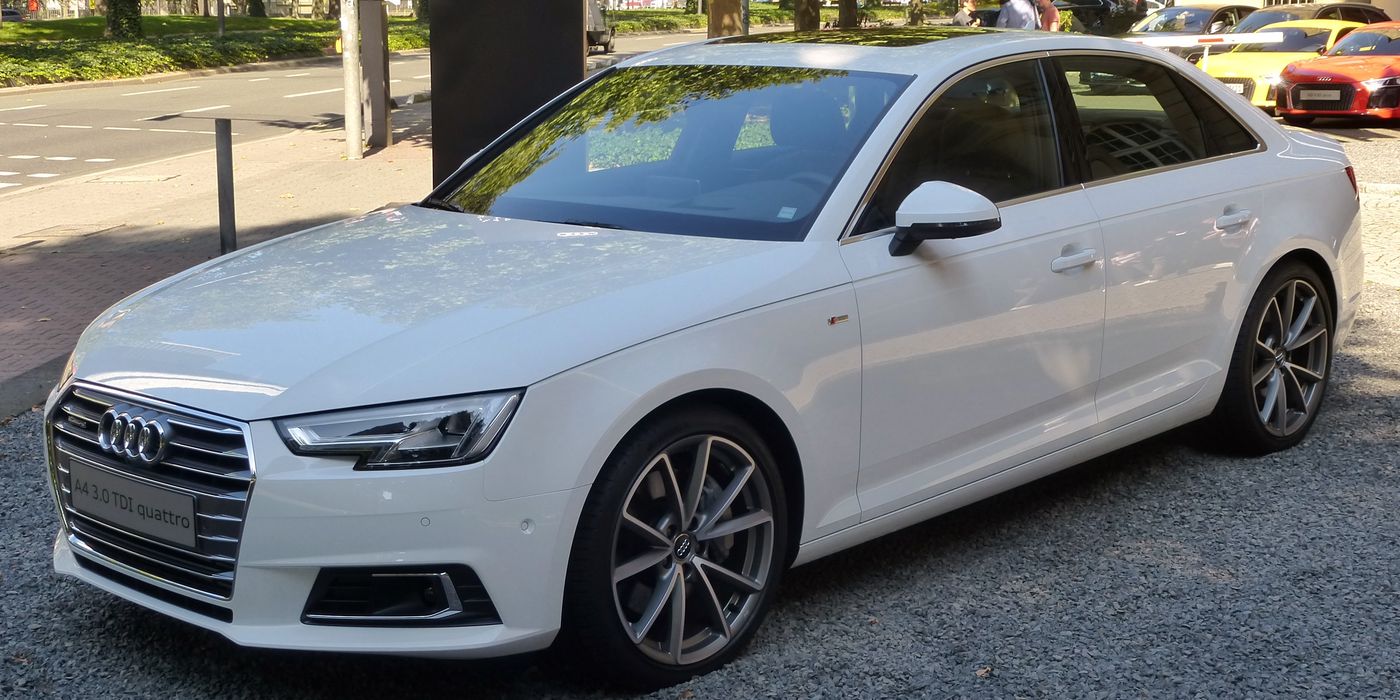
Nobody in a dealer showroom asks what transmission they're buying. Everyone five years into ownership knows. This is where BMW's advantage widens, because BMW made a strategic decision a decade ago to buy the best automatic on the market and bolt it to almost everything. It's called the ZF 8HP and it is the reason your $60,000 used 540i is going to shift clean past 200,000 miles if you treat it right.
ZF 8HP in BMW Applications
The 8HP is an eight-speed torque converter automatic built by ZF. BMW has used ZF transmissions since the E46 era. The 8HP is in almost every modern BMW that isn't a manual or a DCT M car. The longevity sweet spot is 200,000+ miles with fluid service every 60-80k. BMW calls it "lifetime fill" and every independent BMW tech I know has publicly disagreed. BimmerLife has a long-form article dismantling the lifetime-fill claim. I agree with them. I service mine at 60k and 120k. The difference in shift feel after a fluid service is immediately noticeable.
Known failure patterns are narrow - "D" clutch pack wear (gives you shuddering reverse), O-ring leaks at the solenoid pack. Complete dealer replacement is $6,000-8,000. Indie rebuild is $3,000-4,500. A good used transmission swapped in is $2,200-3,500. For a car that might never need it, that is acceptable insurance. The BMW transmission service guide has the full procedure and fluid specs by chassis.
The ZF 8HP is also the transmission in the Audi A8, the Rolls-Royce Ghost, most Land Rovers, many Porsches. Audi longitudinal-platform cars (A6, A7, A8, Q7, Q8) use a ZF-based tiptronic that shares the torque converter hardware and most of the reliability. If you're buying a longitudinal quattro Audi, you are getting ZF hardware too.
S-Tronic and DSG - Where Audi Gets Interesting
Audi transverse platforms (A3, Q3, transverse A4/Q5 in certain applications, Mk3 TT) use the DSG family. There are two flavors that matter.
Wet DQ500 lives in the S4, S5, and higher-torque applications. It handles torque, it shifts fast, it is a legitimately good dual-clutch. Fluid service is around $350-500 at an indie shop. Reliability is solid. Owners are generally happy.
Dry DQ200 lives in the lower-torque A3 and Q3 applications. This is the weak link in the Audi transmission lineup. Shuddering after 60k of stop-start driving. Clutch pack wear. Mechatronic unit failures that run $1,200-1,500 for a DIY repair kit or $3,000-5,000 for a dealer replacement. Multiple global warranty campaigns have been issued against the DQ200, and class action material exists in several European jurisdictions. If you're looking at a used A3, Q3, or older TT, this is the thing to research before you sign.
Verdict. ZF 8HP is the best automatic on the market and BMW uses it in almost everything. Audi's longitudinal cars share the ZF advantage. Audi's transverse cars with the DQ200 are the weak link. This is one of the clearest BMW wins in the comparison.
Model-by-Model Shootout
Now the actual head-to-head. I'm going to score these the way I'd score them talking to a customer at my bench - who wins on reliability, who wins on drive, who wins on value, and what the caveats are. No both-are-great waffle.
G20 3 Series vs B9 A4
The closest and most-asked comparison. Consumer Reports gives a slight edge to the A4 B9 - the Audi mostly has in-warranty coolant leaks and fewer long-tail issues. The G20 has its known OFH gasket leaks, valve cover gasket leaks, and occasional cold-weather shift delay on early iDrive builds. Driving dynamics edge goes to G20, especially M340i vs S4. Interior feel goes to A4 - cleaner digital cockpit, softer materials, quieter at freeway speeds. Long-term reliability edge to BMW once you pass 5 years because the B58 has no documented piston issue and the EA839 does.
My pick for buy-and-keep. M340i. For three-year lease with the corporate salary account: S4. If you want the M340i deep dive, read the M340i review, and if you're cross-shopping the smaller 330i, the 330i vs 340i comparison breaks down which makes sense at different budgets.
G01 X3 vs B9 Q5
This one has the most interesting depreciation math. On reliability, iSeeCars rates the X3 at 7.8 and the Q5 at 7.4. BMW forum data leans X3. X3 issues are early-year turbo concerns on the B46 pre-LCI and transmission software glitches. Q5 issues are the familiar EA888/EA839 problems and electrical niggles.
Here's where I have to be honest in Audi's favor - a Q5 will cost you about $5,400 less over 10 years than an X3 in total maintenance. That is a real number. If you're a dealer-service-only owner, a Q5 saves you real money. The X3 is ahead on drivetrain and ahead on driving feel. Audi wins value, BMW wins mechanical confidence.
The detailed matchup is in our X3 vs Q5 real comparison. If you want the BMW-side context, the X3 reliability deep dive has the chassis-by-chassis rundown.
G05 X5 vs 4M Q7
iSeeCars gives the X5 a 7.8 and the Q7 a 7.4. On 2024 MY, the Q7 scored 78 and the X5 82 on the equivalent iSeeCars rating. The X5's known issues are cooling system leaks, turbo wastegate on the V8 variants, and air suspension on the higher trims. The Q7's known issues are the MMI main unit and amplifier failures, sensor failures, and electrical niggles that tend to repeat. BMW includes 3-year/36,000-mile scheduled maintenance. Audi includes 1-year/10,000-mile.
The Q7 does have one advantage the X5 doesn't - a third row that adults can actually sit in without praying. If you legitimately need a seven-seat luxury SUV, the Q7 is the real family car. For everything else, the X5 wins. Full breakdown is in our X5 vs Q7 luxury SUV showdown.
G80 M3 vs B9 RS5
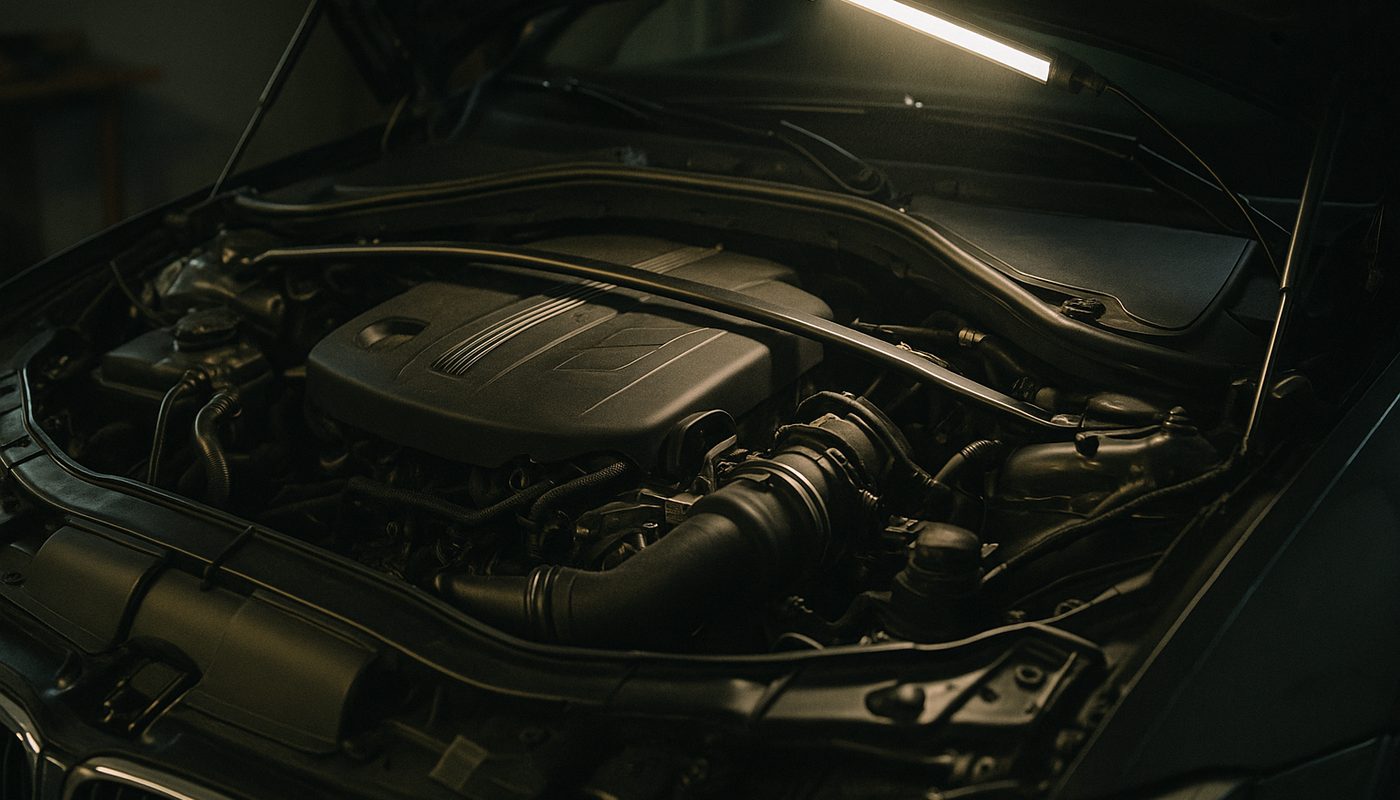
The S58 has three years of clean field data. The RS5's 2.9 TFSI needs the wastegate TSB applied and regular walnut blast. The M3 is the proven driver's car - third pedal available if you want it, balance tuned for a track day. The RS5 is the proven all-weather grand tourer - quattro is phenomenal in weather, the cabin is quieter, the 0-60 is brutal and repeatable. For 2026 MY, Audi made the RS5 a PHEV (630 hp, 3.6s 0-60), which resets the reliability clock entirely - no field data yet.
Owner quotes consistently line up this way - "RS5 is the daily, M3 is the event." If you're buying one car, it's the M3. If you have a commuter and you want a grand tourer, maybe the RS5. This article covers the broader M340i vs M3 decision if you're trying to decide how much M3 you actually need.
F90 M5 vs C8 RS6
The M5 F90 uses the S63B44T4 twin-turbo V8, ZF 8HP, xDrive. Known issues are charge pipe failures, oil leaks as the engine ages, and the thirst you'd expect from a 617 hp V8. The RS6 C8 uses a mild-hybrid 4.0 TFSI V8, tiptronic, quattro. Known issues are mild-hybrid 48V battery failures, expensive timing chain service (this is a chain-in-the-back V8, so it's labor-heavy), and insurance-hostile tire and brake wear rates.
Both are six-figure maintenance cars after warranty. Depreciation favors the RS6 in the US market because Avant rarity keeps prices up. Owners who switch between the two tend to say the RS6 is softer and acceptable, the M5 is sharper. The M5 common problems article has the F90 specifics. The 2026 M5 is a PHEV now too, so the comparison with the RS6 is getting more direct.
G29 Z4 vs Mk3 TT
The TT was discontinued after the 2023 model year. No successor. So for 2026 MY buyers, the Z4 wins by default. On used-market comparison, the Z4 G29 shares a platform with the Toyota GR Supra, which means Toyota reliability engineering on the structure. iSeeCars scores Z4 at 7.6 and TT at 7.4. The Z4's M40i has the B58 which gives it the same engine that makes the M340i wonderful. TT design was stunning, interior was class-leading, but you can't buy a new one and the used ones age into DSG risk territory.
U11 X1 vs F3 Q3
JD Power predicted reliability actually favors the Q3 (4/5) over the X1 (3.5/5). Both are front-biased AWD transverse platforms. X1 is now FWD-based with the U11 chassis. This is the one segment where Audi has a marginal reliability edge on predicted data, but engine-only it still goes to B48 over EA888 Gen 3b. If you're price-shopping at the entry-level end, the Q3 is not a bad call, especially if you're taking a three-year lease.
G22 4 Series vs B9 A5
Consumer Reports has the A5 scoring 17 points higher than the 4 Series coupe and convertible. The G22 is bigger, more aggressive, more expensive to insure. The A5 B9 is older platform, simpler electronics, fewer screens to break. Pure reliability pick for 2026 is the A5. Pure driving pick is the M4, which is a different category anyway.
| Metric | BMW | Audi | Winner |
|---|---|---|---|
| 2025 JD Power PP100 | 189 | 273 | BMW (-84) |
| 2026 JD Power PP100 | ~200-210 | 244 | BMW |
| 2026 CR Brand Rank | #2 | #13 | BMW |
| RepairPal Annual | $968 | $987 | BMW ($19) |
| 10-Year Total | ~$17,800 | ~$12,400 | Audi (-$5,400) |
| iSeeCars Longevity to 250k | <1% | <1% | Tie (neither) |
| 5-Year Depreciation (avg) | ~61% | ~54% | Audi (-7pts) |
| ZF 8HP equipped | Yes (all) | Longitudinal only | BMW |
| DSG risk exposure | None | Transverse DQ200 | BMW |
2025 JD Power PP100
- BMW
- 189
- Audi
- 273
- Winner
- BMW (-84)
2026 JD Power PP100
- BMW
- ~200-210
- Audi
- 244
- Winner
- BMW
2026 CR Brand Rank
- BMW
- #2
- Audi
- #13
- Winner
- BMW
RepairPal Annual
- BMW
- $968
- Audi
- $987
- Winner
- BMW ($19)
10-Year Total
- BMW
- ~$17,800
- Audi
- ~$12,400
- Winner
- Audi (-$5,400)
iSeeCars Longevity to 250k
- BMW
- <1%
- Audi
- <1%
- Winner
- Tie (neither)
5-Year Depreciation (avg)
- BMW
- ~61%
- Audi
- ~54%
- Winner
- Audi (-7pts)
ZF 8HP equipped
- BMW
- Yes (all)
- Audi
- Longitudinal only
- Winner
- BMW
DSG risk exposure
- BMW
- None
- Audi
- Transverse DQ200
- Winner
- BMW
Interior Quality Reality, Where Audi Wins
I've said this to customers for a decade - if you sit in an A5 and an M4 back to back on the lot, you will walk out convinced Audi builds a nicer car. And the thing is, in the showroom, Audi does. Audi has won interior quality comparison tests in almost every year of the last decade. The materials are better on paper - more soft-touch plastic where BMW uses hard plastic, better stitched leather, more real aluminum and less painted plastic on trim. The Virtual Cockpit digital gauge remains the class benchmark for clarity and customization. The ambient lighting scheme has BMW's beat.
BMW has closed the gap since iDrive 8.5, but "closed the gap" does not mean "passed Audi." BMW's edge is in ergonomics - the iDrive rotary controller is still preferred by road testers over Audi's MMI touch-based system. The seat geometry on a 3 Series is better than the seat geometry on an A4 if you're long-legged. BMW's sport seats, when optioned, are the best in the segment after Porsche.
The long-term inversion is what I want to flag. At five years old, BMW interiors age better than Audi interiors in my experience. Audi's MMI main units (the 4K0 and 4M1 modules) have more documented black-screen and reboot-loop failures than BMW iDrive. The Audi B&O amplifier, trunk-mounted, is killed by sunroof drain clogs letting water in - a $1,500-3,000 fix. BMW's sound systems fail at lower rates. Audi wins the showroom, BMW wins the 100,000-mile cabin.
Net. If you're buying new and leasing, Audi interior. If you're buying used past warranty, BMW interior. This matches the rest of the pattern.
Resale Value, Audi's Other Legitimate Win
This is the part where I tell you Audi holds value better. It does. On aggregate, 5-year depreciation runs about 7 percentage points better for Audi than BMW across similar segments. Some specific data points from iSeeCars.
Audi's resale winners include the TT RS (32.2% depreciation, retains 67.8%), standard TT (32.5% / 67.5%), and the RS5 (32.6% / 67.4%). BMW's resale winners are the M2 (40.6% / 59.4%), 2 Series (43.8% / 56.2%), and M4 (44.1% / 55.9%).
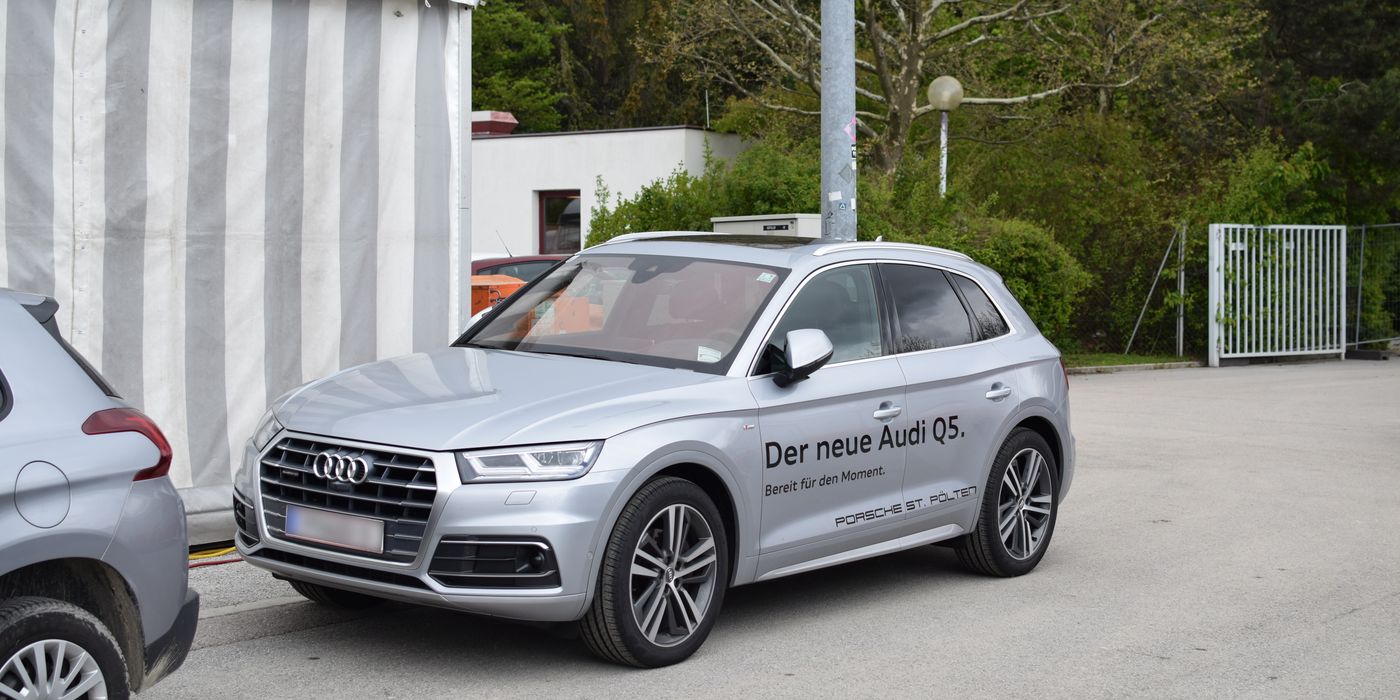
Direct comparable matchups are where the gap is ugliest. Audi A5 Sportback loses 54.4% over five years with a $21,116 residual. BMW 5 Series loses 61.4% with a $22,648 residual. Audi Q5 loses 54.1% with $20,841 residual. A direct X3 comparison is less flattering to BMW in the high-volume trims.
There are three BMW exceptions where this pattern inverts. The M2 G87 holds value exceptionally well - enthusiast demand outpaced supply 2022-2025. The M4 G82 is second-best. The manual-transmission G80 M3 actually appreciated from dealer list in some regional markets over the same window because supply is thin. Outside of those three, Audi holds value better.
Why does this happen? Audi markets "understatement" to a buyer profile that tends to keep cars stock and drive them gently. BMW markets "driver's car" to a buyer profile that tracks them, tunes them, and trades them in with scratched wheels and modifications that the next buyer will not pay for. It's a brand-identity thing more than an engineering thing, but the resale math is what it is.
Parts, Shops, and DIY Reality
This is where BMW pulls away again, and it's one of the reasons I chose BMW for ownership over Audi even before I worked in a shop. The parts ecosystem for BMW is deeper, wider, and better-documented than Audi's, and the DIY community is larger by at least an order of magnitude.
Parts Suppliers
FCP Euro runs 190,000+ parts across European brands with a lifetime replacement guarantee on wear items (brakes, suspension, filters). Their BMW and Audi coverage is roughly equal, so no brand-side penalty there. They have a 100,000 square foot warehouse in Connecticut, around $10 million of inventory. Ship times are consistent. Quality is high. Returns are frictionless.
ECS Tuning runs a deeper performance catalog than FCP, splits roughly 50/50 between BMW and Audi performance parts, and is the go-to for more involved projects. Both sites cover both brands, so at the retailer level, nobody is getting shortchanged.
Aftermarket Depth
BMW aftermarket tuning is massive. Every modern engine has a dozen serious tuners - MHD, BM3, Dinan, Alpina, AC Schnitzer on the flash side. VRSF, Wagner, CSF on the hardware side. The B58 ecosystem alone is measured in thousands of forum posts per month. Audi's tuning scene is smaller but concentrated in high-quality shops - 034Motorsport, APR, Integrated Engineering, Stasis. Hardware availability is equal. DIY tutorial volume skews heavily BMW on YouTube.
Shop Availability
Independent BMW specialists are common in every US metro above 500,000 population. Independent Audi specialists are less common and are often shared with VW or Porsche under the same roof. Labor rates are comparable - $150-200 per hour indie, $250-350 per hour dealer. The BMW advantage is finding a third or fourth quote in the same metro, not the rate itself.
If you DIY, BMW has the deeper library of procedures, the bigger parts discount culture (FCP Euro's lifetime warranty is substantial), and more OEM-equivalent parts available without going through the dealer parts counter. If you are not a DIYer and you plan to take every service to the dealer, the parts and shop network advantage largely disappears, which is part of why the 10-year cost comparison flips to Audi's favor for non-wrenchers.
The Disaster List, Both Sides Disclosed
If I'm being honest, I have to publish both lists. This is the "don't buy without knowing" section for both brands. You'll notice they're about the same length.
BMW Known-Issue Spreadsheet
N54 HPFP (2007-2010 335i, 135i, 535i, Z4 35i) - BMW extended the emissions warranty to 10 years / 120,000 miles. That warranty is expired. A failed pump is $1,000-2,000 to replace.
N63 V8 (2009-2013 pre-TU) - oil consumption and timing chain wear on pre-technical-update cars. Budget $5,000-10,000 to catch up on deferred work. The N63 problems article has the full breakdown. If you're buying a used X5, X6, 550i, 750i, or 650i from that window, the engine build date matters more than the model year.
N20/N26 timing chain (2012-2015) - class action settled December 2020. BMW extended the warranty to 7 years / 70,000 miles. Plastic timing guide breaks, chain elongates, damages sprocket, damages head. If you're buying a 228i, 328i, 428i, 528i, X1 sDrive28i, or X3 sDrive28i from that window, verify timing work was done or price in a $2,500-4,000 preventive job.
S55 crank hub (2014-2020 F80 M3, F82 M4, F87 M2 Competition) - 2-3% failure rate. $3,000 preventive upgrade. Budget for it or don't buy the car.
Oil filter housing gasket - affects nearly all modern BMW inline sixes, usually between 60k and 100k miles. $400-800 at an indie. The OFH gasket deep dive walks through it.
Valve cover gasket - $300-600 at an indie, universal BMW I6 problem.
Water pump and thermostat bundle - 80k-120k on most modern engines. $1,000-1,500 at an indie.
Audi Known-Issue Spreadsheet
2.0 TFSI oil consumption (2008-2011 CAEB code) - class action settled. Settlement covers crankcase pressure valve, crankshaft seal, ECM. If you're looking at an older A4 or Q5, confirm the work was done.
2.0T piston defect (2012-2017 CPPA/CNCD code) - separate class action, 9 year / 90,000 mile warranty extension covering 75% of oil consumption repair and up to 100% of engine damage under specific conditions. Documentation is available at the settlement site.
DSG DQ200 mechatronic (dry-clutch applications) - $1,200-5,000 repair range, multiple global warranty campaigns.
MMI amplifier (trunk-mounted B&O) - water intrusion from sunroof drain clogs kills it, $1,500-3,000 fix.
MMI main unit (4K0 and 4M1 modules) - black screen, reboot loop, $2,000-4,000 replacement.
2026 Audi recall, 44,387 vehicles - flex-foil cable in digital display. NHTSA investigation ongoing as of this writing.
Carbon buildup (all FSI/TFSI) - walnut blast every 40-60k, $400-800 at a specialist shop.
EA839 piston failure - documented by 034Motorsport. Sub-5% incidence but catastrophic when it hits.
S4/S5 center differential - documented wear on early B8 chassis Audi S applications, less common on B9.
Both lists look manageable in isolation. Put them side by side and notice what's different - BMW's big issues are all engine-adjacent and have known preventive playbooks with documented parts costs. Audi's big issues are more distributed - engine, transmission, infotainment, electrical. The BMW problems are predictable. The Audi problems are more varied, which makes them harder to budget for.
Used Buyer Guide, Years to Avoid on Both Sides
Since this article is for people who don't just lease, here's the compressed year-by-year guide. This is the matrix I give friends when they text me.
BMW Years to Avoid
2007-2010 335i N54 - HPFP failure rate was high. Chase N55 cars or B58 cars unless you love the N54 sound enough to budget pumps. Full breakdown in the 3 Series years to avoid guide.
2009-2013 X5 50i, X6 50i, 550i, 650i, 750i - all pre-TU N63. Avoid unless you have records of the customer care package completion. See the X5 years to avoid article for the chassis specifics.
2012-2015 BMWs with the N20/N26 - verify timing chain status. The 2014-2015 with the updated guides are generally safe.
2012-2020 F10/F12/F13 with pre-TU2 N63 - same V8 trap as the SUVs. Pre-2017 cars are riskiest.
Audi Years to Avoid
2008-2011 A4, A5, Q5 with 2.0T CAEB code - piston ring oil consumption. Verify settlement work.
2012-2017 A4, A5, Q5, A6 with CPPA/CNCD code - separate piston defect class action. Verify coverage and completed work.
2013-2017 S4, S5 with early EA839 - piston concern. Verify dealer inspection records.
2015-2019 Q3, A3 with DSG DQ200 - mechatronic risk. Check for updated TCM software.
Pre-2020 Q7 4M with original MMI main unit - consider the potential black-screen cost.
The most reliable used BMW guide covers the positive-selection side for BMW shoppers, and the BMW maintenance cost by year guide lays out what ownership actually costs across chassis generations.
Service Cost Reality Check
Both brands are expensive at the dealer and manageable with an independent shop. Here's what typical services run in 2026 dollars at a competent indie shop in a major metro.
Routine Services
Oil change (both brands) - $140-220. DIY using quality synthetic and an OE-equivalent filter runs around $60-90.
Brake fluid flush - $160-220 at a shop, $60-90 DIY with a power bleeder.
Transmission fluid service on BMW ZF 8HP at 60k - $450-650 at an indie, ~$280 DIY. Dealer $750-1,000.
Transmission fluid service on Audi wet DQ500 at 40k - $400-550 at an indie.
Coolant flush - $200-280.
Spark plugs (6-cyl BMW or Audi) - $350-550 at a shop.
Deferred Maintenance Hits
BMW OFH gasket - $400-800 at an indie. DIY is $120-180 in parts and a Saturday.
BMW valve cover gasket - $350-600 at an indie. DIY is $60-120 plus a Saturday. The VCG replacement guide covers the procedure.
BMW water pump + thermostat bundle - $900-1,500 at an indie. DIY is $350-500 with special tools needed. The water pump replacement cost article has the labor breakdown.
Audi walnut blast (carbon clean) - $450-800 at a specialist.
Audi MMI main unit replacement - $2,000-4,000 at a dealer. Used-unit swap with coding is cheaper but risky.
Audi DSG mechatronic repair - $1,200 DIY kit, $3,000-5,000 dealer.
FAQ - the 15 Questions People Actually Ask
Is BMW or Audi more reliable in 2026?
BMW. Every major 2025 and 2026 study points the same direction - JD Power VDS (189 vs 273 PP100), JD Power 2026 (BMW not in bottom five, Audi ranked 24 of 32), Consumer Reports 2026 Brand Report Card (BMW #2, Audi #13), iSeeCars reliability scores model-by-model. The gap is real, it's consistent across sources, and it's widened since 2022. The counter-argument is that Audi is cheaper to maintain over 10 years, which is also true.
Which German car has the fewest problems - BMW, Audi, or Mercedes?
BMW in 2026 data. JD Power 2025 had BMW at 189, Mercedes at 243, Audi at 273. BMW is consistently ahead of both German peers on PP100 right now. Read my BMW vs Mercedes comparison if you're cross-shopping the third leg of the stool.
Are Audi repairs cheaper than BMW?
Short-term no, long-term yes. RepairPal shows annual cost within $19 of each other. Over 10 years, typical Audi total maintenance runs roughly $12,400 and typical BMW $17,800, making Audi about 36% cheaper lifetime at the dealer. The BMW maintenance cost article has the detailed breakdown.
Does Audi last longer than BMW?
Not by the iSeeCars 250,000-mile study. Both brands sit below 1% odds of reaching 250k. Neither car is built to be a Toyota. In the 150k-200k range, BMW has the advantage because of the B58 and the ZF 8HP dominance.
Which is more expensive to maintain - BMW or Audi?
Over 10 years, BMW costs more at the dealer. If you do DIY or use a quality indie shop, the gap narrows to near-zero because of the BMW parts and tutorial ecosystem. Non-wrenchers should expect Audi to be cheaper. Wrenchers should expect a wash.
Is xDrive or quattro better in the snow?
quattro has a brand association with weather competence, but modern xDrive is 95% as effective in actual snow and 20% better on a dry road. On unmaintained back roads with deep snow, quattro's default torque bias still helps slightly. On plowed metro roads, the difference is not perceivable.
Are Audi engines more reliable than BMW engines?
No. The B58 is the strongest six-cylinder in either brand's lineup. The S58 has better field data than the RS5's 2.9 TFSI. The B48 has had fewer production-grade problems than the EA888 Gen 3. The only area where Audi engines compete is the wet-clutch S4/S5 drivetrain as a total package, and even there the engine is the weaker link.
Which holds its value better - BMW or Audi?
Audi, by about 7 percentage points on 5-year depreciation on most direct comparables. Exception is the BMW M2, M4, and manual G80 M3, which hold value better than any Audi except the TT RS and RS5. The Audi A5 Sportback retains about 46% of MSRP at 5 years; the BMW 5 Series about 39%.
Do BMWs break down more than Audis?
No, and this is the biggest misconception in the segment. JD Power PP100 has BMW cleaner than Audi by 84 problems per 100 vehicles. The myth of BMW unreliability is rooted in the 2007-2013 N54 HPFP and pre-TU N63 eras. Modern BMW (2018+ B58/B48/S58/ZF 8HP) is cleaner than comparable Audi, and the dependability studies confirm it.
Is the M3 more reliable than the RS5?
The S58 has the cleaner data record in 2026. The 2.9 TFSI in the RS5 is reliable after the wastegate TSB is applied. For a buy-and-keep 100k+ mile owner, the M3 is the lower-risk pick. For a 3-year lease, they're equivalent.
What's more reliable - M340i or S4?
M340i. The B58 is the definitive BMW reliability win of the modern era, and the EA839 3.0 TFSI in the S4 has the 034Motorsport-documented piston concern. If you're buying one and keeping it, the engine decision is the whole decision.
Is an Audi Q5 more reliable than a BMW X3?
BMW X3 is more reliable by iSeeCars and JD Power data (7.8 vs 7.4 on iSeeCars). The Q5 has the lower 10-year ownership cost by around $5,400. If you're a dealer-service owner, the Q5 saves money. If you're a keep-it-forever owner, the X3 is the safer mechanical pick. Full breakdown in the X3 vs Q5 comparison.
Are Audi transmissions more reliable than BMW ZF transmissions?
No. BMW uses the ZF 8HP which is the industry benchmark automatic. Audi longitudinal cars (A6, A7, A8, Q7, Q8) share the ZF architecture through their tiptronic. Audi transverse cars (A3, Q3, older TT) use the DSG DQ200 which has documented mechatronic failure patterns. BMW wins by default because the weak link in Audi's transmission lineup does not exist at BMW.
How many miles can a BMW or Audi last?
Both can hit 200,000 with disciplined maintenance and an indie shop. Neither will casually hit 250,000 the way a Toyota can. BMW B58 and ZF 8HP have the most documented 200k+ examples. Audi wet-DSG S4s and quattro Q5s have plenty of 200k examples too. Past 200k, everything expensive is possible - and statistical.
Which German luxury brand has the worst reliability?
Audi, by the 2026 JD Power ranking (24 of 32, bottom five overall). Mercedes is second-worst. BMW is the clear best-positioned German luxury brand in 2026 dependability data. This is a reversal from a decade ago, which is one of the reasons this article exists.
The Honest Verdict and a Decision Tree
Here is how I think about it, stripped of brand loyalty, after 5 years wrenching.
If you lease every 3 years and never want to think about it - Audi. The showroom feel is better, the dealer service included is lower, and you'll trade before the long-tail problems hit. Pick the wet-clutch S4 or the Q5 45 TFSI. Skip anything with the DQ200.
If you buy and keep 5 to 10 years - BMW. The 2026 reliability data supports this, the B58 and ZF 8HP combination is the most durable German luxury drivetrain on the market, and the parts ecosystem makes year-8 maintenance a known-cost proposition. The M340i, X3 M40i, X5 xDrive40i, and 540i are the four purest examples.
If you DIY in the garage - BMW. The tutorial volume, the parts availability, the FCP Euro lifetime-warranty model, and the indie shop density all stack in your favor. Audi DIY is possible but smaller-community.
If you only service at the dealer and never touch a wrench - Audi. The 10-year cost advantage is real and $5,400 on a Q5 is $5,400.
If you want the best driver's car - BMW. The M3, M4, M2 Competition, and the M340i all out-drive their Audi RS counterparts on a real road. This has been the case for five years and the 2026 comparison does not change it.
If you want the best interior and you care about showroom feel - Audi. Virtual Cockpit, softer materials, better-stitched leather. This is a clean Audi win.
If you want the best all-weather grand tourer - Audi. The RS6 and RS Q8 in the US, and the S4 Avant and A6 Allroad in the wagon market. BMW's all-weather equivalents are good but not quite at the RS6's level of composure at an 8/10ths cruise.
The one answer I refuse to give you is "both are great, test drive both." Both are legitimate choices. One wins for most buyers based on their actual ownership profile, and if you read this whole article, you know which one is which for you. If you're still stuck, read the BMW vs Audi driver's car vs tech showcase for the dynamics-focused angle, the B58 common problems piece for the engine-reliability deep dive, or the best BMW engines ranked guide to understand the broader engine landscape before you commit.
I'll leave you with this. I've owned BMWs for 5 years, wrenched on both, and the decision tree above is the most honest thing I can give you. The BMW wins outweigh the Audi wins in 2026 for most buying profiles. The Audi wins are narrow but real. If you shop on showroom feel, you end up with Audi. If you shop on running data, you end up with BMW. Both cars will still be moving under their own power at 10 years if you service them, and neither will get to 250k without an expensive decade. That's the whole comparison, and everything else is marketing copy.