Is a BMW Expensive to Maintain? Real Numbers
Affiliate disclosure. BimmerTalk is a proud partner of the Amazon Associates Program and Turner Motorsport. We may earn a small commission on qualifying purchases through our links, at no extra cost to you. Read the full disclosure.

Every few months somebody DMs me the same question, usually right after they've fallen in love with a clean G20 330i or an X5 on Autotrader. "Kamil, is a BMW actually expensive to maintain, or is that just internet noise from guys who bought a rusted E46 for two grand and never changed the oil?"
Honest answer, because that's the only kind I do here - yes, a BMW costs more to keep on the road than a Camry. Nobody's arguing that. But "more than a Toyota" and "financially ruinous" are two very different sentences, and most of the scare stories you read are dealer invoices from people who never once popped the hood themselves or looked up an independent shop.
I've wrenched on these things for 15 years, spent a year on the inside at a BMW and MINI dealer watching how service departments actually price work, and I currently daily a 2022 330i. So let's put real numbers on this instead of vibes.
$14k-$19.5k
3 Series 10-yr cost
$17k-$22k
X5 10-yr cost
$22k-$28k
M3/M4 10-yr cost
30-50%
Independent labor savings
So Is a BMW Expensive to Maintain
The short version - yes, but it's a scaling problem, not a doom problem. A 3 Series over 10 years and 120,000 miles typically lands somewhere in the $14,000 to $19,500 range if it's kept up properly. An X5 or X3 pushes closer to $17,000 to $22,000 because you're dealing with more mass, more air suspension components on some trims, and bigger cooling systems. An M car - M3, M4, M5 - can run $22,000 to $28,000-plus over a decade because you've added higher-strung engines, bigger brakes, and parts that simply cost more everywhere.
What that number actually includes
That's not one catastrophic $8,000 repair. It's oil services every 10,000 miles, brakes twice or three times over that mileage, a water pump and thermostat somewhere in year six or seven, a valve cover gasket that starts weeping around 80-100k, and normal wear items like control arm bushings. Spread over 10 years that's roughly $1,400 to $2,000 a year for a 3 Series, which honestly isn't wild for a car that drives the way a G20 does.
Compared to what people expect
Where people get burned is expecting Corolla money and being handed BMW invoices. If your mental baseline is "$300 a year for an oil change," yeah, a BMW is going to feel expensive. If your baseline is realistic for a German performance sedan, the numbers stop being scary and start being predictable, which is honestly the more important thing.
BMW 10-Year Cost Bands by Model
Here's the quick-reference version so you're not scrolling through my whole article looking for the number that applies to your chassis.
| Model | 10-Year Estimate | Biggest Cost Driver |
|---|---|---|
| 3 Series (E90/F30/G20) | $14,000 - $19,500 | Cooling system, gaskets, brakes |
| 5 Series (F10/G30) | $14,000 - $18,000 | Cooling system, VANOS, suspension bushings |
| X3 (F25/G01) | Roughly $19,000 | AWD components, cooling system |
| X5 (F15/G05) | $17,000 - $22,000 | Air suspension, cooling, larger brakes |
| M3/M4/M5 | $22,000 - $28,000+ | High-perf brakes, S55/S58 cooling, tires |
3 Series (E90/F30/G20)
- 10-Year Estimate
- $14,000 - $19,500
- Biggest Cost Driver
- Cooling system, gaskets, brakes
5 Series (F10/G30)
- 10-Year Estimate
- $14,000 - $18,000
- Biggest Cost Driver
- Cooling system, VANOS, suspension bushings
X3 (F25/G01)
- 10-Year Estimate
- Roughly $19,000
- Biggest Cost Driver
- AWD components, cooling system
X5 (F15/G05)
- 10-Year Estimate
- $17,000 - $22,000
- Biggest Cost Driver
- Air suspension, cooling, larger brakes
M3/M4/M5
- 10-Year Estimate
- $22,000 - $28,000+
- Biggest Cost Driver
- High-perf brakes, S55/S58 cooling, tires
Want the deeper model-by-model breakdown with year-by-year expected jobs rather than just a 10-year total? I've got a full guide on BMW maintenance cost by model and year that goes chassis-code by chassis-code.
Where the Money Actually Goes
This is the part every dealer glosses over and every forum thread exaggerates. Let me break down the actual repeat offenders on N20, N26, N55, and B58-powered cars, because they're remarkably consistent regardless of which chassis you're in.
Cooling system - the big one
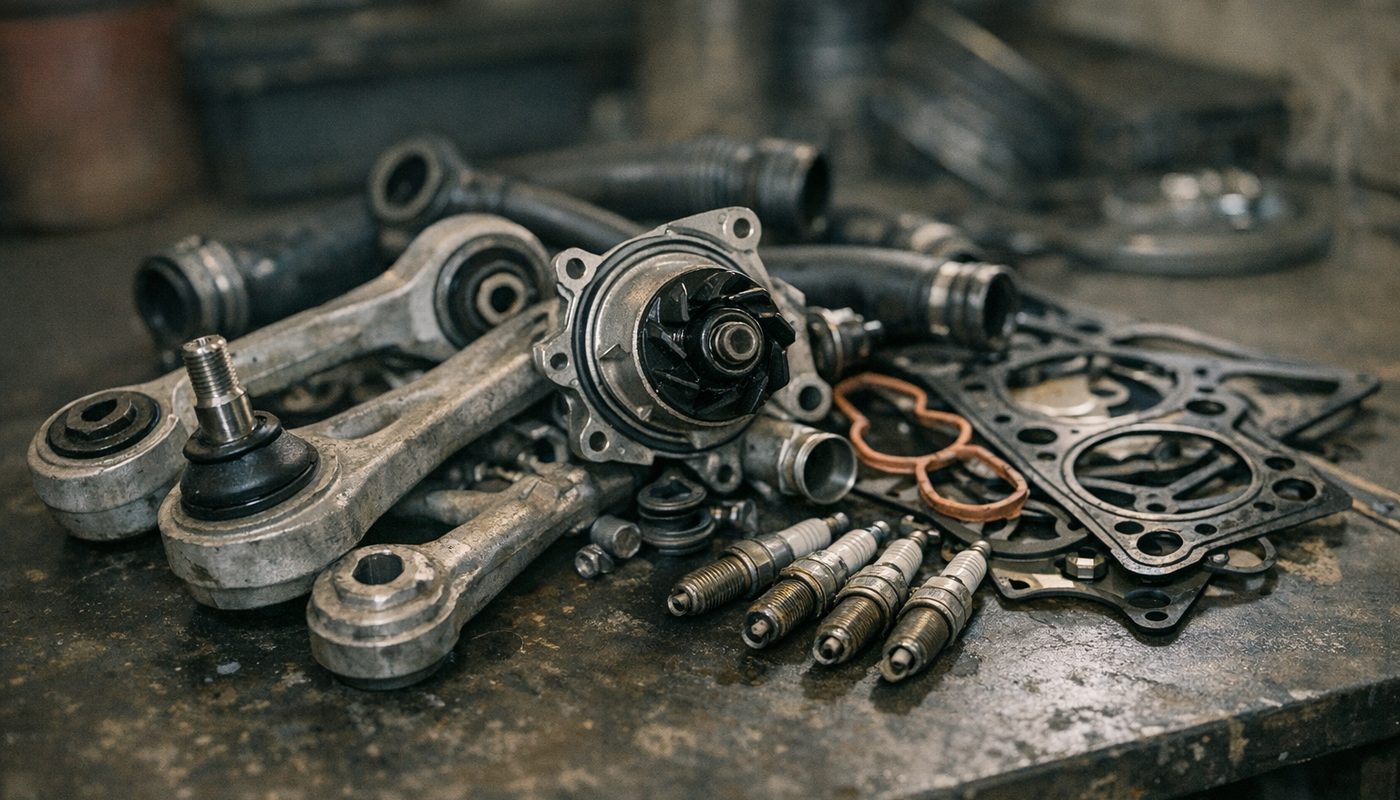
BMW loves an electric water pump, and electric water pumps love to die around 70,000 to 100,000 miles. A full cooling system refresh - pump, thermostat housing, expansion tank, hoses - runs roughly $1,400 to $2,800 at an independent specialist. The pump alone is usually $600 to $1,200 installed, and the thermostat housing is another $400 to $800. This is the single most predictable "surprise" repair in the BMW world, and I put it in quotes because it shouldn't surprise anyone who's owned one for more than five years.
Valve cover and oil filter housing gaskets
These are the classic "why is there oil on my driveway" jobs. Valve cover gasket work is roughly $750 to $1,150 independent, versus $1,400 to $2,100 at the dealer for the same part. Oil filter housing gasket is similar math - $500 to $750 independent versus $900 to $1,300 dealer. Both are labor-heavy jobs since the intake usually has to come off, which is exactly why the dealer number looks so painful.
VANOS wear
On the older N52/N54/N55 crowd especially, VANOS solenoids and seals wear out and give you that rattly cold start or rough idle. A proper VANOS seal kit and solenoid refresh is usually a few hundred dollars in parts plus a similar amount in labor at an independent shop. A full rebuilt unit if things have gone further than that runs more, but it's rarely a full-engine-out disaster the way forum horror stories make it sound.
Suspension bushings and control arms
BMW's front and rear suspension geometry is a big part of why these things handle the way they do, but the rubber and aluminum control arm bushings wear faster than a Camry's because they're tuned softer for feel, not longevity. Control arm bushings run $400 to $900 per axle, and full struts or shocks are $600 to $1,400 per axle when you get there. If you're chasing a clunk or vague steering feel on any E9x, F3x, or G2x chassis, this is almost always where it lives.
Brakes
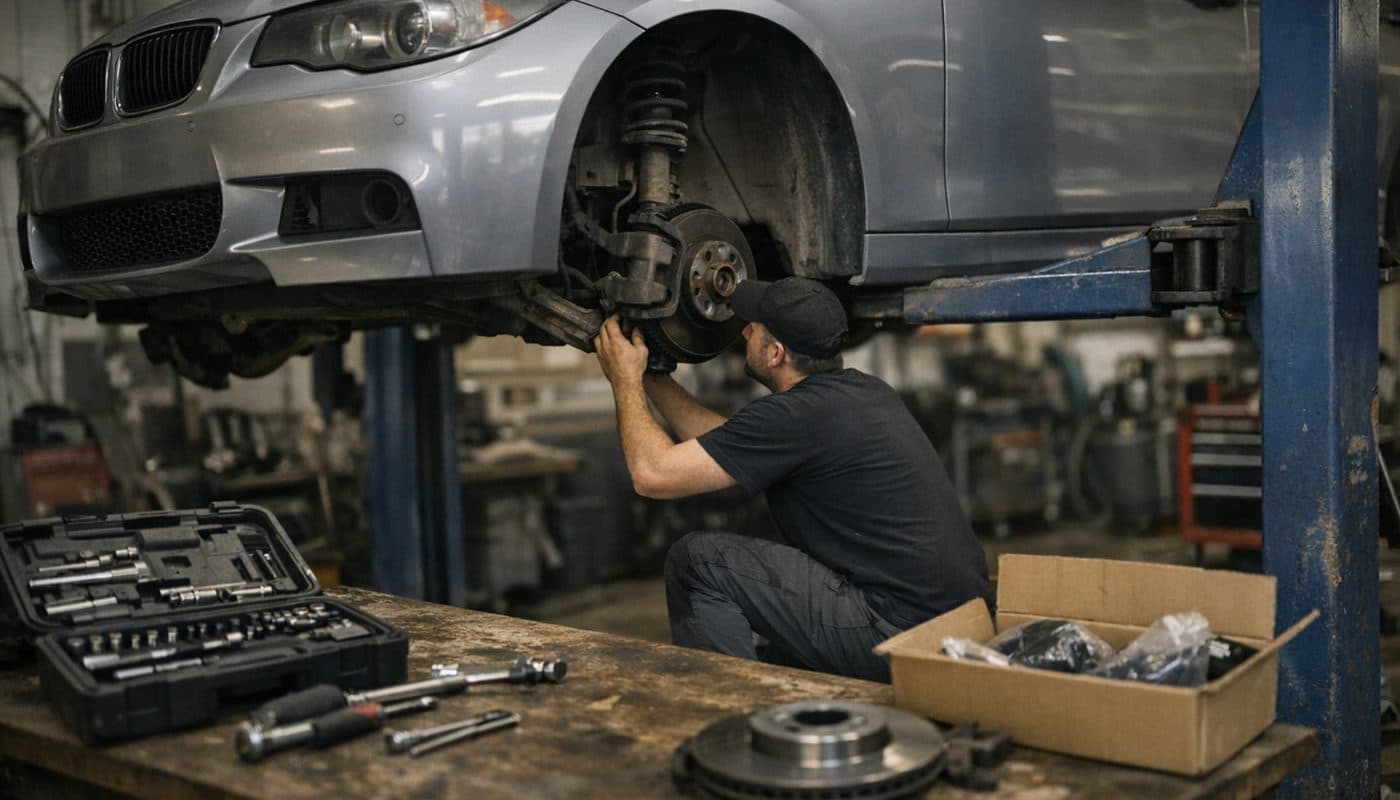
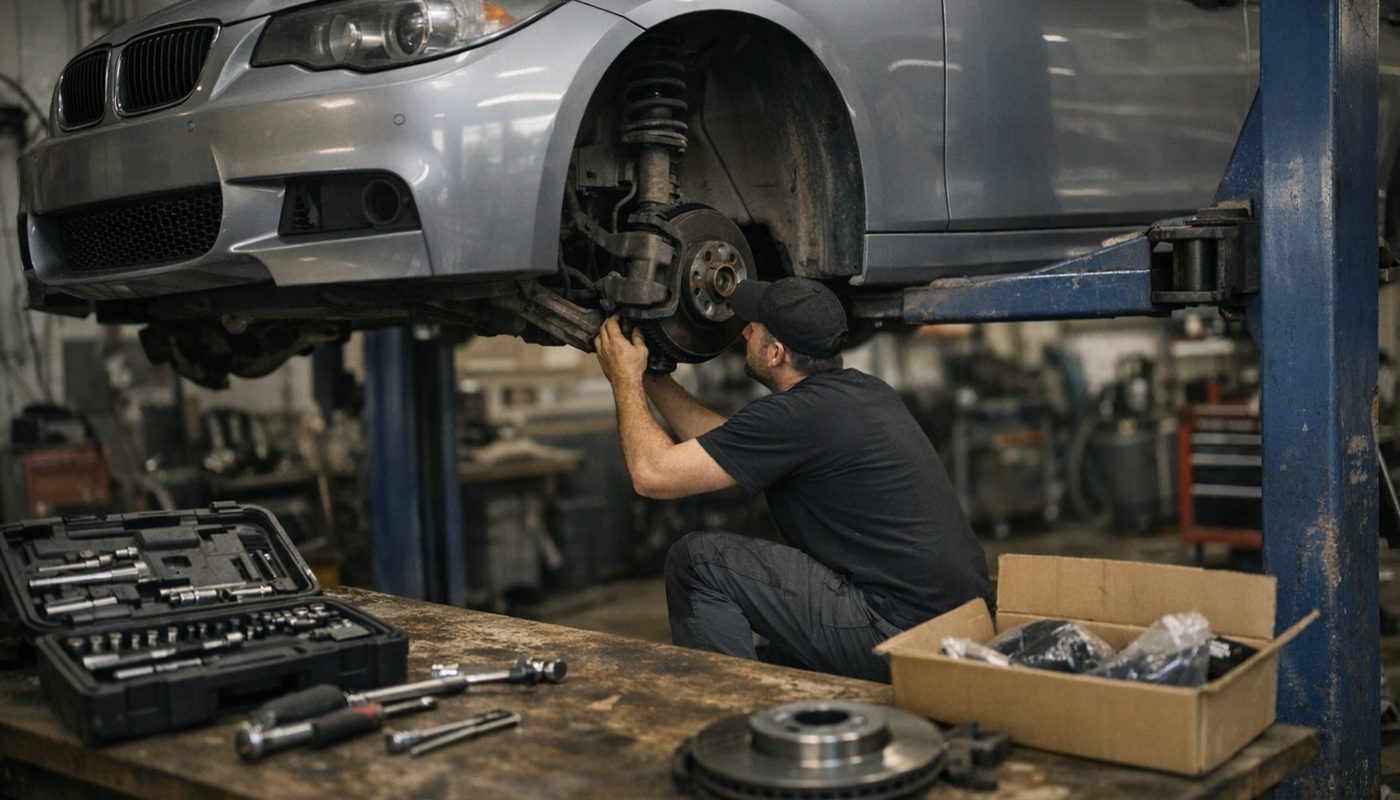
The good news - brakes are one of the more reasonable jobs. Independent specialist pricing is usually $350 to $650 per axle for pads and rotors, and this is also one of the easiest DIY jobs on the list if you're even a little bit mechanically inclined.
BMW vs Toyota vs Audi the Honest Comparison
BMW vs Toyota and Lexus
Let's not pretend otherwise - Toyota and Lexus are cheaper to own, full stop. Simpler engines, fewer electronic modules talking to each other, parts that are stocked everywhere and priced for volume. If total cost of ownership is your only metric, buy the Camry. But you're not reading a BMW site because you want the Camry, and the gap isn't as enormous as people think - we're talking a difference of maybe $4,000 to $6,000 over a decade for a comparable 3 Series versus a Camry XSE, not the "$30,000 more" number that gets thrown around in comment sections.
BMW vs Audi and Mercedes
Against its actual German rivals, BMW is right in the mix. Audi's Quattro systems and Mercedes' air suspension and electronics can be just as pricey to sort, sometimes worse depending on the model. If you're cross-shopping, I'd point you toward my Audi vs BMW reliability comparison before you assume the other badge is automatically cheaper - in a lot of cases it isn't.
Why BMWs Cost More to Insure Too
This one catches people off guard because it's not even a repair cost, it's a monthly bill. BMWs insure higher than a comparable mainstream sedan for a few boring but real reasons - higher replacement parts costs (a BMW headlight assembly is not the same price as a Corolla's), higher theft rates in some regions for certain models, more powerful engines that insurers price as higher risk, and generally higher repair labor rates baked into actuarial tables. None of this is BMW-specific paranoia, it's just how the math works when the car costs more to fix after a fender bender.
Why a BMW Oil Change Costs So Much
I get asked this constantly and the answer is genuinely simple - it's not the oil, it's everything around the oil. BMW spec's a full synthetic (0W-20 or 5W-30 depending on engine) that costs more per quart than conventional. The filter housing on N20/N55/B58 engines is a cartridge design that needs a specific socket and a gasket that BMW wants replaced every service. And dealer labor rates of $170 to $220 an hour mean even a 45-minute job adds up fast. At an independent specialist you're typically looking at $180 to $280 for a full service instead of $350-plus at the dealer, and if you want the full breakdown by engine and mileage I wrote a dedicated piece on what a BMW oil change should actually cost.
Independent Shop vs Dealer Where the Real Savings Live
The labor rate gap
This is the single biggest lever you can pull without touching a wrench yourself. Dealer labor in most markets runs $170 to $220 an hour. A good independent BMW specialist runs $100 to $130 an hour. Same parts, same torque specs, same diagnostic software in a lot of cases - just a lower overhead building and a mechanic who isn't also selling you a extended warranty.
What that looks like on a real invoice
Take a cooling system job - one shop example puts it at $1,330 at the dealer versus $1,085 independent, a $245 difference on one repair. Valve cover gasket work is a bigger gap - $1,850 dealer versus $1,285 independent, saving $565 on a single job. Do that math across three or four jobs over a decade and you're saving real money without cutting a single corner on quality.
My rule of thumb - dealer for warranty work and recall-related stuff, independent BMW specialist for literally everything else once you're out of warranty. If you're shopping for one, ask if they scan with genuine BMW-level software (ISTA-adjacent tools), not just a generic reader, because certain resets and codings genuinely need it.
DIY Plus a Scan Tool Cutting the Bill 40 to 50 Percent
What you can actually DIY safely
Once you're comfortable under the car, a surprising amount of BMW maintenance doesn't need a lift or a dealer at all. Oil services, brake pad and rotor swaps, battery registration (BMW's smart charging system needs this after any battery replacement or it'll shorten the new battery's life), resetting service lights, and even reading fault codes before they turn into a check engine light emergency - all doable in a driveway with basic tools and patience.
The tool that makes all of it possible
The one piece of gear I tell every BMW owner to buy before anything else is a proper OBD2 Bluetooth scanner, not the $20 generic one from the auto parts store. Something like the

If your goal is more toward coding and personalization alongside basic diagnostics, the

OBDLink CX Bluetooth 5.1 OBD2 Adapter for BimmerCode
$79.95
Between DIY oil services, brake jobs, and catching small issues (a weeping gasket, a slightly low coolant level) before they become expensive failures, owners who go this route routinely cut their 10-year total by 40 to 50 percent compared to someone who dealer-services everything blindly.
The Real Disadvantages of Buying a BMW
I'm not going to sell you a fantasy here. There are genuine downsides beyond just "parts cost more."
Complexity means more things that can fail
More electronic modules, more sensors, more integration between DME, DSC, and body control modules means more points of failure compared to a simpler mainstream car. It's rarely catastrophic, but it does mean a slightly higher baseline of small electrical gremlins over a long ownership period.
Depreciation hits hard on certain trims
Loaded-up trims and less popular colors depreciate fast, which isn't a maintenance cost exactly but it affects your total cost of ownership math just as much as a water pump does. If reliability across engine families is a bigger concern for you than depreciation, it's worth reading through which BMW engines have actually held up best before you commit to a specific model.
Model-specific quirks
Certain models carry known weak points more than others - the X5's air suspension and larger cooling system on the F15/G05 chassis is a good example, and I've written a full breakdown on X5 reliability specifics if that's the model you're circling.
FAQ
What are the disadvantages of buying a BMW
Higher maintenance costs than mainstream brands, more electronic complexity that adds small failure points over time, faster depreciation on certain trims, and higher insurance premiums. None of these are dealbreakers if you go in with realistic expectations and use an independent shop, but they're real and worth planning for financially before you buy.
Which luxury brand is the cheapest to maintain
Lexus, by a noticeable margin, largely because it shares Toyota's simpler, more conservative engineering philosophy. Among the German three - BMW, Audi, Mercedes - costs cluster fairly close together, with BMW landing right in the middle of that pack rather than being the worst offender people assume it is.
Why are BMWs so expensive to insure
Higher parts and repair labor costs after an accident, more powerful engines across the lineup that insurers price as higher risk, and in some regions higher theft rates for certain models. It's less about the badge and more about what it actually costs to fix one after a collision.
Why is a BMW oil change so expensive
Full synthetic oil costs more, the cartridge-style filter housing needs a specific gasket replaced every service, and dealer labor rates run $170 to $220 an hour. Go independent and the same job usually drops to roughly $180 to $280 total.
Is a BMW more expensive to maintain than a Toyota
Yes, typically by a few thousand dollars over a decade for a comparable sedan, not tens of thousands. The gap shrinks significantly if you use an independent specialist and handle basic maintenance yourself with a decent scan tool.
Does an extended warranty make sense on a used BMW
It can, particularly on higher-mileage examples of models known for expensive electronics or transmission issues, but read the fine print carefully because a lot of them exclude exactly the wear items that actually cost money, like suspension bushings and gaskets.
What's the cheapest BMW to maintain
Generally a naturally aspirated or lightly turbocharged 3 Series or 5 Series with a straightforward inline-six or four-cylinder, avoiding the earliest turbo teething problems and staying away from overly complex option packages like adaptive air suspension where possible.
Bottom Line
Is a BMW expensive to maintain? More than a Camry, yes. More than most people fear once they stop reading dealer horror stories and start using an independent shop plus a scan tool for the easy stuff? Not really. A 3 Series running you $1,400 to $2,000 a year over a decade isn't scary money for what you get back in how the car drives every single day. Go independent, learn to do your own oil changes and brakes, keep an eye on that cooling system before it becomes a problem, and the numbers stay very manageable. That's exactly how I run my own 330i, and it's why I still recommend these cars to friends who ask me the same question you probably just did.