
Fuel Injectors & Pumps for BMW 3 E90
Affiliate disclosure. BimmerTalk is a proud partner of the Amazon Associates Program and Turner Motorsport. We may earn a small commission on qualifying purchases through our links, at no extra cost to you. Read the full disclosure.

More engine parts for the BMW E90
The BMW E90 platform responds exceptionally well to targeted engine upgrades, particularly the N52 and N54 variants. For the N54-powered 335i, a stage 1 tune from MHD or BMS opens up significant power gains without touching hardware, often pushing well past 370whp on pump gas. Pairing that with a Burger Motorsports JB4 piggyback gives you added flexibility and data logging capability. Upgraded turbo inlets from Mishimoto or Active Autowerke dramatically reduce heat soak and improve spool response, while a VRSF charge pipe kit addresses the notorious weak stock plastic intercooler piping that fails under boost. A high-flow downpipe from VRSF or Catless options from Pure Turbos completes a solid bolt-on package. On the N52 side, gains are more modest but an intake like the AFE Takeda and a Bimmerworld tune still yield satisfying results. Always replace the fuel injectors and charge air cooler gaskets before pushing power levels on high-mileage engines, and log knock counts obsessively after any tune to catch detonation issues before they become catastrophic.
BMW Fuel Injectors & Pumps - What You Actually Need to Know Before You Buy
Fuel delivery is one of those systems where cutting corners costs you twice. Whether you're chasing a rough idle on your E46 330i, dealing with hard starts on an N54-powered E90 335i, or building power on an S58-equipped G80 M3, the injectors and fuel pump are critical links between your tune and your throttle response. Get them right and the engine pulls clean. Get them wrong and you're looking at misfires, lean conditions, and potentially a melted piston.
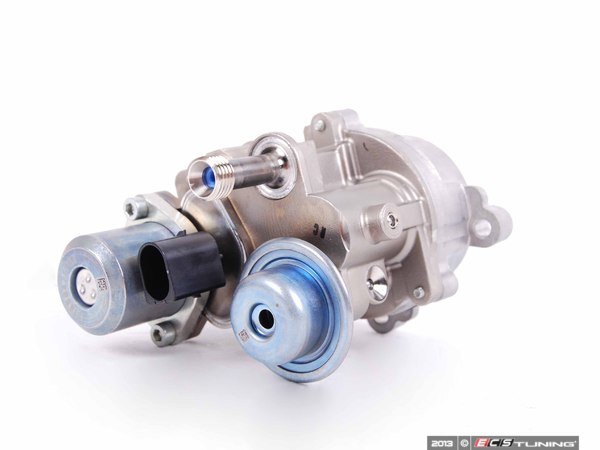
On the high-pressure direct injection side - think N54, N55, S55, B58, and S58 engines - the high-pressure fuel pump (HPFP) is one of the most failure-prone components on the platform. The N54 HPFP is notorious for causing surging at highway speeds and is covered under an extended BMW warranty that many owners have already exhausted. If yours is out of warranty, an OEM-spec replacement from Bosch or an upgraded unit from Precision Raceworks is the move. For anything over 450whp on an N54 or N55, a Precision Raceworks Stage 2 or Stage 3 HPFP isn't optional - the stock pump simply can't flow enough fuel under boost.
Port-injected engines like the M54 (E46, E39, Z3/Z4), M52, and S54 use lower-pressure systems that are generally more forgiving, but injector deposits and degraded O-rings are common failure points on high-mileage examples. Siemens Deka and Bosch EV14 injectors are the gold standard for drop-in replacements and mild upgrades on these platforms. For the S54 in the E46 M3 or Z3 M Coupe, stick with matched sets - flow variance between injectors on a high-revving inline-six shows up immediately in the AFR trace.
Buying Guide - What to Look For, What to Avoid, and How Hard Is the Install
Always buy injectors as a matched, flow-tested set. Cheap unmatched injectors from unknown sellers on Amazon or eBay marketplaces introduce cylinder-to-cylinder variance that no tune can fully correct. Brands like ID (Injector Dynamics), Fuel Injector Clinic (FIC), and Bosch OEM replacements are worth the price premium. ID1050X injectors are a popular choice for built B58 applications in the G-chassis cars, providing clean linearity from idle to redline.
For fuel pumps, pay attention to whether you need a low-pressure fuel pump (LPFP, in-tank), a high-pressure fuel pump (HPFP, on the engine), or both. On the N54 and N55, the LPFP feeds the HPFP, and a weak in-tank pump will starve even a freshly upgraded HPFP under hard acceleration. Walbro and DeatschWerks make well-regarded in-tank drop-ins for the common E-chassis applications. Avoid no-name pump assemblies - fuel pump failure at 8,000 RPM on a track day isn't a scenario you want to experience.
Install difficulty varies significantly. Injector swaps on M54 and M52 engines are beginner-friendly with basic tools and a Saturday afternoon. HPFP replacement on an N54 is intermediate - you're working around the valve cover and high-pressure lines, and proper torque specs matter. In-tank LPFP replacement requires dropping the rear seat and dealing with the fuel sender assembly, which is straightforward but messy if the tank isn't close to empty.
If you're upgrading injectors for a power build, make sure your tune supports the new flow rate - running larger injectors on a stock tune will run rich and foul plugs. Coordinate injector and pump upgrades with your engine management and tuning work to avoid mismatched fueling. And while you're in the fuel system, it's worth inspecting your fuel lines and fittings for cracking or seeping connections, especially on older E-chassis cars where rubber lines degrade with age.
Bottom line: buy quality, buy matched sets, and pair your hardware with the right tune. Your injectors and pump are the foundation of everything your engine does under load.