
Lowering Springs for BMW 5 G30
Affiliate disclosure. BimmerTalk is a proud partner of the Amazon Associates Program and Turner Motorsport. We may earn a small commission on qualifying purchases through our links, at no extra cost to you. Read the full disclosure.

Autostyle Lowering Springs for BMW 5 Series G30 Sedan 530i 520D xDrive
Autostyle

H&R 28721-1 Sport Lowering Springs for BMW 5 Series G30 Sedan
H&R

Eibach Pro-Kit Lowering Springs for BMW 5 Series G30
Eibach

H&R 28721-2 Sport Lowering Springs for BMW G30 530i 540i 2017-2019
H&R

Eibach Pro-Kit Lowering Springs 2017-2018 BMW 530i 540i G30 Front & Rear
Roco 4x4

Eibach Pro-Kit Lowering Springs for BMW 5 Series G30 540i xDrive
Eibach
Eibach Pro-Kit Lowering Springs for BMW 5 Series G30
Eibach
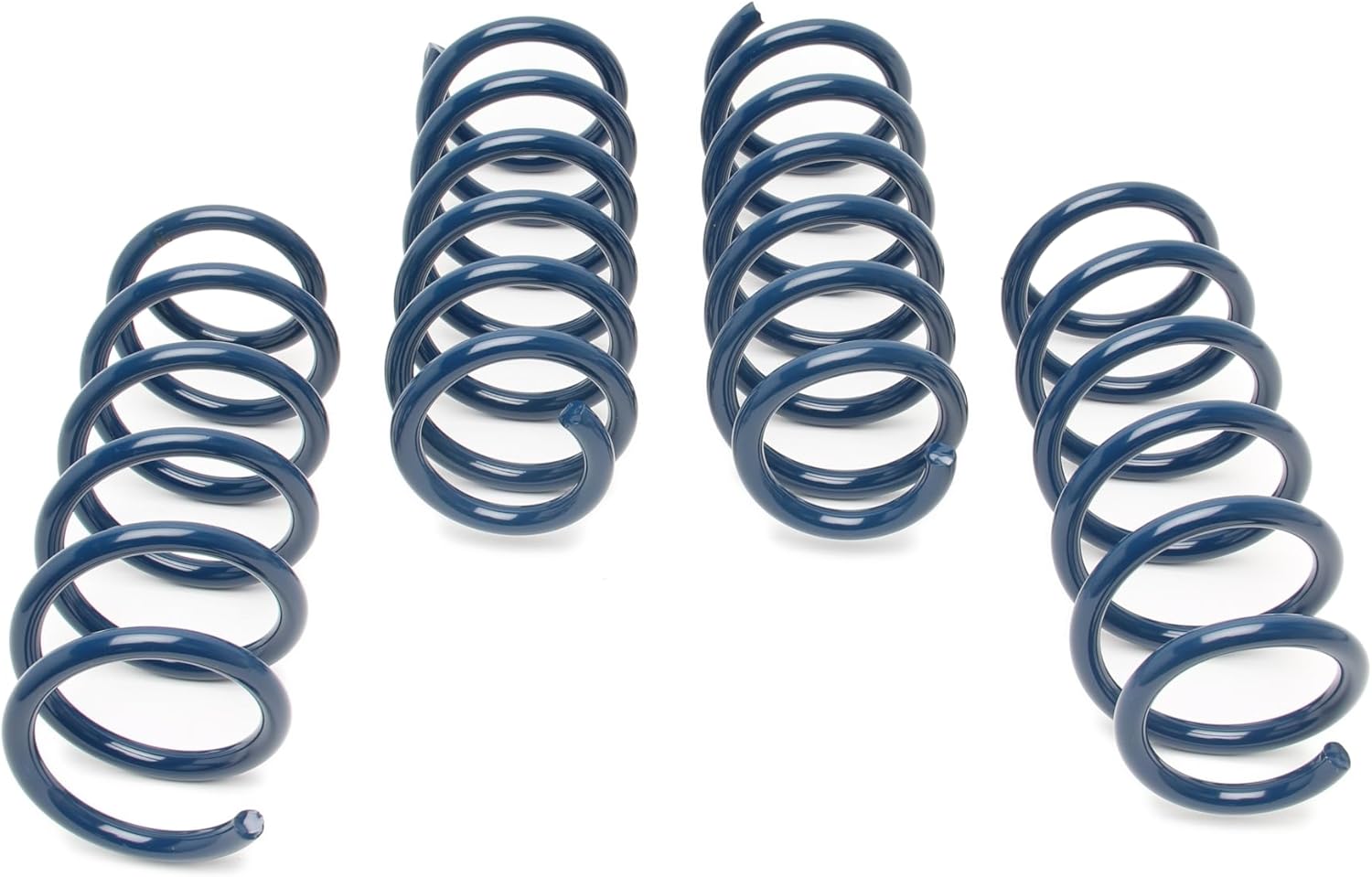
Dinan Performance Spring Set — G30 M550i xDrive
Dinan

Eibach Pro-Kit Lowering Springs for BMW 5 Series G30
Eibach
More suspension parts for the BMW G30
If you're shopping for BMW G30 lowering springs, you already know the G30 5 Series sits a little tall from the factory. Not embarrassingly tall, but tall enough that there's visible wheel gap, and the handling feel - while genuinely good for a big executive sedan - has that soft, floaty quality BMW builds in deliberately to keep lease customers happy. A set of lowering springs fixes both problems for somewhere between $200 and $600 depending on brand, and it's one of the cleanest, most reversible suspension upgrades you can make on this car. No cutting, no welding, no remote reservoirs to tune - just drop the ride height, tighten the spring rate slightly, and the G30 feels like a completely different animal.
I've been wrenching on BMWs for five years and I spent a year doing marketing for BMW and MINI, so I've seen this car from both sides - the factory side where BMW is very deliberate about how the G30 is positioned, and the owner side where people want their 530i or 540i to actually look and drive like the performance sedan the name implies. Lowering springs are where most G30 owners start, and for good reason.
This page covers everything specific to the G30 chassis - the sedan, not the G31 Touring, though I'll flag where they diverge. We're talking fitment by drivetrain, by suspension package, by engine variant, by trim. We're talking which brands are actually worth the money, what the install looks like, what you'll break or regret if you skip steps, and which product I'd put on my own car if I daily drove a G30. Let's get into it.
What the G30 5 Series Actually Is - Chassis Context Before You Buy Anything
The G30 is the seventh-generation 5 Series, sold from 2017 through roughly 2023 before the G60 took over. It runs on BMW's CLAR platform - the same architecture underpinning the G11/G12 7 Series and G01 X3 - which is a significant weight reduction over the F10 it replaced. The G30 is about 100 kg lighter than the comparable F10, and BMW achieved that partly through extensive aluminum and high-strength steel use in the front axle carrier, subframe, and control arms.
That CLAR-platform front end geometry is important for lowering spring buyers because the front double-wishbone setup is sensitive to drop. Lower the car significantly and you affect camber and caster in ways the factory geometry didn't account for. I'll come back to alignment in detail, but hold that thought.
The G30 came in a wide range of variants in the US market:
- 530i - B48 turbocharged 2.0-liter four-cylinder, RWD only in most markets
- 530i xDrive - same B48, all-wheel drive
- 540i - B58 turbocharged 3.0-liter inline-six, RWD or xDrive
- 540i xDrive - B58 with all-wheel drive
- M550i xDrive - S63 4.4-liter twin-turbocharged V8, xDrive only, with M Sport suspension standard
- 530e - plug-in hybrid, heavier rear end due to battery pack, important fitment note
Each of those variants has different axle weights. The M550i's S63 V8 is substantially heavier up front than the B48 four-cylinder 530i. The xDrive variants carry more front axle weight than their RWD counterparts. The 530e has a battery pack under the floor that affects rear axle load. All of this matters when you're choosing a spring rate and a target drop height, and it's why responsible spring manufacturers - H&R, Eibach, Dinan, AC Schnitzer - publish separate part numbers by drivetrain and often by engine family.
Suspension packages also split the market. BMW sold the G30 with a standard suspension and an M Sport suspension. The M Sport suspension has stiffer spring rates, lower ride height from the factory, and slightly different damper tuning. If you put springs rated for a standard-suspension G30 on an M Sport car, you may end up with the rear sitting lower than the front, a raked stance some people like and some people hate, and a spring rate that may or may not work properly with the M Sport dampers. More on this later.
And then there's the G31 Touring, which is a separate chassis code even though it shares the same platform. Springs for the G30 sedan do not automatically fit the G31 wagon. The G31 has a different rear suspension travel, a longer rear overhang, and different spring perch locations. I'll note G31 differences where they're relevant, but the focus here is the G30 sedan.
Why G30 Owners Lower the Car - Real Reasons, Not Instagram Ones
Let me be honest about something. There are two kinds of G30 owners who come to this page. The first kind wants the car to look better - less wheel gap, more planted stance, better proportions. The second kind genuinely wants better handling. The good news is that a well-chosen set of lowering springs serves both goals simultaneously, which is why they're such good bang for the buck on this car.
The G30's factory ride height is calibrated for a very specific kind of customer: someone who needs to clear speed bumps in a corporate parking garage, who may be driving in countries with rough roads, and who will never track the car or push it hard on a canyon road. That customer is real and BMW serves them well. But if you're reading this page, you're probably not that customer.
The factory suspension on the standard G30 is genuinely soft. The body roll in hard cornering is noticeable. The front end lifts slightly under hard braking because the geometry is designed for comfort compliance, not aggressive dive behavior. The nose-heavy feel in hard corners - especially on the four-cylinder 530i where the engine weight is all up front - is something that better spring rates genuinely address. Stiffer, lower springs reduce body roll directly, improve front-to-rear weight transfer predictability, and tighten up the chassis feel in a way that BMW's standard tuning deliberately avoids.
The M Sport suspension is better from the factory, but even M Sport G30 owners upgrade to aftermarket springs. The M Sport springs are stiffer but the ride height is still conservative by performance car standards. If you've driven a properly sorted aftermarket-sprung BMW - say, a well-built E90 or F30 with H&R or Eibach - you know how different the G30 can feel versus its factory setup.
Beyond handling, there's the visual argument. The G30's proportions are actually quite good - it's a handsome car - but the stock wheel gap on most variants is significant. BMW builds in that gap for suspension travel and for tolerance across different market configurations. Lowering springs that drop the car 20-30 mm front and rear fill those arches properly and the car looks substantially better. This isn't shallow. Aerodynamics improve at lower ride heights, and a car that looks like it belongs on the road is a car you actually want to drive hard.
The Four Main Brands for G30 Lowering Springs - and How They Actually Compare
In 2026, the four brands doing the most volume on G30 lowering springs are H&R, Eibach, Dinan, and AC Schnitzer. Those are not the only options - there are cheaper springs from Bilstein, KW, and various Asian manufacturers - but those four are what serious G30 owners are actually running, and they represent meaningfully different philosophies. Let me break each one down.
H&R Lowering Springs
H&R is the most commonly discussed brand among G30 owners, and they've been explicit about their G30/G31 spring fitment. H&R's product page for the BMW 5 Series G30/G31 confirms that their springs are designed to work with the car's standard factory shocks, which is an important detail. You don't need to replace your dampers to run H&R springs - they're engineered to be compatible with the OEM shock absorbers, though I'll caveat that below.
H&R typically targets a drop of around 25-35 mm front and rear on the G30, depending on the specific variant and part number. The spring rates are stiffer than stock but not aggressively so - this is a street spring, not a track spring. The goal is to firm up the ride, reduce body roll, and lower the car into the wheel arches without turning the car into an undriveable punishment machine on Michigan roads in March.
Forum-reported issues with H&R on the G30 cluster around a few common complaints. The first is firmer ride - this is physics, not a defect. Stiffer springs mean harsher small-bump response on worn pavement. The second is occasional front rake, where the front sits lower than the rear, particularly when H&R springs are installed on standard-suspension cars with non-M-Sport factory dampers. This can usually be corrected with the right part number (H&R publishes separate SKUs for standard and M Sport suspension) and a proper alignment afterward. The third complaint is slightly more suspension noise - some owners report creaking or light knocking that usually traces back to worn strut mounts or top hats that should have been replaced at installation.
Pricing for H&R G30 springs is retailer-dependent and varies by specific part number, but you're typically looking at mid-range pricing in the BMW spring market - not the cheapest option available, not the most expensive. For reference, H&R generally sits in a similar price bracket to Eibach, and both are meaningfully less expensive than Dinan or AC Schnitzer.
Eibach Pro-Kit
Eibach is H&R's closest direct competitor for the G30 market. The Eibach Pro-Kit is specifically calibrated for moderate drop and OEM-like comfort - Eibach's stated design philosophy for the Pro-Kit line is that you should be able to run their springs on factory shocks without destroying ride quality. They tend to be slightly less aggressive in drop than H&R on the same application, which is either a feature or a bug depending on what you want.
The Pro-Kit typically delivers around 20-30 mm of drop on the G30, front and rear, which is enough to make a visual difference and enough to tighten up the handling without crossing into harshness territory. This is why Eibach tends to get recommended by the "I want it to look better and handle better but I have a bad back" crowd, which is a legitimate use case on a daily-driven executive sedan.
Forum-reported issues with Eibach on the G30 tend to be different from H&R complaints. The most common is that the drop is not enough for owners who wanted more aggressive stance. "It's barely different" is something you'll see from owners who were expecting a dramatic visual transformation and got a subtle improvement. The other complaint is rear height sensitivity by trim - the G30's rear spring perch geometry and available rear suspension travel can result in slightly different actual ride heights depending on whether the car has the comfort seats, a full trunk, or the sports package, and Eibach's moderate spring rate means small load changes are more apparent. Alignment sensitivity is also commonly noted, particularly front camber after install.
Pricing for Eibach Pro-Kit is retailer-dependent but broadly comparable to H&R - both brands are the workhorses of the BMW spring market at mid-range price points.
Dinan Spring Set
Dinan is a different animal. They're a BMW-specific performance company with a long history, and their suspension products are engineered with a different brief than H&R or Eibach. Where H&R and Eibach are making springs that fit into the OEM framework with modest improvements, Dinan is making springs that are part of a broader performance package philosophy - their springs are often part of a system that includes their engine software, braking upgrades, and their own wheel and tire recommendations.
Dinan G30 springs typically target comfort-performance balance more than outright lowering. You won't get the most aggressive drop from Dinan springs - they tend to be more conservative in the 15-25 mm range for daily use - but the ride quality improvement is reportedly excellent. Owners who switched to Dinan springs describe the car as feeling "more planted" without the harshness penalty. This is partly because Dinan tunes for the specific G30 platform extensively and partly because their spring rates are more carefully matched to the G30's damper characteristics.
The downside of Dinan is cost. Their spring sets are typically priced higher than Eibach and H&R, often substantially so, which makes the value proposition harder to defend if you're primarily after visual stance. Where Dinan makes sense is for the G30 owner who drives the car daily in traffic, occasionally takes it to a track day, and wants the handling improvement without the ride quality trade-off of more aggressive springs. That's a real use case but it's a specific one.
AC Schnitzer Springs
AC Schnitzer is the premium end of the G30 spring market. AC Schnitzer has been tuning BMWs since 1987 and they approach the G30 the same way they approach everything - as a BMW tuner that wants to make the car feel like a better BMW, not like a different car entirely. Their springs are G30-specific, sold through specialty BMW retailers, and priced at a premium.
The AC Schnitzer philosophy is OEM-plus. They're not trying to transform the car's character - they're trying to make it slightly lower, slightly sharper, and noticeably more composed without any of the compromises that come with more aggressive aftermarket options. The reported forum experience is consistently positive on ride quality and handling composure, but the drop is conservative and the price is high. If you're spending AC Schnitzer money, you need to really value that OEM-plus refinement, because you could buy H&R or Eibach and put the change toward a quality alignment and fresh strut mounts and probably come out ahead dynamically.
That said, if you're building an AC Schnitzer-themed G30 with their aero kit, their wheels, and their exhaust, the springs are a natural part of that package and the integration makes sense. Pricing is premium - typically the highest of the four brands covered here, with cost reflecting the brand positioning rather than dramatically superior engineering.
G30-Specific Fitment Notes You Cannot Ignore
Fitment on the G30 is more nuanced than on simpler BMWs like the E30 or E36 where you basically had one suspension configuration. The G30 has enough variants that getting the wrong spring kit is a real risk if you don't read the part number details carefully. Here's what actually matters.
Sedan vs. Touring
The G30 is the sedan. The G31 is the Touring wagon. Springs are different between these two body styles because the rear suspension geometry, spring perch location, and target ride height are all different. H&R publishes separate part numbers for G30 and G31, and you need to specify which you have. Ordering G31 springs for your G30 is a fitment error that will result in wrong ride height and potentially incorrect spring rates. This sounds obvious but it happens, especially on third-party marketplaces where listings are sometimes poorly categorized.
RWD vs. xDrive
This matters significantly. The xDrive all-wheel-drive system adds weight to the front axle - the front differential, transfer case, and additional driveshafts all live up front and they're not light. A spring kit designed for an RWD 530i will sit differently on an xDrive 530i because the front axle load is different. H&R, Eibach, and the other serious manufacturers publish separate part numbers by drivetrain. If a brand doesn't distinguish between RWD and xDrive in their G30 spring listings, that's a red flag. Either they've tested both configurations and the spring rate genuinely works for both (possible but uncommon), or they're not being thorough about fitment.
Standard Suspension vs. M Sport
This is the most commonly overlooked fitment variable. BMW's factory M Sport suspension uses stiffer springs and lower ride height from the factory. If you install springs rated for standard suspension cars on an M Sport G30, you may get a front-low rake because you're adding drop on top of an already-lower front end. You may also get spring rate mismatches with the M Sport dampers. Most brands that take the G30 seriously - H&R included - publish specific part numbers for M Sport suspension fitment. Always check this before ordering.
The 530e Hybrid - a Special Case
The 530e plug-in hybrid has a lithium-ion battery pack mounted under the floor, which adds significant weight to the rear of the car. BMW accounts for this in the factory suspension tuning, but aftermarket spring manufacturers who aren't 530e-specific with their part numbers may not. If you have a 530e, confirm with the spring manufacturer that their kit was specifically tested on the 530e, not just assumed to fit based on body style and drivetrain. This isn't a theoretical concern - a spring kit calibrated for the lighter 530i rear end will sit noticeably lower on the 530e because the rear spring is loaded more heavily by the battery weight.
The M550i - Stock M Sport Geometry Matters
The M550i xDrive comes standard with M Sport suspension, adaptive dampers (the Variable Damper Control system), and a front axle that's significantly heavier than any of the six-cylinder or four-cylinder variants due to the S63 V8. If you want to lower an M550i on springs, you need to be particularly careful about which spring kit you choose. The adaptive damper system (which BMW calls EDC - Electronic Damper Control on some variants) works with the factory springs as a system. Aftermarket springs change the damper load cycles that the EDC system was calibrated for. The system doesn't physically prevent you from installing aftermarket springs, but owners report that the EDC can behave oddly in comfort mode with significantly different spring rates. For M550i owners, I'd honestly look at height-adjustable coilovers that can be properly tuned for the adaptive damper system, rather than fixed-rate lowering springs, unless you're staying with a conservative spring kit like Dinan or AC Schnitzer that won't dramatically change the spring rate relationship.
The Role of Your Existing Dampers - This is the Part Most People Get Wrong
Every single complaint I've seen on Bimmerpost, 5post, and the various G30 Facebook groups about lowering springs being "too harsh" or "bouncy" or making "clunking noises" traces back to one of two things: wrong spring rate for the application, or worn factory dampers. Let me focus on the second one because it's more common and more dangerous to ignore.
The G30's factory Sachs dampers are designed to work with the factory spring rates. When you install aftermarket springs, you're changing the load and velocity characteristics that the damper has to handle. A damper that was already slightly worn - not failed, just worn in the way a 50,000-mile damper is worn - will feel noticeably worse with stiffer springs than it did with the factory soft springs. The factory soft springs were masking the damper's reduced performance. Stiffer springs expose it.
If your G30 has more than 40,000 miles on the original dampers, I would seriously consider replacing them as part of your spring install. You have three options:
- Replace with OEM Sachs dampers - this is what H&R specifically designs their springs to work with. New Sachs dampers will reset the factory performance baseline and let the aftermarket springs do their job. Cost is higher but so is confidence.
- Upgrade to Bilstein B8 or similar performance dampers - Bilstein makes dampers specifically for the G30 that are slightly firmer than stock and work well with H&R or Eibach spring rates. This is the sweet spot for most street-performance G30 builds.
- Upgrade to coilovers entirely - if you're this far into the suspension, it might be worth considering whether a quality coilover set from KW, Bilstein, or BC Racing makes more sense than springs-plus-separate-dampers. Check our coilover buying guide if you're unsure where the line is.
The point is: don't assume your factory dampers are fine. If they're worn, you will blame the springs when the real problem is the dampers, and you will have wasted money on springs that aren't performing as intended.
Supporting Modifications You'll Need or Want
Lowering springs don't exist in isolation. Install them correctly and there are a handful of other things you should address at the same time or shortly after. Here's the honest list.
Alignment - Not Optional
After any suspension change that alters ride height, you need an alignment. On the G30's double-wishbone front end, dropping the ride height changes camber and toe geometry. How much depends on the specific drop and your starting geometry, but 0.5-1.5 degrees of camber change is not uncommon with a 25-30 mm drop. Running the car on a misaligned front end after lowering will eat tires unevenly, reduce cornering stability, and potentially create handling behavior that feels like the springs were the wrong choice when it's actually just geometry.
Find an alignment shop with a BMW-capable alignment rack and four-wheel alignment capability. Tell them your target drop ahead of time so they can advise on whether camber adjustment is within OEM spec range or whether you need adjustable camber arms. On a moderate 25 mm drop with standard springs, you're usually within OEM adjustment range. Beyond 30 mm, you start needing adjustable arms on the G30 front end.
Strut Mounts and Top Hats
If your G30 has significant miles, the strut mount bearings - the top hat bearings that allow the strut to rotate with steering input - are worth inspecting and likely replacing during the spring install. These parts are accessible when the strut is removed for spring installation, so the labor cost to replace them is minimal if you're already doing the job. Failed or marginal strut mounts are the number one source of "clunking" and "creaking" complaints after spring installs, and people blame the springs when it's the mounts. Replace them proactively on any car over 50,000 miles.
Sway Bar End Links
Lowering the car changes the geometry of the sway bar end links. On a significant drop, the factory end links can end up at an angle that binds them, reducing the sway bar's effectiveness and creating noise over bumps. Aftermarket adjustable end links - available from H&R, Moog, and various other suppliers - let you restore proper sway bar geometry at your new ride height. For a 20-30 mm drop, this is a "should do" item. For a more aggressive drop, it's a "must do."
Wheel and Tire Fitment Check
Lowering the car on stock wheel and tire sizes is usually fine at moderate drops. But if you're planning to run wider wheels or lower-profile tires simultaneously, you need to check for rubbing at full lock and over bumps. The G30's rear subframe geometry means the rear inner fender can catch aggressive fitments at lower ride heights. Check our aftermarket wheel guide for offset and width recommendations by drop height.
The Install Process - What It Actually Takes
Installing lowering springs on the G30 is a weekend job for a competent home mechanic. It's not beginner territory - you're dealing with compressed springs, which store a significant amount of energy, and the job requires a spring compressor, a proper floor jack, jack stands, and basic hand tools including metric sockets up to 21 mm and a torque wrench. But it's also not a dealer-only job. Let me walk through what the process looks like.
Tools you'll need:
- Floor jack rated for the G30's weight (roughly 1,900 kg for a 540i xDrive)
- Jack stands (minimum four for safety)
- Spring compressor - rent a quality one or buy a coil-spring compressor tool, not the cheap hook-type
- Impact wrench or breaker bar
- Metric socket set (10 mm through 21 mm covers most fasteners)
- Torque wrench (calibrated, not a click-type that's been in your garage for 10 years without calibration)
- BMW alignment tool or dealer alignment appointment booked for immediately after
Front suspension process (simplified):
- Lift the front of the car and support it properly on jack stands. Remove the front wheels.
- Disconnect the sway bar end link from the strut. Use a hex bit to hold the end link pin while you turn the nut.
- Remove the lower strut-to-knuckle bolts. These are typically 18 mm or 21 mm on the G30 and can be tight. Apply penetrating oil the day before if the car has significant mileage.
- Remove the three strut top mount nuts from the engine bay strut tower. These are accessible with the hood open and are typically 13 mm.
- Drop the strut assembly out of the car. On the G30's double-wishbone front end, you'll need to support or hang the knuckle to prevent the brake hose and ABS wire from being strained.
- Compress the spring using the spring compressor before removing the strut top mount nut. This is the critical safety step. Do not remove the top mount nut until the spring is compressed enough that it's not under load at the mount.
- Swap the springs, reinstall the top hat (replace the bearing if you're doing that while you're in there), and reassemble in reverse order.
Rear suspension process (simplified):
The G30 rear uses a five-link independent setup. The springs are separate from the dampers (unlike a typical MacPherson front), so spring replacement at the rear involves supporting the rear axle subframe, disconnecting the lower control arm at the appropriate point to release spring tension, and swapping the spring. This is slightly more involved than a MacPherson front on some BMWs because you need to properly support the rear axle to avoid straining brake lines and wheel speed sensor wires when the control arm drops.
Total time for a first-time installer who knows what they're doing: five to seven hours front and rear. Experienced installer: three to four hours. Add post-install alignment: another one to two hours at the shop.
If you're not comfortable with spring compressors or suspension work, this is a job to hand to an independent BMW specialist. Labor cost at an indy shop for spring installation plus alignment is typically $300-600 depending on your market and whether they find anything else that needs attention while they're in there.
Top Product Picks for the G30 - By Variant and Use Case
Here's how I'd break down the field given what I know about G30 spring fitment and the brand options in 2026.
Best for Standard Suspension G30 530i and 540i RWD
H&R Sport Lowering Springs are my first call for the standard-suspension six-cylinder and four-cylinder RWD G30. H&R's engineering for the G30 is thorough - they've specifically matched their spring rates to work with the G30's standard factory shocks, which is the most common configuration. The drop is meaningful - visually and dynamically - and the spring rate increase over stock is enough to notice without being punishing. For the 530i specifically, where the front B48 engine weight is lighter than the inline-six 540i, H&R's standard G30 springs provide excellent front-to-rear balance.
If H&R doesn't appeal to you, Eibach Pro-Kit is the right alternative for this configuration. It's slightly more conservative in drop but arguably better if you're running the car in a colder climate where road quality is poor or if you have a passenger load that varies significantly. Eibach's OEM-like comfort philosophy is genuinely appropriate for the 530i as a daily driver.
Best for M Sport Suspension G30 540i xDrive
This is probably the most common G30 configuration in the US market - the 540i xDrive with M Sport suspension is the one people actually buy when they're buying for themselves rather than for lease economics. For this car, I'd go straight to H&R's M Sport-specific G30 spring kit. The key is getting the part number that's specifically calibrated for M Sport suspension - don't assume the standard G30 H&R springs will work correctly on an M Sport car. They may, but the geometry and starting ride height are different enough that you want H&R's own M Sport-specific calibration.
The drop on M Sport springs is typically slightly less than on standard suspension springs because the car is already lower from the factory. The spring rate increase is also typically less aggressive because the M Sport dampers are already set up for stiffer spring rates. The result is a car that looks correct, handles sharper, and doesn't ride like a kart.
Best for Daily Driver Comfort - Any G30 Variant
Dinan Spring Set is the answer if your priority is handling improvement without ride quality sacrifice. Yes, it's more expensive than H&R or Eibach. Yes, the drop is more conservative. But for someone who drives a G30 530i in stop-and-go traffic five days a week and occasionally does a twisty backroad on weekends, Dinan's philosophy is exactly right. The car will feel more composed, the handling will be genuinely sharper, and you won't be gritting your teeth every time you hit a railroad crossing.
Best for the Enthusiast Who Wants Maximum Stance with Street Manners
H&R is the call again here, specifically their OE Sport springs which tend to offer more drop than the standard Pro-Kit equivalent. I'd pair these with fresh Bilstein B8 dampers rather than running them on factory shocks, which will let you get more drop without the bounce penalty. Expect to spend more overall - fresh dampers, springs, end links, alignment, and new strut mounts - but the result is a G30 that genuinely looks and drives like a different car. Still street-legal, still daily-driveable, but transformed.
Best for the M550i xDrive
Honestly, for the M550i specifically, I'd push you toward coilovers rather than springs. The M550i's adaptive damper system, its heavier front axle, and its already-lower M Sport ride height make fixed-rate springs a compromise. If you're committed to springs for simplicity or cost reasons, AC Schnitzer or Dinan are the most appropriate choices because their conservative spring rate approach works better with the M550i's EDC adaptive dampers. But read our coilover guide and our broader suspension upgrade overview before you decide on the M550i.
Brand Comparison Table - G30 Lowering Springs at a Glance
| Brand / Product | Typical Drop (Front / Rear) | 2026 Price Range | Best G30 Variant Match | Works on Factory Shocks? | Forum-Reported Issues |
|---|---|---|---|---|---|
| H&R Sport Springs | 25-35 mm / 20-30 mm | Mid-range; retailer-dependent | 530i, 540i, standard or M Sport (use correct SKU) | Yes, confirmed for G30/G31 | Firmer ride, occasional front rake with wrong SKU, strut mount noise on high-mileage cars |
| Eibach Pro-Kit | 20-28 mm / 18-25 mm | Mid-range; retailer-dependent | 530i, 540i daily driver, standard suspension | Yes, designed for OEM damper use | Mild drop not enough for some, rear height sensitivity by load, alignment sensitivity front |
| Dinan Spring Set | 15-25 mm / 15-22 mm | Higher than H&R/Eibach; retailer-dependent | 530i, 530e, daily driver comfort priority | Yes | Less drop than expected for stance buyers, cost hard to justify vs H&R purely on drop |
| AC Schnitzer Springs | 15-25 mm / 15-20 mm | Premium; typically highest of the four | Any G30, especially M550i with adaptive dampers | Yes | Conservative drop, high cost, OEM-plus feel praised but limited options for stance buyers |
Common Mistakes G30 Owners Make When Installing Lowering Springs
I've watched people on forums make the same mistakes on BMW spring installs for years. Here are the ones that cost real money or create real problems on the G30 specifically.
Ordering the Wrong Part Number for Their Configuration
This is the biggest one. Ordering standard-suspension springs for an M Sport car, ordering RWD springs for an xDrive car, ordering G31 springs for a G30 sedan - all of these produce wrong ride height, wrong spring rate behavior, and sometimes springs that literally don't seat correctly in the spring perch. Double-check your VIN against the manufacturer's part number lookup before you buy. H&R, Eibach, and Dinan all have VIN-based fitment guides on their sites for the G30. Use them.
Skipping the Alignment
I cannot stress this enough. I've talked to G30 owners who installed springs, noticed the handling felt "weird," and blamed the springs, when what was actually happening was that their front camber was now 1.5 degrees negative on one side and 0.5 degrees on the other because they never got an alignment. An unaligned G30 after lowering will eat the inside edge of your front tires within 10,000 miles and will understeer unpredictably in hard corners. The alignment is not optional. Budget for it before you buy the springs.
Running New Springs on Worn Dampers
I covered this above but it bears repeating. If the dampers are worn, fix them. Especially on the G30 where the factory Sachs dampers can develop subtle leakage or damping fade at high mileage that isn't immediately obvious until you put stiffer springs on top of them.
Not Replacing the Strut Mount Bearings
These bearings are about $50-80 each from BMW or a quality OEM supplier like Genuine BMW or Febi. When you have the strut out for spring replacement, you're literally holding the part in your hand. Reassembling with old, worn strut mount bearings to save $150 and then complaining about steering clunk six months later is a false economy.
Using the Wrong Spring Compressor
The cheap hook-type spring compressors from auto parts stores are technically capable of compressing the G30's springs but they're significantly less safe than a proper coil spring compressor tool. If a spring releases under load unexpectedly, the hook-type compressor gives it a path to escape. A proper through-bolt or capture-type spring compressor does not. Rent the proper tool. The G30's springs are not light - this is a substantial car with substantial springs.
Buying Cheap Unknown-Brand Springs
There are G30 lowering springs on Amazon and eBay from brands with no fitment documentation, no spring rate specification, and no forum history of actual G30 use. These are tempting at $100-150 when H&R is $350-450. Don't do it. Suspension components on a car that weighs close to two tonnes, that you're driving at highway speeds, are not the place to save money on unknown manufacturing quality. Stick with H&R, Eibach, Dinan, or AC Schnitzer.
My Opinionated Picks - Editor's Choices by Category
Here's where I land after thinking through all of this.
Editor's Pick - Best Overall for Most G30 Owners
H&R Sport Lowering Springs (correct G30-specific part number for your drivetrain and suspension package). If I had a 540i xDrive M Sport and I was running it as a daily driver with occasional spirited weekend driving, H&R is where I'd go. The engineering is thoughtful, the fitment documentation is thorough, the drop is meaningful without being absurd, and the spring rate increase is appropriate for what this car is. Pair them with fresh strut mount bearings, get a four-wheel alignment from a shop that knows BMWs, and you're done. The car will look dramatically better and handle noticeably sharper, and you'll have spent a reasonable amount of money to get there.
Best Value Pick
Eibach Pro-Kit. If you want to spend slightly less and you're prioritizing a quality daily driver feel over maximum stance, Eibach delivers a solid package. The drop is more modest but so is the ride quality impact. For the 530i owner who commutes in traffic and doesn't care about being the most slammed car in the BMW meet parking lot, Eibach is the right answer. Good engineering, good fitment documentation, widely available, and the Pro-Kit's OEM-shock compatibility means you don't necessarily need new dampers right away.
Best for Ride Quality with Handling Improvement
Dinan Spring Set. Yes, it's more money. Yes, the drop is conservative. But if you're a 530e owner or a 530i owner who has back problems and can't tolerate the extra harshness of H&R springs but still wants a better-handling car, Dinan delivers. The G30 with Dinan springs and fresh OEM dampers is genuinely a pleasure to drive fast - more planted, more confident, zero additional harshness. That's worth something.
Best for the OEM-Plus Build
AC Schnitzer Springs. If you're building an AC Schnitzer-themed G30 or if you're an M550i owner who wants conservative drop with no compromise to adaptive damper behavior, AC Schnitzer is the premium appropriate choice. You're paying for brand alignment and refinement, and if those matter to your build, the cost is justified.
Best if You're Building Something More Serious
Skip springs and go to coilovers. If you want more than 35 mm of drop, if you want corner-adjustable height, if you're doing track days, or if you're building the G30 into a legitimate performance machine rather than a slightly better street car, coilovers are the right platform. Read our BMW coilover buyer's guide and revisit the spring conversation after you've read that.
Pairing Lowering Springs with Other G30 Upgrades - What Makes Sense Together
Lowering springs don't live in isolation in a build. Here's how they fit into a broader G30 upgrade path, and what makes sense to do before, with, or after springs.
Brakes
Better handling from lower, stiffer springs means you'll be carrying more corner entry speed and braking later. If your G30's brake pads are near the wear indicators, upgrade them as part of the suspension work. Quality street performance pads from Hawk, Pagid, or EBC are inexpensive and make a real difference in brake feel on a lowered G30. Check our BMW brake pad guide for G30-specific recommendations.
Engine Modifications
There's a reason the G30 540i's B58 is one of the most tunable BMW inline-six engines in recent memory. If you're adding springs for better performance, the natural next step is an ECU tune or a cold air intake to extract more power from the B58. Check our BMW cold air intake guide and our ECU tuning section for G30-specific options. A tuned 540i with properly sorted suspension is a genuinely fast car.
Coding and Diagnostics
After lowering, particularly if you have the G30's optional sport displays or you're monitoring tire pressures, a coding tool is useful for resetting the tire pressure monitoring system baseline and checking for any suspension-related fault codes that may have triggered during installation or alignment. Our coding and diagnostic tools section covers the right tools for the G30 platform.
Wheels and Tires
Lowering the car opens up fitments that look wrong at stock ride height. Many G30 owners lower first and then start shopping for wheels, because the visual improvement from proper wheel fitment at lower ride height is dramatic. If you're going this route, plan your wheel offset and width alongside your target spring drop - it's easier to get both right at the same time than to end up with wheels that rub because you didn't account for drop when you specified offset. Our aftermarket wheel guide has G30-specific fitment recommendations.
What the G30 Feels Like After a Good Spring Install - Realistic Expectations
I want to set realistic expectations here because there's a lot of marketing language around suspension upgrades that doesn't reflect what you'll actually experience driving a lowered G30 on public roads.
The good: the car will feel more planted in corners immediately. Body roll will be noticeably reduced. Turn-in response will be sharper. High-speed stability will improve. The car will look dramatically better - properly filled wheel arches and a lower silhouette transform the G30's visual proportions in a way that no aero kit or wheel swap can match. These are real, tangible improvements that you will notice every time you drive the car.
The honest: ride quality will be firmer. Not harsh if you've chosen springs appropriately and your dampers are in good shape, but firmer. Small bump compliance - the way the car absorbs road texture and tar strips and concrete expansion joints - will be reduced. If your daily commute involves a lot of rough pavement, you will notice this. If you're coming from a standard-suspension G30 and going to H&R springs, the change is significant. If you're coming from an M Sport G30 and going to H&R M Sport springs, the change is more subtle.
The reality: lowering springs are a compromise, and they're a compromise worth making for most driving enthusiasts. You're trading a small amount of daily driver comfort for a meaningful improvement in handling and a substantial improvement in appearance. That's a trade most BMW enthusiasts are happy to make. If you're not sure whether you'll be happy with it, find a local BMW club or forum member who's done the same spring install on a similar G30 variant and get a ride in their car before you order.
G30 Lowering Springs - FAQ
Do I need new dampers to run aftermarket lowering springs on the G30?
Not necessarily, but it depends on the condition of your existing dampers. H&R explicitly designs their G30 springs to work with the factory shocks, and Eibach has a similar philosophy for their Pro-Kit. If your G30 has under 50,000 miles and no obvious damper wear symptoms (no bouncing after bumps, no visible leaking, no noise over rough roads), your factory Sachs dampers are probably fine for street spring use. Over 60,000-70,000 miles, I'd plan on replacing them as part of the project. Running stiffer springs on worn dampers is the recipe for the "bouncy" and "harsh" complaints you see on forums.
Will lowering springs affect my G30's electronic suspension settings (Comfort, Sport, Sport+)?
For G30 variants with static dampers (most 530i, 540i, and many M Sport cars without the optional Variable Damper Control), the drive mode suspension settings are limited - they adjust throttle, steering weight, and transmission mapping more than actual damper stiffness, so spring changes don't fundamentally break anything. For G30 variants with the optional Electronic Damping Control (EDC) or Variable Damper Control (VDC), the adaptive damper system operates the same after spring installation but the spring-rate change means the system may feel slightly different in Comfort mode versus what you'd expect. It's not a fault - the damper still operates - but the softer Comfort mode damping may feel somewhat "loose" with stiffer springs underneath. Most owners with adaptive dampers just end up leaving the car in Sport or Sport+ most of the time anyway.
How much does the G30 drop with typical aftermarket lowering springs?
This varies by brand, part number, variant, and starting ride height. For a standard-suspension G30 530i or 540i, H&R and Eibach typically deliver somewhere in the 20-35 mm range front and rear. The front typically drops slightly more than the rear on most applications, which is why rake (nose-low stance) is a common characteristic. For M Sport G30 variants, the starting ride height is lower, so the springs are calibrated to deliver less total drop - usually 15-25 mm - which keeps the car from ending up too low for comfortable daily use. These are approximations. Actual drop varies with driver weight, fuel level, and how much stuff is in the trunk.
Is there a safe maximum drop for the G30 on stock dampers and geometry?
Most BMW suspension engineers I've spoken to - and most serious BMW forum members with G-chassis experience - put the practical limit for street springs on stock dampers at around 30 mm front and rear on the G30. Beyond that, you start losing effective suspension travel in a way that can cause the dampers to top out over larger bumps, and you start needing camber arms to maintain proper geometry. At 30 mm and below on quality springs with good dampers, you're within the safe operating envelope for a daily-driven street car. If you want more than 30 mm, coilovers are a better platform - they're designed for adjustability and they give you proper travel management at lower ride heights.
Will lowering my G30 void the BMW warranty?
It depends on the specific failure and how your dealer handles it. In the US, the Magnuson-Moss Warranty Act generally protects you from blanket warranty denial due to aftermarket parts. A dealer cannot void your entire powertrain warranty because you installed lowering springs. However, they can deny a specific suspension warranty claim if they can demonstrate that the aftermarket springs caused or contributed to the failure in question. In practice, if you install quality springs from H&R or Eibach on a G30 with good dampers, have the alignment done properly, and don't make any other suspension modifications, it would be difficult for a dealer to credibly attribute a suspension failure to the springs in most cases. That said, if you're still in the factory warranty period and you want to be safe, wait until the warranty expires or consider Dinan springs - Dinan has an OEM-adjacent relationship with BMW that can sometimes smooth warranty conversations.
Can I install G30 lowering springs myself or do I need a shop?
You can do this yourself if you have experience with BMW suspension work, access to a spring compressor, proper jack stands, and a torque wrench. The G30's front double-wishbone setup is more involved than a MacPherson strut (which many older BMWs use), and the rear five-link setup requires careful support of the rear subframe to avoid straining brake lines and ABS sensors. If you've done springs on an F30 or E90 before, the G30 is manageable but more complex. If your suspension work experience is limited, pay a shop. The labor cost - typically $300-500 at an indy BMW specialist - is insurance against making a mistake with a spring under load. You'll also need an alignment immediately after regardless of who installs the springs.
Do I need an alignment for all four wheels or just the front?
Four-wheel alignment. The G30's rear suspension is fully independent, which means the rear toe and camber are also affected by ride height changes. A front-only alignment after lowering will leave potentially incorrect rear geometry that can cause the car to crab slightly in straight-line driving and behave unexpectedly in corners. Four-wheel alignment is the only correct approach after a spring install on the G30. Budget $100-200 for a quality four-wheel alignment at a BMW-capable shop.
Does the 530e hybrid need special lowering springs?
The 530e's rear battery pack adds significant weight to the rear axle, which means standard G30 springs calibrated for the non-hybrid 530i or 540i will sit lower at the rear on a 530e than their spec sheet suggests. The 530e's heavier rear end also changes the optimal spring rate for balanced handling. My honest advice is to call the spring manufacturer directly, confirm they've tested or calibrated their kit for the 530e specifically, and get a written confirmation of fitment before ordering. H&R's G30/G31 product line is comprehensive - check whether they list the 530e as a specific variant with its own SKU. If they do, use that SKU. If they don't, that's information worth having before you decide whether to proceed.
Will lowering springs affect my G30's ride height warning in iDrive?
Some G30 variants don't have a static ride height sensor or warning, so this may be a non-issue. However, G30 cars equipped with the optional Adaptive Drive or certain chassis electronics packages do monitor ride height. If your car has these systems and you install lowering springs, the iDrive system may flag a suspension fault or "check suspension" warning, particularly if the drop is beyond what the system interprets as normal operating range. The fix is usually a software reset or coding adjustment through a BMW-capable diagnostic tool. Check our diagnostic tools section for the right tools to handle this. It's not a mechanical problem - it's the car's software not recognizing the new normal ride height - and it's addressable without a dealer visit in most cases.
What's the difference between H&R Sport Springs and H&R OE Sport Springs for the G30?
H&R publishes multiple spring lines and the naming can be confusing. Generally, H&R OE Sport Springs are their most conservative option - designed for the maximum OEM-plus experience with the least departure from factory ride quality. H&R Sport Springs are their mid-level option with more drop and firmer spring rates. H&R also offers more aggressive options in some applications. For the G30, if comfort is your priority, OE Sport is the call. If you want a visible stance change and sharper handling and you're willing to accept a firmer ride, Sport Springs are appropriate. Check H&R's own G30 product page for the exact spring rates and drop figures by part number - those specs are your decision-making tool, not the product name alone.
My G30 has optional Executive Drive active roll stabilization - does that change what springs I should use?
The Executive Drive Pro active roll stabilization system uses hydraulically adjustable anti-roll bars rather than fixed ones. This system works independently of spring rates, so installing aftermarket lowering springs doesn't directly interfere with the active roll stabilization hardware. However, because the active system is designed around the factory spring rates and geometry, significantly changing the spring rate may cause the system to work harder or behave differently in its calibration range. My recommendation for G30 owners with Executive Drive Pro is to stay with conservative spring rates - Dinan or AC Schnitzer rather than aggressive H&R Sport springs - to avoid stressing the calibration of the active system. If you have Executive Drive Pro and want significant lowering, this is another case where I'd push you toward coilovers specifically tuned for the G30's active roll system, and consult with a BMW suspension specialist before proceeding.
How do I know if my G30 has standard suspension or M Sport suspension?
Check your original build sheet (accessible via VIN decode on BMW's owner portal or RealOEM.com) for option code 2VH, which is M Sport suspension. Alternatively, check the VIN decode for the M Sport package option. If your car has the M Sport exterior package but you're not sure about the suspension, don't assume - the M Sport exterior package and M Sport suspension package were sometimes sold independently. The simplest physical check: if the car has distinctive M Sport-branded springs (painted or with M Sport markings) visible through the wheel spokes or with the wheel off, you have M Sport suspension. If the springs are plain black or silver with no branding, you likely have standard suspension. RealOEM.com's VIN lookup is the most reliable way to confirm.
Where Lowering Springs Fit in the Bigger G30 Suspension Picture
I want to close with some perspective on where lowering springs sit in the broader G30 suspension modification landscape, because understanding the hierarchy helps you spend money wisely.
Lowering springs are the right first step for most G30 owners. They're relatively affordable, they're reversible (you can reinstall the factory springs if you sell the car), they require no suspension system modifications beyond what comes with the spring kit, and they deliver visible and dynamic improvements that are immediately noticeable. They're also widely understood by alignment shops, which means post-install support is easy.
The ceiling of a lowering spring build on the G30 is around 30 mm of drop with quality springs and fresh dampers. Within that ceiling, you can have a genuinely excellent street car. Beyond that ceiling - if you want more drop, more adjustability, corner-weight control, or a setup optimized for occasional track use - coilovers are the right platform. A quality coilover set from KW, Bilstein, or BC Racing on the G30 is a more comprehensive solution that addresses both spring rate and damping simultaneously. The cost is higher - typically $1,200-3,000 installed versus $500-900 for springs plus alignment - but so is the capability.
For the majority of G30 530i and 540i owners who daily drive the car, occasionally push it on a canyon run, and want the car to look and feel like the sport sedan BMW implied it was when they sold it to you, lowering springs are a perfect solution. Pick the right brand for your configuration, install them properly, get the alignment done, and enjoy the result.
If you want to explore the full spectrum of G30 suspension options beyond springs, start with our BMW suspension upgrade overview and our BMW model index to find G30-specific content across other modification categories. And if you're shopping for tools to help diagnose your G30's chassis before or after any suspension work, our chassis tools section has what you need.
The G30 5 Series is a better car than BMW's factory settings suggest. A set of properly chosen lowering springs is one of the fastest ways to find out what it's actually capable of.

Kamil Siegień
Founder of BimmerTalk. Five years wrenching on BMWs, currently dailying a G20 330i with the B48 turbo four. Spent a year doing marketing for BMW and MINI before going independent. I write everything on this site myself.
More about the site
BMW Lowering Springs - What They Actually Do and Why Most BMW Owners Get It Wrong
BMW lowering springs are one of the most popular suspension upgrades in the BMW aftermarket, and honestly, they deserve that reputation - when you pick the right set for your chassis. A quality set of lowering springs drops your ride height, tightens up body roll, sharpens turn-in, and closes that embarrassing fender gap that makes a stock BMW look like it's riding on stilts. Done right, you get a car that handles noticeably better, looks significantly meaner, and still functions as a daily driver without beating you up on every pothole. Done wrong - wrong brand, wrong drop, wrong pairing with worn dampers - and you've spent $300 to make your car worse. I've seen both outcomes on cars in my shop and in my driveway. This guide is about making sure you end up in the first category.
I'm currently dailying a G20 330i with the B48 turbo four, and I've had my hands inside the suspension corners of everything from E36s to F80 M3s over the last five years. I'm going to walk you through exactly what lowering springs do, which brands are worth your money in 2026, how to pick the right drop for your specific chassis code, and what supporting work you need to do to make the upgrade actually work. No hype. No filler. Just the real breakdown.
What Lowering Springs Actually Do to Your BMW
A stock BMW leaves the factory with springs tuned for a compromise between ride comfort, load capacity, and ride height. That means the springs are softer than they need to be for performance driving, and the car sits higher than it needs to for handling. There's also a lot of suspension travel baked in to absorb bumps with comfort across a wide range of road surfaces and passenger/cargo loads. The result is a car that rolls in corners, pitches under braking, and has enough fender gap to fit another tire in there.
Aftermarket lowering springs address this by doing two things at once. First, they're shorter than the OEM springs, which physically drops the ride height. Second, they're stiffer - higher spring rate - which reduces suspension travel and limits body roll. The combination means the chassis sits closer to the road, the center of gravity drops (even modestly), and the suspension resists compression more aggressively under cornering loads. Turn-in gets sharper because the body doesn't have to roll over before the tires start generating lateral grip. Braking pitch decreases for the same reason.
What lowering springs do not do is change your damping. The dampers - struts and shocks - control how quickly the suspension compresses and rebounds. When you put stiffer, shorter springs on your original dampers, you're asking those dampers to work with a different motion profile than they were designed for. This is important, and I'll come back to it. For now, the key point is that springs and dampers are a system. Upgrading one without considering the other limits the result and can cause problems.
The other thing lowering springs do - and a lot of buyers underestimate this - is change your alignment geometry. Lowering your BMW changes the camber, toe, and caster angles because the suspension arms are now operating at a different angle relative to the chassis. Most BMW suspensions gain a small amount of negative camber when lowered, which is actually a handling benefit up to a point. But it also means your tires will wear unevenly if you don't get a proper four-wheel alignment immediately after the install. That alignment appointment isn't optional.
When to Actually Upgrade - and When to Skip It
Lowering springs make sense for a specific type of BMW owner. Before you add them to your cart, ask yourself honestly which of these describes you.
Good candidates for lowering springs: You daily drive your BMW and want better handling and a cleaner stance without spending coilover money. Your stock suspension feels vague and floaty compared to what the chassis is capable of. You have a relatively newer car with low-mileage, healthy dampers that aren't going to fight the new spring rates. You want a modest drop in the 0.8-to-1.5-inch range and aren't looking for show-car stance. You're on a budget and a full coilover setup is out of reach right now.
Situations where springs alone may not be the right call: Your dampers already have more than 60,000-70,000 miles on them. Worn struts will not control a stiffer spring properly, and the result is a bouncy, unsettled ride that handles worse than stock. In that case, you're better off pairing springs with replacement dampers - either OEM replacement units or performance aftermarket dampers. If you have adaptive dampers (standard on G20, G30, and many F30 variants with the adaptive M suspension option), the situation is more complex, which I'll cover in the adaptive damper section below. And if you already know you're going to track the car, skip springs entirely and go straight to a proper coilover kit. Springs are a street upgrade. For track use, check out our guide on the best BMW coilovers instead.
Also worth saying directly - if you're chasing a really aggressive drop, like more than two inches, lowering springs are the wrong tool. That kind of drop requires coilovers. Trying to achieve it with springs alone will put your dampers at or beyond their travel limits, cause premature wear, and likely result in coilover bind or spring perch contact. The geometry doesn't work at that drop level on a fixed-length strut. Stay in the 0.8-to-1.5-inch range and you're golden. Push past 1.5 inches with springs and you're gambling.
The BMW Suspension Landscape from E36 to G20 - Why Chassis Code Matters
One of the biggest mistakes I see on the forums is someone ordering springs based on "fits BMW 3 Series" without nailing down the chassis code, engine code, and suspension variant. BMW builds multiple distinct suspension configurations within the same model year and body style. The E46 330i with M Sport suspension uses different spring rates and perch dimensions than the base E46 325i. The F30 328i with sport suspension sits differently than the comfort suspension variant. The G20 330i with M Sport package uses stiffer OEM springs than the standard G20, meaning the relative drop from a given aftermarket spring set will be different.
Here's a practical breakdown of how the BMW chassis generations stack up from a spring upgrade perspective:
E36 (1992-1999) - Deep Aftermarket, Easy Work
The E36 is one of the most thoroughly documented BMW platforms in the aftermarket. Springs are cheap, widely available, and well-tested across decades of ownership. This is the chassis where you can find springs from every tier - budget Vogtland sets all the way up to race-spec units. Dampers on high-mileage E36s are almost universally due for replacement at this point, so budget for new shocks/struts when you order springs. The upside is that because these cars are cheap and the aftermarket is deep, you can do a full spring-and-damper refresh for reasonable money. H&R and Eibach both have well-established fitment history on the E36 and are safe picks. Typical drop runs 1.0-1.4 inches with either brand's sport line.
E46 (1999-2005) - The Platform With the Most Options
The E46 is probably the most-modded BMW platform on the planet, and the spring options reflect that. You'll find more forum data, more brand options, and more specific community opinion on E46 spring setups than almost any other chassis. The important fitment note here is the M Sport vs. standard suspension split. If you're running M Sport, your OEM springs are already stiffer and lower - so the drop from a given aftermarket spring will be less than it would be on a standard setup. H&R Sport springs on an M Sport E46 330i will net you roughly 0.8-1.0 inches of drop. On a standard E46 325i without sport suspension, the same springs drop closer to 1.3-1.4 inches.
E9x (2006-2013) - The E90, E92, E93 Sweet Spot
The E90/E92/E93 chassis is where the current used market volume is, and the spring fitment market matches. This is the generation where Eibach Pro-Kit becomes especially popular because the E9x platform responds well to the progressive rate tune Eibach uses. The E90 335i with its N54 or N55 engine is particularly well-served by the whole ecosystem of lowering spring options. The F10 M5 and E6x platforms also have good coverage if you're running a 5 Series in this generation. One thing to watch on E9x cars with the sport suspension package - confirm whether you have EDC (Electronic Damper Control) because that changes your options significantly.
F30/F32/F82 (2012-2020) - The Adaptive Damper Complication
The F30 generation introduced standard adaptive dampers on many trim levels in the US market, especially anything spec'd with the M Sport package or Dynamic Handling Package. When an F30 335i or F30 328i has the adaptive damper system, you cannot simply bolt on any lowering spring and call it done. The adaptive dampers need to remain functional, and the spring rate change interacts with the electronically-controlled damping in ways that can produce a harsh or poorly-matched ride. The general guidance on the forums is to stick with springs that are specifically validated for use with adaptive dampers on these chassis, and H&R and Eibach both call out EDC compatibility in their product listings where applicable. If your F30 doesn't have adaptive dampers - the base comfort suspension - you have more flexibility.
The F82/F83 M4 and F80 M3 are in a different category. These cars come with very capable factory suspension and the drop from most spring sets is modest by design. Most owners in the F8x community who are going lower are doing coilovers rather than springs, but there's still a market for springs on the F8x for owners who want a mild drop and cleaner look without changing the fundamental ride character.
G20/G30/G80 (2019-present) - The Modern Platform Calculus
On the current generation - my chassis, the G20, along with the G30 5 Series and the G80 M3 and G82 M4 - the conversation has shifted. These cars have sophisticated suspension geometry, adaptive dampers are even more common, and the price of doing it right is higher. But the market has caught up, and quality options exist. The G80 M3 in particular has strong product availability from premium brands, and IND Distribution's G80/G82 suspension catalog shows exactly how the market has organized around a tiered ladder - from fixed lowering springs up through height-adjustable spring kits to full coilovers. On the G platform, many informed owners are choosing that HAS (Height-Adjustable Springs) middle ground rather than fixed springs, because it preserves more flexibility. I'll cover that in its own section.
The Brand Landscape - Where Each Name Fits in 2026
The BMW lowering spring market in 2026 is dominated by a handful of European brands, each of which occupies a fairly well-defined position in terms of price, drop profile, and ride character. Here's my honest assessment of each.
H&R Sport Springs - The Default Recommendation for a Reason
H&R is the name that comes up most consistently when someone asks for a spring recommendation on any BMW forum, and it's earned that position. H&R springs have a reputation for precise fitment, consistent drop heights (they publish specific measured drops by chassis rather than vague "1-2 inch" ranges), and a firm progressive rate that improves handling without making daily driving miserable. For the E46 through F30 range, H&R Sport springs are a genuinely excellent choice for most street-driven BMWs. They tend to sit on the firmer side of the street spring spectrum, which I personally prefer - I'd rather have a car that handles well and rides a little firm than one that feels floaty but sits low.
The main knock on H&R is price - they're not the cheapest option, typically running $250-$350 for a full set on older chassis. On newer platforms like the G20 and G80, pricing climbs. But you get what you pay for with springs, and H&R has decades of BMW-specific engineering behind their products. Their racing division develops springs across the full BMW lineup, which filters into their street product validation.
Eibach Pro-Kit - Best for Comfort-Biased Daily Drivers
Eibach is the other dominant name in BMW springs, and it's positioned slightly differently than H&R. Eibach's Pro-Kit line - their most popular street product - uses a progressive spring rate that starts softer and stiffens as compression increases. The result is a spring that absorbs small road imperfections reasonably well at the soft end of travel but stiffens up properly when you push the car hard. Drop rates with the Pro-Kit are typically a little more conservative than H&R's equivalent - often in the 0.8-to-1.2-inch range rather than the 1.0-to-1.5-inch range you get with H&R Sport. If you're prioritizing ride quality alongside the handling improvement, Eibach Pro-Kit is my first recommendation. If you want the firmer feel and the extra bit of drop, H&R Sport is the call.
Eibach also makes a Sport-Line product with a more aggressive drop profile for owners who want the extra stance without going to coilovers. The Sport-Line is worth looking at if the Pro-Kit drop feels too conservative for your taste, though be aware that the firmer rate requires healthier dampers to work well.
AST Suspension - Premium Engineering, Real Price
AST Suspension is a Dutch brand that has built a strong reputation in the performance suspension world, and they've made significant inroads in the BMW market particularly on current-generation and M chassis cars. AST makes both fixed lowering springs and adjustable lowering springs, and the price gap between those two products tells you something about where AST is positioned - this is a premium brand for owners who are serious about their suspension setup.
On the G80 M3 specifically, SVBimmer's listing for AST G80 M3 lowering springs shows these as an actively stocked product, which matters because G80 M3 parts availability from some brands still has gaps as the car is relatively new to the serious aftermarket. The fixed AST springs come in at around $432, and the AST adjustable lowering springs step up to around $1,111.50 - a significant jump that reflects the engineering complexity of adjustable spring technology rather than simple brand premium markup.
AST's engineering heritage is motorsport-focused, and it shows in how their products interact with performance dampers. If you're running a high-spec suspension setup on a G80 or G82, AST springs are worth the premium because they're designed to work optimally with quality performance dampers rather than just slapping a spring on a stock strut and calling it done. You can find AST suspension products at Midwest Bimmer Supply's AST collection alongside their other suspension products.
Dinan - OEM+ Philosophy, Premium Price
Dinan is BMW's longest-standing North American performance partner, and their suspension work reflects their philosophy - measured, BMW-appropriate performance improvement rather than maximum aggression. Dinan springs are engineered specifically to work within BMW's suspension geometry tolerances and are validated for use with BMW's adaptive damper systems on modern chassis. If you have a warranty to protect or you just want the confidence that comes with BMW-adjacent engineering validation, Dinan is a legitimate option. They are not cheap, and the drop heights are conservative. That's intentional. Dinan's customer is the BMW owner who wants a better-handling car that still behaves like a BMW, not someone chasing maximum stance.
Vogtland - Value Tier Done Reasonably Well
Vogtland is a German spring manufacturer that doesn't get as much forum coverage as H&R or Eibach, but they're not a no-name brand either. For budget-conscious buyers on older chassis like the E36, E46, or E9x, Vogtland is worth considering if the price gap over H&R/Eibach matters to your build budget. They tend to be slightly more aggressive on drop height than Eibach Pro-Kit for a given chassis. The trade-off is that there's less documented BMW owner experience with Vogtland than with H&R or Eibach, so you're relying more on their published specs and less on years of forum data about real-world ride quality on specific chassis. Not a bad spring, just one that requires more trust in the manufacturer's own data.
KW Suspension Lowering Springs - Worth It If You're Already in the KW Ecosystem
KW Suspension is better known for their coilover kits, but they make a dedicated lowering spring line separate from their coilover products. The main reason to consider KW springs specifically is if you're already running KW dampers or planning to upgrade to them - KW tunes their springs to work optimally with their own damper valving. The spring rates are matched to KW's damper characteristics in a way that makes the combined system better than mixing brands arbitrarily. Outside of that pairing logic, KW springs don't have a compelling advantage over H&R or Eibach for most applications.
Height-Adjustable Springs vs Fixed Lowering Springs - The G-Platform Decision
On the G20, G30, G80, and G82 platforms, a question comes up that wasn't as relevant on older BMW generations - should you choose fixed lowering springs or height-adjustable springs (HAS)? This is worth a dedicated section because it's a real decision point that affects both your outcome and your spending.
Fixed lowering springs are what most people picture when they think about this upgrade. You get a spring that's a specific height and rate, you install it, and you get whatever drop that spring produces on your specific chassis. Simple. Predictable. Less expensive.
Height-adjustable springs add a threaded collar to the spring assembly that allows you to dial in your ride height within a range - typically 10-30mm of adjustment depending on the product. This is meaningfully different from coilovers, which adjust both spring preload and damper body length. HAS systems adjust spring seating position on a fixed-length strut. The result is more flexibility than fixed springs without the cost and complexity of full coilovers. For G20 and G80 owners who want to fine-tune their stance, run a slightly lower setting in summer and raise it for winter, or just dial in symmetrical ride height side-to-side (which matters more than people realize - BMWs sometimes have slight variance in OEM spring height between left and right), HAS makes real sense.
The price premium is real though. Looking at the AST product range on the G80 M3, the jump from $432 for fixed springs to $1,111.50 for adjustable springs is substantial. That's roughly $680 more for the adjustability. Whether that's worth it depends on how particular you are about dialing in height, whether your car will see track days where you want to be able to adjust, and whether you're planning to run wider or more aggressive wheels that require precise clearance management. For a pure street daily driver who just wants to lower the car by an inch and be done with it, fixed springs make sense. For a G80 M3 owner who is running track events, experimenting with different wheel setups, or who just wants the flexibility, HAS is worth considering seriously before defaulting to the cheaper option.
Fitment Notes That Most Guides Skip - M Sport vs Base Suspension
I touched on this earlier, but it deserves its own section because I've watched people make this mistake repeatedly. BMW sells the same chassis code with multiple suspension variants, and they use different OEM spring rates and spring perch heights depending on which package is installed. The most important split across most BMW generations is M Sport suspension vs standard/base suspension.
On an E46, M Sport (Sport Package) cars got stiffer OEM springs and slightly lower ride height from the factory. On an F30, the M Sport package included stiffer springs and different strut tuning than the base suspension. On the G20, the M Sport package includes different spring rates and a 10mm lower ride height than the standard setup.
Why does this matter for lowering springs? Because when you install aftermarket springs, the drop you experience is relative to your starting point. If your OEM springs are already stiffer and lower (M Sport), the same aftermarket spring will drop you less than it would on a base-suspension car, because the preload and spring rate relationship is different. A spring set rated for "M Sport E46" might drop a base suspension car 1.5 inches but only 1.0 inch on an M Sport car. Always confirm whether your BMW has the sport suspension variant and make sure the spring you're ordering is specifically listed for that variant. H&R and Eibach both call this out in their fitment tables. If the listing only says "fits E46 3 Series" without specifying sport vs base, dig deeper before ordering.
There's also the sport seat/VIN-specific issue on very new cars. On G20 and G30 variants particularly, BMW uses VIN-based spring coding in some markets. This isn't usually an issue for aftermarket springs since you're replacing the spring entirely, but it matters if you're replacing a spring under warranty or trying to get BMW to help you diagnose a ride height issue after an aftermarket spring install.
Damper Compatibility - The Part Nobody Wants to Talk About Spending Money On
Every honest lowering spring guide has to say this clearly - springs and dampers are a matched system, and upgrading one while ignoring the other gives you a suboptimal result at best and a poorly handling car at worst.
Here's the mechanical reality. OEM BMW dampers are valved to control OEM spring rates. When you install stiffer aftermarket springs, the dampers are now working with a faster, higher-force input than they were designed for. At low mileage, healthy OEM dampers can handle a modest spring rate increase reasonably well - the overlap between OEM damper capability and moderate aftermarket spring rates is enough that the result is still better than stock. This is why running lowering springs on a 30,000-mile car usually works fine. The dampers are still fresh, and the rate change isn't dramatic enough to overwhelm them.
At higher mileage - I'd use 60,000-70,000 miles as a rough threshold, though BMW struts vary in longevity - OEM dampers have lost a meaningful portion of their damping capability. The oil inside degrades, the piston moves more freely, and the car loses that crisp control of body motion. At this point, even OEM springs will produce a soft, floaty feel. Add stiffer lowering springs to worn dampers and you get a car that bounces over bumps, has unpredictable rebound behavior in corners, and generally handles worse than stock because the stiffer spring is releasing energy faster than the worn damper can absorb it. I've ridden in this exact setup on a friend's E90 335i - he put Eibach Sport-Line springs on worn original struts at 80,000 miles. The car was genuinely unpleasant to drive and the handling was worse than my stock G20.
The takeaway - if your dampers are getting up there in mileage, budget for replacement at the same time as the springs. OEM replacement struts and shocks for most BMW generations are reasonably priced at the dealer or through OEM-equivalent suppliers. For E46 and E9x cars, you can often source OEM Bilstein-made replacement units that are what BMW uses from the factory. Replacing these alongside new lowering springs gives you a properly matched system that will actually work the way you want.
For adaptive damper systems on F30, G20, and G80 chassis - the bar to clear is higher. On cars with electronic damper control (EDC), the dampers aren't just passive spring-rate-matched hardware. They're actively varying their damping rate based on inputs from sensors across the car. Installing springs that are significantly stiffer than OEM can cause the EDC system to continuously try to compensate, sometimes resulting in a mode-mismatch where Comfort mode is harder than Comfort should be and Sport mode is harsher than intended. The validated approach here is to either use spring products specifically tested with adaptive dampers (Dinan and H&R both document this compatibility on applicable fitments) or upgrade to a full coilover setup with its own integrated damper that replaces the electronic units entirely. See our full breakdown at the coilover section for more on that path.
How Much Drop Is Actually Right for a Daily Driver
The "correct" drop for a street-driven BMW is a more nuanced question than most product listings suggest. It depends on your wheel/tire setup, your local road quality, your clearance needs, and honestly, your personal preference for ride quality vs stance.
The range I'd call the street sweet spot is 0.8 to 1.4 inches of drop. Here's what that range produces in practice on most BMW chassis.
0.8-1.0 inch drop - This is the OEM+ zone. The car sits noticeably lower than stock, the fender gap closes meaningfully, and handling improves without significantly impacting ride quality. Most Eibach Pro-Kit setups land in this zone on M Sport equipped cars. If you're daily driving on moderately rough roads and prioritize ride quality, this is where you want to be. You'll have adequate clearance with most wheel setups including fitments slightly wider than stock.
1.0-1.4 inch drop - This is the sweet spot for most performance-oriented daily drivers. The car looks properly low without being slammed. Handling improvement is meaningful - body roll is noticeably reduced, turn-in is quicker, and the car feels more planted. H&R Sport springs on most E46, E9x, and F30 applications land in this range. Ride quality gets firmer but stays livable on standard road surfaces. You'll feel bumps and expansion joints more than stock, but nothing harsh enough to make daily driving unpleasant. If you're running wider wheels or stickier tires, confirm clearance carefully in this range.
1.4-1.8 inch drop - This is the aggressive street zone and where the trade-offs start getting real. Stance is very clean. Handling benefit is maximized for a spring setup. But ride quality is noticeably compromised - you'll feel road imperfections much more aggressively, and driveways and parking garage ramps become genuine obstacles. This level of drop requires fresh, quality dampers. OEM dampers at any significant mileage will not control this spring rate well. On cars with wide aftermarket wheels or aggressive offsets, you need to carefully check clearance throughout the full steering lock and compression range before committing.
Beyond 1.8 inches - Get coilovers. Seriously. Fixed-length struts with lowering springs at this drop level are fighting the geometry of the suspension, and you'll have problems with bump steer, coilover bind, and rapid wear that make the setup not worth it.
The Install Process - What You Actually Need and How Long It Takes
Installing lowering springs is a moderate DIY job. It's not beginner territory, but any BMW owner who's done basic maintenance work and has a proper tool set can handle it. The job requires supporting the car safely, removing the wheels, disassembling the strut/spring assembly, swapping the springs, reassembling, and then getting an alignment. Here's the realistic breakdown.
Tools You Actually Need
- Floor jack and jack stands - A good floor jack rated for the weight of your BMW. Never work under a car on a floor jack alone.
- Spring compressor - This is the piece of equipment most DIYers either skip or cheap out on, and both are bad decisions. A spring compressor allows you to safely compress the spring to remove spring tension before you crack open the strut assembly. Without one, the spring can release violently when you disassemble the top mount. Rent a quality unit from an auto parts store rather than buying a cheap import - a spring compressor failure under load can be seriously dangerous. I cannot stress this enough.
- Torque wrench - Suspension fasteners need to be torqued to spec. Guessing is not acceptable.
- Impact wrench or breaker bar - Strut top nuts are torqued from the factory and will resist a standard ratchet.
- BMW-specific sockets and wrenches - Primarily E-Torx (E10, E12) for strut top fasteners on many BMW generations.
- Penetrating oil - Suspension hardware on any BMW with a few years of winter road exposure is going to be corroded. Plan ahead.
The Process, Simplified
Support the car safely on jack stands under the sub-frame points or factory jack points (not under suspension arms - you want the suspension to hang freely when you're working). Remove the wheels. On the front, you'll disconnect the strut assembly from the knuckle and carefully compress the spring to safely disassemble the strut top mount and remove the old spring. Seat your new lowering spring correctly on the perch - getting the spring end orientation right is important and varies by application. Reassemble in reverse, torque everything to spec, reinstall the wheels. The rear is typically simpler, depending on whether your BMW has a multi-link rear or the older trailing arm setup. E30 and E36 rears are much more straightforward than the multi-link rear on E46 through G20 platforms.
Time estimate - for a competent home mechanic doing this the first time with proper tools, budget 4-6 hours for the full install including both axles. If you've done it before on the same platform, 3-4 hours is realistic. Don't rush the spring compression steps.
The Alignment - Non-Negotiable
Get a four-wheel alignment immediately after the install. Do not drive the car for thousands of miles first "to let things settle." The car will wear tires unevenly from the first mile if the alignment is out of spec, which it will be after changing ride height. A quality four-wheel alignment at a shop that has BMW experience should run $80-130 depending on your area. Call ahead and confirm the shop can align to BMW specifications - some generic alignment shops use generic specs rather than BMW's tighter tolerances, especially for camber and toe. A BMW dealer or independent BMW specialist is worth the slight price premium for an alignment if your local generic shop doesn't know what they're doing with a Bimmer.
If you're going through our full suspension section and doing multiple upgrades at once - springs, sway bars, end links - do the alignment after all the suspension work is done, not between each step.
Common Mistakes and How to Avoid Them
After five years of wrenching and watching others wrench on BMWs, here's the list of mistakes I see over and over with lowering spring installs.
Not checking adaptive damper compatibility. Ordering a set of springs for your F30 without confirming whether it has EDC is the most common expensive mistake in this category. Check your build sticker in the trunk, your options list in your car's specifications, or the VIN decoder on BMW's site. If you have EDC and you install springs not validated for EDC use, you may end up with a ride that's worse than stock and a system that throws fault codes.
Wrong spring specification for suspension variant. Already covered this, but it's worth listing again because the forums are full of people who ordered "E46 lowering springs" and ended up with incorrect drop heights because they didn't specify M Sport vs base.
Reusing worn OEM bump stops. When you disassemble the strut, the OEM rubber bump stop is sitting on the strut shaft. With a lower ride height, the suspension operates at a different point in its travel range, and the bump stop position and length need to match the new setup. Many quality spring sets include a note about trimming or replacing bump stops. Follow that guidance. Running mismatched bump stops with lowering springs can cause a hard, clunking feeling at the bottom of suspension travel when you hit bumps.
Under-torquing the strut top mount. The strut top mount nut is safety-critical. Torque it to spec with a torque wrench. This is not a place to guess by feel.
Skipping the alignment. Already said this but saying it again. Every time. No exceptions.
Buying cheap unknown-brand springs. On any modern BMW with sophisticated suspension geometry, spring rate consistency and spring free height accuracy matter. A spring that's manufactured to loose tolerances will produce inconsistent drop heights corner-to-corner and can cause a car to sit crooked. Stick with established brands that publish actual spring rates and free height specifications.
Installing on the wrong offset wheels without checking clearance. If you're running wheels with more negative offset than stock - pushed out toward the fender - the lower ride height combined with the wheel position can produce tire-to-fender contact under full compression or full steering lock. Test the clearance with the car on the ground and with the wheels turned to full lock before going for a drive.
What to Pair With Lowering Springs for Best Results
Lowering springs work best as part of a coherent suspension upgrade rather than as an isolated bolt-on. Here's what I'd prioritize alongside springs depending on your chassis and goals.
Sway Bars and End Links
Stiffer sway bars are a natural companion to lowering springs. Springs reduce body roll through spring rate stiffness; sway bars reduce body roll by transferring cornering load between the two wheels on an axle. They address body roll through different mechanisms and work additively. A front sway bar upgrade on an E46 or E90 alongside lowering springs produces significantly less body roll than either alone. Check out the options in our sway bars and end links section. End link upgrades are often a necessary companion to sway bar changes because OEM end links are designed for OEM sway bar rates and the geometry changes with lowering.
Alignment Kit
On some BMW generations, the OEM suspension has limited alignment adjustment capability. The E46 in particular has a well-documented camber adjustment range that can run out of spec after lowering. Aftermarket camber plates or eccentric bolts (depending on the chassis) can restore proper alignment geometry. If you're running more than 1.2 inches of drop on an older chassis, worth researching whether your car's OEM alignment hardware can get the front camber into spec, or whether you need an adjustment kit.
Quality Wheels and Tires
Lowering a BMW on OEM wheels with OEM tires is a valid setup, but the stance and handling improvement both show better on a wheel that fills the arch properly. The lower ride height changes how the wheel-to-fender relationship looks and a properly sized aftermarket wheel on a slightly lowered car looks significantly better than the stock setup. If wheels are on your list, coordinate the lowering and wheel decisions together so you can confirm clearance with both changes in mind. Our aftermarket wheels section has fitment guides sorted by chassis.
Brake Upgrades
Lowering springs by themselves don't do anything to your braking. But if you're upgrading handling, better brakes are a logical next step - especially if you ever see track days. There's a reason most track day coaches recommend brakes before handling mods. Check our brake pad section for performance street and track-day options by chassis.
My Picks By Use Case
Here's where I'll be direct about what I would actually buy for specific scenarios. These are my opinions based on real-world use - not affiliate-driven rankings.
Best Street Daily Driver Spring - Most BMW Generations
Eibach Pro-Kit is my first recommendation for most people reading this. It fits the widest range of BMW chassis, has documented compatibility with adaptive dampers on most applicable fitments, produces a conservative-to-moderate drop that doesn't compromise daily drivability, and the progressive rate works well with OEM and mildly aged dampers. If you're driving an E9x 335i, an F30 328i, a G20 330i, or any variant in between on the street every day and want a handling improvement with reasonable comfort, Eibach Pro-Kit is where I'd start.
Best Performance Street Spring - Firmer, Lower, More Aggressive
H&R Sport Springs are my pick here. If you want the firmer feel, the extra bit of drop, and the more committed handling character, H&R delivers it. I've driven cars on H&R Sport springs across multiple generations and the handling improvement is clearly noticeable compared to Eibach Pro-Kit on the same chassis. The trade-off is a firmer daily ride. If you're in the M Sport trim camp and you want to maximize what the chassis can do without going to coilovers, H&R Sport is the call.
Best Premium Option for G80/G82 - Current Generation M Cars
AST Suspension lowering springs at $432 for the fixed option, or the AST adjustable lowering springs at $1,111.50 if you want height adjustability. For a G80 M3 owner who has already spent north of $90,000 on the car, the AST premium over an Eibach set is justified by the engineering quality and the motorsport-derived calibration. These cars are capable enough that the quality of the spring setup actually makes a measurable difference in how the car responds. I wouldn't put a budget spring on a G80 M3 any more than I'd put cheap tires on one.
Best Budget Option - Older Chassis, Tighter Budget
Vogtland or used/clearance stock of known-brand springs for E36 and E46 cars where you're working with a limited build budget. On a chassis this old where the entire suspension refresh might be a project, spending $150 on Vogtland springs and putting the savings toward fresh OEM-spec replacement dampers is a smarter allocation than spending $300 on H&R springs and running them on worn struts.
When to Skip Springs Entirely and Just Buy Coilovers
If your dampers are worn and due for replacement regardless, the math often works in favor of buying an entry-level coilover kit rather than springs plus new OEM dampers. An E46 with tired struts where you'd be spending $200-250 on OEM replacement dampers plus $250-300 on springs is now $450-550 into the suspension for a fixed drop and non-adjustable height. A decent coilover kit for the same chassis can often be found in the $700-900 range and gives you full height adjustability plus better damper quality than OEM replacement units. Run the numbers on your specific chassis before assuming springs are cheaper. Sometimes they are, sometimes they're not. We have a full comparison guide in the articles section.
Price Tier Reference - What to Expect to Spend
Here's an honest breakdown of what you'll spend on spring sets across the typical BMW generation range in 2026 US pricing.
| Chassis / Generation | Budget Tier | Mid Tier (Eibach/H&R) | Premium Tier (AST/Dinan) |
| E36 (1992-1999) | $100-150 | $200-280 | $300-400 |
| E46 (1999-2005) | $120-170 | $230-310 | $320-450 |
| E9x (2006-2013) | $150-200 | $260-340 | $380-500 |
| F30/F32/F8x (2012-2020) | $180-240 | $290-380 | $420-650 |
| G20/G30 (2019-present) | $200-280 | $320-420 | $432-1,111.50 (AST) |
| G80 M3 / G82 M4 (2021-present) | Not recommended | $340-450 | $432-1,111.50 (AST) |
Don't forget to add $80-130 for the post-install alignment to your total budget. And if dampers need replacement, add that cost separately. The spring price is rarely the only cost of doing this properly.
Brand Comparison Summary Table
| Brand | Best For | Typical Drop Range | Ride Character | Price Position | Forum Trust Level |
| H&R Sport | Performance-biased street daily | 1.0-1.5 inches | Firm, controlled | Mid-high | Very high - decades of BMW data |
| Eibach Pro-Kit | Comfort-biased street daily | 0.8-1.2 inches | Progressive, softer entry | Mid | Very high - E9x/F3x community favorite |
| Eibach Sport-Line | More aggressive street stance | 1.2-1.6 inches | Firm to stiff | Mid | High |
| AST Fixed | G80/G82/G20 premium builds | Chassis specific | Performance biased | High - ~$432 | Growing fast on G-platform forums |
| AST Adjustable | G-platform owners wanting HAS flexibility | Adjustable range | Performance biased | Premium - ~$1,111.50 | Strong in M car community |
| Dinan | Warranty-conscious, OEM+ feel | 0.7-1.0 inches | Smooth, OEM adjacent | High | High among dealer-adjacent crowd |
| Vogtland | Budget builds on E36/E46 | 1.0-1.5 inches | Moderate | Budget-mid | Moderate - less documented BMW history |
| KW Lowering Springs | KW damper pairings | Chassis specific | Performance oriented | Mid-high | Strong within KW ecosystem |
Wheel and Tire Fitment Considerations When Lowering
Lowering your BMW changes more than just the ride height number. It changes how your wheels and tires interact with the fenders, suspension components, and wheel arches across the full range of suspension travel. If you're running stock wheels and tires, you usually have enough clearance margin that modest drops aren't a concern. But a lot of BMW owners are running aftermarket wheels when they do a spring upgrade, and that's where it gets complicated.
The key measurements to understand are wheel width, offset, and tire sidewall height. A wider wheel at a lower offset moves the tire outward toward the fender. When you lower the car, the suspension's static position changes and the arc of travel through compression changes. The combination of lower offset, wider wheel, and lowered ride height can put the tire in contact with the inner fender or splash guard under full suspension compression - which happens on big bumps and over dips at speed.
The way to check this before it's a problem is to physically test it after the install. With the car on the ground, push down hard on each corner to simulate suspension compression and watch for contact. Turn the wheels to full lock and check again. Do this with someone watching from outside the car. If you see contact, you either need a different wheel offset, a narrower tire, a different drop height, or some combination. Don't just assume it's fine.
On the G20 330i specifically - my car - I've found that the M Sport fitment (18x8.0 ET30) with a 225/45 tire has very comfortable clearance with a 1.0-inch drop. Going wider or lower simultaneously would require more careful planning. The chassis tools section has wheel fitment guides sorted by generation that can help you map out compatible setups before you spend money.
Lowering Springs and Alignment - Going Deeper
I've already said the alignment is non-negotiable, but let me go deeper on what you're actually asking an alignment tech to correct when you lower a BMW, because understanding this helps you know whether a cheap alignment job is adequate or whether you need a specialist.
When you lower the ride height, the suspension arms - particularly the front lower control arms and the rear trailing or multi-link arms - change their angular relationship to the chassis and ground plane. On most BMW front suspensions, lowering produces additional negative camber (top of the tire tilted inward). Some of this is desirable for performance driving - negative camber increases the tire's contact patch area during cornering. Too much negative camber on a street car wears the inside of the tire aggressively, so there's a target range.
BMW's published front camber specification is typically -0.5 to -1.0 degrees at OEM ride height. After a 1.0-inch drop, many BMW platforms end up at -1.5 to -2.0 degrees of camber before correction. Whether you can correct this back to spec depends on whether your car has OEM camber adjustment (limited on most BMW strut-front setups) or whether you need aftermarket camber plates or eccentric bolts. On E46 and older cars, eccentric lower control arm bolts are a common add-on for this reason. On G20 and F30 cars with their multi-link front setups, there's more inherent adjustment capability.
Toe is the other alignment angle that changes significantly with lowering, and toe errors cause tire wear much faster than camber errors. This is the primary reason to rush the alignment appointment - even a day of highway driving with toe significantly out of spec will scrub measurable rubber off your tires. Get the car to the alignment rack within the first 50 miles of the install at most.
The BMW chassis tool can help you identify what OEM alignment specs apply to your specific chassis code and suspension variant.
Frequently Asked Questions
Will lowering springs void my BMW warranty?
In the US, the Magnuson-Moss Warranty Act generally prevents a manufacturer from voiding your entire warranty simply because you installed an aftermarket part. However, if a warranty claim involves a component that is directly related to the suspension modification - say a strut that fails, or a wheel bearing issue potentially caused by changed geometry - the dealer can argue that the modification contributed to the failure. The practical reality is that if you're still under factory warranty, Dinan-validated springs are the safest choice because Dinan has a formal BMW relationship and their products are designed not to create warranty arguments. Outside of warranty, install whatever fits your goals. If you're coding or tuning the car as well, check out the coding tools section for help reading and clearing fault codes that might come up after suspension changes on adaptive damper cars.
How much does it cost to have a shop install lowering springs?
Labor costs vary significantly by region and shop type. At an independent BMW specialist in most US markets, expect to pay 2-3 hours of labor for a full spring swap - that's roughly $200-$360 in most markets at typical independent shop rates. Dealer labor rates are higher. Chassis specialty shops that do a lot of suspension work can sometimes do it faster and therefore cheaper. Shop around and confirm the shop will perform the job with proper spring compression tools - not all shops that do spring swaps have adequate equipment.
Can I install lowering springs myself if I've never done it before?
Yes, but take it seriously. The job is within reach of a capable home mechanic who is willing to learn, has proper tools, and doesn't rush. The single greatest risk is working with compressed springs - a spring compressor failure during disassembly or reassembly can cause serious injury. Rent a quality spring compressor from a reputable tool rental supplier. Watch chassis-specific how-to videos for your exact platform before starting. Don't hurry the spring compression steps. If you're unsure at any point, stop and get professional help. I'd rather see you pay a shop to do it than rush a step that matters.
Do lowering springs work with stock wheels and tires?
Yes, stock wheels and tires are generally the safest fitment combination for lowering springs because BMW engineers the clearances conservatively for OEM wheel specs. For most street spring drops in the 0.8-1.4-inch range, OEM wheels will have adequate clearance. The fender-to-tire gap will close noticeably but rubbing is not typically an issue at moderate drop heights with OEM fitments.
What happens if I run lowering springs with worn shocks?
The car will handle worse than stock. Worn dampers can't control the energy a stiffer spring puts into them, especially at the rebound phase - when the spring is extending back to ride height after a bump. The result is a car that bounces, feels unsettled over road imperfections, and doesn't inspire confidence in corners. It's not just a comfort issue - it's a handling and safety issue. Replace worn dampers before or at the same time as new springs.
How long do lowering springs last?
Quality springs from established brands like H&R, Eibach, and AST are designed to last the life of the vehicle under normal use. Springs don't wear out in the sense that dampers do - they don't have fluid to degrade or seals to fail. What can happen is fatigue from repeatedly hitting very hard impacts, which is why springs on track cars sometimes need monitoring. For street-driven BMWs, a quality spring set installed correctly should last 100,000+ miles without any performance degradation. What will eventually need attention is the associated hardware - bump stops, rubber mounts, and upper strut mounts - not the springs themselves.
Can I run lowering springs on a BMW with adaptive dampers (EDC)?
Yes, but you need to choose springs that are validated for EDC compatibility. H&R and Eibach both specifically flag adaptive damper compatibility in their product listings where it applies. Do not assume any lowering spring works with EDC - confirm it in the product spec sheet before ordering. Springs that significantly change the spring rate beyond the damper's operating range can cause the EDC system to hunt for the right setting continuously, resulting in a ride worse than stock and potentially throwing fault codes. For more advanced setups on EDC cars, full coilover replacement of the strut units entirely is a cleaner approach.
Will lowering springs affect my BMW's ground clearance enough to be a problem?
At 0.8-1.2 inches of drop, ground clearance reduction is noticeable but generally manageable for daily use. Steep parking garage entry ramps, aggressive driveway aprons, and low speedbumps become obstacles you'll need to approach at an angle or slowly. At 1.4+ inches of drop, ground clearance becomes a genuine daily consideration. I approach some parking structures in my area with lowered cars the same way I'd approach them in a sports car - slowly and at an angle on the entry ramps. It's a real trade-off. Know your local infrastructure before committing to an aggressive drop height.
What's the difference between a single-rate and progressive-rate lowering spring?
A single-rate spring has a constant spring rate throughout its compression travel - it resists compression with the same force per inch of travel from start to end. A progressive-rate spring gets stiffer as it compresses - it starts softer and progressively hardens toward the bound stop. Most street lowering springs from Eibach and H&R use progressive rates. The advantage for daily driving is a spring that rides more gently over small bumps (soft initial rate) but stiffens appropriately when the car is pushed hard in corners (high compression rate). Single-rate springs are more common in pure motorsport applications where predictable linear behavior is prioritized over ride comfort optimization.
Is there a best season to install lowering springs?
If you live somewhere with real winters and use salt on the roads, I'd install springs either in spring/summer or when you're doing a seasonal tire swap to winter wheels. Running lowering springs through winter on salted roads with stock winter tires on slightly different wheel fitment can create clearance surprises that wouldn't exist with your summer setup. Also, if you're in a rust-prone region and your BMW has any age on it, plan for extra time to deal with corroded fasteners. Penetrating oil applied the day before the job helps significantly.
Should I upgrade springs or coilovers first?
For most daily drivers, springs first makes sense if your dampers are still in good condition - it's a lower-cost entry into meaningful handling improvement. But if your dampers are due for replacement regardless, the math sometimes works out in favor of an entry-level coilover kit. And if you know you want full height adjustability and eventual track use, skip springs entirely and go straight to coilovers. There's no universal right answer - it depends on your car's current state, your budget, and your goals. The coilover buyers guide can help you map out the full coilover landscape if you're weighing both options.
Do I need to upgrade my sway bars when I install lowering springs?
You don't need to, but it's a logical pairing. Stiffer springs reduce body roll by increasing spring rate resistance to compression. Stiffer sway bars reduce body roll by transferring cornering load laterally. They work through different mechanisms and complement each other well. If you're doing a full handling refresh - springs, alignment, maybe end links - adding a front sway bar upgrade is worth doing at the same time since you're already in the suspension. If budget is a constraint, springs first and sway bars later is a perfectly sensible sequence.
Final Word - Getting This Right the First Time
BMW lowering springs are a genuinely worthwhile upgrade when chosen correctly for your specific chassis, installed properly, and paired with dampers that are up to the task. The trap is treating this like a commodity purchase where any spring of any brand for any vaguely similar BMW is the same product. It isn't. The fitment specificity matters - chassis code, suspension variant, drivetrain variant, mileage on your dampers, and what you're asking the car to do all affect which spring set is the right call.
My personal approach - on my own G20 330i with the B48, I'm prioritizing a modest OEM+ drop that keeps the adaptive dampers happy and the daily drive comfortable while closing the fender gap and sharpening the turn-in. Eibach Pro-Kit territory. On a friend's E92 M3 he tracks occasionally, H&R Race springs are the more appropriate choice. Those are different cars, different purposes, different right answers.
Take the time to confirm your exact fitment. Budget for the alignment appointment. Be honest about your damper condition. Choose a brand with documented history on your specific platform. Do the install properly and safely. If all of that is in place, you're going to have a BMW that's noticeably better to drive and significantly better to look at - and that combination is why lowering springs have been one of the most popular BMW upgrades for twenty-five years running.
Browse the full range of spring options in our catalog above, filtered by chassis code. If you're still deciding between springs and a full coilover setup, the coilovers section has detailed options sorted by BMW platform. And if this is part of a larger build, the models section lets you browse all available upgrades for your specific BMW from a single starting point.
Kamil Siegień
Founder of BimmerTalk. Five years wrenching on BMWs, currently dailying a G20 330i with the B48 turbo four. Spent a year doing marketing for BMW and MINI before going independent. I write everything on this site myself.
More about the site