Best BMW Coilovers, The Honest Buyer's Guide
Affiliate disclosure. BimmerTalk is a proud partner of the Amazon Associates Program and Turner Motorsport. We may earn a small commission on qualifying purchases through our links, at no extra cost to you. Read the full disclosure.

The first time I dropped a BMW on coilovers it was a friend's E46 330i, the build had a wide stance addiction and a budget that capped at "whatever Black Friday made affordable", and we spent a Saturday in his garage learning the hard way that a 30-level damping knob is not a magic ride-quality dial. We set the front too low, ignored end links, skipped the alignment because we were broke, and three months later he was paying for two front tires and a re-aligned rear toe link. That is the moment most BMW owners realize coilovers are not just a part, they are a system. The shock, the spring, the perch, the top mount, the alignment, the camber plate, the end link, the ride height, the damping setting, every one of those touches the others. Get one wrong and the whole car drives wrong.
I have spent the last 5 years wrenching on BMWs, mostly my own and friends' cars, ranging from a beat E36 325is daily that we keep alive on coilover sleeves and zip ties, through a couple of E46s and an E90 335i project, up to my current G20 330i with the B48 turbo four putting down 255 horsepower. Before this stretch I spent a year doing marketing for BMW and MINI, which gave me a front-row seat to how the brand thinks about ride quality and how dealers position the M Sport, M Performance, and adaptive suspension upgrade ladder. None of that taught me how a damper actually works under load. The wrenching did.
This guide exists because the SERP for BMW coilovers is a wasteland of generic listicles. Turner Motorsport ranks because it is Turner. Mechanic Insider ranks because it cranks AI listicles in volume. None of those pages tell you that an E46 M3 will tear its rear subframe out the back if you fit stiff coilovers without reinforcement plates. None of them explain why the F80 M3 needs an EDC delete module before you can run a passive coilover. None of them describe what it actually feels like in the cabin when you go from KW V1 to KW V3 to Clubsport 2-way on the same car on the same road. I am writing this from the driver's seat, the lift, the Saturday morning garage floor, and the buyer's chair. If you read all of it you will know more about BMW coilovers than 95 percent of the people selling them on Instagram.
I will pick winners. I will tell you which brands not to bother with. I will tell you which kit to buy for an E36 weekend car versus an F30 daily versus a G80 M3 track build. I will not pad. The TL,DR is at the bottom in the verdict section, but if you want to actually understand what you are buying, start at the top.
1.0-1.5 inches
Daily-friendly drop range
1.5-2.5 inches
Track car drop
E36 to G80
BMW chassis covered
13
Top brands ranked
| Tier | Top Brands | Price Range | Best For |
|---|---|---|---|
| Premium Track | KW Clubsport 3-way, JRZ, MCS, AST 5300 | $3,500-7,000 | Track-focused build |
| Premium Daily | KW V3, Ohlins R&T, Bilstein B16 | $2,000-3,000 | Spirited driver who tracks occasionally |
| Mid-Tier Daily | BC DS, ST XTA, BC ER, KW V2 | $1,400-2,000 | Aggressive daily driver |
| Budget | BC BR, ST X, Tein Flex Z, KW V1 | $900-1,500 | Stance look + comfortable daily |
| Lowering Springs | H&R Sport, Eibach Pro Kit | $300-450 | Drop only no adjustability |
Premium Track
- Top Brands
- KW Clubsport 3-way, JRZ, MCS, AST 5300
- Price Range
- $3,500-7,000
- Best For
- Track-focused build
Premium Daily
- Top Brands
- KW V3, Ohlins R&T, Bilstein B16
- Price Range
- $2,000-3,000
- Best For
- Spirited driver who tracks occasionally
Mid-Tier Daily
- Top Brands
- BC DS, ST XTA, BC ER, KW V2
- Price Range
- $1,400-2,000
- Best For
- Aggressive daily driver
Budget
- Top Brands
- BC BR, ST X, Tein Flex Z, KW V1
- Price Range
- $900-1,500
- Best For
- Stance look + comfortable daily
Lowering Springs
- Top Brands
- H&R Sport, Eibach Pro Kit
- Price Range
- $300-450
- Best For
- Drop only no adjustability
Why coilovers matter on a BMW
BMWs ride the way they do because of careful damper tuning, not because of any spring rate magic. From the factory, even a base 330i has more rebound control than most non-luxury sedans, and the M Sport package adds shorter springs and revalved dampers that already do 80 percent of what a budget coilover sets out to fix. That is the first thing to understand. You are not solving a flaw, you are personalizing a tuning choice that BMW already made for the average buyer. The average buyer is not you. You want the car to sit lower, turn in sharper, hold a line over expansion joints, and look right with the wheel and tire combo you saved up for. Coilovers are how you do all of that at once.
The other reason coilovers matter is height. Lowering springs drop the car a fixed amount, usually 1.0 to 1.5 inches depending on chassis and brand. Coilovers let you fine tune ride height per corner, which matters for two reasons. First, every BMW comes off the assembly line with slightly uneven cross weights because of factory build tolerance and accumulated suspension component variance. Corner balancing on a coilover-equipped car can recover noticeable lap time on a track day and gives the car a more even feel on a fast canyon road. Second, you can match ride height to wheel and tire choice. A 19x10 setup with a 30 series tire wants different ride height than a stock 18x8 with a 40 series. With coilovers you set fender gap to taste.
The third reason is damper feel. A passive shock from the factory has a fixed damping curve. It works perfectly at the conditions BMW tuned it for, which is the average driver doing a normal mix of highway and city. The further your driving moves from that average, the worse the factory damping fits. Coilovers from KW, Bilstein, Ohlins, BC Racing, and the rest let you dial damping to your driving. That is the headline promise. The catch is that most owners never adjust the damping after install, which means they paid for tunability they do not use. We will fix that later in this guide.
Coilovers vs lowering springs vs OEM M Sport
Before you spend coilover money, ask if you actually need coilovers. There are three baseline options and each has a real use case.
OEM M Sport suspension is the cheapest path because if your car already has it, you paid for it at the dealer. M Sport drops the car about 0.4 inches lower than Standard, uses stiffer springs, revalved dampers, and on most chassis a thicker rear sway bar. For an owner who wants slightly tighter handling without changing anything else, M Sport from the dealer or as a swap from a salvage car solves the problem. It does not let you go lower. It does not let you adjust damping. It is set and done.
Lowering springs go on top of factory dampers and drop the car 1.0 to 1.5 inches. They are cheap, around $300 to $450 for a quality H&R Sport or Eibach Pro Kit set, plus install. They look right with most aftermarket wheels. They are not adjustable. They put more load on factory dampers, which were tuned for stock spring rate, so dampers wear faster than they would on stock springs. If you want one upgrade and you are keeping the car for a couple of years, lowering springs are a defensible choice. My full lowering springs buyer's guide for BMW goes deeper on which brands and which spring is right per chassis.
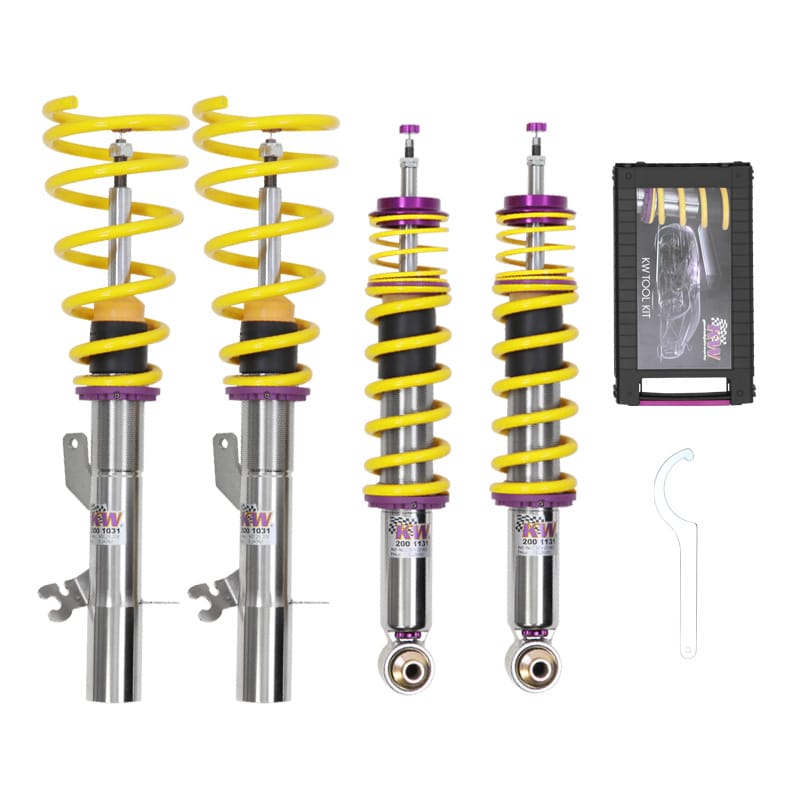
Coilovers replace the spring and damper with a matched assembly. The shock body has a threaded sleeve that lets you adjust ride height by turning the perch. Most kits include damping adjustment, ranging from a single knob to three independent adjusters. The price is higher, $900 to $7,000 depending on tier. The benefit is total control over ride height, damping, and on most kits the ability to corner balance and rebuild. If you plan to keep the car 3+ years, want to track it, want stance, or simply want the right answer for a forever build, coilovers are the right tool.
The mistake I see most often is owners who buy coilovers because the internet says coilovers, when they would have been happier with a quality lowering spring on factory M Sport dampers. If you live with cratered roads, drive your BMW as a daily commuter, and do not track, lowering springs over factory shocks deliver a better daily ride than most sub-$1,500 coilovers. The exception is if you also need adjustable ride height for wheel fitment, in which case coilovers win by default.
Adjustability tiers explained
Every coilover kit lives somewhere on the adjustability ladder. Understanding where a kit sits tells you what you are buying and what you are giving up.
Single adjust
One knob, or sometimes one perch, controls combined rebound and compression damping. Examples include BC Racing BR, ST X, KW V1, Bilstein B16 PSS10 (which is technically single knob but compression and rebound move at different ratios under the hood), and Tein Flex Z. Easiest to live with. Most owners only need single adjust for daily street use because they will pick a setting in the first 500 miles and never touch it again. The downside is that you cannot independently firm up turn-in without making the bumps harsher. If you go stiffer for cornering, the ride gets harsher proportionally.
Two-way adjust
Independent rebound and compression damping. Examples include KW V3, BC Racing DS, BC Racing ER, AST 5100, and Eibach Multi Pro R2. This is the biggest jump in tuning capability per dollar. You can firm up turn-in by adding compression while leaving rebound soft enough to absorb expansion joints, or you can firm rebound to control body motion while keeping compression compliant for pothole season. KW V3 is the canonical example with 16 click rebound and 12 click compression on most BMW kits. If you plan to learn suspension tuning or track the car occasionally, two-way is the value tier.
Three-way adjust
Three independent adjusters - rebound, low-speed compression, high-speed compression. Examples include KW V4, KW Clubsport 3-way, JRZ RS Two, MCS 3-way, and AST 5300. Track territory. Low-speed compression controls body roll and weight transfer in cornering. High-speed compression controls how the car handles sharp impacts like curbs, kerbs, and potholes. Most street drivers do not need high-speed adjustability and will be unhappy with the ride a 3-way kit produces unless they back the settings way off. If you race in a club series or do 10+ track days a year, 3-way pays for itself. If you do not, it is overkill.
Four-way adjust
Four independent adjusters add independent low-speed and high-speed rebound on top of the 3-way set. Examples include JRZ RS Three. This is professional racing equipment with a price tag to match. Almost no street driver should buy 4-way. I am only mentioning it for completeness.
What dialing the knobs actually feels like
Take a KW V3 as the reference because it is the most common 2-way kit on a BMW. From 0 of 16 (full soft) up to 16 of 16 (full firm) on rebound, the car goes from floaty over expansion joints with noticeable body roll and slow turn-in, through balanced at around 8 of 16 where most owners run their daily, up to track-firm at 16 of 16 where turn-in is sharp, body roll is minimal, and the car can break loose over bumpy pavement because dampers cannot compress fast enough. Compression follows a similar arc. Most BMW owners on KW V3 settle around 6 to 10 on rebound and 4 to 8 on compression for a daily-leaning street setup, then take it firmer for track days.
Helper springs and when you need them
Helper springs sit under or above the main spring as small soft coils that act as spacers when the main spring fully extends past its installed length under droop. Without helpers, the main spring can become loose on the perch when a wheel hangs in the air over a crest or a track curb, then bang back into place on rebound. Helpers prevent that. They fully compress under any normal load so they do not affect the spring rate the car experiences while driving. You need helper springs when spring rate is low (under about 6 kg/mm), droop travel is significant, or you are running very low ride height with minimal preload. Most street BMW kits at 6+ kg/mm with reasonable preload do not need helpers.
Spring rates demystified - kg/mm and motion ratio
Spring rate is the most confusing part of the coilover purchase for a lot of BMW owners. The numbers look arbitrary and the conversions across units make it worse. Here is the version that actually matters for picking a kit.
Spring rate is force per unit compression at the spring itself. In Europe and on most performance kits the unit is kg/mm. A 7 kg/mm spring takes 7 kg of force to compress 1 mm. In the United States lb/in is more common. The conversion is roughly 1 kg/mm equals 56 lb/in. So a 7 kg/mm spring is about 392 lb/in. Most BMW coilovers spec their rates in kg/mm, so I will use kg/mm throughout.
Wheel rate is force per unit compression at the wheel, which is what the car actually feels. Wheel rate is spring rate multiplied by the motion ratio squared. On most BMWs the front motion ratio is 0.85 to 0.95 (close to 1:1 because the strut hits the spindle at a steep angle), and the rear motion ratio is 0.80 to 0.85. So a 7 kg/mm front spring delivers about 6.3 kg/mm wheel rate, and a 7 kg/mm rear spring delivers about 5 kg/mm wheel rate. This is why BMW chassis often run higher rear spring rates than front on track-spec setups, to compensate for the rear motion ratio.
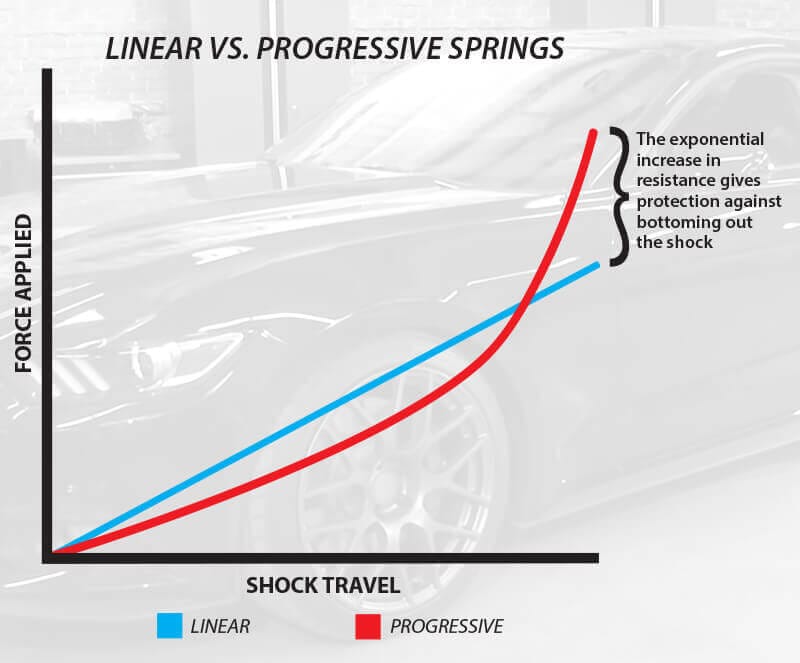
Linear springs hold a constant rate through full travel. What you set is what you feel. Track favorites use linear springs because they are predictable. Most BC, KW, Ohlins, and Bilstein coilovers use linear springs.
Progressive springs increase rate as they compress. Soft initial rate for daily comfort, stiffer at the end of travel for body control. H&R progressive springs and Eibach Pro Kit are the famous progressives. Easier to live with as a daily, less predictable for track tuning.
Common BMW spring rates by chassis
These are useful as a reference for what you are starting from and what an aftermarket kit typically delivers.
- E36 stock front around 3 kg/mm, rear around 5 kg/mm. Coilover daily 6 to 8 kg/mm front, 8 to 10 kg/mm rear. Track 10 to 14 kg/mm front, 12 to 16 kg/mm rear.
- E46 stock front around 3.5 kg/mm, rear around 4.5 kg/mm. E46 M3 stock around 5 kg/mm front. Coilover daily 6 to 8 kg/mm front. Track M3 8 to 12 kg/mm front, 10 to 14 kg/mm rear.
- E90 / E92 stock front around 3.5 to 4 kg/mm. Daily coilover 6 to 8 kg/mm front. Track 8 to 12 kg/mm front, 10 to 14 kg/mm rear. E92 M3 stock around 5 kg/mm front, common upgrade 7 to 10 kg/mm.
- F30 stock M Sport around 4 to 5 kg/mm front. Daily coilover 6 to 7 kg/mm front, BC BR and KW V1 typical. 340i AWD slightly stiffer to compensate for nose weight.
- F80 M3 / F82 M4 stock around 8 kg/mm front, 12 kg/mm rear. Coilover upgrade matches or exceeds. KW V3 for F80 runs about 9 kg/mm front. Clubsport 12+ kg/mm.
- G20 stock 330i around 4 kg/mm front, M Sport 5 to 6 kg/mm. Daily coilover 6 to 7 kg/mm front. M340i is heavier nose so springs are 0.5 to 1 kg/mm stiffer than 330i.
- G80 M3 stock around 9 kg/mm front. Coilover daily and track typical 9 to 12 kg/mm front, 14 to 18 kg/mm rear due to motion ratio compensation.
This matters for two reasons. First, when a kit advertises 4 kg/mm front and 5 kg/mm rear, that may sound soft until you remember the rear is at a 0.85 motion ratio, which gives you balanced wheel rates at the corners. KW V3 in many BMW fitments runs exactly that ratio for that reason. Second, when you compare two kits at $1,500 and one runs 6 kg/mm front and the other 8 kg/mm front, the 8 kg/mm car is going to feel firmer day to day even if both have 30 levels of damping. Spring rate sets the floor on ride harshness, damping sets the ceiling.
The 13 brands ranked
I have lived with or installed kits from most of these brands across the chassis I have owned and friends have owned. The ranking below is opinionated. I am not pretending every brand is for every owner. Read the brand description, see if the use case matches yours, and make the decision from there.
1. KW Suspensions
KW is the gold standard among BMW enthusiasts. German engineering out of Fichtenberg, stainless steel shock bodies on the Inox-Line variants, TUV approval for German road use which means quality control is high, and the broadest BMW chassis catalog in the industry. The lineup is structured by adjustability so you pick your tier and the rest of the buying decision is which BMW you have.
- Variant 1 (V1) - Fixed damping, ride height adjustable. The set and forget kit at around $1,500 to $1,800 depending on chassis. Best for owners who want the lowering and the build quality without becoming an amateur suspension tuner.
- Variant 2 (V2) - V1 plus adjustable rebound damping. 16 clicks of rebound. Around $1,700 to $2,000. The middle tier most owners skip in favor of going straight to V3.
- Variant 3 (V3) - V2 plus adjustable compression damping. Independent rebound and compression. The most popular performance street coilover on BMW. 16 click rebound, 12 click compression. Around $2,200 to $2,700 base depending on chassis.
- Variant 4 (V4) - Three-way (rebound, low-speed compression, high-speed compression). Track-focused. Around $3,500 to $5,000.
- Clubsport 2-way and 3-way - Track-derived kits with stiffer spring rates. 2-way around $3,200, 3-way around $4,500.
- DDC Plug and Play - Adaptive coilover that retains BMW EDC electronic damper control. For F-chassis and G-chassis with factory adaptive suspension. Around $3,800.
Real-world pros are build quality, parts availability, rebuild service through KW USA, residual value (used KW kits hold value better than competitors), TUV approval for owners in markets where that matters, and the DDC option for adaptive cars that none of the budget brands match.
Real-world cons are twin-tube damper construction on V3 versus monotube on Ohlins, which some owners report is less consistent at sustained track abuse. V3 spring rates are conservative which is great for road but less aggressive than some track-leaning kits. Price is premium across the lineup.
Forum sentiment from m3post, e90post, and f80.bimmerpost runs roughly that KW V3 is the best at being excellent at everything, only better setups (Moton, JRZ remote res with custom rates) cost significantly more.


KW V3 BMW install and ride quality walkthrough
2. Bilstein
Bilstein is the OEM supplier to BMW M division on multiple platforms, which means a lot of factory M dampers you have driven were built in Ennepetal, Germany. The aftermarket coilover lineup is more compact than KW but every kit has earned its place.
- B14 PSS - Single-adjust ride height plus fixed damping. Budget pick within Bilstein. Around $1,000 to $1,500 depending on chassis.
- B16 PSS10 - 10-step adjustability via single knob. Time tested daily and canyon kit. Around $1,800 to $2,400.
- B16 Damptronic - Adaptive damping kit, retains DCC and EDC electronic damper control. Premium street and track. Around $3,000 to $3,500.
- EVO S and EVO T1 - Newer platform-specific kits for G20 with manual 10-stage adjustment. EVO T1 is track-leaning, EVO S is street.
- Clubsport - Track kit with 10/10 compression and rebound. Around $3,000 to $3,500.
Real-world pros are the OEM heritage, monotube construction across the lineup, durability, minimal maintenance, and simple adjustment that makes the kits forgiving for owners who do not want to fiddle. The PSS10 in particular has a reputation as the over-achiever in the segment, the kit forum users called the number one customer choice for capable street suspension at this price.
Real-world cons are lower drop range than KW on some kits, single-knob adjustability that is less granular than V3, and a narrower build option list. If you want stainless body, Bilstein does not have a direct V3 Inox competitor.
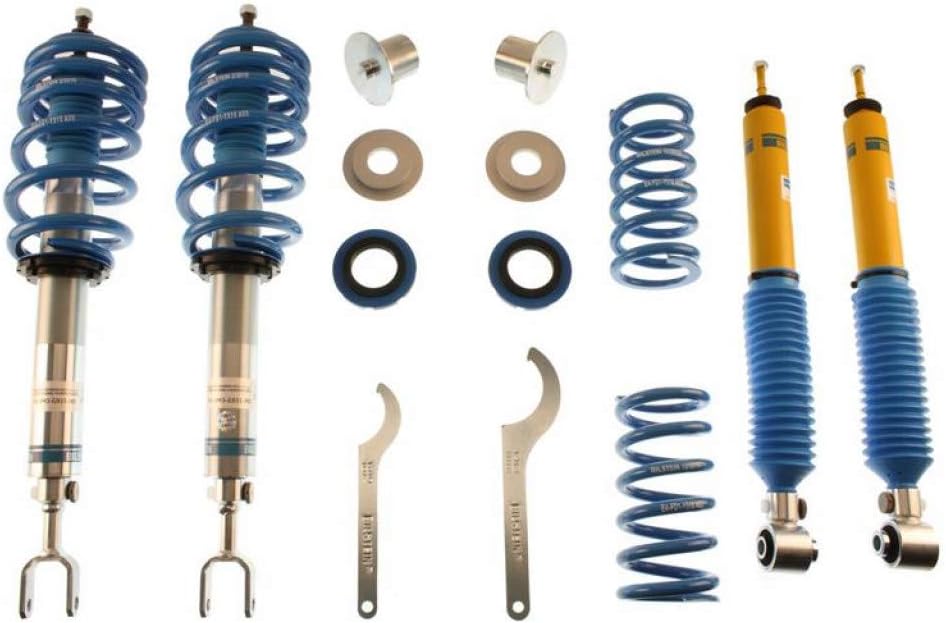
Bilstein B16 PSS10 Coilover System — F22/F30/F32 xDrive
$2,369.25

Bilstein B16 DampTronic Suspension Kit — F30 335i xDrive
$3,114.04

Bilstein EVO S Coilovers for BMW 330i/M340i/330e/430i xDrive (47-304932)
$1,769.00

Bilstein EVO S Series Coilovers for 2019-2020 BMW 330i
$1,668.60

Bilstein B14 Coilover Suspension Kit 2012 BMW 328i Front & Rear
$1,148.34

Bilstein B16 PSS10 Coilover Suspension System — E60 M5
$3,860.11
3. Ohlins
Ohlins is the premium import. 30 mm shock body, monotube, Dual Flow Valve (DFV) technology that auto-adapts damping based on shaft speed. Made in Sweden. The lineup on BMW is smaller than KW but every kit is dialed.
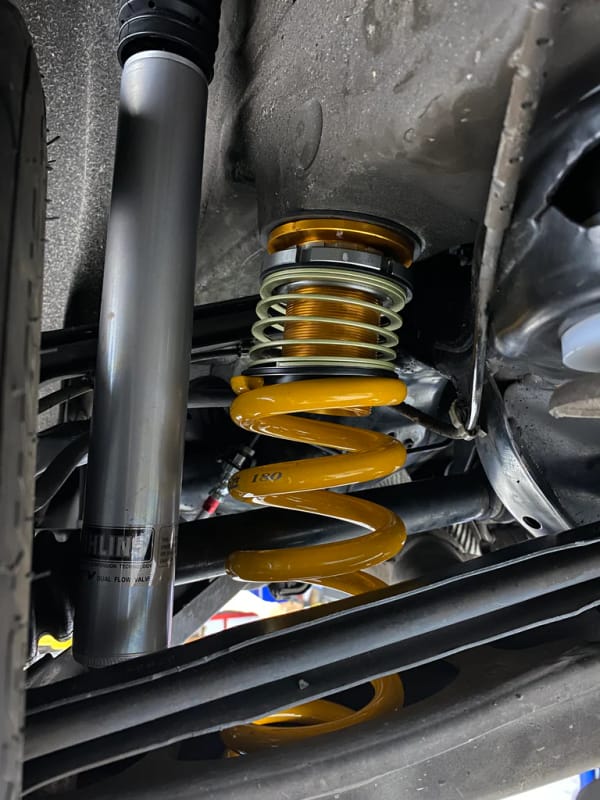
- Road and Track (R&T) - DFV technology, 20-step rebound adjustment, monotube. Springs slightly stiffer than KW V3 but DFV provides the comfort. Around $1,900 to $2,500.
- R&T DFV with reservoir - Same R&T with a remote reservoir, more consistent damping under sustained track use. Around $2,400 to $3,600.
- Type S TT - Dual flow valve track-derived kit. Around $4,000+.
- R&T for G80 xDrive - Newer kit specifically engineered for AWD M3.
Real-world pros are the DFV technology auto-adjusting damping (track gets stiffer compression at speed, road stays compliant on slow shaft speeds), monotube consistency, premium build, and Sweden origin. The Ohlins ride quality story is "the best balance for road plus occasional track if you only want one kit." Forum data on m3post and e46fanatics consistently praises R&T as the kit that does both jobs well.
Real-world cons are single-knob adjustability (you can only adjust rebound, compression is set), premium price relative to BC and ST, and a smaller dealer network than KW or Bilstein. If you are the kind of owner who wants 30 levels of independent adjustment, Ohlins is not it.

Ohlins Road & Track Coilover System for BMW G87 M2, G80 M3 & G82 M4
$3,569.93

Ohlins Road and Track Coilovers for BMW E46 M3 2000-2006
$3,065.59
4. BC Racing
BC Racing is the value champion. Designed in Taiwan, monotube construction, 30 levels of damping, and a massive BMW chassis catalog from E30 through G20. If your priority is "I want real coilover capability for under $1,500", BC is the answer.
- BR Series - Single-knob 30-level damping, linear valving, includes top mounts where applicable, dust boot, and Swift spring upgrade option at order. Most affordable BC kit at around $1,100 to $1,400.
- DS Series - Digressive valving, satin chrome shock body, better low-speed damping for sharper turn-in and weight transfer. Around $1,500 to $1,800.
- ER Series - Separate spring and damping reservoir style for sharper response. Around $2,100.
- HR Series - Track-focused. Around $2,500.
- Z and HM Series - Higher-end builds with reservoirs and better materials. Track use. Around $3,000+.
Real-world pros are price-to-performance ratio that is unmatched under $1,500, 30-level adjustment that gives more granularity than the single-knob KW V1 and Bilstein B14 at lower price, wide BMW chassis fitment, customizable spring rates at order through dealers like Vivid Racing and BC Authorized Dealers, and responsive customer support out of the US distributor.
Real-world cons are shorter rebuild interval than KW (forum data points to 40 to 50k miles if driven hard, 70 to 80k for daily), damper consistency that is below the monotube premium kits, and some early BR kits had QC issues that are mostly resolved but the reputation still hangs around. The forum line on BC is "80 percent of the performance at half the price" with the caveat "rebuild before you have a problem if you track them."

BC Racing BR Series Coilovers — F30 3 Series (RWD)
$1,195.00

BC Racing BR Series Coilovers — F30 3 Series AWD (5-Bolt)
$1,195.00

BC Racing BR Series Coilover Kit — E90/E92 3 Series AWD
$1,195.00
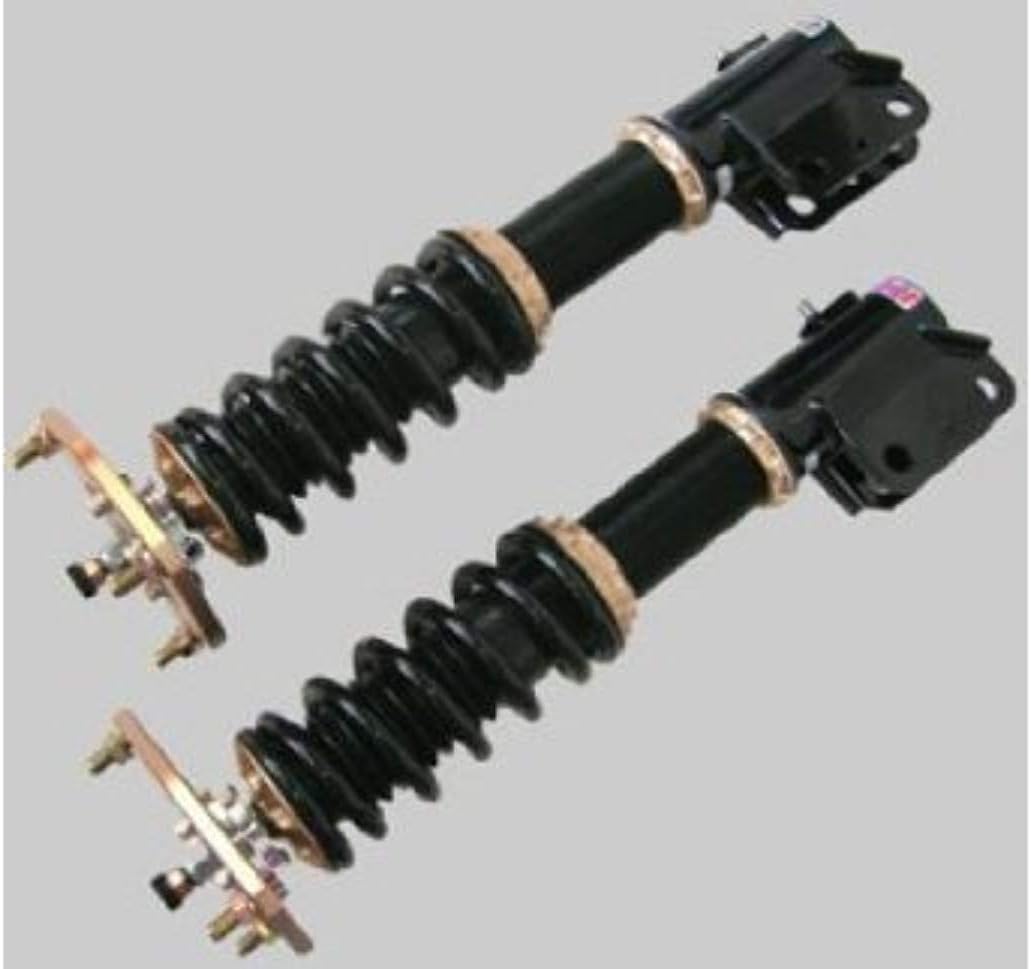
BC Racing BR Series Coilovers for BMW E46 M3 1998-2005
$1,095.00
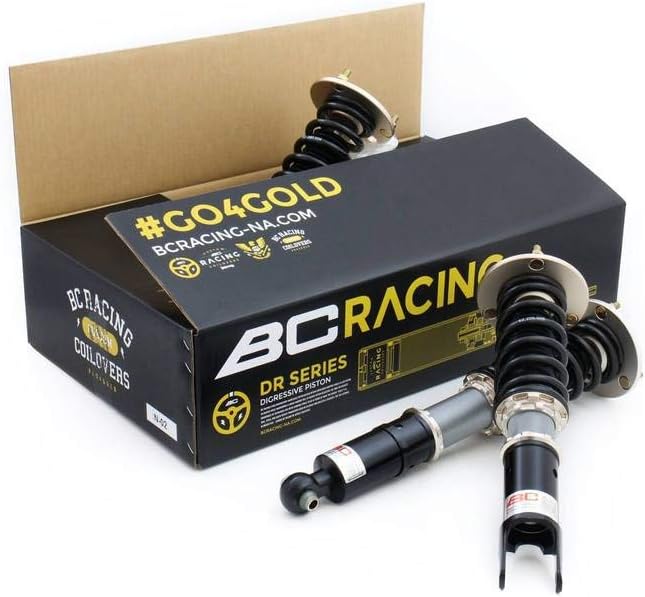
BC Racing DS Series Coilovers for 2007-2013 BMW E90/E92 M3 (w/o EDC)
$1,395.00

5. ST Suspensions
ST is KW's budget brand. Engineered alongside KW in Germany but built with cost-saving choices, mostly galvanized steel rather than stainless on most kits, wider tolerances, and fewer adjustability options. Think of ST as KW's "value for the everyman" line.
- X - Single-adjust ride height, fixed damping. Most affordable. Around $1,100.
- XA - Rebound adjustable, ride height adjustable. Around $1,300.
- XTA - Rebound, height, and adjustable top mount. Around $1,500 to $2,000.
Real-world pros are KW Group engineering at budget price, designed in Germany, and adequate build for street use. If you trust the KW name but cannot stretch to a V1, ST X is the entry point.
Real-world cons are galvanized vs stainless body that means corrosion concern in salt-belt states, less rebuild support than KW, and the knock-on perception that ST is "KW lite". For daily use the practical difference is small, for long-term ownership in a humid or salted state it matters.

ST XTA Adjustable Coilovers for BMW M3 F80 and M4 F82 2015+
$1,975.97


ST Suspension Height Adjustable Coilover Kit for BMW E36 M3
$849.00
6. H&R
H&R is best known for lowering springs but also offers a respectable coilover line. The aluminum strut bodies on some H&R kits are 30 to 40 percent lighter than OEM strut housings, which on a track car is a real unsprung weight win.
- RSS+ - Single-adjust rebound, ride height adjustable. Around $1,700 to $2,000.
- Street Performance - Twin tube ride-height adjustable. Around $1,700 to $2,000.
Real-world pros are designs tuned for street comfort, aluminum strut bodies on some kits, and progressive springs in the Street Performance line that work well on rougher pavement. H&R's spring expertise translates well to coilovers.
Real-world cons are less adjustable than KW V3 at similar price, brand more known for springs than full coilovers, and a smaller BMW chassis catalog than KW or BC. Good kit, niche use case.
7. AST
AST is a Dutch motorsport brand. Inverted monotube construction, large displacement shock body, race-derived design. The inverted layout means the strut body (the protected upper portion) is on top, with the cleaner chrome shaft hanging below.
- 4100 - Single-adjust street and track. Around $2,000.
- 5100 - Two-way adjust. Around $2,500.
- 5200 - Two-way with reservoir. Around $3,000.
- 5300 - Three-way with remote reservoir. Track only. Around $3,500.
Real-world pros are inverted shock construction, large displacement giving consistent damping under sustained load, and race-pedigree valving. Real-world cons are smaller dealer network in the US, track-leaning lineup that is harsh on street, and less common on BMW street cars than KW or Bilstein.
8. Tein
Tein is the Japanese import. Long history with JDM tuning culture, expanded to European cars over the past decade. BMW catalog is still maturing.
- Mono Sport - Monotube single-adjust street and track. Around $1,500 to $2,000.
- Mono Sport SRX2 - Updated Mono Sport with refined valving.
- Flex Z - Budget single-adjust with EDFC compatibility (Tein's electronic in-cabin damping force controller).
- Street Basis Z - Comfort focused budget kit. Around $900.
- Mono Racing - Track kit. Around $2,500.
Real-world pros are JDM build heritage, low price point on Flex Z and Street Basis Z, and the EDFC option for in-cabin damping adjustment, which neither BC nor ST offer at this price. Tein officially recommends a 36k mile maintenance interval, which is honest about damper life and rare in the industry.
Real-world cons are BMW fitment less mature than European brands and spring rates often optimized for lighter JDM chassis, which can mean compromise spring rate choice on heavier BMWs.
9. JRZ
JRZ is high-end track. Dutch engineering, USA support out of New Jersey, inverted monotube construction.
- RS One - Two-way with reservoir. Around $3,500.
- RS Two - Three-way. Around $5,000.
- RS Three - Four-way with reservoir. Around $6,000.
- Pro Series - Dedicated race spec.
Real-world pros are race-derived design, used on many SCCA and pro-spec cars, and custom valving available. Real-world cons are track-only character, harsh on street, expensive, and long lead times for custom builds. If you race, you have heard of JRZ. If you do not, you do not need it.
10. MCS Suspension
MCS (Motion Control Suspension) is American track-focused, made in the USA, inverted monotube, custom valving.
- 2-way - Rebound and compression. Around $4,500.
- 3-way - Rebound, low-speed compression, high-speed compression. Around $8,000.
Real-world pros are made in USA, custom valving included with the kit, track-derived consistency, and broad BMW chassis support. Real-world cons are track use only, harsh on street, and premium price. MCS shows up under the fenders of competitive Spec E46 and Spec E30 cars for a reason. If you are not racing, it is overkill.
11. Eibach
Eibach is best known for springs. The coilover line is competent but smaller than KW or Bilstein.
- Pro Street S - Single-adjust street kit. Around $1,500 to $1,800.
- Multi Pro R2 - Two-way adjust. Around $2,000 to $2,500.
Real-world pros are German engineering, solid build, and competitive pricing. Real-world cons are less popular for BMW than KW or Bilstein, smaller aftermarket chassis catalog, and brand momentum still behind springs rather than coilovers.
12. Yellow Speed Racing
YSR is the Taiwan budget alternative to BC Racing. Similar price point, similar construction.
- Dynamic Pro Sport - 30-level adjust monotube. Around $900 to $1,300.
Real-world pros are cheaper than BC and 30 levels of adjustment. Real-world cons are build quality variability across product runs, smaller dealer network than BC, and owner reviews that are mixed enough that I would only buy YSR if BC was not available for my chassis.
13. Maxpeedingrods - skip this one
Maxpeedingrods is a Chinese budget brand selling coilovers in the $300 to $500 range. They look fine in product photos. Owner experiences range from "ok for stance only" to "blew a seal in 6 months". I would not put these on a BMW I cared about. If your budget caps at $500, save another $400 to $700 and buy a used KW V1 or BC BR kit off m3post or e46fanatics classifieds. The used premium kit will outlast the new Maxpeedingrods by 5x.
Honorable mentions
A short list of brands worth knowing for specific use cases. TC Kline builds Koni-based custom kits for BMW and is the cult favorite among E46 and E90 enthusiasts who want premium daily comfort and are willing to pay $2,500 to $3,500 for it. Ground Control sells coilover sleeves over OEM struts plus Koni dampers as a budget DIY approach for around $1,000 to $1,500, popular on E36 and E46 weekend cars. Moton is ultra-premium track at $5,000+. ISC is the Korean budget alternative with the N1 series similar to BC BR at $1,000 to $1,400, well regarded by F80 owners on a budget. Fortune Auto's Dreadnought Pro Generation 5 has a small but loyal following on BMW. Feal Suspension is American custom, E46 focused. Ksport, Megan Racing, and Godspeed Project are Taiwan / Korea budget options similar to BC and YSR. Raceland is the cheapest option at $500 to $700, fine for stance, do not track them.
Fitment by BMW chassis
This is where the article earns its keep. Every BMW chassis has its own quirks, mounting differences, and known issues that determine which kits fit cleanly and which require extra parts or planning.
E36 (1992-1999)
The E36 takes a wide range of fitments because the M3 and non-M share suspension geometry, unlike E46 where M3 has unique parts. Common kits include BC Racing BR, KW V1 V2 V3, Ground Control sleeves, and Ohlins R&T. Spring rate range is 6 to 10 kg/mm for street, 10 to 14 kg/mm for track.
The E36 quirks to know are first that rear shock mount (RSM) reinforcement is recommended on hard-driven cars. The sheet metal cracks where the rear shock attaches over time, especially with stiff coilovers. BimmerWorld and Garagistic offer plates. Second, front strut bearings should be replaced when installing coilovers. The bearings are 25+ years old now on every E36 and you have the strut out anyway. Third, Vorshlag camber and caster plates are popular and allow up to 4 degrees negative camber for track use. Visit the E36 chassis tool page for exact suspension specs.
E46 (1999-2006)
The E46 is where you have to be careful. Subframe reinforcement is essentially mandatory on E46 M3 if running stiff coilovers. Without reinforcement, stiffer suspension transfers more force to the rear floor mounting points and accelerates the cracking process. BimmerWorld plates, Garagistic complete kits, Vincebar plus Redish Motorsport, or weld-in epoxy kits are all valid solutions. Welding is preferred over epoxy long-term. Rear floor reinforcement (RFM) is a separate but related issue that addresses the rear shock mounting.
Rear floor reinforcement is recommended even on non-M E46s if the car is hard-driven or autocrossed. Front camber plates from Vorshlag or Ground Control are needed for any drop beyond 0.75 inch because stock top mounts have a fixed camber position that becomes too positive when dropped.
True coilover rear (single-piece spring plus damper rear) is rarer and more expensive on E46. Most kits use the OEM separate spring and damper layout. KW Clubsport, MCS, Moton, and AST offer true rear coilovers for E46 if you want that. E46 M3 has unique-to-M3 hardware so kits are typically chassis-specific. Common kits include BC Racing BR, KW V3, Ohlins R&T, TC Kline, ISC N1, and Bilstein PSS10. See my E46 first mods guide for how coilovers fit into a broader chassis-upgrade plan.
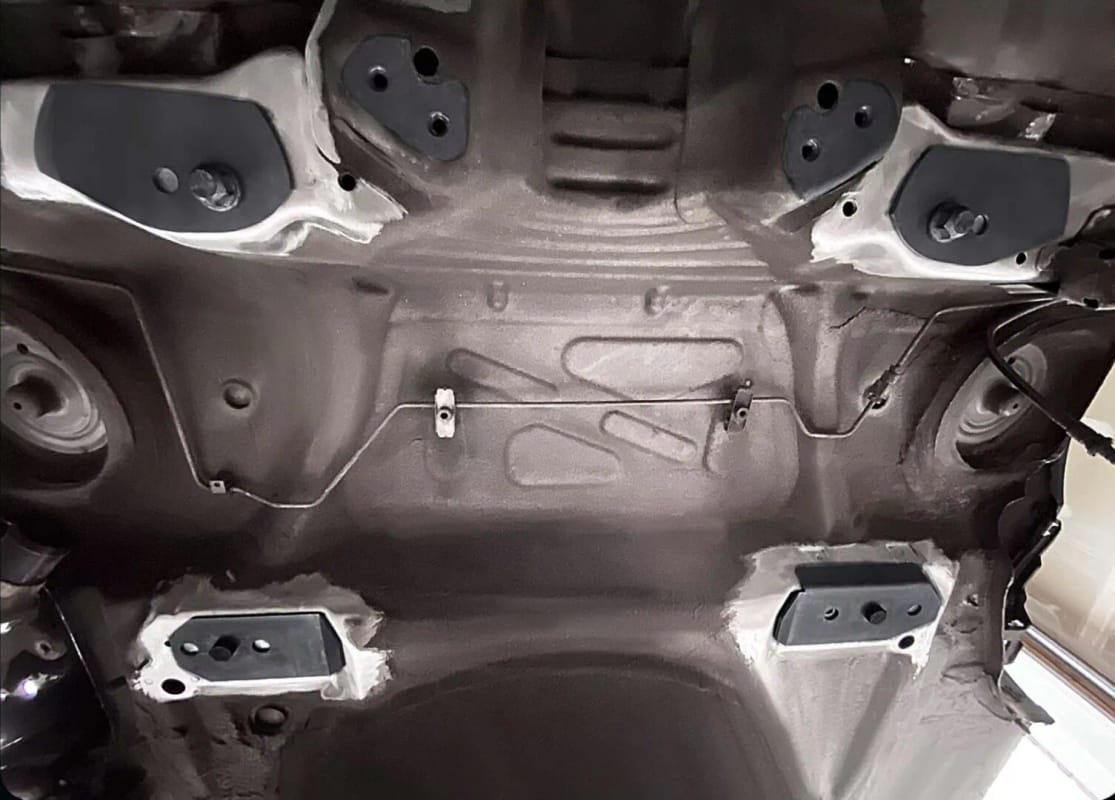
E90 / E92 (2006-2011)
Front strut tower brace is recommended after coilover install for chassis stiffness. Rear shock mount monoball upgrade from Powerflex, Rogue Engineering, or Turner is a popular pairing. Stock rubber rear shock mounts deflect under coilover load, monoball mounts eliminate that deflection.
EDC (Electronic Damping Control) cars need the EDC system defeated when fitting passive coilovers. Options include the KW EDC delete module, BimmerWorld delete module, or coding the EDC system off via INPA / ISTA. Without delete, the dashboard shows persistent suspension warnings.
The N54 versus N55 weight difference is real. N54 has a cast iron block and is heavier, slightly stiffer front spring rate is recommended. N55 has an aluminum block. xDrive (AWD) has a heavier front end due to driveline so front spring rates are typically 0.5 to 1 kg/mm stiffer than RWD equivalent. See my N54 vs N55 vs B58 comparison for the engine weight context.
Common kits include BC Racing BR, KW V3, KW V1, Bilstein PSS10, H&R Street Performance, Ohlins R&T, and ECS coilovers. My 335i mods guide places coilovers within the broader build sequence. Visit the E90 chassis tool and E92 chassis tool for spec sheets.
F30 / F32 (2012-2020)
Standard suspension versus Sport versus M Sport versus Adaptive M Suspension are all on the menu and each starts from a different stock spring rate and damper tune. Coilover kits are typically tuned for the M Sport stock baseline.
Adaptive M Suspension (EDC) cars need an EDC delete module if fitting passive coilovers. KW DDC Plug and Play and Bilstein B16 Damptronic retain the adaptive function. xDrive versus RWD same as E90, xDrive has heavier front end, stiffer front springs recommended.
M Sport suspension is non-adaptive but uses different geometry and spring rates than Standard. Coilover kit fitment is identical (same chassis hardware) but stock-replacement spring rates differ. Common kits include BC Racing BR, KW V1 V2 V3, Bilstein B14 PSS, Bilstein B16 PSS10, ST XA, and H&R Street Performance.
For deeper context on F30 builds see my F30 best bolt-ons guide and the F30 335i sleeper build which uses BC BR coilovers as the suspension foundation. Visit the F30 chassis tool page for spec sheets and chassis lineage.

F80 M3 / F82 M4 (2014-2018)
DSC (Dynamic Stability Control) interaction is real. Aggressive coilovers can change wheel rate and DSC may intervene more aggressively unless coded. KW EDC delete module is essentially mandatory for passive coilovers because F80 / F82 has Adaptive M Suspension as standard. Without delete, dash error and limp mode are possible.
Swift springs upgrade is popular. Many F80 owners upgrade the included springs to Swift for refinement (lighter weight, more consistent rate, premium build). Vorshlag camber plates allow more negative camber than stock top mounts.
Common kits include KW V3 with EDC delete, Ohlins R&T, BC Racing BR, Bilstein DDC B16 (retains EDC), KW Clubsport for track, MCS for track only, JRZ for track only. ISC N1 also competes here as a budget alternative. Visit the F80 chassis tool and F82 chassis tool for OEM specs.
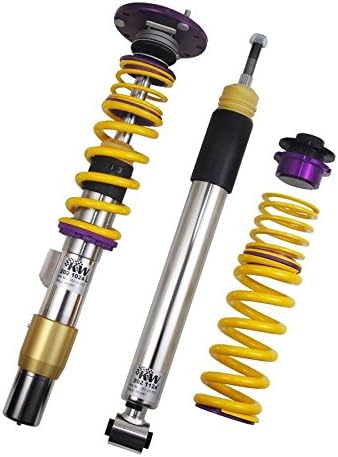
KW 352208BB Clubsport 2-Way Coilover Kit for BMW F80 M3 / F82 M4
$3,569.99
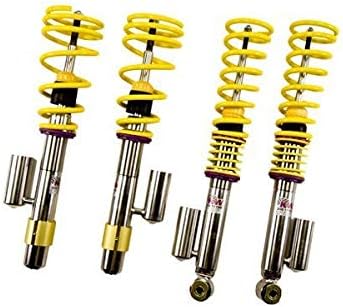
KW V4 Coilover Kit 3A7200BB for BMW F80 M3 / F82 M4 without EDC
$4,999.99

KW Electronic Damping Cancellation Kit for BMW M3/M4 (68510390)
$606.58
G20 / G22 (2019+)
The newest chassis is the most underserved by aftermarket content. KW V3 first available 2021. Bilstein EVO S and EVO T1 followed in 2022 to 2023. BC Racing BR for G20 RWD released end of 2022. I drive a G20 330i daily so this section is the one I have spent the most personal hours researching.
Adaptive M Suspension cars need EDC delete or an adaptive-compatible kit (Bilstein EVO S, KW DDC Plug and Play). xDrive versus RWD distinction is critical, kits are chassis-specific. M340i versus 330i matters because M340i has the B58 turbo six and is heavier than my 330i with the B48 turbo four. Spring rates differ between kits for M340i and 330i.
Common kits for G20 include KW V3, BC Racing BR, Ohlins R&T DFV, Bilstein EVO S, H&R Street Performance, and Megan Racing as the budget option. For broader G20 context see my 330i vs 340i comparison and M340i review. Visit the G20 chassis tool for OEM spec context.
G80 M3 / G82 M4 (2021+)
DSC plus xDrive integration on AWD models means coilover choice on xDrive G80 was more limited at launch. Ohlins, KW V3, and Bilstein became available first. M Adaptive Suspension delete is required for passive coilovers (KW EDC delete module for G80). Bilstein has electronic-compatible options.
Vorshlag camber plates with OEM perches or with coilover perches are both available. Coilover spring is smaller diameter (60 mm) versus OEM spring (around 120 mm), so coilover setup allows more camber range. Inertia Lab and Vorshlag both offer Ohlins R&T xDrive G80 specific kits.
Common kits include KW V3 (with EDC delete), Ohlins R&T, BC Racing BR (when available), Bilstein. My best wheels for BMW M3 guide and best wheels for M4 guide pair naturally with a coilover decision because ride height and offset are linked. Visit the G80 chassis tool and G82 chassis tool for spec sheets.
X3 / X5 (SUV chassis briefly)
Yes, you can put coilovers on an X3 or X5. KW V3, Bilstein B16, and BC Racing BR all offer SUV fitments. Spring rates run higher than sedan equivalents because the curb weight is higher. Drop beyond 1.5 inches is rarely advised because of CV joint angle limits and tire clearance issues. Most X3 / X5 coilover buyers are doing 1.0 to 1.5 inch drop for stance and ride feel rather than performance, which is fine, but be aware that an SUV on coilovers is a different ride quality target than an SUV on stock dampers.
Editor's picks per use case
Here is what I would actually buy if I were spending my own money on a coilover kit, sorted by how the car gets used. These are not kit-of-the-month choices, these are the picks I would make for a friend asking what to buy in 2026.
Aggressive daily, no track
BC Racing BR Series for budget under $1,400. KW V1 for $1,500 to $1,800 if you want stainless body and rebuild support. Bilstein B14 PSS for $1,000 to $1,500 if you want a quality single-adjust without becoming a tuner. The pick depends on chassis and budget more than anything else.
Daily plus weekend canyon
KW V3 wins this segment in almost every BMW chassis. Independent rebound and compression, rebuild support, residual value, and a damping range that genuinely lets you set "daily" and "canyon" as different positions on the same kit. Ohlins R&T DFV is the close second if you want one setting that does everything and you do not want to fiddle with two adjusters.
Daily plus 5+ track days a year
KW V3 still works for the road plus track if you re-adjust before each track day. Ohlins R&T DFV is excellent and DFV technology means it adapts on the track without you needing to dial it in. BC Racing DS Series is the value alternative with digressive valving for sharper turn-in. AST 5100 is the dark horse for this segment if you can get one.
Dedicated track car
KW Clubsport 2-way for $3,200 if you do club track days. KW Clubsport 3-way for $4,500 if you race. MCS 2-way for $4,500 with custom valving included. JRZ RS Two for $5,000. AST 5300 for $3,500. Pick based on dealer support and rebuild access in your region.
Stance / show
BC Racing BR with extended drop range or air ride alternatives like Air Lift Performance. Be aware that hard parking on coilovers can damage shock seals from the full-compression load over time. Bag setups dominate the stance scene for that reason.
Adaptive cars (factory EDC)
Bilstein B16 Damptronic for around $3,000 to $3,500 retains EDC functionality. KW DDC Plug and Play similar. Bilstein EVO S for G20 with adaptive. The alternative is passive coilover plus EDC delete module, which is the most common F80 / G80 setup for owners who want maximum tunability and do not care about losing the factory adaptive feature.
EDC delete - when you need it
EDC stands for Electronic Damping Control on E-chassis BMWs and Adaptive M Suspension on F and G chassis. The system uses electronic dampers that change valving on demand based on driving conditions. When you fit a passive coilover (KW V3, Ohlins R&T, BC BR, Clubsport), the EDC system loses its expected feedback loop and throws a fault on the dashboard.
You need EDC delete on F80 M3 and F82 M4 with Adaptive M Suspension. You need it on F30 with Adaptive M Suspension. You need it on G20 with Adaptive M Suspension. You need it on E90 / E92 with EDC option. You need it on G80 / G82 with M Adaptive Suspension if going passive.
You do not need EDC delete on E36, E46, or any chassis that did not have factory adaptive damping. You also do not need it if you are buying an adaptive-compatible coilover (KW DDC Plug and Play, Bilstein B16 Damptronic, Bilstein EVO S).
The delete itself is a small electronic module that plugs in line with the EDC harness and tells the car everything is normal. KW makes one (around $600), BimmerWorld makes one ($400 to $500), and you can also code the EDC system off via INPA / ISTA / E-SYS depending on chassis. Coding-off avoids the module purchase but requires the diagnostic software and a cable. For $400 to $600 most owners just buy the module and move on. My BMW fault codes guide covers what the dashboard warnings look like and how the codes map to systems.
Camber plates - when needed and which brands
Camber plates replace the factory upper strut mount with an adjustable bushing assembly that lets you change front camber. You need them when drop exceeds about 0.75 inch on most BMWs because stock top mounts have a fixed camber position that becomes too positive (too straight up) when the car is dropped.
Vorshlag plates are the most common choice on BMW. Made in USA, monoball or pillow ball options, allow 0 to -4 degrees camber on most chassis. Ground Control plates are similar with a slightly different design. FDF Race Engineering plates are a popular option for E36 / E46 with monoball construction. Turner Motorsport sells house-brand plates as a budget option.
Pillow ball monoball plates produce more cabin noise than rubber-bushed plates, which is the main tradeoff for performance. If you daily the car in cold weather where bushings get noisier as they age, plan accordingly. Some kits offer rubber-bushed top mount options for street use that retain camber adjustability.
If you are dropping the car 1.0 inch or less, you can sometimes get away without camber plates by accepting slightly more positive camber than ideal. If you are dropping 1.5 inches or more, plates are required if you want any tire life out of the front.
Spring rate selection cheat sheet by chassis
| Chassis | Stock Front (kg/mm) | Daily Coilover Front | Track Coilover Front | Notes |
|---|---|---|---|---|
| E36 | 3 | 6-8 | 10-14 | Front bearings should be replaced at install |
| E46 non-M | 3.5 | 6-8 | 9-12 | Subframe reinforcement at install |
| E46 M3 | 5 | 7-10 | 10-14 | Subframe reinforcement essentially mandatory |
| E90/E92 RWD | 3.5-4 | 6-8 | 8-12 | EDC delete if option present |
| E90/E92 xDrive | 4-4.5 | 7-9 | 9-13 | +0.5 to 1 over RWD due to nose weight |
| F30 M Sport | 4-5 | 6-7 | 8-10 | Adaptive needs EDC delete or DDC P&P |
| F30 xDrive | 5 | 7-8 | 9-11 | Front 0.5-1 stiffer than RWD |
| F80 M3 / F82 M4 | 8 | 9-12 | 12-15 | EDC delete required for passive |
| G20 330i | 4 | 6-7 | 8-10 | Adaptive needs delete or EVO S |
| G20 M340i | 5-6 | 7-8 | 9-11 | +0.5 to 1 over 330i |
| G80 M3 | 9 | 9-12 | 12-15 | EDC delete required for passive |
E36
- Stock Front (kg/mm)
- 3
- Daily Coilover Front
- 6-8
- Track Coilover Front
- 10-14
- Notes
- Front bearings should be replaced at install
E46 non-M
- Stock Front (kg/mm)
- 3.5
- Daily Coilover Front
- 6-8
- Track Coilover Front
- 9-12
- Notes
- Subframe reinforcement at install
E46 M3
- Stock Front (kg/mm)
- 5
- Daily Coilover Front
- 7-10
- Track Coilover Front
- 10-14
- Notes
- Subframe reinforcement essentially mandatory
E90/E92 RWD
- Stock Front (kg/mm)
- 3.5-4
- Daily Coilover Front
- 6-8
- Track Coilover Front
- 8-12
- Notes
- EDC delete if option present
E90/E92 xDrive
- Stock Front (kg/mm)
- 4-4.5
- Daily Coilover Front
- 7-9
- Track Coilover Front
- 9-13
- Notes
- +0.5 to 1 over RWD due to nose weight
F30 M Sport
- Stock Front (kg/mm)
- 4-5
- Daily Coilover Front
- 6-7
- Track Coilover Front
- 8-10
- Notes
- Adaptive needs EDC delete or DDC P&P
F30 xDrive
- Stock Front (kg/mm)
- 5
- Daily Coilover Front
- 7-8
- Track Coilover Front
- 9-11
- Notes
- Front 0.5-1 stiffer than RWD
F80 M3 / F82 M4
- Stock Front (kg/mm)
- 8
- Daily Coilover Front
- 9-12
- Track Coilover Front
- 12-15
- Notes
- EDC delete required for passive
G20 330i
- Stock Front (kg/mm)
- 4
- Daily Coilover Front
- 6-7
- Track Coilover Front
- 8-10
- Notes
- Adaptive needs delete or EVO S
G20 M340i
- Stock Front (kg/mm)
- 5-6
- Daily Coilover Front
- 7-8
- Track Coilover Front
- 9-11
- Notes
- +0.5 to 1 over 330i
G80 M3
- Stock Front (kg/mm)
- 9
- Daily Coilover Front
- 9-12
- Track Coilover Front
- 12-15
- Notes
- EDC delete required for passive
This table is a starting point, not a prescription. Spring rate choice depends on tire compound, intended track surface smoothness, ambient temperature, driver weight, and personal preference. For a daily driver on street tires, the lower end of the daily column is usually the right answer. For an autocross or HPDE car on R-comps, the lower end of the track column is right. For wheel-to-wheel club racing, the upper end of the track column.
Install considerations and tools needed
Coilover install is one of the more involved DIY jobs on a BMW. It is not impossibly hard, but it is the kind of job where rushing creates problems you discover at 70 mph on the highway. Here is what you actually need.
Tools
- Spring compressor for rear shocks on most BMW chassis where the coilover assembly compresses through the body.
- Full metric socket and ratchet set, with 22 mm and 18 mm sockets being the most-used sizes.
- Ball joint separator, either a pickle fork (cheap, can damage rubber boots) or a proper press tool ($100 to $200, worth buying).
- Torque wrench rated to 200 ft-lb for axle nuts and ball joint torque specs.
- Floor jack and jack stands rated for vehicle weight.
- Alignment specs reference for the chassis. Print or save them before starting.
- Some kits include strut top bearings, others do not. Check your kit before ordering. If yours does not include them and the car has 100k+ miles, plan to replace bearings while the strut is out.
Time budget
Plan a full day for first-time install on a BMW you have not lifted before. Experienced installer with the right tools can knock out a 4-corner install in 4 to 6 hours. First timer with weekend access should plan 8 to 10 hours, including the alignment shop trip the next morning. Add 2 to 4 hours if you are also fitting subframe reinforcement, EDC delete, camber plates, or end links at the same time.
Sequence
Front first, one corner at a time. Loosen lug nuts on the ground, lift, support on stands, remove wheel, disconnect end link from sway bar, disconnect ABS sensor wire and brake line bracket, support the lower control arm, undo the upper strut mount nuts, undo the lower strut bolts, drop the strut. Reverse for install with new coilover. Torque to spec at every fastener. Repeat 3 more times.
Rear is similar but on most BMW chassis the rear shock and spring are separate, with the spring living in the lower control arm pocket and the shock attached top and bottom. You will need to compress the rear spring to remove and refit unless your kit converts the rear to a true coilover assembly.
Post-install setup - corner balancing, alignment, ride height
The install is half the job. The setup is the other half and most owners shortcut it.
Ride height first
Set ride height first because alignment numbers depend on ride height. Measure fender to wheel center on level ground. Drive 5 to 10 miles to settle springs (yes, even quality kits settle a few millimeters in the first miles). Re-measure. Adjust the lower locking collar on each corner up or down using the supplied spanner wrenches. Most kits use a turn equals about 3 mm rule of thumb but verify against the manufacturer's manual. Set front and rear to taste, typically 1.0 to 1.5 inches lower than stock for daily, more for track.
Preload check
Check preload with the car off the ground (full droop). Most kits run 3 to 5 mm preload, some 5 to 10 mm. Set with the helper spanner. Too much preload and the spring binds at full droop. Too little and the spring can come off the perch under hard cornering or on a track curb.
Corner balance
Corner balancing is a shop process at $150 to $300 that adjusts ride height per corner so cross-weights are balanced. Measurable lap time gain on track. Optional for street but worth it on a serious build because BMWs come off the assembly line with slightly uneven weight distribution that compounds when you swap suspension. Most owners skip this and the car drives fine. Track owners should not skip it.
Alignment is mandatory
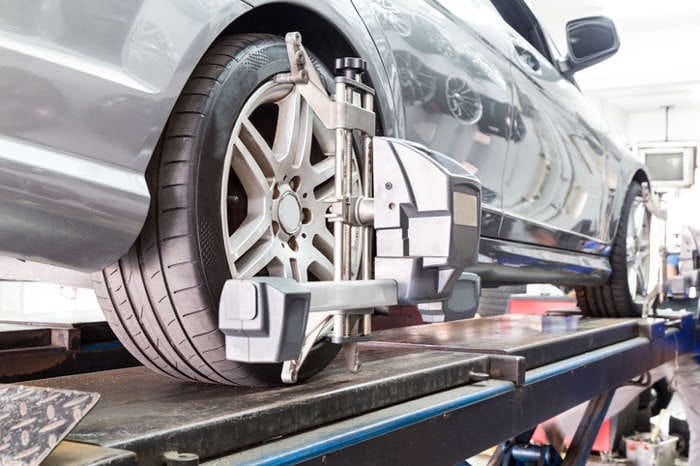
Alignment is mandatory after coilover install. Period. Do not drive the car on the freeway without alignment. Stock toe and camber numbers will be wrong after lowering, and incorrect toe alignment will eat tires in 500 miles. $100 to $150 at a competent shop. For daily street, target -1 to -1.5 degrees front camber, -1.5 to -2 rear, and stock toe spec. For track, target -2.5 to -4 degrees front, -2 to -2.5 rear, and slightly more toe-out front for sharper turn-in.
Damping initial setup
Start at manufacturer recommended damping (often middle of the range). Drive 100 miles. Adjust per feel. For KW V3 most owners settle at 6 to 10 of 16 rebound and 4 to 8 of 12 compression for daily street. Track owners go up from there. The mistake is to set it once and never touch it. The whole point of two-way is that you can tune.
Daily driver reality check
Coilovers change daily driving. Some changes are good, some are inconvenient, and some you only notice after living with the car for a couple of weeks. Here is the honest reality check.
Cabin noise
Stock to single-adjust BC BR or KW V1 produces a minor noise increase, mostly noticeable over expansion joints and rough pavement. Single-adjust to two-way KW V3 or Ohlins R&T is moderate noise increase, noticeable on rough roads and when driving on patched asphalt. Two-way to three-way Clubsport is significant noise increase, daily driving fatigue is likely. Pillow ball top mounts on most performance kits transmit more noise than rubber-bushed mounts. Some kits offer rubber-bushed top mount options for street use.
Pothole tolerance
Pothole impact on coilovers depends more on damping setting and tire sidewall than spring rate. Soft damping plus tall sidewall equals tolerable. Firm damping plus low profile equals harsh. The forum line that "potholes will feel like you hit a city bus head on" is real if damping is set firm and tires are 35 series profile or lower. With damping at the soft end of the kit's range and 40 series rubber, daily pothole season is manageable on most BMW chassis.
Speed bump scrape risk
E46 with drop 1.5 inch or more starts losing oil pan clearance. Steep speed bumps require approach angle. E90 with M Sport bumper and 1.5+ drop has front lip scrape risk. F30 with M Sport bumper and 1.5+ drop has front splitter scrape risk. G20 with M Sport plus the optional aero kit has front lip scrape risk after just 1.0 inch drop. F80 / G80 M3 already low from factory, drop beyond 0.5 inch makes daily driving challenging.
Tire wear with aggressive camber
Beyond -2 degrees front camber, inner tire shoulder wears faster than outer. Toe alignment compensates partially. Daily street setup target -1 to -1.5 degrees front, -1.5 to -2 rear. Track setup target -2.5 to -4 degrees front, -2 to -2.5 rear. Track-only camber wears tires fast on highway commute. Plan tire budget accordingly. My best tires for 335i guide and best tires for 340i guide cover the tire choice side of this equation.
End link wear
Stock end links are sized for stock ride height. Lowered car puts end links at extreme angle, which reduces sway bar effectiveness and accelerates end link wear. Adjustable end links from Turner Motorsport, Powerflex, Rogue Engineering, or Eibach run $80 to $200 per pair. Highly recommended after any drop beyond 0.5 inch. Skipping end links is one of the most common owner mistakes I see.
What surprised me
The thing that surprised me most when I went from a friend's stock E90 335i to his BC BR-equipped E90 335i was how much smoother the car felt over expansion joints with the BC BR set soft, compared to his worn-out 90k mile stock dampers. That is the unspoken truth of coilovers. New coilover at soft damping is often more comfortable than worn-out original equipment. The factory shocks were great when the car was new. They are not great at 90k miles. A BC BR at 6 of 30 felt better than the worn factory unit even before we did anything about ride height.
Service intervals and rebuild costs by brand
Coilovers have a service life. Most owners do not realize this until something starts to feel off and they start asking the forums what is wrong. Here is the rebuild reality.
KW rebuilds run 50 to 80k miles for daily use, 30 to 50k for hard track use. Rebuild cost is $400 to $600 per corner via authorized rebuild center. KW USA in Reno offers turn-around in 2 to 3 weeks. The kits hold value because of rebuild availability.
BC Racing rebuilds run 40 to 50k miles for daily, 20 to 30k for hard track. BC offers rebuild service through Taiwan or via authorized US partners. Cost is around $200 to $300 per corner. Faster turnaround through US partners (1 to 2 weeks). The shorter rebuild interval is the trade for the lower upfront price.
Ohlins rebuilds run 50 to 80k miles. Authorized through Ohlins USA. Cost similar to KW. Damper consistency is excellent, but when it goes you need to send it back.
Tein officially recommends a 36k mile maintenance interval, which is more frequent than KW or Ohlins but at least Tein is honest about it. Most premium kits last 50 to 100k miles with quality maintenance. Owners who run full stiff and drive on rough pavement average just 42,000 miles before noticing damper performance loss.
For street cars there is not any reason to rebuild or replace coilovers more often than you would regular shocks. The mistake owners make is assuming that because coilovers are aftermarket they need more frequent service than OEM dampers. That is backward. Quality KW or Ohlins damper has more rebuild capability than any factory shock.
The other side is that BC BR and budget kits can fail abruptly if abused. The forum stories of "BC blew a seal at 35k miles" are real but those are usually owners who tracked the car hard, did not rebuild on schedule, and then the seal went. Maintenance prevents these failures. Hard parking on coilovers (forcing the suspension to full compression on stops) is a common cause of premature seal wear that gets blamed on the brand instead of the owner.
Common mistakes BMW owners make
Five years of watching friends fit coilovers, plus reading enough m3post and e90post threads to anchor what people actually do, has given me a short list of the mistakes that come up over and over.
Going too low
The classic mistake. Owner gets the coilovers, sets them at maximum drop because that is what looks right in product photos, then spends the next 3 months apologizing to oil pans, splitters, and sidewalls of every pothole on the commute. Standard advice is 1.0 to 1.5 inches drop for daily. If you are not sure, set the kit higher than you think you want, drive it for 2 weeks, then lower. It is easier to lower than to raise after the springs have settled.
Picking wrong damping setting and never adjusting
You bought 30 levels for a reason. Use them. Most owners pick a setting at install based on the manual, then never touch the knobs again. The whole value of a 2-way kit is that you can tune. If you are not adjusting, you might as well have bought a single-adjust at $700 less.
Skipping camber plates
Drop the car 1.5 inches without camber plates and you will spend the savings on premature tire wear inside 5,000 miles. Plates pay for themselves in tire life if you drive much.
Skipping end links
Same logic. Stock end links at lowered ride height are at extreme angle. Sway bar effectiveness drops and the links wear out fast. $80 to $200 for adjustable links is cheap insurance.
Skipping alignment
This is the worst one. Driving the car after coilover install without alignment is the fastest way to destroy tires. Toe alignment is wrong by definition after a ride height change. Set the alignment appointment when you order the coilovers, not when you finish install.
Hard parking
Setting the kit at maximum compression for show purposes when parked is a known cause of premature seal failure. Dust and debris work into the seals when the suspension is held compressed for hours. If you stance for shows occasionally, fine. If you stance daily in your driveway, expect rebuilds sooner.
Ignoring the rebuild interval
Coilovers are mechanical assemblies that wear out. Quality kits give 50 to 80k miles, budget kits 30 to 50k miles. Rebuilding before failure is cheaper than rebuilding after failure because failed seals can damage shafts and bodies. Set a calendar reminder at 30k mile intervals to inspect for leaks and check damping feel.
Buying the wrong fitment
F30 RWD coilovers do not fit F30 xDrive. F80 M3 coilovers do not fit M3 Competition Package without checking. E46 M3 has unique parts versus E46 330i. Always verify fitment via the brand's BMW chassis selector or by talking to a dealer. Buying the wrong kit and trying to make it fit is a recipe for handling problems that you will never fully diagnose.
FAQ
Are coilovers worth it for a BMW
If you plan to keep the car 3+ years, want a meaningful upgrade in handling, want to set ride height to taste, or want to track the car, coilovers are worth it. If you want to drop the car only and you are happy with stock damper feel, lowering springs are cheaper and more daily-friendly. The break-even point is roughly $1,500 of total budget. Below that, springs over factory shocks. Above that, coilovers.
How much do BMW coilovers cost
Budget tier $900 to $1,500 (BC BR, ST X, Tein Flex Z, KW V1). Mid-tier daily $1,500 to $2,200 (BC DS, ST XTA, KW V2, Bilstein B14). Premium daily $2,000 to $3,000 (KW V3, Ohlins R&T, Bilstein B16). Adaptive-compatible $3,000 to $4,000 (Bilstein B16 Damptronic, KW DDC P&P). Track $3,200 to $5,000 (KW Clubsport 2-way, MCS 2-way, AST 5300, JRZ RS Two). Halo $5,000+ (KW V4 Clubsport 3-way, JRZ RS Three, MCS 3-way, Moton). Add $400 to $800 install labor and $100 to $300 alignment plus corner balance.
How long do coilovers last on a BMW
Quality kits 50 to 100k miles before rebuild. Budget kits 30 to 50k miles. Track-driven kits half those numbers. Rebuild costs $200 to $600 per corner depending on brand. Most BMW owners keep a kit through one rebuild cycle and then evaluate whether to rebuild again or sell and upgrade.
Do coilovers void BMW warranty
The Magnuson-Moss Warranty Act in the US says manufacturers cannot void a warranty just because aftermarket parts are installed, but they can deny warranty claims for damage caused by the aftermarket part. So if you fit coilovers and the rear subframe cracks, BMW can deny that claim. If you fit coilovers and the engine throws a code, BMW cannot deny the engine warranty claim. In practice, dealers vary. Some are friendly, some look for any reason to deny. Document install professionally and keep receipts.
What is the difference between coilovers and lowering springs
Lowering springs replace the factory spring while keeping the factory damper. Drop is fixed at whatever the spring delivers (typically 1.0 to 1.5 inches). No damping adjustment, no ride height adjustment. Coilovers replace both the spring and damper as a matched assembly with adjustable ride height, often adjustable damping, and the option to corner balance. Coilovers cost 3 to 10x as much as springs but deliver substantially more capability.
How low can you go with BMW coilovers
Maximum drop on most BMW coilovers is 2.5 to 3.0 inches at the lowest perch position. Practical daily driving caps at 1.5 inches on most chassis before scrape risk and tire wear become a real burden. Stance setups go to 2.0 to 2.5 inches and accept the daily-driver compromises that come with that. Below 2.5 inches you start running into oil pan, axle, and CV joint clearance issues on many BMW chassis.
Can you drive coilovers daily
Yes. Quality kits at appropriate damping and reasonable drop are perfectly daily-able. Single-adjust BC BR or KW V1 is barely different in daily comfort from worn-out OEM. Two-way KW V3 set soft is daily comfortable. The kits to avoid for daily are 3-way Clubsport / MCS / JRZ which are too stiff for street.
Do you need an alignment after installing coilovers
Yes. Mandatory. Toe and camber are guaranteed wrong after any ride height change. Without alignment, expect 500 to 2,000 miles of accelerated tire wear before you notice. Schedule the alignment for the day after install (allow springs to settle).
What is the best coilover brand for BMW
KW Suspensions for premium street and track. Ohlins for premium with auto-adjust comfort. Bilstein for OEM-like quality and adaptive compatibility. BC Racing for value. ST for KW Group budget. Choice depends on use case and budget.
Are KW V3 coilovers worth the money
Yes for owners who want premium build, independent rebound and compression adjustment, rebuild support, residual value, and the option to track the car. No for owners on a budget who would not use the adjustability or for owners doing pure stance, where a BC BR delivers the look at half the price.
How much does it cost to install coilovers on a BMW
Shop labor $400 to $800 for full install. Alignment $100 to $150. Corner balance $150 to $300 (optional). End links $80 to $200 per pair. Camber plates $300 to $500 if not included with kit. EDC delete module $400 to $600 if applicable. Total install all-in (kit excluded) typically $700 to $1,500 for a basic street install, $1,500 to $2,500 for a full track-prep install.
Do coilovers ride harsh on a BMW
Depends on kit and damping setting. Single-adjust BC BR or KW V1 at appropriate setting is barely harsher than stock. Two-way KW V3 at soft setting is similar. Three-way Clubsport at any setting is harsher than stock. Stiffness is mostly about spring rate, not damping. A 6 kg/mm front kit will always be softer riding than an 8 kg/mm front kit at the same damping.
What spring rate is best for a BMW daily driver
6 to 8 kg/mm front for E36 / E46 / E90 / F30 / G20. 8 to 10 kg/mm front for F80 M3 / G80 M3. Slightly softer for non-M comfort builds. Slightly stiffer for spirited driving on smooth roads.
Do BC Racing coilovers fit BMW
Yes. BC Racing has a wide BMW chassis catalog covering E30 through G20, including M3 / M4 across generations. BR Series is the most common, DS Series is the digressive valving upgrade. Custom spring rates available at order through authorized dealers.
What is EDC delete on a BMW
EDC delete is a small electronic module that plugs in line with the factory Electronic Damping Control harness on F-chassis and G-chassis BMWs (F30, F80, G20, G80, etc.) to suppress dashboard fault codes when fitting passive coilovers. Required when installing KW V3, Ohlins R&T, BC BR, or any non-adaptive coilover on a car with factory adaptive damping. Around $400 to $600 from KW or BimmerWorld. Alternative is coding the EDC system off via INPA / ISTA.
Final verdict by chassis and budget tier
If you read this far you came for opinions, not options. Here are the kits I would actually buy in 2026, ranked by chassis and budget. These are the picks I would make if it were my own G20 sitting on the lift, my friend's E46 in the driveway, or my older brother's F30 begging for a drop.
E36 daily
Budget pick - stay with lowering springs over factory shocks. The E36 chassis does not reward $1,500+ coilovers in daily use unless you also fit subframe / RSM reinforcement. ST coilover kit by KW for E36 M3 is the budget coilover answer if you must coilover. Mid pick - KW V1 if you can find E36 fitment in your region. Premium pick - KW V3 Inox if you have an E36 M3 and want the long-haul kit.
E46 non-M daily
Budget pick - BC Racing BR Series. Around $1,100. Fits cleanly. Mid pick - Bilstein B16 PSS10. Around $2,000. Single-knob simplicity. Premium pick - Ohlins R&T DFV. Around $2,400. The kit you keep forever.
E46 M3
Get subframe reinforcement first. Then choose coilovers. Budget pick - BC Racing BR Series for E46 M3 at around $1,095. Mid pick - ST coilover kit by KW for E46 M3 at around $899 if you want a quality budget option. Premium pick - Ohlins R&T at around $2,495 for the kit BMW owners agree is the gold standard for daily-able M3.
E90 / E92 335i daily
Budget pick - BC Racing BR Series E90 / E92 AWD or RWD at around $1,245. Mid pick - Bilstein B16 PSS10 if available for your fitment. Premium pick - KW V3 around $2,500. Track pick - BC Racing DS Series for E90 / E92 M3 at around $1,395. Pair with the right wheels and tire choice for the build.
E92 M3
Budget pick - BC Racing DS Series for E92 M3 at around $1,395. Mid pick - KW V3 with EDC delete if applicable. Premium pick - Ohlins R&T DFV. Track - KW Clubsport 2-way.
F30 335i / 340i daily
Budget pick - BC Racing BR Series F30 RWD or xDrive at around $1,195. Mid pick - Bilstein B14 around $999. Premium pick - Bilstein B16 PSS10 F22 / F30 / F32 xDrive at around $2,291 or KW V1 F30 at around $1,844. Adaptive cars - Bilstein B16 Damptronic F30 335i xDrive at around $3,024. Match wheels, tires, and read the 340i mods guide.
F80 M3 / F82 M4
Budget pick - ST XTA F80 / F82 around $1,976. Mid pick - KW V3 with EDC delete (around $2,700 plus $607 for delete kit). Premium pick - KW Clubsport 2-way for F80 / F82 around $3,073 or Ohlins R&T DFV. Halo pick - KW V4 for F80 / F82 around $5,000. EDC delete required - see fault code reference. Pair with best wheels for M3 and best wheels for M4.
G20 330i / M340i
Budget pick - BC Racing BR for G20 (when available for your variant). Mid pick - Bilstein EVO S 330i RWD around $1,643 or 330i xDrive M340i 330e 430i around $1,685. Premium pick - KW V3. Adaptive cars - Bilstein EVO S retains adaptive function. M340i review and 330i vs 340i give chassis context.
G80 M3 / G82 M4
Budget pick - BC Racing BR (when available, fitment is still maturing). Mid pick - Bilstein adaptive options. Premium pick - KW V3 for G80 / G82 around $2,670 with EDC delete required. Track pick - Ohlins R&T for G80 / G82 around $3,600. Halo - MCS 2-way or 3-way custom build. Where the G80 ranks in M3 history and best year M3 context.
E60 M5 (briefly)
For the V10 E60 M5, KW V1 around $2,054 is the daily answer. Bilstein B16 PSS10 for E60 M5 around $3,619 is the luxury daily upgrade if you want OEM-like ride feel with adjustability. The E60 M5 is heavy and stress on the kit is meaningful, so I would not go cheaper than these options.
Closing thoughts
BMW coilovers are not a weekend mod, they are a system that touches every other suspension component. If you go in understanding that, picking the right kit for your use case, and budgeting for the alignment, end links, and camber plates that make the kit work properly, you end up with a car that drives the way you want it to. If you cheap out on the supporting work or pick a kit that does not fit your use case, you spend the next two years apologizing to the car for the choice you made.
My honest recommendation for most BMW owners reading this is the same advice I gave my older brother last fall when his F30 340i finally needed something done about ride height. Buy a quality two-way coilover from a brand with rebuild support (KW V3, Ohlins R&T, BC DS) for the chassis you actually have, fit subframe reinforcement if you are on E46, fit camber plates if you are dropping more than 0.75 inch, fit adjustable end links, get the alignment, and then drive the car. Adjust damping after a week. Adjust ride height after a month. The car you end up with after that process is genuinely better than what BMW shipped, which is the whole point of being an enthusiast in the first place.
If you want to go deeper on related upgrades, see my sway bars guide for the complement to coilovers, my wheel spacers guide for fitment, BMW tuning 101 for the broader picture, and the drift car build guide if your suspension goals point that direction. For chassis-specific build sequences, the F30 335i sleeper build uses BC BR coilovers as the foundation. And if you are just starting to think about whether your BMW is worth modifying at all, my BMW maintenance cost guide and is BMW expensive to maintain set the financial baseline before you start spending coilover money. Drive the car, fit the right kit, and enjoy the result. That is the whole job.