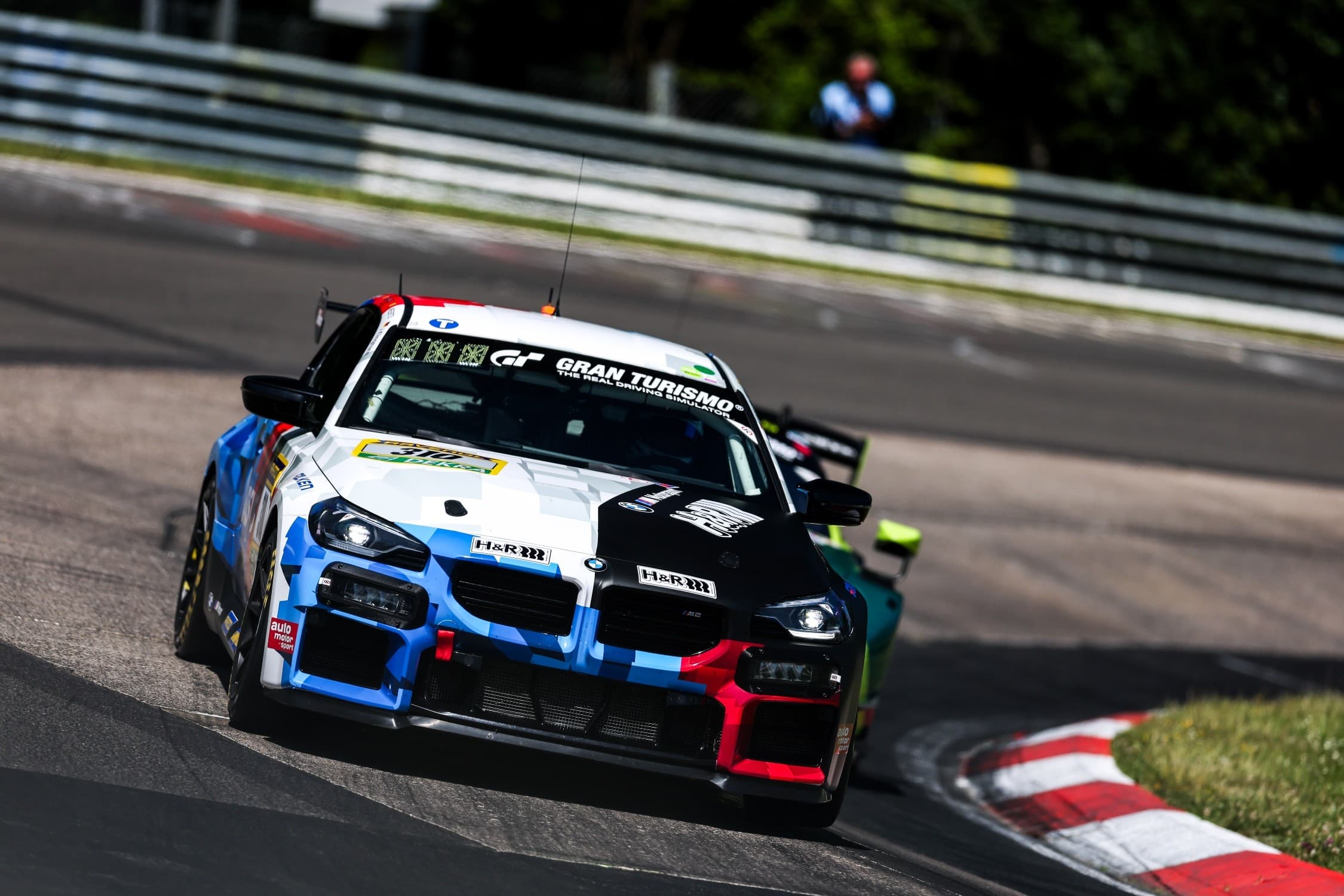
BMW M2 Parts
Affiliate disclosure. BimmerTalk is a proud partner of the Amazon Associates Program and Turner Motorsport. We may earn a small commission on qualifying purchases through our links, at no extra cost to you. Read the full disclosure.

Choose your generation to find compatible parts.


The BMW M2 - The Purist's M Car
Ask any Bimmer fanatic which M car delivers the most raw, unfiltered driving experience, and nine times out of ten the answer is the M2. Slotted into BMW's compact 2 Series platform, the M2 punches well above its weight class with serious track credentials, a short wheelbase that rewards aggressive driving, and an aftermarket ecosystem that rivals anything in the enthusiast world. Whether you are chasing lap times at your local circuit or building a street weapon that turns heads on the weekend, the M2 is one of the most versatile platforms BMW has ever produced.
Unlike its larger siblings the M3 and M4, the M2 has always carried a reputation as the driver's driver machine. It is smaller, lighter, and more tossable. The steering feel is sharper, the chassis communicates feedback through every corner, and the dimensions keep you engaged without the car ever feeling planted and predictable. This is not a grand tourer wearing an M badge. This is a genuine sports car built around the idea that driving should be an event every single time you turn the key.
F87 vs G87 - Two Generations, Two Characters
The F87 M2 arrived for the 2016 model year and immediately earned a cult following. Early F87 models ran the S55 twin-turbocharged inline-six borrowed directly from the E92-era M3 and M4. Later Competition variants stepped up to the S55 in its full 405 horsepower tune. The S55 is a cathedral for tuners. Its twin-scroll turbo setup, direct injection, and strong bottom end make it incredibly receptive to ECU tuning, and the platform as a whole has had years of aftermarket development behind it. Catless downpipes, upgraded intercoolers, charge pipes, and port injection kits are all well-established upgrade paths that push S55 builds well into 500-plus wheel horsepower territory on pump gas. The F87 remains the most popular generation for modding in our community, full stop. Parts availability is mature, pricing is competitive, and the knowledge base runs deep.
The G87 M2 launched for 2023 on BMW's CLAR platform and brought the S58 engine into the picture - the same 3.0-liter twin-turbo inline-six found in the G80 M3 and G82 M4. The S58 is an absolute animal from the factory at 453 horsepower, and early dyno results and stage one tunes have shown enormous headroom. The G87 is still developing its aftermarket footprint, but the fact that it shares the S58 with two other popular platforms means parts development has accelerated quickly. Suspension, exhaust, and aero work is already well established, and tuning options are expanding every month.
Why the Aftermarket Community Can't Get Enough of the M2
The M2 aftermarket is thriving because the car responds to modifications in meaningful, measurable ways. Enthusiasts are not just bolt-on tuning for noise or aesthetics - they are actually reducing lap times and feeling the difference in chassis dynamics. Exhaust upgrades from companies producing catback and turbo-back systems for the S55 and S58 transform the soundtrack while freeing up mid-range torque. Coilover kits and adjustable control arms from established suspension specialists allow proper corner weighting and alignment setups dialed for track days. Aero packages including front splitters, canards, rear diffusers, and trunk lip spoilers add meaningful downforce at speed without requiring a full GT wing setup for the street. Brake cooling ducts and big brake kit conversions are popular for drivers running hard on circuit. Interior upgrades like harness bars, sport seats, and roll bar options round out track builds.
Beyond parts, the M2 community itself is one of the most active in the Bimmer world. Track day groups, regional club racing classes, and online forums dedicated specifically to F87 and G87 builds have created a deep knowledge base that lowers the barrier for first-time builders. If you are picking your first project M car, the M2 is a platform with a proven ceiling, a supportive community, and parts availability that means your build never has to wait long to move forward.