
BMW M2 F87 Turbo Upgrades
Affiliate disclosure. BimmerTalk is a proud partner of the Amazon Associates Program and Turner Motorsport. We may earn a small commission on qualifying purchases through our links, at no extra cost to you. Read the full disclosure.
Turbo Inlet Pipes
11 part for BMW F87
BrowseTurbo Oil & Coolant Lines
11 part for BMW F87
BrowseTurbo Heat Shields & Blankets
66 parts for BMW F87
BrowseBoost Controllers
11 part for BMW F87
BrowsePopular F87 turbo
Hand-picked turbo parts that fit the BMW F87 - mid-tier price band, mixed across subcategories.






When it comes to turbo upgrades for the BMW F87 M2, enthusiasts have several proven paths depending on their power goals. The S55 engine in the M2 Competition responds exceptionally well to upgraded turbos, with popular options including the Pure Turbos Pure Stage 2 upgrade, which retains the stock twin-scroll housings while dramatically improving flow characteristics. For those chasing serious power, the Vargas Turbo Technologies Stage 2 hybrids are a well-respected choice, capable of pushing well beyond 600whp on a built bottom end. The Burger Motorsports N55 platform in the base M2 also benefits from turbo work, with BM3 and MHD tune support making the ECU side straightforward. Precision Turbo and Garrett drop-in options have gained traction in the community as more track-focused builds emerge. Always pair any turbo upgrade with supporting modifications including an upgraded intercooler such as the Mishimoto or Wagner unit, high-flow downpipe, and an ethanol-capable fuel system with upgraded port injection to prevent lean conditions and protect the engine under sustained boost pressure.
BMW Turbo Upgrades - What This Category Is and Why It Matters
If you own a turbocharged BMW - and statistically speaking you probably do, since BMW has been fitting turbos to nearly every model in the lineup since the N54 launched in 2007 - you already understand that the factory calibration is a compromise. The engineers at Munich are genuinely talented, but they're working inside a box built from emissions targets, warranty cost modeling, and the commercial reality that the same B58 engine needs to slot into a G20 330i, a G29 Z4 M40i, and a Toyota Supra without anyone getting upset. The hardware is capable of substantially more than the factory map allows. A BMW turbo upgrade is how you start collecting on that debt.
This category covers everything that touches boost on a BMW - from full turbo replacement kits and hybrid turbo assemblies to the oil feed lines, heat shields, charge pipes, boost controllers, and inlet hardware that determine whether a turbo build actually survives the long haul. I've been wrenching on BMWs for five years, I daily a G20 330i with the B48 turbo four, and I spent a year doing marketing for BMW and MINI before I started caring more about what's actually bolted to these cars than how they look in a press photo. What follows is the most complete BMW turbo buying guide I know how to write - no fluff, real prices, real opinions, and the kind of chassis-specific detail that actually helps you decide what to buy.
How BMW Turbocharged Engines Evolved - From N54 to B58 to S58
Understanding why certain upgrades exist requires knowing a little history. BMW's modern turbo era essentially starts with the N54, the twin-turbocharged inline-six that landed in the E90 335i and E82 135i in 2007. The N54 was a revelation - twin parallel turbos, direct injection, and a factory tune that made 300 horsepower but was absolutely not running near its mechanical ceiling. Within a couple of years, the aftermarket had those engines making 400-plus wheel horsepower on supporting mods and a tune, and the N54 community basically wrote the template for BMW turbo upgrading that everyone else has followed since.
BMW replaced the N54 with the N55 in 2011, switching to a single twin-scroll turbo arrangement that was smoother and more efficient but slightly less tuner-friendly than the twin-turbo setup. Then came the S55 - the high-revving twin-turbo inline-six that powered the F80 M3 and F82 M4 and turned out to have enormous headroom with the right supporting hardware. The B58 arrived as the successor to the N55, and it's the engine I know best because it's what powers my G20 alongside most of the current G-chassis performance cars. The B58 is arguably the most tuneable inline-six BMW has ever made in terms of factory hardware quality - the internals are forged from the factory, the cooling is improved over the N55, and the aftermarket has documented paths to 500-plus wheel horsepower on a stock bottom end.
On the M side, the S58 in the G80 M3 and G82 M4 is where current high-dollar BMW turbo development is happening. It's a 3.0-liter twin-turbo inline-six making 473 or 503 horsepower in stock form depending on trim, and the aftermarket is still working out exactly how far the stock turbos will carry you before you need to go bigger. The answer appears to be somewhere north of 650 wheel horsepower with the right fuel, tune, and supporting mods - which tells you the S58 has the same DNA as everything BMW has built since 2007.
Below the sixes, the N63 twin-turbo V8 powers the F10 550i, F15 X5 50i, and F13 650i applications. It's a hot-V design with the turbos mounted inside the engine valley, which creates serious heat management challenges and a unique set of turbo upgrade considerations. The B48 four-cylinder in my G20 is also worth mentioning here - it's a legitimately good turbo four with a big compressor for its displacement and documented paths to 350-plus wheel horsepower on E30 ethanol blend with a quality tune.
The Three Chassis Eras and How They Change Your Upgrade Options
This is the most important structural point in BMW turbo shopping: the chassis generation you're working with determines almost everything about what's available, what it costs, and how complex the install gets. I've broken this down by era because the market really does behave differently across these three groups.
E-Chassis - The Cost-Effective Turbo Build Platform
E-chassis cars - the E90/E92 335i, E82 135i, E60 550i, E70/E71 X5/X6 50i - represent the deepest used-car installed base for BMW turbo work. The N54 in particular has been tuned, upgraded, and stress-tested by the community for nearly 20 years at this point. That means the upgrade path is extremely well documented, turbo cores are abundant, and the pricing on both hardware and supporting mods is relatively accessible.
On the N54, the twin external wastegates are a known weak point - they rattle, stick, and lose boost control as they wear. The HPFP (high-pressure fuel pump) is another classic failure point that needs addressing if you're chasing real power. But the engine responds beautifully to even basic mods: better charge piping, a decent intercooler, a tune, and you're at 380-400 wheel horsepower before you've touched the turbos. When you do upgrade the turbos on an N54, options from Pure Turbos and Vargas Turbo Technologies (VTT) give you well-supported hybrid paths that maintain the twin-turbo architecture while significantly increasing compressor and turbine capacity.
E-chassis cars are also simpler to work on from an electronics standpoint. There's no torque-limiting intervention from a complex transmission controller, no 48V mild-hybrid architecture complicating boost management, and enough forum documentation that almost every install question has been answered somewhere. Forum discussions from the BMW enthusiast community consistently show active interest in N54 and N55 turbo swaps and rebuild paths even as these cars age past the 100,000-mile mark, which tells you the installed base isn't going anywhere.
F-Chassis - The Sweet Spot for Volume, Value, and Support
The F30 335i/340i, F80 M3, F82 M4, F87 M2, F10 M5, and related F-platform cars are the current sweet spot of the BMW aftermarket turbo market. These cars are old enough to have mature aftermarket support but new enough that people are still driving them hard and spending money on them. The S55 in the F80/F82 has probably the best-documented big-power upgrade path of any BMW engine in current production, and the B58 in the F30 340i has more aftermarket support than most people realize given how recently it launched.
The retailer catalog depth for hybrid turbos and bolt-on upgraded assemblies is broadest on F-chassis cars. You can get a plug-and-play hybrid turbo upgrade for an S55 from multiple vendors, with dyno sheets, install guides, and forum support threads that go back years. The pricing is also still accessible compared to G-chassis equivalents - you can put a meaningful hybrid turbo upgrade on an F80 M3 for $1,200 to $3,500 depending on the level of upgrade, and the install complexity is well within the reach of an experienced home mechanic.
For anyone shopping BMW performance models who wants the best combination of turbo upgrade potential and money-in, power-out ratio, the F-chassis platform is the honest answer. The cars themselves are still affordable relative to G-chassis equivalents, the turbo hardware is better supported, and the overall cost of a real power build is lower.
G-Chassis - Capable but Expensive and More Constrained
The G20/G22/G42, G80 M3, G82 M4, and related G-platform cars represent the current generation, and the aftermarket turbo landscape is still maturing for these cars. The fundamentals are strong - the B58 and S58 are genuinely excellent turbo engines with real headroom - but the upgrade ecosystem is more constrained than it is on F-chassis cars for several reasons.
First, the electronics integration is more complex. The G-chassis uses a more sophisticated DME (digital motor electronics) with tighter integration between the engine management system, transmission control, and chassis systems. That means a turbo upgrade without a comprehensive tune is more likely to create issues, and the tuning itself is more complex and expensive than it was on N54 or S55 cars.
Second, emissions compliance and warranty sensitivity are bigger concerns on newer cars. Many G-chassis owners are still within the factory warranty window or have extended coverage, which makes a turbo swap a more significant decision. The aftermarket is responding with more OEM-aligned, bolt-on solutions that minimize disruption, but truly "big turbo" options for G-chassis cars are still rarer and considerably more expensive than comparable F-chassis alternatives.
Third, the physical packaging is tighter on G-chassis engines. BMW has been adding more ancillary systems and emissions hardware with each generation, which leaves less room for aftermarket hardware and makes installs more involved. Current turbo kit offerings for G-chassis applications reflect this complexity with pricing that typically starts above the F-chassis equivalent and climbs from there.
If you're on a G-chassis, the most honest advice I can give is: start with supporting hardware and a tune, run that combination for a while, and only pursue a turbo upgrade when you're genuinely at the ceiling of what the stock turbo can deliver. The B58 on E30 with a quality tune from a good tuner is a very fast car before you've touched the turbo.
Turbo Upgrade Kits - The Big Decision
A turbo upgrade kit is the centerpiece of any serious BMW power build, and the decision of when to buy one and which to choose is worth thinking through carefully. There are three main approaches: a hybrid turbo (upgraded internals in the factory housing), a drop-in upgraded assembly (different housing, same mounting), and a full big-turbo conversion (custom manifold, new lines, sometimes new intercooler).
Hybrid Turbos - Best Bang for Buck
A hybrid turbo takes the factory housing - or a similar housing - and fits upgraded compressor and turbine internals. The big advantage is fitment: hybrid turbos typically bolt right in with minimal additional supporting mods, which means install time and complexity are much lower than a big-turbo conversion. The tradeoff is a power ceiling - you're still limited by the housing design, so if you want to push past 600-650 wheel horsepower on a typical inline-six application, a hybrid eventually runs out of room.
For most street-driven BMW builds, a hybrid is exactly the right answer. Pure Turbos has built their reputation almost entirely on hybrid solutions - their Pure Stage 1 and Stage 2 upgrades for N54, N55, S55, and B58 applications are among the most commonly referenced upgrades in BMW forums. Vargas Turbo Technologies (VTT) offers a similar tiered approach with their own documented power ceilings and has a strong following particularly in the N54 and S55 communities. Both brands support installs with detailed documentation and have established tuner networks that can map the car for the new hardware.
Pricing for hybrid turbo upgrades sits in the $1,200 to $3,500 range depending on application and level. A Pure Stage 1 for an S55 application will be at the lower end; a VTT Stage 2 with supporting hardware bundle will be toward the upper end of that range.
Big Turbo Conversions - High Power, High Commitment
A big turbo conversion means a completely different turbo - larger compressor housing, larger turbine housing, custom or heavily modified manifold, revised oil and coolant routing, and usually a substantial upgrade to the intercooler and charge piping. The power ceiling goes up dramatically; properly built S55 big-turbo cars have been documented at 700-800 wheel horsepower on E85. But the complexity, cost, and daily-drivability tradeoffs are real.
Big turbo kits for F80 M3 and F82 M4 applications from established shops typically price in the $4,000 to $10,000+ range for the turbo hardware alone, before factoring in supporting parts, tuning, fuel system upgrades, and labor. This is not a weekend project for most people. If you're not also addressing the fueling system, intercooler, and charge piping at the same time, you're wasting money on the big turbo.
For the street, I'd encourage anyone considering a big turbo to honestly evaluate whether they'll actually use that power. A properly tuned S55 with a Pure Stage 2 hybrid at 550-580 wheel horsepower is already a car most people can't put down on public roads. Big-turbo builds make sense for track-focused cars or genuinely obsessive builds, not as a general recommendation for someone who just wants their M3 to feel more alive.
Turbo Rebuild and Upgraded Core Programs
There's a third option that doesn't get enough attention: upgraded turbo core programs, where your factory housing gets sent out and comes back with better internals. This approach is particularly relevant for N54 and N55 owners whose stock turbos are getting on in miles. Rather than buying new cores, you send your existing housings to a rebuilder who installs upgraded CHRA (center housing rotating assembly) units. Cost is typically lower than buying new, and you're not dealing with used-market uncertainty. Several of the established BMW turbo shops offer this service, and it's worth calling around and getting quotes if your turbos are due for replacement anyway.
Turbo Inlet Pipes - The Highest Value Mod You Can Buy
If there's one mod in this entire category where I'll tell you the answer without asking any questions about your build or goals, it's the turbo inlet pipe on a B58. The factory inlet on the B58 is a rubber assembly that collapses under hard acceleration. This isn't a theory or a forum exaggeration - it's a documented phenomenon that chokes the turbo compressor before it can develop full boost pressure. The result is a power loss that shows up on a dyno as a dip exactly where you want peak boost to be building.
Replacing it with a rigid aluminum or silicone-reinforced pipe eliminates the collapse entirely. Dyno testing from multiple sources has shown gains of 15-20 wheel horsepower just from this one change on stock-tune B58 cars, and the install takes less than an hour with basic tools. For a part that typically prices in the $150 to $350 range, that's an extraordinary return. I've done this on my G20 and would do it again immediately on any B58 car I owned.
The situation on N54 cars is different - the factory inlets are more robust - but charge pipe upgrades are still worthwhile on N54 and N55 applications because the factory plastic charge pipe is a known failure point. BMW's factory charge pipe on the N54 is notorious for cracking under boost pressure, particularly when boost is elevated by even a modest tune. An upgraded aluminum or reinforced silicone charge pipe from Burger Motorsports, CSF, or similar vendors removes that failure mode entirely. These typically run $150 to $400 depending on whether you're buying just the pipe or a full charge pipe kit with couplers and clamps.
Pair your inlet and charge pipe work with a look at cold air intakes for BMW - a proper intake system complements the inlet pipe work and helps the turbo breathe more freely from the start of the airflow path, not just the inlet side.
Intercoolers - The Part That Lets You Keep Making Power When It Matters
Turbocharged engines make heat. The act of compressing intake air raises its temperature significantly, and hot intake air is dense with molecules that don't want to burn properly. An intercooler - the heat exchanger between the turbo outlet and the intake manifold - cools that air back down before it enters the combustion chamber. The factory intercoolers on most BMW turbo applications are sized for stock power levels and reasonable ambient temperatures. Push the engine harder or run it longer at high boost and the factory intercooler starts heat-soaking, which means boost pressure and power both drop.
On the N54 and S55, intercooler upgrades are a core part of any serious build. The stock FMIC (front-mount intercooler) on the N54 is adequate at stock power but shows its limits quickly under sustained boost. Upgraded options from CSF, Mishimoto, and Active Autowerke offer significantly larger core sizes that resist heat soak much better. Expect to spend $350 to $900 for a quality FMIC upgrade depending on brand and spec.
The S55 in the F80 M3 uses a water-to-air intercooler system with a separate cooling circuit, which is more complex to upgrade but also more effective than air-to-air at equalizing temperatures between pulls. Upgraded heat exchanger cores and improved pump packages for the S55 water-to-air system are a real product category from brands like CSF.
Don't overlook intercooling when you're planning a turbo upgrade. A bigger turbo making 150 more horsepower that dumps hot air into an undersized intercooler is not going to feel like 150 more horsepower after two hard pulls. For more depth on this, check out the BMW intercooler upgrades section - I've covered the specific fitment and sizing recommendations for each major engine application there.
Wastegate Upgrades and Boost Control Hardware
Boost control is how you tell the turbo how hard to work, and the hardware that manages that process matters more than most people realize until it fails.
N54 Wastegates - Fix These Before They Strand You
The N54 uses external wastegates, and they have a well-documented failure mode that involves rattling and loss of boost control. The symptom is typically a boost-related CEL (check engine light) combined with reduced power and a rattling noise from the turbo area under load. Factory wastegate actuators weaken over time, and on a high-mileage N54 they're usually one of the first things to address before any performance work.
Forge Motorsport and TiAL both make upgraded wastegate solutions for the N54 that address the factory failure mode and add some adjustability for boost control. Forge's N54 wastegate actuator upgrade is a common recommendation in N54 forums and typically prices around $300 to $500 per side. If you're doing this work, do both sides at once - if one is worn the other is close behind.
B58 and Newer Engines - Internal Wastegate, Boost Controller Options
The B58 uses an internal wastegate managed by an electronic actuator. On stock or mildly modified cars, the factory actuator is fine. Where things get interesting is when you're running elevated boost targets with an aftermarket tune and the factory actuator is at the edge of its range or showing some inconsistency. Aftermarket boost controllers and upgraded actuator solutions exist, but for most street-oriented B58 builds they're not essential - a good tune that accounts for the factory actuator's characteristics is usually sufficient up to moderate power levels.
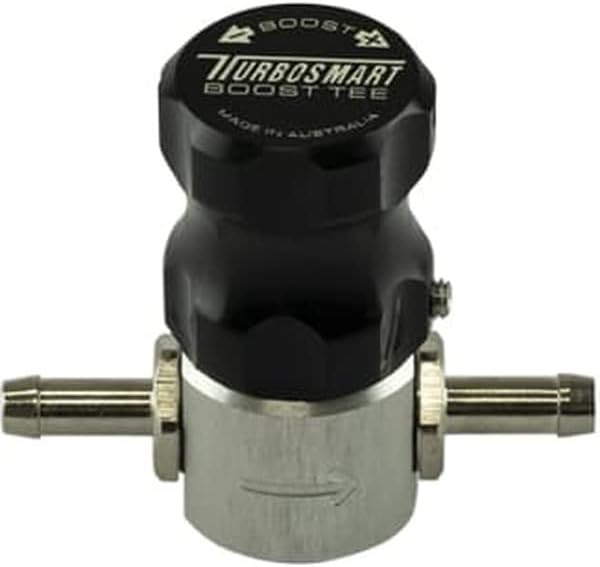
Turbosmart makes boost control hardware that's relevant here, particularly for applications where external boost control or actuator supplementation is part of the build. Their products are well regarded for quality and are worth looking at if your build is heading toward the upper end of what the stock actuator was designed to handle.
Oil and Coolant Lines - The Part People Skip and Later Regret
I'm going to be direct about this because it costs people real money when they ignore it: turbo oil feed and return lines are a maintenance item on any high-mileage BMW turbo, and if you're doing a turbo upgrade of any kind, you absolutely must replace these lines at the same time.
Here's why. The oil feed line supplies pressurized oil to the turbo's center bearing. The return line drains oil back to the sump. On OEM rubber lines, heat cycling over many thousands of miles causes the rubber to degrade, the interior to crack and flake, and the flow to restrict. Restricted oil flow to a turbo bearing means the bearing overheats and fails. A failed turbo bearing is a destroyed turbo. A destroyed turbo that lets metal into the oil system can mean a destroyed engine. I have seen this sequence happen, and it's an expensive lesson.
Upgraded braided stainless lines with AN fittings handle thermal cycling far better than OEM rubber, flow more consistently, and don't develop the internal degradation that kills turbos. Cost is typically $80 to $250 per set depending on application and whether you're buying individual lines or a kit. For the insurance value, this is one of the best-value purchases in the category.
On the N54 specifically, the OFHG (oil filter housing gasket) is also a common failure point that leaks oil onto the turbo and creates coking issues. If you're doing turbo oil lines on an N54, check the OFHG while you're in there. On the S55 and other engines where the turbo position puts it close to exhaust components, a coolant line inspection is equally important - the coolant circuit keeps the turbo from cooking its bearings after shutdown, and degraded coolant lines are a real failure path on high-mileage M cars.
Turbo Heat Shields and Blankets - Essential for Track Cars, Worthwhile for Everyone
Turbos operate at extreme temperatures - turbine inlet temperatures on a boosted BMW under hard acceleration routinely exceed 900 degrees Celsius. The turbo housing itself gets hot enough to ignite anything flammable that contacts it, and the radiated heat from a hot turbo can soften or melt wiring harnesses, vacuum lines, and ancillary components that are nearby in the engine bay.
For daily-driven street cars, the factory heat shielding is usually sufficient because you're not spending sustained periods at peak boost. For track cars, cars that see canyon runs, or any build where sustained hard driving is part of the picture, a quality turbo blanket is a meaningful investment. Products from Heatshield Products and DEI (Design Engineering Inc.) are the most commonly recommended in BMW forums. A turbo blanket wraps the turbine housing and keeps radiated heat contained, which protects surrounding components, helps exhaust gas temperature management, and can actually improve spool by keeping heat energy in the exhaust flow where it belongs.
On an F10 M5 or F15 X5M with the N63 V8, the hot-V turbo layout makes heat management a particularly serious concern - those turbos sit inside the engine valley and radiate heat in all directions. Heat shielding on N63 cars is less about performance and more about not cooking your injectors and HPFP.
Brand Landscape - Who Makes Good BMW Turbo Parts
The BMW turbo aftermarket has a clear tier structure and a small number of brands that have genuinely earned their reputations through years of real-world results.
Pure Turbos - The Default Answer for Hybrid Upgrades
Pure Turbos is probably the most recognized name in the BMW turbo upgrade space. Their business model is essentially built around BMW applications - they offer tiered Stage 1 and Stage 2 hybrid upgrades for the N54, N55, S55, B58, S58, and other applications, with documented power targets and strong forum support. Pure's customer service reputation is generally good, their fitment is reliable, and the tuning ecosystem around their products is mature. If you ask someone on a BMW forum what hybrid turbo to buy for an S55 or B58, Pure Turbos is going to come up in the first three responses almost every time.
Their pricing sits toward the mid range for hybrid turbos - not the cheapest option, but not the most expensive either. For most people doing a first turbo upgrade on an F80 M3 or similar, Pure is the honest recommendation.
Vargas Turbo Technologies - The Serious Enthusiast's Alternative
Vargas Turbo Technologies (VTT) has a strong following particularly in the N54 and S55 communities. Their reputation is built on high-quality compressor and turbine work, solid power numbers, and a technical approach to the upgrade that appeals to more obsessive builders. VTT tends to attract customers who've already done a lot of research and want to have a detailed conversation about what they're building - the brand has a more hands-on, custom-shop feel than Pure Turbos even though they sell catalogued products.
Pricing on VTT products is generally comparable to or slightly higher than Pure Turbos, depending on the application. Their forum reputation is consistently positive and there's a long track record of well-documented builds using their hardware.
DAW Performance - Worth Knowing
DAW Performance is another name that shows up consistently in BMW turbo discussions, particularly for N54 and S55 applications. They offer turbo upgrades and supporting hardware with a focus on street and track performance use cases. Less ubiquitous than Pure or VTT in casual forum discussion but well regarded among enthusiasts who've done their homework.
Burger Motorsports - Charge Pipe and Supporting Hardware
Burger Motorsports (BMS) is better known for their JB4 piggyback tuning system than for turbo hardware specifically, but their charge pipe upgrades and supporting hardware for B58 and N55 applications are genuinely excellent. Their aluminum charge pipe kits address the factory plastic failure point cleanly and are priced accessibly. If you're on a B58 and want charge pipe work done right, BMS is a reliable choice.
Turbosmart - Boost Control Hardware
Turbosmart makes boost controllers, blow-off valves, and actuator components that are compatible with BMW applications. Their product quality is high and they're well established in the turbo enthusiast market broadly, not just BMW specifically. For boost management hardware on more aggressive builds, they're a name worth knowing.
OEM-Aligned Options for G-Chassis
For newer G-chassis cars, the aftermarket is still developing and some buyers legitimately prefer OEM-plus solutions that minimize warranty risk. BMW M Performance sells factory-backed hardware for some applications, and there are a small number of performance retailers who focus on warranty-conscious upgrades - inlet pipes, charge pipes, and mild boost management hardware that won't require dealer explanations. This is a valid approach for G-chassis cars that are still under warranty or lease.
Pricing by Tier - What to Expect to Spend
The BMW turbo aftermarket has a clear pricing ladder and knowing where you're shopping before you start saves a lot of frustration.
| Tier | Typical Products | Approximate Price Range |
| Entry | Turbo inlet pipes, charge pipes, boost controllers, oil/coolant lines, heat shields, wastegate actuators, turbo support hardware | $100 - $700 |
| Mid | Hybrid turbo upgrades, upgraded compressor and turbine assemblies, inlet and cooling bundles | $1,200 - $3,500 |
| High | Big turbo kits, twin-turbo conversions, fully built upgraded assemblies, premium G-chassis turbo systems | $4,000 - $10,000+ |
These ranges reflect the current aftermarket reality as of 2026. G-chassis big-turbo work is trending toward the upper end of the high tier given the complexity and the relative newness of the platform. E-chassis supporting hardware is still available at the lower end of the entry tier given the maturity of the market and the abundance of competition among suppliers.
One thing I want to be clear about: the price of the turbo hardware itself is only part of the real cost of a turbo upgrade build. Factor in the tune (typically $400 to $1,500+ depending on the platform and tune strategy), supporting hardware (intercooler, charge pipes, oil lines, possibly a fuel system upgrade), and labor if you're not doing it yourself. A mid-tier hybrid turbo upgrade that costs $2,000 for the turbo might realistically be a $4,000 to $6,000 project by the time you're done doing it right. That's not a reason not to do it - it's just the honest picture so you can plan accordingly.
What to Spec Per Application - My Actual Recommendations by Chassis
E90/E92 335i and E82 135i with N54
This is the car that built the modern BMW aftermarket turbo culture. The N54 twin turbo setup is remarkably robust when maintained correctly, and the upgrade path is better documented than almost anything else in the aftermarket. My recommendation sequence:
- Start with supporting hardware - charge pipe upgrade, HPFP inspection or upgrade, oil feed/return lines if you're above 60,000 miles or haven't already done them.
- Add a quality tune via MHD or a Bootmod3 equivalent before touching the turbos. A good tune on stock N54 hardware gets you to 380-420 wheel horsepower on quality supporting mods, which is quick.
- If you want more after living with a tune, consider Pure Stage 2 or VTT hybrid turbos. These are well-documented to support 450-500 wheel horsepower on E30-E50 ethanol blends with appropriate fueling mods.
- Don't skip the wastegate actuator inspection or replacement if you're seeing boost fluctuation or CELs. Fix that first - it'll come back to haunt you otherwise.
F30/F31 340i and F32/F36 440i with B58
The B58 F-chassis cars are in an interesting position - they're technically newer than the S55 M cars in some ways but they don't get as much turbo upgrade attention because they're not M models. That said, the B58 is one of the most capable turbo engines BMW has ever put in a regular production car, and the upgrade path is solid.
- Turbo inlet pipe is the single most impactful first modification. Do it immediately. Combine with a quality tune and you're in the mid-to-high 300s on wheel horsepower with minimal risk.
- Charge pipe upgrade follows naturally. The B58 charge routing benefits from rigidly constructed pipes.
- Intercooler upgrade once you're pushing past stock boost targets aggressively - the factory unit is fine at modest tune stages but starts showing limits under sustained load.
- If you want to go further, Pure Turbos and VTT both have B58 hybrid options that support 500+ wheel horsepower builds with appropriate fueling and supporting mods.
F80 M3 and F82 M4 with S55
The S55 is probably the most-upgraded BMW engine of the G/F era from a turbo standpoint. The factory turbos are good for somewhere around 550-580 wheel horsepower on stock architecture with the right tune and fueling - that's already extremely fast. For most street builds, I'd argue that a quality tune on stock S55 turbos, combined with upgraded charge piping and a water-to-air intercooler upgrade, is the sensible ceiling before you're building a purpose-focused track car.
If you want to go further, Pure Turbos Stage 2 and VTT Stage 2 are the most commonly referenced hybrid upgrades for the S55. These support power levels in the 600-650 wheel horsepower range with appropriate supporting mods. For builds beyond that, you're looking at big-turbo territory and the cost and complexity that comes with it.
G80 M3 and G82 M4 with S58
The S58 is still being mapped by the aftermarket in terms of exactly how far the stock turbos will carry you. Current community consensus suggests the factory turbos support somewhere in the 650-700 wheel horsepower range on E85 or high-blend ethanol with a comprehensive tune and fuel system support. That's an enormous amount of power from a factory turbo, which tells you BMW spec'd the S58 with real headroom.
For G82 M4 owners specifically, the BMW M2 Turbo Design Edition is worth noting as an interesting data point - it's a factory special edition that celebrates BMW's turbo racing history and points to how seriously BMW itself takes the turbo identity of these cars. But for real aftermarket upgrade purposes on your S58 car, the honest answer in 2026 is that most owners are still exploring what's possible with comprehensive tuning before they need to touch the turbo hardware. Get the fueling right, get the tune dialed in, and evaluate from there.
G20 330i and G22 430i with B48
My own car territory. The B48 is a four-cylinder and it's smaller displacement than the B58 inline-six, but it's a genuinely good turbo four with solid engineering and real aftermarket support. On E30 ethanol blend with a quality flash tune, the B48 in my G20 makes somewhere in the 320-340 wheel horsepower range - which is substantially more than the 255 horsepower it's rated from the factory.
Turbo inlet pipe is still the number one supporting mod. B48 turbo inlet behavior is similar to the B58 - the factory rubber piece is restrictive. Beyond that, the B48 responds well to E-port injection upgrades (port injection kits for the B48 are available from a couple of vendors and help with fueling consistency) and intercooler upgrades. True turbo upgrades for the B48 are a thinner market than the B58 or S55, but they exist - expect to pay more and have fewer options than on the larger engines.
Common Owner Mistakes With BMW Turbo Upgrades
I've seen all of these happen in person or in friends' builds. Learn from other people's expensive decisions.
Buying the Turbo Without Budgeting for the Tune
A turbo upgrade without a proper tune is at best leaving power on the table and at worst running a dangerously lean air-fuel ratio on a map that was calibrated for the stock turbo's flow characteristics. A BMW DME doesn't automatically adjust perfectly for a different turbo - it needs to be told what the new compressor map looks like. I have talked to people who bolted on a hybrid turbo and drove on the OEM map "just for a few days until I get around to the tune" and one of them pulled a bent connecting rod for the effort. Don't do this. Budget the tune as part of the turbo purchase, not as an afterthought.
For concrete tuning options, the BMW ECU tuning section covers the main tune strategies per platform - from flash tunes to piggyback solutions to full custom maps - with pricing and platform compatibility details.
Skipping Oil Line Replacement
Already covered this above but worth repeating because it's the most financially costly mistake in this category. If you're pulling or replacing a turbo for any reason, the oil feed and return lines need to be replaced. The labor cost to do it separately later is higher than the cost of the lines themselves. Just do it.
Buying the Most Aggressive Turbo Available Without a Plan for Supporting Hardware
A Pure Stage 2 on an S55 with a stock fuel pump, stock charge piping, and a stock intercooler is not going to make Stage 2 power. The turbo is capable of more than the rest of the system can support. This is a common mistake from enthusiasts who've done their research on the turbo itself but haven't thought through the entire airflow and fueling path. Build the supporting hardware foundation first, then add the bigger turbo on top of a system that can use it.
Buying Used Turbo Cores Without Inspecting Them
The used BMW turbo market is full of turbos that were pulled because they were making noise, leaking oil, or showing bearing wear. A used core from a stranger without documented inspection history is a gamble. If you buy used, spend the money to have the core inspected and potentially rebuilt before it goes in your car - a rebuild on a core in good physical condition is much cheaper than discovering you installed a worn-out turbo six months later.
Ignoring Cooldown Procedures After Track Use
Turbos need to cool down before you shut the engine off after hard use. The coolant continues circulating for a few minutes after shutdown on modern BMWs with a proper electric coolant pump, but if you're killing the engine immediately after pulling off a circuit lap, you're cooking the oil in the turbo's center bearing section. Let the car idle for a few minutes after track sessions. This is one of those habits that extends turbo life substantially over time.
When to Upgrade vs When to Leave the Stock Turbo Alone
Not everyone needs a turbo upgrade, and knowing when to leave well enough alone saves money and keeps daily drivers reliable.
Leave it stock if: Your car is primarily a daily driver, you're not planning a serious tune, you're within the factory warranty window and want to keep it intact, or you haven't yet addressed the basic supporting hardware (tune, charge pipe, intercooler). The factory turbos on modern BMW engines are well-engineered and capable of handling significant power with just a tune and supporting mods. Most people who think they need a bigger turbo actually just need a better tune.
Consider a turbo upgrade if: You've maxed out what the stock turbo will give you with the best available tune, you're seeing the characteristic boost drop-off at high RPM that signals you've hit the compressor's efficiency limit, you're building a track car with specific power targets that the stock hardware can't reach, or you've already got all the supporting hardware dialed in and you're genuinely looking for the next power increment.
Definitely upgrade if: Your turbo is worn and due for replacement anyway - at that point, paying a modest premium to go with a hybrid upgrade instead of OEM replacement makes obvious financial sense since the labor cost is already being paid.
My Picks by Use Case
Best Daily Driver Turbo Build - B58 with Inlet Pipe, Charge Pipe, and Tune
For someone who wants meaningfully more power from their G20 330i or G22 430i without doing anything dramatic to the car, the combination of a quality turbo inlet pipe ($150 to $300), an aluminum charge pipe kit ($200 to $350), and a quality flash tune ($400 to $700) is the best daily driver build in this category. Total cost is around $800 to $1,400 all in, the reliability impact is minimal, and the power improvement is real and noticeable. This is what I've done to my own G20 and I have zero complaints.
Best Value Performance Build - N54 with Tune and Hybrid Turbos
If you want serious power on a real-world budget, an E92 335i or E82 135i with supporting mods, a quality tune, and Pure or VTT hybrid turbos is the best dollar-per-wheel-horsepower build in the BMW turbo space. You can get these cars for relatively modest money, the supporting parts are cheap and abundant, and 450-500 wheel horsepower is achievable with a known and well-documented build path. Total cost of a full build including the car can be extremely competitive with what a stock G80 M3 costs.
Best Track-Focused Build - S55 with Hybrid Turbo, Full Supporting Hardware
For track use specifically, the F80 M3 with a Pure or VTT Stage 2 hybrid turbo, upgraded intercooler, charge piping, oil lines, and a full custom tune is the platform I'd choose if I were building a circuit car today. The chassis is proven at track days, the parts availability is excellent, and 600 wheel horsepower on E50 is a genuinely serious track weapon. Big enough to be fast anywhere, focused enough to not be stupid for street use on the way home.
Best Bolt-On Upgrade for a G80/G82 Owner - Inlet and Tune
For G80 M3 or G82 M4 owners who want to extract more from the S58 without touching the turbo itself, a quality inlet pipe, upgraded charge piping, and a comprehensive tune from a reputable shop is the sensible first move. The S58 stock turbos are genuinely capable units, and the tuning headroom is substantial enough that most owners won't feel compelled to upgrade the actual turbo until they've been chasing increments for a while. Pair this with a look at supporting intercooler upgrades for the S58 to make sure you're not losing power to heat soak under hard acceleration.
Install Considerations - What the Process Actually Involves
Turbo work on a BMW ranges from a one-hour backyard job (B58 inlet pipe) to a full day or multi-day workshop project (S55 hybrid turbo swap). Here's the honest breakdown by task type.
Turbo Inlet and Charge Pipe - Doable at Home
Both of these are within reach of any enthusiast with basic mechanical competence and a set of metric sockets. The B58 inlet pipe swap requires removing the factory rubber piece, cleaning the mating surfaces, and pressing the new pipe into place. An hour of work, no special tools. Charge pipe work takes a bit longer depending on how involved the factory routing is, but generally stays in the one-to-three hour range. If you're comfortable enough to do your own oil changes, you can do these installs.
Hybrid Turbo Swap - Requires More Confidence
A hybrid turbo swap on an N54, N55, or S55 involves removing the turbo(s) from the engine, dealing with oil lines and coolant connections, possibly removing heat shields and supporting brackets, and reinstalling everything correctly. On the N54 with its twin-turbo setup, the process takes an experienced home mechanic most of a day. On the S55, turbo access is more involved due to packaging. This is doable at home but requires research, patience, and torque wrench discipline. If you're not confident, a reputable BMW shop for the install portion and then a tuner for the map is the sensible split.
Big Turbo Conversions - Shop Work
Full big-turbo conversions involving custom manifolds, revised oil and coolant routing, and intercooler upgrades are shop work in my view unless you have a lift, a MIG welder, and a lot of free time. The tuning component alone requires a car that can be strapped to a dyno and mapped properly, which means a relationship with a BMW-competent tuner. Plan for multiple shop visits and budget accordingly.
Before any serious work, it's worth using the BMW chassis lookup tool to confirm exactly which engine and turbo variant is in your specific car - there are enough production variants within some chassis codes that getting the right part fitment matters.
The Role of Ethanol in Modern BMW Turbo Builds
You can't talk seriously about BMW turbo upgrades in 2026 without talking about ethanol. E30 (30% ethanol blend), E50, and E85 pump fuel have become central to how the aftermarket extracts high power from BMW turbo engines, and the reason is simple: ethanol has a much higher octane rating than pump premium and a significantly lower combustion temperature, which means BMW's knock-limited turbo engines can run more boost and more aggressive ignition timing without detonating.
On the N54, E30 blend adds meaningfully to power potential even on stock turbos. On the B58, E30 through E50 is where the platform's potential really starts to show - my G20 makes significantly more power on E30 than on 91 octane, and the throttle response feels sharper because the tune can be more aggressive without approaching knock. On the S55 and S58, E50 and E85 are the fuels of choice for anyone chasing the upper end of what a hybrid turbo build can deliver.
The tradeoff is infrastructure - you need a reliable ethanol supply, a flex fuel sensor and tune that accommodates varying blend ratios, and awareness that full E85 cars may have cold-start challenges in very cold climates. But for anyone serious about BMW turbo performance, understanding and using ethanol is essentially mandatory at the upper levels of the hobby.
The S58 Turbo Design Edition - BMW's Own Statement About Its Turbo Heritage
In late 2025 and into 2026, BMW released the M2 Turbo Design Edition - a limited-production special edition M2 celebrating the visual heritage of BMW's turbo motorsport history. The car features hand-painted livery referencing the classic BMW 3.0 CSL Turbo racing car, a distinctive aesthetic tribute to the fact that BMW's turbo racing cars essentially wrote the blueprint for modern turbocharged performance.
I mention this not because a factory limited-edition is directly relevant to aftermarket tuning, but because it's an interesting signal of how BMW itself frames the turbo identity of its M cars. When BMW puts "Turbo" in the name of a special edition and hand-paints a livery honoring 50 years of turbocharged performance, it's reinforcing the same message that the aftermarket has known for two decades: the turbo is the heart of BMW performance, and the potential it represents is worth celebrating. Coverage of the M2 Turbo Design Edition from BMW enthusiast publications describes it as a genuine tribute, and I tend to agree - it's a nice acknowledgment that BMW's turbo history is real and deep.
For buyers specifically considering an M2 as a platform for turbo upgrades, the S58 in the current G87 M2 is a fundamentally excellent starting point, and the community discussion about turbo upgrade paths for that car is active and growing.
Pairing Turbo Work With the Rest of the Car
A bigger turbo and more power only translates into better driving if the rest of the car can handle it. This is where I always encourage people to think about the full picture rather than just the headline horsepower number.
Suspension needs to be appropriate for the power level. A car making 500 wheel horsepower on stock suspension geometry is uncomfortable, hard to drive quickly, and potentially unsafe at the limit. If you're building power seriously, suspension work should either come first or happen concurrently. Check the BMW coilover guide for platform-specific recommendations - the right coilover setup makes a big-power BMW into a complete performance car rather than just a fast straight-line machine.
Brakes matter too. More power means more speed in shorter timeframes, and factory BMW brakes on high-mileage cars are often working on marginal pads and warped rotors. If you're pushing boost levels significantly beyond stock, make sure the braking system is in shape - at minimum fresh pads from quality suppliers. The BMW brake pad guide covers pad compounds per use case from street performance to track applications.
Wheels and tires are the final piece. More power needs more grip. If you're on narrow factory rubber, you're going to be wheel-spinning instead of accelerating out of corners, which is frustrating and hard on the drivetrain. Wider rear tires and sticky performance compounds make the power usable. Looking at BMW aftermarket wheel options alongside your turbo build planning gives you the full picture of what the end state of the car will look like.
Frequently Asked Questions About BMW Turbo Upgrades
Do I need a tune immediately when I install a turbo inlet pipe?
For a turbo inlet pipe on its own - no, a tune is not strictly necessary. The inlet pipe is not changing boost targets or fuel delivery; it's removing a restriction that was limiting flow. Most inlet pipe installs are tune-compatible from day one and don't require DME changes to work correctly. That said, you'll get more out of the inlet pipe if you also have a tune that takes advantage of the improved airflow. The two work best together.
How long do aftermarket hybrid turbos last compared to OEM?
This is a reasonable question and the honest answer is: it depends heavily on whether you maintain them correctly. A properly installed hybrid turbo with fresh oil lines, good oil change intervals (5,000 miles or less on a modified car), and proper cooldown habits after hard driving should last 80,000 to 100,000+ miles. The majority of hybrid turbo failures I've seen or heard about trace back to oil starvation, coking from inadequate cooldown, or an existing engine issue that sent debris through the system. The hardware itself is generally robust when treated properly.
Can I run a bigger turbo on pump 91 or 93 octane?
You can, but you're leaving substantial performance on the table. A bigger turbo on pump gas will be running conservative boost targets and timing to stay out of knock, which means the power ceiling is well below what the hardware is capable of. If you're investing in a meaningful turbo upgrade, strongly consider an ethanol-compatible tune and at least some ethanol content in the tank to get real value from the upgrade. The horsepower-per-dollar calculation improves dramatically with E30 or better.
What's the difference between a Pure Stage 1 and Stage 2 upgrade?
Generally speaking, Stage 1 involves upgraded compressor internals with a modest increase in compressor wheel size that gives better peak flow while maintaining similar spool characteristics to stock. Stage 2 uses larger internals with higher flow ceilings, which supports more peak power but typically requires slightly more RPM to come on boost fully. Stage 2 also typically requires more comprehensive supporting hardware - better intercooling, better fueling, a more thorough tune. The correct choice depends on what power target you're chasing and how you drive the car.
Is a DIY turbo install on an F80 M3 realistic?
For someone with solid mechanical experience, a lift or quality jack stands, a proper torque wrench, and the patience to follow a detailed procedure - yes, it's realistic. The S55 turbo swap is not a simple job but it's been done by plenty of home mechanics with good results. The key is preparation: have the service documentation or a detailed forum procedure in front of you before you start, have all replacement hardware (oil lines, gaskets, coolant connections) ready before the old parts come out, and don't rush the reinstall. Torque specs matter on turbo hardware. If you're not confident in your mechanical ability, the install cost at a competent BMW shop is money well spent to protect the hardware investment.
Does a turbo upgrade affect my BMW's reliability for daily driving?
Done properly with all supporting hardware addressed - no, a well-executed hybrid turbo upgrade on a BMW with appropriate supporting mods doesn't meaningfully reduce daily driving reliability. The caveat is "done properly." Turbos that were installed without fresh oil lines, on cars with marginal cooling systems, mapped on inadequate tunes, or pushed to the limit of their compressor maps regularly - those setups are less reliable than stock. The hybrid turbo itself is not inherently unreliable. The failure modes come from adjacent issues.
What's the best turbo upgrade path for a budget under $2,000 total?
On a $2,000 total budget including everything, I'd be realistic about what that buys. On an N54 car, $2,000 spent on supporting mods - charge pipe, intercooler, oil lines, wastegate actuators, and a quality flash tune - will get you more real-world performance improvement than spending the whole budget on a hybrid turbo and skimping on supporting parts. On a B58 car, $2,000 covers a turbo inlet pipe, charge pipe kit, intercooler upgrade, and a good flash tune, which is a genuinely strong package. If you're set on a hybrid turbo upgrade specifically, you'll want to stretch the budget or do it in phases - buy the turbo, drive on it for a bit, then add the intercooler and refined tune separately.
How do I know if my N54 turbos are worn and need replacement?
The classic signs of worn N54 turbos are: boost creep or boost inconsistency (boost not hitting target or not holding), oil in the charge piping (check your intercooler outlet pipe for oily residue), turbo noise under spool (a high-pitched whine or grinding that wasn't there before), and blue smoke from the exhaust at startup or under boost. Any of these symptoms on a high-mileage N54 points toward a turbo inspection. Pull the charge piping and look for oil wetness in the intercooler side - that's one of the most reliable field diagnostics.
Should I buy a used turbo upgrade to save money?
I'm cautious about this. The issue with used hybrid turbos is that you often don't know why they came off the car. If someone is selling a used Pure Stage 2 that's "only been on for 10,000 miles," it's worth asking what happened in those 10,000 miles - was the car tuned properly? Were the oil lines replaced? Did it go to the track? The price savings on a used hybrid turbo can disappear quickly if the core needs rebuilding. If you're going to buy used, buy from someone you can talk to in detail about the history, or budget for a core inspection by a reputable rebuilder before installation.
What supporting mods are absolutely non-negotiable with a hybrid turbo upgrade?
In my view: fresh oil feed and return lines, a quality tune from a tuner who has experience with your specific platform and the specific turbo you installed, and an intercooler upgrade appropriate for your power target. Those three are genuinely non-negotiable. Charge pipe upgrades and cooling system maintenance (thermostat, water pump if they're due) are in the strongly-recommended category. Fuel system upgrades (upgraded LPFP and/or HPFP) are non-negotiable once you're in the upper reaches of what a hybrid turbo can produce on stock fueling.
Are G-chassis BMW turbo upgrades worth it right now?
Worth it depends entirely on what you're starting from and what you're trying to achieve. For a G80 M3 or G82 M4 owner who's already running a comprehensive tune and wants more, the S58 hybrid turbo options that currently exist are legitimate products with real power gains. For a G20 330i owner who hasn't tuned the car yet, a turbo upgrade is not the right next step - the tune and supporting hardware will give more real-world performance per dollar. G-chassis turbo upgrades are worth it when you've exhausted the easier and cheaper gains first, not before.
How does the BMW turbo aftermarket in 2026 compare to five years ago?
The E and F chassis market has matured - prices on supporting hardware are lower, more vendors offer complete kits, and the tuning knowledge base is deeper. The G-chassis market is where the 2021 BMW aftermarket was for F-chassis cars: more expensive, less documentation, fewer options, and more variability in quality. The trajectory is positive - in another three to five years the G-chassis aftermarket will likely look much more like the current F-chassis market in terms of product availability and documentation. Right now, G-chassis buyers are paying a premium to be early.
Summary - How to Build a BMW Turbo Upgrade That Actually Makes Sense
The BMW turbo aftermarket in 2026 is deep, well-supported on E and F chassis cars, and actively developing for G chassis platforms. The framework for making smart decisions in this space is consistent regardless of which BMW you're working with.
Start with supporting hardware before you chase the headline hardware. An inlet pipe, charge pipe, intercooler, and quality tune will transform how your BMW feels before you've spent anything on the turbo itself - and they're what makes a turbo upgrade actually work when you get there. Don't skip the oil lines. Don't run a new turbo on an old map. Build the system around the turbo, not the other way around.
Know your chassis era and what it means for your options and budget. E-chassis cars offer the best value and the most mature upgrade paths. F-chassis cars are the sweet spot for performance-per-dollar right now. G-chassis cars are capable but more expensive and more constrained - plan your build around what the platform can realistically support in the current aftermarket state.
Use the brands that have track records. Pure Turbos, VTT, and DAW have earned their reputations with documented results over many years of BMW-specific development. Burger Motorsports for charge pipes and supporting hardware. Turbosmart for boost control. These aren't the only good options, but they're the ones with the most accumulated community evidence behind them.
And finally - make the whole car work together. Suspension that matches the power level, brakes that can handle the speed, tires that can use the grip. A BMW that's been built as a complete package - not just a fast engine in a stock chassis - is a far better car than a turbo-upgraded BMW that outpaces everything else attached to it. That's what this site is about, and it's how I think about every dollar I spend on my own G20.
For deeper reading on the supporting build components, the BimmerTalk articles section has guides on everything from coilovers to ECU tuning strategies organized by chassis and platform. And if you're early in your BMW build research and want a structured starting point, the Chips and Software category is where most builds should actually begin - because the tune is the foundation that everything else is built on.

Kamil Siegień
Founder of BimmerTalk. Five years wrenching on BMWs, currently dailying a G20 330i with the B48 turbo four. Spent a year doing marketing for BMW and MINI before going independent. I write everything on this site myself.
More about the site