
Intercoolers for BMW M3 F80
Affiliate disclosure. BimmerTalk is a proud partner of the Amazon Associates Program and Turner Motorsport. We may earn a small commission on qualifying purchases through our links, at no extra cost to you. Read the full disclosure.


VRSF Performance Intercooler Power Pack for BMW F8X M3, M4 & M2
Mishimoto

Mishimoto Air-to-Water Intercooler — F8X M3, M4 & M2
Mishimoto
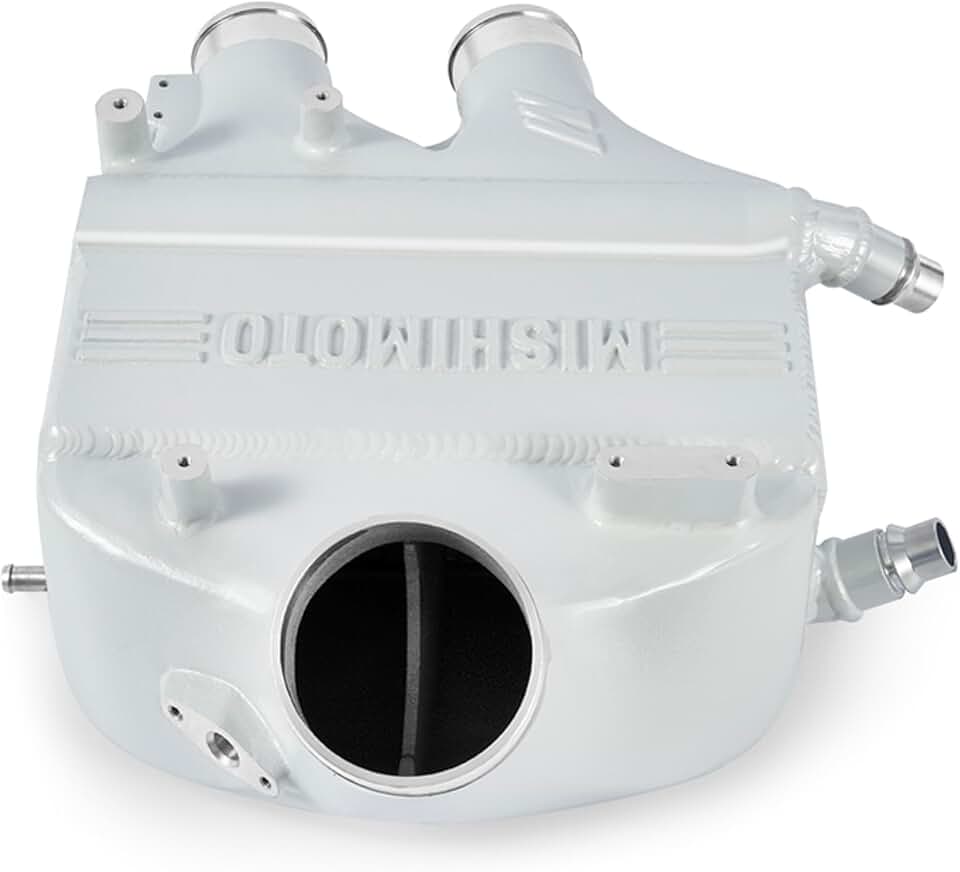
Mishimoto Performance Air-to-Water Intercooler for BMW F80 M3, F82 M4, F87 M2
Mishimoto

CSF S55 Top Mount Charge Air Cooler for BMW M3 M4 M2 Competition F80 F82 F87 Crinkle Black
CSF

Wagner Tuning Performance Intercooler Kit BMW M2 Competition M3 M4 F80 F82 F87
WT WAGNERTUNING
Wagner Tuning Performance Intercooler Kit — F80/F82/F87 M2/M3/M4 S55
WT WAGNERTUNING

LIUWEIRACING Dual Pass Charge Air Intercooler for BMW M3 M4 M2 S55
LIUWEIRACING
More engine parts for the BMW F80
The BMW F80 M3 responds exceptionally well to targeted engine upgrades, and knowing where to spend your money makes all the difference. The S55 inline-six is a robust platform, but the factory turbochargers are a known restriction point at higher power levels. Many builders start with an Eventuri or Burger Motorsports intake system to improve airflow and throttle response before touching boost. For turbo upgrades, Pure Turbos Stage 1 or Stage 2 ball-bearing units are the gold standard on this chassis, delivering reliable gains without requiring a full engine rebuild. Pairing those turbos with Precision or Turbosmart boost control hardware ensures stable boost curves under hard driving. An MHD or BM3 flash tune is essential to tie everything together, with many tuners recommending upgraded NGK spark plugs and a Mishimoto charge pipe kit to prevent boost leaks that plague the stock plastic piping. Port injection supplementation kits from Precision Raceworks also help combat the S55's carbon buildup issues at higher power levels.
Before chasing big power numbers, always inspect your charge pipes, intercooler connections, and valve cover for oil leaks first. A solid foundation prevents expensive failures down the road and makes tuning far more predictable.
BMW Intercoolers - Drop-In Performance or Full Front-Mount Upgrades
If your turbocharged BMW is leaving power on the table, the factory intercooler is almost certainly part of the problem. BMW's stock intercoolers are engineered around emissions compliance, packaging constraints, and cost - not sustained high-load performance. Once you start pushing more boost or running the car on a hot track day, intake air temps climb fast and the ECU pulls timing to protect the engine. An upgraded intercooler is one of the most impactful bolt-on modifications you can make to any forced-induction BMW, and it's foundational to any serious tune.
The most popular applications right now are the F-chassis N55 and S55 platforms - specifically the F30 335i, F32 435i, F80 M3, and F82 M4. The S55 in the M3/M4 runs a twin-scroll turbo setup with a top-mounted intercooler (TMIC) that's notoriously heat-soaked during track use. Burger Motorsports (BMS), Mishimoto, and Active Autowerke all offer direct-fit TMIC replacements that use larger core volumes and better end-tank designs without requiring any cutting or custom piping. For the N55, the factory top-mount is similarly restrictive, and brands like Wagner Tuning and Vargas Turbo Technologies offer OEM-location upgrades that bolt straight in.
On the older E-chassis cars - E90/E92 335i with the N54 - front-mount intercooler (FMIC) kits are the go-to upgrade for anyone running Stage 2 or beyond. The N54's twin-turbo layout makes it easier to route charge piping to a front-mount core. Precision Raceworks, Mishimoto, and CSF Racing all produce well-regarded FMIC kits for these cars. CSF in particular has earned a strong reputation for their bar-and-plate core construction and attention to fitment across both E and F-chassis applications. If you're also upgrading your turbo setup, pair your intercooler research with our turbo kits category - core sizing needs to match your expected airflow numbers.
What to Look For - and What to Avoid
Core construction matters more than brand logos. Bar-and-plate cores offer higher heat-soak resistance and better durability for track use. Tube-and-fin cores are lighter and flow more freely at lower power levels but recover from heat-soak more slowly. For a street-driven daily, tube-and-fin from a reputable brand is fine. For track days or aggressive tunes, go bar-and-plate.
Watch end-tank design carefully. Poorly designed end tanks create uneven airflow distribution across the core, which kills efficiency regardless of core size. This is where cheap eBay intercoolers fail - the core might look impressive on spec sheets, but turbulent charge routing wastes half that volume. Stick with brands that publish flow data or have documented dyno results on your specific platform.
Avoid oversizing for your power level. A massive FMIC on a mildly tuned N55 will actually increase charge piping volume, adding turbo lag without a meaningful temperature benefit at those boost levels. Match the core to your target power - most reputable manufacturers list horsepower ranges on their product pages for exactly this reason.
Install difficulty varies significantly by configuration. An OEM-location TMIC swap on the F80 M3 or F30 335i is a straightforward 2-3 hour job for someone comfortable with basic hand tools - remove the engine cover, disconnect charge pipes, unbolt the core, reverse the process. An FMIC kit on an E90 N54 is a full day job requiring bumper removal, cutting or relocating the crash beam on some kits, and custom charge piping routing. Budget accordingly and read the kit-specific instructions before you commit. If you're also replacing boost pipes and couplers during the install, check our charge pipes and boost tubing section to bundle the work into a single teardown.
A quality intercooler upgrade on any turbocharged BMW delivers consistent, repeatable power - not just peak numbers on a cool morning. Combined with a proper ECU tune, it's one of the highest-return investments in the engine bay.