
Cold Air Intakes for BMW M4 F82
Affiliate disclosure. BimmerTalk is a proud partner of the Amazon Associates Program and Turner Motorsport. We may earn a small commission on qualifying purchases through our links, at no extra cost to you. Read the full disclosure.
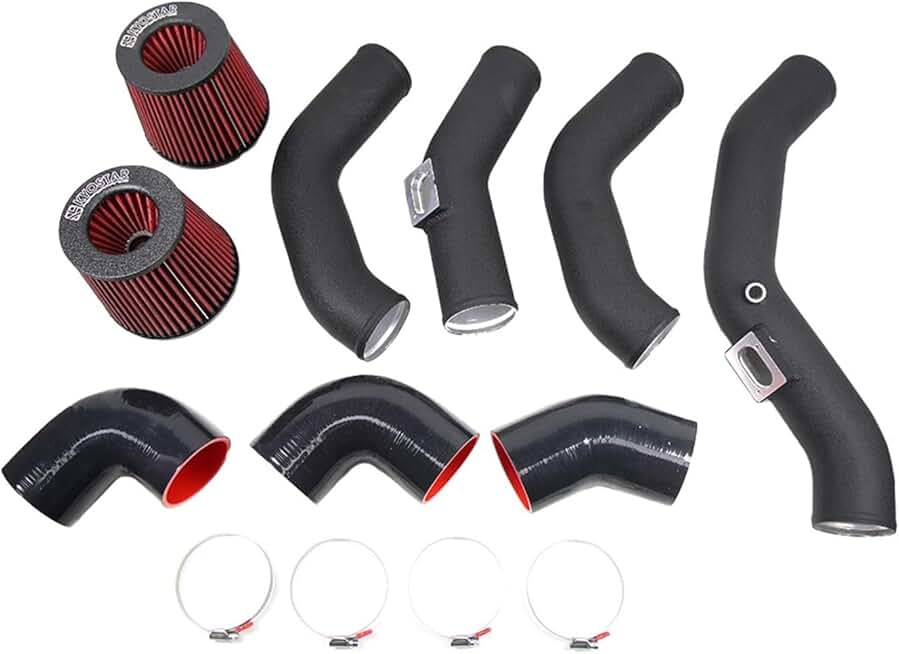
Front Mount Intake - Cold Air Intake for BMW F82 S55
VSUBTOGPE

aFe Power Momentum Cold Air Intake System w/ Pro 5R Filter
aFe Power
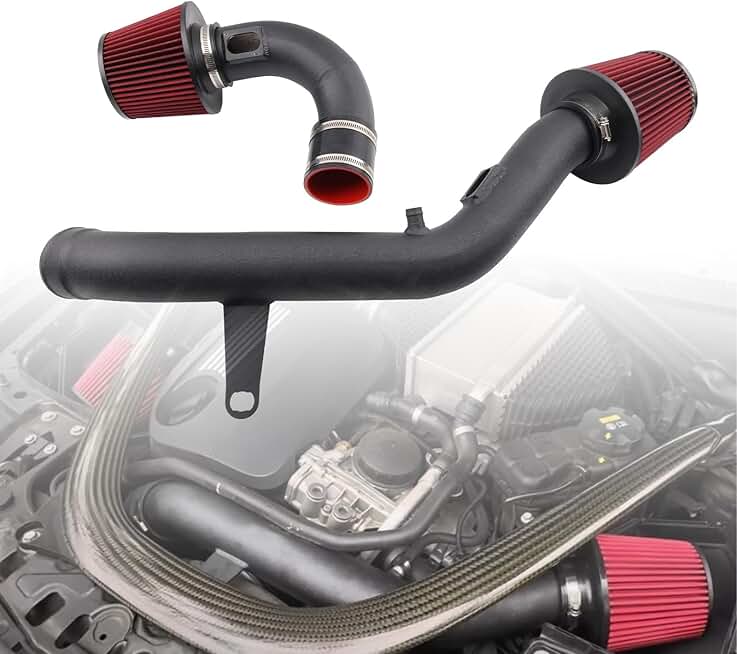
Cold Air Intake System - Intake for BMW F82 M4 S55
anwenchapey

BMS BMW Genuine Left Air Intake Grill M Trim Front Bumper OEM Part
BMW

FTP Motorsport Air Pipe and Turbo Inlet for BMW S55
FTP Motorsport
More engine parts for the BMW F82
The BMW F82 M4 is one of the most tuner-friendly cars BMW has built in the last decade, and the BMW F82 engine - the S55 twin-turbocharged inline-six - is the reason for that. If you own one, you already know the car is fast from the factory. 425 horsepower and 406 lb-ft of torque in stock form is nothing to dismiss. But the S55 has a well-documented ceiling on pump gas with factory hardware, and the community has spent years mapping exactly where those ceilings are and what moves them. This page is the result of that collective knowledge, organized into something you can actually act on.
I am going to walk through every major engine upgrade category for the F82 M4, in the order I actually think about them. That means foundations first, software second, airflow third, and fueling last. I will give you my real opinions on brands, flag the common traps, and structure everything by budget tier so you can plan a build that makes sense for how you actually use the car - not just what looks good on a spec sheet.
What the S55 Actually Is and Why It Matters for Tuning
Before you spend a dollar on the F82, you need to understand the engine you are dealing with. The S55B30T0 is a 3.0-liter twin-turbocharged inline-six based on the N55 architecture but heavily revised. BMW fitted it with twin mono-scroll turbos rather than the N55's single twin-scroll, added a separate air-to-water charge cooler for each bank, and gave it forged internals from the factory - forged crankshaft, forged connecting rods, and forged pistons. That last point is significant because it means the bottom end is not the weak link in a bolt-on build. You can push this engine well past 600 wheel horsepower on the factory short block before the bottom end becomes a real concern, provided you address everything else properly.
The compression ratio sits at 10.2:1, which is relatively high for a boosted engine. That is one reason the S55 responds so well to ethanol - you get meaningful timing advance without the detonation risk you would have at higher compression on E85. It is also why charge air temperature management matters so much on this platform. High compression plus heat-soaked charge air is a recipe for knock events, and the ECU will pull timing to protect itself. You feel that as inconsistent power delivery, especially on back-to-back pulls.
The factory turbos are twin IHI RHF55 units. They are capable turbos, not small, but they are also not the limiting factor in a Stage 1 or Stage 2 build. The actual bottlenecks in stock form are the exhaust headers and downpipes, the factory charge pipes (more on those shortly), and most importantly, the conservative fuel and ignition maps BMW ships the car with. The ECU has headroom that the stock calibration never touches.
One thing I want to be honest about up front - the S55 has two well-known reliability concerns that are not upgrade-related but are absolutely engine-related. The first is the factory charge pipes, which are plastic and prone to cracking under sustained boost. The second is the connecting rod bearings, which have a documented tendency to wear prematurely. Both of these need to be addressed before or alongside any power upgrade. I will cover them in detail in the weak points section below.
The S55 Weak Points to Address Before Any Power Upgrade
I am putting this section second, not because it is the most exciting content, but because skipping it is the single most expensive mistake F82 owners make. Every time I see someone on a forum asking why their S55 let go at 70,000 miles on a Stage 2 build, the answer is almost always the same - they added power without fixing the foundations.
Factory Charge Pipes
The stock charge pipes on the S55 are made from reinforced plastic. From the factory, on a stock car making stock boost, they are adequate. The moment you start running elevated boost - even mildly with a JB4 - the stress cycles on those pipes increase dramatically. They crack at the joints, they split, and when they do, you lose all boost instantly. The failure mode is not subtle. The car will feel like it dropped to naturally aspirated power in the middle of a pull, usually accompanied by a loud pop or hiss.
Burger Motorsports and FTP Motorsport both make aluminum charge pipe replacements that are widely regarded as the correct fix. The FTP kit in particular covers the full charge pipe system and uses proper silicone couplers with T-bolt clamps. I have seen the BMS version on multiple cars without issues. Either brand works. This is a sub-$300 job on most builds and it pays for itself the first time it prevents a mid-pull failure. If you are doing any tune at all, the charge pipes are not optional equipment.
Rod Bearings
The S55 connecting rod bearing issue is not a myth and it is not BMW-specific scaremongering. The factory bearings can wear to a point where they generate debris that circulates through the oiling system. The tell is usually a knock at startup that disappears as oil pressure builds, but by the time you hear that, the damage is already significant. The recommendation from the community - consistent across almost every serious F82 forum thread - is to inspect and replace the rod bearings proactively somewhere between 50,000 and 70,000 miles, depending on how hard the car has been driven and whether it has seen track time.
The replacement bearings of choice are ACL Race Series or King Racing bearings. The job requires pulling the engine or at minimum dropping the oil pan and working with the car on the lift at an angle - it is not a driveway job for most people. Labor runs roughly $800 to $1,500 depending on who does the work. Given that an S55 short block replacement is a $10,000+ job at a shop, the math on proactive bearing replacement is obvious.
If you are buying a used F82, ask specifically whether the rod bearings have been done. If the previous owner cannot confirm it, budget for the inspection as part of your purchase plan.
Cooling System Service
BMW's cooling systems are not known for longevity. Plastic thermostat housings, rubber expansion tanks, and aging coolant are all common failure points on higher-mileage S55 cars. Before you add a tune and start running the engine harder, make sure the thermostat is opening properly, the water pump is not cavitating, and the expansion tank is not showing any stress cracks. These are cheap parts in isolation but they become expensive when they fail on a hot track day with a tuned engine.
How the Factory ECU Limits the S55
The S55 leaves the factory running conservative fuel, ignition, and boost maps. BMW calibrates for longevity, emissions compliance, and wide geographic temperature tolerance. The result is an engine that is leaving real performance on the table from day one. Understanding what the ECU is doing - and what it stops doing when you tune it - helps you make better decisions about the upgrade sequence.
On the fuel side, the factory tune runs a moderate air-fuel ratio and pulls back aggressively on timing when intake air temperatures rise above a certain threshold. This is why back-to-back pulls feel noticeably weaker than the first pull of the day - the ECU is protecting the engine from heat-induced knock. An aftermarket tune recalibrates those thresholds and compensates with richer fueling when appropriate, which lets you run closer to maximum timing advance without the knock risk.
On the boost side, the factory wastegate duty cycle leaves meaningful boost on the table at certain RPM points, particularly in the mid-range. A properly calibrated tune opens the wastegate more aggressively and manages spool characteristics in ways that feel dramatically different in the car - stronger mid-range pull, faster response, and a more linear torque curve.
Forum dyno data for Stage 1 tunes on the S55 - software only, no hardware changes - consistently shows gains in the range of 40 to 60 wheel horsepower and 60 to 80 lb-ft of torque on a healthy engine on pump gas. Those numbers vary by dyno, by ambient conditions, and by the specific tune and tuner, but they give you a sense of how much the factory calibration is leaving behind.
ECU Tuning - The Most Important Single Upgrade
If you only do one thing to the BMW F82 engine, do a proper ECU tune. Nothing else - not intakes, not downpipes, not charge pipes - comes close to the per-dollar performance return of a good ECU flash on the S55. The consensus in the BMW performance community is clear that software is the foundation of any meaningful build on this platform.
There are two primary options in 2026 for the F82 platform - Bootmod3 and MHD. Both work through the OBD port and flash the DME directly. Both have large user bases on the S55 platform and active development communities. Here is how I think about the choice between them.
Bootmod3
Bootmod3 (BM3) is a license-based flash tool with a reputation for refined, well-developed maps and strong customer support. The software interface is polished, the logging capability is excellent, and the map library covers the S55 in substantial depth across multiple fuel types and hardware configurations. BM3 licenses are transferable to another car when you sell, which adds real resale value to the purchase. The community around BM3 on the S55 is large enough that you will find dyno sheets, data logs, and user experiences for virtually any hardware combination you are considering.
The BM3 ecosystem also makes it relatively straightforward to work with a remote tuner if you want a custom map rather than an off-the-shelf calibration. Tuners like MMP (Map My Mods) and others have built their reputations largely on BM3 custom maps for the S55 platform. If you are building toward a specific power goal rather than just adding a base map, BM3's custom tune infrastructure is worth the consideration.
MHD
MHD is the other major player and it has earned its position through competitive pricing and a strong off-the-shelf map library. MHD is app-based and operates through a compatible Bluetooth or WiFi OBD adapter. The maps are well-regarded, the logging tools are capable, and MHD's price point is generally lower than BM3's. For a driver who wants a solid base map, consistent power, and does not need the depth of the BM3 custom tune ecosystem, MHD is a completely legitimate choice.
MHD also supports ethanol content sensing and flex fuel maps, which matters if you are planning to run an E blend. More on that in the fueling section below.
If I had to pick one for a driver who is going to tune and largely leave the software alone - just run a base map, maybe E30 or E40 - I would probably go MHD for the lower cost. If I was building toward a custom tune with a tuner relationship and a specific dyno target, I would go BM3. Both are legitimate and both have put serious power down on the S55 platform.
JB4 Piggyback
The Burger Motorsports JB4 piggyback tune is worth mentioning because it has a large install base and it is technically reversible in a way that a full ECU flash is not. The JB4 intercepts sensor signals and manipulates boost targets without directly flashing the DME. It is a real performance add - not a placebo - and on a stock car with good supporting mods it can push meaningful power.
My honest take on the JB4 for the F82 is this - it is a fine option if you genuinely need reversibility, for instance if you are still under warranty or if you need to return the car to stock for dealer service regularly. If neither of those applies, a full ECU flash from BM3 or MHD is a more complete solution that gives you better control over all the parameters that matter. The JB4 is not a bad product; it is just not the ceiling of what you can do on this platform and it has limitations around fueling and knock control that a proper DME flash does not.
For everything related to tuning tools, data logging, and coding the F82, our ECU tuning guide goes deeper on the software side of the S55 build.
Downpipes - The Most Impactful Bolt-On Hardware Change
After the tune, downpipes are where I would spend money on the F82. The factory S55 downpipes run large catalytic converters that, while necessary for emissions, create meaningful exhaust backpressure and restrict flow at the turbo outlets. Replacing them is one of the most well-documented power mods on the platform and the gains are real and consistent across multiple dyno sessions in the community.
The S55 runs two downpipes, one per turbo, which merge into a single mid-pipe and then the axle-back section. Aftermarket downpipes are available in two configurations - catless and high-flow catted. Understanding the difference matters before you buy.
Catless vs High-Flow Catted
Catless downpipes remove the catalytic converter entirely. Maximum flow, maximum power, and they will throw an OBD fault code for catalytic efficiency. You will need to have your tune updated to delete or suppress those codes. The car will also fail emissions testing in states that do visual inspections or check for cat presence. On track days at facilities that do exhaust checks, catless pipes can get you turned away.
High-flow catted downpipes retain a smaller, less restrictive catalytic converter. They reduce or eliminate the CEL issue, they are emissions-friendlier, and at modern high-cell-count catalyst specs, the power difference between catless and high-flow catted is not as large as it was five years ago. Good high-flow cats from reputable brands flow well enough that on a Stage 2 street build, the power difference is marginal compared to the compliance benefits.
For a daily driver, I would lean toward high-flow catted downpipes every time. For a dedicated track car or a build where maximum power is the only goal, catless is the right call. Be honest with yourself about how you use the car.
Brand Picks for F82 Downpipes
VRSF is the most commonly recommended brand for value-oriented F82 downpipes. VRSF makes both catless and high-flow catted versions, the fitment is well-documented, and the price is competitive relative to the competition. You will find VRSF downpipes on a significant percentage of tuned F82s in the community and the forum reception is consistently positive for the combination of price and quality. For a driver building toward Stage 2 on a real-world budget, VRSF is the starting point for the conversation.
Active Autowerke positions themselves at the premium end of the downpipe market for the F82. Better welds, thicker flanges, better fitment tolerance, and higher-quality cat substrate if you go catted. The price premium over VRSF is real. Whether that premium is worth it depends on your build goals and how long you plan to keep the car. On a build that is going to see track time regularly, the Active Autowerke quality advantage is more defensible. On a street build, the VRSF pipes will do the job.
Dinan makes downpipes for the F82 and they come with the Dinan warranty-friendly positioning - designed to work within a modified car's context without immediately flagging issues. They are priced at the top of the market and the performance versus the other options at that price point is debatable. If you have a dealer relationship and want parts that come with some level of documentation for service discussions, Dinan makes sense. For a pure performance-per-dollar analysis, they are harder to justify.
On the install side, the S55 downpipe job is straightforward but requires getting the car up on a lift. The downpipes connect directly to the turbo outlets and the flange connections are in a reasonable position to work with. Plan for a mid-pipe and gasket refresh at the same time - the stock mid-pipe gaskets are single-use and you do not want to be chasing exhaust leaks after a fresh downpipe install.
Intake and Inlet Systems - Airflow Before the Turbos
The S55 intake system moves air from the atmosphere into two separate inlet tracts feeding each turbo. The stock setup is functional but it uses a factory airbox design that limits peak airflow at high RPM and high boost. Aftermarket intake systems address this by increasing the inlet diameter, using less restrictive filter media, and in many cases improving the thermal isolation between the intake tract and the hot engine bay.
I will say this upfront - intake gains on a turbocharged car are smaller than on a naturally aspirated car, and anyone claiming you will feel a dramatic seat-of-the-pants difference from an intake alone on the S55 is overselling it. The gains are real, they show up on a dyno at high RPM, and they become more significant as boost levels increase. On a Stage 2 or higher build, a free-flowing intake becomes meaningfully more important than it is on a Stage 1 car.
Eventuri Carbon Intake
Eventuri makes one of the most well-regarded intake systems for the S55 platform. The Eventuri design uses a carbon fiber airbox with a purpose-designed inlet geometry that is genuinely engineered rather than just a bigger box with a cone filter. The carbon construction provides thermal isolation from the engine bay - keeping intake air temperatures lower than an open intake would in the same conditions - and the filter itself flows well throughout the RPM range.
The Eventuri is not cheap. It is a premium product at a premium price, and on a Stage 1 build it is hard to justify on a power-per-dollar basis alone. Where the Eventuri makes more sense is on a car where intake air temperature management matters - high-boost builds, track use, or climates where ambient temperatures are consistently high. The IAT numbers Eventuri posts in their documented test data show a genuine advantage over open filter setups in real conditions. For a build prioritizing consistent power over back-to-back runs rather than peak dyno numbers, that matters.
Other Intake Options
Burger Motorsports makes an S55 intake that is priced more accessibly and performs well in community testing. It is not as refined as the Eventuri from an IAT management standpoint but the airflow numbers are competitive and the price difference is significant. For a driver doing a Stage 1 tune on a budget, the BMS intake is a perfectly sensible choice.
Mishimoto offers S55 intake components that are widely available and fit the budget end of the market. Mishimoto's quality has improved over the years and their S55 offerings are functional. They are not the first name I reach for when I am speccing a performance build but they are a reasonable choice when budget is the primary constraint.
For detailed comparisons of intake systems across BMW platforms, our cold air intake guide covers the broader landscape.
Charge Air Cooling - Where Consistent Power Actually Lives
This is where I want to spend real time because charge air cooling is the most underappreciated upgrade category on the S55 platform. The factory setup uses a front-mounted heat exchanger (often called an intercooler in community shorthand, though technically it is a charge air cooler) that exchanges heat from the water-cooled charge air system to the outside air via a core in the front bumper. It is a good system in concept but the factory core has limited capacity for sustained high-load use.
What this means in practice - on a cool morning with your first pull of the day, the S55 is making close to its peak power. After a few back-to-back pulls, or after sustained high-speed highway driving, or after a few track sessions, the coolant in the charge air system absorbs enough heat that the system's ability to reject that heat through the front-mounted heat exchanger is compromised. Intake air temperature rises. The ECU pulls timing. Power drops. You feel it.
An upgraded front-mounted heat exchanger addresses the root cause rather than the symptom. A larger core with better fin density and better flow capacity means the system can reject more heat per unit time, which means charge air temperatures stay lower longer under sustained load.
Wagner Tuning Heat Exchanger
Wagner Tuning is the most commonly recommended brand for S55 charge air heat exchanger upgrades. Their unit for the F82 is a significant step up from the factory core in terms of face area and fin count, and the community consensus from forum testing and dyno comparisons consistently shows that the Wagner unit reduces charge air temperatures meaningfully under sustained load. The install requires pulling the front bumper and swapping the core, which is a half-day job with the right tools and a lift.
The real-world benefit shows up most clearly in consistency rather than peak power. Your third pull in an F82 with a Wagner heat exchanger and a good tune should look much more like your first pull. That is the point. If you track the car or if you drive it hard on canyon roads where you are taking multiple passes, the heat exchanger upgrade is one of the highest-value modifications you can do relative to its cost.
Mishimoto Charge Air Cooler
Mishimoto also makes a charge air cooler for the S55 that is priced lower than the Wagner unit and has a respectable user base in the community. The quality is good for the price point and the performance improvement over stock is real. If the Wagner is out of budget, the Mishimoto is a legitimate alternative rather than a compromise that will leave you wondering why you bothered.
Our intercooler and charge air cooler guide covers the technical background on why charge air cooling matters and how to evaluate different systems.
Boost and Charge Pipe Upgrades
I touched on the factory charge pipe weakness in the foundation section, but let me go deeper on what the aftermarket options actually look like and why the choice of brand matters.
The stock S55 charge pipe system runs from the turbo compressor outlets to the charge air cooler and from the charge air cooler outlets to the throttle body. The factory pipes use plastic construction with push-fit or clamp connections at each end. Under stock boost levels this is adequate. As soon as you start raising boost - even marginally with a JB4 or base map - the stress on those connections increases and the plastic material becomes the weak link.
FTP Motorsport makes a well-regarded full charge pipe kit for the S55 that covers both sides of the system. The FTP kit uses aluminum pipes with silicone couplers and T-bolt clamps throughout. The fit is precise and the build quality is genuinely better than comparable products at lower price points. In the community, FTP is frequently cited as the correct solution for the charge pipe issue rather than just a cheap fix. The price reflects that - this is not the least expensive option on the market, but it is one where you are not wondering if you will be doing this job again in two years.
Burger Motorsports also makes a charge pipe kit for the S55 at a lower price point. BMS has a large install base and the failure rate from community reporting is low. If budget is a constraint, the BMS kit is a credible choice. I have seen both brands on cars and neither has given me a reason to tell you to avoid one or the other.
Fueling Support - When You Need More Than the Factory Pumps Can Provide
The factory fueling system on the S55 is adequate for stock power levels and even Stage 1 and modest Stage 2 builds on pump gas. As you push higher - particularly if you are adding ethanol to the fuel mix - the low-pressure fuel side of the system becomes the bottleneck. The S55 uses a combination of port injection (PI) and direct injection (DI), which gives it flexibility for fueling support but also means you need to understand which side of the system is limiting you before throwing parts at it.
Low-Pressure Fuel Pump
The low-pressure fuel pump (LPFP) feeds the high-pressure pump that supplies the direct injectors. Under high ethanol content blends and aggressive boost, the factory LPFP can struggle to maintain sufficient pressure differential, which causes the high-pressure pump to cavitate - a condition where it runs partially dry and both performance and pump longevity suffer.
Dorch Engineering is a name that comes up consistently in the community for LPFP upgrades on the S55 platform. Their upgraded pump maintains supply pressure under conditions where the factory unit starts to fall behind. If you are running E30 or higher on a Stage 2 or Stage 3 build, the LPFP upgrade is not optional - it is part of what keeps the car running cleanly and keeps the high-pressure pump alive.
The install on the LPFP is not complicated but it does require accessing the fuel tank, which means dropping the rear of the interior on the F82 coupe. It is a day job. If you are doing it yourself, have your floor covered and your solvent handy - fuel system work is not the most pleasant job in the world but it is not technically demanding.
Port Injection and Fueling Upgrades
The S55's port injection system is a genuine advantage for ethanol blends because the PI injectors can add supplemental fuel volume beyond what the direct injectors can manage alone. At high ethanol content, the PI injectors become a meaningful part of fueling strategy rather than just a secondary contribution. An E tune that properly coordinates both injection systems is more effective than one that just leans on DI alone.
For big-turbo builds or aggressive E85 setups, some builders add larger PI injectors or upgrade the direct injectors. This is genuinely Stage 3 territory and the right approach depends on your specific setup, your tuner's preferences, and your power target. At Stage 1 and Stage 2 levels on pump gas or moderate E blends, the factory injectors are adequate.
Power Goals by Stage - Building the Right Way
One of the most useful frameworks for the F82 engine upgrade conversation is organizing everything by power goal. Not because every build needs to follow a rigid script, but because the upgrade sequence that makes sense at one power level is genuinely different from what makes sense at another. Here is how I think about it.
Stage 1 Daily - Tune and Foundations
A Stage 1 daily build is the correct starting point for most F82 owners. You are not trying to build a race car; you are trying to make the best version of what the S55 already is. The goal is a well-sorted car that is faster, more responsive, and more consistent than stock, without compromising the daily usability that makes the F82 a practical choice in the first place.
Stage 1 on pump gas means:
- Address the foundations first - aluminum charge pipes, rod bearing inspection if mileage warrants it, cooling system health check
- ECU tune - BM3 or MHD base map, 91 or 93 octane depending on your fuel availability
- Upgraded charge pipe kit - FTP or BMS before the tune goes on
- Intake - optional at Stage 1 but sensible if you want clean air temps
Expected output on a healthy Stage 1 S55 on 93 octane is roughly 460 to 480 wheel horsepower and 480 to 500 lb-ft of torque on a Mustang or similar dyno. Numbers vary. Do not get too attached to the exact figure - focus on how the car drives.
Total cost for a Stage 1 build done properly - tune, charge pipes, intake if included, and foundational maintenance - is typically in the range of $1,500 to $3,000 depending on what maintenance the car needs and which intake option you choose.
Stage 2 Pump Gas - Adding Flow
Stage 2 is where you add hardware to support higher boost targets that the factory exhaust and charge air system limit. The key additions over Stage 1 are:
- Aftermarket downpipes - VRSF or Active Autowerke, catted or catless based on your situation
- Upgraded charge air heat exchanger - Wagner or Mishimoto
- Updated ECU map to take advantage of the improved flow and cooling
- Intake if not already done
Expected output on a well-built Stage 2 S55 on 93 octane is in the range of 520 to 560 wheel horsepower and comparable torque, again depending on dyno and conditions. That is a genuinely fast car. A well-sorted Stage 2 F82 is competitive with much more exotic machinery on a real road.
Total cost for Stage 2 hardware on top of Stage 1 adds roughly $2,000 to $3,500 depending on downpipe choice and whether you go Wagner or Mishimoto on the heat exchanger.
E Blend and Flex Fuel
Adding ethanol to the fuel mix is one of the most effective ways to extract additional power from the S55 beyond what pump gas alone can deliver. Ethanol has a higher octane rating, better cooling properties as it vaporizes, and allows the ECU to run more aggressive ignition timing. The gains are real - a properly calibrated E30 or E40 map can add 40 to 60 wheel horsepower over a comparable pump gas map with the same hardware.
What you need for an E blend build:
- ECU tune with ethanol support - both BM3 and MHD have E tune capability
- LPFP upgrade - the Dorch Engineering unit or equivalent - essential at E30 and above
- All the Stage 2 hardware - you want the charge air and exhaust flow to be ready for the additional combustion energy
- Ethanol content sensor if running flex fuel maps rather than a fixed blend map
The additional fueling demand of ethanol is worth being honest about. You will use more volume of fuel per mile on E85 or a high blend because ethanol has lower energy density per gallon than gasoline. If the only source of ethanol in your area is E85 flex fuel pump stations, your fuel costs on a high-blend car will increase meaningfully. Do the math before you commit.
Big Turbo Builds
A big turbo build on the S55 is a different category of project. When I say big turbo, I mean swapping the factory twin IHI units for a single or twin aftermarket turbo setup capable of producing substantially more airflow than the stock turbos can manage. This is where you are talking about 700 wheel horsepower and above as a realistic target, and it is also where the project scope changes substantially.
Big turbo builds on the S55 require:
- Turbo kit from a purpose-built supplier - Pure Turbos, VTT (Vargas Turbo Technologies), or similar
- Custom ECU tune from a tuner who has experience with the specific turbo kit being used
- Supporting fueling - upgraded LPFP, potentially upgraded injectors
- Transmission and drivetrain consideration - the factory DCT and differential have limits that become relevant at high power levels
- Cooling system upgrades throughout
- Rod bearing inspection and likely replacement before the added stress of big turbo boost
This is a $15,000 to $25,000 or more project when done properly with labor. I am not going to tell you not to do it - a properly built big turbo S55 is a remarkable thing - but be clear-eyed about the commitment before you start. Half-finished big turbo builds sitting in garages are a real phenomenon and most of them started with an underestimate of total cost.
Exhaust Beyond the Downpipes - Mid-Pipe and Axle-Back
The downpipes do the heavy lifting on exhaust flow for power purposes. The mid-pipe and axle-back sections have a smaller effect on power but they matter significantly for sound and for completing the exhaust system properly.
The S55's factory exhaust has active exhaust flap valves that BMW uses to meet noise regulations while still allowing a more aggressive note in Sport and Sport Plus modes. Some owners love the factory exhaust and just want better flow upstream from the axle-back. Others want to replace the full exhaust system for sound and aesthetic reasons alongside the downpipes.
Akrapovic is the premium choice for a full exhaust system on the F82. Their titanium systems are lightweight, sound excellent, and the quality is beyond question. They are also priced accordingly - a full Akrapovic system for the F82 is a significant investment that is hard to justify on power grounds alone but makes a lot of sense if you value the complete package.
Armytrix and Remus are solid mid-market options that deliver good sound at lower price points than Akrapovic. Both have active valve options that integrate with the factory exhaust control buttons, which I appreciate because it means you can still run the car quietly on early morning neighborhood exits without waking everyone up.
One thing I want to flag - if you are running catless downpipes, make sure the rest of the exhaust system you choose is compatible from a fitment standpoint. Mixing downpipes and mid-pipe from different brands is possible but sometimes requires custom flanges or adapters. Check before you order.
Common Mistakes in F82 Engine Upgrade Builds
After spending time around these cars and watching a lot of builds progress in forums and in person, the same mistakes come up repeatedly. Here are the ones worth knowing about in advance.
Tuning Before Fixing the Foundations
Adding a tune to a car with cracked charge pipes, questionable rod bearings, or a marginal cooling system is gambling. The tune increases stress on every component. If one of those components was on the edge before the tune, it will find that edge faster afterward. Fix the foundations first. The tune will still be there when you are done.
Buying Cheap Downpipes and Dealing with the Exhaust Leaks
The downpipe market for the F82 has a long tail of budget options that are cheap for a reason. Thin flanges, inconsistent welds, cat substrates that fall apart after a few heat cycles. An exhaust leak at the turbo outlet is not just annoying - it is bad for the turbo and it affects the exhaust backpressure the tune was calibrated for. Buy once from a brand with a real reputation. VRSF is already the affordable end of the trustworthy options.
Skipping the LPFP on an E Tune
Running a high-content ethanol blend without an upgraded low-pressure fuel pump is one of the more reliable ways to end up with a damaged high-pressure pump and a car that does not start reliably. The LPFP upgrade is not optional on an E30 or higher build. Do it before you start mixing in ethanol.
Ignoring Heat Exchanger Until the Build is Already Done
The temptation is to do the tune and downpipes first and add the heat exchanger later. In practice, the heat exchanger makes the most difference in combination with the tune because it is the tune that creates the conditions where charge air temperature management is most critical. If your budget forces you to sequence the mods, at least understand that your Stage 2 build is not performing to its potential until the heat exchanger is in place.
Expecting Intake Gains to Match Naturally Aspirated Intake Gains
I see this every time someone posts a complaint that their new intake did not transform the car. On a turbocharged engine, the turbo itself acts as a pressure regulator for the intake system to a significant degree. Intake gains on the S55 are real but they are measured in the high single digits to low teens in horsepower, not the dramatic seat-of-the-pants transformation you might expect from watching naturally aspirated intake videos. Set expectations accordingly.
Tuning Without Data Logging
Both BM3 and MHD have excellent data logging capability. Use it. Log your intake air temperatures, knock events, and air-fuel ratio regularly, especially after a tune and especially after any supporting mod change. A tune that was running cleanly on a cool November morning may show knock events on a hot August afternoon. Staying on top of your logs is how you catch problems before they become failures.
Install Considerations Specific to the F82 Chassis
The F82 is a coupe built on the F8x platform, sharing its basic architecture with the F80 M3 sedan and the F83 M4 convertible. Most engine upgrade components are shared across those three variants, so specs and part compatibility research you find for the F80 generally applies to the F82 engine bay as well.
A few F82-specific practical notes for DIY installs:
Lift access matters. The downpipe job and heat exchanger swap both benefit significantly from having the car on a proper lift rather than on jack stands. The downpipe flanges at the turbo outlets are accessible but tight, and having the car at a comfortable working height reduces the chance of a stripped fastener or a dropped component onto your face. If you do not have lift access, consider whether a shop with the right lift is worth the labor cost for those specific jobs.
The front bumper removal for the heat exchanger is a job that looks more intimidating than it is. The F82 bumper cover is held by a combination of plastic clips and some fasteners inside the wheel wells. With a trim tool set and patience, it comes off cleanly. The heat exchanger itself sits in a carrier that needs to be disconnected from the coolant circuit - drain the coolant, or at minimum have a catch pan ready for the coolant that will come out when you disconnect the lines.
Torque specs matter on the S55. The turbo outlet flanges are aluminum and the fasteners are steel - aluminum threads strip if you over-torque them, and stripped turbo outlet studs are not a fun afternoon. Use a torque wrench, not your best estimate of feel.
Software updates after hardware changes. Every time you add a hardware mod that affects airflow or boost - downpipes, intake, heat exchanger - the ideal tune changes. A good tuner or a quality base map library will have revisions that account for specific hardware combinations. Make sure your software is updated to match your hardware, not left on a map that was calibrated for a different configuration.
Budget Tiers and My Actual Picks
Let me be specific about how I would build this car at different budget levels. These are not aspirational wishlists - they are what I would actually do if I had the car and the budget in question.
Under $2,000 - Stage 1 Properly Done
At under two thousand dollars, I am spending money in this order:
- Rod bearing inspection if the car is over 50,000 miles - non-negotiable
- FTP Motorsport charge pipe kit - before any tune, always
- MHD ECU tune - base map, 93 octane or whatever the best fuel in your market is
- Cooling system health check - thermostat, expansion tank, coolant condition
With whatever is left, I am looking at a quality air filter refresh or a BMS intake if the budget stretches. This is a car that feels substantially different from stock, is more responsive, more consistent, and more fun without being in any way fragile or compromised. It is the right build for a daily driver that needs to be reliable.
$3,000 to $6,000 - Stage 2 on Pump Gas
In this range I am adding to Stage 1 with:
- VRSF high-flow catted downpipes - for a daily driver, catted is the right choice
- Wagner Tuning heat exchanger - because I want the power to be consistent, not just high on the first pull
- Eventuri carbon intake if the budget allows, or BMS intake if it does not
- BM3 tune update to match the hardware
This is a genuinely fast car that is still practical, still reliable, and still something you would want to drive every day. Over 500 wheel horsepower on a consistent basis, with a car that does not overheat after a few spirited highway pulls. This is where most serious F82 owners land and it is a very satisfying place to be.
$8,000 to $15,000 - E Blend or Aggressive Stage 2 Plus
At this budget level I have Stage 2 done and I am looking at ethanol, or I am looking at more aggressive custom tuning, or both:
- Dorch Engineering LPFP upgrade
- Ethanol content sensor and flex fuel kit
- BM3 custom tune from a reputable remote tuner with E map support
- Active Autowerke catless downpipes if the car is track-focused
- Suspension, brakes, and tires to match the power - because at this power level, the limiting factor in a real driving environment is usually not the engine
On the suspension and braking side of the equation, our coilover buyer's guide and brake pad guide cover the complementary upgrades worth considering alongside engine work. And if you want to look at wheel and tire fitment while you are building the car out, our aftermarket wheels guide is worth a look.
My Picks for Daily, Track, and Maximum Build
Let me summarize my actual recommendations without the surrounding analysis, for the reader who just wants the short version after reading all of the above.
Best F82 Engine Upgrade for the Daily Driver
MHD tune on 93 octane, with FTP charge pipes and a Wagner heat exchanger. In that order, over time. This combination gives you meaningful power, consistent delivery, and a car that is fundamentally more reliable than stock because you have addressed the charge pipe failure mode. The MHD tune is cost-effective and the base maps are genuinely good. The Wagner heat exchanger is the upgrade that makes every other upgrade feel better because the power is there every time, not just on the first pull of the morning.
Best F82 Engine Upgrade for Track Use
BM3 custom tune, VRSF catless downpipes, Eventuri intake, Wagner heat exchanger, Dorch LPFP, and E30 or E40 map. This is a full Stage 2 plus ethanol build. On a track car, the heat management of the Eventuri intake and the Wagner heat exchanger pays dividends over a full day of sessions in a way that it might not on a street car doing occasional pulls. The BM3 custom tune with a proper tuner relationship gives you the flexibility to dial in the map for your specific hardware combination. And on a track car, catless downpipes make sense because you are not worried about emissions tests or neighbor reactions.
Do not forget that a track-focused F82 also needs properly sorted suspension, appropriate brake pads, and quality tires before it can use all that power. Our coilover guide and the track brake pad recommendations are worth reading alongside this page. If you want to compare the F82 against other M cars as a baseline for your build planning, our model index gives you the broader context.
If You Are Starting from Scratch on a New Purchase
If you are buying an F82 and planning to build it from the start, factor the foundational maintenance - rod bearings especially - into your purchase budget or your offer price. A car that needs $1,500 in bearing work is worth $1,500 less than one with documented bearing service. The aftermarket parts are predictable in cost; the deferred maintenance is where surprises come from.
Also look at the chassis lookup tool and the oil capacity reference before your first service - keeping the right oil in an S55 matters and BMW's recommended interval is longer than most enthusiasts run on a driven car. For a tuned car doing track time, I would not go past 5,000 miles on an oil change regardless of what the condition-based service indicator says.
FAQ - BMW F82 Engine Upgrades
What does the S55 in the F82 M4 make in stock form?
The S55 in the F82 M4 is rated at 425 horsepower and 406 lb-ft of torque at the crank in stock European-spec form. US-market cars received the same rating. On the wheel, accounting for drivetrain losses, most stock S55 cars dyno in the range of 360 to 380 wheel horsepower depending on conditions and dyno type.
Is the S55 or N55 in the F82?
The F82 M4 uses the S55, not the N55. The N55 is the standard performance inline-six found in non-M cars like the F30 335i. The S55 is the M-specific variant with twin turbochargers, forged internals, and a separate charge air cooling system for each bank. They share some architectural DNA but they are different engines. The S55 is the performance unit and it is the one that responds so well to the upgrades discussed on this page.
Do I need to tune after adding downpipes?
Technically no, the car will run with aftermarket downpipes without a tune. Practically speaking, yes you should update the tune after adding downpipes. Without a tune update, you will have active CEL codes if you run catless pipes, and more importantly, the ECU will not be calibrated to take advantage of the improved exhaust flow. A proper tune with the downpipes in place gives you the actual power benefit you bought the downpipes for. Install downpipes and tune together, or have the tune updated immediately after the downpipe install.
How much power can the S55 make before the rod bearings become a serious concern?
The community consensus is that the S55 factory short block is capable of supporting well over 600 wheel horsepower with healthy rod bearings and proper fueling. The bearing concern is about wear and maintenance, not about power level directly - a stock-power S55 with neglected bearings is at more risk than a Stage 2 S55 with fresh ACL bearings. Keep the oil fresh, inspect the bearings at the recommended mileage intervals, and the short block will handle the bolt-on build levels comfortably.
What is the best first mod for the F82 M4?
Fix the charge pipes first, then tune. Do not tune on factory plastic charge pipes. The charge pipe failure risk on a tuned car is high enough that doing this in the wrong order is a reasonable way to find yourself stranded with a boost leak. The charge pipe kit is under $300. The tune is $400 to $600 depending on platform. Do the pipes first, tune second, and everything else after that.
Can I run E85 on the F82 M4?
Yes, with proper supporting mods. You need an LPFP upgrade - the Dorch Engineering unit is the commonly recommended option - a proper flex fuel kit or ethanol content sensor, and a tune that supports the ethanol blend you plan to run. High-percentage E85 blends (E50 and above) also put more demand on the injectors and you should confirm with your tuner that your fueling system can support the blend before running it. Running E85 without the fueling support is genuinely risky for the high-pressure fuel pump.
Is the F82 M4 engine the same as the F80 M3 engine?
Yes. The F82 M4 coupe and the F80 M3 sedan both use the S55B30T0. All specifications, power ratings, and upgrade compatibility are shared between the two cars. Virtually every engine upgrade discussed on this page applies to both the F82 and F80 platform. The F83 M4 convertible also uses the same engine. This is actually useful for research purposes - the larger combined community of F80 and F82 owners means there is more dyno data, more forum discussion, and more install documentation available than there would be for a lower-volume platform.
How do I know if my S55 rod bearings need replacement?
The honest answer is that you often cannot tell until you inspect them. The symptoms of worn rod bearings - occasional knock at cold startup, subtle changes in oil pressure - are easy to dismiss or attribute to other causes until the damage is significant. The responsible approach is to inspect proactively at 50,000 to 60,000 miles regardless of symptoms, especially if the car has been driven hard or if bearing service history is unknown. A shop with S55 experience will drop the oil pan, inspect the bearings without a full disassembly in many cases, and give you an honest assessment. The cost of an inspection is small compared to the cost of a rod bearing failure.
Does the F82 M4 have the same engine mods available as the F87 M2 Competition?
The F87 M2 Competition uses the same S55 engine as the F82 M4, which means most tuning software, some hardware, and much of the community knowledge is shared across both platforms. There are fitment differences - the M2 Competition is a smaller car with a different engine bay layout - so not every physical component is a direct swap. But the tune software (BM3, MHD), the general upgrade philosophy, and the power potential are essentially the same between the two platforms.

Kamil Siegień
Founder of BimmerTalk. Five years wrenching on BMWs, currently dailying a G20 330i with the B48 turbo four. Spent a year doing marketing for BMW and MINI before going independent. I write everything on this site myself.
More about the site
Cold Air Intakes for BMW - More Than Just a Sound Upgrade
A cold air intake is one of the first modifications most BMW owners consider - and for good reason. Done right, it pulls denser, cooler air into the combustion chamber, improving throttle response, unlocking a few extra horsepower, and giving your engine that satisfying induction growl under hard acceleration. Done wrong, it's a glorified piece of tubing that voids your warranty and does nothing measurable on the dyno. Here's what you actually need to know before you buy.
The biggest gains come on turbocharged platforms. If you're running an N54 or N55 (E90/E92 335i, F30 335i, E82 135i), an upgraded intake paired with a tune can net 15–25 whp by reducing inlet restriction and dropping charge temperatures. The S55 in the F80 M3 and F82 M4 responds exceptionally well to a high-flow intake system - brands like Eventuri, Burger Motorsports (BMS), and Dinan offer carbon fiber and polymer systems specifically engineered for the S55's twin-scroll turbo layout. On naturally aspirated engines like the S65 (E90/E92 M3) or S54 (E46 M3), the gains are more modest - expect 5–10 hp and a much more aggressive intake note, which honestly might be worth it on its own.
For everyday drivers on the N20 or B46/B48 platform (F30 320i/328i, G20 330i), aFe Power and K&N produce well-fitment-tested systems that are straightforward to install and won't throw check engine lights. BMS makes one of the most popular drop-in filter upgrades for the B58 (G20/G29 M340i, Z4 M40i) - it retains the factory airbox, swaps in a higher-flow filter, and requires zero cutting or permanent modification. That's the move if you're still under warranty and want to stay on the right side of your dealer relationship.
What to Look For - and What to Avoid
The most important spec isn't horsepower claims on a box - it's heat soak management. A true cold air intake routes the filter away from the engine bay's hot zones, typically down behind the bumper or behind a heat shield. Systems that just remove the factory airbox lid and slap a cone filter in place of the stock unit are "short ram" setups. They flow well but can pull in hot underhood air, which actually hurts power on hot days. For daily-driven cars, look for a full enclosed airbox design or a system with an integrated heat shield. Eventuri's carbon fiber systems are excellent here - they're engineered as complete inlet systems, not retrofits.
Avoid cheap no-name intakes from Amazon or eBay. Fitment tolerances on chassis-specific systems like the E46 or F-chassis are tight, and a poorly made coupler or clamp can introduce boost leaks on turbocharged applications - that means misfires, CELs, and potentially logging fuel trim issues for months before you trace it back to the intake. Also avoid oiled filter systems if you're not committed to proper maintenance intervals - oil migration onto the MAF sensor is a real problem on BMWs and will cause erratic idle and fueling issues.
Install difficulty is generally low - most intake systems are a 30–60 minute job with basic hand tools on E-chassis cars, slightly more involved on the F-chassis where the engine bay is more compact. The G-series platform (G20, G80, G87) can require bumper removal for full cold air routing setups, so budget 1.5–2 hours if you're doing it yourself for the first time.
If you're building a more serious power setup, an upgraded intake works best as part of a system. Pair it with a front-mount or top-mount intercooler upgrade and a supporting tune to see real numbers. And once the air is flowing in cleanly, make sure it's exiting just as efficiently - check out our BMW exhaust systems category to complete the breathing package.
Bottom line: buy from a brand that makes BMW-specific fitments, prioritize heat management over horsepower marketing claims, and match the intake to your actual goals - street driving, track use, or a full bolt-on build.