
Summer Tires for BMW M4 F82
Affiliate disclosure. BimmerTalk is a proud partner of the Amazon Associates Program and Turner Motorsport. We may earn a small commission on qualifying purchases through our links, at no extra cost to you. Read the full disclosure.

Pirelli P Zero 275/30R20 97Y Summer Performance Tire for BMW M Models
Pirelli

Pirelli P Zero PZ4-Luxury 275/30R20 97Y Run-Flat Tire for BMW M Cars
Pirelli

Continental ExtremeContact Sport 275/35ZR19 100Y Performance Tire
Continental

Michelin Pilot Sport 3 Ultra-High Performance Radial Tire 255/35R19 96Z XL
MICHELIN

Continental ExtremeContact DWS06 Plus All-Season Tire 275/35ZR19 100Y XL
Continental

Pirelli P Zero 255/35R19 96Y Ultra-High Performance Passenger Tire
Pirelli
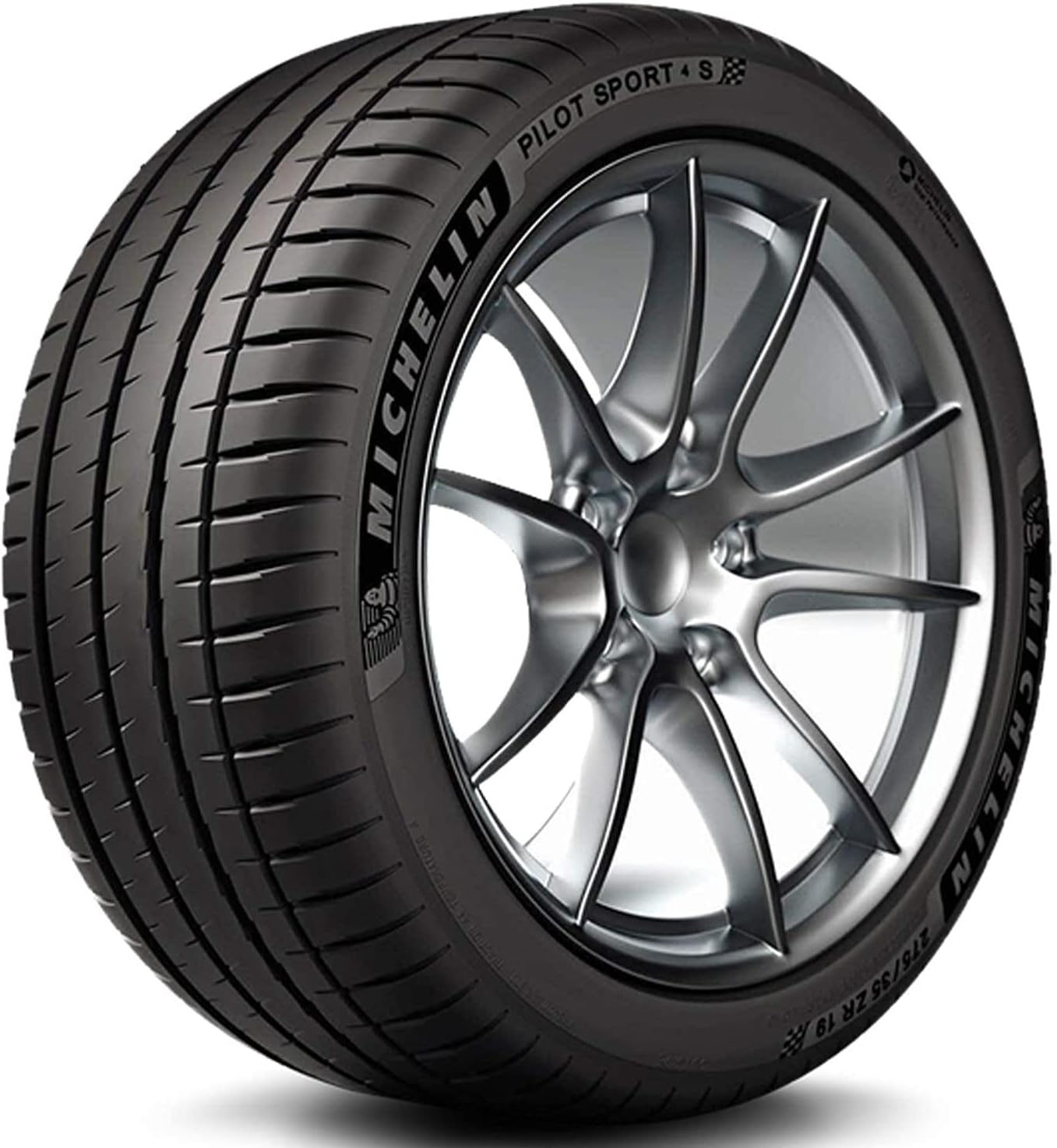
Michelin Pilot Sport 4S Performance Tire
MICHELIN

Pirelli P Zero All Season Plus 3 255/35R19 96Y XL Tire for BMW
Pirelli
Michelin Pilot Sport 4S — Ultra-High Performance Summer Tire
MICHELIN
Continental ExtremeContact DWS06 Plus UHP All-Season Tire 255/35ZR19 96Y XL
Continental

Pirelli P Zero PZ4-Sport UHP Summer Tire 255/35R19 96Y XL
Pirelli
More wheel and tire options for the BMW F82
If you own an F82 M4 and you're searching for the right BMW F82 wheels tires summer tires setup, you already know the factory rubber is a compromise. BMW ships the F82 on tires that have to pass noise tests, meet OE wear targets, and survive owners who never track their car. Those goals don't always line up with what you actually want when you're pushing a 431 hp S55 twin-turbo into a fast corner or blasting a canyon road on a dry August morning. This page is the full picture - which summer tires actually work on the F82, why the square-versus-staggered decision matters more on this car than most, what the real prices look like right now, and where owners consistently go wrong.
Why Summer Tires Matter More on the F82 Than on Most BMWs
The F82 M4 is a very different animal from, say, the F30 335i I ran before my current G20. The S55 makes serious torque low in the rev range, the car is rear-wheel drive with no active torque vectoring at the rear axle (standard), and the adaptive M suspension is tuned to be genuinely aggressive. That combination means the tire is the single largest variable in how the car behaves day-to-day. You can have the suspension dialed in perfectly - I'd point you toward a proper coilover setup once you've sorted rubber - but if the tire doesn't communicate clearly, the S55's power delivery punishes you on corner exit.
The stock Michelin Pilot Super Sport or Pirelli P Zero Corsa fitments that came on early F82s aged out of production for most sizes. A lot of F82 owners are now on their second or third set of tires, and the landscape has changed. The Michelin Pilot Sport 4 S has become what the Pilot Super Sport was - the benchmark everyone compares against. The Bridgestone Potenza Sport has taken serious market share from owners who want sharper initial turn-in. The Continental ExtremeContact Sport 02 is pulling daily drivers away from both because it's genuinely good in the wet without giving up much dry performance. And then there are newer budget-tier UHP tires like the Kumho Ecsta Sport S that are tempting but inconsistent in real-world feedback.
The F82 also has a specific size situation that complicates things. The factory staggered setup means you cannot just rotate front-to-rear the way you would on a square fitment. If you've ever priced replacing a single rear 285 in a UHP summer compound, you know it stings. That means the tire choice on the F82 is partly a financial decision about how long you want to run before you're back at the shop. I'll walk through all of it below.
F82 M4 Tire Sizes - What Fits, What OEM Specifies, and What Owners Actually Run
Before picking a specific tire, you need to nail down your size. The F82 came from the factory in a few different configurations depending on model year and build:
- Standard F82 M4 (base, Competition, GTS) - Most factory setups use a staggered fitment: 255/35R19 front and 275/35R19 rear on 19-inch wheels, or on Competition-optioned cars with 20-inch wheels, 275/35R19 front / 285/30R20 rear in some OEM+ and aftermarket configurations.
- Square 19-inch setup - Many owners go 255/35R19 all around or 265/35R19 all around to enable rotation and reduce the tire budget per set. Square setups also tend to produce slightly sharper front turn-in and more predictable balance in daily driving.
- Square 20-inch setup - Less common but doable; you're typically looking at 265/30R20 or 275/30R20 all around if you're on aftermarket 20s. Diameter tolerance gets tighter here - stay within about 2-3% of the stock rolling diameter or the speedometer, DSC thresholds, and launch control calibration can get confused.
The most important fitment constraint on the rear of the F82 is wheel width versus tire section width. The stock rear wheel on a standard F82 is typically 9.5J x 19 or 10J x 20. If you're shopping aftermarket wheels and considering a tire wider than the stock spec, confirm the wheel width matches. Mounting a 295 or 305 wide tire on a 9.5J wheel is asking for handling inconsistency and potential sidewall damage. I've seen this mistake a few times on the forums, and it never ends with a good story.
If you're also considering aftermarket wheels for your F82, sort that decision first because the wheel width will constrain which tire widths are actually safe. Buying the tires first and then discovering your new wheels are 0.5 inches too narrow is a frustrating way to spend an afternoon.
Square vs. Staggered - The F82 Decision You Need to Make First
This debate is specific enough to the F82 that it deserves its own section before we get into specific tire reviews. The factory staggered setup exists for a reason: it lets BMW tune the car for slight understeer at the limit (safer for most drivers), it allows a wider rear contact patch to put the S55's power down, and it matches the inherent weight balance of a rear-wheel-drive coupe where the rear does more work. Those are real benefits.
But the staggered setup creates real problems for street-driven F82s:
- No rotation possible. With different front and rear sizes you cannot swap tires front-to-rear. The rear tires wear faster than the fronts on most road driving, so you end up replacing rears twice for every front set. At $360-$520 per rear tire in the top UHP tier, that adds up fast.
- Higher cost per set. Two different sizes means two different price points and two SKUs to manage. If a rear fails mid-season you can't temporarily run a front on the rear as a stopgap.
- Limited tire options. Not every UHP summer tire comes in every staggered F82 size. Availability occasionally forces you toward a tire you wouldn't have chosen on merit alone.
The case for going square is mostly practical: you can rotate, you get longer total tire life from a set, your front turn-in often feels more responsive because you're running a narrower front section than the stock staggered setup, and the total cost per set drops meaningfully. The tradeoff is slightly less rear grip at maximum attack, though on a public road this is a theoretical concern for 99% of F82 owners. If you track the car regularly at a circuit and care about exit speed, staggered is probably worth the cost. If you mostly street drive and hit a canyon once a month, square 19s are genuinely the smarter move.
I'd go square. My opinion, based on what I've seen: the street-driven F82 doesn't punish you for it, and the savings over the life of two or three sets pays for a brake pad upgrade. Speaking of which, if you're running the car hard enough to think about tire grip, you should also look at upgrading the F82's brake pads at the same time - the factory Brembo setup is excellent but benefits from better compound at track temperatures.
The Five Summer Tires That Actually Make Sense on the F82
I'm not going to list twelve tires. You can find generic tire lists anywhere on the internet. These are the five that come up consistently in F82-specific discussions, have real owner feedback in the sizes that matter for this car, and are actually available at major US retailers right now.
1 - Michelin Pilot Sport 4 S
The Michelin Pilot Sport 4 S is still the tire every other tire on this list is judged against. That's not marketing. Five years ago it was the same story with the Pilot Super Sport. Michelin has an almost frustrating ability to stay at the top of this category, and independent tire tests consistently put the PS4S at or near the benchmark in the UHP summer category. On the F82 specifically, it translates what the S55 is doing into steering feel in a way that makes the car feel cohesive rather than just fast.
What does "benchmark" actually mean in practice? Dry braking distance, lateral grip in 200-meter sweepers, wet performance on a soaked circuit - in all those tests the PS4S has been at or near the top of the category since it launched. The feel it transmits through the F82's steering rack is consistently described as "communicative" rather than simply "grippy." There's a difference: communicative means you feel what the tire is doing before it breaks traction. That matters enormously in a 431 hp rear-wheel-drive car.
Typical US prices for F82 sizes: Front tires around $320-$430; rear tires around $360-$520, with 19- and 20-inch F82 fitments generally sitting in the middle to upper end of those ranges depending on the specific size and retailer. Check Discount Tire's current M4 fitment selector for live pricing since these numbers move.
F82 fitment notes: Common staggered sizes work well: 255/35R19 front and 275/35R19 rear is a clean OEM-equivalent fitment on stock 19s. If you're on 20-inch wheels, 275/35R19 front / 285/30R20 rear is a frequently cited OEM+ pairing that multiple Bimmerpost owners have confirmed works without rubbing at stock ride height. For square fitments, 255/35R19 all around is the most common choice and keeps you within diameter tolerance.
Where the PS4S falls short on the F82: Road noise increases noticeably as the tire wears. New PS4S is genuinely quiet for a UHP summer tire. At 60-70% tread remaining it starts to generate more road texture noise, especially on coarse pavement. The ride is also firm - the compound is hard by street tire standards. On a smooth European-style road surface it's not an issue. On Michigan or New England pavement, it's something you notice. Some owners also mention the tire can feel a touch harsh on rough pavement, amplifying the F82's already stiff suspension rather than absorbing any of it. If those concerns sound like your daily commute, read the Continental section below before you buy.
Wear rate is another honest conversation point. The PS4S is not a tire you track repeatedly and then expect to use for another 15,000 miles. On the street with normal spirited driving, most F82 owners report 15,000-20,000 miles from a set of rears - some report less if alignment isn't perfect. Budget accordingly.
2 - Continental ExtremeContact Sport 02
The Continental ExtremeContact Sport 02 has quietly become the recommendation I make most often to F82 owners who daily their car in a real-world city and want performance without punishment. Continental has improved the wet-weather performance dramatically over the original ExtremeContact Sport, and the Sport 02 does something the PS4S doesn't do as well: it rides with noticeably more compliance on broken surfaces. Not dramatically so - it's still a summer performance tire - but the difference is real.
In F82-specific feedback, the Sport 02 gets consistent praise for wet grip, which matters more than some F82 owners admit. The S55 in Sport or Sport+ with the DSC partially off in wet conditions is a car that will get away from you very quickly. A tire that bites in the wet is not a compromise in that scenario - it's a safety feature.
Typical US prices: Front tires around $280-$400; rear tires around $320-$470 in common F82 sizes. That's typically $40-$80 less per tire than the PS4S at equivalent sizes, which adds up to a meaningful saving over a full set.
F82 fitment notes: The Sport 02 works especially well in square 19-inch setups. The tire's even tread wear and predictable balance make it a good choice when you're rotating regularly. If you want to go wider than stock on the rear, verify your wheel width - the Sport 02 at 285 on a 9.5J rear wheel is pushing the safe limit and I wouldn't recommend it.
Known issues: Steering feel is slightly softer compared to the PS4S. Not sloppy - just less telegraphic. Some F82 owners describe it as feeling "one layer of insulation removed" from the PS4S's communication. That's not nothing on a car where the steering is a significant part of the appeal. Shoulder wear accelerates if your alignment is off by even a small margin - get a fresh alignment before mounting these. Tramlining on grooved highway pavement is a commonly cited complaint in forum threads covering the Sport 02 on M cars. The F82's wide tires and track-oriented suspension tune exaggerate this tendency.
3 - Bridgestone Potenza Sport
If the PS4S is the benchmark for overall balance and the Sport 02 is the daily driver choice, the Bridgestone Potenza Sport is the tire for the F82 owner who genuinely drives the car aggressively and prioritizes dry grip and steering response above everything else. The Potenza Sport consistently tops dry braking and dry lateral grip tests in independent testing. On initial turn-in - the moment you flick the steering wheel into a corner - it's the sharpest of these three front-runners.
That sharpness is partly a function of the compound and partly the sidewall construction. The Potenza Sport has a stiffer sidewall than the Sport 02, which translates to less lateral flex and more immediate response. On the F82 with the electronically controlled adaptive suspension, that stiffness either complements or fights the car depending on your setting. In Sport+ suspension mode with the dampers at maximum, the Potenza Sport feels like a precision tool. In Comfort mode on a rough road, it transmits every imperfection with no mercy.
Typical US prices: Front tires around $300-$430; rear tires around $340-$500 in common F82 sizes. Pricing puts it squarely between the PS4S and the Sport 02.
F82 fitment notes: Works in both staggered and square setups. If you're running a wider-than-stock rear on 20-inch wheels, confirm rear clearance carefully - the Potenza Sport's sidewall profile can behave slightly differently than spec'd in terms of overall width at the contact patch. When in doubt, check forums for your specific wheel/tire combination before ordering.
Known issues: Firmness is the most common complaint in F82-specific feedback. The ride is harsh - noticeably more so than the Sport 02 and comparable to or slightly worse than the PS4S. On smooth roads it's irrelevant. On anything with patchy tarmac it's uncomfortable for long distances. Noise is also a real consideration: multiple owners mention more road texture noise than expected for a street tire. If you're making a 200-mile highway run regularly, factor that in. Long-life comfort is simply not a design priority for this tire. It is, unapologetically, a dry performance tire.
4 - Pirelli P Zero (PZ4)
The Pirelli P Zero (PZ4) is the OE-style option on this list. Pirelli supplied OE tires for various F82 configurations, and the P Zero lineage on M cars goes back far enough that many F82 owners default to it simply because "it's what the car came with in spirit." That's not a crazy reasoning - Pirelli's OE development work for BMW means these tires are tuned specifically for the F82's weight distribution, suspension geometry, and power delivery in ways that aftermarket tires might not be.
In practice, the PZ4 delivers very good dry performance with decent steering feel, particularly on staggered setups where the front and rear compounds can be tuned differently. It's not as sharp as the Potenza Sport in initial response, not as communicative as the PS4S in mid-corner, but it's a well-rounded tire that doesn't have obvious weaknesses. For F82 owners who want OE character and are happy to pay for it, the PZ4 is a legitimate pick.
Typical US prices: Similar to or slightly above the PS4S in most sizes - expect to pay at the higher end of the UHP summer range for an F82-specific fitment. Check retailers that stock BMW-specific M4 fitments for availability since the PZ4 comes in both standard and N-spec (BMW OE spec) versions and the N-spec parts can have limited availability.
F82 fitment notes: Best on staggered setups that mirror the factory configuration. If you're going square, you're somewhat defeating the purpose of the PZ4's OE-oriented development. Check whether you want the standard PZ4 or the BMW N-spec version - the N-spec is developed in conjunction with BMW and may have slightly different sidewall stiffness characteristics, which some owners prefer and others find makes the ride too firm.
Known issues: Pricing is the main objection. The PZ4 is not cheap, and for the money some owners feel the PS4S or Potenza Sport deliver more dynamic feel. Wet performance is adequate but not class-leading - the Sport 02 is better in the rain. If you drive the F82 in a region with frequent wet conditions, the PZ4 probably isn't your first choice.
5 - Kumho Ecsta Sport S
The Kumho Ecsta Sport S is here because it keeps coming up in value-oriented discussions and I'd rather address it honestly than pretend it doesn't exist. This is a newer UHP summer tire from Kumho positioned at a noticeably lower price point than the tires above. It's tempting on an F82 because a full set of summer tires at PS4S pricing is a serious budget commitment.
Typical US prices: Front tires around $220-$330; rear tires around $250-$380. A full staggered set of Kumho Ecsta Sport S tires in F82 sizes can cost $200-$400 less than a comparable PS4S set. That's real money.
Some Bimmerpost feedback describes the Ecsta Sport S as notably smooth-riding, which is surprising for the UHP category. Kumho has made real improvements in ride quality in this tire segment and it shows.
The honest problem: The real-world feedback is mixed in a way that gives me pause. At least one Bimmerpost owner explicitly said they would not recommend the tire despite acknowledging it rode smoothly. That kind of response - "it's comfortable but don't buy it" - usually points to a deficit in performance where it counts: dry and wet grip limits, wear rate, or behavior at the edge of adhesion. On a 431 hp rear-wheel-drive car, those are not areas where you want to be experimenting with a mixed-review budget tire.
My position: if your F82 budget is genuinely tight and you're buying a cheap set for moderate spirited street driving on good roads, the Ecsta Sport S might be acceptable. But if you're tracking the car even occasionally, or if you're the kind of driver who uses the full S55 power regularly, spend the extra money. This is not the tire I'd put on an F82 that gets driven the way it was designed to be driven. The load ratings and performance margins of the top-tier options exist for good reasons on a car this powerful.
Also: verify load rating carefully. Don't assume the cheapest available size in this tire is correct for the F82's rear axle load. The M4 is a heavy car for a performance coupe and the rear tires carry significant load under hard acceleration.
Fitment Deep-Dive - F82 Specific Clearances and Setup Details
Let's get specific about what actually fits on the F82 without rubbing, clipping fender liners, or creating geometry problems.
Stock Wheel and Tire Specifications
The factory F82 M4 wheel and tire specs vary by model year and option package, but the most common configurations are:
- 19-inch (standard equipment on most F82s): Front wheel 9J x 19 with 255/35R19 tire; Rear wheel 9.5J x 19 with 275/35R19 tire.
- 20-inch (available on Competition and some special editions): Front wheel 9J x 20 with 255/30R20 tire; Rear wheel 10J x 20 with 275/30R20 or 285/30R20 depending on build.
These are the numbers you start with. When shopping replacement tires, stick within approximately 2-3% of the factory rolling diameter. Larger deviations throw off the DSC (Dynamic Stability Control) calibration because the wheel speed sensors feed into the stability system and the system assumes specific rolling circumferences. The launch control system on the F82 Competition also has calibration dependencies on tire diameter. None of these are catastrophic if you're slightly off - but they're worth respecting.
Going Wider Than Stock on the Rear
Some F82 owners want to go wider than 275 on the rear, particularly on 20-inch setups. Going to a 285 or even 295 rear is physically possible in some configurations, but several considerations apply:
- Wheel width must match. A 285 tire should ideally be mounted on at least a 9.5J wheel; a 295 wants a 10J. Mounting wide tires on narrow wheels changes the contact patch geometry in ways that compromise the tire's performance and can accelerate shoulder wear. The stock 9.5J rear on 19-inch cars is at the lower acceptable limit for a 275 - going to 285 on that wheel is outside the tire manufacturer's recommended range.
- Fender clearance changes with suspension setting. At stock ride height, 285/35R19 rear has been reported to work on some F82 builds, but it's fitment-specific and depends on the exact wheel offset. If you're running lowering springs or a coilover setup, fender clearance gets tighter and what fits at stock height can rub at lowered height.
- Diameter tolerance matters. Going wider typically means going slightly taller in the sidewall if you keep the aspect ratio the same. Watch the rolling diameter.
Spacers and Offset Considerations
If you're running wheel spacers (common on the F82 for improved track width and visual stance), factor in the additional width before choosing a wide tire. A 20mm rear spacer combined with a 285 tire may clear the fender at standard ride height and rub with any suspension travel. Test this with the car at ride height AND through suspension travel before committing to a specific combination.
Rim Width vs. Tire Section Width Chart for Common F82 Sizes
| Tire Size | Min Rim Width | Ideal Rim Width | Max Rim Width | F82 Application |
| 255/35R19 | 8.5J | 9J | 10J | Front (stock) or Square setup |
| 265/35R19 | 9J | 9.5J | 10.5J | Square upgrade - slightly wider contact patch |
| 275/35R19 | 9J | 9.5J | 11J | Stock rear on 19-inch builds |
| 255/30R20 | 8.5J | 9J | 10J | Front on 20-inch builds |
| 275/30R20 | 9J | 9.5J | 10.5J | Rear on 20-inch builds (standard) |
| 285/30R20 | 9.5J | 10J | 11J | Rear on 20-inch builds (wider setup) |
Supporting Modifications That Work With a Summer Tire Upgrade
Putting a serious summer tire on the F82 without addressing a few supporting items is leaving performance on the table. Here's what matters most:
Alignment
This is non-negotiable. The F82's factory alignment spec is set for OE tires and a mix of use cases. If you're mounting performance summer tires, get an alignment that suits how you actually drive the car. Most spirited drivers on the F82 benefit from slightly more front negative camber (-1.5 to -2.0 degrees front is a common target) and proper rear toe settings. Misaligned tires on the Sport 02 in particular will eat the outside shoulder rapidly - I mentioned it in the tire section above and it's worth repeating. Budget roughly $100-$200 for a four-wheel alignment at a shop that knows BMW suspension geometry. An alignment also tells you if any suspension components are worn and need attention.
Suspension Condition
If your F82 has the original adaptive M suspension and it's never been serviced or inspected, check the condition of the strut mounts and rear subframe bushings before putting expensive tires on it. Worn strut mounts in particular cause tire wear patterns that will destroy your new rubber within a season. Considering a coilover upgrade on your F82 is worth doing around the same time you're refreshing tires, because a quality coilover and a fresh alignment together transform how the car puts the tire's grip to work.
TPMS Sensors
The F82 uses direct TPMS (Tire Pressure Monitoring System) sensors inside the wheels. If you're buying a new set of wheels for your summer tires, you'll need TPMS sensors in those wheels - either new BMW OE sensors, aftermarket compatible sensors, or programmed clones. Don't skip this. Running the F82 without TPMS active throws a warning, and more importantly on a stiff-sidewalled summer tire you want accurate pressure readouts because the operating pressure window is narrow. Check with your shop when mounting summer tires - this is a detail that's easy to overlook in the excitement of a new tire purchase.
Brake Pads and Rotors
Summer tires increase cornering speed and therefore braking demands. If you're mounting a significantly grippier tire than what you've been running - say, moving from all-season touring tires to full UHP summer compound - your braking distances will shorten and your brake temperatures will increase. The factory Brembo equipment on the F82 is excellent, but it benefits from better compound under serious use. Take a look at upgraded brake pad options for the F82 before your first track day with the new tires.
Installing Summer Tires on the F82 - What to Know Before You Start
Mounting summer tires on the F82 is a shop job for most people, and that's fine. But there are a few things worth knowing so you can supervise the work or at least verify it was done correctly.
Mounting and Balancing
UHP summer tires with wide, low-profile sidewalls (like the 255/35 and 275/35 sizes common on the F82) are harder to mount than touring tires. The sidewall is stiff and requires care during mounting to avoid bead damage. Make sure your shop has experience with low-profile UHP tires and uses a proper bead lubricant. Damaged beads on a 30- or 35-series sidewall can cause very slow leaks that are infuriating to diagnose.
Balancing should be done with the wheel/tire assembly balanced as a unit. Road force balancing (where the machine simulates the tire under load) is worth requesting for the F82 because it catches issues that static balancing misses, particularly important given the car's firm suspension and its tendency to transmit vibration directly to the seat. Expect to pay a small premium for road force balancing - usually an extra $10-$20 per wheel - and it's worth every penny.
Tire Pressure
Set your tire pressure to the placard spec as a starting point, then adjust from there for your use. The F82 placard spec for most builds is around 32-35 psi front and rear cold depending on the specific size. UHP summer tires in performance use are often run at slightly lower pressures than the placard for more compliant contact patch behavior - but don't go below 30 psi cold without a specific reason and monitoring hot pressures on the road. Your TPMS system will flag anything below the threshold - use it as a floor, not a target.
Hot pressures after a hard run on a track will increase by 4-8 psi depending on ambient temperature and the intensity of driving. That's normal for summer performance compound. Don't bleed pressure after a hot run - let the tire cool completely before making any adjustments.
Break-In Period
New summer tires have a release agent on the surface from the manufacturing process. For the first 50-100 miles on new rubber, avoid full-force braking and maximum lateral loads. The tires need to scrub in. This is especially important on a car like the F82 where you might be tempted to immediately test your new purchase on a canyon run - don't. One panic stop on glazed new tires can easily result in a longer stopping distance than your worn-out old tires. Let them bed in properly.
Common Mistakes F82 Owners Make When Buying Summer Tires
I've watched enough F82 forum threads and heard enough stories from friends with M cars to have a running list of mistakes people make repeatedly. Here they are, bluntly:
Mistake 1 - Buying the Wrong Width for Their Actual Wheel
This is the most common one. People see a forum post saying "I run 285/30R20 rear on my F82" and assume that means they can do the same. They're running 10J rear wheels. You might be running 9.5J. Check your actual wheel width before specifying tire width. If you're unsure, look at the wheel face - it's almost always stamped or engraved with the size. J-width is the critical number, not the diameter.
Mistake 2 - Not Getting an Alignment First
Mounting a fresh set of $400-per-tire summer rubber on a car with the factory alignment that's been driven 40,000 miles is a great way to wear through shoulders in one season. New tires deserve a fresh alignment. No exceptions.
Mistake 3 - Assuming the Factory TPMS Will Just Work with New Sensors
Direct TPMS sensors need to be programmed to the car. If you buy a second set of wheels and have them mounted with new sensors, those sensors will throw an error until they're programmed. Some shops handle this automatically; others don't. Confirm before you drive away. The diagnostic tools you'd use to code your F82 can also handle TPMS registration for most configurations.
Mistake 4 - Ignoring the Staggered vs. Square Decision
People buy the same size as their worn-out OEM tires without considering whether they want to stay staggered. Then they're surprised when the rears wear out faster than the fronts and they're buying individual tires out of cycle. Think about this before you order - once you're mounted it's a hassle to switch approaches.
Mistake 5 - Tracking on Street Summer Tires Without Heat Cycling Knowledge
UHP street summer tires are not track day tires. They're substantially better than all-seasons on a track, but they have a narrow thermal operating window. Too much heat and the compound glazes. If you're running a full HPDE day at a circuit on PS4S or Potenza Sport tires, you need to manage heat cycles - cool-down laps, tire temp monitoring, and ideally a dedicated track setup. Pushing street summers past their thermal limit once will cost you a tire set. Proper suspension tuning for track use also affects tire temps significantly.
Mistake 6 - Buying Budget Tires for a 431 HP RWD Car
The Kumho section above covers this, but it deserves its own mention in the mistakes list. The F82 is not a vehicle where you should economize on tires. The car has the power to overwhelm a marginal tire in ways that a 200 hp front-wheel-drive car simply doesn't. Spend the money on the top-tier option, run it for its full service life, and respect the cost as part of owning an M car. If the tire budget is genuinely a problem, sell the car and buy an F30 - I'm only half joking.
Mistake 7 - Not Checking for Run-Flat Requirement
Some F82 builds came from the factory with run-flat tires and no spare tire. If your car has no spare and you switch from run-flats to standard construction summer tires, you need a plan for a roadside flat. Carry a quality tire plug kit and a portable inflator at minimum. Some owners add a small compressor kit under the trunk floor. Don't discover this problem on the side of a highway.
My Opinionated Picks for the F82
I've spent enough time on this to have a clear opinion on each scenario. Here's where I land:
Editor's Pick - Overall Best
Michelin Pilot Sport 4 S
It's still the benchmark for a reason. On a car as dynamically rich as the F82, having the best-communicating tire in the category justifies the premium. The PS4S tells you what it's doing, and that information is what lets you drive the car to its potential without being surprised. I'd run this on a square 19-inch setup for rotation purposes at 255/35R19 all around. The ride is firm but the F82's suspension is already firm - you're not buying this car for comfort.
Best Value
Continental ExtremeContact Sport 02
If the PS4S pricing genuinely stretches your budget and you daily the car in a real city with real weather, the Sport 02 is the correct tire. The wet grip advantage over the PS4S is real and useful. The comfort improvement on rough pavement is real. The cost savings are real. The slight loss in steering feel is something you'll adapt to quickly, and it's far from unpleasant - it's just different. At $40-$80 less per tire versus the PS4S, a full set represents a meaningful saving that could fund a brake pad upgrade or your next track day entry.
Best Track Day Option
Bridgestone Potenza Sport
If you do HPDE events or any form of track driving with the F82, the Potenza Sport is where I'd spend the money. The dry grip and initial turn-in sharpness are the relevant parameters at a circuit, and the Potenza Sport leads the field in both. Accept the compromises in noise and ride quality as the cost of having that level of dry performance. Just manage your heat cycles carefully - this is a street tire even if it's a very capable one.
Best Daily Driver
Continental ExtremeContact Sport 02
Same as Best Value, for the same reasons. The Sport 02 is the right tire for an F82 that primarily sees public roads, varies in weather, and needs to survive a daily commute without making you regret your car choice. It's genuinely good - not a compromise.
Best for Square Fitment
Michelin Pilot Sport 4 S at 255/35R19 all around
The PS4S wears predictably, rotates well on square setups, and the consistent compound means you get the same feel front-to-rear which aids balance. Square fitment with the PS4S on 19s is probably my single favorite setup for a street-focused F82 that sees occasional spirited driving.
Side-by-Side Comparison of All Five Tires
| Tire | Front Price Range | Rear Price Range | Dry Grip | Wet Grip | Steering Feel | Ride Comfort | Noise | Best For |
| Michelin PS4S | $320-$430 | $360-$520 | Excellent | Very Good | Best in class | Firm | Moderate (new), Higher (worn) | Overall best, spirited street |
| Continental ECS02 | $280-$400 | $320-$470 | Very Good | Excellent | Good | Better than PS4S | Lower | Daily, wet climates, value |
| Bridgestone Potenza Sport | $300-$430 | $340-$500 | Excellent | Good | Very sharp | Firmest | Higher | Track days, dry performance |
| Pirelli P Zero PZ4 | High end | High end | Very Good | Good | Very Good | Moderate | Moderate | OE character, staggered fitment |
| Kumho Ecsta Sport S | $220-$330 | $250-$380 | Good | Good | Adequate | Smooth | Lower | Budget street driving only |
Where to Buy F82 M4 Summer Tires and What to Watch For
You have a few real options for buying summer tires for the F82, and they all have different tradeoffs:
Major Online Retailers (Discount Tire, Tire Rack, etc.)
This is where most people buy and it makes sense. Discount Tire's M4 fitment page lets you filter by vehicle to reduce the chance of ordering the wrong size. Prices are competitive, and both retailers offer mounting at partner shops (Discount Tire has physical locations; Tire Rack ships to installer partner shops). Watch for price promotions - Michelin and Continental in particular run seasonal rebates that can save $50-$100 on a set.
One caution with online buying: verify the specific size in your cart against your actual wheel spec. It's easy to add a 275/30R20 to the cart when you need a 275/35R19. Different numbers, wildly different tire.
European Retailers
If you're buying from Europe or shipping internationally, retailers like Black Circles carry BMW M4 fitments with UK and European pricing. For US-based buyers this is mainly useful for price comparison or for sourcing specific N-spec Pirelli tires that aren't always available domestically.
Performance Shop Direct Purchase
Buying from a local performance shop and having them mount the tires at the same visit saves coordination hassle, though prices are typically 10-20% above online retail. The benefit is a shop relationship - they'll remember your car, your alignment specs, and your preferences. For an F82 that gets regular shop attention, this can be worth the premium.
What to Check Before You Click Buy
- Confirm the exact size matches your wheels - check both the installed size and any optional OE size your specific F82 build might have used.
- Verify the load index - for the F82's rear axle, don't go below the OE load rating. The M4 is around 1,780 kg (3,924 lbs) loaded and the rear carries more of that under acceleration.
- Check speed rating - all tires on this list are Y-rated (300 km/h) or above. Don't accept a lower speed rating on an M car.
- Look at the production date - tires degrade from the moment they're manufactured, even sitting in a warehouse. Tires more than 2-3 years old from manufacture date should be discounted or avoided. The DOT code on the sidewall tells you the week and year of manufacture.
F82 Summer Tire FAQ
Can I run summer tires year-round on my F82?
Technically yes, practically no. Summer compound tires harden significantly below about 7 degrees Celsius (44 degrees Fahrenheit). Below that temperature the rubber doesn't flex properly and grip drops substantially. If you live anywhere that sees cold winters - and that's most of North America and northern Europe - summer tires in cold weather are genuinely dangerous, not just suboptimal. They also wear abnormally fast when run cold. The F82 with its power and rear-wheel-drive layout on hardened summer compound in cold temperatures is a recipe for a ditch visit. Get a second set of wheels with all-season or winter tires if you want to drive year-round.
What is the most common square fitment size on the F82?
255/35R19 all around is the most frequently cited square fitment in F82 discussions. It matches the factory front size, keeps diameter tolerance within range, and fits on the stock 9J front and 9.5J rear wheels without issues. Some owners go to 265/35R19 all around for a slightly larger rear contact patch - this requires confirming rear fender clearance at your ride height.
Do I need run-flat tires on the F82?
Only if your car has no spare and you want to maintain run-flat capability. Many F82 owners deliberately switch from run-flats to standard construction summer tires because run-flat construction adds stiffness, weight, and cost while reducing the range of high-performance summer compound options. If you make the switch, carry a tire plug kit and a portable inflator. It's a reasonable trade for most drivers.
Will wider rear tires improve my F82's performance?
On the street, not meaningfully. The factory rear tire on the F82 is already well-matched to the suspension geometry and rear axle load. Going modestly wider (from 275 to 285) gives you a marginally larger contact patch in theory, but in practice the difference on the road is mostly in how the car looks rather than how it handles. Going significantly wider (295 or more) can actually worsen handling balance by increasing self-centering forces and changing the steering weight in ways that don't suit the stock suspension geometry. Save the wide tires for a dedicated track setup.
How long should a set of summer tires last on the F82?
Real-world estimates from F82 owners vary widely based on driving style, alignment condition, and tire choice. On UHP summer compound with mostly street use:
- Michelin PS4S: 15,000-22,000 miles on rears (street-focused use)
- Continental ECS02: 18,000-24,000 miles on rears (typically better than PS4S)
- Bridgestone Potenza Sport: 12,000-18,000 miles on rears (wear is faster with aggressive driving)
Any track use cuts these numbers substantially. A single HPDE day on street summer tires can consume the equivalent of several thousand road miles worth of tread depth.
Should I get an alignment before or after mounting new tires?
Before, if possible - or do both at the same appointment. Mounting new tires on a misaligned car means you're immediately wearing the new rubber incorrectly. Even a few days on bad alignment can create wear patterns on fresh tires that persist throughout the tire's life. Schedule alignment and tire mounting at the same time.
Is the Michelin Pilot Sport 4 S worth the premium over the Continental Sport 02?
For a track-focused F82, yes. For a daily-driven car in mixed conditions, probably not. The PS4S is the better dry performance tire with superior steering feedback, but those advantages are most noticeable at the limit - a place that requires track conditions to fully exploit safely. On the street, the Sport 02's better wet grip, slightly more comfortable ride, and lower cost often make it the smarter choice. It comes down to how you honestly use the car.
What tire pressure should I run on summer tires for track days in the F82?
This is a deep question that deserves a full article on its own. The short version: start with the placard spec cold, then measure hot pressures after a session. Target a hot pressure of around 34-38 psi depending on the tire and circuit. If your hot pressures are over 40 psi, start cold pressure lower. If your hot pressures are under 32 psi after a hard session, add cold pressure. Keep a pressure gauge in the car and actually use it.
Can I mix tire brands front and rear on the F82?
Technically you can, but I wouldn't recommend it. Mixing brands means different rubber compounds with different grip thresholds, different warm-up characteristics, and different behavior approaching the limit. The F82's handling balance is calibrated for consistent front-rear grip characteristics. Putting a PS4S on the front and a Potenza Sport on the rear (or vice versa) introduces a variable that makes the car's limit behavior harder to predict. Stay consistent front-to-rear, especially on a staggered setup.
Are 20-inch tires noticeably worse for ride comfort than 19s on the F82?
Yes, measurably so. A 275/30R20 has a shorter sidewall (lower profile number) than a 275/35R19, which means less rubber between the rim and the road to absorb impacts. On a car with the F82's already-firm suspension, that difference is perceptible on rough pavement. The 20-inch setup also increases unsprung weight slightly, which affects how quickly the suspension responds to road inputs. The 19-inch setup is the better choice for a daily-driven F82 unless you have a specific reason (visual preference, wheel availability) to go 20-inch.
What should I know about the F82 Competition vs. standard M4 tire setup?
The F82 M4 Competition came with a slightly revised suspension tune compared to the standard M4, with stiffer springs and revised damper settings. In practice this means the Competition benefits even more from a high-quality tire that communicates clearly - the stiffer suspension amplifies tire feedback rather than filtering it. The Competition also frequently came with larger wheel options (20-inch), which tightens the available tire size range. Check Competition-specific tire fitment references to confirm size availability before ordering if you own the Competition variant.
How does tire choice interact with the F82's launch control system?
The F82's launch control is calibrated to work with specific tire sizes and compounds. Dramatically different rolling diameters (from upsized tires) can affect how launch control interprets wheel speeds and manages power delivery. Beyond size, the compound's grip level matters - launch control on a budget tire with lower grip thresholds will either spin the tires more or have the DSC intervene more aggressively than on a high-grip UHP summer compound. If you use launch control regularly, this is another reason to stay with properly-sized, high-quality tires.
The F82 M4 in Context - Why Tire Choice Is the Biggest Lever You Have
I've written before about why software and engine modifications get all the attention while tires and suspension stay underrated. Part of it is that tires aren't photogenic. You can't post a dyno graph of your new PS4S. But the honest truth is that for an F82 being driven on public roads, the tire compound and size underneath the car has more effect on how the car drives than almost any other modification you can make.
Consider the comparison: a stage 1 ECU tune on the F82's S55 might add 30-50 hp and improve throttle response. That's real and meaningful. But a fresh set of PS4S or Potenza Sport tires on a car that's been running worn-out OEM rubber changes the lateral grip limit, the braking distance, the steering feedback, and the overall confidence level in a way that makes the car feel like a different machine. You feel it immediately, in every corner, every stop, every moment you're asking the car to do something dynamic.
The F82 is a car that rewards you for investing in the contact patch. The S55 has the power to exploit it. The chassis has the geometry to direct it. But it all starts with rubber that's actually capable of turning that power into grip.
If you want to go further with the F82 build, the logical next steps from a tire upgrade are sorting the suspension setup and then looking at what the S55 can actually make with a proper tune. But those upgrades build on a tire foundation. Get the tires right first.
One last thing: don't overthink this. The PS4S, the Sport 02, and the Potenza Sport are all genuinely excellent tires. Any of the three, properly sized and properly inflated on a properly aligned F82, will transform how the car drives. The differences between them are real but secondary to the difference between any of them and a worn-out all-season from 2019. Pick the one that fits your use case, get an alignment, and go drive the car the way it was built to be driven.

Kamil Siegień
Founder of BimmerTalk. Five years wrenching on BMWs, currently dailying a G20 330i with the B48 turbo four. Spent a year doing marketing for BMW and MINI before going independent. I write everything on this site myself.
More about the site
Summer Tires for BMW - Performance Grip Without Compromise
Summer tires are one of the highest-impact upgrades you can make to any BMW. The stock rubber on most factory builds is chosen for a balance of comfort, noise, and cost - not outright grip. Swap to a proper summer compound and your car transforms. Steering sharpens, braking distances drop, and cornering confidence goes up significantly. Whether you're driving an F30 328i daily or tracking an E46 M3 on weekends, the right tire makes everything else you've bolted on actually work.
Most BMW owners shopping summer tires are working within a few common fitment families. The F3x 3 Series and 4 Series typically run 225/45R18 or 245/40R18 depending on whether you're on base or M Sport suspension. The G80/G82 M3 and M4 run staggered setups - 275/35R19 front, 285/30R20 rear - where matching a proper performance tire across both axles matters a lot for balance. E9x M3 owners running the stock 19-inch staggered setup (245/35R19 front, 265/35R19 rear) have a huge selection available, though the square setup conversion is popular for rotation purposes. F8x M3/M4 owners often stick with the staggered OEM sizes or go square on a 19-inch wheel when tracking.
Top-tier summer tires worth running on a BMW include the Michelin Pilot Sport 4S, widely regarded as the best daily/track crossover tire available right now. The Continental ExtremeContact Sport 02 offers excellent wet performance for a summer tire - useful if you're not putting it away the moment September hits. Bridgestone Potenza Sport and the Pirelli P Zero (PZ4) are strong choices as well, with the PZ4 available in BMW-homologated "B" spec versions tuned specifically for BMW suspension characteristics - worth seeking out if your chassis was originally fitted with Pirelli OEM tires. For track-focused builds, the Michelin Pilot Sport Cup 2 is the tire of choice for anything from M2 Competition to M5 F90, though it needs heat to work and will wear fast on long highway stints.
What to Look For - and What to Skip
Match the tire to how you actually drive. A Cup 2 on a daily-driven 340i that sees highway miles and occasional back roads is overkill and will cost you tread life. A Sport 4S or ExtremeContact Sport will outperform OEM tires dramatically without punishing you on wear. If your BMW runs run-flat tires from the factory (common on E/F-series cars that have no spare), confirm whether you want to continue with run-flat summer tires or switch to conventional tires and add a portable inflator kit - conventional tires at the same price point will typically offer better ride quality and grip.
Avoid cheap summer tires from unfamiliar brands on any BMW with sport suspension or significant power. The chassis is tuned around tire feedback, and a mushy, low-quality tire creates misleading feedback exactly when you need accurate information under hard braking or mid-corner. Budget brands may pass speed ratings on paper and still fail to deliver the lateral stiffness a well-sorted BMW suspension is calibrated to use.
Installation is straightforward for any shop - summer tires mount and balance like any standard tire. If you're running staggered sizes, confirm directional vs. non-directional fitment before buying; mixing those up will cost you a remount. Wheel torque specs on BMW lug bolts (not nuts - don't forget that if you're switching from another platform) are typically 89–120 ft-lbs depending on model year, always verify for your specific chassis.
Ready to set up your fitment correctly from the start? Browse our Wheels category to match rims to your tire selection, or check out our Wheel Spacers section if you're dialing in fitment on a wider tire setup. Get the full package right and your BMW will handle exactly the way it was engineered to.