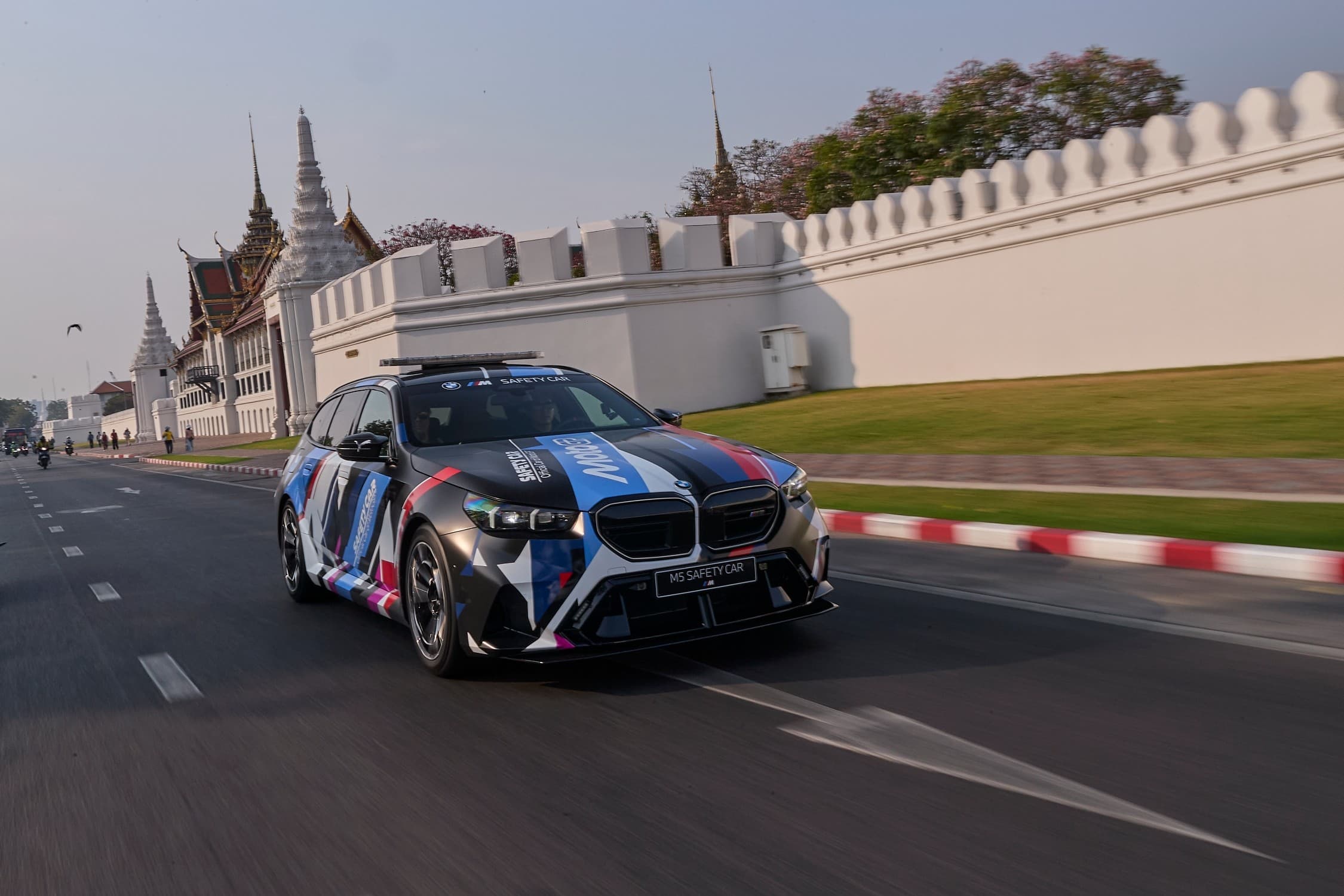
BMW M5 Parts
Affiliate disclosure. BimmerTalk is a proud partner of the Amazon Associates Program and Turner Motorsport. We may earn a small commission on qualifying purchases through our links, at no extra cost to you. Read the full disclosure.

Choose your generation to find compatible parts.


The BMW M5 - The Original Uber-Sedan
If you've spent any time in the Bimmer community, you already know what the M5 represents. It's not just a fast sedan - it's the benchmark by which every other performance sedan on the planet gets measured. Since its inception, the M5 has carried the torch for what a street-legal, four-door car can do when BMW's Motorsport division is handed the keys and told to go build something special. Every generation wears an S-designation engine under the hood, hand-assembled by a single technician, and that's not marketing - that's a statement of intent. Whether you're tracking it on a weekend or running back roads on a Tuesday night, the M5 has always been built to perform at a level that embarrasses cars costing twice as much.
The aftermarket has recognized this from the beginning. Parts availability, community knowledge, and tuning potential across all four generations make the M5 one of the most well-supported platforms we carry here at BimmerTalk. If you own one, you already know the rabbit hole goes deep. If you're thinking about buying one, buckle up.
Generation by Generation - Engines, Tuning, and What the Community Loves
The E39 M5 (2000-2003) is where the legend really cemented itself in the US market. Powered by the S62 V8 - a 4.9-liter, 394hp naturally aspirated unit with individual throttle bodies - this chassis is considered by many to be the purest M5 ever built. It's analog, it's communicative, and it rewards a skilled driver. The S62 responds well to headers, exhaust work, and software tuning, though it's more about extracting character than chasing big power numbers. Suspension upgrades, coilovers, and brake kits are the most popular mods on this platform. The E39 M5 has a cult following and parts demand is strong.
The E60 M5 (2006-2010) brought the S85 - a 5.0-liter V10 screaming to 8,250 RPM with 500hp from the factory. This is arguably the most exotic engine BMW has ever stuffed into a production car. The S85 sounds unlike anything else on the road, but it also demands respect when it comes to maintenance - rod bearings, throttle actuators, and SMG pump issues are well-documented. Once sorted and maintained, the E60 is an absolute monster to tune. ECU flashing, exhaust systems, and intake work unlock serious gains and bring that V10 soundtrack to a whole new level. It's one of the most popular platforms in the enthusiast community for exactly that reason.
The F10 M5 (2013-2016) marked the shift to forced induction with the S63 twin-turbo V8 producing 560hp. This is where the tuning community really opened up. The S63 is a torque monster with massive headroom - stage 1 ECU tunes regularly push cars into the 620-650whp range on pump gas, and fueling upgrades push that further. Intercooler upgrades, charge pipe kits, downpipes, and catback exhaust systems are the bread and butter of the F10 M5 build. Competition Package cars brought upgraded suspension and brakes from the factory, making them even better starting points.
The F90 M5 (2018-2023) runs an updated S63 producing 600hp stock, with Competition models at 617hp. xDrive all-wheel drive is standard, which makes power delivery brutal and consistent. The F90 responds incredibly well to ECU tuning, with big power numbers achievable through downpipes, intakes, and tune combos. Aero kits, carbon fiber components, and track-oriented brake upgrades are extremely popular on this chassis.
Why the M5 Aftermarket Never Slows Down
Every generation of M5 has something unique to offer the enthusiast community - whether that's the analog purity of the E39, the screaming V10 of the E60, or the raw forced-induction power of the S63-powered cars. BMW engineered these platforms with performance headroom built in, and the aftermarket community has spent decades figuring out exactly how to unlock it. Exhaust, suspension, brake upgrades, aero, and engine tuning all have deep catalogs across every chassis. Browse by generation above to find exactly what your Bimmer needs.