
BMW M5 F90 Tuning and Software
Affiliate disclosure. BimmerTalk is a proud partner of the Amazon Associates Program and Turner Motorsport. We may earn a small commission on qualifying purchases through our links, at no extra cost to you. Read the full disclosure.
ECU Tuning & Flash
22 parts for BMW F90
BrowseData Loggers & Monitors
22 parts for BMW F90
BrowseCoding & Diagnostic Tools
1717 parts for BMW F90
BrowsePopular F90 chips & software
Hand-picked chips & software parts that fit the BMW F90 - mid-tier price band, mixed across subcategories.
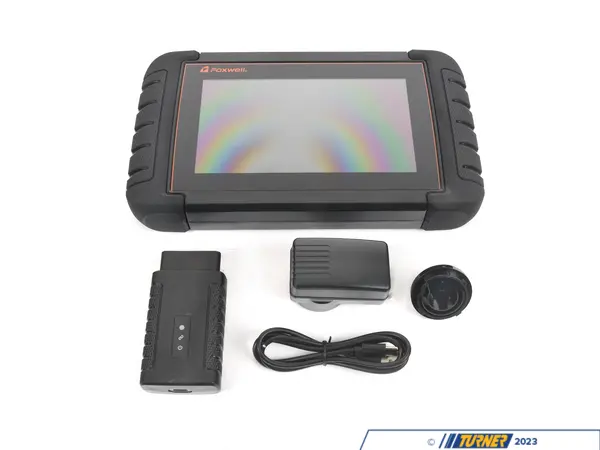

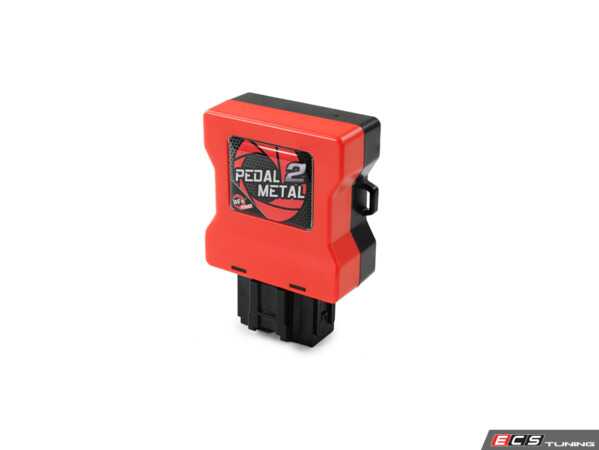
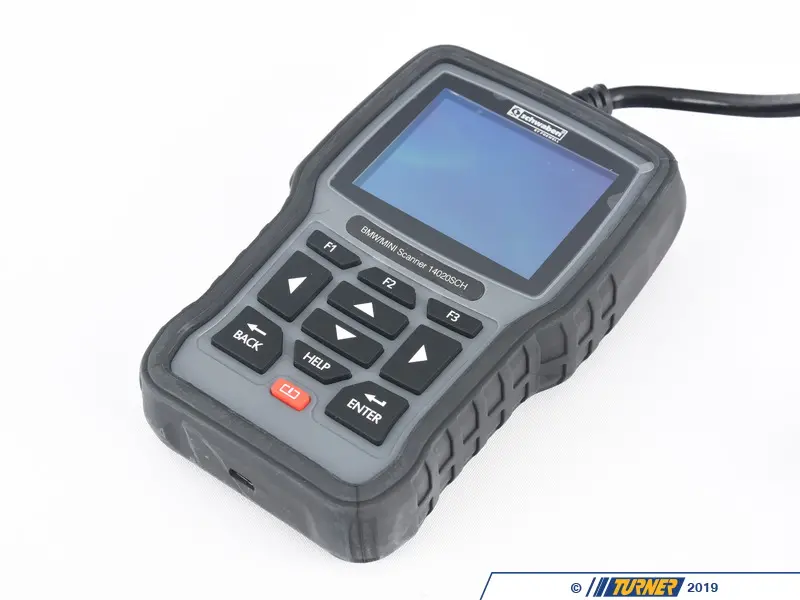


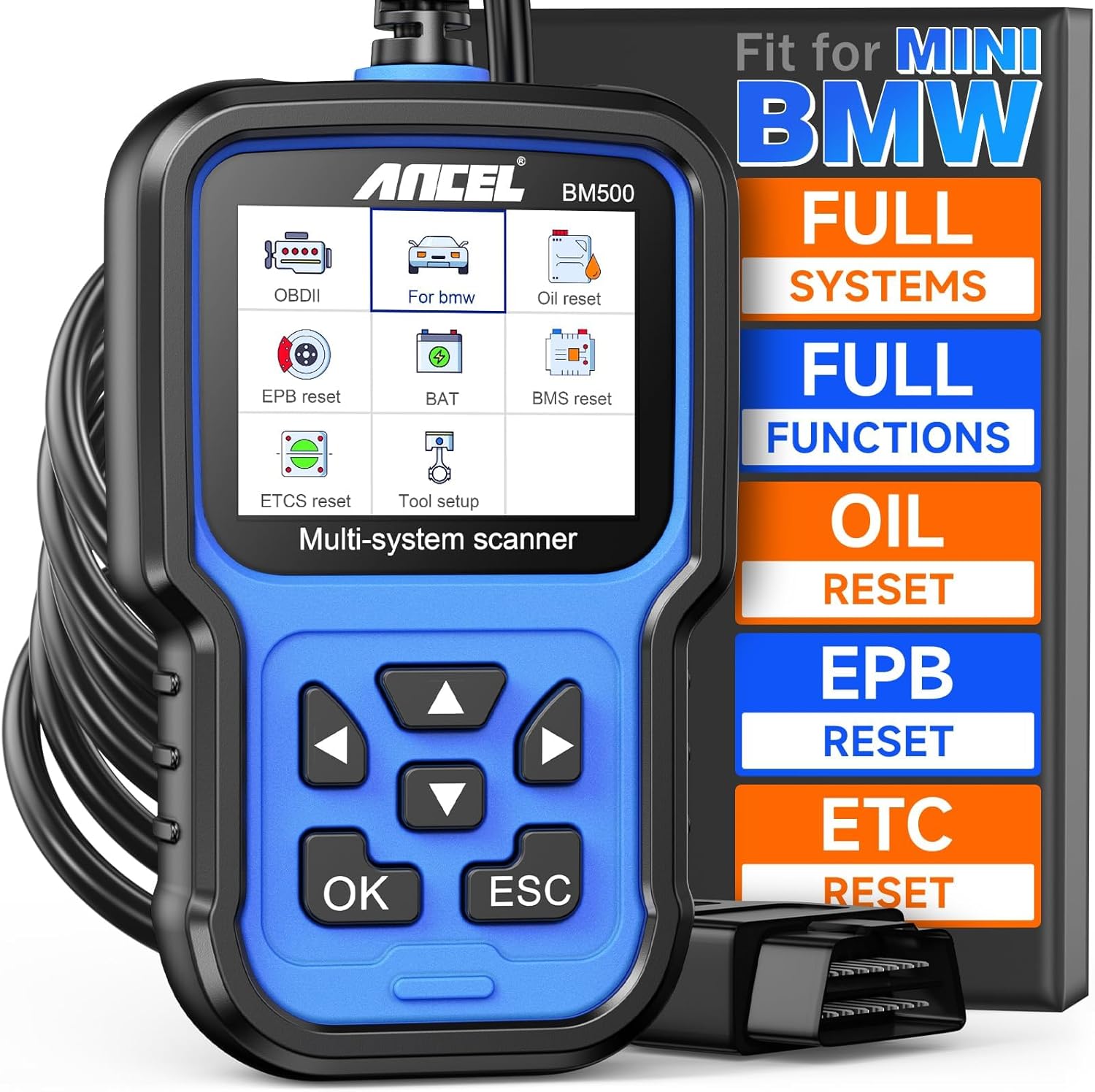


What "Chips and Software" Actually Means on a BMW in 2026
The term chips-software covers everything from a $39 OBD2 dongle that does absolutely nothing to a $2,500+ bench ECU unlock and custom dyno calibration that will genuinely transform how your car drives. BMW tuning has matured into one of the most technically developed aftermarket segments in the enthusiast world, and understanding what you are actually buying - and what tier of modification is appropriate for your chassis, your DME, and your goals - is the difference between a car that pulls hard on pump gas and a car that is eating its own pistons. I have been wrenching on BMWs for five years, I daily a G20 330i with the B48 turbo four, and I spent a year doing marketing for BMW and MINI. I know this space from a few angles, and I am going to give you the straight version with no fluff.
The BMW chip and software aftermarket in 2026 is split into three distinct segments. First, piggyback boxes for locked ECUs where you cannot write directly to the DME. Second, flash tunes for supported platforms where the ECU can be accessed either over OBD2 or via bench/boot unlock. Third, a growing OEM-integrated software-defined vehicle layer on the newest BMWs that makes aftermarket access progressively harder with each new generation. If you drive an E-chassis car, you are in the most open and affordable segment of this market. F-chassis is still strong and well-supported. G-chassis is fragmented and more expensive to tune properly, though the aftermarket is working around the restrictions as fast as BMW applies them.
I will walk through all of it here - the real brands, real price tiers, generation-specific guidance, what to skip, what to prioritize, and what is genuinely happening to this space as BMW pushes deeper into software-defined vehicle architecture. Let's get into it.
Why BMW Leaves Power on the Table from the Factory
BMW builds some of the most capable turbocharged engines on the market, and then maps them conservatively. This is not incompetence - it is strategy, and it is profitable. BMW uses largely the same physical hardware across multiple displacement variants, trim levels, and global markets. Your B58 in an F30 340i and the B58 in an F87 M2 Competition are related engines running very different factory calibrations. The block, the turbo architecture, the fuel system - similar bones, dramatically different output targets set in software.
The same logic applies further down the lineup. My G20 330i with the B48 shares its basic architecture with the B48 in the G20 320i, which makes about 60 fewer horsepower from the factory. That gap does not come entirely from hardware. A significant chunk of it is in fueling tables, boost targets, and ignition timing. The engine physically supports more output than BMW calibrates for in the lower trim, because building one engine family and software-restricting part of the range is cheaper and more flexible than engineering separate powerplants.
This is why ECU tuning is one of the highest-value modifications you can make to a BMW. You are not adding something the engine was not designed to do. You are, in most cases, asking the engine to operate closer to what the hardware was actually built to support. A proper flash tune on a mildly modified B58 has shown dyno results in the range of 50-80+ wheel horsepower over stock without touching a single hardware component. On the N54, which has been getting tuned since the E90 328i days, the aftermarket calibration knowledge is so deep that community-validated maps from platforms like MHD represent thousands of hours of data logging across real-world cars. That is not marketing. That is what happens when an engine gets tuned seriously for over a decade.
The Three Categories - Piggyback, Flash, and Software-Defined
Before going any further, you need to understand what you are actually buying when you buy tuning products for your BMW. The category matters more than the brand name on the box.
Piggyback Modules
A piggyback module sits between your sensors and your ECU, intercepting and modifying signals to fool the factory DME into running more boost, richer fueling, or different ignition behavior - without ever writing to the ECU itself. The ECU still thinks it is in control. The piggyback is intercepting the conversation between the sensors and the DME and slightly changing what the DME sees.
The advantage is reversibility. Unplug it, and your car is back to factory software. No trace in the ECU flash. This matters enormously if you are under warranty or leasing. The disadvantage is that piggybacks are working around the ECU rather than with it, which puts a ceiling on what they can safely achieve. They also cannot touch things the ECU protects internally - like certain timing tables or knock correction behavior - because they never actually access the DME.
JB4 from Burger Motorsports is the best-known piggyback in the BMW space. RaceChip is another major name, especially prominent on G-chassis cars where ECU access is restricted. Both are legitimate products that produce real results within their limitations.
Flash Tunes
A flash tune actually rewrites calibration data inside the ECU. You are modifying the boost maps, fueling maps, ignition timing tables, VANOS tables - the actual numbers the DME uses to run the engine. This is a fundamentally different and more capable approach than piggyback tuning. The ECU is not being fooled; it is being reprogrammed.
On supported platforms, a flash tune is almost always the better technical choice if the goal is maximizing performance, drivability, or both. MHD and Bootmod3 (BM3) are the two dominant flash-tune ecosystems in the BMW aftermarket right now. MHD has historically been strongest on N54, N55, and B58 platforms. BM3 is a major platform for F- and earlier G-platform applications where ECU unlocks are available. Both require that the ECU can actually be accessed - which is where the G-chassis situation gets complicated.
Software-Defined Vehicle Architecture
This is the newest and most significant development in the BMW tuning space. BMW's newer centralized vehicle architectures - moving toward the Neue Klasse platform - consolidate control and significantly increase OEM control over vehicle software. BMW and Qualcomm's joint automated driving system announcement illustrates just how deep this integration goes on the newest platforms. We are moving into an era where the vehicle's software stack is tightly coupled to OEM-controlled update and security infrastructure, and the aftermarket has to either find vulnerabilities to exploit or offer solutions that work around the locked layer entirely.
On the newest BMWs, semiconductor suppliers like Infineon are deeply embedded in BMW's vehicle architecture at a level that makes aftermarket ECU access more complex than it was even five years ago. This is not a doom scenario for BMW tuning - the aftermarket has always adapted - but it does mean that if you are buying a brand new BMW today, your tuning options are different from what they were on your buddy's F30.
E-Chassis - The Most Open Tuning Market
If you are driving an E90, E92, E82, E60, E70, or any other E-chassis BMW with a turbocharged engine, you are in the best position in the market from a software tuning standpoint. The DME security on these cars is well-understood, the aftermarket has had a decade-plus to build around it, and the range of available tunes and tools is broader and cheaper than anything you will find on newer platforms.
The N54 twin-turbo straight-six in the E90 335i, E92 335i, E82 135i and related cars is the foundation of the modern BMW tuning community. MHD started as an N54 platform and built its reputation there. The number of community-validated maps, datalogs, and calibration reference points for the N54 on MHD is genuinely massive. A stage 1 tune on a stock N54 is one of the most proven, well-documented modifications in BMW history. Cost for software alone is entry-level - you are looking at the $300-$600 tier for a quality tune on an E-chassis car in most cases.
The N55 single-turbo six in later E-chassis applications is similarly well-supported, though the N54 community tends to be slightly more active given how long the N54 was in production and how deeply it has been explored. Both engines respond extremely well to flash tuning, and both have mature hardware support ecosystems to match - upgraded charge pipes, intercoolers, fueling components - so building stages is straightforward.
For E-chassis cars, my recommendation is simple: if the goal is more power, go flash tune first, hardware second. The software alone will make the biggest immediate difference, and it tells you what the hardware actually needs to support further gains. Check out the options over in our ECU tuning section for platform-specific guidance on the N54 and N55.
F-Chassis - Strong Support, Some DME Fragmentation
The F-chassis covers a huge range of BMWs - F30/F32/F36 3 and 4 Series, F87 M2, F80 M3, F82 M4, the various F10/F11 5 Series, and more. The tuning market here is still very strong, particularly for N55 and B58-powered cars, but there is more fragmentation than on E-chassis because different F-series production years shipped with different DME hardware and different levels of OEM security.
Early F-chassis cars with N55 engines are in a very good position. The F30 335i, F32 435i, and similar N55 applications are well-supported by MHD and other flash platforms, and the unlock situation is mature enough that you are not going to run into many dead ends. The B58 F-chassis cars - F30 340i, F32 440i, F87 M2 Competition - are where things get more interesting. The B58 is a newer engine with tighter factory integration, but the tuning community has developed strong support for it, and Bootmod3 in particular has solid coverage here.
The M cars on the F platform - S55-powered F80 M3 and F82 M4 - have their own tuning ecosystem. MHD covers the S55, and the performance ceiling on a tuned S55 with supporting mods is genuinely impressive. Forum discussions document consistent gains with proper calibration on these cars.
Pricing on the F-chassis sits across tiers depending on what you are doing. A flash tune license with required adapter for an F30 N55 or B58 lands in the $600-$1,200 mid-tier range once you factor in the software, any required hardware for OBD2 access, and potentially a TCU tune alongside the engine tune. If you are on an F-chassis car and your DME is supported, a flash tune is almost always the right call over a piggyback.
TCU tuning on the ZF 8HP is worth highlighting specifically for F-chassis owners. The ZF 8HP in virtually every modern BMW from the G20 330i to the F10 M5 responds incredibly well to software. Shift speed, torque converter lockup behavior, launch control aggressiveness - all of this is configurable. If you have ever felt the ZF 8HP hunting gears or shifting lazily under hard acceleration in Sport mode, a TCU tune changes the character of the car noticeably. I have driven tuned ZF 8HP cars back to back with stock calibration, and the difference in shift quality under load is not subtle.
G-Chassis - Fragmented, More Expensive, Still Doable
The G-chassis is where things get genuinely complicated. I am driving a G20 330i daily, so this is not abstract to me - this is my actual situation. The G-chassis covers the current G20/G21 3 Series, G22/G23 4 Series, G80 M3, G82 M4, G42 2 Series, the various G-body 5 and 7 Series, and X models. The B48 in my car, the B58 in the M340i and M440i, and the S58 in the M3/M4 are the main performance targets.
BMW's newer centralized vehicle architecture and locked DMEs limit direct ECU tuning on many G-chassis cars, pushing owners toward piggybacks or paid unlock workflows. This is not speculation - it is what forum users are actively discussing and working around right now. Forum threads on the G80 M3/M4 specifically discuss owners navigating DME locks, weighing RaceChip or similar piggybacks against the cost of FEMTO-style unlocking to access flash tuning.
FEMTO unlock-based tuning is one of the most commonly referenced paths for locked G-chassis DMEs when a flash tune is desired. Availability depends heavily on your specific DME version and region, and the cost pushes firmly into the $1,200-$2,500+ premium tier when you factor in the unlock service, hardware, tune license, and any custom calibration. That is real money, but for a car like the G80 M3 or G82 M4 where the hardware ceiling is very high, it makes sense for owners who are building seriously.
For G-chassis owners who are not ready to spend at that premium tier, RaceChip and similar piggybacks are a legitimate starting point. RaceChip remains one of the most visible piggyback brands specifically for late-model G-chassis BMWs with locked ECUs, and real-world dyno videos document measurable gains on G-chassis cars with piggyback solutions. They are not a flash tune. They are a real, reversible, meaningful upgrade within their limits.
My personal situation with the B48 G20 330i illustrates the tradeoffs. The B48 is a good engine with real power potential, but ECU access on the G20 is not as straightforward as it was on F30 N55 cars. The options as of 2026 are essentially: run a quality piggyback like RaceChip in the $600-$1,200 range, wait and watch for flash support to develop further as the unlock community matures, or commit to the premium tier if you want the most capability now. I am personally watching the unlock situation develop before committing. That is a real answer, not a hedge.
Brand Landscape - Who Is Actually in This Market
MHD
MHD is one of the most significant flash-tuning ecosystems in the BMW aftermarket. It started as an N54 platform and expanded to cover N55, B58, S55, and other engines. The MHD approach is software-first - you buy a license, use their app with a compatible OBD2 adapter, and flash your ECU directly. The community around MHD is massive and the data pool from real-world datalogs across thousands of cars is one of the platform's genuine strengths. When a new engine code is added to MHD support, the calibration quality benefits from the accumulated knowledge of every prior platform they have worked on.
MHD pricing varies by platform and tier. Entry-level licenses for supported platforms start in the lower end of the mid tier. Custom tune services with MHD-supporting tuners push into higher territory depending on who is doing the calibration work. If your car's DME is supported by MHD and you are not doing anything exotic, MHD is one of the first platforms I would look at.
Bootmod3 / BM3
Bootmod3 (BM3) is the other major flash-tune platform for supported BMW DMEs, with particularly strong coverage on F-platform and earlier G-platform applications. BM3 has a reputation for a polished user experience and solid off-the-shelf map quality. Like MHD, it is an OBD2-based flash solution on supported cars, and the community around it is active and technically engaged.
BM3 is frequently cited in forum discussions for B58 F30/F32/F87 applications and has been developing G-chassis support as unlock paths become available. If you are on an F-chassis B58 car and trying to decide between MHD and BM3, both are legitimate - I would look at what your specific tuner recommends and what has more community support for your exact chassis and engine code combination.
RaceChip
RaceChip is the most visible piggyback brand in the BMW space in 2026, especially for G-chassis owners where flash access is restricted. RaceChip modules are phone-controlled via Bluetooth, offer multiple power profiles, and are designed for clean, straightforward installation without ECU access. They sit in the $600-$1,200 mid-tier depending on model and configuration, with higher-end packages landing toward the top of that range.
RaceChip is a real product that does real things within the piggyback category. It is not a flash tune and should not be compared to one. The gains are real but capped compared to what a quality flash tune delivers on a supported car. The advantage is that it works right now on cars where flash support is not yet available or not yet proven, and it is reversible.
JB4 from Burger Motorsports
JB4 remains a relevant piggyback option in 2026, particularly for owners who want a proven product with a long track record and a very active community. JB4 has been around long enough that there is extensive documented experience with it across N54, N55, B58, and other platforms. Its prominence has declined somewhat compared to flash tuning on platforms where DME access is available, but it remains a legitimate choice when ECU unlock is unavailable or undesirable.
JB4 pricing sits in the entry-to-mid tier, generally $400-$600 for the module itself depending on application. Burger Motorsports also sells the BMS MHD Connection Kit that allows JB4 users to pair the piggyback with a partial MHD flash for hybrid piggyback-plus-flash setups, which is an interesting middle-ground approach that some owners run when they want more than a pure piggyback but are not ready for a full unlock.
FEMTO Unlock Services
FEMTO-style unlock services are not a consumer brand in the traditional sense - they are specialized technical services that unlock locked G-chassis DMEs to allow flash tuning. Availability depends heavily on your specific DME variant and region. When it works, it is the gateway to proper flash tuning on cars that would otherwise be piggyback-only. The cost is significant - unlock services plus hardware plus tune license plus potentially custom calibration pushes into the $1,200-$2,500+ premium tier - but for high-output G-chassis builds where the hardware ceiling is genuinely high, it is the path serious owners take.
Price Tiers - What You Actually Get at Each Level
| Tier | Price Range | What It Gets You | Best For |
| Entry | $300-$600 | Basic piggyback modules, simpler plug-in solutions, entry-level flash licenses on E-chassis platforms | E-chassis flash tunes, G-chassis entry piggybacks, warranty-conscious owners |
| Mid | $600-$1,200 | Higher-end piggybacks with phone control, flash tune license plus adapter hardware, TCU tune additions, RaceChip upper-tier packages | F-chassis flash tunes, G-chassis quality piggybacks, full software packages |
| Premium | $1,200-$2,500+ | ECU unlock services, bench/boot unlock hardware, custom dyno calibration, FEMTO-style unlock work, full custom tune packages | Locked G-chassis flash access, high-output builds, track-focused calibration, serious M-car builds |
Most BMW owners who are daily driving and want meaningful performance gains without a complex build end up in the mid tier. That range gets you a proper solution - either a high-quality piggyback or a flash tune with required hardware - without demanding premium-tier investment. The entry tier is genuinely worth it on E-chassis cars where the flash platform cost is low and the results are well-documented. The premium tier makes sense when the hardware you are building justifies it and you need custom calibration to match.
Matching the Right Approach to Your Situation
One of the most consistent mistakes I see BMW owners make is jumping to stage 2 or stage 3 software before the supporting hardware is sorted. Software tells the engine to do something; the hardware has to actually support it. If your charge pipe is the stock plastic unit on an F82 M4 or your intercooler is stock on a tuned E92 335i pushing elevated boost, you are inviting problems. Stage 1 is almost always pump gas compatible, requires no hardware changes, and is where almost every build should start. It is not a compromise - on an N54 or B58, a quality stage 1 tune is a massive improvement over stock that you will feel every time you drive the car.
Push to stage 2 when your supporting hardware justifies it. A charge pipe upgrade, a quality intercooler, upgraded spark plugs, a downpipe - each of these unlocks the next level of calibration. But do it in order, with the engine telling you through data logs what it actually needs, not because a forum post said "stage 3 or nothing." If you are tuning a B58, the supporting hardware path is well-documented. Pair your software choice with upgrades from our intercooler section and intake section to build the full picture.
For Warranty-Conscious or Lease Owners
If you are under BMW warranty or leasing, a piggyback module is your practical option. The JB4 and RaceChip are both designed to be undetectable and removable, and removing them before any dealer visit is genuinely straightforward - you disconnect the harness and the car returns to factory behavior. A flash tune modifies the ECU itself, and while many flash platforms allow you to return to stock flash before a dealer visit, the ECU's internal data logging may retain evidence of modifications depending on your specific DME. Piggyback is the cleaner option for warranty situations.
For Daily Drivers Who Want It Simple
If you just want more punch from your daily BMW without getting into a deep technical project, a phone-controlled piggyback like RaceChip in multiple power modes is a genuinely good answer. You plug it in, connect it to your phone, set the power level you want, and drive. On a cold day when you just want stock behavior, dial it back. On a canyon road, turn it up. That simplicity has real value and should not be dismissed as inferior just because it is not a flash tune.
For Track-Focused Builds
If you are building a car for track days, autox, or time attack, a piggyback is not where you want to be long-term. You need the precision and repeatability of a proper flash tune with custom calibration to match your specific hardware, altitude, fuel quality, and power goals. This is the premium tier, and the investment is justified by the performance ceiling and the ability to actually tune the calibration to your car as a specific unit rather than a generic hardware profile. Find a reputable BMW-specific tuner in your area, discuss a custom calibration approach, and budget accordingly.
TCU Tuning - The Overlooked Half of the Equation
TCU tuning does not get nearly enough attention in most BMW software conversations, and it should. The ZF 8HP automatic transmission is in virtually every modern BMW that matters for performance - G20 330i, G20 M340i, G80 M3, F30 340i, F80 M3, F10 M5 - and it responds remarkably well to software modification. We are talking about shift speed under load, torque converter lockup behavior in different drive modes, launch control aggressiveness, and the general character of how the transmission manages power delivery.
A stock ZF 8HP in a performance BMW sometimes feels a little too polite under hard acceleration. It protects the drivetrain and optimizes for smoothness and fuel economy, which is appropriate for the car's primary mission as a road car. A TCU tune changes the priority hierarchy - the transmission starts shifting faster under full throttle, holds gears longer when you want it to, and generally behaves like the sport transmission it is physically capable of being. The difference in back-to-back testing between a stock TCU calibration and a tuned one is not subtle. It feels like a different car.
TCU tunes typically add to the total cost of a software package - you are looking at adding a few hundred dollars to your DME tune cost if you do both together, which I recommend. If you are spending money on a flash tune and ignoring the transmission, you are leaving a significant driving character improvement on the table for a relatively small additional investment.
Coding Tools and Diagnostics - Don't Skip These
Performance tuning gets all the attention, but the coding and diagnostics side of BMW software is genuinely important for any owner, not just people chasing horsepower. This entire subcategory is worth understanding separately - we have a dedicated section covering it in our coding and diagnostic tools section - but I want to hit the key points here.
BimmerCode is the most widely used enthusiast coding tool for BMWs. It lets you modify coding parameters in various control modules across the car - enabling features that BMW installed but disabled for your market, changing ambient lighting behavior, adjusting lane keep assist thresholds, enabling video in motion, and dozens of other things depending on your chassis. BimmerCode is not a performance tune - it does not touch engine calibration tables - but it changes how the car behaves in ways that genuinely matter to daily driving quality. Coding on most BMW models costs around $30-$60 for the app license plus whatever OBD2 adapter you use.
BimmerLink is the companion diagnostic tool from the same developer. It reads live data from BMW-specific systems, pulls fault codes, and gives you real-time monitoring across all modules - not just the generic OBD2 data that a standard code reader sees. For someone who is actively tuning or monitoring a modified engine, being able to read actual DME data in real time - knock counts, fuel trim values, boost pressure, VANOS positions - is not optional. It is how you catch problems before they become expensive.
For N54 and N55 owners specifically, data logging is critical. Both engines are port-injected with relatively small injectors and are sensitive to fueling irregularities, carbon buildup effects, and boost leak issues. Running a tuned N54 without monitoring is playing roulette with an engine that has already earned a reputation for coil pack and fuel injector issues. The monitoring tools cost almost nothing relative to what you are protecting.
Professional-level diagnostic tools like ISTA+ (BMW's own dealer software) and third-party equivalents like ISTA-D are another tier up. If you are doing your own wrenching at home - and I do most of my own work on the G20 - having access to a full diagnostic platform changes what you can troubleshoot independently. The cost of proper diagnostic capability pays for itself the first time you avoid a dealer diagnostic charge on something you can address yourself.
The OBD2 Scam Problem - Know What to Avoid
I have to be direct about this because it still comes up constantly. There is an entire category of products sold as "BMW performance chips" or "OBD2 power modules" that are complete frauds. These are typically small boxes or plugs that you connect to your OBD2 port, claim to add 25-40 horsepower, and sell for $20-$80 on Amazon and similar marketplaces. They do not work. They have no ability to communicate meaningfully with your DME in a way that changes engine calibration. At best, they read some generic OBD2 data and do nothing. At worst, they interfere with diagnostic communication.
Real OBD2 flash tools like MHD's application communicate with the DME using BMW-specific protocols, authenticate against the control unit, read and write actual calibration tables in ECU memory, and require specific adapter hardware to do so correctly. That process cannot be done by a $35 plug-in dongle with a blue LED. If a product claims to add significant power to any BMW by simply plugging into the OBD2 port with no tuner involvement and no ECU writing process, it is not real. Skip it.
The same skepticism applies to "stage 1 tune" offerings from unknown shops that offer rock-bottom prices and make enormous power claims. A legitimate tune on a specific BMW DME requires calibration work specific to that DME variant, fuel grade, elevation, and hardware configuration. If someone is quoting you a hundred dollars and promising 100 horsepower on your stock N55, they are either selling you someone else's generic map without the support to back it up or they are outright scamming you. Both scenarios end badly.
Common Owner Mistakes in the BMW Tuning Process
Skipping Supporting Mods
Already touched on this above but it bears repeating with specifics. On the N54, running stage 2 boost levels on the stock charge pipe is a known failure point. The stock plastic charge pipe has a history of cracking under elevated boost. Upgrade the charge pipe before you push past stage 1. On the B58, the stock intercooler becomes a real limiting factor at higher boost. If you are running a stage 2 B58 map without an upgraded intercooler, you are giving up real power to heat soak, especially in hot weather or on track.
Not Verifying DME Support Before Buying a Tune
BMW has shipped different DME hardware variants across production runs within the same model year, and tune compatibility is not universal across all variants. Before buying any flash tune license or unlock service, verify your specific DME part number against the tuner's compatibility list. This is especially critical on G-chassis cars where the ECU landscape is more fragmented. A five-minute verification step before purchase can save significant frustration.
Ignoring Fuel Quality
Most BMW tunes are calibrated for a specific octane rating. Stage 1 maps are typically designed for 91 or 93 octane pump fuel depending on your region. Running a 93-octane tune on 87-octane fuel is asking the DME's knock correction to work overtime, and if it cannot correct fast enough, you are risking detonation. Know what your map requires and fuel accordingly. If you are traveling or unsure about fuel quality, some tune platforms offer octane-specific maps or have knock protection built into the calibration - verify this with your specific tuner.
Not Datalogging After the Tune
A first-start datalog after installing any new tune is not optional. It is how you confirm the car is running as expected - boost targets are being hit, fueling is correct, knock counts are minimal. Give the car some time to do closed-loop adaptation with the new calibration, then take some actual datalogged pulls in the RPM range where the tune is doing its work. If something looks wrong in the data - excessive knock, fuel trim abnormalities, boost that is not hitting target - you want to know now, before you drive the car hard regularly.
Buying a Tune for a Car with Pre-Existing Problems
A tune does not fix an engine that has underlying issues. If your N54 is burning oil, has a persistent fault code, or has coil packs that are starting to misfire, those problems will be amplified under tuned power levels. Sort the car mechanically before adding software. This is not a complicated concept but it is consistently ignored by owners who are excited about a new tune and less excited about checking spark plugs or fixing a boost leak.
When to Leave the Software Stock
Sometimes the right answer is not to tune. I will say that clearly. If your BMW is brand new and under full warranty, the financial risk of a warranty dispute over a modified ECU is real. BMW's warranty administrators have become more sophisticated about identifying ECU modifications, and while many owners successfully tune and return to stock before dealer visits, there is always risk. Do the math on what a warranty repair on an N54 or B58 engine costs versus the performance gain, and make an honest decision.
If your car is a genuine driver's car that you simply enjoy in stock form and does not feel slow to you, there is nothing wrong with leaving it alone. Not every BMW needs to be modified. The F80 M3 and G80 M3 are genuinely impressive stock vehicles, and some owners get more satisfaction from maintaining them stock and keeping them in perfect original condition than from chasing more power. Both approaches are valid.
If your engine has high mileage and questionable maintenance history, a tune that increases stress on components already running at their service limit is a risk you should weigh carefully. A freshly rebuilt engine or a low-mileage car with documented service history is a much better tuning candidate than an N54 at 120,000 miles with unknown injector and coil history.
My Picks by Use Case
Best for E-Chassis Daily Driver
Flash tune via MHD on a supported N54 or N55. This is the highest-value single modification for an E-chassis BMW, period. You are looking at the $300-$500 range for software and required adapter hardware, the gains are well-documented across thousands of real-world cars, and the community support around troubleshooting and optimization is genuinely excellent. If you only do one thing to your E90 335i or E82 135i, do a quality flash tune.
Best for F-Chassis Daily Driver
Flash tune via Bootmod3 or MHD (depending on your specific engine code and the support landscape for each on your DME) paired with a TCU tune for the ZF 8HP. This combination, landing in the $800-$1,200 range total, transforms the daily character of an F-chassis BMW. The engine makes more power and the transmission uses it better. Add an upgraded charge pipe on the N55 variants if you are going past stage 1.
Best for G-Chassis with Locked ECU
RaceChip in their upper-tier Bluetooth-controlled configuration is my current practical recommendation for G-chassis owners who want gains now without committing to the premium tier. The $700-$1,000 range for a quality RaceChip package on a G20 B48 or B58-powered car is real money, but you get a proven product, reversibility, phone control, and meaningful power gains within the piggyback ceiling. Watch the FEMTO unlock situation for your specific DME - if flash support develops for your variant, you can sell the piggyback and step up.
Best for G80/G82 M3/M4 Serious Build
If you are building a G80 M3 or G82 M4 seriously - supporting hardware, track use, real power goals - the premium tier is where you are going. FEMTO unlock or equivalent service to get flash access, followed by a custom tune from a shop with real G-chassis S58 experience. Budget $1,500-$2,500+ for the full software package including unlock, license, and custom calibration. The S58 has a high hardware ceiling and custom calibration is the right tool to take advantage of it. This is not the place to be looking for budget options.
Best for the Guy Who Just Wants Coding Features
BimmerCode with a quality OBD2 adapter. $30-$60 total and it will change a dozen things about how your BMW behaves in daily use. Start here before anything else if you have not already - it is the lowest-risk, lowest-cost software modification you can make to any BMW and the results are immediately noticeable. Check the full lineup of coding options in our coding and diagnostic tools section.
The Software-Defined Future and What It Means for You
BMW is moving aggressively toward a software-defined vehicle architecture. The Neue Klasse platform represents the most significant shift in BMW's vehicle architecture in decades, and the integration of advanced semiconductor technology from partners like Qualcomm and Infineon means the control systems in new BMWs are becoming more interconnected, more secured, and more dependent on OEM software infrastructure than anything the aftermarket has dealt with before.
What this means practically is that the easy ECU access that made the E-chassis tuning market so open will not exist on vehicles built on these architectures. The aftermarket will adapt - it always has - but the timeline and the methods will look different. Expect bench unlock services to become more common and more expensive. Expect piggyback solutions to be refined and improved for cars where ECU flash remains inaccessible. Expect some cars to remain effectively untunable for periods of time as unlock methods are developed.
The near-term practical advice is this: if you own an E or F chassis car right now and have been thinking about tuning, do it now rather than later. The market is mature, the options are well-understood, and the support infrastructure is excellent. G-chassis owners should buy within the current G-chassis ecosystem with realistic expectations about what tier they are in. And if you are buying a brand-new BMW in 2026 or 2027 on a newer architecture, go in with clear eyes about the tuning situation - research your specific chassis and DME before assuming the same options that existed on your last BMW will apply.
Installation Considerations and What You Need on Your Bench
For piggyback installations on most BMWs, the physical work is accessible to anyone comfortable with basic electronics. RaceChip and JB4 installations typically involve locating the boost pressure sensor and intercooler temperature sensor connections, attaching the module harness, and routing cables cleanly. Expect one to three hours for a first-time install if you are taking your time and doing it cleanly. The challenge is usually physical space and cable routing, not technical complexity.
OBD2 flash installations are even simpler on the physical side - you are connecting an adapter to the OBD2 port and running software on your laptop or phone. The complexity is in ensuring stable power throughout the flash process (do not let your battery drain mid-flash), confirming you have the right software version for your DME, and reading the instructions from your specific tune provider carefully before starting. A failed or interrupted flash is a recoverable situation in most cases, but it is a stressful one. Stable power and a careful first read-through of the procedure prevent 90% of problems.
Bench unlock work is a different category entirely. This involves physically removing the ECU from the car, opening the ECU housing, and interfacing with the ECU board directly at the JTAG or BDM level. This is not DIY territory for most owners - it is shop-level work that requires specific hardware, technical knowledge, and experience with your specific DME variant. If you are pursuing a bench unlock, find a shop with documented experience on your specific chassis and DME and let them do the ECU work.
Whatever you install, make sure you have the right tools handy. A quality torque wrench for any sensor reinstallation, a good set of trim tools if you need to route cables through interior panels, and zip ties and split loom for clean cable management. A poorly routed harness that chafes against something in the engine bay is a real problem six months later. Take the time to do it right the first time. Our articles section has installation guides for specific modifications that may pair with your software work.
Data Logging - The Habit That Saves Engines
I want to spend a specific section on data logging because I think it is undervalued by the majority of owners who tune their cars. Data logging is not just for people chasing maximum power. It is a diagnostic tool that tells you whether your modified car is actually running correctly.
On a tuned N54 or N55, the parameters you want to monitor regularly include knock learned values (long-term knock correction), fuel trims, boost pressure versus target, VANOS actual versus target, and intake air temperature. If your knock learned values are consistently negative across RPM bands, the tune is pulling timing under real-world conditions because something is not right - fuel quality, boost leak, carbon fouling on intake valves, or an underlying engine issue. Catching that in a datalog is free. Catching it when a piston fails is not.
On a B58, heat management is a key area to watch. The B58 is a robust engine but intercooler temperatures matter under sustained load, particularly if you are running a stage 2 map and have not upgraded the intercooler. Log your intake air temperatures on a hot day or after a spirited run and see what the numbers actually are. If you are seeing significant heat soak, you have real data to justify an intercooler upgrade rather than just a gut feeling. That is how you build a car intelligently rather than by gut and forum recommendation alone.
Most tune platforms include a datalogging function as part of the app ecosystem. MHD logs to CSV, BM3 has its own logging format, and both can export data for analysis. The actual act of taking a datalog is not complicated - you connect your OBD2 adapter, enable logging in the app, take a pull in a safe location, and review the data afterward. Make it a habit, especially after any tune change or hardware modification.
Frequently Asked Questions
Will tuning void my BMW warranty?
In the US, the Magnuson-Moss Warranty Act means BMW cannot blanket void your entire warranty for modifications. However, they can deny warranty coverage on specific components if they can demonstrate the modification caused the failure. A flash tune is a modification that BMW's warranty administrators are increasingly able to detect through ECU data logs. Piggyback modules are generally not detectable if removed before a dealer visit. If you tune a car under warranty, understand that powertrain warranty claims related to the engine or drivetrain carry real risk of denial. Do the math on your specific car's remaining warranty value before deciding.
What is the difference between stage 1, stage 2, and stage 3?
These terms are not universally standardized, but they are used consistently enough across the BMW aftermarket to have practical meaning. Stage 1 typically means a tune calibrated for a stock or nearly stock car on pump fuel - no hardware modifications required beyond what the tune platform specifies. Stage 2 typically requires specific hardware modifications, most commonly a catless or high-flow downpipe, upgraded intercooler, upgraded charge pipe, and possibly upgraded injectors or fueling depending on the engine. Stage 3 usually implies significant hardware upgrades including upgraded turbo or turbos, fuel system upgrades, and custom calibration to match. These stages have different requirements on different engines and different tune platforms - verify with your specific tuner what their stage definitions require for your car.
Can I tune my B48 330i as well as a B58 M340i?
The B48 and B58 are related but meaningfully different engines. The B48 responds well to tuning and there is real power available in it beyond factory output, but the hardware ceiling of the B48 is lower than the B58. The B58 is a bigger, more capable engine with a higher-flow turbocharger and more physical headroom for power increases. A tuned B48 G20 330i is a noticeably better car than stock, but a tuned B58 G20 M340i starts from a higher baseline and reaches a higher ceiling. If you are buying a G20 specifically to tune it, the M340i is the better starting point. That said, the 330i with a quality tune is genuinely enjoyable and far from slow.
Is a piggyback really that much worse than a flash tune?
"Worse" is too simple. A piggyback on a car with a locked ECU is significantly better than no tune at all. A flash tune on a supported car is better than a piggyback on the same car if you want maximum performance and the most comprehensive calibration. The real answer is that a piggyback is the right tool when flash is not available or practical, and a flash tune is the right tool when flash is available and you want the best result. Do not run a piggyback when you have a flash option. Do not dismiss a piggyback just because it is not a flash tune.
What is FEMTO unlocking and why does it cost so much?
FEMTO-style unlock services access locked G-chassis DMEs through technical methods that are specific to certain DME variants. The cost reflects the technical complexity of the work, the specialized hardware required, and the fact that availability is limited to shops with the specific expertise and tools. When this works for your specific DME variant, it opens flash tuning access on cars that would otherwise be limited to piggyback solutions. The cost in the $1,200-$2,500+ range is real, but it is the price of getting flash access on a platform where BMW did not intend it to be available.
Should I tune the TCU at the same time as the DME?
Yes, generally. If you are getting a DME tune, adding a TCU tune at the same time is almost always more cost-effective than doing it as a separate service later. The TCU tune changes how the transmission delivers the power the DME tune is now producing, and the combination produces a more complete driving character improvement than either does alone. There is no technical reason you cannot do them separately, but the economics of combined service fees usually favor doing both together.
How do I know if my specific G20 or G80 is supported for flash tuning?
Check the specific compatibility pages for your tune platform - MHD, BM3, or FEMTO-based services - against your DME part number. Your DME part number is findable through BimmerCode, BimmerLink, or a dealer scan. DME variants matter within the same model year, and support can differ between cars that look identical from the outside. Do not assume support based on chassis code alone - verify by DME part number before purchasing any software or unlock service.
What OBD2 adapter do I actually need?
This depends on your tune platform. MHD and BM3 both have specific adapter recommendations - MHD typically works with their recommended OBD2 hardware, while BM3 has its own requirements. Do not buy a generic cheap OBD2 adapter and assume it will work for flashing your DME. Cheap adapters often fail during the flash process, and a failed flash is at minimum a stressful situation requiring recovery. Buy the adapter your specific tune platform recommends. BimmerCode and BimmerLink are compatible with a range of adapters including quality Bluetooth options in the $20-$80 range. For coding versus performance flashing, the requirements are different - coding is less demanding on the adapter than ECU flashing.
Is a tune safe for daily driving?
A quality stage 1 tune from a reputable platform on a well-maintained BMW is safe for daily driving. BMW engineers their engines with safety margins, and a conservative stage 1 calibration operates within the engine's real-world capabilities. That said, "safe" depends on the health of the car - a poorly maintained engine with neglected seals, worn injectors, or a developing coil pack issue is not a good candidate for any tune. Maintain the car properly, log the data after tuning, and a stage 1 tune is a reliable modification for everyday use. Stage 2 and beyond require more hardware attention and are appropriate for owners who are actively maintaining and monitoring their builds.
What about coding my BMW versus tuning it - are these the same thing?
No. Coding and tuning are related in that both involve modifying software in your BMW's control modules, but they are different in scope and purpose. Coding modifies parameters that BMW includes in the car but locks to regional or trim-level defaults - things like enabling features, changing display settings, modifying comfort and convenience behaviors. Coding tools like BimmerCode do this. Tuning involves modifying actual engine calibration data - fueling, ignition timing, boost targets - to change performance output. Both are valid modifications and both are worth doing, but they are different tools for different goals. Start with coding if you have not already - it is cheap, reversible, and immediately noticeable. Then look at performance tuning if power is the goal.
Can I run a tune on E10 ethanol-blended fuel in Europe?
This is a region-specific question that your tuner needs to answer for your specific calibration. Many base maps are calibrated for regular premium pump fuel at standard ethanol blend levels. Running higher ethanol content than the tune expects can affect fueling and knock behavior. If you are in a market where E10 or E20 fuel is common, verify with your tune provider that their calibration accounts for the expected fuel blend, or request an ethanol-adjusted calibration if the platform supports it. Some platforms, particularly for B58 and S58 applications, offer ethanol-specific maps or flex fuel support that handles varying ethanol content dynamically.
Do I need a wideband oxygen sensor for BMW tuning?
For off-the-shelf stage 1 tunes on a stock car, no - the platform tunes are calibrated using the factory wideband lambda sensor data from the car's own O2 sensors and community datalogs. For custom calibration, especially at higher power levels, a wideband sensor gives the tuner real-time air/fuel ratio data that the factory sensors cannot provide with the same accuracy across the full load range. If you are getting a proper dyno tune with a custom calibration, your tuner will have their own wideband setup. If you are doing remote tuning or self-tuning with a custom map, discussing wideband logging with your tuner is worthwhile.
Building a Software Strategy for Your BMW
The right approach to BMW software modifications is to think about it as a strategy, not a single purchase. Start with the cheapest and most reversible improvements - coding tools, BimmerCode features, diagnostic setup. Then add performance software at the appropriate stage for your current hardware level. Log data, evaluate the results, and plan the next step based on what the data tells you rather than what a forum post promises.
For E-chassis cars, you are in the best market conditions that will ever exist for your platform. The software options are mature, cheap, and well-supported. Use them. For F-chassis cars, you are in the sweet spot of a well-developed market with strong support and reasonable costs. The G-chassis situation is more complex, and the right strategy depends on whether you want to work within current constraints or invest in unlocking more capability. Either path has legitimate products and real results.
The BMW aftermarket software community has done remarkable work developing access and calibration on platforms that BMW did not intend to be modified. That community knowledge - on forums, in datalogging databases, in the calibration files that reputable tuners have built over years of real-world testing - is what makes BMW tuning one of the most capable segments in the aftermarket. Take advantage of it intelligently, with proper maintenance as the foundation and data logging as the ongoing feedback loop.
For chassis-specific guidance to pair with your software decisions, our chassis lookup tool is a good starting point to confirm details specific to your car. If you are making decisions about what else to modify alongside your software package - suspension, wheels, brakes - our guides on coilovers and brake pads are worth reading as part of building a complete picture of your car's upgrade path.
Software is the most accessible and most impactful modification category for most BMW owners. It requires no physical component installation in the pure flash-tune case, costs a fraction of what hardware modifications cost, and delivers results that are immediately felt in every drive. Do it right, do it in order, and keep the data to prove it is working correctly. That is the whole approach.

Kamil Siegień
Founder of BimmerTalk. Five years wrenching on BMWs, currently dailying a G20 330i with the B48 turbo four. Spent a year doing marketing for BMW and MINI before going independent. I write everything on this site myself.
More about the site