Affiliate disclosure. BimmerTalk is a proud partner of the Amazon Associates Program and Turner Motorsport. We may earn a small commission on qualifying purchases through our links, at no extra cost to you. Read the full disclosure.

I get asked "what year M3 should I buy" almost every week, and the honest answer nobody wants to hear is that the question is framed wrong. There is no single best year. There are six generations of M3 on the used market right now, every one of them is a different car built for a different decade, and each generation has its own sweet-spot year that separates a great buy from a financial black hole. I spent five years wrenching on BMWs, four of those years inside the BMW dealer network, and I daily a G20 330i that has lived in my garage since new. I have had E30, E36, E46, E92, F80 and G80 M3s up on my lift, under warranty and out of it, and the pattern is always the same. The best-year answer depends on which chassis you love and which decade of M3 flavor you actually want.
So the useful question is not "which M3 year is best" in isolation. The useful question is "within the E46, what year, and within the F80, what year, and so on." That is how collectors, flippers and sensible daily drivers actually shop. A 1988 E30 is a completely different proposition from a 2013 E92 Competition, and both are completely different from a 2023 G80 CS. The mistake I see buyers make over and over is cross-shopping generations on price alone, landing on the cheapest car on AutoTrader, and then eating $8,000 in deferred maintenance within six months because they bought the wrong production year within the wrong generation.
This guide walks through every generation the way I would walk a buyer through my shop. Best year inside each chassis, what to look for, what to walk away from, real 2026 used-market pricing, and the maintenance tax every M3 carries. No fluff. No copy-paste from Wikipedia. Just what I would tell a friend who called me asking which M3 to buy next weekend.
1988-2026
6 Generations
S-engine lineage
S14 to S58
$15K-$150K
Price Spread
All 6 gens
Manual Option
| Generation | Years | Best Year | Transmission | 2026 Price | Verdict |
|---|---|---|---|---|---|
| E30 M3 | 1988-1991 | 1988-1989 | 5MT | $80-150K | Grail |
| E36 M3 US | 1995-1999 | 1997-1999 | 5MT/6MT | $15-40K | Gateway |
| E46 M3 | 2001-2006 | 2004-2006 ZCP | 6MT avoid SMG | $35-70K | Sweet spot |
| E92 M3 | 2008-2013 | 2011-2013 Comp | 6MT/DCT | $40-70K | Last NA V8 |
| F80 M3 | 2015-2018 | 2017-2018 | DCT/6MT | $40-65K | Best value |
| G80 M3 | 2021+ | 2022-2023 | 6MT/8HP | $65-90K | Daily king |
E30 M3
- Years
- 1988-1991
- Best Year
- 1988-1989
- Transmission
- 5MT
- 2026 Price
- $80-150K
- Verdict
- Grail
E36 M3 US
- Years
- 1995-1999
- Best Year
- 1997-1999
- Transmission
- 5MT/6MT
- 2026 Price
- $15-40K
- Verdict
- Gateway
E46 M3
- Years
- 2001-2006
- Best Year
- 2004-2006 ZCP
- Transmission
- 6MT avoid SMG
- 2026 Price
- $35-70K
- Verdict
- Sweet spot
E92 M3
- Years
- 2008-2013
- Best Year
- 2011-2013 Comp
- Transmission
- 6MT/DCT
- 2026 Price
- $40-70K
- Verdict
- Last NA V8
F80 M3
- Years
- 2015-2018
- Best Year
- 2017-2018
- Transmission
- DCT/6MT
- 2026 Price
- $40-65K
- Verdict
- Best value
G80 M3
- Years
- 2021+
- Best Year
- 2022-2023
- Transmission
- 6MT/8HP
- 2026 Price
- $65-90K
- Verdict
- Daily king
The Year-Within-Generation Argument
Here is why I push the year-within-generation angle instead of "one single best M3 year." Every M3 generation had teething issues in its first two production years and refinement updates in its last two. The factory quietly revised parts mid-cycle after service bulletins came in from dealers, and those updates matter more than any spec-sheet difference between generations. An early 2008 E92 and a late 2013 E92 Competition are mechanically close cousins, but the late car got updated rod-bearing material, revised VANOS solenoids, tighter DCT software, and a Competition Package that altered damper tuning and final drive. That is a different car.
It is exactly the same story on the F80. A 2015 launch car and a 2018 LCI Competition share the same S55 engine and the same chassis number, but the later car has the crank-hub service bulletin applied from the factory, revised turbo-bypass software, a charge-pipe change on some production runs, and better DCT calibration. I would pay a 10 to 15 percent premium for the later car every single time and never look back.
So when I say "best year E46" or "best year F80" I am not picking a favorite model year for marketing. I am picking the production window where BMW had sorted the known problems, the Competition or ZCP package was available, the resale market has stabilized, and the mileage on surviving examples is still realistic for another decade of ownership. That is how you buy an M3 and not a rolling repair bill.
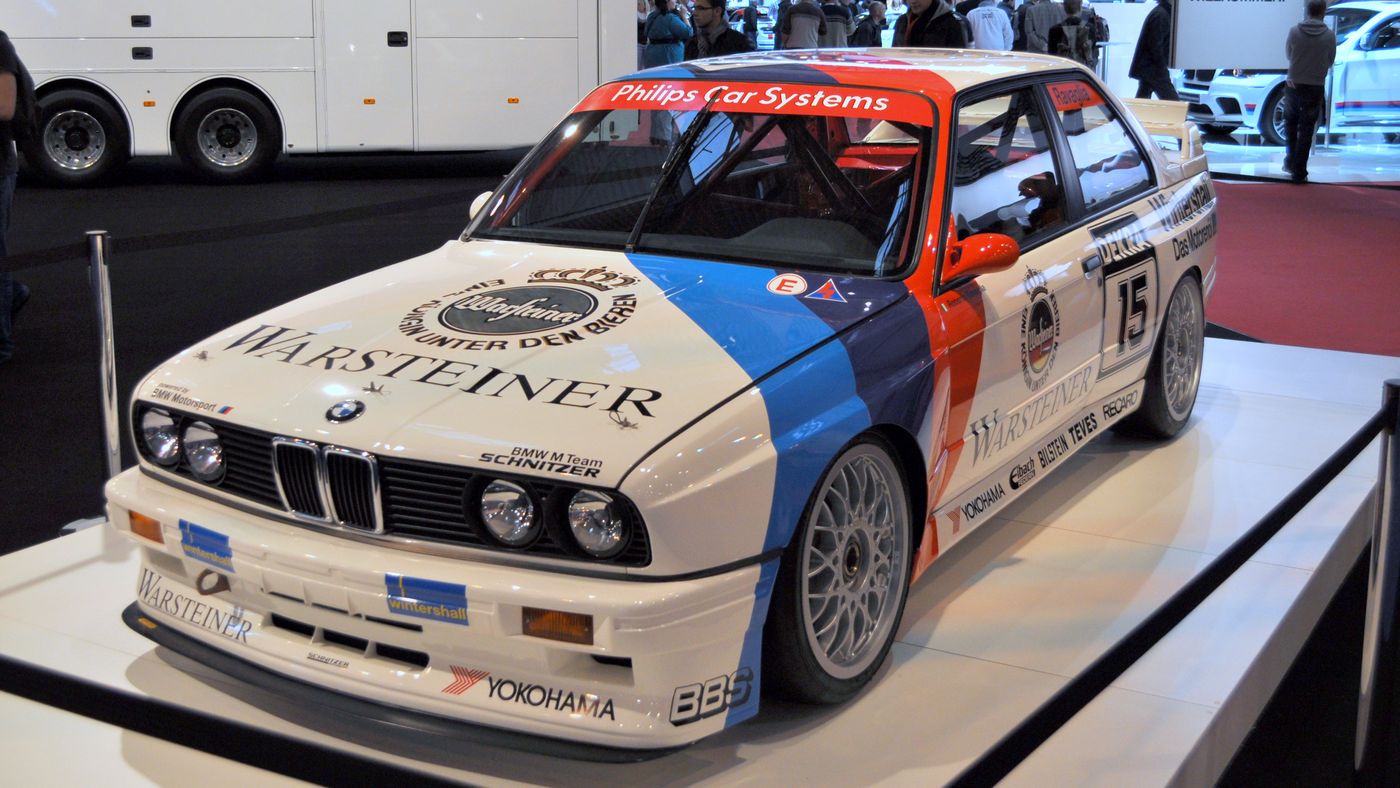
E30 M3 - The Grail
Let me set expectations first. If you want an E30 M3 in 2026 you are buying a piece of BMW motorsport history at motorsport-history prices. This is not a weekend hobby car on a real budget anymore. The E30 market peaked during the 2021-2022 collector-car boom, settled back about 10 percent in 2024, and has been flat to slightly up through 2026. Nobody is getting rich flipping E30 M3s this year but nobody is losing money either.
The S14 Engine
The S14 is the reason the E30 M3 exists. Four-cylinder, 2.3 liters, roughly 192 hp in US cat-equipped spec, revs to 7,250 rpm, and carries a motorsport-derived cylinder head that is essentially half of the M1 supercar's M88 six. The block is iron. The head has individual throttle bodies. Valve adjustment is shim-and-bucket, every 30,000 miles, and the job needs a tech who has done it before or you will shim it wrong and eat a cam lobe. I charge three hours for a valve adjust on one of these when customers bring one in.
Best Years 1988 and 1989
For US buyers the 1988 and 1989 production years are the sweet spot. 1988 marked the widest production run for the US market with the best parts availability today, 1989 has the fewest teething issues sorted, and both years avoid the unobtanium-pricing you see on late 1991 cars. 1990 and 1991 US cars are mechanically identical to the 88-89 cars but tend to carry higher miles because they were registered later and often driven harder. That matters on a 35-year-old car.
Evolution and Sport Evolution Variants
Evo I, Evo II and the Sport Evolution (Evo III) were Euro-only. Sport Evolution cars use a 2.5L S14 with 238 hp and lighter body panels. Only 600 were built. 2026 prices for a clean Sport Evo start at $350,000 and climb to $500,000 for documented low-mileage cars. If you are shopping Sport Evo you already know. For 99 percent of US buyers the conversation is about standard US-spec 88-89 coupes.
2026 Pricing
Driver-quality US E30 M3 coupes with 100K-plus miles and cosmetic needs start around $80,000 in 2026. Clean, sorted cars with good service books land at $110,000 to $150,000. Low-mile concours cars are $180,000 and up. Special editions and documented low-ownership cars push past $200,000. A rusty project E30 M3 is still $50,000 because the shell itself is worth that much.
Known Issues
At this age the issues are age-related, not design-related. Rust at the rear subframe mounts, trunk floor, rear arches and rocker panels. Wiring harness insulation goes brittle. Fuel return lines crack. AC systems are essentially dead on any unrestored car. Electrical gremlins track back to failed grounds. The S14 itself is bulletproof with valve-adjust discipline and a proper cooling-system refresh every 10 years.
Daily Versus Collector
I have a customer who dailies his 1988 E30 M3 in New Jersey year-round. He is an outlier. For the other 99 percent of owners an E30 is a weekend car, a track-day car or a garage queen. At $100K-plus you do not street-park this car. You do not drive it in salt. You do not leave it at the supermarket. Build a different M3 into your daily rotation and keep the E30 for Sundays.
E36 M3 - The Undervalued Gateway
The E36 is my sleeper pick of the entire M3 lineup. For the last twenty years the US S52 E36 M3 was dismissed as the poor-cousin M3 because it did not get the Euro S50B32 with 321 hp and individual throttle bodies. That dismissal created a used-market discount that has only started to unwind in the last five years. A clean 1998 or 1999 US E36 M3 coupe under $30,000 today buys more driving joy per dollar than any other M3 on the market.
The S52 Engine
The US-market S52 is a beefed-up M52. Iron block, aluminum head, single VANOS on the intake cam, 3.2 liters, 240 hp and 240 lb-ft of torque. It is not revvy like an S50 and it is not exotic. What it is, however, is one of the most bulletproof straight-six engines BMW has ever built. I have S52 cars come through my shop at 250,000 miles still pulling cleanly. Compare that to the S54 in the E46 which has a rod-bearing service item at 100,000 miles, and the S52's durability starts to make sense as a value proposition.
Best Years 1997 to 1999
US E36 M3 production ran 1995-1999. 1995-1996 cars are OBD1.5-to-OBD2 transition cars with some fussy emissions-era behaviors. 1997-1999 cars have the finalized OBD2 setup, updated cooling-system components from the factory, revised VANOS internals and better interior electronics. They also came with the updated M3 sedan (97-98 only) and M3 convertible options if you need the body style flexibility. 1999 was the last production year and cars built that year often got residual-stock upgrades that never made the spec sheets.
Known Issues on the E36
Cooling system is the number-one failure. Plastic radiator end tanks split, water pumps with plastic impellers shed vanes, expansion tanks crack, hoses swell. Budget $1,200 to $1,800 for a full cooling refresh on any E36 M3 you buy that does not have paperwork showing it has been done in the last 5 years. Second is VANOS rattle and slop, usually $800 to $1,200 to rebuild with a Beisan Systems kit. Third is chain guide wear at 150K-plus miles. Fourth is oil filter housing gasket, which weeps onto the alternator and tests your patience.
Subframe Mount Area
The E36 chassis is less prone to rear-subframe tearing than the E46, but it is not immune. The rear subframe mount floor gets stressed over time, especially on track-day cars. Look for factory seam cracking or any repair work in the rear floor when you PPI a car. A reinforcement job runs $2,500 to $5,000 depending on how far gone the floor is.
2026 Pricing
Driver-quality E36 M3 coupes with 100K-150K miles and tired cosmetics land at $15,000 to $25,000 in 2026. Clean, sorted, service-history cars at 80K-100K are $25,000 to $40,000. 1995 Lightweight (LTW, 126 built) examples command $100K-plus because of rarity. Euro-import S50B32 cars with paperwork hit $40,000 to $80,000 depending on mileage. The M3 sedan commands a small premium over the coupe because only two model years got it.
Manual Options on the E36
US E36 M3 came with a 5-speed Getrag 420G manual standard, with SMG I optional in 1997-1999. Skip the SMG. SMG I was BMW's first automated-manual and it was not good. Hydraulic pumps fail, accumulators leak, shift quality is jerky in traffic, and repair costs exceed the difference in purchase price. A 5MT E36 M3 is what you want. The 5MT shifter feel is one of the best gearboxes BMW ever fitted to a 3-series.
Coupe Versus Sedan
The sedan was only offered 1997-1998 in the US, making it rare but not legendary. Coupe is the purist's choice. Convertible carries a weight penalty and chassis flex that track-day buyers hate. For pure driving I buy the coupe every time. For a sensible M3 daily with real back seats and rear doors, the sedan is defensible and often priced the same as a coupe because the market has not woken up to its rarity yet.
E46 M3 - The Sweet Spot
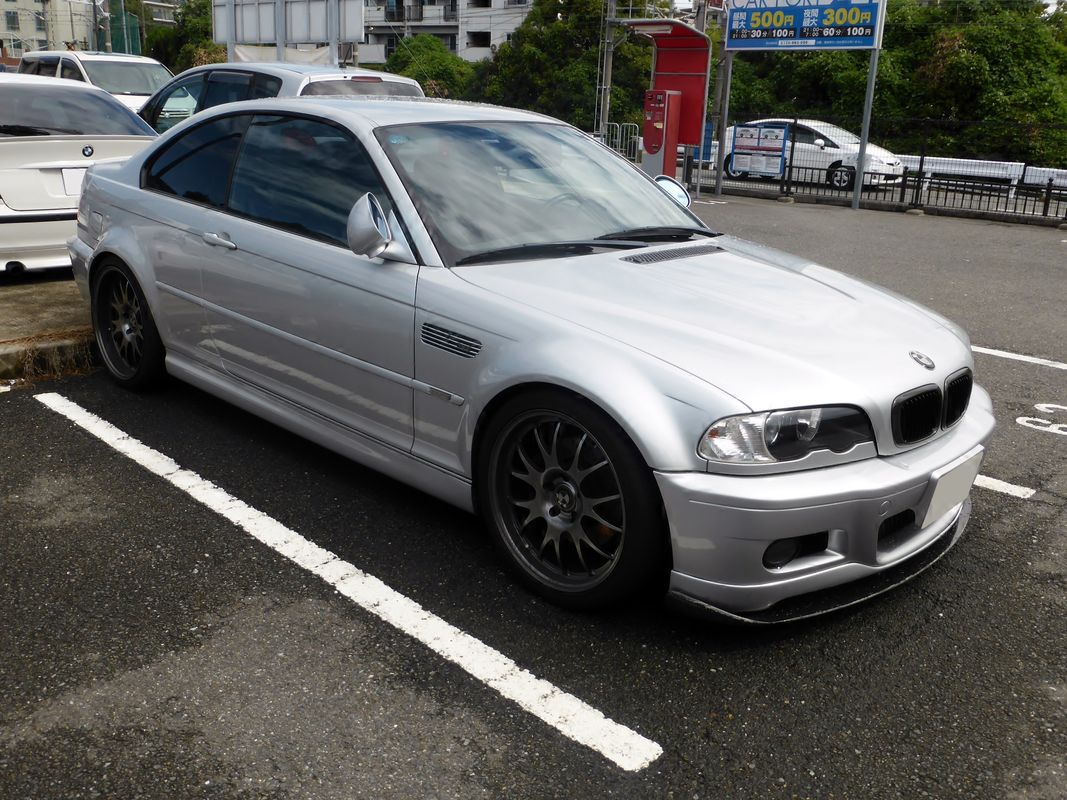
If you made me pick the single most-balanced M3 ever built I would pick a 2005 ZCP 6MT coupe in Silver Grey over Imola Red interior, and I would sleep fine at night. The E46 is the generation where BMW hit every single note right. Chassis feel rivals a Porsche 996 GT3. S54 engine makes noises that still give me goosebumps. The interior has real analog gauges and a manual shift lever that moves through the gates like a well-oiled bolt-action rifle. The E46 is the M3 enthusiasts point to when they want to explain what BMW used to be.
The S54 Engine
S54 is a 3.2L straight-six with individual throttle bodies, double VANOS, 333 hp US (343 hp Euro), and a redline at 8,000 rpm. It is a high-revving motorsport-derived engine with torque-peak at 5,000 rpm and the real fireworks happening above 6,500 rpm. That means it wants to be driven. It also means it eats rod bearings every 60,000 to 100,000 miles, and that brings us to the E46 tax.
Best Years 2004 to 2006 ZCP
US E46 M3 production ran 2001-2006. 2001-2003 cars are pre-facelift, pre-recall and pre-updated-bearing. Cars built after the May 2003 production cutoff got revised rod-bearing material and are materially safer against bearing failure. 2004-2006 post-facelift cars are the sweet spot. The 2005-2006 Competition Package (ZCP, US-market naming) is the enthusiast prize. Only 2,410 US ZCP cars were built. ZCP adds CSL-style 19-inch wheels, a quicker steering rack ratio, Alcantara wheel, bigger brake rotors, unique alignment specs and a firmer damper tune. If you can afford ZCP money, buy ZCP. If you cannot, a non-ZCP 2005-2006 6MT coupe is the next-best pick.
Rod Bearing Reality
Here is the math. E46 M3 rod bearings are a known service item. BMW specified the factory bearings too tight on early production. Even post-May-2003 cars with the revised bearing material should get a prophylactic bearing replacement somewhere between 60,000 and 120,000 miles. DIY bearing service on an E46 M3 runs $1,500-$2,500 in parts and your weekend. Shop service with the mounts out, fluids changed, alignment done and a proper inspection runs $3,500 to $5,000 depending on market. If the car you are buying does not have documented rod bearing service, budget $4,000 into your purchase price.
S54 (E46 M3) Spark Plug Replacement Guide
Subframe Reinforcement Is Mandatory
Every E46 M3 coupe ever built is at risk of rear subframe tearing from the chassis floor. I have seen 60,000-mile cars with cracks and 180,000-mile cars that were fine. SMG cars report slightly higher crack rates than 6MT cars because SMG shift-shock sends torque spikes through the mounts. Convertibles are slightly less affected because the chassis moves more and absorbs load differently. Reinforcement plates plus new subframe bushings plus new differential mounts plus new trailing arm bushings is the full refresh, $2,500 to $5,000 shop depending on market. Any E46 M3 you buy needs this done or budgeted.
SMG Versus 6MT
6MT is the pick. SMG II on the E46 is not SMG I - it is a more advanced hydraulic automated-manual, but it is still a single-clutch robotized gearbox and it still shifts with a lurch in traffic. SMG pump and accumulator failures are common. Repair parts are expensive and some rebuild shops have 3-month backlogs. SMG cars should be discounted 15-25 percent against an equivalent 6MT. The 6MT shifter feel is legendary. Buy the 6MT.
Competition Package (ZCP)
ZCP is the enthusiast's target. 19-inch forged Style 163M CSL-replica wheels, faster steering rack, Alcantara wheel, upgraded brakes, Electronic Damper Control upgrade on some cars, unique alignment. 2,410 US units make ZCP a production-verified rarity. 2026 pricing for clean ZCP 6MT coupes is $75,000 to $110,000 and they are still appreciating. If your budget supports ZCP, this is the car.
Convertible Caveats
E46 M3 convertibles are worth 25-35 percent less than equivalent coupes in 2026. The top motor is expensive to rebuild. Chassis flex is real. Rear seat access is fine. Top-down experience is glorious on a summer morning. If you never intend to track the car and you live somewhere warm, a convertible is a legitimate value buy. If you want to eventually take the car to a track day, buy the coupe.
E92 M3 - The Last NA V8
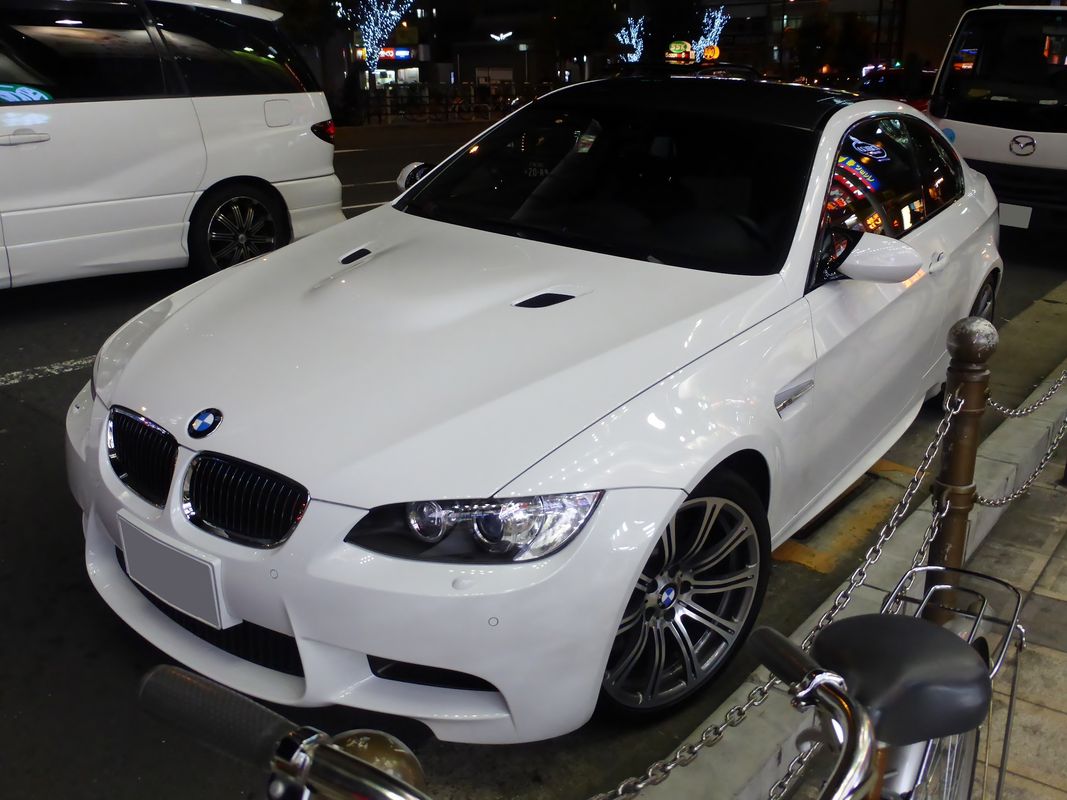
The E92 is special because it is the only M3 ever built with a V8, and it is the last naturally aspirated M3. Every M3 since has been turbocharged. The S65 4.0L V8 is a de-stroked derivative of the S85 V10 from the E60 M5, it revs to 8,300 rpm, and it makes a noise that has no direct competitor in anything BMW has built before or since. The E92 will never make that noise again, which is why values on clean 6MT coupes are going one direction.
The S65 Engine
S65 V8, 4.0 liters, individual throttle bodies, dry-sump oiling setup with oil pickups (not a true dry sump), 414 hp at 8,300 rpm, 295 lb-ft of torque at 3,900 rpm. Eight individual intake trumpets, eight individual throttle butterflies, a howl at redline that I can describe only by saying "imagine a fighter jet and then shrink it into an engine bay." This is the reason to buy an E92. Nothing else BMW makes sounds like this and nothing else will.
Best Years 2011 to 2013
E92 M3 production ran 2008-2013. 2008-2009 cars are the earliest and cheapest, they pre-date DCT availability (DCT arrived 2009 model year), they do not have updated rod-bearing material, and they are the value-entry into S65 ownership. 2011-2013 cars have the mid-cycle updates - revised rod-bearing material, better throttle-actuator reliability, VANOS solenoid revision, and many were optioned with the Competition Package which added lowered ride height, revised dampers, 19-inch wheels and tweaked DSC calibration. A 2011-2013 Competition Package car is the one to target.
Rod Bearings
Same story as the E46, different engine. S65 rod bearings are a known service item. BMW updated the bearing material mid-2011 production, so 2011-2013 cars have measurably better bearing tolerances than 2008-2010 cars. That said, every E92 owner I know who plans to keep the car has done prophylactic bearings somewhere between 60,000 and 80,000 miles. Cost is $3,500 to $4,500 shop, $1,500 to $2,500 DIY. If the car does not have bearing-service paperwork, deduct the cost from your offer.
Throttle Actuators
The S65 has two throttle actuator assemblies, one per bank. These are small servo motors that operate the individual throttle butterfly linkages. They fail with age, and when they fail they throw "Drivetrain Malfunction" codes and put the car into limp mode. Rebuilt actuators are $700-$1,200 per bank, new OEM are $1,500-$2,500 per bank, and both banks usually want replacement at the same time. Plan on $1,500-$2,500 total actuator service at some point in your ownership.
VANOS on the S65
S65 VANOS solenoids fail with age. Symptoms are cold-start rattle, rough idle at low engine temperature, and sometimes limp mode. OEM solenoid replacement runs $400-$800 depending on how many you replace and where. This is not a catastrophic failure, just a maintenance item.
DCT Versus 6MT
E92 M3 offered a 6-speed manual or a 7-speed M-DCT dual-clutch. Both are legitimate picks. 6MT is the collectible, the enthusiast choice, and the long-term value hold. DCT is slightly faster on-track, more comfortable in traffic, and usually cheaper on the used market right now. DCT wants fluid service every 40,000 miles, a $500-$800 item. 6MT wants clutch service every 60,000-80,000 miles depending on driving style. For pure investment in 2026, buy the 6MT. For best driving experience day-to-day, either is fine.
Convertible and Sedan
E92 is the coupe, E93 is the convertible, E90 is the sedan. E90 sedan was only built 2008-2011, making it the rarer body style. E90 prices track E92 coupes within 5-10 percent. E93 convertibles are 20-30 percent less than equivalent coupes because of weight, chassis flex and the folding hardtop's complexity. For collector investment, target E92 coupe or E90 sedan. For top-down driving with a V8 soundtrack, E93 is a legitimately good deal in 2026.
S65 (E9x M3) Spark Plug Replacement Guide
F80 M3 - Best Performance Per Dollar
The F80 M3 lost the V8 and gained two turbochargers. The enthusiast community hated it at launch because the naturally aspirated soundtrack was gone and the exhaust note sounded artificial. A decade later the F80 is regarded as a genuine modern classic. The S55 twin-turbo straight-six is a tuning platform with almost no equal in its price bracket. 500 whp on the stock bottom end is a weekend afternoon's work. For 2026 buyers, the F80 is the best performance-per-dollar M3 in the lineup.
The S55 Engine
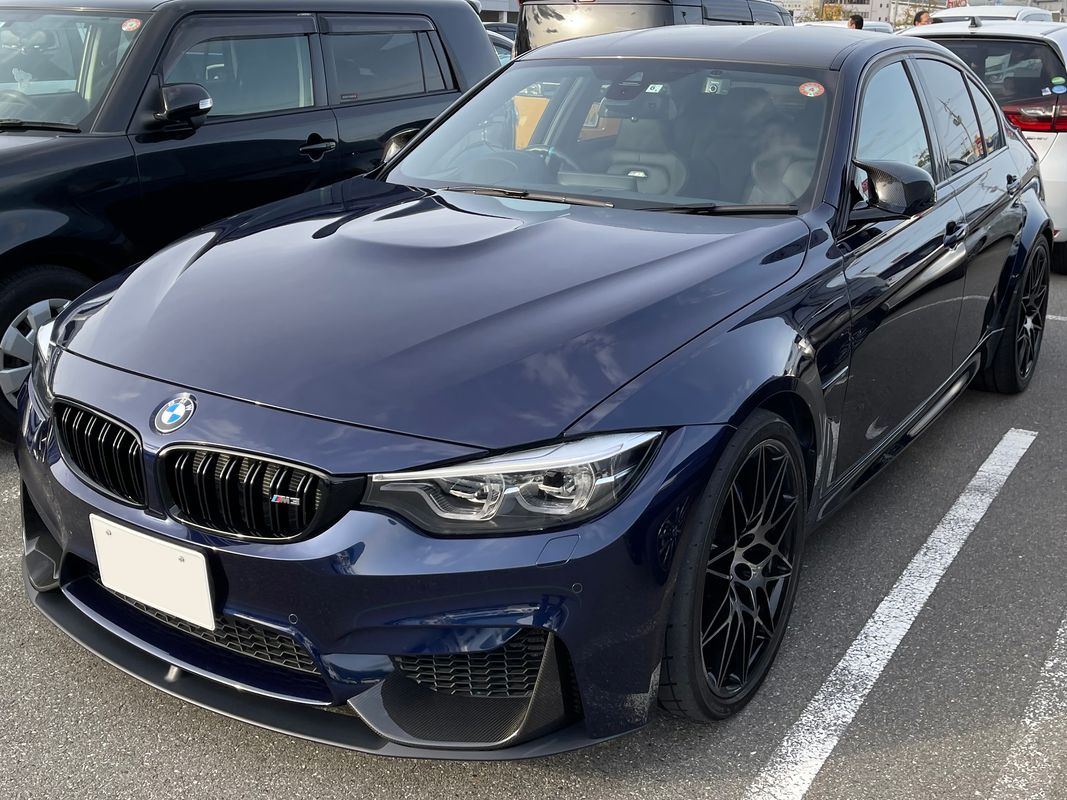
S55 is a 3.0L twin-turbo straight-six shared with the F82 M4 and the F87 M2 Competition. 425 hp in base F80, 444 hp in Competition, 453 hp in the M3 CS. Closed-deck block, forged crank, forged rods, direct injection, port-injection added in LCI facelift cars. Redline 7,600 rpm. Boost ceiling on stock internals is real and tuners regularly run 25 psi all day long. This engine will make stupid horsepower and it will do it reliably if you respect the crank hub and the charge pipe.
Best Years 2017 to 2018 or 2019 CS
F80 production ran 2015-2018 with the 2019 CS as a limited run-out edition. 2015-2016 cars are the earliest, they carry higher crank-hub incidence, and they have pre-LCI interior electronics. 2017-2018 post-LCI cars got revised LED lighting, updated iDrive, revised DCT software, and many were delivered with the crank-hub service bulletin already applied. 2019 M3 CS is the crown jewel - 1,200 global units, 453 hp, carbon-fiber roof and hood, unique suspension, lighter curb weight, and either 6MT or DCT. CS pricing is already $95K-$130K and climbing.
Crank Hub Service Bulletin
This is the single most important F80 topic and you need to understand it before you shop. The S55 uses a press-fit crank hub to drive the timing chain and accessory drive. Under aggressive driving, on tuned cars, or on tracked cars, that press-fit hub can slip relative to the crankshaft. When it slips, valve timing goes off and pistons meet valves. That is an engine-out repair at $15,000-$25,000. BMW issued a service-bulletin fix using a revised torque spec and adhesive, but the aftermarket answer is a pinned or keyed hub. Studio RSR, Litchfield, CarBahn and RK Autowerks all do this work at $1,750 to $2,500 installed. If you buy an F80 and you intend to tune it or track it, this is a mandatory upgrade. On a stock pump-gas street car the incidence is low but non-zero.
Charge Pipe
OEM F80 charge pipe is plastic. It cracks. Even on stock cars. On any tuned car it is a matter of when, not if. Aftermarket aluminum or silicone charge pipes from Wagner Tuning, VRSF, ECS and others run $300-$500 installed. This is a $400 upgrade that every F80 should have before any tune goes on. I would not drive a tuned F80 on the factory charge pipe for a week.
DCT Refresh
F80 DCT wants fluid service every 40,000 miles. Cost is $500-$800 shop, or DIY with a kit for around $200 in fluid and filter. Skipping DCT service is the fastest way to write a $4,000 mechatronic-unit repair. Look for the service record in any F80 you buy.
4.90 Diff Swap
Some late-production DCT F80s came with a 4.90 final drive, which is short and makes the car feel punchier but eats high-gear cruising RPM. Earlier cars got 3.85 or 3.62 ratios. Most owners love the 4.90 for street driving. Track-day buyers sometimes swap to a longer ratio. This is not a problem, just a preference point to be aware of when you test drive.
DCT Versus 6MT Tuning
F80 DCT handles tuned power more reliably than 6MT. Stock F80 6MT clutches start slipping around 500-550 whp and want an upgraded clutch and flywheel at that level. DCT cars can run stock clutches to 600-plus whp on well-tuned setups. For pure tuning builds, DCT is the platform. For driving feel and long-term collector status, 6MT is the pick. Both are legitimate.
CS Edition
M3 CS (2018 Euro, 2019 US) is 1,200 units globally, 453 hp, carbon roof, carbon hood, forged wheels, Michelin Cup 2 tires from the factory, lighter curb weight, revised suspension, revised steering. Both 6MT and DCT were offered. CS is the future-classic F80. $95K-$130K in 2026 for clean examples. If you can find one with documented crank-hub service and a clean carfax, buy it.
S55 (F80 M3) Spark Plug Replacement Guide
G80 M3 - Daily King
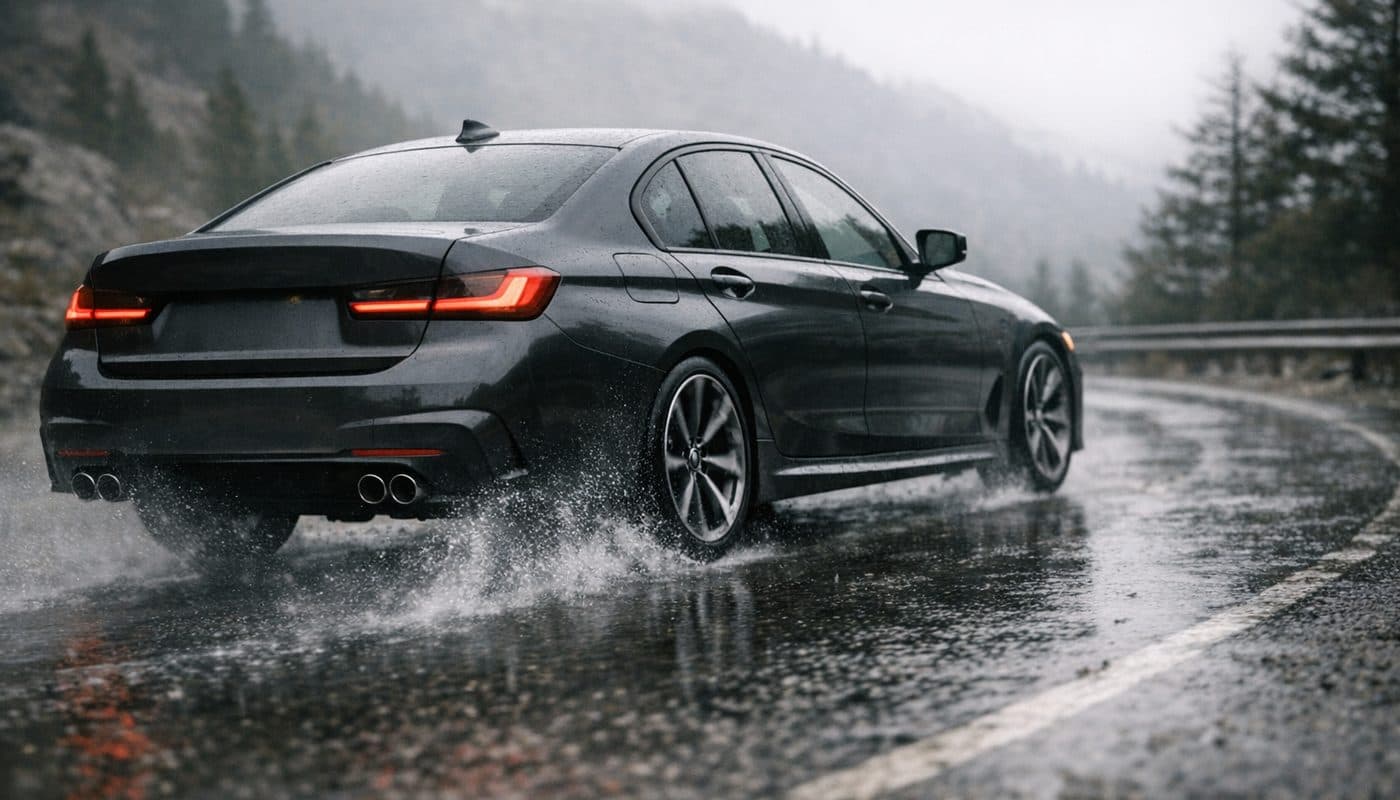
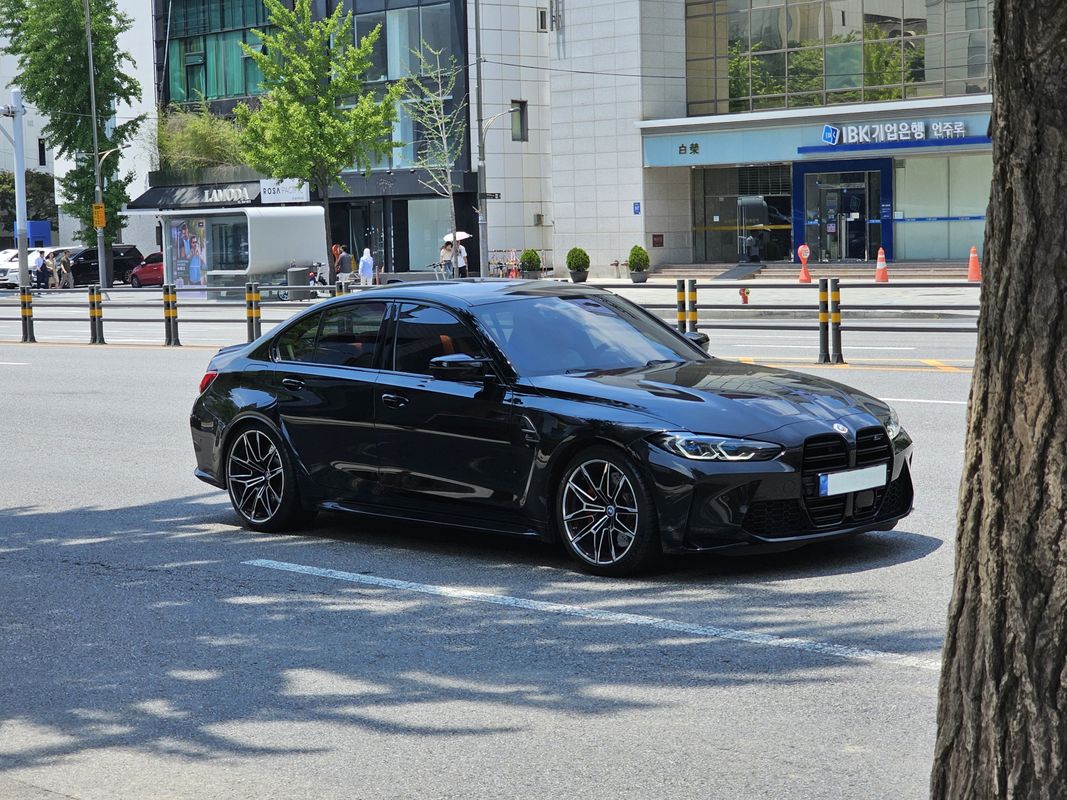
The current-generation G80 M3 is the most capable M3 ever built. It is also the most controversial because of that grille and because it launched with a string of iDrive 8 software glitches that took BMW 18 months to fully fix. Looking past the grille and past the launch-year teething issues, the G80 is a genuinely extraordinary car. It is the first M3 with all-wheel drive, the first M3 Touring wagon (Euro market), and it is the M3 with the best all-weather, all-use capability BMW has ever made.
The S58 Engine
S58 is a 3.0L twin-turbo straight-six derived from B58 architecture with closed-deck block, forged crank, forged rods, direct and port injection, and revised head flow. 473 hp in base G80, 503 hp in Competition, 523 hp in Competition xDrive, 543 hp in the G80 CS. Torque in all trims is 479 lb-ft, which is more than double what my G20 330i makes. After five years on the market, S58 has no catastrophic failures reported. No rod-bearing scare. No crank-hub issue. The S58 may be the most durable engine BMW has ever put into an M3.
Best Years 2022 to 2023
G80 production started 2021 model year. 2021 launch cars had iDrive 8 glitches, valve-cover gasket weep on some production runs, and early diff-bushing complaints. Most of those were software fixes applied at dealer visits or TSB-covered hardware swaps. 2022-2023 production cars have everything sorted, the initial depreciation taken, and the same mechanical platform as brand-new 2026 cars. 2023 introduced the G80 CS, a 543 hp limited edition with AWD and DCT only. For 2026 used-market buyers, 2022-2023 Competition xDrive is peak bang-for-buck.
RWD Versus xDrive
G80 base is rear-wheel drive only, offered only with the 6MT, and makes 473 hp. G80 Competition is rear-wheel drive with the ZF 8-speed automatic at 503 hp. G80 Competition xDrive is all-wheel drive with the ZF 8-speed at 503 hp (later bumped to 523 hp). xDrive has a 2WD mode that electronically disables the front axle. The xDrive car is faster to 60, faster on any rain-affected surface, and just faster overall. The base RWD manual is the enthusiast pick and the future-classic. Competition xDrive is the rational daily-driver pick.
6MT Versus 8HP
The 8HP ZF automatic is faster than the 6MT manual. Not close. The 8HP-equipped Competition hits 60 mph in 3.8 seconds, the 6MT does it in 4.1. In everyday driving the 8HP is also smoother, more comfortable, and will hold value better because that is what most buyers want. The 6MT is the purist pick and the long-term collector pick because BMW has confirmed that the Neue Klasse electric platform will not carry a manual option. The G80 6MT is the end-of-era M3 manual.
Touring Wagon
M3 Touring (Euro market only in the US, not imported) is a rare-unicorn pick. All-wheel drive, 8HP, 510 hp, carbon-fiber roof, full wagon practicality. If you live in Europe and you are shopping M3 right now, the Touring is the best M3 Touring you will ever get because it is the only M3 Touring BMW has ever built.
CS Edition
G80 CS (2023-2024 model years) is 543 hp, AWD, DCT only, carbon bucket seats, lighter weight, revised suspension, track-focused calibration. Production is limited. 2026 pricing lands at $110,000-$140,000. This is the G80 collector pick.
S58 (G80 M3) Spark Plug Replacement Guide
Transmission Debate Per Generation
Every M3 generation has its own transmission politics and getting the right answer matters as much as getting the right year. Here is how I explain it to buyers.
E30 Transmission
Getrag 265 5-speed manual, only option, non-issue. The shifter feel is dated by modern standards but in the context of a 1988 sports sedan it is excellent. No automatic was ever offered on the E30 M3.
E36 Transmission
Getrag 420G 5-speed manual is the default and the pick. SMG I was optional 1997-1999 on US cars and should be avoided unless the price is so low that you can afford to swap it to manual. SMG I pumps and accumulators are unreliable. Manual is cheaper to repair, more fun to drive, and holds value better.
E46 Transmission
Getrag 420G 6-speed manual versus SMG II. 6MT is the pick. SMG II is quicker on paper but feels jerky in traffic, has expensive-to-repair hydraulic hardware, and is not rewarded by the used-car market. SMG cars typically trade for 15-25 percent less than equivalent 6MT cars. If you see an SMG-to-6MT conversion, that is a well-loved car.
E92 Transmission
6MT Getrag GS6-53BZ versus 7-speed M-DCT dual-clutch. Both are legitimate. 6MT is the enthusiast pick and the long-term collector. DCT is faster, more daily-friendly, and the used market has moved to appreciate DCT cars. Neither is wrong.
F80 Transmission
6MT versus 7-speed DCT (same M-DCT architecture as E92, revised calibration). DCT holds tuned power better and is faster. 6MT is the purist pick and the rarer pick - roughly 25-30 percent of F80 production was 6MT. For long-term value, buy the 6MT. For driving feel, either works.
G80 Transmission
6MT on base RWD only. ZF 8HP 8-speed automatic on Competition, Competition xDrive and CS. 8HP is faster, more comfortable, and commercially dominant. 6MT is the future-classic end-of-era M3 manual. Buy the 8HP if you want pace. Buy the 6MT if you want the last manual M3 BMW will ever build.
Collector Status by Generation
M3 appreciation is uneven across the lineup. Some generations have already peaked. Some are rising fast. Some are still undervalued. Here is my read for April 2026.
E30 - Peaked
E30 values peaked during the 2021-2022 collector-car boom, settled back roughly 10 percent in 2023-2024, and are flat to slightly up through 2026. You will not lose money owning an E30, but you will not make meaningful money either. It is a preservation asset at this point, not a speculation.
E36 - Rising
E36 US S52 cars have appreciated 30-50 percent over the past five years. Still undervalued relative to the rest of the M3 lineup. A clean 1998-1999 coupe at $25,000-$35,000 today is the cheapest way into real M3 ownership with a real M badge, and that fact is making the market move. Next five years I expect another 20-30 percent appreciation on clean examples.
E46 ZCP - Rising Fast
E46 ZCP 6MT coupes are the fastest-appreciating M3 in the lineup right now. Non-ZCP E46s are stable with modest appreciation. CSL Euro imports are in their own stratosphere at $150K-$250K.
E92 - Rising
E92 values were stagnant for most of the 2010s and have turned upward since 2022. 6MT cars lead the appreciation. Frozen-color specials are well over $60,000. Lime Rock Edition cars are $80K-$110K. Standard E92 coupe is appreciating at 5-10 percent per year now that the "last NA M3" narrative has become mainstream.
F80 CS - Rising
F80 base and Competition are stable. F80 CS is rising. 6MT CS cars command the biggest premium. 2019 CS in Lime Rock Grey with documented crank-hub service is a blue-chip buy at today's prices.
G80 - TBD
G80 is too new to have collector status yet. The base 6MT RWD will be a future classic because it is the last M3 manual. The Competition xDrive is a great daily that will depreciate like any modern BMW for the first 6-8 years. G80 CS will appreciate faster than standard G80 simply because of production numbers.
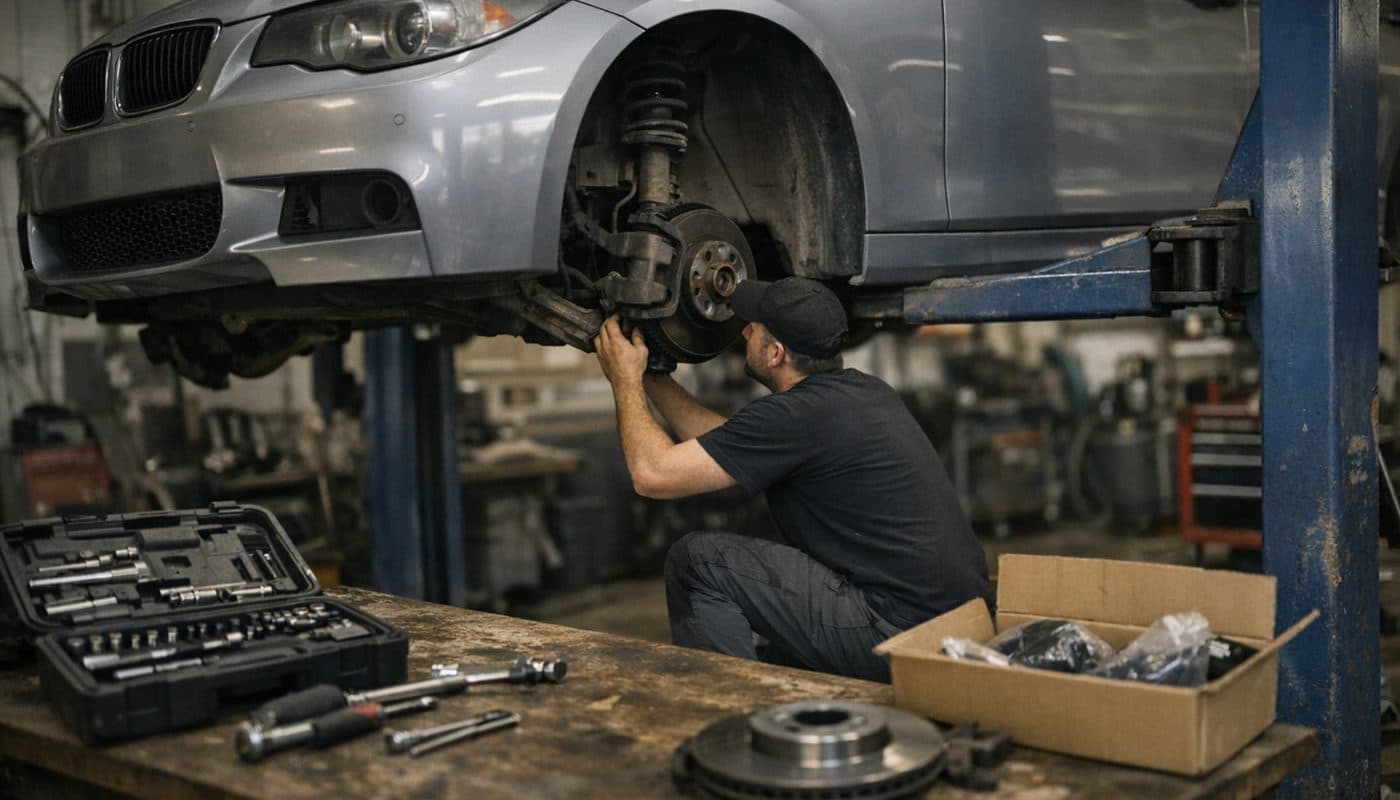
Mandatory Preventive Maintenance Before Buying
Every used M3 has a preventive-maintenance list that is not optional. Budget for these before you sign a bill of sale or your ownership will get expensive fast.
E46 and E92 Rod Bearings
Both S54 and S65 have rod-bearing service as a when, not an if. If the car does not have documented prophylactic bearing service, deduct $3,500 to $4,500 from your offer price and schedule the service within the first 10,000 miles of ownership. DIY drops it to $1,500-$2,500. This is the single most important maintenance item for E46 and E92 M3 ownership.
E46 Subframe Reinforcement
Mandatory on every E46 M3 coupe. Plates welded to the rear floor at each subframe mount, new subframe bushings, new differential bushings, new trailing arm bushings. $2,500 to $5,000 shop depending on market and how far gone the floor is. If the car does not have it done, you do it within the first 20,000 miles of ownership.
F80 Crank Hub
Mandatory on any tuned F80 and strongly recommended on any F80 that will see track duty. Pinned or keyed hub, $1,750-$2,500 installed. On a stock street-driven F80 with pump gas, the factory service bulletin applied is probably enough but the aftermarket solution is cheap insurance for a tracked car.
G80 - Mostly Clean
G80 has no rod-bearing scare, no crank-hub issue, and no catastrophic failures reported. Walnut-blasting intake valves at around 60,000 miles is standard direct-injection maintenance. Keep up with BMW service interval, do DCT (no wait, G80 is ZF 8HP) automatic transmission fluid service at 50,000 miles, and the car should be trouble-free.
2026 Pricing Reality
Here is the real 2026 used-market pricing. These are April 2026 asking prices based on BAT sold, PCARMARKET sold, Classic.com range data and my own weekly scan of AutoTempest, CarGurus and Facebook Marketplace. Pricing moves, so treat this as a snapshot, not gospel.
| Trim | Low | Mid | High Mint |
|---|---|---|---|
| E30 M3 std | $75K | $100K | $150K |
| E36 M3 Coupe | $15K | $25K | $40K |
| E46 M3 ZCP 6MT | $45K | $60K | $70K+ |
| E92 M3 Comp DCT | $40K | $55K | $70K |
| F80 M3 CS | $60K | $70K | $85K |
| G80 M3 Comp | $65K | $80K | $90K |
E30 M3 std
- Low
- $75K
- Mid
- $100K
- High Mint
- $150K
E36 M3 Coupe
- Low
- $15K
- Mid
- $25K
- High Mint
- $40K
E46 M3 ZCP 6MT
- Low
- $45K
- Mid
- $60K
- High Mint
- $70K+
E92 M3 Comp DCT
- Low
- $40K
- Mid
- $55K
- High Mint
- $70K
F80 M3 CS
- Low
- $60K
- Mid
- $70K
- High Mint
- $85K
G80 M3 Comp
- Low
- $65K
- Mid
- $80K
- High Mint
- $90K
Context on the numbers above. "Low" is a driver-quality car with higher miles, cosmetic needs, and maintenance catch-up required. "Mid" is a clean, sorted car with good service history and presentable cosmetics. "High Mint" is a concours-quality or low-mile example with full documentation. For E46 ZCP in particular, "High" can go well past $70K for a documented low-mile car; I have seen a 25K-mile ZCP 6MT sell at $125K on BAT in late 2025. Market extremes exist.
Test Drive Inspection Per Generation
Here is my test-drive checklist per generation. I do not hand over money until every item on the relevant checklist is clean.
E30 Test Drive Checklist
Listen for top-end tick (valve shim due), check for VANOS operation (1989+ Euro only), look for rust at the rear subframe mounts and trunk floor, verify AC works, check all electrical (power windows, central locking, sunroof), confirm no odometer-tampering signs on the mechanical cluster, PPI by an E30 specialist before purchase.
E36 Test Drive Checklist
Cooling system receipts (should be within 5 years), VANOS operation (pull hard in 2nd gear from 3,500 rpm and listen for rattle), chain guide noise at cold start, subframe mount visual inspection, verify interior electronics all work, SMG cars require PPI by SMG-literate shop.
E46 Test Drive Checklist
Rod bearing service paperwork or budget for it, subframe reinforcement paperwork or budget for it, VANOS rattle (listen cold-start and under load), SMG pump cycling (listen for pump sound at rest; should cycle briefly on and off), clutch engagement point if 6MT, all gauges functional, M-button behavior normal, no warning lights on the dash.
E92 Test Drive Checklist
Rod bearing paperwork or budget for it, VANOS solenoid behavior, throttle actuator behavior (Drivetrain Malfunction warning ever?), DCT fluid service records (every 40K), cold-start rattle duration (more than 2 seconds is a red flag), M-button power level, S65 redline pull confirms VANOS and throttle actuator health.
F80 Test Drive Checklist
Crank hub service paperwork (critical), charge pipe condition or aftermarket replacement, DCT fluid service records, any tune present (Cobb, JB4, etc) - ask for stock file, turbo whistle normal (no abnormal high-pitched whine), boost gauge behavior (Competition and CS have digital), Competition Package confirmed via option sticker or BMW VIN decode.
G80 Test Drive Checklist
iDrive 8 software version (must be latest), any warning lights (especially iDrive or drivetrain), rear diff bushing noise on early 2021 cars, xDrive 2WD mode functional (Competition xDrive), 8HP shift quality normal (no flares or harsh downshifts), M-drive profile behavior, Michelin Cup 2 tread depth if CS (tires are $3,000 replacement cost).
FAQ
What Is the Best Year BMW M3 to Buy in 2026
There is no single best year. Best year depends on generation. E30 = 1988-1989. E36 = 1997-1999. E46 = 2005-2006 ZCP 6MT. E92 = 2011-2013 Competition. F80 = 2017-2018 post-LCI or 2019 CS. G80 = 2022-2023. Pick the generation you love, buy the best year inside it.
Which BMW M3 Generation Is the Most Reliable
The G80 with the S58 engine is objectively the most reliable M3 ever made. No rod-bearing scare, no crank-hub issue, no catastrophic failure patterns at 5 years in service. E36 with the S52 is the second-most reliable. E46 and E92 both carry the rod-bearing tax. F80 carries the crank-hub risk.
Are All E46 M3 Rod Bearings Bad
Not bad, but undersized from the factory. Early E46 M3 cars got tighter rod-bearing clearances than ideal, and BMW issued a bulletin updating bearing material for May 2003 production and later. Every E46 M3 should get prophylactic bearing replacement between 60K and 120K miles regardless of production date. It is a $3,500-$4,500 service and it is non-optional for long-term ownership.
Is the E92 M3 V8 Reliable
Reliable with known maintenance items. S65 is a robust V8 but it has three known issues: rod bearings at 60K-80K miles, throttle actuators after 80K miles, and VANOS solenoids after 100K miles. Budget $4,000-$6,000 of preventive maintenance over the first 20K miles of ownership and the engine will run another 150K miles with no drama.
Should I Buy a Manual or DCT F80 M3
DCT for pure performance and tuning headroom. 6MT for long-term collector value. Both are legitimate. F80 DCT holds tuned power better than the 6MT clutch and is faster on paper. F80 6MT is rarer (about 25-30 percent of production), more engaging to drive, and will appreciate faster on the collector market.
Is the G80 M3 a Good Daily Driver
Yes, best M3 daily ever made. Competition xDrive in particular is supernaturally capable in any weather, comfortable for long drives, and quick enough to embarrass supercars. iDrive 8 launch bugs are fixed via software update. Carbon buildup at 60K miles is the only real maintenance concern.
How Much Does an E30 M3 Cost in 2026
Driver-quality US coupe starts at $80,000. Clean sorted examples $110K-$150K. Low-mile concours cars $180K and up. Sport Evolution (Euro) cars are $350K-$500K. A rusty project car is still $50K because the shell itself carries that value.
Is the E36 M3 Undervalued
Yes, still. US E36 M3 with the S52 is the cheapest modern-driveable M3 with a real M badge on the market. Clean 1998-1999 coupes at $25K-$35K are the best-kept value secret in M3 ownership. Appreciation has been 30-50 percent over the past five years and I expect another 20-30 percent in the next five.
Which BMW M3 Is the Best Investment
For maximum appreciation potential in the next 5 years. F80 CS 6MT, E46 ZCP 6MT, E92 6MT Competition with Frozen paint, G80 base RWD 6MT (last manual M3 ever), E30 Sport Evolution if you can find one. Standard-color high-mile examples of any generation are not investment-grade.
What Is the Difference Between E90, E92, and E93 M3
Same mechanicals, different body styles. E90 is the sedan (2008-2011 only, rare), E92 is the coupe (2008-2013), E93 is the folding hardtop convertible (2008-2013). All share the S65 V8 engine, the same chassis and transmissions. E92 coupe is the purist pick, E90 sedan is the rare-body pick, E93 convertible is the value pick because convertibles trade at a 20-30 percent discount.
What Is the Crank Hub Issue on the F80 M3
The S55 engine uses a press-fit crank hub that drives the timing chain. Under aggressive driving or with tuned power, the hub can slip relative to the crankshaft, causing valve timing misalignment and valve-to-piston contact. Fix is an aftermarket pinned or keyed hub at $1,750-$2,500 installed. Mandatory on any tuned or tracked F80.
How Much Is a Rod Bearing Replacement on a BMW M3
E46 M3 (S54): $1,500-$2,500 DIY, $3,500-$4,500 shop. E92 M3 (S65): $1,500-$2,500 DIY, $3,500-$4,500 shop. Both jobs are similar in scope and labor. Shop cost includes fresh mounts, fluids, filters, gaskets and alignment. Budget $4,000 for a proper shop bearing service with all related items refreshed.
Should I Avoid SMG on the E46 M3
Yes, unless the car is significantly cheaper than an equivalent 6MT. SMG II on the E46 is an automated single-clutch hydraulic gearbox. It is quicker than 6MT on paper but feels jerky in traffic, has expensive repair parts, and trades at 15-25 percent discount on the used market. The 6MT is the definitive E46 transmission.
Is the BMW M3 Competition Package Worth It
Yes, in every generation it is offered. E46 ZCP adds the quicker steering rack, bigger brakes, CSL-style wheels and unique alignment. E92 Competition adds lowered ride height, revised dampers and wheels. F80 Competition adds 19 more horsepower, revised wheels, sport exhaust. G80 Competition adds 30 horsepower and the 8HP auto. Competition trims appreciate faster than base cars across the board.
What Is the Last Naturally Aspirated BMW M3
The E92 M3 (2008-2013). S65 4.0L V8, naturally aspirated, individual throttle bodies, 8,300 rpm redline. Every M3 since has been turbocharged. The E92 is why collectors are paying attention to this generation.
Final Verdict by Buyer Type
Here is my decision tree if you are shopping M3 in April 2026.
If You Are a Collector
Buy an E30 M3 in 1988-1989 US spec or a Sport Evolution Euro if budget permits. Next pick, E46 ZCP 6MT coupe. Next, F80 M3 CS 6MT with documented crank-hub service. These three cars will hold value or appreciate. Do not modify any of them. Keep them stock, document every service, and drive them occasionally to keep fluids moving.
If You Are a Daily Driver Buyer
Buy a G80 M3 Competition xDrive, 2022-2023 production, in any color you love. All-weather capable, quick enough to keep up with anything, comfortable for long drives, no major mechanical concerns at this stage of the platform's life. Second pick is an F80 M3 Competition DCT with documented crank-hub service and a charge pipe done. Third pick is a sorted E46 M3 6MT with rod bearings and subframe already done.
If You Are a Track Day Buyer
E46 M3 ZCP 6MT is the chassis-feel winner and the parts-ecosystem leader. E92 M3 Competition with DCT is the soundtrack-plus-speed pick. F80 M3 with pinned crank hub, upgraded cooling, Michelin Cup 2 tires and DCT is the modern track pick with the most headroom. G80 CS is the most capable but also the most expensive to track because tires and brakes scale with the chassis capability.
If You Are an Investment Buyer
F80 M3 CS 6MT, E46 M3 ZCP 6MT, E92 M3 6MT in a Frozen color, G80 M3 base RWD 6MT (last manual M3 BMW will ever build), and any concours-documented E30 if you have the money. Avoid modified cars, avoid undocumented cars, and avoid convertibles across the board.
Kamil Sign-Off
I have spent five years with my hands on these cars. The right M3 is not a spec-sheet answer, it is a use-case answer. Figure out whether you want a collector, a daily, a track car or an investment. Pick the generation that matches. Then pick the best year inside that generation using everything above. That is how you end up with a car you love instead of a car you regret. If you want a deeper read on individual generations, my best BMW M3 every generation ranked piece covers the head-to-head comparisons. For E36 maintenance specifically, see the BMW E36 common problems guide. If you are looking at E9x specifically, the BMW E90 M3 specs review walks through the sedan variant in detail. For an explanation of the VANOS system you will see referenced in every M3 conversation, the what is BMW VANOS primer is the fastest way up to speed. If your budget is looking thin and you are cross-shopping 3-series generations, the best year BMW 3-series guide pairs well with this one. For S54, S65, S55 and S58 engine rankings, see best BMW engines ranked. Cost-of-ownership reality check sits in is BMW expensive to maintain, and my spark-plug guides at S54, S65, S55 and S58 cover the engine-specific maintenance for each M3 generation. Buy the right year, do the preventive maintenance, and enjoy the car. That is the whole game.