BMW Brake Upgrade Guide - Pads, Rotors, Lines & Big Brake Kits
Your BMW's brakes are the single most important safety system on the car, and they're also one of the most overlooked upgrade paths for enthusiasts. Whether you're driving a daily E90 328i through city traffic, running track days in your F80 M3, or pushing an F87 M2 Competition through canyon roads on weekends, the stock brake setup was engineered to a budget and a compromise. BMW builds decent brakes from the factory - nobody's arguing that - but "decent" and "optimized" aren't the same thing. After 15 years turning wrenches on these cars, I can tell you that a proper brake upgrade transforms how a BMW drives more than almost any other single modification.
This guide covers every layer of the braking system: brake pads, rotors, stainless lines, fluid, and full big brake kits for those who want to go all the way. We'll cover platform-specific fitment for E9x, F3x, G2x, and the F8x M cars, because brake specs vary significantly across generations and you can't just bolt on random parts and expect them to work.
Best $/Performance
Pad Upgrade
$50-120
SS Lines
Every 1-2 Years
Fluid Flush
18" Typically
BBK Min Wheel
Brake Pads - The Single Biggest Improvement
Pads are where your money does the most work. The compound determines how much friction you generate, at what temperature range it works best, how much dust it produces, and how loud it is. BMW's OEM pads are typically a soft, low-dust, low-noise compound that wears quickly under any kind of spirited driving. They're fine for 99% of commuters. If you ever push the car hard, they fade fast and they wear out in 20,000 miles.
| Compound | Temp Range | Use Case | Dust | Noise | Brands |
|---|---|---|---|---|---|
| OEM | Low (ambient-300°F) | Commuting | Low | Quiet | BMW OE, ATE |
| Performance Street | Low-Med (ambient-600°F) | Spirited street | Medium | Moderate | Hawk HPS 5.0, EBC Redstuff |
| Street/Track | Med (200-900°F) | HPDE + daily | High | Moderate | EBC Yellow, Pagid RS29, Ferodo DS2500 |
| Full Track | High (400-1400°F) | Track only | Very High | Loud | Hawk DTC-60, Ferodo DS3000, Pagid RS4-2 |
For street driving, the sweet spot is a performance street compound - something with higher bite and better fade resistance than OEM, but still manageable cold and not screaming at every stop light. The Hawk HPS 5.0 is the pad I recommend most often for street use.

Hawk HPS 5.0 Street Brake Pads — HB453B.585
$118.21
For street/track use - the guy who daily drives his car and occasionally hits an HPDE - you want a compound in the "high performance street" category that can handle sustained heat cycles. EBC Yellowstuff, Pagid RS29, or Ferodo DS2500 all work well here. These compounds need some heat to come fully alive, so they're not quite as progressive from a cold start, but once they're up to temp, they're exceptional.
Full track compounds like the Hawk DTC-60, Ferodo DS3000, or Pagid RS4-2 are a different animal. They need operating temperatures of 400°F or higher to generate full friction. Drive to the track on these and your first few street miles will feel dangerously soft. Keep these off your daily driver.
One thing people miss: front and rear compound matching matters. You don't want a full track compound up front and stock in the rear. The rear locks too easily under trail braking and you've just turned your BMW into a spiny top. Match your compounds or at minimum keep the rear one step below the front.
Rotors - Drilled, Slotted, or Plain?
| Rotor Type | Pros | Cons | Best For |
|---|---|---|---|
| Plain/Smooth | Cheapest, strongest, no stress risers | No pad gas venting | Street, daily driving |
| Drilled | Looks good, gas venting | Crack-prone under heat cycling | Mild street use only |
| Slotted | Debris sweep, visual wear indicator, good bite | Slightly more pad wear | Street/track combo |
| Drilled + Slotted | Visual impact, gas venting + sweep | Most crack-prone, most pad wear | Light street use |
| Two-Piece Floating | Lightest, best heat management | $$$, complex install | Dedicated track cars |
Let me be direct about this: for street use, a quality plain rotor is almost always the right answer. The drilled and slotted aesthetic looks good, and there are legitimate reasons to use them, but the marketing claims around cross-drilled rotors specifically are heavily exaggerated.
Cross-drilled rotors were originally designed for race cars running sintered metallic pads, where outgassing was a genuine problem. Modern organic and semi-metallic compounds don't gas the same way. What cross-drilling actually does in practice is create stress concentration points. Under repeated heat cycling - exactly what happens on a track day - those holes can cause cracks to propagate across the face of the rotor.
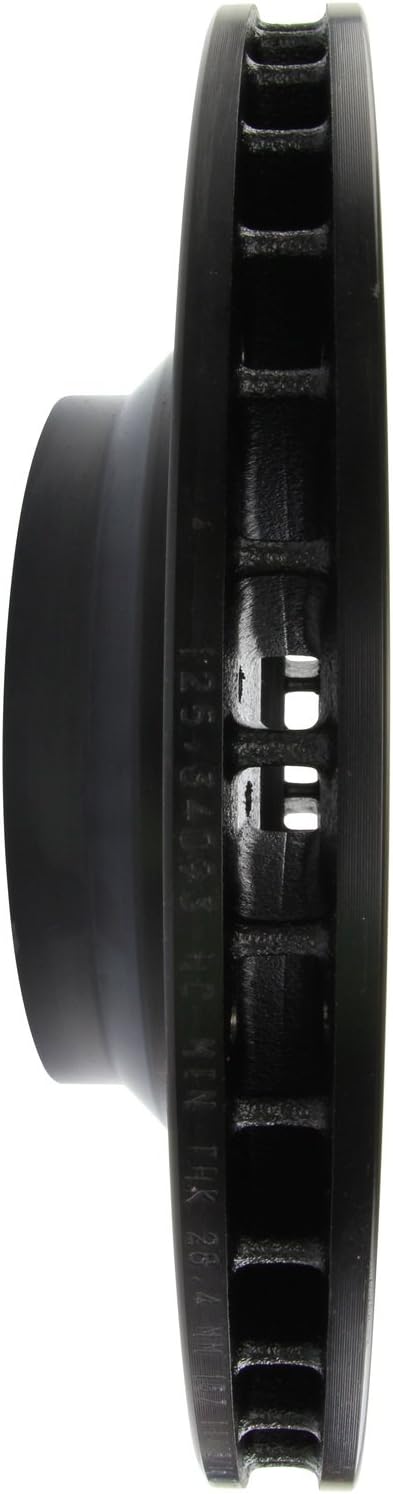
StopTech Drilled & Slotted Front Left Brake Rotor — E90 335i/335d/X1
$211.13
Slotted rotors are genuinely useful. The slots sweep debris and gas from the pad contact surface, help with initial bite, and give you a visual indicator of pad wear as the slots wear down. They're compatible with any pad compound and they hold up well to heat cycling. The trade-off is pad wear - slots are harder on pads than a plain surface.
For a complete upgrade on F30/F32 chassis cars, a matched pad and rotor kit takes the guesswork out:
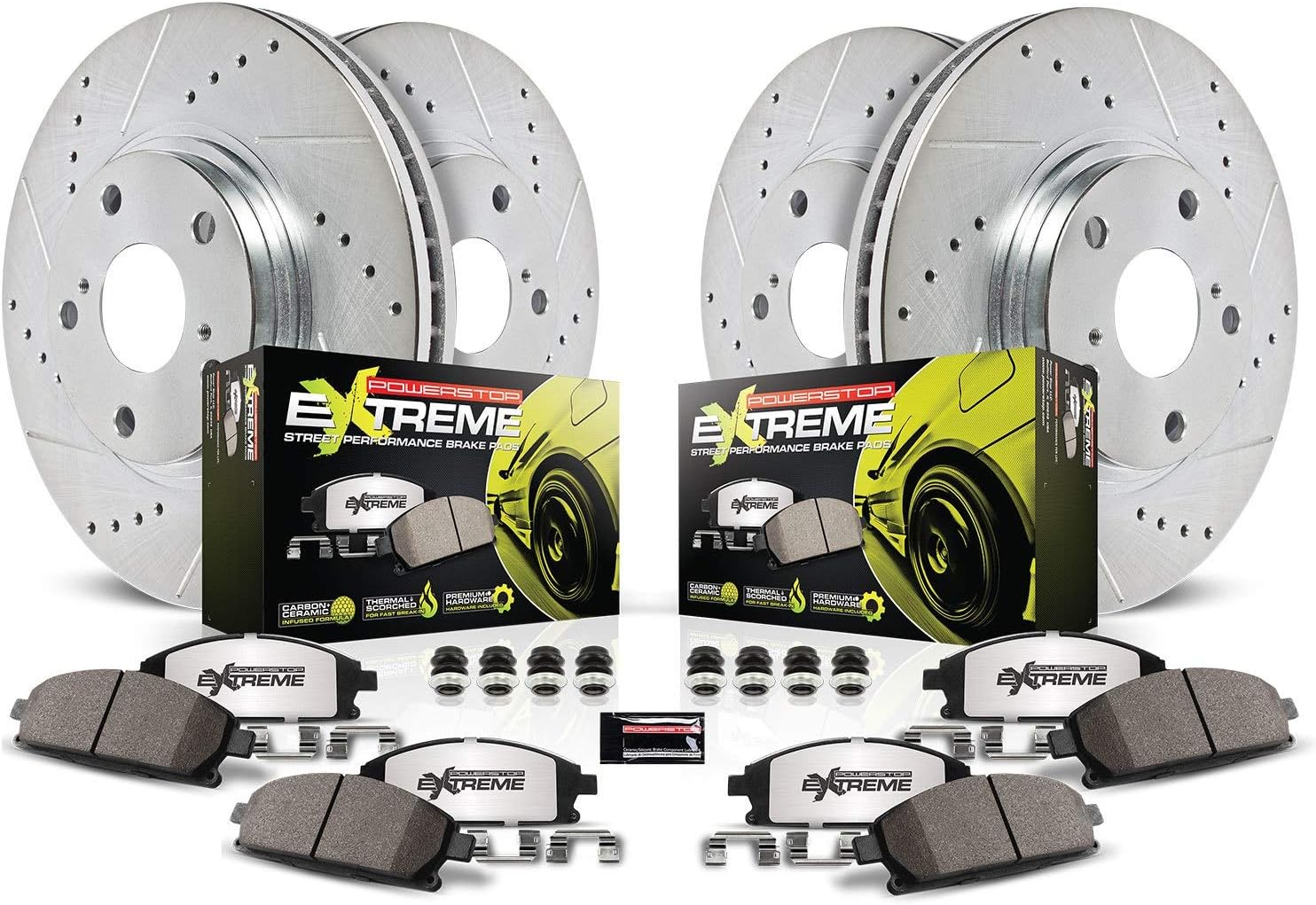
Power Stop Z26 Street Warrior Brake Pad & Rotor Kit — F30/F32
$644.98
Stainless Steel Brake Lines - The $50 Mod That Changes Everything
If you do nothing else from this guide, do this. Stainless steel braided brake lines are the highest bang-for-buck modification on this entire list. Stock rubber brake lines expand under pressure. They're designed to last 10 years, not to provide maximum pedal feel. When you get on the brakes hard, some of your pedal travel is going into expanding that rubber instead of moving fluid to the calipers.
Swap in stainless steel braided lines and the pedal goes from slightly spongy to solid and progressive. You can feel exactly what the pads are doing through the pedal. This improves both safety and confidence in trail braking situations.

StopTech Stainless Steel Brake Line Kit — F30/F32 3 & 4 Series
$54.06
Installation is straightforward for anyone who's done basic brake work. Most kits include new copper washers for the banjo fittings - use them. Plan for 2–3 hours including bleeding time. Total cost is usually $60–$120 for a full set.
Brake Fluid - The Most Overlooked Upgrade
BMW's OEM brake fluid has a dry boiling point around 230°C and a wet boiling point of roughly 155°C. Under normal daily driving, that's adequate. The moment you start generating real heat - aggressive street driving, a track day, even a long mountain descent - you're cooking toward that wet boiling point. When brake fluid boils, you get vapor in the lines. Vapor compresses. That's the terrifying sensation of a pedal going straight to the floor with nothing happening.
Motul RBF 600 has a dry boiling point of 312°C and a wet boiling point of 204°C. For any car that sees track use, high-performance brake fluid isn't optional.

Motul RBF 600 Factory Line DOT-4 Racing Brake Fluid — 500ml 2-Pack
$37.98
High-performance brake fluid does absorb moisture faster than standard DOT 4. For a track car, flush at least once a year or before every track season. For a daily driver, every two years is acceptable. Stick with DOT 4 spec fluids unless you're running a race car with purpose-built caliper seals.
Big Brake Kits - When Stock Isn't Enough
A big brake kit is a serious investment - typically $1,500–$4,000 - and it's not the right first step for most people. If you haven't already upgraded your pads, fluid, and lines, a BBK isn't going to fix your braking problems. It's a tool for sustained high-heat track use where even the best compound in stock-sized rotors can't dissipate heat fast enough.
Wheel clearance is non-negotiable with a BBK. Larger calipers require larger wheels to clear. A 6-piston Brembo front caliper typically requires 18" minimum wheel clearance, and some kits need 19". Check the BBK manufacturer's clearance specs against your aftermarket wheels before ordering. Also worth checking our tire fitment guide for wheel sizing recommendations.
Brake Cooling - The Track Day Secret
Brake cooling is what separates cars that finish track days consistently from cars that are limping in at the end of sessions with glowing rotors.
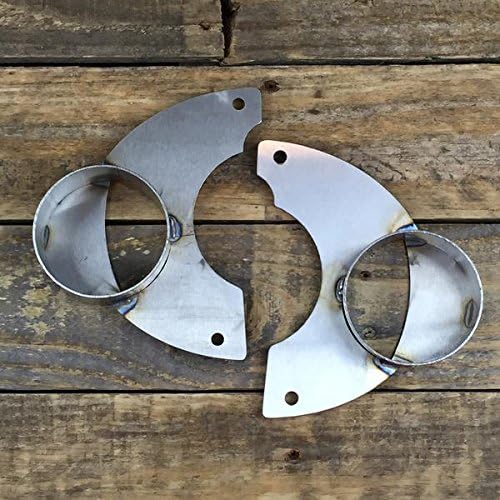
Condor Speed Shop Stainless Steel Brake Cooling Plates — BMW E30
$120.00
The stock BMW brake duct setup is minimal - it's designed for street use. For track use, you want positive airflow directed at the caliper and rotor. Ducting drops rotor temperatures by 150–200°F on a typical track session.
Brake cooling also protects your wheel bearings. BMW wheel bearings are not cheap - a rear carrier on an E9x runs $400–$600 in parts - and sustained high heat from track braking will cook the bearing grease. For cars running high-performance engines, combining brake cooling with an oil cooler makes sense as part of a comprehensive track prep build.
Platform-Specific Brake Specs
| Platform | Front Rotor | Rear Rotor | Front Caliper | Notes |
|---|---|---|---|---|
| E90 328i | 300mm | 300mm | Single-piston | M Sport = 330mm front |
| E90 335i | 330mm | 300mm | Single-piston | Same as 330i |
| E90 M3 (S65) | 360mm | 350mm | Brembo 4-piston | Excellent stock setup |
| F30 328i | 312mm | 300mm | Single-piston | Different carrier than 335i |
| F30 335i/340i | 348mm | 330mm | Single-piston | M Sport option = 4-piston |
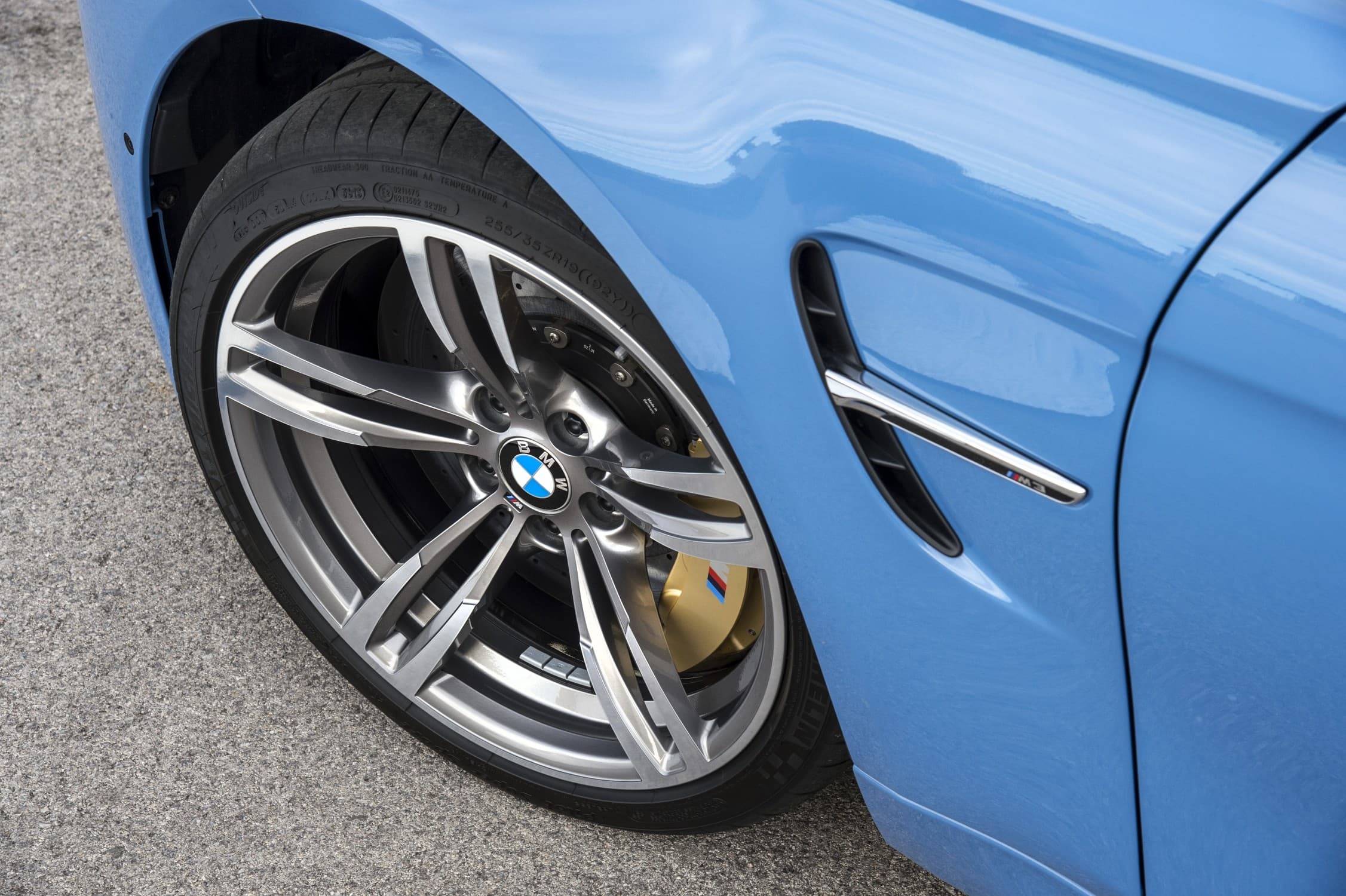
| F80 M3 / F82 M4 | 380mm | 370mm | Brembo 4-piston | Comp. Pkg = 6-piston option |
| G20 M340i | 374mm | 345mm | M Performance compound | Integrated parking brake rear |
| G80 M3 / G82 M4 | 395mm | 345mm | Brembo 4-piston | Largest stock BMW rotors |
E9x (2006–2013): The E90/E92 generation runs 300mm front rotors on the 325i/328i and 330mm on the 330i/335i. The E90 M3 with the S65 V8 runs 360mm front / 350mm rear with compound Brembo calipers - an exceptional stock brake package that responds very well to compound and fluid upgrades.
F3x (2012–2019): The F30/F32 generation uses 312mm front rotors for four-cylinder cars and 348mm for the six-cylinder 335i/340i. Parts are not interchangeable between 312mm and 348mm applications. The F80 M3 and F82 M4 run 380mm front / 370mm rear with four-piston front Brembo calipers as standard.
G2x (2019–present): The G20 330i runs 348mm front while the M340i goes to 374mm with M Performance compound calipers. The G80 M3 and G82 M4 run 395mm front / 345mm rear as standard - these are massive rotors that benefit significantly from cooling ducting on track.
F8x M cars (2014–2020): The F80 M3 and F82 M4 are the cars I see most often at track days. The common upgrade path is: quality track compound (Pagid RS29 or Hawk DTC-30), RBF 600 fluid, stainless lines, and ducting. For serious track use, a 380mm two-piece front rotor upgrade on the factory caliper is a popular and cost-effective modification.
Bedding In - Don't Skip This Step
Bedding procedure transfers an even, thin layer of pad material onto the rotor surface, creating consistent friction characteristics. Skip this step and you get uneven deposits, vibration under braking, and significantly reduced performance from your new pads.
Starting from 40 mph, apply moderate brake pressure down to about 10 mph - don't stop completely. Repeat 8–10 times, letting the brakes cool slightly between stops. After the initial warm cycles, repeat from 60 mph down to 15 mph, 6–8 times. After completing the sequence, let the brakes cool completely for 30 minutes without applying firm pressure.
After the first 200 miles, re-check your brake hardware. New pads compress the clips and shims, and caliper slide pins can migrate slightly under heat cycling. This is especially important on E9x cars where the front caliper slide pins have a tendency to seize over time - a seized slide pin causes uneven pad wear and pulls the car under braking.
The brake system is a complete circuit - every component affects every other component. Upgrade the pads without the fluid and you've left performance on the table. Think in systems, not individual parts, and your BMW will stop as well as it goes.