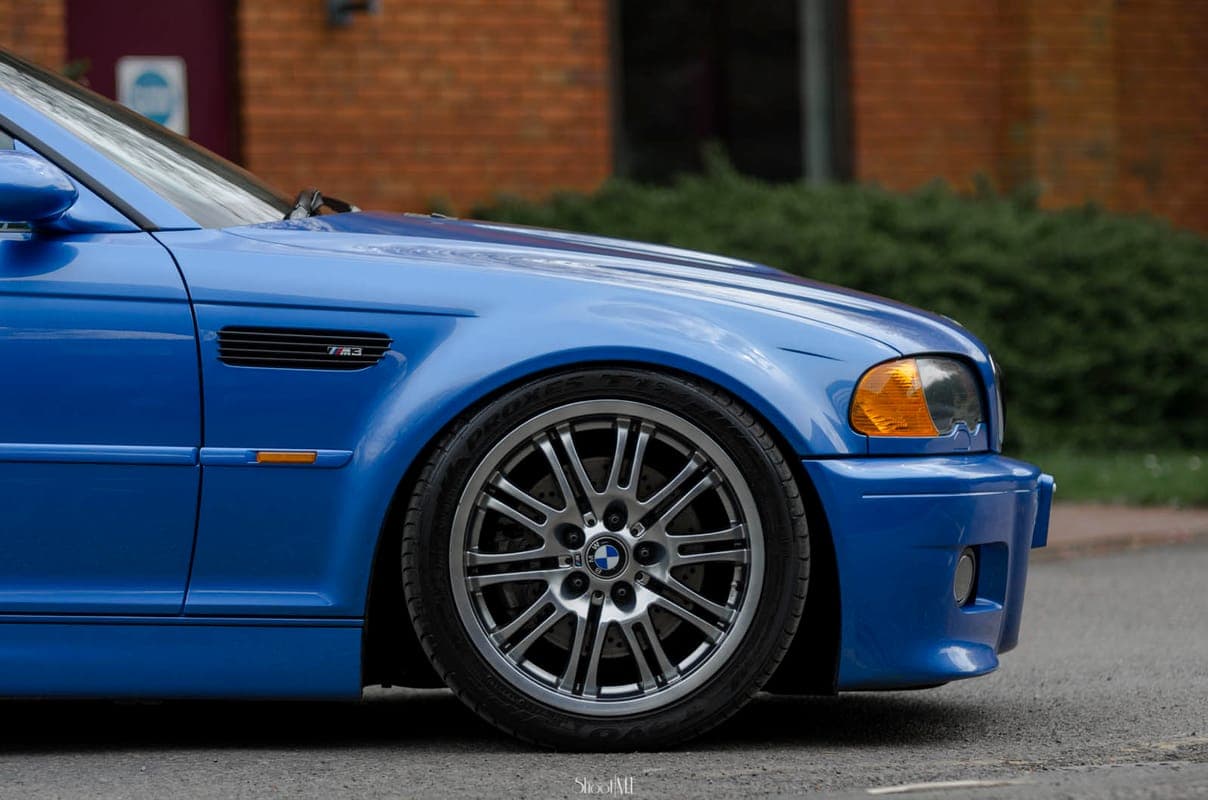
BMW Drift Car Build Guide, Best Platforms and Parts
Affiliate disclosure. BimmerTalk is a proud partner of the Amazon Associates Program and Turner Motorsport. We may earn a small commission on qualifying purchases through our links, at no extra cost to you. Read the full disclosure.

Here is the truth about building a BMW drift car that nobody on YouTube will say out loud: it's not that complicated, it's not that expensive, and the hardest part is not the mechanical work. The hardest part is committing to ruining a perfectly good BMW. Once you make peace with that, everything else follows naturally.
BMWs are the default drift car for good reason. Rear-wheel drive. Near 50/50 weight distribution. Abundant aftermarket support. Relatively cheap platforms that have been around long enough that all the common failure points are mapped, documented, and cheaply fixable. The inline-six engines are bulletproof. The parts interchange between generations. And they look fantastic sideways in the pits at the end of a day of thrashing.
This guide covers the four best BMW drift platforms, every essential modification you need, a realistic budget breakdown, and the safety equipment you cannot skip. Let's get into it.
$2,000-$5,000
Average E36 base car price
$50-$100 in labor
Welded differential cost
$1,000-$1,400
E46 coilover kit (drift spec)
$800-$1,500
Full safety kit estimate
The Best BMW Drift Platforms
The E36 (1992 to 1999) - The Default Choice
The E36 is the drift car. If you search "BMW drift car" on any forum, social media platform, or YouTube channel, you will find E36s. There is a reason. The E36 is light (2,900-3,200 lbs depending on variant), balanced, and responds to every modification you throw at it. Parts are nearly free at this point - junkyard E36 suspension components often cost less than shipping.
The 325i is the best starting point. The M52 2.5L inline-six makes 168 horsepower in stock form, which is enough to learn on without being overwhelming. The M50 in the 325is is beloved for its mechanical simplicity. If you find an E36 with an S52 swap (the M3 engine), even better - but you don't need it. Budget buy: $2,000-$4,000 for a running driving shell. Spend another $3,000-$5,000 in modifications and you have a competitive drift car that will hold its own at most amateur events.
The E36 stock steering lock is around 30 degrees - adequate for beginners, limiting for competition. The aftermarket has solved this completely with high-angle knuckles and dedicated angle kits that push steering angle to 55-74 degrees. This is the first modification after the diff that makes a genuine difference to how the car handles mid-drift.
Browse E36-compatible coilover kits
The E46 (1999 to 2006) - The Premium Platform
The E46 is what you build when you're serious. The chassis is stiffer than the E36, the geometry is better, and the S54 engine in an M3-spec E46 is one of the greatest engines ever bolted into anything. You will pay more for an E46 base car - expect $3,000-$6,000 for a decent drift shell - but the platform rewards the investment.
The E46's front suspension geometry is friendlier to large steering angle modifications than the E36. The Wisefab and SLR angle kits for the E46 are among the most sophisticated bolt-on setups available for any car, not just BMWs. With the right angle kit, you're looking at 65+ degrees of steering lock on a street-registered car.
The non-M E46 325i or 330i is the smart budget play. The M3 version is spectacular but you're paying M3 prices for a car you're going to sidewall. Save the M3 for road driving. Use a 330i - the M54 3.0L is nearly as good as the S54 in drift use, significantly cheaper to buy and maintain, and the extra displacement gives you usable torque at lower rpm for initiating and holding long slides.
The E30 (1982 to 1991) - The Classic Option
The E30 is the most fun car on this list and also the most impractical choice for a drift build in 2026. Values have climbed. A solid E30 shell is now $3,000-$7,000 minimum, and a good one costs more. But if you can source one reasonably, the E30 drift build is an experience unlike anything else.
The E30 is lighter than both the E36 and E46. At 2,600-2,800 lbs, every horsepower goes further. The stock engine choices range from the M20 2.5L (adequate) to the M20 2.7L "eta" (surprisingly torquey at low rpm, underrated for drift), to the obvious answer: an S52 or even M50 swap from an E36. The swap is well-documented, the mounts are available, and the result is a sub-2,800 lb car with 240+ horsepower and a 50/50 weight distribution.
What the E30 gives you that the later cars cannot is feel. The steering is more direct. The chassis is more communicative. Learning to drift on an E30 is learning in the hardest mode - the margin for error is smaller, the corrections are quicker, and the car will punish imprecision. Master it and you'll be faster in everything else. It's the difference between learning to drive in a kart versus a simulator. Both work. The kart makes you better faster.
The E39 (1997 to 2003) - Yes, Really
Hear us out. The E39 5 Series is a drift car. A surprising one. A hilariously practical one. A full-size luxury sedan with the M54 or M62 V8 that weighs 3,700 lbs and handles like a much lighter car because BMW's engineers were truly exceptional at their jobs.
The E39 drift build doesn't make sense on paper and is absolutely brilliant in practice. The V8 versions have enough torque to hold slides that would stall a four-cylinder. The long wheelbase makes the car incredibly stable once it's sideways - it's far more predictable than an E36 for beginners. And the E39 shell is cheap: $1,500-$3,000 for a running driver. You are not ruining a classic. You are liberating a luxury barge.
The primary limitation is tire consumption - the E39's weight goes through rear tires at an impressive rate. Budget accordingly. Also: the front geometry is harder to modify for extreme steering angle. The E39 drift build is a hooligan build, not a competition build. If competition is the goal, build an E36 or E46. If fun is the goal, consider the E39. The look on people's faces when a full-size BMW executive sedan goes sideways past them is worth the extra tire budget.
Essential Modifications for a BMW Drift Build
1. Differential - The Single Most Important Modification
You cannot drift a car with an open differential. Period. When you lift the throttle mid-corner, an open diff sends all power to the unloaded inside wheel. The outside wheel, which is doing the work, gets nothing. The car just pushes into understeer and dies. This is not drifting. This is disappointment.
Two options. Option one: weld the differential. Cost is $50-$100 in labor if you do it yourself or take it to a shop. A welded diff locks both rear wheels together permanently. Both wheels spin together at all times. This is aggressive - it affects everyday driving manners, makes low-speed turning unpleasant, and causes tire scrub. For a dedicated drift car? Absolutely fine. For a daily-driven drift car? Consider the next option.
Option two: a proper limited-slip differential. The factory E36 LSD from the M3 is the gold standard and can often be sourced for $300-$600 used. A rebuilt or new-spec 1-way LSD allows normal driving while still locking under power for drift initiation. The Kaaz, Quaife, and OS Giken units are the preferred aftermarket options but cost $600-$1,500. An LSD is the correct long-term solution. Welding is the budget solution. Both work.
2. Coilovers - Controlling the Chassis
Stock BMW suspension is too soft for drifting. The springs are designed for comfort, the dampers are tuned for compliance, and the ride height is set for ground clearance. All three of these things work against you when you're trying to initiate and maintain a controlled slide.
A dedicated drift coilover kit needs three things: adjustable height (to get the front end up and rear end down, shifting weight balance rearward for better rotation), stiff spring rates (10-12kg/mm front, 5-7kg/mm rear for most builds), and independently adjustable damping so you can tune oversteer balance on the fly.
Budget drift coilovers start around $400-600 for no-name eBay kits. They work. They won't last forever. For an entry-level build they're fine - better to thrash a $500 kit learning the car than to destroy a $2,000 kit in your first season. As you progress, BC Racing ($800-$1,100), Stance XR ($900-$1,200), or purpose-built drift units from SLR Speed ($1,085-$1,400) are where the serious builders land.
Browse coilover kits for E30, E36, and E46
3. Angle Kit - More Lock, More Control
More steering angle means deeper entries, longer transitions, and the ability to chase faster cars in competition. Stock BMW steering lock (30-35 degrees) is limiting once you understand what you're doing. An angle kit is where you graduate from "doing donuts in a parking lot" to "actually drifting."
For the E36, quality angle kits from SLR Speed, Wisefab, or similar manufacturers run $700-$1,200 and provide 55-74 degrees of steering angle. The Wisefab E36 kit in particular has become the reference standard. For the E46, the Wisefab kit is a cut-and-weld installation but delivers transformative results. Budget SLR angle kits start around $1,442.
Installation on most angle kits requires removing the front suspension, cutting the existing spindles or steering knuckles, welding new extended arms, and adjusting bump steer. This is not a driveway installation unless you're experienced with suspension geometry. Budget $200-$400 for professional installation if you're not comfortable with the fab work.
Browse steering angle upgrades
4. Bucket Seats and Harness
A proper drift car needs a proper seat. Not because of performance (though a fixed-back bucket seat does measurably improve your ability to feel what the car is doing), but because of safety. When the car rotates unexpectedly and catches you off guard, a properly fitted harness in a properly fitted bucket seat keeps you planted and in control. A stock BMW seat lets you slide around and lose the reference points you need to catch a snap.
Budget fixed-back seats from Sparco, NRG, or Corbeau start around $200-$400 per seat. They bolt in with sliders or fixed mounts. Pair with a 5-point harness ($80-$200) and you have a functional safety setup. At events, check the organizer's requirements - some require SFI or FIA-rated equipment; others are more relaxed for rookie categories.
A short shifter is in this same category - not safety-critical but transformative for driver feel. It cuts throw by 35%, costs around $50, and makes the car significantly more precise to drive. Install it before your first event.

RYANSTAR RACING 265mm Adjustable Short Shifter — E30/E36/E46/E34/E39/Z3
$34.99
5. Cooling Upgrades - Don't Cook Your Engine
Drifting generates heat. A lot of heat. The engine is working hard at high rpm. The transmission is being used aggressively. The radiator coolant temperatures climb. Stock cooling systems on 25-year-old BMWs were not designed for sustained track use and will remind you of this at the worst possible moment.
Minimum upgrades for a drift build: a quality aluminum radiator replacement ($150-$300), fresh coolant, a new thermostat, and new silicone coolant hoses if they haven't been replaced (the rubber originals are now 20+ years old on an E36). The Mishimoto silicone hose kit for the E36 runs about $111 on Amazon and is genuine peace of mind.
If you're building the E39 or a higher-power E46, add an oil cooler to the list. Transmission oil temperature is equally critical on drift builds - the gearbox works harder than in normal driving. A transmission cooler ($80-$150) is cheap insurance against a very expensive rebuild.
Browse cooling upgrades for BMW drift builds
Safety Essentials - Non-Negotiable
This section is not optional. Every serious drift event requires safety equipment. Even casual track days increasingly require it. And none of it is expensive relative to what it protects.
Roll Bar
A bolt-in roll bar (also called a roll cage or half cage) is the most important structural safety modification you can make to a drift car. In a rollover - which happens - the roll bar is what keeps the roof from meeting your helmet. Most entry-level events require either a proper cage or at minimum a bolt-in bar behind the driver's head.
Bolt-in bars for E36 and E46 from Garagistic, Autopower, or similar manufacturers run $400-$800. They mount to the existing floor chassis points and require no welding. A full weld-in cage is stronger but requires stripping the interior and professional fabrication - expect $1,500-$3,000+ for that level of build. Start with a bolt-in bar. Upgrade to a full cage when you're ready to compete at higher levels.
Harness
A 5-point or 6-point racing harness paired with your bucket seat. The harness must be mounted to proper harness bar or cage points - not to the OEM seat belt mounts, which are not designed for harness loads. A quality harness runs $80-$150. For any serious competition, look for SFI 16.1 or FIA 8853 rated harnesses. Check dates - harnesses have expiration dates and expired harnesses are typically disqualified at events.
Helmet
Every event requires a helmet. Most events require a Snell SA2020 or newer rated helmet. Open-face helmets are acceptable at most amateur events. A full-face is safer and worth the extra cost if you plan to compete regularly. Prices range from $200 for a basic certified helmet to $600+ for quality composite construction. Do not cheap out on the helmet.
Fire Extinguisher
A mounted fire extinguisher within driver reach. Required at virtually every organized event. A 2.5 lb dry chemical or Halon extinguisher mounted with a quick-release metal bracket to the roll cage or transmission tunnel. SCCA and most drift organizations specify the minimum size and type. This is a $30-$60 item that mounts in ten minutes and is required for event entry. Just buy it.
Budget Breakdown
Here is what a realistic BMW drift build costs at three budget levels:
| Item | Budget Build ($3,000-$4,500) | Mid Build ($5,000-$7,000) | Full Build ($8,000-$12,000) |
|---|---|---|---|
| Base car (E36 325i) | $2,000-$3,000 | $2,500-$4,000 (E46 330i) | $3,000-$5,000 (E46 M3 or clean E36) |
| Differential (welded or LSD) | $50-$300 | $300-$600 (used M LSD) | $600-$1,500 (new Kaaz or OS Giken) |
| Coilovers | $400-$600 (budget) | $900-$1,200 | $1,200-$1,400 (drift-spec) |
| Angle kit | $0 (skip for now) | $700-$900 | $1,000-$1,400 (Wisefab) |
| Safety (bar, harness, helmet, extinguisher) | $600-$800 | $800-$1,200 | $1,500-$2,500 (roll cage + premium kit) |
| Short shifter | $50 (Amazon) | $150-$300 | $300+ (IRP or Coolerworx) |
| Cooling upgrades | $150-$200 | $300-$400 | $400-$600 |
| Miscellaneous (tires, consumables, fluids) | $300-$400 | $400-$600 | $600-$1,000 |
Base car (E36 325i)
- Budget Build ($3,000-$4,500)
- $2,000-$3,000
- Mid Build ($5,000-$7,000)
- $2,500-$4,000 (E46 330i)
- Full Build ($8,000-$12,000)
- $3,000-$5,000 (E46 M3 or clean E36)
Differential (welded or LSD)
- Budget Build ($3,000-$4,500)
- $50-$300
- Mid Build ($5,000-$7,000)
- $300-$600 (used M LSD)
- Full Build ($8,000-$12,000)
- $600-$1,500 (new Kaaz or OS Giken)
Coilovers
- Budget Build ($3,000-$4,500)
- $400-$600 (budget)
- Mid Build ($5,000-$7,000)
- $900-$1,200
- Full Build ($8,000-$12,000)
- $1,200-$1,400 (drift-spec)
Angle kit
- Budget Build ($3,000-$4,500)
- $0 (skip for now)
- Mid Build ($5,000-$7,000)
- $700-$900
- Full Build ($8,000-$12,000)
- $1,000-$1,400 (Wisefab)
Safety (bar, harness, helmet, extinguisher)
- Budget Build ($3,000-$4,500)
- $600-$800
- Mid Build ($5,000-$7,000)
- $800-$1,200
- Full Build ($8,000-$12,000)
- $1,500-$2,500 (roll cage + premium kit)
Short shifter
- Budget Build ($3,000-$4,500)
- $50 (Amazon)
- Mid Build ($5,000-$7,000)
- $150-$300
- Full Build ($8,000-$12,000)
- $300+ (IRP or Coolerworx)
Cooling upgrades
- Budget Build ($3,000-$4,500)
- $150-$200
- Mid Build ($5,000-$7,000)
- $300-$400
- Full Build ($8,000-$12,000)
- $400-$600
Miscellaneous (tires, consumables, fluids)
- Budget Build ($3,000-$4,500)
- $300-$400
- Mid Build ($5,000-$7,000)
- $400-$600
- Full Build ($8,000-$12,000)
- $600-$1,000
The budget build is perfectly functional for learning. The mid build is competitive at entry and intermediate-level events. The full build is competition-capable and will hold its own against almost anything in amateur and semi-pro drift competition.
The Build Order
One more piece of advice: build in the right order. Don't install an angle kit before you can control the car at stock lock. Don't buy an expensive coilover kit before you have the diff sorted. The order matters.
Start here: buy the car, weld the diff, mount the safety equipment. Drive it at an event. Learn what the car does with a locked diff. Then add coilovers and learn what proper suspension tuning feels like. Then add an angle kit when you've run out of what stock lock will let you do. Then chase power if you're not happy with what you have.
The E36 on coilovers with a welded diff and a short shifter, driven well, will beat an E46 on a full angle kit driven poorly every single time. Get the fundamentals right. The car will reward you for it.
Ready to start building? Browse our full catalog of coilovers, differentials, cooling upgrades, and interior safety equipment for your BMW drift build.