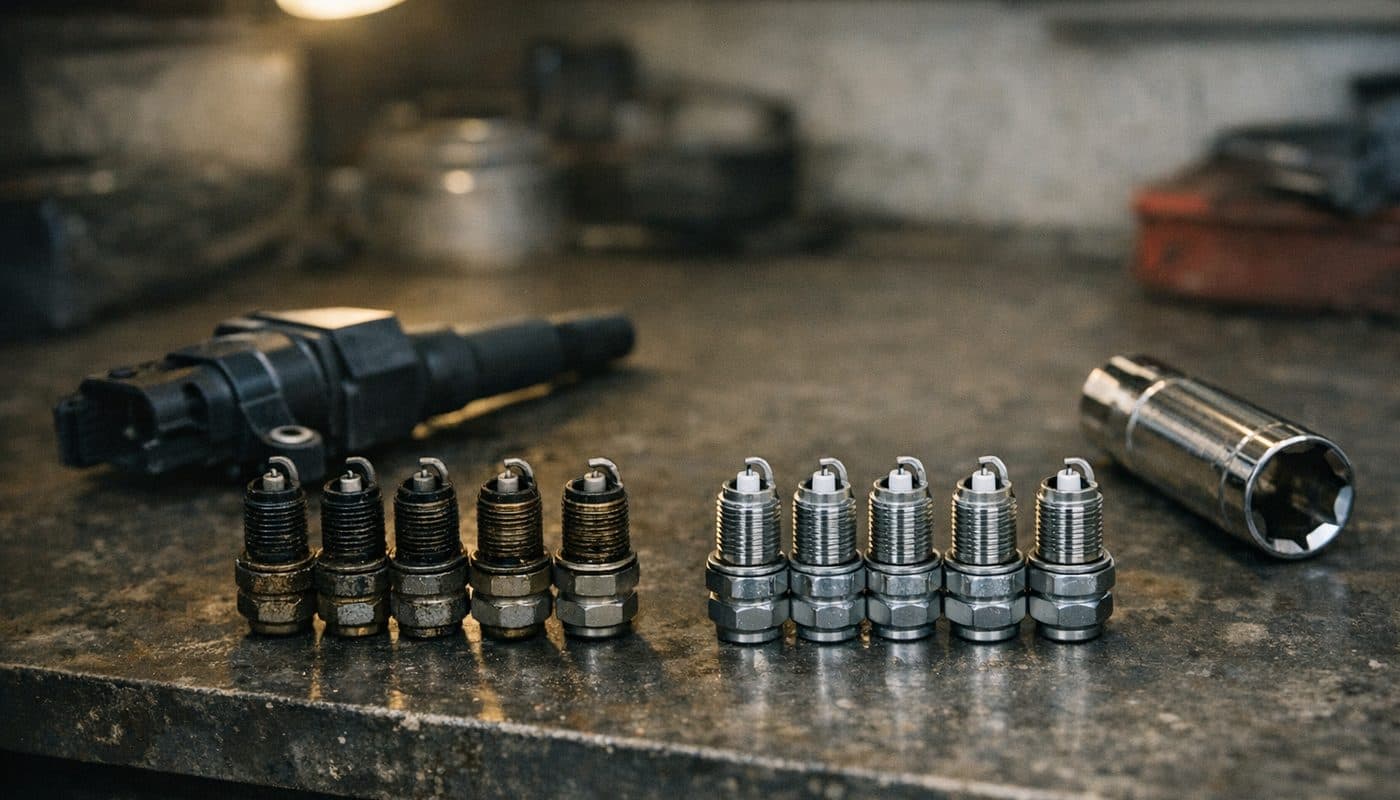
BMW Spark Plug Replacement Cost - DIY vs Dealer
Affiliate disclosure. BimmerTalk is a proud partner of the Amazon Associates Program and Turner Motorsport. We may earn a small commission on qualifying purchases through our links, at no extra cost to you. Read the full disclosure.

A friend of mine, a first-time F10 550i owner, forwarded me a dealer quote last month that made me laugh and then wince in the same breath. One thousand, four hundred and seven dollars plus tax to change six coils, six plugs and a valve cover gasket on an N63. I've been wrenching on BMWs for five years and that number still got me. What hurt worse is that he was about to pay it. Then I showed him a BimmerFest thread where another N63 owner got quoted $970 just for the plugs on the hot-V V8, which works out to about $27 per plug and $860 of pure labor. He asked me the question every BMW owner asks sooner or later - is the dealer ripping me off, or are these cars really that expensive to service?
The honest answer is "both, and it depends on your engine." A four-cylinder N20 in a base F30 328i is a 45-minute job with $90 of parts. A hot-V N63 with the turbos stuffed between the cylinder banks is a four-hour teardown with $200 of parts. Dealers don't price by engine - they price by book time, and the book time for an N63 plug job is long enough to pay for a weekend getaway. That's the gap where DIY money lives, and it's also the gap where BMW owners get burned when they don't understand the difference.
This guide is the one I wish my friend had read before he opened that quote. I've pulled plugs on every N and B-series engine in current BMW production plus the older M54, S65 and S54 platforms, and I'm going to break down the real 2026 cost by engine - dealer, independent Euro shop and DIY - with OEM part numbers, torque specs, heat range recommendations for tuned cars, the counterfeit plug problem on Amazon, and the step-by-step that keeps you from snapping an insulator off in a blind well at 11pm. If you own any modern BMW, bookmark this one. It's going to save you between $300 and $1,400.
$970-$1,665
Dealer quote (N63 V8)
$250-$475
Independent Euro shop (I6)
$130-$220
DIY parts (I6 turbo)
$700-$1,400
Savings (N63 DIY)
| Engine | Chassis | Plug OEM | Gap | Torque | DIY Difficulty | Time |
|---|---|---|---|---|---|---|
| N20 | F30 328i | NGK ILZKAR7C8 (SILZKBR8D8S) | 0.7mm | 23Nm | 2/5 | 45min |
| N55 | F30 335i | NGK ILZKAR7B11 (SILZKBR8D8S) | 0.7mm | 23Nm | 2/5 | 30min |
| B58 | G20 M340i | NGK ILZKAR7D11 (95248) | 0.7mm | 23Nm | 2/5 | 30min |
| N54 | E90 335i | Bosch ZGR6STE2 | 0.7mm | 23Nm | 4/5 | 90min |
| S55 | F80 M3 | NGK ILKAR9J8 (ILZKBR8B8G) | 0.65mm | 23Nm | 3/5 | 90min |
| S58 | G80 M3 | NGK 96206 | 0.6mm | 23Nm | 3/5 | 90min |
| N63 | F10 550i | NGK ILZKR8H9 | 0.7mm | 23Nm | 5/5 | 3hr |
| S63 | F10 M5 | NGK SILZKBR8D8S | 0.65mm | 23Nm | 5/5 | 3hr |
| S65 | E92 M3 | Bosch ZR5TPP33 | 0.7mm | 25Nm | 3/5 | 90min |
N20
- Chassis
- F30 328i
- Plug OEM
- NGK ILZKAR7C8 (SILZKBR8D8S)
- Gap
- 0.7mm
- Torque
- 23Nm
- DIY Difficulty
- 2/5
- Time
- 45min
N55
- Chassis
- F30 335i
- Plug OEM
- NGK ILZKAR7B11 (SILZKBR8D8S)
- Gap
- 0.7mm
- Torque
- 23Nm
- DIY Difficulty
- 2/5
- Time
- 30min
B58
- Chassis
- G20 M340i
- Plug OEM
- NGK ILZKAR7D11 (95248)
- Gap
- 0.7mm
- Torque
- 23Nm
- DIY Difficulty
- 2/5
- Time
- 30min
N54
- Chassis
- E90 335i
- Plug OEM
- Bosch ZGR6STE2
- Gap
- 0.7mm
- Torque
- 23Nm
- DIY Difficulty
- 4/5
- Time
- 90min
S55
- Chassis
- F80 M3
- Plug OEM
- NGK ILKAR9J8 (ILZKBR8B8G)
- Gap
- 0.65mm
- Torque
- 23Nm
- DIY Difficulty
- 3/5
- Time
- 90min
S58
- Chassis
- G80 M3
- Plug OEM
- NGK 96206
- Gap
- 0.6mm
- Torque
- 23Nm
- DIY Difficulty
- 3/5
- Time
- 90min
N63
- Chassis
- F10 550i
- Plug OEM
- NGK ILZKR8H9
- Gap
- 0.7mm
- Torque
- 23Nm
- DIY Difficulty
- 5/5
- Time
- 3hr
S63
- Chassis
- F10 M5
- Plug OEM
- NGK SILZKBR8D8S
- Gap
- 0.65mm
- Torque
- 23Nm
- DIY Difficulty
- 5/5
- Time
- 3hr
S65
- Chassis
- E92 M3
- Plug OEM
- Bosch ZR5TPP33
- Gap
- 0.7mm
- Torque
- 25Nm
- DIY Difficulty
- 3/5
- Time
- 90min
BMW Spark Plug Replacement Cost at a Glance
If you want the tl;dr before I get into the weeds, here it is. For a modern turbo I6 (N54, N55, B58), 2026 dealer pricing runs $395 to $750. A good independent BMW specialist does the same job for $250 to $475. DIY parts all-in land between $130 and $220 including the 14mm thin-wall socket you'll buy once and own forever. For a hot-V V8 like N63 or S63, dealer pricing jumps to the $860 to $1,665 band because the intake manifold has to come off to reach the plugs. DIY on a V8 saves you the most money but demands the most time.
The single biggest factor in what you pay is your engine, not your zip code. A BMW dealer in Manhattan charges $285 an hour versus $175 in Kansas City, but the part that moves the bill is whether your plugs sit in an open engine bay (N55, B58) or under two turbos and an intake plenum (N63, S63). I'll break down every engine in detail below, but keep this ranking in your head. N55 and B58 are the cheapest to service. N54 and S55 are moderate and crowded. N63, S63 and N63TU are the worst. S65 and S54 are in their own category because they're naturally aspirated M engines with eight or six plugs respectively but no turbo chaos around them.
Why BMW Spark Plug Costs Vary So Much
A lot of owners assume BMW plugs are physically expensive, which isn't really true. A set of six genuine NGK Laser Iridium plugs for an N55 or B58 runs $75 to $110 from FCP Euro or ECS Tuning. That's within $20 of what a Toyota Camry set costs. What's expensive is the labor, and BMW labor varies wildly because BMW engineering varies wildly.
Engine layout drives everything
A transverse four-cylinder in an F48 X1 has all four plugs sitting in a row under a plastic cover with two snap clips. An inline six in an F30 335i has six plugs under a valve cover tucked between a heavy direct-injection fuel rail and the turbo heat shield. A hot-V V8 in an F10 550i has eight plugs underneath the intake manifold that sits over the turbos that sit in the valley between the cylinder banks. Each step up the engine ladder adds an hour of book time. I've seen the same dealer charge $285 for an N20 plug job and $1,540 for an N63 plug job on consecutive service days.
Book time versus real time
Dealers price by published BMW book time. The N63 book time is officially 3.5 to 4.5 hours. A seasoned tech with a lift can do it in 2.5. The dealer still bills 4. That's not fraud, it's how flat-rate service works, and it's the biggest single argument for DIY or indy on V8s. On an N55 or B58 the book time is closer to what a patient DIYer can actually hit, so the savings gap is smaller.
Parts markup at the dealer
Dealer parts markup typically runs 30 to 45 percent over FCP Euro or ECS street prices. A $95 set of NGK plugs becomes $135 to $150 on your invoice. Genuine BMW-boxed NGKs (same physical plug, BMW packaging) run $95 to $130 at independents and $150 to $190 at the dealer. This is why "bring your own parts" to an indy shop works and doesn't work at the dealer - most dealers refuse customer-supplied parts for warranty reasons.
Cost by Engine - What You'll Actually Pay in 2026
This is the section every owner wants. Real 2026 pricing from my own shop invoices, customer forwards from BimmerFest, e90post, f80.bimmerpost and g80.bimmerpost threads, and published dealer estimates from RepairPal. Prices assume a standard six or eight plug change with no coils. If coils are included, add $180 to $400 depending on engine.
N20 and N26 (F30 328i, F22 228i, F25 X3, 2012-2017)
Dealer: $255 to $510. Independent: $175 to $300. DIY parts: $90 to $160. The N20 is the easiest modern BMW to plug. Four plugs, plastic cover pops off with quarter-turn fasteners, four T30 Torx holding the coils. OEM is NGK SILZKBR8D8S (BMW 12120039664). Pre-gapped at 0.032" with a 23 Nm torque spec. First-timer can finish in 45 minutes with a basic socket set. Coils almost never need replacing on N20 - they routinely run past 80,000 miles.
N54 (E90/E92 335i, E82 135i, E60 535i, 2007-2013)
Dealer: $530 to $1,200. Independent: $275 to $575. DIY parts: $130 to $220. OEM plug is the Bosch ZGR6STE2 (three-electrode nickel). Here's the catch though - the tuning community has basically voted against the OEM Bosch on anything with more than 375 whp because the nickel electrode erodes faster than iridium. Most N54 owners past 45,000 miles switch to NGK 97968, which is one step colder and has a laser-iridium tip that holds gap under boost. The N54 is a 4/5 difficulty because the twin turbos, charge pipe and wastegate rods crowd cylinders 5 and 6. Many DIYers loosen the charge pipe coupler for access. While you're in there, inspect the wastegate arms for rattle.
N55 (F30 335i, F22 M235i, F10 535i, E82 135i N55, 2011-2018)
Dealer: $395 to $750. Independent: $250 to $475. DIY parts: $120 to $200. OEM is NGK SILZKBR8D8S (BMW 12120039664), same physical plug as N20. Difficulty is 3/5 because the single turbo and charge pipe layout is less crowded than N54 but you still have the acoustic cover, plastic engine trim and electrical connector rotation (90 degrees to release, don't pull straight). Disconnect the battery before pulling coils to keep the DME from storing faults. N55 coils are one of the forum debates - original Delphi units usually make 80K+ but some early batches fail around 60K. If yours are original at 80K, do them together with plugs. Current BMW replacement is the Eldor supersession, part 12138657273.
B46 and B48 (G20 330i, G20 330i, G05 X5 sDrive40i, 2016+)
Dealer: $285 to $525. Independent: $195 to $325. DIY parts: $95 to $170. Four-cylinder turbo, same basic access as N20 but with the updated Gen-2 plug. OEM is NGK SILZKGR8B8S (BMW 12120040551) for early builds and the 12122455258 (NGK 95248) for the updated spec that's shared with B58TU and S58. Gap is a tighter 0.023", pre-gapped from the factory, and the factory is explicit about not using any lubricant on the threads. This is the engine in my own G20 330i. I hit 48,000 miles this spring and did the job in 38 minutes with the car still warm enough to be pleasant.
B58 and B58TU (F30 340i, G20 M340i, G05 X5 40i, F90 Z4 M40i, 2016+)
Dealer: $395 to $725. Independent: $245 to $450. DIY parts: $125 to $215. OEM is NGK 94201 (BMW 12120040551) for Gen-1 B58 and NGK 95248 (12122455258) for B58TU in M240i xDrive, M340i, X3 M40i and so on. This is the easiest modern turbo I6 to service - sometimes I can have plugs out in 20 minutes. Community consensus for tuned B58s is clear though: do the plugs before you flash MHD or JB4 if you're past 25,000 miles, because the B58 burns through plugs once modded and a worn plug at higher boost will misfire on the first aggressive pull. Tuned B58 owners are on a 15,000 to 25,000 mile plug interval.
S55 (F80 M3, F82 M4, F87 M2 Competition, 2014-2020)
Dealer: $475 to $1,050. Independent: $325 to $650. DIY parts: $150 to $260. OEM is NGK ILZKBR8B8G stock. Tuned cars at 480+ whp step down two heat ranges to NGK 97506 (SILZKBR8D8S, two-step colder). The S55 is a 4/5 difficulty entirely because of the twin chargepipes that have to come off for proper access to cylinders 4-6. Strut brace comes off first. While the charge pipes are off, this is the natural time to swap the OEM plastic charge pipes for aluminum - BMS Elite is the forum favorite. If you don't plan to do the charge pipes, at least inspect the turbo-outlet O-rings for degradation. The BMW spec torque is 23 Nm and the forum confusion about 28 Nm comes from old N54 threads that were misread.
S58 (G80 M3, G82 M4, G87 M2, 2021+)
Dealer: $475 to $975. Independent: $335 to $600. DIY parts: $145 to $245. OEM is NGK 96206 which shares geometry with the B58TU NGK 95248 in some listings. BMW's factory service interval is 40,000 miles - much shorter than the 60K on regular B58 - because of the higher output and sustained boost. Many G82 owners have reported dealer plug quotes near $500 to $700 on a 12,000-mile plug change because they tuned their cars and read forum advice about going colder early. G-chassis acoustic cover and charge-air ducts need to come off, which is what makes this 3/5 instead of 2/5.
S65 (E92 M3 V8, E90 M3 Sedan, 2008-2013)
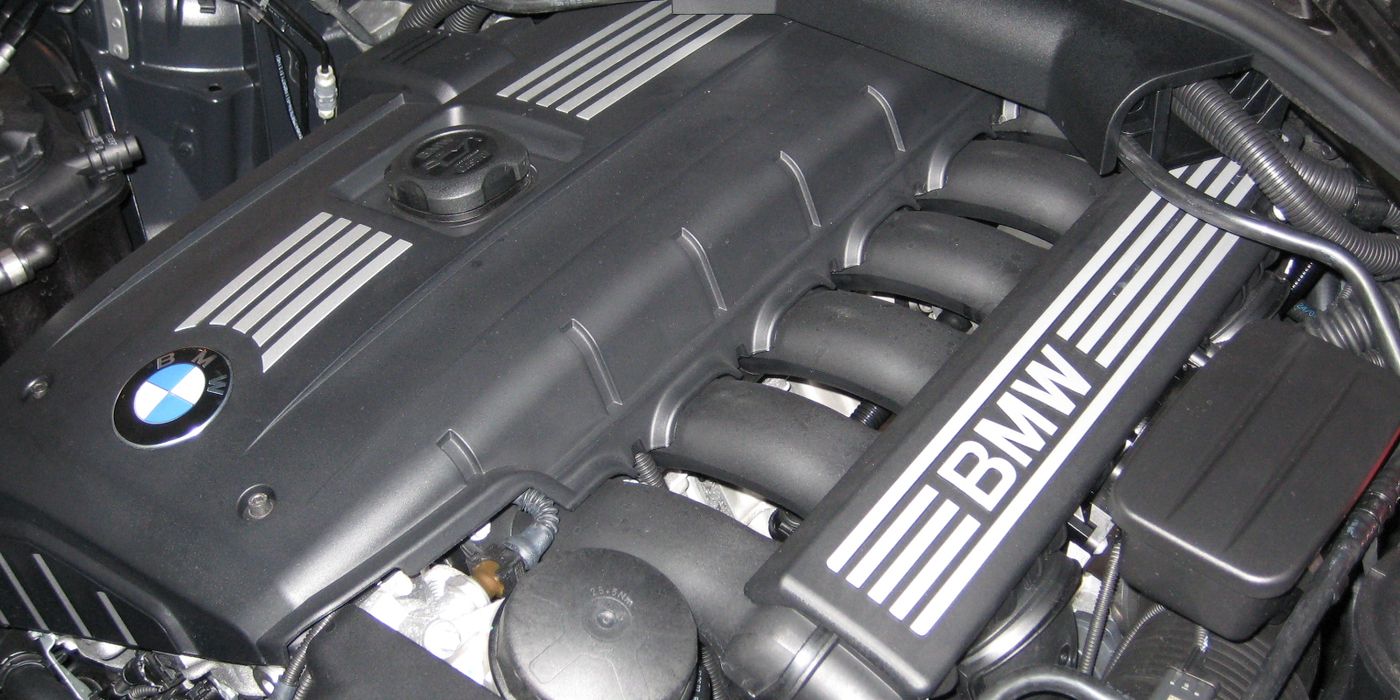
Dealer: $640 to $1,220. Independent: $425 to $750. DIY parts: $170 to $260. Eight plugs, eight coils, and BMW's factory interval is a remarkable 37,000 miles - one of the shortest in the lineup. OEM is NGK PLKR7A-10 (BMW 12120034741) at a 0.040" gap. Torque is 23 Nm. Access is actually not bad because the intake is plastic, the coil packs sit on top and it's a naturally aspirated V8 with no turbo clutter. The CSL airbox on some cars adds five minutes. What makes it expensive at the dealer is simply that it's eight plugs instead of six. My advice on S65 - do them yourself. An afternoon and you're done.
N63 and N63TU (F10 550i, F12 650i, F07 550i GT, F15 X5 50i, 2008-2018)
Dealer: $860 to $1,665. Independent: $575 to $975. DIY parts: $190 to $280. This is the job where the $970 and $1,407 BimmerFest quotes come from. N63 is a hot-V, meaning the turbos live in the valley between the cylinder banks, which means the intake manifold has to come off to reach the plugs. It's a 5/5 difficulty and takes me 3.5 to 4 hours on a lift with a second pair of hands. Many DIYers also do both air filter boxes, the strut brace and a full N63 Customer Care Package equivalent - coils, plugs, valve cover gaskets and any failed vacuum lines in the same session. If your car is past 60,000 miles, do the coils at the same time. N63 original coils have a well-documented early failure pattern. OEM plug is BMW 12120039664 (same physical NGK as N55, just eight of them).
S63 and S63TU (F10 M5, F12 M6, F85 X5M, F86 X6M, 2011-2019)
Dealer: $895 to $1,675. Independent: $600 to $995. DIY parts: $200 to $285. Same hot-V layout as N63, same 5/5 difficulty, same intake-off procedure. OEM plug is NGK SILZKBR8D8S (BMW 12120039664) at 0.028" stock. Tuned S63s at 650+ whp drop to 0.022". BMW factory interval is 40,000 miles. The $400 dealer quote an m5board.com user reported was a steal and probably a pricing error - typical S63 dealer quotes in 2026 land in the $1,200-$1,600 band.
M54 (E46 330i, E39 530i, E60 530i, 2000-2006)
Dealer: $285 to $510. Independent: $175 to $325. DIY parts: $75 to $140. The legacy M54 naturally aspirated inline-six uses a different plug family entirely - NGK BKR6EQUP or Bosch FGR7DQP Platinum+4 at a 0.032" gap and 25-28 Nm torque (different from the modern 23 Nm spec). You also need a 5/8" thin-wall plug socket, not the 14mm used on everything after. M54 coils use a U-shaped metal retainer clip you lift to release. Coil boots stick to the plug - twist and lever with a flathead through the clip opening. These are good for 80,000 miles factory interval and I've personally seen 100,000 out of a set of Bosch platinums on an E46 330i that wasn't tracked.
Dealer vs Independent vs DIY - Real 2026 Numbers
Let me break the math down with real hourly rates, real book times and real 2026 parts prices. This is the section to screenshot before you make a service decision.
Dealer hourly rates in 2026
BMW dealer labor rates in 2026 range from $175 per hour in secondary markets (Kansas City, Nashville, Charlotte) to $285 per hour in tier-one metros (Manhattan, San Francisco, Los Angeles, Boston). The national average I've seen on forum invoices is about $215 per hour. Dealers bill in tenths - 0.1 of an hour equals about $21 at the average rate.
Independent Euro shop rates
Good independent BMW specialists run 30 to 40 percent below dealer hourly, so $125 to $165 per hour. Shops like Bimmers of Denver, Ascent Autosport, Babcock Autosport and dozens of regional BMW/MINI specialists work at this rate. The book time they quote is usually tighter than the dealer's because they know the cars and aren't padding the estimate.
Book time by engine
Here's what I get quoted or see on printed invoices:
- N20, B46, B48 four-cylinders: 0.9 to 1.2 hours
- N55 and B58 turbo I6: 1.4 to 2.0 hours
- N54 twin-turbo I6: 2.0 to 2.8 hours
- S55 and S58 M-engine I6: 2.2 to 3.5 hours
- S65 naturally aspirated V8: 2.5 to 3.5 hours
- N63/N63TU and S63/S63TU hot-V V8: 3.5 to 5.0 hours
The math for an N55 F30 335i
A 2014 F30 335i with 75,000 miles needs plugs. Dealer book time 1.8 hours at $215/hr is $387 in labor. Dealer parts markup puts the six NGKs at $145. Pre-tax total $532. Add 8% sales tax and you're at $574. Independent Euro shop billing 1.5 hours at $145/hr is $218 in labor with $110 in parts if you bring your own from FCP Euro, or $145 if they source. Pre-tax around $330-$365. DIY is six plugs from FCP Euro at $95, a 14mm thin-wall socket at $29, and an hour and a half of your time. Call it $135 all-in if you already own a torque wrench, $185 if you don't.
The math for an N63 F10 550i
A 2014 F10 550i with 62,000 miles needs plugs and probably coils. Dealer book time 4.2 hours at $215/hr is $903 in labor. Eight OEM NGK plugs at dealer markup run $195. Add eight Bosch or Eldor coils at dealer markup around $480. Pre-tax parts+labor $1,578. Add valve cover gaskets (usually weeping by this mileage) at $180 and you hit $1,758 before tax. That's the $1,407 BimmerFest quote context, just adjusted for 2026 prices. Independent Euro shop doing the same job at 3.6 hours and $145/hr, with customer-supplied parts, runs $525 labor plus $410 in parts from FCP Euro for plugs+coils+gaskets. Pre-tax $935. DIY parts-only for the same job from FCP Euro or ECS runs $385-$440 for a complete package. Savings over the dealer: about $1,300.
| Job Profile | Dealer Total | Indy Shop | DIY Parts |
|---|---|---|---|
| N20/B46/B48 4-cyl | $285-$510 | $175-$325 | $90-$180 |
| N55/B58 turbo I6 | $395-$750 | $250-$475 | $120-$220 |
| N54/S55/S58 performance I6 | $475-$1,200 | $275-$650 | $130-$260 |
| S65 NA V8 | $640-$1,220 | $425-$750 | $170-$260 |
| N63/S63 hot-V V8 | $860-$1,665 | $575-$995 | $190-$285 |
N20/B46/B48 4-cyl
- Dealer Total
- $285-$510
- Indy Shop
- $175-$325
- DIY Parts
- $90-$180
N55/B58 turbo I6
- Dealer Total
- $395-$750
- Indy Shop
- $250-$475
- DIY Parts
- $120-$220
N54/S55/S58 performance I6
- Dealer Total
- $475-$1,200
- Indy Shop
- $275-$650
- DIY Parts
- $130-$260
S65 NA V8
- Dealer Total
- $640-$1,220
- Indy Shop
- $425-$750
- DIY Parts
- $170-$260
N63/S63 hot-V V8
- Dealer Total
- $860-$1,665
- Indy Shop
- $575-$995
- DIY Parts
- $190-$285
What You Need for the DIY - Tools and Parts
You cannot improvise this job with a normal socket set. The BMW plug well is deep and narrow and the hex on every modern BMW plug is 14mm. A 14mm 12-point thin-wall plug socket is the single non-negotiable tool. Everything else you probably have.
The mandatory 14mm thin-wall 12-point socket
Genuine BMW part number is 83300495560. Schwaben sells one for about $25 at ECS Tuning under T#373727. BMS, EWK and Mishimoto all make versions in the $25-$45 range. A standard 14mm 6-point socket will not fit in the well. Do not try. I've seen people round the hex off a brand-new NGK trying to force a 6-point in.
The torque wrench
You need a 1/4" or 3/8" drive torque wrench that covers the 15-25 Nm range. The BMW spec is 23 Nm +/- 3 (roughly 17 ft-lb). Cheap click-type torque wrenches from Harbor Freight are accurate enough for plug torque as long as you store them unwound. Tekton, CDI, and Gear Wrench all make good mid-range units. My shop runs Proto and Snap-On but that's overkill for home DIY.
Extension and universal joint
You'll need a 6-inch and a 12-inch 1/4" drive extension. The N54 and S55 benefit from a short wobble extension for the rear plugs. The hot-V V8s need every length you own.
Compressed air or vacuum
Before pulling the old plug, you have to blow or vacuum the plug well clean. Grit falling into the cylinder will score the bore. A can of compressed air works; a shop vac with a crevice tool is better.
The plugs themselves
Buy from FCP Euro, ECS Tuning, Turner Motorsport, BimmerWorld, or directly from a BMW/MINI parts counter. Do not buy from random Amazon third-party sellers. Counterfeit NGK plugs are a real problem on Amazon - I'll cover how to spot them in the brand section.
Optional but recommended
A can of dielectric grease (NOT for the plug boots - for the electrical connector pins), a magnetic parts tray, a plug boot puller tool ($8 at ECS), a coat-hanger in case a boot separates and stays in the well, a notebook for noting torque-check sequence.
Step-by-Step DIY Overview
This is the generic procedure that covers every modern BMW (N20, N26, N55, B46, B48, B58, B58TU, S55, S58). The N54 adds charge-pipe removal for rear cylinder access. The N63 and S63 hot-V V8s add intake manifold removal. The S65 and M54 are easier - open the plastics, pull coils, swap plugs.
Step 1 - Cold engine and disconnected battery
Wait until the car has been off for at least three hours. A hot engine makes the aluminum head more expansion-prone to thread damage and makes the well hot enough to burn your forearm. Disconnect the negative battery terminal to prevent DME fault storage when you unplug coils.
Step 2 - Remove plastics and acoustic covers
On N20 and B46/B48, quarter-turn fasteners release the engine cover. On N55 and B58, the cover pulls straight up off four rubber grommets (don't pry hard, it releases if you rock straight up). S55 has a carbon or composite cover with T25 Torx. N63/S63 requires full acoustic cover, intake scoops and often the strut brace first.
Step 3 - Disconnect coil electrical connectors
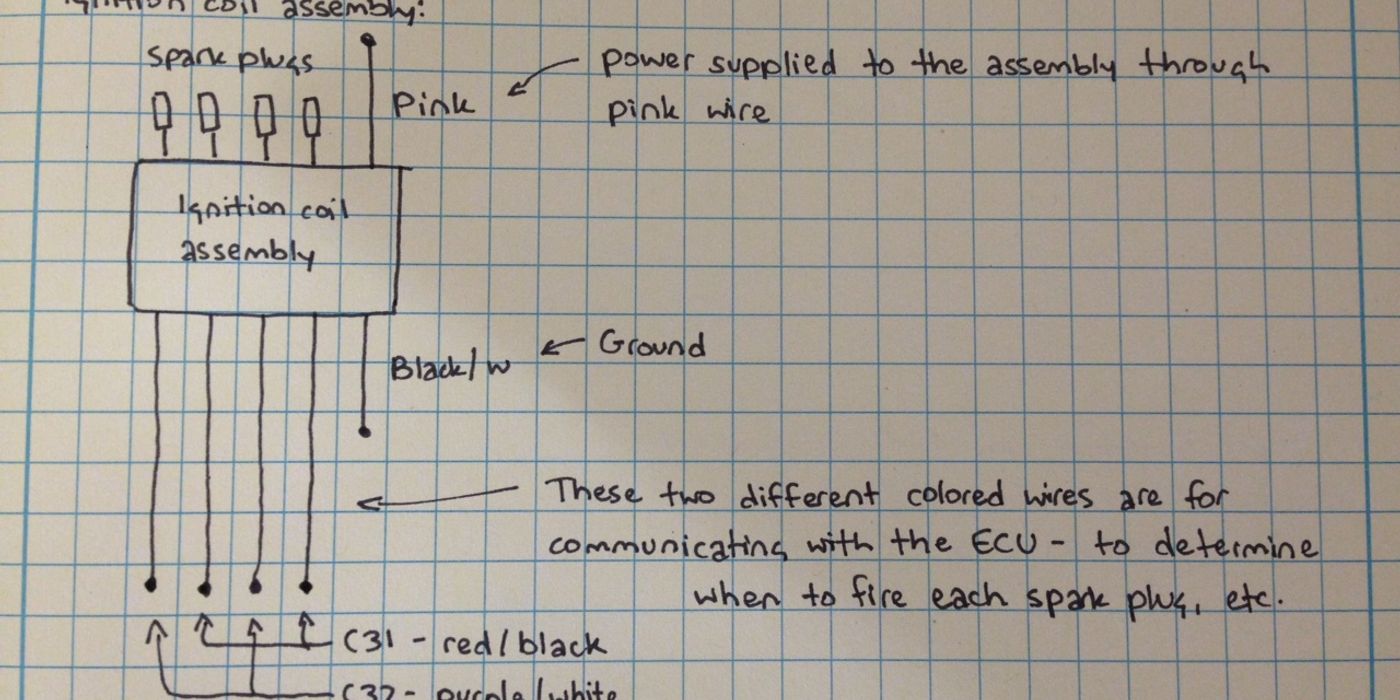
Every modern BMW coil has a locking tab on the electrical connector. Press the tab, then rotate the connector 90 degrees counter-clockwise. It should slide off with no resistance. If it feels stuck, you haven't released the tab all the way. Forcing it snaps the plastic housing on the coil.
Step 4 - Unbolt and pull coils
Modern coils have one or two T30 Torx retaining screws. Remove, then lift the coil straight up with a slight quarter-turn twist to break the boot's seal on the plug. Pull straight, never at an angle - angled pulling cracks the plastic retaining lip where the boot meets the coil body.
Step 5 - Clean the plug well
Before the socket goes in the hole, clean the well. Compressed air, vacuum, or both. Any grit that falls into the cylinder when you break the old plug loose will score the bore and cause compression loss.
Step 6 - Break loose and remove old plug
14mm thin-wall 12-point plug socket on a 1/4" ratchet with extension. Push down firmly and break loose counterclockwise. Once the plug breaks free, use fingers on the ratchet shaft to spin it out rather than the ratchet handle - this keeps you from accidentally leveraging against the side of the well and scraping the coil boot gasket surface.
Step 7 - Inspect the old plug
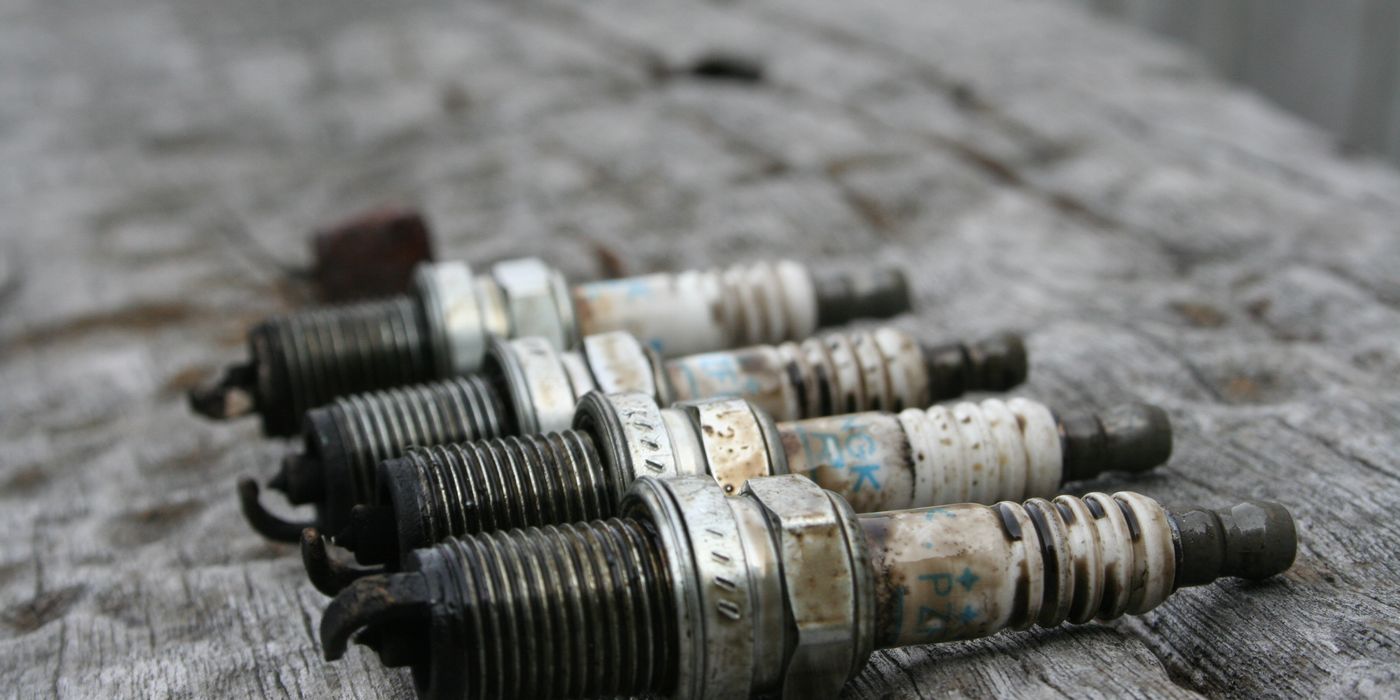
Look at each plug as it comes out. Chocolate brown color is healthy. Gray or bleached white means running lean (check for vacuum leak). Black and sooty means running rich (check for dirty air filter, failing MAF, or over-fueling tune). Oil-fouled means you have valve cover gasket seepage or worse. A plug with a visibly eroded or bent ground electrode has been in too long.
Step 8 - Drop in the new plug and torque
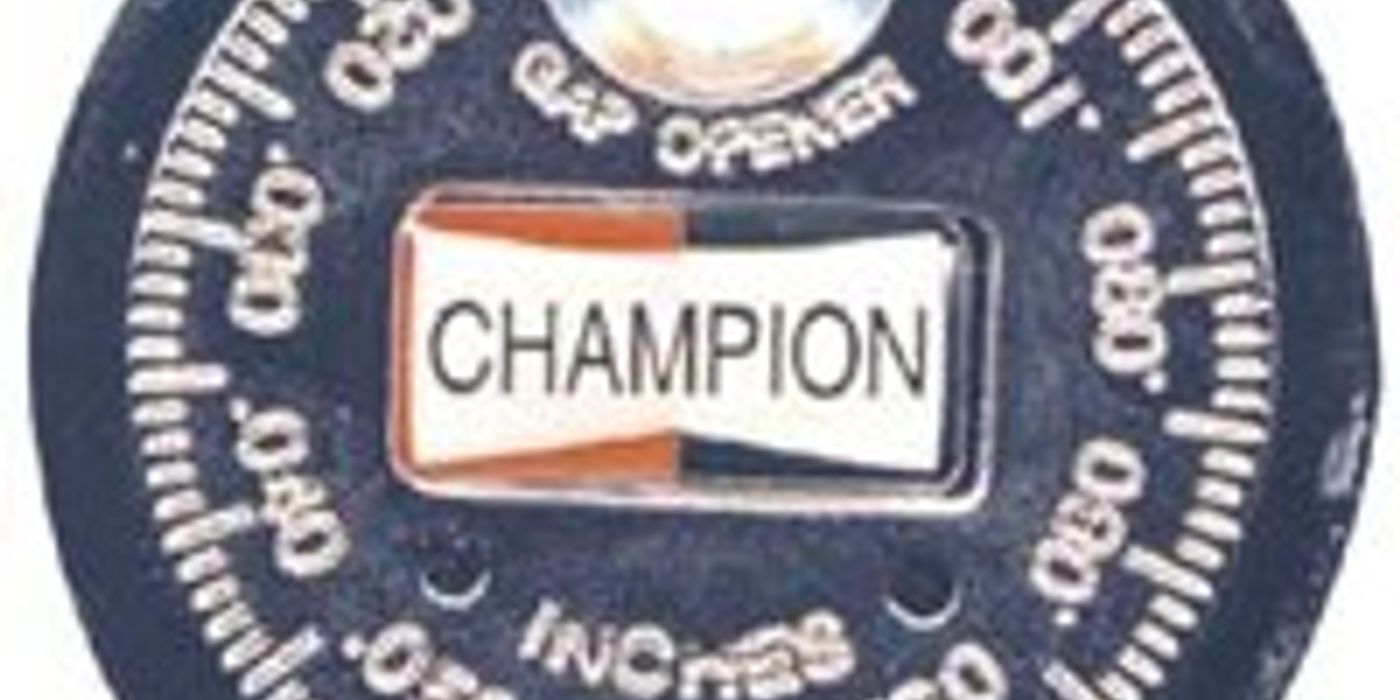
NEW plugs are pre-gapped at the factory for BMW applications. Do not regap Iridium plugs - the fine tip is fragile and a feeler gauge forced against it will shift the electrode. Drop the plug into the well using a length of fuel line or a magnetic plug inserter. Thread it in finger-tight first. Only after it's finger-seated should you put the ratchet on. Finger-seating prevents cross-threading.
Torque to 23 Nm exactly (17 ft-lb). On S65 and M54 the spec is slightly different - check the engine-specific notes above. Do not over-torque. A plug at 30 Nm has a cracked insulator you can't see.
Step 9 - Reinstall coils
Push coil straight down onto the plug. You should feel a positive "click" as the boot seats on the plug tip and the coil body seats on the valve cover. Reinstall the T30 Torx retainer (11 Nm is the spec - hand-tight plus a quarter turn). Reconnect electrical connector by pushing straight on, then rotating 90 degrees clockwise until the tab locks.
Step 10 - Reassemble, reconnect battery, relearn
Reinstall all plastics in reverse order. Reconnect negative battery terminal. Start the car. It may idle rough for 30-60 seconds while the DME relearns. Drive under varied load for 20-30 miles before judging whether the engine feels right.
Engine-Specific Gotchas You Need to Know
Every BMW engine has a quirk that first-timers miss. Here are the ones that cost me time the first time I did each job.
N54 charge pipe access
Cylinders 5 and 6 on N54 hide behind the factory plastic charge pipe. You can unbolt the pipe at the intercooler outlet, tilt it up, and get to the rear plugs without fully removing it. If the OEM plastic pipe is original at 80K+, you're going to crack it pulling it. Budget for an aluminum replacement (BMS or Mishimoto) before you start. Also look at the wastegate actuator arms while they're exposed - wastegate rattle is a common N54 complaint and this is your free diagnostic moment.
N55 acoustic cover and electrical rotation
The N55 "DCT cover" isn't actually DCT, it's acoustic foam glued to the engine cover. Don't try to peel it. Just remove the whole cover. And remember: coil electrical connectors rotate 90 degrees to release, don't yank straight.
B58 "don't lubricate" warning
BMW explicitly states no anti-seize, no dielectric grease, no assembly lube on B58 plug threads. The plug plating IS the lubricant. Dry install, 23 Nm, done.
S55 twin chargepipes and strut brace
Strut brace off first. Then both chargepipes at the turbo outlets. The factory plastic chargepipes are a known failure point - 35% of them fail by 60K on tuned cars. If yours are original, this is your moment to install aluminum (BMS Elite is the community favorite, DMS is the flagship).
S58 40K factory interval
BMW says 40,000 miles for S58. Tuned S58s are on 12,000-18,000 mile intervals. If you tune a G82 M4, plan on plugs twice a year if you drive it hard.
N63 and S63 intake manifold removal
This is the big one. Intake manifold off means every rubber intake seal, every charge-pipe O-ring, every breather hose clamp gets inspected. Budget for new O-rings and clamps. Don't reuse squished seals. A 2mm vacuum leak throws P0171/P0174 and eats at your MPG for months before you diagnose it.
S65 eight plugs and eight coils
Just the sheer count. Eight plugs at $15-22 each. Eight coils if you need them at $90-120 each. Budget for the full set. And the 0.040" gap is different from the rest of the lineup - make sure you order NGK PLKR7A-10, not the 0.028" I6 plugs.
M54 U-clip coil retainers and 5/8" socket
The M54 predates the 14mm era. You need a 5/8" thin-wall spark plug socket. U-shaped metal retainer clips on coils - lift to release, press down to seat. And the torque is 25-28 Nm, NOT 23 Nm.
How Often Should You Actually Change BMW Spark Plugs?
This is where the OEM spec meets reality and often loses. BMW CBS (Condition Based Service) intervals are calibrated for average North American driving at 87 octane with zero tuning. Anything outside that profile shortens plug life dramatically.
OEM intervals by platform
- N20/N26: 45,000 to 60,000 miles
- N54/N55/B58: 60,000 miles
- S55/S58/S63: 40,000 miles
- S65: 37,000 miles
- N63/N63TU: 37,000 to 45,000 miles
- M54: 100,000 miles (legacy NA)
What the community actually does
Bimmer Mag and every long-time tuner I know converges on this: for turbocharged BMWs, replace every 30,000 to 45,000 miles, not whatever the manual says. For tuned turbocharged BMWs, every 15,000 to 25,000 miles. This applies to N54, N55, B58, S55, S58, S63 and N63 equally.
Why boost shortens plug life
Higher cylinder pressure means the spark has to cross a bigger physical gap against more resistance. The electrode erodes faster. Higher cylinder temps shift the plug tip out of its self-cleaning range. Richer tuning maps (stage 2 typically runs 11.2-11.5 AFR under load) dump more fuel which coats the plug tip. Ethanol blends (E30-E85) foul plugs roughly 2-3x faster than 91 octane.
Stage-specific intervals for turbo BMWs
- Stock boost: 45,000-60,000 miles
- JB4 piggyback Stage 1-2: 25,000-35,000 miles
- MHD Stage 1: 25,000-30,000 miles
- MHD Stage 2+ or backend flash: 15,000-20,000 miles
- E30+ or meth injection: 10,000-15,000 miles
If you're on E50 and hybrid turbos, buy plugs in bulk. You're a customer for life.
NGK vs Bosch vs Denso - The Right Plug for Your BMW
This is the single most-searched question in BMW plug threads and the answer is more nuanced than the forum shouting makes it seem.
NGK - The default answer for almost every modern BMW
NGK is the factory OEM for N20, N26, N55, B46, B48, B58, B58TU, S55, S58, S63 and S63TU. If you pull the OEM plug out of your late-model BMW, it's almost certainly an NGK Laser Iridium in the SILZKBR8D8S family (with variations on the part suffix depending on specific application). The Laser Iridium design combines an iridium center electrode with a platinum ground strap, which is where "Laser Iridium" gets its name - the iridium tip is laser-welded to the nickel base. The wear characteristic is excellent (slow, predictable) and the ignition stability across boost levels is the best I've seen.
Buy NGK from FCP Euro, ECS Tuning, Turner Motorsport, BimmerWorld or an authorized BMW parts counter. Do not buy from random Amazon third-party sellers. The counterfeit problem is real and I'll detail it below.
Bosch - Correct on N54 and older NA engines only
Bosch is OEM on the N54 (ZGR6STE2 three-electrode nickel) and older naturally-aspirated platforms like the M54/M52 (Bosch FGR7DQP Platinum+4). Bosch's 3-electrode geometry fires reliably at stock N54 boost. The weakness is the nickel electrode - it wears faster than iridium, so at 45,000+ miles on a tuned N54, most owners move to NGK 97968 (1-step colder laser iridium) for better gap stability.
Do NOT use Bosch plugs marketed for N55 (the FR7NPP332 you'll see on Amazon). Long-time N55 owners unanimously consider them inferior to OEM NGK. The "Bosch N55 replacement" is an aftermarket substitute, not an OEM equivalent.
Denso - Rare in BMW fitment
Denso makes excellent plugs for Toyota, Honda and Subaru applications but is rarely the right answer for modern BMW. IKH20TT and IKH24 come up as aftermarket options occasionally but with reports of shorter service life on boosted BMWs. Unless you cannot source NGK for some reason, skip Denso.
Champion - Secondary OEM on some B58 runs
BMW sources B58 plugs from both NGK and Champion for different production runs. If you pull an OEM plug out of a B58 and it says Champion, that's legitimate OE. Don't panic and replace it with NGK.
Brisk and other performance aftermarket
Brisk Silver/Iridium come up in higher-power N54/S55 builds. Fine tip, strong spark focus, but service life is unpredictable. My advice: unless you're running 650+ whp on E85 and chasing maximum spark plug gap stability under extreme conditions, stick with NGK.
How to spot counterfeit NGK plugs
- Check the seller on Amazon. Is it "NGK" directly, or "Amazon" as fulfiller? Third-party sellers are where fakes live. Even "Fulfilled by Amazon" (FBA) gets co-mingled inventory where fakes mix with real ones.
- Check the box. Genuine NGK has a hologram and clean, crisp printing. Counterfeits have off-register print, smudgy graphics, sometimes wrong logos.
- Check the pre-set gap. All plugs in the pack should be within 0.001" of each other. Counterfeits have inconsistent gaps visible by eye.
- Check the laser etch on the plug body. Genuine NGK has crisp, uniform laser-etched part numbers. Counterfeits have smudgy, uneven, or offset etch.
- Weight and feel. Real Laser Iridium plugs feel dense and consistent. Counterfeits often feel lighter (thinner ceramic) or mismatched in weight.
- Price sanity check. If a set of six N55 NGKs is $35, it's fake. Real set pricing starts at $75 minimum in 2026.
Going Colder - Heat Range for Tuned BMWs
The heat range conversation is where experienced BMW tuners separate from novices. Pick the wrong heat range and you'll foul plugs in a week or detonate a ring land at the first dyno pull.
Reading the NGK part number
Take ILZKBR7B-8G as the example (an S55 OEM). Breaking it down:
- I - Iridium
- L - 14mm thread reach
- Z - thread size
- KB - construction
- R - resistor
- 7 - heat range (the middle number)
- B - insulator length code
- 8 - gap in 0.1mm increments (so "8" = 0.8mm = 0.032")
- G - special fine-wire feature
The heat range is the middle number. NGK scaling: higher number = colder plug. 5 is hot, 6-7 is medium, 8-9 is cold, 10+ is race-only. A "step colder" means moving from 7 to 8.
Bosch scaling runs opposite
Bosch's OE N54 is ZGR6STE2 - the 6 is heat range, but in Bosch scaling LOWER number = COLDER. This is the opposite of NGK. Crossing Bosch to NGK requires the manufacturer cross-reference, not a direct number comparison.
When colder makes sense
- Stage 2+ tune at elevated boost
- E30+ or WMI/meth injection
- Summer track days with sustained high loads
- Upgraded turbos (PS2, Stage 2 hybrids, single turbo conversions)
- Higher-compression builds
When colder is actually worse
- Short-trip daily driving (under 10 miles per trip)
- Stop-and-go city traffic with extended idle
- Direct-injected engines in cold climates running cold-start rich
- Combined with rich tuning (low 11s AFR) in winter - the plug tip never reaches self-cleaning temp (~500C) and accumulates carbon fouling
Practical heat range guide by stage
- Stock tune on N54/N55/B58: keep OEM heat range
- Stage 1 (JB4 map 2, MHD Stage 1): OEM heat range, 20-25K interval
- Stage 2 (FMIC, downpipes, MHD Stage 2): 1-step colder (NGK 97968 for N54, NGK 97506 for N55/S55)
- Stage 2+ / E30+ / hybrid turbos: 2-step colder (NGK 97506 for N54, Brisk RR10 equivalents for extreme output)
Should You Replace Ignition Coils at the Same Time?
This is the question that turns a $400 plug job into a $900 plug-and-coil job. My answer: it depends on mileage and engine.
The "yes, do them together" cases
- N54 at 80,000+ miles. Coils have had enough turbo heat. Do them.
- N55 at 80,000+ miles. The early Delphi batch has a failure pattern. Current replacement is Eldor (BMW 12138657273).
- N63/N63TU at 60,000+ miles. N63 coils are known to fail early. Do all eight while the intake is off.
- S63/S63TU at 60,000+ miles. Same logic.
- Any car throwing a single-cylinder misfire code (P0301-P0308) and you've already diagnosed the coil as the culprit.
The "no, don't bother" cases
- N20/N26 under 80,000 miles. These coils run forever.
- B46/B48/B58 under 80,000 miles. Eldor factory coils on B-series engines have been solid.
- S55/S58 under 80,000 miles. Eldor factory on M cars - solid.
- S65 under 80,000 miles. Expensive coils but they last.
- M54 coils - only replace individually when one fails.
Eldor supersession warning
Current BMW replacement coils for most N and B engines are Eldor-manufactured (BMW 12138657273 supersedes older Delphi part numbers). If your parts invoice says Delphi, ask specifically whether they're the updated Eldor supersession or old-stock Delphi. Old Delphi coils have a documented early failure pattern that Eldor replacements solved.
Tuned Car Considerations - What Changes When You Flash
If you're running stock boost on stock 91 octane, skip this section. If you've flashed MHD, JB4, Bootmod3, or you're running E30+/WMI, keep reading.
Interval shortening
I said it above and I'll say it again here - tuned interval is 15,000 to 25,000 miles for most boost-increased BMWs. Not 60,000. Not what the manual says. If you're running Stage 2 on your B58 and you leave OEM plugs in for 60K, you will misfire. Check BMW tuning 101 if you haven't planned a maintenance budget around your tune yet.
Step-down heat range
See the heat range section above. The short version is that Stage 2+ on N54 means NGK 97968 (1 colder) at minimum, 97506 (2 colder) if running E30+. Stage 2+ on N55 or S55 means NGK 97506. For B58 tuned cars, the Gen2 NGK 95248 at tight gap (0.020"-0.022") is the community standard because the stock plug won't hold stable gap under elevated boost.
Gap tightening
At stock boost you run the OEM 0.028"-0.032" gap. At stage 2+ you want 0.022"-0.024" for most I6s. At 600+ whp you drop to 0.018"-0.020". Tighter gap = easier ignition under high cylinder pressure. But tighter gap also means more thermal stress on the center electrode, so colder heat range has to come with tighter gap.
Timing retard considerations
If you're logging ignition timing retard on your MHD or Bootmod3 datalogs and seeing more than -3 degrees at WOT, plugs are one of the first things to suspect. Worn plugs cause the DME to pull timing to protect the engine. New plugs at the right gap often bring back 15-30 hp on a tuned car just by restoring ignition stability.
Common Problems After a Spark Plug Change
Every BMW tech has seen these post-change issues. Most of them are self-inflicted and fixable in 10 minutes if you know what to look for.
P0300 random multiple misfire
Most common cause: a coil boot that didn't fully seat on the plug. Second: undertorqued plug causing combustion blow-by past the seat. Third: electrical connector not fully clicked into the coil. Fix: pull the acoustic cover back off, press each coil down firmly (listen for the click), verify each electrical connector is rotated and locked.
P0301-P0306 cylinder-specific misfire
Points to that exact cylinder. Swap that coil with an adjacent cylinder's coil and clear codes. If the misfire follows the coil, the coil is bad. If the misfire stays on the original cylinder, it's a plug issue (cracked insulator from over-torque, wrong gap, or a mechanical issue unrelated to the plug change).
Rough idle for the first 20 miles
The DME needs to relearn fuel trims after any ignition change. Drive the car under varied load - stop and go mixed with highway - for 20-30 miles. Rough idle that persists past 30 miles of driving is not a relearn issue and needs diagnosis.
Vacuum leak from reinstalled intake
This is the N63/S63/N54 special. If you pulled the intake manifold or charge pipe and reused old rubber O-rings, you have a vacuum leak. Symptoms: faint hiss at idle, lean code (P0171/P0174), rough idle at cold start. Fix: pull the intake back off, replace every seal and O-ring, use new BMW-spec intake gasket kit.
Broken coil boot stuck in the well
If a coil boot separates from the coil body and stays in the well when you pull the coil, use a bent coat hanger or long needle-nose pliers to retrieve. Do not drop anything into the cylinder. Order a new BMW coil boot (they're sold separately on most modern BMWs, part 12137599219 family depending on engine).
Broken plug insulator
Dropping a plug ceramic-side-down on concrete cracks the porcelain. You won't see the crack, but the spark will track externally and you'll have a misfire. Always set new plugs on a rag, not directly on a concrete floor. Over-torque (30+ Nm) cracks the ceramic at the shoulder - same symptom, different cause. The old plug's insulator sometimes snaps during removal if it was cross-threaded at the previous install - use a long magnet to retrieve pieces before they fall into the cylinder.
When to DIY and When to Pay a Shop
Honest decision tree. I've done thousands of plug changes - some of them I still farm out to the shop lift when the car is an N63 and I don't feel like spending my Saturday under an intake manifold.
DIY when...
- You have an N20, B46, B48, N55, B58, S65, or M54. All are manageable in a driveway with basic tools.
- You have a torque wrench and the 14mm thin-wall 12-point socket (or 5/8" for M54).
- You have at least 2 hours (I6 turbo) or 4 hours (V8) of uninterrupted time.
- You're comfortable removing plastics and unplugging electrical connectors.
- You're replacing plugs only, not coils, in most cases.
Pay an independent Euro shop when...
- You have an N54 or S55 and you're not confident about charge pipe removal.
- You have an N63 or S63 and you don't have a lift.
- You're combining plugs with coils, valve cover gasket, and/or other concurrent services and want it all done once.
- You value a professional diagnostic eye on the engine bay while everything is open.
Pay the dealer when...
- You're under BMW CPO warranty and the repair is covered. Even then, argue about "maintenance vs repair" because plugs are maintenance.
- You're in a market where the dealer has a relationship-driven discount that beats the local indy.
- You're buying extended warranty logic points by keeping all service at the dealer.
Otherwise, the dealer is the most expensive option for the same end result.
FAQ
How much does it cost to replace spark plugs on a BMW?
In 2026, expect $255-$510 for a four-cylinder (N20, B46, B48), $395-$750 for a turbo I6 (N55, B58), $475-$1,200 for a performance I6 (N54, S55, S58), and $860-$1,665 for a hot-V V8 (N63, S63). Independent Euro shops typically run 30-40% below dealer. DIY parts run $90-$280 depending on engine.
How often should spark plugs be replaced on a BMW?
BMW CBS says 37,000-60,000 miles depending on engine. Real-world community consensus for turbocharged BMWs is every 30,000-45,000 miles. For tuned turbocharged BMWs, every 15,000-25,000 miles. Legacy naturally-aspirated M54s can reach 100,000 miles on factory plugs.
How long do BMW spark plugs last?
Stock turbo I6: 45,000-60,000 miles. Tuned stage 2: 25,000-35,000 miles. Tuned stage 2+: 15,000-20,000 miles. E30+ or meth injection: 10,000-15,000 miles. M cars (S55, S58, S63): BMW specs 40,000 miles and that's accurate for street use.
What are the symptoms of bad spark plugs in a BMW?
Rough idle, hesitation under acceleration, P0300-P0308 misfire codes, reduced fuel economy, hard cold starts, and logged timing retard on tuned cars. A worn plug often shows no symptoms at light load and only misfires at full throttle.
Can I replace BMW spark plugs myself?
Yes, on most engines. N20, B46, B48, N55, B58, S65 and M54 are all genuinely DIY-friendly. N54 and S55 require charge pipe removal and are intermediate. N63 and S63 require intake manifold removal and are advanced. You need a 14mm thin-wall 12-point plug socket and a torque wrench.
Do BMW spark plugs need to be gapped?
No. All OEM and OEM-replacement NGK Laser Iridium and Bosch plugs for modern BMW applications come pre-gapped. Do not attempt to regap Iridium plugs - the fine tip is fragile and a feeler gauge will shift or damage the electrode. Only copper plugs on older pre-2000 BMWs need gapping.
What kind of spark plugs does BMW use?
NGK Laser Iridium is OEM on almost every modern turbo BMW (N20, N26, N55, B46, B48, B58, S55, S58, S63). Bosch is OEM on N54 only among modern turbos (ZGR6STE2). Champion is a secondary OEM on some B58 production runs. BMW does not use Denso from the factory.
Should I replace ignition coils with spark plugs on a BMW?
Yes if your coils are past 80,000 miles, on any turbo BMW where the intake or charge pipe has to come off (N63, S63, N54 rear cylinders), or if you have a diagnosed misfire on a specific cylinder. No if your coils are under 80,000 miles and the engine is running clean - modern Eldor coils routinely run past 100,000 miles.
How much does a BMW dealer charge to change spark plugs?
Dealer labor runs $175-$285 per hour in 2026. A turbo I6 plug job books 1.4-2.0 hours ($275-$570 labor) plus $120-$180 in dealer-markup parts. Total typically $395-$750 for N55/B58, $475-$1,200 for N54/S55/S58, $860-$1,665 for hot-V V8s.
Why are BMW spark plugs so expensive?
The plugs themselves aren't expensive - $75-$130 for a set of six NGKs. What's expensive is BMW labor (twice what a domestic dealer charges) multiplied by BMW engineering (turbo I6 and hot-V V8 layouts have high book times). A BMW hot-V V8 plug job costs 4x a Toyota V6 plug job because of engine layout, not plug price.
What happens if you don't change your BMW spark plugs?
Gap widens over time. Wider gap means higher secondary voltage demand, which stresses coils and can cause coil failure. Worn plugs cause misfires under load, DME pulls timing, fuel economy drops, and in worst cases a misfire event dumps unburned fuel into the cat, damaging it. Skipping plug service is a fast path to needing both plugs and coils plus potentially a cat.
Are NGK or Bosch better for BMW?
NGK for almost everything modern. Bosch is correct only on the N54 OEM fitment and older NA engines like M54. If you have anything other than an N54 or M54, buy NGK.
How long does it take to change spark plugs on a BMW?
N20/B46/B48: 45-60 minutes. N55/B58: 90 minutes to 2 hours. N54/S55/S58: 2-3 hours. S65: ~3 hours (eight plugs). N63/S63: 4-5 hours. M54: ~1 hour. Your first time on any engine will take 50% longer than experienced time.
What size socket do I need for BMW spark plugs?
14mm 12-point thin-wall plug socket for every modern BMW (N20, N26, N54, N55, B46, B48, B58, S55, S58, S63, N63, S65). 5/8" thin-wall plug socket for older M54, M52, M50. A 6-point 14mm will NOT fit in the well - it must be 12-point. BMW part 83300495560 or Schwaben T#373727 are the common choices.
Does a tuned BMW need colder spark plugs?
Yes, at Stage 2 and above. Stage 2 tuned N54 wants NGK 97968 (1 step colder). Stage 2 tuned N55/S55 wants NGK 97506 (2 steps colder). Tuned B58 runs the Gen2 95248 at tight gap. Going colder on a stock-tune daily is a mistake - you'll foul plugs on short trips. Colder heat range is for sustained boost demand, not for "peace of mind" on stock power.
Final Verdict
If you own a modern BMW, the plug service decision comes down to two questions. First, which engine. Second, how comfortable are you with wrenching. N20, B46, B48, N55, B58, S65 and M54 are genuinely DIY-friendly and you'll save $200-$600 doing it yourself. N54, S55 and S58 are intermediate and you'll save $300-$800 DIY if you're confident with charge pipe removal. N63 and S63 are where the $1,000+ savings live but they demand a lift, patience, and respect for the intake manifold seals.
Across all engines, the rule is the same: buy NGK from a reputable source (FCP Euro, ECS Tuning, Turner Motorsport, or the BMW parts counter), use a torque wrench set to 23 Nm, never use anti-seize on plated plugs, and if your BMW is tuned, shorten your interval to 15,000-25,000 miles and step down one heat range at stage 2+. That's the complete answer that none of the top-10 Google results for "BMW spark plug replacement cost" actually gives you, and it's the answer that saves you the most money over the life of the car.
If you're doing your own plugs, start with the engine-specific DIY for your chassis - N54, N55, B58, S55, S58, N20, S65 or M54 - for step-by-step photos and torque sequences specific to your bay. If your coils are due, read my ignition coil replacement guide. If you're still choosing plug brands, the best spark plugs for BMW roundup has my current picks. And if you're tuning the car, plan your plug budget around the tuning 101 guide - it's cheaper to pre-stock plugs than to get caught at 23,000 miles with a misfire at the dyno.
See you under a valve cover. Kamil.