BMW Suspension Upgrade Guide - Coilovers vs Springs vs Air
Let's get one thing straight before we dive in: suspension is where your BMW lives or dies. You can have the most powerful N54 build on the block, but if your car is wallowing around on worn OEM struts and 60,000-mile rubber bushings, you're leaving performance on the table - and honestly, you're driving a liability. The suspension is your connection to the road. It's what separates a BMW from everything else wearing a roundel badge, and it's the first place I tell every customer to invest serious money when they want their car to feel like something special again.
The problem is most people don't know where to start. You've got coilovers, springs, air suspension, sway bars, camber plates - it's a rabbit hole that can swallow your budget fast if you don't have a plan. I've been wrenching on BMWs for going on 15 years now, everything from E30s to the latest G20s, and I've seen what works and what's a complete waste of money. This guide is going to break it all down the way I'd explain it to a customer in the shop: no fluff, no brand loyalty, just what actually gets results on the street and the track.
Coilovers - Full Control, Full Commitment
Coilovers are the answer when you want the full package - adjustable ride height, adjustable damping, and a platform that lets you fine-tune the car exactly the way you want it. A proper coilover kit replaces both the spring and the damper as a single unit, which means you're not fighting a mismatched setup where your spring rate and damper valving were designed for completely different loads. That mismatched setup is what kills most budget suspension builds, by the way. People slap in sport springs on stock dampers and wonder why the car bounces like a pogo stick at speed.
3
Coilover Tiers
25-35mm
Avg Spring Drop
60-80k mi
Damper Lifespan
Every Mod
Alignment After
When you're shopping coilovers, there are three tiers that matter: budget street, enthusiast street/track, and full race. The budget tier - think BC Racing, Megan Racing - will absolutely transform your BMW if it's coming off stock suspension, and they represent genuinely good value for street-only builds. But if you're pushing the car harder, doing track days, or autocrossing, you need to move into the KW, Bilstein, or Ohlins bracket. The difference isn't just marketing - it's valving sophistication, adjustment range, and long-term durability under heat cycling.
| Tier | Price Range | Brands | Best For | Damping Adj. |
|---|---|---|---|---|
| Budget Street | $800–$1,500 | BC Racing, Megan, Raceland | Daily drivers, stance builds | 12–16 clicks |
| Enthusiast | $1,500–$3,500 | KW V3, Bilstein B16, Fortune Auto | Street + occasional track | 24–32 clicks, independent |
| Full Race | $3,500–$6,000+ | KW V4, Ohlins R&T, MCS | Dedicated track, time attack | Fully adjustable, remote reservoirs |
KW Variant 3 is probably the most popular enthusiast coilover we put on shop BMWs. The independent adjustment of high and low-speed compression and rebound damping means you can dial in a genuinely comfortable street tune without sacrificing the chassis response when you're pushing it. For the 4 Series crowd specifically, this is an outstanding choice:

On the F32/F36 platform, the stock suspension geometry is actually quite good as a starting point - BMW engineers knew what they were doing with the F-chassis. But the OEM setup is tuned for comfort over engagement. The KW V3 on an F32 440i or 435i transforms the car. You're talking about a 25-30mm drop that looks aggressive without destroying your daily driveability, and the adjustability means you can stiffen it up on track days and come back to a reasonable street tune for Monday morning. That's the whole promise of a quality coilover kit, and this one delivers on it.
One more thing on coilovers: height adjustment is not the same as spring rate adjustment on most kits. Moving the lower perch doesn't change how stiff the spring is - it just changes where in the travel range the car sits. If you want a softer or stiffer spring rate, you need to either buy a kit that comes with multiple spring options, or run an aftermarket spring on your coilover body. Most people don't know this and end up confused when their "sport" coilover setup feels too harsh or too soft for their use case.
Lowering Springs - The 80/20 Solution
Here's my honest take on lowering springs: for 80 percent of BMW owners, they're the right call. You're not doing track days every weekend. You're not trying to run negative 2.5 degrees of camber and 285 Toyo R888Rs. You want your E90 328i to sit lower, handle sharper, and look better - and you want to spend under $400 doing it. That's where lowering springs absolutely shine.
The key is running quality springs on quality dampers. H&R, Eibach, and Dinan all make springs that are specifically valved to work in harmony with the OEM BMW dampers, which are actually quite good when they're not worn out. The spring rate on a quality set of sport springs is higher than stock - typically 15-25 percent stiffer - but the rate progression is tuned to work with BMW's original damper calibration. That's why these springs don't bounce. When people tell me sport springs made their car worse, I guarantee they were running worn stock dampers or they went too cheap on the springs.

H&R Super Sport Lowering Springs — F30 3 Series
$241.78
H&R Super Sport springs on the F30 are a benchmark fitment for this generation. You're getting a 30mm drop front and rear with a spring rate that keeps the car planted without the harshness of a full coilover setup at street damper settings. The F30 platform - whether you're running an 320i, a 328i, or an N55-powered 335i - has a lot of available compliance in the stock chassis that this spring set takes full advantage of. It's a fundamentally well-sorted suspension design, and quality springs let you extract what's already there.
What you give up with springs versus coilovers is adjustability. You're locked into whatever drop the manufacturer specced. You can't go lower without changing springs, you can't go higher without going back to stock, and you have no damping adjustment whatsoever. For daily drivers and weekend cruisers, that's a perfectly acceptable trade. For anyone chasing a specific setup or wanting to optimize for track use, springs are a starting point at best.
One important thing to check whenever you're lowering any BMW: brake clearance. Big brake kits and even some OEM sport packages use larger rotors that have specific caliper-to-wheel clearance requirements. Drop the car 30mm and suddenly that big brake kit is touching the inside of your wheel barrel. Always verify brake clearance on lowered setups before final fitment, especially if you're running aftermarket wheels or brakes. I've seen customers destroy expensive brake setups because nobody checked this during install.
Shocks & Dampers - The Part Nobody Thinks About
I cannot tell you how many BMWs roll through my shop with worn-out dampers and customers who swear the car "drives fine." Let me be clear: your 80,000-mile E92's original dampers are not fine. They're tired, they're leaking internally, and your car is floating through corners it should be tracking through. Dampers are a wear item just like brake pads, and on BMWs - where the engineers designed genuinely precise handling into the chassis - worn dampers are the single biggest reason these cars stop feeling special.
If you're not going the coilover route but want to meaningfully improve your car's dynamics, fresh shocks and dampers paired with quality springs are your best investment per dollar. Bilstein B8 monotube dampers are the gold standard for performance street use on virtually every BMW platform. The 46mm monotube design means they run cooler, respond faster to input, and hold their calibration longer than most twin-tube designs.

Bilstein B8 46mm Monotube Shock Absorber (24-120425)
$163.24
What makes the Bilstein B8 special on BMW platforms specifically is how they interact with the suspension geometry BMW already designed. They're not trying to completely recharacterize the suspension - they're trying to let the original geometry work the way it was supposed to work at the limit. On E9x platforms especially, fresh Bilstein B8s on worn-to-stock springs will make the car feel more alive than a cheap coilover kit ever could. The tracking, the turn-in response, the planted-ness under trail braking - it all comes back when the dampers are doing their job properly.
For EDC (Electronic Damper Control) equipped cars - common on later F-series and G-series BMWs - you have additional considerations. Many aftermarket coilover kits include EDC compatibility through external wiring adapters, but make sure you confirm this before buying. Running an incompatible damper setup on an EDC-equipped car will trigger chassis faults and potentially disable dynamic stability functions. It's not catastrophic, but it's annoying and potentially affects your warranty claims on newer cars.
Supporting Mods That Actually Matter
Here's where people get it wrong: they spend $2,000 on a coilover kit and nothing else, then wonder why the car doesn't feel as sorted as they expected. Coilovers and springs work in a system. The rest of that system - sway bars, strut braces, control arm bushings, camber plates - determines how much of that spring and damper performance actually makes it to the tire contact patch. Ignore these pieces and you're building on a compromised foundation.
Sway Bars
Upgrading your sway bars is one of the best handling investments on any BMW platform. OEM sway bars are tuned for comfort, which means they're intentionally compliant - BMW builds in body roll to help the car feel stable to the average driver. For enthusiasts, that compliance is a liability. Stiffer aftermarket sway bars reduce body roll, flatten cornering attitude, and make the car's response to steering input more direct and predictable. On platforms like the E46 and E9x, aftermarket rear sway bar upgrades are particularly impactful because these chassis have a natural tendency toward understeer under hard cornering loads. A stiffer rear bar shifts balance toward neutral, which completely changes how the car feels mid-corner.

Eibach Anti-Roll-Kit Front & Rear Sway Bars for BMW - Performance Kit
$482.80
Strut Tower Braces
The argument against strut tower braces usually goes: "BMWs already have rigid enough chassis." And on newer platforms - G-series especially - there's some truth to that. But on anything E46 and older, or any open-top variant (convertibles, cabriolets), chassis flex is real and measurable. A strut bar ties the two strut towers together, reducing the flex that occurs when the towers are pushed and pulled by suspension loads. The result is more consistent suspension geometry during cornering. On track cars, this is non-negotiable. On street cars, it's a legitimate improvement in steering feel and front-end response, particularly on older platforms.

Megan Racing Front Upper Strut Bar (Polished) — E82/E88/E90/E92/E93
$89.69
Control Arms and Bushings
This is arguably more important than any spring or damper upgrade if your car has high mileage. Control arms and bushings define the actual geometry your car runs. Worn bushings introduce compliance into the suspension pickup points - meaning your suspension geometry changes dynamically as you drive, instead of staying fixed where the alignment shop set it. On BMWs with worn front control arm bushings, you'll feel vagueness in the steering, wandering at highway speeds, and a general mushiness in the front end that no coilover kit will fix. Replace the control arms and bushings first, then do springs and dampers. This is the order that gets results.
Camber Plates
If you're going more than 20mm of drop on any platform, you need camber plates at the front. It's not optional. Lowering a BMW changes the effective camber geometry - you'll pick up additional negative camber at the front as the suspension drops into its travel range. Some of that is desirable for handling, but beyond a certain point, excessive negative camber destroys your inner tire edges and puts lateral loads on wheel bearings they weren't designed to handle. Camber plates let you dial in appropriate front camber for your ride height and use case. For street cars, target somewhere between -1.0 and -1.8 degrees front depending on your spring rate and driving style. For track use, you can go further, but your tire wear will reflect it.
Platform-Specific Recommendations
| Platform | Best Street Setup | Best Track Setup | Key Wear Item | Budget |
|---|---|---|---|---|
| E46 | Bilstein B8 + H&R Sport | KW V3 or Ohlins R&T | Subframe bushings, trailing arms | $500–$3,000 |
| E9x | H&R/Eibach + fresh Bilstein B8 | KW V3 + camber plates | Front control arms (70k+) | $400–$3,500 |
| F3x | KW V3 or Bilstein B16 | KW V4 + EDC delete | Rear integral links | $800–$5,000 |
| G2x | H&R DDC + EDC compat. | KW DDC or Ohlins | EDC module compatibility | $1,200–$5,500 |
E46 (1999–2006)
The E46 is one of the greatest handling BMWs ever built, full stop. The multilink rear suspension on this chassis responds to quality suspension upgrades better than almost anything else in the BMW catalog. The problem is these cars are 20+ years old now, and virtually every one you find has worn bushings throughout. Before you touch springs or coilovers on an E46, do a complete subframe bushing inspection and replace the rear trailing arm bushings if they haven't been done. The E46's rear subframe cracking issue is well-documented - check for that too before you invest in suspension upgrades on a car with cracked subframe mounts. Once the chassis is sorted, Bilstein B8 dampers with H&R sport springs is the definitive street setup. For track use, KW V3 or Ohlins Road & Track.
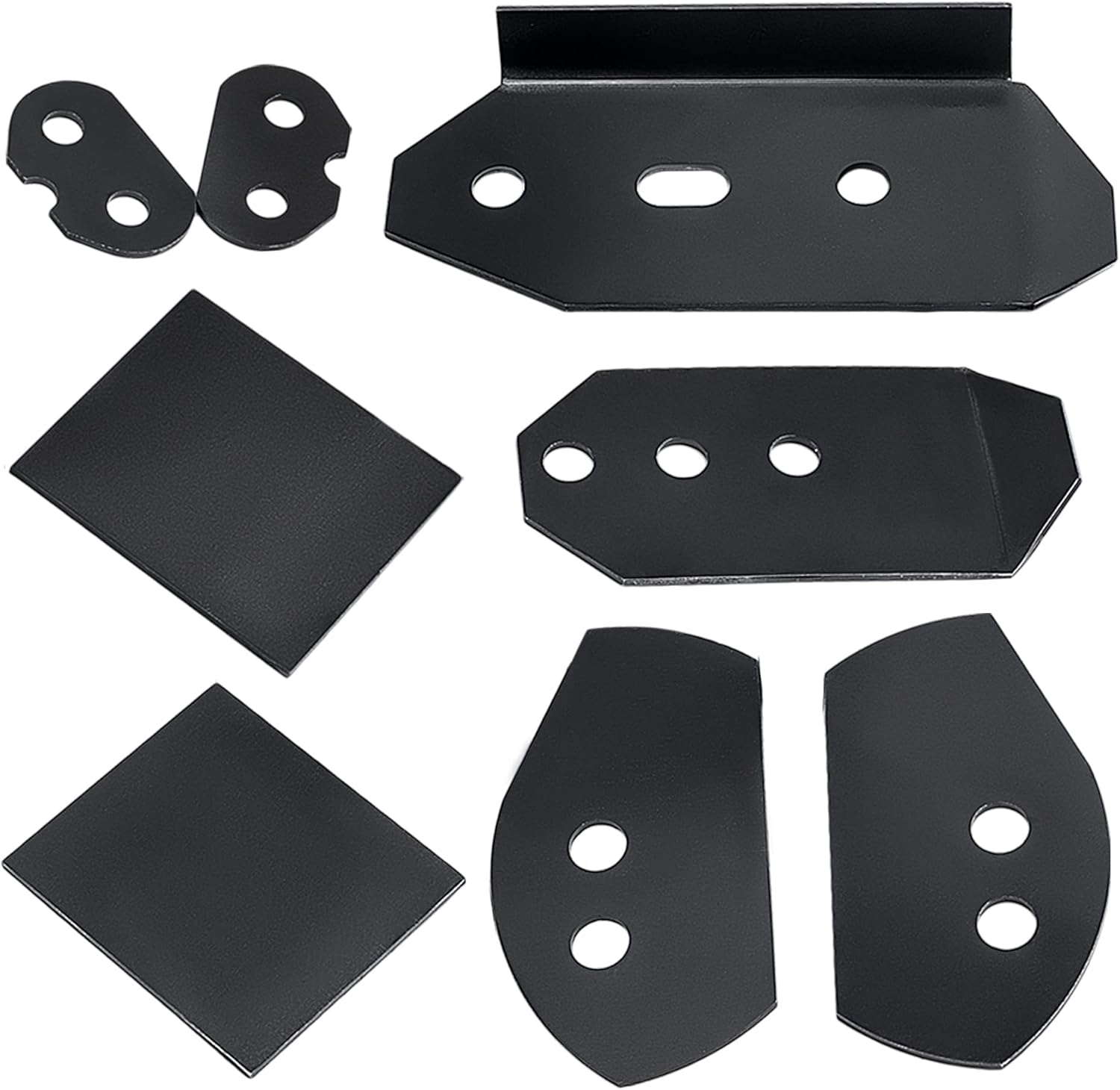
Tuningsworld Subframe Reinforcement Repair Kit — E46 3 Series
$65.99
E9x (2006–2013)
The E90/E92/E93 generation is where most of my customers live right now. These cars - especially the N54 335i and the S65 M3 - have huge aftermarket support and incredibly well-sorted factory chassis. The standard recommendation for a street build is H&R or Eibach springs on fresh Bilstein B8s, plus front control arm refresh if the car has more than 70,000 miles. The E9x rewards alignment investment heavily - a proper four-wheel alignment with slightly increased negative camber front and rear transforms these cars on back roads. For track-focused E9x builds, coilovers with camber plate hardware and adjustable rear subframe pickup points are the move.
F3x (2012–2019)
F30/F32/F36 - this is the most sophisticated BMW suspension platform most enthusiasts will ever own. The integral link rear axle on these cars is brilliant engineering, and it's extremely sensitive to worn bushings. F30s over 60,000 miles should have a complete rear integral link inspection before any suspension work. The rear integral links themselves (the trailing arms) are a known wear item on high-mileage F3x cars, and worn links make even the best coilover setup feel vague. With fresh bushings and links in place, these cars respond beautifully to coilover upgrades. The KW V3 and Bilstein B16 are both excellent fitments. One unique consideration: F3x cars with xDrive have different spring rates front and rear to account for the weight of the front differential - make sure you're buying application-specific hardware.
G2x (2019–Present)
The G20/G22/G26 platform is the most electronically sophisticated BMW chassis in history, and the suspension on these cars reflects that. Electronic damper control is standard or optional across the range, and the suspension geometry targets from the factory are genuinely impressive - BMW has learned a lot across generations. For G-series cars still in warranty, I generally recommend staying with OEM-specification dampers (Sachs or Bilstein OE replacement) and using springs or coilover systems with confirmed EDC compatibility. KW and H&R both offer DDC (Digital Damper Control) compatible systems that maintain full electronics function while improving chassis performance. Don't cut corners on EDC compatibility on these cars - the control systems are deeply integrated and faults will affect driving dynamics in ways that aren't immediately obvious.
Alignment - Where Most People Waste Their Suspension Upgrade
You can spend $3,000 on coilovers, another $500 on camber plates, and replace every bushing in the chassis - and throw most of that money in the trash if you don't follow it up with a proper alignment. I see it constantly. Customer installs a full suspension kit, drives it for 8,000 miles, then comes in wondering why they're eating through front tires. The car was never aligned after the install. Or worse, it was aligned at a quick-lube place that only does toe because they don't have the equipment for full four-wheel geometry.
BMW suspension requires a proper four-wheel alignment with full camber, caster, and toe adjustment at every corner. This is non-negotiable after any suspension modification. Find a shop with a Hunter or Hofmann alignment rack and a tech who understands BMW geometry specifications - not just "within manufacturer spec," but understands what the specification means for different driving applications. A track-day car should be aligned differently than a daily driver, even on identical suspension hardware.
When you change ride height, everything changes: camber changes, toe changes on some platforms (particularly the rear integral link on F3x cars), and caster may shift slightly. Get your car to final ride height, let it sit for 24 hours to settle the springs, and then do alignment. Don't align at a temporary height and then readjust ride height afterwards - you'll be chasing your tail. This is one area where the sequence matters as much as the specification.
Also consider your wheel fitment when planning your alignment targets. Running aftermarket wheels with aggressive offsets changes your scrub radius and affects how the steering geometry behaves under load. Similarly, wheel spacers affect suspension geometry in ways that compound with alignment settings. Read our BMW tire fitment guide before finalizing your setup - the interaction between wheel offset, tire width, and suspension geometry is more complex than most people realize, and getting it wrong undoes a lot of the work that good suspension hardware delivers.
The bottom line on BMW suspension: buy quality hardware from brands that understand BMW geometry, replace wear items before layering upgrades, get a proper alignment after every modification, and be honest with yourself about how you actually drive the car. The best suspension setup for a daily driver with occasional canyon runs is completely different from the best setup for someone running HPDE events. Know your use case, build to that use case, and your BMW will reward you with the kind of driving experience that made these cars legendary in the first place.