How to Replace Engine Air Filter on BMW - Every Model DIY
Affiliate disclosure. BimmerTalk is a proud partner of the Amazon Associates Program and Turner Motorsport. We may earn a small commission on qualifying purchases through our links, at no extra cost to you. Read the full disclosure.

The air filter is the simplest maintenance item on any BMW engine, and yet I regularly see cars roll into the shop with filters so clogged they look like they were pulled from a barn. A severely restricted air filter robs power, hurts fuel economy, causes the MAF sensor to read erratically, and on turbocharged engines can even cause the turbo to work harder and run hotter than it needs to. There is no good reason to let it go. Filter replacement on most BMW models takes under 15 minutes and costs $15 to $40 for a quality OEM-spec replacement.

My standard recommendation is to replace the engine air filter every 30,000 miles under normal driving conditions, or every 15,000 miles if you regularly drive on unpaved roads or in dusty environments. The BMW service indicator will often run longer intervals than this - up to 45,000 miles in some model-year configurations - but those are maximum intervals under ideal conditions. In the real world, 30,000 miles is the sensible interval. A five-minute visual inspection at each oil change tells you if the filter needs replacement sooner.
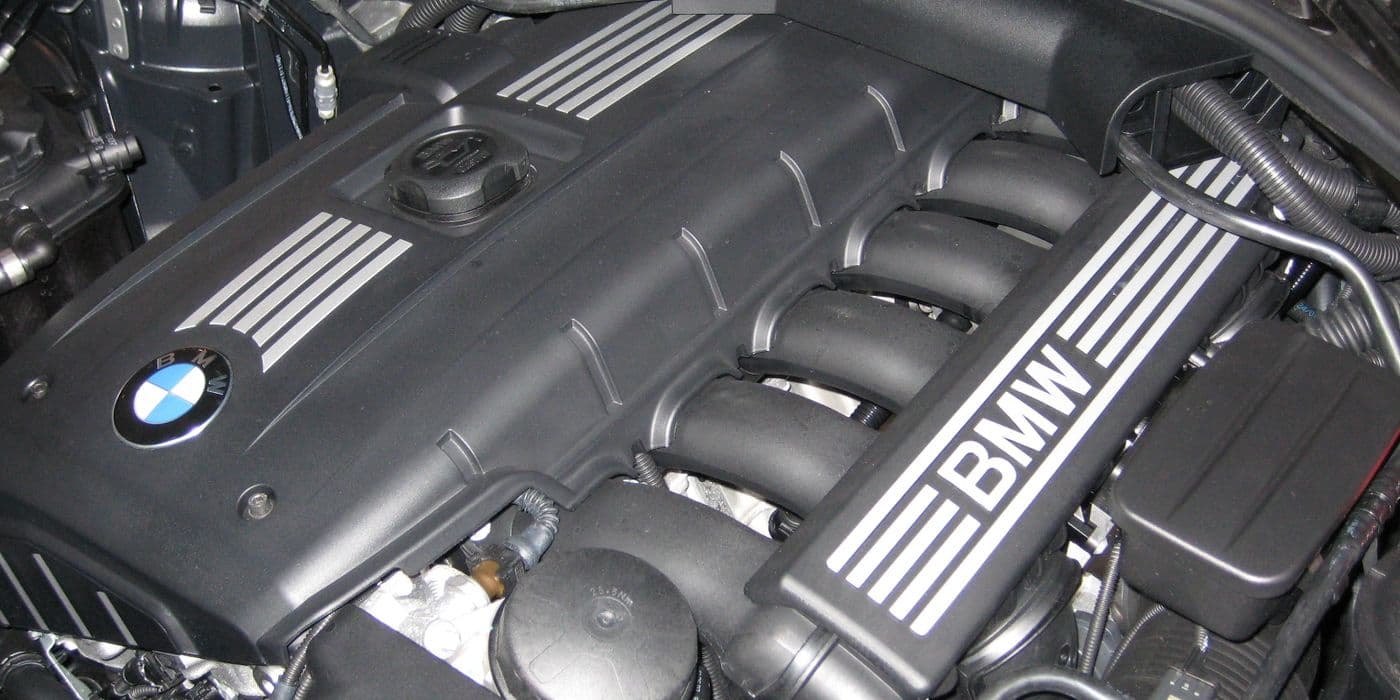
This guide covers air filter replacement across the most common BMW six-cylinder platforms - N52 (E90 328i, E60 528i), N54 (E90 335i, E92 335i), N55 (F30 335i, F22 235i, F10 535i), and notes where the procedure varies by chassis. I also cover filter selection - OEM Mahle, MANN, K&N washable, and aFe performance options - so you can make the right choice for your use case.
30,000 miles (normal conditions)
Replacement Interval
$15 - $25
OEM Filter Cost (Mahle/MANN)
$50 - $70
K&N Washable Filter Cost
$40 - $60
aFe Performance Filter Cost
Why the Air Filter Matters More on Turbocharged BMWs
On a naturally aspirated engine like the N52, a clogged air filter reduces airflow and proportionally reduces power. It is a direct relationship. The engine can only make power in proportion to the air it can inhale.
On a turbocharged engine like the N54 or N55, the dynamics are different and in some ways more critical. The turbocharger compressor is trying to pull air through the filter and compress it. A restricted filter means the turbo has to work against a vacuum on its intake side - it is essentially trying to pull air through a clogged barrier. This increases compressor inlet depression, which raises the temperature of the compressed air (hot compressed air makes less power and increases knock risk), and it forces the turbo to spin harder and faster to achieve target boost. That means more bearing load, more heat, and shorter turbo life. On a high-mileage N54 or N55 turbo, a clean filter is not a luxury - it is proper maintenance.
| Filter Condition | Effect on Turbocharged N54/N55 |
|---|---|
| New filter | Unrestricted airflow, optimal turbo efficiency |
| Slightly dirty (10-15K) | Minor restriction, no measurable power loss |
| Moderately dirty (20-25K) | 5-10% restriction, slight turbo strain |
| Severely restricted | Measurable power loss, hot charge temps, turbo wear |
New filter
- Effect on Turbocharged N54/N55
- Unrestricted airflow, optimal turbo efficiency
Slightly dirty (10-15K)
- Effect on Turbocharged N54/N55
- Minor restriction, no measurable power loss
Moderately dirty (20-25K)
- Effect on Turbocharged N54/N55
- 5-10% restriction, slight turbo strain
Severely restricted
- Effect on Turbocharged N54/N55
- Measurable power loss, hot charge temps, turbo wear
Choosing the Right Filter - OEM Mahle/MANN vs K&N vs aFe
There are four categories of BMW air filter to choose from and each has a place depending on your goals.
OEM Mahle or MANN - these are the factory-specification suppliers for BMW filtration. They filter to OEM particle size specifications (typically 10 to 20 micron particle capture efficiency), they fit perfectly, and they work as designed. For a daily driver with no plans for modification, this is the correct choice. Replace every 30,000 miles and move on.
K&N washable cotton gauze - K&N filters have been around for 50 years and their product quality is consistent. The washable design means you buy once and maintain the filter with periodic cleaning (every 50,000 miles or as needed based on inspection). The claimed airflow improvement over a stock paper filter is real but modest on a stock engine - expect maybe 1 to 3 percent improvement in airflow restriction, which translates to negligible real-world power on a stock car. The value proposition is the lifetime cost saving of not buying replacement filters. On a car you plan to keep for 10 years, a K&N more than pays for itself. The only caution - over-oiling a K&N during cleaning can contaminate the MAF sensor, causing erratic fueling. Do not over-apply oil when cleaning and re-oiling.
aFe performance - aFe (Advanced Flow Engineering) makes high-flow replacement and drop-in filters designed for turbocharged applications. Their Pro DRY S (oil-free) and Pro 5R (oiled) options provide better airflow than OEM paper at comparable or better filtration levels. On a tuned N54 or N55, an aFe filter can support slightly higher airflow targets that a stage 2+ tune may require. The filtration concern about over-oiling that applies to K&N also applies to aFe's oiled variants - the Pro DRY S eliminates this concern entirely.
Air Filter Access on E90 N52 and N54 - E-Chassis Procedure
On the E90 328i (N52) and E90/E92 335i (N54), the airbox is located on the passenger side of the engine bay. It is a large black plastic rectangular housing with a circular lid secured by several metal clips or screws.
Step one - release the intake duct clamp from the airbox outlet to the throttle body or MAF sensor. This is usually one large spring clamp or screw clamp. You do not need to fully remove this hose - just loosen it enough to give the airbox lid room to open fully.
Step two - open the airbox clips. On the N52 E90, there are typically three to four metal wire clips around the perimeter of the airbox lid. Pinch each clip and flip it up. On some years there are plastic twist-lock tabs instead.
Step three - lift the airbox lid. It pivots up on a hinge at the back. The old filter is now visible - a rectangular or slightly oblong panel filter sitting in the lower half of the airbox housing.
Step four - remove the old filter. Note its orientation - the seal edge should face up (toward the lid) and the open face down (toward the airbox base). Pull it straight out.
Step five - wipe the inside of the airbox clean with a dry rag. Do not spray water or cleaner into the airbox - any moisture reaching the MAF sensor or throttle body creates problems. A dry wipe removes loose debris adequately.
Step six - drop in the new filter in the same orientation as the old one. Close the lid, secure all clips. Reconnect the intake duct clamp.
Air Filter Access on F30 N55 - F-Chassis Procedure
The F30 335i (N55) and related F-chassis cars use a different airbox design from the E90. The F30 airbox is larger, more enclosed, and integrates with the bumper air inlet ducting for improved cold-air supply to the turbo. It is a better-designed intake system than the E90, and accordingly it is also slightly more involved to open.
Locate the airbox on the passenger side of the F30 engine bay - it is a large black housing tucked toward the front of the engine bay near the headlight. The lid is secured by four push-pin clips or plastic tabs depending on production year.
Disconnect the MAF sensor electrical connector before opening the airbox - it is usually a small connector attached to the side of the airbox body or the outlet duct. You do not have to disconnect it, but on some F30 variants the connector is positioned in a way that makes it easier to disconnect it before lifting the lid.
Pop all four clips (a flat-blade screwdriver under the tab edge works well for stubborn ones), lift the lid, remove the old panel filter, wipe the box interior clean, install the new filter, and close the lid. Reconnect the MAF sensor if disconnected. The whole job is under 10 minutes on the F30 with no tools required beyond a flathead.
Air Filter Replacement on F10 535i and X5 F15 N55
The F10 535i N55 uses a similar procedure to the F30 but with a larger airbox due to the 5 Series engine bay dimensions. Access is actually easier on the F10 because the engine bay is wider and the airbox lid has more room to open. Follow the same steps - locate the airbox on the passenger side, release the lid clips, swap the filter.
On the F15 X5 35i (N55), the airbox is positioned further back in the engine bay due to the SUV platform packaging. The lid clips can be difficult to reach without a long flathead screwdriver. Some F15 owners find it helpful to briefly move the windshield washer reservoir to gain hand access to the rear clips - it is held by two push pins and lifts straight out. Once the rear clips are released, the front clips are easy. Filter swap, close lid, done.
Cold Air Intake Upgrade - When It Makes Sense
If you are running a stage 1 or higher tune on your N55 or N54, consider upgrading from the stock airbox to a quality cold air intake system. The OEM airbox is designed for emissions compliance and packaging, not maximum airflow. A properly designed cold air intake routes fresh outside air (which is cooler and denser than underhood air) directly to the turbo inlet, providing a meaningful improvement in charge temperature and turbo efficiency.
The key word is properly designed. A cheap cone filter hanging in the engine bay with no heat shielding is not a cold air intake - it is a warm air intake that looks aggressive and helps nothing. Look for systems with a heat shield that seals around the filter to isolate it from hot engine bay air. aFe Momentum GT and Dinan are examples of well-engineered cold air intake systems for the N55 that are worth the premium.
Browse cold air intake options at /engine/cold-air-intakes. For complete N55 engine maintenance guides, see /engine. If your air filter inspection also reveals a charge pipe issue, see /engine/charge-pipes. Cooling system maintenance at /cooling. Common N55 maintenance topics at /articles/bmw-n55-common-problems. B58 air intake comparison at /articles/what-bmws-have-the-b58.
Maintenance Schedule Summary for BMW Air Filtration
To keep it simple - inspect the air filter visually at every oil change. Replace at 30,000 miles under normal conditions. Replace sooner if the filter is visibly dark or caked with debris. If using a washable K&N or aFe oiled filter, clean and re-oil at 50,000 miles or when the filter appears noticeably dirty on inspection.
The air filter is the cheapest and fastest maintenance item on your BMW engine. There is no excuse for neglecting it. A $20 filter at 30,000 miles keeps the MAF reading correctly, keeps the turbo running efficiently, and keeps the engine breathing the clean air it was designed to run on. The 10 minutes you spend on this job today is worth far more than the hours of diagnosis that a MAF contamination event or turbo issue creates down the line.
Pair your air filter replacement with an oil change using quality full-synthetic oil. Keep up with cooling system maintenance at /cooling/water-pumps and /cooling/thermostats and your N52, N54, or N55 will run reliably well into six-digit mileage territory.
Air Filter Replacement as Part of BMW Annual Service


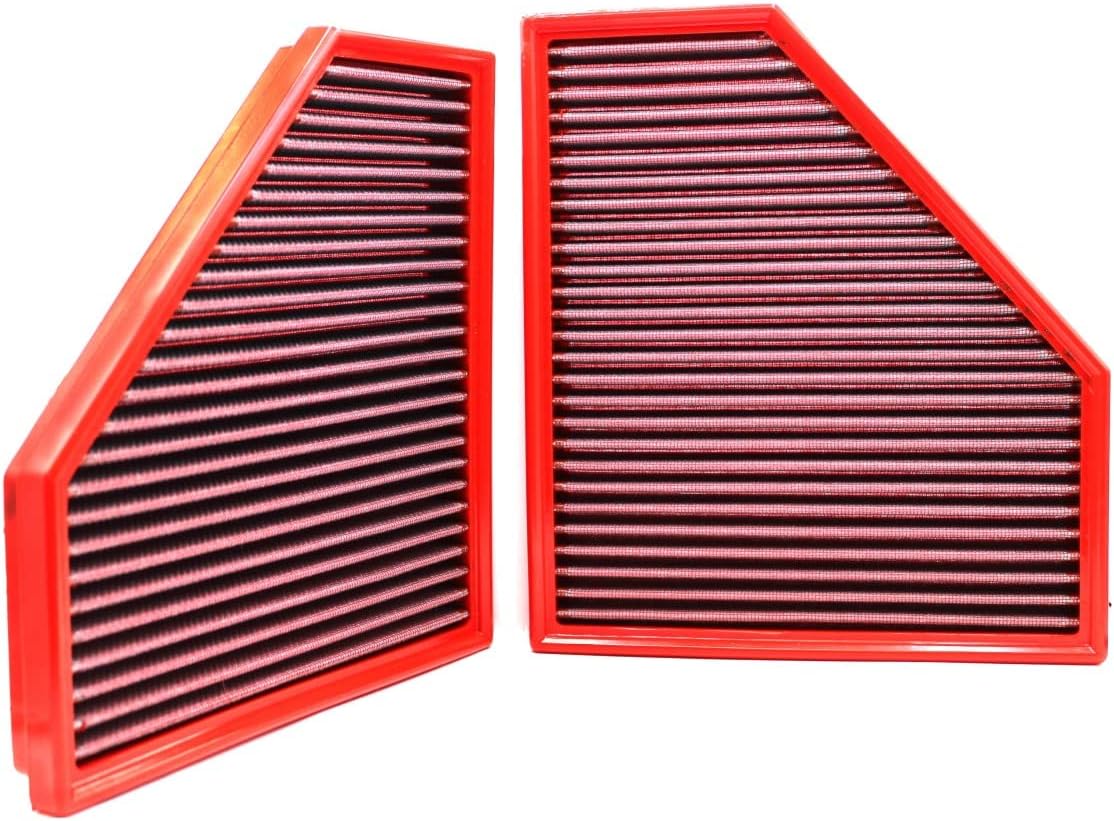
Every BMW should have a full annual service that includes at minimum an oil change, air filter inspection and replacement as needed, cabin filter replacement, and a coolant level and condition check. The air filter is one of the cheapest items in this service and one of the most impactful for day-to-day engine health. Do not skip it to save $20. On any BMW six-cylinder - N52, N54, N55, or B58 - proper filtration protects the MAF sensor, the turbo (on boosted engines), and the entire combustion system from abrasive particles that cause internal wear over time. Consistent annual service keeps these engines running reliably to 150,000 miles and beyond without major internal repairs. See the full engine maintenance hub at /engine and the B58 guide at /articles/what-bmws-have-the-b58.