How to Replace Ignition Coils on BMW - Complete DIY
Affiliate disclosure. BimmerTalk is a proud partner of the Amazon Associates Program and Turner Motorsport. We may earn a small commission on qualifying purchases through our links, at no extra cost to you. Read the full disclosure.

Ignition coil failure is one of the most common misfire causes on BMW sixes - from the naturally aspirated N52 in the E90 328i all the way through the turbocharged N54 and N55, and into the modern B58. I have diagnosed and replaced hundreds of coil sets across these engines and the story is always the same - one coil starts to degrade, the customer comes in with a rough idle and a misfire code, we do a cylinder swap test to confirm, and then we have the conversation about whether to replace just the one or all of them. My answer is always all of them. Here is why, and here is how to do the job correctly.
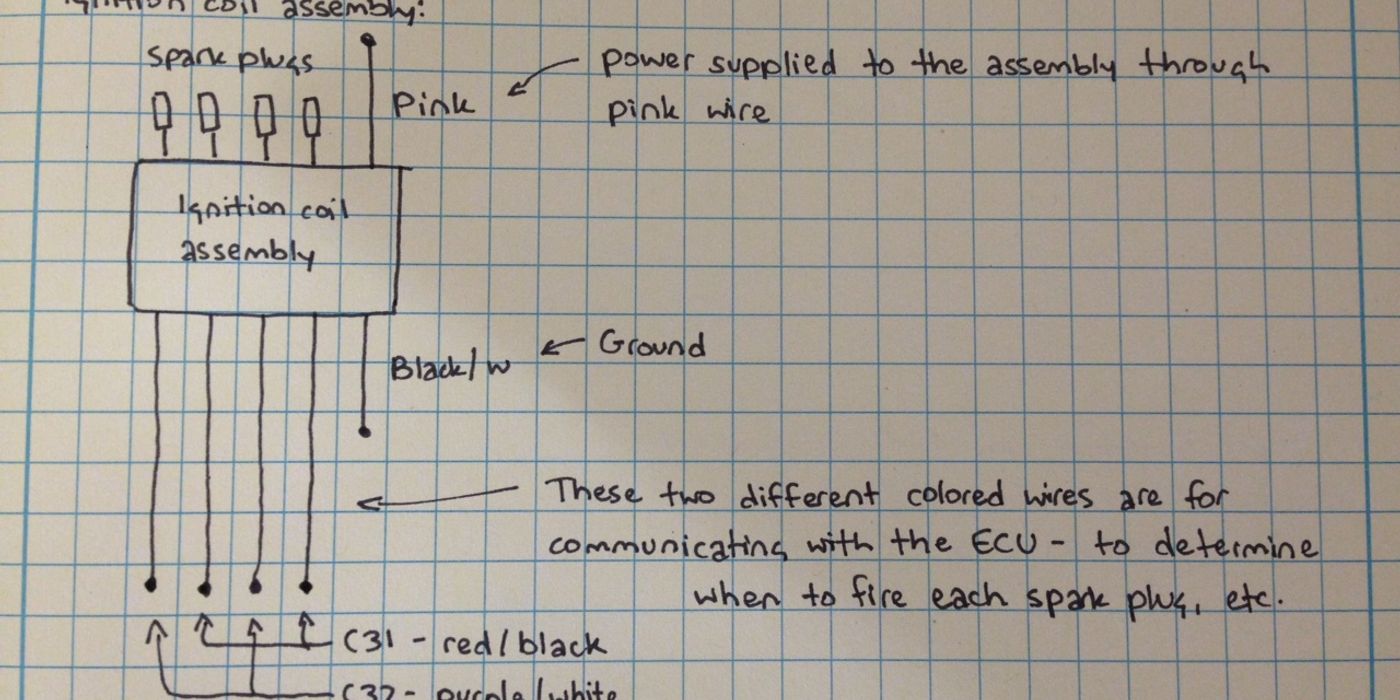
Ignition coils on these BMWs are a matched-age set. They all went in on the same day. They all saw the same number of cold starts, the same thermal cycles, the same oil contamination from valve cover gasket weeps, the same voltage from an aging battery. When one degrades enough to cause a misfire, the others are not far behind. Replace one, and six months later you are back under the hood with a different cylinder misfiring. Replace the full set in an afternoon for $80 to $120 in parts, and you are done for another 60,000 to 80,000 miles.
The job itself is one of the most beginner-friendly engine repairs you can do on a BMW. No fluids to drain, no specialist tools required, and on most six-cylinder platforms the coils are right on top of the engine and fully accessible without removing anything major. The only tools you need are a 10mm socket, a T30 Torx bit, and a bit of patience when connectors are tight from age.
60,000 - 80,000 miles or on failure
Coil Set Replacement Interval
Delphi or Bremi
OEM Supplier
Replace with coils
Spark Plugs Replacement Interval
$80 - $150
DIY Parts Cost (coils + plugs)
Diagnosing Ignition Coil Failure on BMW - The Swap Test
Before spending money on parts, confirm the coil is the problem and identify which cylinder. Start with an OBD2 scan - an active misfire will store a cylinder-specific code. BMW codes in the P030x range indicate cylinder misfires: P0301 is cylinder one, P0302 is cylinder two, and so on up to P0306 for a six-cylinder engine.
Once you know which cylinder is misfiring, perform the coil swap test. Swap the suspect coil with the coil from an adjacent cylinder - say you have a P0302 code, swap cylinder two's coil with cylinder three's. Clear the codes and take the car for a 10-minute drive under light load. Check for codes again. If the misfire code follows the coil (now reads P0303 after the swap), the coil is faulty. If the misfire stays on cylinder two despite the coil swap, the spark plug or an injector may be the cause.
| Code | Cylinder |
|---|---|
| P0301 | Cylinder 1 |
| P0302 | Cylinder 2 |
| P0303 | Cylinder 3 |
| P0304 | Cylinder 4 |
| P0305 | Cylinder 5 |
| P0306 | Cylinder 6 |
P0301
- Cylinder
- Cylinder 1
P0302
- Cylinder
- Cylinder 2
P0303
- Cylinder
- Cylinder 3
P0304
- Cylinder
- Cylinder 4
P0305
- Cylinder
- Cylinder 5
P0306
- Cylinder
- Cylinder 6

Also inspect the coils visually as part of diagnosis. On any engine with a valve cover gasket leak, oil contamination of the spark plug tubes is common. Oil in the tube contacts the lower boot of the coil, degrades the rubber, and allows arcing to occur. An oil-contaminated coil boot that has been arcing will show a carbon track or discoloration on the rubber boot. This is a clear condemn - and it also means your valve cover gasket needs attention if you have not already addressed it.
Choosing Replacement Coils - OEM vs Aftermarket
My recommendation is always to match or exceed OEM specification. On BMW six-cylinders, the OEM coil suppliers are Delphi and Bremi (Beru). These are the exact manufacturers that supplied the coils on the assembly line. They are available through aftermarket channels at prices well below dealer pricing.

NGK Ignition Coils & V-Power Spark Plugs Kit — BMW E39/E46/E53/E60/E83 L6
$216.95
NGK also produces a combined coil and spark plug kit for BMW six-cylinder applications that offers excellent value and good long-term reliability. For engines that have had coil issues linked to high underhood temperatures (common on high-performance builds), Bremi's upgraded formulation offers slightly better thermal resistance than the base OEM specification.
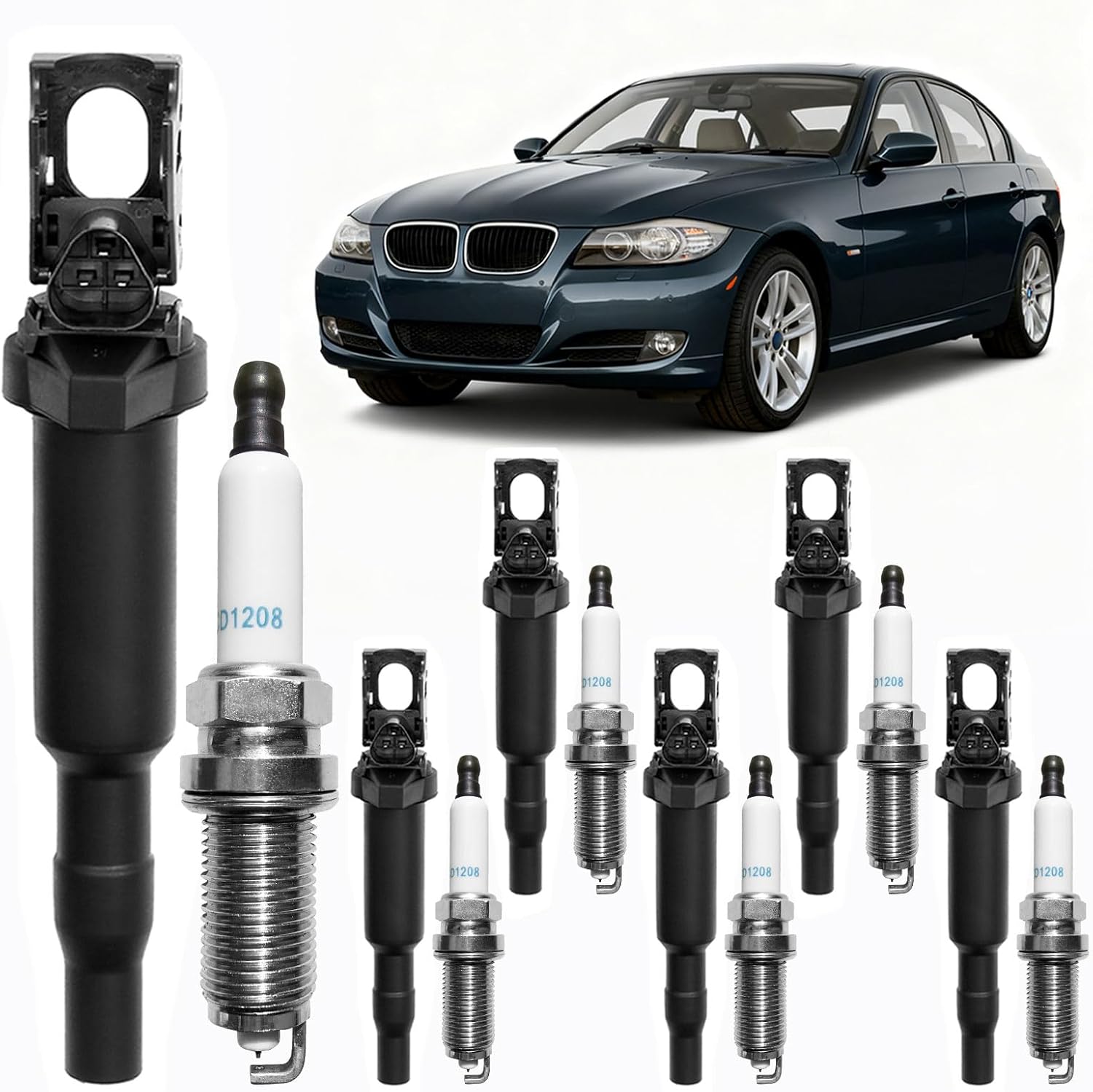
HQPASFY Ignition Coil & Spark Plug Set (x6) — BMW 3.0L N52/N54
$79.99
Avoid no-name ignition coils sold in bulk on marketplace platforms. Ignition coils produce high-voltage pulses repeatedly under load - they need quality windings, insulation, and consistent internal resistance to work reliably. Cheap coils frequently fail within 20,000 miles and can actually cause more serious damage by delivering inconsistent spark timing that stresses the catalytic converter.
Replace Spark Plugs at the Same Time
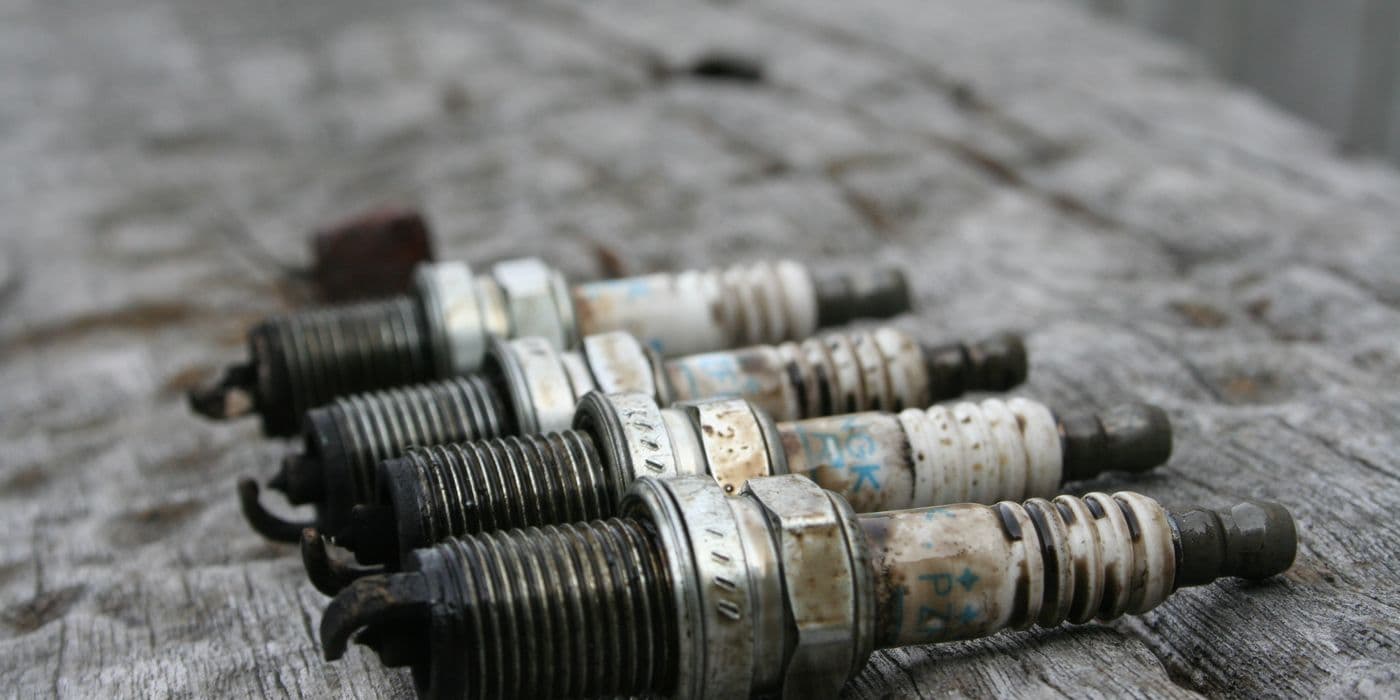
This is not optional advice - it is something I feel strongly about. Ignition coils and spark plugs are a system. If the plugs are at or past their service interval (typically 45,000 miles for OEM iridium plugs on N52/N54/N55), worn electrodes force the coils to work harder to fire the plug. A coil working too hard overheats faster and fails sooner. New coils on worn plugs shortens the coil life you just paid for.
Conversely, new plugs on failing coils may not resolve the misfire if the coils are the primary failure. But when you do fresh coils with fresh plugs, everything in the ignition system is running at specification and you get the full service life from both components. The cost of doing both together is marginally more than doing coils alone, and the time difference is under 20 minutes for an experienced hand.
BMW Ignition Coil Removal Procedure - E90 and F30 Chassis
Step one - remove the engine cover. On the N52 and N54 E90, the plastic cover lifts straight up from its rubber mounts. On the F30 N55, same procedure.
Step two - locate the six ignition coils. They sit in a row along the top of the valve cover, one per cylinder. Each coil is held in place by one 10mm bolt (on most N52 and N54 applications) or one T30 Torx bolt (some N55 variants). Each has an electrical connector with a locking tab.
Step three - for each coil, press the connector locking tab and disconnect the connector. Do not pull by the wire - grip the connector body. On high-mileage cars with original connectors, the tabs can be stiff and require firm pressure with a small flathead.
Step four - remove the retaining bolt. One bolt, 10mm or T30 depending on your car. Set it aside.
Step five - grasp the coil body firmly and pull straight up. It should come free with moderate effort. If a coil has oil contamination around its boot, grip higher up on the body and use a steady pull rather than rocking - rocking can damage the spark plug boot.
Step six - inspect the spark plug tube. Shine a flashlight in. If there is oil at the bottom, your VCG needs attention. If the tube is dry, proceed.
Removing and Installing Spark Plugs
With the coil out, access the spark plug with a 14mm spark plug socket (N52, N54, N55 all use 14mm hex). The plug socket needs to be a "thin wall" type to fit inside the valve cover tube - a standard socket is too thick on most BMW applications. Use a 3/8 drive ratchet with a 6-inch extension.
Thread out the old plug carefully. If it is tight, do not force it - spray a small amount of penetrating oil around the base and let it sit for 10 minutes. Strip threads in an aluminum head are a very expensive repair that completely dwarfs the cost of a plug change.
Install the new plug with the correct gap per the plug manufacturer's specification for your specific engine variant. Thread in by hand first - at least five full turns before using the ratchet, to ensure you have not cross-threaded. Torque to 20 to 25 Nm. Apply a small amount of dielectric grease to the inside of the new coil boot before pushing the coil onto the plug - this lubricates the boot, improves the seal, and makes the next coil removal much easier years from now.
Installing New Ignition Coils and Dielectric Grease
Dielectric grease is not optional on this job. Apply a small ring inside the coil boot - not a massive blob, just enough to coat the interior surface. Push the coil straight down onto the spark plug. You should feel it seat firmly on the plug ceramic. Reinstall the retaining bolt and torque to 7 Nm. Reconnect the electrical connector until it clicks.
Repeat for all six cylinders. With all coils and plugs replaced, reinstall the engine cover. Reconnect the battery if you disconnected it.
Post-Install Check and Misfire Code Clearing
Connect the scanner and clear all stored ignition and misfire codes. Start the engine and let it idle for five minutes. An engine that was misfiring before should idle noticeably smoother immediately. Monitor for any active misfire codes during the idle period.
Take the car for a 20-minute test drive covering city and light highway conditions. No codes should return. If a misfire code comes back on a different cylinder than the original complaint after the coil swap test was done correctly, investigate that cylinder's spark plug condition, injector, and compression before condemning the new coil.
For N55 and N54 engine maintenance resources beyond ignition work, visit /engine. Cooling system maintenance that pairs with a full tune-up at /cooling. Common N54/N55 failure modes at /articles/bmw-n55-common-problems. Engine intake upgrades at /engine/cold-air-intakes and charge pipe upgrades at /engine/charge-pipes.
BMW Coil Failure Patterns by Chassis - What I See Most Often
After years of coil replacements across the BMW six-cylinder family, I have noticed patterns worth sharing. On the N52 E90 328i in naturally aspirated form, coil failure is almost always caused by oil contamination from a weeping valve cover gasket rather than age-related insulation breakdown alone. If you are replacing N52 coils and the spark plug tubes showed oil, fix the VCG first, then replace the coils. Installing new coils into oil-contaminated tubes just restarts the clock on the next coil failure - probably in another 20,000 to 30,000 miles.
On the N54 E90 335i, coil failures correlate strongly with the end cylinders - numbers one and six. The end cylinders run marginally hotter on average due to their position relative to the coolant passages and exhaust manifold, and their coils see slightly more thermal stress. Replacing all six is still the correct approach, but if you are doing a quick field diagnosis on an N54 misfire complaint, check cylinders one and six with extra attention during the swap test.
On the N55 F30, coil failures are less common than on the N54 and typically occur at higher mileage - often past 80,000 miles. The single-turbo N55 runs cleaner combustion conditions than the twin-turbo N54, which reduces thermal stress on the ignition system slightly. That said, the replace-all-as-a-set recommendation still applies. Saving money by replacing only the failed coil on an N55 F30 with 90,000 miles is false economy - the remaining five are aging together and will follow the failed unit over the next 20,000 to 40,000 miles.
Choosing Between OEM Delphi, Bremi, and NGK Combined Kits
All three brands I recommend - Delphi, Bremi, and NGK - produce BMW-compatible coils at quality levels that meet or exceed OEM specification. The choice between them comes down to availability and price in your market. Delphi is often most widely available through domestic parts retailers and their coils have a strong long-term track record across all three engine families. Bremi is the OEM supplier for many recent BMW coil applications and their product carries higher thermal resistance ratings, making them the right call for a car that sees regular track days or extended high-load driving.
NGK bundles coils with spark plugs in combined kits, which is convenient and ensures you have confirmed cross-compatibility between the two ignition components. For a first-time ignition service on a BMW six where you want to do coils and plugs together, the NGK combined kit simplifies parts selection and is well-priced for the quality level it delivers.

Mishimoto Ignition Coil Set — BMW M54/N52/N54/N55/S54 2002+
$165.95
Mishimoto Ignition Coil Set — BMW M54/N52/N54/N55/S54 2002+
$165.95
Mishimoto Ignition Coil Set — BMW M54/N52/N54/N55/S54 2002+
$165.95
One thing I do not recommend - mixing brands across the six coil positions to save a few dollars per unit. A matched set from one manufacturer has consistent internal resistance values across all positions. Mismatched coils from multiple brands can introduce subtle cylinder-to-cylinder combustion timing variation that most owners will not notice immediately but that shows up in fuel trim data and long-term engine health. Resources: /engine, /cooling, /articles/bmw-n55-common-problems, /engine/cold-air-intakes.


