
How to Replace Spark Plugs on BMW N20 - F30 328i DIY
Affiliate disclosure. BimmerTalk is a proud partner of the Amazon Associates Program and Turner Motorsport. We may earn a small commission on qualifying purchases through our links, at no extra cost to you. Read the full disclosure.

The N20 is one of the most underappreciated engines in the BMW lineup. When BMW replaced the naturally aspirated inline-six N52 with this turbocharged four-cylinder in the F30 328i, a lot of enthusiasts were upset. A four-cylinder 3 Series? I heard every opinion about it when these cars started coming into my shop. But here is the truth: the N20 is a genuinely good engine. Smooth for a four-banger, properly quick in the mid-range where turbocharged torque lives, and surprisingly tuneable for a BMW four-cylinder. It is not a six, but it does not pretend to be either.

What brings N20 owners into my shop most often is the timing chain issue on early production cars, but right behind that is spark plug neglect. The N20's four plugs are not complicated to access, but the turbocharged nature of the engine means the plugs see more stress than a naturally aspirated four-cylinder. BMW's 60,000-mile service interval is optimistic in my view for any N20 that has been tuned or sees spirited driving. I recommend 30,000 miles as the practical interval, and I will explain exactly why below.
The N20 appears in the F30 328i and 328i xDrive, the F25 X3 28i, the F22 228i, the F32 428i, and various other F-chassis applications. The procedure is the same across all of them - four cylinders, four coils, four plugs. Easier and faster than the six-cylinder jobs, typically 30-45 minutes for a competent DIYer. Let me walk you through it.
25 Nm (18 ft-lb)
Torque Spec
0.028 in (0.7 mm)
Plug Gap
30,000 miles (recommended) / 60,000 miles (BMW spec)
Service Interval
30-45 min
Time to Complete
4
Number of Plugs
F30, F25, F22, F32, F36
Compatible Chassis
N20 Spark Plug Specs and Part Numbers
The N20 uses the NGK PLZKBR7A-G as the OEM replacement plug. This is an iridium plug with a fine wire electrode and pre-set gap of 0.028 inches. The NGK part number is sometimes also listed as NGK 90919-01253 depending on supplier. If you are buying from an NGK-authorized dealer or a BMW parts supplier, specify PLZKBR7A-G and you will get the correct plug. Do not substitute with a plug from a non-BMW application even if the thread size matches - the heat range and electrode geometry are matched to the N20 specifically.
For tuned N20 cars - Stage 1 maps are available and popular for the F30 328i - stepping one heat range colder is appropriate. The N20's stock tune is not aggressive by turbocharged BMW standards, but a Stage 1 map does increase boost and combustion temperature enough to benefit from a colder plug. For lightly tuned cars, the stock PLZKBR7A-G remains acceptable but at a reduced interval of 25-30K. For more aggressive tunes, use the colder variant and check with your tuner on their specific recommendation.
| Application | NGK Part Number | Gap | Torque | Notes |
|---|---|---|---|---|
| N20 All Stock Applications | NGK PLZKBR7A-G | 0.028 in / 0.7 mm | 25 Nm | OEM replacement |
| N20 Tuned Stage 1+ | NGK PLZKBR8A-G (one colder) | 0.028 in / 0.7 mm | 25 Nm | Check availability |
| N20 Interval - Stock | NGK PLZKBR7A-G | 0.028 in / 0.7 mm | 25 Nm | 60K max; 40K recommended |
N20 All Stock Applications
- NGK Part Number
- NGK PLZKBR7A-G
- Gap
- 0.028 in / 0.7 mm
- Torque
- 25 Nm
- Notes
- OEM replacement
N20 Tuned Stage 1+
- NGK Part Number
- NGK PLZKBR8A-G (one colder)
- Gap
- 0.028 in / 0.7 mm
- Torque
- 25 Nm
- Notes
- Check availability
N20 Interval - Stock
- NGK Part Number
- NGK PLZKBR7A-G
- Gap
- 0.028 in / 0.7 mm
- Torque
- 25 Nm
- Notes
- 60K max; 40K recommended
N20 Engine Bay Access and What to Expect
The F30 N20 engine bay is more compact than the N52 or N55 that it replaced. BMW packed a lot into the F30's engine compartment, and the N20 sits forward under a plastic cover that spans the top of the engine. The turbocharger is integrated into the exhaust manifold on the back of the engine (rear-facing), which keeps the top of the engine relatively clear. All four coil packs are accessible from above with the engine cover removed.
Remove the engine cover first - on the F30, it is the plastic panel with the BMW roundel, held by a combination of push-fit clips and rubber peg mounts. It lifts straight up with a firm pull. Some F30 covers have a friction fit that requires more force on the initial pop - do not panic, pull firmly with both hands and it will come free.
With the cover off, the N20's valve cover is visible with four coil packs in a row. The intake manifold on the N20 runs along the front of the engine (toward the firewall on some configurations) but does not obstruct coil pack access. This is one of the cleaner designs in terms of plug accessibility. No ancillary removal needed on the F30 or F25 in normal circumstances.
Step-by-Step N20 Spark Plug Replacement
Cold engine, coil pack connectors disconnected using the same tab-press-and-pull technique as any other BMW coil. The N20's coil connectors are similar to the N52 in their fragility on older cars - press the tab with your thumbnail, feel it release, then pull straight back. No yanking or prying.
Pull each coil straight up. The N20 coil boots are seated on the plug ceramic and will release with steady upward pressure. Set each coil on a clean surface as you remove them. Insert your 14mm thin-wall spark plug socket into the well - the N20 wells are similar depth to the four-cylinder layout, approximately 3.5 inches. Break the plug loose, spin it out by hand, and pull it up and out.
Inspect the old plug. The N20 being turbocharged means you may see slightly more fouling on the firing end than you would on an N52 plug at the same mileage. Turbocharged engines run richer at low loads for turbocharger protection, which deposits carbon on the plug tip over time. This is normal and is part of why I recommend the shorter 30,000-mile interval.
Thread the new plug in by hand until snug, torque to 25 Nm, apply dielectric grease to the coil boot, and reinstall the coil. Repeat for all four cylinders. Four plugs means this job moves quickly - you should be done with the plug installation in 20 minutes once you have done the first one.
Why I Recommend 30K Over BMW's 60K Interval on the N20
BMW's 60,000-mile interval for N20 plugs is derived from testing under controlled conditions with fresh cars and OEM-spec fuel. In the real world, the N20 sees ethanol-blended pump fuels, varying oil change adherence, varying driving patterns, and often some degree of modification. Here is what I observe in my shop at 60,000-mile plug changes on N20 engines: the electrode gap is measurably wider than spec, typically around 0.035-0.040 inches on a plug that should be at 0.028 inches. The deposits on the firing tip are heavier than they should be. And critically, the car's performance noticeably improves with fresh plugs - which means the old plugs were compromising performance for some period before the change.
At 30,000 miles, N20 plugs look nearly new. The gap is close to spec, deposits are light, and there is no measurable performance degradation. At 60,000 miles, you are getting marginal plugs for the last 15,000-20,000 miles of that interval. On a turbocharged engine, marginal plugs mean the coil works harder, misfires become more likely under boost, and fuel economy suffers. The cost of one extra plug change over 120,000 miles is trivial.
For N20 owners who track their cars or run any tuning software, 25,000 miles is my practical upper limit. The N20 under higher boost sees the same accelerated electrode wear as any other turbocharged BMW six, just on four cylinders instead of six.
N20 Direct Injection and Carbon Buildup
Like the N55, the N20 is a direct injection engine. The intake valves do not receive a fuel wash, and carbon buildup on the back of the valves is an inherent characteristic of this design. On N20 engines with 60,000 or more miles, carbon deposits become significant enough to reduce airflow into the cylinders and cause rough cold starts and hesitation at low loads.
This carbon buildup can cause symptoms that look like spark plug failure - rough idle, hesitation, mild misfires. Before you assume plugs are the problem on a high-mileage N20, pull fault codes with an OBD2 scanner. If the codes point to specific cylinder misfires and those misfires are worse at low RPM than high RPM, carbon buildup is more likely than plug wear. Walnut blasting the intake ports is the fix, and it is typically done in conjunction with a spark plug change because both items need attention at similar mileage.
For F30 owners generally, see the F30 model page for fitment guides and maintenance schedules. For general ignition maintenance, visit our spark plugs and ignition section. If you are curious how the N20 compares to the turbo six alternatives, our engine comparison articles give a good perspective on where the four-cylinder fits in BMW's lineup.
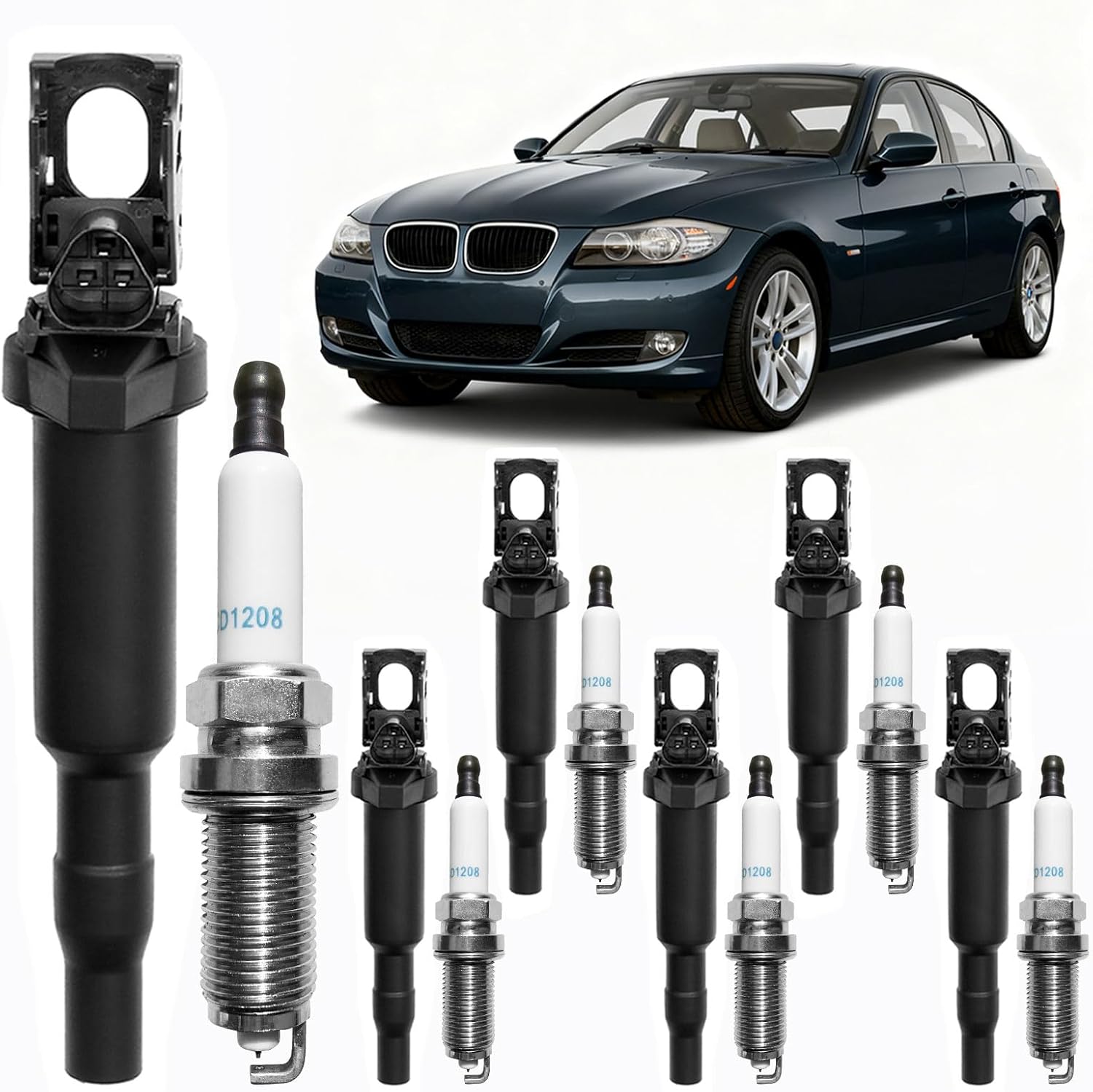
HQPASFY Ignition Coil & Spark Plug Set (x6) — BMW 3.0L N52/N54
$79.99

Vgate vLinker BM+ Bluetooth OBD2 Scanner — BMW & Mini
$49.99
N20 Timing Chain - What to Know During a Plug Change
The N20 has a well-documented timing chain issue on early production units - specifically cars built before late 2012 with certain VIN ranges. The timing chain guide can wear and in severe cases the chain can skip or break. BMW extended the warranty on affected cars and issued a technical service bulletin. If you own an early F30 328i or F25 X3 28i with the N20, you should verify whether your car was covered under the extended warranty and whether the remedy was applied.
When doing the spark plug change on an N20, listen carefully to the engine when you first start it after completing the job. Any rattling from the front of the engine on a cold start that persists for more than 2-3 seconds is a timing chain tensioner concern. The rattle from a worn chain is metallic and rhythmic, and it diminishes as oil pressure builds. If you hear this, investigate before driving the car further - a failing timing chain on the N20 is a serious issue that can result in catastrophic engine damage if ignored. The timing chain concern is completely separate from the spark plug maintenance, but since you are already working on the engine, it is worth noting.
N20 vs N26 - Any Differences for Plug Service?
The N26 is the SULEV (Super Ultra Low Emission Vehicle) variant of the N20, used in certain F30 328i and F25 X3 models sold in California and other SULEV states. From a spark plug replacement perspective, the N26 is identical to the N20 - same plugs, same torque, same procedure. The difference between the N26 and N20 is in the emissions system (additional catalytic converter, different injector calibration) and does not affect the ignition service procedure at all. If you are not sure which you have, check the emissions sticker on the engine cover or door jamb - SULEV designation means you have the N26.
Post-Plug Change Fuel Economy Gains on the N20
One thing N20 owners consistently report after a plug change is improved fuel economy. The F30 328i and F25 X3 with the N20 are supposed to achieve 26-35 MPG depending on conditions, but a car with worn plugs often sees economy drop noticeably below that range. The misfiring combustion events from worn plugs mean the DME adds more fuel to compensate for the perceived lean condition, and the incomplete combustion of misfiring events wastes fuel directly. After fresh plugs, the ECU's fuel trims return to normal over a few drive cycles and fuel economy recovers. Many customers have reported a 2-4 MPG improvement after a long-overdue plug change. It is one of the most cost-effective maintenance items for fuel economy on any BMW engine.

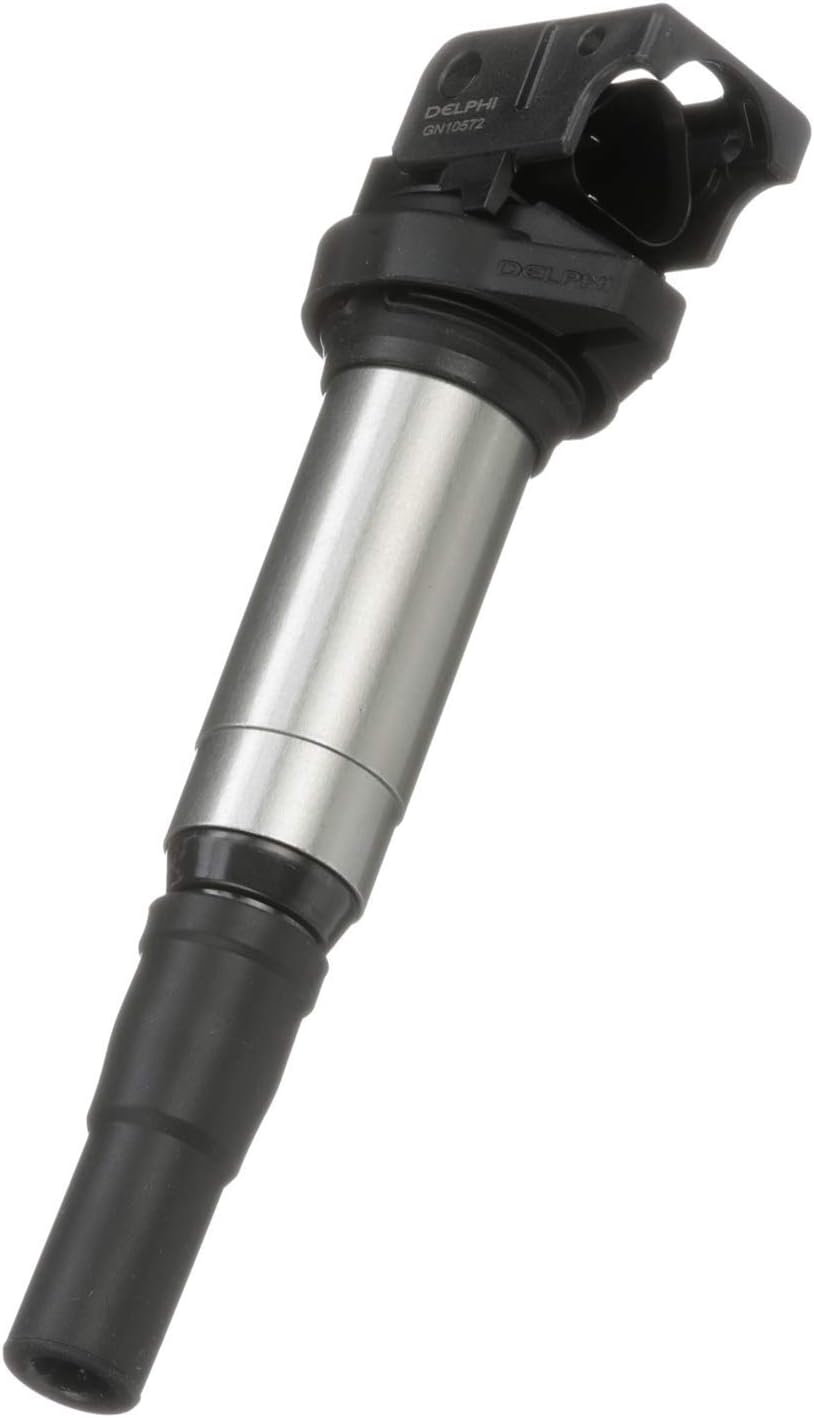


For F30 owners, see the F30 3 Series guide for more maintenance specifics. The spark plugs and ignition section covers all BMW ignition maintenance in one place. And if you are curious how the N20 four-cylinder 328i compares to the six-cylinder 335i in tuning potential, our engine comparison article puts it in context.

