
How to Replace Spark Plugs on BMW N54 - Step by Step DIY
Affiliate disclosure. BimmerTalk is a proud partner of the Amazon Associates Program and Turner Motorsport. We may earn a small commission on qualifying purchases through our links, at no extra cost to you. Read the full disclosure.

I've replaced spark plugs on more N54-powered BMWs than I can count. In my shop, N54 plug changes come through the door regularly - E90 335i owners who ignored the 30,000-mile mark, tuned 135i guys wondering why their car is misfiring under boost, and the occasional E60 535i owner who didn't know spark plugs were even a maintenance item. The N54 is a brilliant engine, but it is unforgiving when you neglect ignition maintenance. Run worn-out plugs on a tuned car and you will have misfires under boost, which means cylinder cut on the DME, which means you just lost power and are hammering your engine unnecessarily.
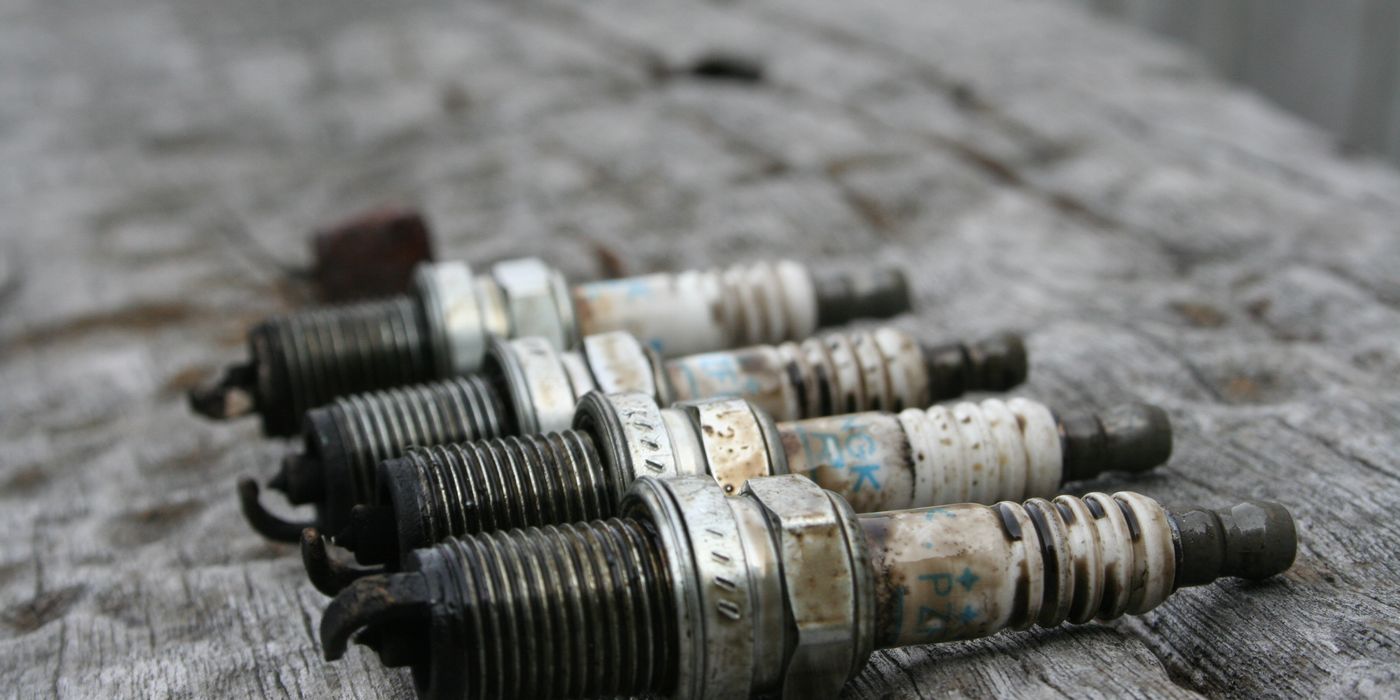
The good news is this job is genuinely easy. The N54's inline-six layout with coil-on-plug ignition means everything sits right on top of the engine, accessible without removing anything complicated. I can swap all six plugs in 45 minutes flat. A first-timer with basic tools and this guide should be done in 90 minutes. Here is exactly how I do it in my shop, with the part numbers, torque specs, and the few things you really can't get wrong.
Before we get into the procedure, let me address the heat range question because this is where a lot of people mess up. The N54 shipped from the factory with Bosch plugs. For replacement, NGK is the go-to in the BMW community and in my shop. For stock or mildly tuned cars, the NGK 97506 (also sold as NGK ILZKAR7H11G or equivalent) is the correct heat range. For tuned cars running Stage 2 or above, or any car seeing track use, you want to drop one step colder to the NGK 97968. More on that below.
23 Nm (17 ft-lb)
Torque Spec
0.028 in (0.7 mm)
Plug Gap
30,000 miles (tuned) / 60,000 miles (stock)
Service Interval
45-90 min
Time to Complete
6
Number of Plugs
E90, E82, E60, E71
Compatible Chassis
Tools and Parts You Need Before You Start
I have watched customers show up to my shop with wrong parts or wrong tools and waste an entire Saturday. Get this sorted before you start. You need a thin-wall spark plug socket - emphasis on thin-wall. The N54's plug wells are deep and a standard spark plug socket will not fit without contacting the coil pack housing. I use a 14mm thin-wall magnetic spark plug socket, and so should you. A 3/8" drive ratchet with a 6-inch extension gets you down into the well cleanly. A torque wrench that reads in Newton-meters is non-negotiable - I torque every single plug, no exceptions.
For dielectric grease, grab a small tube of Permatex dielectric tune-up grease. You will put a thin coating inside the coil boot where it contacts the plug ceramic. This prevents the boot from fusing to the plug over time and makes future removal much easier. Do not put anti-seize on the plug threads. I repeat - no anti-seize on N54 spark plugs. The torque spec assumes dry threads. Anti-seize reduces friction, which means you will overtighten the plug and risk cracking the aluminum cylinder head threads. That is a very expensive mistake. NGK plugs have a nickel coating on the threads that prevents seizing; no additional compound needed.
For parts, here are the exact NGK part numbers I use:
| Application | NGK Part Number | Heat Range | Gap | Torque |
|---|---|---|---|---|
| N54 Stock/Stage 1 | NGK 97506 (ILZKAR7H11G) | 7 (stock) | 0.028 in / 0.7 mm | 23 Nm |
| N54 Stage 2+ / Tuned | NGK 97968 (ILZKAR8H11) | 8 (one colder) | 0.028 in / 0.7 mm | 23 Nm |
| N54 Track Use | NGK 97968 (ILZKAR8H11) | 8 (one colder) | 0.024 in / 0.6 mm | 23 Nm |
N54 Stock/Stage 1
- NGK Part Number
- NGK 97506 (ILZKAR7H11G)
- Heat Range
- 7 (stock)
- Gap
- 0.028 in / 0.7 mm
- Torque
- 23 Nm
N54 Stage 2+ / Tuned
- NGK Part Number
- NGK 97968 (ILZKAR8H11)
- Heat Range
- 8 (one colder)
- Gap
- 0.028 in / 0.7 mm
- Torque
- 23 Nm
N54 Track Use
- NGK Part Number
- NGK 97968 (ILZKAR8H11)
- Heat Range
- 8 (one colder)
- Gap
- 0.024 in / 0.6 mm
- Torque
- 23 Nm
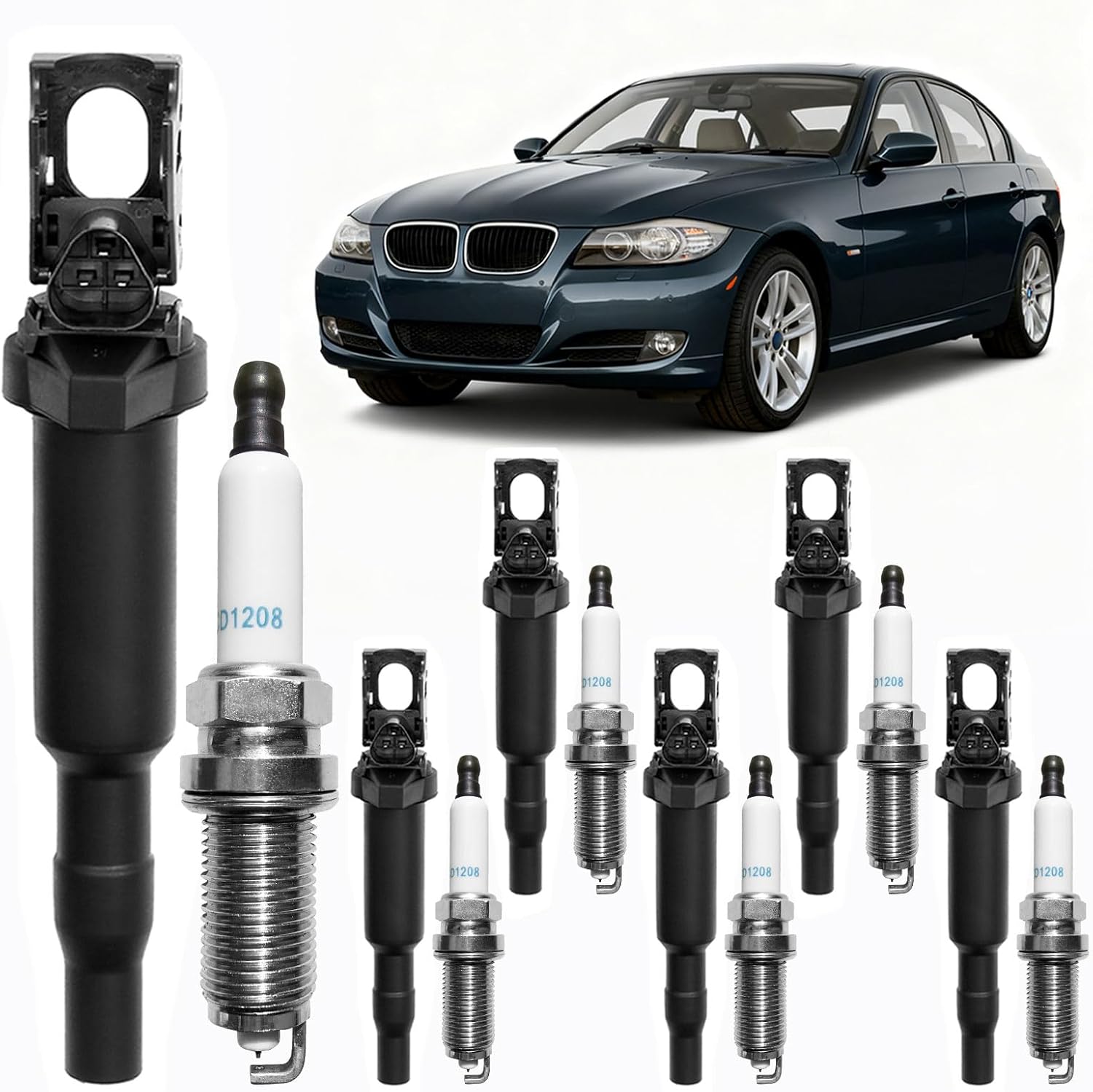
HQPASFY Ignition Coil & Spark Plug Set (x6) — BMW 3.0L N52/N54
$79.99
What "One Step Colder" Actually Means for Tuned N54s
I get this question constantly: "Do I really need colder plugs?" Let me explain it plainly. A spark plug's heat range describes how quickly the plug dissipates heat from the firing tip into the cylinder head. A hotter plug retains more heat - it self-cleans better in low-load driving, which is why stock cars use hotter plugs. A colder plug sheds heat faster, which protects against pre-ignition and detonation at high cylinder pressures.
When you tune an N54 to Stage 2 or above, you are running more boost, more fuel, and generating substantially higher combustion temperatures. At those temperatures, a stock heat-range plug can glow red-hot at the tip, which causes pre-ignition - the plug itself ignites the mixture before the spark, and that pre-ignition shock wave is what destroys pistons. Going one step colder with the NGK 97968 keeps the tip cool enough to prevent this. If you are running more than a modest Stage 2, are on E30 or higher ethanol blends, or are doing track days - run the 97968, full stop. It is the same price. There is no downside on a boosted car.
For naturally aspirated or completely stock N54s (rare, but they exist), the NGK 97506 is correct and you do not need to step down. The hotter heat range will keep the plugs clean during city driving where combustion temps are lower.
Step-by-Step N54 Spark Plug Replacement
Start with a cold engine. I mean stone cold - not "I let it sit for 20 minutes." Thermal expansion means a warm engine's plug threads are slightly different dimensionally than a cold one, and you want consistent torque readings. I let cars sit overnight if they come in warm. If you absolutely cannot wait, 3-4 hours minimum after the last drive.
Pop the hood and remove the engine cover. On E90/E82 chassis, the N54 engine cover is held by three push-pins and lifts straight off. Set it aside somewhere it will not get scratched. Now you are looking at the top of the engine - the intake manifold is in the center, and the six coil packs run in a row along the valve cover. The coil packs are the black cylindrical pieces with the single electrical connector on each one. These are your starting point.
Disconnect the coil pack connector on cylinder 1 (front of the engine). There is a small tab on the side of the connector - push it in with your thumb and pull the connector straight back. No prying, no tools needed. If the connector is stiff, wiggle it slightly while pulling. Then grasp the coil pack body firmly and pull it straight up. It will resist initially - there is a tight seal between the coil boot and the plug - but it comes out with steady upward pressure. Do not twist or pry sideways.
With the coil out, drop your 14mm thin-wall socket down into the plug well on the extension. The well is about 4 inches deep on the N54. Seat the socket squarely on the plug hex, then break it loose counterclockwise. If it is very tight, a short breaker bar on the socket gives you better leverage than a ratchet. Once loose, spin it out by hand the rest of the way. Pull the plug out of the well carefully - if you drop it, fishing it out of a running engine bay is miserable.
Inspect the old plug. The firing tip tells you a lot. A light tan or gray color is healthy combustion. Black, sooty deposits suggest rich running or oil contamination. White or chalky deposits indicate lean running or coolant intrusion. Wear on the center electrode is normal - the iridium or platinum tip erodes over time and increases the gap. If your plug gaps are significantly beyond spec, that alone causes misfires. For high-mileage N54s, check the threads in the cylinder head for any signs of galling or damage before installing new plugs.
Thread the new plug in by hand. This is important - by hand first, all the way until snug, before you put any tool on it. Cross-threading an aluminum head is catastrophic and easy to do if you rush. Once hand-tight, torque to 23 Nm with your torque wrench. That is it. Not 25, not 30 - 23 Nm. The iridium plug's fine wire electrode is precision-gapped at the factory and the threads are delicate. Apply your dielectric grease lightly inside the coil boot now, reconnect the coil, and move to the next cylinder.
Ignition Coils - Replace Now or Later?
This comes up on every N54 spark plug job in my shop. The N54 has a known coil pack weakness - the OEM BMW coils are not as robust as the aftermarket alternatives, and on high-mileage cars or tuned applications, they do fail. When a coil fails you get a single-cylinder misfire - rough idle, hesitation, possible fault code for that specific cylinder. The symptoms are unmistakable.
My recommendation: if your N54 has more than 80,000 miles or you are changing plugs because of a misfire, replace all six coils at the same time. Aftermarket coils from NGK or Delphi are around $30-40 each, so all six is $180-240. That is cheap insurance compared to having a coil fail six months later and paying labor again. If the car is lower mileage and the coils show no cracking or damage on inspection, they are probably fine to reuse - just coat the boots with fresh dielectric grease.
I always inspect each coil boot for cracking as I remove them. The boots are the rubber portion that contacts the plug ceramic. Cracked boots allow moisture intrusion and cause misfires that mimic plug failure. If you see any cracking, replace those coils regardless of mileage.

NGK Ignition Coils & V-Power Spark Plugs Kit — BMW E39/E46/E53/E60/E83 L6
$216.95
Service Intervals - BMW's Recommendation vs My Recommendation
BMW says 60,000 miles for N54 spark plug replacement. I disagree, at least for anything that is not stock. Here is my breakdown by application:
Stock N54, lightly driven, no track use. BMW's 60,000-mile interval is fine. The factory plugs are iridium and hold up well under normal conditions. I have seen stock N54 plugs at 70,000 miles that still measured in spec.
Stage 1 tuned (JB4, MHD Stage 1, Burger Tuning): I recommend 40,000 miles. You are running slightly elevated boost and the plugs see more stress. The cost of plugs every 40K is minimal compared to the misfire issues you get from worn plugs on boost.
Stage 2 and above, or any E30/E85 ethanol blend: 20,000-30,000 miles maximum. I have pulled Stage 2 N54 plugs at 35,000 miles that were worn well beyond spec. On ethanol blends the combustion is much cleaner, which actually helps, but the added heat from aggressive timing means faster electrode erosion. Pull them at 20-25K if you are aggressive with the throttle.
Track cars or time attack builds: 15,000 miles or annually, whichever comes first. I have seen track-day N54 plugs look like they have 100,000 miles on them after 20,000 miles of mixed street and track use. Plugs are cheap. Engine rebuilds are not.
Diagnosing Misfires Before You Replace Plugs
Not every misfire is a spark plug. Before you buy six plugs and spend a Sunday in the garage, confirm the diagnosis. Pull the fault codes - on an N54, a misfire on a specific cylinder will show as P030X where X is the cylinder number. If you are getting a consistent P0301 (cylinder 1 misfire), start by swapping that cylinder's coil with an adjacent cylinder. If the misfire moves with the coil, you have a bad coil, not a plug. If it stays on cylinder 1, now you know it is the plug or a fuel injector issue.
A quality OBD2 scanner is essential for N54 ownership. The BMW-specific fault codes tell you exactly which cylinder is misfiring, which saves hours of diagnosis. I keep a Vgate VLinker BM on the bench for quick reads without connecting the full diagnostic computer.

Vgate vLinker BM+ Bluetooth OBD2 Scanner — BMW & Mini
$49.99
If you are getting random misfires across multiple cylinders, not tied to a specific one, that is more likely a fuel trim issue, high-pressure fuel pump (HPFP) problem, or low fuel pressure at the injectors. The N54 HPFP is a known weakness - if you have a high-mileage N54 and are seeing random misfires under load, check HPFP output before assuming plugs. Learn more about common N54 failure points in our N54 vs N55 comparison.
Post-Installation Checklist
Once all six plugs are torqued and the coils are reconnected, reinstall the engine cover. Then start the car and let it idle for two minutes. Listen for any misfires - you will hear them as a rhythmic stumble or feel them as vibration through the steering wheel or seat. If everything sounds smooth, take it for a short drive and get the engine up to operating temperature. No fault codes, no rough idle, no hesitation under acceleration - you are done.
If you replaced coils as well, I recommend a brief WOT (wide open throttle) pull in second gear from 2,000-5,000 RPM to seat the new plugs and coils under load. Make sure the car is fully warmed up first. This is not required, but it gives me confidence that everything is functioning correctly before I send a car back to its owner.
After the plug change, reset your service interval reminder if applicable. On E90 and E82 chassis, the service interval is set via the iDrive or instrument cluster. On cars with Condition Based Service, BMW's system will handle this automatically once you clear any pending faults with a scan tool.


Mishimoto Ignition Coil Set — BMW M54/N52/N54/N55/S54 2002+
$165.95

For more on keeping your N54 healthy, check our engine maintenance guides, the full spark plugs and ignition section, and our breakdown of N54 vs N55 differences. If you are on an E90 platform, our E90 3 Series model page has fitment guides for every major maintenance item.

