
How to Replace Spark Plugs on BMW N55 - DIY Guide
Affiliate disclosure. BimmerTalk is a proud partner of the Amazon Associates Program and Turner Motorsport. We may earn a small commission on qualifying purchases through our links, at no extra cost to you. Read the full disclosure.

The N55 is probably the engine I work on most in my shop. F30 335i owners, F22 M235i guys, and the occasional F87 M2 - they all run the N55, and they all need spark plugs eventually. The N55 replaced the N54 twin-turbo as BMW's primary turbocharged inline-six, and while it fixed most of the N54's reliability quirks, spark plug maintenance is still just as important. Maybe more important, because the N55 is so commonly tuned that a lot of owners are running higher boost than BMW ever intended, and worn plugs under boost cause all the same misfire issues you get with the older engine.
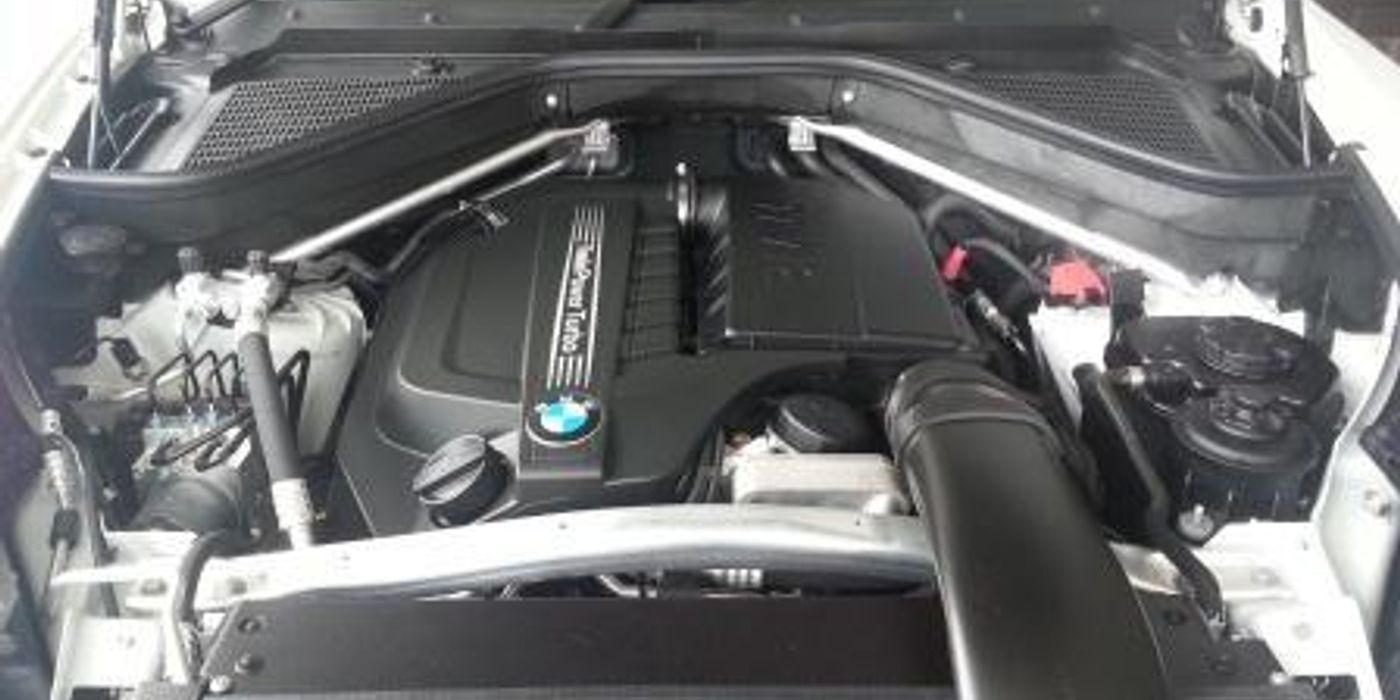
What I like about the N55 for this job specifically is the layout. The single-turbo setup means the top of the engine is cleaner than the N54 - no twin scroll plumbing getting in the way, and the coil-on-plug ignition system is in an identical position. I can do a full N55 plug swap faster than an N54 because there is less stuff in the way. My record is 38 minutes for a set of six on an F30, including pulling codes before and after. You can do this at home.
One thing I want to address upfront because I see it constantly: oil on the spark plugs. On higher-mileage N55 engines, valve cover gasket oil leaks sometimes weep oil down into the plug wells. If you pull a coil and the boot has oily residue, or you pull a plug and the threads are fouled with oil, the valve cover gasket needs attention before or alongside the plug replacement. Running a plug that sits in an oil pool causes premature fouling and ongoing misfires regardless of how new the plug is. I'll cover how to identify and address this below.
28 Nm (21 ft-lb)
Torque Spec
0.028 in (0.7 mm)
Plug Gap
20,000-30,000 miles (tuned) / 60,000 miles (stock)
Service Interval
45-75 min
Time to Complete
6
Number of Plugs
F30, F22, F87, F10, F25
Compatible Chassis
N55 Spark Plug Specs and Part Numbers
The N55 uses the same plug family as the N54, which makes sense given the shared architecture. For stock or mildly modified N55 cars, the NGK 97506 is the standard replacement. This covers F30 335i, F22 M235i, F87 M2 on stock or Stage 1 tunes, F10 535i, and F25 X3 35i. The gap is 0.028 inches (0.7mm) and comes pre-set from NGK - verify with a feeler gauge but do not try to re-gap iridium plugs aggressively. The fine wire electrode is precision-machined and you can damage it trying to close or open the gap significantly.
For tuned N55 applications - Stage 2 and above, any ethanol content, or track use - step down to the NGK 97968, which is one heat range colder. The firing tip on the 97968 dissipates heat faster, which prevents pre-ignition under the elevated combustion temperatures that come with high boost levels. I run the 97968 in every tuned N55 that comes through my shop, no exceptions. The price difference is negligible and the protection it provides is real.
| Application | NGK Part Number | Heat Range | Gap | Torque |
|---|---|---|---|---|
| N55 Stock / Stage 1 | NGK 97506 (ILZKAR7H11G) | 7 (stock) | 0.028 in / 0.7 mm | 28 Nm |
| N55 Stage 2+ / Tuned | NGK 97968 (ILZKAR8H11) | 8 (one colder) | 0.028 in / 0.7 mm | 28 Nm |
| N55 Track / E30+ | NGK 97968 (ILZKAR8H11) | 8 (one colder) | 0.024 in / 0.6 mm | 28 Nm |
N55 Stock / Stage 1
- NGK Part Number
- NGK 97506 (ILZKAR7H11G)
- Heat Range
- 7 (stock)
- Gap
- 0.028 in / 0.7 mm
- Torque
- 28 Nm
N55 Stage 2+ / Tuned
- NGK Part Number
- NGK 97968 (ILZKAR8H11)
- Heat Range
- 8 (one colder)
- Gap
- 0.028 in / 0.7 mm
- Torque
- 28 Nm
N55 Track / E30+
- NGK Part Number
- NGK 97968 (ILZKAR8H11)
- Heat Range
- 8 (one colder)
- Gap
- 0.024 in / 0.6 mm
- Torque
- 28 Nm
Note the torque spec is 28 Nm for the N55, compared to 23 Nm on the N54. Different cylinder head design. Do not use 23 Nm because it is what you remember from doing an N54 - always verify the spec for the specific engine you are working on. I keep a laminated torque spec card in my toolbox because mixing these up is an easy mistake when you work on multiple BMW engines every week.
Dealing with Oil in the Plug Wells
As I mentioned, this is an N55-specific issue that catches a lot of people off guard. The N55 valve cover gasket - and the individual rubber seals around each spark plug tube - are known to weep oil over time, particularly on cars with 60,000 or more miles. The oil does not necessarily cause drivability issues on its own, but it contaminates the plug and coil boot.
Here is how to check before you buy parts: remove one coil pack and look down into the plug well with a flashlight. If you see any pooled oil or a heavy oil sheen on the well walls, you have a seeping gasket. If the coil boot itself is covered in oil residue, same diagnosis. Before installing new plugs in an oily well, clean it out - I use a rag wrapped around a long screwdriver to soak up any pooled oil, followed by brake cleaner sprayed into the well and wiped dry. Install the new plugs and address the valve cover gasket separately.
The valve cover gasket on the N55 is a straightforward job but it does require removing the intake manifold on most applications. If you are doing it yourself, it is about a half-day job and the gasket kit is around $50-80 for a quality OEM-equivalent set. If you are bringing it to a shop, expect 2-3 hours of labor. Do not ignore this if you see oil - it will foul your new plugs and you will be back doing this job again in 15,000 miles.
Step-by-Step N55 Plug Replacement
Cold engine. This cannot be stressed enough. Let the car sit for several hours minimum. Remove the engine cover - on the F30 and F22, it is the plastic cover with the BMW roundel on top, held by three or four plastic fasteners that lift straight off. On the F10, there is a slightly different cover design but the same basic removal. Set the cover aside on a clean surface.
Looking at the top of the engine, you will see six black coil packs in a row. Each one has a single push-in electrical connector. Working from front to back, disconnect the connector on cylinder 1 by pressing the tab and pulling straight back. Grasp the coil body and pull upward with steady, firm pressure - the boot seal will release after a moment of resistance. Lay the coil aside where it will not get dirty.
Insert your 14mm thin-wall spark plug socket on a 3/8" drive ratchet with a 6-inch extension. The N55 plug wells are deep - around 4 inches - and you need the thin-wall socket specifically to clear the plug well walls. Seat it on the plug hex, break it loose counterclockwise, then spin out by hand the last few turns. Pull the plug straight up and out.
Check the plug condition. Light tan or gray deposits on the firing tip are normal. Black, sooty deposits indicate rich conditions or oil contamination. Check the electrode gap on the old plug with a feeler gauge out of curiosity - you will often find gaps that have grown to 0.035 inches or more on worn plugs, which causes the ignition system to work much harder to fire the mixture and results in the coil pack degrading faster. This is why interval matters.
Thread the new NGK plug in by hand. All the way in by hand before touching a tool. I say this in every plug job - cross-threading an aluminum head is catastrophic and completely avoidable by taking 30 extra seconds to start the plug by hand. Once hand-tight, torque to 28 Nm. Apply a thin smear of dielectric grease inside the coil boot where it contacts the plug ceramic insulator. Reconnect the coil. Repeat for all six cylinders.
Carbon Buildup and the Direct Injection Problem
I want to address carbon buildup while we are talking about N55 maintenance because it is closely related to ignition performance. The N55 is a direct injection engine - fuel is sprayed directly into the combustion chamber rather than into the intake port. This means the intake valves never get a fuel wash, and over time carbon deposits accumulate on the back of the intake valves. These deposits reduce airflow, cause rough cold starts, and in severe cases cause misfires that mimic spark plug failure.
If you are changing plugs on a high-mileage N55 and the symptoms persist after the plug change - particularly rough cold start behavior or hesitation at low RPM - carbon buildup on the intake valves is the likely culprit. The fix is walnut blasting, a process where walnut shell media is blasted through the intake ports with the valves closed to clean the deposits. It is a specialized job, takes about 3-4 hours, and makes a significant difference. Not a DIY job for most people, but worth knowing about.
You can slow down carbon buildup by using an oil catch can on the PCV system, which prevents oily crankcase vapors from coating the intake valves. The catch can traps the oil before it reaches the valves. Combined with regular plug maintenance, this keeps the N55's ignition system performing properly for a long time. Check out our engine maintenance section for catch can recommendations.
N55 Coil Pack Reliability and When to Replace
The N55 coil packs are more reliable than the N54's, but they are not immortal. On stock cars, coil failure is less common below 80,000 miles. On tuned cars - especially those running high boost or track days - coil failure becomes more likely because the ignition system is working harder with every start. I have seen N55 coil packs fail on tuned cars at 50,000 miles.
The diagnosis process is the same as the N54 - swap the suspect coil with an adjacent one and see if the misfire code moves. If it moves, replace the coil. If it stays, investigate the plug or injector. Aftermarket NGK or Delphi coils are the reliable replacement choice. BMW OEM coils at dealer prices are expensive - for a set of six you are often looking at $400-600 at dealer cost. Quality aftermarket coils run $180-240 for all six and perform identically or better in my experience.

NGK Ignition Coils & V-Power Spark Plugs Kit — BMW E39/E46/E53/E60/E83 L6
$216.95
N55 in the F87 M2 - Any Differences?
The F87 M2 uses a slightly modified version of the N55, sometimes called the N55B30T0, with a larger turbo and higher stock boost compared to the 335i application. The spark plug procedure and specs are identical - same plugs, same torque, same interval recommendations. But because the M2's N55 runs harder by default, I always recommend the colder NGK 97968 even on stock or lightly modified M2s. The engine is working at higher loads than a stock 335i, and the colder plug keeps things safer.
M2 owners also tend to track their cars more than the average 335i owner, which accelerates plug wear even further. If you are doing M2 track days, inspect your plugs every 15,000-20,000 miles regardless of what you are running. The cost of a set of plugs is trivial compared to the cost of chasing a misfire at a track event or, worse, causing detonation damage from a failing plug. See the N55 common problems guide for more on keeping these engines healthy.

Vgate vLinker BM+ Bluetooth OBD2 Scanner — BMW & Mini
$49.99
Recommended Service Schedule and Wrap-Up
Here is my practical recommendation for N55 spark plug intervals based on what I see coming through my shop. Stock cars: follow BMW's 60,000-mile interval, it is genuinely fine for unmodified applications. Stage 1 (JB4, MHD Stage 1): 40,000 miles. Stage 2 and above on pump gas: 25,000-30,000 miles. Any ethanol blend (E30, E85): 20,000-25,000 miles. Track cars: 15,000 miles or annually.
After doing the plug replacement, clear any stored misfire codes with your scan tool and do a short test drive. The car should idle smoothly and pull cleanly through the rev range. If you notice a hesitation or rough spot that was not there before, check that each coil is fully seated - occasionally one does not click fully onto the plug and causes a misfire. Push it down firmly until you feel it seat.


Mishimoto Ignition Coil Set — BMW M54/N52/N54/N55/S54 2002+
$165.95


The N55 is a durable, tuner-friendly engine that rewards proper maintenance. Regular plug changes, coil inspection, and staying on top of oil leaks will keep it running strong for a very long time. For more N55 specifics, see our N54 vs N55 comparison, the F30 3 Series model page, and our full spark plugs and ignition guide.

