BMW Coolant Guide - Blue vs Green, Top Brands, Mixing Rules
Affiliate disclosure. BimmerTalk is a proud partner of the Amazon Associates Program and Turner Motorsport. We may earn a small commission on qualifying purchases through our links, at no extra cost to you. Read the full disclosure.

The first time I watched a wrong-color coolant mistake destroy a BMW cooling system, I was standing in a customer bay during my year as a tech at a BMW and MINI marketing team. An F10 535i came in on a flatbed with the gauge pinned and a sweet, syrupy smell pouring out of the engine bay. The owner had topped it off at a gas station the night before with a jug of generic green "universal long-life" because the dashboard was screaming at him and the BMW shop was closed. By the time the car got to us, the radiator end tank was packed with what looked like green pudding, the electric water pump was throwing fault code 2E81, and the plastic thermostat housing on his N55 had cracked from the localized overheating. Final bill, parts and labor - just under fifteen hundred dollars.
I have been wrenching on BMWs for five years, daily a G20 330i, and I have done coolant flushes on every car I have owned and on dozens more during that BMW marketing year. There is no other fluid decision on a BMW where the gap between "doing it right" and "doing it wrong" is so wide and so expensive. Brake fluid is forgiving. Engine oil is forgiving as long as you are in the right viscosity grade. Coolant is not forgiving. Pour the wrong jug into a BMW expansion tank and the inhibitor packages will fight each other inside your engine until something gives.
This guide is everything I wish someone had handed me before I bought my first jug of Genuine BMW G48 back in 2021. We will cover what BMW G48 actually is, why the lineup switched to green HT-12 around 2018, which chassis takes which spec, the brands worth buying and the brands that will eat your plastic radiator alive, the full DIY flush procedure, and the cost math that makes this one of the highest-value DIY jobs you can do on a modern BMW. By the end you will know exactly which bottle to put in your car, why, and how to put it in without trapping air in the heater core.
4 yr / 40k mi
Stock G48 Service Interval
$40-60
DIY Cost
$200-280
Dealer Cost
$800-1500
Wrong Coolant Repair Bill
| Chassis | Years | Spec | Color | Capacity |
|---|---|---|---|---|
| E36/E39/E46 | 1995-2006 | G48 | Blue | 7-9 L |
| E60/E70/E90/E92 | 2003-2013 | G48 | Blue | 7-12 L |
| F-chassis | 2011-2018 | G48 | Blue | 7-9 L |
| G-chassis early | 2019-2022 | G48 OK | Blue | 7-9 L |
| G-chassis late | 2023+ | HT-12 | Green | 7-9 L |
E36/E39/E46
- Years
- 1995-2006
- Spec
- G48
- Color
- Blue
- Capacity
- 7-9 L
E60/E70/E90/E92
- Years
- 2003-2013
- Spec
- G48
- Color
- Blue
- Capacity
- 7-12 L
F-chassis
- Years
- 2011-2018
- Spec
- G48
- Color
- Blue
- Capacity
- 7-9 L
G-chassis early
- Years
- 2019-2022
- Spec
- G48 OK
- Color
- Blue
- Capacity
- 7-9 L
G-chassis late
- Years
- 2023+
- Spec
- HT-12
- Color
- Green
- Capacity
- 7-9 L
What is BMW G48 coolant
G48 is the coolant specification BMW used as factory fill from the late 1990s through roughly 2018. It is not a brand. It is a chemistry standard, originally pulled from the German MAN 324 NF specification, that BMW required of every supplier who wanted their coolant approved for the factory. Genuine BMW antifreeze sold under part number 83-19-2-211-191 is G48. So is Pentosin Pentofrost NF. So is Valvoline Zerex G48. So is the PEAK Antifreeze European Vehicles bottle you can grab at Walmart at midnight before a road trip. Same chemistry, different labels.
What makes G48 specifically G48 comes down to three letters that BMW engineers care about more than the average driver realizes - HOAT, NAP, and phosphate.
HOAT chemistry explained
HOAT stands for Hybrid Organic Acid Technology. It is the middle ground between old-school IAT (Inorganic Additive Technology, the silicate-heavy green stuff your grandfather poured into a 1972 small-block) and modern OAT (Organic Acid Technology, the orange DEX-COOL that GM uses). HOAT mixes silicate-based inorganic inhibitors with organic carboxylate inhibitors. The silicates protect aluminum surfaces fast, the carboxylates protect them long. BMW chose HOAT because their cooling systems mix aluminum block, aluminum head, aluminum water pump housing, and a lot of plastic - radiator end tanks, expansion tanks, thermostat housings, and on some N20 and N55 setups, even the water pump impeller itself. HOAT plays nice with all of it.
NAP-free and phosphate-free, and why that matters
NAP-free means no Nitrates, no Amines, no Phosphates in the inhibitor package. This is the part that separates BMW-approved coolant from generic European blue. Phosphates in particular are a problem. Phosphates precipitate out when they hit hard water minerals, which is exactly what happens if anyone tops off the system with tap water from a well, a hose, or a gas station tap. The precipitate forms scale on aluminum surfaces, blocks small coolant passages in the heater core, and reduces heat transfer everywhere. BMW engineers spec'd phosphate-free precisely because European municipal water is harder than US municipal water and they wanted one global formula that would not gum up no matter where the car got serviced.
Color is a hint, not a spec
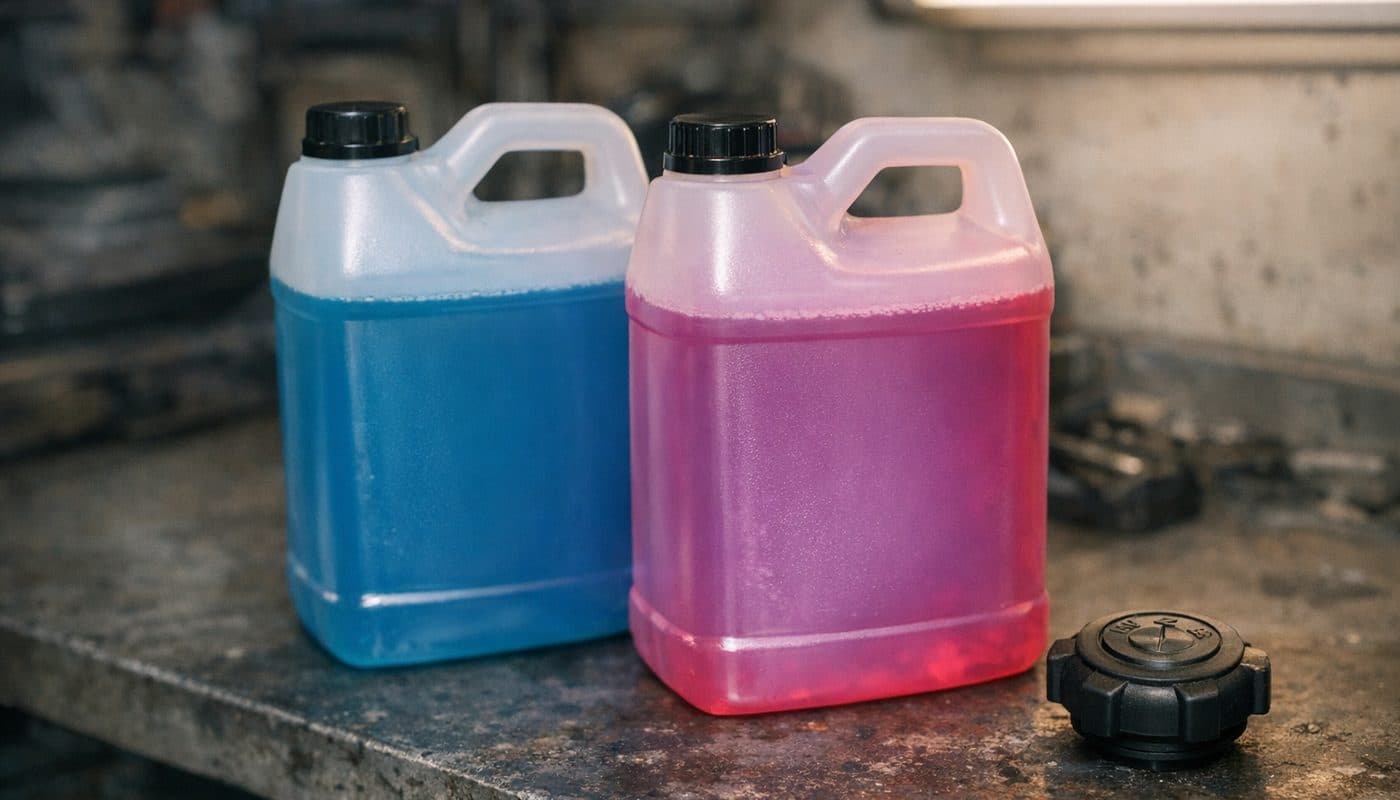
G48 is blue when it ships from Genuine BMW, Pentofrost NF, and Zerex G48. Zerex G05 is a yellow-gold color but meets the same NAP-free HOAT spec and is approved for BMW G48 cars. Color is dye. Spec is chemistry. Always read the label, never trust the color alone.
G48 vs HT-12 - the 2018+ green coolant change
Around 2018 BMW started phasing in a new coolant spec called HT-12. The factory PN is 83-19-2-468-442 and the bottle is green. By the time the G20 launched in 2019, HT-12 was the default fill across most of the lineup, including B48-powered 330i, B58-powered M340i, the F90 M5, and the G05 X5.
What actually changed
HT-12 is still HOAT, still phosphate-free, still NAP-free. The inhibitor package was tweaked to better handle the higher operating temperatures of the modular B-series engines and the more aggressive electric water pump duty cycles in the newer cars. The headline change for owners is the service interval - BMW lists HT-12 at 2 years versus 4 years for G48. The shorter interval suggests BMW found the inhibitors degrade faster under modern operating conditions, not that the chemistry is somehow worse. It is just tuned for newer hardware.
Backward and forward compatibility
Here is the rule that confuses everyone, and I will say it twice. HT-12 (green) is backward compatible. You can use HT-12 in any older G48 car, no harm done. G48 (blue) is NOT forward compatible. Do not put G48 into a car that originally shipped with HT-12. The factory designed the newer cars around the HT-12 inhibitor package and putting blue G48 into a green HT-12 car will, over time, accelerate inhibitor depletion and trigger a flush before the next service interval.
If you have an early G-chassis car (G20 330i 2019-2022, for example) that was built during the transition, check the expansion tank cap and the dipstick on the cap. BMW labels the cap with the original fill color. If yours has blue residue and the owner's manual lists G48, you can stay on G48 or move up to HT-12 with a full flush. If yours has green residue and the manual lists HT-12, stay on HT-12.
The two part numbers worth memorizing
Two BMW part numbers cover 95% of cooling system refills you will ever do.
83-19-2-211-191 is Genuine BMW G48 antifreeze concentrate, 1 gallon, blue. Use it in any chassis from E36 through F-chassis and any early G-chassis that came from the factory with G48.
83-19-2-468-442 is Genuine BMW HT-12 antifreeze, 1 gallon, green. Use it in any chassis that originally shipped with HT-12 (most 2018+ models) or as a backward-compatible replacement in any older car.
Both are concentrates. Both need 50/50 dilution with distilled water. There is also a newer revision of HT-12 floating around under part number 83-19-2-457-358 that is functionally identical to 83-19-2-468-442. Pentosin makes the Genuine BMW jug under contract, so when you buy Pentofrost NF you are literally buying the same fluid in a different bottle.
Coolant chemistry primer - HOAT vs OAT vs IAT
Three families of antifreeze chemistry exist on the parts store shelf. Two of them will damage your BMW. Knowing which is which is the entire reason this article needs to exist.
IAT - the old green stuff
IAT (Inorganic Additive Technology) is what most American cars used before the late 1990s. Silicate-heavy, phosphate-loaded, dyed green. It works fine in iron-block engines with brass and copper radiators. It does not belong in any modern BMW. The silicates and phosphates form scale on aluminum, gum up narrow heater core passages, and accelerate corrosion at junctions where dissimilar metals meet. I have seen one F10 owner top off with gas station IAT, develop sludge inside two weeks, and seize his electric water pump within six months.
OAT - the DEX-COOL family
OAT (Organic Acid Technology) showed up in the late 1990s with GM DEX-COOL and similar Ford and Chrysler formulas. The headline inhibitor in most OAT coolants is 2-EHA (2-ethylhexanoic acid). 2-EHA is a known plasticizer. In a GM truck with EPDM rubber hoses and metal radiator tanks, it is fine. In a BMW with glass-reinforced plastic expansion tank, plastic thermostat housing, plastic radiator end tanks, and on some engines, plastic water pump impellers, 2-EHA softens and attacks every one of those parts. The damage is slow, cumulative, and usually not visible until something cracks at 60,000 miles and the owner blames "BMW reliability" instead of the wrong coolant in the system.
HOAT - what BMW actually uses
HOAT (Hybrid Organic Acid Technology) blends the silicate fast-acting protection of IAT with the long-life organic protection of OAT. BMW's G48 and HT-12 are both HOAT. So is Mercedes MB 325.0, Volvo's older spec, and parts of the Ford yellow family. HOAT-2 (sometimes called G12++) adds different silicate stabilizers and is the VAG (Audi/VW) preference. HOAT-2 is closer to BMW spec than OAT but BMW does not approve it because the silicate package differs from G48/HT-12. Stick to HOAT G48 or HT-12 for BMW. Always.
Why universal "all-makes" coolants are a trap
Walk into any auto parts store and you will see a dozen jugs labeled "universal," "compatible with all colors," or "works with all vehicles." What this means in practice is the manufacturer has loaded the bottle with enough silicates and phosphates to chemically interact with whatever residue is already in your system without immediately gelling. It does not mean the formula is correct for your engine. Universal coolants are emergency limp-home only. They will get you to the dealer. They will not protect a BMW for the next four years.
Coolant matrix per chassis
Here is the chassis-by-chassis breakdown. I keep this open on my phone in the parts aisle because there is no faster way to buy the wrong jug than guessing.
| Chassis | Years | Engines | Factory Coolant | Approved Substitutes |
|---|---|---|---|---|
| E36 | 1991-1999 | M50/M52/S52 | G48 Blue | Pentosin NF, Zerex G48, Zerex G05 |
| E39 | 1996-2003 | M52/M54/S62 | G48 Blue | Pentosin NF, Zerex G48, PEAK European |
| E46 | 1998-2006 | M52TU/M54/S54 | G48 Blue | Pentosin NF, Zerex G48, Zerex G05 |
| E60 | 2003-2010 | N52/N54/S65 | G48 Blue | Pentosin NF, Zerex G48, PEAK European |
| E70 X5 | 2006-2013 | N52/N55/N63/S63 | G48 Blue | Pentosin NF, Zerex G48 |
| E90/E92 | 2005-2013 | N52/N54/N55/S65 | G48 Blue | Pentosin NF, Zerex G48, PEAK European |
| F10 | 2010-2017 | N20/N55/N63/S63 | G48 Blue | Pentosin NF, Zerex G48 |
| F30 | 2012-2019 | N20/N26/N55/B58 | G48 (early), HT-12 (late) | Pentosin NF or Genuine HT-12 |
| F80 M3/M4 | 2014-2020 | S55 | G48 Blue | Pentosin NF, Zerex G48 |
| G20 330i/M340i | 2019+ | B48/B58 | HT-12 Green | Genuine BMW HT-12 |
| G80 M3/M4 | 2021+ | S58 | HT-12 Green | Genuine BMW HT-12 only |
| G05 X5 | 2019+ | B58/N63/S68 | HT-12 Green | Genuine BMW HT-12 |
E36
- Years
- 1991-1999
- Engines
- M50/M52/S52
- Factory Coolant
- G48 Blue
- Approved Substitutes
- Pentosin NF, Zerex G48, Zerex G05
E39
- Years
- 1996-2003
- Engines
- M52/M54/S62
- Factory Coolant
- G48 Blue
- Approved Substitutes
- Pentosin NF, Zerex G48, PEAK European
E46
- Years
- 1998-2006
- Engines
- M52TU/M54/S54
- Factory Coolant
- G48 Blue
- Approved Substitutes
- Pentosin NF, Zerex G48, Zerex G05
E60
- Years
- 2003-2010
- Engines
- N52/N54/S65
- Factory Coolant
- G48 Blue
- Approved Substitutes
- Pentosin NF, Zerex G48, PEAK European
E70 X5
- Years
- 2006-2013
- Engines
- N52/N55/N63/S63
- Factory Coolant
- G48 Blue
- Approved Substitutes
- Pentosin NF, Zerex G48
E90/E92
- Years
- 2005-2013
- Engines
- N52/N54/N55/S65
- Factory Coolant
- G48 Blue
- Approved Substitutes
- Pentosin NF, Zerex G48, PEAK European
F10
- Years
- 2010-2017
- Engines
- N20/N55/N63/S63
- Factory Coolant
- G48 Blue
- Approved Substitutes
- Pentosin NF, Zerex G48
F30
- Years
- 2012-2019
- Engines
- N20/N26/N55/B58
- Factory Coolant
- G48 (early), HT-12 (late)
- Approved Substitutes
- Pentosin NF or Genuine HT-12
F80 M3/M4
- Years
- 2014-2020
- Engines
- S55
- Factory Coolant
- G48 Blue
- Approved Substitutes
- Pentosin NF, Zerex G48
G20 330i/M340i
- Years
- 2019+
- Engines
- B48/B58
- Factory Coolant
- HT-12 Green
- Approved Substitutes
- Genuine BMW HT-12
G80 M3/M4
- Years
- 2021+
- Engines
- S58
- Factory Coolant
- HT-12 Green
- Approved Substitutes
- Genuine BMW HT-12 only
G05 X5
- Years
- 2019+
- Engines
- B58/N63/S68
- Factory Coolant
- HT-12 Green
- Approved Substitutes
- Genuine BMW HT-12
E36, E39, E46 - the classic blue G48 chassis
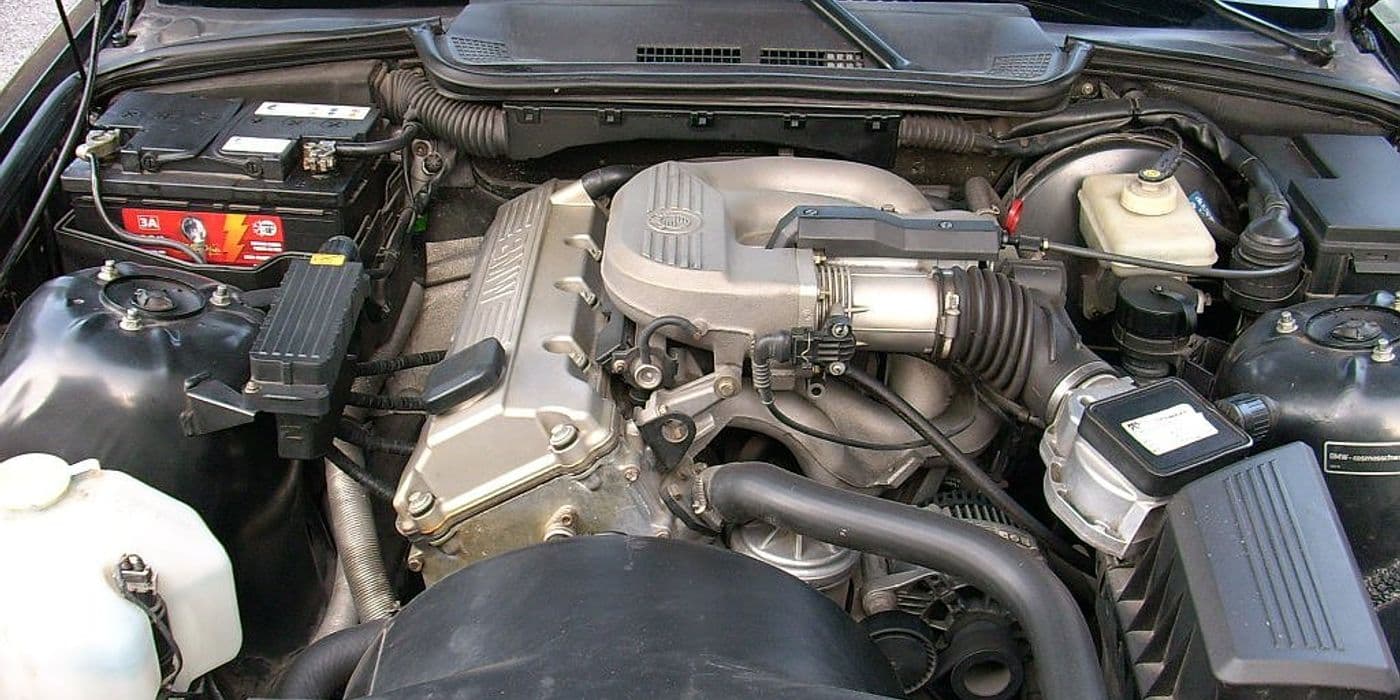
If your BMW left the factory with an M50, M52, M54, S52, S54, or S62, it takes G48 blue. Capacities range from about 7 liters on an E36 with an M52 to 8.5 liters on an E39 528i. Two gallons of concentrate plus two gallons of distilled water gives you the full fill plus some headroom for top-off over the next year. These chassis are the easiest to flush because the bleed procedure is mechanical - open the bleed screw on top of the radiator, run the engine to operating temp, close the screw when bubble-free coolant flows out.
E60, E70, E90, E92 - the era of plastic everything
By the mid-2000s BMW had committed to plastic radiator end tanks, plastic expansion tanks, plastic thermostat housings on the N52/N54/N55, and electronically controlled thermostats. All of it still runs G48. Capacities tend to run a bit larger - 8.4 liters on an E90 328i N52, around 9 liters on an E92 335i N54, 11-12 liters on an E70 X5 with the N63. The N54 and N55 are particularly sensitive to wrong coolant because their plastic thermostat housings are already a known weak point - you do not want to give the housing any additional reason to crack. If you are working on an N54 or N55 and the thermostat housing is leaking, that is the right moment to also do a complete flush. I have a separate walkthrough for the N54 water pump job and the N55 water pump job that pairs with this guide.
F-chassis - the transition years
F30, F32, F10, and F15 generation cars are mostly G48 blue, but the late F30s built in 2018 and 2019 may have shipped with HT-12. Check the cap. F30 N20 and B48 sedans hold 8.2-8.4 liters. F30 N55 and B58 hold around 9 liters. F80 M3 and M4 with the S55 hold around 12 liters across multiple cooling circuits. The S55 is genuinely complex, with five or six radiators and heat exchangers spread across three or four unique circuits, which is why M owners on the F80 platform run shorter flush intervals than the rest of us.
G-chassis - HT-12 territory
G20, G21, G22, G23, G05, G80, G82, F90 M5, anything modern - HT-12 green. The B48 in my G20 330i holds about 7.5 liters, the B58 in an M340i holds about 8 liters, the G80 M3 with the S58 holds around 14 liters across multiple circuits. BMW lists HT-12 at a 2-year interval rather than the old 4-year G48 interval. I treat the manual interval as the latest possible flush date, not the earliest.
M cars - the special cases
S55 (F80/F82 M3/M4) and S58 (G80/G82 M3/M4) cars run the same chemistry as their non-M siblings (G48 for S55, HT-12 for S58) but the cooling system architecture is completely different. Multiple radiators, dedicated oil-to-coolant heat exchangers, separate charge-air cooling circuits. Capacity is roughly double a regular sedan. Track-day owners on these cars typically flush every 2 years or every 20k miles, half the BMW recommendation, because heat cycles degrade inhibitors faster than miles do. If you have an S65 V8 (E90 M3, E60 M5/M6), it takes G48 blue but expect to top off more frequently because the V8 cooling system runs hotter than the inline sixes.
Top BMW coolant picks
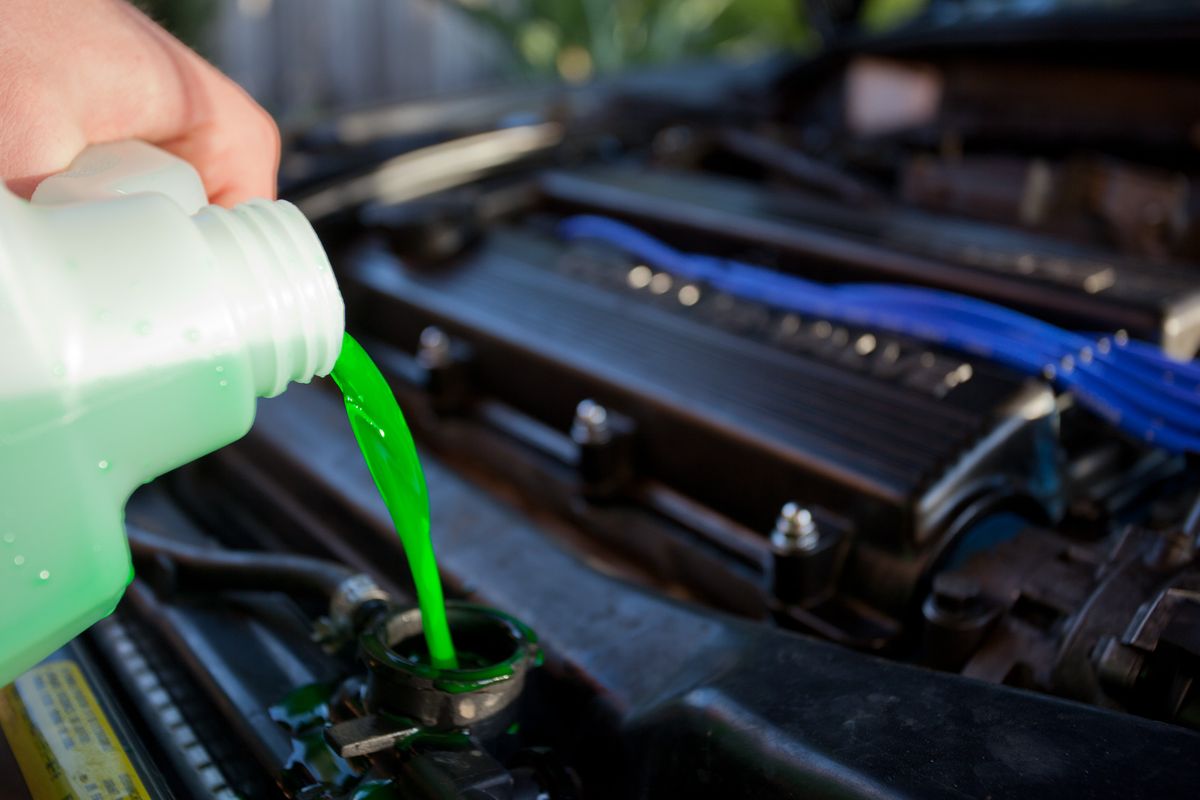
Five bottles cover essentially every legitimate BMW coolant choice on the US market. I have used four of them in my own cars and the fifth I keep in the garage as an emergency backup. Here is the rundown, with badges for what each one is best at.
PEAK OET Extended Life Blue - Editor's Pick
PEAK Original Equipment Technology Extended Life Blue is the bottle I recommend most often to friends asking about coolant for an E90, F30, or any pre-2018 BMW. It is HOAT, NAP-free, phosphate-free, dyed blue to match Genuine BMW G48, and it is sold pre-diluted 50/50 so you do not need to mix anything. Walmart, AutoZone, Amazon all carry it. Price is in the same ballpark as Zerex and noticeably cheaper than Genuine BMW per gallon of usable coolant. The pre-mixed convenience matters more than people give it credit for - the number of mistakes I have seen from people who guessed at the dilution ratio with a measuring cup is not zero.
Valvoline Zerex G48 Concentrate - OEM Match
If you want the closest thing to Genuine BMW G48 without buying from the dealer, Zerex G48 concentrate is it. Same HOAT chemistry, same NAP-free formula, same blue dye, sold as a 1-gallon concentrate that you mix 50/50 with distilled water. Valvoline supplies coolant to multiple OEMs and the Zerex G48 product is approved against the same MAN 324 NF spec that BMW used to certify Genuine BMW G48. I run Zerex G48 in my old project E46 and Genuine BMW HT-12 in my G20 daily. The concentrate format gives you flexibility on dilution if you ever need to do a partial flush or top off after a hose replacement.
PEAK Global Lifetime Concentrate - Premium Concentrate
PEAK Global Lifetime is built on Old World Industries G05 chemistry, which is the same fluid that gets sold under multiple labels (including some private-label store brands and some dealer service department fills for non-BMW European cars). It is HOAT, NAP-free, phosphate-free, and rated for "lifetime" service in compatible vehicles. For BMW, "lifetime" is marketing - stick to the 4-year/40k G48 interval or 2-year HT-12 interval regardless of what the bottle says. The premium price reflects the longer-tested inhibitor package and tighter quality control. If you are flushing an E60 M5 or an E92 M3 and you want to spend an extra ten dollars for the assurance of a more conservative chemistry, this is the jug.
Genuine BMW G48 and HT-12 - the dealer reference
I am not going to tell you to never buy from the dealer. The Genuine BMW jug is around 22-28 dollars at the parts counter, sometimes 20-24 dollars online from FCP Euro or ECS Tuning, and there is genuine peace of mind in pouring the same fluid into your car that the factory used. Part numbers 83-19-2-211-191 (G48 blue) and 83-19-2-468-442 (HT-12 green) are made by Pentosin under contract. If you walk in and the parts counter quotes you 35 dollars for a gallon, walk out and order online instead.
What NOT to use in your BMW
This list matters more than the buy list. Putting the wrong coolant in is the single most expensive five-minute mistake an owner can make.
Zerex DEX-COOL OAT - never in a BMW
Valvoline Zerex DEX-COOL is a perfectly good coolant for the GM, Ford, and Chrysler vehicles it was engineered for. It is also poison for a BMW. The 2-EHA inhibitor package will attack the glass-reinforced plastic in your expansion tank, your thermostat housing, and on some engines your water pump impeller. The damage is not always immediate. I have seen owners run a half-and-half mix of DEX-COOL and G48 for six months thinking everything was fine, only to crack a thermostat housing or develop a slow expansion tank leak that turns into a full failure on a 90-degree day. The bottle is orange, the dye should be a warning by itself, but I have watched people grab it because "all coolant is the same." All coolant is not the same.
Valvoline MaxLife Universal - emergency only
Valvoline Multi-Vehicle 50/50 Premixed (sometimes branded as MaxLife Universal) is silicate-based with a phosphate-tolerant inhibitor package and is marketed as "compatible with all colors." This is true in the narrow sense that it will not immediately gel when you mix it with G48 or HT-12. It is not true in the long term. The silicates and phosphates BMW spent decades engineering out of its system are right there in the bottle. Use it ONLY as a 24-hour limp-home top-up if you are stranded somewhere without access to G48 or HT-12. Then flush the system within a week. This is the bottle to keep in your trunk for a road trip emergency, not the bottle to refill your car after a water pump replacement.
Toyota Pink Long Life Coolant
Toyota's pink Long Life Coolant is phosphate-based silicate-free OAT, designed for Toyota's specific aluminum alloy. It will not catastrophically gel with G48, but it is not engineered for the BMW plastic-radiator material set and the long-term effects on inhibitor balance are unpredictable. Skip it.
Honda Blue Type 2
Honda Blue Type 2 looks the same color as BMW G48. It is not the same coolant. Honda Blue is OAT-based with Honda's specific corrosion package tuned for their aluminum and brass alloys. The matching color has caused more wrong-jug mistakes than I can count. Always read the label, never trust the color alone.
Generic green "universal" from gas stations
Whatever generic green coolant you find at a 24-hour gas station is almost always old-school IAT - silicate-heavy, phosphate-loaded, dyed green to look like the 1970s small-block coolant your grandfather used. It will form scale in your BMW aluminum system rapidly. The F10 owner I mentioned in the intro topped off with this exact category of fluid. Within two weeks the system was sludged. Within six months his water pump was seized. The repair bill was 1,500 dollars. The jug cost him eight bucks.
Mixing rules - the cardinal sin
The single most important rule in BMW coolant maintenance - never mix coolant types. Never. Not "a little bit is fine." Not "just to top off." Never.
What happens chemically when you mix
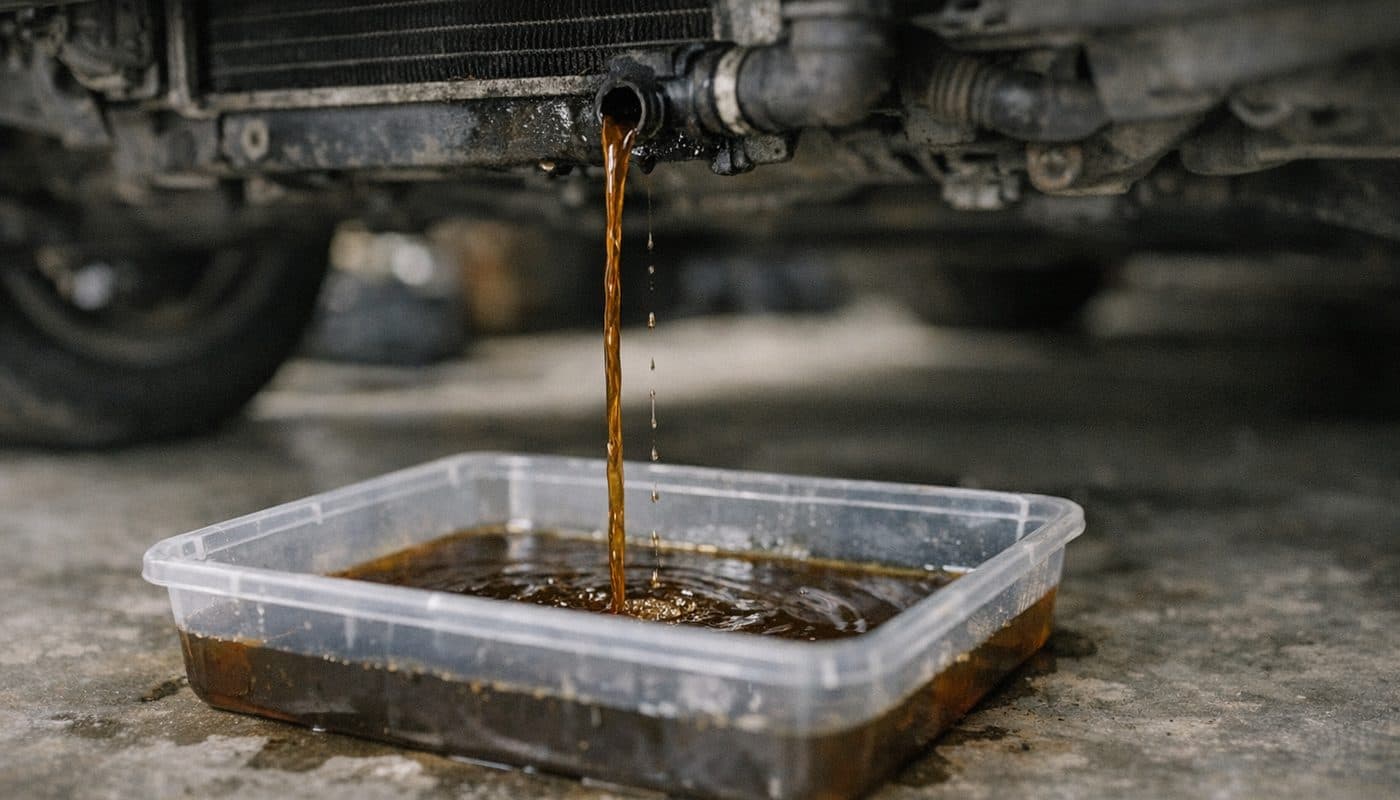
HOAT and OAT inhibitor packages are chemically incompatible. The carboxylate inhibitors from OAT and the silicate inhibitors from HOAT precipitate together when they contact each other in solution. The precipitate forms a gel-like sludge that settles in low-flow areas - the radiator end tanks, the heater core, the bottom of the expansion tank, the corners of the thermostat housing. Once the sludge forms, it does not dissolve. It just keeps growing as more inhibitor depletes from solution.
What you will see and feel
Symptoms of mixed-coolant sludge come in stages. First, slower warm-up - the thermostat is partially blocked and takes longer to open. Then heater output drops, because the heater core is partially clogged. Then operating temps start climbing, especially in stop-and-go traffic. Then the water pump starts making noise as sludge contaminates the bearing seal. By the time you notice the gauge climbing, you are looking at a full radiator replacement at minimum, and possibly a water pump and thermostat replacement on top of it. Water pump replacement on a modern BMW is a 600-1,200 dollar job at an indy shop and easily double that at the dealer.
Mixing two HOAT coolants - is it OK
Mixing G48 with HT-12 will not gel because both are HOAT and both are NAP-free. It is still bad practice. The inhibitor packages are tuned slightly differently and you will not get the optimal performance of either. If you are switching from G48 to HT-12, do a complete flush first.
Mixing two G48-spec brands (Genuine BMW with Zerex G48 with Pentosin NF, for example) is genuinely fine because they are all the same chemistry to the same spec. I have done it in my own cars when I ran out of one brand mid-flush.
Distilled water only - never tap water
This is a non-negotiable rule. Tap water contains calcium, magnesium, chloride, and sulfates. These minerals react with coolant inhibitors and form scale and precipitate. Calcium scale clogs narrow heater core passages and radiator end tanks the same way wrong-coolant sludge does, just slower. Distilled water has minerals removed via boiling and condensing and leaves no residue. It costs about 1.50 a gallon at any grocery store. Use it for your 50/50 mix and use it for your flush rinse. There is zero excuse for tap water in a BMW cooling system.
Flush procedure - DIY step by step
A full BMW coolant flush is a 2-3 hour job for someone who has done it before, 4-5 hours for the first time. The mechanical work is not hard. The bleed procedure on modern cars takes patience.
Tools and supplies you need
Basic toolkit - 8mm and 10mm sockets for engine cover and expansion tank brackets, a 6mm hex bit for some drain plugs, hose clamp pliers if you are pulling any hoses, a torque wrench for the drain plug refit (typically 25 Nm radiator, 30 Nm block).
Catch and fill - 3-gallon catch pan minimum, funnel and a length of clear hose, a vacuum coolant fill tool if you are working on F30 or newer (Schwaben, ECS, AirLift all make decent ones for 80-150 dollars). The vacuum tool is optional but it dramatically speeds up the bleed on modern electric-pump cars.
Coolant - two gallons of concentrate (G48 or HT-12 per chassis) plus two gallons of distilled water for the mix, OR four gallons of pre-mix. Add another two gallons of distilled water for the rinse cycle.
Step 1 - prep the car
Engine cold. Park on level ground, ramps if available. Remove the engine undertray (typically 6-10 plastic fasteners and 8mm bolts). Remove the engine cover for access to the expansion tank. Slowly crack the expansion tank cap to relieve any residual pressure - even on a "cold" car there can be residual pressure from a recent drive.
Step 2 - drain the radiator
Locate the radiator drain plug. On most BMWs it is at the lower passenger-side corner of the radiator. Place the catch pan, open the plug, let it drain. This pulls roughly half the system. About 4-5 liters on a 9-liter system.
Step 3 - drain the block
This is the step most DIYers skip and it is the step that matters most. The engine block holds another 3-4 liters of coolant that the radiator drain does not touch. On M52, M54, N52, N55, and S65, the block drain plug is on the driver-side block, accessible from below. On B-series engines (B48, B58), it is harder to reach and may require pulling the starter or the intake. If you cannot find the block drain on your specific engine, look up the chassis-specific procedure - skipping the block drain leaves up to half the old coolant in the system and dilutes your fresh fill from day one.
Step 4 - flush with distilled water
Reinstall both drain plugs. Fill the system with pure distilled water (no antifreeze) to the MAX line on the expansion tank. Run the engine to operating temperature, drive five minutes if you can, let the heater core circulate. Park, let cool, drain again. Repeat until the water comes out clear. On a heavily contaminated system you may need three or four flush cycles. On a clean system one flush cycle is enough.
Step 5 - final fill
Final drain. Reinstall plugs to torque spec. Fill with proper 50/50 mix of G48 or HT-12 concentrate plus distilled water, OR straight from a pre-mix jug. Bring the level to the MAX line on the expansion tank.
Step 6 - bleed the system
This is the chassis-specific part and it is where modern BMWs get tricky. Pre-electric-pump cars (E36, E39, E46, most E60, E90) have a manual bleed screw on top of the radiator or the highest point of the cooling circuit. Open it, run the engine to temp with HVAC on max heat and lowest fan, watch coolant flow until bubble-free, close the bleed screw, top off as the level drops.
F30 and newer with electric water pumps have an automated bleed cycle. The standard F30 N20/B48 procedure - three manual bleed screws cracked open (expansion tank top, transmission cooler line, coolant return hose), expansion tank filled to MAX, key turned to RUN position (do NOT start the engine), climate set to max heat with lowest fan speed, throttle pressed to floor for 10 seconds. This activates the electric water pump bleed routine. The pump runs for 12-13 minutes circulating coolant and pushing out air pockets. Top off the expansion tank as the level drops. After the cycle finishes, start the engine, run to operating temp, recheck level, top off.
Step 7 - drive and recheck
Drive the car normally for 30-60 minutes. Let it cool overnight. Check the expansion tank level next morning. Top off if needed. Recheck a week later, again at 200 miles, again at 500 miles. Air pockets work their way out gradually and a single bleed cycle rarely catches everything. Once the level is stable across two consecutive checks you are done.
Common BMW cooling failures
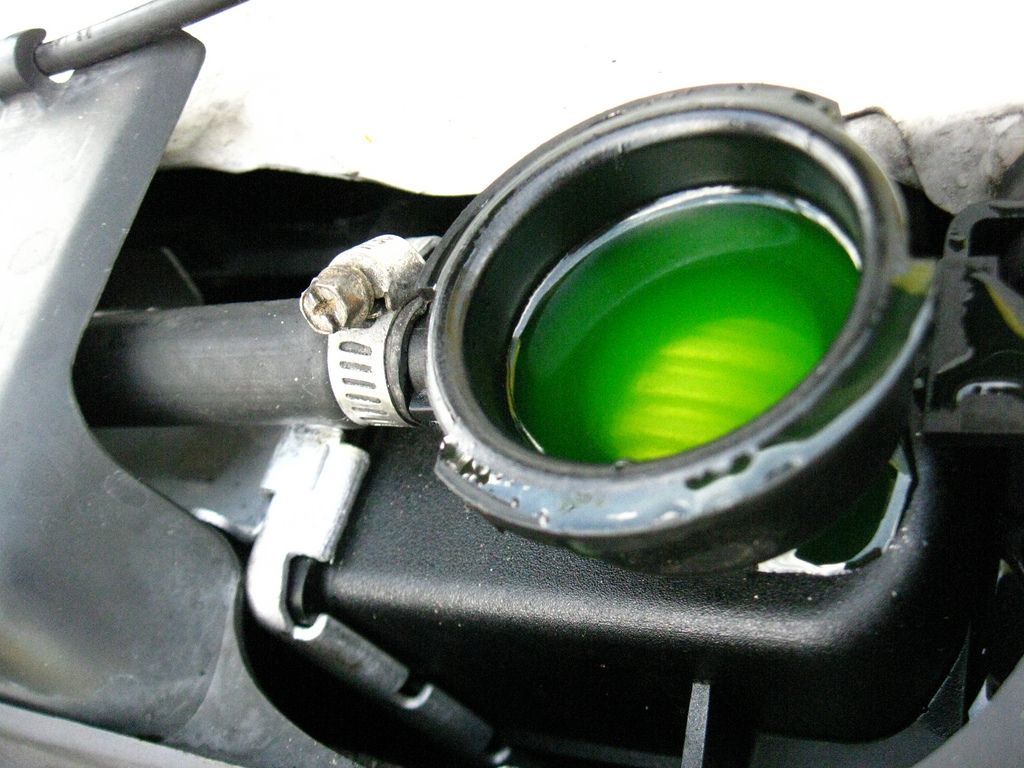
Knowing the failure points helps you decide when a coolant flush is the right answer and when you need to be replacing a part too.
Expansion tank cracks
The plastic expansion tank is the single most common BMW cooling failure across every chassis from E36 to F30. The plastic ages, becomes brittle from heat cycles, and cracks at the seam or near the cap threads. Symptoms - white residue around the tank, slow coolant loss with no visible puddle, dashboard low-coolant warning. Fix is a 40-80 dollar part and a 30-minute DIY job. I replace the expansion tank as preventative maintenance any time I do a full flush on a car with more than 80,000 miles. Genuine BMW gives you the longest life. Mahle and Behr are OE suppliers and offer near-Genuine quality at lower price. URO is cheap but I have seen URO tanks crack again within two years.
Thermostat housing leaks (N52, N54, N55)
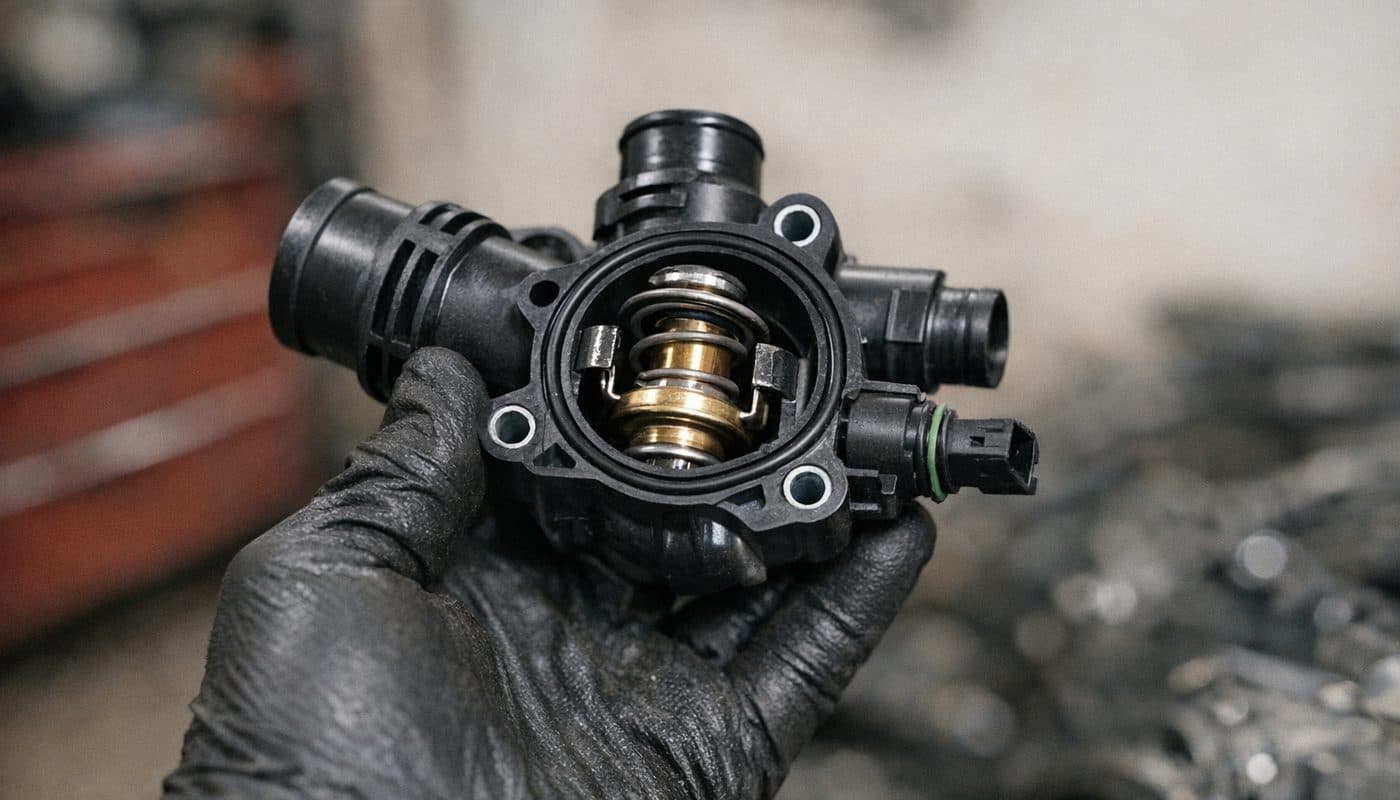
BMW N52, N54, and N55 engines all use a plastic thermostat housing on the side of the head with the electronically controlled thermostat inside. The housing cracks at the seam between the two halves or at one of the hose ports. N55 owners report failure consistently in the 60-90k mile window. Fix is an 80-150 dollar part and a 1-2 hour DIY job. Always replace the thermostat at the same time. I have a chassis-specific writeup for the N55 thermostat replacement if you are facing this.
Electric water pump failures (N20, N55, B58)
Modern BMW water pumps from the N20 forward are electric, with their own internal controller, plastic impeller, and tightly toleranced bearing. The bearing fails, the plastic impeller cracks, the controller dies. Fault codes 2E81 (speed deviation) and 2E82 (shutoff) are the giveaways. Symptoms - intermittent overheating at idle, gauge climbing in stop-and-go traffic, whining sound from the front of the engine. The failure window is typically 60,000-100,000 miles. Part is 200-400 dollars depending on brand. Dealer labor adds another 400-800. DIY is 3-5 hours for an experienced wrencher and well documented for both N54 and N55 engines.
Heater core leaks - the sweet smell test
If your cabin smells sweet, syrupy, or vanilla-like, especially with the heat on, your heater core is leaking. Foggy windshield from coolant vapor through the defrost vents and damp passenger floor are confirmation symptoms. Quick diagnostic test - switch HVAC to recirculate. If the smell goes away, the leak is in the engine bay and you are smelling it through the fresh-air intake. If the smell stays, the heater core is leaking. Heater core replacement is a dash-out job. Quoted at 1,200-2,500 dollars at independents, 2,500-4,500 at the dealer. Catch this one early.
Head gasket vs simple coolant leak
A regular coolant leak shows a visible puddle, white residue, no engine oil contamination, no exhaust steam. A head gasket failure shows white smoke from the tailpipe, milky oil under the filler cap, coolant in the oil pan, overheating with no visible leak, and bubbles in the expansion tank with the engine running. A combustion gas test (chemical test on expansion tank vapor) confirms a head gasket. If you see milky oil and overheating, stop driving the car immediately. Continued operation turns a 1,500-dollar head gasket job into a 5,000-dollar engine replacement.
Cost breakdown
This is the section that pays for the article. The dealer markup on a coolant flush is one of the largest in BMW service, which makes it one of the highest-value jobs for a DIYer to tackle.
DIY cost - first time
Two gallons of coolant concentrate runs 30-50 dollars depending on brand. Two gallons of distilled water for the 50/50 mix is about 3 dollars. Another two gallons of distilled water for the flush rinse is another 3 dollars. Catch pan, funnel, gloves - 15 dollars. If you are buying a vacuum coolant fill tool for the first time, add 80-150 dollars one-time. Total first-time DIY is 130-220 dollars. Subsequent DIY flushes are 40-60 dollars all in.
Independent shop pricing
A reputable BMW indy will charge 130-180 dollars for a complete flush and refill. Make sure they are using G48 or HT-12 per your chassis. Some indies cheap out and fill with universal European spec, which is not the same thing. Ask which brand they are using before you authorize the work.
Dealer pricing
BMW dealer coolant flush runs 200-280 dollars. The fluid cost is the same as you would pay at the parts counter. The labor markup is where the dealer makes money. For someone whose only oil change tool is a credit card, the dealer is fine. For anyone with a wrench in a toolbox, this job is the easiest 200 dollars you will save in a year of BMW ownership.
Chain shops - skip them
Pep Boys, Firestone, and the rest of the chain shops will quote 100-150 dollars for a coolant flush. The catch is they almost always use generic universal coolant, not G48 or HT-12. The "savings" comes from the wrong fluid going into your system, which costs you a flush in two years instead of four and accelerates inhibitor depletion across the entire cooling system. I have rejected more than one used BMW pre-purchase inspection because the previous owner had a chain shop "service" the cooling system. Spend the extra 100 dollars at an indy or do it yourself. Compare this against an oil change at a BMW dealer for context on how the markup stacks up.
ROI math over 12 years of ownership
Most BMW owners do four coolant flushes over a 12-year ownership window (every 4 years for G48, every 2-3 years for HT-12). At dealer pricing that is 800-1,120 dollars. At DIY pricing that is 160-300 dollars (after the one-time tool cost). Net savings 500-900 dollars across the ownership window. The vacuum fill tool pays for itself on the first flush.
Pre-mix vs concentrate math
The choice between pre-mix 50/50 and straight concentrate is mostly about convenience versus price.
What 50/50 actually means
50% antifreeze concentrate plus 50% distilled water gives optimal heat transfer with freeze protection to about -34 Fahrenheit and boil protection to about 265 Fahrenheit. Higher antifreeze percentage (60/40 or 70/30) gives better freeze protection but worse heat transfer. Higher antifreeze ratios are reserved for extreme cold climates - Alaska, northern Canada, the parts of Minnesota where it stays below zero for weeks. Lower antifreeze (30/70) is only acceptable in tropical climates with no freeze risk and reduces corrosion protection. For everyone in the lower 48, 50/50 is correct.
Per-liter price comparison
Concentrate at 30 dollars per gallon makes 2 gallons of 50/50 (about 7.5 liters) for the same 30 dollars (the distilled water is essentially free). That works out to 4 dollars per liter of finished coolant.
Pre-mix at 17 dollars per gallon (PEAK European, for example) gives you 1 gallon of finished 50/50 coolant. That works out to 4.50 dollars per liter of finished coolant. Roughly the same.
Pre-mix at 22 dollars per gallon (Genuine BMW) gives you 1 gallon of 50/50 at 5.80 per liter. Concentrate is the better deal at the high end of the price range.
When pre-mix wins
Pre-mix wins when you want zero risk of measuring wrong, when you only need a small top-off, or when you are working on a road trip and do not have access to distilled water. The PEAK Extended Life Blue pre-mix in particular is what I recommend to friends who are doing their first cooling-system service. The bottle says 50/50, you pour it in, you cannot mess up the ratio.
When concentrate wins
Concentrate wins on cost per liter at the dealer-jug price point, on flexibility (you can mix a 60/40 if you live somewhere very cold), and on storage (one gallon of concentrate plus a couple gallons of distilled water takes up less garage space than two gallons of pre-mix).
Flush intervals
BMW factory intervals are 4 years or 40,000 miles for G48, 2 years for HT-12. These are the maximums. Real-world conditions push the right interval shorter for some owners.
Track day cars
If you drive your BMW on track, even occasionally, halve the factory interval. Track use heat-cycles the coolant far harder than street use, and inhibitors degrade faster under repeated thermal stress than they do under highway cruising. F80 and G80 M3 owners commonly run 2-year flushes regardless of mileage.
Hot climates
Phoenix, Las Vegas, Miami, Houston - if your daily ambient temps are routinely over 100 Fahrenheit in summer, plan to flush at 3 years for G48 instead of 4, or every 18 months for HT-12 instead of 24. Sustained operating temps accelerate inhibitor depletion the same way track use does.
Signs to flush early
Brown or rust-colored coolant in the expansion tank means the inhibitors are depleted and corrosion is starting. Flush immediately, regardless of where you are in the service interval.
A faint coolant smell when you open the hood after a hot drive often indicates the expansion tank cap is failing or the system is over-pressurizing slightly. Pressure-test the cap, replace if needed, and consider an early flush.
Slow warm-up combined with a thermostat that opens late suggests sludge or scale interfering with thermostat operation. Flush, replace the thermostat, and keep an eye on the water pump.
Heater output that has dropped noticeably from when the car was new often means scale or sludge in the heater core, which means a flush is overdue. If a single flush does not restore heat output, the heater core is partially clogged and you are looking at a chemical flush product or eventual heater core replacement.
When to call a shop
Most BMW cooling system work is DIYable. A few specific jobs are worth paying for.
Head gasket replacement
Head gasket on a modern BMW is an engine-out or at minimum head-off job. Gasket itself is 100-200 dollars. Labor at an indy is 1,200-2,500 dollars. Labor at a dealer is 2,500-5,000 dollars. Unless you have a lift, an engine hoist, a torque-to-yield manual for your exact engine, and an honest two weekends to spare, this is a shop job. The cost makes sense compared to the value of the car for any BMW worth more than 8,000 dollars.
Heater core replacement
Dash-out job on most BMWs. The heater core itself is 80-200 dollars. The labor is the entire dashboard removal and reinstallation, often 12-20 hours of book time. Dealer charges 2,500-4,500. Indy charges 1,200-2,500. DIY is possible but the dashboard reassembly is fiddly, easy to break trim clips, and any HVAC vent that does not seat correctly will rattle for the rest of the car's life. I would do a water pump or a thermostat in my own garage all day. Heater core I would pay an indy.
Electric water pump replacement
This one is on the borderline. The pump itself is 200-400 dollars. The job is 3-5 hours for an experienced wrencher and requires a specialty BMW front-end alignment tool to refit the cooling stack on some chassis. If you have done a thermostat job on the same engine before, you can do the water pump. If this is your first major cooling system work, paying an indy 400-600 dollars in labor is reasonable. Dealer labor on this job is 800-1,200, which is where DIY starts to look attractive again.
Expansion tank replacement
30-minute DIY job. Always do this yourself. There is no labor cost the dealer can charge that justifies paying for a 40-dollar part and 20 minutes of unscrewing two clamps and a single bracket bolt.
FAQ
The 15 questions Google shows on the People Also Ask carousel for BMW coolant queries, answered straight.
What kind of coolant does a BMW take
BMW G48 (blue) for any chassis built before approximately 2018, or BMW HT-12 (green) for chassis built from 2018 onward. Both are HOAT, phosphate-free, NAP-free coolants. Genuine BMW part numbers are 83-19-2-211-191 (G48 blue) and 83-19-2-468-442 (HT-12 green). Approved alternative brands include Pentosin Pentofrost NF, Valvoline Zerex G48, Valvoline Zerex G05, and PEAK European Vehicles.
Can I use any coolant in my BMW
No. BMW requires HOAT, phosphate-free, NAP-free coolant. Most universal coolants on the market are silicate or phosphate-based and will damage the BMW cooling system over time. DEX-COOL OAT coolants will attack BMW plastic. Stick to G48 (older cars) or HT-12 (newer cars) and approved equivalents.
Is BMW coolant blue or green
Blue for G48 (factory fill on most BMWs from late 1990s through 2018). Green for HT-12 (factory fill on most BMWs from 2018 onward). Both are HOAT chemistry. Color indicates the spec, not the chemistry family. Some approved G48 alternatives like Zerex G05 are yellow-gold colored.
What is BMW G48 coolant
G48 is BMW's coolant specification originally pulled from the German MAN 324 NF standard. HOAT chemistry (Hybrid Organic Acid Technology), NAP-free (no Nitrates, Amines, or Phosphates), ethylene-glycol based, blue dyed. Mixed 50/50 with distilled water. Service interval 4 years or 40,000 miles per BMW factory.
Can I use Prestone in my BMW
Prestone makes multiple coolants. Prestone Command European Vehicle Antifreeze (the blue bottle marketed for European cars) is HOAT and approved for BMW G48 cars. Prestone DEX-COOL (orange) is OAT and will damage BMW plastic - never use it. Prestone Universal "all colors" is silicate-heavy and acceptable only for emergency limp-home top-up.
How often should I flush BMW coolant
BMW factory interval is 4 years or 40,000 miles for G48, 2 years for HT-12. Track day cars should halve these intervals. Hot climate cars should drop to 3 years for G48 or 18 months for HT-12. Any time the coolant turns brown or the heater output drops significantly, flush early.
How much coolant does a BMW take
Capacity varies by chassis and engine. E36 M52 holds about 7 liters, E46 330i holds about 7 liters, E90 328i holds 8.2-8.4 liters, E92 335i N54 holds about 9 liters, F10 535i N55 holds about 9.5 liters, G20 330i B48 holds about 7.5 liters, F80 M3 S55 holds about 12 liters across multiple circuits, G80 M3 S58 holds about 14 liters. Always buy 2 gallons of concentrate plus 2 gallons of distilled water for a regular sedan flush, more for M cars and X5s.
Is Zerex G05 the same as BMW coolant
Zerex G05 is functionally equivalent to BMW G48 for chassis use - both are HOAT, NAP-free, and approved for BMW. Zerex G05 is yellow-gold colored where Genuine BMW G48 is blue. Some BMW dealer service departments use Zerex G05 as a cheaper alternative to Genuine BMW. The chemistry is correct. The color difference is cosmetic only.
What happens if I mix coolants in my BMW
Mixing HOAT (BMW G48 or HT-12) with OAT (DEX-COOL family) causes the inhibitor packages to chemically precipitate and form gel-like sludge. The sludge clogs heater core passages, radiator end tanks, and the water pump bearing seal. Symptoms progress from slow warm-up to dropping heater output to overheating to water pump seizure. Repair cost typically 800-1,500 dollars for radiator and water pump, can climb to 3,000+ dollars if the head gasket fails from localized overheating.
Can I top off BMW coolant with water
Distilled water only, and only for emergency top-off. A small top-off (less than 500 ml) of distilled water in a 9-liter system dilutes the coolant slightly without immediately compromising freeze or corrosion protection. Tap water is never acceptable - the calcium and magnesium will form scale in the cooling system. Any time you have to add more than a cup of plain water, plan a complete flush within the next month.
Where can I buy BMW coolant
Genuine BMW G48 and HT-12 are available at any BMW dealer parts counter. Online options include FCP Euro, ECS Tuning, Turner Motorsport, BMWNorthwest, Get BMW Parts, and Amazon (verify the seller). Approved alternatives are widely available - PEAK European Vehicles at Walmart and AutoZone, Zerex G48 and G05 at AutoZone and NAPA, Pentosin Pentofrost NF at FCP Euro and Amazon.
How do I bleed the cooling system on a BMW
Older BMWs (E36, E39, E46, most E60, E90) have a manual bleed screw on top of the radiator. Open it, fill the system, run engine to operating temp with HVAC on max heat and lowest fan, watch coolant flow until bubble-free, close the screw. Modern BMWs (F30 onward) use an automated bleed cycle - fill the expansion tank, key to RUN position (engine off), HVAC max heat with lowest fan, throttle pressed to floor for 10 seconds, wait 12-13 minutes for the electric water pump to run the bleed routine, top off as level drops.
What is the difference between G48 and HT-12 BMW coolant
G48 is BMW's pre-2018 spec (blue, 4-year/40k service interval), HT-12 is BMW's 2018+ spec (green, 2-year service interval). Both are HOAT, both NAP-free, both phosphate-free. HT-12 has a tweaked inhibitor package optimized for the higher operating temperatures and electric water pump duty cycles of modern B-series engines. HT-12 is backward compatible (works in older G48 cars). G48 is NOT forward compatible (do not put it in a car that originally shipped with HT-12).
Why is my BMW coolant level dropping
Most common - cracked plastic expansion tank, the BMW cooling system's most consistent failure mode across every chassis. Look for white residue around the tank seam or cap. Second most common - thermostat housing leak (especially on N52, N54, N55). Look for residue down the side of the engine block. Third - water pump seal leak. Look for residue at the front of the engine. Less common but more serious - heater core leak (sweet smell in cabin, damp passenger floor) or head gasket failure (white smoke from tailpipe, milky oil under filler cap).
Can I use Pentosin coolant in my BMW
Pentosin Pentofrost NF is the same fluid that ships in Genuine BMW G48 jugs - Pentosin manufactures it under contract for BMW. It is the OEM-equivalent product, fully approved for any G48-spec BMW. Be careful not to confuse Pentofrost NF (G48 spec, blue, BMW-approved) with Pentofrost SF (G12 spec, designed for VAG cars, NOT for BMW). Always check the spec on the bottle before buying.
Final verdict - what bottle to buy
If you have a pre-2018 BMW (E36 through F-chassis, including F80 M3/M4) and you want the easiest correct answer, buy a 2-gallon supply of PEAK OET Extended Life Blue pre-mix from Walmart. It is HOAT, NAP-free, phosphate-free, dyed to match Genuine BMW G48, and you cannot get the dilution wrong because it is already mixed.
If you have a pre-2018 BMW and you want the closest match to factory spec at a reasonable price, buy 2 gallons of Valvoline Zerex G48 concentrate plus 2 gallons of distilled water. This is what goes into my E46 project car.
If you have a 2018+ BMW that originally shipped with HT-12 (most G-chassis cars, late F-chassis cars), buy Genuine BMW HT-12 under part number 83-19-2-468-442. There are fewer approved alternative brands for HT-12 and the price gap between Genuine BMW and the alternatives is small. This is what goes into my G20 330i.
If you want premium long-life chemistry from a brand with deep OE supply history, the PEAK Global Lifetime Concentrate built on Old World Industries G05 chemistry is worth the small premium. I would put it in any S65 V8 or S55 M car.
Whatever you do, do not use DEX-COOL or any OAT coolant. Do not use universal "all colors" coolant for anything other than 24-hour emergency limp-home top-up. Do not use tap water in your 50/50 mix. Do not skip the engine block drain when you flush. Do not skip the bleed procedure on a modern electric-pump car. The cost difference between doing this right and doing this wrong is the difference between a 50-dollar DIY afternoon and a 1,500-dollar tow-bill nightmare.
This article pairs with my step-by-step BMW coolant flush guide if you want a deeper procedural walkthrough, the BMW water pump replacement cost breakdown if you suspect your pump is the source of your coolant loss, the N55 thermostat replacement guide for the most common housing-leak chassis, and the BMW oil change cost guide if you are thinking through your full DIY maintenance budget. Coolant is the single highest-leverage fluid decision you make on a BMW. Get it right once, do not mix anything else into the system, flush on the factory interval, and the cooling system will outlive the car.
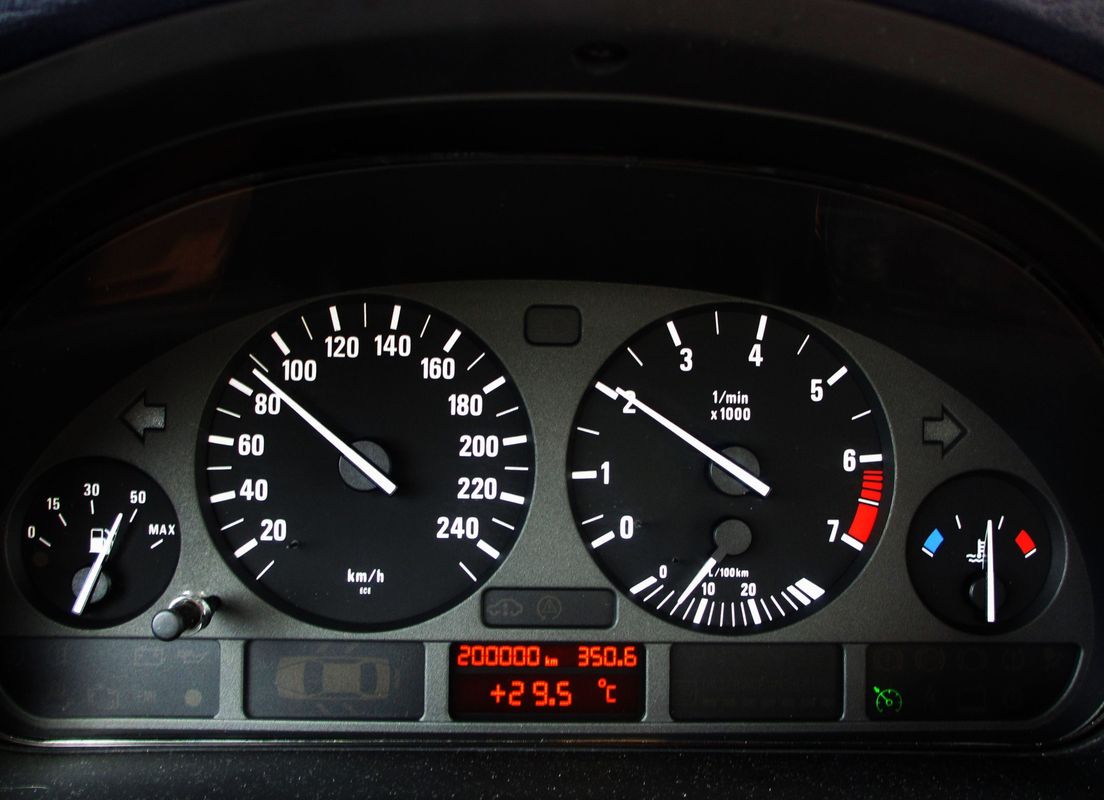
I have been pouring G48 and HT-12 into BMWs for five years now, two of those as my own daily drivers and one as a tech at a BMW and MINI dealer where I learned exactly what wrong-coolant damage looks like up close. The right bottle costs 25 dollars. The wrong bottle costs 1,500 dollars and an afternoon of explaining to a customer why their "universal" green coolant ate their water pump. Pick the right bottle, mix it 50/50 with distilled water, drain the block when you flush, bleed the system properly, and you never have to think about coolant again until the next service interval. That is the entire game.