
Wheel Locks for BMW 3 E90
Affiliate disclosure. BimmerTalk is a proud partner of the Amazon Associates Program and Turner Motorsport. We may earn a small commission on qualifying purchases through our links, at no extra cost to you. Read the full disclosure.


More wheel and tire options for the BMW E90
If you're digging into BMW E90 wheels and tires, you already know this chassis deserves better than the compromised run-flat setup most of them left the factory with. The E90 - BMW's fourth-generation 3 Series, built from 2006 through 2011 in sedan form - is one of the best-balanced sports sedans ever made. The multi-link rear suspension is genuinely excellent. The steering, especially on cars without electric assist, has real feel. But the factory wheel-and-tire package on most E90s was a series of concessions to dealership practicality and ride comfort scores, not outright performance. Fixing that is one of the highest-return modifications you can make to this car, and I want to walk you through every layer of it - from the OEM baseline all the way through to what I'd actually bolt on depending on whether you're building a daily driver, a weekend performer, or a dedicated track car.
Why Wheels and Tires Matter More on the E90 Than Almost Any Other Mod
I've done enough work on E-chassis BMWs to be honest about where the real gains are. A cold air intake on a N52 or N54 is satisfying but modest. Coilovers are transformative, but they work best when the rubber underneath them is actually capable. Wheels and tires sit at the bottom of every single performance input this car makes. Braking, cornering, acceleration - all of it passes through those four contact patches first. If those contact patches are shot, nothing else matters.
The other thing that makes wheels and tires especially high-value on the E90 is the chassis itself. BMW tuned the E90 platform to reward a driver who pushes it. The suspension geometry is sorted. The weight distribution is close enough to 50/50 that the car wants to rotate properly. When you give that platform genuinely good tires - tires with real lateral grip and accurate steering feedback - you feel it immediately and dramatically. The car wakes up. I've seen owners spend thousands on suspension modifications and then run mediocre tires and wonder why the car still feels numb. The answer is usually right there on the corners of the car.
There's also the weight argument. The E90 platform is not a lightweight car to begin with - a 328i sedan weighs around 3,300 pounds in street trim, and an E90 M3 comes in just under 3,700 with a driver. Unsprung weight - the mass not supported by the suspension, meaning wheels, tires, brake rotors, and hubs - has an outsized effect on handling and ride quality because the suspension has to control it. Every pound you drop from unsprung mass is worth more than a pound saved anywhere else on the car. A set of lightweight 18-inch forged wheels can easily cut 20-30 pounds of unsprung weight compared to a set of heavy OEM castings, and that's a number you'll feel in every single corner.
The OEM Baseline - What BMW Actually Gave You
Let's be specific about what the factory delivered, because "E90" covers a wide range of configurations. The base 323i and early 325i models often came on 16-inch wheels from the factory, though most North American cars moved to 17-inch as standard and offered 18-inch packages as options. The common OEM sizes you'll encounter are:
- 225/45R17 on the standard 17-inch Sport package wheels
- 225/40R18 front and 255/35R18 rear on the 18-inch M Sport staggered setup
- 245/40R18 front and 265/35R18 rear on the E90 M3
- 225/40R18 on some square setups on the non-M Sport 18-inch option packages
The OEM wheels themselves range from perfectly acceptable to genuinely terrible depending on which ones you ended up with. The 193M style wheels - the five-spoke M Sport design that came on a lot of North American E90s - are honestly decent looking and hold up well, but they're heavy cast aluminum. The Style 230 double-spoke is a common 17-inch OEM option that's arguably the worst-looking wheel BMW fitted to this generation. The Style 313M and 359M are OEM options with stronger aesthetic appeal, and the used market for those is active enough that they're worth sourcing if you want to stay OEM in character.
The bigger issue with most OEM E90 setups, at least in North America, was run-flat tires. BMW pushed hard on run-flats during this era as a way to eliminate the spare tire and reduce weight. On paper that made sense. In practice, the stiff sidewalls on run-flats significantly degraded ride quality and, in the opinion of almost every serious E90 owner who has driven both, reduced steering feel as well. The reinforced sidewall that keeps a run-flat rolling after a puncture is the same sidewall that transmits every road imperfection directly into the cabin and reduces the tire's ability to conform to the road surface under lateral load. Deleting run-flats and moving to a conventional tire is, in my view, the single easiest win available on this platform. More on that in the tire section below.
The factory 72.6mm hub bore is something every E90 owner needs to memorize before ordering any aftermarket wheel. Most aftermarket wheels are drilled to a larger bore to serve multiple applications, which means you'll need hub-centric rings to fill the gap between the wheel and the hub. Running without them - relying purely on lug torque - will introduce vibration that's nearly impossible to diagnose until you've already wasted money on a wheel balance you didn't need. Get the rings. They're cheap. Use them.
Sizing - The Right Diameter and Width for Your Goals
The E90 forum community has beaten this topic to death across hundreds of threads, and there's real consensus worth summarizing here. The short version: 18 inches is the sweet spot for most E90 owners, and 19 inches is the legitimate step-up if you want more aggressive aesthetics and a slightly wider tire footprint, provided you're willing to accept the tradeoffs.
Here's why 18 works so well on this platform. An 18x8.5 or 18x9 wheel gives you enough diameter to look purposeful and clear most big brake kits, while still running a tire with enough sidewall to absorb road imperfections. In typical 18-inch fitments like 225/40R18 or 245/40R18, you get real grip, reasonable road noise, and a ride that doesn't feel punishing on imperfect roads. For a car that gets driven in the real world - meaning potholes, expansion joints, and the occasional unmarked speed bump at 3 AM - 18-inch with a reasonable aspect ratio is just a more livable setup than 19-inch with ultra-low-profile rubber.
That said, 19 inches is not stupid on an E90. A 19x8.5 / 19x9.5 staggered setup with something like 225/35R19 front and 255/30R19 rear is an actively discussed and enthusiast-approved configuration. E90Post threads on 19-inch staggered fitments specifically call out 19x9.5 ET25 with 255/30R19 as a viable setup when offset is dialed in correctly. The visual stance is noticeably more aggressive, and the wider rear tire does improve lateral grip in high-demand situations. The cost is ride quality - a 30-series sidewall on a 19-inch rim leaves very little cushion between the wheel and the road surface, which means the wheel itself absorbs impacts that would previously have been dampened by sidewall flex. Pothole damage to 19-inch rims is measurably more common than to 18-inch rims. If you live somewhere with rough roads and you care about keeping your wheels looking good, factor that into your decision.
Going to 20 inches on an E90 is where I'd push back hard. It can be done, and some show builds run it, but the practical issues multiply fast - clearance with the suspension becomes tighter, tire choices narrow considerably, ride quality degrades substantially, and the performance case for going from 19 to 20 is essentially nonexistent on a street car. Save the 20s for the show-quality builds where the car doesn't see regular road use.
On width, the general guidance from the enthusiast community is to match width to your intended use. For square setups on a street car, 8.5 inches front and rear on 18s is a practical choice that works with most suspension setups and tire sizes. For staggered setups, the classic E90 fitment of 8.5 front / 9.5 rear mirrors BMW's own M Sport stagger and gives you meaningful rear grip without creating fitment headaches. If you're going wider than that, you need to start thinking carefully about offset and whether your car has or will have fender modifications.
Offset and Fitment - Getting This Right Before You Buy
Offset is the distance, measured in millimeters, between the wheel's centerline and its mounting face. It determines how far in or out the wheel sits relative to the fender. The E90's OEM offset typically runs between ET34 and ET47 depending on the application, and this matters because running dramatically different offsets can cause rubbing, accelerated wear on wheel bearings, and handling behavior the car wasn't designed for.
The enthusiast community broadly accepts a range of roughly ET30 to ET45 for most E90 wheel builds without significant modification. Running toward the lower end of that range (more negative offset, meaning the wheel sits further out) gives you a more aggressive stance and can improve the look substantially, but you need to verify clearance with your suspension components - particularly if you're running coilovers. Running toward the higher end keeps the wheel tucked more, which is safer for clearance but can look a bit conservative depending on wheel width.
The 72.6mm hub bore I mentioned earlier is non-negotiable. Here's the practical workflow: when you order any aftermarket wheel for an E90, confirm the wheel's bore diameter. If it's larger than 72.6mm - and many aftermarket wheels run 73mm, 74mm, or larger universal bores - order hub-centric rings sized to go from the wheel's bore down to 72.6mm. They cost almost nothing and eliminate one of the most frustrating sources of steering wheel vibration this platform experiences. I've watched owners spend multiple trips to a tire shop trying to solve a vibration that was purely caused by a wheel that wasn't running hub-centric. Don't be that person.
Before finalizing any wheel purchase, use a fitment calculator or check with the supplier on bolt pattern. The E90 runs a 5x120mm bolt pattern, which is standard across most E and F-chassis BMWs, so compatibility is rarely a problem with any wheel marketed for BMW. But verify it anyway.
Wheel Picks - Value, Premium, and OEM Plus
I'll break this into tiers because the right answer genuinely depends on what you're optimizing for. Someone dailying an E90 328i on a realistic budget has different needs than someone building an E90 M3 for track duty. Here's where the consensus lands and where my own preferences are.
Best Value Lightweight Wheels - The APEX Family
If I had to recommend one wheel brand to an E90 owner who wants real performance improvement at a price that doesn't require selling organs, APEX Wheels would be that recommendation. The APEX ARC-8, EC-7, and SM-10 are all flow-formed aluminum wheels - not fully forged, but significantly stiffer and lighter than standard cast wheels due to the flow-forming process that work-hardens the barrel. The result is a wheel that weighs meaningfully less than most OEM options while costing significantly less than a fully forged piece.
Prices run roughly $300 to $500 per wheel depending on size and finish, which puts a full set of four in the $1,200 to $2,000 range. That's real money, but it's also within reach of most serious BMW owners, and the performance return is immediate and measurable. M3Post threads on wheel weights consistently come back to APEX as the default recommendation for owners who want the most performance per dollar. The EC-7 is the sharper-looking option with a more aggressive multi-spoke design. The SM-10 leans more motorsport minimalist. The ARC-8 is a classic mesh design that ages well and looks appropriate on an E90 without screaming "aftermarket" in the way some more aggressive designs do.
For aftermarket wheels in general, APEX's E90 fitment guide is well-documented, and their customer support actually understands BMW offsets rather than just running you through a generic fitment database. That matters when you're trying to figure out whether a specific offset will work with your coilover setup.
Premium Forged Wheels - BBS and HRE
At the top of the market, BBS and HRE make wheels that are objectively better than almost anything else available. The BBS FI-R and BBS CH-R II are fully forged monoblock designs that hit weights in the high teens to low twenties (pounds per wheel) at 18 inches - significantly lighter than even most flow-formed options. The HRE FF10 sits in a similar space, with HRE's characteristic clean-spoke motorsport aesthetic that has aged exceptionally well on the E-chassis platform.
The honest conversation about these wheels is about value, not quality. At $800 to $1,800-plus per wheel, a full set of BBS FI-Rs or HRE FF10s represents a significant financial commitment on a platform where the cars themselves often sell for $15,000 to $25,000. The OEM vs. aftermarket wheel comparison discussion is worth reading here - the conclusion most experienced owners reach is that fully forged premium wheels make the most sense when you're keeping the car long-term, building it for track duty where wheel weight directly affects lap times, or simply have the budget and want the best. They're not the right call for someone who might sell the car in two years or who needs to prioritize tire quality over wheel quality in their budget.
Forum reception is strong for both brands, but with a clear acknowledgment that these are aspirational buys rather than practical recommendations for most E90 owners. If budget is any constraint at all, spend more on tires and less on wheels before you spend on premium forged aluminum.
OEM Plus - Keeping it in the BMW Family
There's a legitimate case for running BMW's own OEM wheels on an E90, particularly if you want to preserve factory ride quality, maintain a clean appearance that doesn't attract attention, and avoid any potential issues with sensor fitment or hubcentric sizing. The most desirable OEM options for the E90 era are the 193M style (the standard M Sport five-spoke), the 359M, and the 313M.
The used market for these typically runs $700 to $2,000 per set depending on condition, which is a wide range that reflects just how variable used wheel condition can be. A clean set of 359M wheels in good cosmetic condition is worth paying toward the top of that range. A scuffed, curb-rashed set of 193Ms is worth what scuffed wheels are worth - not much. When shopping used OEM wheels, check the barrel for cracks, particularly at the spoke-to-barrel junction, and have any wheels you're uncertain about checked by a wheel repair shop before mounting tires.
The main limitation of OEM wheels is weight. These were cast in large volumes for cost efficiency, not weight optimization, and they're heavier than flow-formed or forged aftermarket options. If handling is your priority, OEM wheels are not the path to it. If matching the car's character and keeping the build tasteful is the goal, they're a perfectly defensible choice.
Tire Picks - Summer Performance, All-Season, and Budget Options
Tires are where I'd concentrate the most attention and budget on an E90, full stop. A set of excellent tires on average wheels will always outperform a set of mediocre tires on exceptional wheels. The contact patch is everything. Here's how the categories break down.
Summer Performance Tires - The Top Shelf
The Michelin Pilot Sport 4S is the default answer to "what summer tire should I run on my E90," and it deserves that status. It's not just hype from sponsored content. The PS4S consistently delivers the best combination of dry grip, wet grip, steering precision, and tread life in the max-performance summer category. On an E90 with a well-sorted suspension setup, the PS4S gives you genuine steering feedback that communicates what the front tires are doing - the kind of feedback that lets you actually exploit the chassis's capabilities. Prices run roughly $220 to $420 per tire depending on size, with common E90 fitments like 225/40R18 sitting toward the lower-middle of that range.
The Continental ExtremeContact Sport 02 is the closest real competition to the PS4S and is worth serious consideration, particularly if you find it at a better price or if your local dealer can source it faster. Continental's compound work on the ECS 02 is excellent, and several independent tire comparisons have called it nearly identical to the PS4S in dry conditions with a slight edge in some wet scenarios. If I was building a street-performance E90 today and the PS4S was backordered or priced significantly higher than the ECS 02, I'd run the Continental without hesitation.
The Bridgestone Potenza Sport completes the top tier. It's a newer entry than the other two but has earned strong reviews for its steering precision and high-speed stability. BMW 3 Series tire fitment guidance covers the Potenza Sport as a legitimate top-tier option, and I've seen enough real-world reports to agree. The Potenza Sport is worth comparing on price at any given time - Bridgestone's pricing tends to be slightly more aggressive than Michelin's, which can make the decision straightforward if the gap is meaningful.
For the E90 M3 specifically, tire choice becomes even more important given that the S65 V8's 414 horsepower is going through a rear suspension that's already working hard. The OEM staggered fitment of 245/40R18 front and 265/35R18 rear works well with all three of these tires. Running a sticky summer tire on an M3 transforms the car's ability to put power down cleanly out of corners in a way that becomes obvious very quickly.
Ultra-High-Performance All-Season Tires - The Practical Choice
This is the category I'd push most E90 daily drivers toward. The gap between a modern ultra-high-performance all-season and a dedicated summer tire has closed considerably over the past several years, and for a car that sees year-round driving in a mixed climate, the all-season makes more sense than accepting that the car becomes a liability in wet November weather.
The Michelin Pilot Sport All Season 4 is the benchmark here. It's not a summer tire with some marketing language tacked on - it's a genuinely capable wet-weather performer with a compound that works at lower temperatures than a dedicated summer tire while still delivering enough dry grip to feel worthy of an E90 platform. The steering feel is noticeably better than any run-flat I've tested, and when E90 owners on the forums discuss deleting run-flats for comfort and performance reasons, the PSAS4 comes up consistently as the replacement of choice.
The Continental ExtremeContact DWS06 Plus is the other consistent top recommendation in this category. It has a slight edge over the Michelin in deep wet conditions in some testing, and its wear indicators give you honest feedback on when the tire's performance is degrading - the tread wear indicator letters (D, W, S) progressively disappear as the tire wears, telling you which conditions you've sacrificed first. At roughly $180 to $350 per tire depending on size, both of these options represent strong value compared to premium summer tires while delivering performance that the E90 platform can genuinely exploit.
The Bridgestone Potenza Sport A/S is a newer entry in this category that has been receiving strong reviews. I'm cautiously positive on it, though it has less long-term feedback than the Michelin and Continental options simply because it's newer. If it's priced competitively when you're shopping, it's worth including in your comparison.
Budget Performance Tires - Honest Assessment
Not every E90 owner has the budget for Michelin or Continental, and I'm not going to pretend that $400 per tire is a realistic number for everyone reading this. The budget tier has improved significantly over the past decade, and there are legitimate options that deliver real performance without the premium price.
The Falken Azenis FK510 is my top recommendation in the budget performance summer category. It's a genuinely capable tire with good dry grip and better wet performance than most of its competitors at this price point. The steering feel isn't quite as communicative as Michelin or Continental, but it's not dead either - you can work with it. Prices run roughly $140 to $250 per tire, which makes a full set significantly more accessible.
The Hankook Ventus V12 evo2 is another solid budget pick with strong wet weather performance for its price class. The General G-MAX RS rounds out the group and tends to receive positive reviews for dry grip in particular, though its wet performance is the weakest of the three. If you're running a mostly dry climate and doing occasional aggressive driving, the G-MAX RS offers a lot of grip for the money. If your climate includes meaningful rain, move up to the Falken or Hankook.
The honest limitation of budget tires is that the gap to the premium tier shows up most in two places - steering feedback and tread life. A budget tire will grip, but it won't tell you exactly what it's doing with that grip in the way a Pilot Sport 4S does. And when the tire starts to wear, the performance drop tends to be more abrupt. For someone who understands those tradeoffs and is choosing budget tires because that's what the budget allows, these are respectable choices. For someone who's considering budget tires because they think the premium options are overpriced marketing, I'd push back - on this platform, you feel the difference.
Track Day Tires - When the Street Stuff Isn't Enough
If your E90 sees track days with any regularity, dedicated track day tires are worth considering. The gap between a street performance tire and a proper track tire is substantial in terms of lap times and sustained high-temperature performance, and the E90 M3 in particular benefits enough from a stickier compound that the argument for running track rubber becomes compelling for serious drivers.
The Michelin Pilot Sport Cup 2 occupies the premium end of the street-legal track tire category. It's technically road legal and can be driven to a track, driven hard all day, and driven home - but it's not a daily tire, and its cold-weather performance is genuinely dangerous. In the right conditions - dry, warm pavement, driver who understands what they're working with - the Cup 2 is extraordinary. Prices run $250 to $500-plus per tire, which puts a set firmly in premium territory.
The Goodyear Eagle F1 SuperCar 3 is the alternative premium track-biased option and has earned strong reviews for its combination of lap time capability and real-world usability. The Nankang CR-S is the budget track tire worth knowing about - it's a semi-slick that crosses the line away from street practicality but delivers genuine track performance at a price point that makes it accessible for owners who want to run dedicated track rubber without the premium tire budget.
For most E90 owners, track tires are not the answer. If you're doing two or three track days a year on a car that also gets driven to work, a high-quality street summer tire like the PS4S is the right choice - it performs well on track without the cold-weather limitations and the compromised street behavior of a dedicated track compound. Save the Cup 2s for when the car is truly track-focused.
Run-Flat Delete - Why Almost Every E90 Owner Should Do This
I want to spend real time on this topic because it's one of the most impactful and underappreciated modifications available for this platform. The factory run-flat tires on most E90s - typically Bridgestone DriveGuard or Pirelli RunFlat variants - were a compromise that made sense for BMW's marketing and warranty departments but does not serve the driver.
The fundamental problem with run-flat tires is physics. The reinforced sidewall that allows a run-flat to support the car's weight after a pressure loss is also a significantly stiffer sidewall than a conventional tire. That stiffness means the tire transmits more road surface imperfection to the suspension and, through the suspension, to the cabin. It also means the tire's contact patch deforms less under lateral load, which reduces grip in a counterintuitive way - a slightly softer sidewall allows the contact patch to conform to road texture better, improving traction. This is why conventional performance tires outgrip run-flats in nearly every independent tire comparison.
The ride quality improvement from deleting run-flats is frequently described by E90 owners as transformative - more impactful than most suspension modifications, and costing nothing beyond the price of the replacement tires. Grassroots Motorsports' E90 328i tire and wheel project documents this exact transition in concrete terms. The steering feel improvement is also real - with the stiffer run-flat sidewall gone, the front tires communicate road surface information more clearly through the steering column.
The practical objection to deleting run-flats is obvious - you no longer have a tire that can support the car after a puncture. BMW deleted the spare tire on most E90s in favor of run-flats, so you're potentially leaving yourself without roadside options. My solution to this is a portable tire inflator and a can of tire sealant kept in the trunk. That handles the vast majority of puncture scenarios, which are slow leaks from nails or screws rather than catastrophic blowouts. For the rare blowout scenario, you have roadside assistance. The tradeoff is worth it for almost every real-world E90 driver.
If you're committed to keeping run-flat capability for some reason, at least upgrade to Michelin's Premier A/S RunFlat or the Continental ContiSportContact 5 RunFlat, which are meaningfully better than the economy-spec run-flats many E90s came with from the factory.
Installing Wheels and Tires on an E90 - What to Actually Watch
The installation side of this swap is worth covering because there are a few E90-specific considerations that trip people up.
Torque Specs and Hardware
The E90 uses M14x1.25 lug bolts - not lug nuts - and the factory torque spec is 100 Nm (74 ft-lb). This is lower than many other cars, and overtorquing is a real problem that can warp brake rotors or damage wheel seats. Use a torque wrench. Don't use an impact gun to final-torque your lug bolts unless it's a calibrated unit with a torque stick set to spec. The BMW lug bolts have a spherical seat, which means you also need to verify that any aftermarket wheels you purchase use spherical (ball) seat bolts rather than conical seat bolts - using the wrong seat type can cause wheels to loosen in service or damage the wheel's bolt holes.
Some aftermarket wheels come with their own lug bolts, often in a choice of seat type. When in doubt, confirm with the wheel manufacturer which bolt seat their wheel requires. The BimmerTalk chassis tool can help you confirm hardware specifications for your specific E90 variant.
TPMS Considerations
Most North American E90s from 2008 onward came with Tire Pressure Monitoring System sensors. These are either wheel-mounted sensors or, in some variants, indirect TPMS that uses ABS wheel speed sensors to infer pressure changes. If you have direct TPMS sensors, you need to deal with them when changing wheels. Options are to transfer the OEM sensors to the new wheels (requires sensor removal, often needing a tire dismount, and sensor re-initialization with a BMW scan tool), purchase new sensors that are compatible with the E90 system, or purchase a complete winter wheel-and-tire set that keeps the OEM sensors in the OEM wheels and simply swaps between the two setups seasonally.
Running without TPMS active will typically trigger a warning light but won't prevent the car from operating normally. Whether that bothers you is a personal decision. If it does, budget for sensor handling as part of the wheel swap cost.
Alignment After Any Wheel or Tire Change
If you're changing wheel size or tire size significantly - particularly if you're moving to a wider wheel that requires any suspension adjustment, or if you're pairing the wheel swap with any suspension work - get a four-wheel alignment before driving the car normally. The E90's suspension geometry is precise enough that small alignment errors will create noticeable tire wear and handling effects that you'll blame on the tires or wheels when the actual cause is alignment. A proper four-wheel alignment costs $80 to $150 at most shops and is cheap insurance on any wheel-and-tire investment.
If you're pairing a wheel upgrade with lowering springs or coilovers, alignment is mandatory - lowering changes camber and toe, and those changes need to be corrected or deliberately dialed in.
Common Mistakes E90 Owners Make with Wheels and Tires
I've seen enough of these in the wild that they're worth documenting explicitly.
Chasing Diameter at the Expense of Everything Else
The temptation to go as big as possible is real, but it doesn't serve the E90 well as a driving car. Going to 20-inch wheels on a street E90 means running 20/25-series sidewall heights, which means every pothole is absorbed by the wheel and not the tire. Wheel damage rates go up. Ride quality goes down. And the performance gain over 19-inch is essentially zero - in fact, 20-inch wheels are typically heavier than 19-inch wheels of the same design, so you're adding unsprung weight while degrading ride quality. Resist the diameter temptation unless it's purely an aesthetic decision on a show car.
Buying Cheap Tires to Offset Premium Wheel Costs
I touched on this earlier but it deserves emphasis. I've watched owners spend $2,000 on a set of premium forged wheels and then fill them with budget tires to stay on budget. Every single time, the end result is worse than a set of mid-range wheels with excellent tires would have been. If your budget has to favor one side of the wheel-tire equation, favor tires. The tire is what actually interfaces with the road. The wheel is largely a structural carrier. Budget accordingly.
Ignoring Wheel Weight
Not all 18-inch wheels are equal in weight. A heavy cast 18-inch wheel can weigh 25-plus pounds. A flow-formed 18-inch can come in at 18-20 pounds. A forged 18-inch can be 16-18 pounds. That 7-9 pound difference per wheel is 28-36 pounds of unsprung weight across the whole car. The handling difference is real and measurable. When you're comparing wheels, get the weight spec and use it as a factor - not just diameter, finish, and price.
Skipping the Hub-Centric Rings
Covered earlier but worth repeating. If your aftermarket wheel's bore is larger than 72.6mm, you need hub-centric rings. Period. The vibration from skipping them is diagnostic quicksand - it looks like a balance problem, feels like a balance problem, but balancing the wheel correctly won't fix it because the root cause is that the wheel isn't centered on the hub.
Not Accounting for Suspension Clearance
This primarily applies to owners running coilovers or aftermarket control arms. A wheel that technically fits a stock E90 might have clearance issues with a specific coilover design. Before finalizing a wheel purchase, confirm the offset against your actual suspension setup, not just the stock specification. Many coilover manufacturers publish clearance information for their kits, and checking this before ordering is much less painful than discovering interference after the wheels arrive.
Budget Tiers - Building a Realistic E90 Wheel and Tire Setup
Let me build out three realistic budget scenarios because "just buy the best" isn't useful advice for everyone.
Budget Build - Under $1,500 for the Full Set
At this level, you're not getting premium forged wheels, but you can absolutely get a setup that performs significantly better than factory. Used OEM 18-inch BMW wheels in decent condition from the used market - 193M style or similar - can be found for $600 to $900 for a set of four if you're patient on Marketplace or the E90Post classifieds. Pair those with a set of Falken Azenis FK510s in an appropriate size at roughly $150 to $175 per tire, and you've got a genuinely solid setup for around $1,200 to $1,600 total. The OEM wheels aren't lightweight, but they fit correctly with no hub-centric ring issues, TPMS sensors can often be transferred, and the FK510s are real-world capable tires that will immediately improve on whatever compromised run-flat setup the car probably came with.
Mid-Range Build - $1,800 to $3,000
This is where the majority of serious E90 owners land, and it's the sweet spot for value versus performance. A set of four APEX ARC-8 or EC-7 wheels in 18x8.5 at roughly $300 to $400 per wheel gives you a lightweight, properly sized setup with excellent fitment documentation for the E90 platform. Total wheel cost around $1,200 to $1,600. Pair those with Michelin Pilot Sport All Season 4s or Continental ExtremeContact DWS06 Plus tires at $200 to $280 per tire for a daily driver setup, or Michelin Pilot Sport 4S tires at $250 to $320 per tire for a performance-prioritized setup. Add in hub-centric rings, new lug bolts if needed, and an alignment, and you're looking at a full budget of roughly $2,200 to $3,000 depending on tire choice. That's a meaningful investment, but it's also a complete transformation of the car's dynamic behavior and appearance.
Premium Build - $4,000 and Up
If you're building an E90 M3 for track duty or you're simply committed to having the best setup available, the premium path involves BBS FI-R or HRE FF10 wheels at $800 to $1,800 per wheel and Michelin Pilot Sport Cup 2 tires at $300 to $500 per tire for dedicated performance use, or Pilot Sport 4S for a setup that's also livable on the street. A full set of wheels and tires at this level can easily run $5,000 to $8,000, which is only justified by genuine long-term ownership, track use, or a build where this is a meaningful percentage of the car's total value. The results are real - lightweight forged wheels with Cup 2s on an M3 is a genuinely different vehicle than the same M3 on factory run-flats - but be honest with yourself about whether the use case justifies the outlay.
My Specific Picks - Daily Driver, Performance Street, and Track
Let me be direct about what I'd actually run in three different E90 build scenarios.
Daily Driver E90 328i or 335i
For someone dailying an E90 328i or 335i year-round in a mixed climate, my setup would be APEX ARC-8 wheels in 18x8.5 ET35 - a square setup that works perfectly on both axles and avoids the complexity of staggered fitment for a street car. Hub-centric rings to match the 72.6mm bore. New spherical-seat lug bolts if the APEX wheels require them. For tires, Michelin Pilot Sport All Season 4 in 225/40R18, which is a direct size match for the factory M Sport 18-inch sizing and gives excellent all-weather performance without the run-flat compromise. Budget this at roughly $2,400 to $2,800 total for wheels, tires, hardware, and an alignment. The result is a car that rides better, steers better, and looks significantly sharper than a stock E90, with zero winter driving anxiety.
If the budget is tighter, I'd swap the APEX wheels for a good used set of BMW 193M wheels and keep the Pilot Sport All Season 4 tires. The tires are where the performance comes from, and I'm not willing to compromise on them.
Performance Street E90 M3
For an E90 M3 that's primarily a weekend car with occasional track days, I'd want a staggered setup on 18-inch wheels. APEX SM-10 wheels in 18x8.5 front and 18x9.5 rear, with 245/40R18 front and 265/35R18 rear - matching the OEM M3 stagger in a lightweight package. Tires would be Michelin Pilot Sport 4S for this use case, prioritizing dry grip and steering feel for performance driving while retaining enough wet weather capability for unpredictable days. The M3's S65 V8 rewards rear grip generously - the difference between a mediocre tire and a PS4S in a hard corner exit is immediately felt. Budget around $3,000 to $3,500 for this setup, which is genuinely reasonable for what it delivers on one of the best naturally aspirated BMW engines ever built.
Dedicated Track E90 M3
For a car that primarily goes to the track, I'd go two-set - a street set for driving to and from events, and a dedicated track set. The track setup would be APEX EC-7 wheels in 18x9 square (keeping sizing equal front and rear allows tire rotation to extend set life and simplifies the logistics of a track day), mounted with Michelin Pilot Sport Cup 2 tires in 265/35R18 all around, accepting some front fitment generosity in exchange for having one tire size to manage. This gives you the lightest practical wheel option with the stickiest street-legal compound available. Combined with proper brake pad upgrades - I'd be looking at the brake pad options for the E90 M3 specifically for track compounds - and the car becomes genuinely capable hardware. This is not a budget build. Expect to invest $3,500 to $4,500 for the track wheel and tire set alone.
Pairing Wheels and Tires with Suspension Modifications
No discussion of E90 wheels and tires is complete without acknowledging how strongly this category interacts with suspension. If you're planning any suspension work alongside your wheel upgrade - and you probably should be, since these modifications compound on each other - the sequence matters.
If you're moving to coilovers alongside new wheels, sort out your coilover selection and ride height before finalizing wheel offset. A lower ride height changes the effective clearance between the tire and fender, and what fits at stock height may rub at track height. The reverse is also true - a wheel that technically clears at stock height may fit better or worse at a specific coilover height depending on offset. Get the suspension dialed in first, verify clearances, then confirm wheel fitment.
For owners running lowering springs - a more modest drop typically in the 1.0 to 1.4 inch range for popular E90 spring options - the clearance concerns are less acute but still present. A spring drop of an inch plus a wheel with ET30 offset on a wide rear tire can start creating fitment questions that didn't exist with stock height and stock offset. Again, verify before committing.
Camber is also worth thinking about if you're running aggressive negative camber on coilovers and moving to a wider tire. More camber helps cornering but causes the outer shoulder of the tire to wear faster. Running excessive camber with a very wide tire can accelerate wear to the point where the tire's working life is cut significantly. For street use, keeping camber in the range of -1.5 to -2.5 degrees rear and -1.0 to -1.5 degrees front is a reasonable balance between performance and tire longevity.
Where the E90 Community Lands on This in 2026
The E90 is old enough now that it's earning collector-adjacent respect from the enthusiast community, and the wheel-and-tire discussion on the forums reflects that. The active E90Post fitment threads still see regular participation from owners who are building these cars properly rather than flipping them. The consensus is clear and consistent - 18-inch wheels with quality tires is the right answer for the vast majority of owners, tire quality matters more than wheel brand, and deleting run-flats is essentially mandatory for anyone who cares about what the car feels like to drive.
The broader Bimmerpost wheel discussions that touch on E-chassis fitment also reinforce the weight-first philosophy - when people ask what wheel to buy for a BMW, the first counter-question from experienced owners is almost always "how heavy is it?" That's the right instinct, and it's worth internalizing before you start shopping.
One thing I've noticed in more recent threads is that the APEX recommendation has become almost reflexive in its dominance of the value-tier conversation. That's not because there aren't other good options, but because APEX has built enough of a track record with E-chassis BMWs that the default recommendation carries genuine backing from real owners who've run these wheels hard. When you see a wheel brand recommended consistently across M3Post, E90Post, and the general Bimmerpost wheel threads without any obvious promotional motivation, that consensus means something.
The element wheels market for the E90 also remains actively stocked with E90-specific options across multiple brands and fitments, which is a practical indicator that this generation of 3 Series still has a strong enough owner base to support a real aftermarket. That's good news if you're building one - supply chain is not an issue, and competition keeps pricing honest.
Frequently Asked Questions About BMW E90 Wheels and Tires
What is the correct hub bore for the E90?
The E90's hub bore is 72.6mm. Most aftermarket wheels have a larger bore to serve multiple applications, so you'll need hub-centric rings to fill the gap. These are inexpensive and critical - don't skip them.
What bolt pattern does the E90 use?
The E90 uses a 5x120mm bolt pattern, which is standard across most BMW E and F-chassis cars. Compatibility with BMW-spec aftermarket wheels is generally not an issue, but always verify before purchasing.
Can I run 19-inch wheels on a stock-height E90?
Yes, with the right offset and tire sizing. Common setups like 19x8.5 front / 19x9.5 rear with appropriate offsets fit stock-height E90s without modification. Verify offset against your specific suspension setup, particularly if you're running any aftermarket suspension components.
Should I delete run-flat tires on my E90?
For almost every E90 owner who cares about ride quality and steering feel, yes. The ride quality and handling improvement from switching to conventional performance tires is substantial and immediate. The tradeoff is losing run-flat capability, which is manageable with a portable inflator and tire sealant for puncture scenarios.
What's the best tire size for a standard E90 328i?
For an 18-inch setup, 225/40R18 is the standard fitment that works with most OEM and aftermarket wheel sizes. For a 17-inch setup, 225/45R17 is the correct size. If you're building a staggered performance setup on 18s, 225/40R18 front and 255/35R18 rear mirrors the factory M Sport stagger.
What's the correct lug bolt torque for the E90?
The factory spec is 100 Nm (74 ft-lb). Use a torque wrench and avoid overtorquing, which can warp rotors or damage wheel seats. Also verify that your aftermarket wheels require spherical seat bolts, which is the BMW standard, rather than conical seat bolts used on many other vehicles.
How much lighter are aftermarket wheels versus OEM?
It varies considerably. A heavy cast OEM BMW wheel can weigh 25-plus pounds per wheel. A flow-formed APEX wheel in the same size typically comes in at 18-21 pounds. A forged premium wheel like a BBS FI-R can be 16-18 pounds. The 6-9 pound difference per wheel translates to 24-36 pounds of unsprung weight saved across the car - a meaningful number that affects both handling and ride quality.
Is a square or staggered wheel setup better for the E90?
It depends on how you use the car. A square setup (same width and offset front and rear) is more practical for daily driving - tires are rotatable, and you only need one set of spare sizes. A staggered setup (wider rear) provides more rear traction and better handling balance for performance driving, but tires cannot be rotated and you're managing two different tire sizes. For an E90 M3 being driven hard, staggered makes sense. For a daily-driven 328i, square is more practical.
Do I need an alignment after changing wheel and tire sizes?
If you're changing tire diameter significantly, yes - rolling circumference affects effective gear ratios and speedometer accuracy, and it's worth checking alignment to confirm nothing has been disturbed. Any time you're also making suspension changes, alignment is mandatory. Even without suspension changes, it's good practice to verify alignment after any significant wheel or tire swap.
What should I budget for a complete E90 wheel and tire upgrade?
For a genuine performance upgrade on a daily-driven E90, budget $2,000 to $3,000 for a mid-range setup covering wheels, quality tires, hardware, and an alignment. Budget builds using used OEM wheels and performance tires can come in closer to $1,200 to $1,600. Premium builds for an M3 or track car can realistically exceed $5,000 for the wheel and tire package alone.

Kamil Siegień
Founder of BimmerTalk. Five years wrenching on BMWs, currently dailying a G20 330i with the B48 turbo four. Spent a year doing marketing for BMW and MINI before going independent. I write everything on this site myself.
More about the site
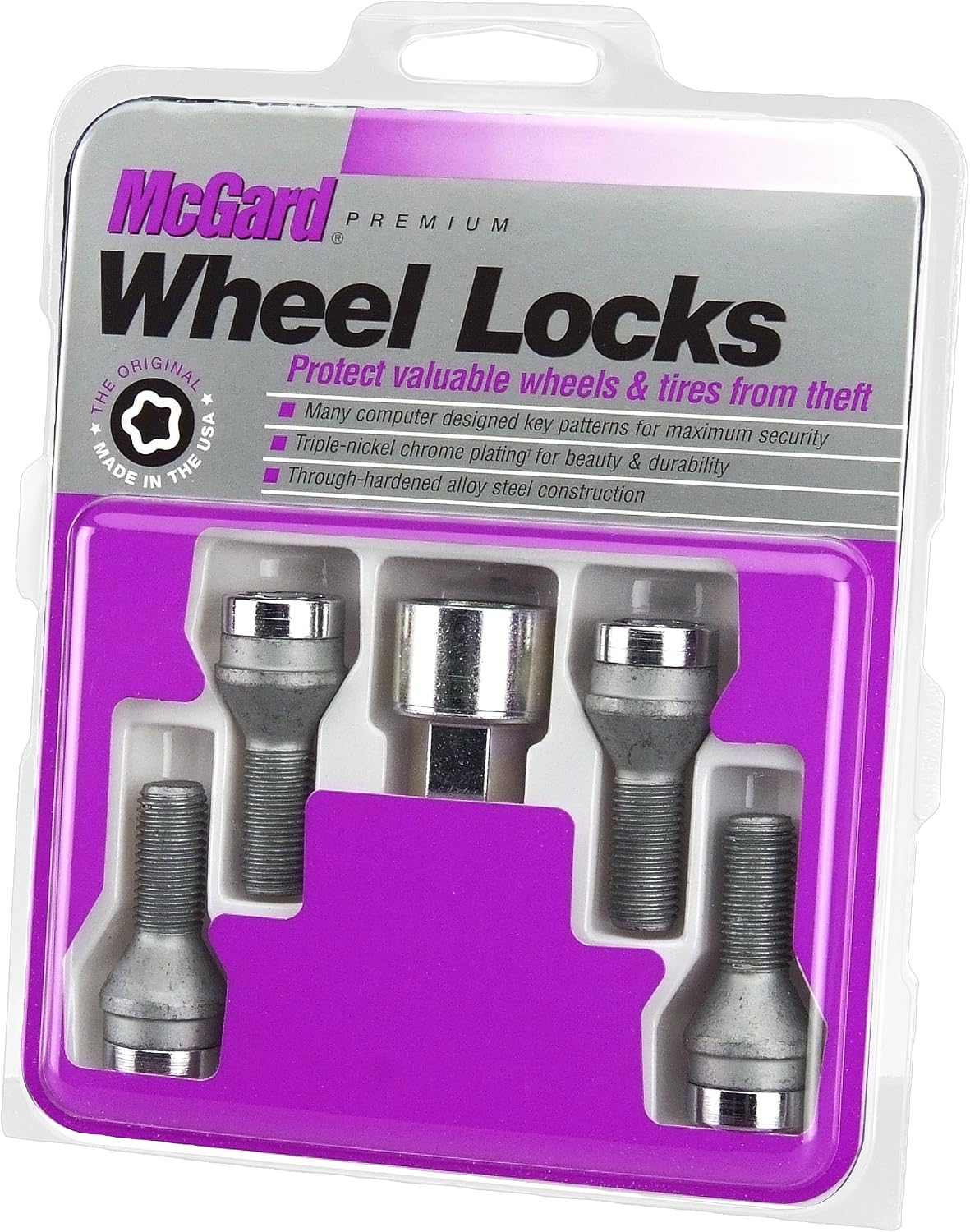
BMW Wheel Locks - Protect Your Investment Without Compromising Style
If you're running aftermarket wheels on your F30, G20, E90, or any other BMW chassis, wheel locks aren't optional - they're essential. A set of quality locking lug nuts is the cheapest insurance you can buy against wheel theft, which disproportionately targets BMWs running popular fitments like 19" or 20" staggered setups on M Sport and M Performance models. Don't wait until you walk out to a car sitting on rotors.
BMW uses a standard 12x1.5mm thread pitch across most modern models including the 3 Series (F30/G20), 5 Series (F10/G30), X3 (F25/G01), X5 (E70/F15/G05), and the M2/M3/M4 lineup. Earlier E-chassis cars like the E46, E60, and E90 share the same spec, so finding a compatible set is straightforward. The 1 Series (F20/F40) and 2 Series (F22/G42) also use 12x1.5, but always double-check your existing lug nut seat type - BMW OEM hardware uses a spherical (ball) seat, not a conical (tapered) seat like most aftermarket wheels require. Using the wrong seat angle is the number one installation mistake and can crack wheel hubs or cause dangerous wheel movement.
What to Look For - and What to Avoid
McGard is the gold standard for BMW wheel locks and the brand you'll find referenced repeatedly in BMW forums. Their Ultra High Security Wheel Locks (part series 24157, 25157) are precision-machined to OEM tolerances, available in both ball and conical seat, and use a patented key design that resists impact wrench attacks and code duplication. For a cleaner OEM-plus look, Gorilla Automotive offers a solid mid-range option, though their key patterns are slightly less unique than McGard's. If you're running a luxury or M-specific build, BMW's own M Performance wheel locks are worth considering - they're McGard-manufactured anyway, just with the BMW roundel and proper OEM fitment guaranteed out of the box.
What to avoid: any budget set under $20 from an unknown brand. These typically use soft steel that shears under moderate torque, and their key sockets wear out fast - often after just one or two removal cycles. You also want to avoid mismatched seat kits bundled with universal hardware. If the listing doesn't specify ball seat vs. conical seat, pass on it.
Install difficulty: Easy. Swap one lug nut per wheel for a locking nut, torque to BMW's spec of 120 Nm (89 ft-lbs), and store your key socket somewhere secure and accessible - glove box or with your spare tire kit. Keep a second key in your home toolkit. Most shops can look up or decode standard McGard keys if you lose yours, but it's a hassle you don't need before a tire rotation.
A few practical notes: if you're running aftermarket wheels with a chamfered seat, confirm the lock's seat spec matches your wheel's lug hole - not your factory hub. Extended-shank locks are available if your aftermarket wheels have thick faces or require a longer thread engagement. And if you've already upgraded your lug nuts for aesthetics, look for locking sets that match your existing hardware finish - McGard offers chrome, black, and brushed options to keep things consistent.
While you're securing your setup, it's also worth reviewing your valve stems and TPMS sensors - aftermarket wheels often require updated stems, and a missing or damaged TPMS sensor will trigger a fault on any BMW built after 2008.
Bottom line: spend $40–$80 on a reputable McGard or M Performance set, match your seat type, torque correctly, and don't lose the key. It's a five-minute job that protects a $2,000–$5,000 wheel investment. No excuse not to.