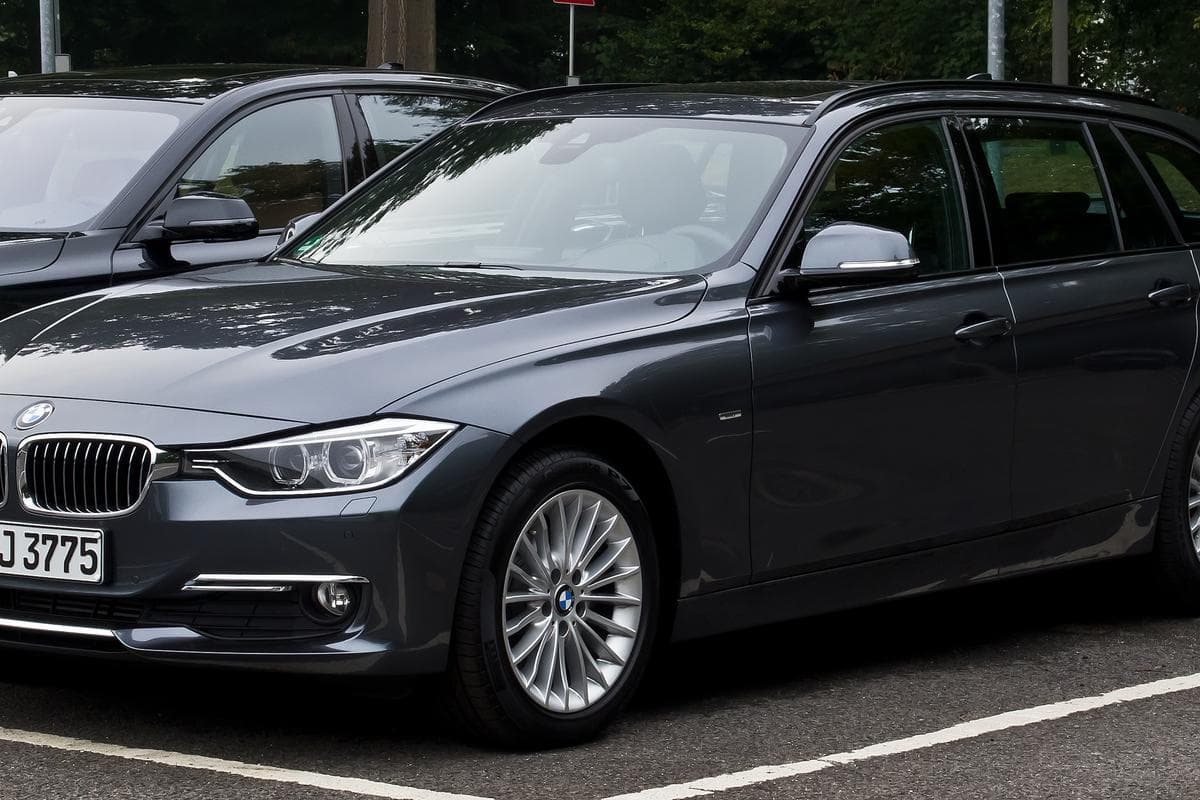
All-Season Tires for BMW 3 F31
Affiliate disclosure. BimmerTalk is a proud partner of the Amazon Associates Program and Turner Motorsport. We may earn a small commission on qualifying purchases through our links, at no extra cost to you. Read the full disclosure.

Michelin CrossClimate2 All-Season Tire 225/50R18 95H for BMW
MICHELIN
Michelin CrossClimate2 All-Season Tire 225/50R17 XL 98V for BMW
MICHELIN

Continental ExtremeContact DWS06 Plus All-Season Tire 225/45ZR17 91W
Continental
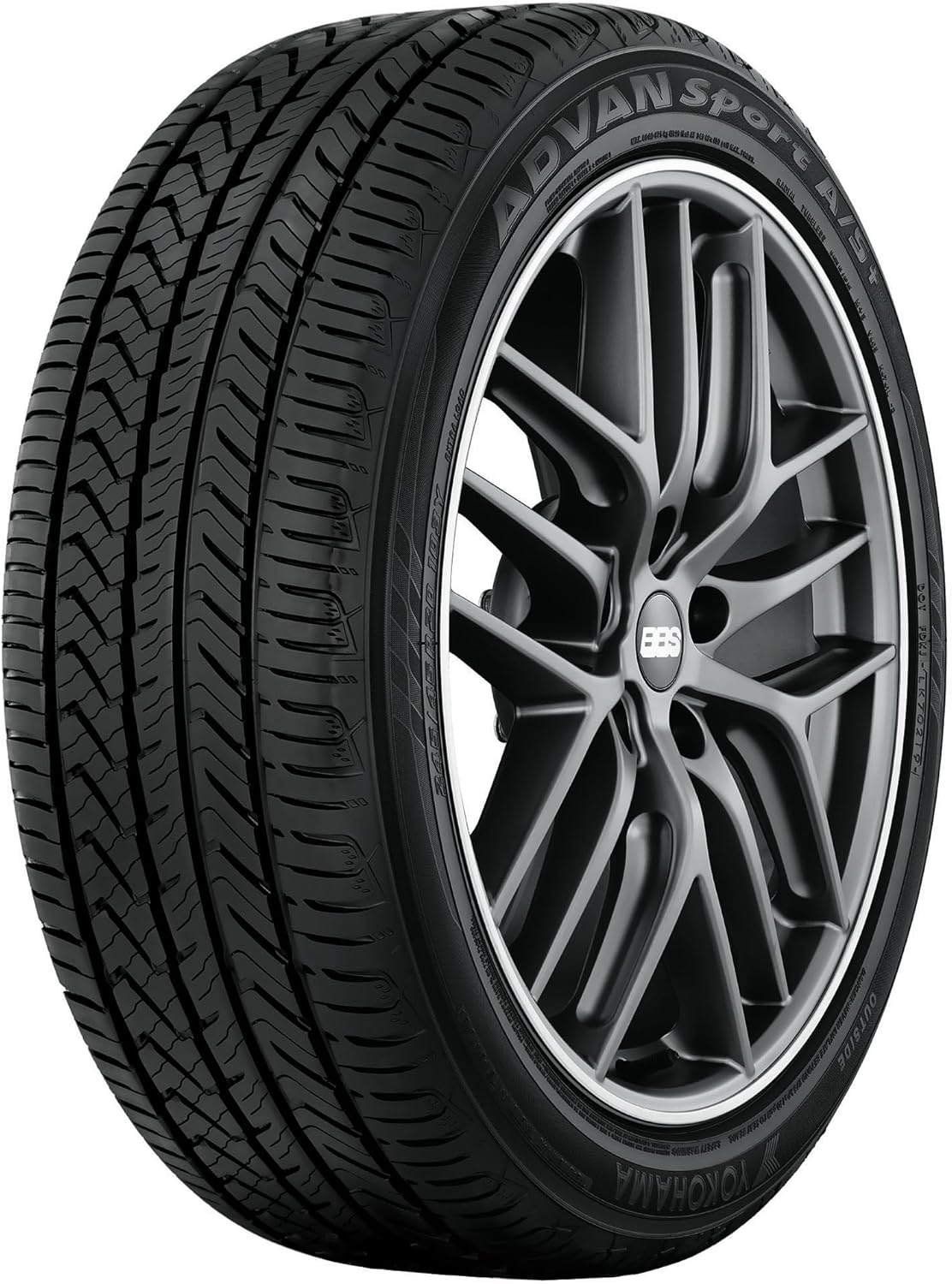
Yokohama Advan Sport A/S+ 225/40R18 92Y XL All-Season Performance Tire
Yokohama

Fullway HP108 All-Season Performance Tire 225/40R18 92W XL for BMW
Fullway
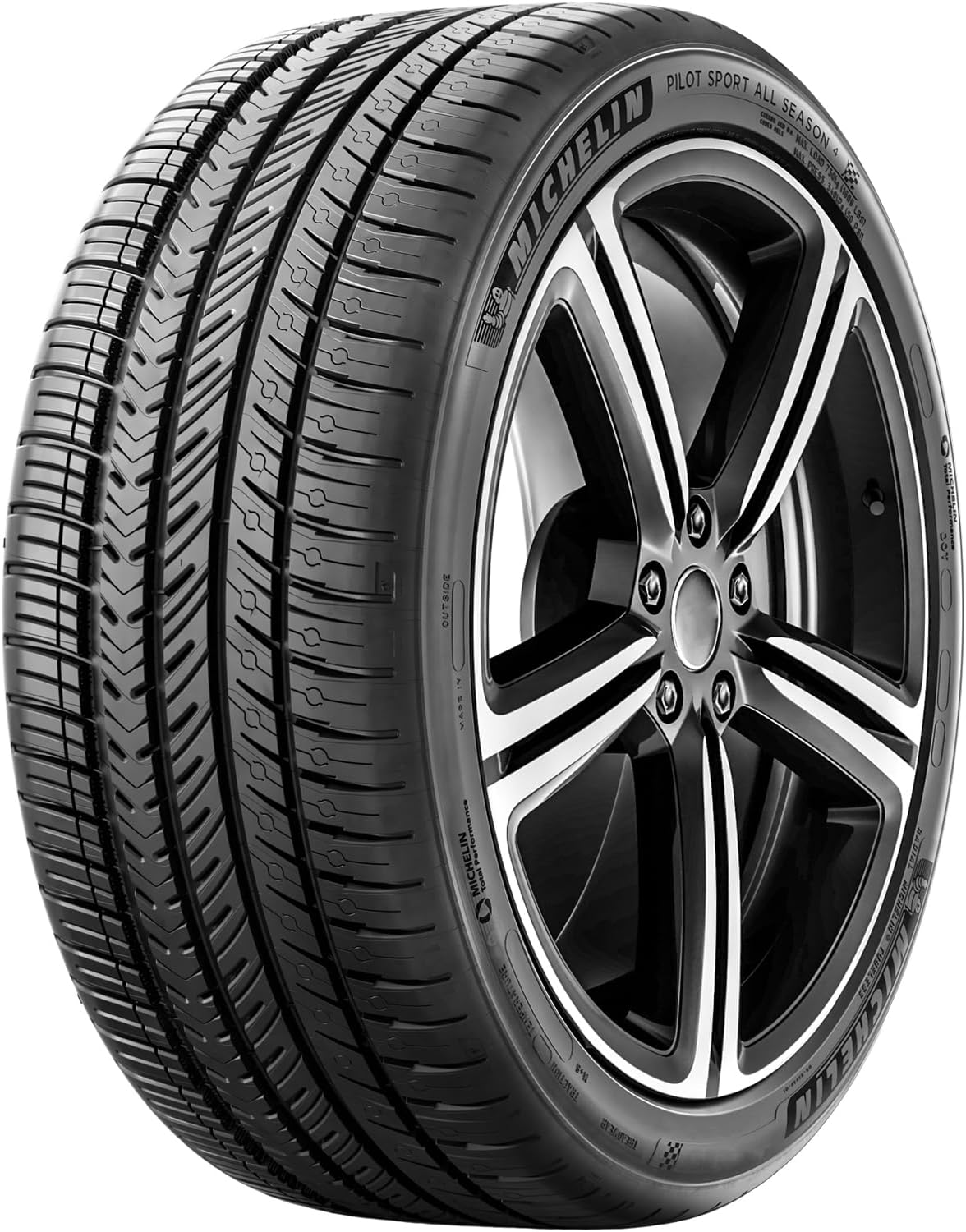
Michelin Pilot Sport All Season 4 All-Season Tire 225/40ZR18 92Y
MICHELIN

Summit Ultramax A/S 2.0 All-Season Tire 225/50R17 94V for BMW
SUMMIT
More wheel and tire options for the BMW F31
If you own a BMW F31 and you're searching for BMW F31 wheels tires all season tires that actually work year-round without turning your wagon into a skating rink every November, this page is the one you want to read before you order anything. I've spent enough time under BMWs and enough money on rubber to have strong opinions about what works and what's marketing noise, and the F31 touring body adds its own set of fitment wrinkles that I want to walk you through properly.
The F31 is the estate version of the sixth-generation 3 Series, running from 2012 through 2019, and it shares its platform with the F30 sedan. Same wheelbase, same front and rear suspension geometry - the F30's MacPherson struts up front and the multi-link rear axle carry over unchanged - but the wagon adds load weight over the rear axle, a longer roofline, and in many cases a different rear load index requirement that matters when you're speccing tires. People sometimes treat the F30 and F31 as identical for tire purposes. They're close, but not identical, and I'll explain where the differences bite you.
All-season tires for the F31 are a genuine category now, not a compromise you make because you can't afford two sets. The tire compounds and tread designs available in 2025 and 2026 are genuinely good. Michelin, Continental, Goodyear, Bridgestone, and Pirelli all make fitments that will keep an F31 touring planted in wet and light snow without completely killing the car's road feel. Whether you stay on run-flats or switch to conventional tires, whether your car sits on 17-inch squares, 18-inch staggered sport wheels, or 19-inch fitments, there's a solid answer in the all-season category. I'll give you that answer, the fitment numbers you need to verify before you buy, and my honest ranking of what I'd actually put on an F31 I was driving every day.
Why the F31 Touring Needs a Slightly Different Tire Conversation Than the F30 Sedan
Most of the online tire discussion for the 3 Series generation lumps F30, F31, F34 Gran Turismo, and F35 together as if fitment is interchangeable. For basic diameter and width matching it often is, but there are two F31-specific details that change my recommendation:
Rear Load Rating Is Not Optional
The F31 touring is rated to carry more cargo weight than the F30 sedan. When BMW specced the OEM tires for the F31, they chose load indices on the rear tires that reflect that rating. When you look at replacement tires, you need to match or exceed that load index. On the common 225/50R17 square fitment, the OEM load index is typically 94 (670 kg per tire). On the staggered 255/40R18 rear, it's typically 99 (775 kg). If you buy a tire with a lower load index to save money, you're technically out of spec for the wagon. Most all-season touring tires from the main brands hit these numbers without issue, but some budget options and some ultra-high-performance summer tires in the same size trim the load rating down. Always check the full spec sheet, not just the size label.
The Wagon Has More Unsprung Weight Over the Rear
The longer body and the added structure for the tailgate and roof increase the overall rear-biased weight distribution slightly compared to the sedan. It's not dramatic, but it does mean the rear tires work a little harder under braking and cornering on a loaded wagon. This is another reason I lean toward tires with confirmed wet braking performance on touring cars rather than pure sporty compounds that give up wet traction. I'll come back to this in the product section.
Run-Flat Dependency Is More Annoying on a Wagon
A lot of F31s came from the factory on run-flat tires (RFTs), which means no spare tire in the boot and no room for one. Switching away from run-flats on a car that has no spare requires you to either carry a compact spare (which the F31 boot can accommodate if you get a specific mounted spare or tire mobility kit), buy a tire mobility kit, or accept the AAA call when you flat. On a wagon that people use for family duty and longer trips, I think that's worth thinking about more carefully than it is on a sports coupe. I'll give you the full run-flat versus non-run-flat breakdown later in this page.
F31 Tire Size Guide - What's on Your Car and What You Can Safely Run
Before you buy anything, pull the sticker from your driver's door jamb or look at what's physically on the car. The F31 came with several different OEM wheel packages depending on the trim level and market, and the tire sizes vary significantly. Here are the main fitments you'll encounter:
17-Inch Square Setup
This is the most common fitment on base and mid-trim F31s, particularly in European markets and on cars specced without the M Sport package. The standard size is 225/50R17 all around. This is the easiest size to shop for because it's a square fitment - same tire front and rear - and 225/50R17 is a common touring car size with excellent selection across all the main all-season brands. Pricing is typically the most accessible in this size. You can also run this car on 205/60R16 winter wheels if you want a dedicated winter setup, but for all-seasons on the 17-inch wheel, 225/50R17 is what you want.
18-Inch Staggered Sport Setup
This is what you get with the M Sport package and some mid-tier sport wheel upgrades. The staggered fitment is 225/45R18 front and 255/40R18 rear. The rear tire is wider, which improves lateral grip and traction but means you cannot rotate tires front to rear. You're buying fronts and rears separately, and they wear at different rates (fronts typically wear faster on a rear-wheel-drive car under hard use). This staggered setup demands that you track wear carefully and budget for replacing fronts more often than rears, or accept replacing both axles at once for safety consistency. For all-season use on a family wagon, the staggered setup is workable but adds complexity. Some owners actually square off their F31 when switching to aftermarket wheels specifically to simplify all-season tire management - see our aftermarket wheels guide for square versus staggered fitment detail.
19-Inch Setup
Available on higher-spec cars and popular as an aftermarket upgrade. The sizes are 225/40R19 front and 255/35R19 rear. These are the most performance-oriented dimensions and carry the largest selection of summer tires, but the all-season selection in 255/35R19 specifically is thin. If your F31 is on 19s and you want all-seasons, you may find yourself with only a couple of real options for the rear tire, and those options may not be run-flats. This is the fitment where I most strongly suggest people consider going to a square setup on a second winter or all-season wheel before shopping tires, rather than fighting to find a good all-season in the staggered 19-inch rear size. The lower sidewall on 19-inch tires also means the ride is firmer and the tires are more vulnerable to pothole damage - a tradeoff that matters more on an all-season daily driver than on a weekend summer car.
Overall Diameter Matching
One thing the F31 shares with every other BMW I've worked on - the car is sensitive to overall tire diameter deviations. The dynamic stability control, the speedometer, and the xDrive torque management (if you have an F31 xDrive) all rely on accurate wheel speed data. BMW's tolerance is generally plus or minus 3 percent on overall diameter from the OEM spec. Stick within that when you're considering a plus-size fitment or a different aspect ratio. Online tire calculators can quickly confirm whether a candidate size is within tolerance for your OEM wheel size.
Run-Flat or Conventional - The Decision You Need to Make First
This is the first real fork in the road when shopping F31 all-season tires, and it's worth spending real time on because it affects every other decision you make.
The Case for Staying on Run-Flats
If your F31 has no spare tire and no real storage provision for one, run-flats give you the ability to drive up to 50 miles at a maximum of 50 mph after a complete pressure loss, according to what Bridgestone publishes for the DriveGuard Plus run-flat all-season. That 50-mile buffer means you can reach a tire shop from most places you'd realistically be on a daily commute or a family trip without calling for a tow. The peace of mind on a loaded wagon with kids in the back is real and I don't dismiss it.
Run-flats also typically have stiffer sidewall construction that provides slightly more precise handling response. On the F31's multi-link rear, where rear compliance steer is already pretty well controlled by BMW's geometry, the firmer sidewall of a run-flat doesn't hurt lateral response much. Some drivers actually prefer the feel.
The other argument for run-flats is practical: if you are buying an all-season that replaces an OEM run-flat fitment, you don't have to reconfigure anything on the car, you don't have to buy a spare wheel and tire, and you don't have to think about it. Swap the tires, done.
The Case Against Run-Flats
Run-flat all-season tires ride harder than equivalent conventional all-season tires. The reinforced sidewall that makes zero-pressure driving possible is the same structure that transmits more of the road's texture into the cabin. On an F31 touring that might be on adaptive dampers (the optional adaptive M suspension was available) or even on standard passive suspension, the increased harshness is noticeable. Passengers notice it. If your F31 is your family car and you do long trips, that extra stiffness over multiple hours gets tiring.
Run-flat tires also typically cost more per tire than equivalent non-run-flat designs from the same brand, and they have narrower selection. The best wet-weather all-season tire designs don't always come in run-flat versions. If you want maximum all-season grip and wet performance, conventional tires often give you more options at better prices.
And the counterintuitive tradeoff: run-flat tires are generally not repairable after a puncture because the reinforced sidewall makes it impossible to fully inspect for damage from running flat. A conventional tire with a clean nail through the tread can usually be plugged or patched for $20. A run-flat in the same situation gets replaced. Over the life of the car, that adds up.
My honest take: if your F31 is your daily driver and you do real miles in real weather conditions, I'd switch to conventional all-season tires, carry the BMW tire mobility kit (which came with many F31s and fits in the boot's underfloor compartment), and use the money saved on tires to put better rubber on the car. If the F31 is a second car or a car that frequently goes on longer trips where a flat on a dark road at night is a real concern, run-flats make more sense.
The Top All-Season Tire Picks for the BMW F31
Here are the tires I'd actually consider for an F31 in the all-season category, in order of my preference. I'm being specific about which fitment categories they suit best.
1. Michelin CrossClimate 2 - Best Overall for the F31
The Michelin CrossClimate 2 is not a run-flat, but it is the best all-season tire I'd put on an F31 touring if you're willing to carry a mobility kit or mount a spare on a steel wheel tucked under the boot floor. Michelin's Primacy HP Zero Pressure run-flat has historically been recommended for BMW fitments by retailers and shows up on Tyre Reviews' BMW tire pages with solid marks, but the CrossClimate 2 is a more current design with better real-world snow traction while giving up almost nothing in dry handling precision on a touring car. For the F31's 225/50R17 square setup, it's available in a touring load-rated version. For the 225/45R18 front position in the staggered setup, it's widely available. The 255/40R18 rear size is also available in the CrossClimate 2.
What the CrossClimate 2 does particularly well is wet braking and aquaplaning resistance - both critical for a loaded wagon. Michelin's testing consistently shows short wet braking distances, which matters when you've got a roof box, two adults, two kids and their gear on board and you need to stop from 60 mph. It also carries the Three Peak Mountain Snowflake (3PMSF) certification, meaning it meets a minimum tested snow traction standard. That's not the same as a dedicated winter tire, but it means the compound does something useful in light snow rather than just hoping for the best.
In the 225/50R17 size, expect to pay roughly $180 to $220 per tire at major US retailers in 2025/2026. The 225/45R18 runs slightly higher, typically $200 to $240 per tire. The 255/40R18 rear in the same line runs $220 to $260 per tire. A full set of four in the 17-inch square fitment will land around $720 to $880 installed before any rebates, which Michelin runs periodically through major tire retailers.
The one honest negative: the CrossClimate 2 is a comfort-and-safety tire, not a performance tire. It won't make your F31 feel sharper than it did on its OEM summer rubber. If you had the M Sport package with the staggered 18s and you loved the way the car turned in on those original Pilot Sport 3s or Bridgestone Potenza RE050As, the CrossClimate 2 will feel softer. That's the tradeoff for 12 months of usability.
2. Continental WinterContact TS 870 P vs. AllSeasonContact 2 - Know Which One You Actually Need
Continental has been making BMW-compatible run-flat tires for a long time. The ContiProContact SSR is what tire retailers commonly list as a BMW run-flat all-season replacement, and it fits the F31 in multiple sizes. If you want to stay on run-flats and you want a touring-comfort profile, the ContiProContact SSR is the most sensible choice. It rides better than the older Goodyear run-flat designs, has decent wet grip, and is widely available in BMW-specific fitments. The load index spec matching for the F31 rear is not an issue with this tire.
But the more current and genuinely better product in Continental's lineup for the F31 is the AllSeasonContact 2, which is a non-run-flat all-season with the 3PMSF certification and significantly better snow traction than the original AllSeasonContact. It's available in both the 225/50R17 and 225/45R18 sizes, with strong test results in European all-season comparative tests (where the F31 was a much more common car than it was in North America). Pricing for the AllSeasonContact 2 in the 17-inch fitment is typically in the $160 to $200 range per tire, making it slightly more accessible than the Michelin CrossClimate 2.
If you're set on a run-flat, go ContiProContact SSR. If you're open to conventional, the AllSeasonContact 2 is arguably the better tire for European weather conditions and for anyone in the US Northeast or Midwest who sees real winter weather but not serious mountain driving.
3. Bridgestone DriveGuard Plus - Best Run-Flat All-Season for the F31
If you specifically want a run-flat all-season tire and you want the most winter-capable option in that category, the Bridgestone DriveGuard Plus is the one I'd choose. As noted in this retailer comparison of BMW run-flat options, the DriveGuard Plus is explicitly marketed as an all-season run-flat with up to 50 miles of zero-pressure driving capability at speeds up to 50 mph, and it's designed with wet and light-snow traction as genuine design priorities rather than afterthoughts.
For the F31 specifically, the DriveGuard Plus is a good fit because Bridgestone designed it around touring car duty cycles - longer distances, loaded vehicles, real weather. The compound is a step up from the original DriveGuard in cold-weather flexibility, which helps with traction on cold but dry roads (a scenario all-season tires often fail quietly because drivers don't notice the grip degradation until something goes wrong). It also rides noticeably better than older run-flat designs because Bridgestone updated the sidewall reinforcement structure to reduce the penalty in ride quality.
The honest caveat is that the DriveGuard Plus still rides firmer than any conventional all-season tire of equivalent width and aspect ratio. That's physics, not a brand decision. If ride quality is your priority, you need to accept either conventional tires or the compromise. For an F31 that you want to keep simple - run-flat, no spare to worry about, solid all-season performance - the DriveGuard Plus is my top run-flat pick for this car.
Pricing for the DriveGuard Plus in 225/50R17 typically runs $175 to $215 per tire. In the 225/45R18 front size it's around $195 to $235. The 255/40R18 rear is less commonly stocked but available, typically around $215 to $255.
4. Goodyear Eagle All-Season vs. Eagle LS-2 - Which One Still Makes Sense
The Goodyear Eagle LS-2 shows up in run-flat form on multiple BMW run-flat recommendation lists and it was a common OEM fitment on a lot of BMWs in the mid-2000s through mid-2010s. The honest assessment in 2025 is that the Eagle LS-2 is an older design. It's not bad, but it's been surpassed in wet performance and winter traction by the Bridgestone DriveGuard Plus and even by Continental's run-flat offerings. I'd only choose the LS-2 if it was significantly cheaper than those alternatives and you were specifically looking for a quiet, comfortable run-flat for mostly dry-road use.
What Goodyear has done more recently and what deserves more attention for the F31 is the Goodyear Assurance WeatherReady 2 in conventional (non-run-flat) form. Like the Michelin CrossClimate 2, it carries the 3PMSF certification and is designed for genuine all-weather use including light snow. It typically prices slightly below the CrossClimate 2 - roughly $160 to $200 per tire in the 17-inch size - and performs well in wet conditions. It's a legitimate alternative for F31 owners who want the CrossClimate 2's concept at a slight discount. The gap between the two isn't huge, but Michelin edges it in dry handling precision, which matters if your F31 is an M Sport car.
5. Pirelli Cinturato All Season SF3 - Best for F31 M Sport Owners Who Don't Want Summer Tires
Pirelli's name in the BMW world is almost synonymous with the OEM Sottozero and the Cinturato P7, both of which have been OEM fitments on various BMW models. The Pirelli Sottozero 3 appears in BMW run-flat recommendations and it's technically available as a run-flat in some sizes, but it's really a winter tire rather than a true all-season - note the name. For a genuine all-season on an F31, what Pirelli actually makes and what I'd look at is the Cinturato All Season SF3.
The Cinturato All Season SF3 is Pirelli's most current all-season design as of 2025 and it's positioned exactly at touring car drivers who want more performance feel than a pure comfort all-season but don't want to commit to summer-only rubber. For the F31 M Sport with staggered 18-inch wheels, this tire profile makes a lot of sense. The compounds are balanced toward dry handling feel more than the Michelin or Continental designs, with slightly less emphasis on deep winter traction. If you're in a climate where real snow is rare but cold wet roads are common, the Cinturato SF3 trades a bit of snow performance for better dry response. For F31 M Sport owners in southern states, the Pacific Northwest, or the UK, it's probably the best fit on this list. You can find more discussion of tire selection alongside suspension choices in our F3x suspension section.
Pricing for the Cinturato All Season SF3 is broadly similar to the Michelin CrossClimate 2 - $185 to $230 per tire depending on size. Availability in the 255/40R18 rear staggered size is good. The 255/35R19 rear size, if your F31 is on 19s, has more limited selection in all-season compounds across all brands, not just Pirelli.
6. Kumho Ecsta AS71 - Best Budget All-Season for the F31
I'm not going to pretend that budget tires don't exist or that every F31 owner has $900 to spend on tires. The Kumho Ecsta AS71 is a non-run-flat ultra-high-performance all-season that I've seen recommended for BMW fitments by several forums, fits the common F31 sizes including 225/45R18 and 255/40R18, and prices significantly below the premium options - typically $110 to $140 per tire in common sizes. A full set of four in the staggered 18-inch fitment can come in around $500 to $560, which is roughly half what a set of Michelin CrossClimate 2s would cost.
The honest tradeoff is that the Kumho is a budget tire and it shows in some areas. Wet braking performance from independent comparative testing is decent but not class-leading. Tread life is typically shorter than premium brands. And Kumho's all-season performance in real snow and ice is not as well documented as Michelin or Continental's. For a daily driver in mild climates where all-season means "not a summer tire rather than a genuine winter performer," the Kumho Ecsta AS71 is a respectable choice. For someone in Minnesota or upstate New York who's counting on this tire to pull them through February, I'd stretch the budget for the Michelin or the Bridgestone DriveGuard Plus. A discussion of where tires fit in a broader F31 upgrade strategy, alongside coilovers and springs, lives in our coilovers buyer's guide.
Tire Comparison Table for the BMW F31
| Tire | Type | Best F31 Fitment | Run-Flat Available | 3PMSF Snow Certified | Approx. Price Per Tire (225/50R17) | My Rating |
|---|---|---|---|---|---|---|
| Michelin CrossClimate 2 | All-season touring | 17-inch square, 18-inch staggered front and rear | No | Yes | $180 - $220 | Best Overall |
| Bridgestone DriveGuard Plus | Run-flat all-season touring | 17-inch square, 18-inch staggered | Yes | Yes | $175 - $215 | Best Run-Flat |
| Continental ContiProContact SSR | Run-flat all-season touring | 17-inch square, 18-inch staggered | Yes | No | $165 - $200 | Reliable OEM Replacement |
| Continental AllSeasonContact 2 | All-season touring (non-run-flat) | 17-inch square, 18-inch front | No | Yes | $160 - $200 | Best Value Premium |
| Pirelli Cinturato All Season SF3 | UHP all-season | 18-inch staggered M Sport fitment | Limited sizes | Yes | $185 - $230 | Best for M Sport Drivers |
| Goodyear Assurance WeatherReady 2 | All-season touring | 17-inch square, 18-inch front | No | Yes | $160 - $200 | Good Alternative to Michelin |
| Michelin Primacy HP Zero Pressure | Run-flat touring all-season | OEM replacement in multiple sizes | Yes | No | $185 - $225 | Comfort-Focused Run-Flat |
| Kumho Ecsta AS71 | UHP all-season (non-run-flat) | 18-inch and 19-inch staggered | No | No | $110 - $140 | Best Budget Pick |
F31-Specific Fitment Notes - What You Need to Verify Before Ordering
I've bolted a lot of tires onto F-series BMWs and the F31 has a few specifics that catch people out:
Load Index - Match or Exceed OEM
I said this earlier but it bears repeating with the actual numbers. For the 225/50R17 fitment, match or exceed load index 94. For the 225/45R18 front in the staggered setup, load index 91 is the OEM spec. For the 255/40R18 rear, match or exceed 99. If you're buying from a tire retailer's website, filter by the OE load index or call and confirm. I've seen people order 225/45R18 tires for their staggered F31 fronts and receive tires with load index 88 or 89 from some budget brands - that's not good enough for this application.
Speed Rating
The F31's OEM tire speed ratings are typically V (240 km/h / 149 mph) or W (270 km/h / 168 mph) depending on the engine variant. For an all-season tire on a car you're driving year-round in normal conditions, the minimum you should buy is an H-rated (210 km/h / 130 mph) tire, and I'd prefer V-rated for any F31 that's ever going to see German autobahn conditions or extended high-speed highway work. Most all-season touring tires in the sizes we're discussing come in V or W ratings without a significant price premium.
xDrive Models
The F31 was available with BMW's xDrive all-wheel-drive system in several engine variants. The xDrive cars have a different tire requirement: the variance between front and rear tire circumferences needs to be minimal because the transfer case and electronic differentials will fight each other if the rolling circumferences differ. For xDrive F31s, I strongly recommend a square (non-staggered) tire setup for all-season duty, even if your car came on staggered wheels. Mix the staggered sizes on an xDrive and you'll eventually trigger drivetrain fault codes or accelerate wear in the transfer case. The good news is that most all-season touring tires in 225/50R17 square fit xDrive F31s perfectly without any modification, and the square setup makes rotation possible too.
TPMS Sensors
All F31s from the factory have TPMS (tire pressure monitoring system) sensors in the wheels. If you're switching to a second set of all-season wheels, you'll need TPMS sensors in those wheels too, or you'll have a persistent warning light and (more importantly) no pressure monitoring. BMW's OEM sensors are expensive - roughly $70 to $100 per sensor installed at a dealer. Aftermarket sensors compatible with the F31's 433 MHz or 315 MHz system (depending on market) are available for $20 to $35 per sensor and work fine. The coding diagnostic tools page can walk you through sensor registration if you're using a compatible interface. See our coding and diagnostic tools guide for how to register new TPMS sensors without paying a dealer for the service.
Wheel Centering and Hub Bore
The F31's hub bore is 72.6mm. If you're mounting aftermarket wheels for an all-season wheel and tire package, verify that the wheels either have a hub bore at exactly 72.6mm or come with hub centric rings to adapt from a larger bore. Running wheels without proper hub centering causes vibration at highway speeds that no amount of balancing will fix, because the vibration source is the wheel sitting off-center on the hub rather than weight imbalance. Any reputable wheel supplier includes the rings or can confirm the bore match - check our aftermarket wheels section for hub bore and PCD specs across the F-series lineup.
Run-Flat All-Season Deep Dive - What Those Reinforced Sidewalls Actually Mean for the F31
Because so many F31s came on run-flats and because the run-flat question comes up constantly in BMW forums, I want to give this more than a surface treatment.
The way a run-flat tire works is through a reinforced sidewall - typically a thicker, harder rubber compound with internal support structures - that can hold the tire's shape and carry the vehicle's load even with zero internal pressure. When you drive on a flat run-flat, you're essentially driving on that reinforced sidewall rather than on an air cushion. The reinforcement is why run-flat tires in the same size as conventional tires typically weigh more per tire and have higher rolling resistance numbers.
For the F31 touring specifically, the run-flat system has an additional quirk: BMW's RDC (Reifendruckkontrolle) system monitors tire pressure continuously and alerts you when pressure drops. On a conventional tire flat, you might have some warning from the feel of the car or a dramatic event. On a run-flat, you may actually not feel the pressure loss until the RDC warning appears, because the reinforced sidewall masks the deflection. This is both reassuring (you know about it) and mildly alarming (you've already driven some distance with a flat tire if the TPMS sensor was slow to register).
From a ride quality standpoint, the difference between a good run-flat all-season and a good conventional all-season on the F31 is measurable and noticeable but not dramatic on a car with adaptive dampers. On a standard passive suspension F31, the difference is more pronounced. The reinforced sidewall transmits more of the short-wavelength road texture - the kind that gives you that "running on gravel" feeling on coarse aggregate roads. On smooth highways it's less obvious. On textured concrete interstate sections or on European B-roads with patchy pavement, run-flat tires make the car feel busier.
Whether that tradeoff is worth it comes back to how you use the car and whether you have a meaningful alternative to being stranded with a flat tire in your usage pattern. I'll note that the F31's boot floor is large enough to store the BMW tire inflation kit without it intruding on cargo space, which makes the "I don't need a run-flat because I have the kit" argument more practical on a wagon than it is on the F30 sedan where the underfloor compartment is smaller.
Supporting Modifications and Considerations When Switching Tire Types
If you're going from run-flat all-seasons to conventional all-seasons on the F31, there are a few things to sort out beyond just buying tires.
Suspension Setting Check
Some F31s came from the factory with slightly stiffer suspension settings specifically calibrated around run-flat tires, because BMW designed those variants assuming the tire would provide a certain amount of compliance that the harder suspension didn't need to supply. If you switch to softer conventional tires on such a car, the ride may feel better immediately, but you might also find that the car's dynamic behavior has changed slightly in ways that suggest a suspension check is worth doing. This isn't a universal issue with F31s, but if your car is at higher mileage and you're switching tire types, it's a good time to inspect control arm bushings, which wear on the F3x platform around 80,000 to 100,000 miles and affect both ride quality and handling precision. Check out the suspension section for what to look for on high-mileage F31s before changing tire compounds.
Wheel Alignment After Tire Change
Any time you put new tires on a BMW, get a four-wheel alignment check at minimum. On the F31's multi-link rear, the camber and toe settings drift over time and the drift accelerates with worn bushings. New tires on an out-of-spec alignment will wear unevenly and you'll get none of the handling precision the tires are capable of. For an F31 with the staggered 18-inch sport setup, rear toe and camber are particularly important because the rear tires are carrying more lateral load and any toe deviation eats the inside edge of the tread. An alignment at a BMW specialist typically costs $100 to $150 and is the best $120 you'll spend alongside a new set of tires.
Tire Pressure Calibration
The F31's door jamb sticker shows pressures based on the OEM tire size and type. If you're going to a different tire or a different size, the pressures printed on that sticker may not be optimal for the new rubber. For all-season touring tires, most manufacturers recommend pressures in the range of 32 to 36 PSI front and rear on the F31 in standard touring loading. The OEM placard for a 225/50R17 setup typically calls for 33 PSI front, 35 PSI rear for normal loading on an F31. Start there and adjust by half a PSI at a time if you're seeing unusual wear patterns after the first few months. Under-inflation is the single biggest cause of premature all-season tire wear on BMWs in normal driving - people set the pressure, it drops over winter, and they don't top it up until the car throws a warning.
Brake Clearance on Wide 18-Inch and 19-Inch Fitments
If you're adding aftermarket wheels for a dedicated all-season setup and going with 18-inch or larger wheels, verify brake caliper clearance before ordering. The F31 M Sport can come with larger front calipers, and some aftermarket 18-inch wheels with higher dish or specific spoke designs don't clear the caliper correctly. The safe minimum spoke clearance from a BMW caliper on an 18-inch wheel is typically 3mm, and any reputable wheel brand will have F31 fitment data available. Our brakes section has more detail on OEM and upgraded caliper sizes across the F31 variants that's useful for wheel fitment cross-referencing.
How All-Season Tires Actually Perform on the F31 in Real Conditions
I want to be direct about what all-season tires can and cannot do on an F31 touring, because there's a tendency in marketing materials to overstate what these tires deliver in winter conditions.
Wet Roads - Where All-Season Tires Genuinely Excel
Modern all-season tires from Michelin, Continental, Bridgestone, and Pirelli are genuinely excellent in wet conditions. The tread patterns are designed with circumferential grooves for water evacuation and lateral sipes for wet traction, and the compounds are formulated to work at temperatures from about -5 degrees Celsius (23F) to 40 degrees Celsius (104F). On an F31 in rain, a properly inflated set of CrossClimate 2s or DriveGuard Plus tires will give you confident wet braking and lateral grip that most drivers will never exceed. The wet performance gap between a modern premium all-season and a summer performance tire has closed significantly, particularly at the speeds and driving styles most people use on a family wagon.
Light Snow - Where the 3PMSF Certification Matters
If your all-season carries the Three Peak Mountain Snowflake certification - which the Michelin CrossClimate 2, Bridgestone DriveGuard Plus, Continental AllSeasonContact 2, and Goodyear Assurance WeatherReady 2 all do - it has passed a standardized test showing it can accelerate on compacted snow at an acceptable rate compared to a reference winter tire. That test represents real-world improvement over a non-certified all-season. On a cleared road with a few inches of fresh snow, a 3PMSF-certified all-season tire on an F31 xDrive is a genuinely capable combination. You can commute in those conditions without drama.
What you cannot do is drive an F31 on 3PMSF all-season tires the way you'd drive a proper winter setup in deep snow, ice, or sustained below-zero temperatures. The compound of an all-season tire stiffens at temperatures below about -10 degrees Celsius (14F) in ways that a dedicated winter compound doesn't. On glare ice, an all-season tire is dangerous regardless of its 3PMSF certification. If you live somewhere with serious winters, the honest recommendation is still a dedicated set of winter tires on a second set of wheels. All-season tires, even great ones, are a genuine all-season solution for moderate climates and a year-round solution for mild ones - not a substitute for winter tires in harsh conditions.
Dry Road Performance - What You're Giving Up
Compared to the summer tires that came on most M Sport F31s from the factory - typically Pirelli P Zero, Michelin Pilot Sport 3 or 4S, or Bridgestone Potenza RE050A - the best all-season tires in the same sizes will feel measurably less sharp on a warm dry road. Turn-in will be slightly slower to respond. Lateral grip near the limit will be lower. The car will understeer sooner in fast cornering. These are not dramatic differences in normal driving, but if your F31 is your car and you drive it the way a BMW enthusiast tends to drive it, you will notice.
This is the fundamental honesty about all-season tires on an F-series BMW: you're buying convenience and year-round usability at the cost of peak summer performance. For a touring wagon that you use as a family car, that's a completely reasonable trade. For an M Sport F31 that you bought specifically because you wanted the driving dynamics, it might not be the right choice and you might be better served by summer tires with a good set of dedicated winter wheels for the cold months. Our articles section has a piece on seasonal tire strategy for BMW owners that goes deeper into the summer-versus-all-season-versus-winter decision framework.
Installation Overview - What to Expect at the Shop
Installing all-season tires on an F31 is a standard tire shop job, but there are a couple of BMW-specific things to communicate to whoever is mounting the tires:
Directional vs. Non-Directional Tires
Several of the tires on this list, including some versions of the Michelin CrossClimate 2 and the Pirelli Cinturato All Season SF3, are directional tires with a specific rotation direction that must be matched to the side of the car they're installed on. A directional tire mounted on the wrong side will still work in the short term, but aquaplaning resistance and snow evacuation will be significantly compromised. Confirm with the shop that they're checking the rotation direction arrow on the tire sidewall during mounting. This sounds obvious but I've seen it missed at independent shops that don't routinely work on BMWs.
Torque the Lug Bolts Correctly
The F31 uses M14x1.25 lug bolts, and the correct torque spec is 120 Nm (89 ft-lbs). Many shops use an air gun to "close enough" and over-torque BMW lug bolts, which can warp brake rotors or stretch wheel bolt holes in aluminum wheels. Ask the shop to use a torque wrench for the final tightening step, or bring your own torque wrench and check them yourself after the job. I've found that explicitly mentioning BMW lug bolts and 120 Nm at the start of the conversation gets you better results than saying nothing and hoping for the best.
Balance Weights on Painted vs. Alloy Wheels
If your F31 is on BMW alloy wheels with a visible face - Style 398, Style 400M, or any of the M Sport wheel designs - make sure the shop uses stick-on balance weights on the inside of the wheel rather than clip-on weights on the outer rim edge. Clip-on weights scratch the clearcoat on BMW alloys and look terrible. Any competent shop will do this correctly, but it's worth confirming.
TPMS Reset After Mounting
After new tires are mounted and inflated to the correct pressure, you need to reset the TPMS system so it learns the new pressure baseline. On most F31s, you do this through the iDrive menu - Vehicle - Tire Pressure Monitor - Reset. Drive at highway speed for 10 to 15 minutes and the system will calibrate. If you get a persistent TPMS fault after this process, have the sensors scanned with a BMW-compatible tool - one or more of the sensors may be low on battery or damaged during the tire change.
Common Owner Mistakes When Buying All-Season Tires for the F31
After five years of working on BMWs and being on the forums, these are the mistakes I see F31 owners make most often when shopping for all-season tires:
Buying the Wrong Size Because the Site Said "Fits 3 Series"
Generic "fits 3 Series" fitment guides on tire retail sites often don't differentiate between F30 sedan, F31 touring, and F34 GT. The F31 wagon's load rating requirement for the rear tire is the key differentiator. Always spec your tire by the exact size printed on the door jamb sticker or the sidewall of the existing tires, not by vehicle model alone.
Mixing Run-Flat and Conventional Tires on the Same Axle
I know this one seems obvious but it happens. If one tire gets damaged beyond repair and the only available replacement is a conventional tire while the rest of the set is run-flat, some owners bolt the conventional tire on and drive. On a BMW with the run-flat RDC monitoring system, the handling balance difference between a conventional sidewall and a run-flat sidewall on the same axle is real and measurable in emergency maneuvers. Never mix run-flat and conventional tires on the same axle, and ideally not on the same car.
Ignoring the Speed Rating to Save Money
Tires with H speed ratings are sometimes meaningfully cheaper than equivalent V or W-rated tires in BMW fitment sizes. The F31's OEM spec is V minimum for most variants. Going to H-rated tires is technically fine for normal driving under 130 mph, but it degrades the tire's heat management at sustained highway speed and introduces a mismatch with the vehicle's dynamic spec. Buy the correct speed rating.
Not Getting an Alignment After New Tires
Covered earlier but worth repeating as a mistake category because so many F31 owners skip it. Especially on high-mileage F31s where the rear bushings have worn, the rear alignment will be off and your new all-season tires will show edge wear within 10,000 miles. Alignment is not optional on this car - it's maintenance.
Choosing Tires Based on Price Alone Without Checking Load Index
Particularly on the staggered 255/40R18 rear tire size, some budget all-season options come with load index 97 rather than the 99 that matches OEM spec. For a daily commuter with no cargo, the real-world risk is low. For a loaded wagon on a family road trip, it's a genuine safety spec violation. Check the load index number, not just the size.
Editor's Pick, Best Value, Best for M Sport, Best Daily Driver
Editor's Pick - Michelin CrossClimate 2
If I were putting a set of all-season tires on an F31 tomorrow, I'd order Michelin CrossClimate 2s in the appropriate size for my wheel setup, carry the BMW tire mobility kit in the underfloor compartment, and not think twice. The combination of 3PMSF certification, strong wet braking data, good dry handling feel for an all-season, and Michelin's consistent durability record makes this the right answer for the largest number of F31 owners. The only caveat is budget - they're the most expensive conventional all-season on this list - and the no-run-flat question. If your F31 is your only car and you're in a location where a flat tire with no spare would be a genuine safety problem, the Bridgestone DriveGuard Plus run-flat is a better fit for your situation even though I think the CrossClimate 2 is technically the better tire.
Best Value - Continental AllSeasonContact 2
For F31 owners who want a quality all-season without the premium Michelin price, the Continental AllSeasonContact 2 is the call. It's 3PMSF certified, rides well, handles wet roads competently, and Continental's build quality is consistently good across their product line. In the 17-inch square fitment it typically saves you $20 to $40 per tire versus the CrossClimate 2, which is $80 to $160 on a full set. That's meaningful money. Continental's warranty and road hazard coverage through major retailers is also solid.
Best for M Sport F31 - Pirelli Cinturato All Season SF3
For the M Sport wagon with staggered 18-inch wheels and someone who prioritizes the driving feel over deep winter capability, the Pirelli Cinturato All Season SF3 is the choice I'd make. It keeps more of the car's original dynamic character than the touring-oriented all-seasons, handles better in the dry, and is available in the staggered sizes. Accept that it's not the best snow tire on this list, but for an M Sport owner in a moderate climate it's the right balance.
Best Daily Driver Run-Flat - Bridgestone DriveGuard Plus
For the owner who absolutely needs a run-flat - perhaps because the F31 is used for late-night driving, long solo trips, or routes where a tire shop within 50 miles isn't guaranteed - the Bridgestone DriveGuard Plus is the best current run-flat all-season for this car. It's improved over the original DriveGuard in ride quality, it handles light snow better than the older ContiProContact SSR and Eagle LS-2 designs, and it gives you the peace of mind of 50 miles of zero-pressure driving capability. It costs more per tire than equivalent conventional all-seasons and rides firmer - but that's the run-flat deal, and of the run-flat options available, this one minimizes the penalty the most.
Frequently Asked Questions about BMW F31 All-Season Tires
Can I run any 225/50R17 all-season tire on my F31 or are there BMW-specific requirements?
You can run any 225/50R17 all-season tire on the F31 as long as it meets the load index (minimum 94 for the touring variant), speed rating (minimum H, recommend V or W), and - if replacing a run-flat original - you either also have a run-flat replacement or you're consciously switching away from run-flat with a mobility plan. You don't need a "BMW-approved" tire. The "BMW Approved" or "RO1" marking on tires from brands like Pirelli indicates BMW OEM certification, but it's not required for aftermarket replacement. A tire without the approval marking and with the correct size and load/speed specs will work perfectly.
My F31 xDrive came on staggered 18-inch wheels. Can I keep the stagger for all-season tires?
Technically you can, but I wouldn't. On an F31 xDrive with all-wheel drive, staggered tires create a slight rolling circumference difference between front and rear axles that the xDrive transfer case has to constantly compensate for. Over time, particularly with any difference in wear rates, this strains the transfer case and differentials. For year-round all-season duty on an xDrive wagon, going to a square 225/50R17 setup on a second set of 17-inch wheels is the cleaner solution. You can keep your staggered 18s for summer tires and run a square setup in all-season rubber. This is also what unlocks tire rotation for the all-season set, which helps equalize wear and extends tire life.
How long should all-season tires last on an F31?
For a premium all-season touring tire like the Michelin CrossClimate 2 or Continental AllSeasonContact 2 on a rear-wheel-drive F31 in typical use, expect 40,000 to 50,000 miles of tread life if you maintain proper inflation and do a wheel alignment check annually. On an xDrive or a square setup with regular rotation, the wear equalization can push that to 50,000 to 60,000 miles. Budget tires like the Kumho Ecsta AS71 typically wear faster, with realistic expectations around 30,000 to 40,000 miles under similar conditions. Run-flat tires generally wear slightly faster than equivalent conventional tires due to their heavier construction and different compound characteristics - expect around 30,000 to 40,000 miles from premium run-flat all-seasons on this car.
What's the right tire pressure for all-season tires on the F31?
Start with what's on the driver's door jamb sticker, which is typically 33 PSI front and 35 PSI rear for normal loading on a standard F31 with 225/50R17 tires. For a fully loaded wagon (passengers and luggage), increase rear pressure by 2 to 3 PSI. Check pressures cold (the car sitting overnight, not after driving) because warm tire pressure readings are higher and will lead to under-inflation if you're using them as your baseline. For winter use, remember that pressure drops roughly 1 PSI for every 10 degrees Fahrenheit of temperature drop, so a tire that was at 34 PSI in September will be around 29 to 30 PSI in January without any air loss. Check monthly through the cold season.
Do I need BMW coding or a reset when I change from run-flats to conventional tires?
You don't need coding changes just to run conventional tires on an F31. The TPMS system monitors pressure regardless of whether the tire is a run-flat or not. However, if your F31 has the RDC system set to a run-flat-specific threshold, some owners reset it through the iDrive menu when switching tire types. In practice, the difference in TPMS threshold for run-flat versus conventional is minor. The more important practical change is psychological: when your TPMS warning light comes on with conventional tires, you need to actually stop and check because you no longer have the run-flat buffer. With run-flat tires, some drivers were (incorrectly) accustomed to treating the TPMS warning as a "drive to the next exit" signal. With conventional tires it's a "pull over now" signal.
Can I put all-season tires on just the front or back to save money?
No. Never mix tire types front to rear on a BMW. Mixing summer tires on one axle with all-season tires on the other creates a handling imbalance that can cause the car to behave unpredictably during emergency maneuvers - particularly in the transitions between wet and dry sections of road. On the F31's rear-wheel-drive layout, putting all-season tires only on the rear with summer tires on the front means the front tires lose grip in cold conditions before the rear does, causing understeer. Putting all-season only on the front with summer on the rear is even more dangerous because the rear loses traction suddenly in the cold while the front stays planted, causing oversteer. Always change all four tires together, or at minimum both tires on the same axle simultaneously.
My F31 is lowered on coilovers. Do I need to change anything about the tire selection?
Lowering affects two tire-related things. First, if you're on aggressive coilovers with significant negative camber - more than -2.0 degrees at the rear - you'll see accelerated inner shoulder wear on the rear tires, and all-season tires with more aggressive shoulder blocks for snow traction will show this wear pattern faster than a symmetric touring all-season. Second, if you've reduced ride height significantly (more than 30mm from stock), check for tire clearance in the wheel arch at full compression and full steering lock. A car that clears a summer tire at the OEM height may rub a slightly taller all-season tire after a lowering modification. Our coilovers section has F31-specific notes on height ranges and clearance across the common setups.
Are all-season tires actually adequate for winter driving in New England or the Midwest?
For moderate winter conditions - cold but dry, occasional light snow, slushy roads, temperatures that regularly hit the single digits Fahrenheit but not sustained severe cold - a 3PMSF-certified all-season like the CrossClimate 2 or DriveGuard Plus on an F31 xDrive is genuinely adequate for most people. You will give up traction margin compared to a proper winter tire setup, and on ice you are giving up more than you'd think. For anyone who has to drive in heavy snowfall, on unplowed roads, or in regularly sub-zero temperatures, I'd still strongly recommend dedicated winter tires. The all-season answer to "is this adequate for New England" is "it depends on what you need to drive through." For a suburban daily commute with reasonable expectations about staying home on the worst days, yes. For someone who needs to drive in any condition, no.
What's the difference between all-season tires labeled "Grand Touring All Season" and "Ultra High Performance All Season"?
These are informal category labels used by tire retailers, not formal ISO specifications. Grand Touring All Season (GTAS) tires prioritize ride comfort, tread life, wet traction, and mild winter capability - the Michelin CrossClimate 2, Continental AllSeasonContact 2, and Bridgestone DriveGuard Plus all fall in this category. Ultra High Performance All Season (UHPAS) tires prioritize dry grip and handling response with some all-season capability added - the Pirelli Cinturato SF3 and Kumho Ecsta AS71 are in this category. For an F31 touring that you're using as a family car, GTAS tires are usually the better fit. For an F31 M Sport that you drive enthusiastically and just want year-round usability, UHPAS makes more sense. The key difference you'll feel is turn-in response and limit grip on dry roads, where UHPAS tires feel closer to a summer tire.
Should I buy run-flat tires from a BMW dealer or from an independent tire retailer?
Buy from an independent tire retailer or a tire chain. BMW dealers charge a significant premium for tire mounting and balancing, and the tires themselves are typically priced at or above MSRP. Independent retailers with BMW experience - and in most cities there are plenty - can match or beat dealer prices on the exact same tires, mount and balance competently, and often include free rotation for the life of the tires as a purchase incentive. The one scenario where the dealer makes sense is if you're replacing a run-flat under BMW's roadside assistance program and they're covering the cost - in that case, use whatever is convenient. For a retail purchase, independent is almost always the better value.
How do I know if my F31 has a tire mobility kit or an actual spare?
Open the boot floor and look. On F31s delivered with run-flat tires as OEM fitment, BMW typically provided the Tire Mobility System - a small air compressor and a sealant bottle stored in the underfloor compartment, with no spare tire. Some dealer-specced cars in markets where spare tires were standard practice came with a compact spare or a full-size spare. If you're switching from run-flats to conventional tires and you open the floor to find only a compressor and a sealant bottle, you need to either buy a compact spare wheel and mount it in the compartment (it will fit with some packing), buy a full-size spare and a suitable carrier, or rely on the mobility kit and roadside assistance. The mobility kit handles small punctures in the tread area only - a sidewall blow or a large cut won't seal and you'll need a tow regardless.
At what tread depth should I replace all-season tires on the F31?
Legal minimum in the US is 2/32 inch (1.6mm). The realistic answer for a car you're relying on for all-weather performance is 4/32 inch (3.2mm), and for any serious winter driving I'd say 6/32 inch (4.8mm) is the functional limit for snow traction. Modern all-season tires show degraded wet and snow performance well before they reach the legal wear indicator. A tread depth gauge costs $5 at any auto parts store and takes 30 seconds to use. Check all four tires quarterly and replace when the shallowest measurement reaches 4/32 inch if you're driving in winter conditions. Waiting until the wear indicators appear means you've been driving on compromised all-season tires for thousands of miles in weather where those extra millimeters of tread genuinely matter. For a reference on other items to check alongside tire wear, our F31 service reference covers the maintenance intervals that line up with tire replacement cycles.

Kamil Siegień
Founder of BimmerTalk. Five years wrenching on BMWs, currently dailying a G20 330i with the B48 turbo four. Spent a year doing marketing for BMW and MINI before going independent. I write everything on this site myself.
More about the site
All-Season Tires for BMW - What Actually Works on Your Chassis
BMW's staggered fitments, run-flat requirements, and low-profile sizing make tire shopping more complicated than it needs to be - unless you know what you're looking for. Most all-season tires are engineered for front-wheel-drive economy cars. BMWs demand something better. Whether you're running a 225/45R17 on an E90 328i, a 245/40R18 on an F30 335i, or the aggressive staggered 245/35R19 rear setup on an F10 550i, fitment precision and load rating matter as much as the compound itself.
The good news: the all-season category has matured significantly. Brands like Michelin (CrossClimate 2), Continental (DWS06+), Bridgestone (Turanza All Season 6), and Pirelli (Cinturato All Season SF2) all produce tires purpose-built for performance sedans and sport coupes - the exact segment BMWs occupy. These aren't your uncle's all-season tires. They use silica-reinforced compounds and directional or asymmetric tread patterns that hold up to BMW's rear-biased torque delivery without turning into shopping cart handles in November.
If your car originally came with run-flat tires - common on E60, E90, F10, F30, and G30 chassis - you have a decision to make before buying. BMW's factory run-flat (RFT) spec restricts you to tires marked with the MOExtended or ROF (Run-On-Flat) designation. Switching to standard tires is absolutely fine, but you'll need to add a tire pressure monitoring sensor kit and, ideally, a compact spare. Many owners actually prefer the switch - ride quality improves noticeably, especially on the F30 and G20 which are already stiff on stock suspension.
What to Look For - and What to Skip
Speed rating matters. BMW E and F-series cars require at minimum a V-rated (149 mph) tire, and anything with a tune, sport package, or M-Sport suspension should be running W (168 mph) or Y (186 mph) rated rubber. Don't cheap out here - a speed rating also reflects the tire's structural integrity at load, not just top-end capability.
Load index is equally critical on heavier platforms. The G05 X5, G06 X6, and G07 X7 all need tires with load ratings appropriate for a 5,000+ lb SUV. An all-season rated for a mid-size sedan will wear unevenly and could fail under hard cornering loads on a heavier chassis.
Avoid budget all-season brands on any BMW with active suspension, adaptive dampers, or M Sport brakes. The braking distances on cheaper compounds degrade significantly in wet conditions, and BMWs with short wheelbases (E46, E90, 1 Series F20/F21) are already rotation-happy under trail braking. This is where the Continental DWS06+ earns its reputation - consistent wet grip and honest treadwear at a realistic price point.
For M cars or anything running aftermarket wheels with aggressive offsets, verify UTQG ratings and sidewall load capacity carefully. A 255/35R19 on an F82 M4 isn't forgiving of a mismatch. If you've already upgraded to a wider wheel setup, check out our performance wheels fitment guide to cross-reference compatible sizing before purchasing tires.
Installation difficulty is low if you're going same-size replacement - any qualified shop can mount and balance. TPMS resets are straightforward on most chassis using the iDrive menu or a basic TPMS reset tool. If you're changing tire diameter by more than 2–3%, you'll need a speedometer recalibration, which is a 15-minute job with a cable like the BimmerCode or NCS Expert. Staggered fitments (different front/rear widths) can't be rotated, so budget for more frequent rear replacements - particularly on xDrive models that carry more rear load.
Before finalizing your purchase, double-check your wheel specs in our wheel spacers and adapters section if you're running any offset changes - clearance issues with all-season tires, which often have slightly taller sidewalls than summer performance fitments, can catch people off guard.
Bottom line: spend the money on a proven brand, match the speed and load rating to your chassis, and confirm run-flat vs. standard before you order. Get that right and you'll have a BMW that handles properly 12 months a year.