
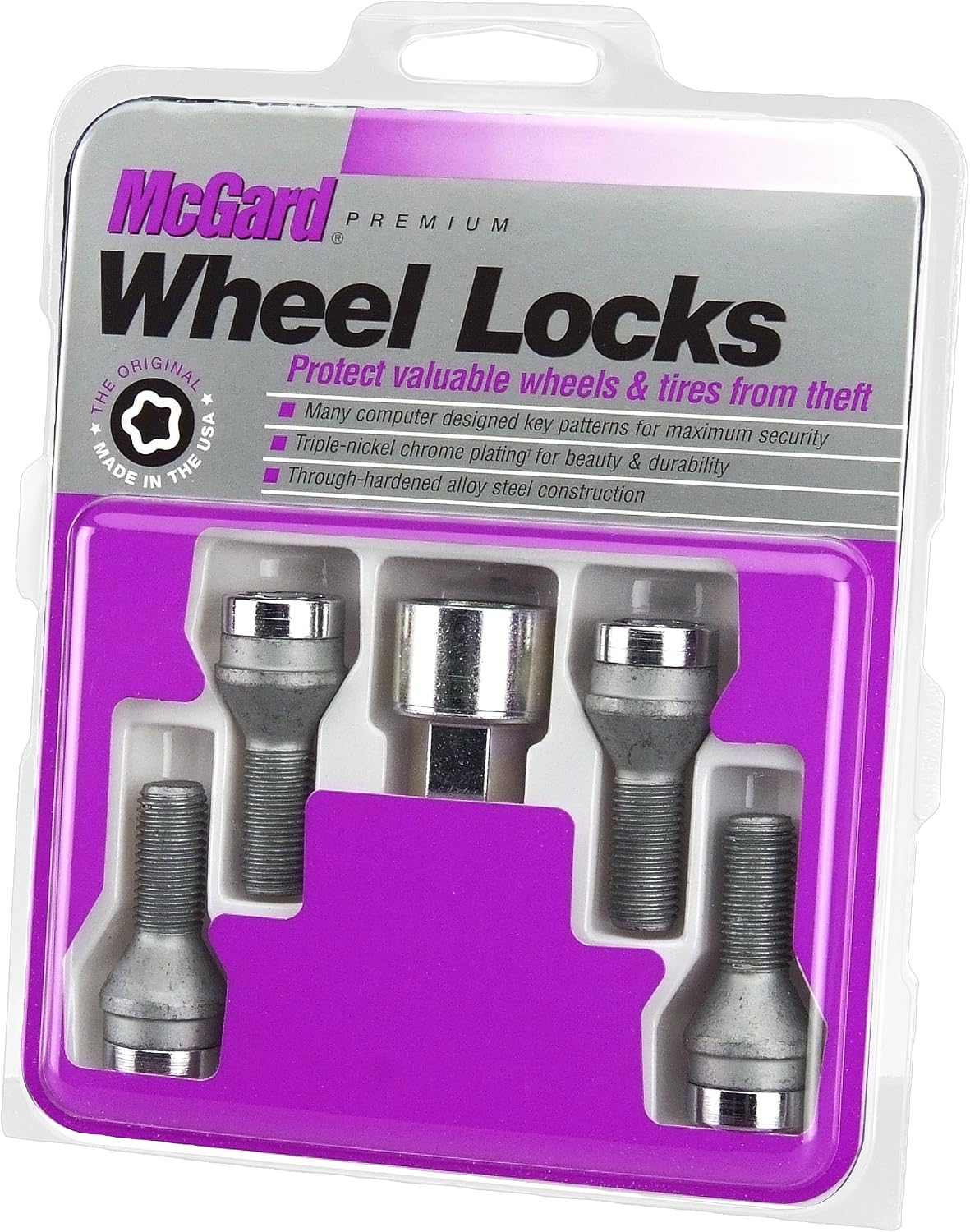
Wheel Locks for BMW 5 F10
Affiliate disclosure. BimmerTalk is a proud partner of the Amazon Associates Program and Turner Motorsport. We may earn a small commission on qualifying purchases through our links, at no extra cost to you. Read the full disclosure.


More wheel and tire options for the BMW F10
If you're researching BMW F10 wheels and tires, you already know the F10 5 Series is one of the best platforms BMW built in the last fifteen years. The F10 ran from 2010 to 2016 in sedan form, covered everything from the base 528i with its turbocharged N20 four-cylinder all the way up to the M5 with its screaming S63 twin-turbo V8, and it aged incredibly well. The bones are right - adaptive suspension on most trims, precise steering, properly wide tracks front and rear - but the factory wheel and tire package leaves money on the table whether your goal is better handling, cleaner looks, or both. I've spent time around these cars, helped friends spec out setups, and dug into the forum data. This guide covers every meaningful decision you'll face, from hub bore specs and offset math to specific brand picks with real prices and honest opinions about what actually works on the F10.
Why Wheels and Tires Matter More on the F10 Than Most BMWs
A lot of BMW platforms reward wheel and tire upgrades, but the F10 rewards them more than most for a specific reason: the car is heavy. Depending on trim, a base F10 528i curb weight sits around 3,700 lbs, and a 550i xDrive pushes toward 4,300 lbs. That's a lot of mass to manage through corners, and BMW's stock wheel and tire package is tuned for ride comfort and noise first, handling second. The rubber they put on these cars from the factory - usually run-flat tires in 245/45R18 or 245/40R19 depending on trim - is genuinely limiting. Run-flats are stiffer by design because the sidewall has to support the car without air pressure in an emergency. That stiffness kills feedback, introduces tramlining on any road with grooves or ruts, and wears faster than a comparable non-run-flat performance tire.
The second reason wheels matter specifically on this chassis is that BMW offered the F10 with a bewildering range of OEM wheel sizes - 17-inch on base models in some markets, 18-inch as the most common fitment, 19-inch on sport packages, and 20-inch on certain M Sport and individual-order cars. That means the aftermarket has had over a decade to figure out exactly what works, what doesn't, and where the clearance problems are. There's a mountain of real-world data sitting in Bimmerpost threads, and I've cross-referenced it with fitment guides from people who actually measure these things. The result is a page where you don't have to guess - just pick your goal and follow the data.
F10 OEM Baseline - What You're Starting With
Before you spend anything, understand what BMW gave you. The stock setup varies significantly by trim and model year, so I'll break down the most common configurations.
Standard F10 528i and 535i OEM Fitment
The entry-level trims came with 18x8 ET30 wheels front and rear with a square fitment running 245/45R18 tires all around. This is a sensible, balanced setup that does nothing particularly wrong and nothing particularly right. The 245 width is adequate for the N20 and N55 engines, and the 45-series sidewall absorbs road imperfections reasonably well. If your car came with the optional Sport or M Sport package, you likely have 19x8.5 ET25 front and 19x9.5 ET22 rear with a 245/40R19 front and 275/35R19 rear staggered setup. That staggered configuration is the one most enthusiasts are working with or upgrading from, and it's a solid foundation.
F10 M5 OEM Fitment
The M5 (F10M) is a different animal with a much wider body and specific M compound brakes that dictate minimum wheel diameter. Stock M5 wheels are 19x9 ET29 front and 19x10 ET26 rear, with 245/40R19 front and 275/35R19 rear. BMW also offered an optional 20-inch package on the M5. If you're upgrading an M5, brake clearance for those massive 6-piston front calipers is your number-one fitment concern - most aftermarket wheels require at minimum 19 inches with the correct offset to clear without spacers.
The Run-Flat Problem
I want to be direct about this because it's the single most impactful change most F10 owners can make before touching anything else: ditch the run-flat tires. BMW equipped the F10 with run-flats partly because they eliminated the spare tire (saving weight and trunk space) and partly because it was a selling point to buyers worried about being stranded. In practice, run-flats on a daily driver are a compromise that costs you feedback, ride quality, and money. A quality non-run-flat in the same size costs less and performs better. You do need to carry a plug kit or have roadside assistance coverage - I use a Stop and Go plug kit and haven't needed it yet, but it's in the trunk. For a detailed look at how suspension settings interact with tire choice, check out my guide on F10 lowering springs - the two decisions are tightly connected.
F10 Hub Bore, Bolt Pattern, and Offset - The Numbers You Need Before Buying Anything
Get these wrong and you're sending wheels back or dealing with vibration at highway speed. Here are the specs that apply to every F10 5 Series regardless of engine:
- Bolt pattern: 5x120mm - standard BMW fitment shared with E60, F01, G30, and most other modern BMW platforms
- Hub bore: 74.1mm - this is critical for aftermarket wheel fitment; most aftermarket wheels are made with a larger bore (typically 72.5mm or 73.1mm) and require hub-centric rings to eliminate vibration
- Typical OEM offset range: ET20 to ET32 depending on wheel width and position (front vs rear in staggered setups)
- Recommended aftermarket offset range: ET20 to ET35 for most fitments without rubbing issues
- Minimum wheel diameter for M5 front brakes: 19 inches
- Minimum wheel diameter for standard F10 brakes: 17 inches (though 18 is the practical daily minimum for aesthetics)
The 74.1mm hub bore is worth dwelling on for a minute. Almost every aftermarket wheel brand machines their BMW-fitment wheels to 72.56mm - the number they use for a range of European vehicles - or they produce a larger bore that accepts rings. You need hub-centric rings sized to go from whatever the wheel's bore is down to 74.1mm. Quality aluminum hub-centric rings run about $15-30 for a set of four from reputable suppliers. Do not skip them. A wheel that's lug-centric instead of hub-centric will vibrate at 65+ mph and that vibration will make you crazy until you figure out why it's there.
On offset, the safe zone for the F10 is wider than some people think. Running ET20 on a 9.5-inch-wide rear wheel in 19 inches works without spacers on most cars. Go wider - say 10 inches on the rear - and you want to verify clearance at the inner liner. Kipardon Racing's BMW fitment guide is one of the better resources I've found for understanding where the offset limits actually sit for the 5 Series platform. For a broader look at how offset interacts with different BMW chassis, the BimmerTalk chassis tool is worth bookmarking.
The Single Biggest Upgrade You Can Make - Tires First, Wheels Second
I want to be honest with you: if you only have budget for one upgrade, skip the fancy wheels and put that money into better tires on your stock rims. I know that sounds boring. It isn't. The difference between a factory run-flat and a Michelin Pilot Sport 4S in the same size is not subtle. On a heavy car like the F10, better tires mean shorter stopping distances, more progressive cornering limits, more feedback through the wheel, and less tramlining on grooved pavement. All of that happens before you spend a dollar on wheels, coilovers, or anything else.
If you do have budget for both - which is the ideal scenario - prioritize tires first and then decide on wheels. The reason is simple: a lightweight forged wheel on a mediocre tire is outperformed by a heavier stock wheel on a great tire. Rotational mass matters, but contact patch quality matters more at the speeds you're driving on the street. Once you've upgraded tires, adding a quality aftermarket wheel brings you the remaining benefits: reduced unsprung weight, better brake cooling (open-spoke designs), and the visual upgrade.
F10 Tire Size Guide - What Fits and What Rubs
The F10's wheel wells are reasonably forgiving, but you do have limits, and they tighten up if you've lowered the car. Here's the practical fitment data based on what forum users have actually run:
19-Inch Tire Fitments
- 245/40R19 front - OEM sport package size, no issues, fits everything
- 275/35R19 rear - OEM sport package rear size, the standard staggered rear
- 255/35R19 - square fitment alternative, works well on 19x8.5 all around
- 265/35R19 - square fitment on 19x9, no rubbing at OEM ride height, may need minor attention if lowered more than 20mm
20-Inch Tire Fitments
This is where it gets interesting and where forum data is most useful. Based on actual F10 owner reports on Bimmerpost, the two most discussed 20-inch rear options are 275/30R20 and 285/30R20. The 275/30R20 on a 20x10 rear wheel is a tighter fitment that works but is described consistently as close - you might have contact on the inner liner under full suspension travel if you're significantly lowered. The 285/30R20 is paradoxically the easier fitment because it pushes the sidewall slightly outward rather than inward, reducing inner liner contact. That sounds counterintuitive but it's the reported real-world result.
- 245/30R20 front - works on 20x8.5, standard narrow front for staggered setups
- 255/30R20 front - works on 20x9, most common wider front
- 265/30R20 front - possible on 20x9.5, check clearance carefully at standard ride height
- 275/30R20 rear - fits 20x9.5 and 20x10, tighter clearance at inner liner
- 285/30R20 rear - fits 20x10, actually more forgiving than 275 for inner clearance
One important note on 20-inch fitments: the lower profile means a harsher ride on F10 cars that haven't had their suspension retuned. The F10's adaptive dampers help, but a 30-series sidewall on a heavy car on imperfect roads is going to be noticeably harsher than a 35 or 40 series. If you're daily driving, I'd think carefully before going below 35-series sidewall height. On a lowered car without adaptive dampers at the softer setting, a 30-series tire will beat you up on anything other than smooth asphalt.
Always maintain at least a 25mm sidewall height in absolute terms to protect your rims on urban roads. On a 285/30R20, your actual sidewall height is about 85.5mm, which is well within safe territory. The math is simple: tire width in mm multiplied by the aspect ratio percentage gives you the sidewall height. Below 25mm you're risking rim damage from anything more than a small pothole, and TPMS sensor damage from hard curb impacts is also a real cost that adds up fast.
Best Wheel Picks for the F10 - Broken Down by Use Case
The aftermarket wheel space for the F10 is crowded. There are hundreds of brands, thousands of designs, and a huge range of quality. I've narrowed this to the wheels I'd actually recommend spending money on, with honest opinions about who they're for.
Best Overall Daily Wheel - Apex EC-7
If I had to pick one wheel for a driver who wants to improve on stock without overthinking it, the Apex EC-7 is my answer. Apex makes flow-formed wheels specifically targeting the BMW enthusiast market, and the EC-7 in 19x8.5 ET32 or 19x9 ET32 fits the F10 without spacers, clears the big brakes on the 550i and M5 (verify your specific caliper, but clearance is generally solid), and comes in at roughly $400 to $600 per wheel. The flow-forming process - where the barrel is spun under pressure after casting to densify the aluminum - gives you a wheel that's meaningfully lighter than a standard cast wheel without the price of full forging.
Forum reception for Apex on BMW platforms is strongly positive because Apex publishes real weight data and real offset specs, and they fit what they say they'll fit. The EC-7 design is clean and purposeful rather than flashy - it looks like it belongs on a performance car rather than a show car, which I think suits the F10's character well. You can find current F10-specific listings at places like Element Wheels where pricing and availability are current.
Best Forged Street Wheel - HRE FlowForm FF10
The HRE FF10 sits at the upper end of what I'd call reasonable for a street car, at around $700 to $950 per wheel. HRE is one of the most respected names in the BMW wheel space, and the FlowForm series gives you HRE's design quality and fit/finish at a lower price than their full forged lineup. The FF10 is well-suited to 19 and 20 inch applications on the F10, and the quality difference between an HRE and a budget cast wheel is immediately visible and tactile.
The honest caveat here is that the price premium over flow-formed alternatives like the Apex is real, and on a daily driver that may pick up curb rash or see winter road grime, it's worth asking yourself whether you need the HRE or whether you want it. If the F10 is a weekend car or a car you maintain obsessively, the HRE makes sense. If it's getting driven hard every day in a city, the Apex holds up just as well mechanically and costs less to replace if something happens.
Best Value Forged Wheel - Forgestar F14
The Forgestar F14 fills the space between flow-formed and premium forged. Forgestar uses a true flow-forming process with custom offset and width options, which is the key selling point - you can order an F14 in exactly the width and offset you need for a specific fitment without being locked into standard sizes. Pricing runs roughly $450 to $700 per wheel depending on size and finish.
On the F10, the Forgestar F14 is particularly popular for people doing custom staggered fitments because you can dial in the offset precisely for your lowered ride height rather than relying on spacers to correct a standard offset. If you're planning a suspension upgrade alongside wheels - say, a coilover kit for the F10 that drops the car 25-35mm - being able to specify the exact offset is genuinely useful rather than a marketing gimmick.
Best OEM-Plus Luxury Wheel - Vossen HF-5
The original page mentioned Vossen, and for good reason. The Vossen HF-5 at roughly $600 to $900 per wheel is the wheel I'd spec on an F10 that needs to look expensive in 19 or 20 inch. The design is a polished multi-spoke that complements the F10's long hood and formal body proportions better than aggressive split-spoke designs that look better on lower, wider cars.
The forum caution on Vossen that's worth repeating is that larger staggered setups - particularly 20-inch with a 30mm offset difference front to rear - can introduce tramlining. Tramlining is that sensation of the front wheels being pulled left or right by ruts and grooves in the road, and it's caused by a combination of wide front tires with low-profile sidewalls and offset that places the tire deeper into the wheel well. It's not a Vossen problem specifically, it's a physics problem that affects any wide, low-profile front tire. If you're running a square 20-inch setup or a mildly staggered 19-inch setup, tramlining is rarely a meaningful issue on the F10.
Best Winter Wheel - 18-Inch Flow-Formed Package
For winter, the math is simple: go smaller. An 18-inch wheel with a 235/45R18 or 245/45R18 winter tire gives you a taller sidewall that absorbs pothole impacts, a less expensive tire that you don't mind getting salt-covered and scuffed, and better clearance for winter chains if you need them. Winter wheel packages from sources like Wheels ASAP's BMW 5 Series page run roughly $250 to $450 per wheel for branded flow-formed wheels in 18-inch that fit the F10's bolt pattern and hub bore correctly.
The forum consensus on F10 winter setups is as unanimous as forum consensus gets: use 18-inch wheels. Don't put your expensive 19 or 20-inch summer wheels through a winter. The roads that produce the worst pothole damage are winter roads, and the tires that suffer most from salt and freeze-thaw cycles are low-profile performance tires. An 18-inch winter setup is a specific purchase you'll thank yourself for every spring when your summer wheels come out undamaged.
Best Tire Picks for the F10 - Full Breakdown
The tire market shifts faster than the wheel market, but certain names have held their position at the top of the F10 forum recommendations for long enough that I trust them. Here's my full breakdown by use case.
Best Max-Performance Street Tire - Michelin Pilot Sport 4S
The Michelin Pilot Sport 4S is the tire I'd put on my own F10 build without a second thought. At roughly $250 to $380 per tire in the sizes the F10 uses, it's expensive compared to budget performance tires but it delivers a level of dry grip, wet grip, steering feedback, and tread life that nothing else in its class consistently beats. On a car as heavy as the F10, the 4S's ability to maintain grip deep into a corner while also providing progressive feedback before the limit is genuinely important - heavier cars need tires that tell you where the limit is before you're over it.
The Pilot Sport 4S is Michelin's benchmark high-performance summer tire, and BMW enthusiasts have treated it as the default correct answer for street-focused F10 builds for years. If someone tells you they've tried everything and the PS4S isn't worth the price premium, ask them what they compared it to and under what conditions. In my experience, the price complaint usually comes from people who haven't actually switched from a genuine competitor in similar conditions.
Best High-Performance All-Season - Continental ExtremeContact DWS 06 Plus
If you're in a climate where temperatures drop below 45 degrees Fahrenheit regularly but you don't want to manage two sets of tires, the Continental ExtremeContact DWS 06 Plus at roughly $180 to $280 per tire is the tire I'd recommend. It's not as grippy as the PS4S in warm, dry conditions - nothing in its class is - but it handles cold temperatures, wet roads, and light snow better than any summer tire, and it does it while providing steering feel that's notably better than most all-season alternatives.
The DWS in the name stands for Dry, Wet, Snow - Continental's indicator system for when you need to start thinking about winter tires. The 06 Plus version added improved wet braking and wear resistance compared to its predecessor. For an F10 used as a true daily driver in the Northeast or Midwest, this is probably the most practical single-tire solution.
Best Budget Performance Tire - Firestone Firehawk Indy 500
The Firestone Firehawk Indy 500 at roughly $140 to $220 per tire is the pick when you need performance-oriented rubber but can't justify PS4S pricing on a car you're still building out. Firestone is owned by Bridgestone, and the Indy 500 uses a tread compound and pattern that's genuinely sporty rather than being a rebadged economy tire. It won't match the Michelin in steering feel or wet grip, and tread life is shorter, but for spirited street driving it's a solid value play that forum users consistently rate as punching above its price.
I'd use the Indy 500 on a car I was building - putting money into suspension or brakes first and planning to move up to Michelin once the other upgrades were sorted. Trying to evaluate how good your coilovers are through mediocre tires is frustrating; trying to evaluate them through decent budget performance tires is at least honest. But don't plan to keep the Indy 500 forever if you want the car to perform at its best.
Best Ultra-High-Performance All-Season - Michelin Pilot Sport All Season 4
The Michelin Pilot Sport All Season 4 at roughly $220 to $330 per tire occupies a specific niche that the DWS 06 Plus doesn't fully fill - it's closer to a summer tire in dry grip while still offering meaningful cold-weather capability. If you're in a climate where winters are mild but not mild enough to run pure summer tires, the PSAS4 is Michelin's answer to that problem and it's a good one. Dry grip is best-in-class for an all-season, wet handling is strong, and Michelin's compound work means the PSAS4 doesn't go completely dead below 40 degrees the way a summer tire does.
The tradeoff versus the DWS 06 Plus is price - Michelin commands a premium - and the DWS is arguably more versatile in actual winter conditions. The PSAS4 is the tire for the driver who wants to minimize the performance gap between summer and winter without running two sets of tires.
Best Winter Tire - Michelin X-Ice Snow
For winter tires, the Michelin X-Ice Snow at roughly $190 to $300 per tire is the consistent forum recommendation for F10 owners who take winter traction seriously. It handles snow and ice predictably, it wears reasonably well for a winter tire, and Michelin's quality control means it performs consistently rather than having the wide variance you sometimes see in budget winter tires.
Put these on your 18-inch winter wheels as described above, store your summer setup properly (clean, stacked or hung, away from ozone sources like electric motors), and the F10 becomes a genuinely capable winter car rather than something you park from November to April. The B48 and N20 four-cylinders in the 528i, 530i, and their xDrive equivalents have enough torque at low RPM to be tricky on slippery surfaces - good winter tires make the stability control's job easier and your stress level lower.
Square vs Staggered Fitments on the F10 - Which Makes More Sense
The F10 came from the factory with both square and staggered setups depending on trim, and the aftermarket debate about which to run is genuinely worth engaging with rather than dismissing. Here's the honest breakdown.
The Case for Staggered
BMW's engineers specified staggered fitments on the sport package for a reason: wider rear tires on a rear-wheel-drive car improve traction out of corners and lateral stability at the limit. A 275/35R19 rear versus a 245/40R19 front gives you more rubber on the road where the power goes. On an F10 550i with 400+ horsepower, that wider rear tire is doing real work managing torque. For drivers who push the car, staggered is the right call.
Staggered also looks right on the F10's body proportions. The long wheelbase and wide hips suit a setup where the rear is visually planted with a bit more width. A square fitment on a wide F10 can look slightly underwhelming from behind.
The Case for Square
Square fitments - same size front and rear - let you rotate tires, which doubles tread life effectively. On a car this heavy, that's a meaningful financial consideration. A set of PS4S tires in a square 255/35R19 fitment, rotated every 5,000-7,000 miles, will outlast a staggered set by a significant margin because the rear tires in a staggered setup typically wear faster and can't be moved to the front.
Square also reduces tramlining because you're running the same width front and rear, and slightly less wide than the staggered rear. For an F10 that's primarily a long-distance highway car, this is a real quality-of-life benefit. My recommendation: if the car has significant power (N55, S63) and you enjoy driving it on roads with real corners, go staggered. If it's primarily a daily commuter or highway car and tread life matters, go square.
F10 Wheel and Tire Installation Considerations
A few things specific to the F10 that bite people who are new to the platform:
TPMS Sensors
Every F10 came with TPMS - tire pressure monitoring system - as standard. The sensors sit inside the wheel mounted on the valve stem. When you buy aftermarket wheels, you have two options: buy new TPMS sensors for the new wheels (typically BMW OEM sensors run $80-150 each, aftermarket compatible sensors run $30-70 each), or have your BMW dealer or a shop with the right diagnostic equipment transfer the sensors to your new wheels. If you're buying winter wheels, buy them with TPMS sensors installed and have both sets coded to the car - it makes seasonal changeovers fast and keeps your iDrive from throwing warning lights constantly. For TPMS coding, the coding and diagnostic tools guide on BimmerTalk covers what you need to register new sensors.
Torque Specs and Seat Type
F10 lug bolts (not nuts - BMW uses bolts, not studs) use a conical seat and should be torqued to 88 lb-ft (120 Nm). Don't use an impact gun without a torque stick or without following up with a proper torque wrench. Overtorqued lug bolts warp brake rotors and damage wheel seats; undertorqued bolts work loose. Most aftermarket wheels for BMW use the correct conical seat, but verify before you buy - spherical seat bolts in a conical seat wheel are dangerous.
Alignment After Any Wheel Change
If you're changing wheel width or offset significantly, get an alignment check after installation. The F10's rear camber is adjustable within a range, and a wider wheel at a different offset changes the effective camber and toe. This is especially important if you've also lowered the car. Proper alignment protects your tire investment and keeps the car handling as it should. While you're at it, inspect brake pad condition - new wheels with an upgraded tire compound will reveal brake limitations faster, and you can check the F10 brake pad options for what makes sense for your use case.
Hub-Centric Rings - Don't Skip Them
I mentioned this earlier but it bears repeating with more detail. The F10's hub registers at 74.1mm. Most aftermarket wheels list a bore of 72.56mm or sometimes larger. If the wheel bore is larger than 74.1mm, you need rings. If it's smaller - very rare - the wheel physically won't seat properly. Hub-centric rings fill the gap between the wheel's center bore and the car's hub, ensuring the wheel is centered by the hub rather than by the lug bolts alone. Without rings on a car this heavy, you'll feel vibration at highway speed that worsens over time as the wheel settles. Quality aluminum rings (not plastic if you can avoid it, aluminum dissipates heat better) are cheap insurance.
Brake Caliper Clearance on the M5
The F10 M5 runs compound brakes with large 6-piston front calipers that are a legitimate clearance concern. Before buying any aftermarket wheel for an M5, measure or confirm against a specific fitment database. The minimum diameter of 19 inches applies, but even at 19 inches, certain spoke designs will contact the caliper. The original page is right to flag this - it's a real issue and a costly one if you order wheels without checking.
Common Mistakes F10 Owners Make with Wheels and Tires
I've seen all of these in person or on forums repeatedly enough that they're worth calling out explicitly.
Mistake 1 - Buying Wheels Before Figuring Out Brake and Suspension Plans
This is the most expensive mistake in the hobby. You buy beautiful 19-inch wheels, bolt them up, then decide you want upgraded brakes - and the new calipers don't clear your new wheels. Or you lower the car 40mm and suddenly your staggered rear is rubbing at the inner liner. Plan the full build first, at least at a concept level, before buying wheels. Decide whether you're adding performance brakes, whether you're lowering the car and by how much, and whether you're staying on stock suspension. Then buy wheels sized and offset for the final state of the car, not the current state.
Mistake 2 - Stretching Tires Beyond Reasonable Limits
Tire stretch - mounting a significantly narrower tire than the wheel width recommends - is a style choice that has real safety implications. A 225/35R19 on a 9.5-inch wide wheel is not a recommended stretch. The bead can unseat under hard cornering loads, and on a car this heavy that's a serious problem. Keep tire width within the manufacturer's recommended range for the wheel width, which is generally plus or minus one inch from the nominal width. Mild stretch (25-30mm narrower than maximum recommended) is something people do and mostly live with, but on a street car this heavy I wouldn't go beyond 15-20mm narrower than the recommended minimum.
Mistake 3 - Ignoring Sidewall Height on 20-Inch Wheels
The transition from 19 to 20 inches sounds like a minor change. On a car with run-flats, it's significant. On a car with non-run-flat 30-series tires in 20 inches, the ride quality change is substantial, and the risk of rim damage on imperfect roads is real. The F10 is not a lightweight sports car that handles this gracefully - it's a big, heavy sedan that was designed for a 40 to 45-series sidewall. Going to 30-series on 20 inches daily is possible, people do it, but don't do it without acknowledging the tradeoff clearly.
Mistake 4 - Buying Cheap Lug Bolts
If your new wheels require extended lug bolts (common on wheels with a deeper seat or different shank length), buy quality. BMW uses 14x1.25mm lug bolt threads. OEM or genuine hardware is not expensive - around $3-8 per bolt - and the cost of a lug bolt failure at highway speed is not something I want to calculate. Don't use cheap hardware from unknown sources. INA, Febi, or BMW OEM are all fine.
Mistake 5 - Not Checking Inner Liner Clearance at Full Droop
Static fitment checks - where you measure clearance with the wheel sitting at normal ride height - miss contact points that only appear under full suspension droop or full lock. Before finalizing a wheel choice, particularly on a lowered F10, compress and extend the suspension through its full range with the wheel installed (safely, on a lift) and check for contact at the inner liner. Also turn the wheel to full lock and check for fender or liner contact. This takes twenty minutes and saves you a ruined tire or bent inner liner.
Budget Tiers - What to Expect at Each Price Level
Let's talk real money, because wheel and tire budgets vary widely and the right answer at $2,000 total is different from the right answer at $6,000 total.
Tier 1 - Under $2,500 for a Complete Set (Four Wheels, Four Tires)
At this budget, you're choosing between a quality tire upgrade on stock or budget wheels, or a complete set with flow-formed wheels and mid-tier tires. My recommendation at this price point: keep your stock OEM wheels, spend the full budget on Continental ExtremeContact DWS 06 Plus or Firestone Firehawk Indy 500 tires, and put the remaining money toward your next upgrade. The stock F10 wheels aren't the problem at this price level - the tires are. A set of four DWS 06 Plus in F10 sizes will run roughly $800-1,000 mounted and balanced, leaving you with real savings for something else.
Tier 2 - $2,500 to $5,000 for a Complete Set
Now you have real options. A set of four Apex EC-7 wheels in 19-inch runs roughly $1,600-2,400 depending on size and finish. Pair those with Michelin Pilot Sport 4S tires and you're in the $3,500-4,500 total range with mounting, balancing, and hub-centric rings. This is the sweet spot for an F10 daily driver - you're getting meaningful weight reduction over stock cast wheels, the best available summer tire, and a setup that will serve you well for years.
Tier 3 - $5,000 to $9,000 for a Complete Set
At this level you're looking at HRE FF10 or Vossen HF-5 wheels with Michelin PS4S or Pilot Sport All Season 4 tires. A set of four HRE FF10 wheels in 19-inch at $700-950 each totals $2,800-3,800, then add PS4S tires at roughly $1,200-1,600 for a set, plus installation. You're also in the range where buying a matching 18-inch winter set makes sense as a second purchase in the same budget cycle.
Tier 4 - Over $9,000
Full forged wheels from HRE's forged series, Vossen's forged line, or BBS (the BBS CH-R mentioned in the original page is still a legitimate pick at roughly $1,200-1,800 per wheel), combined with premium tires and a winter set. At this level the wheel itself becomes a statement. The BBS CH-R in particular is one of the most respected forged wheels in the BMW space - it's been popular since the E60 era and it still looks correct on the F10. Genuine BBS quality control is exceptional, and the weight numbers on forged BBS wheels are among the best available.
My Specific Picks for Daily Driver, Track Day, and Show Car
My Daily Driver Pick
For an F10 I was driving every day in mixed conditions, my setup would be this: Apex EC-7 in 19x8.5 ET32 front and 19x9.5 ET22 rear for a mildly staggered fitment, running 245/40R19 front and 275/35R19 rear with Michelin Pilot Sport All Season 4 if I'm in a climate with real winters, or Michelin Pilot Sport 4S if I have a separate winter set. Hub-centric rings, BMW-compatible TPMS sensors in the new wheels, and an alignment check after installation. Total cost in the $3,800-5,200 range depending on current Apex and Michelin pricing. This setup reduces unsprung weight, gives me the best available tire for daily conditions, and doesn't require me to think much about fitment or rubbing on a stock-height or mildly lowered car.
My Track Day Pick
For occasional track days on an F10 that's also street driven, I'd go a different direction. Forgestar F14 in a custom 18x9.5 ET28 square fitment, running 265/40R18 Michelin Pilot Sport 4S all around. The 18-inch diameter gives you more sidewall to absorb curbing without risking rim damage, the square fitment means you can rotate and swap corner to corner as wear dictates, and the PS4S on 18-inch is genuinely capable at track pace on a street car. The Forgestar's custom offset capability lets you dial in the fitment precisely for however much you've lowered the car, which on a track day car is probably more than stock. Pair this with a look at the F10 suspension upgrade options because wheels and suspension are a package deal when you're serious about track performance.
Budget for this setup: roughly $1,800-2,800 for four Forgestar F14s in 18-inch, plus $1,200-1,600 for a set of PS4S in 265/40R18. Cheaper than the daily driver premium wheel setup and better for the specific use case.
My Show Car Pick
If the goal is visual impact above all else, I'd go Vossen HF-5 in 20x9 ET32 front and 20x10.5 ET25 rear, finished in gloss graphite or a custom powder coat to complement the car's color. Running 245/30R20 front and 285/30R20 rear, square enough to look planted without extreme stretch. This is a setup where tramlining at highway speed is a real trade you're making for visual presence. On a car that goes to shows and drives carefully on nice days, that's an acceptable trade. On a car that needs to perform at any level, it isn't.
The Vossen HF-5 in 20-inch runs roughly $2,400-3,600 for four wheels, plus $1,000-1,500 for tires in those sizes. Budget accordingly and make sure your suspension is properly set - a show car that looks amazing on the driveway and bottom out on speed bumps is embarrassing. A set of properly tuned coilovers from the coilover guide for the F10 makes this setup livable rather than just photogenic.
The F10 xDrive Consideration
If your F10 is an xDrive model - the all-wheel-drive variant available on the 528i xDrive, 535i xDrive, 550i xDrive, and a few others - there's one additional consideration: square fitments are strongly preferred because the xDrive system is sensitive to significant diameter differences between front and rear tires. BMW specifies that front and rear tire circumferences should not differ by more than a small amount, and a meaningful difference (from different sizes or severely mismatched wear) can stress the transfer case over time.
This doesn't mean you can't run staggered on an xDrive F10 - the factory ran staggered fitments on some xDrive models - but it means you should not mix tire sizes that produce different rolling circumferences beyond the factory stagger. And it means that if you're running the same size front and rear, you should rotate regularly to keep wear even. The xDrive transfer case is an expensive repair; paying attention to tire sizes is cheap insurance.
For reference on how fitment advice applies across the 5 Series generations including the G30 that followed the F10, this F10 and G30 fitment guide from LF Industries covers both platforms side by side, which is useful if you're upgrading from an F10 or looking at how the fitment language translates across model years.
How the F10 Compares to Other BMW Platforms for Wheel and Tire Upgrades
Context helps. Compared to the E60 that preceded it, the F10 has cleaner wheel well geometry that makes fitment less fussy - the E60 had some inner liner clearance issues at aggressive offsets that the F10 largely resolved. Compared to the G30 that followed it, the F10 has essentially the same bolt pattern and hub bore, so many wheels that fit one fit the other with offset verification. The practical difference is that the G30 has slightly different suspension geometry that affects where the clearance limits sit.
Compared to something like my own G20 330i, the F10 is simply bigger and heavier. The G20 on my current setup is nimble enough that even marginal tires feel acceptable; the F10's mass makes tire quality feel like a more consequential decision. You notice the difference between good and great tires more on the F10 because the car has more inertia to manage. This is why I keep coming back to the "tires first" recommendation for F10 owners specifically. Browse the BimmerTalk model pages if you want to cross-reference fitment data across other chassis - the G20, F30, F80, and others all have their own fitment quirks.
Frequently Asked Questions About F10 Wheels and Tires
What is the bolt pattern on the F10 5 Series?
5x120mm. This is standard across essentially all modern BMW models including the E60 predecessor, G30 successor, and the F01 7 Series from the same era. The 5x120 bolt pattern gives you a wide selection of aftermarket wheels, and it's one of the reasons the BMW aftermarket wheel space is so well developed.
What hub bore do I need for F10 aftermarket wheels?
The F10 hub bore is 74.1mm. Most aftermarket wheels for BMW are made to a larger bore and come with or require hub-centric rings to fill the gap. Always use hub-centric rings when fitting aftermarket wheels - they're cheap, they eliminate vibration, and skipping them is a false economy.
Can I run 20-inch wheels on a stock-height F10?
Yes, with the right tire size. On a stock-height F10, 20x9 ET32 front and 20x10 ET25 rear with 245/30R20 and 285/30R20 is a workable staggered fitment. Expect a noticeably harsher ride than the factory 18 or 19-inch setup because the 30-series sidewall has significantly less flex. At a static ride height, clearance is generally fine; verify at full suspension droop before confirming.
Should I run square or staggered on my F10?
If it's a RWD model with significant power (535i, 550i, M5) and you enjoy spirited driving, staggered improves traction and looks right on the car. If it's an xDrive model, prefer square for transfer case health. If tread life and budget are primary concerns, square with tire rotation is the right answer regardless of drivetrain.
How do I deal with the TPMS warning when I fit new wheels?
You need to install new TPMS sensors in the aftermarket wheels (or transfer the OEM sensors if the shop can do it without damaging them) and register the new sensors with the car using diagnostic software. iDrive vehicles from this era require sensor registration for the system to recognize new sensors and clear the warning. A BMW dealer can do this, or a shop with proper BMW diagnostic equipment. If you want to do it yourself, check the coding and diagnostic tools guide for what software works for this task.
What is the minimum wheel diameter to clear the M5's brakes?
19 inches. The F10 M5's compound brakes with 6-piston front calipers physically require 19-inch or larger wheels. Beyond the diameter, verify specific spoke geometry and offset for your chosen wheel - some 19-inch wheels with thick spokes or center-heavy designs still contact the caliper body even at the correct diameter. When in doubt, check against a specific M5 fitment list or contact the wheel manufacturer directly.
What's the best way to reduce tramlining on a staggered F10?
Several approaches help. First, don't go wider than you need on the front - a 245 or 255 front tire tramlines less than a 265 or 275 front tire on a grooved road. Second, keep offset within the OEM range rather than going aggressively outward - a wheel pushed further out into the fender sits at a different camber angle relative to road surface features. Third, tire choice matters - a stiffer sidewall tire tramlines more than a softer one. Finally, check your alignment, particularly front camber and toe - out-of-spec alignment amplifies tramlining significantly.
Is a lightweight aftermarket wheel worth it over a heavier OEM wheel?
In terms of handling feel, yes. In terms of track lap times on a street car, probably not measurably. Reducing rotational inertia - the mass of the wheel that needs to accelerate, decelerate, and change direction - has real physics benefits. Steering response feels sharper, transient handling (changing direction quickly) improves, and braking is slightly more efficient. A quality flow-formed wheel like the Apex EC-7 saves roughly 3-5 lbs per corner versus a comparable cast wheel. On a heavy F10, that's a meaningful improvement in feel even if it doesn't show up dramatically in stopwatch results.
Where can I find specific F10 fitment data for wheel and tire combinations?
The best sources I use are Kipardon Racing's BMW fitment charts, the Bimmerpost F10/G30 fitment thread, and manufacturer-specific fitment tools when buying from retailers like Element Wheels or Wheels ASAP. Cross-reference at least two sources before ordering anything that isn't a standard OEM replacement size.
Putting It All Together - The F10 Wheel and Tire Decision Framework
If you've read this far, you have more than enough information to make a good decision. Let me compress it into the framework I'd use if this were my own car.
Step 1 - Define your primary goal. Daily driving performance, occasional track use, winter capability, or visual upgrade? The answer changes the budget allocation and the specific products that make sense. Don't try to optimize for all four simultaneously with a single wheel and tire package - you'll end up compromising everything.
Step 2 - Nail down your ride height now and planned. If you're going to lower the car, decide by how much before buying wheels. The offset and tire size that work on a stock-height F10 may not work on a car dropped 30mm, and sending wheels back because of rubbing is an expensive and annoying lesson.
Step 3 - Tires before wheels. If budget is limited, put quality tires on stock wheels first. The handling improvement from great tires exceeds the improvement from lightweight wheels with mediocre tires every time.
Step 4 - Verify hub bore and get rings. 74.1mm. Every time. Without exception.
Step 5 - Check TPMS and torque specs before the car leaves the ground. Budget for TPMS sensors in your new wheels, and torque lug bolts to 88 lb-ft with a proper torque wrench, not an impact gun.
Step 6 - Get an alignment after installation. Especially if the wheel width or offset changed. It protects your tire investment and keeps the car driving correctly.
The F10 is a car that deserves proper wheel and tire attention. The bones are excellent, the aftermarket is mature and well-supported, and the difference between a properly spec'd setup and the factory configuration is immediately noticeable. If you're looking at other upgrades alongside wheels - engine work like a cold air intake for the F10, or software work like ECU tuning to wake up the N55 or N20 - prioritize wheels and tires first because they affect every aspect of how the car feels to drive, not just one system in isolation.
Take your time, spend your money deliberately, and don't let anyone sell you on a setup that doesn't match how you actually use the car. The best wheel and tire package for your F10 is the one that fits your real driving life, not the most aggressive setup that fits in the wheel well.

Kamil Siegień
Founder of BimmerTalk. Five years wrenching on BMWs, currently dailying a G20 330i with the B48 turbo four. Spent a year doing marketing for BMW and MINI before going independent. I write everything on this site myself.
More about the site
BMW Wheel Locks - Protect Your Investment Without Compromising Style
If you're running aftermarket wheels on your F30, G20, E90, or any other BMW chassis, wheel locks aren't optional - they're essential. A set of quality locking lug nuts is the cheapest insurance you can buy against wheel theft, which disproportionately targets BMWs running popular fitments like 19" or 20" staggered setups on M Sport and M Performance models. Don't wait until you walk out to a car sitting on rotors.
BMW uses a standard 12x1.5mm thread pitch across most modern models including the 3 Series (F30/G20), 5 Series (F10/G30), X3 (F25/G01), X5 (E70/F15/G05), and the M2/M3/M4 lineup. Earlier E-chassis cars like the E46, E60, and E90 share the same spec, so finding a compatible set is straightforward. The 1 Series (F20/F40) and 2 Series (F22/G42) also use 12x1.5, but always double-check your existing lug nut seat type - BMW OEM hardware uses a spherical (ball) seat, not a conical (tapered) seat like most aftermarket wheels require. Using the wrong seat angle is the number one installation mistake and can crack wheel hubs or cause dangerous wheel movement.
What to Look For - and What to Avoid
McGard is the gold standard for BMW wheel locks and the brand you'll find referenced repeatedly in BMW forums. Their Ultra High Security Wheel Locks (part series 24157, 25157) are precision-machined to OEM tolerances, available in both ball and conical seat, and use a patented key design that resists impact wrench attacks and code duplication. For a cleaner OEM-plus look, Gorilla Automotive offers a solid mid-range option, though their key patterns are slightly less unique than McGard's. If you're running a luxury or M-specific build, BMW's own M Performance wheel locks are worth considering - they're McGard-manufactured anyway, just with the BMW roundel and proper OEM fitment guaranteed out of the box.
What to avoid: any budget set under $20 from an unknown brand. These typically use soft steel that shears under moderate torque, and their key sockets wear out fast - often after just one or two removal cycles. You also want to avoid mismatched seat kits bundled with universal hardware. If the listing doesn't specify ball seat vs. conical seat, pass on it.
Install difficulty: Easy. Swap one lug nut per wheel for a locking nut, torque to BMW's spec of 120 Nm (89 ft-lbs), and store your key socket somewhere secure and accessible - glove box or with your spare tire kit. Keep a second key in your home toolkit. Most shops can look up or decode standard McGard keys if you lose yours, but it's a hassle you don't need before a tire rotation.
A few practical notes: if you're running aftermarket wheels with a chamfered seat, confirm the lock's seat spec matches your wheel's lug hole - not your factory hub. Extended-shank locks are available if your aftermarket wheels have thick faces or require a longer thread engagement. And if you've already upgraded your lug nuts for aesthetics, look for locking sets that match your existing hardware finish - McGard offers chrome, black, and brushed options to keep things consistent.
While you're securing your setup, it's also worth reviewing your valve stems and TPMS sensors - aftermarket wheels often require updated stems, and a missing or damaged TPMS sensor will trigger a fault on any BMW built after 2008.
Bottom line: spend $40–$80 on a reputable McGard or M Performance set, match your seat type, torque correctly, and don't lose the key. It's a five-minute job that protects a $2,000–$5,000 wheel investment. No excuse not to.