How to Change BMW Brake Fluid - Full DIY Flush
Affiliate disclosure. BimmerTalk is a proud partner of the Amazon Associates Program and Turner Motorsport. We may earn a small commission on qualifying purchases through our links, at no extra cost to you. Read the full disclosure.

Of all the maintenance items I talk to BMW owners about, brake fluid is the one that gets the most pushback. "It's been fine for four years, the pedal feels normal" is something I hear regularly when I test brake fluid and find moisture content above 3%. The problem with brake fluid degradation is that you cannot feel it happening under normal driving conditions. The pedal does not get spongy from moisture alone. The brake fluid boiling point drops silently over months and years of moisture absorption, and everything feels perfectly normal until the one time you need the brakes hardest - an emergency stop, a mountain descent, a hard track lap - and the fluid boils in the caliper, creating vapor that compresses, and suddenly you have pedal that goes soft when you need it most.
BMW's recommended brake fluid interval is two years, regardless of mileage. This is not a mileage-based interval like oil or spark plugs - it is purely calendar-based because moisture absorption happens with time and temperature cycling regardless of how much the car is driven. A BMW that is driven 5,000 miles per year still needs fluid every two years. I enforce this interval strictly in my shop. The cost of brake fluid and 30 minutes of labor is trivial compared to the risk of vapor lock at speed. No other maintenance item has a worse consequence-to-cost ratio for neglect.
For track-driven BMWs, the interval shortens considerably. Even the best DOT 4 fluids absorb moisture during thermal cycling, and a track day generates far more heat cycles than months of street driving. I flush track car brake fluid before every major event and at minimum twice per year on any car that sees regular track use. The specific fluid matters more for track cars than street cars - standard BMW DOT 4 fluid is adequate for the street but marginal under sustained track heat, and I upgrade every track-bound BMW to Motul RBF 600 during the pre-season flush.
Every 2 years
BMW Recommended Interval
DOT 4 glycol-based
Fluid Specification
270C (518F) minimum
DOT 4 standard dry boiling point
312C (593F)
Motul RBF 600 dry boiling point
500-750ml
Flush Volume Required
RR-LR-RF-LF
Bleed Sequence
45mm
Reservoir Cap Size (most BMW)
| Fluid Type | Dry Boiling Point | Wet Boiling Point | BMW Compatible | Best Use |
|---|---|---|---|---|
| BMW OEM DOT 4 (Blue) | 270C (518F) | 170C (338F) | Yes | Street all chassis |
| Pentosin Super DOT 4 | 265C (509F) | 165C (329F) | Yes | Street all chassis |
| Motul RBF 600 | 312C (593F) | 216C (421F) | Yes | Track and street |
| DOT 5 silicone | 260C (500F) | N/A | NO - Never | Not for BMW |
BMW OEM DOT 4 (Blue)
- Dry Boiling Point
- 270C (518F)
- Wet Boiling Point
- 170C (338F)
- BMW Compatible
- Yes
- Best Use
- Street all chassis
Pentosin Super DOT 4
- Dry Boiling Point
- 265C (509F)
- Wet Boiling Point
- 165C (329F)
- BMW Compatible
- Yes
- Best Use
- Street all chassis
Motul RBF 600
- Dry Boiling Point
- 312C (593F)
- Wet Boiling Point
- 216C (421F)
- BMW Compatible
- Yes
- Best Use
- Track and street
DOT 5 silicone
- Dry Boiling Point
- 260C (500F)
- Wet Boiling Point
- N/A
- BMW Compatible
- NO - Never
- Best Use
- Not for BMW
DOT 4 Explained - Why BMW Specifies It and What It Means
DOT ratings are defined by the US Department of Transportation and specify minimum boiling points and viscosity characteristics for brake fluid. DOT 3 is the oldest specification with the lowest boiling point requirements. DOT 4 has higher boiling point minimums. DOT 5.1 has the highest boiling point minimums within the glycol-based family. DOT 5 is a silicone-based fluid with an entirely different chemistry from DOT 3, DOT 4, and DOT 5.1 - despite the similar numbering, DOT 5 is not an upgrade from DOT 4 and is completely incompatible with BMW brake systems.
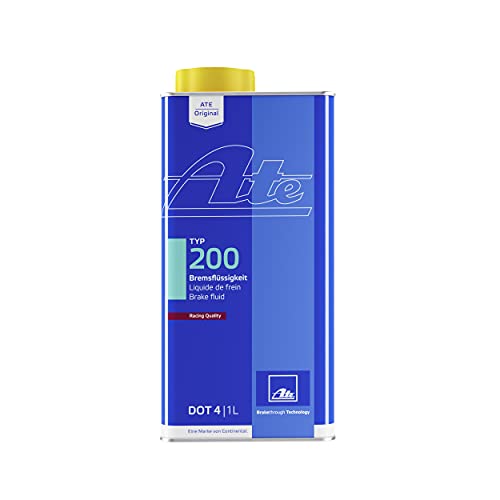
BMW specifies DOT 4 glycol-based fluid across all models because the ABS modulators, master cylinder seals, and caliper piston seals are engineered for glycol-based fluid. The BMW Blue brake fluid sold at dealers is a specific DOT 4 formulation that meets BMW's exact specifications. Aftermarket BMW-compatible DOT 4 fluids from Pentosin, Ate, and Brembo are also suitable alternatives. The specific brand matters less than the specification - any quality DOT 4 that meets the BMW specification (SAE J1703, FMVSS 116 DOT 4) is acceptable for a street vehicle.
For track vehicles, I specifically recommend Motul RBF 600. The "RBF" stands for Racing Brake Fluid. Its dry boiling point of 312 degrees C is 40+ degrees higher than the minimum DOT 4 specification. Its wet boiling point (after moisture absorption) of 216 degrees C is also significantly better than most standard DOT 4 fluids. This extra thermal margin is not marketing - it is the difference between having a firm pedal at the end of a track session and having vapor lock under hard braking in the final corner.
Testing Brake Fluid Condition Before Deciding to Flush
If you are not sure whether your BMW's brake fluid needs replacement, test it before assuming it is fine. Digital brake fluid testers are available for $15-25 and measure the water content of brake fluid in seconds - insert the probe into the reservoir and it reads moisture percentage. A reading above 2.5-3% indicates the fluid should be replaced. BMW's own dealer service recommendation triggers replacement at 3% moisture content.
A visual check also provides information. Fresh DOT 4 brake fluid is light amber, almost clear with a slight golden tint. Fluid that has been in service for 3-4 years is typically medium to dark amber. Fluid that is 5 or more years old is often dark brown, sometimes nearly black. Dark fluid does not mean the car is dangerous to drive immediately, but the progressive darkening is a reliable indicator of degradation and moisture absorption. I have never seen a car where the fluid looked pristine and the moisture content tested high - the color and the moisture content correlate closely.
One more check: open the reservoir cap and look at the inside of the reservoir. Healthy brake fluid leaves minimal residue on the reservoir walls. Old, degraded fluid can leave a dark, varnished residue. If you see a heavy dark coating on the reservoir interior, the system should be flushed thoroughly enough to remove that residue - which typically means more fluid volume than a simple bleed requires.
Preparing for the BMW Brake Fluid Flush
Gather your materials before starting. You will need: 500-750ml of your chosen DOT 4 fluid (1 liter total to be safe - RBF 600 comes in 500ml bottles, so buy two for a full flush), a pressure bleeder or vacuum pump with appropriate BMW reservoir cap adapter (45mm for most E90/F30/G20 chassis, verify yours), 11mm open wrench for the bleed nipples, clean catch container, clear vinyl bleed hose (if using the pedal-pump method), nitrile gloves, and brake cleaner for cleanup.
Place the car on a level surface. If using a pressure bleeder, locate the brake fluid reservoir cap - it is in the engine bay on the driver side firewall area, translucent white or yellow. Remove the old cap and inspect the rubber seal on the cap. If the seal is cracked or deformed, replace the cap before pressure bleeding - a leaking cap during pressure bleed will spray brake fluid around the engine bay. Brake fluid is corrosive to paint and should be cleaned immediately with water if it contacts any painted surface.
If the reservoir is near the MAX mark, draw out some of the old fluid with a turkey baster or fluid extractor before beginning. This removes the highest-concentration old fluid from the reservoir right at the start and ensures you are predominantly pushing fresh fluid through the system rather than the old fluid that was sitting in the reservoir. Fill to MAX with fresh fluid after extracting. This small step reduces the total fluid volume needed for a thorough flush.
Full Flush Procedure - Pressure Bleeder Method
This is the method I use in my shop for every BMW fluid flush. Attach the pressure bleeder cap adapter to the reservoir. Fill the bleeder reservoir with fresh DOT 4 fluid - I use about 600ml in the bleeder reservoir for a typical 4-corner flush, allowing for some excess. Pressurize to 0.3-0.4 bar. Do not exceed 0.5 bar on BMW systems - it is not necessary and risks damaging the reservoir cap seal or master cylinder seals.
Starting at the rear right corner: locate the bleed nipple (11mm), clean around it with a rag, attach a catch hose to the nipple if desired to prevent fluid spray, and crack the nipple open 1/4 turn counterclockwise with your 11mm wrench. Fluid will flow immediately from the pressure differential. Watch the hose - initially the fluid coming out will be darker and may show small bubbles from micro-air pockets. Allow it to flow until the color of the outflowing fluid matches the fresh fluid you put in the bleeder. On a car with 3-4-year-old fluid, this typically takes 100-150ml per corner. Close the nipple, move to rear left.
Repeat for rear left, front right, front left. Monitor the pressure bleeder reservoir level and the brake system reservoir level during the process. Top up the pressure bleeder reservoir with fresh fluid as needed. After all four corners, release the bleeder pressure, remove the adapter cap, and fill the reservoir to the MAX mark. Reinstall the original reservoir cap.
Flush Procedure - Vacuum Pump Method
If you do not have a pressure bleeder, a vacuum pump is equally effective for a full flush and requires only one person. Set up a catch container with a hose that reaches each corner's bleed nipple. Begin at rear right: attach the vacuum pump hose to the bleed nipple, open the nipple 1/4 turn, and pull vacuum with the pump. Fluid draws through the system and into the catch container. Continue pumping until the fluid running through the hose is fresh and clear of the old darker fluid. Monitor the reservoir frequently - vacuum bleeding depletes the reservoir faster than you expect because there is no pressurized source keeping it topped up. Refill the reservoir from your fresh fluid supply after every 50-75ml drawn. Never let the reservoir run empty - pulling the pump vacuum with an empty reservoir draws air directly from the master cylinder into the system, meaning you just introduced fresh air into what should be a sealed hydraulic circuit.
One limitation of the vacuum pump method I mentioned in the brake bleeding guide applies here too: worn or corroded bleed nipples can allow air to be drawn past the nipple threads into the hose, creating false bubbles that look like system air. If you are pulling vacuum and seeing persistent bubbles even after 150ml+ of fluid has passed through a corner, wrap the nipple threads with a layer of PTFE tape before reconnecting the vacuum hose. This seals the threads and reveals whether the bubbles are from the system or from nipple thread leakage.
Motul RBF 600 - Track Use Application
For any BMW that sees track use - M3, M4, M2, tuned 335i, dedicated track E90, anything - Motul RBF 600 is the fluid I put in during the pre-season flush. The procedure is identical to a standard fluid flush - same sequence, same tools, same technique. The difference is only in the fluid being used. RBF 600 is a DOT 4 specification fluid, fully compatible with all BMW seals and ABS components. It is a direct drop-in replacement for standard DOT 4 in any BMW.
The practical benefit of RBF 600 shows up in real-world track driving. I have had customers report that their M3 or M4 had a noticeably softer pedal toward the end of a track session on standard DOT 4 fluid, and after switching to RBF 600 the pedal felt consistent throughout the entire session. The thermal margin that 593-degree dry boiling point provides is the explanation - the fluid simply never reaches the temperature at which it begins to form vapor, where standard DOT 4 was getting close in the caliper during sustained hard braking.
RBF 600 costs more per bottle than standard DOT 4 - approximately $15-18 per 500ml bottle versus $8-12 for a quality standard DOT 4. For a full flush requiring 500-750ml of fluid, the total cost difference is $15-20. That is a trivially small insurance premium against vapor lock on track. I replace RBF 600 annually on track cars - the fluid still needs to be changed on schedule even though its moisture tolerance is better than standard DOT 4. Better fluid does not mean maintenance-free.
Brake Fluid and BMW CBS Service Reset
On modern BMWs with Condition Based Service (CBS) - all E90 and later models - the brake fluid service counter tracks the calendar interval and triggers a service reminder independently of mileage. After a fluid flush, you need to reset the CBS brake fluid counter or the car will continue showing the service reminder regardless of the fresh fluid. On most BMW models from the E90 onward, this reset is done through the iDrive menu under Vehicle Status, Service, Condition Based Service. Find the Brake Fluid counter and reset it to the full service interval (typically 24 months).
If your BMW does not have iDrive or you prefer to use a scan tool, the CBS reset for brake fluid is available in BimmerLink under Service Functions, CBS Reset. Both methods clear the same counter in the same instrument cluster. On older cars without CBS (E46 and earlier), there is no electronic counter to reset - your brake fluid interval is tracked manually, and I recommend a paper service record noting the date and mileage of every fluid change.
Brake Fluid and Soft Pedal After a Flush
A soft pedal after a fluid flush typically means air was introduced during the procedure - usually from the reservoir running low at some point, or from a fitting being disturbed. The fix is additional bleeding to remove the air. Follow the standard four-corner bleed sequence, paying careful attention to the reservoir level, and ensure each corner runs clear and bubble-free. If a soft pedal persists after a thorough re-bleed, the ABS module bleed procedure (covered in our brake bleeding guide) is required.
A pedal that was firm before the flush but is soft afterward exclusively means air entered the system during the service - either from the reservoir running dry, a loose fitting, or a disturbed line. It does not mean the brakes are permanently damaged. Systematic re-bleeding resolves it. If the pedal was soft before the flush and remains soft after, the underlying issue was air or a hydraulic leak that was not visible or addressed during the flush - a more thorough diagnosis is needed.
Pairing Fluid Flush with Other Brake Services
The most efficient time to do a brake fluid flush is alongside another brake service - pad replacement, rotor replacement, or caliper work. Since the car is already elevated and the wheels are off, accessing the bleed nipples at each corner takes no additional setup time. I perform a fluid flush on every BMW that comes through my shop for a brake job, because the car is in the ideal position and the incremental time is 20-30 minutes. The cost to the customer is mainly fluid and minimal labor, and the benefit is a fully refreshed hydraulic system with known-good fluid.
Stainless brake lines are another natural pairing with a fluid flush. Installing stainless lines requires opening the hydraulic system at each line end, which introduces air. A full bleed following the line installation removes that air and simultaneously refreshes the fluid. Combining the stainless line upgrade with a fluid flush is a single combined procedure that achieves both goals. See our brake lines guide for the stainless line installation procedure and the BMW brake upgrade guide for the full picture on brake system improvements.
Fluid Disposal and Environmental Considerations
Brake fluid is a hazardous material and should not be poured down a drain or into the trash. The catch fluid from a brake flush - 500-750ml of old DOT 4 - should be stored in a sealed container and taken to a local automotive fluid recycling facility or auto parts store that accepts used fluids. Most O'Reilly, AutoZone, and Advance Auto Parts locations accept brake fluid for recycling at no charge. BMW dealers also typically have used fluid collection for customers who bought the fluid there.
Do not mix brake fluid with engine oil, transmission fluid, or coolant in your used fluid container - contaminated brake fluid cannot be recycled and must be disposed of as hazardous waste instead. Keep used brake fluid in its own dedicated container, clearly labeled, and dispose of it promptly. It has a slightly sweet chemical smell that can attract pets and children - keep it well away from them and sealed at all times.
For the complete BMW brake maintenance picture, see our brake overview, the pad guide, the rotor guide, and the comprehensive brake upgrade guide. If you are planning a full brake refresh on your BMW, combining the fluid flush with pad and rotor replacement gives you a completely renewed hydraulic system in a single afternoon of work.