
Coilovers for BMW 3 F30
Affiliate disclosure. BimmerTalk is a proud partner of the Amazon Associates Program and Turner Motorsport. We may earn a small commission on qualifying purchases through our links, at no extra cost to you. Read the full disclosure.

KW V2 Coilover Kit for BMW F30 3 Series with EDC
KW

Feijing Adjustable Coilover Kit — F20 F22 F30 F32 F80 F82
Feijing
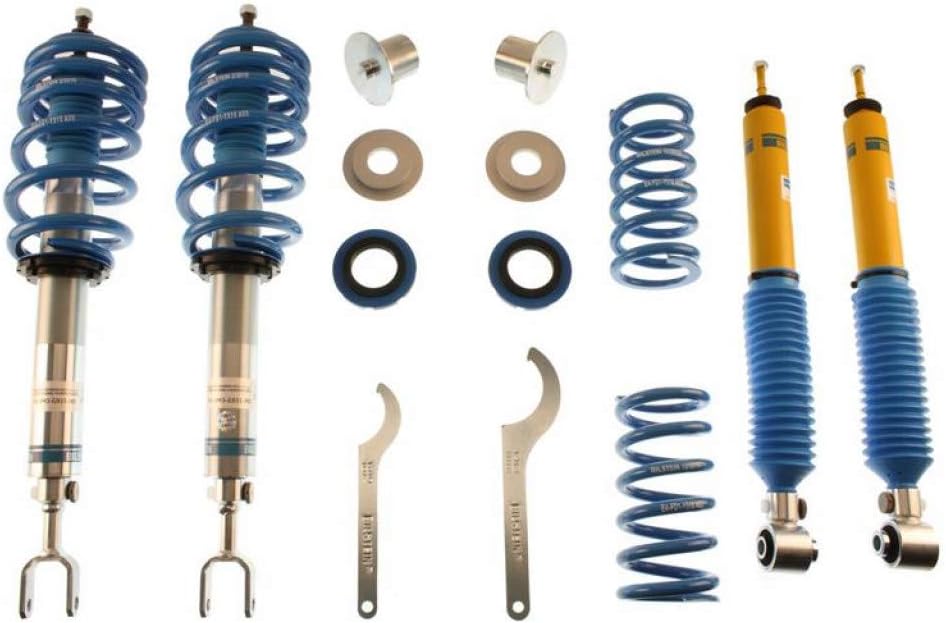
Bilstein B16 PSS10 Coilover System — F22/F30/F32 xDrive
Bilstein

ST Suspensions XA Coilovers - Height and Rebound Adjustable for BMW F22 F23 F30 F32
ST Suspensions

Bilstein B14 PSS Coilover Kit for BMW F30 F32 xDrive
Bilstein

Bilstein B14 PSS Coilover Kit for BMW F30 328i 335i
Bilstein

BC Racing BR Series Coilovers — F30 3 Series AWD (5-Bolt)
BC Racing

BC Racing BR Series Coilovers — F30 3 Series (RWD)
BC Racing

Godspeed MAXX Coilovers Lowering Kit for BMW 3-Series xDrive F30 F31 F34
Godspeed

Bilstein B6 Performance Struts and Shocks Kit for BMW F22 F23 F30
Bilstein

KW Evil Energy Coilovers for BMW 3-Series F30 RWD 2012-2018
Visit the EVIL ENERGY

Rev9 Hyper-Street II Coilover Kit for BMW 3-Series F30 RWD 2012-2018
Rev9
Bilstein B6 DampTronic Front Right Strut for BMW F30 328i
Bilstein

Bilstein B4 Front Struts and Rear Shocks Kit for BMW F30 F32
Bilstein

Bilstein B4 Front Struts and Rear Shocks Kit for BMW F30 F32
Bilstein

AdlerSpeed 18-Level Adjustable Coilovers for BMW 3 & 4 Series F30 RWD
AdlerSpeed

Bilstein B4 OE Replacement Front Struts for BMW F30 328i RWD
Bilstein

Bilstein B4 OE Replacement Rear Shock Absorber for BMW F30 328i 335i
Bilstein

Bilstein B6 35-264545 - Front Monotube Strut for F22 F30 BMW
Bilstein
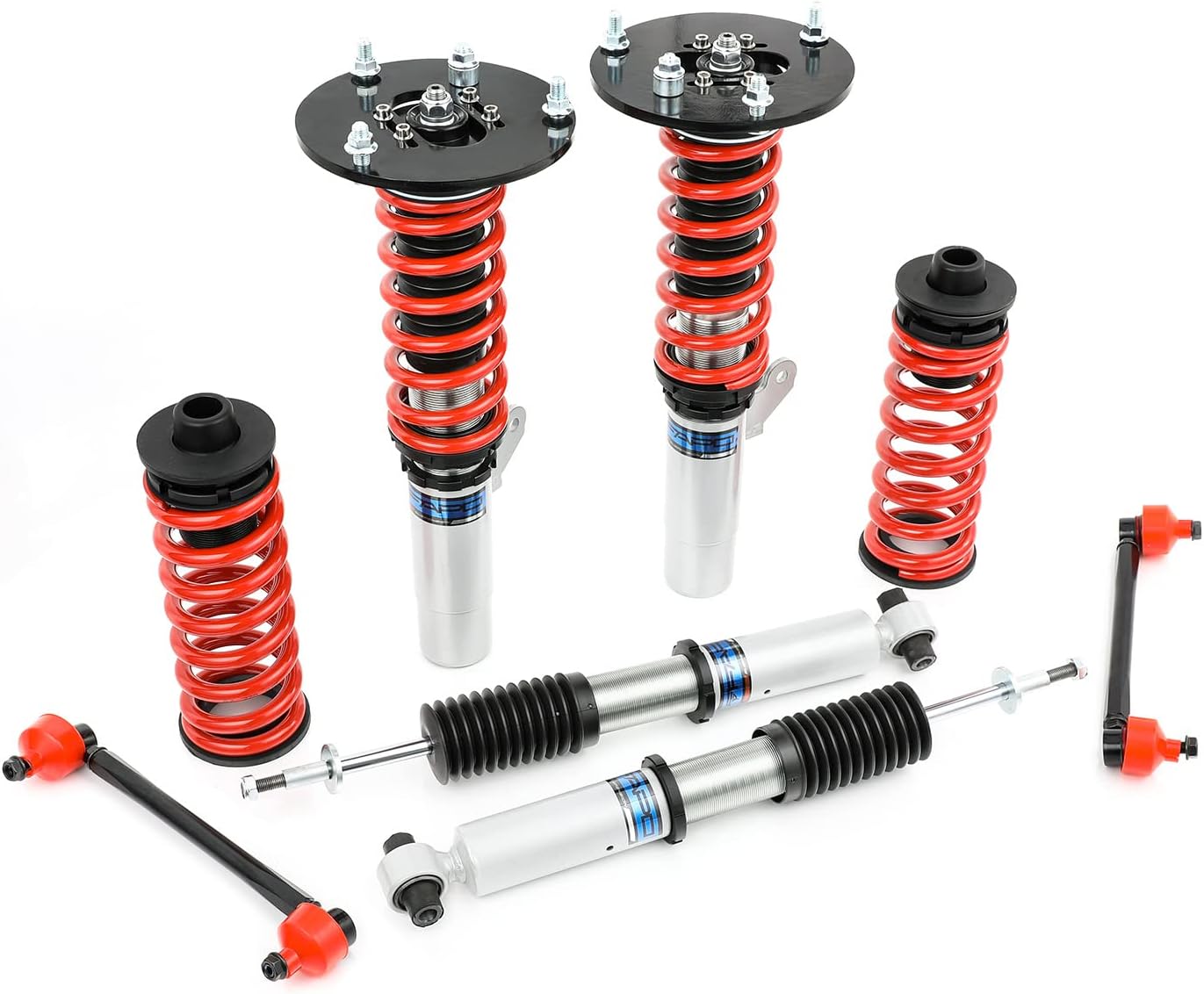
FAPO RACING PS006510-41 - Coilovers for BMW F2X F3X
FAPO RACING

Bilstein B4 Touring Front Strut Assembly for BMW F22 F23 F30 F32 F33
Bilstein

maXpeedingrods 24-Way Adjustable Rear Coilovers — F20/F22/F30/F32
maXpeedingrods

Bilstein B8 Performance Plus Rear Monotube Shock for BMW F30 328i 320i
Bilstein

Bilstein B16 DampTronic Suspension Kit — F30 335i xDrive
Bilstein

KW 352208AX Clubsport 2-Way Coilover Kit for BMW F30 F32 without EDC
KW

KW V2 Coilover Kit for BMW F30 3 Series and F32 4 Series
KW

KW V1 Coil-Over Suspension Kit for BMW 3 Series F30
KW Suspensions
More suspension parts for the BMW F30
If you're shopping for BMW F30 coilovers, you already know the stock suspension on the F30 3 Series is a compromise - it's comfortable enough for Munich's test drivers to sign off on, but it leaves real handling performance on the table. The F30 launched in 2012 and ran through 2019 across sedan, wagon, and Gran Turismo body styles, covering engines from the N20 320i all the way up to the S55-powered M3 (though the M3 is its own fitment world). The platform most owners are dealing with is the B46/N20 four-cylinder 320i/328i or the N55/B58 six-cylinder 330i/335i/340i, in either RWD or xDrive, and sometimes with BMW's optional Adaptive M Sport suspension thrown into the mix. Each of those variables changes which coilover kit actually fits your car and performs the way you want. I'm going to walk through all of it.
Why F30 Owners Upgrade the Suspension
The F30 rides on a double-wishbone front and a five-link rear - proper geometry that gives coilover makers something real to work with. BMW's own engineers knew what they were doing when they laid out that architecture. The problem is the damper tune BMW chose for the US market. It's soft. Not luxury-barge soft, but soft enough that body roll during cornering is noticeable, the nose dives under braking more than it should, and repeated corner entries feel vague. Put 19-inch wheels on an F30 with stock dampers and the combination gets worse - the wheels are heavier, the rubber sidewall is shorter, and the stock dampers can't keep up.
There's also the visual argument. The F30 sits high from the factory, particularly in the rear. The wheel-to-arch gap is generous in a way that makes even a clean car look a little under-dressed. Most owners I've talked to want a 20-30mm drop - enough to tighten the gap without scraping on driveways or creating suspension geometry issues that kill tire wear.
Then there's the crowd that tracks their car or does autocross. For them, the stock dampers are simply not in the conversation. They need adjustable compression and rebound, they need a platform that lets them run stiffer springs without blowing out the damper internals after three track days, and they need fitment that accounts for the fact that a 335i is significantly heavier than a 320i.
Lowering springs are the cheaper alternative, and I've run them on cars before. But they have a real limitation - you're stuck with the stock dampers, which were tuned for a specific spring rate. Drop the spring rate down with aftermarket springs and you're either running a spring the damper is over-damping or under-damping. You can read more about that tradeoff on the BimmerTalk lowering springs page. Coilovers give you matched hardware. That's the actual reason to spend the money.
F30 Fitment Variables - Read This Before You Order Anything
This is where I see owners make expensive mistakes. The F30 is not one car. It's a family of cars that share a platform, and the suspension fitment differences between variants are significant enough that ordering the wrong kit means returning it or running something that doesn't integrate correctly with your car's electronics or geometry. Here's what you need to know before you touch the "add to cart" button.
RWD vs xDrive
RWD and xDrive F30s have different front strut housings and different rear subframe geometry because xDrive carries the front differential and driveshafts. This changes the physical dimensions of the front suspension components and, in some applications, the rear mounting points. Most quality coilover brands - KW, Bilstein, BC Racing - catalog these as separate SKUs. Do not assume a RWD kit fits an xDrive car. Some cheaper brands list one part number for both and rely on brackets that may or may not give you clean geometry. Verify at checkout.
Adaptive M Sport Suspension
BMW's Adaptive M Sport suspension (sometimes called EDC, Electronic Damper Control) uses a solenoid inside each damper that changes damping force on the fly in response to road surface inputs and driving mode selection. If your F30 has this option, the factory wiring harness connects to those solenoids. You have two choices: delete the adaptive system entirely and run a passive coilover kit (some owners do this and either disable or bypass the EDC warning), or buy a coilover kit specifically engineered to interface with the adaptive system. Bilstein's B16 Damptronic is the main name-brand option for the latter. Running a passive kit on an adaptive car without addressing the electronics is going to give you warning lights and, on some build dates, reduced functionality in other driver assist systems. Plan accordingly.
Engine and Weight
A 335i xDrive with the N55 is a meaningfully heavier car than a 320i RWD with the N20. Spring rates are calibrated for the vehicle's corner weight. BC Racing and KW both account for this in their F30-specific fitments, but it's worth confirming when you call or chat with a supplier. Running springs tuned for a lighter car on a heavy xDrive variant means premature bottoming on bumps and inconsistent corner balance.
Sedan vs Gran Turismo vs Touring
The F30 chassis code covers the sedan specifically. The F31 is the Touring (wagon), and the F34 is the Gran Turismo. Rear spring perch positions and damper mounting angles differ across these body styles because of the different rear bodywork and load floor heights. If you have an F31 Touring, confirm the kit is listed for F31, not just F30. For the purposes of this page, I'm focusing on the F30 sedan, which is by far the most common application in the aftermarket.
Brake Clearance
This matters especially if you're planning to run big brake kit upgrades alongside coilovers. Some coilover front struts are slightly thicker in the hub area than stock, which can create clearance issues with large-diameter rotors or certain caliper bracket designs. Confirm compatibility with your brake setup before buying either component. You can cross-reference current brake pad and big brake kit options on the BimmerTalk brake pads page.
Wheel Fitment and Offset
Lowering the car changes the suspension geometry and therefore the effective wheel offset and clearance. F30s running aggressive fitments - negative offset wheels pushed outward in the arch - can develop rubbing issues at lowered ride heights, particularly in the rear. If you're shopping aftermarket wheels alongside coilovers, read the BimmerTalk aftermarket wheels guide and factor in your target drop before finalizing wheel specs.
The Top Coilover Picks for the F30 in 2026
I've looked at what's actually selling, what owners are reporting on the forums, and what the BimmerTalk BMW coilovers buyer's guide has synthesized from current market data. Here are the kits I'd actually recommend, ranked and explained honestly.
KW Variant 1 - Premium Street, Entry into the KW Range
The KW Variant 1 (V1) runs at around $1,844 for F30 RWD fitment and is the entry point into KW's coilover line. KW is a German manufacturer with genuine engineering depth, and the V1 carries their hardware quality at a price point below the V2 and V3. The trade-off is adjustability - the V1 has rebound adjustment only. You can dial in ride height and rebound stiffness, but compression is fixed at the factory setting.
For a street car that's primarily a daily driver with occasional canyon or back-road use, that's actually enough. Most owners don't touch their compression settings after initial setup anyway. Where the V1 falls short is when you want to tune for a specific track event or dial out a particular handling behavior - at that point you're limited. Forum reports on V1 installs on F30s are consistently positive about the overall quality and the improvement over stock in body control, but several owners do note the ride is stiffer than stock even at the softest rebound setting. If you're coming from a luxury-oriented BMW that rides extremely smoothly, calibrate your expectations.
The other important note - KW sells separate F30 fitments for RWD and xDrive, so verify which version you need before ordering. The part numbers are different and the kits are not interchangeable.
KW Variant 3 - The Full Adjustment Street/Track Option
The KW Variant 3 (V3) is where KW's street-oriented coilover engineering peaks. You get separate rebound and compression adjustment, which means you can genuinely tune the car's behavior independently at each end of the stroke. This matters. A car set up for track use needs different compression than a car used on potholed city streets, and the V3 lets you address both scenarios by turning a few knobs.
The V3 is priced above the V1 - typically treated as the premium street/track option in the KW lineup - and it's the kit I'd recommend if you're doing any kind of regular performance driving. Forum complaints about the V3 on F30s generally center on one thing - setup complexity. If you install it and immediately run the damping settings at maximum, the car feels harsh. That's not a defect, that's what maximum damping feels like. KW includes guidance on baseline settings, and most experienced installers will start you around 6-8 clicks from soft on both rebound and compression and tune from there. Give yourself a few hundred miles to find your baseline before making permanent judgments about the kit.
Again - verify F30 axle and drivetrain fitment when ordering. Same rules apply as the V1.
Bilstein B14 - Best Value for Non-Adaptive Daily Drivers
At around $999 for F30 fitment, the Bilstein B14 is the value premium pick in this class. Bilstein is one of the most respected damper manufacturers in the world, and the B14 kit gives you their monotube damper technology - which provides more consistent performance over a wider temperature range than a standard twin-tube design - at a price point under $1,000.
The catch is that the B14 uses fixed damping. You can adjust ride height within the kit's specified range, but you can't change the damper tune. Bilstein has set the compression and rebound to what they consider the optimal street performance tune for the F30, and you're living with it. For most owners, that's fine. The Bilstein tune is not aggressive - it's noticeably firmer than stock but not punishing. On smooth highways and moderate city streets, it's daily-able without issue. On rough pavement or expansion joints, you'll feel it.
The bigger limitation is drop range. The B14 covers a meaningful lowering range for most owners, but it won't get you to an extremely aggressive fitment. If you're chasing a tucked wheel look or want to run a very low stance, the B14 may not drop you as far as you want. For the typical 20-30mm street drop, it's well within range and does it cleanly.
Important note - the B14 is intended for non-adaptive F30s. If your car has EDC, look at the B16 Damptronic instead.
Bilstein B16 PSS10 - Best for xDrive F30s
The Bilstein B16 PSS10 is priced at around $2,291 for F22/F30/F32 xDrive applications. This is Bilstein's 10-way adjustable damping platform, meaning you can dial in compression and rebound in 10 increments per corner. It's not the infinite fine-tuning of a fully adjustable platform, but 10 positions gives you a meaningful spread from comfortable daily driving to aggressive track days.
The reason I'm calling this the best choice for xDrive F30s specifically is that Bilstein explicitly catalogs and develops xDrive fitments for the PSS10. The spring rates, damper valving, and geometry are calibrated for the heavier front end that xDrive adds. This isn't just a bracket swap - it's a genuinely different product tuned for the application.
Forum complaints about the B16 PSS10 typically cover three areas. First, cost - at over $2,200 it's a significant investment. Second, part number confusion - Bilstein lists several F30-adjacent kits and the xDrive-specific number has tripped up buyers who thought they were ordering a universal kit. Third, the ride at aggressive damping settings is firm enough that some owners back it off significantly for daily use. On street setting 3 or 4 out of 10, the car is excellent. At 8 or above, it's a track car that lives on the road.
Bilstein B16 Damptronic - If Your F30 Has Adaptive Suspension
This is the answer to the question "what do I run if my F30 has EDC?" At around $3,024 for F30 335i xDrive, the Bilstein B16 Damptronic is engineered to integrate with BMW's electronic damper control system. The dampers have the solenoid actuator system built in, so your EDC control module can still communicate with the dampers and adjust them in real time across your driving modes.
The performance upgrade over the factory EDC dampers is real - Bilstein has revalved and resprung the kit to deliver better body control and a lower ride height while keeping the adaptive electronics functional. You're not deleting a feature, you're upgrading the hardware behind it.
The trade-offs are clear. First, it's the most expensive option on this page. Second, the install is more complex than a passive kit because you're dealing with electrical connectors and ensuring the wiring harness routes correctly to each corner. Third, and this is critical - you need to match the kit precisely to your car's specific suspension option. There are F30 335i variants with different EDC calibrations depending on model year and market, and using the wrong Damptronic kit can cause error codes or limited function. Get the VIN decode right before you order.
Öhlins Road and Track - The Premium Street/Track Hybrid
Öhlins is a Swedish manufacturer with motorsport roots that go deep - Formula 1, MotoGP, World Rally Championship. Their Road and Track kit for the F30 is a dual-tube design using Öhlins' DFV (Dual Flow Valve) technology, which they claim provides better response to small road imperfections while maintaining strong control under large suspension inputs. The result, from what F30 owners report, is a kit that feels more planted than most competitors on smooth roads while being more forgiving of pavement imperfections than you'd expect from a kit at this performance level.
The Öhlins R&T is priced at a premium - generally above Bilstein and BC Racing, in or near KW V3 territory. You're paying for the Swedish engineering and the motorsport-derived DFV internals. For a dedicated enthusiast who wants the best street/track compromise and has the budget for it, the Öhlins is a serious consideration.
Verify F30 application and whether the car is RWD or xDrive before purchasing - same fitment rules apply. Forum feedback on the Öhlins consistently praises control quality but notes two consistent complaints: first, on rough or broken pavement, the impact harshness is more noticeable than on the KW V3 (trade-off for the higher spring rates), and second, the price is genuinely hard to justify unless you're a serious driver using the car's performance regularly.
BC Racing BR Series - Best Value All-Rounder
At around $1,195 for F30 RWD or xDrive, the BC Racing BR Series is the kit that probably generates the most discussion in F30 communities, and for good reason - it's an adjustable coilover from a brand with wide chassis coverage, at a price significantly below KW and Bilstein premium kits, with separate RWD and xDrive fitments.
BC Racing is a Taiwanese manufacturer. Their quality control is not as tight as KW or Bilstein, and the forum record reflects that - the most common complaints are inconsistent damping feel out of the box (some owners get a kit that feels great, some get one that feels notchy or stiff in one direction), noise from top mount area if the install isn't done cleanly, and the need for a damping re-check after a break-in period. These are real issues, not internet noise.
But here's the counterpoint - at $1,195 for a fully adjustable kit that covers both RWD and xDrive F30s, a lot of owners are willing to work with those limitations. The adjustability range is wider than Bilstein's fixed-damper options. The spring rates BC uses on the F30 kit are reasonable for street use. And if you're a competent wrench who can do a clean install and is willing to spend an afternoon dialing in the settings after break-in, the BC Racing BR is a genuinely functional coilover kit that outperforms its price point on most metrics.
I'd recommend the BC Racing BR for owners who want full adjustability but can't justify KW or Bilstein prices, and who are comfortable doing or supervising their own install rather than handing the car to a shop and walking away. The kit rewards careful installation. Sloppy installation punishes you with the noise and inconsistency issues owners report.
ST X and ST XA - Budget KW Group Hardware
ST Suspensions is part of the KW Group, which means the manufacturing pedigree behind the hardware is closer to KW than to generic budget options. The ST X is the fixed-damping entry, and the ST XA adds adjustability. Both are priced below KW's own Variant series - genuinely a budget-friendlier KW Group option for F30 owners who want quality materials without the full KW price tag.
The trade-off compared to KW's own products is refinement and feature depth. The ST X and XA don't have the same level of tuning research behind the F30-specific spring rates and damper valving that KW puts into the Variant series. Owners generally describe the ST options as "good value but not as refined" - which is an accurate summary. If you're on a strict budget and want KW Group materials, this is the honest route. If you can stretch to a B14 or KW V1, I'd stretch.
Confirm exact F30 drivetrain fitment before ordering - like every other kit on this list, the RWD and xDrive applications are different.
The Brand Comparison Table
| Brand / Kit | Typical US Price | Adjustability | Best For | Key Limitation |
|---|---|---|---|---|
| KW Variant 1 | ~$1,844 | Rebound only | Street daily driver, premium build quality | No compression adjust; stiffer than stock |
| KW Variant 3 | Above V1; premium tier | Rebound + compression separately | Street/track drivers who tune actively | Setup complexity; harsh if set wrong |
| Bilstein B14 | ~$999 | Fixed damping, height-adjustable | Non-adaptive F30 daily drivers | No damper tuning; limited drop range |
| Bilstein B16 PSS10 | ~$2,291 (xDrive) | 10-position rebound + compression | xDrive F30s, street/track use | Cost; part number confusion; firm at high settings |
| Bilstein B16 Damptronic | ~$3,024 (335i xDrive) | Electronic adaptive + manual | Adaptive M Sport F30s | Most expensive; complex install; must match exact variant |
| Öhlins Road and Track | Premium; near KW V3 territory | Full rebound + compression | Enthusiast street/track hybrid use | Impact harshness; high price |
| BC Racing BR Series | ~$1,195 (RWD or xDrive) | Full rebound + compression | Budget-to-mid owners wanting adjustability | QC inconsistency; noise risk; needs good install |
| ST X / ST XA | Below KW; budget tier | Fixed (X) or adjustable (XA) | Budget buyers wanting KW Group hardware | Less refined than KW; confirm drivetrain fitment |
My Opinionated Picks - Editor's Choices by Use Case
Here's where I stop hedging and just tell you what I'd buy in each situation. These are opinions backed by the forum record and the research, but they are opinions. Your driving style, road conditions, and budget are yours.
Editor's Pick - Best Overall
KW Variant 3. If I were building an F30 335i as my one car that needs to be great on back roads, decent on track days, and livable every day, the V3 is what I'd run. The separate compression and rebound adjustment means I can loosen the compression for city streets and tighten it for a track weekend. KW's F30-specific spring rate tuning has years of real-world refinement behind it. The hardware quality is European, the warranty is legitimate, and the resale value if I ever pulled them off is better than any competitor at this level.
It's not cheap. If budget is the primary concern, it's not the right answer. But as a single recommendation for an F30 owner who is serious about the car and wants to make the right call once instead of twice, the V3 is it. Check the BimmerTalk coilovers buyer's guide for additional context on how the KW lineup fits into the broader BMW market.
Best Value Pick
Bilstein B14 at ~$999 for non-adaptive F30 daily drivers. Bilstein monotube quality at under a thousand dollars is genuinely hard to argue with. If your F30 doesn't have adaptive suspension and you want a clean, durable, brand-name upgrade that will outlast cheap alternatives and deliver consistent performance without requiring you to touch settings every few months, the B14 does exactly that. It's not glamorous. It won't impress track day regulars. But it will make your F30 handle meaningfully better than stock, sit at a cleaner ride height, and do it all without costing you a second thought about setup.
Best Budget Adjustable Pick
BC Racing BR Series at ~$1,195. If you need full adjustability and you're not willing to spend KW or Bilstein premium prices to get it, BC Racing is the honest answer. The QC concerns are real and documented, but the majority of owners who do a careful install and take the time to set up the damping correctly end up with a functional, adjustable kit that performs well above its price point. Go in with realistic expectations and a willingness to spend an afternoon on setup, and the BC Racing BR delivers.
Best Track-Focused Pick
Öhlins Road and Track. For F30 owners doing regular track days and want the best control quality money can buy on this platform, the Öhlins R&T's DFV technology delivers the smoothest large-input handling in this list. The impact harshness on street roads is the trade-off you accept. If you're mostly tracking the car and driving to/from the event, that's a trade-off worth making.
Best Pick for Adaptive Suspension F30s
Bilstein B16 Damptronic at ~$3,024. There's no close second here if you want to maintain your adaptive suspension functionality. The Damptronic is the kit engineered to interface with EDC, it's from a brand with the credibility to back up that claim, and it delivers a meaningful performance upgrade over the factory adaptive dampers. The price is what it is. If you want to preserve EDC and upgrade your suspension hardware, this is your route.
Supporting Modifications to Consider
Coilovers change your suspension geometry. That creates downstream effects that you need to address if you want the car to actually perform correctly. Here's what matters.
Alignment - This Is Non-Negotiable
Every coilover install requires a four-wheel alignment. This is not optional and it's not something you can skip to save money. Lowering the car changes the camber, toe, and caster angles at every corner. Running the car out of alignment damages tires quickly, creates handling imbalances, and in some cases stresses suspension components in ways they're not designed to handle. Budget $150-250 for a quality alignment from a shop with a Hunter alignment rack and F30 specifications on file. Do it immediately after install, before you drive the car hard.
If you want to run any negative camber - which is useful for track use and mild for street driving - you'll want adjustable camber plates at the front. These replace the stock top mounts and allow you to dial in front camber independently of ride height. Some KW kits include adjustable top mounts; BC Racing typically offers them as an add-on. Factor the cost into your budget.
Camber Arms and Control Arms
If you're dropping the F30 more than about 30mm at the rear, the rear camber becomes increasingly negative and the geometry can push outside acceptable limits even after alignment. Adjustable rear camber arms let you correct this and restore proper geometry. This is more relevant for owners chasing a very low drop than for the typical 20-25mm street lowering, but it's worth understanding the point at which the stock geometry limits become an issue.
Sway Bars
Upgraded sway bars complement coilovers by reducing body roll without adding spring stiffness. The F30's stock sway bars are adequate but not aggressive. If you're upgrading coilovers for performance and you're not upgrading sway bars, you're leaving some of the handling benefit on the table. Front and rear sway bar upgrades from brands like Eibach or Turner Motorsport are available for the F30 and work well alongside most coilover kits. It's not a requirement on day one, but it's a natural pairing for the second phase of a suspension build. You can browse more suspension options on the BimmerTalk suspension category page.
Wheels and Tires
A coilover upgrade makes your suspension meaningfully more capable. If you're running old tires or narrow stock rubber, the tire becomes the limiting factor in cornering performance faster than it would have on stock dampers. This isn't a strict requirement but it's the honest picture - coilovers and good tires are a system. If your tire budget is zero, the coilover upgrade will still improve the car, just not as dramatically as it would on fresh performance rubber. The BimmerTalk aftermarket wheels guide covers F30-specific fitment in more detail.
Coding and Diagnostics
If you have an F30 with EDC and you're running a passive coilover kit that doesn't interface with the adaptive system, you'll have warning lights. You have two options - live with them (not recommended for a daily driver), or code them out using BMW diagnostic software. BimmerLink and BimmerCode are the most common tools F30 owners use for this. Coding out EDC warnings on a car with deleted adaptive suspension is a relatively straightforward procedure if you have the right tool. See the BimmerTalk coding and diagnostic tools page for what's currently available and what's compatible with F30 architecture.
Installation Overview - What You're Getting Into
A coilover install on the F30 is doable at home if you have the right tools, a proper lift or quality jack stands, and experience with suspension work. It's not a beginner job. The suspension components are heavy, the torque specs are high, and working with spring-loaded strut assemblies requires a spring compressor and respect for what happens if you get it wrong. That said, plenty of F30 owners do this install in a day in their garage. Here's the realistic overview.
Tools Required
- Spring compressor (rent one from a parts store or buy a quality set - do not cheap out on this)
- Torque wrench - a 1/2-inch drive that goes to at least 150 ft-lbs for subframe and strut mount bolts
- Impact wrench or breaker bar for strut tower nuts
- BMW E-series triple square (XZN) driver set - some F30 hardware uses these
- Hex bit sockets (many F30 suspension fasteners are hex head internally)
- Floor jack and quality jack stands, or a lift
- Basic socket set (12mm through 22mm covers most of what you'll hit)
- Penetrating oil - every bolt on the rear subframe area of an F30 from a salt-belt state is going to need it
Time Estimate
For an experienced mechanic doing the first install, budget a full day. For someone doing it for the first time with occasional reference checking, budget a weekend. The front struts are generally straightforward - similar to most modern BMW front suspension. The rear is where time gets spent, particularly if the car has ever been driven in road salt and the subframe bolts are corroded. Rear eccentric bolts that set the toe are often seized and require heat or impact to move.
The Procedure in Brief
Front: remove wheel, brake caliper (support it, don't hang it by the brake hose), brake rotor, disconnect ABS sensor, disconnect sway bar end link, disconnect lower control arm from ball joint, unbolt the top strut mount inside the engine bay (usually three nuts through the strut tower), remove the strut assembly. Use spring compressor to disassemble, transfer components to new strut (or use the fully assembled coilover kit if pre-built), set ride height per the kit instructions, reassemble in reverse order. Torque to spec.
Rear: remove wheel, disconnect lower sway bar end link, disconnect lower control arm bolts, support the subframe if removing rear shock/spring separately (F30 rear is not a strut, it's a separate spring and shock arrangement on some variants), remove shock from top mount in the trunk area (there's a plastic cover to remove first), remove spring from perch. Install coilover rear assembly, set ride height, reconnect all components in reverse. Torque to spec.
Note - if you're running a coilover kit that combines the rear spring and shock into a single unit (some kits do, some don't for the F30 rear), the procedure changes. Confirm with your specific kit's instructions.
After Install
Go directly to an alignment shop. Set your coilover ride height, then go for alignment. Don't set the alignment and then adjust height later - you'll need to realign. Get the ride height where you want it first, then align once.
After the alignment, drive the car for 200-500 miles before making damping adjustments. The springs and dampers need to settle. Shock valves seat in, spring rates normalize, and the car finds its baseline behavior. Making big tuning decisions on day one gives you inaccurate feedback.
Common Mistakes F30 Owners Make with Coilovers
I've seen these same mistakes come up repeatedly in forums and in conversations with owners. Knowing them in advance costs nothing and saves real money and aggravation.
Mistake 1 - Ordering the Wrong Fitment
As covered above - ordering RWD when you have xDrive, or ordering a non-adaptive kit for an EDC car - is the single most common and most expensive mistake. Returns are usually possible but they cost shipping both ways. Verify your car's exact spec before ordering. Use your VIN to pull the factory options list if you're not sure whether your car has adaptive suspension.
Mistake 2 - Skipping the Alignment
Owners who skip the post-install alignment to save $200 typically regret it within a few hundred miles when they notice unusual tire wear or the car pulling to one side. The alignment cost is real but small relative to the total project cost. Build it into your budget from the start.
Mistake 3 - Setting the Car Too Low
Every coilover kit has a minimum ride height, and going below it causes problems. Springs can coil-bind, limiting travel and creating jarring impacts over bumps. Aggressive drops create geometry issues that fight the alignment. Very low setups scrape on driveways, parking garage ramps, and road undulations. The temptation to go as low as the kit allows is understandable but usually wrong. Most F30 owners with street cars hit their sweet spot at 20-30mm below stock. That looks right and drives right without creating collateral problems.
Mistake 4 - Buying Based on Price Alone
The cheapest coilover kits on Amazon and generic eBay listings exist. I'm not going to name them but you know the ones - no name brand, no documented engineering, spring rates that are guesses, dampers that are rebadged generic units with questionable internal construction. For an F30, this is a false economy. Suspension is a safety system. The F30 with a B58 340i makes over 320 horsepower and weighs close to 3,500 pounds with fluids and a driver. The coilovers are holding that together in corners and under braking. Buy from brands with documented engineering and real warranty support.
Mistake 5 - Ignoring Top Mount Condition
The top mount sits between the strut and the strut tower and allows the strut to rotate with steering input. Stock top mounts on F30s with 50,000+ miles often show wear in the bearing or the rubber isolator. Installing new coilovers on worn top mounts wastes some of the upgrade's potential and can cause clunking. If your top mounts are worn, replace them during the coilover install when the strut assembly is already out. It adds cost but it's the right time to do it.
Mistake 6 - Not Torquing to Spec
Undertightened suspension fasteners back out under load. Overtightened fasteners strip threads or crack components. BMW publishes torque specifications for every suspension fastener on the F30, and most coilover manufacturers publish specs for their own hardware. Use a torque wrench. This applies to the strut top nut, the strut mount bolts, the lower control arm bolts, and the eccentric adjustment bolts in the rear. Do not use an impact gun to final-tighten critical suspension bolts without a torque stick - the number matters.
Mistake 7 - Expecting Coilovers to Fix Bad Tires or Old Bushings
Coilovers improve spring and damper performance. If your outer tie rod ends are worn, your control arm bushings are cracked and soft, or your tires are cupped from years of bad dampers, the coilover upgrade won't hide those problems. If anything, stiffer springs and better dampers make worn bushings more noticeable because the improved control reveals how much slop is in the rest of the system. Do a basic inspection of the rest of your suspension before installing coilovers and address anything that's visibly worn.
F30 Specific Suspension Geometry Notes
The F30's front suspension is a double-wishbone design rather than the MacPherson strut you'd find on many competitors. Double-wishbone geometry is theoretically superior because it maintains more consistent camber through the suspension travel arc - the upper control arm moves in a complementary arc to the lower, keeping the tire closer to vertical as the suspension compresses and extends.
In practice, this means the F30 is more tolerant of suspension height changes than a MacPherson strut car. Lowering a MacPherson strut car aggressively adds camber proportionally to the drop because the strut itself is fixed to the knuckle. On a double-wishbone car, the geometry change is less extreme because both control arms adjust. That said, it's not zero. A 35mm+ drop on the F30 still requires alignment correction and potentially camber plates to restore optimal geometry.
The five-link rear on the F30 is BMW's excellent multi-link rear architecture. Five separate links control toe, camber, and fore-aft location of the rear knuckle. This provides precise control of rear suspension geometry across the full range of suspension travel. The implication for coilovers is that the rear spring and shock setup needs to be appropriate for the leverage ratios BMW built into that architecture - kits engineered specifically for the F30 rear respect those ratios; generic kits that don't might not give you the expected ride quality even if they physically bolt in.
How Coilovers Interact with Other Performance Mods on the F30
If you're building the F30 over time rather than all at once, understanding the interaction between suspension and other modifications helps you sequence the build intelligently.
Power Mods and Suspension
If you've already done an ECU tune or cold air intake on your B48 or N55, you've increased the power the chassis has to manage. More power means more torque going through the drivetrain, which creates more force through the suspension pickup points under acceleration. Better dampers and springs help the car put that power down more effectively - particularly on corner exits where a sloppy rear end on stock suspension causes you to babysit the throttle. The BimmerTalk cold air intake page covers power mod options for the F30 engine lineup. Suspension and power mods genuinely complement each other on this platform.
Similarly, if you're considering an intercooler upgrade on a 335i or 340i - keeping charge air temperatures lower means more consistent power delivery on back roads or tracks - coilovers help you use that power more effectively. See the BimmerTalk intercoolers section for what's available on the F30.
Brakes
Coilovers and upgraded brake pads are a natural combination for F30 owners doing any kind of performance driving. Better body control from the coilovers means you can brake later and with more confidence. Better brake pads - particularly performance compounds like Pagid RS or Hawk HP Plus for track use - give you the stopping performance to match. If you're upgrading suspension, put brake pads on your short-term list. The synergy is real.
Wheel Width and Offset
Wider wheels with more aggressive offsets sit closer to the fender arch and are more sensitive to ride height changes. If you're planning to run stretched or aggressive fitment wheels alongside coilovers, work out the ride height and wheel spec simultaneously rather than sequentially. You don't want to dial in your coilover height and then discover the wheel/tire combination you ordered rubs at full lock.
Reading the F30 Forum Record - What's Actually True
BMW forums are useful for real-world data but they require some interpretation. Here's how I read the common complaints and endorsements for F30 coilovers.
Ride quality complaints are often about setup, not the kit. The single most common complaint about every performance coilover - KW, Bilstein, Öhlins, BC Racing - is "it rides too rough." In many cases this is a setup issue. Maximum damping settings on any of these kits will ride too rough. Running the kit at appropriate street settings addresses most ride quality complaints. Before concluding a kit is too harsh, verify you're not running it at track settings on public roads.
Noise complaints are usually install-related. Clunking, rattling, or creaking after a coilover install almost always traces to one of: worn top mount bearing (replace the top mounts), improperly torqued fasteners (retorque everything), or a sway bar end link that's slightly out of its movement range at the new ride height (check end link angles). The coilover itself is rarely the noise source in my experience.
Handling improvement reports are nearly universal. Across every kit on this list, the consistent feedback is that handling improves meaningfully over stock - reduced body roll, sharper turn-in, better response to steering input, improved stability under braking. This is expected. Even the budget kits deliver this. The differences between kits show up in how refined that improvement is, how adjustable it is, and how durable it proves over time.
Tire wear after coilovers is a legitimate concern if alignment is neglected. Several forum threads document premature inner tire wear after coilover installs. In every case I've looked at carefully, the common factor is either a skipped alignment or an alignment done on incorrect specs. Get the alignment right after install. This problem is not endemic to any particular kit.
FAQ - F30 Coilover Questions I Actually Get Asked
Do I need coilovers or will lowering springs be enough?
Depends what you want. Lowering springs give you the visual stance change and a mild handling improvement at lower cost, but you're running mismatched hardware - springs designed for lower ride height on dampers designed for stock spring rates. The result is usually fine for a casual driver but falls short of what a proper coilover setup delivers in terms of body control and adjustability. If your goal is primarily aesthetics and mild improvement, springs are a reasonable choice. If you actually care about handling, coilovers are worth the extra money. Read more on the BimmerTalk lowering springs page for the full spring vs coilover comparison.
Will coilovers void my BMW warranty?
The legal framework here is the US Magnuson-Moss Warranty Act. A dealer cannot void your entire warranty just because you installed aftermarket parts. They would have to demonstrate that the aftermarket part caused the specific failure you're claiming a warranty repair for. In practice, BMW dealerships can be difficult about this and may deny suspension-related warranty claims on a car with aftermarket coilovers installed. If you have remaining factory warranty coverage, this is worth considering. Once you're past warranty, it's irrelevant.
Can I install coilovers myself or do I need a shop?
If you have basic mechanical experience, a proper lift or quality jack stands, a spring compressor, and a torque wrench, you can do a coilover install yourself. It's not the most beginner-friendly job - spring compressors require care and there are significant torque values involved - but it's within reach for a competent home mechanic. If you're not confident with spring compressors specifically, have a shop do the strut disassembly and reassembly portion while you handle the rest. The professional alignment after install is a shop job regardless.
How low should I set the car?
For a street daily driver, 20-30mm below stock ride height is the practical sweet spot on the F30. It visually transforms the car, improves handling by lowering the center of gravity and reducing body roll leverage, and avoids the geometry and clearance problems that come with more aggressive drops. For track-only use or a car you're willing to live with on perfect roads, you can go further - but the trade-offs multiply quickly beyond 35mm drop.
What if my F30 has Adaptive M Sport suspension?
You have two paths. Run the Bilstein B16 Damptronic or another adaptive-compatible kit that maintains EDC function. Or, install any passive coilover kit and deal with the resulting EDC warning by coding it out using BMW diagnostic and coding tools. The second path is simpler from a hardware standpoint but requires the coding step and loses the adaptive functionality permanently.
How much does a full coilover install cost including alignment?
Using the kits on this page as a reference - the hardware ranges from around $999 for the Bilstein B14 to $3,024 for the Bilstein B16 Damptronic. Installation labor at a shop runs roughly $400-700 for a coilover install on an F30, depending on the shop's rate and your local market. Add $150-250 for a four-wheel alignment. Total installed cost ranges from roughly $1,550 at the low end to over $4,000 at the high end for the most complex applications.
Is xDrive worth coilovers or does the AWD system compensate enough?
xDrive improves traction but it doesn't improve body control. The AWD system sends power to the wheels that can use it, but it can't prevent body roll, nose dive under braking, or steering vagueness at the limit. Those come from the spring and damper rates, not the drivetrain. xDrive F30 owners get as much benefit from coilovers as RWD owners - arguably more, because the car is heavier and the stock suspension is working harder to manage that mass.
What spring rates do these kits run on the F30?
The manufacturers don't always publish spring rates openly in their marketing materials, and I don't have confirmed published specs from the brands for every kit here. What I can tell you from forum data is that most quality street-oriented F30 coilover kits run front spring rates in the roughly 180-250 N/mm range and rear rates in the 100-160 N/mm range, which represents a meaningful increase over stock but is not so stiff that the car becomes undriveable on normal roads. Track-oriented setups run higher. If spring rate is critical to your setup - for example, if you're also tuning your car with a specific corner weight target - contact the manufacturer directly for exact specs.
Do coilovers require any maintenance?
Yes, though it's minimal for street use. Periodically check that all adjustment collars and locking rings are secure - they can back off from vibration over time. Check the damper bodies for oil seepage, which can indicate seal wear. Most quality coilover manufacturers recommend a re-inspection at 20,000-30,000 miles, with rebuild service available at 50,000+ miles for monotube dampers. Budget kits generally have shorter practical service lives and may need replacement rather than rebuild when they wear out.
Can I run coilovers on a track car without any other suspension modifications?
Yes, coilovers alone make a meaningful improvement for track use. But if you're doing regular track days, the supporting modifications matter. Stiffer sway bars reduce body roll further. Camber plates let you run more negative front camber for better corner grip. Good tires are arguably as important as the coilovers themselves. Upgraded brake pads are essential - stock pads fade under track conditions. Build the car incrementally, but know that coilovers are the right starting point for the chassis performance foundation.
What's the best coilover for a 340i specifically?
The F30 340i uses the B58 straight-six and is the heaviest and most powerful of the standard F30 variants. The additional front weight and higher power output make proper spring rate selection more important. I'd lean toward the KW Variant 3 or Bilstein B16 PSS10 for a 340i, as both are calibrated for the heavier 6-cylinder application. The BC Racing BR in the xDrive fitment also covers the 340i weight range adequately. Avoid kits whose F30 spring rates were clearly developed around the lighter four-cylinder models without explicit documentation that they cover the 340i weight.
How do I know if my F30 has adaptive suspension?
Check your build sheet or original window sticker for "Adaptive M Sport suspension" or "EDC" in the options list. On the car itself, look for a button or menu option for EDC in your iDrive settings or driving mode controls. If you have Comfort, Sport, and Sport+ modes with noticeably different ride character between them, you likely have adaptive suspension. If your car has one fixed ride character regardless of mode, you don't. You can also decode your VIN using BMW's online tools or the BimmerTalk chassis decoder tool to pull factory option codes.
Putting the F30 Coilover Decision in Context
The F30 3 Series is genuinely one of the best platforms for aftermarket suspension work in the BMW world. The double-wishbone front and five-link rear give engineers real geometry to work with, the aftermarket coverage from top-tier brands is deep, and the chassis responds well to suspension upgrades in a way you can feel immediately on real roads. This is not a case where you spend $2,000 on coilovers and need a track day to notice the difference. On a good twisty road or highway on-ramp, the improvement over stock is obvious and satisfying.
The key to making the right decision is matching the kit to your actual use case. If you're daily driving an F30 320i on city streets, the Bilstein B14 at ~$999 is probably all you need and it will last the life of your car with no drama. If you're building a weekend warrior 335i xDrive that sees track days in summer, the KW Variant 3 or Bilstein B16 PSS10 are the right tools. If you have adaptive suspension and want to keep it, the Bilstein B16 Damptronic is your only real premium option. And if budget is tight and you're mechanical enough to set them up properly, the BC Racing BR at ~$1,195 punches above its price point for owners willing to invest the setup time.
Don't overthink the brand hierarchy. The honest truth is that any of the kits on this page will improve your F30 over stock dampers. The differences between KW and Bilstein and Öhlins at similar price points are real but not enormous. The difference between any of them and a generic no-name kit from a marketplace listing is enormous and I'd never recommend the latter for a car you're depending on.
If you want to go deeper on how these kits stack up across the broader BMW model range - not just the F30 - the BimmerTalk BMW coilovers buyer's guide covers the full picture. And if you're browsing other F30 performance areas while you're here, check the BimmerTalk coilovers section for the full catalog of available kits across BMW applications, or the BimmerTalk models page for other F30-specific build guides.
Get the fitment right, do the alignment, and don't set it too low on day one. Those three rules cover 90% of what goes wrong with coilover installs on the F30. The rest is just enjoying the car you've built.

Kamil Siegień
Founder of BimmerTalk. Five years wrenching on BMWs, currently dailying a G20 330i with the B48 turbo four. Spent a year doing marketing for BMW and MINI before going independent. I write everything on this site myself.
More about the site
BMW Coilovers - Lower, Stiffen, and Dial In Your Chassis
A quality coilover kit is the single most impactful suspension upgrade you can make to your BMW. Done right, you get adjustable ride height, tunable damping, and handling that stock suspension engineers were never allowed to deliver - whether you're building a track-day E46 M3, lowering a daily-driven F30 328i, or turning your G80 M3 into a canyon carver. Done wrong, you get a harsh, trampy ride and worn tires. Here's what you actually need to know before buying.
Choosing the Right Coilovers for Your Chassis
Not all coilovers are built equal, and fitment is everything with BMWs. The E9X 3 Series (E90, E91, E92, E93), E46, F3X generation (F30, F32, F80), and G-series platforms all have distinct strut diameters, subframe geometry, and electronic damper considerations. If your car has EDC (Electronic Damping Control) - common on F10 M5s, F8X M3/M4s, and most post-2012 G-chassis vehicles - you'll need coilovers specifically designed for EDC compatibility or be prepared to code out the warning light and disable the factory system entirely.
For the E46 330i or M3, KW Suspension V3 coilovers remain the gold standard - independently adjustable rebound and compression damping, stainless steel construction, and a lifetime warranty. Bilstein PSS10 and PSS9 kits suit drivers who want a sport-biased but still street-friendly setup on E9X and F3X platforms. BC Racing BR Series coilovers offer strong value for E36, E46, and E90 owners who want 30-way damping adjustability without spending KW money. For serious track builds on F80/F82 M3 and M4 chassis, Öhlins Road & Track or TTX kits are the benchmark - fully adjustable, rebuildable, and trusted by professional teams.
Avoid budget coilovers from unknown brands marketed only by spring rate numbers. Cheap digressive valving causes handling that feels stiff over bumps but vague mid-corner - the worst of both worlds. On a BMW with a near-50/50 weight distribution, bad damping tuning is immediately felt and erodes the driving experience these cars are built around.
Look for these specifics when comparing kits: independently adjustable compression and rebound (not just a single knob), pillow ball upper mounts for improved camber and reduced NVH compromise, ride height adjustment that works through the lower mount rather than preloading the spring, and a brand with documented rebuild or revalving service. If you're running a staggered wheel setup on an E92 M3 or F82 M4, confirm the rear ride height range clears your arch with the offset and tire width you're running - most quality brands publish this data.
Install difficulty sits at an intermediate level for most BMW coilover jobs. E46 and E90 front struts are straightforward with a spring compressor and a 22mm strut nut socket. Rear trailing arm and subframe work on E-chassis cars requires proper torquing at ride height to avoid binding bushings. F-chassis and G-chassis jobs are more involved - especially anything with xDrive or active rear steering - and benefit from a two-post lift and alignment immediately after. Budget for a four-wheel alignment every time, no exceptions. Pair your new coilovers with adjustable control arms and alignment kits to actually hit your camber and toe targets, particularly if you're running more than 1 inch of drop.
If you're running a stiffer spring rate, revisit your sway bar setup as well - a common mistake is pairing aggressive coilovers with stock sway bars, leaving the car's roll stiffness distribution unbalanced front-to-rear. The stock front sway bars on most 3 and 4 Series BMWs are undersized for performance use and limit what your coilovers can actually do.
Browse our full selection of fitment-verified coilover kits for E30 through current G-chassis BMWs below. Every kit is listed with chassis compatibility, spring rate, damping adjustability, and EDC fitment notes so you buy once and get it right.