
How to Replace Brake Pads on BMW X3 - F25, G01 DIY
Affiliate disclosure. BimmerTalk is a proud partner of the Amazon Associates Program and Turner Motorsport. We may earn a small commission on qualifying purchases through our links, at no extra cost to you. Read the full disclosure.

The BMW X3 is in my shop regularly for brake work. It is a popular compact SUV that sees a lot of daily driving, and daily driving means steady brake wear. The X3 spans two recent generations relevant to most owners - the F25 (2011-2017) and the G01 (2018-present) - and both use the electronic parking brake at the rear. That EPB requirement trips up first-time DIYers who do not know the rear caliper piston cannot be compressed manually without a software unlock step. Get that right and the rest of this job is very approachable, even for someone who has never done brake work before.

The X3 sits in an interesting weight class for brake wear. At approximately 4,000-4,300 lbs depending on variant, it is heavier than the 3 Series but lighter than the X5. Pad wear rates are accordingly moderate - I typically see front pads on an F25 xDrive28i last 30,000-40,000 miles under normal driving conditions. The xDrive35i with its larger engine and more enthusiastic driver tends to come in closer to 25,000-30,000 miles for fronts. The rear pads last significantly longer in both cases - usually 50,000-60,000 miles before they reach wear limit on a daily-driven X3.
Front rotor size on the X3 is 330mm across both the F25 and G01 standard variants. The F25 35i and G01 M40i came with the same 330mm front rotor, though the M40i gets a larger caliper with a different pad shape. Confirm your caliper type before ordering pads - M40i pads are not interchangeable with standard X3 pads even though the rotor diameter is the same. The M40i caliper uses a larger pad surface area and the shim design differs.
330mm
F25/G01 Front Rotor
330mm
F25/G01 Rear Rotor
Yes (F25 and G01, rear)
EPB Required
13mm
Front Slide Bolt Size
110 Nm
Front Carrier Bolt Torque
80 Nm
Rear Carrier Bolt Torque
4000-4300 lbs
Curb Weight
25,000-40,000 miles
Expected Front Pad Interval
EPB Reset Procedure for F25 and G01 X3
The EPB reset is the critical first step for X3 rear brake service. Both the F25 and G01 use motorized rear calipers where the piston is driven by an internal electric motor. Before you can compress or wind back the piston to accept new pads, you must send the motor a retract command via a compatible scan tool. Attempting to physically compress the piston without this step will damage the motor and likely require caliper replacement at $200-400 per side.
I use BimmerLink for EPB service on X3s in my shop. The procedure: connect the Vgate VLinker BM (or equivalent Bluetooth OBD2 adapter) to the OBD port under the dash with the ignition in accessory mode. Open BimmerLink, navigate to brake system functions, and select "EPB service mode" or "rear brake pad replacement." Tap activate. You will hear the rear EPB motor run for about 5-10 seconds as the piston retracts fully into the caliper bore. Once the motor stops, the piston is in service position and the caliper is ready for mechanical work.
On the G01 specifically, I have found that BimmerLink's EPB implementation is very clean - it handles the open and close cycles reliably and prompts for calibration after the job is complete. Carly also works on both the F25 and G01. Generic OBD2 scanners without BMW-specific software typically do not support EPB functions on these chassis, so verify your tool's compatibility before starting. A $20 ELM327 adapter without BMW coding support will not work for this step.
Tools Required for X3 Brake Job
For the X3 brake job you need: a 13mm hex socket for the front and rear caliper slide bolts, an 18mm socket for the front carrier bolts, a 15mm socket for the rear carrier bolts, a C-clamp for front piston compression, a rear caliper wind-back tool with the correct driver pins for BMW EPB calipers, brake cleaner, caliper paste, a wire brush, and a torque wrench. Plus your scan tool for the EPB steps.
The rear caliper wind-back tool is worth explaining. After the EPB motor retracts the piston, you may still need to push the piston slightly further in to clear the new, thicker pads. The piston on BMW EPB calipers has two slots or notches on its face that accept the pins of the wind-back tool. You rotate the tool clockwise (on most BMW rear caliper applications) while applying inward pressure. This combination of rotation and push threads the piston into its bore. If you try to push the piston straight in without rotating - as you would with a standard C-clamp on a non-EPB rear caliper - it will not move and you risk damaging the piston or the motor mechanism. Use the correct tool.
Front Brake Pad Replacement - F25 and G01
Jack the front of the car, support on stands, remove the front wheels. Spray the caliper and carrier assembly with brake cleaner and wipe down. Crack the brake fluid reservoir cap before compressing any pistons. Remove the two caliper slide bolts (13mm) from the back of the caliper body. The slide bolts have rubber dust boots over the bolt heads on the X3 - push the boots back to access the bolt head cleanly before engaging the socket. Slide the caliper off the carrier and hang it from the coil spring or strut with a bungee cord.
Pull the old pads from the carrier channels. Inspect the carrier contact rails - on F25 X3s with significant mileage, I often find the inner carrier channel has a notch worn into it from pad movement under braking. As long as the notch is not deep enough to prevent the pad ear from seating properly, this is cosmetically concerning but not functionally problematic. If the pad ear cannot sit flat in the channel, the carrier needs replacement. Clean both channels with a wire brush until the metal is bright. Apply a thin film of Permatex brake caliper paste to the contact surfaces only.
Compress the front piston with a C-clamp. On the X3, the front caliper is a single-piston floating design identical in operation to the F30 and E90 fronts. Full compression, no rotation required. The piston face is flat - place your old pad against it to distribute the C-clamp load. Compress until the piston bottoms. Install the new pads - inboard pad with the wear sensor in the correct orientation first, then the outboard pad. The wear sensor wire should clip into the caliper body routing groove and connect to the chassis harness nearby.
Slide the caliper back over the pads and carrier. Start the slide bolts by hand to verify correct thread engagement, then torque to 27 Nm. If the carrier was removed, carrier bolts torque to 110 Nm. Reinstall the wheel at 120 Nm lug bolt torque.
Rear Brake Pad Replacement - EPB Wind-Back
With the EPB service mode activated and the rear caliper piston fully retracted by the motor, remove the rear slide bolts (13mm), hang the caliper, and pull the old rear pads from the carrier. The rear pads on the X3 are smaller than the fronts - this is normal and expected. Clean the rear carrier channels with a wire brush just as thoroughly as the fronts. Caliper paste on the contact rails.
Insert the wind-back tool into the two slots on the rear piston face. Apply moderate inward pressure while rotating clockwise. The piston will thread inward. Continue until the piston face is approximately flush with or just inside the caliper mouth - you want it far enough in to accept the new, thicker pad without the caliper binding when it slides back over the rotor. If the piston seems to resist rotation, verify the wind-back tool pins are fully engaged in the slots and not slipping. Forcing a misaligned tool damages the piston face.
Install the rear pads. Reinstall the caliper, torque the slide bolts to 35 Nm, carrier bolts to 80 Nm. Reconnect the rear wear sensor if applicable. Then return to the scan tool and exit EPB service mode. The motor will run briefly through its calibration cycle. Apply and release the parking brake once via the cabin switch to verify function. Pump the brake pedal 10-15 times to restore pedal height.
Wear Sensor Replacement and Service Reset
The X3 uses wear sensors on the front passenger side and rear driver side, same as most BMW models. Replace both sensors at every pad change - they are single-use items and are inexpensive. The sensors clip into the inboard pad and route to the chassis harness via a two-pin connector. After installation, clear the brake CBS service interval via scan tool or the iDrive service menu. On the G01 specifically, the CBS brake service interval can be reset through the iDrive menu under Vehicle Status without a scan tool, which is a convenient option BMW added on the newer chassis.
If the brake warning light does not clear after a service reset on the G01, check the wear sensor connections. The G01 uses a slightly different sensor connector routing than the F25, and it is possible to clip the sensor wire under the caliper body during reassembly, which damages the insulation and causes a permanent brake warning fault. Route the sensor wire carefully and verify it is not pinched between the caliper and carrier before torquing anything down.
Rotor Inspection and Replacement Timing
| X3 Rotor Position | Diameter | OEM Thickness | Minimum Thickness |
|---|---|---|---|
| Front (F25/G01 standard) | 330mm | 28mm | 26mm |
| Rear (F25/G01 standard) | 330mm | 12mm | 10mm |
Front (F25/G01 standard)
- Diameter
- 330mm
- OEM Thickness
- 28mm
- Minimum Thickness
- 26mm
Rear (F25/G01 standard)
- Diameter
- 330mm
- OEM Thickness
- 12mm
- Minimum Thickness
- 10mm
The X3's 330mm front rotors last well under normal conditions. I see them regularly at 70,000-80,000 miles with plenty of material remaining on daily-driven X3s. The rear rotors, being smaller-diameter effectively (though same nominal size, the swept area is smaller due to the smaller caliper) and doing less work, sometimes last 100,000 miles or more on careful drivers.
The thing to watch on X3 rotors specifically is the surface finish after aggressive use. The X3's relatively modest brake package compared to the X5 means the rotors can show heat stress earlier on drivers who use the car more aggressively than its intended comfort SUV role. I have seen F25 35i rotors with heat checking at 50,000 miles on cars that got driven enthusiastically. If you see the characteristic network of fine surface cracks, replace the rotors - resurfacing cracked rotors is not a reliable repair and the cracks will propagate under further heat stress.
Brake Fluid Condition Check
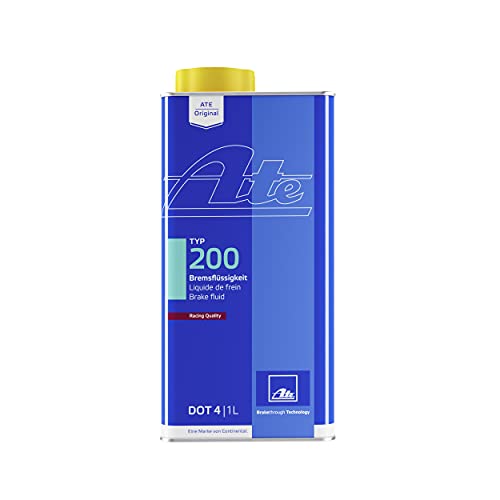
While the X3 is up on stands for a pad change is the right time to assess brake fluid condition. Both the F25 and G01 are vehicles that owners tend to keep on the manufacturer's service schedule, but the BMW service intervals for brake fluid are two years and many owners push that out. I have seen F25 X3s come in for a pad change at 45,000 miles with original brake fluid - three years old, dark amber, with a water content that would concern any technician.
Degraded brake fluid with high moisture content has a significantly reduced boiling point. For a daily X3, this may never matter - normal driving rarely pushes fluid to boiling. But in an emergency braking situation - a child running into the street, a sudden highway slowdown - maximum brake pedal force on hot brakes from an extended descent could boil degraded fluid and give you a momentary pedal drop. That is a situation you want to prevent absolutely. Two-year fluid changes are the rule in my shop for every BMW regardless of chassis, X3 included. See the full procedure in our brake fluid guide.
Upgraded Brake Lines for the X3
Stainless steel braided brake lines are a worthwhile upgrade on the X3 for any owner who drives with more than casual intent. The OEM rubber hoses on the F25 and G01 provide compliant, adequate braking for normal use, but they do expand slightly under hard braking pressure. This expansion absorbs pedal travel and makes the pedal feel softer than it could be. Stainless braided lines eliminate that expansion entirely.
The installation procedure for stainless lines on the X3 requires bleeding the brake system afterward - whenever you open a brake line fitting, air can enter and must be purged. I always do a full four-corner bleed after line replacement. The bleed sequence for BMWs is rear right, rear left, front right, front left - this pushes any air toward the master cylinder and out. Full bleed procedure is covered in our brake lines installation guide. The improvement in pedal firmness and consistency is immediately noticeable on the first drive after the upgrade.
Bedding and Final Checks
Bed the new X3 pads using the same procedure as any other BMW - 10 moderate stops from 50 mph to 10 mph without fully stopping, then 5 firmer stops from 60 mph to 15 mph, with cooling time between the two sequences. The X3's curb weight means the pads will reach bedding temperature in fewer stops than on a lighter car - be attentive to the brake feel during the sequence. If you smell heavy burning or the pedal goes soft during the moderate stop sequence, stop and allow more cooling time. This indicates the pads are overheating before the friction transfer layer has fully set - common if the first stops were too aggressive.
After bedding, inspect the front wheels for any sign of brake fluid leaks at the caliper banjo fittings, slide bolt areas, or hose connections. A wet spot around any fitting means air and fluid can escape, which compromises brake hydraulics. Wipe the area clean and monitor for weeping over the next few days. Any persistent leak requires immediate attention before the car is driven normally.
For the full picture on X3 brake maintenance and upgrades, see our brake system overview, pad selection guide, rotor guide, and the BMW brake upgrade guide.


